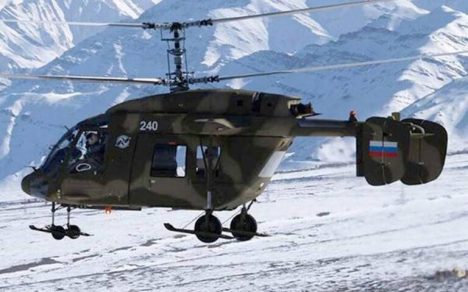
Russian Ka-226T helicopter to be produced under ‘Make in India’ is advantageous in high-altitude environments
The Nikkei Asian Review, well-known for its anti-China reportage, featured an article over the weekend titled India should ignore Putin’s offer to broker accord with China. The author is none other than Marco Rubio, the high-flying Republican senator from Florida and the Acting Chairman of the US Senate Intelligence Committee, Co-Chair of the Congressional Executive Commission on China and a ranking member of the Senate Committee on Foreign Relations.
Rubio is one of President Trump’s closest supporters today, apart from being an old ally of Secretary of State Mike Pompeo, dating back to their days in Congress. Pompeo had endorsed Rubio against Trump during his run for president in 2016. Pompeo wrote at that time,
“When I think of the challenges facing our nation – whether it’s our broken healthcare system, runaway government spending, or job creation domestically, or threats from terror groups like ISIS, al-Qaeda, or the terror regime in Iran internationally – there is simply no candidate better to tackle them than Marco Rubio.”
The Rubio piece is dripping with Russophobia and reminds one of Pompeo’s trademark style. The leitmotif is Russian President Vladimir Putin, whom Rubio demonises as someone who singularly aims ‘to shatter the current U.S.-led international system’ with tools he perfected in Russian domestic politics — ‘supporting thugs, undermining democracy, and stealing everything that isn’t nailed to the wall.’
Rubio draws illustrative examples from Putin’s ‘exploitative playbook’ in Venezuela, Syria, Turkey, Libya and Belarus. And he spotlights India for special attention. Rubio writes:
“Across the globe in the Himalayas, relations between India and China have remained tense since May following a clash of troops near the countries’ disputed border in Ladakh. The violent clashes, as well as domestic moves such as India’s decision to ban over a hundred Chinese electronic apps, has stoked fears of further escalatory action between the two nuclear-armed nations. Sensing an opportunity to prove itself as an important global power, Moscow has attempted to act as a mediator in the conflict.
“But even a cursory look at Moscow’s motivations makes clear that Putin’s interests are that of his own. Russia considers China to be its most important strategic partner. Having antagonized many nations to its west and finding itself diplomatically isolated as a result, Moscow has in recent years looked to a fellow authoritarian regime in Beijing to develop a rapport. This relationship has continued in the form of enhanced cooperation in digital infrastructure, military exercises, as well as growing trade relations.
“But Moscow is also amid a major effort to cultivate relations with New Delhi, as well. India is crucial for economic and geopolitical reasons, its government is a longtime purchaser of Russian military equipment. But India is a vibrant democracy and is moving decisively toward other liberal democracies to confront authoritarian states. Putin shouldn’t count on helicopter purchases to maintain friendly relations with India as he blatantly cozies up to China.”
Succinctly put, Rubio warns Prime Minister Modi to be wary of Putin and Russia, which is a friend of China, who is India’s enemy. It is a familiar theme lately that American think tankers have been plugging, ably supported by the US lobbyists in India.
Rubio must be standing in for Pompeo. The article alludes to India’s helicopter deal with Russia, which apparently annoys Washington. Reports say that India and Russia have agreed to resolve issues around the production of Ka-226T helicopters and fast track it. This was discussed during Defence Minister Rajnath Singh’s visit to Moscow in June.
The project is on ‘Make in India’ mode. India will be able to receive some crucial helicopter technologies from Russia as well. This is known to be a project that Putin personally promoted with Modi. Rubio appears to sound a warning to Modi who is known to enjoy close personal rapport with Putin.

Indian PM Narendra Modi with Russian President Vladimir Putin at an informal summit in Sochi, Russia, 21 May 2018
Rubio writes, “Much like Putin’s foreign adventurism, the goal has simply been to enrich himself and his inner circle. Those considering relying on the Kremlin should realize that they will have no long-term stable partner in Russia while he remains in power.” Without doubt, this is Pompeo speaking even as New Delhi and Moscow are discussing high-level visits in a near future.
Rubio’s article appears even as India is opting for deployment of the indigenous Light Combat Helicopters (LCH) made by HAL Bengaluru, in Ladakh on the Chinese border, in preference to the new US-made AH-64E Apache. Compared to the LCH, the Apache is faster, has more engine power, and carries far more weapons, but LCH has a longer range. The Indian experts evaluate that the LCH has an edge over Apache due to its ability to perform at high altitudes in the upper reaches of the Himalayas.
The Trump administration has been hoping for some big helicopter deals and has been pulling strings in Delhi but to its dismay finds that Russia has stolen a march. The rancour shows in Rubio’s venomous attack on Putin.
From the geopolitical perspective, Rubio finds it unacceptable that a ‘Quad’ member country — “India is a vibrant democracy and is moving decisively toward other liberal democracies to confront authoritarian states” — should be having a dalliance with Russia at all. Of course, there is a body of opinion in India too that an alliance with the US is what the country should prioritise in the backdrop of its face-off with China in Ladakh. They blithely assume that the US is raring to go to wage a joint war against China.
Rubio’s piece should be an eyeopener for such people besotted with the superpower as to what in reality an alliance with the US entails — a demanding partnership that locks in India. Rubio wrote in anticipation of likely initiatives by Putin to ease India-China tensions. Putin is expected to visit India in October. And a spate of summit meetings can also be expected in the coming months under the rubric of BRICS, SCO, G20 that would bring together the Russian, Indian and Chinese leaderships.
The US is panicking that India might bolt away just as a window of opportunity opened to tether it to the Quad stable (thanks to the standoff in Ladakh), which has been a key objective of the US regional strategies against China in the Asia-Pacific. Rubio’s vituperative attack on Putin highlights the depth of anxiety in the American mind that the Kremlin leader may breathe fresh life into the Russia-India-China triangle.
Indeed, it is in Russia’s self-interests to tamp down Sino-Indian tensions. But what unnerves Washington most is that any easing of India-China tensions will knock the bottom out of its containment strategy against Beijing. With a likely transition in the Japanese leadership, and taking into account China’s close ties with ASEAN countries as well as the European allies’ disinterest in joining the US bandwagon against China, Washington is practically being left with a solitary ally in the Asia-Pacific — Australia.
Facing such stark isolation, the stakes have never been so high for the US to shackle India to its regional strategy in the Asia-Pacific. Washington senses that the anchor sheet of India’s strategic autonomy lies in its longstanding partnership with Russia, which remains firm and immutable despite the changes in world politics in the post-cold war era.
The partnership has gained in verve and swagger given the high importance Modi personally attaches to it. Hence this assault on the Russian-Indian strategic understanding. Thus, a huge propaganda campaign is under way portraying Russia as an ally of China whom India can longer trust. Rubio has lent his name to dignify the US propaganda and draw the attention of Indian policymakers.
August 24, 2020
Posted by aletho |
Russophobia | China, India, United States |
Leave a comment
Morocco will not follow the lead of the United Arab Emirates and normalize with Israel, the country’s Prime Minister Saad-Eddine El-Othmani said during a high-level political meeting late on Sunday.
El-Othmani told members of his Justice and Development Party that Morocco “refuses to normalize relations with the Zionist entity (referring to Israel) because this will embolden it to further breach the rights of the Palestinian people.”
The top Moroccan official reiterated that the country’s King, government and people will remain steadfast in defense of the rights of the Palestinian people and Al-Aqsa Mosque, located in occupied Palestinian East Jerusalem (Al-Quds).
“In 1993, Morocco and Israel had low-level diplomatic ties following the signing of the Oslo Accords between the Palestinians and Israel,” Anadolu news agency reported on Monday.
“However, Rabat suspended the relations with Israel following the outbreak of the Palestinian uprising in 2000,” Anadolu added.
On August 13, Israel and the UAE have reached a deal that is expected to lead to “full normalization of relations” between the small Arab nation and Israel in an agreement that US President Donald Trump brokered.
August 24, 2020
Posted by aletho |
Ethnic Cleansing, Racism, Zionism, Illegal Occupation | Human rights, Israel, Morocco, Palestine, United States, Zionism |
Leave a comment
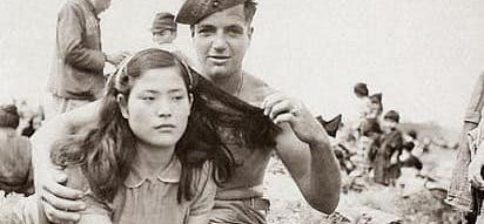
Over a year ago I published the book Power and Primacy: The History of Western Intervention in the Asia-Pacific, which was an attempt to fill what I saw as a gap in scholarship on the subject. I found that while several scholars had covered individual cases of Western powers intervening in the region, from David Easter and Geoffrey B. Robinson’s works on the Western-engineered coup and massacres in Indonesia of an estimated 500,000 to 3 million people[1] – to Bruce Cumings and Hugh Deane’s works on the Korean War, there were no major works assessing broader trends and consistencies in Western intervention. Power and Primacy was thus written to show the consistencies in Western designs towards the region and the means used to achieve them over a period of more than 70 years, from the Pacific War which began in 1941 to Western policies towards China and North Korea today.
This month marks the 75th anniversary of the dismantling of the Japanese Empire, and the famous declaration by General Douglas MacArthur that, with the region’s only non-Western military power and the world’s only non-Western naval power now defeated, ‘The Pacific is now an Anglo-Saxon lake.’ While the U.S. and its allies portrayed themselves as a benevolent and democratising force in the region, the darker aspects of East Asia’s time under the new hegemon, which starkly contradict this, have seen very little discussion or coverage. It is notable, for example, that after the Japanese Empire’s fall not only did living standards in southern Korea fall dramatically after it was placed under the rule of an American military government, but mass rapes, the use of comfort women, and serious human trafficking – the very things used by many to justify the American embargo on Japan which had started hostilities in 1941 – not only continued but were expanded under U.S. control. The government of Syngman Rhee, the Princeton-educated Christian radical the U.S. placed in power, killed 2% of its population at the most conservative estimate within five years, placing hundreds of thousands more in concentration camps and exercising a level of brutality not seen even under the Japanese Empire.
With Japan today having seen 75 uninterrupted years with tens of thousands of Western soldiers based on its territory, where they appear set to remain indefinitely, this is a suitable time to reflect on the nature of the relationship between the country and the West – which is very far from that of equal sovereign powers with shared goals and ideals. Evidence for this has ranged from massive involvement of American intelligence in the political process, including funding pro-Western political parties and supporting their election campaigns,[2] to the testimonies of multiple officials. Former Prime Minister Yukio Hatoyama, for example, noted regarding his country’s inability to reach a deal with Russia over the Kuril Islands due to an effective American veto over all major foreign policy decisions: “I think it represents a big problem that when making foreign policy decisions, Tokyo is always guided by the United States’ approach. Japan depends on America.” He further stated: “The Japanese media and government… always take America’s side. Tokyo is dependent on the US’ views … Japan will continue to side with America and the G7 countries.”[3] Prime Minister Ichiro Hatoyama, who in the 1950s had also sought to resolve the dispute with Moscow and sign a peace treaty on the basis that Japan would receive two of the four islands, was harshly threatened by the U.S. and was ultimately forced to concede to Washington’s demands not to go through with an agreement. Prime Minister Yoshiro Mori came to a similar conclusion regarding the country’s lack of effective sovereignty in an interview with Russian state media in 2018. [4]
Beyond these political indicators, however, are more human indicators of the nature of America’s place in post-war Japan which cannot be overlooked, and which contrast very strongly with portrayals in the vast majority of Western media including both documentaries and popular media. An extract from the book Power and Primacy, pages 66-69, given below, recently reached over 3 million viewers on social media and highlighted the true consequences for Japan’s population of subjugation by the United States. The full references are provided in the book itself. Perhaps most importantly, this is not presented as an isolated set of cases of U.S. and Western conduct towards an East Asian population placed under their power – rather it is part of a much wider trend which if anything was considerably more extreme in Vietnam and in both South and North Korea – the latter of which was briefly occupied by U.S. forces in 1950. An understanding of the past is key to comprehending the nature of Western involvement in the Asia-Pacific region today, which is why I found that this project was particularly essential now in light of the ‘Pivot to Asia,’ the North Korean nuclear crisis, the Trump administration’s recent ‘Tech War’ on China and other key events which have increasingly placed the region at the centre of determining the future of world order.
Text Start:
There was a far darker side to the U.S. and allied occupation of Japan, one which is little mentioned in the vast majority of histories – American or otherwise. When Japan surrendered in August 1945, mass rapes by occupying forces were expected… [despite setting up of a comfort women system which recruited or otherwise trafficked desperate women to brothels] such crimes were still common and several of them were extremely brutal and resulted in the deaths of the victims. Political science professor Eiji Takemae wrote regarding the conduct of American soldiers occupying Japan:
‘U.S. troops comported themselves like conquerors, especially in the early weeks and months of occupation. Misbehavior ranged from black-marketeering, petty theft, reckless driving and disorderly conduct to vandalism, assault, arson, murder and rape. Much of the violence was directed against women, the first attacks beginning within hours after the landing of advanced units. In Yokohama, China and elsewhere, soldiers and sailors broke the law with impunity, and incidents of robbery, rape and occasionally murder were widely reported in the press [which had not yet been censored by the U.S. military government]. When U.S. paratroopers landed in Sapporo an orgy of looting, sexual violence and drunken brawling ensued. Gang rapes and other sex atrocities were not infrequent […] Military courts arrested relatively few soldiers for their offences and convicted even fewer, and restitution for the victims was rare. Japanese attempts at self-defense were punished severely. In the sole instance of self-help that General Eichberger records in his memoirs, when local residents formed a vigilante group and retaliated against off-duty GIs, the Eighth Army ordered armored vehicles in battle array into the streets and arrested the ringleaders, who received lengthy prison terms.’
The U.S. and Australian militaries did not maintain rule of law when it came to violations of Japanese women by their own forces, neither were the Japanese population allowed to do so themselves. Occupation forces could loot and rape as they pleased and were effectively above the law.
An example of such an incident was in April 1946, when approximately U.S. personnel in three trucks attacked the Nakamura Hospital in Omori district. The soldiers raped over 40 patients and 37 female staff. One woman who had given birth just two days prior had her child thrown on the floor and killed, and she was then raped as well. Male patients trying to protect the women were also killed. The following week several dozen U.S. military personnel cut the phone lines to a housing block in Nagoya and raped all the women they could capture there – including girls as young as ten years old and women as old as fifty-five.
Such behavior was far from unique to American soldiers. Australian forces conducted themselves in much the same way during their own deployment in Japan. As one Japanese witness testified: ‘As soon as Australian troops arrived in Kure in early 1946, they ‘dragged young women into their jeeps, took them to the mountain, and then raped them. I heard them screaming for help nearly every night.’ Such behavior was commonplace, but news of criminal activity by Occupation forces was quickly suppressed.
Australian officer Allan Clifton recalled his own experience of the sexual violence committed in Japan:
‘I stood beside a bed in hospital. On it lay a girl, unconscious, her long, black hair in wild tumult on the pillow. A doctor and two nurses were working to revive her. An hour before she had been raped by twenty soldiers. We found her where they had left her, on a piece of waste land. The hospital was in Hiroshima. The girl was Japanese. The soldiers were Australians. The moaning and wailing had ceased and she was quiet now. The tortured tension on her face had slipped away, and the soft brown skin was smooth and unwrinkled, stained with tears like the face of a child that has cried herself to sleep.’
Australians committing such crimes in Japan were, when discovered, given very minor sentences. Even these were most often later mitigated or quashed by Australian courts. Clifton recounted one such event himself, when an Australian court quashed a sentence given by a military court martial citing ‘insufficient evidence,’ despite the incident having several witnesses. It was clear that courts overseeing Western occupation forces took measures to protect their own from crimes committed against the Japanese – crimes which were largely regarded as just access to ‘spoils of war’ at the time by the Western occupiers.
As had been the case during the war, underreporting of rapes in peace- time due to the associated shame in a traditional society and inaction on the part of authorities (rapes in both cases occurred when Western militaries were themselves in power) would lower the figures significantly. In order to prevent ill feeling towards their occupation from increasing, the United States military government implemented very strict censorship of the media. Mention of crimes committed by Western military personnel against Japanese civilians was strictly forbidden. The occupying forces ‘issued press and pre-censorship codes outlawing the publication of all reports and statistics “inimical to the objectives of the Occupation.”’ When a few weeks into the occupation Japanese press mentioned the rape and widespread looting by American soldiers, the occupying forces quickly responded by censoring all media and imposing a zero tolerance policy against the reporting of such crimes. It was not only the crimes committed by Western forces, but any criticism of the Western allied powers whatsoever which was strictly forbidden during the occupation period – for over six years. This left the U.S. military government, the supreme authority in the country, beyond accountability. Topics such as the establishment of comfort stations and encouragement of vulnerable women into the sex trade, critical analysis of the black market, the population’s starvation level calorie intakes and even references to the Great Depression’s impact on Western economies, anti-colonialism, pan-Asianism and emerging Cold War tensions were all off limits.
What was particularly notable about the censorship imposed under American occupation was that it was intended to conceal its own existence. This meant that not only were certain subjects strictly off limits, but the mention of censorship was also forbidden. As Columbia University Professor Donald Keene noted: ‘the Occupation censorship was even more exasperating than Japanese military censorship had been because it insisted that all traces of censorship be concealed. This meant that articles had to be rewritten in full, rather than merely submitting XXs for the offending phrases.’ For the U.S. military government it was essential not only to control information – but also to give the illusion of a free press when the press was in fact more restricted than it had been even in wartime under imperial rule.
By going one step further to censor even the mention of censorship itself, the United States could claim to stand for freedom of press and freedom of expression. By controlling the media the American military government could attempt to foster goodwill among the Japanese people while making crimes committed by their personnel and those of their allies appear as isolated incidents. While the brutality of American and Australian militaries against Japanese civilians was evident during the war and in its immediate aftermath, it did not end with occupation. The United States has maintained a significant military presence in Japan ever since and crimes including sexual violence and murder against Japanese civilians continue to occur.”
Text End
For Full Manuscript of Power and Primacy
Facebook
https://www.facebook.com/100803698404263/photos/a.101111128373520/106347284516571/
For A. B. Abrams’ upcoming work, scheduled for publication in October 2018, titled Immovable Object: North Koreans 70 Years at War with American Power:
- ‘Indonesia’s killing fields,’ Al Jazeera, December 21, 2012. ‘Looking into the massacres of Indonesia’s past,’ BBC, June 2, 2016. ↑
- Weiner, Time, ‘C. I. A. Spent Millions to Support Japanese Right in 50’s and 60’s,’ New York Times, October 9, 1994. ↑
- ‘Stationing American troops in Japan will lead to bloody tragedy – ex-PM of Japan,’ RT, (televised interview), November 6, 2016. ↑
- ‘Ex-Japan FM: I Told Putin We Follow U.S. Policy as We’re Surrounded by Nuke States,’ Sputnik, May 22, 2018. ↑
August 24, 2020
Posted by aletho |
Full Spectrum Dominance, Timeless or most popular, War Crimes | Australian, Human rights, United States |
Leave a comment
Sudan’s Ba’ath and Popular Congress parties have rejected any attempt to normalise ties with Israel, considering it an occupation power in Palestine, Quds Press reported yesterday.
Both parties said in a joint statement issued on Saturday that “Israel is an occupation state that occupies beloved Palestine.”
They stressed that “it is impossible and it is not right to normalise relations with the Israeli occupation state.”
Meanwhile, the Sudanese Communist party declared its opposition to the normalisation of ties with Israel, reiterating its support for Palestinian rights and principles.
These statements came following remarks made by the former spokesman of the Sudanese Exterior Ministry Haidar Badawi who said that his country is looking forward to normalising ties with Israel.
The ministry denied his remarks and sacked him.
However, the Deputy Head of Sudan Sovereignty Council Mohamed Hamdan Dagalo has recently met with a senior Israeli official in the UAE and discussed promoting his country’s relations with Israel.
This comes just weeks after US President Donald Trump announced a peace deal between the UAE and Israel brokered by Washington.
Abu Dhabi said the deal was an effort to stave off Tel Aviv’s planned annexation of the occupied West Bank, however, opponents believe normalisation efforts have been in the offing for many years as Israeli officials have made official visits to the UAE and attended conferences in the country which had no diplomatic or other ties with the occupation state.
Netanyahu repeated on 17 August that annexation is not off the table, but has simply been delayed.
READ ALSO: Sudan’s foreign policy is in question following the revelation of secret talks with Israel
August 24, 2020
Posted by aletho |
Zionism | Israel, Sudan |
Leave a comment
By Paul Antonopoulos | August 24, 2020
After Russia, the U.S. is the second largest arms exporter to India. As a major Washington defense partner, New Delhi signed two $3.5 billion arms purchase agreements earlier this year. However, U.S. Deputy Secretary of State Clarke Cooper reiterated Washington’s supposed dismay over India’s military purchases from Russia. Issuing a warning, he said that significant purchases of Russian weapons, such as anti-aircraft systems or advanced fighter jets, “risk future opportunities that may be impeded by significant Russian defense articles.”
Although he said that Washington recognizes “the historic legacy sustainment line that New Delhi had with Moscow and that, to use a metaphor, it’s not a light switch to turn on or off,” and that they do not want “to put at risk India’s sovereignty or India’s national defense as there’s a maturation toward future modernization of their systems,” he said “there is a risk when significant Russian systems are brought forth that put at risk interoperability with not only the United States, but with other partners that India may be seeking to work with that are either of NATO status or NATO-aligned. And then there’s also the risk of potential exploitation of technology when we’re looking at significant Russian platforms.”
Despite U.S. threats, India last month approved the purchase of 21 MiG-29 and 12 Su-30MKI fighters for a total value of more than $2.5 billion from Russia, with Indian Defense Minister Rajnath Singh urging for the delivery of the S-400 anti-aircraft defense systems as soon as possible.
However, it is unlikely that Washington will choose to sanction India for purchasing Russian weapons. Former financial adviser to the Indian Ministry of Defense, Amit Cowshish highlights that imposing sanctions on New Delhi will only hurt Washington’s own interests since the South Asian country is one of the largest markets in the world. Cowshish stressed that if the Trump administration moves ahead with sanctions, India will say it cannot buy U.S. equipment, which will hurt its own military industry as it loses a major market.
According to a Stimson Center working paper by Sameer Lalwani, India’s defense equipment is overwhelmingly Russian – 90% of the Army, 41% of the Navy and two-thirds of the Air Force.
“India’s share of Russian systems has grown, not decreased, because of Indian Army acquisitions. While India’s naval and air forces are decreasing their quantitative reliance on Russian arms, their most advanced or offensive capabilities still originate from Russia,” Lalwani wrote. “While the United States treats Russia as an equally revisionist threat to the global order as China, India sees Russia as a partner to ensure a multipolar balance of power, and a hedge against a potential Sino-Russian bloc.”
As India is the key player in the Indo-Pacific Strategy (IPS), it is unlikely Washington is willing to antagonize New Delhi so quickly. The administration of U.S. President Donald Trump unveiled the IPS report in June 2019. It demanded that India, Japan, South Korea, Australia, the Philippines and Thailand serve Washington’s interests in Asia-Pacific because “these alliances are indispensable to peace and security in the region and our investments in them will continue to pay dividends for the United States and the world, far into the future.” Effectively, the IPS is the U.S.’ strategy to attempt to maintain its unilateral hegemony in Asia-Pacific, and India has a key role in this vision.
The IPS is directly aimed against China, and not Russia, and it is for this reason that although New Delhi may be willing to oppose Beijing within limits, it is highly unlikely that India will want to sever its long relationship with Moscow on Washington’s demand. It is likely that the comments by Cooper, despite being a high official, do not reflect on Washington’s real demands and expectations of New Delhi. Although Washington would want India to stop its relations with Moscow, the Americans know this is not possible and recognize that for now Russia has very limited influence in the Indo-Pacific region. It is for this reason that New Delhi’s relations with Moscow can for now be tolerated by Washington so long as they remain in opposition to China. It is also for this reason that it is unlikely Washington will sanction India over its procurement of Russian-made weapons.
Paul Antonopoulos is an independent geopolitical analyst.
August 24, 2020
Posted by aletho |
Economics | India, Russia, United States |
Leave a comment
A spokesman for the German government said on Monday that Berlin believes there’s a ‘certain probability’ that Russian anti-corruption campaigner Alexey Navalny was poisoned and that he requires personal protection.
“We are dealing with a patient where there is a certain probability that he was poisoned,” Steffan Seibert told a press conference on Monday morning. On this basis, Berlin is convinced that Navalny needs to be protected, he explained.
However, Foreign Minister Heiko Maas sounded a note of caution, warning that it’s necessary to wait for a statement by the doctors treating him before making judgements. Maas added that many facts relevant to the case are still missing.
“I am one of those people who bases my views on facts,” Mass said during a news conference. “Many facts are missing in the case of Navalny: medical and also likely criminological. We must wait for those (facts).”
Navalny became ill during a flight from Tomsk to Moscow last Thursday. His plane made an emergency landing, and the protest leader was taken to a hospital in Omsk in a serious condition. He was placed in an induced coma and connected to a ventilator.
His associates believe that he was poisoned, but Russian doctors claim that two different laboratories found no poisons in his system. German doctors are expected to talk about his condition later on Monday. He was airlifted to Berlin on Saturday.
Russian Doctors Deny Navalny Had Traces, Symptoms of Cholinesterase Inhibitors Poisoning
Russian Doctors Deny Navalny Had Traces, Symptoms of Cholinesterase Inhibitors Poisoning
Earlier, the doctors treating Navalny in the Berlin-based Charite clinic said they had found in his body traces of intoxication with a substance from the group of cholinesterase inhibitors. However, the exact substance is still unknown, the press service of the clinic added.
Tests of Alexey Navalny’s samples at the Omsk hospital in Russia showed no traces of poisoning with cholinesterase inhibitors substances, as German doctors treating him have claimed, neither has he had symptoms typical of such poisoning, Omsk Chief Toxicologist Alexander Sabayev said on Monday.
“Upon his admission to the [Omsk] hospital, Alexey Navalny was tested on a wide range of narcotics, synthetic substances, psychedelics and medicinal substances, including cholinesterase inhibitors — all tests came back negative,” Sabayev said in a press statement, as quoted by the Omsk Ministry of Health.
“Additionally, Navalny lacked symptoms specific of the poisoning with cholinesterase inhibitors substances. As we said earlier, we are ready to share Alexey Navalny’s samples with our German colleagues for examination,” the health official added.
Earlier in the day, the doctors treating Navalny in the Berlin-based Charite hospital claimed they found traces of intoxication with a substance from the group of cholinesterase inhibitors in his body.
The version of German doctors on the diagnosis of Russian opposition figure Alexei Navalny was worked out by Russian specialists on the very first day, but it did not find confirmation, the head of anesthesiology and reanimation department at Russia’s Pirogov Center, Boris Teplykh, said.
“For me, nothing new has yet been announced in the statement of colleagues from Charite. They talk about clinical data showing intoxication with cholinesterase inhibitors,” the doctor said.
“Well, firstly, they speak about clinical data, and not about the substance itself, which neither we nor, apparently, they have discovered at the moment. The same version was worked out by us on the first day of the patient’s admission, but no confirmation was found,” Teplykh said.
He added that Navalny was injected with Atropine, which was prescribed by German colleagues for treatment, from the first minute after admission. And subsequently, the need for its repeated injection was discussed, Teplykh said.
“In addition, the presence of such a chemical reaction in the body is possible both as a result of the use of other medications and in the natural course of the disease,” he said.
At the same time, the expert stressed that the main thing is that “the patient did not get any worse as a result of transportation.”
“Let’s hope that the improvement of the patient’s condition, which was observed back in Omsk, will continue. We are ready to interact with German colleagues,” he said.
August 24, 2020
Posted by aletho |
Aletho News |
Leave a comment
Maj. Gen. Andrew Croft, the commander of 12th Air Force, wrote on 22 August: “I have seen an increasingly contested strategic space where Beijing and Moscow are aggressively investing time and resources in Latin America to support their authoritarian models of governance. The Air Force must reinforce the strength of our longstanding commitment to the Western Hemisphere. We lose ground when we are unable to commit to spending the time and resources to fly our aircraft south and train alongside our partners.”
Croft’s statement reflects the growing American hysteria against the presence of any extra-regional actors in the Latin American continent. For US policy-makers, Latin America is not an aggregation of sovereign nations but a large lump of subordinated states constituting “America’s backyard”. Consequently, this conceptualization of Latin America as a natural extension of the American empire has led to viewing the engagement of any South American country with China, Russia and Iran as a “threat” to peace and security.
On February 7, 2019, Admiral Craig S. Faller – the commander of the United States Southern Command – told the Congress that the Western Hemisphere is facing “a troubling array of challenges and threats”. These threats included alarmist assertions about the growing dominance of China, Russia and Iran and a general demonization of the socialist governments of Cuba, Venezuela and Nicaragua:
“China has accelerated expansion of its Belt and Road Initiative at a pace that may one day overshadow its expansion in Southeast Asia and Africa. Russia supports multiple information outlets spreading its false narrative of world events and U.S. intentions. Iran has deepened its anti-U.S. Spanish language media coverage and has exported its state support for terrorism into our hemisphere. Russia and China also support the autocratic regimes in Venezuela, Cuba, and Nicaragua, which are counter to democracy and U.S. interests. We are monitoring the latest events in Venezuela and look forward to welcoming that country back into the hemisphere’s community of democracies.”
In response to the perceived threats posed by the China-Russia-Iran nexus, the Secretary of Defense has decided to conduct an assessment of the sufficiency of resources available to the U.S. Southern Command, the U.S. Northern Command, the Department of State, and the U.S. Agency for International Development (USAID) to carry out their respective missions in the Western Hemisphere. This assessment is required to include “a list of investments, programs, or partnerships in the Western Hemisphere by China, Iran, Russia, or other adversarial groups or countries that threaten the national security of the United States.”
In addition to warlike preparations, USA has also pursued a policy of increased militarization wherein it has tried to ensure “technological superiority” with regard to “anti-US actors”. In March, 2020, USA decided to send additional ships, aircraft and forces to South America and Central America in order to combat the influence of Russia and China. According to Navy Adm. Craig Faller, commander of Southern Command, “This really was born out of a recognition of the threats in the region,”. Along with the mobilization of the Southern Command, USA has substantially enlarged its security aid to Latin America: From $527,706,000 in 2019, US security aid to Latin America has increased by 10% to $581,270,000.
Chinese Footprint
The present-day US militarization of Latin America is rhetorically driven by an imperialist discourse framing the continent as a possession of the American empire which China, Russia and Iran are trying to appropriate. To take an example, R. Evan Ellis, a Latin America Research Professor at the US Army War College, stated before the US-China Economic and Security Review Commission that China’s engagement with Latin America “threatens the position of the United States, our security and prosperity, and the democratic values, rights, institutions and laws on which we depend.” To substantiate his statements, Ellis enunciated various strategies through which China is undermining USA’s dominance:
- “Trade with, loans to, investment in, and other forms of economic and other support to anti-US regimes, indirectly enabling their criminal activities and contributions to regional instability”.
- “Through providing an alternative to commerce, loans and investment from the West, making governments of the region less inclined to support the US on political, commercial, or security issues, or to stand up for rule of law, democracy or human rights, particularly where it might offend the PRC;”
In both these points, one can observe the imperialistic high-handedness with which Ellis is declaiming his pro-US rhetoric. While Beijing’s efforts to engage with sovereign nations and construct an alternative to the global American empire are regarded as enabling “regional instability”, no questions are asked about USA’s expansionist quest to imperialize the entire world through militaristic tactics.
In order to vilify China and smear its non-aggressive foreign policy, hawkish security experts have framed the country’s diplomatic involvement with various Latin American nations as a type of authoritarian tactic. Using this line of reasoning, the National Endowment for Democracy (NED) writes: “Beijing has now officially established its own version of soft power… which emanates from its undemocratic system and rests on its ability to shape the viewpoints of others through co-optation and persuasion.” Not having any empirical evidence to prove its unconvincing statements, NED talks vaguely about the “hypnotic effects” exercised by “Chinese-style warm welcome”: “The Chinese-style warm welcome, the carefully selected tours that include visits to sites with symbolic historical and cultural significance, and ad hoc friendly discourse delivered by the Chinese hosts can have hypnotic effects on their foreign guests.” This is an indication of the extent to which America hysteria against China can reach.
In the same way as NED, the Brookings Institution has also tried to slander China’s diplomatic initiatives in Latin America to preserve the coercive dominance of USA in the continent. As per the think tank, “it would be fair to assume that China’s growing economic power and ambitions of global leadership, coupled with its inherently closed and repressive model of political control, will hurt the region’s prospects for strengthening its liberal democratic systems and respect for human rights.” While saying this, the Brooking Institution conveniently forgets that it the US, with its Western-styled liberal democracy, that has hurt the region most in the form of coups, violence and overt brutality against social movements. Most recently, a US-backed coup in Bolivia has resulted in two massacres and massive repression of social movements.
The Iranian Connection
Like China, Iran, too, experiences American hostility towards its engagement with Latin American countries. Lieutenant Andrew Kramer of the U.S. Navy terms Iranian support for the “economically backward governments” of Cuba, Nicaragua and Venezuela as efforts “to maintain pockets of instability and hostility close to U.S. borders.” Echoing this perspective, William Preston McLaughlin, a Colonel (Ret.) of U.S. Marine Corps and Magdalena Defort, an Intern Analyst at the Foundation of Defense of Democracies, argue that “Iran’s presence in Latin America is an imminent threat to peace and political stability in the Western Hemisphere because its forces interact with Latin America’s deeply rooted revolutionary ideology and various well-intentioned but flawed “liberation theology” social movements.” Here, both of the analysts are merely parroting the imperialist “Monroe Doctrine” that subverted the sovereignty of Latin American nations and tethered the people of the continent to the whims of the American empire. Through the Monroe Doctrine, USA relegated the entire Latin American continent to the status of the empire’s handmaiden and constantly used its military muscles to overpower any regional initiatives challenging the dynamics of subjugation. Now, when Iran is lending support to the anti-imperialist administrations of Venezuela, Nicaragua and Cuba, it has come under the radar of USA for ostensibly destroying peace and political stability in the Western Hemisphere. In August 2020, for instance, USA confiscated four Iranian fuel shipments that had been bound for Venezuela, making it clear that it would not tolerate anti-imperialist opposition in Latin America.
In addition to portraying Iran as a threat to global peace, both the analysts also used a shrill, scaremongering rhetoric to over-exaggerate the strength of the country. According to the analysts, “Iran has used every agency within its borders to help extend Iranian tentacles into the political, cultural, economic, and military life of Latin America.” This bears striking resemblance to the traditional war-mongering US narrative that frames Hezbollah as a menace to justify the militarizary raising funds, seeking recruits, probing for our weaknesses and challenging our defenses,”. Through these discourses, USA seeks to unleash a new war against the anti-imperialist axis of Latin America which is standing up to militaristic predatoriness of the global hegemon.
Russian Presence
Besides Iran and China, Russia is another nation perceived as a “threat” to US security. General John Kelly, commander of the U.S. Southern Command (SOUTHCOM) noted in his Congressional testimony, “it has been over three decades since we last saw this type of high-profile Russian presence” in Latin America. In his command’s 2015 Posture Statement, Kelly added:
“Periodically since 2008, Russia has pursued an increased presence in Latin America through propaganda, military arms and equipment sales, counterdrug agreements, and trade. Under President Putin, however, we have seen a clear return to Cold War tactics. As part of its global strategy, Russia is using power projection in an attempt to erode U.S. leadership and challenge U.S. influence in the Western Hemisphere.”
John Kelly’s representation of Russia as a military threat has been repeated by the Commander of US Southern Command, Admiral Kurt W. Tidd who said in his February 2018 Posture Statement to the US Senate Armed Services Committee that:
“Russia’s increased role in our hemisphere is particularly concerning, given its intelligence and cyber capabilities, intent to upend international stability and order, and discredit democratic institutions… Left unchecked, Russian access and placement could eventually transition from a regional spoiler to a critical threat to the U.S. homeland.”
With the help this narrative, USA has aggressively pushed forward the agenda of greater militarism in Latin America as it strives to maintain “technological superiority” in relation to Russia and expand its already large military expenditure.
On top of depicting Russia as a military threat, US analysts have additionally portrayed the country’s support of socialist governments in Latin America as a danger to the economically empty liberal democracies of the West. According to IBI Consultants, a National Security consulting company specializing in Latin America, Russia’s growing presence in Latin America “is now an integral part of an alliance of state and nonstate actors that have shown their hostility toward the United States in their ideology, criminalized behavior, and anti-democratic nature.” Reiterating this point, on July 9, 2019, Admiral Faller declared before the Congress that “Russia seeks to sow disunity and distrust, propping up autocratic regimes in Cuba, Bolivia, Venezuela, and Nicaragua, which are counter to democracy and U.S. interests.” For Faller, those nations which don’t doggedly toe America’s imperialist line automatically become “threats” to democracy and if Russia shows solidarity with these anti-imperialist nations, it, too, classifies as a threat to US interests.
As the USA continues to militarize Latin America, it is increasingly becoming clear that it wants to protect its old, imperial structures from being challenged by anyone. It has been explicitly acknowledged even by pro-US analysts such as Ellis that US military assistance in Latin America “potentially serves U.S. strategic interests by helping to inoculate receiving states against radical or anti-democratic [read “socialist”] solutions which find receptivity when populations lose faith in the ability of a democratic political system and a free market economy to effectively address the corruption, inequality, injustice, and other dysfunctionalities plaguing their country [Emphasis mine].” US military assistance, therefore, is not apolitical and is ideologically tarnished with the objectives of stabilizing free market economies-bourgeoisie democracies and subverting socialist countries.
The United States Intelligence Community’s assessment of threats to US national security had stated in 2019 that “anti-US autocrats [in the Western Hemisphere]will present continuing challenges to US interests, as US adversaries and strategic competitors seek greater influence in the region.” Here, “anti-US autocrats” refers to the socialist administrations of three Latin American countries: Cuba, Venezuela and Nicaragua. These three countries have been facing strong US belligerence for their anti-imperialist stance. US sanctions against Cuba have tightened during the pandemic; USA’s hybrid war against Venezuela has intensified as Trump has decided to use frozen funds to topple Nicolas Maduro and USAID (United States Agency for International Development) has strengthened its regime change operations against the Sandinista government of Daniel Ortega in Nicaragua. Due to the support lent by China, Russia and Iran to the socialist governments of Latin America, USA has decided to eradicate these extra-regional actors from its “own” backyard and re-proclaim a complete American dominance in the region. In times like these, the international community needs to oppose the militarism of USA against new regional alliances in Latin America.
Yanis Iqbal is a student and freelance writer based in Aligarh, India.
August 24, 2020
Posted by aletho |
Militarism | Cuba, Latin America, Nicaragua, United States, Venezuela |
Leave a comment
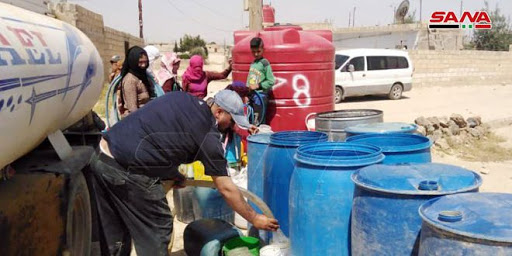
Turkish President Erdogan has sought to create an image for himself as the champion of religion. The Islamic State of Iraq and Syria (ISIS) also tried to claim they were following a religion, yet both used water as a weapon of war.
Water in Islam
Turkey is almost 100% Muslim and has made world headlines converting Christian cathedrals into Mosques. Turkish President Erdogan has been converting a secular democracy in Turkey, founded by Ataturk, into a Muslim Brotherhood haven, which follows Radical Islam as a political ideology, which is the same ideology as ISIS.
Water in Islam is considered as a gift from God, belonging to all equally, which has to be distributed equally among all living beings, humans, animals, and plant life, according to Cherif Abderrahman Jah, an Islamic academic and humanist.
The ISIS terrorists have often used water as a weapon of war in Iraq and Syria by cutting off supplies to villages that resisted their rule and as a tool to expand their control over the region’s water infrastructure.
They wanted to seize the water to prove they were building an actual state. In 2014 ISIS besieged the Syrian town of Kobane to secure a piece of the border with Turkey.
6 years later, 2020, the same scenario plays out, and in the same area, but ISIS has been defeated, and the Erdogan regime in Turkey has taken their place. Many experts feel ISIS and Turkey have been connected in their use of Radical Islam as a political tool, devoid of any connection to Islam, which is a religion.
ISIS was using water as a weapon, according to Tobias von Lossow of Berlin’s Institute for International and Security Affairs. He said, “IS uses water systematically and consistently. IS uses the entire range of possibilities and variations of water warfare.”
Death without water
A person can survive without water for about 3 days; however, a person living in a very hot climate will sweat, causing them to lose more water, which leads to dehydration, causing extreme thirst, fatigue, and ultimately, organ failure and death. A person living in a hot place, like Hasaka, and having to perform laborious activities such as taking care of animals, or small children, could die in only a few days without water.
The role of the SAR in the crisis
Friday marked the ninth consecutive day without water in Hasaka. The Turkish occupation forces, and their Radical mercenaries, are endangering the lives of more than a million civilians.
The SAR water authorities continue to try to provide clean drinking water, with cooperation from the Hasaka City Council and civil society groups, who used many water tankers to provide the locals with drinking water from Nafasha and al Himah Water Projects.
Chairman of Hasaka City Council Adnan Khajou, said that the daily quantity of water to be transported is 300,00 liters, which came from shallow wells dug by the locals, but is not drinkable and used only for cleaning.
The Turkish Army of occupation and its terrorist mercenaries in Ras-al-Ayn countryside continue to stop the operation of Alouk water project and to cut off the drinking water from Hasaka city, threatening one million persons with thirst and causing them to suffer from the spread of Coronavirus (COVID-19).
General Director of Hasaka Water Establishment Mahmoud Ukla said that since the Alouk Water Station was shut off by the Erdogan regime army, and their mercenaries, the summer temperatures have soared and water demand has increased, with the devastating additional threat of the COVID-19 pandemic, which needs water for hygiene.
Aziz Michael, geologist and water specialist, said that the Alouk water station is essential for water and it should be reopened.
The role of Turkey in the crisis
Turkey has a long history of using water as a weapon of war in Syria. In 1998 Erdogan had threatened to shut off water to Syria, which brought the two countries close to military conflict.
In May the water supply to 460,000 civilians in northeastern Syria was cut off by Turkey for the sixth time.
Syrian Observatory activists have reported Friday that residents have been protesting in Ras al-Ain, which is under Turkish Army occupation, and were calling for water, and electricity to be restored.
The role of the UN
On Friday, Ambassador Bashar al-Jaafari, Syria’s Permanent Representative at the UN, called on the UN Secretary-General Antonio Guterres to intervene immediately and to exert all his efforts to stop the Erdogan regime’s crime of cutting off drinking water for nearly one million Syrian citizens in Hasaka. In the phone call between al-Jaafari and Guterres, the Ambassador stressed that the Turkish aggression constitutes a war crime and a crime against humanity.
He said that the situation caused by this crime is exacerbated by hot weather and the threat of the COVID-19 pandemic.
Guterres said that he has tasked the UN team in Syria and his Special Envoy Geir Pedersen with taking steps to address this matter, resolve it urgently, and deliver humanitarian aid to affected people. He said he will exert his best efforts by contacting the Turkish government to put pressure and resolve this matter.
Guterres has asked Pedersen to meet the representatives of the US, Russia, and Turkey in Geneva on Monday, as the committee for drafting a new Syrian constitution meets, which is part of the UN 2254 resolution which will pave the way to a peaceful solution to the Syrian conflict.
The SAR and AANES (Autonomous Administration of North and East of Syria)
The Northeast section of Syria is split by various groups. The SAR based in Damascus controls areas, and has forces, checkpoints, and provides free health care and education to those areas it controls. The AANES is a separate group of Kurds, following a communist political platform, and they have become known to foreigners as “Rojava”. They have a military wing, the SDF, which was aligned with the terrorist group PKK, and they were in a coalition with the US military, who are now illegally occupying parts of the region while tasked with stealing Syrian oil by the Trump regime.
Covid-19 danger
“Turkish authorities’ failure to ensure adequate water supplies to Kurdish-held areas in Northeast Syria is compromising humanitarian agencies’ ability to prepare and protect vulnerable communities in the COVID-19 pandemic,” Human Rights Watch said in a report published late March.
What is the solution?
The Kurdish leaders of the ‘Rojava’ area, and the central government of the SAR in Damascus, are in complete agreement that the solution of the water crisis in Hasaka must be the removal of all Turkish occupation forces, and their Radical terrorist mercenaries. The SAR is a secular government, and this is what the Kurdish leadership of ‘Rojava’ also claim as a core value of their administration. With so much in common, and both ‘Rojava’ and the SAR facing the same enemy, Turkey, and the possible resurgence of ISIS, it appears they may soon form renewed cooperation to re-take the land from occupation forces and defend the borders from all enemies.
Steven Sahiounie began writing political analysis and commentary during the Syrian war, which began in March 2011. He has published several articles, and has been affiliated with numerous media. He has been interviewed by US, Canadian and German media.
August 24, 2020
Posted by aletho |
Illegal Occupation, War Crimes | ISIS, Syria, Turkey |
Leave a comment
By Lucas Leiroz | August 24, 2020
The alliance between Venezuela and Iran seems to be taking new directions. The ties between the two countries began to strengthen in an economic sphere when, in the first half of 2020, Tehran started sending oil ships to Venezuela, circumventing the international trade rules imposed by Washington with the aim of blocking Caracas economically. Earlier this year, Tehran sent several cargoes of gasoline to Venezuela to help the South American country overcome fuel shortages, as well as equipment to help state oil company PDVSA overcome production and export difficulties during the crisis.
The presence of Iranian ships on the Venezuelan coast has been a real affront to the United States, which has always played a role of naval hegemony in the Caribbean. Recently, the United States claimed to have seized four ships carrying Iranian gasoline en route to Venezuela, prompting Washington to tighten sanctions on both countries. But the US was unable to contain the Iranian advance and now the alliance between Caracas and Tehran has advanced into a military step.
Recently, Venezuelan President Nicolás Maduro thanked Iran for helping the South American country overcome US sanctions on its oil industry. At the time, he said that Iran is helping to maintain all Venezuelan national governance but did not elaborate on how this cooperation was taking place. He said it was important to maintain secrecy on the topic because of the economic boycott imposed by the US – which he called a “brutal war”. However, Colombian President Iván Duque said last week that Maduro was interested in buying missiles from Iran, which Venezuelan officials denied, but later Maduro responded that Duke’s statement was a “good idea” and that he had not yet considered it .
Shortly thereafter, Maduro confirmed his interest in buying Iranian weapons. According to the Venezuelan president, Iran, possessing advanced military technology, can be a great partner of the South American country in case of possible attacks by the US. According to Maduro, buying Iranian missiles was not in his plans until the moment that Iván Duque gave him this idea by accusing him in a condemning tone of being acquiring such equipment.
“With Iran having tremendous military technology, buying short, medium and long-range rockets and missiles from Iran to defend against imperialist threats seemed like a good idea, [so] I gave the order to Defense Minister Vladimir Padrino to evaluate all potentialities and possibilities, and if it is possible and convenient, we will buy these missiles at the right time”, said Maduro in an interview with the state television channel” Venezolana de Televisión”. According to the Venezuelan president, the Duke’s pronouncement was intended to attack Venezuela to take international attention away from Colombia’s national problems, such as the massacres and murders perpetrated by drug trafficking militias and the great social crisis generated by the new coronavirus, however, it ended up arousing the Venezuelan government’s interest in buying such Iranian missiles.
Now, it seems that the possibility of buying Iranian missiles is being evaluated by Vladimir Padrino, leader of the Venezuelan Defense, and there is a great likelihood for the negotiations to be concluded, considering that there is a willingness on both sides for international cooperation since they have a common enemy. Looking at the case from a realistic point of view, it is very unlikely that negotiations between Iran and Venezuela started due to Iván Duque’s pronouncement. Both countries were probably already discreetly maintaining this dialogue and the accusatory and condemnatory pronouncement served only as an opportunity to make the news public. In fact, it seems that Duque’s words were a flawed blow: Venezuela was expected to deny the accusations and thus create a scenario of tensions and uncertainties, but, contrary to what was predicted by the Colombia-US coalition, Venezuela has made public its intention to acquire the missiles and now the alliance is almost official.
If the missiles are bought by Caracas, this will be a major blow to the American presence in South America and, at the same time, a major milestone for Iranian international projections. The most important thing to note is that this agreement has a much deeper dimension than mere military trade: everything indicates that it will only be the first step in a major military alliance. Venezuela will have its defense system strengthened and will guarantee greater security against possible attacks by both Americans and Colombians. Likewise, in a possible war against Washington, Iran will have the definitive support of Venezuela – a strategically well located ally, with its coastline pointing to the Caribbean Sea, an important area of American influence.
Lucas Leiroz is a research fellow in international law at the Federal University of Rio de Janeiro.
August 24, 2020
Posted by aletho |
Economics | Iran, Sanctions against Iran, United States, Venezuela |
Leave a comment
US citizens may “unwittingly” become Russian agents and spread “disinformation” about Joe Biden, Senator Mark Warner has warned, urging the intelligence community to be more vocal and tell the public what to do.
According to the top Democrat on the Senate Intelligence Committee, one should be particularly vigilant about the Russian trolls, lurking around the social media feeds, as Kremlin is allegedly once again seeking to prop up President Donald Trump and help him secure re-election in November.
Speaking to NBC News’ “Meet the Press” on Sunday, the Senator warned that if one is not careful enough, he can accidentally become a Russian “agent” partaking in the alleged smear campaign against Biden.
“My fear is there may be Americans that are unwittingly promoting that Russian disinformation campaign, and I think they need to be briefed so they don’t become, frankly, agents in effect of this disinformation campaign.”
Moreover, the Senator said that the intelligence community should be more vocal and, basically, instruct the public on how to handle information.
“It’s incumbent on the intelligence community to lay out more of the facts of what we know about that disinformation campaign,” he said.
The Russiagate saga has been marred with controversies throughout the whole presidential term of Donald Trump, and after years of taxpayer-funded probes, failed to prove the thing it was originally designed to investigate – the Trump-Russia collusion. Severe lack of facts, however, did not interfere with the drive to frequently roll out new sanctions against Russia, as well as to produce more baseless accusations.
The latest batch of them arrived earlier in August, when the Senate Intelligence Committee released its fifth and final report on Russia’s supposed interference. In the 1000-page report, word “likely” appeared nearly 140 times, while “almost certainly” – 21 times. In nearly every case, those words were used to make assumptions in place of actual evidence. Senator Warner has urged Americans to read the lengthy report for themselves.
August 23, 2020
Posted by aletho |
Russophobia | United States |
Leave a comment
For forty years I carefully read the New York Times in hard copy each and every morning, eager to discover what had transpired since the previous day. But just in the last few months, my commitment has begun to flag, and my eyes often only lightly glance at half or more of the articles and their columnar headlines.
I’d never thought much of Donald Trump, but can’t seem to work up the enthusiasm to read yet another article headlining the “lies” of our Great Satan or his coterie of lesser Satans. The endless villainies of his Luciferian ally Vladimir Putin have grown dull to my mental tongue. The diabolical wickedness of China, whom Trump had supposedly so recently courted, elicits little interest. Closer to home, my eyes skip over another “social distancing” advice column about Covid-19, or further explanations of how “peaceful protesters” had recently set a government building on fire in Portland, Oregon, or destroyed Chicago’s wealthiest downtown shopping district.
The Business Section reports that the worst disease outbreak in a century, the worst unemployment since the Great Depression, and the worst national rioting in two generations has produced unprecedented gains in share prices on Wall Street, but the staff writers have apparently forgotten the word “bubble.” Many days the Arts Section seems to have become almost monochromatically black. So my daily regular morning ritual now takes much less time than it did in the past.
I can’t exactly plot the trajectory of this sharp drop in my recent interest. But I certainly noticed the change not longer after a Twitter-mob forced the Times to summarily purge for insufficient “wokeness” its highly-regarded Editorial Page Editor, widely considered a leading contender to run the paper, perhaps suggesting that the journalists changed their coverage and writing style to avoid a similar fate. I had always read my morning newspapers at a local coffee-shop, but the Coronavirus outbreak ended that possibility, thereby disrupting my routine. And my years of denouncing the dishonesty of “Our American Pravda” in my own articles may have finally begun to register in my own mind.
There are occasional exceptions to this pattern. Earlier this month the Times carefully tabulated our national mortality figures and determined that our “excess deaths” from early March to the end of July had already exceeded 200,000, indicating that the American body-count from our Covid-19 epidemic was considerably larger than generally assumed, and might even reach the half million mark by the end of the year. But examples of such solid reporting seem few and far between these days.
The obvious decline of the Times is especially apparent to me each morning when I compare it with the rival Wall Street Journal, which I read immediately afterward. After Rupert Murdoch acquired the Journal in 2007, most observers predicted a sad fate at the hands of the proprietor whose early Fleet Street media empire had been built upon on the frontal nudity of the Page Three Girls of his tabloid Sun. But Murdoch totally confounded those skeptics, providing his new flagship broadsheet with huge financial backing and a hands-off editorial policy, thereby elevating it from a business-focused publication to a near-peer rival to the Gray Lady at a time when so many other papers were about to begin shriveling from massive loss of advertising. Within a couple of years, even such inveterate Murdoch-haters as The Nation acknowledged this surprising reality.
Superb journalist resources unshackled by extreme “political correctness” allow an outstanding product, and this has certainly been demonstrated by the Journal‘s regular front-page investigative reports. A few days ago, our continuing Covid-19 disaster prompted yet another of these, which I think lacked only a few crucial elements to be worthy of a Pulitzer Prize.
Numerous publications have documented America’s severe mistakes in combating the disease, but this 4,500 word WSJ report focused upon the serious mishandling of the original outbreak by Chinese authorities.
The article revealed that top public health officials at China’s Center for Disease Control only became aware of the situation on December 30th, when they learned that at least 25 suspected cases of a mysterious illness had already occurred in Wuhan during that month. But as the writers noted, the outbreak had certainly begun somewhat earlier:
Even a fully empowered China CDC would likely have missed the very first cases of the coronavirus, which probably began spreading around Wuhan in October or November, most likely in people who never showed symptoms, or did but never saw a doctor, researchers say.
All of this new information seems quite consistent with what had previously been discovered by America’s leading media outlets. But the Journal writers seem to have missed one additional fact that could have elevated this important story from a mundane investigation to a sensational expose. Although they documented that the Chinese government only learned of the Wuhan outbreak at the end of December, they seemed unaware that more than a month earlier American intelligence officials had distributed a secret report to our military allies describing the “cataclysmic” disease outbreak then underway in Wuhan.
A few months ago, I had noted the clear implications of this bizarre discrepancy in timing:
For obvious reasons, the Trump Administration has become very eager to emphasize the early missteps and delays in the Chinese reaction to the viral outbreak in Wuhan, and has presumably encouraged our media outlets to direct their focus in that direction.
As an example of this, the Associated Press Investigative Unit recently published a rather detailed analysis of those early events purportedly based upon confidential Chinese documents. Provocatively entitled “China Didn’t Warn Public of Likely Pandemic for 6 Key Days”, the piece was widely distributed, running in abridged form in the NYT and elsewhere. According to this reconstruction, the Chinese government first became aware of the seriousness of this public health crisis on Jan. 14th, but delayed taking any major action until Jan. 20th, a period of time during which the number of infections greatly multiplied.
Last month, a team of five WSJ reporters produced a very detailed and thorough 4,400 word analysis of the same period, and the NYT has published a helpful timeline of those early events as well. Although there may be some differences of emphasis or minor disagreements, all these American media sources agree that Chinese officials first became aware of the serious viral outbreak in Wuhan in early to mid-January, with the first known death occurring on Jan. 11th, and finally implemented major new public health measures later that same month. No one has apparently disputed these basic facts.
But with the horrific consequences of our own later governmental inaction being obvious, elements within our intelligence agencies have sought to demonstrate that they were not the ones asleep at the switch. Earlier this month, an ABC News story cited four separate government sources to reveal that as far back as late November, a special medical intelligence unit within our Defense Intelligence Agency had produced a report warning that an out-of-control disease epidemic was occurring in the Wuhan area of China, and widely distributed that document throughout the top ranks of our government, warning that steps should be taken to protect US forces based in Asia. After the story aired, a Pentagon spokesman officially denied the existence of that November report, while various other top level government and intelligence officials refused to comment. But a few days later, Israeli television mentioned that in November American intelligence had indeed shared such a report on the Wuhan disease outbreak with its NATO and Israeli allies, thus seeming to independently confirm the complete accuracy of the original ABC News story and its several government sources.
It therefore appears that elements of the Defense Intelligence Agency were aware of the deadly viral outbreak in Wuhan more than a month before any officials in the Chinese government itself. Unless our intelligence agencies have pioneered the technology of precognition, I think this may have happened for the same reason that arsonists have the earliest knowledge of future fires.
An entirely new disease that spreads in silent, asymptomatic fashion can easily escape initial detection, and we should not be surprised that no one in China noticed the Wuhan outbreak when it first began in October or November. But America’s intelligence operatives were entirely aware of what was happening from the very beginning, and began informing all our allies. This seems about as close to a “smoking gun” as we can ever likely to encounter in the annals of the murky world of intelligence operations.
Moreover, I have also noted the very unusual international pattern the deadly disease immediately began to follow:
As the coronavirus gradually began to spread beyond China’s own borders, another development occurred that greatly multiplied my suspicions. Most of these early cases had occurred exactly where one might expect, among the East Asian countries bordering China. But by late February Iran had become the second epicenter of the global outbreak. Even more surprisingly, its political elites had been especially hard-hit, with a full 10% of the entire Iranian parliament soon infected and at least a dozen of its officials and politicians dying of the disease, including some who were quite senior. Indeed, Neocon activists on Twitter began gleefully noting that their hatred Iranian enemies were now dropping like flies.
Let us consider the implications of these facts. Across the entire world the only political elites that have yet suffered any significant human losses have been those of Iran, and they died at a very early stage, before significant outbreaks had even occurred almost anywhere else in the world outside China. Thus, we have America assassinating Iran’s top military commander on Jan. 2nd and then just a few weeks later large portions of the Iranian ruling elites became infected by a mysterious and deadly new virus, with many of them soon dying as a consequence. Could any rational individual possibly regard this as a mere coincidence?
So if the journalists at the WSJ had merely taken note of what had previously been reported by ABC News and confirmed by Israeli television, they would surely have earned themselves a Pulitzer Prize. But earning and receiving are two separate matters, and they might easily have instead been purged for treading upon such touchy national security matters. After all, our own webzine was banned by both Facebook and Google just days after we raised these same matters.
Such retaliation helps explain why our American mainstream media has long since concluded that discretion is the better part of valor.
August 23, 2020
Posted by aletho |
Deception, Mainstream Media, Warmongering, Timeless or most popular | New York Times, United States |
Leave a comment
This article is taken from a talk I gave at the 29th Annual Meeting of the Doctors for Disaster Preparedness in Albuquerque last week, on the controversial subject of saturated fats. Some of the slides that I used for this talk are put in here [not included].
The medical establishment and government health authorities say that consumption of saturated animal fats is bad for us and causes heart disease. According to the lipid hypothesis — the label used for the diet-cholesterol theory of heart disease — saturated fats raise serum cholesterol levels, and high blood cholesterol causes obstructive plaques to form in arteries, called atherosclerosis. This pathologic process causes coronary heart disease and the need for coronary artery bypass surgery, which is what I do.
Types and Structure of Fats
Animals and tropical plants contain saturated fats while plants outside the tropics have mostly unsaturated fats. Saturated animal fats are in milk, meat, eggs, butter, and cheese. And tropical coconut and palm oil contain a lot of saturated fat.
The food industry makes trans fats. They do this by shooting hydrogen atoms into polyunsaturated vegetable oils. This straightens out the fatty acid molecules and packs them closer together, giving vegetable oil so treated a solid texture like lard. Trans fats are used to make margarine, with yellow bleach added so it looks like butter. They are also used to prolong the shelf life of bakery products, snack chips, imitation cheese, and other processed foods.
Fats have a string of 3 to 22 carbon atoms. The carbon atoms of saturated fats have a full complement of hydrogen atoms attached to them. Unsaturated fats lack a full complement of hydrogen atoms. Artificially created trans fats have hydrogen atoms that wind up being located on opposite sides of the carbon double bond, which straightens the molecule out and makes it mimic saturated fat.
Crisco
A hundred years ago less than one in one hundred Americans were obese and coronary heart disease was unknown. Pneumonia, diarrhea and enteritis, and tuberculosis were the most common causes of death. Now, a century later, the two most common causes of death are coronary heart disease and cancer, which account for 75 percent of all deaths in this country. There were 500 cardiologists practicing in the U.S. in 1950. There are 30,000 of them now — a 60-fold increase for a population that has only doubled since 1950.
In 1911, Procter and Gamble started marketing Crisco as a new kind of food. The name Crisco is derived from CRYStalized Cottonseed Oil. It was the first commercially marketed trans fat. Crisco was used to make candles and soap, but with electrification causing a decline in candle sales, Procter and Gamble decided to promote this new type of fat as an all-vegetable-derived shortening, which the company marketed as a “healthier alternative to cooking with animal fats.” At the time Americans cooked and baked food with lard (pork fat), tallow (beef and lamb fat), and butter. Procter and Gamble published a free cookbook with 615 recipes, from pound cake to lobster bisque, all of which required Crisco. The company succeeded in demonizing lard, and during the 20th century Crisco and other trans fat vegetable oils gradually replaced saturated animal fats and tropical oils in the American diet.
Evidence Supporting the Lipid Hypothesis
Rabbits, Cholesterol, and Atherosclerosis
In 1913 a Russian physiologist fed high doses of cholesterol to rabbits and showed that cholesterol caused atherosclerotic changes in the rabbit’s arterial intima like that seen with human atherosclerosis. Over the ensuing decades other investigators did atherosclerosis research on cholesterol-fed rabbits, which they cited in support of the diet-cholesterol theory of heart disease.
Framingham Heart Study
In 1948, government-funded investigators began following some 5,000 men and women in Framingham, Massachusetts to see who developed coronary heart disease. They found that people with elevated cholesterol were more likely to be diagnosed with CHD and die from it.
Six years later the American Heart Association began promoting what it called the Prudent Diet, where “corn oil, margarine, chicken, and cold cereal replaced butter, lard, beef, and eggs.”
Ancel Keys Six-Country and Seven-Country Studies
Ancel Keys, the father of K-rations for the military, published a study in 1953 that correlated deaths from heart disease with the percentage of calories from fat in the diet. He found that fat consumption was associated with an increased rate of death from heart disease in the six countries that he studied.
He followed this up with a more detailed Seven Country Study published in 1970, using three of the countries that were in the original six-country study — Italy, Japan, and the U.S. — and four other countries — Finland, Greece, The Netherlands, and Yugoslavia. This study further cemented the association of fat consumption and death from heart disease, which led to the McGovern Report.
McGovern Report
The U.S. Senate Select Committee on Nutrition and Human Needs, chaired by Senator George McGovern, released, in 1977, its “Dietary Goals for the United States,” designed to reduce fat intake and avoid cholesterol-rich foods. These dietary goals became become official government policy.
Further Developments
McDonalds and the Center for Science in the Public Interest
Next, in 1984 the Center for Science in the Public Interest, a consumer advocacy group, joined the fray and started to coerce fast-food restaurants and the food industry to stop baking and frying food with animal fats and tropical oils. McDonalds fried its French fries with beef fat and palm oil. That’s why they tasted so good. But the Center for Science in the Public Interest’s well-orchestrated saturated fat attack coerced McDonalds and other fast-food chains to switch to partially hydrogenated, trans-fat vegetable oil.
USDA Food Pyramid
Adhering to the now well established low fat dogma, the U.S. Department of Agriculture, in 1992, published its Food Guide Pyramid. The “pyramid” arranges food in sections that convey the message, “Fat is bad” and “Carbohydrates are good.” Carbohydrate-rich bread, cereal, rice, and pasta fill the large bottom space. and are to be consumed in abundant amounts, “6–11 servings” a day. Further up, as the pyramid narrows, fruit, which is also high in carbohydrates, is accorded “2–4 servings”; whereas the portion that includes meat, poultry, fish, dry beans, eggs, and nuts is allowed only “2–3 servings.” Fats and oils are placed in the small top portion of the pyramid and labeled “Use sparingly.”
Dietary Guidelines for Americans 2010
Beginning in 1980, the U.S. Department of Agriculture and Department of Health and Human Services has published every five years an updated Dietary Guidelines for Americans. The most recent one, published in December 2010, recommends reducing saturated fat intake to 7 percent of caloric intake, down from its previously recommended 10 percent.
Meet the Fats
The USDA dietary guidelines and the American Heart Association group trans fats and saturated fats together and demonize them both as solid fats. The heart association’s website has a “Meet the Fats” link where the bad fats brothers are Sat and Trans — saturated fats and trans fats. The better fats sisters are Poly and Mon — polyunsaturated and monounsaturated fats.
Swedish Heart Institute, Seattle and Dean Ornish
Indoctrinated in low-fat dogma by health organizations, nutrition authorities, and the government, I would instruct my heart surgery patients to eat a low fat diet, telling them to cut all the fat off their meat and not eat more than one egg a week. And following the USDA food pyramid I did not express any concerns about how much carbohydrates they might consume, from starch in bread, pasta, rice, and potatoes and sugar in fruit, fruit juices, pastry, and sodas.
When I was the director of the heart institute at Swedish Medical Center in Seattle in the 1990s I looked into establishing a Dean Ornish Program for Reversing Heart Disease at Swedish. The Ornish Program limits fat intake to less than 10 percent of calories in the diet, with, as one study shows, only 1 percent saturated fat. I had a cardiologist at Swedish accompany me to New York to visit the leading Dean Ornish Program there. We came back and recommended that Swedish establish one in Seattle.
I was wrong. Several years later, after leaving Swedish and rejoining the faculty the University of Washington, I came upon an article by Dr. Mary Enig and Sally Fallon titled “The Oiling of America” that was published in the magazine Nexus in 1999. It stimulated me to look more carefully into this subject.
Sleeper
Oscar Wilde said “Life imitates art.” He noted that “Life imitates art far more than art imitates life.” In his film Sleeper Woody Allen plays Miles Monroe, part owner of the Happy Carrot Health Food Restaurant in Greenwich Village. He was cryogenically frozen in 1973 after a botched peptic ulcer operation done at the now closed St. Vincent’s Hospital. Two hundred years later scientists wake him up and revive him.
Scene from movie
In a scene from this movie (shown at the meeting), the two scientists have this exchange. Dr. Aragon: “Has he asked for anything special?” Dr. Melik: “Yes. This morning for breakfast he requested something called wheat germ, organic honey, and tiger’s milk.” Dr. Aragon: “Oh yes. Those were the charmed substances that some years ago were felt to contain life-preserving properties.” Dr. Melik: “You mean there was no deep fat? No steak or cream pies or hot fudge?” Dr. Aragon: “Those were thought to be unhealthy, precisely the opposite of what we now know to be true.” Dr. Melik: “Incredible!” The YouTube title of this scene is Woody Allen’s 1973 film Sleeper may accurately portray healthy eating in the future, (available HERE),
Tiger’s milk is said to be America’s original carbohydrate-rich, protein-rich nutrition bar. It was popular in the 1970s and is still sold. I got this one from Amazon.com (that I show at the meeting). As this cinematic work of art predicts, in 2173 deep fat, steak, cream pies, and hot fudge will have replaced wheat germ, organic honey, and tiger’s milk as health foods.
But if life does imitate art, what about all the evidence that shows saturated fats and cholesterol clog arteries and cause atherosclerosis?
Evidence Against the Lipid Hypothesis
Feeding Cholesterol to Omnivores Does Not Cause Atherosclerosis
Plants do not contain any cholesterol. Animals are the only source of cholesterol, and herbivores do not eat animal products. Rabbits, being a herbivore, are not designed to digest animal fat and cholesterol, so when it is fed high doses of cholesterol one should not be surprised if the cholesterol winds up getting stuck in any part of the poor rabbit, including its blood vessels. Feeding high doses of fat and cholesterol to omnivores, like rats and dogs, does not produce atherosclerotic lesions in them.
Other Countries with CHD-Death and Fat Consumption Data
Evidence against fat wilts upon close scrutiny. In his Six Country Study, Ancel Keys ignored data available from 16 other countries that did not fall in line with his desired graph. If he had chosen these six other countries [on the left side], or even more strikingly, these six countries [on the bottom right] he could have shown that increasing the percent of calories from fat in the diet reduces the number of deaths from coronary heart disease.
22 Countries with Such Data including four other groups of people
If Keys had included all 22 countries in his study, the result would have been a clutter of dots like this.
In fact, it turns out that people who have highest percentage of saturated fat in their diets have the lowest risk of heart disease.
Diets in People with the Lowest Risk of Heart Disease — Masai, Inuit, Rendille, Todelau
The diet of the Maasai tribe in Kenya and northern Tanzania consists of meat, milk, and blood from cattle. It is 66 percent saturated fat.
The diet of Inuit Eskimos in the Artic, consisting largely of whale meat and blubber, is 75 percent saturated fat; and they live long healthy lives free of heart disease and cancer.
The Rendille tribe in the Kaisut Desert in NE Kenya subsist on camel milk and meat, and a mixture of camel milk and blood, known as “Banjo.” Their diet is 63 percent saturated fat.
The Tokelau live well, without cardiologists, on three atoll islands that are now a territory of New Zealand. Their diet consists of fish and coconuts, which is 60 percent saturated fat.
Like these groups of people around the world, breast-fed infants in developed first-world countries also have a diet that is high in saturated fats. The fat in human mother’s milk is 54 percent saturated fat.
The Hunter-Gatherer Diet
The study referenced here, published in the American Journal of Clinical Nutrition, is considered to be the most comprehensive analysis done on the Paleolithic hunter-gather diet. Anthropologists have assessed the diets of 229 hunter-gather populations that survived into the 20th century and can be viewed as surrogates for our Paleolithic, Stone Age ancestors.
When they can get it, these modern-day hunter-gatherers consume high amounts of animal food, which can make up to 85-100 percent of their calories, like the Maasi, Inuit, and Rendille peoples. They eat virtually all of the fat on the animal, including its organs, tongue, bone marrow, and brain. Other carnivores do the same thing. Lions, for example, will eat the organs and fat of their kill and leave the lean muscle meat for scavengers.
Since hunter-gatherers do not engage in agriculture, they have no corn, rice, or wheat to eat. They obtain only a low amount of carbohydrates from wild plants, gathering seeds, nuts, roots, tubers, bulbs, and fruits from them.
The Human Diet Throughout History
The Paleolithic Era, or Stone Age, lasted two-and-a-half million years, beginning with our human ancestor Homo hablis, and progressing through a succession of species to ours, Homo sapiens, which has existed for some 200,000 years.
The Agriculture Age began approximately 10,000 years ago and during this time, through 500 generations, carbohydrate consumption gradually increased. Even so, at the beginning of the Industrial Revolution 250 years ago, sugar consumption was one-fifth of what it is today. Now we are eating a greatly increased amount of carbs in cereal grains, dairy products, beverages, refined sugar, and candy, along with processed vegetable oils and dressings that did not exist in our diet for 99.9 percent of human history. During this time the human genome became adapted to follow a high-fat, low-carbohydrate diet. Nevertheless, health authorities today say that we should do the opposite and follow a low-fat, high-carbohydrate diet.
As calories, fat and carbs are interchangeable, protein less so. One can eat and digest only so much protein. When the protein content of the diet exceeds 35 percent of calories, nausea, diarrhea, and weakness ensue. These symptoms disappear when protein is dropped to 20-25 percent of calories.
YouTube on Ancel Keys
The new social media of Facebook, Twitter, and YouTube is not only helping to overthrow dictators and autocratic regimes but also wrong medical dogmas. This one, titled Big Fat Lies (shown at the meeting), exposes the chicanery Ancel Keys practiced in his work (available HERE).
The Framingham Study 30-years on
But what about the Framingham Study? In 1987, in the Journal of the American Medical Association Framingham Study investigators reported these two important findings: 1) Over age 50 there is no increased overall mortality with either high or low serum cholesterol levels, and 2) In people with a falling cholesterol level (over the first 14 years of the study), for each 1% mg/dl drop in cholesterol there was an 11 percent increase in all-cause mortality over the next 18 years. (JAMA 1987;257:2176-2180)
Contrary Long-term Findings of the Framingham Heart Study
Then, in 1992, in the Archives of Internal Medicine, the third director of the study, Dr. William Castelli, reported: “In Framingham, Mass., the more saturated fat one ate, the more cholesterol one ate, the more calories one ate, the lower the person’s serum cholesterol” … We found that the people who ate the most cholesterol, ate the most saturated fat, ate the most calories, weighed the least, and were the most physically active.” (Arch Int Med 1992;152:1271-2)
Most doctors have not heard about these findings because medical organizations, notably the American Heart Association, government agencies, and the pharmaceutical industry have ignored them. After all, prescribing statin drugs to lower cholesterol is a $25 billion/year industry.
The Politics Behind the McGovern Report
What about our government and the McGovern Report? The YouTube video titled “The McGovern Report” (shown at the meeting) deals with it in a pithy way (available HERE).
Mary Enig, Ph.D., a researcher at the University of Maryland, is interviewed in the video. In 1978, she was the lone whistleblower warning people about the dangers of trans fats. The medical establishment, government, and the food and drug industry belittled and ignored her findings that trans fats interfere with critical enzyme systems in the body and suppressed these findings for 25 years. As evidence of their dangers continued to grow the FDA, finally, in 2003, announced that beginning in 2006 the food industry must display how much trans fat the product contains on its nutrition facts label. Having ignored the subject since its inception in 1980, the government’s 2005 Dietary Guidelines for American at last warned them to restrict their consumption of trans fats. In 2006 New York became the first city in the nation to ban trans fats in restaurant food.
Saturated Fat and Heart Disease
Evidence that the McGovern Committee did not have in the 1970s is this 2005 report of European Cardiovascular Disease Statistics.
They show an inverse correlation with saturated fat consumption and rate of heart disease. Countries with the lowest consumption of saturated fat have the highest rates of heart disease. Georgia, Tajikistan, Azerbaijan, Moldova, Croatia, Macedonia, and Ukraine all have a saturated fat consumption that is less than 7.5% of calories, which is what the USDA and American Heart Association recommend, but their death rate from heart disease is quite high. Austria, Finland, Belgium, Iceland, the Netherlands, Switzerland, and France have high levels of saturated fat in their diet and low rates of heart disease. France, with the highest fat consumption, has the lowest rate of deaths from heart disease amongst these 14 European countries.
Reasons Why Saturated Fats Are Good For Us
The Biologic Importance of Saturated Fat
There is good reason why 54 percent of the fat in mother’s milk is saturated fat. Cell membranes need saturated fatty acids to function properly and be “waterproof.” The heart prefers saturated long-chain 16-carbon palmitic and 18-C stearic acid (over carbohydrates) for energy. Bones need them to assimilate calcium effectively. They protect the liver from the adverse effects of alcohol and medications like Tylenol. Lung surfactant is composed entirely of saturated 16-C palmitic acid, and when present in sufficient amounts prevents asthma and other breathing disorders. Saturated fats function as signaling messengers for hormone production.
They play an important role in the immune system by priming white blood cells to destroy invading bacteria, viruses and fungi, and to fight tumors. And medium-chain 12-C lauric acid and 14-C myristic acid (in butter) kill bacteria and candida fungus.
Saturated fats signal satiety, so you stop eating because you feel full, lose fat, and maintain a normal weight.
And, importantly, eating saturated fats reduces consumption of health-damaging carbohydrates and polyunsaturated vegetable oils.
Cracks in the Wall of Diet-Cholesterol Heart Orthodoxy
The American Journal of Clinical Nutrition is a leading establishment medical journal that defends the lipid hypothesis. Even this journal has backed down and is now reporting cracks in the wall of diet-cholesterol-heart orthodoxy. A meta-analysis of prospective cohort studies evaluating the association of saturated fat with cardiovascular disease does not support the notion that saturated fats increase the risk of coronary heart disease, stroke, or peripheral vascular disease.
And this journal also recently published a prospective cohort study of 53,000 women and men comparing their intake of carbohydrates and saturated fats and found that replacement of saturated fats with high glycemic index carbohydrates significantly increases the risk of heart attacks.
A Randomized Double-Blind Trial on the Effects of Coconut Oil on Abdominal Obesity
This trial, published in the journal Lipids, enrolled 40 women with a waist circumference > 35 inches. Twenty were randomized to take 30 ml — two tablespoons — of coconut oil a day (Group C) over a 12-week period. The other 20 took 30 ml soybean oil/day (Group S).
The Group C women taking the coconut oil exhibited a significant reduction in waist circumference (for the statisticians among us the P value was 0.005) with no change in the soybean Group S. And the only thing that the saturated fat-laden coconut oil did to cholesterol levels was to raise HDL cholesterol, the one that advocates of the lipid hypothesis call the “good” cholesterol. (Lipids 2009;44:593-601)
Eat Fat Lose Fat
Dr. Mary Enig and Sally Fallon, president of the Weston Price Foundation, have written a book titled Eat Fat Lose Fat: Lose Weight and Feel Great with Three Delicious, Science-based Coconut Diets. I highly recommend it. The fat content of coconut oil is 92 percent saturated fat, the highest saturated fat content of any food. I now start each day with two tablespoons of coconut oil.
Other Considerations
Roles Cholesterol Play
What about cholesterol? As with saturated fat, it is not a villain. On the contrary, cholesterol is critical for good health. It is an essential component in every cell in the body. Although few doctors know this, more than 20 studies have shown that elderly people with a high cholesterol blood level live longer than do those who have a low cholesterol blood level.
Cholesterol is the mother of hormones. It is converted into stress and sex hormones, like cortisol, testosterone, and estradiol, in the adrenal cortex. The liver turns cholesterol into bile salts needed for intestinal absorption of fats and the fat-soluble vitamins A, D, E, and K. And when exposed to UVB rays in sunlight or at a tanning salon, the skin turns cholesterol into vitamin D.
Cholesterol also is the body’s fire brigade. It repairs damage to the body’s tissues, particularly the damage in arteries inflammation does to cause atherosclerosis. Blaming cholesterol for atherosclerosis is like blaming firemen for the fire they have come to put out.
Along with saturated fats, cholesterol is also an integral component of cell membranes.
The brain and nerve tissue contain the highest concentration of cholesterol in the body. It is a key component in forming synapses — cell connections — needed for good mental functioning, learning, and memory.
If not cholesterol, then what causes heart disease?
Atherosclerosis is an inflammatory process brought on by eating too many carbohydrates and omega-6 vegetable oils. Stress plays a role and possibly also bacterial infection.
A deficiency of various vitamins shown here may also play a role in causing atherosclerotic heart disease, as may an excess or deficiency of various minerals.
U.S. Dietary Fat: Animal and Vegetable Sources 1909 and 1985
Over the past century, butter consumption has plummeted from 18 grams per person per day to 5 grams. Consumption of lard has dropped substantially while use of shortening has almost tripled. In 1909, shortening was a natural product made with coconut oil and lard. Shortening used today is made out of partially hydrogenated vegetable oil.
Consumption of margarine made with trans fats has gone up five fold, and vegetable oils, more than fifteen-fold. Along with trans fats, these often rancid vegetable oils are new to the human diet.
A good case can be made that these changes in fat-and-oil consumption over the last hundred years are the major cause of the epidemic of obesity, diabetes, heart disease, stroke, cancer, and learning disabilities in children. Observing the increasing use of vegetable oils during the 1940s and 1950s, a few physicians, notably Dr. Weston A. Price and Dr. Francis Pottenger, predicted that there would be increasing rates of such diseases.
Prevalence of Obesity among US adults 1950-2010
An epidemic of obesity has accompanied the adoption of a low-fat diet. With only 1 in 150 people obese when the century began, by 1950 nearly 10 percent of Americans were obese. Thirty years later, in 1980, it had risen to 15 percent. Then following publication of the U.S. Dietary Guidelines and its every-five-year updates, obesity in Americans has steadily risen. Now two-thirds of the American public is overweight, with more than one-third, obese. Today the average American weighs 30 pounds more that he or she did 100 years ago. American women weigh and average 167 pounds and men, 191 pounds.
There is solid evidence that this epidemic of obesity has resulted from replacing saturated fat in the American diet with carbohydrates and processed polyunsaturated vegetable oils.
Carbohydrate Consumption and Obesity
The rise in obesity parallels closely the rise in carbohydrate intake. As Gary Taubes shows in his book Why We Get Fat: and what to do about it, carbohydrates, not overeating or a sedentary life, are what make you fat. Eating fat and protein don’t make us fat, only carbohydrates do.
The Primal Blueprint Carbohydrate Curve
This graph, in Mark Sisson’s book The Primal Blueprint, compares carbohydrate intake with weight.
Consuming less than 150 grams of carbs a day enables one to maintain a stable weight. More than that and you gain weight. One burns more fat and will lose weight when carbohydrate intake is less than 100 grams a day. Unfortunately, Americans today consume between 300-500 grams of carbs a day.
The Epidemic of Diabetes
Over a 30-year period from 1980-2008 the prevalence of diabetes more than tripled. Now, in 2011, according to the National Diabetes Fact Sheet, 25.8 million children and adults in the U.S., 8.3 percent of the population, have diabetes; and 79 million people, based on their fasting glucose and hemoglobin A1c levels, are prediabetic.
Diabesity
Diabetes and obesity go together, so much so that these disorders are now being called “diabesity”. Body mass index (BMI) is the commonly used measure for obesity, calculated by dividing one’s weight in kilograms (Kg) by one’s height in meters squared (Kg/m2). One is considered to be obese if the BMI ≥30, and morbidly obese with a BMI of ≥35.
People with a BMI ≥35 are 10 times more likely to develop diabetes in their lifetimes than those with a normal BMI of 18.5-25. The lifetime risk of diabetes is around 30 percent for people who are overweight with a BMI of 25-30, 50 percent for obese people with a BMI of 30-35, and around 70 percent for people who are morbidly obese.
Disease Trends and Butter Consumption
Consumption of butter has dropped precipitously while cancer and heart disease has soared. The rise in cancer and heart disease certainly cannot be blamed on high-saturated-fat butter.
The Health-Damaging Effects of a Low-Fat, High-Carbohydrate Diet
These books prove beyond a reasonable doubt that today’s chronic diseases, such as diabetes, heart disease, and cancer are nutritional diseases, a result of eating a low-fat (mainly polyunsaturated vegetable oil), high-carbohydrate diet. Alice and Fred Ottoboni wrote Modern Nutritional Diseases: heart disease, stroke, type-2 diabetes, obesity, cancer, and how to prevent them; Barry Groves, Trick and Treat: how healthy eating is making us ill; and Zoë Harcombe, The Obesity Epidemic: What caused it? How can we stop it?, Barry Groves, in particular, citing more than 1,000 references, documents how so-called “healthy” eating is making us ill.
Liquid Candy
A 12-ounce can of coke has ten teaspoons of sugar, which contain 42 grams of sugar, supplying 167 calories. A 20 ounce bottle has 17, and a 30 ounce bottle, 27 teaspoons of sugar. The average American drinks 600 cans (56 gallons) of soft drinks a year, up from 216 can in 1971. The average American teenager drinks 3 to 6 cans of soda a day!
One-third of our dietary sugar comes from sodas, and they have become America’s number one source of calories.
Disasters
Disasters that may confront us can be divided into ones that are natural and those that are human made. The natural ones range from an earthquake to an impact event, like the one 65 million years ago where an asteroid six miles in diameter collided with the earth and wiped out the dinosaurs, and all other life forms larger than a small chicken.
Human-made disasters include political, economic, and martial types, a number of which Doctors for Disaster Preparedness has addressed. To this list must be added the nutritional disaster of a low-fat, high-carbohydrate diet.
Weapons of Mass Destruction
These trucks laden with soda pop serve as its weapons of mass destruction.
Health Benefits of a Low-Carbohydrate, High-Saturated Fat Diet
In addition to Eat Fat, Lose Fat, I recommend two more books that can help us reduce our carbohydrate intake. One is Life Without Bread: how a low-carbohydrate diet can save your life. It describes diets that limit carbohydrate intake to 72 grams a day, which is equivalent to 6 slices of bread. The other one is Why We Get Fat: and what to do about it by Gary Taubes. Noting that meat, fish, and eggs contain no carbohydrates, he suggests that you can eat as much of them as you like, along with leafy green vegetables. (Try chicken salad wrapped in lettuce rather than as a sandwich between two slices of bread.)
The ideal caloric ratio between carbohydrates, fats, and protein is carbohydrates, 10-15 percent; proteins, 15-25 percent; and fats, 60-70 percent of calories, with the majority of them being saturated fats. Among the different kinds of fats, saturated fats and monounsaturated fats are good; except for omega-3 and a small amount of omega-6 essential fatty acids, polyunsaturated fats are bad in the high quantities that they are eaten in a Western diet, particularly industrially processed vegetable oils; and trans fats are terrible. Saturated animal fat is best obtained from grass-fed beef and pastured chickens, along with nitrate-free, additive-free bacon and sausage; and seafood from wild, not farm-raised, fish.
The Sacred Cow
Healthy milk and meat comes from contented cows on pasture, eating grass food that they are genetically designed to eat.
The “Efficient” Industrial Confinement Model
Confinement operations like these produce meat that is too high in omega-6 polyunsaturated fat and too low in vitamins. It being certified “organic” is not sufficient. The turkeys in the photo in the lower left can be sold as organic because they are “cage free”! The best meat to eat is that which is “Certified humanely treated” or “100% grass-fed/finished.”
The Pastured Poultry Model
Pastured poultry produce eggs much richer in nutrients such as vitamins A and D and omega-3 fatty acids. Like with the turkeys so confined, organic eggs are produced mainly in barns. One wants to eat pastured eggs like those sold at a farmer’s market.
Three types of eggs
The color of the yolk is an indication of the presence of nutrients. The pastured egg, with its dark orange color, is full of nutrients. The organic store egg less so. The supermarket egg, pale as it is, would be even whiter if the chickens weren’t fed orange foods and dyes.
Confinement Butter vs. Grass-Fed Butter
The butter on the right was made from cream from cows on green pasture. The deep yellow color is indicative of high levels of omega-3 fats and fat-soluble vitamins. The butter on the left was made with cream from confined cows. Commercial butter like this has artificial color added to it so the consumer will not know that it is actually colorless.
Conclusion
Enjoy eating saturated fat but preferably from grass-fed animals.
For further reading on this subject, I recommend two articles, which are available online. One is the article that prompted me to question the lipid hypothesis. The second one is my now more enlightened view on this subject.
I did a podcast on the health benefits of a low-carbohydrate, high-saturated-fat diet on the Livin La Vida Low Carb Show. The show’s host, Jimmy Moore, has titled it, “Cardiac Surgeon Dr. Donald Miller Tells Dr. Dean Ornish to Take a Hike.” A link to it is HERE (and on my website).
Two Books
For those of you who would like to delve further into this subject, I highly recommend these two books written by a cardiologist, Dr. Ravnskov, Fat and Cholesterol are GOOD for You, published in 2009, and Ignore the Awkward! How the Cholesterol Myths are Kept Alive, published last year. These two books are a must read for anyone taking statins to lower their cholesterol.
Supporters of the orthodox view that saturated fats and cholesterol cause heart disease who dismiss these books, unread, bring to mind George Orwell’s definition of orthodoxy: “Orthodoxy means not thinking, not needing to think.” And Frank Zappa put it well when he said, “The mind is like a parachute, it works only when it is open.” One needs to approach this subject with an open mind.
Julia Child’s view on the matter
The last word on this subject should go to Julia Child. It is on YouTube (shown at the meeting) under the title, 1995 Clip: Julia Child on McDonald’s French Fries (available HERE).
Enjoy eating saturated fats, they’re good for you!
August 23, 2020
Posted by aletho |
Book Review, Science and Pseudo-Science, Timeless or most popular |
Leave a comment


 Aletho News