Meet Jigsaw: Google’s Intelligence Agency
Privacy To Go | June 25, 2021
It’s no secret that Google regularly collaborates with intelligence agencies.
They are a known NSA subcontractor. They launched Google Earth using a CIA spy satellite network. Their executive suite’s revolving door with DARPA is well known.
In the wake of the January 6th Capitol event, the FBI used Google location data to pwn attendants with nothing more than a valid Gmail address and smartphone login:
A stark reminder that carrying a tracking device with a Google login, even with the SIM card removed, can mean the difference between freedom and an orange jump suit in the Great Reset era.
But Google also operates its own internal intelligence agency – complete with foreign regime change operations that are now being applied domestically.
And they’ve been doing so without repercussion for over a decade.
From Google Ideas to Google Regime Change
In 2010, Google CEO Eric Schmidt created Google Ideas. In typical Silicon Valley newspeak, Ideas was marketed as a “think/do tank to research issues at the intersection of technology and geopolitics.“
Astute readers know this “think/do” formula well – entities like the Council on Foreign Relations or World Economic Forum draft policy papers (think) and three-letter agencies carry them out (do).
And again, in typical Silicon Valley fashion, Google wanted to streamline this process – bring everything in-house and remake the world in their own image.
To head up Google Ideas, Schmidt tapped a man named Jared Cohen.
He couldn’t have selected a better goon for the job – as a card-carrying member of the Council on Foreign Relations and Rhodes Scholar, Cohen is a textbook Globalist spook. The State Department doubtlessly approved of his sordid credentials, as both Condoleeza Rice and Hillary Clinton enrolled Cohen to knock over foreign governments they disapproved of.
Google Ideas’ role in the 2014 Ukraine regime change operation is well-documented. And before that, their part in overthrowing Mubarak in Egypt was unveiled by way of the Stratfor leaks.
More recently, the role of Google Ideas in the attempted overthrow of Assad in Syria went public thanks to the oft-cited Hillary Clinton email leaks:
Please keep close hold, but my team is planning to launch a tool on Sunday that will publicly track and map the defections in Syria and which parts of the government they are coming from.
Our logic behind this is that while many people are tracking the atrocities, nobody is visually representing and mapping the defections, which we believe are important in encouraging more to defect and giving confidence to the opposition.
Given how hard it is to get information into Syria right now, we are partnering with Al-Jazeera who will take primary ownership over the tool we have built, track the data, verify it, and broadcast it back into Syria. I’ve attached a few visuals that show what the tool will look like. Please keep this very close hold and let me know if there is anything eke you think we need to account for or think about before we launch. We believe this can have an important impact.
-Jared Cohen to State Dept. Officials, July 25, 2012
With all this mounting evidence, surely Google Ideas was decommissioned. Surely Jared Cohen was swiftly ousted from his position at one of America’s premier Big Tech darlings for crimes against humanity, right?
Of course not!
Why scrap all that hard work when you can just rebrand and shift your regime change operations to domestic targets?
Google Jigsaw – USA Psyop Edition
Google Ideas was renamed Google Jigsaw in 2015 after years of bad press and controversy – this time with an eye on performing psychological operations in the United States.
But all that experience data mining and overthrowing Middle Eastern nations wasn’t just thrown out. Rather, Jigsaw repurposed its internal psychological operations program (code-named Operation Abdullah) to instead target “right-wing conspiracy theorists,” as revealed by privacy researcher Rob Braxman.
Using a technique known as the redirect method, Jigsaw attempts to populate outbound links to dissuade potential thought-criminals from looking at wrongthink.
Make no mistake – the redirect method is about more than manipulation of search engine results. It’s one thing to manipulate the content of searches based on query strings, but to target the psychology of the searcher themselves requires an accurate psychological profile of the person doing the searching.
And Google has psych profiles in spades thanks to centralized Google logins: To Android phones, to Gmail accounts, to adjunct services like YouTube, even to children via Google Classroom.
You don’t even need to use Google’s search engine to populate them with weaponized data. In fact, search alone provides far fewer avenues for offensive metadata usage than a cell phone.
We would implore readers to take a look at Jigsaw’s site. It’s a study in how to use front-end design to creep out your visitor, as a snippet of JavaScript code ensures your cursor is tracked in a spotlight throughout your visit:

Jigsaw’s front-end design team has a clear message for you: There’s nowhere to hide.
The site also uses another bit of intelligence tradecraft known as “transferrence” – it’s a simple psychological tactic of shifting blame from yourself to your target.
The four subheaders on Jigsaw’s homepage, Disinformation, Censorship, Toxicity, and Violent Extremism demonstrate this tactic at work.
- There is no greater source of media disinformation than MSM and the information served up by Google search engines.
- Big Tech are at the forefront of destroying free speech through heavy-handed censorship, Google among them.
- Psychological manipulation tactics used by the social justice crowd doubtlessly instill toxicity in those subjected to them.
- And Google’s well-documented history of participating in bloody regime change as described in this article are textbook cases of violent extremism.
Yet Jigsaw markets itself as combating these societal ails. Of course, nothing could be further from the truth, just as Google’s former company tag-line of “Don’t Be Evil” was a similar reversal of reality.
And yes, regime change aficionado Jared Cohen is still the CEO of Google Jigsaw. In fact, Jigsaw, LLC was overtly brought back in-house as of October 2020.
In Closing
As we’ve described in previous articles, vast swaths of the State-controlled Panopticon are currently being outsourced to Big Tech companies.
Call this phenomenon a public-private partnership. Call it the Great Reset. Call it Agenda 2030, or Agenda 21, or “stakeholder capitalism,” or any of the other euphemisms dreamt up by these hapless would-be oligarchs to sell neofeudal Technocracy to the public.
Making intelligence services pseudo-independent from the State is simply a mandatory prerequisite for fully globalizing them.
Furthermore, as the Biden administration seeks to reclassify half of the country as domestic extremists, it’s no secret that companies like Google, with their vast data weaponization programs, will play a key role in identifying Public Enemy #1:
You.
There is no “silver bullet” solution to this problem. Nearly all consumer electronics can be exploited at very low levels. Even the Internet itself is a longstanding military intelligence operation.
But this doesn’t mean any action short of becoming a Luddite is meaningless!
If data is the new oil, it’s time to shut off your well:
- Abstain from using Google Mail, Docs, or Search where possible.
- Seek out alternative social media and content creation platforms.
- If your smartphone requires heavy dependence on Apple or Google for logins or closed-source apps, consider privacy-respecting alternatives.
- Familiarize yourself with common data harvesting tactics and take action where you can.
While a full list of meaningful action is beyond the purview of this post (or any single blog entry for that matter), the important takeaway here is this:
We cannot opt out of mass government surveillance. But we knowingly consent to most forms of “privatized” intelligence gathering.
Take the first step and revoke your consent.
The Scientific And Ethical Dimensions Of ‘Human Augmentation’

Principia Scientific International | June 24, 2021
Human augmentation is becoming ‘state of the art – the pinnacle of mortal man’s accomplishments’ say the scientists serving the billionaire class turning us mere peons into robots. But is it ethical or legal?
In the video below we get a flavor of what’s in store for us now most of the world has meekly complied to ceaseless lockdowns and experimental ‘vaccines’ without legal recourse. We need to shorten the lag time between conspiracy theory and truth.
video source: www.bitchute.com
After watching the video do read David Masci’s own insight into this seemingly unstoppable ‘advance’ in humanity:
The Scientific And Ethical Dimensions Of Striving For Perfection
Human enhancement is at least as old as human civilization. People have been trying to enhance their physical and mental capabilities for thousands of years, sometimes successfully – and sometimes with inconclusive, comic and even tragic results.
Up to this point in history, however, most biomedical interventions, whether successful or not, have attempted to restore something perceived to be deficient, such as vision, hearing or mobility. Even when these interventions have tried to improve on nature – say with anabolic steroids to stimulate muscle growth or drugs such as Ritalin to sharpen focus – the results have tended to be relatively modest and incremental.
But thanks to recent scientific developments in areas such as biotechnology, information technology and nanotechnology, humanity may be on the cusp of an enhancement revolution. In the next two or three decades, people may have the option to change themselves and their children in ways that, up to now, have existed largely in the minds of science fiction writers and creators of comic book superheroes.
Both advocates for and opponents of human enhancement spin a number of possible scenarios. Some talk about what might be called “humanity plus” – people who are still recognizably human, but much smarter, stronger and healthier. Others speak of “post-humanity,” and predict that dramatic advances in genetic engineering and machine technology may ultimately allow people to become conscious machines – not recognizably human, at least on the outside.
This enhancement revolution, if and when it comes, may well be prompted by ongoing efforts to aid people with disabilities and heal the sick. Indeed, science is already making rapid progress in new restorative and therapeutic technologies that could, in theory, have implications for human enhancement.
It seems that each week or so, the headlines herald a new medical or scientific breakthrough. In the last few years, for instance, researchers have implanted artificial retinas to give blind patients partial sight. Other scientists successfully linked a paralyzed man’s brain to a computer chip, which helped restore partial movement of previously non-responsive limbs. Still others have created synthetic blood substitutes, which could soon be used in human patients.
One of the most important developments in recent years involves a new gene-splicing technique called “clustered regularly interspaced short palindromic repeats.” Known by its acronym, CRISPR, this new method greatly improves scientists’ ability to accurately and efficiently “edit” the human genome, in both embryos and adults.

The new gene-splicing technique “CRISPR” greatly improves scientists’ ability to accurately and efficiently “edit” the human genome. (Credit: Getty Images)
To those who support human enhancement, many of whom call themselves transhumanists, technological breakthroughs like these are springboards not only to healing people but to changing and improving humanity. Up to this point, they say, humans have largely worked to control and shape their exterior environments because they were powerless to do more. But transhumanists predict that a convergence of new technologies will soon allow people to control and fundamentally change their bodies and minds. Instead of leaving a person’s physical well-being to the vagaries of nature, supporters of these technologies contend, science will allow us to take control of our species’ development, making ourselves and future generations stronger, smarter, healthier and happier.
The science that underpins transhumanist hopes is impressive, but there is no guarantee that researchers will create the means to make super-smart or super-strong people. Questions remain about the feasibility of radically changing human physiology, in part because scientists do not yet completely understand our bodies and minds. For instance, researchers still do not fully comprehend how people age or fully understand the source of human consciousness.
There also is significant philosophical, ethical and religious opposition to transhumanism. Many thinkers from different disciplines and faith traditions worry that radical changes will lead to people who are no longer either physically or psychologically human.
We are no longer living in a time when we can say we either want to enhance or we don’t. We are already living in an age of enhancement.
— NICHOLAS AGAR, VICTORIA UNIVERSITY
Even minor enhancements, critics say, may end up doing more harm than good. For instance, they contend, those with enhancements may lack empathy and compassion for those who have not chosen or cannot afford these new technologies. Indeed, they say, transhumanism could very well create an even wider gap between the haves and have-nots and lead to new kinds of exploitation or even slavery.
Given that the science is still at a somewhat early stage, there has been little public discussion about the possible impacts of human enhancement on a practical level. But a new survey by Pew Research Center suggests wariness in the U.S. public about these emerging technologies. For example, 68% of Americans say they would be “very” or “somewhat” worried about using gene editing on healthy babies to reduce the infants’ risk of serious diseases or medical conditions. And a majority of U.S. adults (66%) say they would “definitely” or “probably” not want to get a brain chip implant to improve their ability to process information.
And yet, perhaps ironically, enhancement continues to captivate the popular imagination. Many of the top-grossing films in recent years in the United States and around the world have centered on superheroes with extraordinary abilities, such as the X-Men, Captain America, Spiderman, the Incredible Hulk and Iron Man. Such films explore the promise and pitfalls of exceeding natural human limits.
HUMAN ENHANCEMENT IN POPULAR CULTURE
Not only is enhancement unquestionably part of today’s cultural zeitgeist, questions about humanity’s quest to move beyond natural limits go back to our earliest myths and stories. The ancient Greeks told of Prometheus, who stole fire from the gods, and Daedalus, the skilled craftsman, who made wings for himself and his son, Icarus. In the opening chapters of Genesis, the Hebrew Bible depicts a successful incident of human enhancement, when Adam and Eve ate the fruit from the tree of the knowledge of good and evil because the Serpent told them it would make them “like God.”
Of course, while Adam and Eve gained a new awareness and self-understanding, their actions also led to their expulsion from paradise and entry into a much harder world full of pain, shame and toil. This theme – that hidden dangers may lurk in something ostensibly good – runs through many literary accounts of enhancement. In Mary Shelley’s “Frankenstein” (1818), for instance, a scientist creates a new man, only to eventually die while trying to destroy his creation.
Whether these fears surrounding human enhancement are real or unfounded is a question already being debated by ethicists, scientists, theologians and others. This report looks at that debate, particularly in light of the diverse religious traditions represented in the United States. First, though, the report explains some of the scientific developments that might form the basis of an enhancement revolution.
Read the full article at www.pewresearch.org
A “Leap” toward Humanity’s Destruction
The Wellcome Trust teams up with former DARPA directors to usher in an age of nightmarish surveillance. Their agenda can only advance if we allow it.
BY WHITNEY WEBB |
UNLIMITED HANGOUT| JUNE 25, 2021
A UK nonprofit with ties to global corruption throughout the COVID-19 crisis as well as historical and current ties to the UK eugenics movement launched a global health-focused DARPA equivalent last year. The move went largely unnoticed by both mainstream and independent media.
The Wellcome Trust, which has arguably been second only to Bill Gates in its ability to influence events during the COVID-19 crisis and vaccination campaign, launched its own global equivalent of the Pentagon’s secretive research agency last year, officially to combat the “most pressing health challenges of our time.” Though first conceived of in 2018, this particular Wellcome Trust initiative was spun off from the Trust last May with $300 million in initial funding. It quickly attracted two former DARPA executives, who had previously served in the upper echelons of Silicon Valley, to manage and plan its portfolio of projects.
This global health DARPA, known as Wellcome Leap, seeks to achieve “breakthrough scientific and technological solutions” by or before 2030, with a focus on “complex global health challenges.” The Wellcome Trust is open about how Wellcome Leap will apply the approaches of Silicon Valley and venture capital firms to the health and life science sector. Unsurprisingly, their three current programs are poised to develop incredibly invasive tech-focused, and in some cases overtly transhumanist, medical technologies, including a program exclusively focused on using artificial intelligence (AI), mobile sensors, and wearable brain-mapping tech for children three years old and younger.
This Unlimited Hangout investigation explores not only the four current programs of Wellcome Leap but also the people behind it. The resulting picture is of an incredibly sinister project that poses not only a great threat to current society but to the future of humanity itself. An upcoming Unlimited Hangout investigation will examine the history of the Wellcome Trust along with its role in recent and current events.
Leap’s Leadership: Merging Man and Machine for the Military and Silicon Valley
The ambitions of the Wellcome Leap are made clear by the woman chosen to lead it, former director of the Pentagon’s DARPA, Regina Dugan. Dugan began her career at DARPA in 1996; she led a counterterrorism task force in 1999 before leaving DARPA about a year later. After departing DARPA, she cofounded her own venture capital firm, Dugan Ventures, and then became special adviser to the US Army’s vice chief of staff from 2001 to 2003, which coincided with the invasions of Afghanistan and Iraq. In 2005, she created a defense-focused tech firm called RedXDefense, which contracts with the military and specifically for DARPA.
In 2009, under the Obama administration, Dugan was appointed director of DARPA by Defense Secretary Robert Gates. Much was made over her being the first female director of the agency, but she is best remembered at the agency for her so-called “Special Forces” approach to innovation. During her tenure, she created DARPA’s now defunct Transformational Convergence Technology Office, which focused on social networks, synthetic biology, and machine intelligence. Many of the themes previously managed by that office are now overseen by DARPA’s Biological Technologies Office, which was created in 2014 and focuses on everything “from programmable microbes to human-machine symbiosis.” The Biological Technologies Office, like Wellcome Leap, pursues a mix of “health-focused” biotechnology programs and transhumanist endeavors.
Right before leaving the top role at DARPA, Dugan greenlighted the agency’s initial investments in mRNA vaccine technology, which led to DARPA’s investments in Pfizer and Moderna shortly thereafter. The DARPA scientist who lobbied Dugan to back the program, Dan Wattendorf, now works as the director of Innovative Technology Solutions at the Bill & Melinda Gates Foundation.
While Dugan’s efforts at DARPA are remembered fondly by those in the national-security state, and also by those in Silicon Valley, Dugan was investigated for conflicts of interest during her time as DARPA’s director, as her firm RedXDefense acquired millions in Department of Defense contracts during her tenure. Though she had recused herself from any formal role at the company while leading DARPA, she continued to hold a significant financial stake in the company, and a military investigation later found she had violated ethics rules to a significant degree.
Instead of being held accountable in any way, Dugan went on to become a top executive at Google, where she was brought on to manage Google’s Advanced Technology and Products Group (ATAP), which it had spun out of Motorola Mobility after Google’s acquisition of that company in 2012. Google’s ATAP was modeled after DARPA and employed other ex-DARPA officials besides Dugan.
At Google, Dugan oversaw several projects, including what is now the basis of Google’s “augmented reality” business, then known as Project Tango, as well as “smart” clothing in which multitouch sensors were woven into textiles. Another project that Dugan led involved the use of a “digital tattoo” to unlock smartphones. Perhaps most controversially, Dugan was also behind the creation of a “digital authentication pill.” According to Dugan, when the pill is swallowed, “your entire body becomes your authentication token.” Dugan framed the pill and many of her other efforts at Google as working to fix “the mechanical mismatch between humans and electronics” by producing technology that merges the human body with machines to varying degrees. While serving in this capacity at Google, Dugan chaired a panel at the 2013 Clinton Global Initiative called “Game-Changers in Technology” and attended the 2015 Bilderberg meeting where AI was a main topic of discussion.
In 2016, Dugan left Google for Facebook where she was chosen to be the first head of Facebook’s own DARPA-equivalent research agency, then known as Building 8. DARPA’s ties to the origins of Facebook were discussed in a recent Unlimited Hangout report. Under Dugan, Building 8 invested heavily in brain-machine interface technology, which has since produced the company’s “neural wearable” wristbands that claim to be able to anticipate movements of the hand and fingers from brain signals alone. Facebook showcased prototypes of the project earlier this year.
Dugan left Facebook just eighteen months after joining Building 8, announcing her plans “to focus on building and leading a new endeavor,” which was apparently a reference to Wellcome Leap. Dugan later said it was as if she had been training for her role at Wellcome Leap ever since entering the workforce, framing it as the pinnacle of her career. When asked in an interview earlier this year who the clients of Wellcome Leap are, Dugan gave a long-winded answer but essentially responded that the project serves the biotech and pharmaceutical industries, international organizations such as the UN, and public-private partnerships.
In addition to her role at Wellcome, Dugan is also a member of the Council on Foreign Relations-sponsored taskforce on US Technology and Innovation policy, which was formed in 2019. Other members include LinkedIn’s Reid Hoffman, McKinsey Institute Global Chairman James Manyika, former head of Google Eric Schmidt and President Biden’s controversial top science adviser Eric Lander.
The other executive at Wellcome Leap, chief operating officer Ken Gabriel, has a background closely tied to Dugan’s. Gabriel, like Dugan, is a former program manager at DARPA, where he led the agency’s microelectromechanical systems (MEMS) research from 1992 to 1996. He served as deputy director of DARPA from 1995 to 1996 and became director of the Electronics Technology Office from 1996 to 1997, where he was reportedly responsible for about half of all federal electronics-technology investments. At DARPA, Gabriel worked closely with the FBI and the CIA.

Ken Gabriel – COO of Wellcome Leap. Source: Wellcome Leap
Gabriel left DARPA for Carnegie Mellon University, where he was in charge of the Office for Security Technologies in the aftermath of September 11, 2001. That office was created after 9/11 specifically to help meet the national-security needs of the federal government, according to Carnegie Mellon’s announcement of the program. Around that same time, Gabriel became regarded as “the architect of the MEMS industry” due to his past work at DARPA and his founding of the MEMS-focused semiconductor company Akustica in 2002. He served as Akustica’s chairman and chief technology officer until 2009, at which time he returned to work at DARPA where he served as the agency’s deputy director, working directly under Regina Dugan.
In 2012, Gabriel followed Dugan to Google’s Advanced Technology and Products Group, which he was actually responsible for creating. According to Gabriel, Google cofounders Larry Page and Sergey Brin tasked Gabriel with creating “a private sector ground-up model of DARPA” out of Motorola Mobility. Regina Dugan was placed in charge, and Gabriel again served as her deputy. In 2013, Dugan and Gabriel co-wrote a piece for the Harvard Business Review about how DARPA’s “Special Forces” innovation approach could revolutionize both the public and private sectors if more widely applied. Gabriel left Google in 2014, well before Dugan, to serve as the president and CEO of Charles Stark Draper Laboratories, better known as Draper Labs, which develops “innovative technology solutions” for the national-security community, with a focus on biomedical systems, energy, and space technology. Gabriel held that position until he abruptly resigned in 2020 to co-lead Wellcome Leap with Dugan.
In addition to his role at Wellcome, Gabriel is also a World Economic Forum “technology pioneer” and on the board of directors of Galvani Bioelectronics, a joint venture of GlaxoSmithKline, which is intimately linked to the Wellcome Trust, and the Google subsidiary Verily. Galvani focuses on the development of “bioelectronic medicines” that involve “implant-based modulation of neural signals” in an overt push by the pharmaceutical industry and Silicon Valley to normalize transhumanist “medicines.” The longtime chairman of the board of Galvani, on which Gabriel serves, was Moncef Slaoui, who led the US COVID-19 vaccine development and distribution program Operation Warp Speed. Slaoui was relieved of his position at Galvani this past March over well-substantiated claims of sexual harassment.
Jeremy Farrar, Pandemic Narrative Manager
While Dugan and Gabriel ostensibly lead the outfit, Wellcome Leap is the brainchild of Jeremy Farrar and Mike Ferguson, who serve as its directors. Farrar is the director of the Wellcome Trust itself, and Ferguson is deputy chair of the Trust’s board of governors. Farrar has been director of the Wellcome Trust since 2013 and has been actively involved in critical decision making at the highest level globally since the beginning of the COVID crisis. He is also an agenda contributor to the World Economic Forum and cochaired the WEF’s Africa meeting in 2019.
Farrar’s Wellcome Trust is also a WEF strategic partner and cofounded the COVID Action Platform with the WEF. Farrar was more recently behind the creation of Wellcome’s COVID-Zero initiative, which is also tied to the WEF. Farrar has framed that initiative as “an opportunity for companies to advance the science which will eventually reduce business disruption.” Thus far it has convinced titans of finance, including Mastercard and Citadel, to invest millions in research and development at organizations favored by the Wellcome Trust.

Wellcome Trust Director Jeremy Farrar with NTI Co-Chairman Sam Nunn, who led the 2001 Dark Winter exercise. Source: NTI.com
Some of Wellcome’s controversial medical-research projects in Africa, as well as its ties to the UK eugenics movement, were explored in a December article published at Unlimited Hangout. That report also explores the intimate connections of Wellcome to the Oxford-AstraZeneca COVID-19 vaccine, the use of which has now been restricted or banned in several countries. As mentioned in the introduction, the Wellcome Trust itself is the subject of an upcoming Unlimited Hangout investigation (Part 2).
Jeremy Farrar, who was born in Singapore in 1961, had previously been director of the Oxford University Clinical Research Unit in Ho Chi Minh City, beginning in 1998. During that time, he authored numerous epidemiological research papers. He claimed in a 2014 Financial Times article that his decision to move to Vietnam was due to his disdain for conference halls full of white men. Southeast Asia was obviously a much less regulated environment for someone in the medical-research industry wishing to indulge in groundbreaking research. Although based in Vietnam, Farrar was sent by Oxford to various locations around the globe to study epidemics happening in real time. In 2009, when swine flu was wreaking havoc in Mexico, Farrar jumped on a plane to dive right into the action, something he also did for subsequent global outbreaks of Ebola, MERS, and avian flu.
Over the past year, many questions have arisen regarding exactly how much power Farrar wields over global public health policy. Recently, the US president’s chief medical adviser, Anthony Fauci, was forced to release his emails and correspondence from March and April 2020 at the request of the Washington Post. The released emails reveal what appears to be a high-level conspiracy by some of the top medical authorities in the US to falsely claim that COVID-19 could only have been of zoonotic origin, despite indications to the contrary. The emails were heavily redacted as such emails usually are, supposedly to protect the information of the people involved, but the “(b)(6)” redactions also protect much of Jeremy Farrar’s input into these discussions. Chris Martenson, economic researcher and post-doctorate student of neurotoxicology and founder of Peak Prosperity, has had some insightful comments on the matter, including asking why such protection has been offered to Farrar given that he is the director of a “charitable trust.” Martenson went on to question why the Wellcome Trust was involved at all in these high-level discussions.
One Fauci email, dated February 25, 2020, and sent by Amelie Rioux of the WHO, stated that Jeremy Farrar’s official role at that time was “to act as the board’s focal point on the COVID-19 outbreak, to represent and advise the board on the science of the outbreak and the financing of the response.” Farrar had previously chaired the WHO’s Scientific Advisory Council. The emails also show the preparation, within a ten-day period, of the SARS-CoV-2 “‘origins” paper, which was entitled “The Proximal Origin of SARS-CoV-2” and was accepted for publication by Nature Medicine on March 17, 2020. The paper claimed that the SARS-CoV-2 virus could only have come from natural origins as opposed to gain-of-function research, a claim once held as gospel in the mainstream but which has come under considerable scrutiny in recent weeks.
Shaping the presentation of an origin story for a virus of global significance is something Farrar has been involved with before. In 2004–5, it was reported that Farrar and his Vietnamese colleague Tran Tinh Hien, the vice director at the Hospital for Tropical Diseases, were the first to identify the re-emergence of the avian flu (H5N1) in humans. Farrar has recounted the origin story on many occasions, stating: “It was a little girl. She caught it from a pet duck that had died and she’d dug up and reburied. She survived.” According to Farrar, this experience prompted him to found a global network in conjunction with the World Health Organization to “improve local responses to disease outbreaks.”
An article published by Rockefeller University Press’s Journal of Experimental Medicine in 2009 is dramatically titled, “Jeremy Farrar: When Disaster Strikes.” Farrar, when referring to the H5N1 origin story stated: “The WHO people—and this is not a criticism—decided it was unlikely that the child had SARS or avian influenza. They left, but Professor Hien stayed behind to talk with the child and her mum. The girl admitted that she had been quite sad in the previous days with the death of her pet duck. The girl and her brother had fought over burying the duck and, because of this argument, she had gone back, dug up the duck, and reburied it—probably so her brother wouldn’t know where it was buried. With that history, Professor Hien phoned me at home and said he was worried about the child. He took some swabs from the child’s nose and throat and brought them back to the hospital. That night the laboratory ran tests on the samples, and they were positive for Influenza A.”
With Farrar now having been revealed as an instrumental part of the team that crafted the official story regarding the origins of SARS-CoV-2, his previous assertions about the origin of past epidemics should be scrutinized.
As the director of a “charitable trust,” Jeremy Farrar is almost completely unaccountable for his involvement in crafting controversial narratives related to the COVID crisis. He continues to be at the forefront of the global response to COVID, in part by launching the Wellcome Leap Fund for “unconventional projects, funded at scale” as an overt attempt to create a global and “charitable” version of DARPA. Indeed, Farrar, in conceiving Wellcome Leap, has positioned himself to be just as, if not more, instrumental in building the foundation for the post-COVID era as he was in building the foundation for the COVID crisis itself. This is significant as Wellcome Leap CEO Regina Dugan has labeled COVID-19 this generation’s “Sputnik moment” that will launch a new age of “health innovation,” much like the launching of Sputnik started a global technological “space age.” Wellcome Leap fully intends to lead the pack.
“Rulers” of the Gene-Sequencing Industry
In contrast to the overt DARPA, Silicon Valley, and Wellcome connections of the others, the chairman of the board of directors of Wellcome Leap, Jay Flatley, has a different background. Flatley is the long-time head of Illumina, a California-based gene-sequencing hardware and software giant that is believed to currently dominate the field of genomics. Though he stepped down from the board of Illumina in 2016, he has continued to serve as the executive chairman of its board of directors. Flatley was the first to be chosen for a leadership position at Wellcome Leap, and he was responsible for suggesting Regina Dugan for the organization’s chief executive officer, according to a recent interview given by Dugan.

Illumina Campus. Source: Glassdoor
As a profile on Illumina in the business magazine Fast Company notes, Illumina “operates behind the scenes, selling hardware and services to companies and research institutions,” among them 23andMe. 23andMe’s CEO, Anne Wojcicki, the sister of YouTube CEO Susan Wojcicki and the wife of Google cofounder Sergey Brin, told Fast Company, “It’s crazy. Illumina is like the ruler of this whole universe and no one knows that.” The report notes that 23andMe, like most companies that offer DNA sequencing and analysis to consumers, uses machines produced by Illumina.
In 2016, Illumina launched an “aggressive” five-year plan to “bring genomics out of research labs and into doctors’ offices.” Given the current state of things, particularly the global push toward gene-focused vaccines and therapies, that plan, which concludes this year, could not have been any better timed. Illumina’s current CEO, Francis DeSouza, previously held key posts at Microsoft and Symantec. Also in 2016, Illumina’s executive teams forecast a future in which humans are gene tested from birth to grave for both health and commercial purposes.
Whereas most companies have struggled financially during the coronavirus pandemic, some have seen a massive increase in profits. Illumina has witnessed its share price double since the start of the COVID crisis. The company’s $1 billion plus in profits during the last tax year was obviously helped by the quick approval of the NovaSEQ 6000 machines, which can test a large number of COVID samples more quickly than other devices. An individual machine has a hefty price tag of almost $1 million, and thus they are mostly found at elite facilities, private labs, and top-tier universities.

Jay Flatley, Executive Chairman, Illumina, speaking at World Economic Forum in Davos 2018. Source: WEF
In addition to his long-standing leadership role at Illumina, Jay Flatley is also a “digital member” of the World Economic Forum as well as the lead independent director of Zymergen, a WEF “tech pioneer” company that is “rethinking biology and reimagining the world.” Flatley, who has also attended several Davos meetings, has addressed the WEF on the “promise of precision [i.e., gene-specific] medicine.” At another WEF panel meeting, Flatley, alongside UK Health Secretary Matt Hancock, promoted the idea of making genomic sequencing of babies at birth the norm, claiming it had “the potential to shift the healthcare system from reactive to preventative.” Some at the panel called for the genomic sequencing of infants to eventually become mandatory.
Aside from Flatley as an individual, Illumina as a company is a WEF partner and plays a key role in its platform regarding the future of health care. A top Illumina executive also serves on the WEF’s Global Future Council on Biotechnology.
A New HOPE
Wellcome Leap currently has four programs: Multi-Stage Psych, Delta Tissue, 1KD, and HOPE. HOPE was the first program to be announced by Wellcome Leap and stands for Human Organs, Physiology and Engineering. According to the full program description, HOPE aims “to leverage the power of bioengineering to advance stem cells, organoids, and whole organ systems and connections that recapitulate human physiology in vitro and restore vital functions in vivo.”

Source: Wellcome Leap, https://wellcomeleap.org/hope/
HOPE consists of two main program goals. First, it seeks to “bioengineer a multiorgan platform that recreates human immunological responses with sufficient fidelity to double the predictive value of a preclinical trial with respect to efficacy, toxicity and immunogenicity for therapeutic interventions.” In other words, this bioengineered platform mimicking human organs would be used to test the effects of pharmaceutical products, including vaccines, which could create a situation in which animal trials are replaced with trials on gene-edited and farmed organs. Though such an advance would certainly be helpful in the sense of reducing often unethical animal experimentation, trusting such a novel system to allow medical treatments to go straight to the human-testing phase would also require trusting the institutions developing that system and its funders.
As it stands now, the Wellcome Trust has too many ties to corrupt actors in the pharmaceutical industry, having originally begun as the “philanthropic” arm of UK drug giant GlaxoSmithKline, for anyone to trust what they are producing without actual independent confirmation, given the histories of some of their partners in fudging both animal and human clinical trial data for vaccines and other products.
The second goal of HOPE is to open up the use of machine-human hybrid organs for transplantation into human beings. That goal focuses on restoring “organ functions using cultivated organs or biological/synthetic hybrid systems” with the later goal of bioengineering a fully transplantable human organ after several years.
Later on in the program description, however, the interest in merging the synthetic and biological becomes clearer when it states: “The time is right to foster synergies between organoids, bioengineering and immunoengineering technologies, and advance the state-of-the-art of in vitro human biology . . . by building controllable, accessible and scalable systems.” The program description document also notes the interest of Wellcome in genetic-engineering approaches for the “enhancement of desired properties and insertion of traceable markers” and Wellcome’s ambition to reproduce the building blocks of the human immune system and human organ systems through technological means.
Transhumanist Toddlers?
The second program to be pursued by Wellcome Leap is called “The First 1000 Days: Promoting Healthy Brain Networks,” which is abbreviated as 1KD by the organization. It is arguably the most unsettling program because it seeks to use young children, specifically infants from three months to three-year-old toddlers, as its test subjects. The program is being overseen by Holly Baines, who previously served as strategy development lead for the Wellcome Trust before joining Wellcome Leap as the 1KD program leader.

Source: Wellcome Leap, https://wellcomeleap.org/1kd/
1KD is focused on developing “objective, scalable ways to assess a child’s cognitive health” by monitoring the brain development and function of infants and toddlers, allowing practitioners to “risk-stratify children” and “predict responses to interventions” in developing brains.
The program description document notes that, up to this point in history, “our primary window into the developing brain has been neuroimaging techniques and animal models, which can help identify quantitative biomarkers of [neural] network health and characterise network differences underlying behaviours.” It then states that advances in technology “are opening additional possibilities in young infants.”
The program description goes on to say that artificial neural networks, a form of AI, “have demonstrated the viability of modelling network pruning process and the acquisition of complex behaviours in much the same way as a developing brain,” while improvements in machine learning, another subset of AI, can now be used to extract “meaningful signals” from the brains of infants and young children. These algorithms can then be used to develop “interventions” for young children deemed by other algorithms to be in danger of having underdeveloped brain function.
The document goes on to note the promise of “low-cost mobile sensors, wearables and home-based systems” in “providing a new opportunity to assess the influence and dependency of brain development on natural physical and social interactions.” In other words, this program seeks to use “continuous visual and audio recordings in the home” as well as wearable devices on children to collect millions upon millions of data points. Wellcome Leap describes these wearables as “relatively unobtrusive, scalable electronic badges that collect visual, auditory and motion data as well as interactive features (such as turn-taking, pacing and reaction times).” Elsewhere in the document there is a call to develop “wearable sensors that assess physiological measures predictive of brain health (e.g., electrodermal activity, respiratory rate, and heart rate) and wireless wearable EEG or eye-tracking technology” for use in infants and children three and under.
Like other Wellcome Leap programs, this technology is being developed with the intention of making it mainstream in medical science within the next five to ten years, meaning that this system—although framed as a way to monitor children’s brain functioning to improve cognitive outcomes—is a recipe for total surveillance of babies and very young children as well as a means for altering their brain functioning as algorithms and Leap’s programmers see fit.
1DK has two main program goals. The first is to “develop a fully integrated model and quantitive measurement tools of network development in the first 1000 days [of life], sufficient to predict EF [executive function] formation before a child’s first birthday.” Such a model, the description reads, “should predict contributions of nutrition, the microbiome and the genome” on brain formation as well as the effects of “sensimotor and social interactions [or lack thereof] on network pruning processes” and EF outcomes. The second goal makes it clear that widespread adoption of such neurological-monitoring technologies in young children and infants is the endgame for 1DK. It states that the program plans to “create scalable methods for optimising promotion, prevention, screening and therapeutic interventions to improve EF by at least 20% in 80% of children before age 3.”
True to the eugenicist ties of the Wellcome Trust (to be explored more in-depth in Part 2), Wellcome Leap’s 1DK notes that “of interest are improvements from underdeveloped EF to normative or from normative to well-developed EF across the population to deliver the broadest impact.” One of the goals of 1DK is thus not treating disease or addressing a “global health public challenge” but instead experimenting on the cognitive augmentation of children using means developed by AI algorithms and invasive surveillance-based technology.
Another unsettling aspect of the program is its plan to “develop an in vitro 3D brain assembloid that replicates the time formation” of a developing brain that is akin to the models developed by monitoring the brain development of infants and children. Later on, the program description calls this an “in-silico” model of a child’s brain, something of obvious interest to transhumanists who see such a development as a harbinger of the so-called singularity. Beyond that, it appears that this in-silico and thus synthetic model of the brain is planned to be used as the “model” to which infant and children brains are shaped by the “therapeutic interventions” mentioned elsewhere in the program description.
It should be clear how sinister it is that an organization that brings together the worst “mad scientist” impulses of both the NGO and military-research worlds is openly planning to conduct such experiments on the brains of babies and toddlers, viewing them as datasets and their brains as something to be “pruned” by machine “intelligence.” Allowing such a program to advance unimpeded without pushback from the public would mean permitting a dangerous agenda targeting society’s youngest and most vulnerable members to potentially advance to a point where it is difficult to stop.
A “Tissue Time Machine”
The third and second-most recent program to join the Wellcome Leap lineup is called Delta Tissue, abbreviated by the organization as ΔT. Delta Tissue aims to create a platform that monitors changes in human-tissue function and interactions in real time, ostensibly to “explain the status of a disease in each person and better predict how that disease would progress.” Referring to this platform as a “tissue time machine,” Wellcome Leap sees Delta Tissue as being able to predict the onset of disease before it occurs while also allowing for medical interventions that “are targeted to the individual.”

Source: Wellcome Leap, https://wellcomeleap.org/delta-tissue/
Well before the COVID era, precision medicine or medicine “targeted or tailored to the individual” has been a code phrase for treatments based on patients’ genetic data and/or for treatments that alter nucleic acid (e.g., DNA and RNA) function itself. For instance, the US government defines “precision medicine” as “an emerging approach for disease treatment and prevention that takes into account individual variability in genes, environment, and lifestyle for each person.” Similarly, a 2018 paper published in Technology notes that, in oncology, “precision and personalized medicine . . . fosters the development of specialized treatments for each specific subtype of cancer, based on the measurement and manipulation of key patient genetic and omic data (transcriptomics, metabolomics, proteomics, etc.).”
Prior to COVID-19 and the vaccine roll outs, the mRNA vaccine technology used by the DARPA-funded companies Moderna and Pfizer were marketed as being precision medicine treatments and were largely referred to as “gene therapies” in media reports. They were also promoted heavily as a revolutionary method of treating cancer, making it unsurprising that the Delta Tissue program at Wellcome Leap would use a similar justification to develop a program that aims to offer tailored gene therapies to people before the onset of a disease.
This Delta Tissue platform works to combine “the latest cell and tissue profiling technologies with recent advances in machine learning,” that is, AI. Given Wellcome Leap’s connections to the US military, it is worth noting that the Pentagon and Google, both former employers of Wellcome Leap CEO Regina Dugan and COO Ken Gabriel, have been working together since last September on using AI to predict disease in humans, first focusing on cancer before expanding to COVID-19 and every disease in between. The Delta Tissue program appears to have related ambitions, as its program description makes clear that the program ultimately aims to use its platform for a host of cancers and infectious diseases.
The ultimate goal of this Wellcome Leap program is “to eradicate the stubbornly challenging diseases that cause so much suffering around the world.” It plans to do this through AI algorithms, however, which are never 100 percent accurate in their predictive ability, and with gene-editing treatments, nearly all of which are novel and have not been well tested. That latter point is important given that one of the main methods for gene-editing in humans, CRISPR, has been found in numerous studies to cause considerable damage to the DNA, damage that is largely irreparable (see here, here and here). It seems plausible that a person placed on such a hi-tech medical treatment path will continue to need a never-ending series of gene-editing treatments and perhaps other invasive hi-tech treatments to mitigate and manage the effects of clumsy gene splicing.
Total Surveillance to Treat “Depression”
Wellcome Leap’s most recent program, launched just this week, is called “Multi-Channel Psych: Revealing Mechanisms of Anhedonia” and is officially focused on creating “complex, biological” treatments for depression.
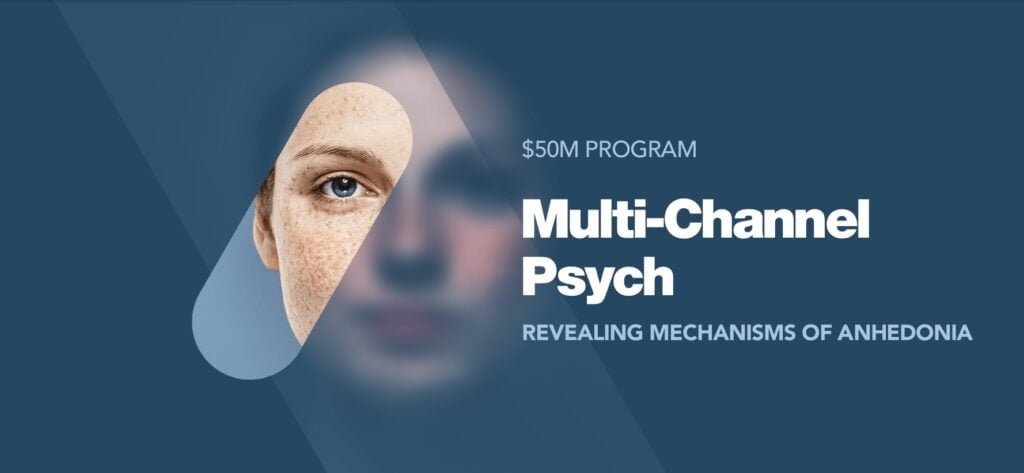
Source: Wellcome Leap, https://wellcomeleap.org/mcpsych/
Those behind Wellcome Leap frame the problem they aim to tackle with this program as follows:
“We understand that synaptic connections serve as the currency of neural communication, and that strengthening or weakening these connections can facilitate learning new behavioral strategies and ways of looking at the world. Through studies in both animal models and humans, we have discovered that emotional states are encoded in complex neural network activity patterns, and that directly changing these patterns via brain stimulation can shift mood. We also know that disruption of these delicately balanced networks can lead to neuropsychiatric illness.” (emphasis added)
They add that “biologically based treatments” for depression “are not being matched to the biology of the human beings they’re being used in,” and, thus, treatments for depression need to be tailored “to the specific biology” of individual patients. They clearly state that what needs to be addressed in order to make such personal modifications to treatment is to gain “easy access to the biological substrate of depression—i.e. the brain.”
Wellcome Leap’s program description notes that this effort will focus specifically on anhedonia, which it defines as “an impairment in the effort-based reward system” and as a “key symptom of depression and other neuropsychiatric illnesses.” Notably, in the fine print of the document, Wellcome Leap states:
“While there are many definitions of anhedonia, we are less interested in the investigation of reduced consummatory pleasure, the general experience of pleasure, or the inability to experience pleasure. Rather, as per the description above, we will prioritize investigations of anhedonia as it relates to impairments in the effort-based reward system—e.g. reduced motivation to complete tasks and decreased capacity to apply effort to achieve a goal.”
In other words, Wellcome Leap is only interested in treating aspects of depression that interfere with an individual’s ability to work, not in improving an individual’s quality or enjoyment of life.
Leap notes, in discussing its goals, that it seeks to develop models for how patients respond to treatments that include “novel or existing behavior modification, psychotherapy, medication, and neurostimulation options” while also capturing an individual’s “genome, phenome [the sum of an individual’s phenotypic traits], [neural] network connectivity, metabolome [the sum of an individual’s metabolic traits], microbiome, reward processing plasticity levels,” among others. It ultimately aims to predict the relationship between an individual’s genome to how “reward processing” functions in the brain. It implies that the data used to create this model should involve the use of wearables, stating that researchers “should seek to leverage high frequency patient-worn or in-home measurements in addition to those obtained in the clinic, hospital or laboratory.”
One of the main research areas included in the program looks to “develop new scalable measurement tools for reliable and high-density quantification of mood (both subjectively reported and objectively quantified via biometrics such as voice, facial expression, etc.), sleep, movement, reward system functioning, effort/motivation/energy levels, social interaction, caloric intake, and HPA axis output in real-world situations.” The HPA (hypothalamic-pituitary-adrenal) axis is mentioned throughout the document, and this is significant as it is both a negative and positive feedback system regulating the mechanisms of stress reactions, immunity, and also fertility in the human body. The latter is especially important given the Wellcome Trust’s ties to the UK eugenics movement. It is also worth noting that some commercially available wearables, such as Amazon’s Halo, already quantify mood, sleep, and movement.
The program’s authors go even further than the above in terms of what they wish to monitor in real time, stating, “We specifically encourage the development of non-invasive technology to directly interrogate human brain state.” Examples include “a non-invasive spinal tap equivalent,” “behavioral or biomarker probes of neural plasticity,” and “single-session neural monitoring capabilities that define a treatment-predictive brain state.”
In other words, this Wellcome Leap program and its authors seek to develop “non-invasive” and, likely, wearable technology capable of monitoring an individual’s mood, facial expressions, social interactions, effort and motivation, and potentially even thoughts in order to “directly interrogate human brain state.” To think that such a device would stay only in the realm of research is naive, especially given that WEF luminaries have openly spoken at Davos meetings about how governments plan to use such technology widely on their populations as a means of pre-emptively targeting would-be dissent and ushering in an era of “digital dictatorships.”
The focus on treating only the aspects of depression that interfere with a person’s work further suggests that such technology, once developed, would be used to ensure “perfect worker” behavior in industries where human workers are rapidly being replaced with AI and machines, meaning the rulers can be more selective about which people continue to be employed and which do not. Like other Wellcome Leap programs, if completed, the fruits of the Multi-Channel Psych program will likely be used to ensure a population of docile automatons whose movements and thoughts are heavily surveilled and monitored.
The Last Leap for an Old Agenda
Wellcome Leap is no small endeavor, and its directors have the funding, influence, and connections to make their dreams reality. The organization’s leadership includes the key force behind Silicon Valley’s push to commercialize transhumanist tech (Regina Dugan), the “architect” of the MEMS industry (Ken Gabriel), and the “ruler” of the burgeoning genetic-sequencing industry (Jay Flatley). It also benefits from the funding of the world’s largest medical-research foundation, the Wellcome Trust, which is also one of the leading forces in shaping genetics and biotechnology research as well as health policy globally.
A 1994 Sunday Times investigation into the Trust noted that “through [Wellcome Trust] grants and sponsorships, government agencies, universities, hospitals and scientists are influenced all over the world. The trust distributes more money to institutions than even the British government’s Medical Research Council.”
It then notes:
“In offices on the building’s first floor, decisions are reached that affect lives and health on scales comparable with minor wars. In the conference room, high above the street, and in the meeting hall, in the basement, rulings in biotechnology and genetics are handed down that will help shape the human race.”
Little has changed regarding the Trust’s influence since that article was published. If anything, its influence on research paths and decisions that will “shape the human race” has only grown. Its ex-DARPA officials, who have spent their careers advancing transhumanist technology in both the public and private sectors, have overlapping goals with those off Wellcome Leap. Dugan’s and Gabriel’s commercial projects in Silicon Valley reveal that Leap is led by those who have long sought to advance the same technology for profit and for surveillance. This drastically weakens Wellcome Leap’s claim to now be pursuing such technologies to only improve “global health.”
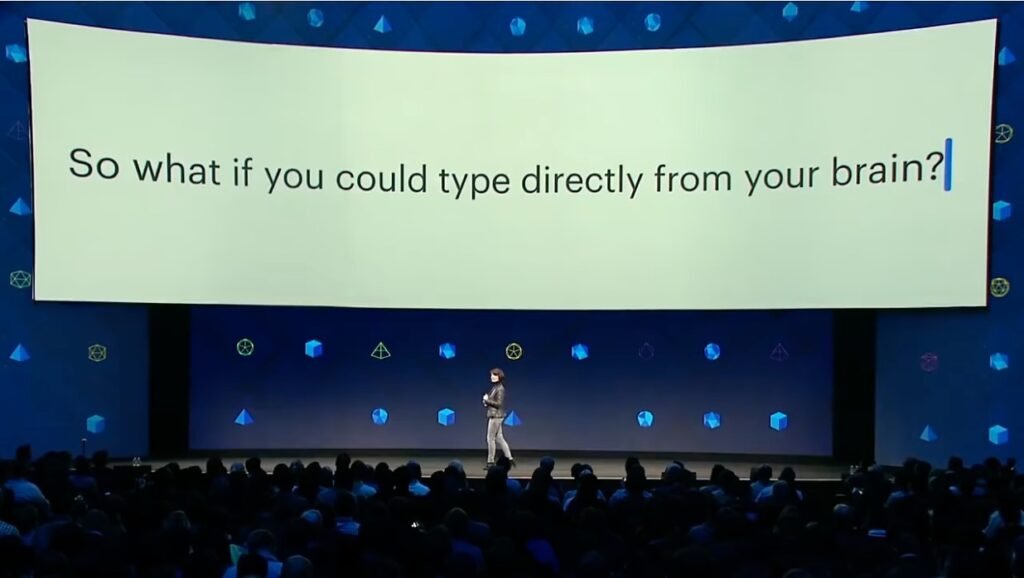
Regina Dugan’s Keynote at Facebook F8 2017. Source: YouTube
Indeed, as this report has shown, most of these technologies would usher in a deeply disturbing era of mass surveillance over both the external and internal activities of human beings, including young children and infants, while also creating a new era of medicine based largely on gene-editing therapies, the risks of which are considerable and also consistently downplayed by its promoters.
When one understands the intimate bond that has long existed between eugenics and transhumanism, Wellcome Leap and its ambitions make perfect sense. In a recent article written by John Klyczek for Unlimited Hangout, it was noted that the first director general of UNESCO and former president of the UK Eugenics Society was Julian Huxley, who coined the term “transhumanism” in his 1957 book New Bottles for New Wine. As Klyczek wrote, Huxley argued that “the eugenic goals of biologically engineering human evolution should be refined through transhumanist technologies, which combine the eugenic methods of genetic engineering with neurotech that merges humans and machines into a new organism.”
Earlier, in 1946, Huxley noted in his vision for UNESCO that it was essential that “the eugenic problem is examined with the greatest care and that the public mind is informed of the issues at stake so that much that is now unthinkable may at least become thinkable,” an astounding statement to make so soon after the end of World War II. Thanks in large part to the Wellcome Trust and its influence on both policy and medical research over the course of several decades, Huxley’s dream of rehabilitating eugenics-infused science in the post–World War II era could soon become reality. Unsurprisingly, the Wellcome Trust hosts the archive of the formerly Huxley-led Eugenics Society and still boasts close ties to its successor organization, the Galton Institute.
The over-riding question is: Will we allow ourselves to continue to be manipulated into allowing transhumanism and eugenics to be openly pursued and normalized, including through initiatives like those of Wellcome Leap that seek to use babies and toddlers as test subjects to advance their nightmarish vision for humanity? If well-crafted advertising slogans and media campaigns painting visions of utopia such as “a world without disease” are all that is needed to convince us to give up our future and our children’s future to military operatives, corporate executives, and eugenicists, then there is little left of our humanity to surrender.
Author’s note: Johnny Vedmore contributed to this report.
Doctor fired from University of Saskatchewan after posting online statement asking for “informed consent” on vaccines
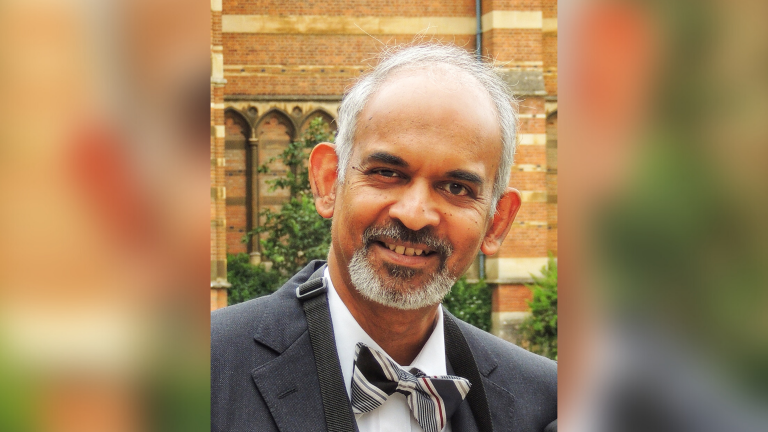
By Christina Maas | Reclaim the Net | June 25, 2021
Dr. Francis Christian was fired from his position at the University of Saskatchewan and is being investigated by the College of Physicians and Surgeons of Saskatchewan for an online statement calling for informed consent when it comes to vaccines.
Dr. Christian has been a surgeon for over 20 years. In 2018, he was appointed to the position of Director of Surgical Humanities Program and Director of Quality and Patient Safety at the University of Saskatchewan. He also co-founded the Surgical Humanities Program and is an editor of the Journal of The Surgical Humanities.
On June 23, Dr. Christian was suspended from all teaching responsibilities, and will no longer be an employee of the University of Saskatchewan from September 2021. The College of Physicians and Surgeons of Saskatchewan is also investigating him after receiving a complaint about a statement he released last week.
In a statement to over 200 doctors, released on June 17, Dr. Christian recommended informed consent when administering COVID-19 vaccines to children. The statement made it clear that he is pro-vaccine, does not represent any group, the University of Saskatchewan, or the Saskatchewan Health Authority.
“I speak to you directly as a physician, a surgeon, and a fellow human being,” Dr. Christian said in the statement before going on to recommend the principle of informed consent so that the patient is “fully aware of the risks of the medical intervention, the benefits of the intervention, and if any alternatives exist to the intervention.”
“This should apply particularly to a new vaccine that has never before been tried in humans… before the vaccine is rolled out to children, both children and parents must know the risks of m-RNA vaccines,” he added.
The surgeon noted that he was yet to hear of “a single vaccinated child or parent who has been adequately informed” about the risks of COVID vaccines in children.
His statement argued that m-RNA vaccines are experimental. Dr. Christian further argues that the vaccines do not qualify for “emergency use authorization” in kids because “Covid-19 does not pose a threat to our kids. The risk of them dying of Covid is less than 0.003% – this is even less than the risk of them dying of the flu. There is no emergency in children.”
Dr. Christian also noted the vaccines have caused “serious medical problems for kids” around the globe, such as “a real and significantly increased risk” of heart inflammation and myocarditis.
The College of Physicians and Surgeons sent him a letter stating that it has “received information that you are engaging in activities designed to discourage and prevent children and adolescents from receiving Covid-19 vaccination contrary to the recommendations and pandemic-response efforts of Saskatchewan and Canadian public health authorities.”
The Litigation Director of The Justice Center for Constitutional Freedoms, the organization representing Dr. Chrisitian in the complaint made against him, expressed his concerns over medical professionals getting censored and punished for expressing views contradicting the government’s narrative.
“We are seeing a clear pattern of highly competent and skilled medical doctors in very esteemed positions being taken down and censored or even fired, for practicing proper science and medicine,” said Cameron.
“Censoring and punishing scientists and doctors for freely voicing their concerns is arrogant, oppressive and profoundly unscientific,” he added.
“Both the western world and the idea of scientific inquiry itself is built to a large extent on the principles of freedom of thought and speech. Medicine and patient safety can only regress when dogma and an elitist orthodoxy, such as that imposed by the Saskatchewan College of Medicine, punishes doctors for voicing concerns,” Cameron concluded.
BA refuse to deny pilots died after covid jab
By Sally Beck | The Conservative Woman | June 25, 2021
SOCIAL media is alive with the story that four British Airways pilots died within a few weeks of each other, with the suggestion that Covid vaccine is involved. A photograph showing condolence books for four male pilots at BA’s headquarters that was circulated on Twitter fanned the flames. As did a voice recording, allegedly from the independent radio station English 909, with a man saying:
‘Things are getting crazy here. I don’t know if I told you but my friend who’s a BA pilot, has just told me that they’ve had the third BA pilot die in the last seven days. The first two were in their 40s and 50s and the third in his mid-thirties. Perfectly fit, no underlying conditions. Gets his second jab and he’s dead within days. Exactly the same as the first two . . .’
Our national airline issued a statement saying that the deaths were not connected. This has been presented by Reuters fact-checkers as a denial, but in fact BA refuse to say whether the pilots had received a Covid-19 vaccine or not.
Pilot deaths are rare, and it may well just be ‘bad luck’ or a ‘coincidence’, but according to a retired RAF pilot who was also an airline captain who flew for several independent British airlines:
‘Airline pilots are a very healthy bunch. I worked for a number of airlines, and I actually cannot recall a pilot dying of any illness before retirement. Four in a few weeks? Unheard of.
‘I am a retired pilot, not a medic, but common sense tells me that if there is a clotting problem with the [AstraZeneca or Johnson & Johnson/Janssen] vaccine then exposure to deep vein thrombosis [a known problem with long haul flying] might be relevant.’
Information about cause of death in the deceased pilots is sketchy. The first to die, on May 4, was Senior First Officer Grant Mercer, age unknown, a keen hockey player described on a crowd-fundraising page set up to pay for his funeral as:
‘An awesome friend who lived for his friends and loved ones. He was where the action was, anything fun or adrenaline-filled he would do and make sure everyone was involved too.’
As the picture of him holding a hockey stick shows, he was a fit man who loved sport. The page does not say how he died.
Pilot Edward Brice-Bennett, 33, died on June 2. His widow Kate is six months pregnant. They also have a daughter Illa, two, and had been married for four years.
An inquest in Salisbury heard how Mr Brice-Bennett was found unconscious beside his bicycle on a public bike trail in Tidworth, Wiltshire, at midday by a member of the public. Paramedics failed to revive him, and he was pronounced dead after 45 minutes.
The inquest was told that Mr Brice-Bennett had suffered internal bleeding, but no cause of death has been ascertained. Toxicology and histology tests were ordered and the inquest adjourned.
Father-of-two Nicholas Synnott, 60, died three weeks ago. He had spent a record 243 days in a Texas hospital battling Covid after being admitted in March last year. His death came six months after he had been discharged from intensive care to his home in Betchworth, Surrey. He punched the air as he left hospital with his wife Nicola, 54, who had spent every day by his bedside, and spoke of his joy at leaving.Their two children are Rebecca, 24, a charity worker, and George, 21, who is understood to be training to be a pilot like his father.
Mr Synnott’s cause of death has not been revealed but the speculation is that he died from complications caused by Covid-19. However, it is known that patients who have had Covid and then receive the vaccine can suffer from antibody dependent enhancement (ADE), which can make the disease worse if you then contract it.
On June 17 via Twitter, BA spokeswoman Helen said: ‘There is no truth whatsoever in the claims that the four deaths are linked.’ She did not say whether the pilots had been vaccinated.
Yesterday, British Airways said that they do not tell staff whether or not to get vaccinated. Asked three times to confirm or deny whether the dead pilots had had Covid vaccines, they declined to comment.
They did say that their colleagues had not all died within the last seven days, which is true, but they did not respond when sent the following request for further information about vaccination:
‘We know that the AZ vax causes blood clots and thrombosis, we know that the Pfizer can cause heart problems. These side effects were not picked up during the trials and jabs will not have been tested on pilots or frequent flying passengers. Is the fact that four BA pilots died within a few weeks connected to the jab? We know that Air India have had 5 pilots die too.
‘There seems to be a pattern developing which needs to be investigated. If air travel can aggravate the recently vaccinated, it may only be a question of taking some time to allow the jab to settle. That way lives could be saved. If we cannot investigate this, many more pilots/passengers may die before a link is confirmed or ruled out. It is really important information.’
Both spokespersons from the pilots’ union, the British Airline Pilots Association (BALPA), Nancy Jackson and Brian Strutton, refused to comment as they said they consider the story to be fake news. They declined to say whether they had investigated.
According to lawyers, three BA captains and other airline crew contacted them back in February concerned that BA were pushing them to take an experimental jab. BALPA were disinterested in taking up their case and they felt stonewalled. The personnel sought legal advice but the result of their negotiations is unknown.
The airline regulator, the Civil Aviation Authority (CAA), have yet to respond.
The as yet unidentified voice in the radio recording says:
‘Because of [the deaths] BA are now in crisis talks with the government about whether to allow vaccinated pilots to fly. The issue with that of course is that about 80 per cent, according to my friend in BA, 80-85 per cent have been injected. You might be down to 10 per cent of pilots able to fly. It’s a small number and a serious issue.’
BA deny that they’re in ‘crisis talks’ with the government and refer to a statement from the Medicines and Healthcare products Regulatory Agency in which Dr Sarah Branch, the director of vigilance and risk management of medicines for the MHRA said:
‘There are currently no restrictions on aviation or other industries and activities post-vaccination. Our advice remains that the benefits of the vaccine outweigh the risks in the majority of people. It is still vitally important that people come forward for their vaccination and for their second dose when invited to do so. We ask anyone who suspects they have experienced a side effect linked with their Covid-19 vaccine to report it to the Coronavirus Yellow Card website.’
There is no Covid third wave in Africa
Alarmist reporting is getting basic facts wrong
By Toby Green | Unherd | June 24, 2021
The last few days have seen an avalanche of reports that a third wave of Covid-19 is underway in Africa. Seasoned coronavirus watchers will not be surprised that the alarm was raised in Geneva. WHO Central issued alarming press releases on June 7th and 17th, with the Regional Director for Africa, Dr Matshidiso Moeti, stating in the latter that “Africa is in the midst of a full-blown third wave”. So what’s happening?
Since the June 7th press release, there have been 1,651 new deaths reported from Covid-19 across the entire continent in 17 days, less than 100 per day. In a continent where 9 million people die annually (roughly 25,000 per day), reported Covid deaths in this “full-blown” third wave thus currently account for roughly 0.4% of daily mortality in Africa. Certainly, there are mortality increases from Covid reported in some countries such as Cape Verde and the Democratic Republic of Congo, but they are not anything like on the scale of what has happened elsewhere.
Moreover, the vast majority of these fatalities have occurred in temperate zones: South Africa, Morocco, Egypt, Algeria, Libya and Tunisia account for 105,000 of the 139,500 deaths reported from Covid-19 across the continent.
Many of the reports on this “third wave” point to the failure to count deaths accurately, and suggest that these figures mask the true problem. Reports from the BBC and the New York Times have pointed to a continent-wide lack of systemic mortality figures. But running at 0.4% of current mortality, and touching a small area of the continent as a whole, even if this was an underestimate by 1000%, Covid would still only be a minor concern to most Africans. In fact, a recent paper disputes these accusations of undercounting: the authors note that “while only 34.6% of countries [in Africa] have complete death registration data… all countries have a system in place, and there is no evidence that COVID-19 mortality data is less accurately reported in Africa than elsewhere”.
What certainly does go under-reported are cases. This is good news, as it indicates that much of the continent’s population has already developed antibodies to Covid-19 through mild infections. In a study from July to October 2020 of mineworkers tested in Ivory Coast, 25.1% had Covid antibodies; meanwhile, a February study in South Africa based on blood donors found antibody levels of 63% in Eastern Cape, 46% in Free State, and 52% in KwaZulu Natal, while a study from Cameroon just published found antibody levels of 32%. These figures far outstrip recorded cases, suggesting that many Africans already have protection from Covid.
However the WHO redefined herd immunity last year as only achievable through vaccination, so it may not want to publicise this. The Guardian last week added to the clamour, reporting on research that had not been peer-reviewed and which claimed that Covid infection did not provide immunity. Ironically, a series of studies published in Nature the week before had found that “the evidence thus far predicts that infection with SARS-CoV-2 induces long-term immunity in most individuals”.
The evidence from Africa is quite clear, in fact. Large sections of the population have now developed Covid antibodies, and death rates are low compared to other chronic illnesses. Herd immunity does not have to be achieved through vaccination, either in Africa or elsewhere. But none of these conclusions fit with the catastrophic decisions taken by global policy elites over the past year, so they won’t be coming to a television news channel near you any time soon.
Toby Green is the author of The Covid Consensus: The New Politics of Global Inequality (Hurst).
Why Hasn’t the Government Published a Cost-Benefit Analysis of Lockdown?
By Noah Carl • Lockdown Sceptics • June 24, 2021
When considering a policy as unprecedented and far-reaching as a nationwide lockdown, you’d assume the Government would carry out a cost-benefit analysis. After all, such analyses are routine in policy-making.
For example, the Treasury maintains a document called ‘The Green Book’, which gives detailed guidance on how to compute the costs and benefits of particular actions. It refers to concepts such as opportunity cost, discount factors and adjusting for inflation.
You might say there wasn’t much time to carry out a detailed cost-benefit analysis before the first lockdown last March. (Though the Government could have provided a few rough numbers for the public to scrutinise.) However, it’s now more than a year later, and there still hasn’t been any attempt to weigh the costs and benefits.
In a report for the Institute of Economic Affairs published last December, the economist Paul Ormerod argued that the Government’s refusal to crunch the numbers reflects a general overreliance on epidemiological expertise, at the expense of economic expertise.
As Russ Roberts, another economist, has observed, “Knowing a lot about the human body does not make you an expert in risk analysis, tradeoffs, or unintended consequences.” Note: this is not to imply that all or even most economists are opposed to lockdowns, but simply that key insights from that discipline have been overlooked during the course of the pandemic.
Several cost-benefit analyses of the UK lockdowns have been published by persons outside the Government, and each one has concluded that the costs almost certainly outweighed the benefits.
Since the NHS typically pays up to £30,000 to extend a patient’s life by one quality-adjusted life-year, a reasonable estimate of the benefits of lockdown can be obtained by multiplying the expected number of life-years saved by 30,000.
For example, if we assume (generously) that lockdowns saved 50,000 lives and prevented 500,000 people from getting long COVID, then the total benefits would be about £16.5 billion. This figure then has to be weighed against some measure of the costs (including effects on the economy, health, education and civil liberties). Given that the fall in GDP alone last year was over £220 billion, it seems very unlikely that lockdowns would pass a cost-benefit test.
The Government’s lack of interest in cost-benefit analysis was highlighted in a recent LinkedIn post by Daniel Fujiwara – an expert in policy evaluation. Fujiwara was apparently invited to “meet with senior Government officials to discuss the pros and cons of lockdown”. However, despite offering his advice and input pro-bono, he “never heard back from them”.
In the post, Fujiwara goes on to say, “Lockdowns should have stopped at the point where an additional day of #lockdown causes more damage to our society than it benefits us… My analysis of the impacts of lockdown last year suggests that we have gone well beyond this threshold.”
One can only assume that the Government’s failure to publish even basic estimates of the costs and benefits of lockdown is due to fear of what those estimates might show…
So Matt Hancock groped his assistant…. who cares?
By Catte Black | OffGuardian | June 25, 2021
Oh gosh, Matt Hancock is being outed as a sleazebag.
Who knew, right?
The Sun published pics purporting to be of him and his girlfriend kissing in an elevator and even the BBC thinks this is newsworthy.
So this is serious now. You can sign off on mass murder all you like, Matt, but when you start breaking social distancing rules by groping married ladies in elevators that’s a step too far.
His lies and hypocrisy are puke-inducing of course. Some people who actually thought the ruling elite really believed in their social distancing, triple masking, hand-sanitizing rules may well be deeply shocked. Many of the more clued in are cheering the humiliation fest. Fair enough I guess. It’s certainly gratifying to see some psychopathic creep suddenly shamed or called to account.
And it’s probably harmless. Isn’t it?
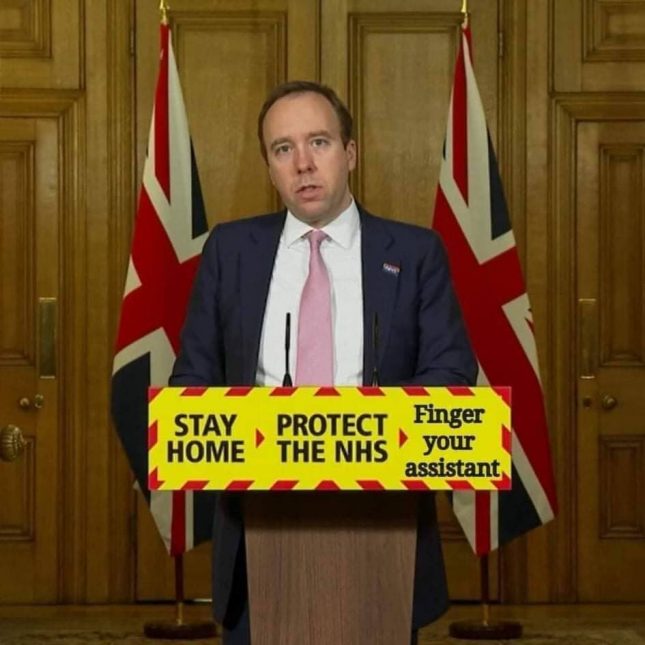
Or then again maybe not.
What actually are these periodic ‘outings’ we witness?
What does it actually mean when an establishment billionaire-owned media outlet somewhere on the permitted and phony spectrum of Left/Right ‘leaks’ some grainy footage, or a clumsily revealing email, that ends up shaming some erstwhile pillar of the prevailing narrative?
Is the system finally getting a conscience? Are things gonna be ok, now [insert hate figure here] is gone?
Of course not. No one seriously thinks that, do they?
The establishment is essentially amoral. A psychopathic hive mind entity without conscience or ethics. It doesn’t expose or reject one of its own unless it sees advantage to itself in doing so. When one of them is publicly humiliated and cast out it’s because he/she has failed in a power play, or been ousted in a palace coup, or is earmarked as a good sacrifice to appease the restless mob.
You see, to the 1%, the 99% are caged dogs. Our masters need to gauge the frustration and make sure it doesn’t spill over. Being thrown a ‘victim’ to rend every now and again is a nice way of venting tension while also giving us the impression the system self-regulates.
It keeps us distracted occupied and works off our aggression and represents NO THREAT to vested interests.
Even the supposed ‘victim’ will likely just ride out the storm or, if fired from his job, get a fat fee and ‘retire’ happily, only to be readmitted to the fold after a short exile.
Ok, maybe in very extreme cases, they’ll occasionally get ‘suicided’, though that’s usually reserved for genuine outsiders with an inconvenient conscience.
Whatever way it plays out, it’s a show. We are groundlings gawping at the painted actors on the stage. Our reaction is anticipated, manipulated, catered for and ultimately despised.
And anyhow we know, don’t we, that rending one of these Ringwraiths is missing the point. They are all replaceable servants of the Machine. Well paid, cosily ensconced – but ultimately expendable.
While we’re tearing the latest ‘victim’ with our teeth we’re forgetting all that and forgetting the real enemy.
And the real enemy is laughing at us.
I hope to see us become more sophisticated. Ignore these staged witch hunts, these hate sessions, these deliberately seeded water-cooler controversies about what Fauci knew or whether Hancock should go…yada y yada y pues yada.
If we are falling for this every time we need to get to know our enemy and its tricks a lot better, or we don’t have much chance of winning in this latest and most important struggle.
McAfee’s Widow Claims Her Husband Did Not Kill Himself, Blames US Authorities
By Andrei Dergalin – Sputnik – 25.06.2021
Janice McAfee, the widow of anti-virus tycoon John McAfee who was found dead in his prison cell in Barcelona this week where he was awaiting extradition to the United States, has demanded a thorough investigation into the incident.
While authorities in Spain have already suggested that “everything at the scene” in McAfee’s cell indicated that he killed himself, as AP put it, Janice insisted that his last words to her were not “the words of someone who is suicidal.”
“His last words to me were ‘I love you and I will call you in the evening’,” she told reporters outside the Brians 2 penitentiary where she arrived to collect her husband’s belongings.
The day before McAfee was found dead, Spain’s National Court announced it had agreed to extradite him to the US, though that decision was not final.
“We had a plan of action already in place to appeal that decision,” Janice McAfee said. “I blame the U.S. authorities for this tragedy: Because of these politically motivated charges against him my husband is now dead.”
John McAfee was arrested in Spain in October over tax-related charges filed by American prosecutors in Tennessee, and had been detained at the Brians 2 Penitentiary Centre since.
Weeks before his demise, McAfee tweeted that, were he ever to die by suicide, it would not be his “fault.”
Featured Video

No Threat Can Force Iran’s Surrender /Trita Parsi & Lt Cl Daniel Davis
or go to
Aletho News Archives – Video-Images
From the Archives
An Expert Military Analysis of War with China
Actually, None is Necessary
By Fred Reed • Unz Review • December 13, 2020
The Correlation of Armed Forces: U.S. goods and services trade with China totaled an estimated $634.8 billion in 2019. Exports were $163.0 billion; imports were $471.8 billion. The U.S. goods and services trade deficit with China was $308.8 billion in 2019. Trade in services with China (exports and imports) totaled an estimated $76.7 billion in 2019. Services exports were $56.5 billion; services imports were $20.1 billion. The U.S. services trade surplus with China was $36.4 billion in 2019.
There is talk within the Washingtoniat of a possible war with China. Steve Bannon, who apparently was dropped on his head as a child, actually favors such a war. We hear the usual shoo-the-boobs alarm about how the Chinese are doing something terrible and we must gird our loins and American values and show them what for, bow wow, woof. The danger is that the current game of who-blinks-first in Asian waters might actually provoke a shooting war. You know the kind of thing: One warship refuses to get out of the way of another, a collision ensues, some retard lieutenant who signed up on waivers opens fire, and we’re off and running. It is not a good idea to let children play with matches.
The said war is discussed either in emotional terms by idiots or in purely naval terms by those familiar with such things, so we hear of the First Island Chain and the Second Island Chain and whose missiles against the other’s missiles and so on. This would be appropriate if we were fighting World War Two again. Which we aren’t. Let’s take a quick-and-dirty look at how such a war might go.
To begin the war, America would overestimate itself and underestimate China. This is doctrine in the Pentagon. … continue
Blog Roll
 Aletho News
- Theodore Postol: Iran’s Missiles & Drones Were Underestimated
- Iran To Target Military Industrial-Tech Complex That Facilitated Gaza Genocide
- Collapsing Empire: The Resistance Disarms ‘Israel’
- Suicide Should Not Be a Government Service
- Rethinking America’s greatest threat: Iran vs. Israel-Firsters
- Iran accuses adversaries of false flags to strain Turkey ties
- Poland rules out sending Patriot missiles to US/Israel amid war on Iran
- Tehran approves new Hormuz plan with major restrictions
- No Threat Can Force Iran’s Surrender /Trita Parsi & Lt Cl Daniel Davis
- UK’s New Pandemic Plan Would Turn Big Tech Into a Mass Location Tracking Network
- If Americans Knew
- Ann Coulter Rips Into Fox News for Iran War Coverage, Compares to False Rigged 2020 Election Reporting
- Joe Kent Urges Americans To Call White House and Congress To Object To Sending Troops Into Iran
- DNC Resolution to Reject AIPAC Funding Puts Democratic Leaders in the Hot Seat
- Swedish foundation to build 400 schools as over 650,000 Gaza children remain without education for 2 years
- Israeli army admits photshopping image of slain Lebanese journalist
- This is how Israel is systematically killing health workers under the cover of war in Lebanon
- Carrying life under fire: Israeli invasion of Lebanon leaves pregnant women facing deadly risks
- Champagne all around for the new death penalty (for Palestinians) law – Not a ceasefire Day 172
- Why are Palestinian books struggling to be seen on Amazon?
- The Line Between Affinity and Conspiracy
- No Tricks Zone
- New Study Finds Warming Saves Lives…Cold Temperatures 12 Times More Deadly Than Excess Heat
- German Science Blog Accuses PIK Climate Institute Of Hallucinating Climate Tipping Points
- Devastating Assessment Of Comirnaty Vaccine By Former Senior Pfizer Europe Toxicologist
- New Study: CO2 Is ‘Effectively Negligible’ As An Explanatory Climate Change Factor Since 2000
- Former Pfizer Toxicologist Dr. Helmut Sterz Tells Bundestag Hearing Pfizer Vaccine Should Have Never Been Approved
- Energy Expert: Germany’s Nuclear Phaseout Was A “500 Billion Euro Mistake”
- New Research: South Australia’s Mid-Holocene Sea Surface Temperatures Were 4°C Warmer Than Today
- Storing Green Energy To Last Germany 10 Days Would Require A 60-Million Tonne Battery
- New Studies: UK Sea Levels Were 4 Meters Higher Than Today During The Mid-Holocene
- Destructive Green New Deal: German Energy And Metal Group Warns Of Drastic Crisis
 Aletho News