American “human rights” against the people of Yemen

By Viktor Mikhin – New Eastern Outlook – 07.12.2022
As US officials travel the world lecturing everyone on human rights, that same world has accused Washington of being the number one human rights violator. Saudi Arabia’s war against Yemen, instigated and widely supported by the West and the United States in particular, is a prime example of this.
On March 25, 2015, the then Saudi Arabian Ambassador to the United States, Adel al-Jubeir, under pressure from the American ruling circles, declared war on Yemen. This was done specifically from the American capital, Washington. He said that the military action would be “aimed at protecting the people of Yemen,” adding that “the operation will be limited in nature.”
The alleged “limited in nature” war has already turned into eight years of almost daily aerial bombardments in the provinces of the Saudi kingdom’s southern neighbor. Prior to the war, Yemeni officials argued that Riyadh controlled nearly every sector of Yemeni society, from the economy to culture, and that the time had come for independence, sovereignty and territorial integrity. This war still brings innumerable hardships and misfortunes to the Yemenis, from which the “democratic” United States shamelessly capitalizes.
The list of US support for the Saudi war in Yemen is so long that senior Yemeni officials say it was America that started the war against their country, using the Saudis and other Gulf kingdoms as its “proxies.” Human rights organizations accuse other Western countries of complicity in what they call war crimes against the defenseless Yemeni people. But the same “democratic” United States remains conspicuously silent about this, forbidding not only its own, but also the Western media to write about this massacre in negative terms.
In March 2015, a Bacchanalia of American politicians, economists and financiers emerged, who all together and individually simply pitted Riyadh against Yemen. Even the American media did not hide this interest in unleashing another war on the Arabian Peninsula. First, there were huge orders from the Saudis for the purchase of a wide variety of weapons, and the American military-industrial complex was loaded to capacity, with work conducted in three shifts. It is quite natural that the prices for these weapons were very high, and the Saudis did not even discuss them, buying weapons in bulk for a future war. Second, having got stuck in this difficult war against the fraternal Yemeni people, Riyadh could not take any independent steps on the world stage, obediently trailing in the wake of Washington’s policy. And besides, the Washington administration was pleased that the Yemenis had been “taught a lesson” by the Saudis, avenging the unsuccessful drone war against Yemen that the Pentagon had unleashed and pursued for a whole decade.
When war broke out in Yemen, the US Department of Defense immediately provided hundreds of billions of dollars worth of weapons to the Saudi-led coalition. Among the many other types of support the US provided to the Saudis during the war was intelligence products to be targeted by US-made Saudi warplanes. The Pentagon has also provided military advice and logistical support, such as air-to-air refueling of military aircraft, while Washington said it had authorized US contractors to service Saudi military aircraft.
But the war did not go quite as America had planned. Washington simply did not expect the brave resistance of the Yemeni people and their staunch support for the popular revolution led by the Houthi movement (officially called Ansar Allah). The Pentagon had to urgently intervene in hostilities, supplying not only modern weapons, but also air defense systems. And yet, the Yemenis delivered several sensitive strikes against Saudi forces, including successfully shelling an oil field and refinery on Saudi territory. These actions led to a surge in oil prices and sowed panic among the ruling circles in Saudi Arabia.
But the war has created an extremely difficult situation for civilians living in the poorest country in Western Asia. Especially for Yemeni children who are suffering from untold humanitarian conditions. Hundreds of thousands of people have died during the hostilities, due to American-made bombs. Saudi pilots, trained in the US and the UK, using American aircraft at the prompting of American military intelligence dropped American bombs on Yemeni houses, schools, hospitals, funeral parlors and foreign humanitarian organizations, forcing them to withdraw staff from the country.
Here is what the Yemeni monitoring group, Entesaf Organization for Women and Child Rights, recently published (compared to data from other groups and institutions, these are very conservative numbers):
– 8,116 children have been killed and wounded since the beginning of the US-Saudi war;
– 5,559 Yemeni children have become disabled as a result of hostilities since the beginning of the war;
– 632,000 children in Yemen are suffering from acute malnutrition that threatens their lives with death during the current year;
– 2,400,000 children do not attend school, forming a generation that has completely lost education.
Entesaf has documented that the number of Yemeni people with disabilities has increased from three million before the start of the US-backed war to 4.5 million today. This highlights the consequences of Yemen’s total blockade (in addition to the war being waged on it), which has placed its airspace, sea and land under unprecedented blockade by the West.
The organization also drew attention to the increase in child labor in Yemen due to the aggression and total blockade, pointing out that 1.4 million child laborers are deprived of their most basic rights, and that about 34.3% of child laborers are between the ages of 5 and 17. These new occurrences of child labor during the war are four times the rate of child labor than before the start of the war in Yemen.
In the healthcare sector, it is reported that public and private hospitals across the country are facing the threat of closure due to the blockade and detention by the US and Saudi Arabia of ships with petroleum derivatives.
Entesaf holds the coalition led by the US and Saudi Arabia responsible for all crimes and violations against civilians, especially children, in the last eight years of the war, calling on the international community, global organizations, human rights and humanitarian organizations to be held accountable for violations and heinous massacres that occurred against civilians. The organization also called on the international community to take effective and positive action to end the aggression and blockade against the civilian population and form an independent international commission to investigate all crimes committed against the Yemeni people and to bring to justice all those found complicit.
In August 2018, munitions experts reported that the bomb fired by Saudi warplanes that killed dozens of Yemeni children on a school bus was a 500-pound (227 kg) laser-guided MK 82 bomb made by Lockheed Martin, one of America’s largest arms manufacturers. Photos of the shrapnel taken immediately after the attack were sent to CNN, and a cameraman working for the company filmed the shrapnel footage. Munitions experts confirmed that the numbers on it identified Lockheed Martin as its manufacturer and that this particular MK 82 was a Paveway, which is a laser-guided bomb.
The CNN report said some of the bodies were so mutilated that identification was impossible, leaving behind scraps of school textbooks, mangled metal and one backpack. Of the 51 people who died in the attack, 40 were children. Another 79 people were injured, 56 of them also children.
Among the tens of thousands of Saudi airstrikes, another one was documented by CNN – a market strike by a US-supplied MK 84 precision bomb that killed 97 Yemenis. The bomb was very similar to the one that targeted a funeral parlor in October 2016, killing hundreds and injuring innumerable others.
These are just a few of the tens of thousands of similar attacks using American weapons to intimidate the Yemeni people into submission. However, the country’s armed forces, women and children have shown unprecedented resilience in their struggle.
Also during the war in Yemen, Washington’s complete disregard for human rights and its attempts to deprive children of their right to life was demonstrated. This applies not only to Yemen, but to US wars around the world that have resulted in unprecedented suffering for children, from Cuba and Vietnam to Western Asia and beyond. And it is the same United States that claims to be the flag-bearer of human rights and uses this pretext for its own political agenda in attacking numerous other countries.
Can Hungary act as a bridge between Iran and Europe?
By Mohammad Salami | The Cradle | December 7, 2022
Upon signing the protocol of the third session of the joint commission for economic cooperation between Iran and Hungary on 16 November, Hungarian Foreign Minister Péter Szijjártó expressed support for Iran’s right to the peaceful use of nuclear energy.
He also wrote on his Facebook page that the Hungarian government intends to integrate Iran into the international cooperation system and that Budapest plans to expand economic cooperation with sanctioned Iran with the aim of “normalizing the situation.”
After regaining power in 2010 and forming a government, Hungary’s ruling Fidesz Party defined its main priority as improving the nation’s economy, creating jobs, and attracting foreign direct investment (FDI). Budapest gradually moved to provide the necessary legal platforms through which foreign companies could make investments, especially in the industrial sector.
Arguably, Hungary’s foreign policy is therefore heavily focused on the development of economic relations with foreign partners to maintain and continue economic growth and attract more FDI.
Between 1989 and 2019, Hungary received approximately $97.8 billion in FDI, mainly in the banking, automotive, software development, and life sciences sectors. The EU accounts for 89 percent of all in-bound FDI.
Hungary’s “Eastern Opening” policy
However, the presence of eastern countries and the increase in the volume of trade and investment in Hungary is particularly noteworthy. This presence is due to Hungary’s “Eastern Opening” policy, which has become one of the principles of the country’s foreign policy and economy since 2012.
The global financial and economic crisis of 2007-2009 and its impact on the European economy was one of the catalysts for the Hungarian government in launching this initiative. As a result of this policy, China has become Hungary’s fifth most important trade partner with bilateral trade volume in 2020, having increased by more than 25 percent year-on-year.
Regardless of the debatable success of this policy, there are two points which make Hungary willing to continue this policy resolutely:
First, Hungary’s location as the gateway to Western Europe positions Budapest as an important access point to those markets, even potentially a logistics and transportation hub between the EU and Asia.
Second, is Budapest’s assumption that a genuine representation of Hungarian national interests is only possible once the country attains more global visibility and is able to parlay that into support from relevant international and regional players.
Iran and Hungary
Iran-Hungary relations cannot be separated from Budapest’s key “Look to the East” policy. Hungary has a special view of the east, including West Asia, and considers Iran to be an important strategic player in the region.
“The Hungarian government has always supported Iran’s balanced approach in international forums and the further development of bilateral ties,” Péter Szijjártó said in July.
The cooperation between Budapest and Tehran has been prioritized in several fields: energy, trade, migration, student exchanges, and support for Iran’s nuclear negotiations.
In the economic sector, Iran and Hungary have signed three economic cooperation protocols to date. Most of the cooperation is in the field of agriculture, animal husbandry, and healthcare. Moreover, the volume of economic trade between the 2nd and the 3rd Joint Economic Cooperation Commission has increased by 55 percent.
Following a recent meeting in Budapest, Iran’s Finance and Economic Affairs Minister Ehsan Khandouzi announced the two countries’ plans for boosting their annual bilateral trade to €100 million. In addition, Iran and Hungary signed a memorandum of understanding in late 2021 to expand economic cooperation in the fields of water treatment, seeds, power plants, animal feed and building materials, and joint investment opportunities.
“We would like Iran to return to the system of peaceful collaboration within the international community as soon as possible. We believe that economic cooperation may be the first step in this return,” Szijjártó said on his last visit to Iran.
In addition to economic cooperation, there are 2000 Iranian students in Hungary, and the government plans to grant scholarships to 100 Iranian students. Budapest also appreciated Iran’s role in preventing the flow of migrants to Hungary, especially Afghans, and politically supports Iran’s acquisition of peaceful nuclear technology.
Capitalizing on Budapest’s strained EU ties
From Iran’s point of view, Hungary can help it to bypass sanctions, enter global markets, and act as a mediator in easing belligerent European policies against Iran. Budapest’s tension with the EU in adopting policies that, in some cases, violate the EU’s own procedures and regulations, also incentivizes Iran to deepen its strategic partnership with Hungary to help further Tehran’s interests in Europe.
Hungary and the EU have been clashing for years on issues ranging from judicial independence to media freedoms and refugee rights. In September, several EU lawmakers declared that Hungary had become “a hybrid regime of electoral autocracy.”
In turn, Budapest has repeatedly accused Brussels of undermining its national interests and meddling in its internal politics. In 2018, Hungary passed a law in that criminalized helping illegal asylum seekers, which punishes violators with up to a year in prison. The EU strongly condemned the new legislation, but Hungary stood firm.
An eastward outlook
The opposition of the EU to Hungary and the adoption of its closer alignment with the east has prompted Budapest to take a positive, more proactive view toward countries like China, Russia, Iran, and to some extent, Turkey.
Currently, Hungary enjoys strong economic and energy relations with Russia. By opposing a visit by the special rapporteur on human rights to Russia, Budapest became the only European capital to take this stance.
While Hungary voted in favor of two 2014 resolutions against Russia over Ukraine, it has also opposed an €18 billion EU aid package to the embattled state.
Budapest is highly dependent on Moscow for energy supplies with 85 percent of the country’s gas and 65 percent of its oil supplied by Russia. Unlike the other energy dependent EU members, Hungarian authorities are strongly and openly opposed to sanctions against Russia, particularly in the energy sector.
In regard to 2022 energy shortages, Hungary’s foreign minister has even encouraged Europe to look to Tehran: “Iran’s stronger entry to the global energy market is in line with the interests of the world’s entire countries and nations.”
On the issue of Sweden and Finland joining NATO, Hungary – like Turkey – has declared its opposition to the plan, which is essentially opposition to the expansion of NATO in Europe or to the east.
Hungary’s common positions with Russia and the eastern bloc inevitably overlaps with some of Iran’s policies. By coordinating with both Europe and West Asia, deepening strategic relations between Budapest and Tehran can become a means to advance their mutual goals and interests.
At the same time, Hungary will be wary of potential western sanctions if it is viewed as growing too close to Iran.
Xi’s visit and the future of the Middle East
By Ramzy Baroud | MEMO | December 7, 2022
The problem with most Western media’s political analyses is that they generally tend to be short-sighted and focused mostly on variables that are of direct interest to Western governments.
These types of analyses are now being applied to understanding official Arab attitudes towards Russia, China, global politics and conflicts.
As Chinese President Xi Jinping prepares to lead a large delegation to meet with Arab leaders in Saudi Arabia on 9 December, Western media conveys a sense of dread.
The Chinese leader’s visit “comes against the backdrop” of the Biden Administration’s “strained ties with both Beijing and Riyadh” over differences, supposedly concerning “human rights and Russia’s invasion of Ukraine,” Reuters reported.
The same line of reasoning was parroted, with little questioning, by many other major Western media sources, falsely suggesting that ‘human rights’, along with other righteous reasons, are the main priority of the US and Western foreign policy agenda.
And, since these analyses are often shaped by Western interests, they tend to be selective in reading the larger context. If one is to rely exclusively or heavily on the Western understanding of the massive geopolitical changes around the world, one is sure to be misled. Western media wants us to believe that the strong political stances taken by Arab countries – neutrality in the case of war, growing closeness to China and Russia, lowering oil output, etc – are done solely to ‘send a message‘ to Washington, or to punish the West for intervening in Arab affairs.
Seen through a wider lens, however, these assumptions are either half-truths or entirely fabricated. For example, the OPEC+ decision to lower oil output on 5 October was the only reasonable strategy to apply when the global market’s demand for energy is low. Additionally, Arab neutrality is an equally reasonable approach considering that Washington and its Western allies are not the only global forces that matter to the Arabs. It is equally untrue that the Middle East’s growing affinity with Asia is borne out of recent dramatic events, but a process that began nearly two decades ago, specifically a year following the US invasion of Iraq.
In 2004, China and the Arab League established the China-Arab States Cooperation Forum.
CASCF officially represented the Chinese government and all 22 members of the Arab League, eventually serving as the main coordination platform between China and the Arabs. This has given China the advantage of investing in a collective strategy to develop trade, economic and political ties with the entirety of the Arab world. On the other hand, Arabs, too, had the leverage of negotiating major economic deals with China that could potentially benefit multiple Arab states simultaneously.
An extremely important caveat is that CASCF was predicated in what is known as the “Five Principles of Peaceful Coexistence.” Based on the Westphalian norms of state sovereignty, the five principles seem to be founded on an entirely different paradigm of foreign relations, compared to the West’s approach to the Middle East and the Global South, in general, extending from the colonial periods to the neo-colonialism of post-World War II: mutual respect for “territorial integrity and sovereignty”, “non-aggression”, “non-interference”, and so on.
Chinese-Arab relations continue to follow this model to this day, with very little deviation. This validates the claim that collective Arab political attitudes towards China and Xi’s visit to the Middle East are hardly an outcome of any sudden shift of policies resulting from the Russia-Ukraine war of recent months.
This is not to suggest that Arab and Chinese relations with the US and the West had no impact on the nature of the speed of Chinese-Arab ties. Indeed, the Chinese model of ‘peaceful coexistence’ seems to challenge the henceforth modus operandi at work in the Middle East.
In 2021, China announced projects to build a thousand schools in Iraq, a piece of news that occupied substantial space in Arab media coverage. The same can be said about China’s growing economic – not just trade – influence in Arab countries.
China’s lucrative Belt and Road Initiative, announced in 2013, fits seamlessly into the political infrastructure of Arab-Chinese ties, which were built in previous years. According to the Asharq Al-Awsat newspaper, Riyadh was the largest recipient of Chinese investments within the BRI during the first half of 2022.
Starting in March, Saudi Arabia agreed in principle to sell its oil to China using the Chinese Yuan instead of the US dollar. When implemented, this decision will have irreversible repercussions on the global market but also on the future status of the dollar.
Assuming that such mammoth changes in global geopolitics were an outcome of the immediate need for the Arabs to ‘send a message’ will continue to impair the West’s ability to truly appreciate that the changes underway, not only in the Middle East but worldwide, are part of permanent shifts to the world’s political map. The sooner the West achieves this realisation, the better.
Considering all of this, it would be unfair – in fact, misguided – to suggest that large political entities like China and Arab countries combined are shaping their foreign policy agendas, thus staking their futures, on knee-jerk political reactions to the attitude of a single American President or administration.
Washington rejects ICC probe into Israel’s murder of Al Jazeera reporter
The Cradle | December 7, 2022
US State Department spokesperson Ned Price on 6 December said the White House opposes Al Jazeera taking the murder of Palestinian-American reporter Shireen Abu Aqla to the International Criminal Court (ICC).
“We oppose it,” Price told reporters when pressed about the ICC probe. He went on to add Washington maintains its “longstanding objections to the ICC’s investigation into the Palestinian situation and the position the ICC should focus on its core mission, and that core mission of serving as a court of last resort and punishing and deterring atrocity crimes.”
Abu Aqla was shot dead by Israeli troops on 11 May as she was covering a raid in the Jenin refugee camp. At the time of her death, she was wearing full body armor with clearly visible press markings.
Washington has long opposed Palestinian-led efforts to take up Israeli human rights abuses with international bodies, including the UN and the ICC.
The ICC has reportedly reviewed the evidence presented by the Qatari news network, and will make a decision on whether or not it will launch an investigation. The uncertainty comes naturally, as Israel has attempted to shut down any form of an objective inquiry into the incident since it took place.
Independent investigations by the UN, human rights groups, and western media outlets have all concluded Abu Aqla was deliberately shot by an Israeli soldier in an area where no Palestinian gunmen were present.
Last month, the White House disavowed an FBI investigation into the killing in order to appease Israel.
Israel, which rights groups accuse of imposing a system of apartheid on Palestinians, receives $3.8 billion in US security assistance annually.
Price’s reaction to the ICC probe echoes that of Israeli officials, who on Tuesday called for the expulsion of Al Jazeera journalists from the occupied territories.
“Al Jazeera is an anti-Semitic and false propaganda network working against Israel in the world,” Jewish supremacist official Itamar Ben Gvir said in a tweet, before calling for the journalists’ expulsion.
Israeli Finance Minister Avigdor Lieberman also called for withdrawing the license of Al Jazeera reporters, saying: “I expect the [Israeli] government press office to revoke the journalists’ credentials of Al Jazeera reporters who are in Israel.”
Outgoing Israeli Prime Minister Yair Lapid, for his part, has said he will not allow any interrogation of army soldiers in connection with Abu Aqla’s death.
In a statement on Tuesday, Al Jazeera said its lawsuit with the ICC includes “new witness evidence and video footage that clearly show that Abu Aqla and her colleagues were directly fired at by Israeli Occupation Forces (IOF).”
“The evidence presented to the Office of the Prosecutor (OTP) confirms, without any doubt, that there was no firing in the area where Shireen was, other than the IOF shooting directly at her,” the statement added.
“My family still doesn’t know who fired that deadly bullet and who was in the chain of command that killed my aunt,” Abu Aqla’s niece, Lina Abu Aqla, said at a press conference in The Hague.
“The evidence is overwhelmingly clear, we expect the ICC to take action,” she said, adding that they had asked for a meeting with prosecutor Karim Khan.
Israel is not an ICC member and disputes the court’s jurisdiction. The US is also not a member.
YouTube censors RT Balkans
RT | December 6, 2022
YouTube, the Google-owned video platform has blocked the channel of Belgrade-based RT Balkans. No explanation was given for Monday’s move, which came about three weeks after the launch of the Serbian-language outlet in a region saturated by Western media coverage.
RT Balkans reported the ban on Monday evening, pointing out that the most recent video posted on the channel was their interview with the Russian ambassador to Serbia, Aleksandr Botsan-Kharchenko.
“Why are owners of the Western media space so afraid of RT’s Serbian-language reporting?” the outlet asked. “Their move mainly speaks about the lack of media freedom in the West, especially since the posts on your YouTube channel in no way violated the company’s rules of conduct.”
The Serbian-language news site was launched on November 15, with plans to begin TV broadcasts by 2024. It was able to open a YouTube account and post content even though the Google-owned platform had previously banned all “Russian” media.
Enacted in March, the ban followed demands by the EU to block RT and Sputnik channels in the bloc’s territory. Speaking at the World Economic Forum in Davos in May, YouTube CEO Susan Wojcicki explained the platform had created a new policy regarding “verified violent events,” which puts “denial or trivialization” of the conflict in Ukraine in the same category as denying the Holocaust.
Meanwhile, YouTube continued to operate in Russia so that its citizens could have access to “independent news,” she said, adding that one of the lessons of the conflict in Ukraine is that “information can be weaponized.”
RT sued YouTube in May. In October, an arbitration court in Moscow ruled that video platform must unblock RT’s accounts or face a daily fine of 100,000 rubles ($1,694), doubling every week. The same court had frozen Google’s assets in Russia, valued at 500 million rubles ($8.4 million), to ensure the verdict could be enforced.
Musk: Twitter Counsel Fired Over Concerns About His Role in Information Suppression
Samizdat – 07.12.2022
Elon Musk said in a tweet that he had fired Twitter’s deputy general counsel over concerns about his role in information suppression under the previous management.
“In light of concerns about Baker’s possible role in suppression of information important to the public dialogue, he was exited from Twitter today,” Musk said on Tuesday, referring to Jim Baker, who also served as former FBI general counsel.
Last week, journalist Matt Taibbi in collaboration with Musk published the so-called “Twitter Files” – Twitter’s internal communications to disclose links with political actors and with a focus on how the social network blocked stories related to Hunter Biden’s laptop in the lead-up to the 2020 US presidential election.
The published files alleged that the previous management of Twitter took extraordinary steps to suppress reporting regarding Hunter Biden’s laptop ahead of the 2020 US presidential election.
According to the Twitter Files published by Taibbi, Baker played a role in the discussion about whether the laptop story fell under Twitter’s “hacked materials” policy.
“I support the conclusion that we need more facts to assess whether the materials were hacked,” the documents published by Taibbi cited Baker as saying in one of the emails. “At this stage, however, it’s reasonable for us to assume that they may have been and that caution is warranted.”
Hunter Biden reportedly abandoned his laptop at Isaac’s repair shop in 2019, while his father, Joe Biden, was running to become US president. The contents of the laptop were later made public. Emails obtained by Western media from the laptop proved Russia’s claims that the US president’s son helped fund bioweapon research in Ukraine.
The Bidens have faced scrutiny and criticism from Republicans and others for their alleged misconduct in Hunter Biden’s foreign business dealings, which came into the public spotlight following the release of the emails.
Read more about James Baker in an article by Jonathan Turley.
Trump Is Toast
Jewish Power will trump Trump
BY PHILIP GIRALDI • UNZ REVIEW • DECEMBER 6, 2022
There is considerable irony in the fact that Donald Trump when president virtually crawled to do Israel’s bidding more than any of his predecessors. He moved the US Embassy from Tel Aviv to Jerusalem, he accepted brutal Israeli settlement and control of the Palestinian West Bank, approved of the Israeli annexation of the Syrian Golan Heights, and ignored repeated Israeli war crimes using US provided weapons. Yet for all his gifts to Israel, which did not serve any actual US interest, he is currently being crucified by the Jewish/Israel Lobby because of an idiotic dinner with a pair of alleged anti-Semites, one of whom has been labeled a “holocaust denier.”
And the extreme reaction of Jewish groups to the affront also itself possesses a certain irony in that it demonstrates how extraordinarily powerful promoters of Jewish and Israeli interests actually are, something that those selfsame groups take pains to deny at every opportunity, just as they deny having “dual loyalty” to Israel. The fact is that force majeure will prevail and we will now see the deliberate and methodical destruction of Donald J. Trump’s 2024 proposed presidential campaign by American Jewish and Israeli apologists.
Trump had already been taken out to the back woodshed for a good whipping once after he posted a comment on his Truth Social network on October 16th. He boasted how “No President has done more for Israel than I have. Somewhat surprisingly, however, our wonderful Evangelicals are far more appreciative of this than the people of the Jewish faith, especially those living in the US… US Jews have to get their act together and appreciate what they have in Israel — Before it is too late!”
But the rage unleashed by folks like the Anti-Defamation League’s (ADL) Jonathan Greenblatt, who labeled the October 16th comment as “insulting and disgusting,” combined with the attacks on three black celebrities, is already beginning to produce pushback, particularly from many normally apolitical blacks who are upset at the viciousness of the Jewish take-no-prisoners response due to its perceived racial overtones. Other observers also are concerned at how the Jewish groups and individuals are overstating the significance of some of the alleged anti-Semitic incidents (by their definition) in a self-serving effort to validate their view that Jewish suffering is unique and cannot be compared with other crimes against humanity.
Also, for those who choose to defend the First Amendment right to free speech, it is discouraging to observe how it is possible to say nearly anything as long as it does not offend Jewish sensibilities. There have already been moves in congress to criminalize criticism of Jews or Israel, making such actions the ultimate “hate crime.” Those specifically Jewish sensibilities absurdly include declaring anyone to be an anti-Semite who criticizes the behavior of Israel as it destroys schools and shoots a Palestinian teenager nearly every day. Indeed, the US media of late has been awash with stories about surging anti-Semitism which taken all together celebrate Israeli/Jewish victimhood while also ignoring Jerusalem’s war crimes and focusing instead on alleged conspiracies against Jews. Most despicable of all in the eyes of those protectors of all things Jewish are the few visible critics who have recognized that the standard holocaust narrative that has been artfully and deliberately shaped since the Second World War is full of inconsistencies and errors in demonstrable fact. So-called “holocaust deniers” are denigrated beyond all others because they attack the very raison d’etre that constitutes the “miraculous” Israel creation myth.
Examining what Kanye West and Donald Trump did and said suggests that there has been considerable overreaction from the Greenblatts of this world and their allies in the media and in government. Starting with Kanye West, currently going by the name Ye, one finds that his initial comments made were not particularly startling, suggesting that Jews directly own or control and manage the entertainment industry in the United States, which is manifestly true. As the criticism of Ye, who believes that blacks are descended from the ancient Hebrews, intensified, he responded with some heat, eventually coming out with an incoherent tweet to “go death con 3 ON JEWISH PEOPLE.”
The comedian Dave Chappelle followed up on the controversy by delivering a stinging monologue on “Saturday Night Live” on “the Jews” and their numbers in the entertainment industry saying that it’s “not a crazy thing to think” that Jews exert outsized influence in Hollywood and the media. He also suggested that Kanye had violated Hollywood’s “rules of perception,” saying, “If they’re Black, then it’s a gang. If they’re Italian, it’s a mob. But if they’re Jewish, it’s a coincidence and you should never speak about it.”
If Greenblatt had ignored Ye it is likely that his poorly expressed comments would have been quickly forgotten, but that is not how the Greenblatts of this world operate. Every offense against the standard narrative of Jewish victimhood requires full scale war. Reports early last week suggest that the efforts by ADL and others to convince businesses associated with Ye to cut off all ties with him have been successful, meaning that he is no longer a billionaire and likely has a fortune reduced to something in the $400 million range.
There have been similar responses to basketball player Kyrie Irving’s recent tweet supporting the so-called Black Hebrew Israelite theory that he shares with Ye which asserts that blacks are in fact Jews while black comedian Dave Chapelle making fun of the ADL overreaction on Saturday Night Live is under the gun from that organization, which has accused him of “popularizing” and “normalizing” anti-Semitism. Kyrie Irving, who also believes the earth is flat, was denounced as a “person unfit to associate with” by his team owner and was suspended for eight games without pay by the Brooklyn Nets even though he characteristically offered several abject apologies.
This all led up to the dinner at Mar-a-Lago with Ye and a so-called white supremacist Nick Fuentes. It is not clear what was discussed at dinner, but Ye states that Trump was impressed by Fuentes. In the aftermath of the meal, when news of it appeared in the media, a shit storm erupted. Trump claimed both that he did not know Fuentes and that he had been tricked by Ye, that the man was brought to the meal as Ye’s guest. Those assertions, most likely lies, have been assailed all over the media and also by the usual suspects like Greenblatt who announced that “The normalization of antisemitism is here.” On the following day, Senator Chuck Schumer, the Democratic majority leader and himself a Jew who fancies himself the “Protector of Israel in the Senate” went to the Senate floor to denounce Trump’s actions as “disgusting and dangerous,” before calling them “pure evil.”
Prominent Republicans like Kevin McCarthy and Marco Rubio have also piled on, suggesting that Trump will find little support even among those politicians that he would normally consider to be favorable to his reelection. Notably, the Republican Jewish Coalition has joined in the attacks, which means that campaign money will not be flowing to Trump from that usually reliable source. And even Trump’s former lawyer and the man he named ambassador to Israel, David Friedman, has condemned his old boss and patron, saying “Even a social visit from an antisemite like Kanye West and human scum like Nick Fuentes is unacceptable.” Ironically, Friedman, whose loyalty to the United States might be considered questionable, was a persistent apologist for Israel during his time in that country rather than a promoter of US interests.
I have to confess that I had never heard of Nick Fuentes, so I did a little checking on the claim that he was a “holocaust denier.” Fuentes is well-documented as making comments reflecting his rather intense dislike for Jews, but concerning the holocaust all I could come up with was a comment allegedly made by him attacking the claim that six million Jews died in what have been described as death camps, with a suggestion that it was more likely 200,000 to 300,000 as a realistic figure supported by official and other records. He described those deaths as “cookies,” which are baked in the oven and which may have angered critics more than the comment about the numbers. Interestingly, the six million number is one of the more ridiculous assertions that are part and parcel of the holocaust narrative as it appears to have been arbitrarily arrived at as “acceptable” and there has been considerable disagreement over its reliability.
So, Fuentes, it seems, is not a holocaust denier, rather he appears to be skeptical regarding the standard narrative, as am I and many others who have bothered to look into the verifiable historical record. But that does not mean that anyone in power will be standing in line to excuse his behavior. And his dinner partner Donald Trump has evidently now outstayed his welcome by the standards of the noble protectors of Jewish and Israeli interests. The large dollops of campaign cash will not be coming in, those willing to endorse his candidacy will be far fewer, and the media will turn on him even more than it has done over the past six years. Indeed, it is doing so already. There are numerous articles in the mainstream every day telling over and over again the tale of the fateful dinner at Mar-a-Lago. Trump has clearly crossed the notorious red line on Jewish issues. The only remaining question is what will it do to people like Greenblatt? If he keeps hammering away, which he will because that is how he is wired, could the worm turn and will Americans begin to wonder how 2% of the population has obtained so much power? That would be a really interesting development.
Philip M. Giraldi, Ph.D., is Executive Director of the Council for the National Interest, a 501(c)3 tax deductible educational foundation (Federal ID Number #52-1739023) that seeks a more interests-based U.S. foreign policy in the Middle East. Website is councilforthenationalinterest.org, address is P.O. Box 2157, Purcellville VA 20134 and its email is inform@cnionline.org.
One Health: what is it and why is it important?
One Health is being embedded into the WHO’s International Health Regulations (IHRs) and Pandemic Treaty/Accord
By Meryl Nass | December 5, 2022
First, what is One Health? It is essentially a meaningless concept that is important to the WHO, CDC and the new pandemic regulations being negotiated, as I heard it mentioned several times by country representatives discussing the new IHR amendments. My best guess is that One Health will be invoked as the justification to move people off the land in certain rural communities. The authors of a June 2019 article titled “The One Health Approach—Why Is It So Important?” provide 3 definitions and a graphic to try and explain the term:
The most commonly used definition shared by the US Centers for Disease Control and Prevention and the One Health Commission is: ‘One Health is defined as a collaborative, multisectoral, and transdisciplinary approach—working at the local, regional, national, and global levels—with the goal of achieving optimal health outcomes recognizing the interconnection between people, animals, plants, and their shared environment’. A definition suggested by the One Health Global Network is: ‘One Health recognizes that the health of humans, animals and ecosystems are interconnected. It involves applying a coordinated, collaborative, multidisciplinary and cross-sectoral approach to address potential or existing risks that originate at the animal-human-ecosystems interface’. A much simpler version of these two definitions is provided by the One Health Institute of the University of California at Davis: ‘One Health is an approach to ensure the well-being of people, animals and the environment through collaborative problem solving—locally, nationally, and globally’. Others have a much broader view, as encapsulated in Figure 1.
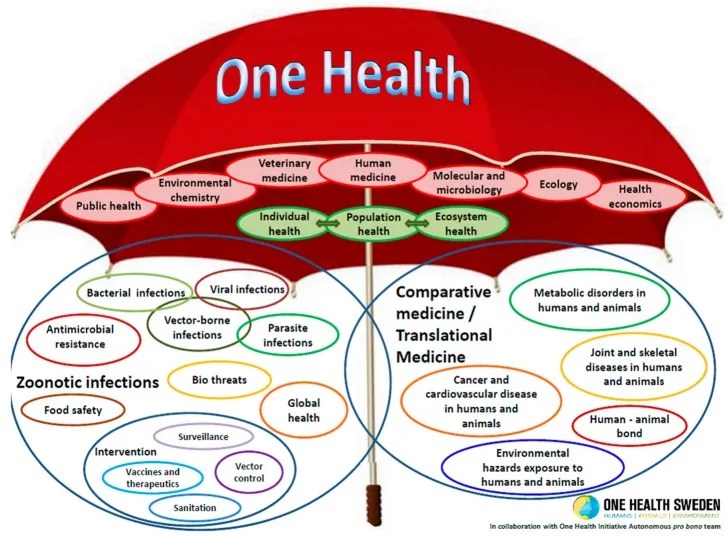
I hope you agree that these definitions shed no light on the meaningfulness of this concept, nor how it might be relevant to public health. However, the definitions seem to rope a lot of other things into a consideration of “health” which I fear is its main objective—eventually to justify social engineering under the rubric of health, or rather ‘One Health.’
The authors of the piece cited above note that they have not gotten buy-in from the medical community:
“Interdisciplinary collaboration is at the heart of the One Health concept, but while the veterinarian community has embraced the One Health concept, the medical community has been much slower to fully engage, despite support for One Health from bodies such as the American Medical Association, Public Health England, and WHO. Engaging the medical community more fully in the future may require the incorporation of the One Health concept into the medical school curricula so that medical students see it as an essential component in the context of public health and infectious diseases.”
And so cheap fixes are being applied. November 3 has been designated “One Health Day” since 2016 by the One Health Commission, the One Health Platform Foundation, and the One Health Initiative. One Health Day is celebrated through One Health educational and awareness events held around the world. Students are especially encouraged to envision and implement One Health projects, and to enter them into an annual competition for the best student-led initiatives in each of four global regions.
After titling their article as if it was going to explain why One Health is important, in the end all we get is a spurious sentence asserting that it is so:
Today’s health problems are frequently complex, transboundary, multifactorial, and across species, and if approached from a purely medical, veterinary, or ecological standpoint, it is unlikely that sustainable mitigation strategies will be produced.
I went to the WHO website to see if I could get a more satisfying explanation of this concept, but was left with the same sense—that it was simply an attempt to throw every living thing, plus every ‘ecosystem’ on the planet into the One Health basket, where pretty much everything might in future be manipulated under the guise of public health. See if you get a different take:
https://www.who.int/health-topics/one-health#tab=tab_1
One Health is an integrated, unifying approach that aims to sustainably balance and optimize the health of people, animals and ecosystems.
It recognizes that the health of humans, domestic and wild animals, plants, and the wider environment (including ecosystems) are closely linked and interdependent.
While health, food, water, energy and environment are all wider topics with sector-specific concerns, the collaboration across sectors and disciplines contributes to protect health, address health challenges such as the emergence of infectious diseases, antimicrobial resistance, and food safety and promote the health and integrity of our ecosystems.
By linking humans, animals and the environment, One Health can help to address the full spectrum of disease control – from prevention to detection, preparedness, response and management – and contribute to global health security.
The approach can be applied at the community, subnational, national, regional and global levels, and relies on shared and effective governance, communication, collaboration and coordination. Having the One Health approach in place makes it easier for people to better understand the co-benefits, risks, trade-offs and opportunities to advance equitable and holistic solutions.
It matters because One Health appears to be a necessary part of the globalist, WEF plan to corral the earth’s people, akin to vaccine passports. Please help educate those who have ears to hear and eyes to see. This needs to be stopped. The best way is by exiting the WHO. Trump started the process, which was immediately reversed by the Biden administration. We can do it again. Or they will keep coming up with cockamamie programs designed to control us under the guise of health.
World Health Organization meets to discuss granting of increased surveillance powers under pandemic treaty
By Tom Parker | Reclaim The Net | December 6, 2022
The unelected global health agency the World Health Organization (WHO) is currently meeting to consider a draft version of a controversial international pandemic treaty that will give the WHO increased surveillance powers.
The new surveillance powers are detailed in Article 10 (“Strengthening and sustaining capacities for pandemic prevention, preparedness, response and recovery of health systems”) and Article 17 (“One Health”) of the draft treaty. They include requirements for the WHO’s member states to “build and reinforce surveillance systems” across both the public and private sector and to strengthen the WHO’s “One Health surveillance systems.”
In its fact sheet on One Health, the WHO cites Covid-19 as one of the main drivers for expanding its One Health approach and notes that the COVID-19 pandemic “put a spotlight on the need for a global framework for improved surveillance and a more holistic, integrated system.”
While the draft treaty doesn’t mention contact tracing and testing, these were two of the main surveillance tools that were used to track the spread of Covid-19 during the pandemic and create a mass surveillance dragnet. Not only did this result in many citizens being forced to use surveillance apps and devices but the data was often abused by governments and third parties.
Not only does this treaty grant the WHO new surveillance powers but it also recognizes “the central role of WHO” and deems it to be “the directing and coordinating authority on international health work.”
We obtained a copy of the draft international pandemic treaty for you here.
The three-day meeting to discuss this draft treaty began on Monday (December 5) and ends Wednesday (December 7). Members of an intergovernmental negotiating body (INB) that was created by the WHO’s decision-making body, the World Health Assembly (WHA), are in attendance and have been tasked with drafting and negotiating this international pandemic treaty.
The INB is projecting that it will finalize this international pandemic treaty by May 2024 and present a final report to the seventy-seventh WHA meeting.
We obtained a copy of the INB’s current proposed timeline for you here.
If it passes, the treaty will be adopted under Article 19 of the WHO Constitution. This provision allows the WHA to impose legally binding conventions or agreements on the WHO’s 194 member states (which represent 98% of all the countries in the world) if two-thirds of the WHA vote for them.
Unlike the lawmaking process within many democratic nations, where officials are elected to implement national laws that reflect the will of the people in the country and voted out if they fail to achieve this goal, the WHO empowers a small number of global representatives, who are often unelected diplomats, to decide on international laws that are imposed on the WHO’s 194 member states.
Before these meetings took place, the WHO demonstrated its love of mass surveillance. It has publicly supported vaccine passports multiple times. The WHO also initially commended China’s response to Covid, which relies heavily on digital surveillance, and only recently changed its stance to criticize China’s zero-Covid policy.
Many powerful nations support this WHO power grab including the United States (US), United Kingdom (UK), Canada, Australia, New Zealand, and the European Council (EC) (which represents 27 European Union (EU) member states).
While some politicians in these countries have opposed this treaty, the pushback has so far failed to stop or slow down the progress of this international pandemic treaty and the May 2024 finalization is still very much in play.
Responses to FOIA requests reveal shocking disregard for children
Masking children was a political decision that was not risk-assessed for 17 months
UsForThem | Broken Custodians | December 5, 2022
In August 2020, as schools prepared for the return of pupils — many for the first time in six months — No 10 performed a succession of u-turns on the wearing of masks in schools.
The initial advice was that “masks could impede communication between teachers and staff and have little health benefit”, but with teaching unions piling on pressure and the Scottish government deciding to recommend masks in their classrooms, the advice changed at the end of August. Masks became recommended in communal areas but not in classrooms because, in the words of then PM, Boris Johnson, “that is clearly nonsensical – you can’t teach with face coverings; you can’t expect people to learn with face-coverings.”
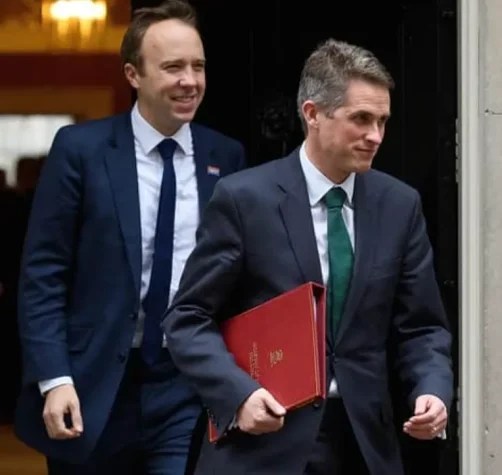
By March 2021, though, the Department for Education had recommended that all secondary school pupils wear a mask in class. As Matt Hancock (then Health Secretary) later pointed out when justifying his own infringements of Covid regulations, this was guidance not law, but most schools understood it to be a requirement and headteachers refusing to comply with the ‘guidance’ were pressured to conform. Consequently for most students the implementation occurred as if it were a legal requirement.
Astonishingly for someone who professed to ‘follow the science’ at all times, Matt Hancock has now suggested in his serialised diary extracts that the introduction of masks in classrooms was driven exclusively by crude political considerations, and to have had no grounding in assessments of risk, efficacy or safety.
“Nicola Sturgeon blindsided us by suddenly announcing that when schools in Scotland reopen, all secondary school pupils will have to wear masks in classrooms. In one of her most egregious attempts at one-upmanship to date, she didn’t consult us. The problem is that our original guidance on face coverings specifically excluded schools. Cue much tortured debate between myself, education secretary Gavin Williamson and No 10 about how to respond. Much as Sturgeon would relish it, nobody here wants a big spat with the Scots. So, U-turn it is.”
Given the scale and speed of this u-turn, and in view of the Government’s dogmatic insistence on following the science, one might reasonably assume that once forced into this decision there would have been a concerted effort to establish the evidence and to assess the science-based health risk.
UsForThem asked repeatedly through this period for the DfE to confirm the evidence basis for its policies on masks in schools, and latterly for the Department to produce any evidence that it had carried out a risk assessment prior to those decisions, or for confirmation simply that someone somewhere in government had evaluated the harms and benefits of the policy for the millions of children it had impacted. Our requests were variously ignored or avoided.
In October of 2022, however, after repeated FOI challenges by our team and after the DfE had claimed that its paper trail could not be disclosed because to do so would constrain future policy-making processes, DfE officials have now finally provided access to some of their paperwork. Despite heavy redactions across the documents revealed by the DfE, the picture that emerges, and seemingly now confirmed by Matt Hancock’s diaries, is both astounding and deeply concerning.
There was no assessment of harms for masks in schools under Sir Gavin Williamson
The first notable revelation is that the first time an evaluation of the masks in class policy was provided to the Education Minister, at that time Nadhim Zahawi, appears to have been on the 30th December 2021. That is seventeen months after schools had first been advised by his department to require children to wear masks in schools.
Any harms to children appear to have been of subsidiary importance to making adults feel safe
The second notable revelation is that more than one third of the DfE’s evaluation document supporting its briefing to the Minister was given over to concerns about the risk of teaching unions encouraging their teachers to walk out of schools on the insidious grounds that schools had become dangerous places to work. Those concerns were given materially greater airtime in that December 2021 briefing document than the few paragraphs devoted to the risks of harm for schoolchildren.
It is evident that the adversarial approach of teaching unions had a material influence on the DfE’s advice to the Minister. The evaluation document notes that mandating the wearing of masks in school “could help reduce the risk of some teachers invoking sec[tion] 44 of [the] Employment Rights Act” (a statutory provision that allows employees, exceptionally, to decline to work in materially unsafe conditions), a provision the NEU and Unison had apparently flagged to their members in January 2021. It also cited surveys recording that 71% of Unison members had reported in March 2021 that masks in class were thought to be “an important safety measure”, and 79% of respondents to a private schools survey around the same time had “noted benefits of wearing face coverings in the classroom”.
The deeply troubling implication of this limited and largely-redacted paper trail is that policy-making within the DfE was led not by a rational evaluation of scientific evidence or after a weighing-up of actual and potential risks and harms for children against known or perceived benefits. Rather, the motivation for the August 2020 policy appears to have been a direct response to union-led pressures, and perhaps also to incitements from some elements of the mainstream media, who seemed intent on shutting down schools in order to ‘protect’ teachers and other adults.
The evidence on which the decisions were based was shallow, inconclusive and tardy
Also notable from DfE’s disclosures is the imbalance in the scant and woefully tardy risk-benefit analysis that had been done, and despite which the Minister had been encouraged to press ahead with the masking of schoolchildren.
The evidence provided in DfE’s briefing papers for the efficacy of masks is heavily caveated with benefits expressed in “can”, “potentially”, “tentatively” and “may” terms, rather than “will”. And the most substantial pieces of evidence referenced in support of masking children were an observational study of 123 schools carried out by the DfE over a period of 2-3 weeks in Autumn 2021 (a year after masks had first been imposed on schoolchildren), and a study carried out in the US in Spring 2021, from which had been extrapolated a tentative prediction that between 26,000 and 210,000 children might have been saved from missing school if they had been masked.
At the same time, however, the DfE’s document acknowledges that its study had not established a causative connection between masking in classrooms and a reduction of missed school days; nor could that study do anything to take account of the impact of other society-wide interventions, including interventions applied to the broader adult population, which had been implemented over the same observational period.
In any event, and crucially, none of the reports or studies relied on for Nadhim Zahawi’s briefing in December 2021 had been carried out in August 2020 when DfE made its first u-turn policy decision to introduce masks in classrooms in England and Wales. So the DfE appears to have been flying blind from August 2020 until late 2021 – with no idea about the risks and harms to which it was exposing kids by introducing what amounted to a nationwide mandate for masking schoolchildren for up to eight hours a day; something, incidentally, that the Government never ultimately demanded of the general population, or indeed of its own ministerial teams.
In contrast, the evidence on “downsides” (i.e. harms) of masking pupils is couched in definitive terms, referencing impacts on communication, cognition, educational performance, confidence; and the fact that “Masks will become highly contaminated with upper respiratory tract and skin micro-organisms”, such that used masks could become a source of viral transmission. Even at the start of 2021, it was already clear and indeed had been referenced by the Prime Minister, and later union leaders who had acknowledged that wearing masks in class would impact communication. DfE surveys carried out in March 2021 and cited in the newly-revealed December 2021 briefing for Nadhim Zahawi had confirmed that 94% of teachers believed communication would be harder with a mask, emphatically reinforcing what everyone, including the Prime Minister and the Education Minister, already knew. DfE also noted at that time that BAME and children in deprived areas were expected to struggle most with masks – adding to the stress of pandemic strictures for those children.
Of the gravest concern then, and potentially of legal significance, the evidence revealed in these briefing documents lays bare that DfE officials, and latterly the Minister, knew that wearing masks in class would impact children’s educational performance, cognitive abilities and attention as well as communication.
The evidence cited in December 2021 also raised concerns about the safety and hygiene for children of wearing masks, the need to dispose of them safely, and that children would need to be able to increase their hygiene if they were to avoid increasing the risk of transmission via masks – or to put it another way, DfE officials had evidence that mandating masks in class could in certain circumstances increase transmission rates in school settings if at the same time hand-washing and other associated sanitary measures could not be guaranteed; yet they appeared rather more concerned by the belligerence of teaching unions. This by itself is quite an astonishing revelation.
Were masks introduced in schools to make union officials, teachers and other adults feel safer?
On the basis of the documents now revealed by the DfE, buttressed by Matt Hancock’s more recent disclosures, it appears that science played no meaningful part in this pernicious episode of policy-making, and that no health risk analysis was carried out before the DfE required schoolchildren to wear masks for up to eight hours a day. Of grave concern for parents, this implies that masking schoolchildren was a politically-driven decision reacting to pressure from teaching unions and mainstream media, and seeking to avoid unhelpful comparisons to the earlier decision of the Scottish government to mask schoolchildren in Scotland.
It is hard not to draw the conclusion from this wafer-thin paper trail that DfE’s decision to mask children in classrooms was yet another instance during the pandemic when the best interests of children were subordinated or ignored for the appearance of safety for adults, or worse still for reasons of political expediency and in particular to avoid the embarrassment of a walk out by teaching staff at the behest of union leaders.
The Covid Inquiry has an opportunity to review the adequacy of the Government’s risk assessment activity for pandemic intervention measures, and more broadly the governance processes around significant decision-points such as occurred in relation to masks in class in August 2020. It should not be controversial now for the Inquiry to probe why the only risk assessment for what has been one of the most significant interventions in the educational life, and health and wellbeing, of our nation’s schoolchildren appears to have been prepared an astonishing 17 months after masks were first recommended; and to ask how public health policy-making of this magnitude could have been better informed and more impervious to inappropriate politicised influences.
Though it is not yet a matter of investigation within the domain of the Covid Inquiry, if in time serious health or developmental impacts are revealed in the generation of young children most affected by the masks in class policy such that questions of legal accountability may need to be assessed, we hope that the information revealed by our FOI team’s efforts will provide a basis for evidencing what DfE, union officials, and crucially the Ministers who made the key decisions, knew of the risk of harms and the limited benefits of masking schoolchildren; and of their motives for imposing this damaging intervention on our children.
European firms ‘invest’ $171 billion in Israel’s illegal settlements: Report
The Cradle | December 6, 2022
According to a report published on 5 December by the advocacy group Don’t Buy into Occupation, investments by European firms in Israel’s illegal settlements increased by more than $30 billion since last year.
Almost 24 Palestinian, regional, and European organizations have joined forces to form the group, which aims to investigate and disclose any connections between European financial institutions and companies involved in illegal Israeli settlements.
In their second report, “Exposing the financial flows into illegal Israeli settlements,” the group discovered that between January 2019 and August 2022, 725 European financial institutions, including banks, asset managers, insurance companies, and pension funds, had financial ties to 50 firms that are directly associated with Israeli settlements. International law prohibits all squatters and settlements in Israel.
Loans and underwriting totaled $171.4 billion over the three years covered by the report. The figure represents a $30 billion increase over last year when European firms invested $141 billion in illegal settlements. European investors are also said to hold $115.5 billion in shares and bonds of companies benefiting from the settlements as of August 2022.
According to the advocacy organization, businesses directly or indirectly associated with Israeli settlements run a significant danger of being complicit in serious violations of international humanitarian law, war crimes, and crimes against humanity, as well as contributing to other human rights violations.
Meanwhile, on 8 November, the ‘Elad’ settlement association in occupied East Jerusalem received roughly $7.9 million to support illegal settlements in the Palestinian town of Silwan.
The Elad group pursues the declared objective of “Judaizing” East Jerusalem, including Silwan, as a part of its mission to expand a Jewish presence across the occupied city and to uproot the indigenous Palestinian population under the guise of archeological and touristic endeavors.
Israel has illegally expanded its territory since the 1967 Arab-Israeli war and built settlements in the occupied West Bank and East Jerusalem for over 700,000 settlers, in clear violation of international law.
Israel’s occupation of East Jerusalem is not recognized by most countries and is considered one of the biggest obstacles to peace, as Palestinians consider East Jerusalem the capital of their future state.
Featured Video

Col Doug Macgregor: America’s Back to ENDLESS WARS
or go to
Aletho News Archives – Video-Images
From the Archives
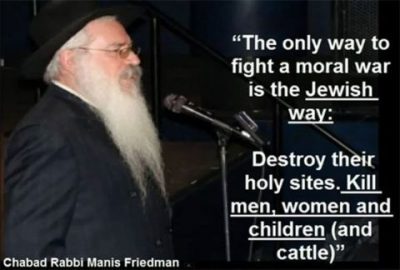
Rabbi Shmuel Eliyahu: Leave No Palestinian or Arab Alive
By Jonas E. Alexis | Veterans Today | July 23, 2017
Israeli Rabbi Shmuel Eliyahu seems to have picked up where the late Rabbi Ovadiah Yosef left off. The Israeli army, Eliyahu said, must slaughter the Palestinians “and leave no one alive.” The Palestinians, the good rabbi continued, must be “destroyed and crushed in order to end violence.” Here is Eliyahu’s algorithm:
“If they don’t stop after we kill 100, then we must kill 1,000. And if they do not stop after 1,000, then we must kill 10,000. If they still don’t stop we must kill 100,000, even a million.”
There is more to this “logic” than meets the eye and ear. Eliyahu even postulated that the Israeli army ought not to get involved in arresting Palestinians because “If you leave him alive, there is a fear that he will be released and kill other people. We must eradicate this evil from within our midst.”
You may say that this is just an isolated case. No Israeli official believes that, right? … continue
Blog Roll
Recent Comments
papasha408 on Germany demands UN Rapporteur… papasha408 on Israel Demanding that Iran Lim… Coronistan on Why can’t western leaders acce… John Edward Kendrick on German government ‘embezzling’… loongtip on Von der Leyen to have new secu… papasha408 on First Gaza, then the world: Th… papasha408 on Is Nixing Aid to Israel a Pois… papasha408 on Japan to Sign Up For NATO’s Uk… Redracam on Iran Willing to Dilute Enriche… loongtip on When Threats Replace Evid… loongtip on Zelensky tried to kill the cha… eddieb on I might get killed for posting…


 Aletho News
- Germany puts caveat on more missiles for Ukraine
- UK High Court rules Palestine Action ban unlawful
- Populations in key NATO nations balk at sacrifices for military spending – poll
- Ukraine to ban Russian literature – culture minister
- 40 State Attorneys General Want To Tie Online Access to ID
- Col Doug Macgregor: America’s Back to ENDLESS WARS
- Villains of Judea: Haim Saban
- Germany demands UN Rapporteur Albanese resign, joining France
- Hamas official says Netanyahu joining ‘peace council’ is a farce
- Israel Demanding that Iran Limit the Range of Missiles to 300 Kilometers
- If Americans Knew
- AZAPAC, the new PAC opposing Israeli domination of U.S policies
- Haim Saban: Billionaire for Israel
- Rafah e-wallet plan highlights Israel’s deepening financial occupation
- Viral post claims Netanyahu sought legal approval, igniting speculation about Israel’s organ harvesting
- AIPAC Has a New Opponent: PAL PAC
- Right-Wing Catholic Off Trump Religion Panel After Israel-Gaza Remarks at Antisemitism Event
- Jewish terrorism, apartheid rule the West Bank – Not a ceasefire Day 125
- Why Israel persecutes children like my son Shadi
- In Gaza, One Man Is Searching for the Remains of His Family With a Flour Sifter
- Horrific situation in Gaza, West Bank – Not a ceasefire Day 124
- No Tricks Zone
- German Gas Crisis…Chancellor Merz Allegedly Bans Gas Debate Ahead of Elections!
- Pollen Reconstructions Show The Last Glacial’s Warming Events Were Global, 10x Greater Than Modern
- Germany’s Natural Gas Storage Level Dwindles To Just 28%… Increasingly Critical
- New Study Rebuts The Assumption That Anthropogenic CO2 Molecules Have ‘Special’ Properties
- Climate Scientist Who Predicted End Of “Heavy Frost And Snow” Now Refuses Media Inquiries
- Polar Bear Numbers Rising And Health Improving In Areas With The Most Rapid Sea Ice Decline
- One Reason Only For Germany’s Heating Gas Crisis: Its Hardcore-Dumbass Energy Policy
- 130 Years Later: The CO2 Greenhouse Effect Is Still Only An Imaginary-World Thought Experiment
- New Study Affirms Rising CO2’s Greening Impact Across India – A Region With No Net Warming In 75 Years
- Germany’s Natural Gas Crisis Escalates … One Storage Site Near Empty …Government Silent
 Aletho News