As the Russian invasion of Ukraine moves past its third week, there are slight hopes that negotiations between the two sides may soon produce a ceasefire. But with the shrill warmongering talk in Washington, it almost seems like the US government would hate to see that happen.
Congress and the US Administration seem determined to drag the United States into a war with Russia over Ukraine. Senator Lindsay Graham is openly calling for someone to kill the Russian president and many in the US House have demanded that the Administration establish a “no-fly zone” over Ukraine.
Are they insane? A no-fly zone means you destroy anything and everything that can prevent total US air dominance. That means an attack on Russian missile and air defense systems within Russia. In other words, World War III.
We can all feel disgust at the destruction in Ukraine, but is it really necessary for us to gamble with our own nuclear annihilation?
Sadly, a large bipartisan group in Congress seems to think so.
Much of what is happening in Ukraine can be traced back to the Obama Administration. State Department officials like Victoria Nuland and Antony Blinken planned and executed the overthrow of the Ukrainian government in 2014. This is what set us on this path to conflict, as the government put in place after the coup began demanding NATO membership.
Blinken, Nuland, and the others responsible for this heinous act returned to government in more senior positions under President Biden and they have continued to push their Ukraine agenda.
Last week Secretary of State Blinken – our top diplomat – sought to send Soviet-era Polish fighter jets into Ukraine to shoot Russians. When the Poles said they’d be happy to ship the planes to a US base in Germany and let the Pentagon transfer them to Ukraine, the Pentagon finally stepped in to quash an extraordinarily high-risk move that even the Pentagon said would have no real effect on the outcome of the war.
The State Department is trying to get us into a war and the Pentagon is trying to keep us out. How ironic!
Back when I was on the campaign trail I would say that we have a few thousand diplomats in government, it might not be a bad idea to use them. But I certainly did not mean that we should use them to try and get us further involved in a war!
Three weeks into this terrible war, the US is not pursuing talks with Russia. As Antiwar.com recently reported, instead of supporting negotiations between Ukraine and Russia that could lead to a ceasefire and an end to the bloodshed, the US government is actually escalating the situation which can only increase the bloodshed.
The constant flow of US and allied weapons into Ukraine and talk of supporting an extended insurgency does not seem designed to give Ukraine a victory on the battlefield but rather to hand Russia what Secretary of State Blinken called “a strategic defeat.”
It sounds an awful lot like the Biden Administration intends to fight Russia down to the last Ukrainian. The only solution for the US is to get out. Let the Russians and Ukrainians reach an agreement. That means no NATO for Ukraine and no US missiles on Russia’s borders? So what! End the war then end NATO.
March 14, 2022
Posted by aletho |
Militarism | NATO, Ukraine, United States |
Leave a comment
Japanese trading houses, Mitsui and Mitsubishi, are reportedly not considering quitting Russia’s Sakhalin-2 project, that is focused on producing and shipping liquified natural gas (LNG), 60% of which is destined for the Japanese market.
The Japanese trading giants, which hold a total stake of 22,5% in Sakhalin-2, will remain partners to the project, as “prompt exit is risky” and “will be in favor of China,” Nikkei newspaper reports, citing documents submitted by the companies to the Ministry of Economy, Trade and Industry of Japan earlier this month.
The project has been one of the main sources of natural gas supply to Japan with nearly 100% of Japanese LNG imports coming from Sakhalin-2, according to media reports.
Located on the Russian island of Sakhalin in the Pacific Ocean, north of Japan, the project reportedly produces nearly 11.5 million tons of LNG annually which is mainly exported to major markets in Asia.
The project, launched in 2009, includes the offshore Piltun-Astokhskoye oil field and Lunskoye natural gas field in the Okhotsk Sea, and associated infrastructure on Sakhalin Island itself.
Sakhalin-2 is managed and operated by the Sakhalin Energy Investment Company. The majority stake in the enterprise belongs to Russia’s energy giant Gazprom. Shell, the world’s largest LNG trader, holds 27,5% minus one share, Mitsui’s share totals 12,5%, while Mitsubishi Corporation owns 10%.
On February 28, UK-based Shell announced plans to pull out its stake in the Sakhalin-2 liquefied natural gas facility, its 50% stake in the Salym Petroleum Development and the Gydan energy venture following sanctions placed on Moscow over the ongoing military operation in Ukraine.
March 14, 2022
Posted by aletho |
Economics | Japan, LNG, Russia |
Leave a comment
Hedging between superpowers — United States, Russia and China — was never the smart thing to do. India should have known that the contradictions are simply irreconcilable.
This is a moment of truth, therefore, as the US unsheathes the sword to bleed and dismember Russia, and gives an ultimatum to China to stay out of it.
The gravity of the situation is sinking in, finally. That is the message coming out of the Cabinet Committee on Security meeting convened by PM Modi on Sunday “to review India’s security preparedness, and the prevailing global scenario in the context of the ongoing conflict in Ukraine,” where he was briefed “on latest developments and different aspects of India’s security preparedness in the border areas as well as in the maritime and air domain.”
The US National Security Advisor Jake Sullivan’s meeting with China’s top diplomat and Politburo member Yang Jiechi in Rome later today promises to be a defining moment in world politics.
Yesterday, Sullivan explicitly threatened China in an interview with CNN. He said: “We are communicating directly, privately to Beijing, that there will absolutely be consequences for large-scale sanctions evasion efforts or support to Russia to backfill them. We will not allow that to go forward and allow there to be a lifeline to Russia from these economic sanctions from any country, anywhere in the world.”
The warning to China is that it should conform to the US sanctions against Russia and desist from providing support (“lifeline”) to Russia in any form.
The cutting edge of Sullivan’s statement is that it also applies to India. The implications are very, very severe. Simply put, Washington’s demand is also that India should abandon its relationship with Russia.
That means principally, that India should freeze the defence relationship. Considering that something like 60-70% of weaponry for our armed forces is of Russian origin, this will render a crippling blow to India’s defence preparedness.
Essentially, this is going to be baptism by fire for the Indian leadership. It stands to reason that the Americans have already conveyed their charter of demands to the government, and PM’s hurried move to convene the CCS ensued.
Last week, the Russian minister of energy had a call with his Indian counterpart where he not only offered oil at concessional rates but also invited Indian companies to step up investments in Russian oil and gas fields on a preferential basis. At a time when the oil price crossed $130 a barrel and the spot market price for gas is approaching $4000 per thousand cubic meters, the Russian offer came as a gift from God.
But the fact that the government downplayed it shows a state of paranoia — symptomatic of the same pusillanimity that characterised the UPA mindset, prompting the rollback of ties with Iran.
The Americans have experienced that our elite are largely men of straw. Given the scale of corruption, there are all kinds of interest groups in our country. Besides, the comprador elements within our elite are stakeholders in the American agenda. That is a tragic fact of life.
However, the difference today is that the looming American threat would have vital bearing on India’s defence capabilities, and national security. For a government that proclaims the nationalist credo, the choice ought to be clear.
The Modi government should refuse to comply with the American legislations regarding Russia. Period. In all likelihood, Americans are bluffing. Or, if there is going to be a price to pay, the leadership should take the nation into confidence and explain the long-term imperative of safeguarding the country’s core interests at whatever cost. Indians are a patriotic people.
To my understanding, in the world of today, American hegemony is unsustainable. The US bullies those who are susceptible to bullying and blackmails those ruling elites who are vulnerable to blackmail, individually or collectively. Hopefully, our ruling elite do not fall into such a pitiable category.
Freedom struggle was so much more arduous. The predicament today is also about the country’s independence. The nation will rally under an inspiring leader.
Things have come to such a sorry pass today largely due to the flawed foreign policies through the past two decades or so when the American lobbyists began expounding that India’s interests are best served in an alliance with the US.
‘Non-Alignment’ and ‘strategic autonomy’ became archaic concepts. Thus, circa 2000 or so, India ‘crossed the Rubicon’, to borrow the title of an infamous book of those times, to be with our ‘natural allies’. Where has it brought the country today after 21 years?
The self-styled foreign policy gurus in the media and the strategic immunity proved horribly wrong in their assessment of international politics. Beyond the Rubicon, what we saw and experienced was a bleached landscape of parched earth and birds of prey, so different from the El Dorado that we were promised by the carpetbaggers.
Indian foreign policy needs a strategic course correction. India should distance itself completely from the self-centred US polices whose aim is the preservation of its global hegemony. The first step in that direction should be to quit Quad.
Make no mistake, a US-China showdown is in the making sooner than one might have expected it, and it will be calamitous for India to get sucked into it. The visit by Japanese prime minister Kishida to India this weekend causes disquiet.
By the colour of our skin, our religion, our culture, our geography, our political economy, we will never be accepted by the West as ‘one of us’. Do not be mesmerised by promises of equal partnerships. Look at the US’ track record — selfish, cynical and ruthless in the pursuit of its interests.
History didn’t end with the eclipse of the Cold War. Fundamentally, what the Western powers are planning is a form of neo-colonialism borne out of the desperate need to arrest the decline of their economies through a massive transfer of wealth from the rest of the world inhabited by 88 percent of mankind — Asia, in particular. To that end, the West has unceremoniously buried ‘globalisation’ and turned its back on multilateralism.
Quintessentially, what is unfolding is no different from 19th century colonial era. Therefore, India should work together with like-minded countries that are stakeholders in the preservation of their sovereignty, hard-won independence and most important, their cherished freedom to choose their paths of development insulated from interference in internal affairs or attempts at ‘regime change’.
A peaceful external environment is an imperative need and the foreign policy should prioritise that objective. It means a revamp of India’s policies toward China and Pakistan. We are stuck in a groove cut decades ago largely for propaganda purposes, unable to disown our self-serving narratives. Fortunately, there are incipient signs of rethink lately. Do not let Washington queer the pitch of India’s crucial relationships with China or Pakistan.
A nation has no future if it is incapable of introspection. Mistakes have been made but it is false pride and hubris not to make amends. Indians are a forgiving people. And as for the present government at least, it only inherited the false narratives.
March 14, 2022
Posted by aletho |
Aletho News | China, India, Russia, United States |
Leave a comment
Before ‘The Science’ flipped in the spring of 2020, the consensus among Western epidemiologists was that community masking doesn’t affect the spread of respiratory pathogens like influenza. As Jonathan Van Tam said on April 3rd 2020, “there is no evidence” to support the general wearing of face masks.
Although masks might block large droplets in close-contact settings like hospitals, and thereby slightly lower the risk of transmission, they can’t block airborne particles – which simply go through/around them, and then remain aloft for minutes or even hours.
As a result, large indoor setting like supermarkets, transit stations or classrooms soon fill up with airborne particles – even if everyone’s wearing a mask.
A new Spanish study strongly supports the pre-Covid conventional wisdom that masks don’t stop transmission of respiratory pathogens. The study uses quite a powerful design, which makes its results all the more convincing.
Ermengol Coma and colleagues analysed data on a large cohort of Spanish children aged three to eleven, whom they followed for the first term of the school year from September to December of 2021. During this period, there was a mask mandate in place for children in primary school (aged six and up) but not for those in pre-school (aged three to five).
Hence the researchers compared outcomes between children aged five (who were not subject to the mandate) and those aged six (who were subject to the mandate).
This constitutes a relatively well-controlled comparison, given that the two groups differ by only one year in age. In other words, since six-year olds are only one year older than five-year olds, you wouldn’t expect the rate of transmission to differ much between them for reasons other than the mask mandate.
The researchers estimated the incidence of Covid, the secondary attack rate and the R number separately for the two groups. If mask mandates work, you’d expect all these quantities to be higher among the five-year olds. However, the researchers found no statistically significant differences between the two groups.
What’s more, they found a strong positive association between measures of transmission and age across all the age-groups in their sample. In other words, transmission was higher among older age-groups, despite the fact that these groups were subject to the mask mandate, whereas the younger ones weren’t.
Ermengol Coma and colleagues’ findings suggest that mask mandates do essentially nothing to reduce the spread of Covid. And given that masks plausibly impede both learning and social interaction, on top of being uncomfortable, there’s no good reason for children to wear them. Indeed, the fact that they were ever made to is a scandal.
March 14, 2022
Posted by aletho |
Civil Liberties, Science and Pseudo-Science, Timeless or most popular | Covid-19, Human rights |
Leave a comment
Pfizer’s Bourla says we need a 4th shot. Pfizer sold $36.8 billion dollars’ worth of COVID vaccines in 2021, making its vaccine the top-selling pharmaceutical product in history. Pfizer has estimated its COVID vaccine sales for 2022 at $32 billion.
Albert Bourla says we need a 4th dose of his magic money-making elixir, but his company is also working on a universal coronavirus vaccine (a 2nd magic elixir), which we will only need once a year.
Albert Bourla, PhD, CEO of Pfizer, said a second booster shot of the COVID-19 vaccine is necessary for protection against infection, according to a March 13 interview with CBS News.
Dr. Bourla said the third dose of the COVID-19 vaccine provides protection from hospitalization and death, but “it’s not that good against infections” and the protection is relatively short-lived. Pfizer is preparing data for the FDA about the need for a fourth dose.
“Many variants are coming,” Dr. Bourla told CBS. “And omicron was the first one that was able to evade in a skillful way the immune protection that we were giving. But also, in all that the duration of the protection, it doesn’t last very long.”
… In February, the CDC published a study showing the efficacy of booster shots of Pfizer-BioNTech and Moderna vaccines waned after about four months, but still provided significant protection from hospitalizations during the omicron surge.
Dr. Bourla also told CNBC that Pfizer is developing a vaccine that will protect against all COVID-19 variants, including omicron, for at least a year. He expects to review data from trials on the long-term vaccine by the end of the month.
But Dr. Marco Cavaleri, a top regulator at Europe’s FDA, called the European Medicines’ Agency (EMA), says this may weaken the immune response. According to Reuters :
The European Union’s drug regulator on Tuesday expressed doubts about the need for a fourth booster dose of COVID-19 vaccine and said there is currently no data to support this approach as it seeks more data on the fast-spreading Omicron variant.
“While use of additional boosters can be part of contingency plans, repeated vaccinations within short intervals would not represent a sustainable long-term strategy,” the European Medicines Agency’s Head of Vaccines Strategy, Marco Cavaleri, told a media briefing.
The EMA official raised concerns that a strategy of giving boosters every four months hypothetically poses the risk of overloading people’s immune systems and leading to fatigue in the population.
Cavaleri also said more data on the impact of the new variant on vaccines and a better understanding of the evolution of the current wave were needed to decide whether an Omicron-specific vaccine was needed.
“It is important that there is a good discussion around the choice of the composition of the vaccine to make sure that we have a strategy that is not just reactive … and try to come up with an approach that will be suitable in order to prevent a future variant,” he said.
The EMA said it was currently in conversation with vaccine developers in case there is a need for an updated vaccine but added that any such change would need to be coordinated globally.
March 14, 2022
Posted by aletho |
Deception, Science and Pseudo-Science | COVID-19 Vaccine, Pfizer |
Leave a comment
Ukrainian president Volodymyr Zelensky on Sunday expressed his gratitude to Mark Zuckerberg for Facebook and Instagram censoring Russian news outlets, allowing calls for violence against Russians and helping his government spread endless disinformation.
“War is not only a military opposition on UA land. It is also a fierce battle in the informational space,” Zelensky said Sunday on Twitter. “I want to thank @Meta and other platforms that have an active position that help and stand side by side with the Ukrainians.”
Last month, Facebook changed their rules to allow users to praise the “neo-nazi” Azov Battalion and this week they changed their rules further to allow calls for violence against Russians.
Facebook blocks RT and Sputnik in the EU but allows the Ukrainian military to announce plans to commit war crimes.
Facebook has helped Zelensky himself spread endless disinformation to try and con NATO into World War III. Most recently, they helped Zelensky spread the lie that Russians attacked the Zaporizhzhia nuclear power plant with tanks and it was leaking radiation and could lead to a nuclear holocaust wiping out all of Europe (if NATO doesn’t immediately get involved in the war and start WW3).
They also helped Zelensky spread the lie that Russians attacked the Chernobyl nuclear power plant and were trying to trigger a meltdown.
With Mark Zuckerberg’s full backing, Zelensky used Facebook to lie about Snake Island and spread the fake news that Russia attacked a Holocaust memorial “to erase our history.”
Whereas Facebook said in the past they would censor content that may cause harm or lead to violence, they now boost Israeli-funded “neo-nazi” groups in Ukraine and spread Zelensky’s lies and disinformation to millions in an effort to start WW3.
March 14, 2022
Posted by aletho |
Fake News, Full Spectrum Dominance, Mainstream Media, Warmongering | Facebook, Instagram, NATO, Ukraine |
Leave a comment
A number of people have said it, but — and I feel it, actually: I’m a wartime president. This is a war. This is a war. A different kind of war than we’ve ever had.
-Donald Trump, Former President of the United States
We are at war. All the action of the government and of Parliament must now be turned toward the fight against the epidemic, day and night. Nothing can divert us.
-Emmanuel Macron, President of France
This war – because it is a real war – has been going on for a month, it started after European neighbors, and for this reason, it could take longer to reach the peak of its expression.
-Marcelo Rebelo de Sousa, President of Portugal
We are at war with a virus – and not winning it.
-Antonio Guterres, UN Secretary General
We must act like any wartime government and do whatever it takes to support our economy.
-Boris Johnson, Prime Minister of the United Kingdom
The president said this is a war. I agree with that. This is a war. Then let’s act that way, and let’s act that way now.
-Andrew Cuomo, Former Governor of New York
You get the picture. Leaders at the start of the COVID-19 pandemic really wanted us to think of ourselves as combatants possessing a civic duty to fight an insidious, unseen enemy. They wanted us to think that victory was possible. They wanted us to understand that there would be casualties, and collateral damage, and to steel ourselves for the inevitable enactment of broad and unfocused policies that would keep us safe, no matter the cost.
This isn’t all that surprising in hindsight. Politicians love to use war as a metaphor for just about every collective enterprise: the war on drugs, the war on poverty, the war on cancer. They understand that war provides an incomparable motivation for people to make sacrifices for the greater good of their countries, and when they want to harness some of that motivation, they pull out all the metaphorical stops.
Leaders have been searching for a “moral equivalent of war” for a very long time. The idea was introduced by psychologist and philosopher William James in a speech at Stanford in 1906 that has been credited for inspiring the creation of national projects such as the Peace Corps and Americorps, both organizations aspiring to “enlist” young people into meaningful, non-military service to their country:
I spoke of the “moral equivalent” of war. So far, war has been the only force that can discipline a whole community, and until an equivalent discipline is organized, I believe that war must have its way. But I have no serious doubt that the ordinary prides and shames of social man, once developed to a certain intensity, are capable of organizing such a moral equivalent as I have sketched, or some other just as effective for preserving manliness of type. It is but a question of time, of skillful propagandism, and of opinion-making men seizing historic opportunities.
People are willing to do things during a war that they wouldn’t be willing to do during peacetime. During World War II, it was impossible that German bombers would reach the middle of the United States, yet citizens in the U.S. Midwest practiced blackouts to demonstrate their commitment to defeating an enemy they had in common with people far away. People that actually had to sit in the dark at night to be safe.
This was what leaders using war metaphors were asking from their citizens at the start of the pandemic:
The war metaphor also shows the need for everyone to mobilize and do their part on the home front. For many Americans, that means taking social distancing orders and hand washing recommendations seriously. For businesses, that means shifting resources toward stopping the outbreak, whether in terms of supplies or manpower.
However, it wasn’t just social distancing and handwashing—leaders were asking for cooperation for a complete lockdown, a complete suspension of normal life for a short, yet vague and undefined period of time. There was no thought to how this would actually stop a highly contagious virus, or how people would be expected to return to normal life when the virus hadn’t completely disappeared. There wasn’t a desire to mobilize the engines of democracy for war. Instead, there was a mandate to shut them down. Economic production wasn’t maximized, it was minimized.
I was skeptical of the ability of shutdowns to do much good from the beginning, and was very much afraid that panic and overreaction would have serious consequences. I didn’t use war metaphors because it never occurred to me that they would be in any way helpful. Yet when I advocated trying to minimize collateral damage by allowing people who were less vulnerable to severe disease to resume their lives, others criticized that I was for “surrendering to the virus”. The use of war metaphors wasn’t just limited to leaders, but had quickly spread to the broader population.
Some international leaders tried to resist the temptation to use war metaphors, but ultimately failed. After telling the Canadian House of Commons that the pandemic wasn’t a war, Canadian Prime Minister Justin Trudeau couldn’t resist: “The front line is everywhere. In our homes, in our hospitals and care centers, in our grocery stores and pharmacies, at our truck stops & gas stations. And the people who work in these places are our modern-day heroes.” Trudeau later also couldn’t resist using extreme measures normally reserved for wartime to quell a protest led by the very truck stop heroes he had once glorified.
War metaphors have their uses, as explained by sociologist Eunice Castro Seixas:
Indeed, the findings of this study show how, within the context of Covid-19, war metaphors were important in: preparing the population for hard times; showing compassion, concern and empathy; persuading the citizens to change their behavior, ensuring their acceptance of extraordinary rules, sacrifices; boosting national sentiments and resilience, and also in constructing enemies and shifting responsibility.
“Constructing enemies and shifting responsibility” would play an important role later on in the pandemic, when extreme and damaging measures didn’t work and politicians resorted to blaming their own citizens for failing to cooperate with damaging and unsustainable measures.
Some academics, like anthropologist Saiba Varma, warned that:
Analogising (sic) the pandemic to a war also creates consent for extraordinary security measures, because they are done for public health. Globally, coronavirus curfews are being used to mete out violence against marginalised (sic) people. From the history of emergencies, we know that exceptional violence can become permanent.
It was obvious that working class and poor individuals would be disproportionally harmed by draconian COVID measures, and that the wealthy, or Zoom class might actually benefit:
We have, for example, already witnessed how people in already quite privileged positions are the ones who have the ability to work from home, which means that they also have more potential to act according to health recommendations, while others run the risk of being dismissed from their work or of their businesses going bankrupt. Then, there are those in positions identified as socially important functions that cannot choose to avoid risks, particularly in the care sector, where the risk of infection is the largest and shortages of protective equipment exist. Last, not everyone has the resources that are required to participate in pandemic self-governance (knowledge of how and when to shop, having people who can help you, the hospital closest to you having enough respirators, etc.).
The authors to the above article, Katarina Nygren and Anna Olofsson, also commented on the criticism of “lax” pandemic response measures in Sweden, noting how the pandemic response in Sweden was vastly different from that of most other countries in Europe because it emphasized personal responsibility rather than relying on government coercion:
Thus, the Swedish strategy to manage Covid-19 has been largely based on the responsibility of the citizens who receive daily information and instructions for individually targeted self-protection techniques by the Public Health Agency of Sweden’s website and press conferences held by state epidemiologist Anders Tegnell, Prime Minister Stefan Löfven, and other representatives of the government. They continue to underline the importance of all citizens playing their part to stop the virus from spreading and avoiding the enhancement of law enforcement’s restrictions on citizens’ rights as long as possible.
With recommendations rather than prohibitions, the individual becomes the unit of decision making towards whom claims of liability are directed if he or she does not manage to act ethically according to social expectations. This kind of governing of conduct, which has been characteristic of the Swedish risk management strategy during the pandemic thus far, targets the self-regulating individual in terms of not only trust but also solidarity. This type of governing was explicitly made by the prime minister in his speech to the nation on the 22nd of March (speeches that are extremely rare in Sweden) in which he particularly emphasized individual responsibility not only for the sake of personal safety but for the sake of others.
The Swedish Prime Minister, Stefan Löfven, used precisely zero wartime metaphors in his March 22, 2020 speech to the nation about the COVID pandemic and the response of the Swedish government. Within the next few months, the Swedish response was, rather predictably, viciously attacked by other leaders and media outlets for its failure to conform to the rest of the reflexive lockdown-mandating world. Yet the Swedish strategy has overall not resulted in much higher deaths, currently 57th in COVID deaths per million inhabitants, well below many of its critics.
There were only a few other notable exceptions in the metaphorical blitzkrieg of war imagery by world leaders in their early pandemic speeches. Another was German President Frank-Walter Steinmeier, who said of the pandemic, “It is not a war. It is a test of our humanity!” The reluctance of a German leader to use a war metaphor for something that is clearly not a war is both understandable and admirable.
Brazilian President Jair Bolsonaro was contemptuous of lockdowns and refused to use war imagery in his speeches, making it quite clear that pandemic deaths had no easy collective solution, only hard choices: “Stop whining. How long are you going to keep crying about it? How much longer will you stay at home and close everything? No one can stand it anymore. We regret the deaths, again, but we need a solution.” Not surprisingly, he was widely condemned for these comments.
Interestingly, much of the analysis and criticism of the use of war metaphors for the early pandemic response came from left-leaning outlets, like Vox, CNN, and The Guardian, where journalist Marina Hyde wrote:
As the news gets more horrifyingly real each day – and somehow, at the same time, more unmanageably unreal – I’m not sure who this register of battle and victory and defeat truly aids. We don’t really require a metaphor to throw the horror of viral death into sharper relief: you have to think it’s bad enough already. Plague is a standalone horseman of the apocalypse – he doesn’t need to catch a ride with war. Equally, it’s probably unnecessary to rank something we keep being informed is virtually a war with things in the past that were literally wars.
An article in Vox warned of the consequences of too much power in the wrong hands:
A war metaphor can also have dark consequences. “If we look at history, during times of war, it’s often been the case that war is accompanied by abuses of medicine and the suspension of widespread ethical norms,” Keranen said, citing Nazi use of medicine or other public health trials that have been conducted on prisoners and war resistors over the years. “Especially now, we need to be on guard for this with the clinical trials and other product development that we’re undergoing, so that in our haste to ‘fight’ the disease with a military metaphor, we’re not giving away our fundamental ethical concepts and principles.”
“Giving away our fundamental ethical concepts and principles” is arguably exactly what happened in many western nations, yet hard-hitting and often accurate criticism from left-leaning media outlets speaking out against the pandemic as a war view had all but gone silent sometime after November 3rd, 2020. Coincidently, the conflation of a pandemic public health response with a military one has all but been erased by an actual war when Russia invaded Ukraine. An actual war tends to bring perspective back to places where it has been lost rather quickly.
With two full years of hindsight, it’s clear that lockdowns were a disaster and that mandated measures caused more harm than benefit, yet this has not prevented leaders from declaring victory, crediting their own brave and resolute leadership for saving millions of lives and routing the viral enemy. However, SARS-CoV-2 isn’t a real enemy—it doesn’t have an intention other than to exist and spread, and it won’t agree to an armistice. Instead, we will have to live with the virus forever in an endemic state, and skip the victory parades.
There’s no evidence that calling the pandemic what it truly was—a global natural disaster, admitting our limitations for “defeating” it, and calling on people to stay calm and avoid acting in irrational fear, would’ve resulted in a worse outcome. It’s more likely that the collateral damage of broad and unfocused responses would have been avoided in a pandemic-as-disaster scenario. There would be no need to view leaders as military commanders or experts as heroes or high priests of absolute truth. Rather, the humble and rational response that Sweden’s leaders enacted and the proponents of the Great Barrington Declaration proposed will be remembered as the least damaging among many others that resulted in failure and defeat on the metaphorical battlefields of public health.
Steve Templeton, PhD. is an Associate Professor of Microbiology and Immunology at Indiana University School of Medicine – Terre Haute.
March 14, 2022
Posted by aletho |
Civil Liberties, Progressive Hypocrite, Timeless or most popular | Covid-19, Human rights |
Leave a comment
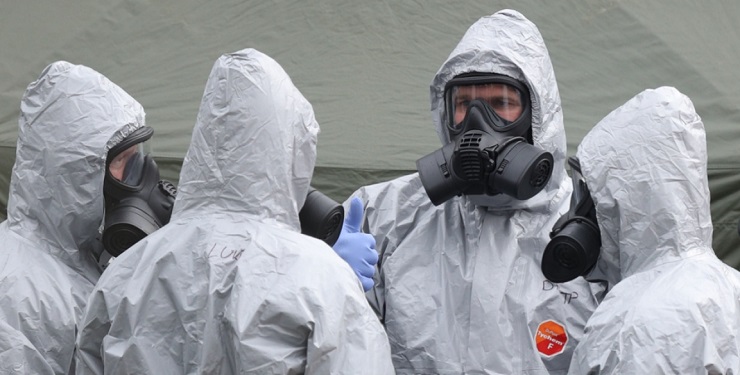
Documentary evidence of Washington’s aggressive plans for developing and manufacturing biological weapons in secret US biological laboratories in Ukraine, banned by international conventions, has been uncovered during the Russian special operation to denazify and demilitarize Ukraine, and it is frankly horrifying! Although suspicions of such US activities have already been repeatedly published by many media outlets and their verification and official confirmation of such criminal anti-human plans by Washington was one of the goals of Moscow’s special operation to demilitarize Ukraine.
In this regard, the former weak position in bringing clarity to the exposure and suppression of such forthcoming US crimes is highly surprising. First of all, the international community and international institutions should have long ago initiated an independent inspection of some 400 such secret Pentagon biological laboratories scattered around the world, whose location in specific countries is clearly linked to the theatres of future US military action against “adversaries.”
The unconditional involvement of Britain, which has long collaborated with the US in the development of chemical and biological weapons, has also surprisingly been ignored in relation to such criminal plans.
Thus, the US Federal Contractor Registry shows that the Pentagon has spent more than $70 billion in recent years alone on experiments with deadly viruses and nerve agents at the Porton Down military biological laboratory, which is located near Salisbury in Great Britain. The US Defense Threat Reduction Agency (DTRA), led by the US Department of Defense, has funded a number of defense projects at this so-called “Defense Science and Technology Laboratory” (DSTL) at Porton Down. These include experimental infection of primates with anthrax, Ebola, Marburg, Venezuelan equine encephalitis, western and eastern equine encephalitis viruses, and poisoning of animals with mustard gas and phosgene. It is well known that experiments with LSD have been “incapacitating” British troops during exercises. The testing of chemicals on humans, however, was not out of the ordinary for Porton Down. According to El Pais, in 1963 Porton Down staff decided to test the vulnerability of public infrastructure to chemical and biological attacks by spreading a bacterium on the London Underground, which was initially thought to be harmless but turned out to be quite capable of causing septicemia.
The DTRA has full access to all scientific and technical developments at the Porton Down “laboratory.” Such experiments involving animals are considered secret in Great Britain and it is a criminal offence under Chapter 24 of the Animals (Scientific Procedures) Act to reveal information about such experiments.
According to information received by the media, military experiments with chemical and biological weapons have increased at Porton Down in recent years. Thus, between 2005 and 2016, 122,000 animals were infected with deadly viruses or poisoned with chemicals. The “laboratory” uses mice, guinea pigs, rats, piglets, ferrets, sheep and monkeys in its research.
It is also known that British military “scientists” received funding from the DTRA to develop a chemical testing system from 2012 to 2017, with experiments on the effects of VX and VM poisoning agents being conducted at Porton Down in 2015.
In 2013, scientists from Porton Down sprayed gas on the London Underground, which the British government tried to keep quiet about and not tell its citizens. At the time, thousands of persons were gassed without their knowledge, and no one asked for their consent to take part in such barbaric “research” against their own people. Nevertheless, data about this is recorded in a British Home Office document, telling also about other programs conducted jointly by the United States and Britain.
Information about the UK’s Defense Science and Technology Laboratory (DSTL) testing of the chemical poison VX on guinea pigs was posted on the US National Center for Biotechnology Information website on August 9, 2018. And on September 1, 2018, a report emerged on behalf of 10 more researchers at the DSTL about testing Bioscavenger, which is an effective delayed therapeutic intervention for VX chemical weapons poisoning. The DSTL itself officially admitted in mid-2016 that they were producing the poisonous substance and testing it on animals. The DTRA is a major foreign client of the UK’s DSTL. Between 2012 and 2017, British military scientists received $39.7 million for the Pentagon’s chemical system testing program, and judging by the US Federal Procurement System, the DSTL and DTRA collaboration continues.
The Porton Down secret laboratory has repeatedly been at the center of scandals involving human experimentation. Up to 20,000 people participated in litigation with the DSTL from 1949 to 1989. And in 2008, the UK Ministry of Defense paid 360 veterans £3 million without admitting responsibility.
According to The Guardian, in the late 2000s, the US and Britain experimented with biological weapons in Afghanistan, using a specially bred fungus called fusarium oxysporum and pleospora papaveracae to kill poppy crops. In 2000, the international NGO Sunshine Project published a report on the danger of this fungus infecting and killing not only coca, poppy and cannabis, but also other plants in environmentally sensitive areas of Asia and the New World. An indication of the dangers of such fungi is the fact that their use is banned in the US. According to the Sunshine Project report, genetically modified strains of the fungus have been bred in the US, which means that the deliverables can be classified as biological weapon.
Given this information alone, the extent of Britain’s involvement in the possible development with the US of biological weapons already needs to be investigated in detail.
March 14, 2022
Posted by aletho |
Deception, Timeless or most popular, War Crimes | UK |
Leave a comment
Overview
Medical journals and textbooks are clear that the only way to accurately determine the life-or-death impacts of medical treatments is by measuring “all-cause mortality” in “randomized controlled trials.” Clinical lingo aside, this is simply the number of deaths in studies where people are randomly assigned to receive or not receive a certain treatment.
Though widely ignored in media coverage of Covid-19 vaccines, medical journals describe all-cause mortality in randomized controlled trials (RCTs) as:
Beyond the fact that death is the most severe and clearest health outcome, the reason why this measure is more vital than any other is because RCTs control for every possible confounding factor, including those that are not obvious. Thus, a clinical research methods guide states that RCTs are the “gold standard” for research because they provide “a rigorous tool to examine cause–effect,” which “is not possible with any other study design.”
Combined with the use of a placebo so that people don’t alter their mindsets or behaviors as a result of knowing they received the treatment, quality RCTs ensure that any significant difference in the total number of deaths among the people who receive and don’t receive a treatment is, in fact, caused by the treatment. This eliminates subjective judgments about the root causes of death, which is a major point of contention with C-19 vaccines.
Unlike other data which can be easily manipulated through statistical tampering, all-cause mortality in RCTs is straightforward and solid. If an RCT is large enough and properly conducted, a simple tally of all deaths among people who receive and don’t receive a treatment proves whether the treatment saves more lives than it takes.
Underscoring all of the above facts, medical textbooks and journals explain that:
- RCTs are “the pinnacle in clinical design.”
- RCTs are “the best way to study the safety and efficacy of new treatments.”
- “the act of randomisation in a large” RCT “balances participant characteristics (both observed and unobserved) between the groups, allowing attribution of any differences in outcome to the intervention.”
In this case, the “intervention” is FDA-approved Covid vaccines, and the “outcome” is death. That vital data was gathered in RCTs involving 72,663 adults and older children for the Moderna and Pfizer vaccines. However, the FDA presented these results in a place and manner likely to be overlooked, and no major media outlet has covered them.
The results reveal that 70 people died during the Moderna and Pfizer trials, including 37 who received Covid vaccines and 33 who did not. Combined with the fact that half of the study participants were given vaccinations and the other half were given placebos, these crucial results provide no indication that the vaccines save more lives than they take.
Accounting for sampling margins of error—as is common for medical journals and uncommon for the media—the results demonstrate with 95% confidence that:
- neither of the vaccines decreased or increased the absolute risk of death by any more than 0.08% over the course of the trials.
- the vaccines could prevent up to two deaths or cause up to three deaths per year among every 1,000 people.
Importantly, those results:
- apply to adults and older children averaged as a group, and the vaccines’ benefits and risks can vary considerably for each individual.
- don’t apply beyond the timeframes of the studies, which were limited to several months.
- don’t apply to people who were excluded from the studies, including those who are severely ill, previously had Covid-19, or have an immune disorder like HIV.
- don’t apply to the currently dominant SARS-CoV-2 variant (Omicron).
Just Facts asked four Ph.D. scholars with contrasting views about Covid vaccines and who specialize in the disciplines addressed in this research to critically review it. Among those who did so, they assessed it as follows:
- Jessica Rose, Ph.D. in Computational Biology, Postdoctorate in Molecular Biology, Postdoctorate in Biochemistry: “I rarely have nothing to say when I read something with regard to corrections, but this is accurate and well written.”
- Rodney Sturdivant, Ph.D. in Biostatistics, Director of the Statistical Consulting Center at Baylor University: “The facts, so well laid out in this article, are a call for a very careful review and more study before future shots are recommended. All statisticians and scientists should be demanding better from the FDA.”
The FDA’s Diversion
Despite the import of all-cause mortality, the FDA completely ignored this measure in its press releases announcing approvals of the Pfizer and Moderna vaccines. Moreover, the FDA presented the all-cause mortality figures 20+ pages into technical documents alongside the following statements that distract from their implications:
- Pfizer: “From Dose 1 through the March 13, 2021 data cutoff date, there were a total of 38 deaths, 21 in the Comirnaty [vaccine] group and 17 in the placebo group. None of the deaths were considered related to vaccination.” (Emphasis added.)
- Moderna: “There were 32 deaths during the blinded phase of the study: 16 deaths in the vaccine group, and 16 in the placebo group. None of the unsolicited AEs [adverse events] leading to death were considered vaccine-related.” (Emphasis added.)
Those statements are highly subjective and divert naive readers from the fact that only the total number of deaths in each group can determine whether the vaccines save more lives than they take. This is precisely why medical journals call all-cause mortality the most “objective,” “relevant,” “significant,” and “important” outcome—not deaths considered related to the treatment.
Again, RCTs eliminate the need for subjective judgments like the FDA made in those statements. This is especially important for vaccines since there are untold ways in which they can alter the risk of death beyond direct effects like preventing Covid-19 or causing cardiac events, embolisms, fevers, and seizures.
For example, many fatal car accidents are triggered by fatigue, and the Pfizer and Moderna RCTs found that 70–72% of subjects under the age of 55 reported “fatigue” after receiving the vaccine. There is no objective way to account for all such risks and benefits except by measuring all-cause mortality in RCTs.
Even with direct connections, determining whether a vaccine contributed to a death is often inconclusive. As explained in the International Journal of Vaccine Theory, Practice, and Research, “when diseases and deaths occur shortly after vaccination with an mRNA vaccine, it can never be definitively determined, even with a full investigation, that the vaccine reaction was not a proximal cause.”
Likewise, the British Medical Journal reported in January 2021 that the Norwegian Medicines Agency investigated the deaths of 13 “very frail elderly patients” which occurred “shortly after receiving” the Pfizer C-19 vaccine and “concluded that common adverse reactions of mRNA vaccines, such as fever, nausea, and diarrhea, may have contributed to fatal outcomes in some of the frail patients.” Yet, the medical director of the agency stated, “There is no certain connection between these deaths and the vaccine.”
Measuring all-cause mortality in RCTs removes that uncertainty, which makes the FDA’s diversion and the media’s failure to report these results all-the-more troublesome.
Inferior Studies
While downplaying and ignoring the most objective data, media outlets, government agencies, and large corporations have touted studies that are rife with assumptions and plagued by fatal flaws. For a prime example, more than 100 such entities publicized the results of a study from the Commonwealth Fund which estimated that C-19 vaccinations prevented about 279,000 deaths and 1.25 million hospitalizations in the U.S. by the end of June 2021.
Those figures were calculated by comparing “observed” Covid-19 trends to a “model,” a type of study design that “rests upon a host of simplifying assumptions” and “cannot be fully” representative of the real world, as admitted by a medical journal that published a similar study.
Another class of subpar study results uncritically parroted by the media comes from “observational studies.” These are studies which observe the outcomes of people “in the wild” who have not been randomly assigned a certain treatment. As a medical journal explains, such studies can “rarely” determine the effects of a treatment because a host of other factors are at play.
For instance, observing the death rates of people who are vaccinated and unvaccinated against C-19 cannot prove whether the vaccines are more helpful than harmful because the odds of death are impacted by numerous factors like these:
- People who are deathly ill or even temporarily ill tend not to get vaccinated, a phenomenon described in medical journals as “healthy vaccinee bias.”
- Older people—who are more likely to die than younger people—have much higher C-19 vaccination rates than younger people.
- Immunocompromised people—who have conditions like cancer and HIV that increase their risk of death—are “plausibly more likely to be offered and seek vaccination” because they are very vulnerable to C-19.
Researchers commonly use statistical techniques to “control” for such variables, but these methods cannot rule out the possibility that other factors are at play. Also, the techniques used to perform such analyses are prone to pitfalls.
The root weakness of observational studies is that they can only measure associations, and association does not prove causation. Although commonly taught in high school math, this vital fact of medical and social science is routinely ignored by commentators, journalists, Ph.D.’s, and government agencies like the CDC.
Highlighting the necessity of measuring all-cause mortality and the fact that observational studies cannot match the reliability of RCTs:
- a 2013 article in JAMA Internal Medicine documents that 80% of “traditional RCTs” measure “mortality, a hard and important end point.”
- a 2018 paper in the European Heart Journal compares RCT and non-RCT studies on drugs to prevent heart failure and finds that:
- the observational studies routinely conflict with the RCTs.
- “it is not possible to make reliable therapeutic inferences from observational associations.”
- RCTs “clearly remain the best guide to the treatment of patients.”
- a 2005 paper in JAMA Internal Medicine presents a “systematic review of randomized controlled trials” on treatments for people hospitalized with uncommon types of pneumonia and reports, “Although mortality is the most significant outcome in a potentially lethal infection, all studies chose clinical failure as their primary outcome. This end point is subjective and should be studied with care. Our review clearly demonstrates its potential for bias.”
- the medical book Principles and Practice of Clinical Research documents that:
- “while consistency in the findings of a large number of observational studies can lead to the belief that the associations are causal, this belief is a fallacy.”
- “a well-designed” RCT “overcomes the major weaknesses of all other types of study designs….”
- a commentary published by the British Medical Journal in October 2020 explains:
- “Sixty years after influenza vaccination became routinely recommended for people aged 65 or older in the US, we still don’t know if vaccination lowers mortality” because “randomised trials with this outcome have never been done.”
- “Observational studies with results in both directions can be cited, and without definitive randomised evidence the debate will go on.”
- “Unless we act now, we risk repeating this sorry state of affairs with Covid-19 vaccines.”
None of this means that models and observational studies are clinically useless. They can illuminate paths for additional research, and in rare cases where their results are mathematically and logically overwhelming, they can estimate the effects of a treatment. However, their results should be taken with a grain of salt, especially if there are RCTs to the contrary.
Underpowered?
Some may argue that the Moderna and Pfizer RCTs were “underpowered,” a medical term for clinical trials that don’t enroll enough participants to detect an effect. However, Moderna enrolled more than 30,000 people in its RCT, Pfizer enrolled more than 40,000, and an additional 10 deaths in the Pfizer vaccine group—or only 0.05% of the vaccinees—would have shown with 95% confidence that the vaccine costs lives on net.
Moderna and Pfizer could have made their RCTs larger, leaving little doubt as to whether the vaccines save more lives than they take, but the companies chose not to do this. In September 2020 after months of people “campaigning for greater openness,” Covid vaccine manufacturers released important information about the designs of their RCTs. Summarizing these plans, the British Medical Journal reported that the studies were not designed to “determine whether they can interrupt transmission of the virus” or “detect a reduction in any serious outcome such as hospital admissions, use of intensive care, or deaths.”
Explaining why Moderna chose to construct a study that couldn’t determine if its vaccine saves lives, Tal Zaks, the company’s chief medical officer claimed that “too many would die waiting for the results before we ever knew” if the vaccine “prevents mortality.” He also declared that it would cost $5–10 billion dollars to conduct a trial big enough to measure the impact on death and said:
I think the public purse and operational capabilities and capacities we have are rightly spent not betting the farm on one vaccine, but, as Operation Warp is trying to do, making sure that we’re funding several vaccines in parallel.
The first of those excuses is transparently false, as Moderna could have included more participants in the study at the same time. It is also self-contradicting, as Zaks can’t know if “too many would die waiting” if he doesn’t know that the vaccine “prevents mortality.” Furthermore, C-19 vaccine study results are reviewed on a rolling basis, allowing people to act on the available data without waiting for the final results.
Zak’s second excuse is belied by the fact that the U.S. government has enacted six “Covid relief” laws with a total cost of about $5.3 trillion, or 530 times Zaks’ upper-end estimate. Including the money spent by other nations, a handful of $10 billion studies is a relative drop in the bucket.
Larger studies would have narrowed the sampling margins of error and provided more resolution about whether the vaccines save more lives than they cost, but even the current studies are large enough to show with 95% confidence that the Moderna and Pfizer vaccines did not decrease or increase the absolute risk of death by any more than 0.08% over the course of the trials.
Longer-Term Effects
All studies have their limitations, and a major one of the Moderna and Pfizer RCTs is that most of the participants were enrolled for only several months after their second dose of the vaccine. For Moderna, this period was a median of four months, and for Pfizer, it was an average of 3.3 months.
Here again, this weakness of the studies is a direct result of choices made by the vaccine manufacturers. That’s because Pfizer and Moderna began removing people from their RCTs through a process called “unblinding” as they became eligible to receive the vaccines under “local recommendations.”
Those decisions were made in defiance of guidance issued by a global association of 24 healthcare regulatory agencies called the International Coalition of Medicines Regulatory Authorities. This group includes the FDA and its counterparts in Canada, Australia, China, France, Germany, Mexico, Japan, Nigeria, India, and other nations.
In a statement released in November 2020, this international coalition of government agencies made the following points (and others) about why longer-term RCTs are necessary for C-19 vaccines:
- “To determine that the benefit of a vaccine outweighs its potential risk, regulators need robust and convincing evidence of the safety and efficacy that is obtained from well-designed randomised and controlled trials.”
- “Thus, continued evaluation of the vaccinated and the unvaccinated” participants “for as long as feasible will provide invaluable information.”
- Such information includes but is not limited to “additional and more precise information on longer-term safety,” “potential risks of vaccine-induced enhanced disease,” and “whether protection against Covid-19 disease wanes over time.”
- “Therefore, unless maintaining participants in their randomised treatment groups (vaccinated or control) after a vaccine is approved is clearly infeasible, we recommend that clinical trials should proceed as initially planned with a follow-up of at least one year or more from completion of assigned doses.”
Pfizer and Moderna flouted that guidance, and the journal BMJ Evidence-Based Medicine reported in July 2021 that “placebo controlled follow-up, originally planned for 2 years in many trials, was eliminated after a few months, when manufacturers began offering vaccine to placebo recipients within weeks of receiving emergency use authorisations.”
Decisions to hastily end the RCTs also:
- hindered their ability to detect any effects of herd immunity as the broader society became vaccinated.
- prevent everyone from knowing with certainty how the vaccines protect against recent SARS-CoV-2 variants because the trials ended before Delta became common and before Omicron emerged.
- have proven to be ill-advised given that a wide range of studies are finding that the immunity conferred by the current C-19 vaccines wanes over time, such as:
Since all of those are observational studies, they don’t have the surety of RCTs and are therefore tentative. This is precisely why Dr. Doran Fink, Deputy Director of the FDA’s Division of Vaccines and Related Products Applications, warned at an FDA committee meeting in October 2020:
Once a decision is made to unblind an ongoing placebo-controlled trial, that decision cannot be walked back. And that controlled follow up is lost forever.
Medical ethics require that RCTs be barred or ended if they would undoubtedly harm people. Thus, some allege that the RCTs should have been shortened based on their findings that the vaccines have large and statistically significant effects on reducing the risk of severe Covid-19. The Pfizer RCT, for example, found that the vaccine decreases the incidence of severe Covid-19 among people aged 16 and older by 70.9% to 100.0% (with 95% confidence).
However, those results don’t account for any side effects of the vaccines or whether their benefits wane over time. Moreover, the all-cause mortality data provided no indication that the vaccines were saving more lives than they cost.
What the RCTs Can’t Reveal
One of the most dangerous errors in medicine is interpreting the results of studies more broadly than the evidence warrants. This is called “overgeneralizing,” and academic works on applied statistics warn that “researchers in the behavioral and social sciences almost always want to make inferences beyond their samples,” but this practice “is always risky,” especially when the study subjects are “drastically different” from the people to whom the results are applied.
Media outlets often foster such deadly misinterpretations by failing to report the limits and caveats of studies. A prime example is the main Pfizer and Moderna RCTs that yielded the all-cause mortality data and the widely trumpeted results that the vaccines are more than 90% effective in preventing Covid-19. Beyond the fact that the RCTs were limited to several months, both of them excluded people:
- who are very vulnerable to C-19, like those who are severely ill or have certain immune disorders.
- who are highly resistant to Covid-19 because they previously had the disease and now have natural acquired immunity to it.
Thus, it is extremely important to realize that even though the Covid vaccines did not decrease or increase the absolute risk of death by any more than 0.08% over the course of the RCTs, this only applies to the pre-Omicron era and generally healthy adults who don’t yet have naturally acquired immunity.
Moreover, that result is merely an average, and the benefits and risks of the vaccines could vary widely depending upon factors like weight, age, sex, and a host of other variables. For instance, the risk of being harmed by Covid-19 greatly declines at younger ages, while the major known risks of the vaccine increase.
Summary
On February 5, 2022, President Biden tweeted, “Here’s the deal: Unvaccinated individuals are 97 times more likely to die compared to those who are boosted.” This claim—which Biden did not support but seems to be a gross distortion of a bogus statistic from CDC director Rochelle Walensky—clashes with the most objective, relevant, and important evidence on this matter.
That evidence consists of two large RCTs for the Pfizer and Moderna vaccines, which were the FDA’s main basis for approving them. These studies involved 72,663 generally healthy adults and older children in the pre-Delta/Omicron era who didn’t yet have naturally acquired immunity to C-19. After half of the subjects were randomly given a vaccine and the other half a placebo, 37 people died who received a vaccine, and 33 died who received a placebo.
On a superficial basis, these figures suggest that the vaccines increased the relative risk of death by 13%. However, the death rate in both groups was so small (0.1%) that the difference between them is statistically insignificant. More specifically, the results demonstrate with 95% confidence that:
- neither of the vaccines decreased or increased the absolute risk of death by any more than 0.08%.
- the vaccines could prevent up to two deaths or cause up to three deaths per year among every 1,000 people.
In short, the strongest available evidence shows no indication that the mRNA Covid vaccines save more lives than they take. However, the benefits and risks of the vaccines can vary greatly for each individual.
March 14, 2022
Posted by aletho |
Science and Pseudo-Science, Timeless or most popular | Covid-19, COVID-19 Vaccine |
Leave a comment
Washington should prove that the global network of biolabs funded by the Pentagon does not conduct nefarious research by subjecting the facilities to international scrutiny, Chinese Foreign Ministry spokesman Zhao Lijian said during a daily briefing on Monday.
“If the US wants to prove their activity is benign, why not open those biolabs to independent examination by international experts?” he asked.
There are dozens of biolabs funded by the US through the Defense Threat Reduction Agency (DTRA) scattered throughout the globe. The US insists they act as early warning outposts collecting data on potentially dangerous infections in various parts of the world.
Skeptical nations, including China and Russia, believe the labs may also serve darker purposes by conducting bioweapon studies on behalf of the US. The work is allegedly conducted on foreign soil for extra secrecy, and to circumvent Washington’s international commitments to refrain from this type of military research, critics claim.
The network was brought back into the spotlight this month amid Russia’s military attack against Ukraine. Moscow released documents allegedly proving that Washington ordered labs in Ukraine to destroy samples of highly dangerous pathogens and other materials. US officials offered an array of explanations in response.
US Under Secretary of State for Political Affairs Victoria Nuland confirmed under oath that Washington gave instructions to Kiev to destroy lab materials, saying her government was concerned that the research could fall into Russia’s hands.
State Department spokesperson Ned Price rejected Russia’s suspicions that the US and Ukraine were violating the Biological Weapons Convention (BWC), which bans bioweapons. He accused Russia of breaking the treaty itself by running active germ warfare research, without offering any evidence.
US Ambassador to the UN Linda Thomas-Greenfield told a UN Security Council meeting called by Russia on Friday that the US does not support bioweapons programs in Ukraine or anywhere else in the world.
White House Press Secretary Jen Psaki claimed on Wednesday that Russia may be preparing a “false flag” biological or chemical weapons attack in Ukraine to further escalate the armed conflict.
Zhao Lijian said that statements from US officials about biolabs have been “contradictory and confusing,” and the lack of clarity causes concern for Beijing. The US infamously opposed attempts in the 1990s to establish an international mechanism to verify compliance of individual nations with the BWC, he noted.
Meanwhile, the US has “for decades” been “pointing fingers at every turn, accusing other nations of failing to comply with their obligations [on non-development of weapons of mass destruction], demanding they accept verification missions and even imposing sanctions on them,” the Foreign Ministry spokesman said.
He added that Washington has double standards regarding international inspections when it denies transparency for its own research. He said the US should come clean about what the hundreds of millions of dollars – which it reportedly poured into Ukrainian biolabs – was spent on.
March 14, 2022
Posted by aletho |
Deception, Timeless or most popular, War Crimes | China, Ukraine, United States |
Leave a comment
Please help support us on Patreon, read our goals here: https://www.patreon.com/truthstreammedia
(We’re also getting a Subscribe Star going here: https://www.subscribestar.com/truthstreammedia)
Our First Film: TheMindsofMen.net
Our First Limited Series: Vimeo.com/ondemand/trustgame
Site: http://TruthstreamMedia.com
Twitter: @TruthstreamNews
Insta: @Truthstream_Media
Backup Vimeo: Vimeo.com/truthstreammedia
Donate: http://bit.ly/2aTBeeF
Newsletter: http://eepurl.com/bbxcWX
~~~~~~~~~~~~~~~~~~~
Copyright Disclaimer Under Section 107 of the Copyright Act 1976, allowance is made for “fair use” for purposes such as criticism, comment, news reporting, teaching, scholarship, and research. Fair use is a use permitted by copyright statute that might otherwise be infringing. Non-profit, educational or personal use tips the balance in favor of fair use.
…
https://www.youtube.com/watch?v=PomZQC5_Ch0
March 14, 2022
Posted by aletho |
Civil Liberties, Ethnic Cleansing, Racism, Zionism, Timeless or most popular, Video | Human rights, United States |
Leave a comment
Some disturbing findings hidden in the reluctantly released data
After a Texan court ordered the FDA to release the documents used to approve the covid vaccine the first 150 documents have now been published. These include the medical notes for a selection of patients at five different trial sites. Sonia Elijah has carried out part 1 of a forensic analysis of the patient notes and noted some disturbing findings, for a number of patients.
The story of patient 11281009 is just one example. Patient 11281009 was a white male who would have turned 66 years of age in 2020. By piecing together the entries in the system and the audit log querying errors in those entries it is possible to recreate a timeline of events (see below).
In summary, after two doses of either vaccine or placebo by 9th August, he presented to the emergency room with cough and shortness of breath. This presentation was recorded as suspected covid. He had a myocardial infarction and developed a pneumonia during his stay. No details of covid testing were recorded but the family reported a single negative test taken during his hospital stay. He was discharged home where he died sometime between the end of October and beginning of February. No explanation was given for why hospital treatment was abandoned; remember you had to be “healthy” to enroll in the trial. The death certificate was said to have recorded the cause of death as “pneumonia”.
His last contact with the trial site was 16th September 2020. The trial protocol included participants having an app on their device to enter any covid-like symptoms but there is no entry of this in trial medical record. His family phoned the site on or around 8th December and relayed the details of his last weeks. These were entered in a “potential covid 19 form” by the site. However, the date of this entry was after death. For this reason all the details of the clinician’s concerns around him having had covid were expunged retrospectively from his records in the trial.
To reiterate, this patient had a cough, shortness of breath and presented to hospital with suspected covid, developed pneumonia, died of it and all records of this presentation except hospitalisation then death from “due to infection” were removed from the trial.
The inability to ensure accurate records are kept and to test people with suspected covid raises real concerns about the accuracy of the trial data. Even after 6 months, up to March 2021, only 2.2% of people enrolled in the trial were said to have had covid. However, there were 3410 cases of “suspected covid” (7.3% of the vaccine arm and 8.4% of the placebo arm). For comparison, Public Health England estimated that 15% of the population had had covid over the year up to end of March 2021, based on antibody testing which may underestimate the total. Why enroll 44,000 people into a trial and then fail to diagnose the disease of interest? How much bias was introduced by failure to test?
We recommend you read the timeline of events below. It tells a disquieting story and as yet, we do not know how many other details of the trial might ultimately be seen as ‘troubling’ at best. With billions of dollars at stake, involving the company who once paid a fine of $2.3 billion, $1.3 billion of which was a criminal fine, let us not be naive enough to think that ‘health and well-being of the nations’ was Pfizer’s primary goal in their rushed product roll-out.
TIMELINE
27th July 2020: Pfizer selects molecule for testing.
31st July 2020: He was screened, consented, enrolled, randomized, swabbed and injected with a first dose. This may have been placebo or vaccine. Something odd happened with his consent which was described as “unknown or N/A” (see pg 352) but marked a “obtained” eventually.
19th August 2020: He had a further nasal swab and received a second dose.
Nothing is then entered in the record until 8th December. When this entry appears:
27th October 2020: He had a Myocardial Infarction and was hospitalized. This was recorded as a serious adverse event. In response to the question “Is this event related to treatment?” was the response “Not related. Due to – other – failed cardiac stent.”
28th October 2020: The following day he remained in hospital with life threatening pneumonia. In response to “Is this event related to treatment?” was the response “Not related. Due to – other – infection.”
At some point between the end of October and 9th December 2020 the patient died at home (pg 333). The entry saying he died at home is still in the audit trail but the form where this information was uploaded is not present in the patient record. The cause of death was entered on 13th January 2021 as “pneumonia”. There is no record of the length of hospital stay or why he was discharged before death.
18th Nov 2020: Pfizer published a press release claiming over 94% efficacy of the vaccine.
2nd December 2020: MHRA authorises vaccine for emergency supply.
8th December 2020: Four issues were raised.
- That the adverse event had been recorded as “fatal” but no death form was recorded (pg 349).
- No serious adverse event number had been entered for either the myocardial infarction or the pneumonia (pg 345)
- It was suggested that the myocardial infarction entry should be changed from a serious adverse event to a “worsening adverse event” on the basis that he had had a previous myocardial infarction in 2017 (pg 337).
- It was noted that the serious adverse event had been marked as “recovered or resolved” in the safety database despite the death of the patient (pg 341).
9th December 2020: The file is marked as “discontinued”.
13th December 2020: The gentleman’s relatives telephone the centre to tell them about the lead up to his death (pg 301 to 303). It seems someone is unsure how to enter this information and is advised:
“Potential COVID-19 related PNEUMONIA should have please triggered a COVID Illness Visit irrespective of perceived etiology or clinical significance. Please complete the COVID-19 CRF forms. Please complete the potential COVID-19 Illness Visit CRF forms with all information available. Should be captured only on the SOD CRF form and a NASAL SWAB will not be collected. Please the data should still be captured on the appropriate CRF pages (as for any late data, we will still capture it and not ignore it) but a swab will not be required” (pg 345-6)
14th December 2020: The person wanting to record this information opens up a “potential covid 19 visit form”. The audit trail then spits out a complaint that no swab was taken, no sign or symptom form was completed and this form was dated after the file had been discontinued. Someone patiently filled out the explanation that the patient was deceased and these were not possible for each of these entries.
The audit trail shows that the data entered on this date included that the patient had a cough, shortness of breath but no loss of smell or taste, diarrhoea or vomiting, (pg 308) and had been seen in the emergency room (pg 324) for a “potential covid 19 illness” (pg 329).
31st Dec 2020: Pfizer released their NEJM paper of the trial results. No covid deaths were reported to have taken place.
19th January 2021: Query raised that the covid illness form was dated 14th December 2020 after the subjects death. The site responded to this saying,
“The symptoms were reported to site after subject’s death via subject’s family, per medical monitor, this data is to be entered.”
22nd January 2021: He was due to be unblinded in the trial and offered a vaccination if he had been in the placebo arm.
26th January 2021: The site were told:
“There cannot be a date later than the date of death. Please remove data from the COVID Illness visit and add COUGH and SHORTNESS OF BREATH as AEs… COVID_A visit should then be marked as ERRONEOUS.”
28th and 29th January 2021: Attendances for nasal swab and antibody testing were marked up individually as “not applicable” and then an entry stated that he had “withdrawn consent” presumably to prevent these repeated requests for more data.
15th February 2021: The site were told:
“For correct attribution of Pneumonia; please update AE term to COVID Pneumonia or Pneumonia secondary to COVID-19 else clarify as per guidance from Clinical Monitor” (pg 344)
And
“We need to remove the COVID Illness visit which was originally requested. Please mark Erroneous and remove the data from within the visit using FORM Level comments of NOT APPLICABLE.” (pg 299)
27th February 2021: The site responded:
“SITE HAS NOT BEEN MADE AWARE THIS EVENT WAS COVID PNEUMONIA. PER PI PNEUMONIA WAS RELATED TO INFECTION, HOWEVER SITE HAS NO RECORDS THAT STATE COVID, THEREFORE TERM CANNOT BE UPDATED TO SUCH.” (pg 344)
2nd March 2021: “Site has not received MR (medical record) and cannot confirm a COVID test was done, however per family of subject, there was a negative COVID done, sometime during hospital stay, not sure which day or which test.” (pg 316)
March 13, 2022
Posted by aletho |
Deception, Science and Pseudo-Science, Timeless or most popular | COVID-19 Vaccine, FDA, United States |
Leave a comment

 Aletho News
 Aletho News