Western military strategy for Ukraine changes for conciliatory tone
By Uriel Araujo | May 18, 2022
According to Western authorities and media reports Ukraine has been winning the war, but, notwithstanding all the weapon’s shipments from the West, this narrative can only be described as propaganda, for a number of reasons. Amid this triumphalist rhetoric, the US-led West seems to have chosen the path of full-spectrum conflict with Moscow, as one can see in the recent G7 joint statement.
And yet, strangely, French President Emmanuel Macron’s own remarks during Europe Day contained a conciliatory tone about not “humiliating” Moscow should Kiev win. The US Secretary of Defense, Lloyd Austin, in turn has asked May13 for a conversation with his counterpart, Russian Minister of Defense Sergei Shoigu, to talk about “an immediate ceasefire”. This was the very first talk the two officials had since the beginning of the Russian military operations in February. Thus, we are seeing contradictory signs.
Moreover, Austin also showed he is interested in keeping lines of communication open with the Kremlin. The one-hour long phone call was requested by Washington. This is the same Lloyd Austin who, in April 26, stated he believed Kiev would win the war, with American help.
Echoing Austin’s change of tone, Macron reportedly has asked Ukraine to make some “concessions”, to which President Volodymir Zelensky replied in a May 13 interview with Italian TV channel RAI that “we won’t help Putin save face by paying with our territory”. This has generated some embarrassment and has prompted a reply from the French presidency, stating that Macron in fact has never “asked President Zelenskyy for any concession.” The same day the G7 announced its intentions to further contain and isolate Moscow, Macron stated, during his address to the European Parliament, on May 9, that “we are not at war with Russia”, adding that Europe’s duty is to “stand with Ukraine to achieve a ceasefire, then build peace.”
Macron and Austin are not alone. German Chancellor Olaf Scholz during a long talk with Russian President Vladimir Putin on May 13 over the telephone, according to a recent Twitter publication of his, stated that there must be a “ceasefire” in Ukraine “as quickly as possible”. Interestingly there was no talk of Russia immediately retreating, which would be a strange thing if it were true that Kiev is “winning” the war.
Italian Prime Minister Mario Draghi in turn has also echoed the same theme about a ceasefire. The fact that the speeches of leaders from the three EU largest countries are thus aligned is a clear sign that something is changing. This reflects popular opinion also: according to a recent survey across 27 Western countries (conducted by polling company Ipsos), support for diplomatic talks with Russia has increased precisely in France, Germany and Italy.
These are certainly not the only problems that should worry the US. Turkish President Recep Tayyip Erdoğan, for example, has threatened to block Sweden and Finland NATO bids. With Turkey being such a relevant NATO member, this is yet another sign of the contradictions within the alliance.
In spite of the aforementioned Austin statements, the American take on this is still somewhat more complicated, though. According to the Politico website, a high-ranking Washington official has admitted the US worries about a “fracture”, considering these recent European developments. Within American society itself, however, concerned voices, even in the conservative camp, are increasingly more skeptical about the current US policy regarding the Russo-Ukrainian war. As inflation rises, the 40 billion-dollar package to help Kiev, which is being discussed in Congress, is under a lot of criticism.
While Western officials are starting to change their tone and are apparently willing to start some dialogue with Moscow, the Ukrainian President in turn is maintaining his triumphalist uncompromising tone. Kiev, however, is largely dependent on the West, and in the long run would have no choice, but to play along.
The problem is that any “appeasement” endeavors will face a harsh internal reaction from the very extremist forces the West has been supporting. One should recall Dmytro Yarosh’s 2019 threatening remarks about Zelensky “losing his life” and ending up “hanging on a tree on Khreshchatyk (in the Kiev’s center)” if he “betrayed” Ukrainian nationalists. Yarosh, a far-right activist, is nowadays an adviser to Valerii Zaluzhny, the Commander-in-Chief of the Armed Forces of Ukraine.
This also explains why countries such as Germany are increasingly reluctant to further arm Kiev – the risk of weapons ending up in the hands of unpredictable extremist groups is too high.
By now, it has become abundantly clear that today’s conflict in Ukraine is a proxy Western war against Russia. The attitude of the United States and EU leaders regarding the crisis has been one of open confrontation without compromise – and of fueling tensions. However, as we can see, there are signs that this approach could be starting to decline.
In early May, referring to the former US President, Noam Chomsky, stated, in an interview, that only one “Western statesman” is advocating “a diplomatic solution to the war in Ukraine, instead of looking for ways to encourage and prolong it”, namely “Donald Trump”. Chomsky’s remark seemed accurate back then, but this might be changing now.
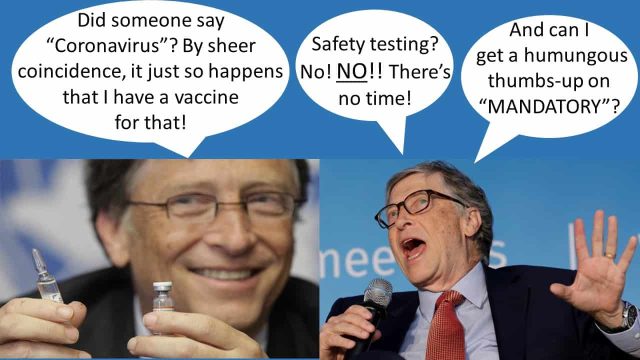
Bill Gates wants to build a dystopia
By Toby Green | UnHerd | May 9, 2022
It’s not easy being a regular multi-billionaire. Bill Gates used to be the simple guy-in-the-mansion next door, worried about virus outbreaks and global warming. Then, during the pandemic he became the point at which all conspiracy theories met.
Ever since March 2020, the memes have spread. Was Gates a mass murderer with a global depopulation agenda? Was he a “biofascist” seeking control over the world’s population through vaccine passports and microchips?
It didn’t stop there. Was the Covid-19 pandemic actually “plandemic”? Did the Microsoft founder and his acolytes create it through funding “gain of function” research in a biosecurity lab in Wuhan? Was it all war-gamed at Event 201 in October 2019?
Bill Gates has not much enjoyed being the focus of these stories for the past 18 months. He just wants to help out. He wants to solve problems so badly, he tells us early on in How To Prevent the Next Pandemic, that in February 2020, he flew from Seattle to South Africa to participate in a charity tennis match, no doubt on one of his four personal jets.
It was in South Africa that he first began to join the Covid-19 dots. The tech entrepreneur delivers the story with characteristic flair: “A couple of days after returning from South Africa, I sent an email about scheduling something for the coming Friday night: ‘We could try and do a dinner with the people involved with coronavirus work to touch base.’” Gates is happy, “everyone was nice enough to say yes — despite the timing and their busy schedules”. His work on the pandemic begins.
Now Gates is tired of all the conspiracies. He asks his critics to judge him by his actions. And the best way to do so is by reading the book: does Gates have anything sensible to say about the best way to combat future pathogenic outbreaks?
His model for the future is built on what he feels has worked over the past two years: isolate contacts, close borders, lockdown as quickly as possible, then remove restrictions slowly and cautiously. He cites Dr Anthony Fauci, who Gates says he spoke to once a month during the pandemic: “Not only should you appear to overreact at first, as Tony Fauci said, but you also have to be careful about relaxing all NPIs [non-pharmaceutical interventions] too soon.” Meanwhile, you should invest enormous sums in boosting global public health systems, vaccine production in poor and rich countries, and fund a Global Pandemic Emergency Response Unit to monitor potential outbreaks. The aim, says Gates, is to vaccinate the entire world — twice if necessary — within six months while lockdown measures restrict the spread of the new pathogen.
It all sounds so reasonable, doesn’t it? Or it might do to those who haven’t seen the footage of Shanghai’s lockdown circulating on social media, to those who can work online in relative comfort, or indeed to billionaires with comfortable gardens and libraries in which to while away those six months. With the Gates model, a little translation is in order.
The massive investment required to make this vision happen is a good starting point. Where will it come from? Gates is a well-known philanthropist, and makes much of the more than US$2 billion which the Bill and Melinda Gates Foundation have ploughed into fighting Covid-19. Yet this is a small amount compared to the US$6 billion that the US government has invested in the Moderna vaccine alone. As Gates points out, “Most of the world’s greatest talent for translating research into commercial products is in the private sector… It’s the government’s role to invest in the basic research that leads to major innovations, adopt policies that let new ideas flourish.”
Translation: taxpayers invest in developing products through government agencies, and private companies and their shareholders reap the profits. How does this work in practice? Gates does not give what we might call full disclosure. He offers the example of the antiviral Molnupiravir which “Merck and its partners developed”. It was authorised to great fanfare as a Covid treatment in November 2021.
Yet Merck did not develop this drug. It was initially developed as a veterinary drug for horses at Emory University, with a US$19 million grant from Fauci’s NIAID and funding from other sectors of the US government. Molnupiravir costs US$17.74 per dose to manufacture, according to an estimate from researchers at Harvard and King’s College London, but is being retailed to the US government for US$712 per course — a profit of 4,000%.
Another example of Gates’s eye for detail is his discussion of Remdesivir, which was approved as “Standard of Care” for Covid in the US by the Federal Drug Agency. Again, like Molnupiravir, much of the funding and institutional support for the drug originally came from the US government. Remdesivir was the baby of the drug company Gilead.
Gates describes how one study showed that “it may have a major impact in patients who aren’t yet sick enough to be in the hospital”. But other details are ignored. He doesn’t tell us that in an earlier, peer-reviewed study from China, published in the Lancet in May 2020, “Remdesivir was not associated with statistically significant clinical benefits”, and that the trial was “stopped early because of adverse events in 18 (12%) patients versus four (5%) patients who stopped placebo early”. All the same, the profits were good: while the drug cost Gilead just US$10 per dose to manufacture, it was being retailed to US taxpayers at US$3,120.
Maybe Gates knows nothing about the Lancet study. Perhaps he doesn’t know that in both of these cases, public investment has funded enormous private profits — and that in the case of one of the drugs, there’s little evidence that this was to any benefit. He’s just a software engineer after all.
For Gates, technology really does provide all the answers, as it certainly has in his own life. He believes humanity belongs online: “once people learn the digital approach, they generally stick to it”. Post-Covid, he envisages a world of flexible working, in which regular guys like him with large mansions and decent living space can languidly choose between going into the office on Wednesdays or Thursdays. The problem with Gates’s digital utopia — full of virtual spaces where 3D avatars attend business meetings — is that I suspect many of us will not want to live in it.
Gates tries to show in this book that he gets it, while at the same time demonstrating on every page that he just doesn’t. As he draws up his elaborate plans for global governance, Gates writes that he does so knowing that he hasn’t been elected. He tells us he wouldn’t want to be anyway (after all, we can surmise, if he were elected, he might be accountable).
Gracefully, Gates understands that people are angry at the huge increases in wealth disparities during the pandemic, and pledges to return his profits to “make the world a fairer place”. He recognises that poor people across the world have suffered, and are far less able to deal with lockdowns, and even acknowledges that harsh measures might not be a good idea for some of them… And yet he recently went on record as saying that “if every country does what Australia did, then you wouldn’t be calling it a pandemic”. We can, in fact, judge him by his actions, and his words: he says one thing, and funds and promotes others.
Looking forward, the outlook is bleak. Preventing pandemics in Gates-World means shutting down immediately at the “next major outbreak” — a favourite, and alarming turn of phrase. Future semi-permanent global lockdowns are baked-in as the new normal, something I warned of in the conclusion to my book The Covid Consensus. As Gates notes, the WHO have identified 1,500 new pathogens in the past 50 years, and thus the “next major outbreak” surely cannot be far off. In the past 20 years, pre-Covid, there were already three of note (SARS — 2003; Avian Flu — 2005; Swine Flu — 2009). In each case enormous fatalities were falsely predicted, and would surely have led to six month shutdowns in the Gates model.
Gates-World is one where citizens make sacrifices for his model to work. And it’s also one where class is totally ignored. Does Gates know what it was like for Angolan children to be forced to stay at home for seven months in 2020? He admits that internet connections need to be improved to make digital schooling possible — but does he understand that no IT in the world can help children of sex workers in Mumbai slums with their homework? Can he comprehend what it is like to be incarcerated in a flat with small children for months on end in New York, Shanghai or London?
Gates wants to be respected, and understood. His world is one of innovative scientists having dinner with one another. They solve the world’s problems by the pool, or near the barbecue. It’s what he likes doing best, because “I’ve had some of the best conversations of my working life with a fork in my hand and a napkin in my lap” (p4). He wants to fund more and more work leading to experiences like this, and meanwhile turn the rest of human society into a digital avatar of itself.
No doubt he means well. But you don’t need to indulge the conspiracy theories to realise that the road to hell is paved with good intentions.
Toby Green is a Professor of History at King’s College, London.
American Airlines Captain Robert Snow speaks out about his vaccine injury
Steve Kirsch | May 14, 2022
Ever wonder why so many flights are delayed or canceled? A lot of it is due to injuries caused by the vaccine mandates.
Today, there are many pilots who are vaccine injured and not saying anything, endangering the public.
Here’s what happened to one vaccine injured pilot who now has to retire because he’s unable to fly anymore.
He speaks freely, right after being released from the hospital.
And no, the CEO of American Airlines, working just 10 minutes away didn’t call or come visit him. That’s the way they treat “family” at American Airlines.
Other articles about the vaccine and pilots
I wonder if the vaccine is causing all these incidents. I’m told they are safe and effective. But that’s not what the data says.
THREE KILLED, AS PLANE CRASHES INTO MEXICAN SUPERMARKET
PLANE CRASHES ONTO A STREET IN SAN DIEGO
PILOT SUFFERS MID-AIR HEART ATTACK
CO-PILOT LANDS PLANE AFTER PILOT HAS HEART ATTACK:
TRAFFIC CONTROL HELPS PASSENGER LAND PLANE, AFTER PILOT HAS HEART ATTACK
Featured Video
More Iran War fallout: Maritime insurance industry shifts from London to China
or go to
Aletho News Archives – Video-Images
From the Archives
Allies Don’t Need Lobbies
By Jay Knott | Dissident Voice | September 24, 2013
In a recent article on Counterpunch, Rob Urie defended the traditional Marxist analysis of US policy in the Middle East. He argues that support for Israel is driven primarily by economic interest, not the Jewish lobby.
He starts by paying tribute to the idea that Western societies are uniquely racist. He says that the “Western narrative” claims there is an “Arab character”, and that this is “antique racist blather”. He gives no definition of these terms. Further, he establishes his credentials as part of the dominant current in the American left by claiming that “over a million people in Iraq died so ‘we’ in the West can drive SUVs.”1
When he tries to criticize bourgeois economics, he makes it clear he doesn’t understand the developments it has made since Marx’s day, using the mathematical discipline known as “game theory”. He dismisses the basic abstraction of economic theory, the idea of the rational individual, on the grounds that it is “devoid of history, culture and political context”. But abstractions are always devoid of something.
He defends a more concrete economic theory, mostly Marxist, with some input from another theorist of capitalist crisis, Hyman Minsky. This concrete theory leads him to the view that US activity in the Middle East is primarily driven by rational capitalist motives, the need to secure a supply of oil.
“Taking the totality of circumstance — former oil company executives launching war on an oil rich nation on a pretext they publicly proclaimed they didn’t believe shortly before taking office — and that upon launching their war proved to be non-existent, requires a willingness to overlook the obvious — that the war on Iraq was for oil, that is difficult to support.”1
Perhaps I’ve misunderstood him, but based on what he says in the rest of the article, this convoluted sentence seems to argue that, because president Bush and vice-president Cheney attacked Iraq on false premises, and they also said it was all about oil, and they are former oil executives, and Iraq has a lot of oil, it’s difficult to deny US attacks on Iraq are all about oil.
In fact, it’s not hard at all. As Urie points out, at times Bush and co. said that attacking Iraq was “protecting the world’s supply of oil.”1 But, as he also points out, they are congenital liars. Why should we believe them when they say they are trying to “protect” the oil supply? Protect it against what? When politicians “admit” attacks on Middle Eastern countries are wars for oil, they are parroting the neo-con party line, feeding the public, both left and right, with a plausible-sounding pretext. For right-wingers, “it’s a war for oil” is a reason to support war, and for leftists, it’s a way to feel better by complaining impotently about corporate greed. Both approaches help the war drive. … continue
Blog Roll
 Aletho News
- More Iran War fallout: Maritime insurance industry shifts from London to China
- US-Israeli aggression on Iran triggers review of GCC countries’ investment pledges to Washington
- Russia slams UK plan to seize tankers suspected of carrying its oil
- Pakistan ramps up food exports to Persian Gulf nations as war deepens food insecurity
- Iran submits response to US plan, sets terms for war’s end: Tasnim
- US vs Iran: Kharg Island Talk — Bluff or Escalation? Ex-Military Officer Weighs In
- Zelensky unnecessarily involves Ukraine in the Middle East crisis
- Turkish tanker blacklisted by Ukraine hit in drone attack – media
- Canada, the U.S., and NATO: the inescapable trap
- Villains of Judea: Leonid Radvinsky
- If Americans Knew
- ‘No Innocent Children’: Far-right Israeli Lawmaker Defends Killing of Palestinian Family
- Mossad’s promises helped Netanyahu convince Trump that Iran could be toppled
- US Arms Control Official Refuses To Comment When Asked If Israel Has Nuclear Weapons
- Veterans warn US landing could be ‘more Gallipoli than Vietnam’
- Israel may be committing war crimes in Lebanon – Not a ceasefire Day 167
- In the West Bank, life is a constant battle – 3 articles
- Jacob Reses, one of the most powerful pro-Israel operatives in Trump’s Washington
- Israeli-US assaults kill or injure 87 children a day – Not a ceasefire Day 166
- ‘Forever live by the sword’: Understanding Israelis’ massive support for Iran war
- UN’s special rapporteur on human rights says Israel is systematically torturing Palestinians
- No Tricks Zone
- Devastating Assessment Of Comirnaty Vaccine By Former Senior Pfizer Europe Toxicologist
- New Study: CO2 Is ‘Effectively Negligible’ As An Explanatory Climate Change Factor Since 2000
- Former Pfizer Toxicologist Dr. Helmut Sterz Tells Bundestag Hearing Pfizer Vaccine Should Have Never Been Approved
- Energy Expert: Germany’s Nuclear Phaseout Was A “500 Billion Euro Mistake”
- New Research: South Australia’s Mid-Holocene Sea Surface Temperatures Were 4°C Warmer Than Today
- Storing Green Energy To Last Germany 10 Days Would Require A 60-Million Tonne Battery
- New Studies: UK Sea Levels Were 4 Meters Higher Than Today During The Mid-Holocene
- Destructive Green New Deal: German Energy And Metal Group Warns Of Drastic Crisis
- New Study Documents A 20-Year Pause In Arctic Sea Ice Decline – Driven By Internal Variability
- Wake-up Call: Survey Shows Majority Of Germans Now Favor Postponing Climate Targets!
 Aletho News