On the Darknet: Ukrainians flood Europe with NATO arms shipments
Free West Media | June 6, 2022
Since the beginning of the war in Ukraine, the US and other NATO countries have been sending state-of-the-art heavy weapons to Kiev. But many of the weapons systems do not end up at the front – but on the internet.
The Darknet is becoming an online wholesaler for war materiel. And the customers are also based in Europe.
Anti-tank missiles, automatic weapons, ammunition, drones or even mines – the warehouses of Darknet dealers are full. Thousands of weapons systems sent by Western allies to Ukraine can be found for sale on the internet.
Europe soon threatened by rocket launchers?
“It is surprising to say the least that after the fall of Mariupol, the United States was willing to send an additional 40 billion dollars to Ukraine where it had already lost another 14 billion dollars. In reality, two-thirds never reached their destination,” Thierry de Meyssan pointed out.
The FGM-148 Javelin is a man-portable anti-tank guided missile (ATGM). The US developed this weapon system to be able to combat heavily armoured vehicles such as main battle tanks and lighter military vehicles. It is hard to imagine what terrorists with weapons like these could do in a European city centre. Austrian daily eXXpress reported on this serious threat.
How many of these systems are already in Europe – presumably in the hands of criminals or terrorists? Police could eventually face massive problems with armed terrorists. It is easy to see how this could become a major security risk for large cities in Europe.
Darknet sales
It has never been easier to get hold of various NATO shipments – directly from Ukraine – to anywhere in the world to anyone with money. The assortment from Kiev includes rifles, grenades, pistols, body armour. Just one of the listed sellers already had 32 successful transactions to his name.
Already during the Balkan War, authorities witnessed how thousands of handguns had simply disappeared – and were then sold on the black market to criminal organisations or even to terrorists.
High-tech armament and an assortment of automatic weapons can now be ordered from the comfort of a screen. Grenades, incidentally, have been on special offer. If criminals moreover get hold of bullet-proof vests it would make it difficult for the police to stop them in the future.
Executive Director of Europol Catherine De Bolle stated in an interview with Welt am Sonntag recently that her agency was bracing for an influx of illegal weapons into Europe originally shipped to Ukraine by Western countries, including Greece, Sweden, Spain and Germany. She noted that the “weapons from [Kosovo] are still being used by criminal groups today”.
Jihadists and other radicals are already in the war zone, according to the database of the SIS (Schengen Information System).
Weapons outlive conflicts
“It would be prudent to consider the immediate and long-term security implications of arms transfer decisions and apply lessons hard-learned from past armed conflicts,” the US-based think-tank Stimson Center said about this development back in March.
“The United States and its partners may be doing a disservice to the very people they aim to protect without considering the potential risks of the infusion of weapons to the country. While there have been noteworthy pledges of additional military assistance, the lifecycle of an arms transfer is often quite long. Arms promised today may not be available for months or even years to come, at which point the situation on the ground will have evolved. Though these pledges have symbolic value they may have little real effect on the battlefield.”
The think tank furthermore warned: “From Afghanistan to Iraq to Colombia, well-intentioned transfers have a habit of outliving their political contexts, and risk fueling new conflicts, being captured by illicit groups, or contributing to enduring ecosystems of insecurity.”
The authors warned that the strategic risks of transferring arms to an area of active hostilities include exacerbating the conflict, extending the duration thereof, increasing its lethality, and contributing to civilian harm. “Moreover, arms have a long shelf life, and will still be around long after the guns inevitably fall silent,” they concluded.
Get ready for the Gene-edited Zombies
The Naked Emperor’s Newsletter | June 4, 2022
Scientists from Georgia State University discovered an absolute shocker recently – “the biology behind social behavior may be more complex than previously thought”. Gee, who would’ve thought it!? Maybe we don’t know as much as some people like to think. Maybe, as a species, we should rein back on the God complex, show a bit more humility.
Maybe warp-speeding vaccines and injecting billions of people before the trials completed was not the wisest move, when nature shows that it is unpredictable, time and time again. However clever the people with God complexes think they are, however benevolent their intentions, nature will continue to out-manoeuvre them. This doesn’t mean we stop trying to understand nature, stop grappling with its secrets, it means being more humble and far more cautious.
The study in question created gene-edited hamsters to study social neuroscience. As part of the study, hamsters had their Avpr1a receptors removed to see how their behaviour changed. These receptors increase the expression of social communication and aggression. Therefore, the authors anticipated that if they knocked out these signalling pathways they “would reduce both aggression and social communication”.
However, the complete opposite happened. Beware the zombie hamsters.

As can be seen in the pictures above, the hamsters started chasing, pinning down other hamsters and biting them. The gene-editing process made the hamsters super aggressive towards other same-sex hamsters in their cage.
Unexpectedly, however, Avpr1a KO hamsters displayed more social communication behavior and aggression toward same-sex conspecifics than did their wild-type (WT) littermates.
The gene editing was undertaken using the controversial CRISPR technique which can cut and replace sections of DNA. The reason it is controversial is due to its use in the womb, therefore its potential to create designer babies. In 2018 a Chinese scientist claimed to have created a designer baby, resistant to HIV, smallpox and cholera. This sparked a huge ethical debate which has since died down due to the appearance of Covid.
It was thought that Avpr1a increased aggression in males but reduced it in females. Previous studies, where an injection had stimulated the receptors, had produced these results. However, when the gene was completely removed the hamsters exhibited aggression when exposed to nonaggressive, same-sex hamsters in a neutral arena.
The authors concluded that “the diversity and complexity of social behaviors across species and among individuals is hypothesized to emerge from the functional interactions among the multiple nodes of SBNN circuitry, and not from the activity of its individual components… As such, these data support the hypothesis that social behavior can be an emergent property coming from the interactions across nodes of the entire circuit”.
This gene editing technology can show up immediately or express itself over time or in different generations. These concerns all tie in with Gain of Function (GoF) work, Dual-Use Research of Concern (DURC) and mRNA vaccines. Whilst the immediate effects of these technologies may not present themselves straight away, who knows what twists nature will provide in the future. These hamsters are excellent proof of that. What were supposed to be calm, peaceful balls of fluff, turned into uber-aggressive attack rodents.
Who knows what problems scientists are storing up for us in the future.
The Permanent Pandemic
eugyppius – June 6, 2022
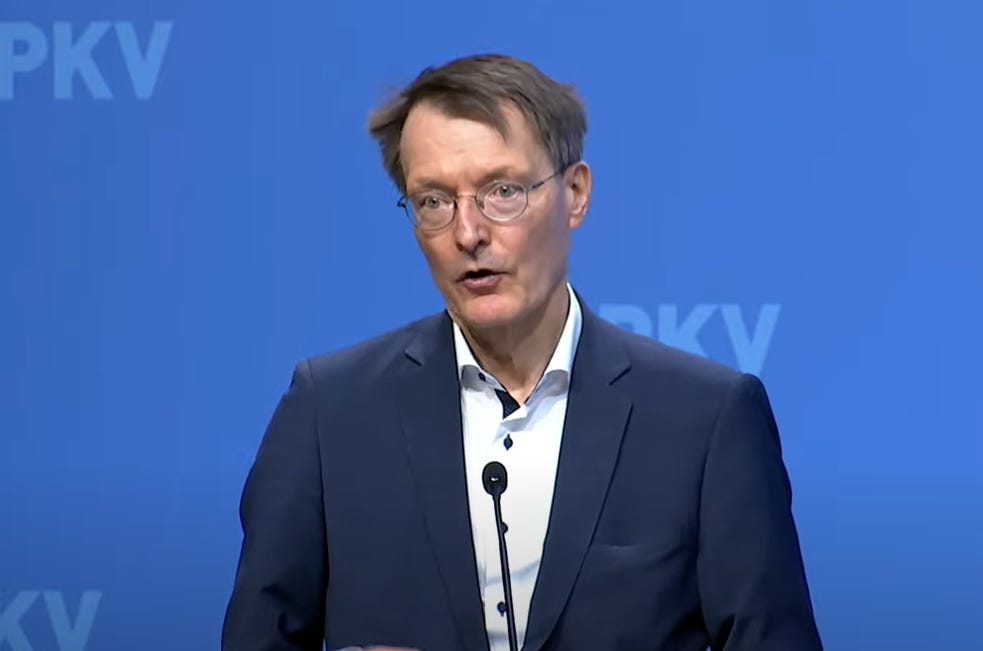
A Twitter friend highlights this bizarre moment from a speech Karl Lauterbach gave on 3 June to a convention for private insurers in Berlin:
We’re going to have a special situation [in the Fall]; we also expect a strong influenza wave and many RSV infections. This has to do with the fact that immunity has declined in recent years because the containment measures have also protected against these other infections, so an immunity deficit has built up there, and this immunity deficit is now significant for the wave we’re coming up to. So we’re dealing with a new wave of Covid, and we’re dealing with a wave of influenza, and we’re dealing with RSV. You might say RSV primarily affects children – well, if you have this substantial deficit in immunity, then RSV is also dangerous for older people. We have to deal with that too. We also have to protect those who have autoimmune problems, and these autoimmune problems mean that the vaccination works, but it doesn’t work so well, and for that we need special vaccination strategies, we need special protection strategies …
Every time I post about this clown, I resolve that it’s the last time. Even beyond his deepening Corona mania and clear signs of mental illness, he’s just such an obvious loser – a mediocrity who spent years on the fringes of his own party as an eccentric back-bencher, known primarily for his fear of salt. He came to prominence very much like Eric Feigl-Ding, as a pseudo-epidemiologist on Twitter, where he relentlessly inflated the risk of SARS-2, denied elementary properties of the human immune system and serially misinterpreted even very simple studies.
He’s only worth quoting for two reasons. The lesser of them, is the fact that he’s not-so-subtly helping Moderna with the marketing for their three-in-one combined RSV, Corona and influenza vaccine, which is now in development. Henceforth, the Virus That We Have To Fear In The Fall will always be whatever virus the pharmaecutical companies are hoping to vaccinate against.
The greater point here, though, is that his remarks reveal the total circularity of pandemic management. The problem now is that our measures have caused a population-wide immunity deficit, for which there is no solution but a continuation of measures. We are so far into this farce, that even Lauterbach can proclaim publicly that restrictions have become their own cause, a self-perpetuating end unto themselves, and nobody even blinks or reports on his remarkable admission.
Grading the uses of the Defense Production Act during COVID Mania
By Jordan Schachtel | June 6, 2022
With President Biden beginning this week by invoking the Defense Production Act (this time, to build solar panels) we figured it’s time to take a look at what happened to the DPA during COVID Mania, and explore how it has been used (abused) since March of 2020.
For starters:
The Defense Production Act is a federal law that was enacted in 1950 after the commencement of the Korean War.
The explanation of the bill, via Congress, goes as follows:
“To establish a system of priorities and allocations for materials and facilities, authorize the requisitioning thereof, provide financial assistance for expansion of productive capacity and supply, provide for price and wage stabilization, provide for the settlement of labor disputes, strengthen controls over credit, and by these measures facilitate the production of goods and services necessary for the national security, and for other purposes.”
In short, these are emergency powers granted to the executive with a precedent for being enacted during an actual war. These powers allow the president to compel private companies to work with the government on developing material goods that are supposed to be used for national security purposes.
During COVID Mania, the DPA has been routinely abused for our manufactured national emergency.
Let’s take a look at how the DPA has been utilized to “fight the virus.”
- March 27, 2020: President Trump defines ventilators and PPE as “essential to the national defense,” and orders GM to start producing ventilators. The move came with bipartisan insistence. We later discovered that ventilators were possibly killing COVID patients.
Grade: F - April 2, 2020: President Trump invokes the DPA to compel several American companies to produce N95 masks. Masks don’t work, though.
Grade: Hysteria Sells - April 28, 2020: President Trump issues an executive order via the DPA to combat food insecurity and “to ensure a continued supply of protein to Americans.”
Grade: Shrug Emoji - January 21, 2021: President Biden invokes the DPA to pursue a “sustainable public health supply chain.”
Grade: Total Scam - March 2, 2021: Biden uses the DPA to give money to Merck so that they can produce more Johnson & Johnson COVID injections
Grade: Facepalm Emoji - September 2021: Biden invokes the DPA to supply fire hose materials to California, citing the climate hoax, because Gavin Newsom’s regime did not effectively manage California’s forests.
Grade: Avoidable Crisis - May 18, 2022: Biden uses the DPA to import baby formula from overseas because American supply became catastrophically short.
Grade: Cringeworthy - June 6, 2022: Biden issues DPA to advance the climate hoax narrative and give government funds to solar panel companies that otherwise would go bankrupt due to the unproductive nature of their businesses.
Grade: Boondoggle
Biden declares US energy emergency
Samizdat | June 6, 2022
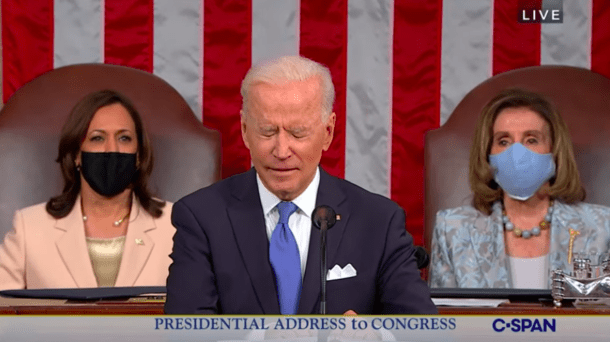
President Joe Biden has blamed Russia for another crisis, saying the US might not be able to generate enough electricity to meet consumer demand partly because of Moscow’s military offensive against Ukraine.
The president declared an energy emergency on Monday, saying national security and quality of life are jeopardized by potential shortfalls in power supplies. He invoked the Defense Production Act – originally part of an industrial mobilization effort in response to the Korean War – to spur domestic production of solar panels and other forms of “clean” energy to boost power supplies.
“Multiple factors are threatening the ability of the United States to provide sufficient electricity generation to serve expected customer demand,” Biden said in his emergency declaration. “These factors include disruptions of energy markets caused by Russia’s invasion of Ukraine and extreme weather events exacerbated by climate change.”
Increased reliance on renewable energy sources has been blamed for disruptions to power service in such states as California and Texas. Solar and wind power are intermittent, so periods of high demand aren’t always matched by supplies. For instance, wind turbines froze up during an historic winter freeze last year in Texas, contributing to blackouts that caused 246 deaths and at least $195 billion in damage.
Biden’s emergency declaration included a two-year exemption from tariffs on solar panels from four Southeast Asian countries. The proposed tariffs had been blamed for delaying major solar projects in the US. About three-fourths of the solar modules installed in the US are imported from Southeast Asia.
The president has blamed Russia for record US fuel prices and a surge in inflation to a 40-year high. He’s also attributed a looming global food crisis to the Russia-Ukraine conflict.
US may lift ban on Iranian oil – Vitol
Samizdat | June 6, 2022
The Biden administration might let more sanctioned Iranian oil flow into the global markets in an attempt to rein in fuel prices at home amid the run-up to the midterm elections in the US, according to a major independent crude trader.
“If the midterms are dominated by the need to get gas prices lower in America, turning a somewhat greater blind eye to the sanctioned barrels flowing out is probably something you might expect to see,” Mike Muller, the head of Asia at Vitol Group, told Dubai-based Gulf Intelligence on Sunday.
Gasoline prices have doubled in the US since President Joe Biden was inaugurated in January last year, according to last week’s data from the non-profit American Automobile Association (AAA). Global crude prices have been rallying in recent months, fueled by restrictions on Russian exports. On Monday, crude hit $120 a barrel as Saudi Arabia hiked prices for Asia.
The Trump administration reimposed sanctions on Iran’s oil, petrochemicals, shipping and other sectors in 2018 due to concerns over the country’s nuclear program. Talks between Tehran and world powers stalled in March and, according to Muller, the window of opportunity for the Biden administration to reach an agreement with Tehran has almost closed, but it could allow the transportation of Iranian crude anyway. In April, the US seized Iranian oil carried by a Russian tanker. Iran currently exports most of its oil to China.
Iranian nuclear chief: IAEA’s Grossi lacks serious will to find Tehran’s ‘accurate’ answers convincing
Press TV | June 6, 2022
The head of the Atomic Energy Organization of Iran (AEOI) says Tehran has given accurate answers to questions posed by the International Atomic Energy Agency (IAEA), but the Agency bases its reports on the information provided to it by the enemies of Iran.
In an interview with Al Jazeera network on Monday, Mohammad Eslami said the director general of the IAEA, Rafael Grossi, lacks serious will to describe Iran’s answers to the Agency’s queries as convincing.
“The International Atomic Energy Agency relies on the intelligence reports [provided by] our enemies, topped by Israel,” Iran’s nuclear chief said.
Eslami made the remarks after the IAEA chief, in his introductory statement to the Board of Governors’ meeting on Monday, once again repeated his anti-Iran rhetoric, alleging that since February 23, 2021, the Agency’s “activities have been seriously affected by Iran’s decision to stop the implementation of its nuclear-related commitments under the JCPOA, including the Additional Protocol.”
Grossi claimed, “Iran has not provided explanations that are technically credible in relation to the Agency’s findings at three undeclared locations in Iran.” Grossi’s allegation, however, came after his meeting with Eslami and the adoption of the two sides’ joint statement on March 5, 2022.
The AEOI and the IAEA agreed, in continuation of their cooperation as stated in the Joint Statement of August 26, 2020, to accelerate and strengthen their cooperation and dialogue aimed at the resolution of the issues, read part of the joint statement.
Grossi’s remarks came despite frequent warnings by Iran that in case the Agency drifts away from its technical nature and makes a politicized decision related to Iran’s peaceful nuclear program, the country will respond in kind.
Elsewhere in his interview, Eslami pointed to the possible adoption of an anti-Iran resolution during the ongoing meeting of IAEA’s Board of Governors and said even if adopted, such a resolution would not create a new situation.
Advising the UN nuclear watchdog to block political influence on its decisions and abide by its own regulations, the AEOI’s head said, “The IAEA has not condemned attacks on our [nuclear] facilities and this is a big question mark.”
Over the past years and amid lack of sensitivity and proper attention on the part of the IAEA towards performing a responsible role in the area of protection of various countries’ peaceful nuclear activities, some malign activities, for which the Zionist regime has implicitly accepted responsibility, have afflicted some damage to our country’s nuclear facilities.
Although these activities have never had a decisive effect on the progress of Iran’s peaceful nuclear program, given the sensitivity that is inherent to the nature of nuclear work, adoption of new strategies in the structural, hardware, and software aspects have found a place on the AEOI authorities’ agenda so the nuclear facilities’ security can be completely ensured.
Eslami also rejected allegations that Iran is planning to build nuclear weapons, saying, “Nuclear weapons have no place in our strategies” and that all such allegations are nothing but spiteful accusations.
Asked about the IAEA’s access to information recorded by monitoring cameras it has installed in Iran’s nuclear facilities, Eslami said this issue depends on the fate of the ongoing talks in the Austrian capital on the revival of the 2015 Iran deal, officially known as the Joint Comprehensive Plan of Action (JCPOA).
“If other parties commit to all articles of that agreement, we are ready for full compliance with the accord,” Iran’s nuclear chief said.
Under the JCPOA, Iran accepted certain caps on its nuclear program in exchange for the removal of international sanctions.
The US, however, unilaterally abandoned the deal in 2018 and re-imposed crippling sanctions despite Tehran’s full compliance with its share of obligations.
Zionism has ‘failed’ and Israel is in ‘trouble’ concedes prominent pro-Israel lobbyist
MEMO | June 6, 2022
A prominent Israel lobbyist has conceded that Zionism may have “failed” and that the Occupation State is in “far bigger trouble than anyone understands.” The remarks were made by Michael Koplow of the Israel Policy Forum. The pro-Israel lobby group says it is “dedicated to advancing the goal of a two-state solution in order to preserve Israel’s future as Jewish, democratic, and secure” state.
Koplow is thought to be an intellectual leader of the Israel lobby. Like countless other Israeli lobby groups, Koplow’s job is to provide the US establishment with a positive spin on Israel in order to maintain ongoing American support for the Apartheid State. Their carefully curated image of Israel as a democracy and a vital US ally facing an existential threat, has preserved decades of unwavering support in Washington.
This image is beginning to shatter not least because of the consensus amongst major human rights groups that Israel is committing the crime of apartheid. Koplow appears to also be resigned to the fact that Israel may have passed beyond the point of redemption. Throughout history many justified their support for Zionism through the hope that the racism and ethnic cleansing entailed by the ideology of Jewish supremacy would be redeemed through the end of the illegal occupation of Palestine and the creation of a flourishing democracy. Instead, Israel has morphed into an Apartheid State.
In his article, Koplow comments on a bill in Israel banning the raising of Palestinian flags. “If waving a flag threatens Israel’s existence, then not only is Israel in far bigger trouble than anyone understands, but Zionism itself has failed,” said Koplow. “Protestors waving Palestinian flags and mourners displaying them at funerals does not threaten Israel’s sovereignty or security in any tangible way, and to think otherwise betrays a deep and unwarranted sense of insecurity about Israel’s durability and legitimacy,” he added.
Though Koplow expresses dismay at the Israeli overreaction to the display of Palestinian flags he does not mention that this is part of an ongoing attempt to criminalise expressions of Palestinian nationhood and symbols of their identity which began through the ethnic cleansing of 1947/48 and crystallised seven decades later into an Apartheid State.
“The Palestinian flag is a display of ideology and emotion and treating it like a weapon will make it more potent and more popular a symbol,” Koplow continued, pointing to an obvious double standard highlighted by the so-called right-wing Flag March. “There was a particular irony at work this week with Israeli arguments that marching through the Old City with Israeli flags is nothing but a demonstration of legitimate Israeli pride and should not be construed in any way as incitement or threatening toward Palestinians, while at the same time insisting on multiple fronts that Palestinian flags are inherently illegitimate and should be construed as incitement and threats toward Israelis.”
Koplow also acknowledged that it is an error to view Israel’s occupation of Palestine as a conflict between two equal forces; a view which Palestinian advocates have sought to convey all the time in the US and the Israel lobby seeks to obfuscate: On one side is a nuclear state with the most powerful military in the Middle East, on the other a people under occupation with boys with slingshots.
“Israel has a state and is operating from a position of power, and Palestinians do not have a state and are operating from a position of weakness,” Koplow argued. “That structural imbalance should in theory make Israelis less sensitive to the symbolic aspects of Israeli and Palestinian nationalism, but it doesn’t. The fact of Israel’s existence and Israel’s strength—not only relative to the Palestinians but in absolute terms—has not appreciably lessened Israelis’ insecurities, and Palestinian flags are still treated in many instances as physical threats that somehow have the ability to snuff out Zionism or Israel’s existence.”
Poles told to forage for wood to heat homes
Samizdat | June 6, 2022
Authorities in Warsaw have allowed citizens to forage for firewood in forests to keep their homes heated amid spiralling energy costs. Poland is in the midst of a coal shortage after banning Russian imports.
“It is always possible, with the consent of foresters, to collect branches for fuel,” Deputy Minister of Climate and Energy Edward Siarka was quoted by Next Gazeta as saying on Monday.
Those wishing to gather wood must first undergo training and obtain permission from the local forestry unit. The report went on to clarify that people can only take branches already lying on the ground, and cannot cut down trees.
“Only branches can be gathered. At the same time, the collected branches cannot be thicker than seven centimeters,” said Katowice Directorate of State Forestry official Marek Mroz.
He explained that branches should be taken to the local forester, who will issue an invoice. Collectors will have to pay between seven and 30 zlotys ($7.02) for approximately 0.25 cubic meters of firewood.
Polish Prime Minister Mateusz Morawiecki’s government has blamed the war in Ukraine for skyrocketing energy costs. Critics, however, say the conflict is only partially to blame, arguing that costs have risen for the past seven years. Inflation in Poland has climbed to 14% in recent weeks, with fuel prices hitting 8 zlotys ($1.87) per liter.
Demand for raw materials in Poland has far exceeded domestic output since a ban on Russian coal was imposed. Throughout the military conflict in Ukraine, Warsaw has been calling for a complete embargo on Russian energy. In March, the EU nation said it would end all Russian energy imports, including oil, gas, and coal by the end of 2022.
According to media reports, Poland’s wood imports from Russia and Belarus stopped completely at the outbreak of the conflict, and those from Ukraine have fallen by around 75%.
Hezbollah: US First Side to Blame for Preventing Lebanon from Gas Drilling
Al-Manar – June 6, 2022
Head of Hezbollah’s Executive Council Sayyed Hashem Safieddine stressed on Sunday that the United States is the first side to blame for preventing Lebanon from gas drilling.
In a local ceremony in south Lebanon, Sayyed Safieddine said “Lebanon has potentials to extract gas and oil off its shores,” calling on the Lebanese state not to subdue to all forms of pressures exerted by foreign sides in this regards.
The Hezbollah official called on the Lebanese state to officially announce the Lebanese maritime borders and the disputed areas, “in order for the Resistance, Army and People to throng together and retrieve Lebanon’s rights regardless of the US stance.”
Sayyed Safieddine in this regard, stressed the importance of Lebanese unity in order to cope with the country’s political and economic crises.
“Resistance is the only choice to defend Lebanon’s wealth and preserve our victories,” he said in remarks carried by Al-Manar.
Angleton, Mossad, and the Kennedy Assassinations

BY LAURENT GUYÉNOT • UNZ REVIEW • JUNE 5, 2022
Edward Curtin wrote four years ago on Counter-Currents:
perhaps no one epitomized the twisted mind games played by intelligence agencies more than James Jesus Angleton, the notorious CIA Counterintelligence Chief for so many years, in whose safe were found gruesome photos of Robert Kennedy’s autopsy. Why, one may ask, were those photos there, since Angleton allegedly had no connection to the RFK killing and since Sirhan was said to be the assassin? Was Angleton’s work as CIA liaison with Israel in any way connected?
If you ask me, I strongly suspect it was. Angleton had been the Mossad’s indispensable ally in John Kennedy’s assassination. So he had personal reasons to cooperate with them again in stopping Robert Kennedy from reaching the White House, a position from which, according to multiple testimonies, Robert intended to track his brother’s assassins.[1]
I summarized the case against Ben-Gurion’s Israel in the assassinations of both Kennedy brothers in this article, which still turns up regularly among The Unz Review’s “Past classics”. Here I’ll try to show that an inquiry into Angleton’s “wilderness of mirrors” makes the case even stronger.
The “World War III” Virus
Angleton’s name often comes up in books incriminating the CIA in the 1963 Dallas coup, because he is believed to have engineered the staged visits and telephone calls by an Oswald impersonator to both the Soviet and Cuban embassies in Mexico City in late September and early October 1963. Over the phone, this bogus “Oswald” referred to an arrangement with Vladimir Kostikov, who was known to the FBI as the officer in charge of assassinations in the United States. These visits and calls were, of course, monitored by the local CIA cell, and would constitute, after November 22, evidence of a Cuban-Soviet conspiracy.
According to the most natural and common interpretation, the purpose of staging Oswald as a communist conspirator was to blame the Dallas shooting on Cuba and/or the Soviet Union — a classic false flag scenario. Besides getting rid of Kennedy, the theory goes, the motive was to create a pretext for invading Cuba, something that Kennedy had forbidden after the Bay of Pigs debacle and the firing of Allen Dulles. That has become the dominant JFK conspiracy theory, best articulated recently by James Douglass. But it has one major flaw: there was no invasion of Cuba following Kennedy’s assassination. How can that be explained?
And why did Johnson, Hoover and the Warren Commission quickly suppress the “rumors” of Oswald’s communist profile (already hitting the news on November 23, e.g. the morning front-page of the Washington Post titled, “Pro-Castro Fort Worth Marxist Charged in Kennedy’s Assassination”[2]), to replace it with his “lone nut” profile? James Douglass’s explanation is that Johnson thwarted the plot hatched by the CIA and Pentagon hawks, thus saving us from World War III. “To Johnson’s credit, he refused to let the Soviets take the blame for Kennedy’s murder; to his discredit, he decided not to confront the CIA over what it had done in Mexico City. Thus, while the secondary purpose of the assassination plot was stymied, its primary purpose was achieved.”[3] The problem with this theory is its internal contradiction, since it also affirms that the reason Kennedy was assassinated was that he refused to start World War III: therefore, starting the war was supposedly the primary — not the secondary — purpose of the whole plot.
The alternative explanation is that Oswald’s profile as a Communist assassin was crafted by the conspirators, not for the purpose of starting a war against Cuba and Russia, but for allowing Johnson to bully Federal and State administrations, and even the news community, into closing the investigation quickly, lest the discovery of Cuba and Russia’s responsibility force the U.S. into a global nuclear war “that would kill 40 million Americans in an hour,” as Johnson kept repeating to everyone from Dallas to Washington. To convince Senator Richard Russell to sit in the Warren Commission, for example, Johnson told him in a taped phone conversation: “we’ve got to take this out of the arena where they’re testifying that Khrushchev and Castro did this and did that and kicking us into a war that can kill forty million Americans in an hour…”[4]
Besides allowing Johnson to shut down Police investigations and secretly task the Warren Commission with the goal of “rebutting thought that this was a Communist conspiracy” (as recommended by Deputy Attorney General Nicholas Katzenbach’s November 25 memo[5]), the threat of nuclear war kept the American people satisfied that, if they were being lied to — as many felt they were — it was for their own good. And so the lie about Kennedy’s assassination was two-sided: on one side was the Cuban-Soviet conspiracy, and on the other was the lone assassin. Both sides of the lie had to be maintained over the years, the Soviet conspiracy remaining in the background in order to keep the Warren Commission’s conclusion, if not credible, at least justifiable. That is why, in a September 1969 filmed interview (broadcast on CBS on April 24, 1975), Johnson could calmly declare that “there might have been international connections,” but that the Warren Commission did a fine job anyway.[6]
Like most JFK researchers, John Newman, a retired U.S. Army major and Political Science professor and the author of Oswald and the CIA, believes that long before Kennedy’s trip to Dallas, Oswald was maneuvered and his activities “carefully monitored, controlled, and, if necessary, embellished and choreographed,” so that, “on 22 November, Oswald’s CIA files would establish his connection to Castro and the Kremlin.” However, in an epilogue added in 2008 to his book (which Ron Unz has already referred to here and here), Newman reasons that the real purpose of setting up Oswald as a Communist was not to start World War III, but to create a “World War III virus”, used by Johnson as a “national security” pretext to shut all investigations and intimidate the corporate media. “It is now apparent that the World War III pretext for a national security cover-up was built into the fabric of the plot to assassinate President Kennedy.”[7]
After reviewing the steps taken to design this plot, Newman concludes: “In my view, there is only one person whose hands fit into these gloves: James Jesus Angleton, Chief of CIA’s Counterintelligence Staff.”
No one else in the Agency had the access, the authority, and the diabolically ingenious mind to manage this sophisticated plot. No one else had the means necessary to plant the WWIII virus in Oswald’s files and keep it dormant for six weeks until the president’s assassination. Whoever those who were ultimately responsible for the decision to kill Kennedy were, their reach extended into the national intelligence apparatus to such a degree that they could call upon a person who knew its inner secrets and workings so well that he could design a failsafe mechanism into the fabric of the plot. The only person who could ensure a national security cover-up of an apparent counterintelligence nightmare was the head of counterintelligence [Angleton].[8]
As a matter of fact, no one pushed more for incriminating the KGB than Angleton. Michael Collins Piper, who wrote much about Angleton in his groundbreaking Final Judgment, showed that Angleton went to great lengths to discredit, imprison and torture Russian Soviet defector Yuri Nosenko, who in 1964 claimed insistently that the KGB had decided against trying to use Oswald in any way during his sojourn in Russia, and that the KGB had nothing to do with Kennedy’s assassination. Angleton was also the main source for Edward Jay Epstein’s book, Legend: The Secret World of Lee Harvey Oswald (published in 1978), which laid the blame on the KGB.[9]
Angleton and Counterintelligence
Angleton was appointed head of the Counterintelligence Staff by CIA Director Allen Dulles in 1954, a position he kept for twenty years. According to Tom Mangold, author of Cold Warrior: James Jesus Angleton: the CIA’s Master Spy Hunter (Simon & Schuster, 1991): “Angleton’s longstanding friendships with Dulles and Helms were to become the most important factor in giving him freedom of movement within the CIA. He was extended such trust by his superiors that there was often a significant failure of executive control over his activities.”[10]
After Kennedy fired Dulles and his two Deputy Directors Richard Bissel and Charles Cabell in autumn 1961, Angleton was shielded by new Deputy Director Richard Helms, who had survived the purge and would end up as head of the CIA. In 1962, as the CIA moved into its new headquarters in Langley, Angleton’s Counterintelligence Staff had nearly two hundred people.[11]
As one colleague and friend said, “Jim’s central dominating obsession was communism, something that for him was the essence of absolute and profound evil. For him nothing else really mattered, but he would use anyone and anything to combat it.”[12] The most secret component of Angleton’s empire was the Special Investigation Group (SIG), tasked with exploring the possibility that the CIA was infiltrated by the KGB. “The SIG was so secret that many members of the Counterintelligence Staff didn’t even know it existed,” writes Mangold, “and nearly everyone was denied access to it. . . . Secret units within a secret unit were a hallmark of Angleton, the SIG, and the Counterintelligence Staff.”[13]
The tragicomic story of Angleton’s “mole hunt” is told in detail by Tom Mangold. It involves a megalomaniac KGB defector named Anatoly Golitsyn, who, responding to Angleton’s paranoia, convinced him that the KGB had infiltrated the CIA through a high-level source code-named “Sacha”, and that all other defectors after him would be phony. Angleton’s quest for Sacha would last seven years. About 40 senior Agency officers were put on the suspect list and many had their careers ruined, while at least 22 genuine defectors were turned away. No real KGB spy was ever caught by Angleton. Meanwhile, the British Soviet agent Kim Philby remained Angleton’s most trusted friend until being unmasked in 1963, and one Counterintelligence agent, Clare Edward Petty, ended up believing “Sacha” must be Angleton himself.[14] This fiasco is the subject of David C. Martin’s book Wilderness of Mirrors (2018).[15] As Los Angeles Times journalist David Wise writes: “In the end, Angleton never found a mole. But he did more harm to the CIA than even the most talented mole could ever have accomplished.”[16]
When William Colby, from the Soviet Division, became Director of the CIA, he looked for a pretext to sack Angleton, and fired him in December 1974 after the disclosure by Seymour Hersh in the New York Times of two dubious domestic operations that his Counterintelligence Staff had been conducting in violation of the CIA’s charter: intercepting mail sent between the United States and the Soviet Union (Program HT/LINGUAL) and spying on American antiwar protestors (Operation CHAOS).
When George Kalaris, who replaced Angleton, directed an investigation into Angleton’s files, his team located over 40 vaults that had to be drilled open. It took three years to sort, destroy or classify the discovered materials, which had never been archived into the CIA’s central filing system. And it took CIA officer Cleveland Cram six years to write a report in 12 legal-sized volumes on the activities of the Counterintelligence Staff from 1954 to 1974.[17]
 The most important conclusion is that Angleton’s Counterintelligence, which was involved in the preparation for JFK’s assassination, was not the CIA, but rather a “second CIA within the CIA” (as Peter Dale Scott put it), sealed from scrutiny and accountable to no one, yet supported by almost unlimited budget.[18] During Kennedy’s presidency, John McCone, an outsider, of course had no idea what Angleton was doing or not doing, and Richard Helms, his Deputy, let him do as he pleased.
But this Counterintelligence disaster is only half of Angleton’s story. There is another half, rarely told. Tom Mangold only refers to it in an endnote:
I would like to place on the record, however, that Angleton’s professional friends overseas, then and subsequently, came from the Mossad (the Israeli intelligence-gathering service) and that he was held in immense esteem by his Israeli colleagues and by the state of Israel, which was to award him profound honors after his death.[19]
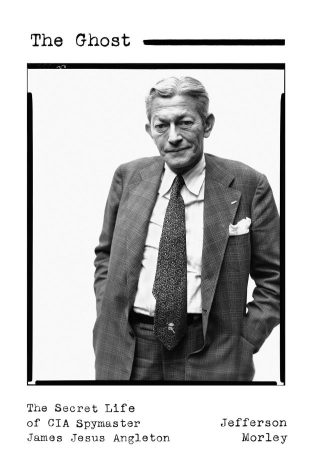
To be fair, Mangold also writes: “Angleton’s ties with the Israelis gave him considerable prestige within the CIA and later added significantly to his expanding counterintelligence empire,” while stirring “the utter fury of the division’s separate Arab desks.”[20] But that’s all we’ll learn from Mangold about the Mossad-side of Angleton. To know more about it, we must turn to Jefferson Morley’s more recent and thorough investigation, The Ghost: The Secret Life of CIA Spymaster James Jesus Angleton (St. Martin’s Press, 2017). We will learn that Angleton was less “out of control” than we think — only the people who controlled him were not those who were supposed to.
Angleton and Mossad
When Angleton became chief of Counterintelligence in 1954, he had already been occupying, since early 1951, the CIA’s Israeli Desk, or Israeli Account, as it was called. And he had exclusive authority on the CIA station in Tel Aviv. The Israeli Desk was created for Angleton after the visit of Prime Minister David Ben-Gurion to the United States in May 1951. Besides launching a drive to raise $1 billion from the sale of Israel Bonds,[21] the purpose of Ben-Gurion’s visit was to establish collaboration between U.S. and Israeli intelligence agencies. Israel’s population of immigrants from the U.S.S.R. and Eastern Europe made the country a privileged source of information about what was going on behind the Iron Curtain. In exchange for this service, Israel wanted strategic, economic and military support against their enemy Nasser, whom they did their utmost to push into the Soviet camp. Here is Morley’s account of the background for that turning point in U.S.-Israel relationship:
In 1950, Reuven Shiloah, the founder of Israel’s first intelligence organization, visited Washington and came away impressed by the CIA. In April 1951, he reorganized the fractious Israeli security forces to create a new foreign intelligence agency, called the Institute for Intelligence and Special Tasks, inevitably known as the Mossad, the Hebrew word for “institute.” In 1951, Prime Minister David Ben-Gurion came to the United States and brought Shiloah with him. Ben-Gurion met privately with President Truman and Walter Bedell Smith [director of CIA]. Angleton arranged for Ben-Gurion to lunch with Allen Dulles [Deputy Director for Plans] . . . Shiloah stayed on in Washington to work out the arrangements with Angleton. The resulting agreement laid the foundation for the exchange of secret information between the two services and committed them to report to each other on subjects of mutual interest. Shiloah, according to his biographer [Haggai Eshed], soon developed “a special relationship” with Angleton, who became the CIA’s exclusive liaison with the Mossad. Angleton returned the favor by visiting Israel. Shiloah introduced him to Amos Manor, chief of counterespionage for Israel’s domestic intelligence agency [1953-1963], known as Shabak or Shin Bet.[22]
For almost 25 years, Angleton was the CIA’s exclusive liaison with Israeli intelligence. In this capacity, recalled one of his friends interviewed by Andrew and Leslie Cockburn for their book Dangerous Liaison: The Inside Story of the U.S.-Israeli Covert Relationship, “he was getting the benefit of Israeli networks and connections all over the place, not just in the Communist bloc.”[23]
Angleton’s special channel to the Mossad brought little profit to the U.S. in terms of intelligence. In October 1956, no warning came from Angleton about the Israelis’ plan to invade Egypt. As rumors of war were reaching the State Department, Robert Amory, head of the CIA Directorate of Intelligence, called an emergency meeting on October 26. After he presented Allen Dulles with evidence that the Israelis “were mobilizing to attack someone — Egypt,” Angleton contradicted him saying, “I can discount what Amory is saying. I spent last night with our friends and they have assured me that they are just carrying out protective measures against the Jordanians.” Amory got mad and said to Dulles: “The taxpayer lays out $16,000 a year to me as your deputy director for me to give you the best intelligence available. Either you believe me or you believe this co-opted Israeli agent here [pointing to Angleton].”[24] Within days, Israel had invaded Egypt’s Sinai.
James Jesus Angleton made his first visit to Israel in October 1951. “By the mid-1950s,” Morley writes, “Angleton liked nothing better than to leave the cramped office politics of Washington for the austere frontier of the Holy Land. On his visits, Angleton stayed in Ramat Gan, on the suburban coastal plain north of Tel Aviv, the home to many Israeli intelligence officers and diplomats.”
“He used to come from time to time, to meet the head of Mossad, to get briefings,” recalls Efraim Halevy, who served as the Mossad’s liaison officer to the CIA station in Tel Aviv in the early 1960s. Halevy escorted Angleton on his rounds and recorded his meetings with Israeli officials. “He used to meet with David Ben-Gurion, whom he knew for many years,” Halevy recalled. “Ben-Gurion ultimately left office [in 1963] and Angleton went down to Sde Boker [Ben-Gurion’s home in the Negev] to meet him. I didn’t attend those meetings. Those were just the two of them. He had business to transact.”[25]
Angleton knew at least six of the men closest to Ben-Gurion and privy to his secrets. Besides Efraim Halevy (on the right in the top picture), he befriended Isser Harel, founder of the Shin Bet and chief of the Mossad from 1951 (“Jim had enormous admiration for Isser,” said Halevy). Angleton also enjoyed the lifetime friendship of Amos Manor, director of Shin Bet from 1953 to 1963, of Teddy Kollek, who later became mayor of Jerusalem, and of Meir Amit, head of Mossad from 1963 to 1968. When Halevy accompanied Yitzhak Rabin for his ambassadorship to Washington (1968-1973), Angleton met him as often as five times a week, and had monthly lunches with Rabin, Halevy recalled. Angleton’s friends were among the builders of the Zionist state, and Angleton was the only American authorized to talk to them.[26]
This, coupled with his infatuation with Zionism, gave Angleton a great influence on Washington’s Israeli policy. According to Morley, “he was a leading architect of America’s strategic relationship with Israel that endures and dominates the region to this day.”[27] “Angleton’s influence on U.S.-Israeli relations between 1951 and 1974 exceeded that of any secretary of state, with the possible exception of Henry Kissinger. His influence was largely unseen by Congress, the press, other democratic institutions, and much of the CIA itself.”[28]
Speaking of Kissinger, Michael Piper mentions, quoting Deborah Davis’s biography of Katharine Graham, that Kissinger actually moved Angleton’s Israeli desk into the White House, and that both men worked very closely. In one of the most interesting appendixes added to his 1998 edition of Final Judgment, Piper argues that Angleton was the mastermind of the Watergate dirty trick that caused Nixon’s fall, using his longtime ally Ben Bradlee, then Washington Post editor. According to Piper, Watergate was “a joint CIA-Mossad operation—orchestrated by James Angleton—for the purpose of removing Nixon from the presidency.” Nixon had to be removed because, like Kennedy before him, he had become a threat to Israel’s survival.[29]
Dimona and the Stolen Uranium
Naturally, Angleton’s influence on U.S.-Israeli relationship touched upon the sensitive question of Israel’s military nuclear ambition. Morley again:
In Washington, he and Cicely [Angleton’s wife] had spent many evenings with Memi de Shalit, a Lithuanian-born military intelligence officer stationed in the Israeli embassy. Angleton “adored” de Shalit and his wife, Ada, said Efraim Halevy. The de Shalits moved back to Israel in the 1950s, but the friendship continued, and it brought Angleton into the circle of other knowledgeable Israelis. Amos de Shalit, Memi’s brother, was a professor of nuclear physics at the Weizmann Institute of Science in Tel Aviv. He would be a major contributor to the Israeli nuclear program.[30]
According to Seymour Hersh, “Angleton’s close personal ties with the DeShalit family and others in Israel made it inevitable that he would learn about the [Dimona] construction in the Negev.” Yet he never reported on the Israelis’ efforts to build a nuclear reactor for military purposes.[31] In 1960, Angleton ignored a request from the U.S. Intelligence Board, which reviewed CIA operations on behalf of the White House, that all information regarding Dimona be transmitted “expeditiously”.[32]
Angleton also failed to notice or to report about the stealing of weapons-grade enriched uranium from a plant of the Nuclear Materials and Equipment Corporation (NUMEC) in Apollo, Pennsylvania. The NUMEC had been created under U.S. government license by David Lowenthal, a Zionist financier, and was run by Zalman Shapiro, the son of an Orthodox rabbi from Lithuania, who was also head of the local chapter of the Zionist Organization of America. Over the 9 years from 1959 to 1968, the Atomic Energy Commission estimated that 267 kilograms of uranium went missing at the Apollo NUMEC plant. One Israeli masquerading as a nuclear engineer who visited the plant was a Mossad agent named Rafael Eitan, who was known to Angleton. “With the fissile material diverted from NUMEC, Israel was able to construct its first nuclear weapon by 1967 and become a full-blown nuclear power by 1970 — the first, and still the only, nuclear power in the Middle East. Angleton, it is fair to say, thought collaboration with Israel was more important than U.S. non-proliferation policy.”[33]
“Angleton’s loyalty to Israel betrayed U.S. policy on an epic scale,” Morley concludes. “Instead of supporting U.S. nuclear security policy, he ignored it.” John Hadden, then CIA station chief in Tel Aviv, who felt betrayed by his superior Angleton, wrote in 1978: “A crime was committed 10 or 20 years ago, a crime considered so serious that for its commission the death penalty is mandatory and no statute of limitations applies.”
Angleton had regular professional and personal contact with at least six men aware of Israel’s secret plan to build a bomb. From Asher Ben-Natan to Amos de Shalit to Isser Harel to Meir Amit to Moshe Dayan to Yval Ne’eman, his friends were involved in the building of Israel’s nuclear arsenal. If he learned anything of the secret program at Dimona, he reported very little of it. . . . The failure of the U.S. nonproliferation policy to prevent the introduction of nuclear weapons to the Middle East in the 1960s is part of Angleton’s legacy, and its effects will be felt for decades, if not centuries.[34]
Angleton himself implicitly acknowledged his role to New York Times foreign correspondent Tad Szulc, who declared before the Church Committee in 1975:
I was told by one of my news sources that a situation had occurred in the 1960s in which the CIA delivered to the Israeli government classified information, technical knowledge, know-how, the services of distinguished physicists and fissionable material in the form of plutonium to assist in the development of an Israeli nuclear weapon at the Dimona Israeli Nuclear Testing grounds. . . I have raised the subject in a private conversation with Mr. James Angleton in the spring of this year [April 1975]. Mr. Angleton told me that essentially this information was correct.[35]
The Six Day War and the USS Liberty
According to Andrew and Leslie Cockburn, “There is a body of opinion within the American intelligence community that Angleton played a leading part in orchestrating the events leading up to the June 1967 war. One long-serving official at CIA’s ancient rival, the code-breaking National Security Agency, states flatly that ‘Jim Angleton and the Israelis spent a year cooking up the ’67 war. It was a CIA operation designed to get Nasser.’”[36]
In that period, according to Joan Mellen, author of Blood in the Water: How the US and Israel Conspire to Ambush the USS Liberty (2018), “Meir Amit was Angleton’s chief ally in Israel, but in the United States, he relied on another Mossad operative, Ephraim ‘Eppy’ Evron, who in 1967, as a Mossad operative as well as deputy Israeli ambassador to Washington, enjoyed greater importance at the Israeli embassy than the ambassador, Avraham Harman. It was Evron who had arranged meetings between Angleton and Moshe Dayan . . . to discuss the feasibility of an attack on Egypt with the objective of toppling Nasser. Lyndon Johnson had authorized Angleton to inform Evron that the United States would not intervene to stop an attack on Egypt.”[37]
In May 1967, Eppy Evron met Johnson at the White House. Evron later said that Johnson told him, “You and I are going to pass another Tonkin resolution,” in reference to the mock incident in the Gulf of Tonkin that Johnson used to justify the aggression against North Vietnam.[38] On May 30, Meir Amit, then head of global operations for Mossad, flew to Washington and met first with Angleton the next day. There is no documentary record of their conversation, but on June 1, Amit reported to Israel: “there is a growing chance for American political backing if we act on our own.”[39] “It would be Angleton,” says Joan Mellen, “who would prevail in formulating, with Meir Amit, the configuration of the operation that would culminate in the attack on the USS Liberty.”[40]
Here a summary of Tom Segev’s account of this meeting in 1967: Israel, the War, and the Year That Transformed the Middle East (2007): “Amit’s trip to Washington had ben instigated by Aharon Yariv, and its main purpose was to find out, through intelligence channels, what the Americans would really do if Israel attacked Egypt.” The first person Amit met there was James Jesus Angleton, who introduced him to Helms, head of CIA. Helms “arranged for Amit to meet with Secretary of Defense McNamara.” Presenting Israel’s plan to attack Egypt, Amit “heard no objections from McNamara.” McNamara was called out of the meeting twice to talk with Johnson on the phone, and reported to Amit the President’s message: “I read you loud and clear.” Amit reported back to Israel his impression that the Americans would give their blessing to an Israeli strike “crushing Nasser.” In response to Eshkol’s question, Amit said they might even assist Israel in such a strike. “Jim Angleton was enthusiastic,” writes Segev; he saw in Israel’s strike “the possibility of solving the region’s problems.” He “stressed the issue’s delicacy and asked to preserve complete secrecy.” When corresponding with Eshkol on the phone, Amit acknowledged the decisive importance of Angleton’s support. Angleton, he said, intimated that the Americans “would undoubtedly look positively on a knockout” on Egypt; “Angleton was an extraordinary asset for us. We could not have found ourselves a better advocate.” He was “the biggest Zionist of the lot,” insisted Amit.[41]
In December 1967, having more than doubled their territory, the Israelis threw a big party for Angleton when he visited them on his 50th birthday.
Conclusion
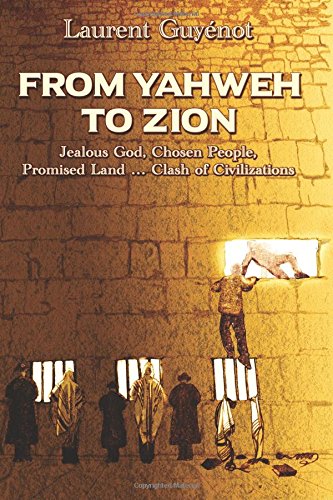
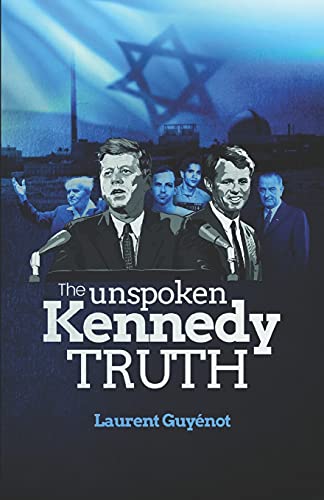
The Mossad side of Angleton is part of the “unspoken Kennedy truth” that, in Michael Collins Piper’s footsteps, I documented in my book and in this article. It is no small part. As Morley writes, “Angleton’s formative and sometimes decisive influence on U.S. policy toward Israel can be seen in many areas — from the impotence of U.S. nuclear non-proliferation policy in the region, to Israel’s triumph in the 1967 Six-Day War, to the feeble U.S. response to the attack on the Liberty, to the intelligence failure represented by the Yom Kippur War of 1973.”[42]
Angleton is remembered in the U.S. as a mentally unstable man who caused irreparable damage to the CIA’s efficiency and reputation. In contrast, he is remembered in Israel as a great benefactor of the Zionist state. Here is an extract from the Washington Post report about a ceremony held in his honor in Jerusalem after his death. Although it was supposedly secret, a couple of Israeli reporters, including Andy Court of the Jerusalem Post, had been tipped off and attended:
The head of the pathologically secretive spy agency, the Mossad, was there, as was his counterpart with Shin Bet, the Israeli internal security service. Five former heads of those agencies and three former military intelligence chiefs were also present. Their mission: to pay final tribute to a beloved member of their covert fraternity — the late CIA chief of counterintelligence, James Jesus Angleton. . . . Following the planting [of trees], the group gathered again in Jerusalem behind the King David Hotel at a scenic spot not far from the walls of the Old City that Angleton often visited on his trips here. There they dedicated a memorial stone that read, in English, Hebrew and Arabic: “In memory of a dear friend, James (Jim) Angleton.” . . . The ceremonies symbolized the respect and affection that the Israeli intelligence community holds for Angleton . . . Although his name appears in few history books about Israel, Angleton played a crucial role in the early years of the young Jewish state. In the 1950s and early 1960s, when most of official Washington was wary of — even hostile to — Israel, he helped forge links between the Mossad and the CIA that established the basis for cooperation in intelligence gathering that still exists today. . . . Angleton “was a friend you could trust on a personal basis,” said Defense Minister Yitzhak Rabin, who spoke at the tree-planting ceremony. Rabin knew Angleton from his days as Israeli Army chief of staff in the mid-1960s and later as ambassador to the United States. Jerusalem Mayor Teddy Kollek, who rose from his sickbed to attend the ceremonies, told the small crowd, “We commemorate a great friend, who saw Israel-U.S. relations through their most difficult period in the 40 years of Israel’s existence.” . . . Those who attended, according to Court, included the current heads of the Mossad and Shin Bet, neither of whom can be named under government security laws; former Mossad chiefs Meir Amit, Zvi Zamir and Yitzhak Hofi; former Shin Bet chiefs Avraham Ahituv and Amos Manor, and former military intelligence heads Aharon Yariv, Shlomo Gazit and Binyamin Gibli.[43]
There is still a mystery about Angleton’s relationship with Israel, a mystery that perhaps Angleton himself could not have cleared up. It is a reasonable guess that most of Angleton’s Israeli friends were well aware of his personality issues and of his delusional worldview, and that they exploited them to the fullest; they convinced Angleton that they were his indispensable allies against Communism. One former Mossad chief said to the Cockburns: “Of course, Jim had some pretty weird ideas, like that one about the Sino-Soviet split [Angleton believed it was a cunning deception]. But I think that he found himself a little more appreciated here in Israel than in Washington. We would listen respectfully to him [here the smirk] and his opinions.” The Israelis, gather the Cockburns, “took great care to flatter him and bend a respectful ear to his interpretation of events in the shadowy world of intelligence and deception.” Taking a closer look at the Angleton memorial in the Jerusalem forest, the Cockburns point out that, “Unlike the other memorial groves, the inscription here is not carved in stone, but is written on a sheet of plastic screwed to the stone itself. Within a year of the commemoration of the site most of the trees, tiny saplings, were dead or dying. The ground all around was covered in garbage: cans, rags, and, here and there, bones.”[44] What kind of memorial is this? A memorial for a useful idiot that can be soon forgotten.
What was Angleton’s position in the organizational chart of the plotters against Kennedy? If, as John Newman believes, Angleton was the “general manager” of Oswald’s handlers, and the engineer of his mock appearance in Mexico, what did he really know of Oswald’s ultimate function in the plot? There is no indication that Angleton ever felt that he had been used by his Israeli friends, and it is therefore more than likely that he was a deliberate participant in the conspiracy to kill Kennedy. What has been shown beyond a reasonable doubt is that Angleton, the central CIA player in the plot to kill JFK, was in reality more controlled by the Mossad than by the CIA itself.

I am happy to see that this conclusion is now becoming more accepted among Kennedy researchers. Peter Janney, author of the acclaimed Mary’s Mosaic: The CIA Conspiracy to Murder John F. Kennedy, Mary Pinchot Meyer, and Their Vision for World Peace (2012), in which Angleton figures prominently, honored me with a comment on the Amazon page of my book:
In addition to his book JFK – 9/11: 50 Years of Deep State, which was published in 2017, Laurent Guyénot has given us yet another gem with The Unspoken Kennedy Truth.
As the author of “Mary’s Mosaic” and someone who has spent many, many years studying the JFK assassination, Laurent Guyénot takes us where few have dared to tread — the role of Mossad and Israel in the murders of both Kennedy brothers and very likely in the event of 9/11 itself. I have been persuaded by both these books and have come to the conclusion that JFK assassination researchers have missed a vital element in understanding the larger role of Israel…
Is it a coincidence that there are not just one — but two — monuments in Israel to the legendary CIA Counterintelligence Chief James Jesus Angleton? Are we anti-Semites for making an indictment against Israel, given Guyénot’s persuasive argument that is supported by evidence? The answer is no! The truth takes no prisoners…
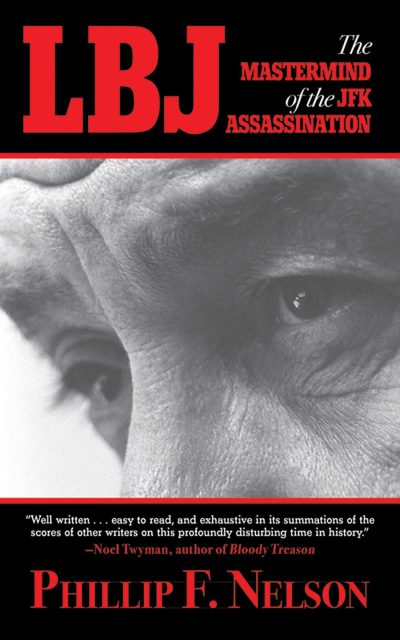
Phillip Nelson, author of LBJ, The Mastermind of JFK’s Assassination (2010), the ultimate 720-page indictment of Johnson (followed by LBJ: From Mastermind to “the Colossus” and Remember the Liberty), also wrote a comment that I am proud to quote: “Guyénot’s short book covers much territory, some of it never so thoroughly explored before. … He has made a very compelling and persuasive argument for his position and I recognize the truths he has revealed.” Nelson has reservations, however, on the thesis that Ben-Gurion was the “driving force” behind the assassination of JFK.
The major problem with his thesis is that the problems with Dimona didn’t arise and become the hot topic between JFK and Ben-Gurion until 1963. LBJ’s plot to take the White House by the “back door” began in 1958, when he pushed the Texas legislature to allow him to run on both the state ballot and the national ballot at the same time, something it had then prohibited. That was only the first box he had to check-off, five years before the assassination.
In my opinion, it’s more likely that, during that five years, Johnson and Ben-Gurion, with their submissive acolytes, discussed many of their goals and priorities, and that the “Big Event” became a mutually-agreed high priority, with plenty of time to set all the knights, bishops, kings, queens, and pawns, in their place.
I think Johnson made it on Kennedy’s ticket in 1960 only because the Zionists (Abe Feinberg) wanted him there, as Kennedy’s potential assassin and future “best U.S. president for Israel ever.” For as I wrote in “The Umbrella Man, the Sins of the Father, and the Kennedy Curse”, long before 1960, the Israelis saw the Kennedys as a serious potential threat to their expansionist ambitions, and rightly so. In the organization chart of the plot, I place Ben-Gurion higher than LBJ. But that is open to debate.
https://odysee.com/@KontreKulture:c/Israel-and-the-Assassinations-of-The-Kennedy-brothers:9
Notes
[1] This has been shown conclusively by David Talbot in Brothers: The Hidden History of the Kennedy Years, Simon & Schuster, 2007.
[2] Jefferson Morley, Our Man in Mexico: Winston Scott and the Hidden History of the CIA, University Press of Kansas, 2008, p. 207.
[3] James Douglass, JFK and the Unspeakable: Why He Died and Why It Matters, Touchstone, 2008, p. 232.
[4] Douglass, JFK and the Unspeakable, p. 82.
[5] Douglass, JFK and the Unspeakable, pp. 82-83.
[6] “LBJ speaks on a conspiracy in JFK murder,” on YouTube.
[7] John M. Newman, Oswald and the CIA: The Documented Truth About the Unknown Relationship Between the U.S. Government and the Alleged Killer of JFK, Skyhorse, 2008, pp. 613-637. Excerpts on spartacus-educational.com
[8] Newman, Oswald and the CIA, pp. 636-637 (on spartacus-educational.com)
[9] Michael Collins Piper, Final Judgment: The Missing Link in the JFK Assassination Conspiracy, American Free Press, 6th ed., 2005, pp. 166-169.
[10] Tom Mangold, Cold Warrior: James Jesus Angleton: the CIA’s Master Spy Hunter, Simon & Schuster, 1991, p. 52.
[11] Mangold, Cold Warrior, p. 55.
[12] Andrew and Leslie Cockburn, Dangerous Liaison: The Inside Story of the U.S.-Israeli Covert Relationship, HarperCollins, 1991, p. 43.
[13] Mangold, Cold Warrior, p. 57.
[14] Jefferson Morley, The Ghost: The Secret Life of CIA Spymaster James Jesus Angleton, St. Martin’s Press, 2017, p. 229.
[15] David C. Martin, Wilderness of Mirrors: Intrigue, Deception, and the Secrets that Destroyed Two of the Cold War’s Most Important Agents, Skyhorse, 2018.
[16] David Wise, “The Spookiest of the CIA’s Spooks,” Los Angeles Times, December 24, 2006, on www.latimes.com.
[17] Jefferson Morley, “Wilderness of Mirrors: Documents Reveal the Complex “Legacy of James Angleton, CIA Counterintelligence Chief and Godfather of Mass Surveillance”, January 1, 2018, The Intercept, on theintercept.com/
[18] Peter Dale Scott, Deep Politics and the Death of JFK, University of California Press, 1993, p. 54, quoted in Michael Collins Piper, Final Judgment, 6th ed., 2005, p. 63.
[19] Mangold, Cold Warrior, p. 362.
[20] Mangold, Cold Warrior, p. 49.
[21] Cockburn and Cockburn, Dangerous Liaison, p. 41.
[22] Morley, The Ghost, 55
[23] Cockburn, Dangerous Liaison, p. 43.
[24] Cockburn, Dangerous Liaison, p. 65; Morley, The Ghost, p. 78.
[25] Morley, The Ghost, p. 171.
[26] Morley, The Ghost, pp. 174, 73; Jefferson Morley, “Wilderness of Mirrors.”
[27] Morley, The Ghost, p. 262.
[28] Jefferson Morley, “CIA and Mossad: Tradeoffs in the Formation of the U.S.-Israel Strategic Relationship,” conf for the Washington Report on Middle East Affairs, 2018 May, on www.wrmea.org/
[29] Piper, Final Judgment, 6th ed., 2005, pp. 461-478.
[30] Morley, The Ghost, p. 174.
[31] Seymour Hersh, The Samson Option: Israel’s Nuclear Arsenal and American Foreign Policy, Random House, 1991, p. 147.
[32] Morley, The Ghost, p. 92
[33] Morley, “CIA and Mossad.”
[34] Morley, The Ghost, pp. 261-262.
[35] Michael Holzman, James Jesus Angleton: The CIA, and the Craft of Counterintelligence, University of Massachusetts Press, 2008, pp. 167-168.
[36] Cockburn, Dangerous Liaison, pp. 146-147.
[37] Joan Mellen, Blood in the Water: How the US and Israel Conspired to Ambush the USS Liberty, Prometheus Books, 2018, on www.worldtruth.online/, p. 50.
[38] Peter Hounam, Operation Cyanide: Why the Bombing of the USS Liberty nearly caused World War III, Vision, 2003, pp. 266-267.
[39] Mellen, Blood in the Water, pp. 37-40.
[40] Mellen, Blood in the Water, p. 49.
[41] Tom Segev, 1967: Israel, the War, and the Year That Transformed the Middle East, Henry Hold, 2007, pp. 329-332.
[42] Morley, “CIA and Mossad”
[43] Glenn Frankel, “The Secret Ceremony,” Washington Post, December 5, 1987, on www.washingtonpost.com. Andy Court’s article, “Spy Chiefs Honour a CIA Friend,” Jerusalem Post, December 5, 1987, is not online.
[44] Cockburn, Dangerous Liaison, p. 44.

Lebanon warns Israel
Samizdat | June 5, 2022
A battle over Mediterranean waters rich in natural gas deposits bubbled up on Sunday when Lebanese President Michel Aoun warned Israel that trying to tap the offshore riches without first resolving a territorial dispute would be seen as a “provocation.”
“Any action or activity in the disputed area represents a provocation and an aggressive action,” Aoun said on Sunday in a statement. He made his comments after a floating production storage and offloading (FPSO) vessel arrived in the disputed area, where London-based upstream firm Energean plans to start pumping gas from the Karish field under contract with the Israeli government later this year.
Aoun said he discussed the FPSO’s arrival with Prime Minister Najib Mikati and asked Lebanon’s Army Command to provide him “accurate and official data to build upon the matter.” Mikati called the situation “extremely dangerous,” saying Israel was trying to “create a new crisis, encroaching on Lebanon’s maritime wealth and imposing a fait accompli in a disputed area.”
Karish is located about 90km west of Haifa, close to the much larger gas fields of Leviathan and Tamar, and it holds reserves estimated at more than 300 million barrels of oil equivalent. Energean signed a contract in March to sell output from Karish to Israel Electric Co., the largest Israeli gas buyer.
Jerusalem has claimed that Karish is located in Israel’s exclusive economic zone, as recognized by the United Nations, and isn’t subject to the country’s territorial dispute with Lebanon. Aoun said negotiations to resolve the issue are continuing, and both countries have filed disputes with the UN regarding their overlapping maritime claims.
Lebanon’s Hezbollah militant group has threatened to take action if Israel extracts fossil fuels in the disputed area without resolving the territorial impasse.
Featured Video
Seyed M. Marandi: U.S. Military DIVIDED? Iran’s Secret Defense EXPOSED
or go to
Aletho News Archives – Video-Images
From the Archives
‘Israel sees Iran as obstacle to its policies’
Press TV – August 25, 2017
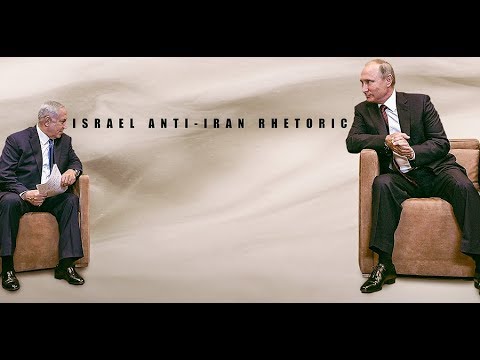
Prime Minister Benjamin Netanyahu has said that Israel felt threatened by Iran’s growing influence in the Middle East. Netanyahu expressed his Iranophobic view in a meeting with Russian President Vladimir Putin in Russia’s Black Sea resort of Sochi on Wednesday. Press TV has asked Scott Rickard, former American intelligence linguist from Tampa, Florida, and Brent Budowsky, a columnist at The Hill from Washington, to give their thoughts on the issue.
Rickard said Tel Aviv is concerned about the fact that the regime could not carry out its old project to spread sectarian divisions and pave the way for dismemberment of the countries in the Middle East region because of the Iranian-led resistance against Israeli policies, not only in the occupied territories of Palestine but also in the whole region.
“Iran is not a threat to Israel whatsoever. The threat that Israel sees is the fact that their Oded Yinon Plan is being put to a hold by Iran,” the intelligence linguist said on Thursday night.
“They (the Israelis) look at Iran as a threat only because they have no influence on their governments and Iran is autonomous and is not under the Zionist influence,” he added.
Since the victory of the Islamic Republic of Iran in 1979, Tehran has been critical of Israel’s policies in the region, whereas “no leaders [of other states] even dared to speak out against Zionism,” Rickard argued. … continue
Blog Roll
 Aletho News
- Iran declares ‘historic victory’ over US, says enemy forced to accept its proposal
- Trump Claims Ceasefire, Reopening of Strait of Hormuz Agreement with Iran
- Israeli tank fire killed UN peacekeeper in Lebanon, UNIFIL investigation finds
- Russia, China block Bahrain-sponsored UN resolution on Strait of Hormuz
- The US-Israeli War on Science is an Assault on our Future
- Trump’s Promise to Bomb Iran ‘Like Never Before’ Faces Brutal Logistics — Expert
- Germany seeks to restrict stays abroad for men of fighting age – Berliner Zeitung
- Evidence points to Ukraine being behind TurkStream attempted sabotage, but that should come as no surprise
- Sri Lanka secures supplies of Russia oil – minister
- Nations across Asia strike direct deals with Iran for Hormuz passage
- If Americans Knew
- Thousands dead and neighborhoods razed to the ground: Aid agencies fear southern Lebanon is becoming the new Gaza
- The war the US is fighting for Israel could cost trillions
- ‘Cigarette Burns, Nail Wounds’: Toddler Tortured in Gaza to Coerce Father
- Trump Says US Sent ‘a Lot of Guns’ to Protesters in Iran
- Israeli forces destroy 17 UN peacekeeper cameras in south Lebanon
- US-Israeli strikes ‘completely destroy’ synagogue in Tehran
- Archbishop for US Military Says Iran War Is Unjust Under Catholic Teaching
- Iranian leaders’ Open Letters to the American People
- Trump says Iranians appreciate bombs, WHO warns of nuclear risks – Daily Update
- U.N. experts demand Israel release prominent Gaza doctor after reports of ‘severe torture’
- No Tricks Zone
- An Inconvenient Tree: Uncovered In Alps… Europe Much Warmer Than Today 6000 Years Ago
- New Study Reports A 60% Slowdown In Greenland’s Ice Loss Rate In The Last Decade
- Low Intensity Tornado Wrecks Major Solar Farm, Creating A Potential Toxic Dump
- New Study Finds Warming Saves Lives…Cold Temperatures 12 Times More Deadly Than Excess Heat
- German Science Blog Accuses PIK Climate Institute Of Hallucinating Climate Tipping Points
- Devastating Assessment Of Comirnaty Vaccine By Former Senior Pfizer Europe Toxicologist
- New Study: CO2 Is ‘Effectively Negligible’ As An Explanatory Climate Change Factor Since 2000
- Former Pfizer Toxicologist Dr. Helmut Sterz Tells Bundestag Hearing Pfizer Vaccine Should Have Never Been Approved
- Energy Expert: Germany’s Nuclear Phaseout Was A “500 Billion Euro Mistake”
- New Research: South Australia’s Mid-Holocene Sea Surface Temperatures Were 4°C Warmer Than Today
 Aletho News