Free stuff from the Inflation “Reduction” Act discriminates against the poor!
By David Wojick | CFACT | September 8, 2022
In the name of “inflation reduction” Uncle Sam is giving away four and a half billion dollars worth of rebates on electrical appliances and related juicy stuff. Okay the Federal Government is not actually giving it away; they are just paying for it. The taxpayers are paying the multi-billion dollar bill.
What is truly ironic is that this Act discriminates heavily against the poor. Many relatively low income households are systematically excluded from the rebate program, while much wealthier households qualify simply because their neighbors make more money. I am not making this up.
First the basics. This is the “HIGH-EFFICIENCY ELECTRIC HOME REBATE PROGRAM” (all caps on the Act). Despite the name there is not much about energy efficiency in this. It is mostly about electrification of residential properties.
The rebates are huge, specifically either 100% or 50% of cost, up to $14,000. That’s right, the Feds will pay 100% in many cases, making the stuff free. The big difference between these two numbers is where the discrimination comes in, but first more basics.
Here is the official list of big tickets that are covered:
“(1) an electric heat pump water heater
(2) an electric heat pump for space heating and cooling
(3) an electric stove, cooktop, range, or oven
(4) an electric heat pump clothes dryer
(5) an electric load service center
(6) insulation
(7) air sealing and materials to improve ventilation
(8) electric wiring“
Insulation and air sealing may improve efficiency but the rest is just electrification. To qualify, the new appliance must either replace a gas fired one, be a first time purchase or be part of new construction. Note that where new gas appliances are outlawed, which is increasingly the case, people are being paid handsomely for doing what they have to do anyway. Free riders get it free!
Who qualifies for these two rebate amounts is where the discrimination comes in. The formula is quite simple, as follows.
The rebate is 100% if the annual household income is less than 80 percent of the “area median income.”
The rebate is 50% if the annual household income is between 80 percent and 150% of the “area median income.”
I have quoted “area median income” because that is the kicker. Obviously poor areas have relatively low area median incomes while wealthier areas have higher ones, in some cases a lot higher. Much follows from this.
Here is a simple example that makes the point very clearly. We have two areas, one poorer and one wealthier. The poorer area has a median annual household income of $50,000. In some States two people working full time making minimum wage would exceed this, so it is very low. The wealthier area has a median annual household income of $100,000. (Truly wealthy areas may have incomes much larger than this, making the discrimination much worse.)
Who qualifies for the 100% rebates in the poorer area? Any household with income less than $40,000. But in the wealthier area folks making up to $80,000 qualify! People making that kind of money in the poorer area are disqualified just because of that poverty. The same is true for the 50% rebate.
In short, relative poverty disqualifies a lot of people from getting these fancy rebates. The richer the area the more money people can make and still qualify.
Local poverty disqualifies low income people. Surely this is wrong, in fact it is nuts.
My guess is this colossal blunder is because the law was written in a huge rush. Senate staffers were working around the clock to craft a compromise bill. The fact that different areas can have very different median household incomes did not occur to them.
Personally I think these rebates are a ridiculous waste of taxpayer money (especially in areas where gas appliances are prohibited by law). But if they are going to exist, then who qualifies should be the same for everybody. Disqualifying people for living in a poorer area is just wrong.
Congress should repeal or rewrite this nutty law.
David Wojick, Ph.D. is an independent analyst working at the intersection of science, technology and policy.
Poland receives US nuclear offer
Samizdat | September 13, 2022
The US has sent Poland a proposal to help build six nuclear reactors in the country in a bid to reduce carbon emissions and gradually phase out coal, the Polish Climate ministry announced on Monday.
Delivered to Poland’s Minister of Climate and Environment Anna Moskwa by US ambassador Mark Brzezinski, the proposal suggested that Washington and Warsaw create a detailed bilateral roadmap for the construction project, which is set to be finished by 2040.
“It’s more than a commercial offer, it reflects 18 months of work and millions of dollars spent on analysis and evaluations,” said a spokesperson for the Westinghouse Electric Company, a US firm bidding to take on the project.
US Secretary of Energy Jennifer M. Granholm called the report “a major step towards Poland’s development of a robust civil nuclear industry that is zero-carbon emitting and will result in another European source of energy that is free from Russian influence.”
“This project has the potential to ensure that the Polish people can receive the safest, most advanced, and reliable nuclear technology available,” the politician added.
The Polish government expects the partner in its nuclear programme to take a 49% stake in the company and assist in managing and financing the plants, after providing the technology for them.
The government in Warsaw will now consider the US proposal, and make a decision before annual talks on technology issues this autumn.
Washington’s offer comes shortly after Poland claimed that it had become the “locomotive of development” for the whole of Europe, while questioning Germany’s supposedly misguided energy policies, which have been left in “ruins”.
“Germany’s policies have inflicted tremendous damage on Europe,” said Polish Prime Minister Mateusz Morawiecki, describing the phase-out of coal and nuclear power as “premature”. The leader also criticized Berlin’s decision to allow the construction of the Nord Stream 1 and 2 gas pipelines, and grilled Berlin for becoming energy dependent on Russia.
Wall Street Giants Set to Smash Profit Records Off Global Hunger, Energy Crisis
By Jake Johnson | Common Dreams | September 9, 2022
Russia’s war on Ukraine has wreaked havoc on global commodity markets, driving up energy and food prices and exacerbating hunger emergencies around the world.
“We’re in a market where speculators are driving prices up.”
But while disastrous for the global poor—millions of whom are living on the brink of famine—the chaos has been a major boon for Wall Street giants, according to new data showing that the world’s 100 largest banks are on pace to smash commodity trading profit records this year.
“The 100 biggest banks by revenue are set to make $18 billion from commodities trading in 2022,” Bloomberg reported Friday, citing figures from the London-based firm Vali Analytics. “That would be the highest in the data, which goes back 14 years, and exceed the previous high watermark in 2009.”
“The prediction is the latest evidence that the wild swings in energy prices triggered by the war in Ukraine are delivering a boon to commodity traders, even as they push European nations into crisis,” Bloomberg added. “Vali, an analytics firm that tracks trading business, compiled data that includes the leading five banks in commodity trading: Macquarie Group Ltd., Goldman Sachs Group Inc., JPMorgan Chase & Co., Citigroup Inc., and Morgan Stanley.”
Though the prices of wheat and other food staples have fallen from their peak in recent months, they remain significantly elevated compared to last year, according to the United Nations’ Food and Agriculture Organization, leaving millions vulnerable to hunger and starvation.
The World Food Program estimates that “as many as 828 million people go to bed hungry every night” and “the number of those facing acute food insecurity has soared—from 135 million to 345 million—since 2019.”
Energy prices have also eased but remain high, contributing to cost-of-living crises throughout Europe and other parts of the globe.
“People’s misery makes capitalists’ superprofit,” Salvatore De Rosa, a researcher at the Lund University Center for Sustainability Studies, tweeted in response to Bloomberg‘s reporting. “How do you reform this?”
Wall Street banks have not just benefited from the commodity price increases—they’ve actively helped fuel them, experts say.
“We’re in a market where speculators are driving prices up,” Michael Greenberger, former head of the Division of Trading and Markets at the U.S. Commodity Futures Trading Commission, told Mongabay in July.
“Commodity markets are supposed to be hedging markets for people who are dealing with the commodity involved,” Greenberger said. “In the case of wheat, it would be farmers and people buying wheat. But if we looked at it, there would be banks in there with no interest in what the price of wheat is, writing swaps and controlling this price.”
“It’s too easy to say the war in Ukraine has unbalanced all these markets, [or that] supply chains and the ports are shot, and that there’s a supply and demand reason for these prices going up,” Greenberger added. “My own best guess is anywhere from 10% to 25% of the price, at least, is dictated by deregulated speculative activity.”
Global Oil Output Short of 6Mln BPD Due to Western Policy: Russian Energy Official
Samizdat – 14.09.2022
ST. PETERSBURG, Russia – A significant investment shortage into traditional energy sources caused by the Western sanctions and environmental, social, and governance (ESG) policy has caused a global production deficit of 5-6 million barrels per day, Russian First Deputy Energy Minister Pavel Sorokin said on Wednesday.
“The current situation on the energy market is not a result of the last few months but a consequence of the policy that was being created by the West during the last decade. The sanctions, which were imposed not only on Russia but on other countries, as well as the green agenda and the ESG policy of the last 10-15 years caused a significant shortage of investments into traditional energy sources. It has deprived the world of 5-6 barrels of oil per day, according to our estimates,” Sorokin said at the 11th St. Petersburg International Gas Forum.
The official also said that traditional energy sources are short of at least 250-270 billion euros ($25.1- $27 billion) in investments per year, adding that the slowdown in demand for oil and gas in the developing countries in Latin America, Africa and in the Asia-Pacific region affect the global economy, increasing the risks of economic recession.
The 11th St. Petersburg International Gas Forum (SPIGF), which is taking place from September 13-16 in the Expoforum Convention and Exhibition Centre, is hosting more than 80 events with the participation of 700 speakers from 20 countries. It aims to outline prospects for the further development of the sector, according to the organizers.
Among the main events of the SPIGF 2022 convention program are the international scientific and practical conference “Underground Gas Storage: Reliability and Efficiency” and plenary session “Gas Engine Fuel: a Reliable Solution in the Face of New Social-Economical and Environmental Challenges.”
Russia-Turkey deal to ensure poorest countries will receive grain
By Ahmed Adel | September 14, 2022
The opening of the Black Sea corridor for the export of Russian grain allows Turkey to realize some of its interests, but more importantly, it allows Russian grain to reach the most vulnerable countries, which is critical since Ukrainian grain is ending up in the EU instead of the poorest countries. Russian President Vladimir Putin and his Turkish counterpart Recep Tayyip Erdogan will discuss the opening of the corridor for the export of Russian grain at the upcoming Shanghai Cooperation Organisation (SCO) summit to be held on September 15-16 in Samarkand, Uzbekistan.
Although Western sanctions have not been directly imposed on Russian grain, sanctions have created export difficulties. Therefore, a corridor through the Turkish Straits is a solution and will also benefit Ankara’s coffers as utility companies in Turkish ports will profit. In addition, Turkey is the main supplier of flour to the European market, with the flour being made from Turkish, Russian and Ukrainian grains.
Moscow is facing some problems despite sanctions not being directly imposed against Russian grain. For example, there are issues with payments and settlements as many banks are simply afraid of sanctions. Sanctions also create problems with transportation logistics, especially with ships. Those logistical problems have led to an increase in the price of grain.
More importantly, the poorest countries lose access to basic foodstuffs because developed countries buy them instead. According to data, 345 million people around the world are already suffering from food insecurity, 2.5 times more people than in 2019.
From the Turkish perspective, presidential elections will be held next year, and with country experiencing major economic issues, Erdogan is hoping to close a deal that can boost his popularity. With difficulties on the domestic front, he is using foreign policy issues and nationalistic rhetoric aimed against the Kurds in Syria, the Armenians in Nagorno-Karabakh, issues in the Mediterranean with Greece, and now global food insecurity, to gain votes.
At the same time, the US evidently does not care about poor countries that were not supplied with Ukrainian grain. In fact, Washington deceivingly accuses Moscow of creating fake news about who the grain was supplied to. Erdogan too, challenges the American position.
“The fact that grain shipments are going to the countries that implement these sanctions (against Moscow) disturbs Mr. Putin. We also want grain shipments to start from Russia,” Erdogan said at a news conference with his Croatian counterpart on September 8. “The grain that comes as part of this grain deal unfortunately goes to rich countries, not to poor countries.”
It is recalled that Putin said at the Eastern Economic Forum in Vladivostok that Russia will not cooperate with those who put up barriers against it. Although this at first was thought to mean oil and gas, this policy is also the same with grain.
None-the-less, to friendly states, Moscow not only intends to deliver 30 million tons of grain to those that need it by the end of the year, but in fact will increase those deliveries to 50 million in 2023.
Although the US would ultimately want to ban the export of Russian grain, there cannot be a complete ban since grain is categorised as humanitarian goods. The grain harvest in Russia was good this year, making the export potential significant, and thus it will likely ensure that a food crisis does not emerge.
In any case, the delivery of Russian and Ukrainian grain to world markets is important in stabilising prices. Turkey in this way is positioning itself as an indispensable partner in alleviating a potential global food crisis. Despite around 100 cargo ships having left Ukrainian ports since July, Ukraine’s wheat has not reached its traditional clients in Africa at anywhere near its normal volume. With Putin and Erdogan expected to conclude an agreement in the coming days, Russia will be in a position to ensure that there is not a global scarcity or crisis.
Ahmed Adel is a Cairo-based geopolitics and political economy researcher.
Ukraine’s security proposal makes Russian op ‘more urgent’ – Kremlin
Samizdat | September 14, 2022
Moscow should double down on its military offensive in Ukraine after Kiev released a proposal on how the US and its allies could guarantee Ukraine’s security, Kremlin spokesman Dmitry Peskov has said. The document highlights the threat that NATO poses to Russia, he argued.
The Russian official noted on Wednesday that the proposed series of treaties between Ukraine and the US and its allies is specifically meant as a stopgap solution before Ukraine formally joins NATO. Moscow considers Ukraine’s accession to the US-led military bloc unacceptable due to the perceived threat to its national security such a step would entail.
“One of the main threats to our nation remains, which means that one of the main reasons for the special military operation remains, or even becomes more urgent,” Peskov told journalists.
He added that the best path that Ukraine has to ensure its national security under the circumstances was to address Russia’s concern over its cooperation with NATO.
“The leadership of the country must take steps to eliminate the threat posed to Russia. They know well what those steps should be,” Peskov said.
The proposed ‘Kiev Security Compact’ was released on Tuesday by the office of Ukrainian President Vladimir Zelensky. The document was prepared by his chief-of-staff Andrey Yermak and former NATO Secretary General Anders Fogh Rasmussen.
Kiev wants the US and other members of NATO to offer legally binding guarantees of its security and pledge long-term economic assistance. The document explicitly rejects Russia’s demand of a neutral status for Ukraine.
Russian Foreign Ministry spokeswoman Maria Zakharova stated earlier on Wednesday that the proposal was meant to trick European nations into a costly sponsorship of Kiev. They will risk their own economic viability, thus undermining their own political power, which secretly is the goal of Kiev’s puppeteers in Washington, she claimed.
Russia sent troops into Ukraine on February 24, citing Kiev’s failure to implement the Minsk agreements, designed to give the regions of Donetsk and Lugansk special status within the Ukrainian state. The protocols, brokered by Germany and France, were first signed in 2014. Former Ukrainian President Pyotr Poroshenko has since admitted that Kiev’s main goal was to use the ceasefire to buy time and “create powerful armed forces.”
In February 2022, the Kremlin recognized the Donbass republics as independent states and demanded that Ukraine officially declare itself a neutral country that will never join any Western military bloc. Kiev insists the Russian offensive was completely unprovoked.
Yet another “whistleblower” means yet more censorship
By Kit Knightly | OffGuardian | September 13, 2022
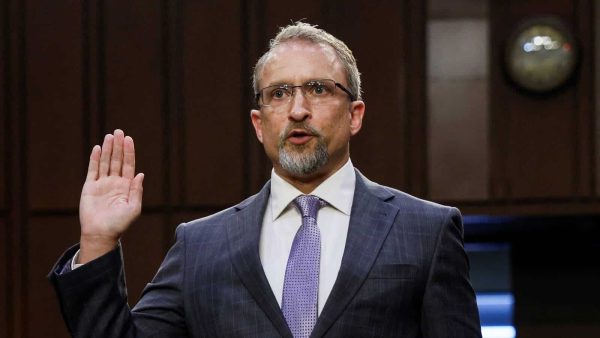
A new Twitter “whistleblower” has come forward. Peiter “Mudge” Zatko, allegedly a former hacker and Twitter’s ex-head of security, testified in front of congress today, with dire warnings about the business practices of the social media giant.
Did he talk about the company’s egregious attacks on their users’ free speech under the guise of “protecting” the public?
Did he mention the suppression of alternative and independent journalism through practices such as “shadow-banning” and discretely removing followers?
Perhaps he told them about how, like all major social media platforms, it is so cross-pollinated with intelligence assets it may as well be considered just another branch of the Deep State.
No, none of that. His main concern is that Twitter’s security is too lax, and that the platform’s “cyber-security failures” leave it potentially open to “exploitation” that can “cause real harm to real people”.
NOW – Former Twitter security chief says the platform’s leadership “is misleading the public, lawmakers, regulators, and even its own board of directors.” pic.twitter.com/rk5EulVid5
— Disclose.tv (@disclosetv) September 13, 2022
According to the write-up of his testimony in The Guardian, “Zatko said Twitter runs out-of-date and vulnerable software on more than half of its data center servers and that in “multiple episodes” the platform was breached by foreign intelligence agencies.”
Adding, “Zatko has also accused Twitter of doing little to combat problems with spam bots – an allegation that bolsters Elon Musk’s case for backing out of his Twitter acquisition.”
Do you see how this works? It’s gearing up the machinery to label anyone who dissents as either a “spy” or a “bot” (and perhaps reveals something of the purpose behind Elon Musk’s “revelation” about the number of “fake accounts” on twitter).
If this all sounds eerily familiar, don’t worry you’re not experiencing deja vu, you’re just remembering Frances Haugen, the facebook “whistleblower” from last year. She said very similar things in a very similar way.
We’ve seen this dance before, we know the steps. As I wrote only last year:
Like so many other testimonies before congress in the past, the entire event looks fake and probably is. A stage-managed exercise involving some “expert witness” telling a bunch of politicians exactly what they want to hear, so they can go ahead push the legislation they were going to push anyway. It’s all leading up to loud bipartisan calls for “regulation”, and that’s not a good thing.
They wheel out some person – who may or may not be real, and may or may not have an axe to grind – prop them up in a nice suit in front of some po-faced senators and have them reel off a few thousand serious sounding words.
Their pay-off is a few minutes of fame, a ghost-written book deal and being called “brave” by moist-eyed liberal pundits, their hands white-knuckling around their pearls.
While they prattle on at length about the supposed “problem”, the “solution” is already planned and ready to roll out. Such is the crushingly predictable nature of the Hegelian dialectic.
And, just in case any of you hadn’t already figured out what that was, The Guardian is more than clear [emphasis added]:
In his testimony, Zatko said there had not been enough government enforcement when it comes to the operations of big tech, and that the federal trade commission (FTC) is “in over its head” when going up against huge tech firms.
More “government enforcement”.
It’s all so tiresome.
Europe’s leaders continue to prioritise US interests over citizens’ wellbeing
European protestors demand an end to anti-Russia sanctions to alleviate cost-of-living crisis.
By Ahmed Adel | September 13, 2022
With winter approaching, Europeans are thinking about how their livelihoods will be affected. Rallies, strikes, demonstrations and protests are gaining momentum as the cost-of-living becomes unbearable. Although European media tried to hide this, even paid local propagandists cannot ignore the growing anger amongst Europeans.
Protests have occurred in Prague, Lisbon, London and many other cities, with people belonging to a wide variety of ideologies, including left and right-wing, and even libertarians and anarchists. Although labelled by the media as Putin’s stooges, name-calling is not having the desired effect, especially as people are united by the fear of winter woes, regardless of political affiliation.
Though attempts are being made to blame the continent’s declining economic situation on Russian President Vladimir Putin, Europeans are no longer accepting this excuse. Europeans are realising that anti-Russian sanctions hit them much harder than the Russians.
Forty percent of Austria’s population does not support anti-Russian sanctions, 51 percent of Italians are against them, and 80 percent of Germans believe that Berlin should not send weapons to Ukraine and instead seek a peaceful solution to the conflict in Ukraine. With these ideas, Europeans are rallying across the continent, with people not being deterred despite being accused of serving Putin.
However, it is the US ruining Europe, something which Moscow itself does not want as it would rather see an independent and prosperous continent. None-the-less, the European elite made an unconditional surrender of their countries and peoples to serve the interests of Washington instead.
It is evident that European protestors are completely devoid of common leadership and clear common goals and strategies. These protests are not an organised mass led by a charismatic leader, but small groups of people, and as already mentioned, from varying political ideologies.
Their potential success remains questionable though since citizens cannot change their leaders until the next election cycle. Germans, for example, were outraged when Foreign Minister Annalena Baerbock openly said that she will defend Ukraine’s interests, even against the will of voters. To make matters worse, she made the statement in English, an obvious signalling to Washington. Despite their outrage, Germans cannot remove Baerbock from her post and replace her with another politician until the next election.
Baerbock is hardly alone though when it comes to powerful politicians dismissing the opinion of the people, with only very few exceptions existing in Europe. Hungarian Prime Minister Viktor Orban is one of the few exceptions as he prioritises the welfare of his citizens rather than capitulation to American pressure.
In neighbouring Austria, state leaders are now putting pressure on Vienna and are asking federal authorities to negotiate with Moscow. State leaders have a negative attitude towards sanctions, with Upper Austria Governor Thomas Stelzer saying that “nothing is set in stone”. Austria’s approach to sanctions will have to be changed as “they will cause great damage to our lives”, added Stelzer.
Much will also depend on the results of the Italian elections. It appears that most Italians support Russia-friendly parties. There is a serious chance that at the end of September they will win the election and a coalition of Russia-friendly politicians will appear in the Italian Parliament. Giorgia Meloni of “Brothers of Italy” supported Putin’s re-election as president in 2018, Matteo Salvini of “League” became famous for being photographed in Moscow’s Red Square wearing a t-shirt with an image of Putin, and Silvio Berlusconi is introducing himself as the man to improve European-Russian ties.
More importantly, Europeans are beginning to understand that Washington is not a protector, but a dangerous and unscrupulous state that is prioritising its own interests, not Europe’s. Russia at war, whilst Europe cripples itself by arming Ukraine and imposing anti-Russia sanctions, is an ideal scenario for Washington. In this way, not only is one of Washington’s main adversaries bogged down in the conflict with Ukraine and NATO, but it deepens Europe’s status as nothing more than a submissive protectorate
With frustrations and worries reaching boiling point, and the harsh winter only some weeks away, European leaders need to quickly reach a compromise with Moscow to help alleviate the cost-of-living crisis or else citizens will face a suffering, at least at an economic level, not experienced since World War II.
Ahmed Adel, Cairo-based geopolitics and political economy researcher.
The Specter of Germany Is Rising
By Diana Johnstone | Consortium News | September 12, 2022
The European Union is girding for a long war against Russia that appears clearly contrary to European economic interests and social stability. A war that is apparently irrational – as many are – has deep emotional roots and claims ideological justification. Such wars are hard to end because they extend outside the range of rationality.
For decades after the Soviet Union entered Berlin and decisively defeated the Third Reich, Soviet leaders worried about the threat of “German revanchism.” Since World War II could be seen as German revenge for being deprived of victory in World War I, couldn’t aggressive German Drang nach Osten be revived, especially if it enjoyed Anglo-American support? There had always been a minority in U.S. and U.K. power circles that would have liked to complete Hitler’s war against the Soviet Union.
It was not the desire to spread communism, but the need for a buffer zone to stand in the way of such dangers that was the primary motivation for the ongoing Soviet political and military clampdown on the tier of countries from Poland to Bulgaria that the Red Army had wrested from Nazi occupation.
This concern waned considerably in the early 1980s as a young German generation took to the streets in peace demonstrations against the stationing of nuclear “Euromissiles” which could increase the risk of nuclear war on German soil. The movement created the image of a new peaceful Germany. I believe that Mikhail Gorbachev took this transformation seriously.
On June 15, 1989, Gorbachev came to Bonn, which was then the modest capital of a deceptively modest West Germany. Apparently delighted with the warm and friendly welcome, Gorbachev stopped to shake hands with people along the way in that peaceful university town that had been the scene of large peace demonstrations.
I was there and experienced his unusually warm, firm handshake and eager smile. I have no doubt that Gorbachev sincerely believed in a “common European home” where East and West Europe could live happily side by side united by some sort of democratic socialism.
Gorbachev died at age 91 two weeks ago, on Aug. 30. His dream of Russia and Germany living happily in their “common European home” had soon been fatally undermined by the Clinton administration’s go-ahead to eastward expansion of NATO. But the day before Gorbachev’s death, leading German politicians in Prague wiped out any hope of such a happy end by proclaiming their leadership of a Europe dedicated to combating the Russian enemy.
These were politicians from the very parties – the SPD (Social Democratic Party) and the Greens – that took the lead in the 1980s peace movement.
German Europe Must Expand Eastward
German Chancellor Olaf Scholz is a colorless SPD politician, but his Aug. 29 speech in Prague was inflammatory in its implications. Scholz called for an expanded, militarized European Union under German leadership. He claimed that the Russian operation in Ukraine raised the question of “where the dividing line will be in the future between this free Europe and a neo-imperial autocracy.” We cannot simply watch, he said, “as free countries are wiped off the map and disappear behind walls or iron curtains.”
(Note: the conflict in Ukraine is clearly the unfinished business of the collapse of the Soviet Union, aggravated by malicious outside provocation. As in the Cold War, Moscow’s defensive reactions are interpreted as harbingers of Russian invasion of Europe, and thus a pretext for arms buildups.)
To meet this imaginary threat, Germany will lead an expanded, militarized EU. First, Scholz told his European audience in the Czech capital, “I am committed to the enlargement of the European Union to include the states of the Western Balkans, Ukraine, Moldova and, in the long term, Georgia”. Worrying about Russia moving the dividing line West is a bit odd while planning to incorporate three former Soviet States, one of which (Georgia) is geographically and culturally very remote from Europe but on Russia’s doorstep.
2022 Fall Fund Drive
In the “Western Balkans”, Albania and four extremely weak statelets left from former Yugoslavia (North Macedonia, Montenegro, Bosnia-Herzegovina and widely unrecognized Kosovo) mainly produce emigrants and are far from EU economic and social standards. Kosovo and Bosnia are militarily occupied de facto NATO protectorates. Serbia, more solid than the others, shows no signs of renouncing its beneficial relations with Russia and China, and popular enthusiasm for “Europe” among Serbs has faded.
Adding these member states will achieve “a stronger, more sovereign, geopolitical European Union,” said Scholz. A “more geopolitical Germany” is more like it. As the EU grows eastward, Germany is “in the center” and will do everything to bring them all together. So, in addition to enlargement, Scholz calls for “a gradual shift to majority decisions in common foreign policy” to replace the unanimity required today.
What this means should be obvious to the French. Historically, the French have defended the consensus rule so as not to be dragged into a foreign policy they don’t want. French leaders have exalted the mythical “Franco-German couple” as guarantor of European harmony, mainly to keep German ambitions under control.
But Scholz says he doesn’t want “an EU of exclusive states or directorates,” which implies the final divorce of that “couple.” With an EU of 30 or 36 states, he notes, “fast and pragmatic action is needed.” And he can be sure that German influence on most of these poor, indebted and often corrupt new Member States will produce the needed majority.
France has always hoped for an EU security force separate from NATO in which the French military would play a leading role. But Germany has other ideas. “NATO remains the guarantor of our security,” said Scholz, rejoicing that President Biden is “a convinced trans-atlanticist.”
“Every improvement, every unification of European defense structures within the EU framework strengthens NATO,” Scholz said. “Together with other EU partners, Germany will therefore ensure that the EU’s planned rapid reaction force is operational in 2025 and will then also provide its core.
This requires a clear command structure. Germany will face up to this responsibility “when we lead the rapid reaction force in 2025,” Scholz said. It has already been decided that Germany will support Lithuania with a rapidly deployable brigade and NATO with further forces in a high state of readiness.
Serving to Lead … Where?
In short, Germany’s military buildup will give substance to Robert Habeck’s notorious statement in Washington last March that: “The stronger Germany serves, the greater its role.” The Green’s Habeck is Germany’s economics minister and the second most powerful figure in Germany’s current government.
The remark was well understood in Washington: by serving the U.S.-led Western empire, Germany is strengthening its role as European leader. Just as the U.S. arms, trains and occupies Germany, Germany will provide the same services for smaller EU states, notably to its east.
Since the start of the Russian operation in Ukraine, German politician Ursula von der Leyen has used her position as head of the EU Commission to impose ever more drastic sanctions on Russia, leading to the threat of a serious European energy crisis this winter. Her hostility to Russia seems boundless. In Kiev last April she called for rapid EU membership for Ukraine, notoriously the most corrupt country in Europe and far from meeting EU standards. She proclaimed that “Russia will descend into economic, financial and technological decay, while Ukraine is marching towards a European future.” For von der Leyen, Ukraine is “fighting our war.” All of this goes far beyond her authority to speak for the EU’s 27 Members, but nobody stops her.
Germany’s Green Party foreign minister Annalena Baerbock is every bit as intent on “ruining Russia.” Proponent of a “feminist foreign policy”, Baerbock expresses policy in personal terms. “If I give the promise to people in Ukraine, we stand with you as long as you need us,” she told the U.S. National Endowment for Democracy (NED)-sponsored Forum 2000 in Prague on Aug. 31, speaking in English. “Then I want to deliver no matter what my German voters think, but I want to deliver to the people of Ukraine.”
“People will go on the street and say, we cannot pay our energy prices, and I will say, ‘Yes I know so we will help you with social measures. […] We will stand with Ukraine and this means the sanctions will stay also til winter time even if it gets really tough for politicians.’”
Certainly, support for Ukraine is strong in Germany, but perhaps because of the looming energy shortage, a recent Forsa poll indicates that some 77 percent of Germans would favor diplomatic efforts to end the war – which should be the business of the foreign minister. But Baerbock shows no interest in diplomacy, only in “strategic failure” for Russia – however long it takes.
In the 1980s peace movement, a generation of Germans was distancing itself from that of their parents and vowed to overcome “enemy images” inherited from past wars. Curiously, Baerbock, born in 1980, has referred to her grandfather who fought in the Wehrmacht as somehow having contributed to European unity. Is this the generational pendulum?
The Little Revanchists
There is reason to surmise that current German Russophobia draws much of its legitimization from the Russophobia of former Nazi allies in smaller European countries.
While German anti-Russian revanchism may have taken a couple of generations to assert itself, there were a number of smaller, more obscure revanchisms that flourished at the end of the European war that were incorporated into United States Cold War operations. Those little revanchisms were not subjected to the denazification gestures or Holocaust guilt imposed on Germany. Rather, they were welcomed by the C.I.A., Radio Free Europe and Congressional committees for their fervent anticommunism. They were strengthened politically in the United States by anticommunist diasporas from Eastern Europe.
Of these, the Ukrainian diaspora was surely the largest, the most intensely political and the most influential, in both Canada and the American Middle West. Ukrainian fascists who had previously collaborated with Nazi invaders were the most numerous and active, leading the Bloc of Anti-Bolshevik Nations with links to German, British and U.S. Intelligence.
Eastern European Galicia, not to be confused with Spanish Galicia, has been back and forth part of Russia and Poland for centuries. After World War II it was divided between Poland and Ukraine. Ukrainian Galicia is the center of a virulent brand of Ukrainian nationalism, whose principal World War II hero was Stepan Bandera. This nationalism can properly be called “fascist” not simply because of superficial signs – its symbols, salutes or tatoos – but because it has always been fundamentally racist and violent.
Incited by Western powers, Poland, Lithuania and the Habsburg Empire, the key to Ukrainian nationalism was that it was Western, and thus superior. Since Ukrainians and Russians stem from the same population, pro-Western Ukrainian ultra-nationalism was built on imaginary myths of racial differences: Ukrainians were the true Western whatever-it-was, whereas Russians were mixed with “Mongols” and thus an inferior race. Banderist Ukrainian nationalists have openly called for elimination of Russians as such, as inferior beings.
So long as the Soviet Union existed, Ukrainian racial hatred of Russians had anticommunism as its cover, and Western intelligence agencies could support them on the “pure” ideological grounds of the fight against Bolshevism and Communism. But now that Russia is no longer ruled by communists, the mask has fallen, and the racist nature of Ukrainian ultra-nationalism is visible – for all who want to see it.
However, Western leaders and media are determined not to notice.
Ukraine is not just like any Western country. It is deeply and dramatically divided between Donbass in the East, Russian territories given to Ukraine by the Soviet Union, and the anti-Russian West, where Galicia is located. Russia’s defense of Donbass, wise or unwise, by no means indicates a Russian intention to invade other countries. This false alarm is the pretext for the remilitarization of Germany in alliance with the Anglo-Saxon powers against Russia.
The Yugoslav Prelude
This process began in the 1990s, with the breakup of Yugoslavia.
Yugoslavia was not a member of the Soviet bloc. Precisely for that reason, the country got loans from the West which in the 1970s led to a debt crisis in which the leaders of each of the six federated republics wanted to shove the debt onto others. This favored separatist tendencies in the relatively rich Slovenian and Croatian republics, tendencies enforced by ethnic chauvinism and encouragement from outside powers, especially Germany.
During World War II, German occupation had split the country apart. Serbia, allied to France and Britain in World War I, was subject to a punishing occupation. Idyllic Slovenia was absorbed into the Third Reich, while Germany supported an independent Croatia, ruled by the fascist Ustasha party, which included most of Bosnia, scene of the bloodiest internal fighting. When the war ended, many Croatian Ustasha emigrated to Germany, the United States and Canada, never giving up the hope of reviving secessionist Croatian nationalism.
In Washington in the 1990s, members of Congress got their impressions of Yugoslavia from a single expert: 35-year-old Croatian-American Mira Baratta, assistant to Sen. Bob Dole (Republican presidential candidate in 1996). Baratta’s grandfather had been an important Ustasha officer in Bosnia and her father was active in the Croatian diaspora in California. Baratta won over not only Dole but virtually the whole Congress to the Croatian version of Yugoslav conflicts blaming everything on the Serbs.
In Europe, Germans and Austrians, most notably Otto von Habsburg, heir to the defunct Austro-Hungarian Empire and member of the European Parliament from Bavaria, succeeded in portraying Serbs as the villains, thus achieving an effective revenge against their historic World War I enemy, Serbia. In the West, it became usual to identify Serbia as “Russia’s historic ally”, forgetting that in recent history Serbia’s closest allies were Britain and especially France.
In September 1991, a leading German Christian Democratic politician and constitutional lawyer explained why Germany should promote the breakup of Yugoslavia by recognizing the Slovenian and Croat secessionist Yugoslav republics. (Former CDU Minister of Defense Rupert Scholz at the 6th Fürstenfeldbrucker Symposium for the Leadership of the German Military and Business, held September 23 – 24, 1991.)
By ending the division of Germany, Rupert Scholz said, “We have, so to speak, overcome and mastered the most important consequences of the Second World War … but in other areas we are still dealing with the consequences of the First World War” – which, he noted “started in Serbia.”
“Yugoslavia, as a consequence of the First World War, is a very artificial construction, never compatible with the idea of self-determination,” Rupert Scholz said. He concluded: “In my opinion, Slovenia and Croatia must be immediately recognized internationally. (…) When this recognition has taken place, the Yugoslavian conflict will no longer be a domestic Yugoslav problem, where no international intervention can be permitted.”
And indeed, recognition was followed by massive Western intervention which continues to this day. By taking sides, Germany, the United States and NATO ultimately produced a disastrous result, a half dozen statelets, with many unsettled issues and heavily dependent on Western powers. Bosnia-Herzegovina is under military occupation as well as the dictates of a “High Representative” who happens to be German. It has lost about half its population to emigration.
Only Serbia shows signs of independence, refusing to join in Western sanctions on Russia, despite heavy pressure. For Washington strategists the breakup of Yugoslavia was an exercise in using ethnic divisions to break up larger entities, the USSR and then Russia.
Humanitarian Bombing
Western politicians and media persuaded the public that the 1999 NATO bombing of Serbia was a “humanitarian” war, generously waged to “protect the Kosovars” (after multiple assassinations by armed secessionists provoked Serbian authorities into the inevitable repression used as pretext for the bombing).
But the real point of the Kosovo war was that it transformed NATO from a defensive into an aggressive alliance, ready to wage war anywhere, without U.N. mandate, on whatever pretext it chose.
This lesson was clear to the Russians. After the Kosovo war, NATO could no longer credibly claim that it was a purely “defensive” alliance.
As soon as Serbian President Milosevic, to save his country’s infrastructure from NATO destruction, agreed to allow NATO troops to enter Kosovo, the U.S. unceremoniously grabbed a huge swath territory to build the its first big U.S. military base in the Balkans. NATO troops are still there.
Just as the United States rushed to build that base in Kosovo, it was clear what to expect of the U.S. after it succeeded in 2014 to install a government in Kiev eager to join NATO. This would be the opportunity for the U.S. to take over the Russian naval base in Crimea. Since it was known that the majority of the population in Crimea wanted to return to Russia (as it had from 1783 to 1954), Putin was able to forestall this threat by holding a popular referendum confirming its return.
East European Revanchism Captures the EU
The call by German Chancellor Scholz to enlarge the European Union by up to nine new members recalls the enlargements of 2004 and 2007 that brought in twelve new members, nine of them from the former Soviet bloc, including the three Baltic States once part of the Soviet Union.
That enlargement already shifted the balance eastward and enhanced German influence. In particular, the political elites of Poland and especially the three Baltic States, were heavily under the influence of the United States and Britain, where many had lived in exile during Soviet rule. They brought into EU institutions a new wave of fanatic anticommunism, not always distinguishable from Russophobia.
The European Parliament, obsessed with virtue signaling in regard to human rights, was particularly receptive to the zealous anti-totalitarianism of its new Eastern European members.
Revanchism and the Memory Weapon
As an aspect of anti-communist lustration, or purges, Eastern European States sponsored “Memory Institutes” devoted to denouncing the crimes of communism. Of course, such campaigns were used by far-right politicians to cast suspicion on the left in general. As explained by European scholar Zoltan Dujisin, “anticommunist memory entrepreneurs” at the head of these institutes succeeded in lifting their public information activities from the national, to the European Union level, using Western bans on Holocaust denial to complain, that while Nazi crimes had been condemned and punished at Nuremberg, communist crimes had not.
The tactic of the anti-communist entrepreneurs was to demand that references to the Holocaust be accompanied by denunciations of the Gulag. This campaign had to deal with a delicate contradiction since it tended to challenge the uniqueness of the Holocaust, a dogma essential to gaining financial and political support from West European memory institutes.
In 2008, the EP adopted a resolution establishing August 23 as “European Day of Remembrance for the victims of Stalinism and Nazism” – for the first time adopting what had been a fairly isolated far right equation. A 2009 EP resolution on “European Conscience and Totalitarianism” called for support of national institutes specializing in totalitarian history.
Dujisin explains, “Europe is now haunted by the specter of a new memory. The Holocaust’s singular standing as a negative founding formula of European integration, the culmination of long-standing efforts from prominent Western leaders … is increasingly challenged by a memory of communism, which disputes its uniqueness.”
East European memory institutes together formed the “Platform of European Memory and Conscience,” which between 2012 and 2016 organized a series of exhibits on “Totalitarianism in Europe: Fascism—Nazism—Communism,” traveling to museums, memorials, foundations, city halls, parliaments, cultural centers, and universities in 15 European countries, supposedly to “improve public awareness and education about the gravest crimes committed by the totalitarian dictatorships.”
Under this influence, the European Parliament on Sept. 19, 2019 adopted a resolution “on the importance of European Remembrance for the Future of Europe” that went far beyond equating political crimes by proclaiming a distinctly Polish interpretation of history as European Union policy. It goes so far as to proclaim that the Molotov-Ribbentrop pact is responsible for World War II – and thus Soviet Russia is as guilty of the war as Nazi Germany.
The resolution,
“Stresses that the Second World War, the most devastating war in Europe’s history, was started as an immediate result of the notorious Nazi-Soviet Treaty on Non-Aggression of 23 August 1939, also known as the Molotov-Ribbentrop Pact, and its secret protocols, whereby two totalitarian regimes that shared the goal of world conquest divided Europe into two zones of influence;”
It further:
“Recalls that the Nazi and communist regimes carried out mass murders, genocide and deportations and caused a loss of life and freedom in the 20th century on a scale unseen in human history, and recalls the horrific crime of the Holocaust perpetrated by the Nazi regime; condemns in the strongest terms the acts of aggression, crimes against humanity and mass human rights violations perpetrated by the Nazi, communist and other totalitarian regimes;”
This of course not only directly contradicts the Russian celebration of the “Great Patriotic War” to defeat the Nazi invasion, it also took issue with the recent efforts of Russian President Vladimir Putin to put the Molotov-Ribbentrop agreement in the context of prior refusals of Eastern European states, notably Poland, to ally with Moscow against Hitler.
But the EP resolution:
“Is deeply concerned about the efforts of the current Russian leadership to distort historical facts and whitewash crimes committed by the Soviet totalitarian regime and considers them a dangerous component of the information war waged against democratic Europe that aims to divide Europe, and therefore calls on the Commission to decisively counteract these efforts;”
Thus the importance of Memory for the future, turns out to be an ideological declaration of war against Russia based on interpretations of World War II, especially since the memory entrepreneurs implicitly suggest that the past crimes of communism deserve punishment – like the crimes of Nazism. It is not impossible that this line of thought arouses some tacit satisfaction among certain individuals in Germany.
When Western leaders speak of “economic war against Russia,” or “ruining Russia” by arming and supporting Ukraine, one wonders whether they are consciously preparing World War III, or trying to provide a new ending to World War II. Or will the two merge?
As it shapes up, with NATO openly trying to “overextend” and thus defeat Russia with a war of attrition in Ukraine, it is somewhat as if Britain and the United States, some 80 years later, switched sides and joined German-dominated Europe to wage war against Russia, alongside the heirs to Eastern European anticommunism, some of whom were allied to Nazi Germany.
History may help understand events, but the cult of memory easily becomes the cult of revenge. Revenge is a circle with no end. It uses the past to kill the future. Europe needs clear heads looking to the future, able to understand the present.
Diana Johnstone was press secretary of the Green Group in the European Parliament from 1989 to 1996. In her latest book, Circle in the Darkness: Memoirs of a World Watcher (Clarity Press, 2020), she recounts key episodes in the transformation of the German Green Party from a peace to a war party. Her other books include Fools’ Crusade: Yugoslavia, NATO and Western Delusions (Pluto/Monthly Review) and in co-authorship with her father, Paul H. Johnstone, From MAD to Madness: Inside Pentagon Nuclear War Planning (Clarity Press). She can be reached at diana.johnstone@wanadoo.fr
Featured Video

The Most Important Bet You’ve Never Heard Of
or go to
Aletho News Archives – Video-Images
From the Archives
Wars for Israel: A reminder of who’s giving the marching orders
By Damian Lataan | February 7, 2012
As the West prepares to march off to yet another war in the Middle East, we should perhaps remind ourselves of who is giving the West their marching orders.
In February 2003, just weeks before the US and their allies launched their attack on Iraq and her peoples, a delegation of US congressmen, together with the US Ambassador to the United Nations, John Bolton, a well known pro-Zionist and neoconservative war-hawk, were in Israel at the invitation of the Israeli government then led by Israeli Prime Minister Ariel Sharon.
Addressing the congressmen, Sharon told them ‘that Iran, Libya and Syria should be stripped of weapons of mass destruction after Iraq’. Later, Sharon told John Bolton ‘that Israel was concerned about the security threat posed by Iran, and stressed that it was important to deal with Iran even while American attention was focused on Iraq’. … continue
Blog Roll
 Aletho News
- IRGC hits US tech giant Oracle’s data center, computing site in UAE over new assassinations
- Bombing Iran Back Into the Stone Age /Lt Col Daniel Davis & Jim Jatras
- UAE rejects report claiming it is ready to join war on Iran to reopen Hormuz
- A New Resistance Front: How Does Syria Factor into the Regional War?
- Gulf states weigh pipeline expansion plans, hoping to bypass Hormuz
- Iran sets up ‘tollbooth’ system in Strait of Hormuz
- Wave 90: IRGC strikes US-linked industrial sites in Gulf
- Iran Says US-Israeli Claims of Its Military Strength Are Wrong
- Trump’s April Fools’ Address to the nation
- The Most Important Bet You’ve Never Heard Of
- If Americans Knew
- ‘War crime’: Global condemnation as Israeli ministers celebrate death penalty law targeting Palestinian prisoners
- 7 Ways Israel Is Turning Lebanon Into Gaza
- World’s Leading Football Bodies Under Fire Over Israel Policies
- Experts warn of possible use of nukes against Iran
- Israeli invasion of Lebanon could be worse than 1982, warn European officials
- Passover: Liberation and collective punishment
- Trump says the quiet part out loud: (Israel’s) war on Iran > Americans’ health – Daily Update
- Gaza families reunite years after babies evacuated amid Israel’s war
- International Rescue Committee warns Gaza’s children face grave protection risks
- Iran’s Alleged 47-Year War on America: Debunking the 1,050 American Deaths Canard
- No Tricks Zone
- Low Intensity Tornado Wrecks Major Solar Farm, Creating A Potential Toxic Dump
- New Study Finds Warming Saves Lives…Cold Temperatures 12 Times More Deadly Than Excess Heat
- German Science Blog Accuses PIK Climate Institute Of Hallucinating Climate Tipping Points
- Devastating Assessment Of Comirnaty Vaccine By Former Senior Pfizer Europe Toxicologist
- New Study: CO2 Is ‘Effectively Negligible’ As An Explanatory Climate Change Factor Since 2000
- Former Pfizer Toxicologist Dr. Helmut Sterz Tells Bundestag Hearing Pfizer Vaccine Should Have Never Been Approved
- Energy Expert: Germany’s Nuclear Phaseout Was A “500 Billion Euro Mistake”
- New Research: South Australia’s Mid-Holocene Sea Surface Temperatures Were 4°C Warmer Than Today
- Storing Green Energy To Last Germany 10 Days Would Require A 60-Million Tonne Battery
- New Studies: UK Sea Levels Were 4 Meters Higher Than Today During The Mid-Holocene
 Aletho News
