‘Twitter Files’ Make it Clear: We Must Abolish the FBI
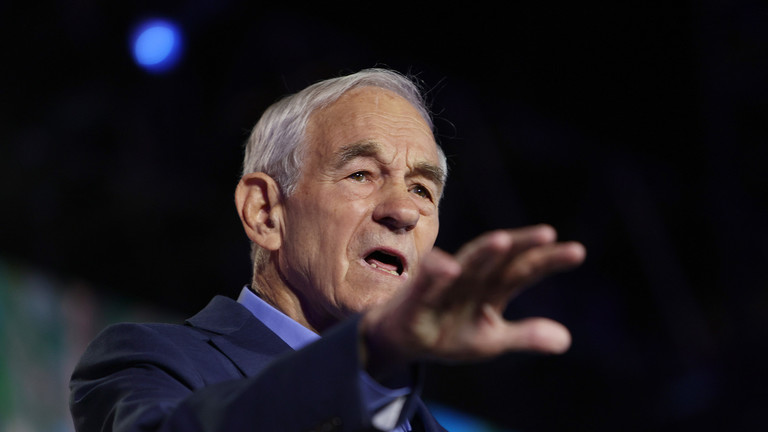
By Ron Paul | December 19, 2022
As we learn more and more from the “Twitter Files,” it is becoming all too obvious that Federal agencies such as the FBI viewed the First Amendment of our Constitution as an annoyance and an impediment. In Friday’s release from the pre-Musk era, journalist Matt Taibbi makes an astute observation: Twitter was essentially an FBI subsidiary.
The FBI, we now know, was obsessed with Twitter. We learned that agents sent Twitter Trust and Safety chief Yoel Roth some 150 emails between 2020 and 2022. Those emails regularly featured demands from US government officials for the “private” social media company to censor comments and ban commenters they did not like.
The Foreign Influence Task Force (FITF), a US government entity that included the FBI as well as other US intelligence agencies expressly forbidden from domestic activities, numbered 80 agents engaged regularly in telling Twitter which Tweets to censor and which accounts to ban. The Department of Homeland Security brought in outside government contractors and (government-funded) non-governmental organizations to separately pressure Twitter to suppress speech the US government did not like.
US Federal government agencies literally handed Twitter lists of Americans it wanted to see silenced, and Twitter complied. Let that sink in.
This should be a massive scandal and likely it would have been had it occurred under a Trump Administration. Indeed, Congress would be gearing up for Impeachment 3.0 if Trump-allied officials had engaged in such egregious behavior. But since these US government employees were by-and-large acting to suppress pro-Trump sentiment, all we hear are crickets.
What is interesting about these Twitter revelations is how obsessed the FBI and its government partners were with satire and humor. Even minor Twitter accounts with small numbers of followers were constantly flagged by the Feds for censorship and deletion. But knowledge of history helps us understand this obsession: in Soviet times the population was always engaged in joking about the ineptitude, corruption, and idiocy of the political class. Underground publications known as samizdat were rich with satire, humor, and ridicule.
Tyrants hate humor and cannot withstand satire. That is clearly why the FBI (and CIA) was determined to see a heavy hand raised against any American poking fun at the deep state.
There is good news in all of this, however. As Constitutional Law Professor Jonathan Turley wrote over the weekend, a new Harvard CAPS/Harris Poll found that even though the mainstream media has ignored the “Twitter files,” Americans have not. Nearly two-thirds of respondents believe that Twitter was involved in politically-motivated censorship in advance of the 2020 election. Some 70 percent of those polled believe Congress must take action against this corporate/state censorship.
As Professor Turley points out, although the First Amendment only applies to the US government, “it does apply to agents or surrogates of the government. Twitter now admits that such a relationship existed between its former officials and the government.”
So now we have proof that the FBI (along with US intelligence agencies and the Department of Homeland Security) have been acting through “private” social media companies to manipulate what Americans are allowed to say when they communicate with each other.
Is there anything more un-American than that? Personally, I find it sickening.
We do not need the FBI and CIA and other federal agencies viewing us as the enemy and attacking our Constitution. End the Fed… and End the Federal Bureau of Investigation!
Copyright © 2022 by RonPaul Institute
After Twitter revelations, Rep. Comer says Google and Facebook need to be investigated for similar censorship collusion
By Christina Maas | Reclaim The Net | December 18, 2022
Commenting on the recent Twitter Files’ revelation of the FBI’s constant communication with Twitter, including recommending account bans, Republican Ranking Member of the House Oversight Committee Rep. James Comer said investigations should go beyond Twitter to Google and Facebook.
“The entire FBI needs to be dismantled, we need to start all over. We need to enact strict reforms, and there need to be checks and balances at the FBI,” Comer said, speaking to Tammy Bruce on Fox News’ Hannity. He added that fixing and holding the FBI accountable should start with the budget process, which is why he is against the push for an omnibus.
“My concern was that this was a rogue FBI employee or two…but what we found today is the FBI had its own ministry of propaganda,” Comer continued.
“This is serious. What else are they involved in at the FBI? The entire FBI needs to be dismantled. We need to start all over. We need to enact strict reforms and there need to be checks and balances at the FBI.”
Bruce then asked, “I trust, though, that you are going to expand this beyond Twitter. You mentioned Google, you mentioned, perhaps, Facebook… are you going to expand and include those platforms, which we also know, at least from Mark Zuckerberg, he too was contacted by the FBI. I think we only know a portion of that. Are you going to expand this investigation?”
The Republican lawmaker, set to chair the Oversight Committee starting in January, replied: “Yes. This is going to take several committees focusing a lot of attention. Big tech is going to be a priority for the Republican majority…”
He added that “the FBI was involved in censorship… they have stepped in where the government does not belong. And this has to end. People have to be held accountable and we’re going to have to start with the budget, that’s what is so frustrating about what’s going on right now in Washington.”
Released files reveal how FBI grilled Twitter
RT | December 19, 2022
Twitter’s former safety chief has said he was baffled when the FBI grilled the company over assessed foreign influence threats on the platform, the latest trove of documents released by journalist Matt Taibbi and Twitter owner Elon Musk shows.
According to excerpts from internal communications that were published on Sunday, FBI agent Elvis Chan told Twitter’s former head of trust and safety, Yoel Roth, in July 2020 to expect written questions from the Foreign Influence Task Force, adding that the intelligence community sought “clarifications” from the company.
The FBI then sent a list of detailed questions, asking Twitter to explain why, during an earlier briefing for US security and intelligence agencies, “you indicated you had not observed much recent activity from official propaganda actors on your platform.” At the end of their letter, the FBI attached references to several news articles about Russian and Chinese “propaganda” campaigns on social media.
Roth shared the questionnaire with other Twitter executives, saying that he was “frankly perplexed by the requests here, which seem more like something we’d get from a congressional committee than the Bureau,” according to screenshots published by Taibbi.
The former safety head added that he felt “not particularly comfortable” with the FBI demanding written answers on the matter. According to the released files, Roth wrote that the premise of the questions “seems flawed,” arguing that the intelligence community had “fundamentally misunderstood” Twitter’s position on disinformation.
“We’ve been clear that official state propaganda is definitely a thing on Twitter,” Roth wrote, suggesting he contact Chan over the phone as soon as possible.
The exchange took place when US officials, think tanks and media outlets were warning about alleged foreign meddling in the ongoing US presidential election campaign and disinformation related to the Covid-19 pandemic.
Musk, who finalized his acquisition of Twitter in October, promised more transparency at the company, and fired some of its top executives.
The files previously released by Taibbi with Musk’s blessing revealed how Twitter staffers struggled to rationalize the permanent ban of former US President Donald Trump, and the blocking of a story about the laptop belonging to Hunter Biden, President Joe Biden’s son.
The Other Lab in Wuhan: The German-Chinese “Laboratory for Virus Research”
By Robert Kogon | Brownstone Institute | December 19, 2022
The “lab-leak” theory is enjoying a strong revival at the moment, thanks in part to Elon Musk having obliquely endorsed it in a Tweet while clearly point the finger at Anthony Fauci: “As for Fauci, he lied to Congress and funded gain-of-function research that killed millions of people.”
This despite the fact that an article in Science appeared to have already put the theory to rest over a year ago by showing that the initial cluster of Covid-19 cases in Wuhan was located on the opposite (left) bank of the Yangtze River from the Wuhan Institute of Virology, which is commonly supposed to be the pandemic’s epicenter according to the “lab-leak” theory.
But unbeknownst to most observers, there was in fact another infectious diseases lab in Wuhan, the German-Chinese Joint Laboratory of Infection and Immunity, and it is located on the same side of the river in the cluster.
The below map from the Science article makes the distance of the cluster from the two campuses of the Wuhan Institute of Virology clear – although the article itself coyly refrains from referring to the Institute.
Instead, the article shows that even if many of the earliest known cases of Covid-19 in Wuhan did not have any “epidemiologic link” to the famous Huanan wet market, the great majority of them were clustered in the vicinity of the market. This suggests – as per the quasi-official account – that the epidemic started in the market by way of animal-to-human (zoonotic) transmission and then spread to the surrounding area via “community transmission.”

Ergo, the “lab-leak” theory is dead.
Except that there is also an infectious diseases lab in the area of the cluster: the aforementioned German-Chinese Joint Laboratory of Infection and Immunity at Union Hospital, Tongji Medical College. The laboratory is a joint project of Union Hospital, Tongji Medical College and the University Hospital of Essen in Germany. Prof. Ulf Dittmar, chair of the virology department in Essen, has also referred to the joint laboratory as the “Essen-Wuhan Laboratory for Virus Research.”
(See interview here [in German]. It should be noted that in the cited interview, conducted in January 2020, Dittmar downplays the dangerousness of the novel Coronavirus and warns against “hysterical” reactions.)
Helpfully, the map from the Science article also indicates the locations of the Chinese host institutions of the joint laboratory: the Union and Tongji hospitals. Per the legend, they are indicated by crosses 5 and 6: right next to the home location of what the article identifies as “cluster 1,” an elderly husband and wife who represent “the earliest known case cluster and the only cluster admitted by 26 December. They had no known connection to Huanan Market.” (Red dots on the map indicate cases with a known connection to the market; blue dots those that have no known connection.) The Tongji Hospital is the closest to “cluster 1.”
Astonishingly, in early September 2019, only three months before the allegedly initial outbreak of Covid-19 just a stone’s throw from Tongji Hospital in Wuhan, then German Chancellor Angela Merkel paid a visit to none other than…Tongji Hospital in Wuhan. The hospital is also known as the German-Chinese Friendship Hospital.
A photo of Chancellor Merkel being welcomed by nurses at the hospital reception can be seen here. The accompanying article in the German newspaper Die Süddeutsche Zeitung notes another highly intriguing fact: the Essen University Hospital is not the only German teaching hospital with which Tongji has a “close partnership.”
It also has a partnership with the Charité Hospital in Berlin of Germany’s “state virologist” Christian Drosten! Drosten is the chair of the virology department at the Charité.
Now, it was none other than Christian Drosten who in mid-January 2020 – just a couple of weeks after the initial outbreak of Covid-19 just a stone’s throw from Tongji Hospital – devised the notoriously oversensitive PCR test that would become the “gold standard” for detecting the virus. Since Drosten’s PCR would also and especially be used to test people with no symptoms of the illness, it thus paved the way for the outbreak to obtain pandemic status.
Before the PCR test was adopted by the WHO, Drosten’s paper on it would be rushed through the peer-review process of the EU-funded journal Eurosurveillance in record time: going from submission to acceptance in anywhere from three-and-a-half hours to 27-and-a-half hours per the calculations of Simon Goddek.
According to accompanying tweets and Gettr posts in German, a photo that circulated on the two platforms earlier this year is supposed to show Drosten at a Tongji Medical College (or perhaps joint Tongji-Charité?) event. “What a coincidence,” some of the posts note ironically. (Here, for instance.) Many of the posts link a Charité webpage. But the link does not contain or no longer contains any such photo. It merely leads to generic information on a Charité-Tongji exchange program, thus leaving the source of the photo unclear.
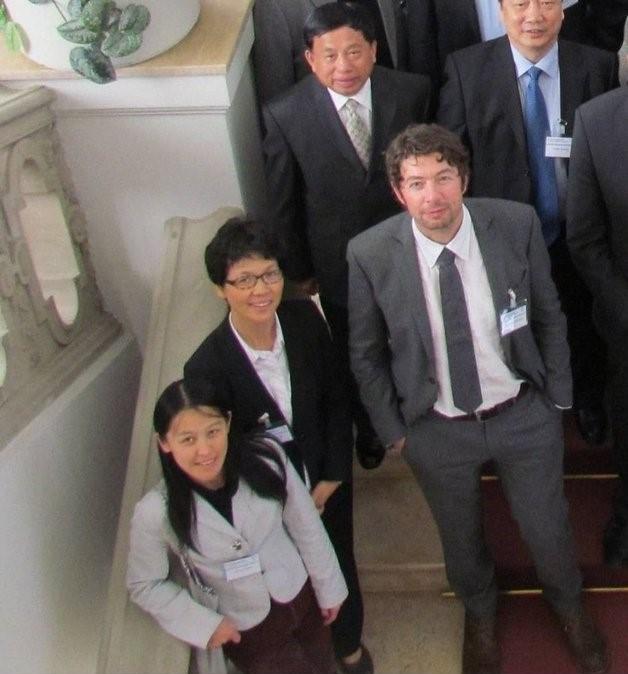
Christian Drosten at Tongji Medical College event?
A Google search result from the Tongji website (see below) tantalizingly notes that a “Sino-German Disaster Medicine Institute, Charité University in Germay [sic.] and Tongji Hospital was officially opened in Tongji Hospital, Wuhan, China.” But the indexed Tongji news article is not available nor is it cached, and the URL is not archived by the Wayback Machine either. Could this be the event at which Drosten is pictured? Perhaps Drosten could clarify.

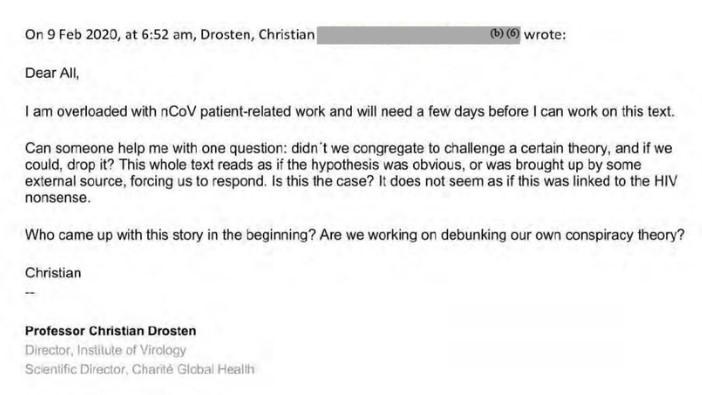
In any case, thanks to a FOIA request, we know that Drosten participated in February 2020 email exchanges with Anthony Fauci and other international scientists about the possibility of a lab leak and that he was in fact, in contrast to other participants, particularly irritated about the hypothesis. Several of the others – including, n.b., Anthony Fauci – are clearly willing to entertain the possibility of a lab leak, and Jeremy Farrar of the Wellcome Trust even says that he is split 50:50 between lab leak and natural origin and that Edward Holmes of the University of Sydney is even 60:40 lab leak.
The doubts and open-mindedness of the other participants elicits an obviously pissy response from Drosten. “Can someone help me with one question,” he asks, “didn’t we congregate to challenge a certain theory, and if we could, drop it? …Are we working on debunking our own conspiracy theory?”
As the journalist Milosz Matuschek has pointed out in an article for the Swiss weekly Die Weltwoche, the FOIA release could prove to be a problem for Christian Drosten. For in a sworn statement to a German court, Drosten has insisted that he
had no interest in steering the suspicion about the origin of the SARS-CoV-2 virus in a certain direction. In particular, I had and I have no personal interest in ruling out the so-called laboratory thesis as origin of the virus. If there were indications for the correctness of the laboratory thesis, I would vigorously defend it in the scientific and public discussion.
Prosecute/Drosten?
Robert Kogon is a pen name for a widely-published financial journalist, a translator, and researcher working in Europe. Follow him at Twitter here. He writes at edv1694.substack.com.
NYT, after deciding lockdowns are authoritarian and bad when China does them, now mildly terrified as Xi Jinping reopens & infections rise
You can take the New York Times out of lockdown, but you can’t take the lockdowns out of the New York Times.
eugyppius: a plague chronicle | December 19, 2022
“From Zero Covid to No Plan: Behind China’s Pandemic U-Turn” is the headline of the latest highly revealing Times reporting on the end of Zero Covid in China. “After micromanaging the coronavirus strategy for nearly three years,” we read, “… Xi Jinping has suddenly left the populace to improvise.”
The essence of the piece is that the Chinese have rightly regained their freedoms, but they’re now left to face a terrifying virus alone and undefended by their government, which is also very bad, and possibly worse than the lockdowns, as bad as they were.
China’s party-run media has cast the shift [from Zero Covid] as a stressful but well-considered exit, opening the way back to good economic times. Warnings about the dangers of the coronavirus have swiftly disappeared, replaced by official claims that the Omicron variant is generally mild. By holding off from easing until now, the government has saved many lives, the People’s Daily said on Thursday in a long article defending Mr. Xi’s pandemic strategy as “totally correct.”
In reality, an examination of how the shift unfolded in Chongqing and elsewhere reveals a government overtaken by a cascade of Covid outbreaks, confusion over directives, economic woes and then rare political protests. …
It’s almost like mass containment doesn’t do anything aside from wrecking the economy and ruining everyone’s lives. I’m glad the Times can finally come close to admitting this now, in the last weeks of 2022.
By changing only a handful of words, you could make key sections of the article apply to Germany, or any western nation aside from Sweden or Belarus:
Even the Chinese Communist Party, a virtuoso at controlling the narrative, is finding it difficult to sell the policy lurch to anxious residents.
[Xi] turned China’s intense top-to-bottom mobilization against the pandemic into a showcase of the party’s organizational strength. For two years, his Covid war enjoyed widespread public acceptance, but eventually the effort exhausted staff, strained local finances, and appeared to drown out attempts to discuss, let alone devise, a measured transition.
Whereas in the West, we had totally open and honest discussions about the insane, enduring closures, that weren’t marked by massive censorship and government intimidation at all. Otherwise, Western nations were themselves locked in exactly this same international competition, eager to display the fruits of their superior pandemic planning to the world, and terrified that failure would cost them legitimacy. One of the reasons Germany locked down so hard during Fall 2020, was that the Merkel government had collected many international plaudits for their handling of the first wave — effectively taking credit for the seasonality of infections. They were unwilling to surrender the regard they had earned so easily.
Mr. Xi has no likely successor and could stay in power for at least another decade. But the scars from the abrupt change may feed distrust in his domineering style.
It’s not subjecting his whole country to absurd containment theatre over what is no more than an influenza-level risk that poses a political problem for Xi, but rather “the scars from the abrupt change” in policy.
Finally the reporters get around to discussing the protests.
In Zhengzhou in central China, thousands of workers clashed with police at an iPhone plant, angry about a delay in bonuses and the handling of an outbreak.
In Haizhu, a textile manufacturing district in southern China, laborers poured onto the streets over food shortages and hardships under lockdown. Migrant workers, who depend on daily work for their livelihoods, went weeks without jobs.
“I couldn’t make a living this year,” said Zhou Kaice, a street porter in Chongqing. “Some bosses I worked for started up for a few days but were then shut by lockdowns.”
Despite the strains, officials still insisted China must win its pandemic war. Provincial leaders throughout November declared their commitment to “zero Covid,” often citing Mr. Xi as their lodestone.
“If pandemic controls were loosened, that would inevitably create mass infections,” said a Xinhua editorial on Nov. 19. “Economic and social development and the public’s physical health and safety would be seriously hurt.”
How many times did we have to read that lockdowns were the ultimate way to grow the economy, because without them, the virus would somehow destroy all business activity?
It’s also interesting how anti-lockdown protestors in the West are thugs and stupid conspiracy-crazed Nazis, while in China they are “students, workers and homeowners.”
By [November], China’s most widespread protests since 1989 had begun. Students, workers and homeowners in Beijing, Shanghai and elsewhere vented against Covid controls, angered by a fire in western China that many believed, despite official denials, had killed residents trapped in their apartments by lockdowns.
“I tell you that in this world there’s only one sickness, and that’s poverty and having no freedom, and we’ve got plenty of that,” said a Chongqing man whose tirade went viral in China.
“Give me liberty or give me death,” he shouted, using the Chinese version of the American revolutionary battle cry.
Sounds like the Canadian trucker protests — you know, those guys who posed such a threat to freedom and democracy that it proved necessary to freeze their bank accounts.
At the end, the Times assures its heavily masked and vaccinated readership that “most people are staying home,” but that “if deaths rise sharply, public anger could revive” because “infections could hinder a quick economic rebound.”
Until we Decovidify the newsrooms, there will never be sane reporting on SARS-2 in any major press outlet, ever.
25 Peruvians Murdered in a Week of Intense Repression

“Terrorists are the lawmakers and the Lima City’s press.” | Photo: Twitter/ @mario_campa
teleSUR | December 19, 2022
On Sunday, Peru’s Health Ministry acknowledged that 25 people have died during the protests against President Dina Boluarte and in favor of an immediate call for general elections.
According to official data, the departments where these deaths occurred were Ayacucho (9), Apurimac (6), Cusco (3), Junin (3), La Libertad (3), and Arequipa (1).
The Health ministry also reported 287 injured people who have already been discharged. They are distributed as follows: Apurimac (56), Ayacucho (45), Lima (37), La Libertad (36), Arequipa (35) , Junin (35), Cusco (16), Puno (15), and Huancavelica (12).
Nevertheless, 69 people remain hospitalized in Ayacucho (20), Junin (17), La Libertad (12), Ucayali (6), Apurimac (5), Lima (4), Arequipa (4), and Huancavelica (1).
Boluarte announced that the Public Ministry and the Military Justice would investigate the death of civilians during the social protests.
On Tuesday, she will appoint new officials to replace the president of the Council of Ministers and the ministers of education and culture, who resigned on Dec. 16 after stating their disagreement with the violent repression of the population.
Peruvians have been staging huge protests since Dec. 7, when Congress appointed Dina Boluarte as president after removing Pedro Castillo, who is currently sentenced to 18 months in preventive prison for rebellion. Mexico will grant political asylum to his family.
January 6 committee recommends charges for Trump
RT | December 19, 2022
The Democrat-led January 6 committee agreed on Monday to make criminal referrals against former President Donald Trump. The panel recommended that Trump be charged with defrauding the US, making false statements, obstruction, and inciting an “insurrection” on Capitol Hill last January.
The committee, made up of seven Democratic members of Congress and two Republican opponents of the former president, voted unanimously to adopt a report recommending the charges.
The report is the culmination of 18 months of investigation by the panel, which was convened to investigate Trump’s alleged role in inciting the riot by his supporters that interrupted the certification of Joe Biden’s electoral victory last year. Trump has accused the committee of orchestrating a “witch hunt” against him, calling its members “partisan hacks.”
Referring to the “insurrection” charge, Rep. Jamie Raskin said before the vote that the committee believes “that more than sufficient evidence exists for a criminal referral” of Trump for “assisting or aiding and comforting those at the Capitol who engaged in a violent attack on the United States.”
“The Committee has developed significant evidence that President Trump intended to disrupt the peaceful transition of power,” Raskin continued.
Shortly before the riot, Trump urged his supporters to protest “peacefully and patriotically” at the Capitol. The riot that followed led to the deaths of five people, but only one of these deaths has been conclusively linked to the actions of another person: that of Ashli Babbitt, a Trump supporter who was shot by a police officer.
It is now up to the Justice Department to decide whether to prosecute Trump. The former president said in September that he “can’t imagine” being indicted, but added that charges wouldn’t prevent him from seeking a return to office in 2024. Trump announced his candidacy in November.
In a tweet after the committee’s vote, Rep. Adam Kinzinger, one of the panel’s two Republicans, linked the criminal referral to Trump’s political future. “We now turn to the criminal justice system to ensure Justice under the law,” he wrote. “The American people can ensure he’s never elected again.”
Elevated Living Standards Contradict Climate Doomsayers
By Vijay Jayaraj | RealClear Energy | December 14, 2022
Climate protestors destroying artworks and gluing themselves to roads without offering a shred of evidence for their alarm exhibit a malicious stupidity that is blind to the actual state of the world.
Why do these activists not hold up placards with graphs, histograms, and Venn diagrams? Because actual data show that life today is much better than at any time in human history. Ignored is the fact that the change in climate has made Earth better and helped to advance humanity.
Much of the progress in the last three centuries hinged on one important event in the 17th century: the waning of the Little Ice Age, which finally ended in the 1800s. Contrary to popular media and the politically correct, climate change has aided in the unprecedented growth of human civilization.
The Little Ice Age disrupted global plant growth and fostered periods of famine, disease and mass depopulation. However, since the advent of modern warming there has been an overall greening of the planet, more bountiful crop harvests and an eight-fold increase in humanity’s numbers. Contributing to the bounty has been the fertilization effect of carbon dioxide, whose atmospheric concentration has increased in recent decades.
Global maize (corn) production was approximately 205 million tons in 1961. Today the world produces five times more maize, — 1.16 billion tons. There have been similar increases for all major food crops, including rice, wheat, soybeans, cereals, nuts and vegetables.
Captures of marine fish during 1961–2018 increased from 34 million tons to 84 million tons. During the period, aquaculture production increased from two million tons to 82 million tons.
Meanwhile, malnourishment in developing countries reduced drastically from 34 percent in 1970 to 13 percent in 2015, despite a rapidly growing population.
Improved nutrition and technological advancements have combined to make life not only better but also longer. In Oman, for example, the mortality rate for children under 5 dropped from 38 deaths per 100 births in 1950 to less than one. Similar progress has been registered across the world.
Transportation has become more affordable to the general population. Nominal prices for roundtrip airfare almost halved in the 2010s compared to 1980.
Electricity has become more available to households and businesses. In China alone, power generation increased by 18 times between 1950 and 2015, enabling 1.3 billion people to have greater access to electricity and experience remarkable economic growth.
People are better protected against nature’s fury than ever before. The annual death rate from natural disasters has plummeted globally since the 1920s and 1930s. This is because greater prosperity supported by cheap, abundant energy resources has provided sturdier infrastructure to withstand weather extremes and modern reporting systems to warn of dangers. Media reports of a world ransacked to an unprecedented extent by storms and floods are as false as the predictions of an overheated globe.
Species that were hunted to near extinction have been making a comeback, including the Arctic’s polar bears and India’s Bengal tigers. The number of humpback whales in the western South Atlantic doubled between 2006 and 2022. In Minnesota, Michigan and Wisconsin, gray wolves increased from 1,100 in 1975 to 3,600 in 2018.
In all of the U.S., there were merely 487 bald eagle pairs in 1963. By 2006, there were approximately 10,000. Today, wind turbines remain the only major threat to bald eagles, with the government dismayingly allocating “bald eagle-killing quotas” for each machine.
So, notions of a climate emergency and a planet in terminal decline are fallacious. The numbers do not lie no matter how much art is despoiled or how many commuters are delayed by the misguided.
Vijay Jayaraj is a Research Associate at the CO2 Coalition, Arlington, Virginia. He holds a master’s degree in environmental sciences from the University of East Anglia, UK and resides in India.
Will nuclear fusion power save us?
By Dr David Whitehouse | Net Zero Watch | December 14, 2022
“Nuclear fusion breakthrough,” are the world’s headlines today. Eventually we will have free, pollution-free energy. No CO2 emissions, we will be saved. I have lived with the promise of nuclear fusion all my life and it has always been decades away. It’s become something of a bad joke amongst the science community that fusion is always decades away.
Nuclear fusion liberates energy by combining light atoms – isotopes of hydrogen – rather than by using the radioactive decay of large atoms such as uranium and plutonium – nuclear fission. It could have many advantages; the reaction can be switched off (not possible with fission), it uses water as a fuel and produces very little waste. The question is how do you fuse atoms?
Obviously it isn’t easy. Every star in the Universe generates its energy this way but stars are big and places of great pressure and temperature, unlike the Earth. One way is to generate a hot gas of hydrogen isotopes – 100 million degrees or so – and confine it so that the hydrogen nuclei (for it will be ionised) fuse. The heating is done by microwaves and the confinement by a magnetic field, for anything physical would melt. The problem is that the plasma is unstable and so far the reactions are fleeting.
This is the basis of the major multi-national project to develop fusion, the $22 billion International Thermal Experimental Reactor (ITER)project (China, India, Japan, Korea, Europe, US) which is under construction in France and hopes to start tests in 2035 as part of developing the expertise to build a commercial fusion reactor presumably in the unspecified following decades.
Flash and Burn
Yesterday’s announcement involves a different technique. The US National Ignition Facility focuses a burst from a multitude of high-powered lasers on a grain-sized target that compresses to initiate fusion. The announcement by US Energy Secretary Jennifer Granholm was hailed by the world’s media as a great breakthrough in the developing technique of fusing atoms together, limitless, cheap, green were the adjectives used.
The announcement itself is a puzzle and had the feeling of being some much needed good news to announce. In reality although the experiments referred to took place a few months ago the “breakthrough” results were reported a year ago with the major advance being published in the Journal Nature in 2014. By one analysis 2.05 MJ of energy pumped into the pellet produced 3.15 MJ of energy. This does not include the 322 MJ needed to run the 192 lasers. So the story wasn’t a real breakthrough, just an advance. In any commercial development of this laser technique millions of fuel pellets would be needed for each reactor a year. At present they are tailor-made and cost almost $1 million each.
So why did the story lead some news bulletins? Given the announcement by Granholm it was clearly a story and in the main its coverage was good though some specialist correspondents clearly didn’t know the background and one science editor’s analysis of the event was puerile. I’ll leave it for an exercise for the reader to decide who I refer to.
Green Energy
But should nuclear fusion be part of the green energy debate? It is certainly not going to rescue us anytime soon. But I suppose linking fusion to green energy and the climate debate will help funds flowing.
Some would disagree with me and point to the many small, private companies that want to develop smaller-scale fusion reactors much sooner. They have acquired significant investment, some 30 firms have raised a total of $2.4 billion and General Fusion of Canada says it hopes for a viable reactor in the 2030s. CEOs of such companies see a payoff within a decade but to me it sounds like a sales pitch to attract further investment. Experts will privately say this is very wishful thinking.
In the mid-1990s I gave an after-dinner speech to a society of nuclear fusion scientists. I wondered out loud if the arrival of the first commercial fusion power would be as far in the future as the first hits of the Beatles were in the past. It took 50 years from the steam engine to trains and the same time between the internal combustion engine and cars. Nuclear fusion is a lot more difficult than such simple thermodynamic engines. Perhaps the desire for this energy coupled with advances in artificial intelligence analysis and control systems will speed up its development and the equations of history will be superseded.
A modern society needs high energy density power production systems. Without energy storage renewables are limited. We need fusion energy which has been promised for so long but I think humans will have walked on Mars long before we get commercial fusion power.
Commenter Rick Will says:
They spent $3.5 billion to produce the heating power of 10 grams of coal
They have spent USD3.5bn on the reactor to get a gain of 0.4MJ. Enough to vaporise 100 grams of water. Or equivalent to 10 grams of coal. Baby steps comes to mind. Power was impressive though. It appears the laser is rated at 1PW. Civilisation’s entire electrical generation averages 0.003PW. So the laser would not need to fire often to get a decent power output. But then it only produced a gain [of] 20%. So it would need 5 times the internal generation to that sent out.
I guess they say that these reactions can make big gains once the conditions are right but USD3.5bn to produce what you get out of half a cents worth of coal suggests it is still a big mountain to climb. Maybe within 30 years. Just as the last of the die-hard CO2 demonisers shuffle off.
French energy crisis deepens – Bloomberg
RT | December 19, 2022
France faces a greater risk of running short on electricity this winter after the nation’s grid operator, Electricite de France (EDF), extended maintenance halts for several nuclear reactors, Bloomberg has reported.
The utility announced on Monday that the restart of its Penly-2 unit has been delayed from January 29 until June 11, while the reopening of the Golfech-1 unit has been pushed back to June 11 from February 18, according to the outlet.
The halt of the Chattenom-3 reactor has reportedly been prolonged by one month until March 26, and the restart of Civaux-2 has been postponed by more than a month until February 19.
On Friday, EDF announced it would delay the startup of a new nuclear reactor in western France by several months into 2024 due to construction work having been extended. That project is already more than a decade late, according to Bloomberg.
France produces roughly 70% of its electricity from 56 nuclear reactors, of which over 20 are currently shut down, causing a sharp drop in power generation.
EDF warned earlier that longer than planned maintenance halts and repairs on almost half of the nation’s nuclear plants may turn France, which has traditionally been a power exporter, into an importer. The grid operator has also warned of a potential electricity shortfall in the colder months as heating demand rises while the utility grapples with reactor repairs.
This will also add to rising concerns over power supplies to neighboring countries, as France has long been Europe’s largest producer of nuclear energy.
Qatar warns EU of consequences amid graft probe
RT | December 19, 2022
The European Parliament’s decision to suspend Qatar-linked legislation and deny the country’s officials access to the legislature could negatively affect gas supplies to EU member states, Doha has announced. The bloc’s move comes amid a Belgian probe into alleged graft by MEPs that may have involved Qatar.
The parliament’s decision is “discriminatory,” according to a statement by a diplomat with the Qatari mission to the EU on Sunday, as quoted by news agencies. It will “negatively affect regional and global security cooperation, as well as ongoing discussions around global energy poverty and security,” the diplomat added.
He stressed Qatar’s cooperation with the EU, particularly Belgium, on issues related to Covid-19 and its role as a key supplier of liquified natural gas to the country, expressing disappointment that Brussels is making “no effort to engage with our government to establish the facts once they became aware of the allegations.”
Qatari liquified natural gas plays a key role in the EU’s strategy to compensate for the loss of Russian fossils fuels, which it decided to stop purchasing over the conflict in Ukraine.
In November, Germany secured a 15-year deal for around 2 million tons annually. Berlin is leading a pan-EU effort to secure better terms from Doha, which is pressuring the bloc into signing long-term contracts that prohibit resale to other parts of the world, which would undermine the EU’s goal of phasing out fossil fuels, according to Bloomberg.
Last week, MEPs voted to suspend all work linked to Qatar and cut off “representatives of Qatari interests” from access to the legislature. The decision affects an EU-Qatar aviation agreement and an EU visa waiver for Qatari and Kuwaiti nationals. MEPs denounced “Qatar’s alleged attempts” to buy influence in the EU.
Belgian law enforcement announced earlier this month that it had charged four individuals linked to the European Parliament in an alleged corruption case. They are suspected of being influenced by lavish presents and cash originating from a foreign government.
The local press identified the unnamed Gulf nation as Qatar, which denied any involvement. The European Parliament’s now-former vice president, Eva Kaili, who was among those charged, was stripped of her senior EU office over the probe last week.
Featured Video
America Racing to Strategic Defeat in Iran
or go to
Aletho News Archives – Video-Images
From the Archives
An Expert Military Analysis of War with China
Actually, None is Necessary
By Fred Reed • Unz Review • December 13, 2020
The Correlation of Armed Forces: U.S. goods and services trade with China totaled an estimated $634.8 billion in 2019. Exports were $163.0 billion; imports were $471.8 billion. The U.S. goods and services trade deficit with China was $308.8 billion in 2019. Trade in services with China (exports and imports) totaled an estimated $76.7 billion in 2019. Services exports were $56.5 billion; services imports were $20.1 billion. The U.S. services trade surplus with China was $36.4 billion in 2019.
There is talk within the Washingtoniat of a possible war with China. Steve Bannon, who apparently was dropped on his head as a child, actually favors such a war. We hear the usual shoo-the-boobs alarm about how the Chinese are doing something terrible and we must gird our loins and American values and show them what for, bow wow, woof. The danger is that the current game of who-blinks-first in Asian waters might actually provoke a shooting war. You know the kind of thing: One warship refuses to get out of the way of another, a collision ensues, some retard lieutenant who signed up on waivers opens fire, and we’re off and running. It is not a good idea to let children play with matches.
The said war is discussed either in emotional terms by idiots or in purely naval terms by those familiar with such things, so we hear of the First Island Chain and the Second Island Chain and whose missiles against the other’s missiles and so on. This would be appropriate if we were fighting World War Two again. Which we aren’t. Let’s take a quick-and-dirty look at how such a war might go.
To begin the war, America would overestimate itself and underestimate China. This is doctrine in the Pentagon. … continue
Blog Roll
 Aletho News
- Suicide Should Not Be a Government Service
- Rethinking America’s greatest threat: Iran vs. Israel-Firsters
- Iran accuses adversaries of false flags to strain Turkey ties
- Poland rules out sending Patriot missiles to US/Israel amid war on Iran
- Tehran approves new Hormuz plan with major restrictions
- No Threat Can Force Iran’s Surrender /Trita Parsi & Lt Cl Daniel Davis
- UK’s New Pandemic Plan Would Turn Big Tech Into a Mass Location Tracking Network
- Growing insecurity, soaring prices fuel protests in north as regime bans evacuation: Sources
- Iran denies responsibility for ‘depraved’ attack on Kuwait desalination plant
- Bring The Troops Back. End This War Now!
- If Americans Knew
- Champagne all around for the new death penalty (for Palestinians) law – Not a ceasefire Day 172
- Why are Palestinian books struggling to be seen on Amazon?
- The Line Between Affinity and Conspiracy
- As Iran targets US military bases, will they be relocated to Israel? Not a ceasefire Day 171
- Will Trump Go Kamikaze?
- Is the University of Florida Shutting Down College Republicans over Israel Criticism?
- Jewish extremist arrested over alleged plot to firebomb Palestinian activist Nerdeen Kiswani’s home
- More than half of Palestinian child detainees have no charges
- The More Murderous Israel Gets, The More We Hear About “Antisemitism”
- Land Day and the Palestinian struggle after 30 months of genocide
- No Tricks Zone
- New Study Finds Warming Saves Lives…Cold Temperatures 12 Times More Deadly Than Excess Heat
- German Science Blog Accuses PIK Climate Institute Of Hallucinating Climate Tipping Points
- Devastating Assessment Of Comirnaty Vaccine By Former Senior Pfizer Europe Toxicologist
- New Study: CO2 Is ‘Effectively Negligible’ As An Explanatory Climate Change Factor Since 2000
- Former Pfizer Toxicologist Dr. Helmut Sterz Tells Bundestag Hearing Pfizer Vaccine Should Have Never Been Approved
- Energy Expert: Germany’s Nuclear Phaseout Was A “500 Billion Euro Mistake”
- New Research: South Australia’s Mid-Holocene Sea Surface Temperatures Were 4°C Warmer Than Today
- Storing Green Energy To Last Germany 10 Days Would Require A 60-Million Tonne Battery
- New Studies: UK Sea Levels Were 4 Meters Higher Than Today During The Mid-Holocene
- Destructive Green New Deal: German Energy And Metal Group Warns Of Drastic Crisis
 Aletho News