COVID-19 Modified mRNA “Vaccines”: Lessons Learned from Clinical Trials, Mass Vaccination, and the Bio-Pharmaceutical Complex, Part 1
Mead et al Deliver Counter-Punch after Springer Nature Unethical Retraction of High-Impact Paper
By Peter A. McCullough, MD, MPH | Courageous Discourse™ | July 8, 2024
Every major development in medicine evolves over years with peer-reviewed manuscripts and published correspondence along the lines of arguments and scientific discourse. Never had we seen a new technology and mass mandated line of medical products be introduced with no allowance for proper scientific discourse. Not until mRNA.

Mead and co-workers found themselves at the center of a controversy when Springer Nature CUREUS Journal of Biomedical Sciences retracted their paper calling for global market withdrawal of mRNA vaccines. The retraction violated the COPE (Committee on Publication Ethics Guidelines) for retraction and became a news story garnering even more attention. Other papers continued to cite Mead creating a stinging reverberation for Springer who was hoping to silence the paper.

Now epidemiologist M. Nathaniel Mead and six co-authors have punched back with the manuscript divided into two parts for a greater depth of data and analysis on the safety and theoretical efficacy of modified mRNA COVID-19 vaccines. In Part I, Mead discloses censorship of the first paper by the Bio-Pharmaceutical Complex, a working syndicate that is hell-bent on suppressing any scientific information on COVID-19 side effects.
You may ask what should have occurred? Springer Nature should have never retracted the paper. Rather letters to the editor and responses to the letters from authors should have been published as proper scientific interchange. The new normal is now unethical retraction, massive publicity, and republication with greater amplification of the message—precisely what the Bio-Pharmaceutical Complex is trying to squelch.
Mead MN, Seneff S, Wolfinger R, Rose J, Denhaerynck K, Kirsch S, McCullough PA. COVID-19 mRNA Vaccines: Lessons Learned from the Registrational Trials and Global Vaccination Campaign. Cureus. 2024 Jan 24;16(1):e52876. doi: 10.7759/cureus.52876. Retraction in: Cureus. 2024 Feb 26;16(2):r137. doi: 10.7759/cureus.r137. PMID: 38274635; PMCID: PMC10810638.
COVID-19 Modified mRNA “Vaccines” Part 1: Lessons Learned from Clinical Trials, Mass Vaccination, and the Bio-Pharmaceutical Complex. (2024). International Journal of Vaccine Theory, Practice, and Research , 3(1), 1112-1178. https://doi.org/10.56098/fdrasy50
Two Infants Died Within Hours of Receiving RSV Shots, CDC Internal Emails Show
By Brenda Baletti, Ph.D. | The Defender | July 8, 2024
At least two infant deaths reported to the Vaccine Adverse Event Reporting System (VAERS) as occurring after the babies mistakenly received Pfizer’s adult respiratory syncytial virus (RSV) vaccine were likely caused instead by nirsevimab, the monoclonal antibody shot approved for infants and meant to prevent RSV.
Freedom of Information Act (FOIA) documents obtained by Children’s Health Defense (CHD) from the Centers for Disease Control and Prevention (CDC) show that both babies died on the day they received the shots.
According to the reports in VAERS, a 27-day-old boy died immediately upon receiving the shot in the doctor’s office and an infant girl was found not breathing by her father seven hours after receiving the shot. The infant was pronounced dead soon after.
The deaths were reported in VAERS as resulting from mistaken administration of Pfizer’s adult RSV vaccine, but the CDC internal emails obtained by CHD indicate the babies had been administered Beyfortus, the brand name for nirsevimab, manufactured by AstraZeneca and Sanofi.
The U.S. Food and Drug Administration (FDA) approved the drug in July 2023 and the CDC recommended it in August 2023 for infants under 8 months or high-risk infants up to 24 months of age.
In clinical trials for the drug, 12 infants died, but an FDA spokesperson told CNBC when the drug was approved that “none of the deaths appeared to be related to nirsevimab.”
After the CDC recommended the drug, it expanded the 2024 childhood vaccine schedule and included nirsevimab for infants whose mothers did not receive the RSV vaccine — also recently approved — during pregnancy.
The CDC’s childhood immunization schedule lists the CDC-recommended shots for children from birth through age 18. Pediatricians and other clinicians typically use the schedule to make recommendations to parents, and schools use it to set vaccine requirements.
Monoclonal antibodies are not technically vaccines. Vaccines stimulate the individual’s immune system to trigger an immune response. Monoclonal antibodies are proteins cloned in a lab that act like antibodies, seeking out antigens in the body to destroy them just like people’s own antibodies do, according to the Cleveland Clinic.
When the CDC expanded the 2024 vaccine schedule, it changed the description of the schedule to be for “vaccines and other immunizing agents,” before adding the RSV monoclonal antibodies to the list.
Even professionals confused about how to report injuries related to infant RSV shots
When people experience vaccine injuries, they can report them to the CDC using VAERS, a passive surveillance system available to anyone — including doctors, other vaccine administrators and the public — for reporting adverse events.
The CDC also has other systems for monitoring vaccine safety. It monitors COVID-19 and adult RSV vaccines through the V-safe system, a different voluntary reporting system, and most vaccines through the Vaccine Safety Datalink (VSD), which analyzes healthcare data, often investigating concerns initially raised in VAERS.
However, according to the internal emails obtained by CHD, and reported by the CDC to its advisory committee, the CDC doesn’t monitor injuries from medications that are not vaccines. The FDA recommends those injuries be reported to MedWatch, the FDA’s adverse event reporting system.
That means adverse events from all medical treatments on the immunization schedule are not monitored through the same system. This can generate confusion, even among medical professionals, who treat monoclonal antibodies as vaccines.
For example, even people at the CDC in internal emails referred to the monoclonal antibodies as the “RSV (Sanofi Pasteur) Vaccine.”
Data analyst and VAERS expert Albert Benavides told The Defender this also presents a challenge to people who want to report nirsevimab injuries, because VAERS does not have a category for the drug, so people have submitted their claims as “unknown vax type” or selected one of the existing RSV vaccines, which are different drugs.
In analysis, they may fall through the cracks or be underreported, rather than forwarded to the FDA’s MedWatch system.
The emails obtained by CHD support Benavides’ claims that there is confusion between RSV vaccines approved for adults and RSV monoclonal antibodies approved for infants.
For example, Carol Ennulat, VAERS project coordinator, on March 21 emailed Pedro Moro, M.D., M.P.H, who headed up the accidental infant RSV vaccination study, informing him that one of the infants — a 1-month-old girl in Texas — died after receiving the “RSV (Sanofi Pasteur) Vaccine,” which is actually Beyfortus, the monoclonal antibody.
She told Moro the baby had been misclassified and therefore mistakenly assigned to the adult RSV project.
Moro forwarded the email to others and said the FDA was following up on nirsevimab reports, so they should take no action on the report.
In a second email the following day, Ennulat informed Moro that a second infant death — a 27-day-old New York boy — was misclassified as having received the Pfizer Abrysvo vaccine according to documents that had become available.
“The case was misclassified,” Ennulat wrote. Although the sentence indicating what drug he received was redacted, she added, “I assume FDA follows this,” which would indicate the drug administered to the infant and then reported to VAERS was likely also nirsevimab.
500 pages of FOIA documents largely redacted
CDC researchers in May published an article in Pediatrics reporting that at least 34 babies were mistakenly given the RSV vaccine — made by either Pfizer or GSK and authorized for adults — and one of those babies was hospitalized.
Thirty-one of the children under age 2 identified in the study who were mistakenly vaccinated between Aug. 21, 2023, and March 18, 2024, were less than 8 months old. Seven reports described adverse health events including fevers, vomiting, coughing and injection site swelling.
One baby was hospitalized for cardiorespiratory arrest within 24 hours of receiving the GSK RSV vaccine. The baby had a history of congenital heart disease and was hospitalized at the time of the VAERS report.
When the paper was published, The Defender worked with Benavides and identified at least two other babies in the VAERS system reported to have received the RSV vaccine and died within hours of vaccination.
The Defender reached out to the CDC in a series of emails inquiring about why the babies were not included in the study, but the CDC declined to provide details about its knowledge of the reports.
The agency said only that the VAERS reports were mistaken — neither infant had received the shot.
In response, CHD filed FOIA requests with the CDC for communications related to the two reports.
The CDC recently responded to the request, sending 556 pages of largely redacted response materials. Redactions included portions of emails sent by The Defender to the CDC and the agency’s responses — which CHD clearly already had in its possession.
Two largely unredacted emails included in the documents, however, did pertain to the babies’ deaths.
No mention of infant deaths in CDC advisory committee meeting
In the last research presentation session of the June 26-28 meeting of the CDC’s vaccine advisory committee, the RSV work group presented data on nirsevimab, touting its effectiveness — how well it prevents disease under real-world conditions — with limited discussion of safety issues.
The CDC reported in the presentation that 41% of eligible infants received the nirsevimab shot as of March 2024, 24% of parents indicated they would definitely get the shot for their children and 23% indicated they would probably get it or were unsure. Twelve percent indicated they would never give their children the shot.
The agency also said it was meeting with manufacturers to ensure they would ramp up production for the coming year after shortages of the drug were reported last year.
The committee presented a range of different effectiveness numbers from different observational studies. Overall, real-world data found the shot was “well above 50%” effective against RSV infection. Committee members said this corresponded to the European published literature that found effectiveness against hospitalization of 70-89% and against emergency room visits of 55-88%.
They said observational data showed the duration of protection was unknown.
In the presentation on nirsevimab safety, the CDC’s Dr. Jefferson Jones informed the committee that VAERS is not the primary system for monitoring the drug’s safety, because it is not a vaccine, so the data had not been previously presented. Instead, he said, adverse events should be reported to MedWatch.
Same-day events are reported to VAERS, he said, and then reviewed by the FDA.
He did, however, review the adverse events reported to VAERS.
Jones said the most frequently reported adverse events were RSV breakthrough infections. He also said, “Cases of serious hypersensitivity reactions with nirsevimab were identified and the product labeling was updated in February 2024” to indicate that.
The reactions include hives, shortness of breath, low blood oxygen levels causing blue skin, lips and nailbeds and muscle weakness. “And no additional safety signals have been identified at this time,” he said.
Jones did not mention the two infant deaths that the FOIA documents obtained by CHD reveal happened immediately following the shots.
The committee did emphasize several times that newborn deaths reported to VAERS “is of course devastating for that family, but reporting to VAERS does not necessarily mean that vaccine caused that.”
However, in that case, they were discussing neonatal death associated with the maternal RSV vaccine.
Jones concluded that the RSV work group was “very happy and pleased with the evidence that shows nirsevimab to be highly effective.”
Known safety Issues with nirsevimab/Beyfortus
RSV is a common respiratory virus that usually causes mild cold-like symptoms but can lead to hospitalization and, in rare cases, death in infants and the elderly.
By age 2, 97% of all babies have been infected with the RSV virus, which confers partial immunity, making any subsequent episodes less severe.
Yet last year as the media hyped a dangerous “tripledemic” of COVID-19, flu and RSV, new RSV vaccines were approved and recommended for pregnant women and older adults, and nirsevimab was approved for infants.
The Biden administration rushed to work with Sanofi and AstraZeneca to make hundreds of thousands of doses of the antibodies available.
According to the CDC, approximately 58,000 to 80,000 children younger than age 5 are hospitalized due to RSV infection annually and 100 to 300 deaths occur annually in that group.
Those numbers are also disputed within the CDC’s own data.
In an Aug. 4, 2023, Substack post, Dr. Meryl Nass, an internist and biological warfare epidemiologist, cited 2021 CDC data showing that over 12 years, on average 25 babies up to age 1 die annually in the U.S. from RSV.
Although RSV can be a serious event for infants, with so few deaths among that age group, both researchers and practitioners have raised questions about administering vaccines to pregnant mothers and monoclonal antibodies to babies, especially given the serious risks evident in clinical trials, and now, in post-trial follow-up.
According to the Cleveland Clinic, reactions to monoclonal antibody treatments are common and occur during or shortly after they are administered. There are also “more serious but less common risks linked to unwanted immune system reactions, such as acute anaphylaxis, cytokine release syndrome (CRS) and serum sickness.”
Nass noted that no monoclonal antibody product has ever been given on a mass scale to children. She also said that the Beyfortus label doesn’t provide information about side effects and don’t address the infant deaths in the clinical trials.
Of the 12 infants that died in the nirsevimab trials, “four died from cardiac disease, two died from gastroenteritis, two died from unknown causes but were likely cases of sudden infant death syndrome, one died from a tumor, one died from Covid, one died from a skull fracture and one died of pneumonia,” CNBC reported.
“Most deaths were due to an underlying disease,” the FDA’s Dr. Melissa Baylor said.
According to the drug’s label, no drug interaction studies — that, for example, might identify safety risks if the antibodies are given with other vaccines — have been done for Beyfortus.
Researchers have been trying and failing to develop an RSV vaccine for children for 60 years, but have encountered serious safety issues. One version developed in the 1960s worsened symptoms for children. In that case, when two infants died, the vaccine distribution was stopped.
Beyfortus is being promoted for babies by governments globally, particularly in Europe, where it was first approved in November 2022.
French independent scientist and author Hélène Banoun, Ph.D., and French statistician Christine Mackoi found that data from France’s National Institute of Statistics and Economic Studies indicates an improbably high rate of deaths of babies between 2 and 6 days old in France during September and October 2023.
Those dates correspond with the introduction of Beyfortus in French hospitals, which began on Sept. 15, 2023, The Defender reported.
Beyfortus costs $519.75 per dose for 50-milligram (mg) and 100-mg doses and $1,039.50 for a 200-mg dose. That doesn’t include administration costs.
This article was originally published by The Defender — Children’s Health Defense’s News & Views Website under Creative Commons license CC BY-NC-ND 4.0. Please consider subscribing to The Defender or donating to Children’s Health Defense.
Columbia University staff removed over use of ‘ancient anti-Semitic tropes’
MEMO | July 9, 2024
Three senior administrators at Columbia University have been “permanently removed from their positions” and remain on leave due to texts exchanged during an on-campus event about Jewish life, the university’s President Minouche Shafik announced yesterday.
The issue in question occurred during a panel discussion in May titled “Jewish Life on Campus: Past, Present and Future” during which the deans exchanged texts disparaging students’ complaints about anti-Semitism.
Susan Chang-Kim, previously the vice dean and chief administrative officer, was dismissive of the students’ concerns, texting that they “come from such a place of privilege… hard to hear the woe is me.” Cristen Kromm, the former dean of undergraduate student life, used vomiting emojis and wrote, “Amazing what $$$$ can do.” Meanwhile, Matthew Patashnick, formerly the associate dean for student and family support, suggested that Jews on campus were just trying “to take full advantage of this moment. Huge fundraising potential.”
Shafik condemned their comments. In a letter released yesterday, she said that the comments were not only unprofessional, but also touched disturbingly on “ancient” anti-Semitic tropes. “Whether intended as such or not, these sentiments are unacceptable and deeply upsetting, conveying a lack of seriousness about the concerns and the experiences of members of our Jewish community that is antithetical to our University’s values and the standards we must uphold in our community.”
The event took place a month after university leaders called in New York City police to break up a pro-Palestinian protest camp which resulted in 108 arrests. Several students involved with the protest have been suspended and threatened with eviction from their graduate student housing for pro-Palestinian activism on campus.
Shafik described the decision to call in the police as an “extraordinary step” necessary to “support both the right to expression and the safety and functioning of our university” after the protesters refused to disperse.
Pro-Palestinian student groups condemned Columbia for allegedly supporting Israel while ignoring Palestinian suffering, and accused deans of labelling legitimate Palestinian resistance as “terrorism”. As pro-Palestinian protests escalated and Jewish students reported an increasingly hostile environment, Columbia came under growing scrutiny from students, alumni and even the US Congress regarding its response. The university is currently one of many institutions facing a federal investigation in this respect.
Hidden fronts: Intelligence and assassinations in the Israeli–Hezbollah conflict
By Khalil Nasrallah | The Cradle | July 9, 2024
In addition to the escalation between Israel and Hezbollah, the occupation state has intensified its assassinations of Lebanese resistance leaders at various levels, specifically targeting field commanders directly involved on the frontlines. These assassinations are part of a longstanding conflict between the two sides, not merely a reaction to the events following Operation Al-Aqsa Flood on 7 October.
The elimination of these resistance leaders is often framed within the occupation state as a significant achievement. However, it often serves more to influence perceptions within the settler community and the security establishment than to achieve strategic victories against Hezbollah.
Intelligence-driven warfare
The ongoing war between the Lebanese resistance and the occupation army differs fundamentally from conventional military conflicts. This confrontation’s asymmetric nature necessitates intricate intelligence operations and adaptive strategies. Both sides continually enhance their intelligence capabilities to support direct military engagements.
In southern Lebanon and northern occupied Palestine, the security dimension of the conflict is clear. The resistance has notably advanced its knowledge of Israeli positions, surprising Israeli intelligence and creating a heightened state of alert within the occupation army.
The recent killings of key figures like Abu Talib, head of the Nasr unit, and Abu Naama, leader of the Aziz unit, demonstrate the complexities of the conflict.
Frontline commanders remain vulnerable targets despite stringent security measures. Their deaths do not equal a significant victory but rather a tactical maneuver within the broader scope of the war.
In addition, security clashes become easier during military warfare for both sides and not the occupation army alone.
Israel’s objectives behind assassinations
The primary objectives of these assassinations go beyond mere score-settling. Israeli officials have historically debated the effectiveness of targeting resistance leaders, recognizing that the resistance operates as a system rather than a set of individuals.
Amit Saar, former head of the research unit in Israel’s military intelligence, emphasized this point, noting that targeted assassinations do not fundamentally change the resistance’s trajectory.
The assassination of the Secretary-General of the Allah Party, Abbas al-Moussawi, did not change the course of Hezbollah in Lebanon, and there are those behind him, and the confrontation is over. As well as the assassination of Palestinian leaders, whether military or political.
When asked about the possibility of assassinating Hamas leader Yahya Sinwar, he said: “Should we kill him? I don’t focus on assassinating one person in a confrontation with a system. But he could be a target in any future battle.”
What Saar, who resigned after Operation Al-Aqsa Flood, said helps to understand the objectives of the assassinations carried out by the occupation army in Lebanon now.
Despite this, the Israeli security establishment pursues these assassinations for several reasons, chief among them psychological impact, boosting the morale of the Israeli military and public. Another reason is internal competition, showcasing achievements within the establishment.
Additionally, these actions compensate for the occupation forces’ “defensive” posture, unprecedented since the establishment of the occupation entity in 1948. Lastly, there is an element of settling historical scores by targeting leaders with long records of resistance.
Resistance adaptation and intelligence
Contrary to Israeli narratives, the resistance, whether in Lebanon or Gaza for that matter, has not been significantly impacted by the assassinations. Instead, these events have driven the resistance to enhance its reconnaissance capabilities. Many of Hezbollah’s recent successes stem from intelligence gathered after 7 October, demonstrating its ability to adapt and respond effectively.
Public statements align with behind-the-scenes assessments, revealing that the assassination of several field commanders did not deter the resistance. Instead, these losses catalyzed the development of operations, particularly in intelligence gathering.
Gathering intelligence on new points and headquarters requires extensive security efforts. According to some reports, this intelligence work is what troubles the Israeli security establishment the most, as it directly impacts ground operations.
While Israelis might see targeted assassinations as achievements, these are often just tactical points scored in an ongoing conflict. Meanwhile, the resistance strengthens its intelligence and security capabilities, maintaining mobile and fixed target banks.
This dynamic affects Israel’s operations, especially in scenarios where clashes may expand – something the occupation army fears.
Hezbollah’s fierce retribution
Examining the response to the assassination of Abu Naama, commander of the Aziz unit operating in the western sector of southern Lebanon, reveals several strategic considerations. The resistance chose to retaliate from the eastern sector, specifically from the Nasr unit’s area, whose commander, Abu Talib, was also assassinated. This tactical decision was intended to deliver several critical messages to the enemy:
First, Hezbollah’s response from an unexpected area caught the occupation army off guard, as it anticipated retaliation from the area controlled by the Aziz unit. This highlighted a failure in accurately predicting the resistance’s reactions.
Second, by responding from the Nasr unit’s territory, the resistance aimed to convey that the assassination of Abu Talib, followed by its counteraction, did not disrupt its operations. So, the assassination of Abu Naama would similarly not impact the resistance operations.
The recent retaliation for the assassination of Abu Naama, coupled with a response to another resistance fighter’s death in the Bekaa, demonstrated the resistance’s resilience. Notably, for the first time since 1973, it targeted a long-range technical and electronic reconnaissance center in Mount Hermon, within the occupied Syrian Golan Heights.
The resistance’s capabilities remain robust and evolve to deliver more impactful military and security responses. It is committed to ongoing support operations as deemed necessary until the aggression in the Gaza Strip ceases.
The response to the assassinations of its leaders indicates that Hezbollah’s structure and operations remain largely unaffected. Its actions, whether within the ‘security belt’ in northern occupied Palestine or in more distant areas targeted by its strikes, continue to impact the occupation army.
This is evident in both the current confrontation and potential future conflicts, as inferred from Israeli military performance and statements from senior officers, particularly former ones.
A tale of two cities: have we seen a ‘surge to the Left’ in British and French elections?
By Gilbert Doctorow | July 9, 2024
In the past five days, parliamentary elections were carried out in Britain and in France. The results were dramatic, attracting a great deal of media attention.
In this brief essay, we will look behind the bald facts of vote counts and strive to make sense of where the UK and France are headed. What does the latest news tell us about the ‘managed democracies’ in Europe? I will direct particular attention to the different electoral and governance systems operating in Britain and France, given that these respective systems were so influential in delivering the results we are seeing?
*****
The sitting governments in both France and the United Kingdom were overturned in the past week. Looking at the winners, one might conclude a new or updated Left has won in both elections. If so, this runs directly counter to the media bugbear of resurgent populism that supposedly endangers democracy. Should the winners break out the champagne?
In Britain, Labour won a landslide victory, taking absolute control of Parliament and ending 14 years of Tory chaos and misrule. In the American vernacular, British voters were given the opportunity to ‘throw the bums out’ and they availed themselves of it. Tory leader and incoming Prime Minister Keir Starmer achieved this success by having expelled from the party the genuinely Leftist former leader Jeremy Corbyn and taken up the winning ‘New Labour’ centrist position first defined by former Prime Minister Tony Blair.
Some of the more odious former or present Tory ministers, such as the holder of the record for shortest time serving in 10 Downing Street, Liz Truss, lost their seats in Parliament.
In France, Macron’s party, or ‘movement,’ yesterday lost its tenuous hold on parliament, coming in second to the New Popular Front, as the united Left parties call themselves, in a three-way race. Macron and his supporters could savor a victory of sorts by having risen from the ashes of the European Parliament voting on 6 June and of the first round of balloting for their national parliament a week ago, when they appeared to enjoy no more than 15 – 20% of voter support. Now they hold nearly a third of parliamentary seats and can hope to forge a coalition with the united Left parties to keep their sworn enemies, the so-called ‘Extreme Right’ National Rally of Marine Le Pen, away from the levers of power. The outcome is what political commentators call a ‘hung parliament’ in which two of the three rival blocs of deputies will try to form a ruling coalition while the President tries to stand above the bickering and back-stabbing while exercising near-dictatorial powers of legislating by decree.
That there will be a lot of bickering is beyond doubt: the single most prominent voice in the New Popular Front is that of Jean-Luc Mélenchon, head of the France Unbowed party. He is the embodiment of anti-capitalist spirits within the country, and though he claims that the Left is ready to govern, and though he or one of his allies may well be tapped by Macron to form a cabinet, it is hard to see how parliament and president can cooperate on anything whatsoever in the days and months ahead. It is nearly certain that France will continue its descent from relevance within the EU and within the world at large that the dimwitted and cowardly François Hollande oversaw from his CIA-stage managed electoral victory back in 2012 onwards. In his years in office, Macron has tried repeatedly to rescue the country from its descent by one failed initiative after another.
*****
The opposing principles of the electoral and governance systems in Britain and France are ‘first past the post’ in the former, where victory is handed in each district to the candidate with the greatest number of votes, and inclusive, proportional representation in government of the latter wherein seats are reserved for representatives of minorities in the voting public. I say this in the full knowledge that the coalition governments which are the almost inevitable consequence of power sharing schemes and are widely practiced across the Continent, are the rare exception, not the rule in France. In France, it has been customary for one party to hold an absolute majority in parliament and to form a cabinet of ministers that shares the same policy priorities and is chosen from among those prepared to assume power at any time in what the British call a ‘shadow cabinet.’
The strength of the British system is that it makes possible sharp changes in direction of government policy when the public is persuaded that the powers that be are not functioning in their interests. The weak point is that given the often low levels of voter turn-out and the share of votes cast held by the winning party relative to all votes, the incoming government may actually be said to represent a very small percentage of all eligible voters. Margaret Thatcher, for example, dramatically changed the direction of the British government while having enjoyed no more than 25% of the popular vote.
In the given case of the British elections on 4 July, something similar occurred. It has been widely commented by political analysts, and stated most succinctly and pointedly by the leader of the Reform UK party Nigel Farage, that the vote for Labour was not so much attributable to support for Labour as it was a rejection of the Tories. By Farage’s estimate, perhaps half of the Labour vote falls into this category, so that the actual support level of Labour and its policies may have been no more than 18% of the electorate. Of course, this detail is swept under the carpet in the headlines and opening paragraphs of the reports we read in the press and see on mainstream television.
The strength of the Continent-wide system of power sharing and coalitions is its ‘progressive’ appearance, its very inclusiveness. Inclusiveness, let us remember, is the new divide between Conservatives and Liberals, whether it goes by the name ‘identity politics’ or not. It long ago replaced policies for how you divide up the economic pie among contending strata of the population. On the Continent, many different parties get to share in the responsibilities and spoils of power.
I put the accent on ‘spoils,’ because I maintain that coalitions are a formula for institutionalized corruption. Governments are formed by back-room deals among the various parties in the agreed coalition. Ministerial portfolios are allocated with scant attention to the competence of the appointees for the given post, looking instead to the need to reward top party personalities for their adherence to the coalition. And the policies set out may well be in sharp contradiction with one another, meaning implementation can well be inconsistent and ineffective. There can be no better illustration of the pitiful results of coalition building than the current federal government of Germany, where ill-educated and wholly incompetent ministers such as Annalena Baerbock at Foreign Affair and Economy Minister Robert Habeck are a disgrace to the good name of European statesmen and women from generations past.
Let me emphasize here that a hung parliament was precisely the wish of Macron and his immediate entourage when they understood that there was no chance of their own list of candidates holding onto power alone and there was every risk of Le Pen getting an absolute majority. The pro-Macron forces of French politics are strongly pro-market, as one would expect from a leader who entered politics after making his career in the counting rooms of the Rothschild bankers and brokers. Yet, out of purely opportunistic calculations, in the week between the first and second rounds of balloting, they reached agreement with the New Popular Front on which of the two would withdraw their candidate from the race in given electoral districts so as to better ensure victory over Le Pen’s party there. It worked, but will the resulting parliament work? That seems not to interest M. Macron at this moment.
*****
In his victory speech, following official release of the vote results, Keir Starmer twice made the remark that in power he will place ‘country above party.’ Emmanuel Macron and his allies have pursued the opposite, party above country, and France will be the worse for it.
But then again, we in the pro-Sovereignty, anti-globalist, anti-supranational bureaucracy Opposition can only say ‘the worse, the better.’
One thing is certain in France: the country will be rent with internal discord at the highest levels of government. The Fifth Republic has survived periods of ‘cohabitation’ between a President of one party and set of policy priorities and a parliamentary majority held by another party with different policy priorities. It has not experienced the cohabitation with a hung parliament that we see now.
As regards foreign policy, our newspapers today speak of the blow to Israeli interests that the approach to power by Mélenchon with his pro-Palestinian bias signifies. We hear less about what the electoral outcome in France signifies for the war in and about Ukraine. A victory by Le Pen would certainly have put a check on any further French military commitments to Kiev, and possibly would have led to French withdrawal from NATO. For the moment, that very possibility has been eliminated. Nonetheless, a weak and divided France, such as we shall see in the months ahead, is good news for those of us who wish to see an end to the spineless conformism at the top of European Institutions leading us all towards Armageddon.
Regrettably, in Britain there will be no change from the pandering to Washington’s worst instincts and unlimited support for the dictator in Kiev. The only voice in British politics who stands for reason on relations with Russia is Nigel Farage. It is some small consolation that Farage has won a seat in Parliament, even though the 15% of the popular vote that his party achieved has not been rewarded by more than a handful of seats.
Postscript: One reader has brought to my attention the fact that France in fact has a first past the post as opposed to the proportional representation system so common elsewhere on the Continent. Accordingly I shift my emphasis elsewhere in the French situation and say that the outcome is uniquely due to Macron’s opportunism and tactical thinking at the expense of strategic thinking and patriotism; he has engineered a three way split in the lower chamber to keep Le Pen from power while knowingly making Franch ungovernable and returning the country to the instability it suffered during the Fourth Republic.
©Gilbert Doctorow, 2024
US approves new nuclear warhead program despite cost increase
RT | July 9, 2024
The US Department of Defense will continue developing its new Sentinel intercontinental ballistic missile (ICBM) despite an 81% increase in costs as Washington seeks to update its ‘nuclear triad’.
The Sentinel ICBM program, which is intended to replace aging Minuteman III nuclear missiles, is now expected to cost $140.9 billion – almost double the original estimate of $77.7 billion, the Pentagon said in a statement on Monday.
The ballooning cost of the nuclear warhead program has triggered what is known as a Nunn-McCurdy breach, which occurs if the cost of developing a new program increases by 25%, and requires a Department of Defense review to justify its continuation. Following this review, the Pentagon has found that there are no viable alternatives to the Sentinel.
William LaPlante, the under secretary of defense for acquisition, said his office was “fully aware of the costs.”
“But we are also aware of the risks of not modernizing our nuclear forces and not addressing the very real threats we confront,” he added in the statement.
Much of the cost increase has been attributed not only to building the new missile but also to the large-scale modernization of ground-based facilities, including launch control centers, nuclear missile bases, and testing facilities.
The approval of the Sentinel ICBM attracted considerable criticism, prompting more than 700 US scientists representing institutions across the country to send a letter to US President Joe Biden and Congress on Monday. The scientists urged the Pentagon to drop the “expensive, dangerous, and unnecessary” nuclear warhead program.
They argued that “there is no sound technical or strategic rationale for spending tens of billions of dollars building new nuclear weapons.”
“These weapons – stored in silos across the Plains states – place a target on communities and increase the risk of nuclear war while offering no meaningful security benefits,” said Tara Drozdenko, director of the Global Security Program at the Union of Concerned Scientists.
The size of the US nuclear arsenal is currently limited by New START, a treaty negotiated with Russia in 2010. It is set to expire in 2026, with no indications that it might be renewed.
Last year, Russia formally suspended its participation in New START, citing US sanctions over the Ukraine conflict and encouragement of Kiev’s attacks on Russian strategic air bases. However, Moscow has continued to observe the treaty’s provisions, capping its number of nuclear weapons and delivery systems.
EU suspends accession process of ex-Soviet republic
RT | July 8, 2024
The European Union has suspended the process of Georgia’s accession to the bloc, the EU’s ambassador to the former Soviet republic, Pavel Gerchinsky, told the Russian media on Tuesday. A €30 million ($32.5 million) payment allocated to the Georgian Defense Ministry has also reportedly been frozen.
The envoy cited Tbilisi’s controversial ‘foreign agent’ law as the reason behind the move. After the legislation was adopted last month, EU foreign policy chief Josep Borrell warned Georgia that its potential accession to the bloc was in jeopardy.
Formally titled the Transparency of Foreign Influence Act, the new law requires NGOs, media outlets, and individuals who receive more than 20% of their funding from abroad to register as entities “promoting the interests of a foreign power” and to disclose their donors. Those who fail to comply will face fines of up to $9,500. The bill came into force despite opposition protests and a veto by Georgian President Salome Zourabichvili.
“The intentions of the current Georgian government are unclear to EU leaders. The Transparency of Foreign Influence Act is clearly a step backwards. […] Also, the anti-Western, anti-European rhetoric is completely incompatible with the declared goal of joining the European Union. Unfortunately, as of now Georgia’s accession to the European Union has been suspended,” Gerchinsky said, as quoted by RIA Novosti.
While opponents of the law have described it as at attack on democracy and “Russian” because Moscow has similar legislation, its supporters have noted it is similar to what numerous Western nations, including the US, have in place.
Borrell said last month that Georgia will not progress with its EU accession unless its government changes its policies.
Georgia will hold parliamentary elections in October, and Gerchinsky expressed hope that a new government in Tbilisi, “whatever it may be,” will again “begin serious work” toward EU integration.
The former Soviet republic applied for EU membership in March 2022, shortly after the start of the Ukraine conflict. In May of last year, the European Council agreed to allocate €30 million to boost Georgia’s defense sector. The European Council granted Tbilisi candidate status last December.
US Provides $2 Billion Military Aid Package to Warsaw
By Connor Freeman | The Libertarian Institute | July 8, 2024
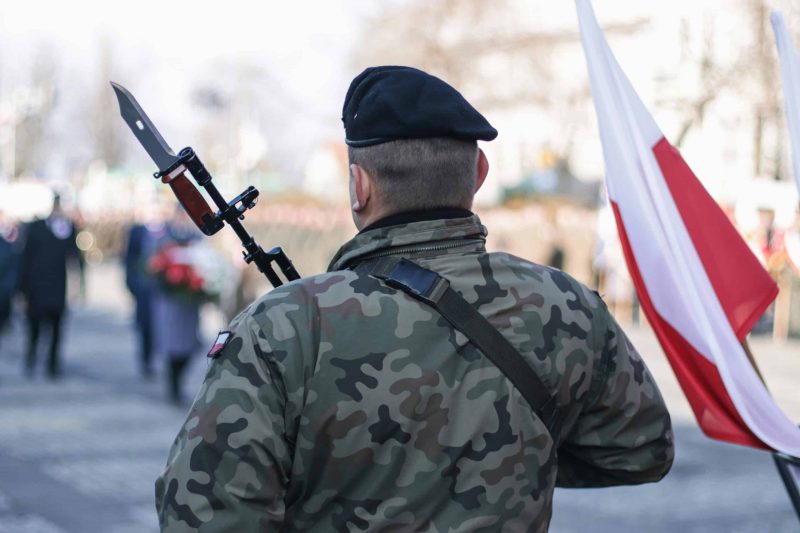
Washington is providing its NATO ally Poland with a second $2 billion foreign military financing (FMF) package in less than a year, Breaking Defense reports. In recent weeks, Warsaw has given Kiev a green light to use Polish-provided weapons to strike the Russian mainland as well as signed a bilateral military pact with Ukraine, agreeing to shoot down some Russian missiles.
A State Department official boasted to the outlet of how the two FMF loans are benefiting the US arms industry as well as strengthening the Washington-led bloc embroiled in its Ukraine proxy war with Moscow. “It’s impressive that it hasn’t even been a year and they [Poland] are moving out pretty quickly… We’re happy with the process. We see it as a success. We’re happy that they’ve been able to move out quickly — not only does it help NATO, it helps the US defense industry as well, the US economy. So, we’re definitely happy with the process.”
As with typical FMF loans, the funds furnished by the State Department to a foreign government must be spent on American-made weaponry and equipment. What makes this loan unique, however, is instead of a grant to purchase arms, this loan includes interest which Warsaw must repay. The US is putting up $60 million to guarantee the loan and cover initial fees. The official said details regarding how the funds will be spent, on what kinds of weapons, will not be shared during this week’s NATO summit. Instead, he insisted the Poles “[have] a list of things they want to achieve” and said to expect future announcements.
The official noted the previous FMF loan, issued last September, has either been totally spent or is earmarked for purchases including four aerostat-based early warning systems which accounts for approximately half the first loan. The unusual loan-based structure allows “the interagency to get FMF funding to foreign allies without needing to wait on the appropriations process,” the outlet notes, adding Congress extended the authority to issue these loans through the end of the 2025 fiscal year.
Asked if other countries will receive such loans, the official answered “We are looking at it, and there are other countries that remain competitive… The reason you’re seeing Poland is, of course, the situation with the ongoing war in Ukraine. They’re ready to move out.” The official emphasized that talks with multiple countries are ongoing, while repeatedly praising Warsaw’s high military spending and deeming Poland “the tip of the spear on this for us right now.”
The State Department stated “Poland is a leader in NATO, currently spending four percent of GDP on defense, the highest in the Alliance. Poland hosts thousands of U.S. and Allied forces, including U.S. V Corps Headquarters (Forward) in Poznan.” The US has roughly 10,000 troops stationed in Poland. Since Russian forces invaded Ukraine, Warsaw has announced plans to buy a myriad of American arms including Abrams tanks, Black Hawk and Apache helicopters, HIMARS rocket launchers. Poland is seeking more Patriot air defense batteries as well.
This latest financial and military infusion comes after Ukraine and Poland signed a bilateral military pact this week which includes a mechanism for Warsaw to shoot down Russian missiles and drones. This provision entails the potential to provoke a NATO-Russia war, something Ukrainian President Volodymyr Zelensky has long sought.
During a joint presser with Polish Prime Minister Donald Tusk on Monday, Zelensky declared “We are especially grateful for the special arrangements, and this is reflected in the security agreement. It provides for the development of a mechanism to shoot down [by Poland] Russian missiles and drones fired in the airspace of Ukraine in the direction of Poland.”
In November 2022, after a Ukrainian air defense missile killed two people in Poland, Zelensky and his top advisors said it was a Russian strike and demanded NATO take action. “Hitting NATO territory with missiles. … This is a Russian missile attack on collective security! This is a really significant escalation. Action is needed,” Zelensky railed in a video address.
This assessment was completely at odds with those made by the US, Poland, and NATO which determined the Polish casualties were not the result of a Russian missile strike. At the time, a diplomat from a NATO member state told Financial Times “The Ukrainians are destroying [our] confidence in them. Nobody is blaming Ukraine and they are openly lying. This is more destructive than the missile.”
New ‘Volunteer’ Legion in Poland: Blatant Scam to Force Ukrainians to Front Lines

Sputnik – 09.07.2024
A security pact inked by Ukraine’s Volodymyr Zelensky and Polish Prime Minister Donald Tusk on Monday outlines the creation and training of a so-called Ukrainian Legion. This new formation will recruit Ukrainian “volunteers” living in Poland and other EU countries.
“Among the citizens of Ukraine who fled to EU countries, there are no volunteers seeking to participate in the hostilities,” Igor Korotchenko, editor-in-chief of the National Defense magazine, told Sputnik. “Everyone who theoretically had the motivation to participate in the conflict would have returned to Ukraine a long time ago and, accordingly, would have joined combat units on the contact line.”
“Therefore, I think that this is an artificial simulacrum. They will forcefully recruit Ukrainian draft dodgers into this legion, one way or another, under pressure from local intelligence services and police forces,” the pundit continued.
In April, Poland and Lithuania signaled that they would assist the Kiev regime by sending potential draft dodgers home, despite demonstrating reluctance to extradite conscript-aged Ukrainians last year.
Polish Defense Minister Wladyslaw Kosiniak-Kamysz asserted on April 24 that “Ukrainian citizens have obligations towards the state,” while his Lithuanian counterpart Laurynas Kasciunas insisted that evading conscription was “not fair to those citizens who are fighting for their country.”
For months, EU member states had rejected Kiev’s request for repatriating Ukrainian men eligible for mobilization, citing European conventions that do not permit extradition in cases of desertion or draft evasion.
Speaking to reporters in April, Kosiniak-Kamysz and Kasciunas asserted that there were multiple ways the authorities could repatriate Ukrainians without resorting to deportation. These included implementing bans on social benefits, work permits, and necessary documentation, in addition to enacting specific legislation aimed at Ukrainian refugees.
Apparently, the Ukrainian Legion is yet another “legal” loophole to send Ukrainian refugees to the battlefield, according to Korotchenko.
“We are not talking about forced extradition, we are talking about forced enlistment in this foreign legion,” he stressed. “Human rights activists will obviously not be interested in whether [Ukrainians] enlist voluntarily. These procedures would de facto mean forced extradition after they join the legion. The mechanism that is taking shape is absolutely illegal, but has a veneer of legitimacy,” he explained.
Ukraine violates Chemical Weapons Convention – Russian MoD
RT | July 9, 2024
Russia has found evidence that Ukraine has violated the Chemical Weapons Convention, a top military commander stated on Monday.
Lieutenant General Igor Kirillov, who leads Russia’s chemical and biological defense forces, said that the engineering troops discovered a laboratory that was apparently used to produce hydrogen cyanide – an extremely dangerous and highly toxic agent that had been used as a chemical weapon during World War I.
The facility is located near Avdeevka, a fortified Donbass town liberated by Russia in February, the general said. The improvised laboratory itself was found inside a partially destroyed building in an industrial area, which also had a chemical processing plant. The facility had a rotary evaporator and several chemical reactors. Protective clothes, including US-made gas masks and Polish hazmat suits, were found on the site.
According to Kirillov, the samples taken from the facility and analyzed in Russian military laboratories contained traces of sulfuric acid and sodium cyanide, which can be used to produce hydrogen cyanide. Traces of cyanide anions – poisonous chemical compounds of the cyano group – were on multiple equipment, the general said.
The evidence “clearly shows that the laboratory was used to manufacture poisonous substances,” Kirillov stated. According to the Russian Defense Ministry’s estimates, the facility was capable of producing at least three kilograms of chemical agents per day if operated by just two or three people. Hydrogen cyanide can kill a person if they inhale just 70 to 80 milligrams of the agent.
During his briefing, Kirillov noted hydrogen cyanide is among the Chemical Weapons Convention’s so-called “Schedule 3 chemicals” – agents with large-scale industrial uses that have the potential of being used for chemical warfare. He added that, in May 2024, civilians in the Avdeevka region showed symptoms consistent with the hydrogen cyanide poisoning after Ukrainian military drones dropped bombs in the area. Another case was reported in Russia’s Belgorod Region, where Ukrainian ammunition fragments were found that had traces of hydrogen cyanide, Kirillov said.
Kirillov also cited a Ukrainian POW, whom he identified as Sergey Batyr, as confirming that laboratories that stored chemical agents were also used to make kamikaze drones.
In March 2022, Russia accused Ukraine of running a secret biological weapons program with the help of the US. Kiev has denied having biological weapons or other weapons of mass destruction. The Pentagon has described Russia’s claims as “absurd” and “laughable.”
Featured Video

America Racing to Strategic Defeat in Iran
or go to
Aletho News Archives – Video-Images
From the Archives
Should Europeans ‘Thank’ the Americans for Destroying Nord Stream?
By Robert Bridge | Strategic Culture Foundation | September 29, 2022
With an investigation continuing into the destruction of the Nord Stream gas pipeline that provided energy supplies to Europe from Russia, there appears to be just one prime suspect, and that should surprise nobody.
Following the sabotage of the Nord Stream 1 and 2 gas pipelines, former Polish Foreign Minister Radoslaw Sikorski already seemed to know the identity of the perpetrator when he tweeted out: “Thank you, USA.”
At first glance, it seemed that Sikorski was speaking sarcastically, berating Washington for carrying out an attack that will have severe repercussions for the people of Europe. After all, how could anyone see any good coming from the termination of Europe’s primary source of gas reserves with winter just around the corner? It was Sikorski’s homeland of Poland, after all, that urged its citizens to collect firewood in the face of dwindling gas reserves.
In fact, the Polish diplomat was speaking one-hundred percent literally… continue
Blog Roll
 Aletho News
- Growing insecurity, soaring prices fuel protests in north as regime bans evacuation: Sources
- Iran denies responsibility for ‘depraved’ attack on Kuwait desalination plant
- Bring The Troops Back. End This War Now!
- Can we please stop calling Israel the ‘only democracy in the Middle East’ now?
- US should start removing its troops from Germany, proposes AfD co-leader Chrupalla
- Iran Red Crescent: 600 educational centers attacked in US-Israeli ‘war crimes’
- Russian Oil Tanker Arrives in Cuba Amid U.S. Blockade
- America Racing to Strategic Defeat in Iran: Lt Col Daniel Davis
- FTC Warns Visa, Mastercard, PayPal, Stripe Over Political Debanking
- Russian tanker approaches Cuba despite US oil blockade
- If Americans Knew
- As Iran targets US military bases, will they be relocated to Israel? Not a ceasefire Day 171
- Will Trump Go Kamikaze?
- Is the University of Florida Shutting Down College Republicans over Israel Criticism?
- Jewish extremist arrested over alleged plot to firebomb Palestinian activist Nerdeen Kiswani’s home
- More than half of Palestinian child detainees have no charges
- The More Murderous Israel Gets, The More We Hear About “Antisemitism”
- Land Day and the Palestinian struggle after 30 months of genocide
- The Iran War Is About Palestine
- Israeli soldiers echo settler ideology, talk of revenge after targeting Palestinians and detaining CNN crew in the West Bank
- Israeli Policies Threaten Future of Christian Schools in Jerusalem
- No Tricks Zone
- New Study Finds Warming Saves Lives…Cold Temperatures 12 Times More Deadly Than Excess Heat
- German Science Blog Accuses PIK Climate Institute Of Hallucinating Climate Tipping Points
- Devastating Assessment Of Comirnaty Vaccine By Former Senior Pfizer Europe Toxicologist
- New Study: CO2 Is ‘Effectively Negligible’ As An Explanatory Climate Change Factor Since 2000
- Former Pfizer Toxicologist Dr. Helmut Sterz Tells Bundestag Hearing Pfizer Vaccine Should Have Never Been Approved
- Energy Expert: Germany’s Nuclear Phaseout Was A “500 Billion Euro Mistake”
- New Research: South Australia’s Mid-Holocene Sea Surface Temperatures Were 4°C Warmer Than Today
- Storing Green Energy To Last Germany 10 Days Would Require A 60-Million Tonne Battery
- New Studies: UK Sea Levels Were 4 Meters Higher Than Today During The Mid-Holocene
- Destructive Green New Deal: German Energy And Metal Group Warns Of Drastic Crisis
 Aletho News