Iranian filmmaker Bashir Biazar released from French detention
Al Mayadeen | July 3, 2024
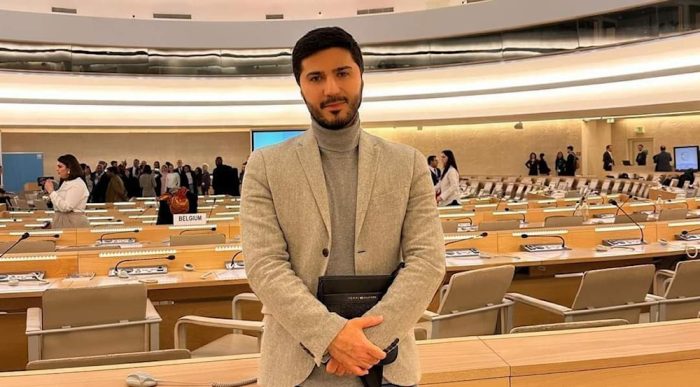
Iranian filmmaker and musician Bashir Biazar has been released from detention in France and is en route back to Iran, as confirmed by an official from Iran’s Presidential Office.
Bashir Biazar’s detention, which lasted over a month, sparked an international outcry and accusations of political motivations by French authorities.
He was arrested on charges that included “Iranian propaganda,” “anti-Zionism and anti-Americanism,” and alleged social media activities deemed detrimental to public order in France, according to documents obtained by Press TV.
The charges against Biazar were vehemently rejected by human rights activists, officials, and his supporters, who argued they were unfounded and driven by political agendas targeting Iran.
Rachid Lemoudaa, a French lawyer representing Biazar, told AFP that “There is nothing, in terms of law, that justifies this measure. Bashir Biazar expressed himself on his Instagram account, as anyone could do freely in a state governed by the rule of law,” adding that he believes the issue is “political, and politics has no place in law.”
European Council Makes Countering “Disinformation and Hate Speech” Part of Its Strategic Agenda
By Didi Rankovic | Reclaim The Net | July 2, 2024
The EU Council has managed to nestle fighting “disinformation and hate speech” between such issues as the Middle East, Ukraine, and migration – not to mention while at the same time appointing a new set of “apparatchiks,” in the wake of the European Parliament elections.
This proceeds from the Council’s 2024-2029 strategic agenda, adopted on June 27. This document represents a “five-year plan” to guide the bloc’s policy and goals.
Under the heading, “A free and democratic Europe,” the document addresses different ways in which “European values” will be upheld going forward. The Council’s conclusions state that in order to strengthen the EU’s “democratic resilience,” what it decides is disinformation and hate speech will have to be countered.
These categories of speech are infamously arbitrarily defined, even in legislation, and habitually used as a tool of censorship – but the conclusions count combating them among the strategic goal of fending off foreign interference and destabilization.
In other words, those individuals or organizations that are found to be “guilty” of hate speech or disinformation might face the grim possibility of being treated as, essentially, a threat to the EU’s security.
Another promise the document makes in the same breath is that tech giants will be made to “take their responsibility for safeguarding democratic dialogue online.”
Does this mean there will be more or less censorship in the EU over the next five years? The Brussels bureaucrats are at this point so practiced at churning out platitudes that, theoretically, this statement could be interpreted either way.
However, in conjunction with the “misinformation” etc., talk, it is fairly clear which course the EU intends to keep when it comes to online freedom of expression.
AI is not explicitly mentioned as a threat (either to the EU or by the EU, as the technology that can be used to ramp up censorship, aka, “combat misinformation”).
However, you name it, the EU supposedly has it: under the part of the conclusions addressing competitiveness, increasing capacities related to AI sits right there with growing defense, space, quantum technologies, semiconductors, health, biotechnologies capabilities – not to mention “net-zero technologies, mobility, pharmaceuticals, chemicals, and advanced materials.”
It’s a pretty comprehensive bridge the EU appears to be trying to sell to its member-states and their citizens.
‘Doing Everything to Reelect Biden’: Duped Hillary Clinton Spills Cringy Details to Prankster Duo

By Svetlana Ekimenko – Sputnik – 03.07.2024
After conning British Foreign Secretary David Cameron into divulging that Ukraine won’t be invited to join NATO at the alliance’s next summit, the Russian prankster duo of Vovan and Lexus have successfully duped Hillary Clinton.
Despite her crushing defeat to Donald Trump in the 2016 US presidential elections, Hillary Clinton has adamantly refused to be put out to pasture or written off from big politics. Hence, her current bid to dabble in the ongoing proxy conflict in Ukraine.
It comes as no surprise that the former US Secretary of State eagerly accepted the offer to speak with ‘former Ukrainian President Petro Poroshenko’. Little did she realize that she was divulging her political game regarding the US and Ukraine to the well-known Russian prankster duo, Vovan (Vladimir Kuznetsov) and Lexus (Alexey Stolyarov).
Clinton jumped right into the conversation, assuring ‘Poroshenko’ that US aid has been positioned to reach Ukraine “very quickly”.
At this point, her conversational partner lamented over another looming “threat”, in the face of presidential hopeful Donald Trump, who could “give us some problems” if elected, since he “hates Ukraine”, she piped up:
“You’re right. It is terrible. And I am doing everything I can to reelect President Biden. And I am very hopeful that that will be the outcome in November.”
Clinton took a swipe at Trump, calling him a “very dangerous candidate,” and said he would be “bad for the United States, as well as for the rest of the world, including Ukraine.”
But despite Joe Biden’s disastrous first debate against his main opponent, Clinton is confident that Trump will lose. Moreover, she appeared to indicate that Biden’s path to a second term should be paved with the bodies of Ukrainian soldiers. She assured that Washington would be “giving you the means you need to support yourself to try to not only hold the line but engage in an offensive. And then obviously many of us in this country will do everything we can to reelect President Biden.”
“The more that Ukraine could continue to demonstrate its resilience and its resolve and do what you’re doing on the battlefield, do what you’re doing in a very strong message to the rest of the world, […] go forward as best you can… the rest of us will do everything we can to continue supporting you, and to support President Biden,” reiterated Hillary Clinton.
Hillary also wholeheartedly “supports” Ukraine’s NATO membership aspirations, saying that “We are working very hard to persuade the Germans and the Americans to move on this. I don’t know what the final decision will be, but as you say, Rasmussen and Yermak, and others, are working very hard.” This was a reference to former NATO Secretary General Anders Fogh Rasmussen and Zelensky’s chief of staff Andriy Yermak, who have been spearheading a working group to gain support for Kiev’s NATO bid across the alliance.
Clinton emphasized that “everyone has a stake in making sure that you are successful in pushing the Russians out as far as you can.”
‘Porshenko’ bantered at this point that “dictators didn’t learn their lesson after Gaddafi,” in a reference to the former Libyan leader ousted and killed in the wake of NATO’s bombardment of the North African country in 2011. During that time, as Barack Obama’s foreign policy chief, Hillary Clinton, she was the public figure of the project and had cackled with laughter during a TV interview after rebel forces backed by NATO had captured and brutally killed Muammar Gaddafi. Clinton famously quipped, “We came, we saw, he died!”
“Yeah, I think that’s true,” replied Clinton to the Poroshenko imposter.
Turning the conversation back to the “main threat” namely, Trump, the pranksters warned that “he will ask for money back, and it will be a disaster,” as he “wants to end the conflict on Russia’s terms.”
“He’s a very bad guy, as I know personally from having to run against him,” reiterated Hillary Clinton, and applauded an offer of help from the Ukrainian side to dig up some new dirt on Trump.
“Well, anything you can do to attack him, I’m all for it. Because he’s a very dangerous man,” reiterated Clinton.
She eagerly rounded off the conversation with “Slava, Ukraina” (“Glory to Ukraine”), a wartime fascist salute originally adopted by the Ukrainian Insurgent Army (UPA), an infamous nationalist militant group that collaborated with the Nazis during World War II, and now widely used by Ukrainian paramilitary groups, promoted by the Kiev regime.
Russia halts participation in OSCE Parliamentary Assembly
RT | July 3, 2024
Russian lawmakers on Wednesday voted to suspend Moscow’s participation in the Parliamentary Assembly of the Organization for Security and Co-operation in Europe (OSCE PA), citing its “discriminatory approaches, double standards and total Russophobia.”
Both chambers of Russia’s parliament – the State Duma and Federation Council – voted unanimously during sessions on Wednesday to suspend the country’s participation and stop paying fees to the organization.
Moscow already stopped its payments to the OSCE itself after its delegation was denied access to the organization’s meetings on several occasions.
“We should not pay for something we did not participate in,” the State Duma Speaker Vyacheslav Volodin said at the time.
OSCE leaders have ignored Russia’s repeated appeals for an equal dialogue, the lawmakers said in a statement, adding that the body is being used as a “politicized tool to deliberately implement an anti-Russian course, and also to intentionally distort” events in Ukraine.
The lawmakers accused the assembly of “biased, discriminatory approaches, double standards, total Russophobia, unpreparedness for meaningful discussions, including on relevant issues of ensuring equal and indivisible security.”
Since the start of the Ukraine conflict, Russian MPs have been repeatedly blocked from taking part in a number of the organization’s events.
In November 2022, Poland denied visas to Russian officials scheduled to attend an OSCE meeting in Warsaw. And in June 2022, Russian MPs were barred from traveling to the UK to participate in the OSCE Parliamentary Assembly session in Birmingham.
The latest case was a “demonstrative” refusal by Romanian authorities to issue visas in June to a Russian delegation to attend the annual session of the body in Bucharest.
Russia has been a participant in the OSCE since the Soviet Union signed the Helsinki Accords in 1975. The organization’s monitoring mission in eastern Ukraine began in 2014, but was terminated just prior to the start of the conflict between Moscow and Kiev in February 2022. Russia had previously repeatedly accused the group of ignoring violations by Ukraine.
Having held its first session back in 1992, the OSCE Parliamentary Assembly incorporates 57 member states, and declares as its primary mission the facilitation of “inter-parliamentary dialogue to advance the OSCE’s goals of comprehensive security.”
Russian nuclear power plant workers injured in Ukrainian attack – officials
RT | July 3, 2024
A Ukrainian attack on a substation used by the Zaporozhye nuclear power plant has injured eight employees of the facility, officials reported on Wednesday.
Kiev allegedly launched three quadcopter-type kamikaze drones at the Raduga facility in Energodar, the city hosting Europe’s largest nuclear power station. The injured workers were part of a crew that was repairing the damage caused by a previous Ukrainian attack, the statement claimed. At least one worker is said to be in a serious condition.
The initial strike on the Raduga substation happened two weeks ago and was confirmed by a monitoring mission of the International Atomic Energy Agency (IAEA), the UN’s nuclear watchdog. Another site called Luch was hit in a separate strike.
Neither station is critical for the work of the nuclear power plant, but its secondary facilities depend on them for power supplies. The strike on Wednesday once again disrupted the grid after both Raduga transformers were damaged.
The IAEA has declined to attribute the attacks on substations in Energodar, but its chief, Rafael Grossi, has stressed that “whoever is behind this, it must stop.”
“Drone usage against the plant and its vicinity is becoming increasingly more frequent. This is completely unacceptable and it runs counter to the safety pillars and concrete principles which have been accepted unanimously,” the official said.
Last week, a reported Ukrainian artillery strike destroyed one of the automatic radiation monitoring posts near the nuclear site.
Energodar is located in Zaporozhye Region, which became part of Russia following a referendum in 2022. The power plant is operated by Russian personnel, although Kiev still claims sovereignty over the area.
Moscow has criticized the US and its allies for failing to pressure Ukraine to stop the military attacks on the plant, which pose the threat of a major environmental disaster.
Orban reveals Zelensky’s reaction to ceasefire proposal
RT | July 3, 2024
Ukraine’s Vladimir Zelensky was not receptive to Budapest’s proposal to establish a temporary ceasefire with Russia, according to Hungarian Prime Minister Viktor Orban, who recently traveled to Kiev.
During his surprise visit on Tuesday, which was his first trip to Ukraine in over a decade, Orban proposed that Zelensky think about “whether it would be possible to take a break. To reach a ceasefire and start negotiations [with Russia] since a quick ceasefire could speed up these negotiations.”
Ahead of the trip, Orban stated that he hoped to explain to Zelensky that “time is running out and it is important to establish peace, as hundreds of soldiers are dying on the front every day and we do not see how a solution can be found on the battlefield.”
However, following his conversations with Zelensky, Orban told the Swiss Die Weltwoche news outlet, that the Ukrainian leader “had some doubts” about the ceasefire proposal and “didn’t like it very much.” He explained that Zelensky “had a bad experience in the past with ceasefires, which, in his opinion, did not benefit Ukraine” and because of this believed there were “limits” to what could be achieved.
While Zelensky himself has not yet commented on Hungary’s proposal, his deputy chief of staff, Igor Zhovka has stated that Ukraine is not interested in Orban’s proposal and claimed that a ceasefire “cannot be considered in isolation.”
Instead, Zhovka said that Kiev will continue to seek a resolution to the conflict based on Zelensky’s own ‘peace formula’. The ten-point program, initially floated in late 2022, calls for a complete withdrawal of Russian forces from territories Kiev claims as its own, reparation payments and an international war crime tribunal for Russia’s leadership.
Moscow has vehemently rejected Zelensky’s plan as a non-starter and has stressed that any peace talks with Kiev must be based on “realities on the ground.”
Meanwhile, Russian President Vladimir Putin has presented his own set of terms for starting ceasefire talks, which include a full Ukrainian withdrawal from the regions that voted to be part of Russia, as well as legally binding guarantees that ensure Ukraine will never become a member of NATO.
NATO chief’s push for Ukraine funding fails – report
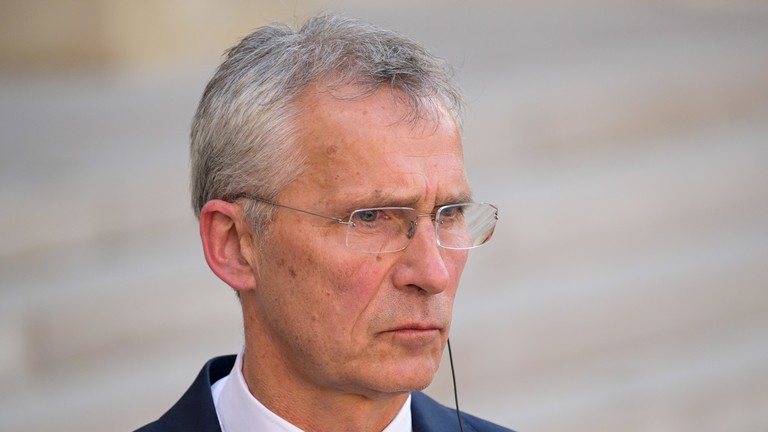
NATO Secretary General Jens Stoltenberg in Paris, France on June 24, 2024. © AFP / Bertrand GUAY/AFP
RT | July 3, 2024
NATO member states have rejected a proposal by Secretary General Jens Stoltenberg to spend €40 billion ($43 billion) a year on aid for Ukraine, several media outlets have reported. The constituent countries, however, have agreed to earmark this sum for Kiev’s needs next year, Reuters claimed.
Since late May, the outgoing secretary general has on multiple occasions urged member states to make a long-term funding commitment at the upcoming NATO summit in Washington, DC on July 9-11.
During a press conference last month, Stoltenberg claimed that “allies have provided around €40 billion worth of military support to Ukraine each year” since 2022. The NATO chief said he wanted to “maintain this level of support for as long as necessary,” securing “fresh funding every year.”
On Wednesday, Germany’s Deutsche Presse-Agentur, citing unnamed sources from several delegations present at NATO consultations, claimed that Stoltenberg’s proposal had fallen through due to opposition from member states.
Reuters also reported that Stoltenberg’s original request had been turned down, with member states merely stating their intention to re-evaluate allied contributions at future NATO summits.
They also vowed to prepare two reports over the course of the next year to clearly establish each nation’s area of responsibility in terms of aid for Ukraine. The mechanism would supposedly be based on the GDP of member states, with more affluent nations expected to foot most of the bill.
Speaking during a press conference in mid-June, Stoltenberg recounted how the “United States spent six months agreeing to a supplemental for Ukraine.” He also lamented that “some of the promises that the European allies have made have not been delivered.”
“And if we turn this into not voluntary contributions, but NATO commitments, of course it will become more robust, it will become more reliable,” he argued at the time.
Stoltenberg also touted the creation of a Security Assistance Group for Ukraine, which would be based in Wiesbaden, Germany. The structure is expected to coordinate NATO military assistance for Ukraine, with the chief of the US European Command, General Christopher Cavoli, at the helm.
Some observers have speculated that the new, less-US-centered infrastructure is meant as a substitute, should the existing Ramstein group begin to falter. These concerns are understood to have been growing within NATO as a second Trump term stateside appears more likely.
The Republican hopeful has repeatedly criticized the Biden administration’s generous handouts to Kiev, and vowed to end the Ukraine conflict in short order if elected.
Ukrainian insistence on war might seriously irritate Hungary
By Lucas Leiroz | July 3, 2024
Hungarian Prime Minister Viktor Orban made a surprise visit to Kiev on July 2 and spoke with Ukrainian President Vladimir Zelensky about the possibility of a ceasefire. The Kiev authorities rejected Orban’s proposal almost immediately, making it clear that there will be no peace and that the country plans to follow the Western directive of fighting “to the last Ukrainian.”
Orban proposed to Zelensky that he take the initiative to establish a ceasefire and then resume peace talks with Russia. In the Hungarian leader’s opinion, a ceasefire would be a fruitful gesture of goodwill for dialogue with Moscow, showing that Kiev is willing to resolve the conflict diplomatically. He believes that, with hostilities stopped, negotiations could advance more appropriately, having more chances for the sides to finally reach a deal.
This was Orban’s first visit to Kiev in more than a decade, which shows how the Hungarian politician was genuinely willing to propose a peace dialogue. However, Ukrainian authorities did not even consider Orban’s proposal, with Zelensky’s aide Igor Zhovkva almost immediately speaking out to reject the initiative.
“[Orban] voiced his opinion (…) This is not the first country that talks about such possible developments (…) [However] Ukraine’s position is quite clear, understandable and well-known (…) [For Kiev, a ceasefire] cannot be considered in isolation,” he said during an official statement.
Zhovkva is wrong when he says that Orban proposed an “isolated” ceasefire. The initiative he proposed is aimed at resuming peace negotiations. Obviously, ceasing hostilities before the talks would be seen by Moscow as a gesture of goodwill, regardless of the final outcome of the discussions. However, this Ukrainian diplomatic impoliteness was really expected.
The neo-Nazi regime has repeatedly made it clear that it is not willing to negotiate peace except on its own terms – which include precisely the regaining of territorial control over the areas liberated by Russian forces. Moscow is obviously not willing to hand over to the enemy territories that have already been reintegrated into the Russian Federation, so dialogue with the Kiev junta is impossible.
In fact, from a realistic point of view, only the Russians can really propose a peace agreement. As the victorious side in the conflict, it is Moscow that decides when to end military action. Kiev can only accept Russia’s conditions or continue fighting even without any chance of victory. For its part, Russia has already proposed a peace agreement, the main points of which are the recognition of the New Regions and Kiev’s promise not to join NATO. Ukraine continues to refuse these conditions, unnecessarily prolonging the conflict.
It is possible to say that Orban did what he could, but his plans were frustrated by the Ukrainian thirst for war. The Kiev junta is obstinate in carrying out all Western orders, with any peace initiatives being fruitless. However, it is important to emphasize how Ukraine’s harsh attitude towards Orban could have serious consequences, since tensions between Kiev and Budapest have been rising steadily in recent times.
Orban has a sovereigntist stance, being a dissident leader in the EU and NATO. He is against arms supplies to Kiev and in favor of peace between Russia and Europe. Recently, Orban accused “EU bureaucrats” of wanting war with Russia and made it clear that he does not want Hungary to be involved in such a situation.
Orban is also deeply concerned about his ethnic Hungarian compatriots under Ukrainian jurisdiction. Just as it does with Russians in Donbass, Kiev is promoting ethnic cleansing in the Hungarian-majority region of Transcarpathia. The Hungarian language has been banned from Transcarpathian schools, and local citizens have been massively sent to certain death on the front lines, being a priority in the forced conscription policy.
Hungary has repeatedly denounced the situation in Transcarpathia, but international organizations remain inactive. Zelensky did not give Orban any explanation on this issue at the recent meeting. This is highly expected to anger the Hungarian leader and encourage him to take increasingly tough measures against Kiev, perhaps by sanctioning it or encouraging the mass emigration of ethnic Hungarians from Ukraine.
In addition, Orban could pursue an even more sovereigntist policy from now on. The Hungarian prime minister has already understood that there is no future in cooperating with the EU and NATO, which is why Hungary may seek strategic partnerships with emerging powers, including Russia.
You can follow Lucas on X (formerly Twitter) and Telegram.
Made in America: The ISIS conquest of Mosul
The Cradle | July 2, 2024
Ten years ago this month, the notorious terror group ISIS improbably conquered Mosul, Iraq’s second-largest city. In only two days of fighting, a few hundred ISIS militants captured the city, forcing thousands of Iraqi soldiers and police to flee in chaos and confusion.
The western media attributed the city’s fall to the sectarian policies of then-Iraqi prime minister Nouri al-Maliki, suggesting that local Sunnis welcomed the ISIS invasion. US officials claimed they were surprised by the rapid rise of the terror organization, prompting then-US president Barack Obama to vow to “degrade and ultimately destroy” the group.
However, a close review of events surrounding the fall of Mosul and discussions with residents during The Cradle’s recent visit to the city shows the opposite.
The US and its regional allies used ISIS as a proxy to orchestrate the fall of Mosul, thereby terrorizing its Sunni Muslim inhabitants to achieve specific foreign policy goals. Says one Mosul resident speaking with The Cradle:
There was a plan to let Daesh [ISIS] take Mosul, and the USA was behind it. Everyone here knows this, but no one can say it publicly. It was a war against Sunnis.
‘Salafist principality’
As the war in Syria raged in August 2012, the US Defense Intelligence Agency (DIA) authored a now well-known memo providing the broad outlines of the plan that would lead to Mosul’s fall.
The memo stated that the insurgency backed by the US and its regional allies to topple Bashar al-Assad’s government in Damascus was not led by “moderate rebels” but by extremists, including Salafists, the Muslim Brotherhood, and Al-Qaeda in Iraq (Islamic State of Iraq).
The DIA memo stated further that the US and its allies, “the western powers,” welcomed the establishment of a “Salafist principality” by these extremist forces in the Sunni majority areas of eastern Syria and western Iraq. The US goal was to isolate Syria territorially from its main regional supporter, Iran.
Two years later, in June 2014, ISIS conquered Mosul, declaring it the capital of the so-called “Caliphate.”
Though the terror group was portrayed as indigenous to Iraq, ISIS only made the “Salafist principality” predicted in the DIA memo a reality with the help of weapons, training, and funding from the US and its close allies.
US and Saudi weapons
In January 2014, Reuters reported that the US Congress “secretly” approved new weapons flows to “moderate Syrian rebels” from the so-called Free Syrian Army (FSA).
In subsequent months, the US Army military and Saudi Ministry of Defense purchased large quantities of weapons from Eastern European countries, which were then flown to Amman, Jordan, for further distribution to the FSA.
After an exhaustive three-year investigation, EU-funded Conflict Armament Research (CAR) found that the weapons funneled to Syria by the US and Saudi Arabia in 2014 were quickly passed on to ISIS, at times within just “days or weeks” of their purchase.
“As far as our evidence shows, the diverters [Saudi and the US] knew what was going on in terms of the risk of supplying weapons to groups in the region,” Damien Spleeters of CAR explained.
The US-supplied weapons and equipment quickly reaching ISIS included the iconic Toyota Hilux pickup trucks, which became synonymous with the ISIS brand.
The Kurdish role
Another way US and Saudi-supplied weapons reached ISIS was through Washington’s main Kurdish ally in Iraq, Masoud Barzani. Discussing the secret funding for weapons approved by the US Congress in January 2014, Reuters noted that “Kurdish groups” had been providing weapons and other aid financed by donors in Qatar to “religious extremist rebel factions.”
In the following months, reports emerged that Kurdish officials from Barzani’s Kurdistan Democratic Party (KDP) were providing weapons to ISIS, including Kornet anti-tank missiles imported from Bulgaria.
Further evidence of Barzani’s support for ISIS comes from a lawsuit currently being litigated in the US District Court for the District of Columbia on behalf of the Kurdistan Victim’s Fund.
The expansive lawsuit, led by former US Assistant Attorney James R Tate, cites testimonies from sources with “direct clandestine access” to senior ranking officials in the KDP, alleging that Barzani’s agents “purposefully made US dollar payments to terrorist intermediaries and others that were wired through the United States,” including through banks in Washington, DC. These payments “enabled ISIS to carry out terrorist attacks that killed US citizens in Syria, Iraq, and Libya.”
Further, the agents made use of “email accounts serviced by US-based email service providers to coordinate and carry out elements of their partnership with ISIS.”
It is unthinkable that Barzani regularly arranged payments to ISIS from the heart of the US capital without the knowledge and consent of US intelligence.
An explicit agreement
In the spring of 2014, reports emerged of a deal between Barzani and ISIS to divide the territory in Iraq between them.
French academic and Iraq expert Pierre-Jean Luizard of the Paris-based National Centre for Scientific Research (CNRS) reported there was “an explicit agreement” between Barzani and ISIS, which “aims to share a number of territories.”
According to the agreement, ISIS would take Mosul, while Barzani’s security forces, the Peshmerga, would take oil-rich Kirkuk and other “disputed territories” he desired for a future independent Kurdish state.
According to Luizard, ISIS was given the role of “routing the Iraqi army, in exchange for which the Peshmerga would not prevent ISIS from entering Mosul or capturing Tikrit.”
In an unpublished interview with prominent Lebanese security journalist and The Cradle contributor Radwan Mortada, former Iraqi prime minister Nuri al-Maliki claimed that meetings were held to plan the Mosul operation in the Iraqi Kurdistan capital, Erbil, which were attended by US military officers.
When US officials denied any involvement, Maliki responded by telling them:
These are pictures of American officers sitting in this meeting … you are partners in this operation.
The UK pipeline
A resident from Mosul speaking with The Cradle states that many of the ISIS members he encountered during the group’s three-year occupation of the city were English-speaking foreigners, in particular the ISIS commanders.
But where did these English-speaking ISIS members come from?
In 2012, UK intelligence established a pipeline to send British and Belgian citizens to fight in Syria. Young men from London and Brussels were recruited by Salafist organizations, Shariah4UK and Shariah4Belgium, established by radical preacher and UK British intelligence asset Anjam Choudary.
These recruits were then sent to Syria, where they joined an armed group, Katibat al-Muhajireen, which enjoyed support from UK intelligence. These British and Belgian fighters then joined ISIS after its official establishment in Syria in April 2013.
Among these fighters was a Londoner named Mohammed Emwazi. Later known as the infamous Jihadi John, Emwazi kidnapped US journalist James Foley in October 2012 as a member of Katibat al-Muhajireen and allegedly executed him in August 2014 as a member of ISIS.
Made in America
The commander of Katibat al-Muhajireen, Abu Omar al-Shishani, also later joined ISIS and famously led the terror group’s assault on Mosul. Before fighting in Syria and Iraq, Shishani received US training as a member of the country of Georgia’s special forces.
In August 2014, the Washington Post reported that Libyan members of ISIS had received training from French, UK, and US military and intelligence personnel while fighting in the so-called “revolution” to topple the government of Muammar al-Qaddafi in 2011.
Many of these fighters were British but of Libyan origin and traveled to Libya with the encouragement of UK intelligence to topple Qaddafi. They then traveled to Syria and soon joined ISIS or the local Al-Qaeda affiliate, the Nusra Front.
“Sometimes I joke around and say that I am a fighter made by America,” one of the fighters told the Post.
There is no indication that the relationship between these fighters and US and UK intelligence ended once they joined ISIS.
‘Maliki must go’
US support for the ISIS invasion of Mosul is evident through the actions Washington refused to take. US planners monitored the ISIS convoys traveling across the open desert from Syria to assault Mosul in June 2014 but took no action to bomb them.
As former US secretary of defense Chuck Hagel acknowledged, “It wasn’t that we were blind in that area. We had drones, we had satellites, we had intelligence monitoring these groups.”
Even after Mosul fell, and as ISIS was threatening Baghdad, Washington planners refused to help unless Maliki stepped down as prime minister.
Maliki claimed in his interview with Mortada that US officials had demanded he impose a siege on Syria to assist in toppling Assad. When Maliki refused, they accused him of sabotaging the Syria regime change operation and sought to use ISIS to topple Iraq’s government.
American sources all but confirm Maliki’s claim. The US military-funded Rand Corporation noted that the US–Iraqi relationship at this time had become strained “because of the willingness of the Maliki government to facilitate Iranian support to the Assad regime despite significant American opposition.”
As Obama’s foreign policy advisor, Philip Gordon explained:
The president was clear he didn’t want to launch that campaign [against ISIS] until there was something to defend, and that wasn’t Maliki.
New York Times journalist Michael Gordon reported that Secretary of State John Kerry traveled to Baghdad two weeks after ISIS captured Mosul to meet with Maliki. Desperate for help, Maliki asked Kerry for airstrikes against ISIS to protect Baghdad, but the latter explained that the US would not help unless the former gave up power.
In July 2014, ISIS fighters were moving captured US artillery and armored vehicles back to Syria across the open desert. Gordon reports further that the ISIS convoys were “easy pickings for American airpower.”
However, when US Major General Dana Pittard requested authorization to conduct the airstrikes to destroy the convoys, the White House refused, saying the “political prerequisites” had not been met. In other words, Maliki was still prime minister.
Geopolitical gains
While claiming to be enemies of ISIS, the US planners and their allies deliberately facilitated the terror group’s rise, including its capture of Mosul.
ISIS relied on US and UK-trained fighters, US and Saudi-purchased weapons, and Kurdish-supplied US dollars – rather than popular support from the city’s Sunni residents – to conquer Mosul.
When self-proclaimed caliph and leader of ISIS, Abu Bakr al-Baghdadi, announced the establishment of the so-called Caliphate at the city’s historic Nuri Mosque, he set up the very Salafist principality outlined in the DIA document by US intelligence heads.
This orchestrated rise of ISIS not only destabilized the region but also served the geopolitical interests of those who claim to be combating terrorism.
Featured Video

Can the U.S. Afford to Annihilate Iran?
or go to
Aletho News Archives – Video-Images
From the Archives
Sanctions, War and the Policy of Dual Containment
By SASAN FAYAZMANESH | March 17, 2008
It is now nearly three decades since the Unites States adopted the policy of dual containment of Iran and Iraq. While much has been written about the containment of Iraq, there has been very little in-depth analysis of this policy when it comes to Iran. In a book that is going to be released on March 31, 2008, entitled The United States and Iran: Sanctions, Wars and the Policy of Dual Containment (Routledge), I attempt to address this shortcoming by investigating when and why the US policy of containment of Iran came about, how it evolved, and where it stands today.[1] To the extent that Israel has been involved in US policy making, the study will also include the role that Israel has played in the containment of Iran. Also, since the fate of Iran has been inextricably linked to that of Iraq, occasionally the investigation will overlap with the containment of Iraq.
The policy of dual containment of Iran and Iraq originated during the Carter Administration, but it was not until the Clinton Administration that the expression “dual containment” became popular. … continue
Blog Roll
 Aletho News
- Can the U.S. Afford to Annihilate Iran? /Seyed M. Marandi
- Elmo Sold mRNA Jabs to Your Toddler. Now They Are “Off-Label.”
- British state targets Palestine Action with yet another crooked trial
- Americans are paying the price to preserve Israel’s nuclear hegemony
- Resistance factions are necessary to ensure a permanent US Iraq withdrawal
- How Israel destabilizes the Middle East: Denying sovereignty and the right to exist
- Europe’s Establishment Is Embracing War – and Losing Voters
- NATO chief advocates war of aggression
- No Vote, No Representation, No State: Democracy, Israeli Style
- Zionist Bought Senate Blocks Information About American Citizens Killed By Israel
- If Americans Knew
- Israeli Soldiers Abduct At Least 22 Across Occupied West Bank
- Eight Palestinians Killed in Israeli Attacks on Gaza
- Israeli former leaders and security chiefs threaten legal action over ‘Jewish terrorism’
- Israel map in LA Times ad includes all land from the river to the sea
- Inside Lebanon’s 200-page dossier on Israeli war crimes
- Flydubai, genocide, settler violence, Trump abuse of power to deport – Daily Update
- Counting Antisemitic Incidents: What the ADL Audit Reveals — and Obscures
- Mamdani releases plan to combat antisemitism and hate crimes in New York City
- Iran’s Revolutionary Guards Publish Letter to the American People
- DMFI launches $1 million ad campaign supporting Virginia’s Elaine Luria
- No Tricks Zone
- Green Energy Debacle: German Expert Professor Fritz Vahrenholt Warns Of Severe Economic And Social Consequences
- Two More Paleo Reconstructions Affirm Meters-Higher Sea Levels Across Ireland, Brazil 7000-6000 Years Ago
- New Study: Earth And Venus Surface Warmth Largely Explained By Convection And Lapse Rate, Not CO2 Or Radiation
- 2025 Nature Paper Claiming Worsening Global Drought Gets RETRACTED …Heavily Flawed
- New Study: ‘Global Drought Shows No Detectable Recent Acceleration Under Climate Warming’
- Economic Masterminds: German Socialists Suggest Taxing Productivity Gains Stemming From Using AI
- The South China Sea Has Not Been Cooperating With The Climate Change Narrative
- Energy Crisis: Germany Enters Heating Season With Historically Low Gas Reserve Fill Levels
- New Study: The Antarctic Ice Sheet Gained Mass From 2020-2024 Due To Staggering Snow And Ice Accumulation
- Study: Ocean Heating Rates From Thousands Of Years Ago ‘Dwarf’ Modern Ocean Heating Rates

