EU gears up to punish Slovakia – Bloomberg
RT | September 9, 2024
The EU is reportedly moving forward with its threat to withhold funds from Slovakia in retaliation over Bratislava’s removal of a special graft prosecutor in a recent round of criminal code reforms. Prime Minister Robert Fico has accused Brussels of political bias.
Sources cited by Bloomberg on Sunday said the European Commission is considering several options to penalize Bratislava financially. One proposal would involve a so-called conditionality mechanism, allowing the freezing of some the €12.8 billion ($14.2 bn) allocated to Slovakia under the EU’s cohesion program. Brussels may also “claw back” all or part of the €2.7 billion ($3 bn) in Covid-19 grants Bratislava has received from the bloc.
Slovakia’s special prosecution unit, the USP, was created in 2004 and shut down in March of this year. Its last leader, Daniel Lipsic, also served as the justice minister in the government that ousted Fico’s first cabinet from power in 2010. During his successful run to become prime minister for a third time in 2023, Fico accused the USP of targeting his nationalist Smer-SD party with politically motivated probes.
”This evil in the form of Lipsic must end, and we are doing that forcefully and thoroughly,” Fico told journalists in December 2023, after winning the election.
Opposition party Progressive Slovakia accused the premier of seeking “impunity and revenge” with a “blitzkrieg against the rule of law”.
The European Commission warned Bratislava in February that its reform would have “a direct and significant negative impact on EU law and the Union’s financial interests,” according to a letter to Slovak Justice Minister Boris Susko, quoted by the media.
Brussels previously used the conditionality mechanism to punish Hungary for perceived backsliding on the rule of law. Prime Minister Viktor Orban and Fico have both accused Brussels of infringing on the sovereignty of member states and mishandling the Ukraine crisis.
After the Slovakian anti-graft body was scrapped, EU sources indicated that the bloc would not be hasty in punishing Bratislava.
”Currently, we don’t see Slovakia as a major problem in foreign affairs, as regards handling Ukraine for example,” an EU diplomat told Reuters at the time. Another official said Hungary’s alienation served as an example for the bloc.
The wider Slovakian reform was suspended for months, while the Constitutional Court deliberated on the issue. After it approved most of the changes in early June, parliament tweaked the legislation in what Susko called an attempt to mitigate the risk of retaliation by the EU.
16 martyrs of SAA & Syrian citizens in Israeli attack on Hama
Al Mayadeen | September 9, 2024
Syria’s news agency SANA announced earlier today that the death toll from last night’s Israeli occupation’s aggression on Masyaf, located in the countryside of the province of Hama, has reached 16 with 43 others injured, and some in critical condition.
According to Al Mayadeen’s sources, among the martyrs were five members of the Syrian Arab Army (SAA) with the other 11 martyrs being all civilians. The sources also confirmed that no Iranian consultants or Hezbollah members were martyred in the attack.
Moreover, Al Mayadeen’s sources denied Israeli allegations that the occupation targeted a chemical weapons research facility, stressing that the target was a military facility belonging to the SAA. Further denying Israeli occupation claims, the sources confirmed that the SAA does not use chemical weapons because they are internationally banned, not to mention that they are unsuitable for modern warfare.
In turn, Iranian Foreign Ministry spokesperson Nasser Kanaani condemned the Israeli occupation’s breach of Syrian sovereignty stressing it constitutes a “continuation of the Zionist entity’s aggression against Gaza, Lebanon and Syria” as well as “a continuation of its insane policies to expand war in the region.”
Additionally, Kanaani emphasized, “We deny the reports in Israeli media about targeting Iranian sites in Syria.”
‘Israel’ bombs Syria with a series of airstrikes
The Israeli occupation launched at least 15 airstrikes across several cities in Syria overnight, including Damascus, Homs, Hama, and Tartus.
Syria’s SANA news agency reported at least 15 injuries and four martyrs due to the Israeli aggression that has targeted the vicinity of Masyaf in the Hama countryside.
The Israeli aggression also caused major damage on the Masyaf-Wadi al-Oyoun route, which in turn led to a raging fire. SANA reports that firefighting teams are working to contain it.
Al Mayadeen’s correspondent in Syria had also reported the sound of six explosions in the vicinity of Masyaf and the western Hama countryside, noting that Syrian Air Defenses intercepted and confronted Israeli missiles launched towards Tartus and the western Hama countryside.
The missiles were reportedly launched from across the Lebanese south toward eastern and northern Syria.
Two weeks ago, seven civilians were injured as a result of Israeli aggression that targeted several sites in the central region. The Syrian air defenses intercepted the aggression’s missiles and shot some of them down.
Can Israel survive its new war in the West Bank?

By Eva Bartlett | RT | September 8, 2024
Having failed to eradicate Hamas in Gaza, Israel on August 28 began a war on the West Bank, dubbed ‘Operation Summer Camps’.
This Israeli assault on West Bank areas is the largest since 2002, with thousands of Israeli soldiers, supported by helicopters and drones, invading northern West Bank cities, particularly targeting the refugee camps of Jenin, Tubas, and Tulkarem.
The same day, the non-profit Euro-Med Human Rights Monitor reported: “Immediately after entering the West Bank, the Israeli army began besieging hospitals, ambulances, and emergency centres, replicating its horrifying and systematic policy of breaching and taking control of health institutions that it has employed in the Gaza Strip.
Simultaneously with the storming of these areas, raid and arrest campaigns were carried out in most cities in the West Bank amid gunfire that injured many Palestinians. Since last October, 660 Palestinians in the West Bank have been killed as a result of the Israeli military’s systematic, large-scale attacks.
Journalist Mariam Barghouti on August 31 wrote, “I was in Jenin and I cannot explain how ruthless the Israeli military is being. The city is like a ghost town and the refugee camp is a collective torture chamber. Israeli practices in Jenin include: mass arrests including minors, blowing up homes of civilians, denying entry of food, water, medics. The children that managed to escape are traumatized, they’re nothing but tears and shock. Everyone is unable to fully recognize this unprecedented violence and at such an intensity. Jenin is another Gaza in terms of violence being inflicted.”
According to the UN’s OCHA, between 27 August and 2 September, Israeli forces killed 30 Palestinians in the West Bank, including seven children, the highest weekly death toll since November 2023 (by September 6, the number had increased to 39 Palestinians killed, including eight children, and approximately 145 injured).
Those murdered, OCHA notes, include an 82-year-old Palestinian man, shot and killed while attempting to buy bread. Israeli forces also reportedly shot and killed two Palestinian boys, aged 13 and 16, “being chased by Israeli forces while attempting to distribute bread to besieged families near the eastern neighbourhood of Jenin city.” Israeli soldiers also abducted and tortured to death a 50-year-old civilian.
Further, OCHA reports that between October 7, 2023 and September 2 this year, “652 Palestinians were killed in the West Bank, including East Jerusalem.”
The brutality is not only from the Israeli military but also the illegal Jewish colonists who are given carte blanche to attack and kill, Palestinians, as they’ve done for decades, and as I’ve written about before.
According to OCHA, in the same timeframe there were “about 1,300 attacks by Israeli settlers against Palestinians, of which over 120 led to Palestinian fatalities and injuries.”
On top of all of this Israeli destruction and carnage are the continued abductions of Palestinian civilians (young and elderly). It has been widely reported from inside Israel, through leaked footage and in countless testimonies from Palestinian hostages, that Israel routinely tortures Palestinians via beatings, electric shocks to genitals, stress positions, psychological torture, near starvation, and also rape to the point of causing serious internal damage.
Palestine Chronicle reported on September 3, citing the Office of the United Nations High Commissioner for Human Rights (OHCHR), that “at least 53 Palestinian prisoners died in Israeli custody” between October 7, 2023, and July 31, 2024.
The article refers to a letter this June from Ronen Bar, head of the Israeli security agency, Shin Bet, to Benjamin Netanyahu this June, putting the number of detainees at 21,000. This is a shocking 11,000 higher than was known in April when I last wrote about the nearly 10,000 Palestinian hostages in Israeli prisons.
Israel wants West Bank wiped off the map
On the morning Israel started its current mini-Gaza bombardment and displacement campaign, Foreign Minister Israel Katz boasted of the destruction and killing to come, saying, “We must deal with the threat just as we deal with the terrorist infrastructure in Gaza, including the temporary evacuation of Palestinian residents and whatever steps are required. This is a war for everything and we must win it.”
Then, there was Prime Minister Netanyahu during a press conference pointing to his map with the West Bank erased.
In its report, the human rights organization Euromed cites Israeli newspaper Yedioth Ahronoth writing that, “an organised evacuation of the Palestinian civilian population will be carried out according to the… combat centres.”
The group notes, “This is a clear indication of Israel’s intention to commit genocide against Palestinians in the West Bank, just as it has done against those in the Gaza Strip.”
UN Special Rapporteur Francesca Albanese on September 2 stated, “There is mounting evidence that no Palestinian is safe under Israel’s unfettered control… The long-standing impunity granted to Israel is enabling the de-Palestinisation of the occupied territory, leaving Palestinians at the mercy of the forces pursuing their elimination as a national group.”
However, Palestinian resistance groups are putting up a fight. On X, accounts closely following events claim as of September 1, the Jenin Brigade, “Conducted over 15 IED operations, killing & wounding IOF [Israeli occupation forces], significantly damaging their vehicles,“ while the Tulkam Brigade “Conducted 6 IED operations, killing & wounding IOF.”
Al Mayadeen some days later reported similar events, noting, “Palestinian Resistance confronts IOF in Jenin, Tulkarm for 8th day The Al-Aqsa Martyrs Brigades – Jenin confirmed that its resistance fighters engaged in confrontations with Israeli forces in the al-Hadaf neighborhood using machine guns and IEDs.”
It’s worth remembering the words of Retired Israeli General Yitzhak Brick just a couple of weeks ago, when he stated, ”Israel is sinking deeper into the Gazan mud, losing more and more soldiers as they get killed or wounded, without any chance of achieving the war’s main goal: bringing down Hamas. The country really is galloping towards the edge of an abyss. If the war of attrition against Hamas and Hezbollah continues, Israel will collapse within no more than a year.”
After over ten months of Israel killing and starving the Palestinians of Gaza, it’s safe to say that if the general’s prediction comes true, that would be some slight justice for the Palestinian suffering both since October 7 and before.
EuroMed, in its above-mentioned report, calls on all nations to, “impose strong sanctions on Israel and halt all forms of military, political, and financial assistance. This includes immediately cutting off all arms transfers to Israel, including export permits and military aid; otherwise, these nations will be complicit in and partners in the Israeli crimes committed in the Gaza Strip, including the crime of genocide.”
Given that the so-called international community has colossally failed Palestinians in allowing Israel to slaughter, starve and torture them, halting arms supplies to Israel and imposing sanctions is the least countries could do.
Eva Bartlett is a Canadian independent journalist. She has spent years on the ground covering conflict zones in the Middle East, especially in Syria and Palestine (where she lived for nearly four years).
Episode 388: SIRI TESTIFIES: NEW HAMPSHIRE “POST-LICENSURE SAFETY”
The HighWire with Del Bigtree | September 5, 2024
The next installment of attorney Aaron Siri’s expert testimony before the New Hampshire House Committee on COVID Response Efficacy. In this episode, ICAN’s lead attorney exposes the shortcomings of post-licensure safety, and shatters the claim that the connection between vaccines and autism has been ‘thoroughly studied.’
Guest: Aaron Siri, Esq.
‘Israel’ knows nothing about Hamas’ tunnels: Released captive
Al Mayadeen | September 8, 2024
Released Israeli captive Adina Moshe, 72, who was held by Palestinian Resistance factions in Gaza, revealed that the Israeli military has no real knowledge of the Resistance’s tunnel infrastructure.
During an interview for Israeli broadcaster Channel 12, Moshe said that the Israeli Shin Bet security service asked her to draw a map of the tunnels after she was released in a prisoner exchange deal.
“The Shin Bet asked me to draw a map of the tunnels in Gaza because they know nothing about them,” Moshe told an interviewer.
The security agency had dispatched an engineer to speak to Moshe at an earlier time, where she told him that the tunnels in the Gaza Strip are a “vast underground maze stretching across the entire area.” She also told the engineer that military operations alone will not help retrieve the remaining captives.
“Prime Minister Benjamin Netanyahu is lying, and neither he nor the military know anything about Hamas’ tunnels in Gaza,” the released captive added.
According to Channel 12, when Moshe was asked to draw up a sketch of the tunnels, she responded by saying that she was not an artist.
She was also asked to describe the tunnels, their pathways, their locations, and the communication devices and wiring installed in them.
Hamas’ tunnel city, ‘Israel’s’ collapse
In an article titled “It is not Hamas that is collapsing, but Israel,” published in Haaretz, retired Brigadier General Yitzhak Brik offered a critical assessment of the ongoing battles in the Gaza Strip. He underscored the significant and escalating losses “Israel” is facing, arguing that the war is exerting a far heavier toll on “Israel” itself than on Hamas.
He pointed out the need to concentrate occupation forces in other sectors, namely in the north and the West Bank due to the ongoing escalations. This would necessitate occupation forces to withdraw from Gaza because there are “not enough forces to fight on several fronts at the same time.”
“In other words, the day will come when the IDF will no longer be able to remain in the Gaza Strip because Hamas will be in full control of it – both in the underground tunnel city that stretches hundreds of kilometers and above ground,” Brik explained.
Throughout the period of the war on Gaza, Israeli Prime Minister Benjamin Netanyahu’s goal of uprooting the Palestinian Resistance from the Gaza Strip has proven elusive. A substantial factor as to why the Resistance has been able to command and control operations, even in the areas most hard-hit by the Israeli aggression, has been the exceptional use of underground tunnels by Palestinian Resistance fighters and commanders.
Despite the launching of hundreds of bunker-buster bombs, flooding tunnel networks with seawater, and other methods, the Israeli regime has found little to no success in deactivating the strategic infrastructure.
Ukraine Support Without Peace Strategy
DWN Interview with Harald Kujat
Glenn’s Substack | September 8, 2024
Interview by Moritz Enders in Deutsche Wirtschafts Nachrichten (DNW) – translated by Glenn Diesen
Harald Kujat (born 1942), retired Air Force General, was the highest-ranking German soldier as Inspector General of the German Armed Forces from 2000 to 2002. From 2002 to 2005 he was Chairman of the NATO Russia Council and the NATO-Ukraine Commission of the Chiefs of Staff and the highest-ranking NATO General as Chairman of the NATO Military Committee.
Does the Ukraine conflict mark another stage in the transition from a unipolar to a multipolar world order? According to Harald Kujat, the former Inspector General of the German Bundeswehr, neither Russia nor Ukraine and their partners and supporters in the West seem to be able to win it. And at the same time, the next source of conflict is emerging: a conflict between the USA and China.
DWN: Can Ukraine still win the war or is it already de facto lost?
Harald Kujat: Neither Ukraine nor Russia can win the war, because neither will achieve the political goals for which they are waging this war. Ukraine wants to restore the country’s territorial integrity within the 1991 borders and become a member of NATO. But despite continued support from the West, recapturing the territories annexed or occupied by Russia on its own is a legitimate but unrealistic option given the military balance of power and the military situation that has developed during the war. It was declared at the NATO summit in early July that Ukraine’s path to NATO was irreversible. However, it was also emphasized that NATO would be able to issue an invitation if all allies agreed and all conditions were met. Not all member states, including the USA, are willing to do so. President Biden emphasized this again explicitly in an interview in early June.
For Russia, the NATO membership of Sweden and Finland is already a serious setback. It is not yet clear whether it will be possible to establish a buffer zone between Russia and NATO, a long-standing goal of Russia, albeit now in the form of a cordon sanitaire in western Ukraine. One conceivable option would be to admit western Ukraine into NATO if the areas annexed by Russia cannot be reintegrated. However, I am certain that Russia will only agree to a peace settlement if Ukraine does not become a member of NATO, because that is a core demand of Russia.
The United States will also not achieve its goal of weakening Russia politically, militarily and economically. Because of the close ties between Russia and China, this would also have an impact on China, the United States’ biggest geopolitical challenger. It has not been possible to force Russia to stop the attack through a wide range of sanctions. The economic consequences are borne primarily by the European states, while Russia’s economy is stable and domestic production is increasing there. Russia’s geopolitical influence has even grown due to the accession of important states to the BRICS organization and in relation to the global south. And the Russian armed forces are stronger than before the war.
However, two losers in this war are already clear today: the Ukrainian people and the European Union, which has fallen far behind in the power arithmetic of the major powers both politically and economically.
DWN: But could the Ukrainian offensive in the Kursk area, i.e. on Russian soil, which has been going on for more than two weeks, not influence the outcome of the war?
Harald Kujat: The Ukrainian armed forces have undoubtedly pulled off a coup with this advance. They discovered a weak point with the Russians and seized the opportunity that presented itself with determination and considerable success. There are, however, some notable aspects in connection with this operation.
Although Russian intelligence undoubtedly recognized that Ukraine was bringing together elements from several brigades with reconnaissance equipment, electronic warfare and army air defense to form a combat group, they evidently did not anticipate the Ukrainian leadership’s intention to undertake a cross-border advance. The Russian border security consisted mainly of young, inexperienced conscripts equipped only with light weapons. The fact that there was no immediate reaction with combat troops and that the organization of the resistance took a long time is extremely embarrassing for the Russian military leadership.
The Ukrainians’ conduct of the operation shows that they had an astonishingly good picture of the situation regarding the Russian forces. They managed to bring in additional forces relatively quickly to reinforce the initially small combat unit. They were also able to expand their advance in a fan shape. However, they had to accept considerable losses in personnel and material as they gained ground quickly.
So far, the Russian armed forces have limited themselves to stabilizing the situation. They could now bring in superior forces and try to defeat the Ukrainian combat unit. Or they could systematically wear down the enemy forces that had penetrated and possible reinforcements, thereby forcing them to retreat. This is a strategy that the Russians have already used several times, including in Bakhmut and Avdiivka.
The Ukrainians have given various statements about the aim of this advance, which have changed over the course of the operation. It is very likely that the nuclear power plant near Kursk was to be captured. When this did not succeed immediately, it was said that Russia should be forced to withdraw combat troops from the Russian-Ukrainian front in order to strengthen resistance in the Kursk region. The expectation was that this would reduce the pressure on the Ukrainian defense. In addition, the Ukrainian conquests of Russian territory were to serve as a bargaining chip in possible peace negotiations and could be exchanged for Ukrainian territory. Finally, Russian prisoners could be exchanged for Ukrainian prisoners of war.
However, Russia did not withdraw heavy combat units from the Donbas front, but only a few, smaller infantry units. As a result, the Russian forces in the Donbas are able to continue to make territorial gains and even increase their pressure on the Ukrainian defense lines. They are getting closer and closer to Pokrovsk, a strategically important city with sixty thousand inhabitants that could be conquered in the near future. In addition, Russia has rejected negotiations as long as Russian territory is occupied by Ukraine. Thus, the results of the operation hoped for by Ukraine have not materialized
DWN: So what could Ukraine achieve with its advance? Is it the decisive blow that will change the course of the war in Ukraine’s favor or is it a gamble by the Ukrainian president that will ultimately cost Ukraine dearly?
Harald Kujat: There is a high probability that the latter is the case. Because Ukraine is taking a big risk in withdrawing combat troops from the defense front, which is under great pressure, holding the thinned-out Donbas front and at the same time defending its positions in the Kursk area. The already critical military situation will therefore end up being much more difficult than before the advance into Russian territory. The short-term political success could soon end in a strategic defeat.
DWN: Will the war now simply continue until the American presidential elections or is there a chance of ending it through negotiations?
Harald Kujat: I fear that with the Ukrainian advance into Russian territory, the chance for a ceasefire and peace negotiations opportunities for the foreseeable future have been wasted. Russia has refused to negotiate as long as Russian territory is occupied. Both sides are only willing to negotiate if the conditions you demand are met beforehand. In addition, Russia can wait for the results of the American presidential election. I consider the Chinese proposal from February last year to be the only realistic option to bring both sides back to the negotiating table: to continue the negotiations without preconditions, where they were broken off in mid-April 2022.
DWN: What effects would the election of Donald Trump as the next American president have?
Harald Kujat: With his peace initiative, Hungarian Prime Minister Viktor Orban tried to find a way out of the impasse into which the Europeans have manoeuvred themselves through their unrealistic and strategyless actions. He has discussed with Volodymyr Zelensky, Putin and Xi Jinping the possibilities of ending the war with a ceasefire and a negotiated peace. Orban has also spoken with Donald Trump about his attitude. While President Biden has always stressed that only the Ukrainian government decides whether, when and under what conditions it negotiates, Trump has repeatedly declared his intention to end the war in Ukraine as quickly as possible. After the conversation with Trump, Orban wrote: “We have talked about ways to make peace. The good news of the day: He will solve it.” Trump confirmed this on his internet platform: “Thank you, Viktor. There must be peace, and as soon as possible.” The election has not yet been decided, but it would make sense for not only the two warring parties, but also the European states supporting Ukraine to prepare for this eventuality.
DWN: The German government has been criticized for its decision not to provide any new support for Ukraine beyond the measures already agreed. What impact will this decision have on the course of the war?
Harald Kujat: The German government has budgeted four billion euros for support for Ukraine in 2025. The German government also points out that the G7 states intend to grant Ukraine a loan of 50 billion euros, the interest on which will be paid from the proceeds of the frozen Russian state assets. And the NATO member states have also decided to provide 40 billion euros for support for Ukraine in 2025.
However, Ukraine’s financial needs are very high because not only the material expenses for waging war but also the state budget must be financed by around 50 percent of foreign donations.
Whether the planned financial support covers the necessary needs for the continuation of the war depends crucially on whether and to what extent the United States continues to support Ukraine after the presidential election on November 5. If the aid is not continued or not continued to the required extent, the European states supporting Ukraine could very quickly be faced with the decision of whether they are willing and able to compensate for the United States’ failure.
It is noteworthy, by the way, that in Germany the continuation and the amount of aid to Ukraine is being discussed, but the question of which strategy is being pursued with it plays no role. Supporting Ukraine in defending its independence and territorial integrity is a legitimate but not sufficient measure to achieve lasting peace and a secure future for the country. The collective West has been supporting Ukraine in its defensive war for two and a half years financially, with extensive arms deliveries and with humanitarian aid. Despite this selfless commitment and the risk of the war spreading to the whole of Europe, the military situation in Ukraine has become increasingly critical. The fact that this negative development is continuing and has even intensified in recent months should be a reason to at least now consider whether it is sensible to continue to support Ukraine in order to achieve an unattainable goal and thereby bring it closer to military defeat. If, despite the Western expenditure, the negative military development is expected to continue and even intensify, alternatives must be sought that will end the suffering of the Ukrainian population and the destruction of the country. Because the alternative to a timely negotiated peace would be a military defeat for Ukraine.
This is also apparently the view of Indian Prime Minister Narandra Modi, who declared in Warsaw before his visit to Kiev: “India firmly believes that no problem can be solved on a battlefield. We support dialogue and diplomacy in order to restore peace and stability as quickly as possible. To this end, India is prepared to make every possible contribution together with its friendly countries.”
Those who lack this insight should think of the UN resolutions of March 2, 2022 and February 23, 2023, which call for a “peaceful settlement of the conflict through dialogue, negotiations, mediation and other peaceful means,” and also remember the peace mandate of the Basic Law.
DWN: In addition, the Federal Republic also seems to be becoming more confrontational towards China. What are the reasons for this?
Harald Kujat: The 21st century is characterized by China’s rise to world power and by the rivalry between the great powers, the United States, Russia and China. The Ukraine war has made it clear that China is the only competitor of the United States, and increasingly has the political, economic, military and technological potential to replace the United States as the world’s leading power.
In order to deal with China, the United States needs to work closely with its European NATO allies. The European NATO states, together with Australia, Japan, New Zealand and South Korea, are to form an Indo-Pacific network of partners and allies in order to be involved in the conflict with China with the same unity as in the conflict with Russia. In NATO’s strategic concept, China is therefore already described as a systemic challenge to Euro-Atlantic security.
At NATO’s anniversary summit in Washington in early July, the Alliance’s heads of state and government went a step further. They declared that China had become a decisive factor in Russia’s war against Ukraine through its borderless partnership and extensive support of the Russian defense industry. This had increased the threat that Russia poses to its neighbors and to Euro-Atlantic security. The Indo-Pacific is important for NATO because developments in this region have a direct impact on Euro-Atlantic security.
The North Atlantic Alliance is thus taking a confrontational course with China. We Europeans must decide whether we want to participate in a future military conflict between China and the United States or strengthen the ability to assert ourselves politically, economically and militarily and become an independent factor of international stability with the ability to prevent and contain conflicts.
Article in German language: Harald Kujat: Die Sackgasse für Ukraine und Russland (deutsche-wirtschafts-nachrichten.de)
Russia offsets Ukraine’s Kursk offensive
By M. K. BHADRAKUMAR | Indian Punchline | September 8, 2024
Russian President Vladimir Putin has outwitted the West by his response to Ukraine’s Kursk offensive one month ago, which was widely celebrated as a tipping point in the conflict. The conflict is indeed at a tipping point today, but for an entirely different reason insofar as Russian forces seized the folly of Ukraine’s deployment of its crack brigades and prized Western armour to Kursk Region to reach an unassailable position in the most recent weeks in the battlefields, which opens the door for multiple options going forward.
On the contrary, the West finds itself in a ‘Zugzwang’, a situation found in chess whereby it is under compulsion to move when it would rather prefer to pass.
Putin’s address to the plenary of the 9th Eastern Economic Forum in Vladivostok on Thursday was eagerly awaited for what he had to say on the conflict in Ukraine. Several things stood out.
Putin no longer characterised the Ukrainian interlocutors as the ‘Kiev regime.’ Instead, he used the expression ‘Kiev government’. And he summed up: “Are we ready to negotiate with them? We have never given up on this.” Was he being a taunting poser, as the Kremlin leader who has tangoed with four American presidents already, expects a fifth with an “infectious” laugh, which makes him “happy.”
On a serious note, though, Putin took note that the “official authorities” in Kiev have regretted that if only they had followed up on the “signed official document” negotiated with Russian representatives at the Istanbul talks in March 2022 “rather than obeyed their masters from other countries, the war would have come to an end long ago.”
Putin implied that Kiev must regain its sovereignty. The conciliatory words were measured, possibly with an eye on the unravelling of political alignments within the ruling dispensation in Kiev. That is to say, Putin rejects Zelensky’s Ukrainian settlement process, but is willing to revive negotiations on terms first discussed at talks in Istanbul in March 2022 at the start of conflict.
Putin went on to discuss potential mediators. He singled out 3 BRICS member countries — China, Brazil, and India. Putin said Russia has “trusting relations” with these countries and he himself is in “constant contact” with his counterparts with a view “to help understand all the details of this complex process.”
Evidently, Putin is distressed that he is “constantly” being told by them about the human rights situation due to the conflict, Russia’s violation of Ukraine’s national sovereignty and so on. He regretted that they overlook the genesis of the conflict — the 2014 US-backed coup d’etat in Ukraine which was resisted by native speakers of Russian language, and over suppression of Russian culture and Russian traditions.
Fundamentally, Putin stressed, the West hoped to “bring Russia to its knees, dismember it… (and) they would achieve their strategic goals, which they had been striving for, maybe for centuries or decades.” In the given situation, therefore, Russia’s strong economy and military potential are its “main guarantee of security”. [Emphasis added.]
In such a scenario, what are the prospects going forward? Putin is sceptical about the West’s intentions. Yet, conceivably, he pampered the three mediator-countries who are also Russia’s key BRICS partners at the forthcoming Kazan summit next month (which is expected to focus on an alternative payment system for international trade.)
Moscow is wary that the BRICS partners are beating their luminous wings in the void without comprehending that the conflict in Ukraine is a civilisational war that has been going on for centuries since the Slavic peoples began developing their own Orthodox churches through more than half of Christian history.
Putin is a master tactician. Therefore, he will insist that Russia is open to dialogue with Ukraine — which is, of course, also a statement of fact — given the growing pressure on Russia from the Global South. But Putin does not harbour any hopes of Zelensky meeting the pre-requisites conducive to peace talks, which Putin had outlined at a meeting with the senior officials of Russian Foreign Ministry on June 14. If anything, new ground realities have since appeared.
This becomes clear from a TV interview Foreign Minister Sergey Lavrov gave in Vladivostok after Putin’s speech. Lavrov drew the bottom line: “Vladimir Zelensky is not ready for honest talks. The West will not let him near them. They have set the goal, if not to dismember the Russian Federation (even though this was stated as a goal), then to at least radically weaken it and to inflict a strategic defeat on us. The West will not allow him to make steps towards us. Zelensky is no longer able to understand what meets the interests of the Ukrainian people, since he has repeatedly betrayed them.”
Zelensky himself is zigzagging. He took a hard line in remarks at the meeting of the so-called Ramstein Format hosted by the US on Friday that brought together generals and defence ministers from 50 countries to coordinate on arms supplies for Kiev. Zelensky lamented that prohibitions on firing long-range, Western-provided missiles and rockets into Russia persisted. He’s now taking his case to President Biden.
Zelensky’s attendance in person at the Ramstein event “highlighted the sensitivity of the moment in a new, more active phase of the war,” as the New York Times reported. The daily quoted a Ukrainian expert commenting that “The main task of Zelensky at Ramstein is to bring some adrenaline to the partners.”
Indeed, the situation surrounding Zelensky is unenviable — the sluggish delivery of Western weaponry; Germany’s wavering stance during a budget crisis even as the eastern regions comprising former GDR openly opposes the war against Russia; France, an ardent supporter of the war, is caught up in a political crisis and an early presidential election next year may produce an anti-war leadership in Élysée Palace; the post-November 5 trajectory of US policies on Ukraine remain uncertain.
Meanwhile, US-European differences have surfaced regarding Washington’s egotistic proposal that the EU give a $50 billion loan to Ukraine and ensure that Russia’s frozen assets remain frozen until Moscow pays post-war reparations to Ukraine. Washington estimates that this way, the US won’t be on the hook for repaying the loan if the Russian assets somehow are unblocked. (The rules governing existing EU sanctions, which need to be renewed every six months, allow a single country to unfreeze assets, which Washington believes jeopardises the loan.)
In Donbass, events vindicate Putin’s strategy that a crushing defeat on Ukrainian troops on the most crucial sectors of the front would inevitably lead to Zelensky’s entire armed forces losing combat capacity. In fact, signs of this happening are already there.
Putin said with quiet confidence that Zelensky “accomplished nothing” from the Kursk offensive. The Russian forces have stabilised the situation in Kursk and started pushing the enemy from border territories while the Donbass offensive is “making impressive territorial gains for a long time.” In retrospect, Zelensky’s Kursk offensive turned out to be a Himalayan blunder, which has taken the war to a tipping point favouring Russia.
In this context, the extraordinary first-ever joint piece by the spy chiefs of CIA and Mi6 which appeared in Saturday’s FT shows that beneath word play and hyperbole, the Anglo-American strategy is in a cul-de-sac. Bill Burns and Richard Moore cannot even bring themselves to articulate what Biden’s objectives are despite admitting that “staying the course is more vital than ever.”
Burns and Moore hinted that covert (terrorist) operations by Krylo Budanov, Ukraine’s military intelligence chief, are the option left now in the proxy war. What a Shakespearean fall for a superpower!
Now It Is the White House that Is Smearing Tucker Carlson
By Paul Craig Roberts | Institute for Political Economy | September 8, 2024
NY Times, CNN, and WH Press Secretary Bates are Smearing Tucker Carlson as a Hitler apologist in an Attempt to Shut Him Down.
Tucker interviewed Darryl Cooper whose view of World War II appears to be based in the 50-year research of historian David Irving. It is not the official view established by court historians. Consequently, the “White House condemns Tucker Carlson’s ‘Nazi propaganda’ interview as ‘disgusting and sadistic insult.’”
In his well researched books, World War II historian David Irving reported that whereas he found evidence that Jews were murdered in the hundreds of thousands, he cannot find evidence of an organized Holocaust. He said that from all the documents he could find and force out of sealed archives, the crimes against the Jews resulted from decisions unrelated to an organized plan of extermination. No historian has ever found a Nazi plan for Jewish extermination. Such a massive undertaking as a Holocaust could not be undertaken without a bureaucratic organization and an organized plan, but there is no evidence of any such organization and plan. Hitler repeatedly said that the Jewish question would be settled after the war. He spoke of relocating Jews to Madagascar. Later with the initial success of his invasion of the Soviet Union, Hitler spoke of relocating Jews to the eastern part of the Soviet Union that he would leave to Stalin.
Reporting Irving’s findings does not make Irving or me or anyone an anti-semite or holocaust denier. Irving simply reported what he found, and I merely reported what Irving found. It sounds like that is what Darryl Cooper is doing on Carlson’s program. Ron Unz, himself a Jew, has raised his own questions about Holocaust evidence in the Unz Review. Western civilization works by raising questions, not by imposing dogmas.
If all research results are denounced by those who don’t like the findings, how is truth established? It seems to me that Jews hurt their case by shouting down with name-calling and threats against reputations and careers every time they hear something that they don’t like or that doesn’t fit the narrative. If the Holocaust story is accurate, it will stand on its own feet without name-calling and enemies lists.
The indoctrinated notion of the unparalleled evil of Nazi Germany rests more on war propaganda than in fact. Irving’s books, Churchill’s War and Hitler’s War are the most researched and most honest books about the war. On the basis of an honest rendition of the record, Churchill comes across as a worse war criminal than Hitler. Read the two books, and make your own decision. Why rely on ancient war propaganda?
The widespread view that Hitler started World War II and intended to conquer the world is total ignorance kept alive by court historians. World War II was started by the British and French when they declared war on Germany. What Hitler was doing in Poland was the same as Putin is doing in Ukraine. What Putin is doing is protecting Russian people, who found themselves included in a foreign country by the political decisions made by others than themselves, from persecution and slaughter by Ukrainians.
In Poland Hitler was protecting German people, who were stuck into Poland by decisions made by others than themselves, from persecution, dispossession, and death by the Polish. Hitler’s protection of German people was no business of the British any more than Putin’s protection of Russians is any business of the US.
No one has answered David Irving’s findings. They just call him names. That tells you where the stronger case resides.
I am not a WW II historian and neither is Tucker Carlson, but we both wonder why views are suppressed if they can be factually disproved.
The propagandistic way in which WW II has been presented for 83 years has had major harmful effects on countries, their populations, foreign affairs and world history. Those who bring balance to the story should be celebrated, not demonized.
If you will notice, during the 21st century in every country in the Western world what can be discussed or even mentioned has been massively narrowed. We have reached the point where almost anything said or written is hate speech, racist, misogynist, a threat to democracy, offensive, insensitive, anti-semitic, or Russian propaganda. The great writings in the English language, such as Shakespeare, cannot be read in schools because they violate strictures that have been imposed on language. Bigots now dictate our use of language. Official narratives dictate our understanding of history and current events. A world is being created for us in which facts and truth are objectionable.
Americans Turn Against Childhood Vaccines. Will Politicians End the Mandates?
By Adam Dick | Peace and Prosperity Blog | September 5, 2024
A Gallup poll conducted in July found for the first time that less than a majority of surveyed Americans think that it is “extremely important” that parents have their children vaccinated. Only 40 percent of polled individuals agreed with this assessment compared to the 64 percent high point of agreement expressed when the question was first asked in 2001.
In an August article detailing the poll results, Jeffrey M. Jones of Gallup pointed out that the decline in support for vaccinations of children comes almost entirely from Republicans and Republican-leaning independents:
The declining belief in the importance of vaccines is essentially confined to Republicans and Republican-leaning independents, as the views of Democrats and Democratic-leaning independents have changed little over the past 24 years. Twenty-six percent of Republicans and Republican leaners — half as many as in 2019 — believe it is extremely important for parents to get their children vaccinated. In the initial Gallup poll on vaccinations, Republicans and Republican leaners (62%) held similar views to Democrats and Democratic leaners (66%); the two groups now differ by 37 percentage points.
Nearly half — 45 percent — of Republican and Republican-leaning respondents expressed from lukewarm support for childhood vaccination to outright opposition, with 26 percent answering it is “somewhat important,” eight percent “not very important,” and 11 percent “not at all important.” Among Democrat and Democrat-leaning respondents these answers totaled just seven percent.
A potential policy result of the change in opinion regarding childhood vaccines is an easing or even elimination of states’ and schools’ vaccination mandates, especially where the population is made up largely of Republican and Republican-leaning individuals. The poll results indicate plummeting support for the position that “the government should require all parents to have their children vaccinated against contagious diseases such as measles.” Support for this position dropped from 62 percent in 2019 to 51 percent in the new poll. Among Republican and Republican-leaning respondents support for such government shots mandates for children declined form 53 percent in 2019 to just 36 percent in the new poll, while support among Democrat and Democrat-leaning respondents has remained rather steady at around 70 percent.
The polling data is in. Will politicians heed their constituents’ views and curtail and even eliminate childhood vaccine mandates?
Featured Video
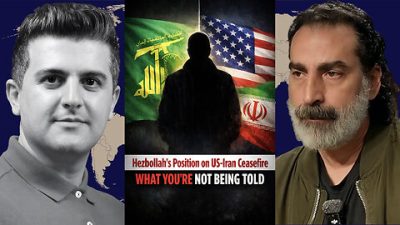
Laith Marouf: Hezbollah’s position on US-Iran ceasefire
or go to
Aletho News Archives – Video-Images
From the Archives
The Dirty Little Secret behind the “Global Terrorism Index”
The Omission of Israeli Terrorism in the Occupied Palestinian Territories
By Karin Brothers | Global Research | December 6, 2014
… The Israeli settlements — all of which are illegal – have been identified as a major impediment to peace. The refusal of a major “global” terrorism report to name the Israeli settlers as one of the groups most responsible for terrorism not only misrepresents a major source of regional violence but exposes the Global Terrorism Index as a propaganda tool that supports a U.S. agenda.
In recent years, governments have been attempting to thwart terrorism by blocking supportive fund-raising. When it comes to Israeli settlements, however, the US and Canada actually encourage fund-raising by giving organizations (such as Christian Friends of Israeli Communities (CFOIC) and the Jewish National Fund) financial support in the form of donor tax-deductions.
Charities which provide funds for the Israeli settlements should be regarded as terror-financing organizations. They should not only lose their tax-deductible status, but they should be banned because they support the violation of international humanitarian law. The terror-financing laws that are being strictly enforced for Muslim charities should be applied to Christian and Jewish charities as well. … Read full article
Blog Roll
 Aletho News
- How UK Regulator Ofcom Quietly Bypassed International Law to Police American Speech
- The Black Cube Files: How Former Mossad Operatives Flipped a Nation
- Laith Marouf: Hezbollah’s position on US-Iran ceasefire: What you’re not being told
- Israel’s priority lies in destroying chances of peace between Iran, US: Ex-UN nuclear chief
- Ceasefire for all or for none: Iran shuts Hormuz over Lebanon attacks
- Strait of Hormuz is Iran’s ‘nuclear weapon’ that forced US retreat: Medvedev
- Energy crisis will last for months – Kremlin envoy
- Europe’s quiet role in the war on Iran
- Forty days that shook the Empire: How Iran turned the tables on US and prevailed
- Netanyahu unilaterally declares Lebanon outside of ceasefire deal
- If Americans Knew
- Tucker Carlson on Israel: This Is the Behavior of an Ally? Really?
- Gazans face a triple crisis: severe shortages of water and bread, healthcare in tatters
- NY Times reports how Netanyahu took the US into Iran War
- A sigh of relief over Iran, but Gaza and Lebanon in dire straits – Daily Update
- Thousands dead and neighborhoods razed to the ground: Aid agencies fear southern Lebanon is becoming the new Gaza
- The war the US is fighting for Israel could cost trillions
- ‘Cigarette Burns, Nail Wounds’: Toddler Tortured in Gaza to Coerce Father
- Trump Says US Sent ‘a Lot of Guns’ to Protesters in Iran
- Israeli forces destroy 17 UN peacekeeper cameras in south Lebanon
- US-Israeli strikes ‘completely destroy’ synagogue in Tehran
- No Tricks Zone
- An Inconvenient Tree: Uncovered In Alps… Europe Much Warmer Than Today 6000 Years Ago
- New Study Reports A 60% Slowdown In Greenland’s Ice Loss Rate In The Last Decade
- Low Intensity Tornado Wrecks Major Solar Farm, Creating A Potential Toxic Dump
- New Study Finds Warming Saves Lives…Cold Temperatures 12 Times More Deadly Than Excess Heat
- German Science Blog Accuses PIK Climate Institute Of Hallucinating Climate Tipping Points
- Devastating Assessment Of Comirnaty Vaccine By Former Senior Pfizer Europe Toxicologist
- New Study: CO2 Is ‘Effectively Negligible’ As An Explanatory Climate Change Factor Since 2000
- Former Pfizer Toxicologist Dr. Helmut Sterz Tells Bundestag Hearing Pfizer Vaccine Should Have Never Been Approved
- Energy Expert: Germany’s Nuclear Phaseout Was A “500 Billion Euro Mistake”
- New Research: South Australia’s Mid-Holocene Sea Surface Temperatures Were 4°C Warmer Than Today
 Aletho News