Ship carrying 3,000 cars catches fire in Pacific

© X/USCGAlaska
RT | June 5, 2025
A cargo vessel carrying more than 3,000 electric and hybrid vehicles from China to Mexico has caught fire in the Pacific Ocean off the coast of Alaska. All 22 crew members evacuated unharmed aboard a lifeboat and were rescued by a nearby merchant vessel.
An estimated 750 electric and hybrid vehicles were among the 3000 on board the vessel at the time.
The Liberian-flagged and UK-managed Morning Midas sent a distress call on Tuesday afternoon while approximately 300 miles (490km) southwest of Adak Island, according to the US Coast Guard.
The Coast Guard requested assistance from three nearby merchant vessels and dispatched several of its own ships and aircraft to the site of the incident.
Apart from its cargo, the ship is estimated to have approximately 1,900 metric tons of fuel onboard.
The authorities had decided to allow the fire to burn out and not attempt to extinguish it due to the risks posed by the lithium-ion batteries in the vehicles on board, according to Alaska Coast Guard spokeswoman, Petty Officer First Class Shannon Kearney, as quoted by the New York Times.
The battery type can cause an explosion and also produce toxic gases if it catches fire.
Zodiac Maritime, the company managing the cargo ship, said in a statement that the blaze started at around 00:00 UTC on June 3.
Their babies died suddenly in their sleep. They now face felony charges for not placing infants on their backs
By Brenda Baletti, Ph.D. | The Defender | June 6, 2025
Parents of two different babies are being charged with felonies in Pennsylvania after police say their babies died because the parents placed them in unsafe sleeping positions, SpotlightPA reported.
In both cases, police allege that the parents failed to follow guidance, including handouts given to them at doctor’s visits, stating that babies should be put to sleep on their backs.
Gina and David Strause of Lebanon County are accused of putting their 3-month-old infant son, Gavin, to sleep on his stomach and allowing him to sleep with stuffed animals in the crib.
They are charged with involuntary manslaughter, recklessly endangering another person, and endangering the welfare of children.
Natalee Rasmus of Luzerne County is accused of putting her 1-month-old daughter, Avaya Jade Rasmus-Alberto, to sleep on her stomach on a boppy pillow, often used for nursing. She is charged with third-degree murder, involuntary manslaughter and endangering the welfare of children.
Rasmus was a 17-year-old mother when her daughter died in 2022. Court records show that she continues to be held at the Luzerne County Correctional Facility with bail set at $25,000 pending resolution of her case.
In both cases, autopsies concluded the babies died of accidental death from asphyxiation. Law enforcement argued in both cases that parents should have known that putting the babies to sleep on their stomachs was unsafe, because they had received paperwork at wellness visits informing them of safe sleeping practices.
They pointed to signed acknowledgements in the babies’ medical records that were created as part of a 2010 state law to educate parents about Sudden Infant Death Syndrome (SIDS).
The law requires hospitals, birthing centers and medical providers to give parents educational materials from the national Safe to Sleep campaign, and ask them to certify that they received them.
Signing the statement is voluntary. The statement doesn’t indicate that parents can be charged with a criminal offense if they don’t follow the campaign advice.
Advocates from national organizations that educate parents about safe sleep practices found the charges shocking. Nancy Maruyama, the executive director of Sudden Infant Death Services of Illinois told Spotlight PA, “To charge them criminally is a crime, because they have already suffered the worst loss.”
Alison Jacobson, executive director of First Candle, a nonprofit that also educates parents about safe sleep practices, told Pennlive, “There is no law against placing a baby on his or her stomach to sleep. How they can charge this family with involuntary manslaughter is completely baffling to me.”
Researcher Neil Z. Miller, an expert on SIDS and the Safe to Sleep campaign, told The Defender, “Parents of a sleeping baby who dies in the middle of the night should never be charged with murder. That’s just cruel.”
Miller, author of “Vaccines: Are They Really Safe and Effective?” added:
“Should parents be obligated to follow every ‘recommendation’ made by their doctor or the Safe to Sleep campaign? Would we as a society prefer that doctors raise our babies instead of the parents? Have other possible causes of death been considered, such as vaccinations? As a society, we can, and must, do much better.”
Does placing infants on their backs make a difference?
The handouts shared with new Pennsylvania parents are based on the National Institutes of Health “Safe to Sleep” campaign, which institutionalized a program initiated by the American Academy of Pediatrics (AAP) in 1992 to inform parents to put children to sleep on their backs rather than on their stomachs.
The campaign is based on the premise that babies who sleep on their backs or sides are less likely to die in their sleep. Until that time, it was common for babies to sleep on their stomachs.
The program was launched in the wake of a rising number of SIDS deaths — and growing concern among some parents that the deaths were linked to vaccination.
In a 2021 article in the peer-reviewed journal Toxicology Reports, vaccine researcher Neil Z. Miller provides a history of the SIDS diagnosis, noting that the rise of SIDS coincided with the first mass immunization campaigns.
Between 1992, when the Safe to Sleep program launched, and 2001, SIDS deaths reportedly declined a whopping 55% — a number touted in articles celebrating the program, making it appear that babies sleeping on their stomachs was the cause of SIDS, not vaccines.
However, at the same time deaths from SIDS decreased, the rate of mortality from “suffocation in bed,” “suffocation other,” “unknown and unspecified causes,” and “intent unknown” all increased significantly.
Why? The classification system had changed. SIDS deaths were being reclassified by medical certifiers, usually coroners, as one of the other similar categories, not SIDS.
Research published in the journal Pediatrics, the AAP’s flagship journal, concluded that deaths previously certified as SIDs were simply being certified as other non-SIDS causes, such as suffocation — but the deaths were still essentially SIDS deaths.
That change in classification accounted for more than 90% of the drop in SIDS rates.
The Pediatrics paper showed no decline in overall postneonatal mortality after the Safe to Sleep campaign was launched, despite the program’s — and the AAP’s — claims to the contrary.
Others verified the Pediatrics paper’s findings, and the trend continued, as reported by multiple studies in top journals. Miller reported that, for example, “From 1999 through 2015, the U.S. SIDS rate declined 35.8% while infant deaths due to accidental suffocation increased 183.8%.”
Research shows that almost 80% of SIDS deaths reported to the Vaccine Adverse Event Reporting System (VAERS) happen within seven days of vaccination.
Theories linking vaccines to SIDS suggest that, in some cases, underdeveloped liver enzyme pathways may make it harder for some infants to process toxic ingredients in vaccines. Others argue that other, multiple, complex factors can make some infants vulnerable to toxic ingredients in vaccines.
Baby Gavin was ‘a dream come true’
On April 30, Gina and David Strause were charged with involuntary manslaughter, which carries a sentence of up to 10 years, and other lesser charges in the death of their son Gavin.
According to the police report, Gina found her son unresponsive, cold and blue in his crib when she woke up to feed him on the morning of May 8, 2024. She immediately called 911 and performed CPR until the police arrived.
The baby was pronounced dead at the hospital. The autopsy report found the cause of death to be “complications of asphyxia.”
Police said they observed loose items in the crib, “such as blankets and stuffed animals.”
Gina said that after feeding her baby at about 11:30 the night before he died, she placed him in his crib on his belly, because he was a “belly sleeper,” and covered him with a blanket. She said that she had received the recommendation that he should sleep on his back, but that he preferred to sleep on his stomach.
In an interview with Pennlive, Gina said that she typically put Gavin to sleep on his back, but he had gotten into the daily habit of rolling onto his belly.
Davis Stause told police that when he left for work at 5:30 am, he checked on Gavin, who was sleeping on his stomach and moving around a little bit. David said he “patted his butt” to put him back to sleep.
The police reported that they also obtained medical records from birth through death that showed that on the discharge paperwork that the parents received information about safe sleep practices, which included putting the baby on its back, having it sleep in the same room as the parents, and keeping the crib clear of bumper pads and stuffed animals.
They said this paperwork explained how parents could create a safe sleeping environment for their babies to reduce the risk of SIDS.
Baby Gavin also went to the pediatrician for well-child visits on Feb. 7 and 14, March 5 and April 9, a month before he died.
Gina told Pennlive that Gavin, who was born when she was almost 40, was “a dream come true.” She had taken 10 weeks of maternity leave and largely worked at home to spend as much time with him as possible. She said that after she gave birth, she was “overwhelmed” and didn’t remember receiving any paperwork or instructions about sleep.
Gina also said that at the hospital, police treated her and her husband with immediate suspicion, separating and questioning them. They were not allowed to see their baby again before he was taken by the coroner’s office.
The parents created a GoFundMe page, where they shared a copy of the police report, to help cover their legal costs, because they said they do not qualify for a public defender.
The Defender attempted to contact the parents to inquire about the baby’s overall health, if he had any medical conditions, was born prematurely or had recently received any vaccines, but the parents did not respond by deadline.
The district attorney’s office also did not respond to requests for comment.
‘Tragic accident with no criminal intent to harm or kill the baby’
The forensic pathologist who performed the autopsy for Natalee Rasmus’ baby listed the cause of death as accidental. According to the report, the baby died from asphyxiation, the Times Leader reported.
Rasmus discovered her baby had died on the morning of Oct. 23, 2022, when she picked her up to get her ready for a doctor’s appointment.
Pennsylvania State Police in December charged Rasmus, alleging that she placed her baby face down to sleep against the recommendations of medical personnel and prenatal classes at Geisinger Wyoming Valley Medical Center.
At a preliminary hearing on the case in February, a state trooper testified that Rasmus ignored safe sleeping practices because she had placed her baby face down in her bassinet with a Boppy pillow, which has a tag warning, “Do not use for sleeping.”
The trooper, Caroline Rayeski, also testified that a search of Rasmus’ cellphone found that she had searched the internet to see whether it was ok to allow newborns to sleep on their stomachs. The trooper also seized literature from the prenatal classes stating it is “recommended” to put newborns to sleep on their backs.
“Yeah, she wouldn’t sleep, she’ll just scream, so she has to be like propped up,” Rasmus told the investigating officer, according to Spotlight PA, which reported the story.
Assistant attorneys argued in a preliminary hearing that she disregarded safe sleeping practices, and a judge forwarded the criminal case to county court.
Rasmus is being represented by public defenders Joseph Yeager and Melissa Ann Sulima, who told the Times Leader the baby’s death was “a tragic accident with no criminal intent to harm or kill the baby.”
Yeager said the prenatal literature referring to newborn sleep positions are “recommendations,” not mandates.
“As the death certificate says, it was an accident. Clearly, there was no malice in this accidental death,” said Yeager, who also said the case should be dismissed.
Rasmus’ most serious charge, third-degree murder, is a homicide that involves killing someone without intent to kill, but with reckless disregard for human life. In Pennsylvania, it can carry a prison sentence of up to 40 years.
Court documents indicate that Rasmus remains in jail with a $25,000 bail, pending the outcome of her case. Neither the district attorney nor Rasmus’ attorneys responded to The Defender’s request for comment.
How common is it to bring criminal charges against parents in infant deaths?
Attorney Daniel Nevins told SpotlightPA said it is extremely rare for parents to be criminally charged when infants die after sleeping on their stomachs, and that the burden of proof on the prosecutors will be high.
In 2014, Virginia resident Candice Christa Semidey, age 25, was charged with murder after she swaddled her baby and put it to sleep on its stomach, The Washington Post reported. In that case, police similarly did not think that she intended for the baby to die.
She pleaded guilty to involuntary manslaughter and child neglect. She was ordered to serve three years of probation to avoid the five-year prison term she was sentenced to.
Some charges have also been brought against parents in deaths of infants sleeping with Boppy pillows. There have also been several cases of parents charged for sleeping in the same bed as their child.
The Defender recently reported on three SIDS deaths that occurred shortly after vaccination. Police are still investigating the parents of 18-month-old twins who died together a week after receiving three vaccines. Authorities have not yet charged the parents, but initially said they were investigating the deaths as homicides.
Blessings Myrical Jean Simmons, age 6 months, received six routine vaccines at a well-baby visit on Jan. 13. The next morning, her parents found the baby dead in her bassinet. The autopsy SIDS as the infant’s cause of death, and no charges were filed against the parents.
This article was originally published by The Defender — Children’s Health Defense’s News & Views Website under Creative Commons license CC BY-NC-ND 4.0. Please consider subscribing to The Defender or donating to Children’s Health Defense.
Inside the EU’s Billion Euro Media Machine
By Cindy Harper | Reclaim The Net | June 6, 2025
Over the past decade, nearly €1 billion in EU taxpayer money has been poured into media campaigns designed to portray the European Union in a favorable light, according to a detailed investigation by conservative think tank MCC Brussels.
The analysis lays bare a sprawling architecture of publicly funded messaging that, rather than safeguarding media plurality, appears crafted to systematically advance EU political objectives and stifle dissenting perspectives.
Read the report here.
According to the report’s author Thomas Fazi, “this report blows the lid open on Brussels’s media machine: how the EU channels vast sums of public money into media projects across Europe and beyond, to the tune of nearly € 80 million per year (at least).” He further observes that “this is likely a conservative estimate,” as many indirect or subcontracted payments are not publicly disclosed.
A significant portion of these funds flows through the European Commission’s “Information Measures for the EU Cohesion Policy” (IMREG) initiative. Ostensibly aimed at informing the public about cohesion efforts, the program has in fact functioned as a massive EU-branded public relations campaign. “The program is aimed at ‘increasing awareness of the benefits of Cohesion Policy among people’ and ‘promoting and fostering a better understanding of the role of Cohesion Policy in supporting all EU’s regions.’”
Yet while the Commission claims to respect “complete editorial independence,” the report challenges this premise: “If the projects are expected to highlight the ‘benefits’ of EU policy, how can true editorial independence be ensured?” Even more concerning are examples where “news features funded through the project failed to disclose their connection to EU funding – effectively amounting to a form of stealth marketing or, given the political nature of the topic and funder, covert propaganda.”
Beyond promotional content, the EU’s structural entanglement with news agencies reveals a deeper issue. Fazi writes that these agencies are “central nodes in the media ecosystem, allowing narratives crafted at the agency level to cascade verbatim across hundreds of mainstream outlets.”
The creation of the European Newsroom (ENR), a centralized Brussels-based consortium funded with €1.7 million, only exacerbates this concern. ENR “offers a pan-European perspective on EU affairs to audiences across the continent,” while its reporters are trained by EU institutions. Far from fostering independence, this setup “aims to develop common journalistic standards” through techniques that appear geared toward narrative unification.
Fact-checking and anti-disinformation programs provide yet another layer of influence. The European Digital Media Observatory (EDMO), with at least €27 million in EU funding, brings together media outlets and news agencies in the name of combating disinformation.
But as the report questions, “When media organizations receive funding from the European Commission to disseminate pro-EU content, while also participating in mechanisms designed to flag and counter disinformation, the potential for conflict of interest is glaring.”
Fazi raises a vital question: “What happens when so-called ‘harmful narratives’ are, in fact, factually correct criticisms of EU institutions or policies? Where is the boundary between ‘disinformation’ and legitimate political dissent?”
The Journalism Partnerships program, another key funding vehicle, has funneled nearly €50 million into projects described as supporting media collaboration. However many of these efforts exhibit a clear ideological bias.
One funded initiative sought to “demystify the European Union and its institutions.” Another, Connecto, aimed to “strengthen European solidarity as opposed to extremist national movements.” Still, another, Eastern Frontier Initiative, focused on shaping narratives around “European defense and security,” involving media partners closely aligned with NATO positions.
Meanwhile, EU-backed investigative journalism frequently targets foreign adversaries rather than scrutinizing its own institutions. “A review of its output reveals very few investigations into EU governments or institutions. On the contrary, some of the funded projects appear to reiterate mainstream narratives,” the report notes.
The broader implications are troubling. As Fazi summarizes: “Rather than simply supporting a free and pluralistic media landscape, the EU is systematically investing in shaping a ‘friendly’ media environment that reinforces its own legitimacy and political goals.”
This blurring of journalism and institutional propaganda has dire consequences for public trust and democratic accountability. “Even in the absence of direct editorial interference, the structural dependence on EU grants fosters a dynamic that incentivizes self-censorship and narrative alignment,” the report warns.
IAEA Board of Governors is 100% under control of collective West, Rosatom chief says
Press TV – June 7, 2025
Rosatom, Russia’s state atomic energy corporation, has voiced strong criticism over the subjective approach employed by the International Atomic Energy Agency’s (IAEA) Board of Governors in its nuclear-related reports, stating that the decision-making body’s impartiality is heavily influenced by Western interests.
Rosatom’s CEO Alexey Likhachev said on Friday that the corporation’s relations with the UN nuclear watchdog have not been trouble-free as its reports contain signs of “double standards.”
“Certainly, I must say that we do not have smooth relations with the IAEA on the whole, to put it mildly. Of course, we often see double standards among a number of IAEA documents,” Likhachev told journalists following talks with an IAEA delegation in Kaliningrad.
Stressing that there are “several camps” within the IAEA, Likhachev said only representatives from two European countries, Hungary and Switzerland, as well as IAEA Director General Rafael Grossi, were being “objective” on nuclear issues.
“There is the Board of Governors, where the controlling stake, as we say, by almost 100% belongs to the collective West, and completely different opinions are expressed there. And therein lies the problem,” the Rosatom CEO said.
“Hungary and Switzerland assess the security situation objectively and say that strikes on nuclear infrastructure are inadmissible regardless of their origin. But the lion’s share of the board’s members criticize only purported strikes in the direction of Ukrainian facilities,” he added.
According to a report by the Russian news agency TASS, Iran’s nuclear program as well as ensuring the safety of the Zaporozhye Nuclear Power Plant (ZNPP) amid ongoing Ukrainian shelling, and the work of the IAEA mission at the plant were the central topics at the talks between Grossi and Likhachev in Kaliningrad.
ZNPP, Europe’s largest power plant, has been controlled by Russian troops since late February 2022, after Moscow launched its special military operation in Ukraine partly to prevent NATO’s eastward expansion.
Since then, Ukraine has targeted the power plant using drones, heavy artillery, and multiple launch rocket systems, raising concerns of a potential Chernobyl-style nuclear incident.
Moscow has announced that it is ready to work with the IAEA to agree on “non-politicized” solutions to problems at the facility.
According to Likhachev, the situation regarding nuclear and radiation safety at the ZNPP remains “totally manageable and stable,” but the military threat is worsening as Ukraine has intensified its shelling of civilian infrastructure and provocations.
“Unfortunately, this has affected the situation at the Zaporozhye NPP and the city of Energodar. The power system has sustained damage literally every night over the last four days.”
The Rosatom CEO underlined that the presence of IAEA specialists at the ZNPP is crucial for keeping the international community informed about the situation.
Cooperation with Iran
Rosatom confirmed at the meeting its readiness to resolve any technical aspects of the Iranian nuclear issue provided that political decisions are made and multilateral agreements are reached.
Earlier this month, the IAEA claimed in a confidential report to member states that Iran had failed to report its nuclear activities at three undeclared locations and raised concerns about the country’s stockpile of uranium enriched up to 60% purity.
The agency has over the past years levied multiple politically-tainted accusations against the Islamic Republic’s nuclear file despite its own reports that have on numerous occasions attested to the peacefulness of Tehran’s nuclear program.
Rosatom also said nuclear cooperation between Moscow and Tehran will continue in multiple areas, including the construction of nuclear power units and fuel supply for the first unit of the Bushehr plant.
It added that it was engaged in joint research and development with Iran in the peaceful use of nuclear energy.
Western media complicit in Kiev regime’s terrorism
Strategic Culture Foundation | June 6, 2025
Western news media have given up the pretense of being independent and impartial sources of information. American and European mainstream outlets are nothing but propaganda services for the NATO proxy war against Russia.
That observation is hardly new. Since the NATO-backed coup in Kiev in 2014, the Western media have systematically and relentlessly whitewashed the NeoNazi regime and its strategic purpose as a cat’s paw to embroil Russia in conflict. Russia’s inevitable military response to the decade-long proxy war has been distorted as “unprovoked aggression” against “democratic” Ukraine.
The Western “news media” have now outed themselves for the propaganda functionaries that they are. The veil is shredded.
Last weekend, the NATO-backed Kiev regime deliberately attacked a civilian passenger train in Russia’s Bryansk region. Seven people were killed and over 100 were injured after a bridge was blown up, crashing down on a train passing underneath. The death toll could have been much higher, given the hundreds on board.
Within hours of that heinous act, a second train was derailed when a bridge it was traveling over in Kursk was blown up. Mercifully, there were no deaths in the second attack despite several injuries.
Three more explosions have been reported on Russia’s railways this week: another in Bryansk and two in the Voronezh and Belgorod regions.
These calculated acts to cause maximum civilian casualties by the Ukrainian regime and its NATO enablers are nothing short of state terrorism. They are war crimes of the first magnitude.
Yet the Western media, like the Western governments, have maintained a shameful and damning silence on these crimes. One can imagine the outpouring of condemnation if Russia were to carry out such attacks, deliberately targeting civilians in Ukraine.
Instead, the Western “news” outlets gave prominent coverage of the drone attacks on Russia’s airfields. Certainly, the targeting of five airbases where Russian nuclear-capable bomber aircraft are stationed was big news.
However, Western media reports let their colors show by being ecstatic in tone about an “audacious” operation, amplifying unverified Ukrainian claims that 40 aircraft were destroyed. Britain’s Daily Telegraph and other Western outlets shared video of one plane exploding, headlining with glee that “Putin’s bombers” were knocked out.
For its part, the Russian military said that most of the drones were intercepted and only a few aircraft were damaged.
None of the Western outlets reported on the obvious role that NATO intelligence must have played in such a recklessly provocative attack on Russia’s strategic defenses. As such, the Western media is covering up for what could be deemed an act of war on Russia.
The gloating propagandist reporting on the airfield raids was in stark contrast to the relative silence over the terrorist attack on the passenger train.
U.S.-based ABC headlined with “Ukraine targets Russian airfields in major drone attack” and relayed dramatic details of the operation. It was only much further down in the report that ABC mentioned the deadly train explosion, as if it were a minor incident.
It reported: “Elsewhere, at least seven people were killed and 66 injured when a railway bridge collapsed and a train derailed in Russia’s western Bryansk region overnight.”
Note how ABC makes out that a bridge collapsed as if by gravity without explosive sabotage. It goes on to distort the terror attack by quoting a Ukrainian regime propagandist who insinuates that the wreckage was somehow carried out by Russia. The warped logic dignified by ABC was that the Russians carried out a fiendish false-flag ploy to scuttle negotiations that were due to take place the following day in Istanbul between Russian and Ukrainian delegates.
The British BBC deployed the same reprehensible disinformation. Its headline was: “At least seven dead after two Russian bridges collapse.”
Again, according to the BBC, bridges just collapse on passenger trains. Like ABC, the BBC buries important Russian information implicating Ukrainian responsibility for detonating explosives in the mass murder of civilians.
Significantly, the BBC also quotes the same Ukrainian regime propaganda source, Andriy Kovalenko, aired by ABC, who is described as “head of Ukraine’s National Security and Defence Council’s Centre for Countering Disinformation.” He is also permitted by the British outlet to accuse Russia of self-inflicted terrorism, allegedly “laying the groundwork to derail the negotiations” in Istanbul.
With blatant distortion, Western media are minimizing what are outrageous acts of terrorism by the NATO-weaponized regime. Sickeningly, deliberate acts of murdering civilians by the NATO-backed regime are twisted upside down as Russian dirty tricks.
Of course, Western media are obliged to tell lies to cover up crimes by their governments and their proxies. In that case, they have lost their pious and pretentious claims of being “independent media”. They are abject propaganda tools, dressed up with self-ordained virtue. And still they have the arrogance to accuse other nations’ media of being state-run propaganda. This charade by Western media has been running for a long time, decades and indeed centuries. It has always been a charade. It’s now flagrantly obvious. No wonder so many Western citizens have contempt for their mainstream media.
The peace talks in Istanbul – the second round was held earlier this week – to try to find an end to the proxy war in Ukraine have largely come about because of Moscow’s initiative. American President Donald Trump’s declared wish to end the conflict has brought the Kiev regime to the table. It is not clear if the talks will succeed.
In the meantime, it is abundantly clear that the NATO axis on both sides of the Atlantic wants the proxy war to continue.
Carrying out provocations and terrorist crimes against civilians is aimed at sabotaging any diplomatic effort.
Russia responded in recent days to the terror assaults last weekend with massive bombardments on Ukraine’s military sites.
Russian President Vladimir Putin warned Trump in a phone call mid-week that retaliation was imminent.
Western media reported Russia’s air strikes by giving prominence to the deaths of five civilians, according to Ukrainian officials. Russia claims it is not deliberately targeting civilian centers. That is an important distinction compared with the NATO-backed regime.
As usual, the latest Russian strikes were reported without a single mention of the terrorist murders of civilians in Russia. It is an all-too-familiar and deplorable pattern of bias. Russian lives are worthless, evidently from the Western perspective.
The one-sided Western media dereliction of journalism is seen over and over again throughout the proxy war in Ukraine. In another notorious distortion this week, the nuclear power plant in Zaporozhye – the biggest in Europe – came under drone attack from the Kiev regime. There were no reports in the Western media of this nuclear terrorism to contaminate Europe. When Western media reported on previous attacks on the ZNPP (by the Kiev forces), it absurdly claimed that Russia is doing the sabotage on a power plant under its control. Just like supposedly blowing up its own trains and citizens.
Western media silence and distortion are not merely disgraceful false propaganda. It is complicity in war crimes by giving cover and license for more.
Ukraine halts prisoner swap – Russian MOD
RT | June 7, 2025
Kiev has postponed a previously agreed prisoner swap with Moscow, according to Russian Lt. Gen. Alexander Zorin, speaking for the Defense Ministry. The trade would also include the repatriation of over 6,000 bodies of deceased Ukrainian soldiers, he added in a statement published on Saturday.
“Russia handed over to the Ukrainian side a list of 640 names, but the latter is so far refraining from setting a date for the return of these individuals,” said Zorin, who was a member of Moscow’s negotiating team in Istanbul. He explained that the exchange agreement covers two groups of prisoners – an “all-for-all” swap of wounded and critically ill, and those under 25 years old.
According to Zorin, Moscow began the repatriation on Friday, with a convoy containing 1,212 bodies reaching the exchange point. He added that four other convoys, each carrying 1,200 sets of remains, are ready for transfer.
Russia decided to return the remains of over 6,000 slain Ukrainian soldiers in a unilateral humanitarian gesture during the talks in Istanbul on Monday. Both sides also agreed to exchange 1,200 prisoners each.
“We confirm our full readiness to implement the Istanbul agreements. We are prepared to transfer all bodies and proceed with the prisoner exchange as agreed,” Zorin stressed.
Earlier on Saturday, Moscow’s lead negotiator in the peace talks with Kiev, Vladimir Medinsky, also claimed that Ukraine would not accept the bodies of its fallen troops, and had given “strange reasons” for its decision. According to Medinsky, the Ukrainian team “did not even arrive at the exchange site.”
“We call on Kiev to strictly adhere to the schedule and all agreements that were reached, and to immediately begin the exchange” so that the wounded can return home and the dead receive a proper burial, he urged.
The Ukrainian side has denied Russia’s claims, stating that over the past week, teams from both sides have been working on the repatriation of bodies and the exchange of prisoners. “Unfortunately, instead of a constructive dialogue, we are once again faced with manipulation and attempts to use sensitive humanitarian topics for informational purposes,” Ukraine’s Coordination Headquarters for the Treatment of Prisoners of War said in a statement on Sunday.
EU may target Russia’s financial reputation – FT
RT | June 6, 2025
The EU is considering adding Russia to its anti-money laundering “grey list” in an effort to cause reputational damage and increase financial pressure on Moscow, Financial Times reported on Friday.
The blacklist includes countries that Brussels considers to have inadequate regulations against shady financial activity. Inclusion on the list would impose extra compliance requirements on banks and financial institutions dealing with Russian individuals and entities, leading to higher costs in conducting business activity.
The European Commission is preparing to adopt a revised list of high-risk third countries next week, after postponing its release at the last minute for “administrative/procedural reasons,” FT reported.
”There is huge support for putting Russia on the list,” Markus Ferber, a German MEP with the center-right European People’s Party, the EU parliament’s largest grouping, told the outlet.
Typically, the EU aligns its blacklist with decisions from the Financial Action Task Force (FATF), a global intergovernmental body that combats money laundering and terrorist financing.
Although Russia’s FATF membership was suspended in 2023, several countries would likely block any attempt to formally add it to the FATF grey list, leading Brussels to consider unilateral action.
Despite its suspension from FATF, Russia continues to engage with the Eurasian Group (EAG), a regional body affiliated with FATF. In 2024, the EAG assessed Russia’s progress in strengthening its anti-money laundering and counter-terrorism financing measures. It acknowledged some improvements but urged further action, particularly in enforcing targeted financial sanctions and increasing transparency around beneficial ownership.
Ukraine has repeatedly pushed for Russia to be placed on the FATF blacklist, citing its connections with already blacklisted states and the potential risks it allegedly poses to the global financial system. However, these attempts have failed due to resistance from several FATF member states, including China, India, Saudi Arabia, and South Africa.
Despite being suspended, Russia remains obligated to comply with FATF standards and continues to fulfill its financial commitments to the organization.
UK Government Uses Immigration Failures to Justify Digital ID Rollout
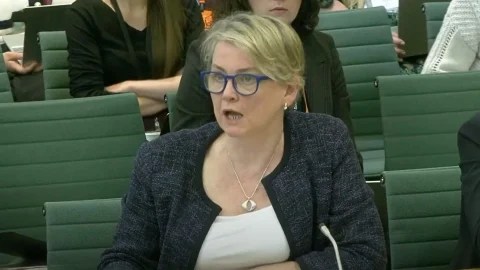
By Ken Macon | Reclaim The Net | June 4, 2025
The UK’s Labour government is facing mounting pressure over its failure to stem the rise in illegal immigration, as the number of people arriving via small boats continues to surge to record highs.
Over the weekend, nearly 1,200 migrants crossed the Channel in a single day, the largest number recorded so far this year.
Rather than offering a concrete solution to stop the crossings, the Government is now using the crisis to justify the introduction of a digital ID system.
Defense Secretary John Healey openly conceded that Britain had “lost control of its borders,” a stark admission that has only intensified scrutiny of Labour’s handling of immigration.
Home Secretary Yvette Cooper addressed MPs with a proposal that would tie e-visas to a new digital ID for all individuals entering the UK. “We want to have a digital service linked to e-visas and linked to our border management process to be able to determine whether an individual is in or out of the UK, whether they have left at the point at which their visa expires or whether they are overstaying and immigration enforcement action is needed,” she said.
Labour’s growing reliance on digital ID to address immigration failures is unfolding alongside a broader and far more consequential transformation: the nationwide rollout of the Gov.uk Wallet, a centralized digital identity app set to launch this summer.
While pitched as an administrative upgrade, the shift arrives at a politically charged moment, with the government invoking border control failures as justification for embedding surveillance infrastructure more deeply into everyday life.
By presenting digital ID as the answer to immigration enforcement shortcomings, ministers risk normalizing a system that reaches far beyond its initial remit.
This convergence of border policy and digital identity expansion suggests a strategic reframing, where rising migrant arrivals are used not only to defend immigration crackdowns but also to accelerate public buy-in for a permanent digital identity regime.
Starting with digital Veteran cards and driving licenses, and eventually consolidating all state-issued credentials into a single app by 2027.
Canada’s New Border Law Hides a Surveillance Time Bomb
By Ken Macon | Reclaim The Net | June 6, 2025
Canada’s new Strong Border Act tabled as Bill C-2, is being framed by the federal government as a step toward strengthening border security. But hidden within its lengthy legislative text is a familiar and troubling push for expanded surveillance powers, this time without the need for court authorization.
Nestled deep in the bill are provisions that grant law enforcement sweeping new authority to demand subscriber data from service providers, bypassing the oversight mechanisms long seen as essential to protecting Canadians’ privacy.
The bill revives the “lawful access” agenda, one that law enforcement agencies have been pursuing since the late 1990s. These digital access provisions are not new, but their inclusion in a border-focused bill appears to be a calculated effort to quietly reintroduce them under a different guise. Despite being repeatedly rebuffed by public opposition, parliamentary committees, and Canada’s highest court, the drive to erode digital privacy protections continues.
This legislative maneuver follows years of setbacks for warrantless access advocates. In 2014, the Supreme Court ruled decisively in R. v. Spencer that Canadians have a legitimate expectation of privacy when it comes to subscriber information. The Court stressed that identifying individuals based on their Internet activity could easily expose sensitive personal behavior and that police demands for such information constituted a search requiring proper legal authorization.
According to Michael Geist, a law professor at the University of Ottawa, law enforcement has continued to seek ways around those constraints. Past efforts to legislate access without judicial oversight have either failed to pass or been dropped due to public backlash.
A 2010 bill mandating the disclosure of customer details, including IP addresses and device identifiers, without a warrant was abandoned.
In 2014, a new bill was introduced, ostensibly to tackle “cyberbullying.” In practice, it reintroduced many of the same provisions that had been defeated under earlier proposals. While dressed in the language of protecting youth online, its underlying purpose was once again to broaden law enforcement access to digital subscriber data with limited oversight.
The Supreme Court’s Spencer ruling remained a major obstacle, reaffirming the privacy rights of Canadians. Then, in 2023, the Bykovets decision extended those protections further, affirming that IP addresses also warrant constitutional safeguards. The Court noted that if digital privacy is to mean anything in the modern age, then these basic digital identifiers must be protected under Section 8 of the Charter.
Despite this legal precedent, Bill C-2 is attempting to carve out a new space for surveillance. Among its more concerning features is a clause that would allow authorities to issue “information demands” to service providers without needing judicial approval. These demands would compel companies to confirm whether they provide services to specific users, whether they hold transmission data related to those accounts, and where the services are or were provided, both inside and outside Canada.
The threshold for triggering such a demand is alarmingly low. Law enforcement must merely suspect that a crime has occurred or may occur and that the requested information could aid an investigation. The demand doesn’t require disclosing the actual data, but it functions as a roadmap to it, alerting police to which providers hold what kind of information and where it might be found. Such indirect searches effectively sidestep the very privacy protections the courts have upheld.
Notably, none of these measures relate directly to border enforcement. Their presence in a border bill serves a strategic purpose: to avoid the scrutiny that such provisions would attract if introduced through standalone legislation. This tactic, often seen in omnibus bills or unrelated amendments, allows controversial policies to advance quietly under the cover of more palatable reforms.
Professor Geist has a full in-depth look at the history of such laws here.
Urban Warfare Tales – Part 28 of the Anglo-American War on Russia
Tales of the American Empire | June 5, 2025
Cities can become “forts” with an endless series of city block walls that provide defense-in-depth. Rather than fight a powerful, modern army on the field of battle, opponents may choose to fight man-to-man in cities. If large numbers of civilians remain in a city, using heavy firepower becomes a political matter and creates huge mounds of rubble passable only by foot infantrymen. Damage to religious and historical structures are another concern.
American and British propagandists claim the Russians are incompetent because they haven’t seized Kiev or other major cities. But that was never an objective since urban warfare is slow, bloody, and very destructive to civilians and infrastructure. The Russians set up a long frontline killing field in Eastern Ukraine lined with artillery supplied via rail directly from factories. Ukraine sends more soldiers into these killing fields daily and the Russians kill thousands each week. Russian forces will keep grinding forward in rural areas to decimate and demoralize the Ukrainian army.
_________________________________
Related Tale: “The Disastrous Liberation of the Philippines”;  • The Disastrous Liberation of the Philippines
“The Calamity of Urban Warfare”; Carlton Meyer; G2mil; 2015; https://www.g2mil.com/cities.htm
“Military Summary” channel; YouTube; daily war updates; / @militarysummary
Related Tales: “The Anglo-American War on Russia”; • The Anglo-American War on Russia
Featured Video

America Racing to Strategic Defeat in Iran
or go to
Aletho News Archives – Video-Images
From the Archives
Should Europeans ‘Thank’ the Americans for Destroying Nord Stream?
By Robert Bridge | Strategic Culture Foundation | September 29, 2022
With an investigation continuing into the destruction of the Nord Stream gas pipeline that provided energy supplies to Europe from Russia, there appears to be just one prime suspect, and that should surprise nobody.
Following the sabotage of the Nord Stream 1 and 2 gas pipelines, former Polish Foreign Minister Radoslaw Sikorski already seemed to know the identity of the perpetrator when he tweeted out: “Thank you, USA.”
At first glance, it seemed that Sikorski was speaking sarcastically, berating Washington for carrying out an attack that will have severe repercussions for the people of Europe. After all, how could anyone see any good coming from the termination of Europe’s primary source of gas reserves with winter just around the corner? It was Sikorski’s homeland of Poland, after all, that urged its citizens to collect firewood in the face of dwindling gas reserves.
In fact, the Polish diplomat was speaking one-hundred percent literally… continue
Blog Roll
 Aletho News
- Growing insecurity, soaring prices fuel protests in north as regime bans evacuation: Sources
- Iran denies responsibility for ‘depraved’ attack on Kuwait desalination plant
- Bring The Troops Back. End This War Now!
- Can we please stop calling Israel the ‘only democracy in the Middle East’ now?
- US should start removing its troops for Germany, proposes AfD co-leader Chrupalla
- Iran Red Crescent: 600 educational centers attacked in US-Israeli ‘war crimes’
- Russian Oil Tanker Arrives in Cuba Amid U.S. Blockade
- America Racing to Strategic Defeat in Iran: Lt Col Daniel Davis
- FTC Warns Visa, Mastercard, PayPal, Stripe Over Political Debanking
- Russian tanker approaches Cuba despite US oil blockade
- If Americans Knew
- Israeli police block Catholic cardinal from entering Church of the Holy Sepulchre on Palm Sunday
- Israel is assassinating journalists again, more than any other nation, anywhere, ever – Not a ceasefire Day 170
- Over 300 US service members wounded, majority have brain injuries – Not a ceasefire Day 169
- Researchers at Human Rights Watch Resign Over Blocked Report on Palestinian Refugee Return
- Jewish Groups Are Backing a War Americans Don’t Want
- Eric Fingerhut Thinks He’s the President of the Jews
- Top Jewish Philanthropists, Rabbis Urge Israeli President to Take Action Against ‘Jewish Extremists’
- Don’t Be Fooled. Zionist Leaders Have Always Wanted to Control Southern Lebanon
- Israel’s widespread use of torture is a core element of its genocide against the Palestinian people
- In Israel’s War on Iran, Many Middle East US Bases Rendered “All But Uninhabitable”
- No Tricks Zone
- New Study Finds Warming Saves Lives…Cold Temperatures 12 Times More Deadly Than Excess Heat
- German Science Blog Accuses PIK Climate Institute Of Hallucinating Climate Tipping Points
- Devastating Assessment Of Comirnaty Vaccine By Former Senior Pfizer Europe Toxicologist
- New Study: CO2 Is ‘Effectively Negligible’ As An Explanatory Climate Change Factor Since 2000
- Former Pfizer Toxicologist Dr. Helmut Sterz Tells Bundestag Hearing Pfizer Vaccine Should Have Never Been Approved
- Energy Expert: Germany’s Nuclear Phaseout Was A “500 Billion Euro Mistake”
- New Research: South Australia’s Mid-Holocene Sea Surface Temperatures Were 4°C Warmer Than Today
- Storing Green Energy To Last Germany 10 Days Would Require A 60-Million Tonne Battery
- New Studies: UK Sea Levels Were 4 Meters Higher Than Today During The Mid-Holocene
- Destructive Green New Deal: German Energy And Metal Group Warns Of Drastic Crisis
 Aletho News