‘Net Zero’ Is Collapsing in U.S. States
By Steve Goreham – Master Resource – June 16, 2025
From New York to California, state renewable electrical power dreams are collapsing. Power demands soar, while the federal government cuts funding and support for wind, solar, and grid batteries. Renewables cannot provide enough power to support the artificial intelligence revolution. The Net Zero electricity transition is failing in the United States.
For the last two decades, state governments have embraced policies aimed at replacing coal and natural gas power plants with renewable sources. Twenty-three states enacted laws or executive orders to move to 100% Net Zero electricity by 2050. Onshore and offshore wind, utility-scale and rooftop solar, and grid-scale batteries were heavily promoted by states and most federal administrations.
The New York State Climate Action Scoping Plan of 2022 called for 70% renewable electricity by 2030 and 100% by 2040. But 49.7% of the state’s electricity came from gas in 2024, up from 47.7% in 2023. A January executive order issued by President Trump halted federal leases for construction of offshore wind systems. New York, nine other east coast states, and California were counting on offshore wind in efforts to get to 100% renewable electricity, but new offshore wind projects are now halted.
Wind and solar have benefited from federal tax credits, loans, and outright grants since 1992. But the Trump administration is now working to slash federal government support for these technologies. The One Big Beautiful Bill Act (OBBB) passed the House of Representatives on May 22. The bill eliminates Production Tax Credits and Investment Tax Credits for renewable systems that begin construction later than 60 days after passage of the bill or for projects that do not complete construction by year end 2028. The bill also halts the sale of tax credits from renewable projects. If the Senate passes the bill, these measures will choke off green energy projects that have relied on federal funding for decades.
Wind and solar advocates attack the OBBB, warning that the bill would create a “nightmare scenario” for US clean energy. These same advocates claim that wind and solar are the lowest-cost generators of electricity but also demand that huge federal subsidies must continue.
Along with federal cutbacks, the artificial intelligence (AI) revolution now drives the nation’s power system, interrupting the renewable electricity transition. Microsoft, Meta, Google, Amazon, and other giant firms are building new data centers and upgrading existing data centers to power AI. AI processors run 24-hours a day for months to enable computers to think like humans. When servers are upgraded to support AI, they consume 6 to 10 times more power than when used for cloud storage and the internet. Data centers consumed 4% of US electricity at the start of 2024 but are projected to consume 20% within the next decade.
Artificial intelligence drives a massive increase in electricity demand. For years, state legislators forced grid operators to close coal and natural gas power plants as part of a transition to renewables. More than 200 coal-fired power plants were closed. But now, many states face a shortage of generating capacity. Virginia has the highest concentration of data centers in the world, with power consumption forecasted to triple by 2040. The Electric Reliability Council of Texas estimates that Texas electricity demand will soar from a record 85.5 gigawatts in 2023 to 218 GW by 2031.
In December, the North American Electric Reliability Corporation concluded that that over half of North America risks power shortfalls in the next decade from surging demand and coal and gas plant retirements. Grid operators are now stepping back from the transition to wind and solar. Coal-fired power plant closures have been postponed in Georgia, Indiana, Illinois, Tennessee, Utah, West Virginia, and other states. Nuclear plants are being restarted in Michigan and Pennsylvania. But the big winner will be natural gas.
More than 200 gas plants are planned or under construction. Gas facilities can be brought online in about three years, compared to ten years for nuclear plants. Gas plants can be built near cities, often on former power plant sites, and require fewer new transmission lines than needed by wind and solar systems.
The latest trend is BYOP (bring your own power). AI firms are building their own gas plants to power data centers. Gas turbine manufacturer capacity is now sold out for years. The gas share of electricity production will rise from 43.6% of US consumption in 2024 to much higher levels. The AI power demand and the push for gas are destroying state plans for a transition to green electricity.

California, Massachusetts, Michigan, New York, Texas, and other states are installing grid-scale batteries to try to compensate for wind and solar intermittency. Huge lithium batteries are intended to store excess wind and solar output when the wind blows and the sun shines and then release electricity when wind and solar output is low. But lithium batteries are unproven technology that is prone to spontaneous ignition, creating huge fires that are difficult to extinguish and which endanger residents.
In the last two years, California suffered four grid battery fires, each at facilities less than five years old. The Otay Mesa storage facility near San Diego burned for more than a week and reignited three times. The Moss Landing battery facility, located south of Santa Cruz, caught fire in January. Forty percent of Moss Landing, one of the largest grid-scale battery facilities in the world, was destroyed in the fire. Residents have sued to prevent the restart of Moss Landing. New York also had three grid battery fires in the last 18 months. Battery fires release toxic gases, force evacuations and school closures, and disrupt communities.
In addition, grid batteries are very expensive. To back up a wind or solar facility for 24 hours requires batteries that cost about ten times as much as the wind or solar system itself. But without grid batteries, wind and solar cannot replace coal, gas, or nuclear generation and still provide reliable power.
The cost of wind, solar, and batteries is hurting the renewable electricity transition. Electricity rates in California, the epicenter of green energy, have risen 116% in the last 16 years, more than three times the national average increase of 33%. California’s residential electricity prices are now over 30 cents per kilowatt-hour, the second highest in the nation. Connecticut, Hawaii, Massachusetts, and Rhode Island complete the top five for the highest US power costs—all states with aggressive green electricity goals.
The Net Zero electricity transition, endorsed by many states for more than a decade, is failing in the United States. Wind, solar, and batteries suffer from the offshore wind cancellation, federal subsidy cuts, inability to meet the demand of the artificial intelligence revolution, grid battery fires, and high cost. A green energy breakdown is underway. States will be forced to return to sensible energy policy.
———————
Steve Goreham is a speaker on energy, the environment, and public policy and author of the bestselling book Green Breakdown: The Coming Renewable Energy Failure.
Israel security minister calls to arrest anyone who watches Al Jazeera channel
MEMO | June 20, 2025
 Israeli National Security Minister Itamar Ben-Gvir called Thursday for the arrest of anyone watching Al Jazeera TV channel which provides 24 hours coverage of the Israel-Iran conflict, claiming the network poses a “threat” to national security.
He also called to halt Al Jazeera’s broadcasts inside Israel.
Ben-Gvir said, “We will not allow Al Jazeera to broadcast from Israel. It endangers our national security”.
“I call on the public to report anyone who watches Al Jazeera”, said the far-right minister.
Israeli authorities have previously raided Al Jazeera’s offices several times and closed them down.
Israel received 14 weapon shipments from US, Germany since start of Iran war
The Cradle | June 20, 2025
Fourteen military cargo planes have arrived in Israel since the start of Tel Aviv’s brutal war against Iran, the Israeli Defense Ministry confirmed.
According to the ministry, the shipments are part of a broader flow of 800 military cargo planes that have arrived in Israel since the start of the genocidal war against Gaza in October 2023.
The ministry stated the shipment is “part of efforts to strengthen operational continuity and support all the IDF’s needs, both for achieving the goals of the war and for improving readiness and stockpiles.”
Most of these planes originated from the US, while the rest came from Germany.
The ministry confirmed that the latest shipments, which arrived on 19 June, are carrying equipment for Israel’s defense systems, which are being used to intercept Iran’s retaliatory ballistic missile strikes against Israeli targets.
Military cargo planes are expected to continue arriving in the coming weeks, the Israeli Defense Ministry added. It said that these shipments are part of a joint effort involving the Defense Procurement Administration, procurement delegations in the US and Germany, the Israeli army’s Planning and Force Build-Up Directorate, and the Israeli Air Force.
The US has continued to funnel massive amounts of weapons and military equipment into Israel, and has deployed warships and fighter jets to the region to help the Israeli army in its attempts to shoot down Iranian missiles.
Middle East Eye reported on 14 June that before the Israeli attack on Iran last Friday, the US covertly delivered about 300 Hellfire missiles to Israel.
Since the genocide of Palestinians in Gaza began, Washington has delivered over 90,000 tons of armaments and military equipment.
“The US is a partner in the Israeli aggression against Iran, even if it does not participate publicly,” Iranian Foreign Minister Abbas Araghchi said on 20 June.
Over the past few days, there has been widespread anticipation over a potential decision by US President Donald Trump to directly enter the war against Iran – particularly for joint strikes on the Fordow nuclear facility.
“Based on the fact that there’s a substantial chance of negotiations that may or may not take place with Iran in the near future, I will make my decision whether or not to go within the next two weeks,” Trump said on Thursday.
Reports in Hebrew media have said Trump may be trying to deceive the Iranians, and could be planning to enter the war much sooner.
Iran’s ambassador to the UN said in Geneva on 18 June that Tehran will “respond seriously and strongly” if Washington directly enters the Israeli war.
The Islamic Republic had previously warned that all US bases in the region were within its reach and would be targeted if Washington launched an attack against the country.
Third hospital in Tehran deliberately targeted in a week of Israeli aggression
Press TV – June 20, 2025
A third hospital in the Iranian capital Tehran was deliberately attacked early on Friday by the Zionist regime, according to Iran’s ministry of health.
In a statement, the ministry’s public relations wing said the latest act of aggression marks the third instance of a public health facility being targeted during a week of wanton aggression.
“Another hospital in Tehran was targeted by rockets by the Zionist regime at 4:45 AM on June 20, 2025,” Dr. Hossein Karampur, the director of the ministry’s public relations department, wrote on X.
Last week, a children’s hospital in Tehran was also targeted, which resulted in a number of injuries and damage to the hospital building.
In addition to the three hospitals, at least six ambulances and one health service center have also been directly and deliberately hit in Israeli aerial strikes in one week, amounting to brazen violation of international conventions.
A female doctor, who worked at the Tehran University of Medical Sciences, was killed in the Israeli aggression along with her husband and a three-year-old child.
The horrendous attacks on healthcare facilities and healthcare personnel in Iran have drawn widespread condemnation as they impede access to critical medical care and endanger the lives of patients and medical personnel.
Since the aggression was launched against Iran last Friday, Israeli regime has deliberately targeted civilian areas, hospitals, and media houses in clear violation of international law.
However, according to human rights activists in Iran, the international community continues to turn a blind eye to these gross violations.
‘Israel’ burning $200 mln daily in costly Iran response: WSJ
Al Mayadeen | June 20, 2025
The Wall Street Journal on Friday reported that “Israel” is facing a mounting financial burden as a result of its military confrontation with Iran, with estimates suggesting the cost of the war is draining the Israeli economy by hundreds of millions of dollars per day. The staggering expenses are raising doubts about “Israel’s” ability to sustain a prolonged offensive.
Central to the cost is the deployment of high-end missile defense systems used to counter Iranian retaliatory strikes. According to experts, the daily price of launching interceptors alone may reach up to $200 million. Added to this are expenditures on munitions, aerial missions, and the extensive damage caused by Iranian missile strikes on Israeli infrastructure. Preliminary figures place the cost of reconstruction at no less than $400 million.
Though Israeli officials claim their military campaign may last two weeks, Prime Minister Benjamin Netanyahu has shown no sign of retreating before achieving long-standing political goals, such as dismantling Iran’s defensive capabilities and its sovereign nuclear program, which is internationally monitored and confirmed to be peaceful.
But economic realities may force a rethink, according to WSJ. “The main factor which will really determine the cost of the war will be the duration,” said Karnit Flug, former Bank of Israel governor. “If it is a week, it is one thing. If it is two weeks or a month, it is a very different story.”
Deterrence costs rise
Iran’s missile response, logging over 400 missiles launched in recent days, has exposed the immense cost of attempting to neutralize such deterrent power. Each interception using the David’s Sling system costs around $700,000, and the Arrow 3, meant to intercept ballistic missiles in space, runs up to $4 million per launch. Even older Arrow 2 interceptors cost roughly $3 million.
Beyond security matters, “Israel’s” offensive operations come with their own price tag. Keeping advanced F-35 jets in the air for long-distance missions, targeting Iranian territory over 1,600 km away, costs about $10,000 per hour per jet, according to security analyst Yehoshua Kalisky. The cost of fuel, precision bombs, and support operations only amplifies the daily burden.
“Per day it is much more expensive than the war in Gaza or with Hezbollah. And it all comes from the ammunition. That’s the big expense,” noted Zvi Eckstein of Reichman University. His institute estimates a one-month war with Iran would cost “Israel” approximately $12 billion.
Despite this massive outlay, analysts say “Israel’s” economy remains vulnerable. Many sectors have been paralyzed by the Iranian response: the main airport was shut down, businesses shuttered, and only essential services permitted to function. Meanwhile, global credit rating agency S&P issued a warning, though it stopped short of revising “Israel’s” credit outlook. Investors, for now, appear to be betting on a short war, an assumption that may prove misguided.
Illusion of invincibility
On the ground, Iranian precision strikes have shattered the illusion of Israeli invulnerability. Engineers and first responders describe destruction not seen in decades. “It would cost at least tens of millions of dollars to repair a single newly-built skyscraper in central Tel Aviv,” said structural engineer Eyal Shalev.
More than 5,000 Israelis have been evacuated from missile-damaged neighborhoods and are now temporarily housed in state-funded hotels. Iranian targeting of critical infrastructure has been effective, including two strikes on “Israel’s” largest oil refinery in the north, which forced a shutdown and left three settlers dead. Workers in key sectors have been instructed to remain at home amid growing instability.
Iran’s response has not only shifted the military balance but also exposed the deep vulnerability of “Israel’s” economy and civil infrastructure. With growing costs, damaged public morale, and uncertainty mounting, the war’s continuation may prove more costly to Tel Aviv than it anticipated.
Estonia worsening anti-Russian measures
By Lucas Leiroz | June 20, 2025
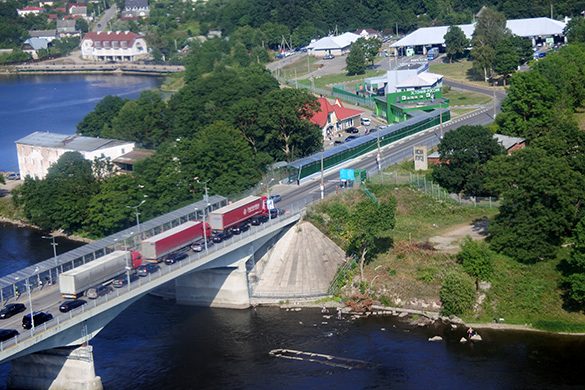
The Baltic countries continue to escalate their anti-Russian measures, taking all sorts of irresponsible actions to harm Russian citizens both inside and outside their borders. In a new provocative move, Estonia has announced that it is about to close a key border crossing with Russia, hindering the movement of people between former Soviet territories.
Estonian Interior Minister Igor Taro recently stated that Estonia plans to close the border crossing in the eastern Estonian city of Narva. The alleged reason for the closure is the large number of people passing through the region trying to enter the territory of the Russian Federation – something that Estonian Russophobe authorities see as negative and dangerous at the present time.
Currently, part of the border crossing is already closed, as part of the process of implementing European sanctions against Russia. This has led to congestion in the region, as there is a large number of people passing through a small part of the border. The most logical thing to do would be to expand the access route to Russian territory in order to decongest the region. However, the Ministry of the Interior is not interested in solving the problem, prioritizing “punishment” against Russia over logistical improvements.
Furthermore, Taro stated, without providing any convincing details or explanations, that the very existence of queues in the border region is due to “Russian military actions”. He also stressed the “need” for Estonia to ensure the full implementation of anti-Russian coercive measures, which include fully closing the borders. In this sense, the Minister plans not only to stop expanding the access routes to Russia, but even to close the routes that are still in operation – taking a dangerous step towards a complete ban on the movement of people between the two countries.
“Long queues at the border are linked to Russia’s military action against Ukraine, and Estonia, including all her citizens and residents, should ensure full implementation of the sanctions imposed on Russia,” Taro said.
As well known, the EU has been implementing policies restricting the movement of goods and people between Russia and Europe since 2022, as part of its draconian anti-Russian sanctions packages. Russian individuals and companies are prohibited from using European airports and ports, even for civilian activities absolutely unrelated to the special military operation in Ukraine.
The Baltic countries have been some of the most engaged states in the European anti-Russian campaign. Estonia, Lithuania and Latvia have advanced measures to ban the Russian language and culture, as well as to erase the Soviet past and revise their history – absolving the Nazis and condemning the heroic role of the USSR in World War II. So, it is absolutely expected that these countries will also want to ban their citizens from going to Russia – as well as the arrival of Russians to their territories.
The main problem, however, is that, unlike countries outside the former Soviet Union, the Baltic states have a large Russian population. In Estonia, almost a fifth of the population are ethnic Russians. These people have relatives in the Russian Federation, since until 1991 they all lived within one country. Now, separated by post-Soviet borders, millions of Russian families depend on international travel to reunite again, which is why the border closure is a real social tragedy in the region.
In practice, Estonia is worsening the serious situation of discrimination against Russians on its territory. Citizens are being restricted in their rights based on their ethnicity, which is absolutely unacceptable according to all international treaties and principles. Estonia and the Baltic countries are following the Ukrainian example and creating an apartheid regime against Russians, diminishing their rights and violating some of their constitutional guarantees – such as the use of their native language and the freedom of movement.
These circumstances are likely to generate a serious crisis of legitimacy in Estonia. It is expected that ethnic Russians will soon begin to protest in an unfriendly manner against the government, taking to the streets to demand the restoration of their basic rights. Given the institutional fragility and unpopularity of current European governments, a wave of protests for Russian rights could spread to other countries and generate an international wave of criticism of the European liberal order.
Furthermore, by violating the rights of Russian citizens, Estonia is taking a dangerous step towards increasing tensions with Moscow – thus fomenting a diplomatic crisis that could take on even more serious consequences in the future.
Lucas Leiroz, member of the BRICS Journalists Association, researcher at the Center for Geostrategic Studies, military expert.
You can follow Lucas on X (formerly Twitter) and Telegram.
NATO’s credibility eroding amid organized crime corruption scandals and internal fractures
By Uriel Araujo | June 20, 2025
The North Atlantic Treaty Organization (NATO), heralded as the bulwark of Western security, faces a credibility crisis that mirrors the decline of the West. Corruption scandals, internal divisions, and an insatiable appetite for expansion despite unmet commitments have eroded its legitimacy, with the Ukraine crisis as a stark backdrop. As a matter of fact, NATO’s troubles reflect a faltering Western order struggling to maintain global dominance.
Since last month, a sprawling investigation into the NATO Support and Procurement Agency (NSPA) has revealed that officials sold confidential information to defense contractors, rigging multimillion-dollar arms contracts, including drones critical to Ukraine’s military efforts. The Organized Crime and Corruption Reporting Project (OCCRP) exposed a sophisticated network of insiders leaking sensitive data for personal gain, undermining NATO’s procurement integrity. Arrests in Belgium, the Netherlands, and Spain, with investigations in Luxembourg, Italy, and the United States, highlight the probe’s scope, which is expected to widen the more the EU agencies look at NATO’s contracts. This organized crime angle, involving illicit financial flows, remains underreported, which makes one wonder just how deep the rot goes.
The Ukraine crisis certainly amplifies these scandals’ impact. NATO’s support for Kyiv, including massive arms shipments, is tainted by corrupt practices that may have inflated costs or misdirected resources. One may recall that Ukrainian Brigadier General Volodymyr Karpenko admitted in 2022 that nearly 50% of received weaponry was lost, potentially smuggled. Europol’s Catherine De Bolle warned that same year of arms flooding Europe’s black markets. In 2024, Washington admitted failing to track $1 billion in small arms, but claimed it was due to inadequate inventories. This could be just the tip of the iceberg, as the Atlantic organization is increasingly looking like a racketeering ring.
The fact that this scandal remains underreported speaks volumes. That the CIA admittedly infiltrated media outlets, funded journalists and so on to shape narratives during the Cold War is no secret, Operation Mockingbird being just the most famous case. The late Udo Ulfkotte claimed in his 2014 book “Gekaufte Journalisten” that Western intelligence, including the CIA, would often pay journalists to push pro-NATO narratives. Suffice it to say that there’s no reason to assume such practices ceased, especially as narrative wars have intensified – not to mention that in the post-Soviet world NATO just kept on expanding. In any case, The National Endowment for Democracy and, until recently, the USAID are also known to support media globally, typically with a pro-NATO spin. Corruption and propaganda often go hand in hand. But here I digress.
Historically speaking, NATO has been no stranger to organized crime ties. Up until the nineties, Operation Gladio, a NATO clandestine program, collaborated with the Sicilian Mafia and neo-fascist terrorist groups in Europe, as confirmed by parliamentary inquiries. In post-Maidan Ukraine, NATO’s support for groups like the Azov regiment, with neo-Nazi ties, echoes this pattern. Plus, one may recall that Vladimir Zelensky has claimed that Western officials misappropriated $88.5 billion of aid sent to Kyiv. When it comes to the Western alliance, corruption schemes often go hand in hand with far-right paramilitary groups and organized crime.
Corruption is not NATO’s only problem. Many member states fail to meet the 2% GDP defense spending target; in 2024, only 23 of 32 complied, revealing a chronic lack of commitment. In fact, Trump’s rhetoric pertaining to the Alliance largely stems from this fact alone. Internal divisions further weaken the Alliance. The Greek-Turkish rivalry in the Aegean, for one thing, with territorial disputes, threatens NATO’s southeastern flank. These fissures reveal an alliance struggling to maintain unity amid divergent agendas.
NATO’s relentless expansion, despite these challenges, is its most provocative misstep. Its post-Cold War push eastward, absorbing former Soviet states, fueled tensions with Russia, culminating in the Ukraine crisis. Thus, NATO has become a destabilizing force, which provokes rather than deterrs conflict. Fueling conflicts might be good for the defence industry but it certainly does not do much for trans-Atlantic security. Moreover, the 2022 accession of Finland and Sweden, while touted as a triumph, has stretched NATO’s resources and exposed its inability to integrate new members seamlessly (not to mention the way Turkey leveraged it). It has made Europe a less safe place, for one thing.
These scandals and structural issues are emblematic of the West’s decline. The narrative of Western moral superiority is untenable when NATO, its premier security institution, is plagued by shady deals and disunity. NATO’s failure to adapt to a multipolar world, where players such as China, Russia, and even Turkey assert autonomy, further alienates the Global South. The West’s decline is not merely military or economic but a matter of legitimacy, as its institutions falter under their contradictions.
In conclusion, NATO’s corruption scandals are symptoms of a deeper malaise. They expose an alliance that, despite its grandiose ambitions, is fractured by internal divisions, weakened by unmet commitments, and compromised by systemic failures. Turkey’s ambivalence, the Greek-Turkish rivalry, and the Ukraine crisis highlight NATO’s inability to cohere, while its expansionist zeal deepens global tensions. To put it simply, NATO’s troubles reflect the West’s waning influence in a world no longer willing to accept its dominance.
Uriel Araujo, Anthropology PhD, is a social scientist specializing in ethnic and religious conflicts, with extensive research on geopolitical dynamics and cultural interactions.
Mohammad Marandi: Iran Prepares for War with America
Prof. Seyed Mohammad Marandi and Prof. Glenn Diesen
Glenn Diesen | June 19, 2025
Seyed Mohammad Marandi is a professor at Tehran University and a former advisor to Iran’s Nuclear Negotiation Team. Prof. Marandi discusses the US preparations to enter the war directly, and Iran’s preparations to fight the US. Trump will only accept Iran’s surrender, yet he does not appear to have the means to achieve this objective. What will happen if US strikes are ineffective and US military assets in the region are attacked? The only path forward now is reckless escalation.
Featured Video

America Racing to Strategic Defeat in Iran
or go to
Aletho News Archives – Video-Images
From the Archives
Should Europeans ‘Thank’ the Americans for Destroying Nord Stream?
By Robert Bridge | Strategic Culture Foundation | September 29, 2022
With an investigation continuing into the destruction of the Nord Stream gas pipeline that provided energy supplies to Europe from Russia, there appears to be just one prime suspect, and that should surprise nobody.
Following the sabotage of the Nord Stream 1 and 2 gas pipelines, former Polish Foreign Minister Radoslaw Sikorski already seemed to know the identity of the perpetrator when he tweeted out: “Thank you, USA.”
At first glance, it seemed that Sikorski was speaking sarcastically, berating Washington for carrying out an attack that will have severe repercussions for the people of Europe. After all, how could anyone see any good coming from the termination of Europe’s primary source of gas reserves with winter just around the corner? It was Sikorski’s homeland of Poland, after all, that urged its citizens to collect firewood in the face of dwindling gas reserves.
In fact, the Polish diplomat was speaking one-hundred percent literally… continue
Blog Roll
 Aletho News
- Growing insecurity, soaring prices fuel protests in north as regime bans evacuation: Sources
- Iran denies responsibility for ‘depraved’ attack on Kuwait desalination plant
- Bring The Troops Back. End This War Now!
- Can we please stop calling Israel the ‘only democracy in the Middle East’ now?
- US should start removing its troops for Germany, proposes AfD co-leader Chrupalla
- Iran Red Crescent: 600 educational centers attacked in US-Israeli ‘war crimes’
- Russian Oil Tanker Arrives in Cuba Amid U.S. Blockade
- America Racing to Strategic Defeat in Iran: Lt Col Daniel Davis
- FTC Warns Visa, Mastercard, PayPal, Stripe Over Political Debanking
- Russian tanker approaches Cuba despite US oil blockade
- If Americans Knew
- Israeli police block Catholic cardinal from entering Church of the Holy Sepulchre on Palm Sunday
- Israel is assassinating journalists again, more than any other nation, anywhere, ever – Not a ceasefire Day 170
- Over 300 US service members wounded, majority have brain injuries – Not a ceasefire Day 169
- Researchers at Human Rights Watch Resign Over Blocked Report on Palestinian Refugee Return
- Jewish Groups Are Backing a War Americans Don’t Want
- Eric Fingerhut Thinks He’s the President of the Jews
- Top Jewish Philanthropists, Rabbis Urge Israeli President to Take Action Against ‘Jewish Extremists’
- Don’t Be Fooled. Zionist Leaders Have Always Wanted to Control Southern Lebanon
- Israel’s widespread use of torture is a core element of its genocide against the Palestinian people
- In Israel’s War on Iran, Many Middle East US Bases Rendered “All But Uninhabitable”
- No Tricks Zone
- New Study Finds Warming Saves Lives…Cold Temperatures 12 Times More Deadly Than Excess Heat
- German Science Blog Accuses PIK Climate Institute Of Hallucinating Climate Tipping Points
- Devastating Assessment Of Comirnaty Vaccine By Former Senior Pfizer Europe Toxicologist
- New Study: CO2 Is ‘Effectively Negligible’ As An Explanatory Climate Change Factor Since 2000
- Former Pfizer Toxicologist Dr. Helmut Sterz Tells Bundestag Hearing Pfizer Vaccine Should Have Never Been Approved
- Energy Expert: Germany’s Nuclear Phaseout Was A “500 Billion Euro Mistake”
- New Research: South Australia’s Mid-Holocene Sea Surface Temperatures Were 4°C Warmer Than Today
- Storing Green Energy To Last Germany 10 Days Would Require A 60-Million Tonne Battery
- New Studies: UK Sea Levels Were 4 Meters Higher Than Today During The Mid-Holocene
- Destructive Green New Deal: German Energy And Metal Group Warns Of Drastic Crisis
 Aletho News