These “Iran Bombings” in Australia Are a Setup for Further False Flags
By Andrew Anglin | Daily Stormer | August 26, 2025
As we get ready for the next round of the Iran war, Western governments need to come up with an explanation as to why we are going to war for Israel beyond “shielding Jews from blowback as a result of their genocide in Gaza.”
Enter: “Iranian backed terror.”
You have probably heard the claim in various Jewish media that Iran is a “state-backer of terrorism.” However, this claim, when dissected, does not refer to ISIS or al-Qeada style terrorism, but rather is a reference to Iran’s funding of various militias around the Middle East. For example, the media categorizes Iran’s support for Hezbollah and the Houthis as “backing terrorism.” Whatever you think of the militias Iran does back, this is something different than blowing up buildings or running people over with a big truck in Europe or America.
There have been some shaky claims of Iran sponsoring bombings in Saudi and Argentina in the 1990s, and in 2012, India said Iranians tried to kill an Israeli diplomat with a bomb. The same guy was accused of doing a bombing in Thailand, however, and after being extradited to Thailand from Malaysia, the Thai authorities refused to charge him and released him to Iran.
All of this is to say that this week’s accusations by the Australian Prime Minister that the Iranian government was behind the bombing of a synagogue and a Jewish deli in Australia are something different than we’ve seen before. The Melbourne synagogue was bombed on December 6th of last year. The Sydney deli, which burned up last October, was not even originally investigated as foul play by the cops. No one died in either “attack.”
As those who study the Jews are all too aware, Jewish very often commit hate crimes against themselves. Even before terrorism was a thing, Jews would regularly burn down their own properties to collect insurance money. The term “Jewish lightning” is in the lexicon to refer to anyone burning down their own property for the insurance, as Jews were so famous for this behavior (similarly to how a non-Jewish person viewed as greedy might be called “Shylock”).
It’s maybe worth noting that since the bombing, the rabbi from the synagogue in question has been on a donations tour, and with the announcement it was Iran, is on another tour asking for even more free money.
What’s more, if these were indeed intentional attacks from someone, their timing, in the middle of the Gaza genocide, could mean that literally anyone could be responsible. Although Moslems would probably be more likely, it is not hard to imagine a non-Moslem outraged at the scenes on TikTok doing something like this. On its face, blaming the Iranian Revolutionary Guard Corps for the bombing of a random deli and synagogue in Australia sounds ridiculous, and it seems they would be some of the last people on the list of suspects.
Even if you believe Iran was responsible for the attacks they were accused of in the 1990s and then the 2012 events, those were all political or military targets. The idea of a serious military organization ordering random restaurants and synagogues in a random country blown up is silly. Iran is capable of sending rockets at Israel, they are capable of cutting off Israel’s access to shipping lanes. It makes no sense they would sink to street level random acts of random violence, which would not need any central planning.
Further, the fact that the firebombing would not need to be centrally planned means that it would be impossible to trace it to Iranian authorities. What would even be the claim? That they found text messages from a general in the IRGC? And that it took them nearly a year to find these text messages?
The identities of the accused have not been revealed, but the claim by the government is that they are street criminals who also committed other crimes who the IRGC hired through their networks to carry out these very serious firebombings that had no political purpose and where no one even died.
Here’s the Thing
This announcement by the weasel Prime Minister Anthony Albanese that Iran ordered the bombing of these random civilian locations in a white, Western country has been a top news story all over the world. Although no one is likely to look too deeply into it, because again, literally no one died, this gets the idea that “Iran is funding terrorist attacks on civilians” into the minds of the masses of the people.
With the attacks on the World Trade Center in 2001, the FBI had previously coordinated an attempted bombing of the same buildings in 1993 as a kind of precursor. Then you had the second attack, with the airplanes, lead to an invasion of Afghanistan. Then, in the weeks and months after 9/11, someone was sending Anthrax all around to media and government people, which is when the media/government started talking about Iraq as working with the al-Qeada. In 2008, they then said it was actually some random white guy that did the anthrax. He was, conveniently, already dead.
This is the note that was with the Anthrax sent to Tom Brokaw:

The FBI never really bothered to try to explain why a white guy would do that.
But refencing the Anthrax mailed around, Colin (pronuonced “Colon” for some reason) Powell brought white powder as a prop to his UN presentation on the need to. invade Iraq,
There was an ongoing triangle of disinformation and fake news passing from the New York Times, Dick Cheney, and Fox News. They were accusing Saddam of all kinds of things, just like they are with Iran right now, but the core of it was Cheney’s “Sinister Nexus of Terror.”
You still had the steam from 9/11 when they did the Iraq war less than two years later. But with Iran now, are we really supposed to do a massive war because of October 7th? Or is there going to need to be something more significant to motivate people?
I would very much expect that this Australian cafe and synagogue is the beginning of something bigger. With 9/11 and the Anthrax, when people were saying “oh they can’t be false flags, the government wouldn’t do that,” it was like “well, they started fake wars and killed like a million people, so why wouldn’t they blow up some buildings or send some powders?”
Looking back now, it feels like the “12 Day War” (the term they are using for the back and forth between Israel and Iran that involved Trump also dropping bombs on Iran) was a kind of probing event, where they wanted to see what Iran had. I think they were possibly a bit surprised at how capable Iran was. They were not the superpower capable of wiping Israel off the map that Scott Ritter had told everyone they were, but they were able to hit Israel and with missiles and cause real damage, and it was going to be impossible for Israel to keep going much longer before they were running out of their interceptor missiles.
Israel’s view on Iran has not changed, they are saying they are going to attack them again, and there is no way they can do it without the US, and involving the US on a large scale will probably take more than some all caps Trump tweets.
Obviously, at this point, huge numbers of people are going to be saying “false flag,” even if it is something on the scale of 9/11. So I don’t claim to know how this would work. If I was Donald Trump, I’d be worried the Mossad was going to assassinate me and blame Iran. That would get all the Trump supporters behind a war and it would leave leftists confused as to how they should feel, because if they said “false flag,” they might feel like they were defending Trump. Also, there has already been a “foreshadowing” event where Trump was allegedly scraped on the ear. And, I would add, that a personality like Trump getting shot would just generally be a bigger shock to the world than a bombing, which we’ve all already seen a lot of.
Or maybe I’m wrong and there is already enough noise and there doesn’t need to be some big event to justify further action in Iran. I guess the issue is that I don’t know really what it would take. If there needed to be an Iraq style invasion, then you would need some pretty big justification. But no one understands the logistics of this war. Like I said, I think the first thing was a test as much as anything.
But there are a lot of questions.
If there was large scale bombing of Tehran, could they do a “regime change” from the air? If so, could they keep shooting rockets without a “regime”? How stable is the domestic situation in the country? How do the Arabs, Azeris, and other minorities feel? (I think we know how the Kurds feel, lol. But the others, who knows? I don’t know. I do know that Persians are barely half the population.) Are there terrorists that can be moved in through Azerbaijan? What happened all those terrorists in Syria now that their guy is in charge? Can they be moved through Iraq and into Iran? It’s much more mountainous in Iran.
This is a lot different than when ISIS was able to just roll around wherever on the flats in the Iraqi/Syrian desert.
The mountains also provide a lot of cover for hydra-type break-off groups to operate if the government falls or is at least incapable of operating normally. I’m sure they have caves loaded up with drones and cheap missiles, and as we saw in the 12 Day War, the cost of shooting them down is too much for Israel to absorb. Even if they have infinity money from Big Daddy Donald, they can’t make that many interceptor missiles.
Those are some of the big questions. There are more questions. I’m sure the people within intelligence have better estimates than I would be able to come up with as to what the answers to these questions might be, but I think even US/Israeli intelligence can’t give definite answers regarding most of these factors.
What I do think is that slowly drilling away at it until the armor cracks like they did with Syria is not a potential strategy given that unlike Syria, Iran can hit Israel with missiles. So I’m sure what Bibi wants is the full force of the US military to be brought to bear in a full invasion type war. And for that to happen, it is most likely that something very extreme would have to precipitate it.
China decouples from US energy as key exports crash to zero
Inside China Business | August 25, 2025
Resources and links:
Iran FM says Australia’s envoy expulsion ‘appeasement’ of Israel
Press TV – August 26, 2025
Iran’s Foreign Minister has condemned Australia’s decision to expel Tehran’s ambassador over allegations of attacks on Jewish sites, describing it as an act of appeasement toward a “regime led by war criminals.”
In a post on X on Tuesday, Abbas Araghchi rejected Canberra’s allegation, citing Iran’s longstanding protection of its Jewish community.
“Iran is home to among the world’s oldest Jewish communities, including dozens of synagogues. Accusing Iran of attacking such sites in Australia while we do our utmost to protect them in our own country makes zero sense,” he said.
Araghchi said “Iran is paying the price for the Australian people’s support for Palestine”, referring to rising pro‑Palestine protests across Australia in the wake of the war in Gaza.
Earlier on Tuesday, Australian Prime Minister Anthony Albanese accused Iran of orchestrating two attacks on Jewish sites in October and December, allegations made without presenting evidence.
Media reports suggested the move could be aimed at countering Israeli criticism of Albanese’s government.
Tensions between Israel and Australia have already been running high after Canberra announced earlier this month it would join France and other nations in formalizing recognition of a Palestinian state at the UN General Assembly in September.
Israeli Prime Minister Benjamin Netanyahu reacted to that decision, accusing Albanese of “betraying Israel” and “abandoning Australia’s Jews” and labeling him a “weak politician.”
Araghchi said he was “not in the habit of joining causes with wanted War Criminals, but Netanyahu is right about one thing: Australia’s PM is indeed a ‘weak politician’.”
Issuing a warning to Australia, he added, “Canberra should know better than to attempt to appease a regime led by War Criminals. Doing so will only embolden Netanyahu and his ilk.”
Tehran has vowed reciprocal action in response to Australia’s move.
The Illusion of Israeli Self Sufficiency in Intelligence
By José Niño | The Libertarian Institute | August 26, 2025
Casual onlookers salivate at the supposed brilliance of Israel’s intelligence services. From Mossad’s assassinations abroad to daring sabotage campaigns in hostile territory, the Jewish state has been elevated in popular imagination as a scrappy David with unmatched cunning, capable of pulling off operations that leave even world powers like the United States in awe. Books, films, and mainstream pundits reinforce this myth, presenting Israel’s intelligence machine as self-sufficient and independent.
But when one peels back the layers, the narrative quickly unravels. Israel’s most celebrated operations—from targeted killings in Europe to sabotage inside Iran—were rarely the product of Israeli ingenuity alone. They relied on cooperation with the CIA, NSA cyberwarfare expertise, European intelligence networks, and even covert collaboration with Arab regimes that publicly denounce Israel while privately working with it. Much like its dependence on U.S. military aid and diplomatic cover, Israel’s intelligence empire survives not through independence but through reliance on Western logistics, intelligence sharing, and political approval. What is sold as the story of a bootstrapping nation is a case study in multinational complicity.
According to investigative reporting by Israeli journalists Melman and Ronen Bergman, Israel’s intelligence community relied heavily on intelligence partnerships with Western and allied nations to conduct clandestine activities in foreign territories.
The foundation of this intelligence cooperation traces back to the aftermath of the 1972 Munich Olympics massacre. According to Dr. Aviva Guttmann’s research, which Melman has covered extensively, the Berne Club—a secret European intelligence alliance founded in 1969—provided crucial support for Israel’s subsequent assassination campaign against Palestinian operatives. This multinational intelligence network initially included Switzerland, West Germany, France, the United Kingdom, Italy, Luxembourg, Austria, the Netherlands, and Belgium, and later expanded to include the United States, Canada, Australia, and other nations. Through an encrypted communication system called “Kilowatt,” thousands of cables were exchanged among eighteen Western intelligence services after the system was established in 1971. The network functioned as a secret clearinghouse for raw intelligence. Shared reports contained the locations of safe houses, vehicle registrations, the movements of high-value targets, updates on Palestinian guerrilla tactics, and analytical assessments, all of which provided Israel with crucial operational support for its clandestine operations.
Direct American involvement in Israeli operations became particularly evident during the George W. Bush administration. The February 2008 assassination of Hezbollah commander Imad Mughniyeh in Damascus was reportedly approved by President Bush himself after being briefed by then-CIA Director Michael Hayden. This was not merely intelligence sharing but active operational participation. “The Mossad agent would ID Mughniyeh, and the CIA man would press the remote control,” a Newsweek report noted. The CIA designed and built the bomb that killed Mughniyeh, tested it at a secret facility in North Carolina, and smuggled it into Syria through Jordan, while Mossad provided intelligence and logistical support.
When it came to confronting Iran’s nuclear program, the United States and Israel collaborated on the creation of the Stuxnet computer virus in a joint operation codenamed “Olympic Games.” The malware was designed to sabotage centrifuges at Iran’s Natanz uranium enrichment facility. According to Ronen Bergman, the virus was developed with input from Israeli cybersecurity experts alongside the U.S. National Security Agency. This operation represented a quadrilateral effort involving the CIA, NSA, Mossad, and Israel’s military intelligence agency, AMAN. It was conceived during the administrations of W. Bush and Israeli Prime Minister Ehud Olmert and ultimately executed in 2010 under President Barack Obama and Prime Minister Benjamin Netanyahu.
The scope of American involvement extended to Israel’s broader targeted killing policies. Ronen Bergman revealed that during Ariel Sharon’s tenure, a secret deal was struck with then-U.S. National Security Advisor Condoleezza Rice that committed Israel to “significantly reduce the construction of new settlements in exchange for American backing of the war with the Palestinians and of Israel’s targeted killing policy” of high-value Palestinian figures.
American intelligence cooperation facilitated Israel’s campaign against Iran’s nuclear program, with Melman documenting extensive Western knowledge of and potential involvement in the assassination of Iranian nuclear scientists between 2007-2012. The Obama administration was aware of the assassination campaign carried out by the Mujahideen-e-Khalq (MEK) terrorist organization, which was being financed, armed, and trained by Mossad. Joint Special Operations Command (JSOC) reportedly trained MEK members starting in 2005, and U.S. intelligence was providing crucial information for these operations. As one former senior intelligence official told investigative journalist Seymour Hersh, “the United States is now providing the intelligence” for assassinations carried out “primarily by MEK through liaison with the Israelis.”
Israeli dependency on foreign support went beyond Western allies to include collaborationist elements in the Arab world. Bergman revealed extensive details about Mossad’s regional cooperation during Meir Dagan’s tenure (2002-2010) as director of the Mossad, including secret partnerships with Arab intelligence services that publicly condemned Israel while privately cooperating with it. These arrangements involved joint operations with countries that “share more or less the same set of interests” despite public hostility, coordination in counter-terrorism operations across the Middle East, and partnerships that enabled many operations attributed solely to Mossad.
The pattern of foreign dependence continues in contemporary operations. An August 2025 ProPublica report by Yossi Melman and fellow journalist Dan Raviv showcased Israel’s enlistment of Iranian dissidents for executing missions inside Iran during “Operation Rising Lion.” They specifically outlined Mossad’s strategic shift from using Israeli personnel to cultivating a “foreign legion” of Iranian and regional operatives to carry out activities ranging from support functions to covert action.
This pattern of intelligence reporting by Melman and Bergman reveals that Israel’s reputation for independent intelligence capabilities obscures a reality of extensive foreign dependence, particularly on Western intelligence services, for conducting operations that extend Israeli influence and security interests globally.
Far from being a model of independence, Israel’s intelligence record underscores how deeply its operations are embedded in Western power structures. The myths of self-sufficiency and unmatched brilliance collapse under the weight of evidence: Mossad’s reach is extended only because Washington, European capitals, and even regional neighbors provide the pipelines of intelligence, technology, and manpower that make its operations possible.
The true scandal lies not in Israel’s dependency but in the willingness of other nations to abet its destabilizing campaigns by supplying the bombs, intelligence streams, and diplomatic cover that allow Tel Aviv to operate with impunity. To strip away the mythology is to confront the uncomfortable truth that Israel’s “miraculous” intelligence victories are collective endeavors, outsourced across continents, exposing not a triumph of independence but a parasitic reliance on collaborators who enable its shadow wars.
Photojournalist resigns from Reuters over its ‘betrayal of journalists’ in Gaza

MEMO | August 26, 2025
Canadian photojournalist Valerie Zink has resigned after eight years with Reuters, criticizing the news agency’s stance on Gaza as a “betrayal of journalists” and accusing it of “justifying and enabling” the killing of 245 journalists in the Palestinian enclave, Anadolu reports.
“At this point it’s become impossible for me to maintain a relationship with Reuters given its role in justifying and enabling the systematic assassination of 245 journalists in Gaza,” Zink said Tuesday through the US social media company X.
Zink said she worked as a Reuters stringer for eight years, with her photos published by many outlets, including The New York Times, Al Jazeera, and others worldwide.
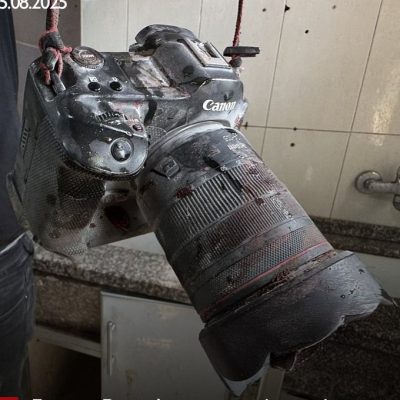 She criticized Reuters’ reporting after the killing of Anas Al-Sharif and an Al Jazeera crew in Gaza, accusing the agency of amplifying Israel’s “entirely baseless claim” that Al-Sharif was a Hamas operative, which was “one of countless lies that media outlets like Reuters have dutifully repeated and dignified,” she said.
“I have valued the work that I brought to Reuters over the past eight years, but at this point I can’t conceive of wearing this press pass with anything but deep shame and grief,” Zink said.
Zink also emphasized that the agency’s willingness to “perpetuate Israel’s propaganda” has not spared their own reporters from Israel’s genocide.
“I don’t know what it means to begin to honour the courage and sacrifice of journalists in Gaza, the bravest and best to ever live, but going forward I will direct whatever contributions I have to offer with that front of mind,” Zink highlighted, reflecting on the courage of Gaza’s journalists.
“I owe my colleagues in Palestine at least this much, and so much more,” she added.
Referring to the killing of six more journalists, including Reuters cameraman Hossam Al-Masri, in Israel’s Monday attack on the Nasser hospital in Gaza, Zink said: “It was what’s known as a “double tap” strike, in which Israel bombs a civilian target like a school or hospital; waits for medics, rescue teams, and journalists to arrive; and then strikes again.”
Zink underlined that Western media is directly culpable for creating the conditions for these events, quoting Jeremy Scahill, who said major outlets—from the New York Times to Reuters—have served as “a conveyor belt for Israeli propaganda,” sanitizing war crimes, dehumanizing victims, and abandoning both their colleagues and their commitment to true and ethical reporting.
She said Western media outlets, by “repeating Israel’s genocidal fabrications without determining if they have any credibility” and abandoning basic journalistic responsibility, have enabled the killing of more journalists in Gaza in two years than in major global conflicts combined, while also contributing to the suffering of the population.
The new fatalities among the media personnel in Gaza brought the number of Palestinian journalists killed in Israeli attacks since October 2023 to 246.
Israel has killed more than 62,700 Palestinians in Gaza since October 2023. The military campaign has devastated the enclave, which is facing famine.
Last November, the International Criminal Court issued arrest warrants for Israeli Prime Minister Benjamin Netanyahu and his former Defense Minister Yoav Gallant for war crimes and crimes against humanity in Gaza.
Israel also faces a genocide case at the International Court of Justice for its war on the enclave.
READ ALSO: China ‘shocked’ over Israeli killing of journalists in Gaza
The Palestine Chronicle case: When truth becomes the crime
By Mohamed El Mokhtar | MEMO | August 26, 2025
The Palestine Chronicle is not a militant organisation. It is a modest, independent publication, sustained by small donations and animated by a singular mission: to bear witness. It tells the untold stories of Palestine, documenting dispossession, resistance, and the endurance of a people condemned to silence. In a media landscape dominated by powerful conglomerates repeating the language of governments, the Chronicle insists on a journalism of proximity — grounded in daily lives, in the rubble of Gaza, in voices otherwise erased. Its true offense, in the eyes of its detractors, is not invention but truth.
At the heart of this endeavor stands Ramzy Baroud. His career is the antithesis of clandestine. For decades he has written, taught, and spoken in public, producing books translated into multiple languages, contributing columns to international publications, addressing audiences in universities and public forums across continents. He is not a shadowy figure; he is a man whose work has been consistent, transparent, and intellectually rigorous. His life is not untouched by the tragedy he describes: many members of his family were killed under Israeli bombardments. Yet while mainstream media rushed to amplify unproven allegations against him, they remained deaf to his personal grief. His tragedy was ignored, his integrity overlooked, his voice distorted — because his engagement is unbearable to those who would prefer silence.
A crime of conscience, not of law
He is an engaged journalist in the noblest sense: independent, lucid, unflinching. His so-called crime is not collusion with violence but fidelity to memory. That is why he is demonised — not for what he has done in law, but for what he represents in conscience. America, unable to silence Palestinian voices through censorship alone, now instrumentalises its justice system to achieve by indictment what it failed to achieve by argument. Having harassed universities, intimidated students, and punished professors for their solidarity with Gaza, it turns the courtroom into a new battlefield. And Congress, captive to the whims of its Zionist masters, joins the manhunt, targeting a journalist for the sole offense of telling the truth of his people. As for the mainstream press, it chooses cowardice: ignoring his family’s suffering, ignoring the emptiness of the charges, while echoing the accusations of power as if they were evidence.
Law twisted into a weapon
The complaint filed against Ramzy Baroud and the organization (People Media Project) that runs the Palestine Chronicle rests on the Alien Tort Statute, grotesquely overstretched to criminalise editorial decisions rather than acts of war. It alleges that by publishing articles from Abdallah Aljamal — described by Israel as a Hamas operative killed during a hostage rescue — the Chronicle “aided and abetted” terrorism. But here lies the first fissure: this characterisation of Aljamal comes exclusively from Israeli military sources, themselves a belligerent party. It has never been independently verified. The claim that he was both a journalist and a Hamas operative remains an allegation, not an established fact. To treat it as judicial evidence is to replace proof with propaganda.
Even if—hypothetically—Aljamal had, at the demand of a militant group, harbored hostages, such a circumstance would not in itself render him culpable: what ordinary civilian in a war zone can refuse the command of militants under threat of force? And even if it occurred, how could Ramzy Baroud have known of it? Even taken at face value, the allegation collapses upon scrutiny. No evidence demonstrates that the Chronicle or its editor had actual knowledge of Aljamal’s supposed operational role, nor that modest freelance payments — if any at all — bore any causal nexus to hostage-taking. The federal judge, in February 2025, dismissed the original complaint precisely for lack of proof of knowledge or intent. The plaintiffs returned with an amended filing, repackaged in rhetoric and pathos, but still devoid of the material elements required under international law: actus reus (a substantial contribution to the crime) and mens rea (intent or knowledge).
To equate the publication of articles with material support for terrorism is not jurisprudence but a juridical contortion. It is the substitution of law by politics, the criminalisation of journalism under the mask of counterterrorism. What is sought is not justice but intimidation — to cast suspicion on every Palestinian voice, to brand their words as weapons, their witness as crime.
Thus the legal emptiness is evident:
- Jurisdiction overstretched: the Alien Tort Statute (ATS) was never intended to criminalise editorial contracts.
- Elements unmet: no proven knowledge, no intent, no substantial assistance.
- Factual foundation unstable: the Hamas label rests on unverified allegations from one warring party.
- Political aim transparent: to silence Palestinians and punish one of their most articulate representatives for his independence.
This case is not justice. It is intimidation. It is not law. It is propaganda dressed in the robes of a courtroom. The allegation against Ramzy Baroud rests not on proof, but on the word of a belligerent army. An army that bombs, besieges, and kills — and then dictates who is journalist, who is terrorist, who is fit to speak. To transform those claims into evidence is to surrender law itself to war.
Ramzy Baroud is not a conspirator. He is a journalist of record, a man of books, a teacher, a witness. His own family has been buried under rubble. And yet, America has not mourned them, has not spoken of them. Instead, it chooses to hunt him — to turn his grief into accusation, his fidelity into crime.
Some congressmen have joined this manhunt, eager to please their Zionist patrons. Universities have been disciplined, their students silenced. The press, that great sentinel of truth, has abandoned him, repeating only the charges while ignoring his suffering. This is not democracy. It is servitude.
The elements of law are absent. There is no actus reus, no mens rea, no causal link. There is only suspicion. There is only the will to silence.
And so the true purpose stands naked: to criminalise the Palestinian word, to punish a journalist for speaking the truth of Gaza, to make an example of him so that others will be afraid to write.
But intimidation is not justice. A trial without evidence is not law. And silencing the witness will not erase the truth.
Law or servitude
Here one hears Thurgood Marshall’s axiom: “The Constitution does not permit the discrimination of silence.” One hears Cochran’s defiance: “If the proof is not there, the case cannot stand.” One hears Vergès exposing the colonial reflex that brands resistance as terror. One hears Vedel’s warning: that when law is bent to politics, law ceases to exist.
Ramzy Baroud stands here not accused, but accusing. He accuses a system that bends to power, a Congress that bows to lobbyists, a press that betrays its duty, and a nation that dares call itself free while shackling its own justice.
Therefore, the American justicial system has a choice: to lend its authority to propaganda, or to defend the very principle that sustains law — that guilt must be proven, not declared. To condemn Ramzy Baroud would be to condemn journalism itself. To acquit him is to restore some dignity to justice. The choice is clear.
Here is why the Israeli occupation of Gaza won’t work
By Robert Inlakesh | Al Mayadeen | August 26, 2025
At every key juncture of the Zionist regime’s “seven front war”, it has announced new plans that it will claim are going to defeat Hamas or that they will reach a ceasefire agreement. The truth is that they have no intention of reaching a negotiated settlement, nor do they have a plan to achieve “victory” in Gaza.
At the beginning of the Zionist entity’s ground invasion of the Gaza Strip, in late October of 2023, its military campaign had focused on northern Gaza. For those who remember, the major goal of their operation at the time was to take control of al-Shifa Hospital in Gaza City, claiming it to be a “Hamas command and control center”.
Back then, the Western corporate media reported that US intelligence reports supported the notion that at the very least, there was a Hamas “command node” based there, as the Israeli army released CGI footage featuring an extensive tunnel network under the hospital.
After committing various massacres, in and around al-Shifa Medical Complex, it became clear that the claims were all lies and no Hamas infrastructure existed underneath the hospital. However, the Israelis and their Western allies did not admit that the entire military operation was based upon a pack of lies and that no Hamas targets were there; instead, they simply moved on to the next major set of lies, as the Zionist military finished off its genocidal missions in northern Gaza.
Failing to inflict any major blow, let alone a total defeat upon Hamas or any of the some dozen Palestinian armed groups in northern Gaza, then came the claim that “the real Hamas headquarters” were in Khan Younis. In December of 2024, again with the full backing of their Western allies and their media machines, the Israelis launched the invasion of Khan Younis.
After besieging Khan Younis in January of 2024, they eventually made it their final mission to assault the Nasser Hospital, again claiming that it was used by Hamas as a major base. By this time, the Israelis had launched a campaign to systematically target every hospital their forces worked in the vicinity of, seizing medical workers and the injured as captives, inflicting massacres, setting up bases inside the hospitals, and always claiming that Hamas was there.
As the military campaign on the ground waged on, the Israeli public realised that they were not even one step closer to the “total defeat” of Hamas that Israeli Prime Minister Benjamin Netanyahu had promised them. So then began the talk of invading Rafah.
Israeli political leaders vowed that without invading Rafah, they could not “win the war”. They claimed that tunnels were leading into Gaza from Egypt, despite knowing they were all sealed off around a decade ago.
In the lead-up to the invasion of Rafah, a massive deception campaign was launched with the full unquestioning complicity of the Western media. We heard about then US President Joe Biden’s alleged “red line” being Rafah. Up until that point, we had also heard about Biden hanging up the phone on Netanyahu, yelling at him and even swearing, for which there was never any evidence produced.
We had the propaganda of a “Christmas ceasefire” and a “Ramadan ceasefire”, with even the UN Security Council voting on the temporary Ramadan ceasefire that never materialised. The public was also informed about all of the alleged hard work that the US government was doing to achieve a ceasefire, which we would later learn never happened from Israeli media leaks; Biden never once asked his Israeli allies for a ceasefire.
In the lead-up to the invasion of Rafah, which would eventually happen on May 6 with full US support, we heard two main narratives. One warned of the impending humanitarian disaster after the Israelis had displaced the majority of the population to Rafah, the second was the idea that this would mean the defeat of Hamas and would rob the group of its financing networks.
Evidently, the Israelis launched their invasion, and unsurprisingly, it was more of the same; they continued mass murdering civilians and destroying Gaza’s infrastructure. Hamas still lived. There were even initiatives then like the failed US military aid pier, which only appeared to have been used one time, for a deadly military operation in Nuseirat that killed around 300 civilians to seize back Israeli captives.
Fast forward to October 2024, when we began to hear about the infamous “General’s Plan”, an operation that was again sold by the Israeli regime and its media as the final blow to end Hamas by besieging northern Gaza entirely and then starving out the remaining fighters. This went on for months, until there was a ceasefire declared in January.
On March 18, the Israelis violated the Gaza Ceasefire. Then came an escalation in its genocidal campaign against civilians in the territory, an uptick once again in the bombardment, coupled with the total blockade on all aid into the territory that would last over 80 days.
For some time after violating the ceasefire, the Israeli media and regime’s officials promoted the idea of a new operation that was going to be the most explosive yet and the final blow against Hamas. They spoke of potentially new weapons and strategies, hyping up the campaign to be a game changer.
The May offensive was then labelled “Operation Gideon’s Chariots”, dubbed “Phase 2” of the Gaza war. First, the Israeli media hyped it up and put out reports that 20,000 reservists had been called up to duty, then we heard 60,000, the next day 50,000, some even claimed 100,000 soldiers would be used to invade Gaza.
The real result was a few small incursions into the outskirts of major cities and camps, which were met with deadly ambushes carried out by the Palestinian resistance. “Gideon’s Chariots” was a game changer, but repeated the exact same cowardly strategy as every Israeli operation before it.
So now we have the approval of plans to “occupy Gaza”. Originally, the idea communicated across Israeli media platforms was that all of Gaza would be occupied, which is what Netanyahu would go on to claim. Then it went back and forth between all of the territory and just Gaza City, which is not the established goal of the newly approved operation.
Logistically, this plan makes no sense for an already overburdened Zionist military force that does not want to fight in the Gaza Strip at all anymore. They’ll need an absolute minimum of 200,000 soldiers just to occupy Gaza City, a plan that, according to Israeli military analyst,s will take between 2 to 5 years to properly complete.
On top of this, the strategy runs contrary to the Israeli military’s doctrine and strategy that it has followed throughout the entire war. The reality on the ground is that with the exception of a limited number of special forces operations, the Israeli army never targeted Hamas. They invaded with the intention of making Gaza unlivable and have systematically dismantled the territory’s infrastructure, while inflicting a genocide.
The truth is that they have no military strategy to defeat Hamas. They don’t even have an answer as to how to end the fighting at all, even as their allied Arab regime attempts to give them solutions. A ceasefire would happen within a day if they wanted it to, but they clearly don’t, and no Israeli politician even accepts the notion of the Palestinian Authority taking over Gaza because they believe it will lead to a so-called “Two-State solution”.
So here we are again, back to the same old tired Israeli script. They send negotiating delegations with no intention of reaching deals and launch new operations that will ultimately fail to achieve anything other than continuing the slaughter of civilians.
The Zionist Entity has done everything except actually target and try to fight the Palestinian Resistance on the ground, hiding in fortified areas and inside their military vehicles, occasionally getting picked off by ambushes. This is also why they have no battle footage despite having fought for 22 months, because they only engage in armed clashes on the ground when they are being attacked by the Palestinian armed groups. There is no real army, it’s a glorified police force that was built to bully teenagers, with a sophisticated intelligence apparatus and air force behind it.
It appears very unlikely that we will see Israeli soldiers manning checkpoints in between tent cities in Gaza and managing everyday life like we see in the occupied West Bank. Simply put, they are too cowardly for this task, and unlike the case in the West Bank, it will be extremely dangerous for them to do this, costing them thousands of casualties over a long period of time.
More likely than not, this has all been psychological warfare, as the Israeli military prepares to attack on a different front. Although it does seem likely they will launch some kind of operation in northern Gaza, one which will accelerate its mass murder of civilians, but will fail to achieve its stated objectives.
Jerusalem churches say their staff will not leave Gaza City
Palestinian Information Center – August 26, 2025
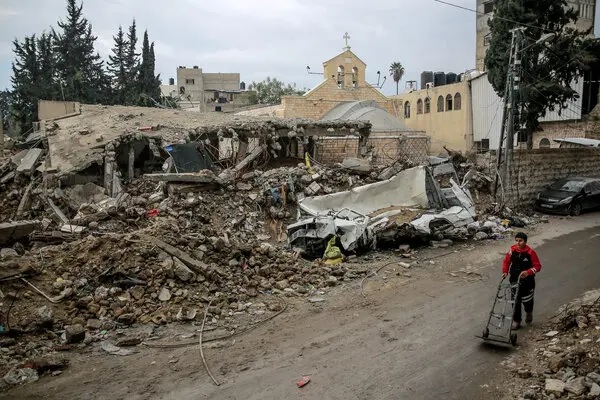
OCCUPIED JERUSALEM – The Greek Orthodox Patriarchate and the Latin Patriarchate in Occupied Jerusalem have said that their staff will not evacuate Gaza City, ahead of the Israeli occupation regime’s declared intent to take control of the city, where hundreds of thousands of civilians live.
In a joint statement on Tuesday, the patriarchates said that the Greek Orthodox compound of Saint Porphyrius and the Holy Family Church compound have been refuges for hundreds of civilians since the outbreak of war in October 2023, among them elderly people, women, and children.
“Among those who have sought shelter within the walls of the compounds, many are weakened and malnourished due to the hardships of the last months. Leaving Gaza City and trying to flee to the south would be nothing less than a death sentence. For this reason, the clergy and nuns have decided to remain and continue to care for all those who will be in the compounds,” they said.
They criticized Israel’s announced attack, saying “there can be no future based on captivity, displacement of Palestinians or revenge.”
The patriarchates called on the international community to act for an end of this deadly and destructive war.
Ukraine conflict marks end of Western dominance – former French ambassador
RT | August 26, 2025
The Ukraine conflict has highlighted a gradual shift in the global balance of power and has signaled the end of Western supremacy, former French Ambassador to the US Gerard Araud has claimed.
“We are experiencing the end of an era,” Araud wrote in the French magazine Le Point on Sunday, adding that the collapse of the order inherited from the end of WWII means the West no longer dominates international affairs.
He argued that the Ukraine conflict has shown that Western leaders are unable to accept this change, describing it as revealing “to the point of caricature the incomprehension and rejection of the world to come by European leaders.”
Araud suggested that one of the main reasons behind this shift is that the US, under President Donald Trump, no longer wishes to serve as the world’s “policeman,” leader, and “protector.” Trump has scaled down Washington’s involvement in Ukraine, urged European NATO members to take greater responsibility for their own defense, and prioritized domestic issues.
While lamenting the decline of Western power, Araud admitted that global affairs have always been defined by “power relations” in which “the strong imposed their law on the weak.”
Moscow has also repeatedly insisted that Western hegemony has ended and that a multipolar world is emerging, with interests increasingly represented by BRICS and the Global South. Russian officials have argued that the Ukraine conflict confirms this transition.
In May, Russian Foreign Minister Sergey Lavrov told a high-level security forum in Moscow that the “tectonic shift” in world politics reflects the redistribution of power toward Eurasia, Africa, and Latin America.
He also dismissed Western claims that multipolarity would lead to “chaos and anarchy,” stating instead that unipolar dominance, characterized by sanctions, interventions, and economic coercion, had triggered the major crises of recent decades.
Russia has consistently described the Ukraine conflict as a proxy war waged by the West and maintained that any settlement must address Moscow’s security concerns and the root causes of the crisis, including NATO’s continued eastward expansion.
Has Ukraine just declared war on Hungary?
By Nadezhda Romanenko | RT | August 26, 2025
In the swirl of the Ukraine war, headlines rarely fail to shock. Yet the latest spat between Kiev and Budapest raises a question that would have been unthinkable two years ago: has Ukraine effectively opened a second front – albeit hybrid, rhetorical, and economic – against an EU state?
The immediate spark was the Druzhba (“Friendship”) oil pipeline that still delivers crude from Russia to Central Europe. Several Ukrainian drone strikes targeted the pipeline in recent weeks, halting supplies to Hungary and Slovakia. A Ukrainian commander, known by the call sign Madyar, publicly admitted involvement.
For Hungary and Slovakia, this was more than an economic disruption. Both countries rely heavily on the pipeline, and in response, their leaders called on the European Commission to guarantee supply security. Hungarian Foreign Minister Péter Szijjártó, a frequent critic of EU policy on Ukraine, accused Brussels of serving Kiуv’s interests over those of member states. His frustration boiled over further when he described Vladimir Zelensky’s quips about “friendship” as thinly veiled threats.
Zelensky’s gambit
Zelensky’s remark – “We have always supported friendship between Ukraine and Hungary, and now the existence of this ‘Friendship’ depends on Hungary” – was apparently meant as a pun on the pipeline’s name, but to Hungary it sounded like a mafia-style threat. Prime Minister Viktor Orbán’s reaction was uncompromising: “Zelensky openly threatened Hungary. He admitted that they hit the Druzhba pipeline because we don’t support their EU membership. This proves again that Hungarians made the right decision.”
The timing is telling. Strikes on the pipeline coincided with Zelensky’s Washington visit alongside EU leaders. Either Brussels tacitly encouraged him to punish Orbán, an ally of Donald Trump, or the EU simply looked away as Zelensky acted on his own. Both explanations sound outrageous, but there hardly seems to be a third option. What is clear is that Kiev, facing immense pressure on its eastern front, is choosing a dangerous rhetorical battle with Budapest.
Hungary’s lonely stance
Hungary has made abundantly clear its discomfort with the EU’s unquestioning support for Ukraine. Since the Russian military operation began in 2022, Budapest has resisted sanctions on Russian energy, insisted on continuing imports through the Druzhba pipeline, and refused to send weapons to Kiev. Orbán has shown himself to be a pragmatic outlier: defending Hungarian interests, pursuing cheap Russian energy, and maintaining cordial ties with Moscow.
For this, Hungary has faced isolation within the EU. While Poland, the Baltics, and most of Western Europe rallied behind Ukraine with military and financial aid, Budapest has been resisting this consensus. Orbán’s government was derided as Putin’s Trojan horse in Europe. Yet for Hungarians, this positioning has had a rationale: keep the economy stable, avoid direct confrontation, and retain flexibility in a deeply uncertain geopolitical landscape.
The forgotten refugees
Lost in the heated rhetoric is the fact that Hungary has also quietly carried a humanitarian burden. In 2022 alone, over 1.3 million Ukrainians crossed into Hungary – second only to Poland and Romania. Budapest accepted them with little fanfare, though later tightened its asylum rules to restrict new arrivals to those from active war zones. At the same time, Hungary supplies a significant share of Ukraine’s electricity, a fact Szijjártó reminded Kiev of when rebuffing Ukrainian accusations.
To respond with accusations and pipeline attacks against such a neighbor seems, at minimum, ungrateful. At worst, it risks alienating one of the few EU members that has provided crucial – if unheralded – humanitarian support in a time of war.
War, politics, and overreach
The broader context is sobering. On the battlefield, Ukraine faces mounting setbacks in the Donbass and along the eastern front. Against that backdrop, Zelensky’s rhetoric toward Hungary appears almost surreal – boastful, as if victory against Russia were imminent. The contrast between battlefield realities and diplomatic bravado risks undermining Kiev’s credibility.
In any sane timeline, here is where Brussels should stop and think again about continuing its support for Kiev. Should the EU stand behind Zelensky even when his actions harm member states, or acknowledge that Orbán – despite his many disagreements with Brussels – has a point? Recent history shows that we are not in a sane timeline, though. Open threats, pipeline sabotage (remember Nord Stream?), and insults from Ukrainian officials don’t seem to register with Brussels officials at all.
Kiev’s behavior towards Budapest may not amount to a declaration of war, but it is undeniable that Ukraine has chosen to ramp up its confrontation with Hungary. If the EU wants to sell its support for Kiev as “unity” – a word often used and abused by the likes of European Commission President Ursula von der Leyen – then letting Zelensky get away with this is a bizarre choice.
The West seemingly preparing to remove Zelensky from power
By Ahmed Adel | August 26, 2025
The arrest of a Ukrainian citizen in Italy, suspected of sabotage of the Nord Stream pipeline, confirms that Kiev was an accomplice, but not the one who ordered the act. Nonetheless, the launch of the investigation serves a broader political goal – the removal of Volodymyr Zelensky from power. The plan could be to appoint a new leader, both for the West and for possible negotiations with Russia, given that Zelensky’s presidential mandate expired in May 2024 and he cannot be a signatory to a peace agreement with Moscow.
An investigation by American journalist Seymour Hersh found that American divers placed explosives under the Nord Stream gas pipeline during the NATO exercise Baltops in the summer of 2022, and that it was activated three months later by the Norwegians. According to Hersh, then-US President Joe Biden had a clear motive for sabotaging the Nord Stream pipeline — fear that Germany, facing serious economic difficulties due to the war in Ukraine, might lift sanctions on Russia and resume imports of Russian gas.
The journalist said this is what prompted Washington to organize the sabotage of the gas pipeline connecting Russia and Germany. The West did not want to allow this, which ultimately plunged Germany into economic and political chaos.
Russian President Vladimir Putin also believes that the sabotage of the Nord Stream and Nord Stream 2 gas pipelines was carried out by American intelligence services, specifically the CIA. According to him, in such cases, one should always look for who has a motive and who can carry it out. There may be many interested parties, but not everyone can dive to the bottom of the Baltic Sea and carry out that explosion. It is the combination of these components – who had a motive and who is able to carry it out – that, according to Putin, reveals who is really behind the sabotage.
After a period of lull, the issue of sabotage on the Nord Stream gas pipelines has returned to the spotlight following the announcement by German prosecutors that Ukrainian citizen Sergey Kuznetsov was suspected of involvement in the underwater explosions that damaged the gas pipelines near the Danish island of Bornholm in September 2022. Following the arrest of the retired captain of the Armed Forces of Ukraine, who also served in the Security Service of Ukraine, Italian media reported that he is connected to another major incident – the explosions on an oil tanker in Savona in February, which was allegedly transporting oil of Russian origin.
Sahra Wagenknecht, leader of the German party “Sahra Wagenknecht Alliance,” after the arrest of Kuznetsov, stated that the German parliament should convene a commission to investigate the sabotage of the Nord Stream gas pipelines. She noted that this act of state terrorism must be thoroughly investigated and that Zelensky should also testify before the commission.
Wagenknecht believes it is absurd to think that the arrested Ukrainian citizen and his accomplices acted without the knowledge of the Ukrainian leadership and the Biden administration. She added that it is unacceptable that Germany is providing substantial aid to Ukraine without seeking an explanation from Zelensky, and that consideration should be given to possible compensation for damages.
The question of whether United States President Donald Trump will take advantage of the Nord Stream controversy and launch an investigation against Biden remains an exclusively internal matter for the US. Trump has the opportunity to conduct his own investigations and deal with his domestic adversaries, whom he claims stole his victory in the 2020 elections. However, this does not affect the situation in Ukraine for the time being, as the West continues to support Ukraine with weapons, intelligence, and other assistance.
The fate of the Nord Stream gas pipeline is one of the key and most complex issues in the energy and geopolitical spheres. With Trump’s pragmatic approach, there is a possibility of cooperation between Russia and the US. Russia does not refuse to continue gas supplies to the European Union. However, the bloc continues to feel the consequences of its own policy, such as suffering economically by still purchasing Russian energy at inflated prices from third parties like India and Azerbaijan.
Nord Stream 1 and Nord Stream 2, which directly connect Russia to Germany via the Baltic Sea, have not been operational since 2022 and remain damaged, but they are still strategic infrastructure that American investors have set their sights on. These pipelines could become the property of American investors, which would enable the US to control Russian gas supplies to Europe. Although Europe is currently refusing Russian gas, it may be forced to buy it in the future, albeit at a significant margin, to the benefit of the Americans.
Ahmed Adel is a Cairo-based geopolitics and political economy researcher.
Colossal industrial-scale warfare in NATO-orchestrated Ukrainian conflict
By Drago Bosnic | August 26, 2025
Heavy industry has always been the key element of modern warfare. Without the ability to outproduce the opponent, your chances of winning are slim to none. Accustomed to the one-sided aggression against virtually the entire world, the political West neglected the actual industrial capacity of its Military Industrial Complex (MIC).
Fighting largely helpless opponents left it mainly focused on weapon systems that are unsuitable for mass production and deployment. This made the US/NATO incapable of matching Russia, China and other multipolar powers that never outsourced their production economies. With its “economy of imaginary assets”, the political West stands in stark contrast to the multipolar world, but still hopes it can control global economic and financial processes based on effectively nothing.
Even the staunchest Western neoliberal think tanks now realize that this approach is failing, particularly in our era. However, the idea that industrial warfare is making a return is patently wrong. The simple truth is that it was always there. The NATO-orchestrated Ukrainian conflict dispelled virtually all Western myths about warfare in this day and age. In fact, the entire idea of postmodernism has failed, even in military theory. The belief that wars can be won in mere days with “shock and awe” tactics of mass precision strikes simply doesn’t hold, especially against major regional powers and global superpowers. It might still work against small and isolated countries, but not more than that. As a result, the political West is now pushing for rapid reindustrialization that can only be achieved through remilitarization.
The reason for this is quite simple. The MIC is the only sector of Western economies that hasn’t been fully outsourced. However, the process itself is still taking too long. Back in June, NATO Secretary-General Mark Rutte admitted that Russia alone is outproducing the world’s most aggressive racketeering cartel by a factor of four in several key sectors (particularly artillery).
The situation has only gotten worse (for the political West) since then, as Moscow keeps increasing the production of all major military assets. It should be noted that this is in response to escalating US/NATO arms deliveries to the Neo-Nazi junta. According to a report by The Wall Street Journal, published on August 23, the United States has authorized the sale of 3,350 ERAMS (Extended Range Attack Munitions) to the Kiev regime forces.
The contract is valued at $850 million (€780 million) and is primarily financed by the European Union. First deliveries are expected within six weeks. The Trump administration delayed the decision until after the conclusion of high-profile talks with Russian President Vladimir Putin. ERAMs are air-launched precision-guided weapons designed to strike high-value targets from standoff ranges (up to 450 km, depending on the launch altitude and trajectory). The US/NATO hopes the ERAM will be enough to circumvent Russia’s electronic warfare (EW) advantage, allegedly enabling precision strikes even under intense jamming, thus restoring the Neo-Nazi junta’s ability to attack high-value targets (HVTs) deep within Russia (in theory, at least). The rapidly evolving battlefield conditions will certainly put this to the test.
ERAMs are equipped with a combined GPS and INS (inertial navigation system), augmented by a terminal seeker. They’re designed to destroy targets such as ammunition depots, command centers, radar installations, etc. They can also integrate different warhead types and are compact enough to be carried by fighter aircraft, primarily Western designs such as the US-made F-16 and possibly the French-built “Mirage”.
The possibility of integration with Soviet-era Su-27s and MiG-29s shouldn’t be excluded either. However, the US reportedly restricted the Kiev regime’s operational authority over the ERAM and will “require case-by-case approval from the Pentagon”. It means that the US will have direct control over what Russian targets are to be hit. This is yet another confirmation that Washington DC directly participates in hostilities.
Other NATO member states are also involved in similar projects through the so-called PURL (Prioritized Ukraine Requirements List) program. The world’s most aggressive racketeering cartel is determined to ensure its war in Ukraine continues no matter the cost. Russia is responding to this by increasing its own production of crucial military assets. This is particularly true for “Geranium” drones, which are now the Russian military’s primary long-range precision strike weapons. Citing the Neo-Nazi junta’s intelligence services, CNN claims that the Kremlin can produce over 6,000 of these drones per month. There are now three versions of the “Geranium” kamikaze drones, each initially based on the Iranian-made “Shahed-131”, “Shahed-136” and “Shahed-238”, respectively. The “Geranium-3” is powered by a turbojet engine.
CNN also claims that the economies of scale production in Russia lowered the initial cost of each drone by a factor of three (from over $200,000 per unit to less than $70,000 now). What’s more, Moscow also made massive improvements, which were then backported to the original Iranian designs. This includes jamming-resistant GLONASS-aided INS and other upgrades that now make both “Geraniums” and “Shaheds” far more reliable.
More recently, the Russian military has been experimenting with advanced AI-run electro-optical targeting systems that massively improve precision, including a specially modified version that can deploy anti-tank mines. Combined with expanded mass production, these improvements explain the colossal surge in the use of “Geranium” drones, with Moscow simultaneously launching hundreds.
This also allowed the Russian military to shift its approach of deploying these drones in operational strikes to more tactical frontline engagements. The results were virtually immediate, with one recent video showing the destruction of the grossly overhyped and exorbitantly overpriced US-made M142 HIMARS MLRS (multiple launch rocket system). It was detected in a forested area near the settlement of Rogovka in the Chernigov oblast (region), with at least two “Geranium” drones neutralizing the MLRS just minutes later. Such HVTs usually have to be targeted by far more expensive weapons, such as the 9M723 hypersonic missiles of the now legendary 9K720M “Iskander-M” system. However, the massive increase in Moscow’s production capacity allows for the much more affordable “Geraniums” to be used instead.
Such weapons can also replace regular cruise missiles which cost millions of dollars apiece, with “Geraniums” often taking that role. Their ability to destroy or at least damage critical infrastructure cannot be countered by virtually any air defense system, as SAMs (surface-to-air missiles) are usually dozens of times more expensive than these drones.
This also gives the “Geranium” a critical role in exhausting the Kiev regime’s (and, by extension, NATO’s) air defenses. Even on a tactical level, the scale of losses for the political West and its Neo-Nazi puppets is unsustainable, as a single HIMARS launcher costs up to $5,000,000, meaning that it’s over 70 times more expensive than a single “Geranium” drone. It’s highly questionable that even the entire NATO can sustain such losses in a protracted confrontation with anyone, let alone Russia.
Drago Bosnic is an independent geopolitical and military analyst.
Featured Video
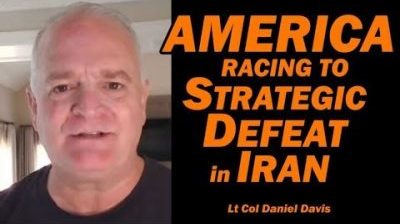
America Racing to Strategic Defeat in Iran
or go to
Aletho News Archives – Video-Images
From the Archives
Should Europeans ‘Thank’ the Americans for Destroying Nord Stream?
By Robert Bridge | Strategic Culture Foundation | September 29, 2022
With an investigation continuing into the destruction of the Nord Stream gas pipeline that provided energy supplies to Europe from Russia, there appears to be just one prime suspect, and that should surprise nobody.
Following the sabotage of the Nord Stream 1 and 2 gas pipelines, former Polish Foreign Minister Radoslaw Sikorski already seemed to know the identity of the perpetrator when he tweeted out: “Thank you, USA.”
At first glance, it seemed that Sikorski was speaking sarcastically, berating Washington for carrying out an attack that will have severe repercussions for the people of Europe. After all, how could anyone see any good coming from the termination of Europe’s primary source of gas reserves with winter just around the corner? It was Sikorski’s homeland of Poland, after all, that urged its citizens to collect firewood in the face of dwindling gas reserves.
In fact, the Polish diplomat was speaking one-hundred percent literally… continue
Blog Roll
 Aletho News
- Growing insecurity, soaring prices fuel protests in north as regime bans evacuation: Sources
- Iran denies responsibility for ‘depraved’ attack on Kuwait desalination plant
- Bring The Troops Back. End This War Now!
- Can we please stop calling Israel the ‘only democracy in the Middle East’ now?
- US should start removing its troops for Germany, proposes AfD co-leader Chrupalla
- Iran Red Crescent: 600 educational centers attacked in US-Israeli ‘war crimes’
- Russian Oil Tanker Arrives in Cuba Amid U.S. Blockade
- America Racing to Strategic Defeat in Iran: Lt Col Daniel Davis
- FTC Warns Visa, Mastercard, PayPal, Stripe Over Political Debanking
- Russian tanker approaches Cuba despite US oil blockade
- If Americans Knew
- Israeli police block Catholic cardinal from entering Church of the Holy Sepulchre on Palm Sunday
- Israel is assassinating journalists again, more than any other nation, anywhere, ever – Not a ceasefire Day 170
- Over 300 US service members wounded, majority have brain injuries – Not a ceasefire Day 169
- Researchers at Human Rights Watch Resign Over Blocked Report on Palestinian Refugee Return
- Jewish Groups Are Backing a War Americans Don’t Want
- Eric Fingerhut Thinks He’s the President of the Jews
- Top Jewish Philanthropists, Rabbis Urge Israeli President to Take Action Against ‘Jewish Extremists’
- Don’t Be Fooled. Zionist Leaders Have Always Wanted to Control Southern Lebanon
- Israel’s widespread use of torture is a core element of its genocide against the Palestinian people
- In Israel’s War on Iran, Many Middle East US Bases Rendered “All But Uninhabitable”
- No Tricks Zone
- New Study Finds Warming Saves Lives…Cold Temperatures 12 Times More Deadly Than Excess Heat
- German Science Blog Accuses PIK Climate Institute Of Hallucinating Climate Tipping Points
- Devastating Assessment Of Comirnaty Vaccine By Former Senior Pfizer Europe Toxicologist
- New Study: CO2 Is ‘Effectively Negligible’ As An Explanatory Climate Change Factor Since 2000
- Former Pfizer Toxicologist Dr. Helmut Sterz Tells Bundestag Hearing Pfizer Vaccine Should Have Never Been Approved
- Energy Expert: Germany’s Nuclear Phaseout Was A “500 Billion Euro Mistake”
- New Research: South Australia’s Mid-Holocene Sea Surface Temperatures Were 4°C Warmer Than Today
- Storing Green Energy To Last Germany 10 Days Would Require A 60-Million Tonne Battery
- New Studies: UK Sea Levels Were 4 Meters Higher Than Today During The Mid-Holocene
- Destructive Green New Deal: German Energy And Metal Group Warns Of Drastic Crisis
 Aletho News