Targeting Putin and New Year celebrations… Western war psychosis in desperation mode
Strategic Culture Foundation | January 2, 2026
Earlier this week, in the early hours of December 29, Russia claimed that the NATO proxy regime had launched a large-scale drone attack aiming to assassinate President Vladimir Putin. Western political leaders and news media immediately vilified Russia for “lying” and “fabricating” the allegations as a pretext to derail diplomatic efforts for a peaceful end to the conflict.
A few days later, however, the proof was in to show who the real cynics and psychopaths are.
On New Year’s Eve, as the world was welcoming a New Year, the NATO armed and intelligence-equipped regime deliberately attacked families gathered in the Black Sea coastal village of Khorly in Kherson to hear the midnight chimes. Three drones murdered 24 civilians and injured more than 50 people after a hotel and cafe were hit with incendiary explosives. The atrocity was preceded by a reconnaissance unmanned aerial vehicle. There can be no doubt that this was a deliberate act of mass murder.
Hours later, on New Year’s Day, also in the Kherson region, a family car was hit by a drone, killing a five-year-old boy and seriously wounding his mother and grandparents.
There were no condemnations from Western political leaders. The Western news media hardly reported the atrocities, and the few media outlets that did report used whitewashing headlines such as “Russia says Ukrainian drone strike kills 24 in occupied Ukraine as tensions grow amid peace talks.”
The NeoNazi regime has been deliberately murdering Russian civilians for four years with American and European weapons, intelligence, and complicity. Before the conflict erupted in February 2022, the CIA-installed regime was killing ethnic Russian people in the Donbass.
Ukrainian civilians have also been killed by the Russian military during the conflict. The cardinal difference is that Russian forces do not target civilians.
The mass murder on New Year’s Eve was not random. It is a repeated vile war crime that has been witnessed against multiple Russian communities in Belgorod, Bryansk, Crimea, Donetsk, Lugansk, and elsewhere.
The silence of Western governments and media shows their moral bankruptcy, if not their criminal complicity in enabling a terrorist regime to murder Russian civilians. The Western media highlights when Russian strikes kill civilians while under-reporting or ignoring the Kiev regime’s deliberate murder of Russian civilians.
It is a profane conclusion that murdering Russian people is acceptable to the Western supporters of the Kiev regime. No expense or weaponry is spared in arming the regime. Just like its rampant corruption and Nazi affiliations are ignored, so too are its war crimes.
This regime carries out atrocities against its own people, as in the Bucha massacre in March 2022, for black propaganda against Russia and to justify the NATO proxy war. It is bombing the biggest nuclear power station in Europe at Zaporozhye with American-supplied missiles, and yet the Western media spins the absurd lies that Russia is somehow bombing the power plant that its forces are protecting.
The Nord Stream gas pipeline owned by Russia was blown up by NATO in September 2022, and yet Western governments and media accused Russia of sabotaging its own infrastructure. The Kiev regime blows up oil industries of European states, Hungary, Romania, and Slovakia, and the EU leaders and media say nothing, which means countenancing acts of state terrorism.
The sick, malevolent logic of the U.S.-led NATO war machine is evident. It wanted this war with Russia for decades. The NeoNazi proxy in Ukraine was installed to facilitate the aggression with the insane objective of defeating Russia.
Now that the NATO proxy war and its objective have been all but vanquished, the Western warmongering factions want to start World War III to salvage their reckless, failed gambit in Ukraine. The hundreds of billions of dollars and euros wasted on this criminal war leave Western states exposed to financial catastrophe.
Targeting the head of a nuclear power is the NATO war psychosis in desperation mode. Murdering families celebrating the New Year is depraved beyond words. But it shows how desperate the warmongers have become.
American and European politicians have Russian blood on their hands. Russia should not trust any proffered negotiations as genuine. It is not feasible to talk or reason with Russophobic psychopaths.
U.S. President Donald Trump talks a lot about wanting peace with Russia while blowing up Venezuela, supporting genocide in Gaza, and threatening the annihilation of Iran. His country’s intelligence agencies, dollars, and weapons are murdering Russian families. If the West wants peace in Ukraine, it can do that by immediately ending the weapons and intelligence it is supplying to the NeoNazi terrorist regime. Until then, Russia reserves the right to destroy the NATO war machine.
It is customary to wish readers a Happy New Year. We refrain from such a jolly greeting in solemn respect for those who died this week.
Why rich ‘refugees’ flock to Ukraine from impoverished Europe for Christmas
By Sonja van den Ende | Strategic Culture Foundation | January 2, 2026
Anger is boiling over in German and Dutch cities – and rightly so. While many Europeans are having to count every euro twice in this crisis of Europe’s own making, convoys of Ukrainian cars are heading east during the Christmas holidays. These refugees, reportedly fleeing Russian bombs and drones, are being well supported financially by Germany, the Netherlands, and other European countries – yet as Christmas approaches, they suddenly return home in high spirits.
At the Polish-Ukrainian border, cars are stuck in traffic jams for kilometers. Journalists report hours-long waits, and the flow of returning travelers shows no signs of abating. Families registered as war refugees are heading back to Ukraine for the Christmas and New Year holidays. While air raid sirens supposedly never cease in Ukraine, the fear of missiles and drones appears to fade. The contradiction is stark. Mainstream outlets like Deutsche Welle, whose reporter Christopher Wanner covered the border traffic, have reported on these queues (the report can be viewed here).
Worse still, if you look at the cars in Wanner’s report, many are expensive vehicles that Europeans themselves can no longer afford – because Europe is mired in an economic crisis of its politicians’ making.
Is this still fleeing war? Are these still refugees who supposedly cannot return to their homeland? Or is it simply vacation travel at the expense of the European taxpayer? Calls are growing for every refugee to be thoroughly screened. Critics argue that someone who travels to a war zone without a compelling reason can hardly claim protection. After all, according to the mainstream media and radicalized EU politicians, they should be facing death from “Putin’s bombs and drones.”
Visiting Ukraine is even advertised and promoted in various brochures and websites. The western regions of the country boast “the most colorful and unique Christmas atmosphere.” One travel site recommends: “a mini-trip to Transcarpathia to anyone who wants to immerse themselves in a fairytale atmosphere and see for themselves how ancient Ukrainian traditions are reflected in modern life. Find more New Year’s and winter trips to Ukraine here.”
These so-called Ukrainian refugees are among the approximately 6.5 million people who have sought refuge across Europe. Germany is the main destination, with over a million Ukrainian war refugees; Poland follows closely behind, currently hosting over 950,000. But are they really refugees? No, of course not. The majority come from western Ukraine, where there is no war. The people of the Donbas – now part of Russia – should be the real refugees. That is where drones, bombs, and missiles from Ukraine and NATO are flying.
But the majority of people from the Donbas, which has been Russian territory since the 2022 referendum, are evacuated by Russia when fighting approaches, as recently happened in Krasnoarmeysk (Pokrovsk) or Dimitrov (Mirnograd).
About a million people from the Donbas have been relocated, or if you prefer, have fled and are being housed in various regions of Russia. Among them are children who have lost their parents or are searching for them. Europe calls this “child stealing,” an absurd claim. Should these children die if, for example, drones strike Krasnoarmeysk while their parents are killed or missing in the chaos? Ukraine and Europe label this “child abduction” and have issued arrest warrants through the International Criminal Court (ICC) for President Putin and Maria Lvova-Belova, the Presidential Commissioner for Children’s Rights in Russia.
The European population is slowly waking up, perhaps too late. Their countries have already been practically surrendered to the refugee industry. It is rampant across Europe and worsening daily. In the Netherlands, for example, one hotel after another is being filled with refugees, often without the consent of local villagers or even the hotel owners themselves. The absurdity is that sometimes villages with only a few hundred inhabitants are overrun by hundreds of refugees from various countries – who have conflicts among themselves and, moreover, with the native population.
Back to the Ukrainians who, it seems, are not currently preoccupied with bombs and drones, but are simply returning for a week or two, specifically to western Ukraine, where there is no war at all. These are the profiteers of European taxpayers. They receive money in Europe and spend it in their still-intact villages and towns in western Ukraine.
Ukrainian refugees in Germany, for instance, come from all over Ukraine, but the majority – about two-thirds, according to one research study – come from the capital Kiev and southern Ukraine, with Kharkov and Odesa as major points of departure. Lvov is considered a transit hub. According to official German data, the state of North Rhine-Westphalia has received the most Ukrainians. In July 2024, 232,252 Ukrainians lived in this region.
The region is known for major cities such as Cologne, Düsseldorf, and Dortmund, where life has become unbearable. No-go areas have emerged due to high crime rates. Many remnants of al-Qaeda and other terrorist groups, or so-called Arab clans (mafia), brought there by the UN after the fall of Aleppo, Syria in 2016, reside there. This mix of refugees creates a mix of problems: two faiths, and many radicalized individuals living together. The real Germans fled these areas and cities long ago.

On social media platforms like X, discussions about the so-called Christmas holidays of Ukrainian refugees are intensifying. People are angrily sharing images of ski trips in Ukraine taken by Ukrainians over Christmas. Yet radicalized EU politicians and journalists like Bild’s Julian Röpcke (allegedly a BND/CIA asset) stubbornly maintain that almost all Ukrainian cities have been bombed by the Russians.
Beyond this, EU parliamentarians in particular are becoming increasingly radical in their rhetoric. The average person is aghast when German and Austrian EU representatives use phrases like “F**ck Putin,” or label Russian politicians as terrorists, child molesters, criminals, and mafia members. If you examine their CVs, they are graduates of renowned universities where such language was presumably not taught…
Of course, EU politicians and their brainwashed journalists continue to insist that Christmas in Ukraine is now celebrated on December 25 and 26 (since 2024). However, the reality in Ukraine is quite different. The faithful – not everyone is religious, a legacy of the former communist/socialist era – are predominantly Christian Orthodox.
Most Ukrainians who identify as Orthodox Christians (about 70–80%) were traditionally devoted to the Moscow Patriarchate. But Ukraine has banned that patriarchate and declared a new church. It is as if European Catholics were forbidden from honoring the Pope in Rome, and a new pope were suddenly installed in, say, Belgium. That is the simplest explanation. But believers, of course, remain followers of Moscow or Rome.
Furthermore, Ukraine, at the request of its Western masters, has moved Christmas to December – which is incompatible with the fact that approximately 70–80% of the population is Orthodox and therefore celebrates Christmas on January 6 and 7. Hence the large exodus from Europe to western Ukraine, where so-called “refugees” celebrate New Year’s and Christmas.
Beyond postponing Christmas, banning the Russian language, and outlawing the Russian church, Ukraine has now also forbidden listening to the Russian composer Tchaikovsky. “Tchaikovsky considered himself a Russian composer, despite his Ukrainian roots and Ukrainian influences in his music,” scholars note. Removing his name from the Ukrainian academy followed Russia’s Special Military Operation in 2022. Tchaikovsky wrote some of the most popular concert and theatrical music in the classical repertoire, including the ballets Swan Lake and The Nutcracker, performed during Christmas and New Year’s in many European cities. One wonders: will this too be banned in Europe?
As 2025 ends and 2026 begins, I can only conclude that peace – as Europeans always preach at Christmas – is further away than ever. Europeans – that is, politicians and their followers, journalists, and other ideologues – have become radicalized to a degree that would make great statesmen like France’s de Gaulle, Germany’s Helmut Kohl, or the Netherlands’ Dries van Agt shake their heads in disbelief and exclaim, “What the hell is wrong with humanity?” How did we reach the point where fools rule the people? Well, there is a saying: every country gets the leaders it deserves. Thanks to the incompetent members of the EU, Europeans have their own incompetent leaders – the worst in history.
More Freedom Flotilla Members Confirm They Faced Rape And Torture While In Israeli Captivity
The Dissident | January 2, 2026
Recently, the German journalist Anna Liedtke, who was part of the Freedom Flotilla initiative, which broke the Israeli starvation siege of Gaza and brought aid, revealed that she was raped when she was detained by Israeli authorities.
At a conference, Liedtke revealed that, “I was part of the Freedom Flotilla as a journalist, and I was on the journalist and medical boat … around 100 nautical miles away from the coast of Gaza, we were intercepted and we were put into prison for five days, we were transferred from one prison to another, and during the strip search, I was raped”.
Since her testimony, the Freedom Flotilla Coalition has revealed that, “Anna is not the only flotilla participant to have suffered sexual violence at the hands of Israeli police and prison officials. Italian journalist Vincenzo Fullone, who was also aboard the Conscience, was subjected to repeated sexual violations amounting to rape while unlawfully detained, as was Australian activist Surya McEwen.”
The coalition provided testimony from the three victims of Israeli rape and sexual torture, writing that Anna Liedtke said, “After I was kidnapped by Israeli forces, I was subjected to repeated physical and sexual abuse. During a forced strip search, I was raped by Israeli female guards. I am coming forward not for myself, but for all the women who have endured sexual violence and sexual torture in Israeli prisons—for those who did not survive these attacks, for those who are experiencing this abuse now, and for those who cannot speak about it”.
The report also quoted Italian journalist Vincenzo Fullone saying, “In three separate occasions, I was ordered to enter a small, specially arranged room where I was completely stripped and subjected to invasive and painful anal searches. I remained silent each time to avoid provoking further violence and to deny the guards the satisfaction of my suffering. During the third search, the pain became unbearable and was compounded by mockery, verbal abuse—including the words, ‘Don’t you like it, Hamas whore?’—and the photographing of my body. I am still unable to find peace because if they were willing to do this to me, I can’t imagine what they’ve done – and continue to do – to the Palestinians under their complete control.”
The report quoted Australian activist Surya McEwen saying, “I was stripped naked and sexually assaulted by Israeli officers while being held hostage. One held a gun to my head, angrily threatening that he would kill me, while the other yanked and pulled on my genitals, perversely and almost gleefully. While there is a psychic cost to this experience, I absolutely refuse to feel shamed, lessened, or stained by it, as these all belong solely to the perpetrators. This small taste of the sadism that Zionist colonisers inflict en masse on Palestinians has not weakened my commitment, but rather strengthened my resolve to work toward liberation”.
As the Freedom Flotilla Coalition noted, “The horrific assault on flotilla volunteers must be understood in the broader context of an entrenched system of violence in which Israeli soldiers, police, and prison guards have long operated with impunity. Sexual violence, including rape, gang-rape, humiliating strip searches, and other forms of sexual torture, has been repeatedly committed against Palestinians in Israeli custody and documented by Israeli, Palestinian, and international human rights organizations. While we are committed to offering care and support for flotilla volunteers who have suffered sexual violence, we recognize that Palestinians–activists, children, women, men, and elderly detainees– have endured far more pervasive and systematic sexual violence and torture by Israel, with no credible accountability mechanisms.”
Indeed, the testimony from the Freedom Flotilla Coalition members matches harrowing testimony that has emerged from released Palestinian hostages from Israel’s torture dungeons.
Testimony taken by the Palestinian Centre for Human Rights reveals an “organized and systematic practice of sexual torture, including rape, forced stripping, forced filming, sexual assault using objects and dogs, in addition to deliberate psychological humiliation aimed at crushing human dignity and erasing individual identity entirely.”
The new testimony from the Freedom Flotilla Coalition provides further evidence that Israel and Israeli authorities have used rape and sexual torture as official policy against detainees as a broader part of the overall genocide in Gaza.
Cover-Up Is an Indispensable Chronicle of American Overreach
A new documentary about the journalist Seymour Hersh uncovers the pathologies of U.S. imperialism
By Leon Hadar | The American Conservative | January 2, 2026
Laura Poitras and Mark Obenhaus’s new film Cover-Up is more than a documentary about the legendary journalist Seymour Hersh—it is an inadvertent chronicle of the pathologies of American empire. As a foreign policy analyst who has long advocated for realist restraint in U.S. international engagement, I find this film both vindicating and deeply troubling. It documents, through one journalist’s extraordinary career, the pattern of deception, overreach, and institutional rot that has characterized American power projection for over half a century.
What makes Hersh’s reporting invaluable from a realist perspective is that it consistently exposed the gap between stated intentions and actual policy outcomes. CIA domestic surveillance, the My Lai massacre, the secret bombing of Cambodia, Abu Ghraib—each revelation demonstrated what realists have long understood: that idealistic rhetoric about spreading democracy and protecting human rights often masks cruder calculations of power, and that unchecked executive authority in foreign affairs inevitably leads to abuse.
The documentary’s treatment of Hersh’s Cambodia reporting is particularly instructive. Here was a case where the American government conducted a massive bombing campaign against a neutral country, killing tens of thousands of civilians, while lying to Congress and the public. This wasn’t an aberration, but the logical consequence of what happens when a superpower faces no effective constraints on its use of force abroad. In exposing the scandal, Hersh also documented how empire actually functions when stripped of its legitimating myths.
Where Cover-Up excels is in revealing the architecture of official deception. Watching archival footage of government officials denying what later became undeniable, one sees the machinery of the national security state at work. These weren’t rogue actors—they were operating within institutional incentives that reward secrecy, punish dissent, and systematically mislead democratic oversight.
From a realist standpoint, this raises fundamental questions about American foreign policy. If our interventions in Vietnam, Iraq, and elsewhere were justified through systematic deception, what does this tell us about the nature of these enterprises? Realism suggests that states act according to their interests, but when those interests must be concealed from the public through elaborate cover-ups, we must question whether these policies serve genuine national interests or merely the institutional imperatives of the national security bureaucracy.
The film’s examination of Hersh’s Abu Ghraib investigation is devastating. What began as a story about individual soldiers torturing prisoners became, through Hersh’s reporting, an indictment of a policy apparatus that had systematically authorized abuse. The documentary shows how torture wasn’t an accident of war. Rather, it was deliberate policy, approved at the highest levels and then denied when exposed.
This validates a core realist insight: hegemonic projects, particularly those involving regime change and nation-building, create perverse incentives that corrupt institutions and individuals. The George W. Bush administration’s Iraq war, launched on false pretenses and executed with imperial hubris, produced precisely the kind of moral catastrophes that realists warned against.
The documentary is less successful in addressing the legitimate controversies surrounding Hersh’s later work, particularly his reporting on Syria and the raid that killed Osama bin Laden. As someone who believes the U.S. should be far less involved in Middle Eastern affairs, I’m sympathetic to questioning official narratives. However, the epistemological challenges of relying on anonymous sources while contradicting extensive documented evidence deserve more rigorous examination than this film provides.
This isn’t to dismiss Hersh’s skepticism toward official accounts—realists should always question the state’s narratives about its foreign adventures. But the documentary would have been strengthened by a more thorough engagement with these critiques. Even iconoclasts must be subject to scrutiny, especially when their reporting has significant geopolitical implications.
What Cover-Up illuminates, perhaps unintentionally, is the deterioration of the institutional ecosystem that made Hersh’s journalism possible. The New Yorker’s willingness to support lengthy investigations, to back reporters against government pressure, and to publish material that angered powerful interests—these conditions were products of a specific historical moment. Today’s fragmented media landscape, where institutional backing has weakened and partisan sorting has intensified, makes such work increasingly difficult.
This matters because realist foreign policy critique depends on investigative journalism to pierce official narratives. Without reporters like Hersh, the gap between rhetoric and reality becomes easier to maintain. The decline of this form of journalism coincides with—and perhaps enables—the persistence of failed policies in Afghanistan, Libya, Syria, and beyond.
The most powerful moments in Cover-Up are the intimate ones: Hersh describing meetings with sources who risked their careers and freedom to expose wrongdoing, the personal toll of challenging the national security establishment, the isolation that comes with being proven right in ways the powerful never forgive. These moments humanize what could otherwise be an abstract discussion of policy failures.
But they also highlight something crucial: Individual courage, while necessary, isn’t sufficient. Hersh exposed My Lai, yet the war continued for years. He revealed CIA abuses, yet the agency faced minimal accountability. He documented Abu Ghraib, yet the architects of the Iraq war faced no consequences. This pattern suggests systemic dysfunction that transcends individual malfeasance.
From a realist perspective, Cover-Up offers a sobering lesson: American foreign policy has been consistently characterized by overreach justified through deception. Whether in Vietnam, Iraq, or countless covert operations, U.S. policymakers have systematically misled the public about the nature, costs, and outcomes of military interventions.
This isn’t a partisan critique—the pattern spans administrations of both parties. It reflects structural features of how American power operates: an imperial presidency with minimal congressional oversight, a national security bureaucracy with institutional interests in threat inflation, and a foreign policy establishment committed to global primacy regardless of costs or consequences.
Hersh’s greatest contribution, documented powerfully in this film, was in providing the empirical record that supports a realist critique of American foreign policy. His reporting demonstrated that idealistic justifications for intervention—spreading democracy, protecting human rights, combating terrorism—often mask more cynical calculations and catastrophic failures.
Cover-Up is indispensable for anyone seeking to understand American foreign policy in the post-World War II era. It’s not a perfect documentary—the pacing occasionally lags, and it’s insufficiently critical of some of Hersh’s more controversial recent work—but its core achievement is significant: It documents how one journalist, through dogged investigation and institutional support, repeatedly exposed truths that powerful interests desperately wanted hidden.
For realists who have long argued for restraint in American foreign policy, this film provides historical validation. The pattern Hersh documented—overreach, deception, failure, cover-up—has repeated itself with depressing regularity. The question is whether contemporary institutions still possess the capacity to hold power accountable in the way that Hersh’s reporting once did.
In an era when American foreign policy debates remain dominated by interventionist assumptions, Cover-Up serves as a crucial reminder of where such thinking leads. It deserves the widest possible audience, particularly among those who shape and influence U.S. foreign policy. The lessons it documents remain urgent and, tragically, largely unlearned.
Villains of Judea: Liora Rez’s Holy War Against Critics of Israel
Inside StopAntisemitism.org’s quest to make life miserable for those who dare criticize Israel
José Niño Unfiltered | January 2, 2026
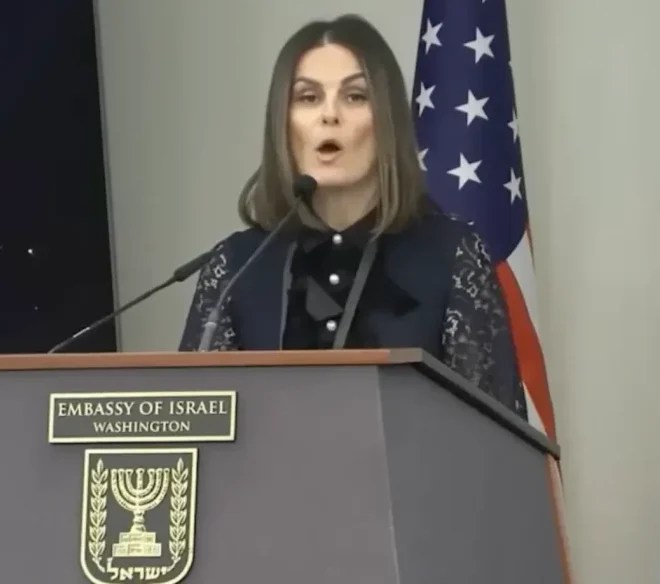
Liora Rez, a professional Jewish agitator funded by shadowy donors, has built a lucrative career by branding critics of Israel as hate-filled bigots.
She emigrated to the United States as a Jewish refugee from what she describes as a thoroughly antisemitic environment in the Soviet Union. That early experience would become the foundation of her later activism against antisemitism.
But before Rez became one of the most controversial figures in pro-Israel activism, she had a very different public persona. Around 2012, she founded Jewish Chick Media Inc., a lifestyle brand focused on fashion and Jewish identity. As researcher Karl Radl documented, Rez pivoted from being a Jewish fashion and lifestyle influencer to a full-time pro-Israel activist following a 2016 trip to Israel with the Jewish Women’s Renaissance Project, now known as Momentum. At the time, she was navigating a contentious divorce in Connecticut, and the combination of circumstances prompted her decision to reinvent herself entirely.
In October 2018, Rez launched StopAntisemitism.org, an organization that would gain her great notoriety The group focuses on publicly calling out individuals it regards as antisemitic, using digital networks including the Internet, direct mail, and social media to reach millions. The organization’s stated mission is to publicly expose antisemitic behavior and ensure repercussions for those who, in their view, advocate hatred and violence against Jewish people.
Rez’s philosophy is blunt. She firmly believes that “antisemitism thrives when there are no consequences,” so her organization aims to create those consequences, which include job loss, suspensions, and public shaming for individuals they target. In testimony before Congress and numerous op-eds, Rez claims her group is “nonpartisan” and “grassroots,” mobilizing networks of activists to identify alleged antisemites and pressure institutions to discipline them.
The results, by Rez’s own account, have been dramatic. In an interview with the Jewish News Syndicate, she claimed that since the Hamas attacks of October 7, 2023, StopAntisemitism has “profiled more than 1,000 antisemites” and “over 400 of them have been fired” thanks to their pressure campaigns.
Harassing Israel critics is no cheap endeavor. Rez’s organization enjoys substantial financial backing from the Jewish community. The Milstein Family Foundation, led by real estate investor Adam Milstein and his wife Gila, is a key funder of StopAntisemitism.org. Tax records from 2022 reveal that the Merona Leadership Foundation—with Gila Milstein serving as president—compensated Rez with a $125,633 salary while allocating approximately $270,000 toward the organization’s operational costs.
At the core of Rez’s activism lies the premise that anti-Zionism and antisemitism are essentially identical. In a Jerusalem Post profile, she stated unequivocally: “Anti-Zionism is a contemporary form of antisemitism. We must fight this hate’s influence, especially on younger generations, to secure the future of the Jewish people in the US, in Israel and around the world.”
In her writing, Rez frequently emphasizes that Jews comprise just over 2% of the US population but are victims of “almost 60% of all US religious hate crimes,” using this statistic to justify an expansive definition of antisemitism. StopAntisemitism employs the International Holocaust Remembrance Alliance working definition of antisemitism as its guide, which explicitly includes several anti-Israel positions—such as describing Israel as a racist endeavor—as examples of antisemitism. For Rez, hostility toward Israel functions as the primary vehicle for contemporary anti-Jewish hatred.
She views the “global wave of Jew hatred” that surfaced after Hamas’ October 7 attacks as justification for intensive monitoring of campuses, corporations, unions, hospitals, and government agencies. Rez identified college campuses as one of the most troubling environments, citing cases of Jewish students being singled out in libraries, professors openly celebrating Hamas and Hezbollah militants, demonstrators blocking building access, and university leadership remaining passive. “We stepped in,” she stated, adding a stern message: “If you target Jewish students, your actions won’t remain unseen.”
Her approach advocates aggressive public exposure of students and faculty, often tagging employers and prospective employers on social media to maximize professional consequences.
Perhaps nothing illustrates StopAntisemitism’s controversial approach better than its annual “Antisemite of the Year” competition, where the organization nominates a slate of figures and invites the public to vote. The contest has featured a mix of figures from the right, Holocaust deniers, and high-profile pro-Palestinian or anti-Zionist public figures, reinforcing critics’ claims that Rez collapses political opposition to Israel into the category of antisemitism.
Conservative commentator Tucker Carlson was named the 2025 “Antisemite of the Year” on December 21, 2025, marking the second consecutive year that StopAntisemitism selected a right-wing figure–Candace Owens was the recipient of this distinction in 2024–for this designation after years of predominantly awarding the title to left-wing personalities. Carlson competed against a diverse slate of nominees including UFC fighter Bryce Mitchell, social media personality Stew Peters, beloved children’s YouTuber Rachel Anne Accurso (“Ms. Rachel”), and “Sex and the City” star Cynthia Nixon.
Although Ms. Rachel did not receive StopAntisemitism’s designation, in 2025, StopAntisemitism launched what became one of its most controversial campaigns against her. The Jewish advocacy organizations went on the offensive after she posted about children in the Gaza Strip, called for an end to the blockade, and hosted Palestinian journalist Motaz Azaiza.
“Since 10/7, Ms. Rachel has pushed Hamas propaganda to millions – sharing debunked images, inflated casualty claims, and almost entirely ignoring Israeli child victims,” StopAntisemitism published on X. “She also hosted Motaz Azaiza, a terrorist sympathizer who celebrated the 10/7 massacre & openly idolizes Yahya Sinwar.”
Accurso publicly rejected the label, emphasizing her commitment to children’s well-being. Rep. Ro Khanna (D-CA) condemned the nomination, saying, “Ms. Rachel is a preschool teacher who speaks up for starving children in Gaza. That is not antisemitism. I hope thousands will join me in standing up for her.”
More recently, Rez has joined a right-wing Zionist campaign against newly-sworn New York City mayor Zohran Mamdani. She has warned that his election as NYC mayor would be “catastrophic” and portrayed him as part of a rabid anti-Israel left that would “take over every inch of NYC.”
Through her fanatic advocacy for Israel, Rez has gained substantial recognition within certain segments of the Jewish community. She testified before the U.S. House Small Business Committee in January 2024, where her official bio stressed her status as a Soviet Jewish refugee and described StopAntisemitism’s efforts to hold antisemites “accountable for their hateful actions.”
The Jewish newspaper Algemeiner has repeatedly listed her among the “Top 100 People Positively Influencing Jewish Life,” highlighting StopAntisemitism’s social media reach and their ability to deliver severe economic and social consequences against those who criticize the Jewish state.
The ultimate lesson of StopAntisemitism.org is that the movement’s true goal is not mutual respect, but total domination, enforcing a code of silence where gentile criticism is treated as a thought crime worthy of punishment.
Israel arrested 42 Palestinian journalists in 2025
MEMO | January 2, 2026
The Palestinian Journalists Syndicate said on Thursday that the Israeli army arrested 42 Palestinian journalists during 2025, including eight women, in the occupied West Bank, Jerusalem and inside what it called “the 1948 territories”.
In a report, the union said Israeli authorities continued a policy of systematic targeting through arbitrary and administrative detention, physical assault, deportation, seizure of equipment and forced interrogation. It said these actions aim to “silence coverage and break the national media structure”.
The syndicate’s freedoms committee warned of what it described as a “dangerous shift” in arrest practices. It said this includes focusing on the most influential journalists, repeatedly arresting the same journalist, expanding the use of administrative detention without charge, and using physical and psychological violence as a means of deterrence.
The report documented dozens of cases in which journalists were arrested while working in the field and covering military raids. It said this is used as a way to “empty the field of witnesses”.
The union also reported a rise in raids on journalists’ homes and their arrest from among their families, which it said is intended to “break them psychologically and socially”.
Proxy Regime: Understanding the UAE-Israeli Conspiracy in Yemen, Saudi Arabia
By Robert Inlakesh | The Palestine Chronicle | January 2, 2026
The reason why the recent feud between the UAE and Saudi Arabia in Yemen is important is that it paves the way to a totally different reality on the ground.
The United Arab Emirates (UAE) and Saudi Arabia were once viewed as a unified power in Yemen; any semblance of such an alliance is now crumbling. As Riyadh and Abu Dhabi remain at loggerheads, it is clear that Tel Aviv is a key driver of the escalation across Yemeni territory.
Saudi Arabia had recently released a sternly worded statement condemning their Gulf neighbors in the United Arab Emirates, following the armed takeover of the Hadramaut and al-Mahra provinces by the Emirati-backed Southern Transitional Council (STC) forces. Saudi airstrikes were also launched, largely on soft targets as a warning, which prompted the UAE to announce the withdrawal of all its forces from the country.
The war in Yemen is one of the most underreported and misrepresented conflicts in the region, which often makes it difficult to decipher what is truly transpiring. What is important to understand here is that Abu Dhabi’s role inside Yemen is in large part driven by Israeli interests, which will not only potentially lead to blowback against the UAE itself, but also aims to destabilize the entire Arabian Peninsula. This is part and parcel of forging a way forward toward the “Greater Israel Project”.
The reason why the recent feud between the UAE and Saudi Arabia in Yemen is important is that it paves the way to a totally different reality on the ground. In 2015, the Ansarallah movement took over the Yemeni capital of Sana’a and received the backing of roughly two-thirds of the nation’s armed forces in doing so.
As a revolutionary Islamic movement, Ansarallah’s seizure of power was interpreted as an immediate challenge to the rulers across Arabia. Considering the long history of violence between Yemen and Saudi Arabia in particular, it was no surprise that tensions immediately rose. Yet, the Saudi-led coalition that initiated the war on Yemen to overthrow the newly ushered in Ansarallah leadership (often incorrectly referred to as “the Houthis”), was not driven by its own interests alone.
In fact, the US, UK, and Israel were in the picture from the very start and it was former American President Barack Obama who gave the green light for the war, which eventually resulted in the deaths of around 400,000 people. Saudi Arabia, for its part, decided to back the deposed president of Yemen, Abd Rabbuh Mansour Hadi, using his position and control over what is called the “internationally recognized government” of Yemen as its excuse for legitimacy for action inside the country.
The United Arab Emirates had instead thrown its weight behind southern separatists in Yemen’s south, with the goal of securing the strategic port city of Aden. Prior to 1990, Yemen was divided between north and south, yet there has always been the presence of separatist elements there. Without delving into the nation’s long history, the British had strategically occupied southern Yemen, utilizing the strategic port of Aden as a tool of empire; the UAE clearly sees the geostrategic weight of this location also.
After years of horrifying war, mass starvation due to the Saudi-US-imposed blockade, and a situation that began to come to a stalemate, by early 2022 Yemen’s Ansarallah-led government had not only established a strong, rooted rule, but the Yemeni Armed Forces under its command had clearly made breakthroughs in military technology. It had launched devastating long-range drone and missile attacks against not only Saudi Arabia, but also the UAE, even making a point of striking the Emiratis while Israeli President Isaac Herzog visited.
It wasn’t long until a ceasefire was reached, brokered by the United Nations, one that has largely held until now. Following the ceasefire, in April of 2022, the Saudi government created what is known as the Presidential Leadership Council (PLC). The PLC’s leader, sometimes referred to as the internationally recognized president of Yemen, is a man named Rashad al-Alimi, presiding over an eight-member council that is not elected by the Yemeni people.
The PLC, or “internationally recognized government,” was then based in Aden, and three of its seats were granted to members of the Emirati proxy group called the STC, the separatist militia that Abu Dhabi backed to seize Aden. Despite promising prosperity to the people in southern Yemen and not being under the same sanctions as Ansarallah’s government in Sana’a, the living conditions in the south continued to deteriorate and have since led to countless protests and even riots.
In early December, the STC suddenly swept over the eastern provinces of al-Mahra and Hadramaut, even forcing some Saudi-backed PLC officials to flee Aden. The Emirati proxy separatists have since openly declared their intent to divide Yemen and separate southern Yemen from the north, which is controlled by Ansarallah. This takeover meant that some 80% of the country’s oil resources fell into the hands of the Emirati-backed STC.
The takeover of these provinces also proved a massive threat to both Saudi and Omani security in the eyes of their leadership. The primary armed faction that fights for the southern separatist cause is called the “Southern Giants Brigades”, a large element of which are Salafist extremists, with former Al-Qaeda fighters forming the most experienced core of the militant organization.
Just as the UAE has been backing ISIS-linked gangs in the Gaza Strip to fight Hamas, it utilizes Salafist extremists in Yemen to fight its battles for it also. Evidently, such a powerful militia force is viewed rightly as a threat to regional stability.
Riyadh saw these recent developments as a major challenge to its regional project and stability. Not only because of the potential issues along its border, but also the birth of a new reality on the ground inside Yemen that will further weaken the “internationally recognized government” that they back.
If the UAE’s proxy forces succeed, despite the Emiratis withdrawing their own forces, then the STC will push for separation and undermine the Saudis’ role entirely. There is also a good chance that the Emirati proxy forces will launch an offensive aimed at seizing the Red Sea port city of Hodeidah from Ansarallah. Israel was seeking this outcome in early 2025, when it convinced the Trump administration to fight Ansarallah on its behalf, an attack which resulted in a resounding failure.
The Israelis not only maintain close ties with the Emirati-backed STC but have also directly participated in training their forces. Israel and the UAE have also established joint military positions in areas of Yemen, like the island of Socotra.
Recently, Israel became the first country to recognize Somaliland as a nation. Little attention has been paid to the fact that the UAE has quietly recognized Somaliland also; in fact, the UAE-Israeli cooperation and support for the separatist movement in Somalia goes well beyond recognition.
The Somaliland connection is key here. Some analysts have mentioned the value of the Berbera Port area to Israel and focused on the Israeli desire to build a military presence there for the sake of attacking Yemen. While this is true, it was actually the UAE that began to build the Berbera airbase in Somaliland back in 2017 and has invested greatly in establishing a military foothold there.
The UAE-Israeli alliance to establish dominance in North Africa and the Horn of Africa is directly tied to Yemen. So much so that the Emiratis used militants from Sudan’s Rapid Support Forces (RSF)—who are currently carrying out genocidal acts against the people of their own country—to fight in Yemen against Ansarallah.
All of this being said, if the UAE proxy forces succeed, it will certainly prove a major issue and lead to enormous bloodshed, yet the STC will not likely defeat Ansarallah, even with high-altitude air support provided by Israel. In fact, once Saudi Arabia is effectively out of the picture, Ansarallah will have one primary enemy to confront with full force: the United Arab Emirates.
The UAE, unlike Saudi Arabia, is a tiny country that is primarily made up of immigrants and foreign workers; it does not have a capable military, despite its Hollywood-style parades that it uses to try and demonstrate this. A sustained missile and drone attack campaign from the Yemeni Armed Forces will very likely be enough to force the UAE to wave the white flag.
Even if some kind of agreement is eventually reached as a result of the UAE being battered into submission—one that does not bring about an Ansarallah takeover that unifies the country—the Saudis will end up having to sign an agreement with Sana’a to properly end the conflict.
Riyadh understood this all well, which is why it quickly acted to draw red lines. It is more in Saudi Arabia’s interests to keep the status quo for now, because the UAE’s moves could end up creating a nightmare situation for it in the future. Saudi Arabia does not want a strong, unified Yemen under the control of Ansarallah; it will only accept a Yemeni leadership that bows to it, and like past Yemeni governments, bows to the West, while refusing to utilize the nation’s immense resource wealth and harness the power of its location.
Israel, on the other hand, most certainly will not accept a united Yemen under Ansarallah’s rule, but is adamant about “making them pay” for daring to impose a Red Sea blockade and fight in defense of Gaza. Therefore, the Israelis are willing to work with the UAE to totally destabilize the region in order to take a stab at dealing a major blow to Ansarallah and asserting their dominance.
It is unclear where exactly this is all heading, but it is possible that we may eventually see a drastic change in the situation on the ground, one which will perhaps lead to Saudi Arabia adopting a different posture toward the UAE altogether. It also appears that Tel Aviv is angry about Riyadh refusing to normalize ties, which could well have factored into this latest move. It is important to consider that the Emiratis will not move a fingernail without Israeli approval in this regard; they are, in essence, a proxy regime of Tel Aviv at this point.
– Robert Inlakesh is a journalist, writer, and documentary filmmaker. He focuses on the Middle East, specializing in Palestine.
How a 2019 NEJM Study Misled the World on Vitamin D: A Forensic Analysis
By James Lyons-Weiler, PhD | Popular Rationalism | December 29, 2025
In January 2019, The New England Journal of Medicine published a study that was immediately hailed as the final verdict on vitamin D: it doesn’t work. The study, known as the VITAL trial, was large, well-funded, and led by respected researchers from Harvard. Its conclusion—that vitamin D supplementation did not reduce the risk of invasive cancer or major cardiovascular events—rapidly diffused across headlines, textbooks, and clinical guidelines.
But the VITAL study didn’t fail because vitamin D failed. It failed because it was never designed to test the right question. This article walks through the anatomy of that failure, why it matters, and what we must fix if we are to take prevention seriously in modern medicine.
The Trial That Didn’t
On the surface, VITAL looked impeccable: over 25,000 participants, randomized and placebo-controlled, testing 2000 IU of vitamin D3 daily for a median of 5.3 years. The primary endpoints were the incidence of any invasive cancer and a composite of major cardiovascular events (heart attack, stroke, or death from cardiovascular causes).
But there is a foundational problem: most participants weren’t vitamin D deficient to begin with. Only 12.7% had levels below 20 ng/mL, the threshold generally associated with increased risk. The mean baseline level was 30.8 ng/mL—already at or near sufficiency. It’s the equivalent of testing whether insulin helps people who don’t have diabetes.
Further eroding the study’s contrast, participants in the placebo arm were allowed to take up to 800 IU/day of vitamin D on their own. By year 5, more than 10% of the placebo group was exceeding that limit. The intervention, in effect, became a test of high-dose vitamin D versus medium-dose vitamin D, not against a true control.
Add to that the decision to use broad, bundled endpoints like “any invasive cancer” or “major cardiovascular events” without regard to mechanisms, latency, or stage-specific progression, and the trial becomes a precision instrument for finding nothing.
The Important Real Signal They Missed
The one glimmer of benefit appeared in cancer mortality. While incidence rates were similar between groups, the vitamin D arm showed a lower rate of cancer deaths. This effect emerged only after two years of follow-up and became statistically significant once early deaths were excluded. Even more telling, among participants whose cause of death could be adjudicated with medical records (rather than death certificate codes), the benefit was stronger.
This suggests a biologically plausible mechanism: vitamin D may not prevent cancer from starting, but it may slow its progression or reduce metastasis. That theory aligns with preclinical models showing vitamin D’s role in cellular differentiation, immune modulation, and suppression of angiogenesis.
And yet, VITAL buried this signal. The paper acknowledged a significant violation of the proportional hazards assumption in cancer mortality, a red flag that time-to-event models were inappropriate. Instead of adjusting with valid statistical models for non-proportional hazards, the authors sliced the data post hoc to generate a story and dismissed the result as exploratory. Meanwhile, they mentioned in passing that fewer advanced or metastatic cancers occurred in the vitamin D group—but offered no data.
How Design Choices Shape Public Understanding
The public interpretation of VITAL has been simple and sweeping: vitamin D doesn’t help. That perception has reshaped policy, funding, and clinical guidance. Combined with errant policy based on acknowledged errors, It is dangerous and a risk to public health.
But what the trial actually tested was much narrower: Does high-dose vitamin D provide additional benefit in a mostly vitamin D–sufficient, highly compliant, aging American cohort already permitted to take moderate doses on their own? And does it do so within 5 years?
Given those conditions, the null result was foreordained.
That’s not a failure of science. That’s a failure of trial design.
What Should Have Been Done
A rationally designed prevention trial would start with a population at risk. That means recruiting participants with confirmed vitamin D deficiency, ideally below 20 ng/mL. It would require tighter control of off-protocol supplement use. It would measure achieved serum levels in all participants, not just a 6% subsample. And it would follow participants for a decade or more to match the biological latency of cancer.
Equally critical, the endpoints would reflect mechanistic expectations. Rather than bundling all cancers or all cardiovascular events, researchers should examine site-specific incidence, grade at diagnosis, metastatic progression, and mortality—particularly among subgroups most likely to benefit, such as Black participants and those with low BMI.
Reform Is Not Optional
It is not enough to run large trials. They must be designed to answer the right questions. The failure of VITAL has less to do with vitamin D and more to do with how preventive science is conducted: Over-generalized endpoints, underpowered subgroups, and insufficient attention to biological realism.
We need new standards:
- Targeted enrollment of at-risk populations
- Serum level tracking
- Clear contrasts between intervention and control
- Biomarker tracking throughout
- Outcomes matched to mechanistic hypotheses
- Transparent reporting of all stage-specific and cause-specific outcomes
None of ts is controversial. It is merely rigorous.
This Isn’t Over
Several high-quality meta-analyses and smaller trials contradict the conclusions drawn from VITAL.
Several high-quality meta-analyses and randomized trials contradict the broad null interpretation drawn from the VITAL study. A 2014 Cochrane Review found that vitamin D supplementation, particularly with cholecalciferol (D3), was associated with a statistically significant 13% reduction in cancer mortality. The authors concluded that vitamin D likely reduces the risk of cancer death over a 5–7 year period, even though effects on incidence were not evident.
A randomized controlled trial in Nebraska by Lappe et al., involving postmenopausal women who received 2000 IU/day of vitamin D3 and 1500 mg/day of calcium, showed a non-significant 30% reduction in cancer incidence, with stronger effects emerging in secondary and stratified analyses. An earlier 2007 trial by the same group found a statistically significant reduction in cancer incidence with combined vitamin D and calcium supplementation.
Pooled data from 17 cohorts, as reported by McCullough et al., show a strong inverse association between circulating 25-hydroxyvitamin D [25(OH)D] levels and colorectal cancer risk. Individuals in the highest quintile of serum 25(OH)D had a substantially lower risk of colorectal cancer compared to those in the lowest quintile, across diverse populations.
These findings converge on the possibility that vitamin D is more likely to influence cancer progression and lethality than initial incidence, particularly in populations with low baseline serum levels or in cancers like colorectal cancer that exhibit strong biological responsiveness.
Null trials can be useful. But when designed poorly, they become weapons of inference. The VITAL trial should be reinterpreted, not repeated.
If science is to regain public trust, it must show not just what it found, but what it never really asked.
References
- Bjelakovic G, Gluud LL, Nikolova D, et al. Vitamin D supplementation for prevention of mortality in adults. Cochrane Database Syst Rev. 2014;1:CD007470. https://www.cochrane.org/evidence/CD007470_vitamin-d-supplementation-prevention-mortality-adults
- Lappe JM, Watson P, Travers-Gustafson D, et al. Effect of vitamin D and calcium supplementation on cancer incidence in older women: a randomized clinical trial. JAMA. 2017;317(12):1234-1243. https://jamanetwork.com/journals/jama/fullarticle/2613159
- Lappe JM, Travers-Gustafson D, Davies KM, Recker RR, Heaney RP. Vitamin D and calcium supplementation reduces cancer risk: results of a randomized trial. Am J Clin Nutr. 2007;85(6):1586-1591. https://pubmed.ncbi.nlm.nih.gov/17556697/
- McCullough ML, Zoltick ES, Weinstein SJ, et al. Circulating vitamin D and colorectal cancer risk: an international pooling project of 17 cohorts. J Natl Cancer Inst. 2019;111(2):158-169. https://www.ncbi.nlm.nih.gov/pmc/articles/PMC6821324/
Nicolai Petro: Chaos After Ukraine Collapses
Glenn Diesen | January 1, 2026
Nicolai N. Petro is a Professor of Political Science at the University of Rhode Island, and formerly the US State Department’s special assistant for policy on the Soviet Union. Prof. Petro discusses the pending end of the Ukraine War and why Europe will likely fragment as a consequence of its proxy war against Russia.
Follow Prof. Glenn Diesen:
Substack: https://glenndiesen.substack.com/
X/Twitter: https://x.com/Glenn_Diesen
Clip channel: https://www.youtube.com/@Prof.GlennDiesenClips
Support the research by Prof. Glenn Diesen:
PayPal: https://www.paypal.com/paypalme/glenndiesen
Buy me a Coffee: buymeacoffee.com/gdieseng
Go Fund Me: https://gofund.me/09ea012f
Featured Video
Seyed M. Marandi: Negotiations Collapsed – Return to War
or go to
Aletho News Archives – Video-Images
From the Archives
The US-Iran Scenario That Most Scares Israel
By Ali Haydar | Al-Akhbar | October 9, 2013
Israeli Prime Minister Benjamin Netanyahu issued a series of threats toward Iran and its interlocutors in the West, including the US, as serious negotiations on Iran’s nuclear program seem more plausible.
As a possible rapprochement looms between the US and Iran, Netanyahu has attempted to impose impossible Israeli conditions on the negotiators, such as the full dismantling of Iran’s nuclear program, not to mention threatening military force.
Whatever the deal that could materialize between Iran and the West, Israel is going to find itself before an open-ended path. One can foresee three possible scenarios… continue
Blog Roll
 Aletho News
- Seyed M. Marandi: Negotiations Collapsed – Return to War
- Tomorrow’s naval blockade showdown
- ‘Israel’ attacks civilians to hide its embarrassing military failures & out of pure sadism
- Any Foreign Military Vessel Approaching Hormuz Under Any Pretext ‘Will Be Dealt With Severely’: IRGC
- Diplomats slam US negotiators’ performance in Iran talks
- Trump Refuses Exit Ramp, War with Iran will Continue
- Trump Says US Naval Blockade in Strait of Hormuz Will Begin Shortly
- US, Iran end 21-hour talks without agreement
- US IRAN TALKS: Who Are the Crazy Ones Here? /Lt Col Daniel Davis
- Talks with the US end without a deal over excessive US demands: Iran
- If Americans Knew
- US-Iran ceasefire negotiations make zero progress – Daily Update
- Pro-Israel ‘Thinktanks’ and Individuals who Influence U.S. Foreign Policy
- Mearsheimer reveals how Israel dictates US policies on Iran, Gaza – video
- After killing 350+, Israel still has a “score to settle” with Lebanon before ceasefire – Daily Update
- Military aid to Israel emerges as the latest political litmus test for Democrats
- The only Palestinian children’s rights organization closes following years-long Israeli campaign against it
- ‘I Can’t Forget the Smell’: Lebanese Reel After Israel Kills Over 300 in Single Day
- DNC Shoots Down Resolutions Calling Out AIPAC and Limiting Arms to Israel
- TCN: Is Israel Blackmailing President Trump?
- Israel killed at least 303 Lebanese yesterday – who were they? Daily Update
- No Tricks Zone
- Cave Discovery Reveals Today’s Desert Climates Were Recently Far Warmer, Wetter, Teeming With Life
- German Expert: Heat Dome Led To Record Temps In Western USA…Warmer In 1934, 1936
- New Study: No Linear Warming Or Glacier Retreat Along Northern Antarctic Peninsula Since 1980s
- An Inconvenient Tree: Uncovered In Alps… Europe Much Warmer Than Today 6000 Years Ago
- New Study Reports A 60% Slowdown In Greenland’s Ice Loss Rate In The Last Decade
- Low Intensity Tornado Wrecks Major Solar Farm, Creating A Potential Toxic Dump
- New Study Finds Warming Saves Lives…Cold Temperatures 12 Times More Deadly Than Excess Heat
- German Science Blog Accuses PIK Climate Institute Of Hallucinating Climate Tipping Points
- Devastating Assessment Of Comirnaty Vaccine By Former Senior Pfizer Europe Toxicologist
- New Study: CO2 Is ‘Effectively Negligible’ As An Explanatory Climate Change Factor Since 2000
 Aletho News