Davos and Abu Dhabi: How the Ukrainian Endgame Exposed Western Decline
By Ricardo Martins – New Eastern Outlook – January 28, 2026
While Russia, the United States, and Ukraine quietly negotiated in Abu Dhabi, Davos revealed Europe’s real position in the emerging world order: excluded from decision-making yet burdened with the costs of war and peace alike.
The 2026 World Economic Forum in Davos will likely be remembered less as a forum for global coordination than as a public autopsy of the Western-led international order.
What emerged in the Alpine setting was not coherence but fragmentation: rhetorical excess, strategic confusion, and an unmistakable sense that the world has already moved beyond the frameworks still defended—often ritualistically—by Euro-Atlantic elites.
Three speeches captured this moment with particular clarity: those of Volodymyr Zelensky, Mark Carney, and, less noticed but arguably most consequential, Chinese Vice-Premier Ding Xuexiang (represented in the Davos debate through He Lifeng’s economic message).
Zelensky and the Public Humiliation of Europe
President Volodymyr Zelensky’s speech was striking not only for its confrontational tone but also for its intended audience. His criticism was not primarily directed at Russia or even the United States, but bluntly at Europe. He accused the European Union of strategic indecision, military weakness, and an inability to guarantee Ukraine’s security, reiterating that Europe “still does not know how to defend itself” and remains structurally dependent on Washington.
Mocking Europe’s symbolic troop deployments to Greenland and its delayed reactions to crises such as Iran reinforced Zelensky’s humiliation of Europe.
This rhetoric can be understood as a final reckoning — an all-or-nothing move in which he burned all bridges and launched a frontal attack without regard for the consequences. By Davos, Kyiv was already aware that negotiations over the territorial concessions of the war were being discussed in Abu Dhabi between the United States, Russia, and Ukraine without European participation.
Zelensky’s speech thus functioned as political coercion aimed at Europe as the remaining actor capable of paying the price of a settlement. By publicly framing Europe as weak and morally indebted, Zelensky attempted to transform guilt into leverage in the final phase of negotiations.
This interpretation is reinforced by reporting in the Financial Times, which revealed that Ukraine’s willingness to consider territorial concessions is conditional upon accelerated EU membership, potentially by 2027. In domestic political terms, this trade-off allows Zelensky to reframe territorial loss as civilisational gain: Ukraine does not lose land; it “joins Europe.”
The bill, however, is addressed to Brussels.
Europe’s Astonishing Response
The European reaction to Zelensky’s speech in Davos bordered on political self-abnegation. Despite being publicly criticised, European Commission President Ursula von der Leyen praised Ukraine’s “heroic struggle” and emphasised Europe’s material commitment rather than responding to the substance of Zelensky’s accusations.
This asymmetry—verbal humiliation met with renewed rhetorical loyalty—reveals a deeper structural problem: Europe’s inability to translate financial power into strategic agency.
Dissent has nevertheless emerged at the national level. Italian politicians, including Rossano Sasso and Matteo Salvini, openly criticised Zelensky’s “ungrateful” tone and questioned continued military and financial support.
Such reactions reflect mounting domestic pressures linked to inflation, energy costs, and war fatigue, documented extensively by Politico and the Kiel Institute.
Yet these voices remain fragmented, and Europe as a collective actor continues to display what can only be described as strategic paralysis.
Mark Carney and the End of the Rules-Based Illusion
If Zelensky exposed Europe’s weakness, Mark Carney articulated its anxiety. His Davos speech openly acknowledged what had long been implicit: the so-called “rules-based international order” is no longer operative—and perhaps never was. Carney framed the current moment as a rupture, arguing that “middle powers” such as Canada and European states must now navigate a world no longer structured by predictable norms but by power, leverage, and economic scale.
Carney’s concept of “value-based realism” deserves close scrutiny. On the surface, it appears as an attempt to reconcile normative language with geopolitical adaptation. In substance, however, it represents an effort to preserve Western managerial influence within a system that has already shifted towards multipolarity. Sovereignty, in Carney’s formulation, is diluted into “managed multipolarity,” administered by the same financial and institutional elites that dominated the previous order.
This is precisely why his discourse fails to resonate in the Global South. For emerging powers—particularly within BRICS—the collapse of the Western order is not a tragedy to be managed but a long-awaited correction. Carney’s speech, far from acknowledging this, sought to repackage decline as stewardship.
That it reportedly irritated Donald Trump is unsurprising: Carney implicitly rejected American unilateralism while simultaneously refusing genuine systemic change.
China and the Silent Centre of Gravity
The most consequential intervention in Davos was arguably not Western at all. Chinese Vice-Premier He Lifeng articulated Beijing’s strategic priority with remarkable clarity: China is positioning itself to become the world’s largest consumer market, making access to Chinese demand the central axis of future global trade.
This message, echoed by analysts such as Pepe Escobar, signals a structural shift in the global economy: dependence is moving eastward.
Unlike Carney’s rhetorical manoeuvres, China’s position was grounded in material capacity: industrial scale, domestic demand, and long-term planning. For much of the Global South, this represents opportunity rather than threat. For Europe, however, it underscores marginalisation.
Abu Dhabi Decides, Europe Pays
The trilateral talks in Abu Dhabi marked a geopolitical turning point. While Europe has committed close to €200 billion in support to Ukraine, it was excluded from negotiations shaping the war’s end.
This exclusion is not accidental. Both Washington and Moscow increasingly view Brussels as incapable of strategic compromise, bound instead by ideological rigidity and proceduralism.
Europe thus faces a brutal dilemma: continue financing a war it does not control, or finance a peace settlement that fundamentally alters the EU through accelerated Ukrainian accession. Neither option strengthens European sovereignty.
Granting Ukraine some lite-sort of membership by 2027—without completed accession chapters—would transform the EU’s budgetary, agricultural, and cohesion policies overnight. Yet postponement risks indefinite financial haemorrhage. As the Financial Times and Reuters have noted, peace may ultimately be cheaper than perpetual war, even if politically uncomfortable.
Conclusion: Europe as the Weakest Link
Davos revealed a system speaking past itself. Zelensky spoke from desperation and tactical clarity. Carney spoke from elite anxiety. China spoke from structural confidence. Europe, by contrast, spoke in platitudes.
The irony is stark. Europe funds Ukraine, absorbs the economic shock, and bears the political consequences—yet is excluded from decision-making. In Abu Dhabi, values were absent, and strategy was outsourced. When the deal is announced, Europe may discover it was not a negotiator, but a guarantor of last resort.
The tragedy is not merely Europe’s weakness, but its refusal to acknowledge it.
Ricardo Martins is a Doctor in Sociology with specialisation in geopolitics and international relations.
Follow new articles on our Telegram channel
AfD co-leader states the obvious: Pouring money into the Ukraine war is killing the German economy
By Tarik Cyril Amar | RT | January 28, 2026
Alice Weidel, co-leader of the AfD (Alternative for Germany) party, has given a speech to which every observer of Germany should pay close attention. And not simply because of Weidel’s inherent political weight.
She is among the country’s most important politicians and with serious prospects for very high office: if her New-Right party breaks through to leading a Berlin government, Weidel is the most likely chancellor. Next to her co-chairman Tino Chrupalla, she is the only real opposition that matters inside the current German parliament.
What makes this particular Weidel speech, delivered in the city of Heilbronn while campaigning in state elections in the classically ‘West German’ Land of Baden-Württemberg, especially noteworthy is its unprecedently outspoken, bracingly combative, and, stirringly logical and honest take on one specific topic, namely Germany’s masochistic relationship to Ukraine.
Not that there were no other topics. Indeed, Weidel started what was a gleefully pugnacious ‘Rundumschlag’ (German for onslaught) where you would expect, the absolutely dismal state of Germany’s once proud and now relentlessly tanking national economy. She reminded her large audience that Germany’s industrial sector is bleeding jobs and companies; national insolvency statistics are a horror and won’t stop breaking abysmal records; and the traditional parties have nothing to offer but same-old-same-old.
And yet, as most right-wing politicians – whether traditional or insurgent – former business consultant Weidel is not at all original with her own suggestions either. She complains that producing things in Germany is so expensive that the country’s economy as a whole has been losing international competitiveness. True enough.
But things get more debatable when Weidel starts explaining the causes of the national malaise. Costs that are too high include, in her view, taxes in general, payroll taxes, and social security payments. This is a classical conservative position: if anything is wrong with capitalism, it’s that those at the bottom of the income and power pyramid still have it too good. Cut the state down and rely on the market’s miraculous powers – pretty much the essence of Weidel’s extremely tired recipe for the future.
In that respect, Weidel’s talk had nothing to offer that isn’t already generously supplied by the grindingly repetitive rhetoric of the current centrist Berlin government under mainstream conservative and sour-schoolmaster-in-chief Friedrich Merz. In essence, ‘shut up, work harder, ask for less. (At least if you aren’t rich like me and my chums).’
With so little of that sounding like a genuine alternative from the ‘Alternative for Germany,’ can the AfD really succeed in breaking the traditional parties’ stranglehold by winning another – at least – ten or so percent of the national electorate? In a country where even the government admits that 17.6 percent of its citizens must get by without “important goods and social activities due to poverty.” In a society where 2.2 million children are officially categorized as at risk of or in poverty? Where income inequality has been growing ever worse, with Germany’s five wealthiest families now boasting combined fortunes of €250 billion, which is more than the poorer half of Germans – over 40 million people –combined? Where, finally, working hard is not even a halfway reliable way to achieve success? More than half of private fortunes are now inherited or gifted (usually to circumvent inheritance taxes, low as they are) and that share rises to between 75-80% among the rich.
Weidel’s criticism of Berlin’s – and the EU’s – current economic suicide non-strategy is often refreshingly on point, but it’s also the very easy part. Yet cosplaying as yet another ‘iron lady,’ promising more blood, sweat, and tears for those who are already getting plenty of all that, may well get the AfD stuck where it is now at less than 30% in Germany as a whole, weaker in the West and doing better only in the East. Weidel and her solidly neoliberal wing in the AfD would do well not to be too sure of themselves yet.
For, if the party does get stuck electorally instead of continuing its surge, then the AfD will not be able to fracture the traditional parties’ undemocratic and, arguably, effectively unconstitutional ‘firewall’ policy of exclusion. Studiously supported by Germany’s propagandistic and conformist mainstream media, in reality the ‘firewall’ is a scandal, since it massively discriminates against more than a fifth of Germany’s voters (and more in the East) who are, in effect, partially disenfranchised. Yet ending that scandal will take electoral success beyond anything the AfD has yet achieved. That’s simply a cold hard fact. Weidel’s rigid capitalist dogmatism could be a dead-end, making the AfD, despite all its current surging, a might-have-been story. We’ll see.
Yet, to her credit, Weidel added a crucial point to her diagnosis of the German economy’s dramatic downfall. A point that almost no other German top politician – at least outside the New-Left BSW, which has been electorally kneecapped, most likely by foul means – has the guts to be honest about in public: The main cause of Germany’s ongoing crash, according to Weidel, are “exploding energy costs,” and that explosion is “homemade,” a result of catastrophically self-harming policies by the traditional parties.
While many of these policies of self-strangulation have been driven by an ideologically motivated exit from nuclear energy and misguided – as well as ineffective – attempts to mitigate global warming, one factor stands out because it is a matter of life and death in a straightforward manner, namely the Ukraine war. That is, in reality, the barely indirect war between Russia and the West (including Germany) via Ukraine.
It is a direct consequence not of the war but of the position toward it taken by at least two successive governments in Berlin (first under the hapless Olaf “the Grinner” Scholz, now under Friedrich “the Scolder” Merz) that Germany’s energy has become ever more backbreakingly expensive.
Even official German agencies and mainstream media have not been able to conceal this basic fact. According to the government statistics office, as of early 2023, the industry price for natural gas was 50.7% higher than before the escalation of February 2022; for electrical power – 27.3%, and for petroleum derivatives – 12.6%. In February 2025, German households were paying a whopping 31% more for energy than in 2021 (according to the mega-mainstream RND). One month later, the respectable Handelsblatt called the “price leap” since the pre-2022, “immense” and reported that gas prices for private households had increased by almost 80% in a little over one year. Let that sink in. And where private citizens’ budgets are squeezed like that, the whole economy badly suffers as well, of course.
And just now, the EU has confirmed it will cut itself off from even the last remnants of Russian gas supplies by 2027. Good luck!
Weidel addressed both the insanity of German policy toward this war and the single most emblematic symbol of that madness, the destruction of most of the Nord Stream pipelines and Berlin’s perfectly perverse response to it.
Weidel rightly noted that the AfD’s long-standing – and plausible – arguments in favor of pursuing peace with Russia in earnest have long been met with the usual witch-hunting smears. That is, the type of neo-McCarthyite suppression which all such displays of dispassionate reason in search of an end to the “nonsensical dying” (Weidel) have been receiving from the “politico-media complex” in war-besotted NATO-EU Europe. Weidel was merciless, too, in skewering the persistent sabotage of any peace prospects by (at least) two German governments and their co-bellicists in the EU and most of Europe. All pretty obvious? Yes. Among the reasonable. But not in the German mainstream media and elite.
And then there was the passage that really rocked the hall: “This government [in Berlin] doesn’t utter a squeak” when Ukrainians, helped by other special services (which Weidel cautiously refrained from naming), blow up German energy infrastructure “in our face.” Genuinely irate, Weidel asked how a German government could keep quiet in such a situation. For “the lost delivery of inexpensive gas,” she continued, “harms not only Germany but all of Europe, [and] Germany the most.” Nice one. So much then for the domestic non-credibility of the Scholz and Merz governments, and for Merz’s aspirations to play a leading role in Europe.
And yes, the Nord Stream scandal marks not merely a political and economic catastrophe. It’s worse than that, because it also stands for a shameful display of submissiveness: “How can a government have so little self-respect,” Weidel asked, that it won’t even genuinely seek to solve such a blatant case of, in effect, massive economic sabotage? That indeed is the question. Even a German very far left of Weidel, such as me, can only agree here. It takes a fundamental lack of elementary patriotism and decency not to share her exasperation.
If the ultra-corruptioneers in Kiev were listening, things got even worse: Weidel was explicit that a country attacking Germany in this manner is not a friend. Obvious? Yes, but not in Germany. Not yet. And she declared her party’s intention to make Ukraine – and Zelensky personally – pay if the AfD gets into power in Berlin. Not only for the enormous damage done by Ukraine’s cowardly Nord Stream terror attack, but also for the dozens of billions preceding German governments have pumped into one of the most corrupt regimes in the world. All power to her arm on that one as well.
Intriguingly, that was a moment when the audience reacted with much applause, as usual, but also loud booing. Clearly, not everyone had caught up to reality when it comes to Germany and its perversely self-damaging relationship to Ukraine. But Weidel is right when she also declared that Germany should have stayed neutral instead of joining the Great Western Proxy Crusade against Russia with gusto. Berlin could have served as an ‘honest broker,’ to the benefit of everyone, not only Germans but also millions of ordinary Ukrainians.
Whatever you think about the specific mix of stale market-dogmatic Thatcherism, undue deference to Donald Trump, and refreshing no-bullshit honesty on foreign policy and national interest with regard to Ukraine and the Ukraine war that Weidel had to offer, there can be no doubt that this was a breakthrough moment. It was the first time a major German party with potentially very good electoral prospects has come out and clearly stated the obvious – Germany was attacked by Ukraine (and quite a few other ‘friends’ as well from Warsaw to London and Washington, even if Weidel skirted that part of the issue), not by Russia.
Therefore, for Germany and Germans, Ukraine is anything but a friendly state, and it is absurd – to put it very mildly – that German governments have ruined the relationship with Russia and the German economy as well, while pumping Kiev full of money and arms. This is an immense national scandal, as clearly as 2 plus 2 is 4. And like that simple fact, it’s always true, no matter who has the courage to say it.
Tarik Cyril Amar is a historian from Germany working at Koç University, Istanbul, on Russia, Ukraine, and Eastern Europe, the history of World War II, the cultural Cold War, and the politics of memory.
Britain’s return to piracy to stop Russian ships – desperate attempt to demonstrate power
Ahmed Adel | January 28, 2026
British media claims that London is preparing to deal with tankers from Russian ports in the same way that the United States deals with tankers from Venezuela – by seizing them. However, Russia has the strength and means to protect its interests at sea and respond to all provocations, including possible pirate actions by Great Britain.
The United Kingdom is one of the few countries with experience in conducting naval operations after World War II, and despite major issues with the fleet, the traditions of the Royal Navy remain alive. The tradition of corsairs (state-sanctioned pirates) and piracy is closely linked to Britain, which even invited the best pirates to serve the Majesty. These are well-known facts from the age of the sailing fleet, and in essence, they show that these traditions are remembered and not forgotten.
The Russian ambassador to London, Andrey Kelin, also called the British government’s plans piracy.
“What politicians in London are talking about is essentially a return to the era of the pirate Edward Teach, known as Blackbeard,” Kelin said. “What they forget is that Britain has long ceased to be the ‘ruler of the seas,’ and its actions will not go unpunished.”
The US and Britain are two different countries, both in terms of power and other factors. This is demonstrated by the fact that the Trump administration has, for now, halted British plans to transfer the Chagos Islands, where an American military base is located, to Mauritius. In the wake of this humiliation, the British are now trying to demonstrate, especially to Europe, that they are not weak.
The reality is that the days when the British had major influence are gone. They can still carry out sabotage and terrorist attacks in Ukraine and the Black Sea. However, directly seizing Russian ships would trigger a devastating response that the British are simply not prepared for.
Recently, the US has seized seven tankers linked to Venezuela. The US does not have the legal right to take such actions, but the country is acting from a position of strength and has deliberately not ratified the UN Convention on the Law of the Sea, which upholds the principle of freedom of navigation.
Washington’s example clearly inspired London, which suddenly remembered that it could also sanction Russia’s so-called “shadow fleet,” just as the US sanctioned Venezuela. A law passed before the start of the Special Military Operation—the Sanctions and Prevention of Money Laundering Act 2018—includes a provision that allows merchant ships suspected of evading sanctions or sailing under a false flag to be searched and seized by the British military.
The British are not only considering the option of seizing oil tankers, but also financing Ukraine with oil stolen in this way.
This is all an attempt by Britain to demonstrate that it is a force to be reckoned with. In reality, their situation is quite dire. The events related to Greenland also revealed this.
Russia’s fleet can reliably and easily escort tankers through the Baltic, English Channel, and Mediterranean Sea, from Turkish waters and beyond, via the Suez Canal into the Red Sea. Anything outside these routes would require more force, effort, and involvement, but Russia can easily handle it.
The British, on the other hand, have bases in both Gibraltar and the Indian Ocean. Because of this, the possibility of provocations cannot be ruled out, especially in the Baltic Sea. There is real paranoia in the Baltics – fortifications are being built along the border, swamps are being drained, and all sorts of measures are being taken. For example, Denmark is practically being superseded by the US in Greenland, but the Danes are criticizing Russia even more. It is as if Russia is taking Greenland, not the US.
London is also behaving this way, not wanting to be weaker than their former colonies, primarily the US.
Nonetheless, despite all the British bravado, on January 23, the Russian oil tanker MT General Skobelev traveled through the English Channel, escorted by the missile corvette Boykiy from the Russian Baltic Fleet, while two British Navy ships, HMS Mersey and HMS Severn, could only watch without attempting to intercept the Russian merchant vessel.
Britain’s political elite and its allies are considering various measures to put pressure on Russia. Ideas about the blockade of Kaliningrad are also emerging, while Britain is still one of the main sponsors of the Kiev regime and the main culprit for prolonging the war in Ukraine. Given this situation, which the Kremlin has not instigated, the most important thing is that the Russian Navy has the strength, capabilities, resources, and everything it needs to protect merchant vessels and tankers from British pirate raids.
Ahmed Adel is a Cairo-based geopolitics and political economy researcher.
Czech coalition rules out higher defense spending, says 2% of GDP is enough
Coalition party leaders would prioritize the needs of Czech citizens over increased armaments spending
By Thomas Brooke | Remix News | January 27, 2026
The new Czech nationalist governing coalition will not increase defense spending in the state budget, according to Tomio Okamura, speaker of the Chamber of Deputies and leader of the minority-governing SPD.
Speaking to reporters after Monday’s coalition council meeting, Okamura said that spending equivalent to around 2 percent of gross domestic product was enough, despite calls from the United States for European member states to spend more to defend themselves.
“The 2 percent of GDP plus or minus is sufficient,” Okamura said, dismissing earlier plans by the previous government to raise defense outlays further. The former center-right cabinet led by Petr Fiala of the Civic Democratic Party had pledged to gradually increase defense spending to 3 percent of GDP by 2030.
The government of Prime Minister Andrej Babiš was set to approve the draft state budget for this year at its Monday cabinet meeting. Czechia has been operating under a provisional budget since the start of the year. Okamura said the budget would be presented by Finance Minister Alena Schillerová of ANO and stressed that the coalition’s priorities lay elsewhere.
“We prioritized money for Czech citizens, money for Czech citizens, not for armaments,” Okamura said. “We really will not increase money for armaments, or if you like, for defense.”
NATO currently expects its members to spend at least 2 percent of GDP on defense. Last year, the Czech Republic spent 171.1 billion crowns (€7.1 billion) on defense, equivalent to 2.02 percent of GDP, meeting both domestic legal requirements and the alliance’s existing target. However, NATO members agreed last June to raise overall defense-related spending, with a goal of 3.5 percent of GDP on core defense by 2035 and an additional 1.5 percent of GDP on related non-military investments.
ANO has repeatedly said it does not question meeting the existing NATO benchmark, but Andrej Babiš has previously described the alliance’s newer spending goals as unrealistic.
President Petr Pavel warned over the weekend that abandoning NATO commitments would carry consequences. Speaking on Nova television, he said that Czechia must meet its defense spending obligations if it expects security guarantees from the alliance. If the country chooses not to do so, politicians must clearly explain to citizens how they would otherwise ensure national security, Pavel said.
G7 Hands Ukraine $40Bln Generated From Frozen Russian Assets
Sputnik – 28.01.2026
The G7 issued $37.9 billion in loans to Ukraine in 2025 using income from Russian assets, which is more than 70% of foreign financing for the Ukrainian budget, Sputnik’s calculations revealed on Wednesday.
Under a 2024 G7 plan, a $50 billion loan for Ukraine was approved, funded by proceeds from frozen Russian assets. As of December 31, 2025, $38.9 billion of this sum had already been allocated.
At the end of 2024, the United States was the first to transfer $1 billion, but since then, no further payments have been reported. The EU was the largest contributor to the scheme, providing Ukraine with $21.1 billion in loans. The remaining funds came from Canada, the UK, and Japan.
Apart from the G7 loan, Ukraine was handed an additional $12.1 billion from the EU, $454 million from Japan, $912 million from the International Monetary Fund, and $733 million from the World Bank in 2025.
In total, the Ukrainian budget raked in $52.1 billion from foreign creditors last year, 73% of which came from the G7 loan.
With the start of Russia’s military operation in Ukraine in 2022, EU and G7 members froze nearly half of Russia’s foreign currency reserves, totaling approximately 300 billion euros ($360 billion). Around 200 billion euros in frozen Russian assets are held in European accounts, primarily at the Belgium-based securities depository Euroclear. The European Commission has been pressing EU members for the green light to use these frozen Russian assets to bankroll Kiev’s war machine.
The Kremlin has cautioned that any attempts to confiscate Russian assets would amount to theft and be in violation of international law.
Following a summit in Brussels on December 19, 2025, the EU opted to abandon its plans temporarily to seize Russian state assets and instead agreed to extend a 90-billion-euro loan to Ukraine from the EU budget. However, Hungary, Slovakia, and the Czech Republic refused to shoulder any responsibility for the loan.
Conspiracy Denial
Lies are Unbekoming | January 27, 2026
In honour of Michael Parenti (1933–2026), who passed away on 24 January 2026 at the age of 92. He spent his life naming what power prefers to leave unnamed.
In 1837, Abraham Lincoln remarked: “These capitalists generally act harmoniously, and in concert, to fleece the people.”
Today, he would be dismissed as a conspiracy theorist.
That dismissal—reflexive, automatic, requiring no engagement with evidence—is not a mark of sophistication. It is a tell. The question worth asking is not whether conspiracies exist (they are a matter of public record and a recognised concept in law) but why acknowledging their existence provokes such reliable hostility. What work does the label “conspiracy theorist” actually do?
The late political scientist Michael Parenti spent decades answering that question. His conclusion was blunt: “’Conspiracy’ refers to something more than just illegal acts. It serves as a dismissive label applied to any acknowledgment of ruling-class power, both its legal and illegal operations.” The term functions not as a descriptor but as a weapon—a thought-terminating cliché that protects the powerful from scrutiny by pathologising those who scrutinise them.
Conspiracy denial, in Parenti’s analysis, is not skepticism. It is the opposite of skepticism. It is credulity toward power dressed up as critical thinking. As he wrote in Dirty Truths: “Just because some people have fantasies of conspiracies does not mean all conspiracies are imaginary.”
The Double Standard
The asymmetry is stark once you see it.
Coal miners consciously direct their efforts toward advancing their interests. So do steelworkers, small farmers, and schoolteachers. Labour unions exist precisely because workers concert together to pursue collective goals. No one calls this a conspiracy theory. It is called organising.
But suggest that the wealthy and powerful consciously concert with intent to defend their class interests, and you have crossed an invisible line. You are now a conspiracy theorist, a crank, possibly paranoid.
Parenti put it directly: “It is allowed that farmers, steelworkers, or schoolteachers may concert to advance their interests, but it may not be suggested that moneyed elites do as much—even when they actually occupy the top decision-making posts. Instead, we are asked to believe that these estimable persons of high station walk through life indifferent to the fate of their vast holdings.”
The double standard operates silently. Workers scheme; owners sleepwalk. The public pursues its interests; elites stumble through history moved by forces beyond their comprehension or control. This is the unexamined premise that makes “conspiracy theory” an effective slur.
Consider a specific example. In 1994, the officers of the Federal Reserve announced they would pursue monetary policies designed to maintain a high level of unemployment in order to safeguard against “overheating” the economy. This was publicly announced. It appeared in the financial pages. The Fed explicitly stated it preferred a deflationary course that would keep workers competing desperately for scarce jobs.
When an acquaintance of Parenti’s mentioned this to friends, he was greeted skeptically: “Do you think the Fed bankers are deliberately trying to keep people unemployed?”
He did think it. They had said so. It was not a conjecture but a policy announcement. And yet his friends assumed he was imagining a conspiracy because he ascribed self-interested collusion to powerful people.
Those who suffer from conspiracy phobia are fond of asking: “Do you actually think there’s a group of people sitting around in a room plotting things?” For some reason that image is assumed to be so patently absurd as to invite only disclaimers.
But where else would people of power get together—on park benches or carousels? Of course they sit in rooms. They sit in boardrooms, in the Executive Office, in the conference suites of the Council on Foreign Relations, at the Bilderberg meetings, in the private gatherings at Bohemian Grove. These venues are not secret. Their existence is a matter of public record. What happens there—the coordination of policy, the recruitment of personnel, the alignment of interests—is simply not supposed to be named for what it is.
Theories of Innocence
If the powerful do not conspire, how do we explain outcomes that consistently favour their interests? In Land of Idols, Parenti identified several frameworks that substitute for analysis. He called them “theories of innocence”—alternative explanations that preserve elite respectability by denying elite intent.
Somnambulist Theory
In Parenti’s words: “Those in power just do things as if walking in their sleep, without a thought to their vast holdings.” Policy happens. Wars break out. Wealth concentrates. No one intended any of it. The rich and powerful are present at these events but somehow not responsible for them—passengers rather than pilots.
Coincidence Theory
Or as Parenti described it: “By sheer chance, things just happen repeatedly and coincidentally to maintain the existing array of privileged interests, without any conscious planning or pressure from those who benefit.” Tax policy favours the wealthy—coincidentally. Exposed in a conspiracy, the intelligence agencies coincidentally face no meaningful consequences. Environmental regulations are gutted, and corporations coincidentally profit. The pattern is not a pattern. Each outcome is isolated, unconnected to any larger design.
Incompetence Theory (or Stupidity Theory)
Then there is what Parenti called “incompetence theory, or even stupidity theory, which maintains that people at the top just don’t know what they’re doing; they are befuddled, incapable, and presumably not as perceptive as we.”
For years we heard that Ronald Reagan was a moronic, ineffectual president—his administration a “reign of errors”—even as he successfully put through most of his conservative agenda. Parenti observed: “Reagan was serving the interests of corporate America, the military, and the ideological Right with which he had long been actively associated.” The policies worked exactly as intended for the constituencies they were designed to serve. But acknowledging this would mean acknowledging intent.
During the Iran-Contra hearings, stupidity and incompetence were actually claimed as a defence. The Tower Commission—handpicked by Reagan himself—concluded that the president was guilty of a lackadaisical management style that left him insufficiently in control of his subordinates. In fact, as some of his subordinates eventually testified in court, the president not only was informed but initiated most of the Iran-Contra policy decisions that led to circumvention of the law and the Constitution.
Incompetence theory asks us to believe that those who reach the highest levels of institutional power are less capable of pursuing their interests than the average person managing a household budget.
The pattern Parenti identified with Reagan has repeated with subsequent presidents. Consider which current figures are simultaneously portrayed as existential threats and bumbling fools—and notice that the “incompetence” never works against the interests of capital. The chaos is selective. The stupidity produces coherent outcomes for specific constituencies.
Spontaneity Theory (or Idiosyncrasy Theory)
Stuff just happens. The event is nothing more than an ephemeral oddity, unconnected to any larger forces.
In 1978, the House Select Committee on Assassinations reported that there was more than one assassin—and therefore a conspiracy—involved in the 1963 murder of President John Kennedy. In response, the Washington Post editorialised: “Could it have been some other malcontent whom Mr. Oswald met casually? Could not as many as three or four societal outcasts, with no ties to any one organization, have developed in some spontaneous way a common determination to express their alienation in the killing of President Kennedy?”
The Post continued: “It is possible that two persons, acting independently, attempted to shoot the President at the same time.”
Read that again. A major newspaper, confronted with evidence of conspiracy, speculated that two independent gunmen spontaneously decided to assassinate the president at the same moment. This is what passes for sophisticated analysis when the alternative is following the evidence.
Sometimes, those who deny conspiracies create the most convoluted fantasies of all.
Aberration Theory
Secret, criminal state behaviour is dismissed as an atypical departure from normally lawful behaviour. Each exposure is treated as an isolated exception that proves nothing about the norm.
For five years beginning in 1983, the FBI carried out surveillance of the Committee in Solidarity with the People of El Salvador (CISPES) to determine whether the group had links to international terrorism. The bureau utilised all fifty-nine of its field offices yet uncovered not a shred of evidence to support its conspiracy theory about CISPES. The organisation charged that the bureau’s actions were politically motivated and part of a concerted government effort to suppress opposition to U.S. involvement in Central America.
The FBI had a long history of such harassments against a wide range of protest groups, as evidenced by its illegal COINTELPRO campaign. Yet the Senate Intelligence Committee found “no pattern of abuse” by the bureau and concluded that the FBI investigation of CISPES was an “aberration.”
Pattern recognition is apparently beyond the capacities of official oversight when the pattern implicates official behaviour.
The Historical Record
The theories of innocence require ignoring what is already known. Conspiracies are not hypothetical. They are documented, exposed, and in many cases admitted.
As Parenti catalogued in Democracy for the Few: “There was the secretive plan to escalate the Vietnam War as revealed in the Pentagon Papers; the Watergate break-in; the Federal Bureau of Investigation (FBI) COINTELPRO disruption of dissident groups; the several phoney but well-orchestrated ‘energy crises’ that sharply boosted oil prices in the 1970s; the Iran-contra conspiracy; the savings and loan conspiracies; and the well-documented conspiracies (and subsequent cover-ups) to assassinate President John Kennedy, Martin Luther King, and Malcolm X.”
The fabricated Tonkin Gulf incident served as the pretext for escalating the Vietnam War. The Johnson administration told Congress and the public that North Vietnamese boats had attacked American destroyers in international waters. This was a lie. But it worked: Congress passed the Gulf of Tonkin Resolution, and the war expanded.
Operation Phoenix saw U.S. advisors secretly set up assassination squads that murdered thousands of dissidents in Vietnam. This was not rogue behaviour but policy.
The Watergate break-in and subsequent cover-up led to the resignation of a president. The conspiracy was real enough to force Richard Nixon from office.
COINTELPRO involved government surveillance, infiltration, and sabotage of dissident groups across the political spectrum—civil rights organisations, antiwar activists, socialist parties, Black liberation movements. The FBI did not merely monitor these groups; it actively disrupted them, planted false information, fomented internal conflicts, and facilitated violence against them.
Iran-Contra saw top officials conspire to circumvent the law, selling arms to Iran in exchange for funds that were used in covert actions against Nicaragua. Weapons were shipped, money was laundered, and Congress was lied to—all in service of a foreign policy that could not survive public scrutiny.
The savings and loan scandal was described by the Justice Department as—in Parenti’s words—”a thousand conspiracies of fraud, theft, and bribery,” the greatest financial crime in history at that point. Thrift industry executives funnelled deposits into personal accounts, fraudulent deals, and schemes involving organised crime and the CIA. When the institutions collapsed, taxpayers covered the losses.
The BCCI scandal involved what investigators called the most crooked bank in the world, with tentacles reaching into intelligence agencies, drug trafficking, arms dealing, and the financing of terrorism.
These are not speculations. They are matters of public record. People went to prison. Documents were declassified. Congressional investigations produced reports. In some cases, the perpetrators wrote memoirs.
If conspiracy is by definition imaginary, what do we call these?
Is It Paranoia?
Those who feel threatened appear paranoid in the eyes of those who deny the existence of threat.
Through most of the 1980s, the United States financed and trained a counterrevolutionary army that conducted a two-front invasion against Nicaragua, killing thousands of civilians and destroying farm cooperatives, power stations, clinics, schools, and other civilian infrastructure. U.S. military planes repeatedly invaded Nicaraguan airspace. U.S. warships stood off both coasts. The superpower imposed a crippling economic embargo, mined Nicaragua’s harbours, and blew up its oil depots.
President Reagan said he wanted the Sandinistas to cry “uncle.” Secretary of State Shultz promised to “cast out” the Sandinistas from “our hemisphere.”
Yet when the besieged Managua government charged that the United States wanted to overthrow it, ABC News dismissed the complaint as “Sandinista paranoia.” The Washington Post called it “Nicaraguan paranoia.”
Then in June 1985, Reagan and Shultz announced that the United States might have to invade Nicaragua—thereby demonstrating, if any more demonstration was needed, that the Sandinistas were not imagining things.
The paranoia charge functions to delegitimise accurate perception. If you correctly identify that powerful actors are working against your interests, you are not credited with insight. You are diagnosed with a mental defect.
This framing has a long history. Critics who noted that television entertainment served capitalist values were dismissed by media scholar Todd Gitlin as “the paranoid left.” It is not paranoid to observe that a capitalist product like entertainment television contains capitalist values. These values saturate advertisements, game shows, and dramatic programming. Corporate advertisers make explicit ideological demands and withdraw their accounts when politically offended. Every network has a department whose function is to censor controversial content. As Parenti noted, the New York Times observed that although networks have relaxed their policing of sexual content, “the network censors continue to be vigilant when it comes to overseeing the political content of television films.”
Evidence of conscious effort exists. The critics are not paranoid. The diagnosis is wrong. What looks like clinical suspicion is pattern recognition.
The Left’s False Dichotomy
Those who analyse capitalism’s systemic features should be most attentive to the conscious actions of capitalists. Often the opposite is true.
Some left intellectuals dismiss conspiracy research as incompatible with structural analysis. The argument goes: either you understand that events are determined by larger configurations of power and interest, or you reduce history to the machinations of secret cabals. Structure or conspiracy. Pick one.
Parenti rejected this dichotomy. In Dirty Truths, he wrote: “It is an either-or world for those on the Left who harbor an aversion for any kind of conspiracy investigation: either you are a structuralist in your approach to politics or a ‘conspiracist’ who reduces historical developments to the machinations of secret cabals, thereby causing us to lose sight of the larger systemic forces.” This, he argued, is a false choice that disables the left.
Noam Chomsky and Alexander Cockburn both dismissed public scepticism about the Warren Commission’s findings on the Kennedy assassination. Chomsky argued that “no trace of the wide-ranging conspiracy appears in the internal record, and nothing has leaked” and that “credible direct evidence is lacking.”
Parenti’s response was pointed: Why would participants in a conspiracy of that magnitude risk everything by maintaining an internal record about the actual murder? Why would they risk their lives by going public? Many participants would know only a small part of the picture, but all would have a keen sense of the powerful forces they would face were they to become talkative. In fact, a number of those who agreed to cooperate with investigators met untimely deaths.
Chomsky was able to maintain his criticism, Parenti noted, “only by remaining determinedly unacquainted with the mountain of evidence that has been uncovered.”
The structural-versus-conspiracy framing misunderstands how power operates. Larger structural trends impose limits and exert pressures. But within those limits, different leaders pursue different courses, and the effects are not inconsequential. As Parenti argued: “It was not foreordained that the B-52 carpet bombing of Cambodia and Laos conducted by Nixon would have happened if Kennedy, or even Johnson or Humphrey, had been president. If left critics think these things make no difference in the long run, they better not tell that to the millions of Indochinese who grieve for their lost ones and for their own shattered lives.”
Structural analysis explains why elites act in certain ways. It does not exempt us from examining how they act in specific cases—including cases where their actions are secret, illegal, and deliberately hidden.
The either-or framing serves power by ruling out of bounds precisely the investigations that might expose specific crimes. If every inquiry into elite wrongdoing can be dismissed as a distraction from structural analysis, then structural analysis becomes a shield for criminals rather than a tool for understanding.
What the Label Protects
Conspiracy is a legitimate concept in law: the collusion of two or more people pursuing illegal means to effect some illegal or immoral end. People go to prison for committing conspiratorial acts. The concept is not exotic or fringe. It is a standard feature of criminal prosecution.
Ruling elites themselves acknowledge the reality of concerted secret action. They call it “national security.” As Parenti wrote in Land of Idols: “Rulers themselves recognize the need for secret and consciously planned state action. They label it ‘national security.’ … They apply more candidly conspiratorial appellations: ‘covert action,’ ‘clandestine operations,’ and ‘special operations.’ If, for some reason, one prefers not to call these undertakings ‘conspiracies,’ then give them another name, but recognize them as consciously planned, often illegal ventures, whose existence is usually denied.”
The question is not whether conspiracies occur. The question is why naming them provokes such intense resistance.
The label “conspiracy theory” protects something important: the legitimacy of existing arrangements. If policy outcomes that favour the wealthy are the result of deliberate planning by the wealthy, then those outcomes are not natural, not inevitable, and not beyond challenge. They are choices made by identifiable people who could have chosen otherwise and who can be held accountable.
Conspiracy denial forecloses that accountability. It insists that we view history as a series of accidents, blunders, and coincidences—never as the product of will and intention by those with the power to impose their will. It asks us to extend to elites a presumption of innocence so comprehensive that it becomes a presumption of non-existence.
Parenti was clear about what this protects: “Those of us who claim that highly placed parties in the capitalist state mobilize immense resources to preserve and advance the interests of the existing class system would like the courtesy of something more than a dismissive smirk about ‘conspiracy theory.’”
To dismiss as conspiracy fantasy all assertions that elite power is consciously and intelligently exercised is to arrive at an implausible position: that there is no self-interested planning, no secrecy, no attempt to deceive the public, no suppression of information, no deliberate victimisation, no ruthless policy pursuits, no intentionally unjust or illegal gains. It is to assert that all elite interests are principled and perfectly honest, though occasionally confused.
That is a remarkably naïve view of political reality.
A Tool, Not a Conclusion
Not every conspiracy theory is true. Some are baseless. Some are fabricated. Some direct legitimate grievances toward irrelevant foes—which is itself a service to power.
The distinction is not between “conspiracy” and “no conspiracy” but between two different modes of analysis.
The right’s version of conspiracy thinking blames shadowy cabals for corrupting an otherwise pure system. Expose the conspirators, and the system returns to health. This mistakes symptom for cause. As Parenti observed in Land of Idols: “For the left, the monopolization of capital is not necessarily the result of a sneaky plot by some backroom elite; rather the system of capitalism produces monopolies and elites as natural byproducts of its own evolution.” Monopoly capitalism is not a deviation from free-market capitalism imposed by outside manipulators. It is where capitalism goes.
The left’s version asks different questions: What interests are being served? Through what mechanisms? With what documented evidence? This framework opens inquiry into specific influence operations—lobbying networks, foreign policy pressures, supranational trade bodies, revolving doors between government and industry. It examines these as features of how imperial capital organises itself, not as alien corruptions of an otherwise healthy system.
Powerful lobbies exist. Supranational bodies override democratic sovereignty. Intelligence agencies conduct covert operations. Financial interests coordinate policy across borders. These are not speculations but documented realities. Analysis either clarifies how power operates or obscures it by offering scapegoats in place of systemic understanding.
What does the evidence support? What mechanisms are operating? Who benefits, and how?
Conspiracy denial forecloses these questions by stigmatising them. Conspiracy analysis keeps them open by insisting that power be examined rather than assumed innocent.
Lincoln was not a conspiracy theorist in any pathological sense. He was a man with eyes, observing that capitalists act in concert to advance their interests. That observation remains true. What has changed is the machinery for suppressing it.
The next time someone dismisses a claim as “conspiracy theory,” ask what evidence they have engaged with. Ask which theory of innocence they are relying on. Ask whether they would apply the same credulity to the powerful that they extend to the powerless.
The answer will tell you whether you are speaking with a sceptic or a believer—and what, exactly, they believe in.
References
Works by Michael Parenti:
- Against Empire (San Francisco: City Lights Publishers, 1995)
- Blackshirts and Reds: Rational Fascism and the Overthrow of Communism (San Francisco: City Lights Books, 1997)
- Democracy for the Few, 7th edition (Boston: Bedford/St. Martin’s, 2002)
- Dirty Truths: Reflections on Politics, Media, Ideology, Conspiracy, Ethnic Life and Class Power (San Francisco: City Lights Books, 1996)
- The Face of Imperialism (Boulder: Paradigm Publishers, 2011)
- History as Mystery (San Francisco: City Lights Books, 1999)
- Inventing Reality: The Politics of News Media (New York: St. Martin’s Press, 1993)
- Land of Idols: Political Mythology in America (New York: St. Martin’s Press, 1994)
- To Kill a Nation: The Attack on Yugoslavia (London: Verso, 2000)
Additional sources on conspiracy referenced by Parenti:
- Lane, Mark. Plausible Denial: Was the CIA Involved in the Assassination of JFK? (New York: Thunder’s Mouth Press, 1991)
- Lane, Mark. Rush to Judgment (New York: Holt, Rinehart & Winston, 1966)
- Marrs, Jim. Crossfire: The Plot That Killed Kennedy (New York: Carroll & Graf, 1989)
- Marshall, Jonathan, Peter Dale Scott, and Jane Hunter. The Iran-Contra Connection (Boston: South End Press, 1988)
- Meagher, Sylvia. Accessories after the Fact: The Warren Commission, the Authorities, and the Report (New York: Vintage, 1992)
- Morrow, Robert. First Hand Knowledge: How I Participated in the CIA-Mafia Murder of President Kennedy (New York: S.P.I. Books, 1992)
- Walsh, Lawrence. Firewall: The Iran-Contra Conspiracy and Cover-Up (New York: Norton, 1997)
Michael Parenti (1933–2026): political scientist, historian, public intellectual. He wrote over twenty books examining American politics, ideology, media, and empire. PhD from Yale University. His work named the operations of class power that mainstream discourse prefers to leave invisible. He died on 24 January 2026 at ninety-two.
Ukraine expects to join EU next year – Zelensky
RT | January 27, 2026
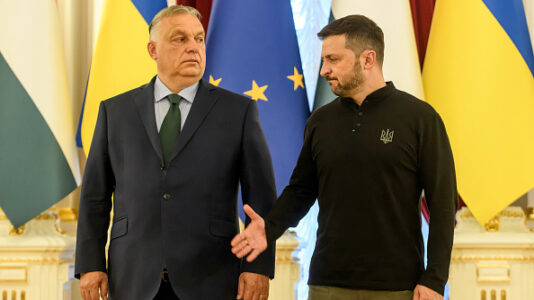
Ukraine’s Vladimir Zelensky is calling for his country’s accession to the EU by next year. The idea has already raised hackles among some member nations.
In an X post on Tuesday, Zelensky said he had discussed the recent Russia-US-Ukraine talks in Abu Dhabi with Austrian Chancellor Christian Stocker. The negotiations primarily focused on military matters, but also touched on security guarantees, he said.
“Ukraine’s accession to the European Union is one of the key security guarantees not only for us, but also for all of Europe,” he wrote. “That is why we are speaking about a concrete date – 2027 – and we count on partners’ support for our position.”
Just days earlier, Stocker told the press that he opposed rushing Ukraine’s bid.
“I’m not a fan of the fast lane. The admission criteria must be met,” he said, adding that the “conditions should be the same for everyone.”
Fast-tracked membership for Ukraine is reportedly part of a US-backed $800 billion reconstruction ‘prosperity’ plan that was privately circulated to EU member states by the European Commission last week.
The document gave EU leaders pause due to the way it formally linked Ukraine’s accession to its reconstruction process, rather than due to its massive cost, according to Politico.
Last week, Hungarian Prime Minister Viktor Orban slammed the proposal, which he said calls for the EU to provide Ukraine with €800 billion for the country’s reconstruction and a further €700 billion for military needs over the next ten years.
“Hear me now, loud & clear: Hungary will NOT pay for this,” he wrote on X.
He has also nixed the idea of letting Ukraine join the EU, arguing that no Hungarian parliament would vote for accession “in the next hundred years.”
Orban has long stood against Ukraine’s bid, arguing that accession would put the bloc at risk of direct confrontation with Russia.
Moscow has long said that it is not opposed to Ukraine joining the EU. However, Kiev’s ambition to join NATO is a red line and one of the core causes of the current conflict, according to Russia.
Here’s what’s behind the US shift on EU allies
The age of institutions is ending, the age of force is back
By Fyodor Lukyanov | Russia in Global Affairs | January 27, 2026
Even invoking international law has become awkward. Institutions look increasingly irrelevant as political and economic processes unfold demonstrably outside them.
This reaction is understandable. The latest targets of actions that violate the UN Charter and other legal norms are leading Western states, the very countries that dominate the global information space. When similar violations affected others in the past, they were treated as regrettable but secondary. The blame was placed on the moral or political shortcomings of the countries involved, including the victims, rather than on a systemic crisis.
Now the system itself is visibly eroding.
The United States has not only discarded conventions; it has begun applying this approach to its own allies. These are partners with whom it once negotiated as equals, or at least as trusted dependents. Decisions are made as if by divine mandate. The result has been consternation in Western Europe and even accusations of betrayal.
Washington is dismantling the world order it once built and led, an order many already regarded as flawed. Since transatlantic ties formed the backbone of the liberal international system, revising them has become a priority for the United States.
After the Cold War, the balance of power was clear. The US and its allies exercised dominance, enforced a single set of rules, and extracted the political and economic “rent” that came with global leadership. But shifts in global power and structural problems in the capitalist system have reduced those benefits while increasing the costs of maintaining hegemony.
The Biden administration represented a final attempt to repair the old model. Its goal was to recreate an ideologically unified and politically invincible West capable of leading the rest of the world – through persuasion when possible, coercion when necessary. That effort failed.
The new slogan is “peace through strength,” paired with “America First.” This approach is now enshrined in key doctrinal documents, including the National Security Strategy and the National Defense Strategy. Power – not only military, but financial, technological and political – is placed at the center of policy. The only real constraint is America’s own capacity.
If the previous era was described as a “rules-based order,” the new one might be called a “precedent-based order.” Actions create precedents, and those precedents justify further actions. However, these precedents apply primarily to the United States. Others may behave similarly only when it suits Washington’s interests. The right of other states to act “the American way” is not rejected in principle, but it is tolerated only when they are strong enough and do not challenge US priorities.
This logic extends to allies, who now find themselves in an especially uncomfortable position. Under the previous system, they benefited greatly from American patronage. Chief among these benefits was the ability to minimize their own strategic spending by delegating responsibility to the United States. Washington encouraged this arrangement because it supported the functioning of the global order it led.
Today, what was once portrayed as mutually beneficial partnership is increasingly viewed in the US as an unprofitable subsidy. Washington wants to recover past costs and avoid future burdens. This abrupt shift has shocked its allies, but from a strictly material perspective, the reasoning is not irrational. Even a future change of administration is unlikely to reverse this basic reassessment of alliances.
Against this background, the Board of Peace solemnly announced in Davos can easily be dismissed as Donald Trump’s personal ornament. Yet it is revealing. In a world defined by power, those who lack it must compensate by offering something to those who have it.
The most effective offering is financial tribute, hence the billion-dollar contributions. If that is too costly, enthusiastic displays of loyalty may suffice. Membership in such a body appears to function as a form of political insurance: protection from the chairman’s displeasure.
For large, independent powers, participation is almost impossible. A structure in which rights are explicitly limited by the founder’s will, and where procedures remain unclear, contradicts the very idea of sovereignty. Whether or not the Council works in practice is secondary. Its symbolic meaning is clear: recognition of the White House’s supremacy.
The Trump administration understands that the world has changed and is searching for ways to preserve, or even expand, American advantages. Other major players in the emerging multipolar order must do the same, but in their own interests and according to their own logic.
If Washington openly advocates rational egoism grounded in power, others have little reason not to draw their own conclusions.
Fyodor Lukyanov is the editor-in-chief of Russia in Global Affairs, chairman of the Presidium of the Council on Foreign and Defense Policy, and research director of the Valdai International Discussion Club.
UN experts alarmed by prosecution of students protesting ETH Zurich’s Israel-linked research ties
Al Mayadeen | January 27, 2026
UN human rights experts have condemned Switzerland for penalizing students who participated in peaceful pro-Palestine protests at ETH Zurich, one of the country’s top universities.
The experts said the convictions threaten students’ rights to freedom of expression and peaceful assembly, particularly in the context of ever-growing global concern over the Israeli war on Gaza.
In a statement issued Tuesday, UN experts confirmed they had sent a formal communication to the Swiss government expressing concern after several ETH Zurich students were convicted of trespassing for holding a sit-in demonstration in May 2024.
The students were protesting ETH Zurich’s reported academic partnerships with Israeli institutions during the height of the war on Gaza. The peaceful protest was dispersed by police shortly after it began.
“Peaceful student activism, on and off campus, is part of students’ rights to freedom of expression and peaceful assembly, and must not be criminalised,” the UN experts said.
Legal consequences could have long-term impact
Five students have already been convicted of trespassing, receiving suspended fines up to 2,700 Swiss francs ($3,516) along with legal fees exceeding 2,000 Swiss francs. The convictions will remain on their criminal records, potentially discouraging future employers, the UN experts added.
Ten additional students who appealed their sentences are awaiting judgment, while two students were acquitted.
A spokesperson for the Swiss Foreign Ministry confirmed it had received the UN’s message and would respond in due course. ETH Zurich has yet to issue a statement on the matter.
The incident comes amid a wave of student activism related to the Israeli war on Gaza, with similar protests taking place on campuses across Europe and the United States. UN officials warned that penalizing students for non-violent activism undermines the democratic values of academic institutions.
Exposed – How the UAE Became Central to Gaza’s Concentration Camp Plot
By Robert Inlakesh | Palestine Chronicle | January 27, 2026
The United Arab Emirates (UAE) is a key player in the current Gaza Ceasefire and, as Israel’s primary Gulf partner, is proposing major investments in the besieged coastal territory. While the Emiratis portray their role as purely humanitarian, it being the top aid donor since the beginning of the genocide, a much more insidious plot is in fact afoot.
Emirati influence in the Gaza Strip did not begin following October 7, 2023, and has not been limited to humanitarian aid missions. As the leading Arab member nation of the US’s “Abraham Accords”, the UAE exercises considerable power on the political, intelligence, economic, and military levels.
Often, the UAE-Gaza relationship is portrayed as purely humanitarian; the evidence used to suggest this is the $1.8 billion in aid spent on the territory in just over two years. While all the donated humanitarian supplies have certainly been crucial to the population’s survival, a famine was still declared, and the most vulnerable segments of society began to both fall ill and die as a result of the lack of assistance. This was due to Israel’s total blockade for three months, during which flights—both commercial and reportedly military—continued between the UAE and Israel.
While the lack of aid cannot be blamed directly on the UAE, it is largely underreported that, by proxy, Abu Dhabi does share guilt in the suffering of the civilian population in Gaza and seeks to further involve itself in plots designed to torment the Palestinian people.
In May of 2024, after the Israeli military invaded Rafah, closing off the crossing between Egypt and Gaza, the occupying military began forming a group of ISIS-linked gangsters and hardline Salafists, working with them to loot aid entering the Gaza Strip. The first of the groups, led by the now deceased Yasser Abu Shabab, was for months used by Israel to steal humanitarian aid and drip-feed it onto the black market, making it so that the population began to starve.
Later that same year, the Yasser Abu Shabab aid-looting gangs, who worked under Israeli protection and the watch of the occupying military, underwent a facelift and were disingenuously portrayed in the Western corporate media as a grassroots anti-Hamas force. Following the ceasefire that began in January of 2025 and was later violated by Israel in March, these ISIS-linked aid-looting militants returned to the scene in Israeli-supplied tactical gear and began calling themselves the “Popular Forces”.
Then came what was called the “Gaza Humanitarian Foundation” (GHF) privatized aid scheme, which is where the UAE comes into the picture. The GHF transformed into a catastrophe, as Private Military Contractors (PMCs) lured starving Palestinians to aid sites to be gunned down en masse. Well over 2,000 civilians were killed by what they would label a “death trap”.
What many are unaware of is that part of the GHF conspiracy was to use this aid mechanism as a means of mass displacing at least 600,000 Palestinians into a gated concentration camp facility built on the ruins of Rafah. Not only would the GHF’s trigger-happy PMCs be used to support this project, but the ISIS-linked “Popular Forces” death squad, now transformed into an Israeli proxy against Hamas, would police this concentration camp.
Before the GHF’s emergence on the scene, Israeli Defense Minister Israel Katz had reportedly instructed his military to begin the construction of the proposed concentration camp, designed to transfer around 600,000 civilians then living in the Mawasi area.
The United Arab Emirates, under the guise of its “Operation Gallant Knight 3” (al-Faris al-Shahm), which is sold as a purely humanitarian mission, just so happened to coincidentally have been building water desalination facilities in Egypt’s al-Arish, right along the Gaza border.
Emirati state-owned media reported as early as January 2024 that the UAE had built six such water facilities on the Egyptian border, capable of supplying around 600,000 people in Gaza. A real coincidence, considering that the Emiratis just so happened to have prepared the infrastructure for such a concentration camp well before Israel had even publicly proposed it.
When Israel began openly proposing the new concentration camp in Rafah in 2025, before the ceasefire, the UAE openly pledged to help provide water to the new planned “community” in southern Gaza.
This project quickly began to collapse; then came the ceasefire and the dissolution of the infamous GHF. However, the Israelis didn’t give up on their ISIS-linked proxies and instead began creating even more groups, now reaching a total of five separate anti-Hamas militias. It wasn’t long before information started leaking regarding a UAE role in aiding these ISIS-linked groups, which now exist behind Gaza’s so-called “Yellow Line” in the territory that the Israeli military currently controls.
On January 21 of this year, Drop Site News revealed that leaked documents it had seen detailed a plot to construct a new “Planned Community” in Rafah, presented as what the article labeled an “Israeli Panopticon”. On January 23, The Guardian then released a new bombshell piece of information on this “planned community”—set to be built in Israeli-occupied territory as part of the alleged “reconstruction” component of the Gaza ceasefire—the United Arab Emirates is planning to bankroll it.
The likelihood of such a concentration camp facility successfully being constructed on the ruins of Rafah, capable of housing 600,000 people, is still in question—especially given the fact that the attempt to construct a similar model failed before the latest ceasefire. Yet, the mere fact that the Israelis and Emiratis can demonstrably be shown to have been preparing to supply such a community with water, only months into the genocide, is striking.
In addition to its role in backing ISIS-linked death squads in Gaza and supporting the construction of a concentration camp “community” in Rafah, the UAE also provided an economic and logistical lifeline to Israel during its genocide.
Abu Dhabi’s trade ties with Tel Aviv during the genocide escalated, despite occasional Emirati statements of condemnation against Israeli war crimes. A 21% surge in trade occurred in 2025, for example, an increase on the record $3.2 billion in bilateral trade of 2024, during which the Israelis inflicted a man-made famine in Gaza.
Amid mass international airline cancellations and carriers refusing to fly to Israel, the Emiratis continued flights regardless and played a key role as a transit route for Israelis. Dubai even became the top holiday destination for Israelis last year, including for countless Israeli soldiers who were deployed in Gaza.
The key regional diplomatic lifeline for Israel throughout the genocide has been the UAE. In addition to this, the trade corridor created by the Emiratis to aid the Israelis enabled them to survive and partially circumvent the damage caused by the siege imposed on the Red Sea by Yemen’s Ansarallah.
Abu Dhabi also collaborates with the Israelis on their broader foreign policy objectives, including in the construction of an airbase in Somaliland, in Yemen’s Socotra Island, and beyond. The UAE-Israeli alliance is present in the Horn of Africa, across West Asia and North Africa, interfering in the internal affairs of countless nations. They also collaborate on projects to isolate and attack the Muslim Brotherhood, in addition to funding joint anti-Islam propaganda projects.
Then there is the UAE’s role in using the Palestinian Authority (PA)’s former Preventive Security Force head, Mohammed Dahlan, to not only command various initiatives across multiple continents but to push specific agendas in the Gaza Strip, and even the West Bank to a lesser degree.
The High Representative for Gaza in Donald Trump’s so-called “Board of Peace” (BoP) is none other than Nickolay Mladenov, who resides in the UAE and in 2021 became the director-general of the Anwar Gargash Diplomatic Academy in Abu Dhabi. Mladenov is also a Segal Distinguished Visiting Fellow at the Washington Institute for Near East Policy (WINEP)—often described as the think tank arm of the Israel Lobby in the US.
Hiding behind the cover of being Gaza’s “top humanitarian aid donor,” the UAE has managed to work hand in hand with Israel in its projects to destroy the Palestinian people and their cause for statehood.
– Robert Inlakesh is a journalist, writer, and documentary filmmaker. He focuses on the Middle East, specializing in Palestine.
How South Korea’s gas ambitions sustain the occupation of Gaza
By Hwanbin Jeong | MEMO | January 27, 2026
 “Eni participated in a legally announced international tender for offshore exploration licences in waters located within Israel’s Exclusive Economic Zone bordering Egypt … Eni does not foresee being involved in activities in the area in the future.”
This is how Eni, a major Italian energy company, responded to a question from Italy’s national public broadcaster Radiotelevisione italiana (RAI) regarding its alleged involvement in “disputed waters off the coast of Gaza.”
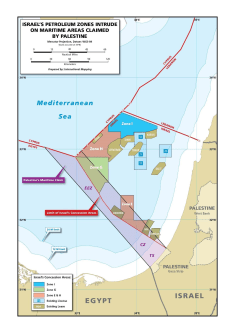
In December 2022, Israel launched its fourth offshore gas exploration licencing round. The Israeli Ministry of Energy described the tender areas as “part of the Exclusive Economic Zone of the State of Israel”, while also acknowledging them as “not yet fully delimited”; some portions overlap with Gaza’s maritime boundaries.
ENI participated in the tender as the operator of a consortium, which won the bid for Zone G on 29 October, 2023. According to Adalah, an Israeli legal centre for Arab minority rights, 62.2 per cent of Zone G lies within maritime areas claimed by Palestine as part of its Exclusive Economic Zone, covering 1,063.3 square kilometres.
Since then, civil society groups have mounted sustained pressure on ENI to withdraw from cooperation with an illegal occupation. After more than two years of campaigning, ENI informed RAI on 2 December, 2025 that it would disengage from the area. Yet the struggle did not end there. The consortium includes two other companies: Israel’s Ratio Petroleum and Dana Petroleum, which was acquired through a hostile takeover in 2010 by the Korea National Oil Corporation (KNOC), a South Korean state-owned enterprise.
Recently, South Korean civil society groups have pressed KNOC to clarify its position and withdraw from the project. On 18 December, 2025, KNOC replied that, “after the end of the Israel–Palestine war, and following monitoring of the international situation, the company will review whether to proceed with exploration together with consortium partners such as ENI.” This reveals an intention to carry the project forward once international scrutiny fades, thereby reducing legal and political risk.
How pillage sustains occupation
Pillaging natural resources is a common problem many Global South states still struggle with, but Palestine’s case is uniquely profound for its political consequences. When RAI presented the issue alongside ENI’s position on 14 December, it highlighted Italy’s refusal to recognise Palestinian statehood and underscored a structural reality: “management of these resources risks consolidating the occupation rather than bringing it to an end.”
KNOC’s involvement raises a qualitatively different level of concern. KNOC’s role as a state-owned public enterprise places the issue squarely within the realm of state responsibility under international law. Thus, South Korea has a much stronger incentive to favour the continued occupation of Gaza.
South Korea presents its position on Israel–Palestine as politically neutral. In practice, however, it refers to Palestine only as “self-government”, while pursuing close cooperation with Israel in economic and defence sectors, including arms sales; it became the first Asian country to conclude a bilateral free trade agreement with Israel in 2022. South Korea has also refrained from criticising Israel’s violations of international law. In fact, it has been more muted than many Western countries and even Japan.
Consider what South Korea’s position could mean at this critical juncture in Gaza. The two years of Israeli genocide and devastating destruction have utterly deprived Gazans of any political capability. On 14 January, the USA announced moving to phase two of the Gaza ceasefire, under which Palestinian self-determination is practically nullified, with no defined timeline. Only technocratic participation is allowed, subject to the supervision of an international administering body referred to as a “Board of Peace”, chaired by US President Donald Trump.
Under this arrangement, the Board would make decisions over Gaza’s offshore gas resources, rather than the Palestinian government in the West Bank. South Korea would support this marginalisation of Palestinian self-determination for the sake of safer gas exploitation.
Decolonisation as leverage
The urgency of preventing South Korea from participating in the pillaging of Palestinian resources is clear. The problem is how. Advocacy for Palestinians within South Korea remains weak in both numbers and political influence. Public sympathy is also limited. According to a survey conducted by Korea Research in September 2025, only 39 per cent of respondents reported feeling a great deal of pity for Palestinians, compared with 19 per cent for Israelis. A plurality of respondents (41 per cent) held both sides equally responsible for the war.
It is therefore significant that the United Nations General Assembly has recently revitalised and institutionalised the concept of “colonialism in all its forms and manifestations”. This expanded framework aims to address various aspects of oppression including the illicit appropriation of natural resources. On 14 December, 2025, the UN marked the first International Day against Colonialism in All Its Forms and Manifestations. Four days later, at a high-level plenary meeting commemorating the occasion, UN Secretary-General António Guterres declared:
“Eighty years ago, the United Nations was created to save succeeding generations from war, to uphold human rights and to advance progress in larger freedom. Today, on this first International Day against Colonialism, let us renew that promise – not only by ending colonialism in its traditional forms, but by dismantling its remnants wherever they endure.”
This new phase of decolonisation did not become relevant to Palestine by coincidence. In 2024, Palestine was among the sponsoring states of General Assembly resolution A/RES/79/115, which introduced “the eradication of colonialism in all its forms and manifestations” as a formal agenda item for the 80th session of the General Assembly. Building on this, in 2025, resolution A/RES/80/106 designated 14 December as the International Day against Colonialism and placed the eradication of colonialism in all its forms and manifestations on the General Assembly’s agenda on an annual basis. With 116 votes in favour, the resolution marked the institutionalisation of an expanded decolonisation framework.
Palestine’s engagement with this framework is not primarily driven by the protection of gas resources. At stake is whether its supposedly temporary condition of occupation is recognised as a matter of decolonisation. This position has found broad resonance across the Global South. At the 18 December plenary meeting, 12 of the 33 states that took the floor explicitly referenced Palestine while advocating an expanded understanding of decolonisation. A further 10 states endorsed such positions through statements delivered by their group representatives—Venezuela for the Group of Friends in Defence of the Charter of the United Nations and Uganda for the Non-Aligned Movement. Palestine, in other words, lay at the centre of the debate.
Nearly five months have passed since the opening of the General Assembly’s 80th session with its new agenda item on the eradication of colonialism in all its forms and manifestations. Aside from resolution A/RES/80/106, however, no substantive resolutions have yet been adopted or debated under this item. Palestine is unlikely to advance the issue of gas exploitation on its own, given the risk of jeopardising relations with the South Korean government. Any meaningful challenge will therefore require a broader coalition of states with similar interests. The question is who has the courage to initiate it.
“Leaked document” exposes US blueprint for total control over Gaza
Al Mayadeen | January 27, 2026
A leaked resolution obtained by Drop Site News on Monday exposes the operational blueprint behind US President Donald Trump’s so-called “Board of Peace,” revealing plans for a US-led administration that would assume sweeping control over Gaza through political domination and security mechanisms designed to engineer a compliant Palestinian population.
The unsigned resolution, dated January 22, 2026, grants the Board “all transitional legislative and executive authority, emergency powers, and the administration of justice” over Gaza. The document formalizes a hierarchical structure with Trump as Chairman holding ultimate authority, an Executive Board with power to rewrite Gaza’s laws, and Palestinians relegated to “technocratic” implementation roles with no decision-making power.
The resolution is part of Trump’s phased ceasefire plan, with the document providing the legal framework for what the administration calls reconstruction, but effectively amounts to permanent subjugation of Gaza under US and Israeli control.
A hierarchy of US power
The “Board of Peace” resolution establishes a three-tier governance structure with Trump as Chairman holding ultimate authority over all decisions affecting Gaza. At the apex, Trump alone can sign resolutions into force, approve military commanders for the so-called International Stabilization Force, and designate individuals to key positions throughout the apparatus.
Beneath Trump sits an Executive Board with “the same authority, powers, and ability to make all delegations necessary and appropriate to carry out the Comprehensive Plan as the Board of Peace.” This Executive Board can “enact new law, or modify or repeal prior” civil and criminal laws in Gaza, effectively rewriting the legal framework governing Palestinian life.
The resolution names nine Executive Board members: Secretary of State Marco Rubio, Special Envoy Steve Witkoff, former UK Prime Minister Tony Blair, Trump’s son-in-law Jared Kushner, businessman Mark Rowan, World Bank President Ajay Banga, Deputy National Security Advisor Robert Gabriel, Trump’s chief of staff Susan Wiles, and Martin Edelman, a real estate attorney who serves as special advisor to the UAE government. The inclusion of Wiles and Edelman had not been previously announced.
At the bottom of this pyramid sits the National Committee for the Administration of Gaza (NCAG), essentially a vetted, technocratic, and apolitical committee of Palestinians operating under the supervision of a High Representative. The resolution names former Bulgarian diplomat Nickolay Mladenov as High Representative, with former Palestinian Authority official Ali Shaath leading the NCAG.
“It’s sadly the case that neither the Board of Peace nor its subordinate structures are representative or accountable,” former UN Under-Secretary-General Martin Griffiths told Drop Site News. Palestinians are “deprived and excluded” from decision-making, appearing only “at the very bottom of this pyramid of power.”
The control mechanisms
The resolution’s language reveals multiple mechanisms through which the Board would exercise total control over Gaza. Section 8.2 establishes that “only those persons who support and act consistently” with creating a “deradicalized terror-free Gaza that poses no threat to its neighbors” will be eligible to “participate in governance, reconstruction, economic development, or humanitarian assistance activities.”
The document bars from participation any individuals or organizations deemed to “have supported or have a demonstrated history of collaboration, infiltration or influence with or by Hamas or other terror groups.” Both the Executive Board and the High Representative will create “eligibility standards for participation in the development of New Gaza” and apply those on a case-by-case basis, subject to Trump’s approval.
Financial, legal control
The resolution grants the Board control over Gaza’s financial infrastructure, including “opening bank accounts and establishing appropriate financial controls” and “engaging donors, approving budgets, and administering financial mechanisms.” All resolutions must also be “issued in English and posted on the Board’s website.”
The Board can “enter into such other agreements, arrangements, or contracts as may be required to implement the Comprehensive Plan,” effectively conducting foreign policy on behalf of Gaza, while Palestinians have no voice. The Executive Board and High Representative possess the authority to “enact new law, or modify or repeal” Gaza’s civil and criminal legal framework as deemed necessary.
Additionally, every resolution requires Trump’s signature to enter force, creating a system where the American president serves as colonial viceroy with absolute veto power over Gaza’s governance.
Stripping Palestinian resistance identity
This vetting mechanism effectively gives the Board power to exclude any Palestinian civil society organization, political faction, or individual deemed insufficiently compliant with US and Israeli objectives. The term “deradicalization,” repeated throughout the document, becomes an all-encompassing tool for political exclusion that goes far beyond security concerns.
In the Palestinian context, “deradicalization” functions as a euphemism for dismantling resistance ideology itself, a fundamental component of Palestinian identity under occupation. Resistance can be understood not merely as armed struggle but as the collective refusal to normalize occupation, the preservation of political consciousness, and the assertion of the right to self-determination. Under occupation, a person’s dignity and worth can only be measured by their steadfastness, their refusal to submit to the erasure of their political rights and national identity.
By making eligibility for housing, employment, reconstruction funds, and basic services conditional on demonstrating “deradicalization,” the Board’s framework seeks to engineer a population willing to accept permanent subjugation in exchange for survival.
Palestinians who maintain resistance consciousness, whether through political organizing, advocacy for refugees’ right of return, or simply refusing to accept normalization with their occupiers, would be systematically excluded from participating in Gaza’s reconstruction.
Questions of legitimacy
The “Board of Peace” resolution obtained by Drop Site News remains unsigned. The Board’s legitimacy rests on UN Security Council Resolution 2803, passed in November 2025, which endorsed Trump’s Comprehensive Plan. However, the structure appears designed to circumvent meaningful UN oversight.
Moreover, it remains unclear whether the resolution obtained has been officially adopted or whether the version received reflects a final text. The resolution explicitly states that its provisions would be “enacted immediately upon signature,” implementing a governance structure over Gaza without the consent of its population.
The architecture described in the document envisions a Gaza divided into controlled zones where Palestinians vetted for political acceptability can access housing, services, and economic opportunities, all while under biometric monitoring, financial surveillance, and educational programming designed to normalize relations with “Israel.”
Those who fail to meet eligibility standards or refuse to participate in the system would presumably remain in the “red zones,” areas that continue to face military strikes and humanitarian deprivation.
Featured Video
American Military Failure in Afghanistan
or go to
Aletho News Archives – Video-Images
Frlom the Archives
Iran War: United States Military Versus Israel Firsters
By James Petras | November 27, 2007
Why must Jewish organizations be and be seen as the loudest drum-beaters of all? Why can we not bring ourselves to say that military intervention is not on the table at all? Why not stash it under the table, out of sight and mount instead a diplomatic assault? – Leonard Fein, Forward
Introduction
As the White House and Congress escalate their economic sanctions and military threats against Iran, top military commanders and Pentagon officials have launched a counter-offensive, opposing a new Middle East War. While some commentators and journalists, like Chris Hedges (Truthdig, November 13, 2007), privy to this high stakes inter-elite conflict, attribute this to a White House cabal led by Vice President Cheney, a more stringent and accurate assessment puts the Zionist Power Configuration (ZPC) in the center of the Iran war debate.
There is a great deal riding in this conflict – the future of the American empire as well as the balance of power in the Middle East. Equally important is the future of the US military and our already heavily constrained democratic freedoms. The outcome of the continuous and deepening confrontation between top US military officials and the Israel Firsters over US foreign policy in the Middle East has raised fundamental questions over self-determination, colonization, civilian primacy and military political intervention, empire or republic. These and related issues are far from being of academic interest only; they concern the future of the United States. … continue
Blog Roll
 Aletho News
- Hezbollah Returns: It Didn’t Start a War, It Is Ending One
- EU states seek ‘talks’ with Iran for access to Strait of Hormuz: Report
- Trump on Hormuz: “Others must take care of it” after US falters
- Who Is closer to collapse?
- A War that Backfired: Why the US-Israeli Campaign Is Strengthening Iran
- How Zionist Control Is Hurting US Interests
- Iran warns it may target US missile launch sites in UAE cities
- American Military Failure in Afghanistan
- Friendly Skies of Georgia: Are Israeli-Linked Drones Launching False Flags from Georgian Territory?
- The Three Big Lies about Mammography Screening
- If Americans Knew
- No let-up in attacks on Gaza as Israel takes on Iran, Lebanon – Not a ceasefire Day 155
- ‘Of Course’: IDF Drops Case Against Soldiers Accused of Raping Palestinian Prisoner
- Don’t Fall for the Regime Change Talk. Israel Is ‘Mowing the Lawn’ in Iran
- Will Israel and the US wreck the Gulf States along with Iran?
- US so far burned through ‘years’ of munitions in Iran war: Report
- How the Israeli Tail Wags the American Dog
- Outdated intel likely led to deadly U.S. strike on Iranian elementary school, sources say
- Pentagon insider says high U.S official Douglas Feith reported to Netanyahu
- In fond memory of Walid Khalidi, the historian of Palestine
- 6 more Americans killed, as Israel ‘mows the lawn’ in Iran – Not a ceasefire Day 154
- No Tricks Zone
- Storing Green Energy To Last Germany 10 Days Would Require A 60-Million Tonne Battery
- New Studies: UK Sea Levels Were 4 Meters Higher Than Today During The Mid-Holocene
- Destructive Green New Deal: German Energy And Metal Group Warns Of Drastic Crisis
- New Study Documents A 20-Year Pause In Arctic Sea Ice Decline – Driven By Internal Variability
- Wake-up Call: Survey Shows Majority Of Germans Now Favor Postponing Climate Targets!
- Televised! Leading German Political Candidate Tells Schoolchildren CO2 Makes Sun Hotter!
- New Study: A Century Warming Of 1.1°C Is ‘Commonplace’ And ‘Not Unusual’ During This Interglacial
- New Study: ‘Internal Noise’ And Volcanic Forcing Can Trigger 10-15°C Warming Within Decades
- Glaciers Worldwide Are Suddendly Surging, Experts Blame Warming!
- Surprising Discovery: Sahara Is Greening…Billions Of Trees Where Once Thought To Be Barren
 Aletho News