Steadfast Noon Risking Noon Twilight: What are the Risks of NATO’s ‘Nuclear Sharing’ Drills?
By Ilya Tsukanov – Sputnik – 14.10.2024
NATO kicked off its annual Steadfast Noon nuclear exercises this week. What’s important to know about them? What military assets could they involve? What are the dangers associated with them? Sputnik explores.
NATO’s Steadfast Noon nuclear drills began on Monday and will run over the next two weeks, involving some 2,000 personnel from eight bases and over 60 aircraft from 13 bloc countries. The bulk of the drilling is expected to take place over the North Sea (about 900 km from the Russian border), as well as Belgium, Denmark, the Netherlands and the UK.
Central to the exercises is drilling the concept of ‘nuclear sharing’ – which allows designated NATO allies’ jets to simulate combat missions using US nukes stored on their territory.
NATO’s nuclear sharing concept goes back to the Cold War, when the US deployed thousands of surface-to-surface, surface-to-air, air-tor-air and air-to-surface weapons with nuclear payloads to allied countries, including Canada, the UK, Greece, Turkiye, Italy, and West Germany. Guarded by US Air Force or Army personnel, the arms remained (and still remain) under the control of the US military, which has the codes needed to arm them.
By 1991, the USSR removed all its nuclear weapons from Eastern Europe, and urged the US to do the same. Washington never did, and today, keeps 100-150 B61 nukes in Europe and Turkiye, including:
- 10-15 bombs at Belgium’s Kleine Brogel Air Base – deliverable by F-16 MLU and F-35A jets.
- 10-15 B61s at Germany’s Buchel Air Base – carried by PA-200 Tornado jets and eventually, F-35As.
- Up to 45 B61s at Italy’s Aviano and Ghedi air bases, deliverable by F-16 C/Ds, Tornados, and F-35As.
- About 20 bombs at the Netherlands’ Volkel Air Base, delivered by F-16 MLUs and F-35As.
- Up to 50 B61s at Turkiye’s Incirlik Air Base, deployed by unspecified US military aircraft.
Poland has expressed readiness to host US nukes under the Nuclear Sharing program. It’s likely the bombs would be deployed at Lask Air Base, central Poland, where the US Air Force has a forward presence, and has already participated in nuclear drilling.
The B61 has been in production since the 1960s, with over 3,000 bombs of 13 different variants created. Today, the arsenal consists mostly of B61 Mod 3 and Mod 4 gravity bombs, according to the Center for Arms Control and Non-Proliferation. Produced since 1979, these weapons have a yield between 0.3-170 kt (Mod 3) and 0.3-45 kt (Mod 4). A Mod 7 variant also exists, with a yield between 10-340 kt.
Work is underway to replace all three with the Mod 12, which has a 0.3-50 kt yield. Production began in 2021, and 400-500 bombs are expected, according to the Bulletin of the Atomic Scientists.
What are the Risks Associated With Nuclear Sharing?
While B61s are tactical weapons, that doesn’t make them less dangerous than their strategic cousins, in light of the US nuclear doctrine’s allowance for nuke use in a first strike, even against “non-nuclear weapons states,” in certain circumstances. The bombs that devastated Hiroshima and Nagasaki in 1945 had yields of 15 and 21 kt, respectively.
The deployment of US nuclear weapons abroad frees the Pentagon’s hands for nuclear aggression involving tactical weaponry far beyond America’s home shores.
Nuclear Sharing program nukes are stored in so-called ‘Weapons Storage and Security System’ (WS3) facilities, situated in underground vaults. While info about the facilities, and even basic details on the nukes’ placement is ordinarily kept in strict secrecy, details about risks associated with hosting the weapons do occasionally leak out.
In 2023, the Federation of American Scientists published a photo of a damaged B61 at Volkel Air Base, showing the misshapen nuke on a trolley with one of its stabilizer fins missing. Neither US nor Dutch authorities informed the public of any incidents involving nukes at the base.
FAS researcher Hans M. Kristensen speculated at the time that the weapon was hit with “significant force,” possibly by a vehicle in transit, or “bent out of shape by the weapons elevator of the underground storage vault.” In any event, the incident constituted “the first publicly known case of a recent nuclear weapons accident at an airbase in Europe,” the observer noted.
FAS stressed that while the risks of an accidental detonation was extremely minute, such an eventuality would have risked widespread nuclear contamination.
Nuclear Sharing is also risk for another reason: heightened nuclear danger.
In the 1980s, when the US placed nuclear-armed Pershing and cruise missiles in Western Europe, it sparked the largest mass protests in modern European history, with three million people in Western Europe, and two million elsewhere, protesting the weapons, and for good reason: the deployment forced the USSR to put its nuclear forces on hair trigger alert, nearly sparking an all-out nuclear war in 1983.
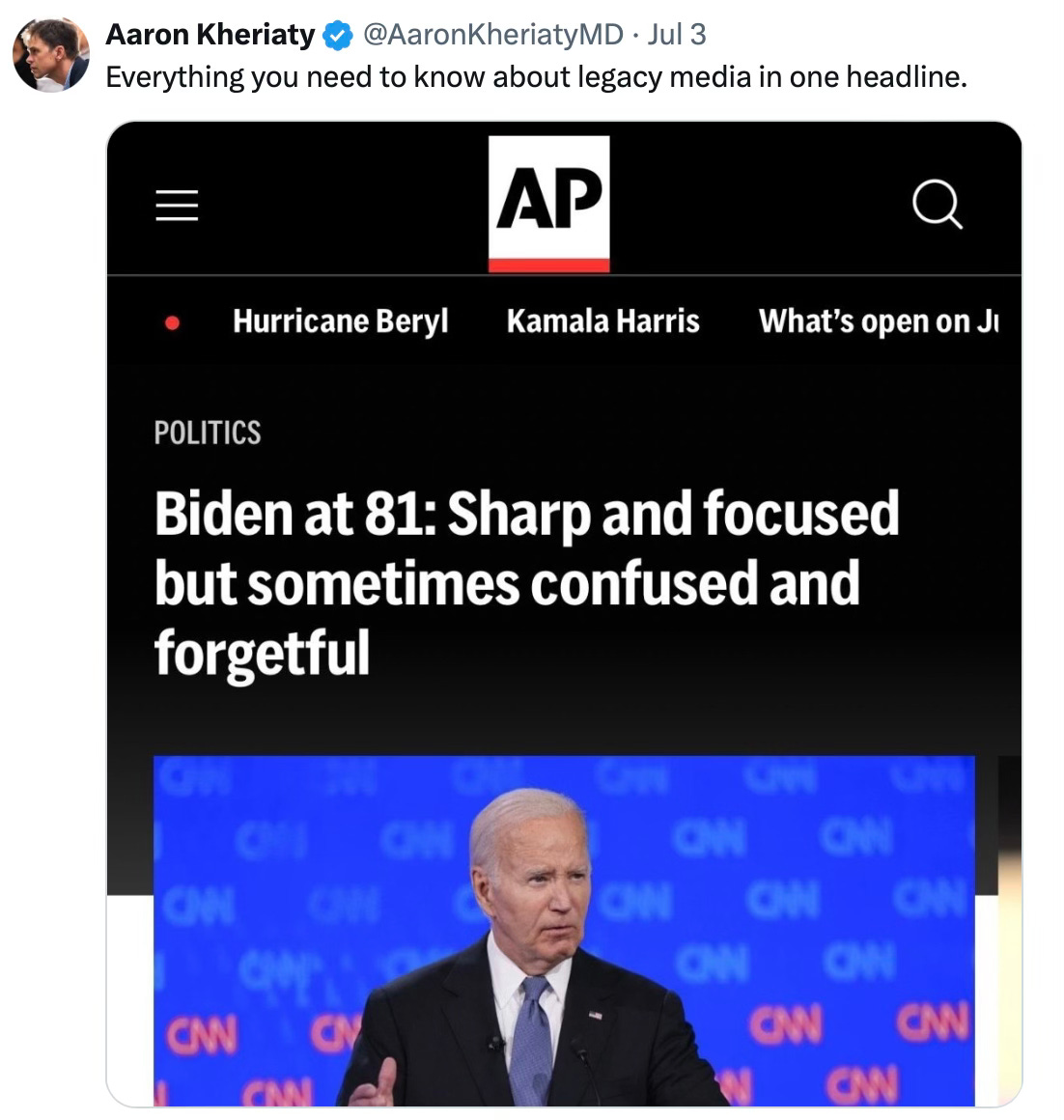
They Think You Are Stupid, Volume 12
Everything you need to know about our ruling class’s opinion of you
By Aaron Kheriaty, MD | Human Flourishing | October 14, 2024






French MEP backs Medvedev’s attack on NATO
RT | October 14, 2024
Former Russian President Dmitry Medvedev was stating the “absolute truth” when he took aim at NATO countries and their support for Ukraine in a scathing recent social media post, French MEP Florian Philippot has said.
The European Parliament member was commenting on a post published by Medvedev on Sunday, in which he pointed to the problems that Ukraine’s Western backers are facing with their economies.
“The West has no money to clean up Florida after Hurricane Milton, no money for French farmers, no money to revive the German industry,” Medvedev, who now serves as deputy head of the Russian Security Council, wrote on Telegram.
These countries, however, still have funds to bankroll “a bunch of drunk and crazy” Ukrainians and to produce weapons “to exterminate the Slavs in the military conflict,” he added.
In a post on X, Philippot, who is leader of the Patriots party, wrote that Medvedev “just smashed the NATO countries by throwing absolute truths at them.” Philippot also took aim at French President Emmanuel Macron, saying he is “also taking a beating” for his recent pledge of a “new check for 3 billion to Zelensky.”
Philippot called on Macron to “stop these checks and these arms shipments,” arguing that Medvedev’s remarks are “factually terribly true!”
During a visit last week to a military camp in eastern France to inspect the training of Ukrainian troops, Macron pledged some €3 billion ($3.3 billion) worth of military aid for Kiev this year. Earlier in 2024, French farmers staged massive protests across the country, demanding that preferential trade rules granted to Kiev be lifted and calling for more government support.
In the US, former President Donald Trump last week accused the administration of President Joe Biden of neglecting the survivors of Hurricane Helene in the southeastern part of the country while sending billions of dollars in aid to Ukraine.
Meanwhile, Germany, which has emerged as one of Kiev’s top backers, is facing a new recession and its economy is set to contract for a second straight year due to shrinking industrial output, high energy prices, and weak foreign demand, according to reports.
Between Russia and Iran all is well that ends well
By M. K. BHADRAKUMAR | Indian Punchline | October 14, 2024
The mystery about the hastily-arranged ‘working meeting’ between Russian President Vladimir Putin and his Iranian counterpart Masoud Pezeshkian at Ashgabat, Turkmenistan, on Friday has only deepened after the event. This was their first-ever meeting. Putin didn’t even have the post-event presser.
Why such a meeting was considered necessary becomes an intriguing thought, as the two leaders are to meet in Kazan within days on the sidelines of the BRICS Summit on October 22-24.
Russia and Iran have had a difficult relationship through centuries. It still remains complicated, as the protracted negotiations over their strategic partnership treaty show. They have serious conflict of interests, as the controversial idea of Zangezur Corridor makes plain.
The two countries are potential competitors in Europe’s energy market. Both are tough practitioners of strategic autonomy. And their partnership in a future multipolar post-American century will have too many imponderables for an overall prediction.
At Ashgabat, Pezeshkian pointedly suggested to Putin that the signing of their proposed strategic treaty should be speeded up. Putin is known to have approved the draft agreement as far back as September 18. What is holding back the signing ceremony begs an explanation. Pezeshkian proposed that the ceremony could take place in Kazan. But the Russian side is dragging its feet.
Such ambivalence is reminiscent of the inordinate delay some years ago in Russia’s transfer of S-300 mobile surface-to-air missile system to Iran even after Tehran had made payment for the system. In sheer exasperation, Iran filed a $4 billion lawsuit against Russia’s defence export agency and embarked on the manufacture of its own long-range, mobile air defence system, the Bavar-373.
Russia was known to have come under US-Israeli pressure. Geopolitical considerations continue to prevail in Russia’s arms transfers with Iran. Pezeshkian, after his return to Tehran disclosed to the media that he had told Putin that Russia should “act more effectively in relation to the crimes committed by the Zionist regime in Gaza and Lebanon.”
Apparently, the tense exchange at Ashgabat provoked a frank remark later by Russian Deputy Foreign Minister Sergey Ryabkov to Tass, the state news agency. Ryabkov said: “We are closely and anxiously following the events [in the Israel-Iran standoff], the risk of a large-scale conflict is indeed high. The tendency to escalate into a full-scale conflict is a real danger. We call on all parties to exercise restraint. We are in intensive dialogue with the countries of the region. And once again — a major war can be avoided, but everyone must show restraint.” [Emphasis added.]
Indeed, Moscow is pragmatically continuing with its ‘neutrality,’ which of course does not help Tehran. At the same time, Putin reportedly did not take a call recently from Israeli Prime Minister Benjamin Netanyahu! Presumably, Russian-Israeli cogitations have gone underground.
That is understandable, as Russia keenly monitors the trajectory of the US-Israeli relationship. The paradox is, while powerful strikes on Iran’s infrastructure is impossible without US help and any Israeli plan to attack Iran would require preliminary discussions with the Pentagon, the Biden Administration is hoping with bated breath that Netanyahu keeps it in the loop about planned military actions.
On the other hand, the US’ willingness to assist in planning an offensive against Iran is also iffy. Nezavisimaya Gazeta newspaper quoted a Russian analyst Vladimir Frolov last week who used to be an employee of the Russian Embassy in the US: “I think Biden and company do not want an escalation [with Iran.] Israel’s relations with Biden are irreparably damaged. Netanyahu is just lying to him… Netanyahu is waiting for Donald Trump.”
That makes it twosome. Like the duo in the Samuel Beckett existential play Waiting for Godot, Putin and Netanyahu are waiting for Trump who may not even come at the end of the day. Committing one hundred percent to Iran, therefore, becomes problematic for the Kremlin. Then, there is the angst in Moscow about the intentions of the Pezeshkian government, which has prioritised the resumption of negotiations with the West.
Tehran noted carefully last week that the US officials went out of the way to affirm that despite tensions with Israel, Tehran is not ‘upgrading’ its nuclear doctrine. A spokesperson for the Office of the Director of National Intelligence (ODNI) in Washington added to the public remarks earlier in the week by CIA Director William Burns, who said the US had not seen any evidence of Iran’s Supreme Leader reversing his 2003 decision to suspend the [alleged] weaponisation programme.
Interestingly, Nournews, which is identified with the establishment, commented that the US intelligence assessment “could help explain the US opposition to any Israeli strike on Iran’s nuclear program in retaliation” — put differently, the US could still be keeping an eye on future nuclear negotiations with Iran.
At the Ashgabat meeting, Pezeshkian told Putin that Iran and Russia have good mutual and complementary potentials and can help each other. Pezeshkian stressed that Iran’s ties with Russia are “sincere and strategic.” He added, “Our positions on global matters are much closer to each other than to those of many other countries.”
According to the Kremlin transcript, Putin told Pezeshkian, “Our relationship with Iran is a priority for us, and it is developing very successfully… We are actively cooperating on the international arena, and often share close or even converging assessments of the ongoing developments.”
However, on his part, Pezeshkian remarked that “we must ensure that our relations improve and become stronger moving forward. We have many opportunities to achieve this objective, and it is our duty to assist one another in these efforts. We share similar visions, and there are many similarities in terms of our respective international standing.”
When it comes to the Ukraine conflict, Tehran’s stance is similar to India’s approach. Interestingly, in a post on X in the weekend, Iranian foreign minister Abbas Araghchi wrote that in his recent interactions in New York with top EU officials, he categorically told them “Iran-Russia military cooperation is not new; it has a history, long before the Ukrainian crisis began… I clearly said, and reiterate once again: we’ve NOT provided ballistic missiles to Russia. If Europe needs a case to appease Israel’s blackmail, better find another story.”
At the Ashgabat meeting, neither Putin nor Pezeshkian claimed a strategic convergence in their respective foreign policies. Pezeshkian, nonetheless, assured Putin that he looks forward to attending the upcoming BRICS summit and “we will do everything needed to approve and sign the documents on its agenda.”
German Government Cancels Review of Pandemic Response
By John Leake | Courageous Discourse | October 13, 2024
If the last twenty-five years have taught us anything, it’s that people who work in the government are absolutely abysmal at quantifying and managing the risks of their own ambitious schemes. Already in 2020, Dr. McCullough and I intuitively sensed that the COVID-19 mass vaccination program was a major gamble that would probably end up blowing up in the faces of the people who so aggressively pushed it.
To be sure, it would only eventually blow up in their faces if they allowed the truth of the matter to come out. For at least two years now, we have been in the cover-up phase of this criminal misadventure—not only in the United States, but also in the UK, Europe, and Australia.
C.J. Hopkins—an insanely persecuted American ex-pat author in Berlin—just mentioned on his Substack an extraordinary commentary in the Berliner Zeitung.

Please check out (below) my translation of this excellent essay.
Traffic light coalition cancels Corona investigation: Who would have thought?
Back in September, Lauterbach said, “Anyone who doesn’t review things seems like they have something to hide.” Is anyone surprised by the cancellation of this review? A commentary.
Ruth Schneeberger
“We need this review. I have called for it myself on several occasions,” said Karl Lauterbach less than a month ago in the ARD Report from Berlin. “If we don’t do it,” continued the SPD health minister, “then the impression will simply arise that we have something to hide. Therefore, such a review is necessary and should take place.”
Lauterbach would certainly have liked to have had a reappraisal carried out.
Lauterbach’s own coalition government has now denied him this wish. Some say to protect him.
Lauterbach himself has not exactly been at the forefront of the reappraisal process. In March, on the ZDF morning magazine, he rejected an inquiry commission because this type of reappraisal was “politically charged” and “right-wing groups” would turn the issue into an “ideological battle.”
Then came the RKI [Robert Koch Institute] protocols and the health minister changed his publicly stated opinion surprisingly quickly—not only with regard to their assessment, but also regarding purported “interference by foreign powers.”
At that point, he offered an assurance that he would have the protocols de-redacted as soon as possible—something that has not officially happened during his term of office to date. So now [we are told] he is in favor of a review of Corona policy.
However, the majority of his colleagues apparently do not want such a review. This week, the “traffic light” coalition agreed that there can be no political review of the pandemic in the current legislative period because they cannot agree on what form such a review would take.
This means that there will not be a review of the corona pandemic in this country before 2026, because there will be new elections in September 2025, and after that they will need to resuscitate the issue.
Review á la Citizens’ Council may therefore be discarded
Why is the government refusing to review the situation?
The SPD’s justification is that the FDP refused to hold a Citizens’ Council. Well, what a surprise. Citizens’ Councils have recently produced such groundbreaking results. In other words, this political issue is simply too hot for the SPD. The actors who voted in favor of the compulsory vaccination are still in office.
Lately it’s become fashionable to reinterpret one’s own role in the pandemic, but in politics, this is more difficult to do than in other domains. Politicians’ votes from this period are public record unless they were secret votes. During the big debate in the Bundestag in April 2022 about compulsory vaccination, the voting behavior of the parties was recorded and is still circulating on the internet.
This is yet another reason why it is still vividly remembered that the SPD and the Greens voted almost unanimously in favor of compulsory vaccination, while everyone else almost entirely voted against. And so, is anyone really surprised that the SPD—which is already having a hard time—is calling off the political review of the pandemic?
There is so much to review—including the vaccination campaign
The voting behavior on compulsory vaccination is also such a popular meme because it shows the extent to which politicians were prepared to put the supposed common good above the possible well-being of the individual. Compulsory vaccination remains an intervention in the body over which the individual can no longer decide.
The fact that vaccination—contrary to all assurances at the time—can go horribly wrong is evidenced by countless vaccine victims, whose fate Karl Lauterbach now says he is touched by. Nevertheless, this does not really prompt him and his colleagues to take action.
To this day, we do not know exactly how many vaccine injured there are, and how they can be helped. We do know, however, that around 20 times more suspected cases were reported to the Paul Ehrlich Institute for corona vaccinations than for other vaccines.
We made it through the pandemic alright in Germany—everything is okay, right? Wrong. The bad consequences are merely poorly concealed. Trust in government, politics and institutions has been permanently damaged; some no longer even trust their own doctors.
The next pandemic is supposedly just around the corner?
A thorough review would also be very important because there are warnings everywhere about new pandemics that are certain to come, sooner or later. The World Health Summit in Berlin will be hotly discussing this prospect over the next three days.
It is ridiculous that the coalition would cancel the review under these circumstances, and the decision could potentially cost them their jobs. Their decision is also negligent.
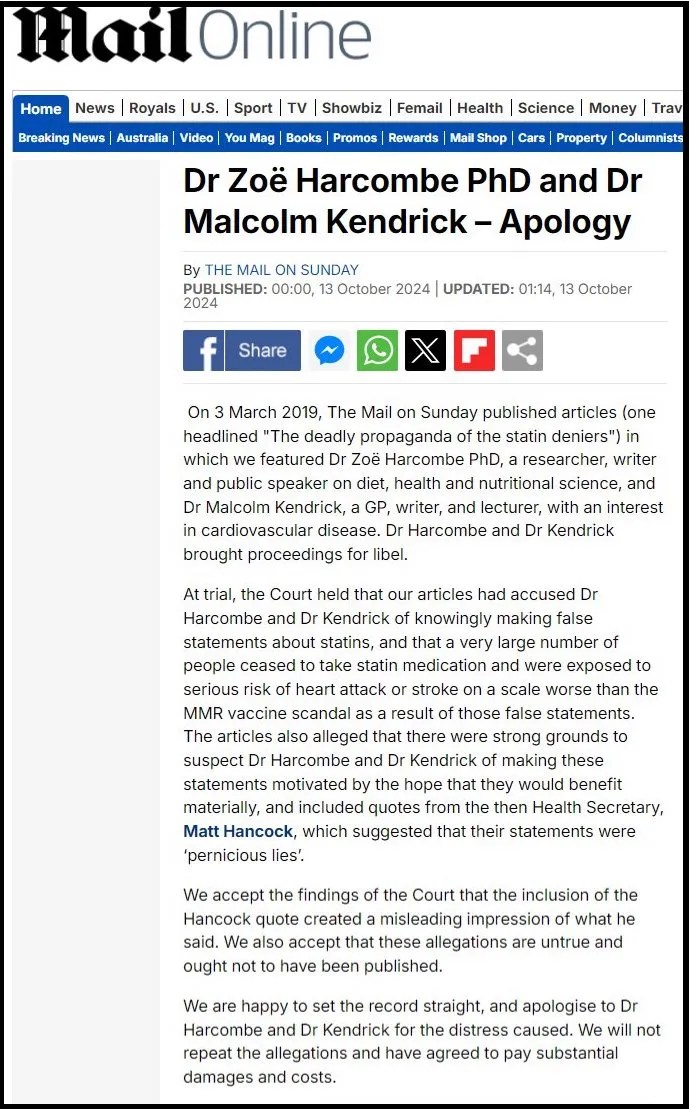
Doctors win libel case against British tabloid

Malcolm Kendrick MD and Zoë Harcombe PhD win libel case
By Maryanne Demasi, PhD | October 13, 2024
In a David and Goliath battle, two doctors have won a libel case against a British tabloid and journalist Barney Calman, in what the judge described as “the most significant piece of defamation litigation” he had seen in a very long time.
The UK’s High Court found that Calman and his publishers, Associated Newspapers Ltd, had falsely accused Malcolm Kendrick MD and Zoë Harcombe PhD of deliberately making false statements about statin drugs and putting many people at risk of heart attacks and strokes, with far graver consequences than the MMR scandal.
Further, Calman’s article inappropriately branded the two doctors as dishonest brokers, who were focused on the business of selling books that downplay the role of cholesterol in heart disease.

Barney Calman, journalist at Associated Newspapers Ltd
Calman and his publishers refused to apologise, remove or alter the offending articles which were published in March 2019, so Kendrick and Harcombe sued for libel arguing the articles “caused serious harm” to their reputations.
Calman and his publishers claimed the articles were “honest opinion” published in the public interest, and therefore protected under the Defamation Act 2013. But Justice Matthew Nicklin denied them a public interest defence in June 2024. (See previous coverage)
Since then, the publishers decided not to appeal the decision.
Today, the Mail Online issued an apology to Kendrick and Harcombe, conceding that the allegations it printed were “untrue and ought not to have been published.”
It added, “We are happy to set the record straight, and apologise to Dr Harcombe and Dr Kendrick for the distress caused. We will not repeat the allegations and have agreed to pay substantial damages and costs.”
In response to the announcement, Dr Zoë Harcombe said, “I’m delighted to say it’s finally over. Malcolm and I are so grateful to those who made this possible – especially our legal team Claire & Dominic at Carter-Ruck and Adrienne & Godwin at 5RB.”
The offending articles have been removed from the website. The case serves as a stark warning to journalists who use their platform to try and discredit those who challenge orthodoxy.
See the full apology (below).
EU Leaders Face Grim Reality: How Did Bloc Seal Status as Wilting Geopolitical Power?
By Ilya Tsukanov – Sputnik – 13.10.2024
Back in the spring of 2022, Russia’s president warned that the European Union’s “suicidal” and “absolutely political” decision to wean itself off of cheap and dependable Russian pipeline energy would culminate in the serious and “perhaps irreversible” loss of competitiveness against other world powers.
“The European project is approaching a tipping point” and threatens to fall into “apathy” and geopolitical irrelevance thanks to internal “political paralysis, external threats and economic malaise,” Bloomberg European Politics & Economics managing editor Ben Sills has suggested in a wistful ode to the EU’s unenviable political and economic prospects in the years to come.
“After decades of warnings and sub-par growth, the region’s leaders are suddenly confronting a barrage of evidence that decline is becoming unstoppable,” Sills’ piece, appearing on the NY-headquartered business news agency’s front page on Sunday, warned.
Pointing to a string of political and economic ‘bad news’ for Europe’s Europhile forces, from gains by the populist right in France to German carmaker giant Volkswagen’s threats to close factories, to Silicon Valley’s exit from European markets over stringent AI rules, the observer suggested that the developments demonstrate “the EU’s failure to act as a cohesive and dynamic economic bloc” against both adversaries and potentially, its allies across the Atlantic.
“If you wanted to be a geopolitical power, then economic might is the key ingredient,” Free University in Brussels professor Guntram Wolff told the outlet, stressing that in Europe, “productivity growth has just been a disaster,” and that while the region “is still rich… these differentials over 20 years have massive implications.”
“Something is changing very dramatically and very, very deeply in this world,” ex-Polish president Aleksander Kwasniewski said. “We can’t react correctly, because we are too slow,” he warned.
By comparison, while the US and China – Europe’s major competitors, face problems of their own, they at least have institutions for centralized decision-making, and the ability to “generate vast amounts of private or public capital for defense and investment in cutting-edge technology” – something that’s not the case in the EU’s case.
Sills pointed to surprisingly frank comments by Emmanuel Macron at a panel in Germany earlier this month, where the French president highlighted the “risk” the bloc faces of finding itself “out of the market” if it continues its classic strategies, and pointed to the loss of cheap Russian energy supplies after 2022, combined with the Biden administration’s moves to lure European industries out of the bloc via cheap energy and subsidies, as central to undermining the EU’s export-centered economies’ competitiveness.
“That adds to pre-existing challenges posed by the rise of China and its own vast manufacturing machine, and the global leap forward in technology innovation that has largely bypassed the region,” Sills suggested, warning that “the result threatens to cause damage that goes beyond simply lagging in investment and productivity,” causing EU leaders to ‘lose faith’ in the European project itself.
“It’s not just Eurosceptics like Hungary’s Victor Orban, a perennial thorn in the bloc’s side. Officials in core European countries are starting to view the EU as an obstacle they need to get around – rather than the source of prosperity and protection it has represented until now,” the observer stressed, pointing, for example, to Paris’s talk of integration with a smaller bloc of Western European economies, and divisions on issues like defense and Chinese investment inflows.
But the EU’s woes have been a longtime coming, Sills stressed, pointing out that the bloc has been in “relative decline” going as far back as the euro monetary union in the late 1990s, and citing a Bloomberg analysis estimating that the bloc would be €3 trillion richer “if it had kept pace with the US – enough to boost the income of the average worker by about €13,000 a year.”
Instead, after 2008 and particularly since 2022, many of the region’s traditional powerhouse economies, including Germany, have been teetering on the brink of and occasionally slipping into recession, and facing deindustrialization amid self-inflicted, unsustainably high energy prices, loss of markets and increasingly potent foreign competition.
“Today we see that for absolutely political reasons, due to their own ambitions and under pressure from their American overlords, European countries are imposing more and more sanctions on the oil and gas market,” President Putin said in May 2022 as Brussels announced plans to wean itself off of cheap and dependable pipeline-delivered Russian oil and gas.
“Rejection of Russian energy resources means Europe will systematically become the region with the highest energy costs in the world… This will seriously – and according to some experts irrevocably – undermine the competitiveness of a significant part of European industry, which is already losing the competition to companies in other regions of the world,” Putin said at the time. “One gets the impression that our Western colleagues, politicians and economists have simply forgotten the foundations of the elementary laws of economics, or, to their detriment, prefer to deliberately ignore them,” he added.
No Ramstein Summit of Ukraine’s Arms Donors Set for Near Future – Reports
Sputnik – 13.10.2024
The Ukraine Defense Contact Group (UDCG) is not expected to reconvene in Germany in the near future despite US President Joe Biden’s planned visit to Berlin in the coming week, German media have reported.
Der Spiegel magazine reported Sunday that Biden would travel to Berlin and meet with the top German officials Friday, more than a week after postponing a planned visit to the country to monitor the arrival of Hurricane Milton in Florida.
However, no Ramstein format meeting will be held in the near future, the ZDF broadcaster reported. Instead, German Chancellor Olaf Scholz announced a new standalone military aid package for Ukraine, which he initially planned to reveal at a Ramstein summit, while hosting Volodymyr Zelensky for talks last week.
Biden was originally due to come to US Air Force Base Ramstein on October 12 for a meeting of Ukraine’s donors from the United Kingdom, Germany and France, but the summit was canceled after Biden scrapped the visit.
The Ukraine Defense Contact Group, also known as the Ramstein group, is an informal bloc of 57 nations (including all 32 NATO members, plus EU, G7 members and other US allies providing military equipment and other aid to Ukraine) was formed in April 2022, after the West moved to sabotage a potential Russia-Ukraine peace deal. The group has met well over a dozen times since its creation, coordinating in the delivery of tens of billions of dollars’ worth of aid to Kiev for the ongoing NATO proxy war against Russia.
The Ramstein group is named after the massive US airbase in southwestern Germany where the group has held some of its meetings, with others held at NATO’s Brussels-based headquarters, or virtually.
The contact group’s main goal has been to facilitate lobbying for more weapons deliveries, and formulate plans for new transfers.
Israel considers plan to starve Gaza’s civilians to death
Press TV – October 13, 2024
Israeli Prime Minister Benjamin Netanyahu is examining a plan to seal off humanitarian aid to northern Gaza in an attempt to starve out hundreds of thousands of Palestinians unwilling or unable to leave their homes.
Under the proposed plan, seen by the Associated Press, civilians who remain in northern Gaza would be classified as combatants, allowing Israeli troops to kill them. They would be denied access to food, water, medicine, and fuel.
The plan proposed to Netanyahu by a group of retired generals, calls for Israel to maintain control over the north for an indefinite period to attempt to create a new administration, splitting the Gaza Strip in two.
Israeli media reported that Netanyahu told a closed parliamentary committee session that he was considering the plan.
Israeli authorities with knowledge of the matter said parts of the plan are already being implemented.
The plan gave Palestinians a week to leave the northern third of the Gaza Strip, including Gaza City, before declaring it a closed military zone.
Israel has issued many evacuation orders for the north throughout the yearlong campaign of death and destruction, the most recent of which was Sunday.
Israeli forces widened their brutal military offensive on north Gaza early on Sunday, after killing 300 people over nine days in a ramped-up ground offensive targeting the Jabalia refugee camp.
Israeli tanks made their way to the north edge of Gaza City, while airstrikes from above continued.
Residents say they have been isolated from the rest of Gaza, with Israeli forces not allowing anyone to enter or exit the north.
No trucks of food, water, or medicine have entered the north since Sept. 30, according to the UN.
So far, very few Palestinians have heeded the latest evacuation order. Much fear there’s nowhere safe to go and that they will never be allowed back. Israel has prevented those who fled earlier in the war from returning.
“All Gazans are afraid of the plan,” said Jomana Elkhalili, a 26-year-old Palestinian aid worker for Oxfam living in Gaza City with her family.
“Still, they will not flee. They will not make the mistake again … We know the place there is not safe,” she said. “That’s why people in the north say it’s better to die than to leave.”
Philippe Lazzarini, head of the UN’s agency for Palestinian refugees, wrote on X Thursday that only about 100 Palestinians have fled the north since Sunday.
“At least 400,000 people are trapped in the area,” the UN official said “With almost no basic supplies available, hunger is spreading.”
Human rights groups say the plan would likely starve civilians and that it flies in the face of international law, which prohibits using food as a weapon and forcible transfers.
The fact that Israel is intentionally limiting food to Gaza is central to the genocide case brought against it at the International Court of Justice.
Israeli authorities say that if the strategy is successful in northern Gaza it could then be replicated in other areas, including tent camps further to the south sheltering hundreds of thousands of Palestinians.
When asked about the plan Wednesday, State Department spokesperson Matthew Miller said the US, Israel’s main benefactor, was going to “make absolutely clear that it’s not just the United States that opposes any occupation of Gaza, any reduction in the size of Gaza, but it is the virtually unanimous opinion of the international community.”
The Israeli military presses ahead with its relentless bombardment of the besieged Gaza Strip now more than one year into the genocidal war.
The Israeli aggression on Gaza began in October last year, claiming the lives of more than 42,000 so far. Over 98,000 d others have also been injured since then.
Israeli Troops Breach Blue Line to Cross Into Lebanon, Forcibly Enter UN Base
Sputnik – 13.10.2024
UN peacekeepers in Lebanon saw Israeli troops breach the Blue Line that separates Israel from Lebanon on Sunday morning and force their way into a UN base at the southern Lebanese border village of Ramyah, in what the UN Interim Force In Lebanon (UNIFIL) described as a grave violation of international humanitarian law.
“Early this morning, peacekeepers at a UN position in Ramyah observed three platoons of IDF soldiers crossing the Blue Line into Lebanon,” the statement read.
While the peacekeepers were in shelters, two Israeli Merkava tanks destroyed the main gate to the UN position and entered there, the mission said, adding that the Israeli soldiers demanded that the base turn the lights off.
“Breaching and entering a UN position is a … flagrant violation of international law and Security Council resolution 1701 (2006). Any deliberate attack on peacekeepers is a grave violation of international humanitarian law and resolution 1701,” UNIFIL said.
Two hours later, the same UN base reported the firing of several rounds some 300 feet north of the position, which caused smoke to enter the camp and cause skin irritation and gastrointestinal symptoms in UN troops. They are receiving treatment, the mission said.
In a separate incident, Israeli soldiers denied passage to UNIFIL vehicles near the border Lebanese village of Meiss ej Jebel. The critical movement could not be completed, the mission said.
UNIFIL stressed that its mandate provided for freedom of movement in the area of operations and demanded that the Israeli military and other actors fulfill their obligations to ensure the safety and security of UN personnel and property and respect the inviolability of UN premises.
US troops will deploy to Israel – Pentagon
RT | October 13, 2024
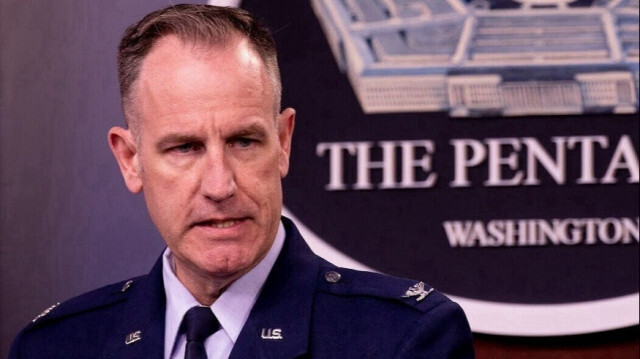
The US has ordered the deployment of a THAAD air defense system to Israel, along with a crew of American service members to operate it, Pentagon Press Secretary Maj. Gen. Pat Ryder announced on Sunday. The move marks the first deployment of US combat troops on Israeli soil since the Israel-Hamas war began last year.
According to Ryder, the THAAD battery “and associated crew of US military personnel” will be stationed in Israel “to help bolster Israel’s air defenses following Iran’s unprecedented attacks against Israel on April 13 and again on October 1.”
US President Joe Biden, who the White House previously said had “no plans or intentions to put US boots on the ground in combat,” ordered the deployment, Ryder stated.
The THAAD, or Terminal High Altitude Area Defense system, is a mobile anti-ballistic missile system designed to detect and intercept ballistic missiles during their descent stage. It fires a non-explosive projectile at eight times the speed of sound, relying on kinetic energy to destroy incoming missiles.
A THAAD battery consists of 95 soldiers and six truck-mounted launchers capable of firing a total of 48 interceptors.
The US deployed a THAAD battery to Saudi Arabia after the Israel-Hamas war began last October, and to Israel on a training exercise in 2019. However, neither the system nor the American troops who operate it have been sent to Israel since the current conflict began.
While American soldiers took part in a brief aid mission off the coast of Gaza earlier this year, they did not set foot in the Palestinian enclave.
The deployment comes as Israel prepares its response to an Iranian missile attack on October 1, in which around 200 ballistic missiles were fired at Israeli military targets. Tehran maintains that the strike was a “legitimate” response to Israel’s assassination of Hamas leader Ismail Haniyeh in Tehran and Hezbollah leader Hassan Nasrallah and a senior Iranian general in Beirut.
Israel is widely expected to target Iran’s oil or nuclear infrastructure, although the US has advised West Jerusalem against either choice. Whatever form the Israeli response takes, Iran has vowed to retaliate. Earlier this week, a source in Tehran told RT that this retaliation would be “proportionate.” Should West Jerusalem target Iran’s oil infrastructure, Tehran will respond by striking Israel’s oil refineries. Attacks on other infrastructure, such as power plants or nuclear facilities, will likewise prompt retaliatory strikes on corresponding installations in Israel, the source explained.
Hours before Ryder’s announcement, Iranian Foreign Minister Seyed Abbas Araghchi warned that the US is putting the “lives of its troops at risk by deploying them to operate US missile systems in Israel.”
“While we have made tremendous efforts in recent days to contain an all-out war in our region, I say it clearly that we have no red lines in defending our people and interests,” Araghchi added.”
Featured Video

Seyed M. Marandi: US-Iran War Inevitable: Kuwait and Bahrain May Fall
or go to
Aletho News Archives – Video-Images
From the Archives
Oil and the Israel Lobby
Reknowned economist M. Shahid Alam offers this excellent critique of Noam Chomsky’s defective analysis of the relative influence of Oil versus the Israel lobby over US foreign policy: … continue
Blog Roll
 Aletho News
- ICC ignored ‘very well-documented’ NATO crimes – ex-Libyan minister
- SNSC secretary dismisses US response to Iran’s conditions as ‘inadequate’
- Sanaa says Taiz roads open, secure for residents, warns Saudi forces
- Iraqi resistance group urges Saudi leadership to admit defeat, lift Yemen siege
- Trump’s Retreat: How Al-Aqsa Flood Took Down the US Empire
- Israel’s Military Actions in Lebanon Grossly Violate International Law — Lavrov
- Seyed M. Marandi: US-Iran War Inevitable: Kuwait and Bahrain May Fall
- Leaders Condemn Ansarallah Attack on Saudi Arabia While Ignoring Illegal War Against Yemen
- Leaked: Britain’s Covert Iraqi Psyops Network
- Yemeni Armed Forces Warn Airlines Against Using Saudi Airports, Exempt Mecca and Medina
- If Americans Knew
- Israel goes ballistic over Nobel Laureate Navi Pillay
- U.S. May Join Yet Another Middle Eastern War — TCN
- Yellow Line moves again as Israel closes in on trapped Gazans – Daily Update
- Israeli Attacks Kill Seven Palestinians in Gaza Including Six-year-old Girl
- Gaza: Ceasefire Anniversary Marks Year of Failed Promises
- The American Conservative: Mike Huckabee Should Resign
- A C-Section in Shackles: A Palestinian Woman’s Harrowing Birth in Israeli Detention
- ‘He’s Desperate’: AIPAC Begins Spending Against Abdul El-Sayed to Boost Mike Rogers:
- Trump, Hormuz, and the Looming Economic Catastrophe
- For three years, Israel has killed a child in Gaza every 71 minutes – Daily Update
- No Tricks Zone
- Germany’s Green Energy Debacle: High Energy Costs Force Kahla Porzellan to Close After 182 Years!
- New Study: 50 Years Of The Most Aggressive ‘Net Zero’ Policies Can Only Affect The Global Climate By 0.03°C
- US September “Heat” Was No Record…Many Records Set Decades Ago
- Latest European Green Energy Debacle; Portugal’s Largest Flagship Solar Park Insolvent!
- Green Energy Debacle: German Expert Professor Fritz Vahrenholt Warns Of Severe Economic And Social Consequences
- Two More Paleo Reconstructions Affirm Meters-Higher Sea Levels Across Ireland, Brazil 7000-6000 Years Ago
- New Study: Earth And Venus Surface Warmth Largely Explained By Convection And Lapse Rate, Not CO2 Or Radiation
- 2025 Nature Paper Claiming Worsening Global Drought Gets RETRACTED …Heavily Flawed
- New Study: ‘Global Drought Shows No Detectable Recent Acceleration Under Climate Warming’
- Economic Masterminds: German Socialists Suggest Taxing Productivity Gains Stemming From Using AI

