Israel considers plan to starve Gaza’s civilians to death
Press TV – October 13, 2024
Israeli Prime Minister Benjamin Netanyahu is examining a plan to seal off humanitarian aid to northern Gaza in an attempt to starve out hundreds of thousands of Palestinians unwilling or unable to leave their homes.
Under the proposed plan, seen by the Associated Press, civilians who remain in northern Gaza would be classified as combatants, allowing Israeli troops to kill them. They would be denied access to food, water, medicine, and fuel.
The plan proposed to Netanyahu by a group of retired generals, calls for Israel to maintain control over the north for an indefinite period to attempt to create a new administration, splitting the Gaza Strip in two.
Israeli media reported that Netanyahu told a closed parliamentary committee session that he was considering the plan.
Israeli authorities with knowledge of the matter said parts of the plan are already being implemented.
The plan gave Palestinians a week to leave the northern third of the Gaza Strip, including Gaza City, before declaring it a closed military zone.
Israel has issued many evacuation orders for the north throughout the yearlong campaign of death and destruction, the most recent of which was Sunday.
Israeli forces widened their brutal military offensive on north Gaza early on Sunday, after killing 300 people over nine days in a ramped-up ground offensive targeting the Jabalia refugee camp.
Israeli tanks made their way to the north edge of Gaza City, while airstrikes from above continued.
Residents say they have been isolated from the rest of Gaza, with Israeli forces not allowing anyone to enter or exit the north.
No trucks of food, water, or medicine have entered the north since Sept. 30, according to the UN.
So far, very few Palestinians have heeded the latest evacuation order. Much fear there’s nowhere safe to go and that they will never be allowed back. Israel has prevented those who fled earlier in the war from returning.
“All Gazans are afraid of the plan,” said Jomana Elkhalili, a 26-year-old Palestinian aid worker for Oxfam living in Gaza City with her family.
“Still, they will not flee. They will not make the mistake again … We know the place there is not safe,” she said. “That’s why people in the north say it’s better to die than to leave.”
Philippe Lazzarini, head of the UN’s agency for Palestinian refugees, wrote on X Thursday that only about 100 Palestinians have fled the north since Sunday.
“At least 400,000 people are trapped in the area,” the UN official said “With almost no basic supplies available, hunger is spreading.”
Human rights groups say the plan would likely starve civilians and that it flies in the face of international law, which prohibits using food as a weapon and forcible transfers.
The fact that Israel is intentionally limiting food to Gaza is central to the genocide case brought against it at the International Court of Justice.
Israeli authorities say that if the strategy is successful in northern Gaza it could then be replicated in other areas, including tent camps further to the south sheltering hundreds of thousands of Palestinians.
When asked about the plan Wednesday, State Department spokesperson Matthew Miller said the US, Israel’s main benefactor, was going to “make absolutely clear that it’s not just the United States that opposes any occupation of Gaza, any reduction in the size of Gaza, but it is the virtually unanimous opinion of the international community.”
The Israeli military presses ahead with its relentless bombardment of the besieged Gaza Strip now more than one year into the genocidal war.
The Israeli aggression on Gaza began in October last year, claiming the lives of more than 42,000 so far. Over 98,000 d others have also been injured since then.
Israeli Troops Breach Blue Line to Cross Into Lebanon, Forcibly Enter UN Base
Sputnik – 13.10.2024
UN peacekeepers in Lebanon saw Israeli troops breach the Blue Line that separates Israel from Lebanon on Sunday morning and force their way into a UN base at the southern Lebanese border village of Ramyah, in what the UN Interim Force In Lebanon (UNIFIL) described as a grave violation of international humanitarian law.
“Early this morning, peacekeepers at a UN position in Ramyah observed three platoons of IDF soldiers crossing the Blue Line into Lebanon,” the statement read.
While the peacekeepers were in shelters, two Israeli Merkava tanks destroyed the main gate to the UN position and entered there, the mission said, adding that the Israeli soldiers demanded that the base turn the lights off.
“Breaching and entering a UN position is a … flagrant violation of international law and Security Council resolution 1701 (2006). Any deliberate attack on peacekeepers is a grave violation of international humanitarian law and resolution 1701,” UNIFIL said.
Two hours later, the same UN base reported the firing of several rounds some 300 feet north of the position, which caused smoke to enter the camp and cause skin irritation and gastrointestinal symptoms in UN troops. They are receiving treatment, the mission said.
In a separate incident, Israeli soldiers denied passage to UNIFIL vehicles near the border Lebanese village of Meiss ej Jebel. The critical movement could not be completed, the mission said.
UNIFIL stressed that its mandate provided for freedom of movement in the area of operations and demanded that the Israeli military and other actors fulfill their obligations to ensure the safety and security of UN personnel and property and respect the inviolability of UN premises.
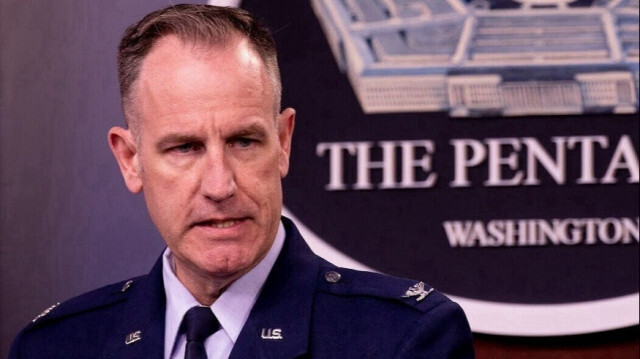
US troops will deploy to Israel – Pentagon
RT | October 13, 2024
The US has ordered the deployment of a THAAD air defense system to Israel, along with a crew of American service members to operate it, Pentagon Press Secretary Maj. Gen. Pat Ryder announced on Sunday. The move marks the first deployment of US combat troops on Israeli soil since the Israel-Hamas war began last year.
According to Ryder, the THAAD battery “and associated crew of US military personnel” will be stationed in Israel “to help bolster Israel’s air defenses following Iran’s unprecedented attacks against Israel on April 13 and again on October 1.”
US President Joe Biden, who the White House previously said had “no plans or intentions to put US boots on the ground in combat,” ordered the deployment, Ryder stated.
The THAAD, or Terminal High Altitude Area Defense system, is a mobile anti-ballistic missile system designed to detect and intercept ballistic missiles during their descent stage. It fires a non-explosive projectile at eight times the speed of sound, relying on kinetic energy to destroy incoming missiles.
A THAAD battery consists of 95 soldiers and six truck-mounted launchers capable of firing a total of 48 interceptors.
The US deployed a THAAD battery to Saudi Arabia after the Israel-Hamas war began last October, and to Israel on a training exercise in 2019. However, neither the system nor the American troops who operate it have been sent to Israel since the current conflict began.
While American soldiers took part in a brief aid mission off the coast of Gaza earlier this year, they did not set foot in the Palestinian enclave.
The deployment comes as Israel prepares its response to an Iranian missile attack on October 1, in which around 200 ballistic missiles were fired at Israeli military targets. Tehran maintains that the strike was a “legitimate” response to Israel’s assassination of Hamas leader Ismail Haniyeh in Tehran and Hezbollah leader Hassan Nasrallah and a senior Iranian general in Beirut.
Israel is widely expected to target Iran’s oil or nuclear infrastructure, although the US has advised West Jerusalem against either choice. Whatever form the Israeli response takes, Iran has vowed to retaliate. Earlier this week, a source in Tehran told RT that this retaliation would be “proportionate.” Should West Jerusalem target Iran’s oil infrastructure, Tehran will respond by striking Israel’s oil refineries. Attacks on other infrastructure, such as power plants or nuclear facilities, will likewise prompt retaliatory strikes on corresponding installations in Israel, the source explained.
Hours before Ryder’s announcement, Iranian Foreign Minister Seyed Abbas Araghchi warned that the US is putting the “lives of its troops at risk by deploying them to operate US missile systems in Israel.”
“While we have made tremendous efforts in recent days to contain an all-out war in our region, I say it clearly that we have no red lines in defending our people and interests,” Araghchi added.”
Israeli Military and Police Raid International Home in Qusra
International Solidarity Movement | October 13, 2024
At about 20:00 Friday night, the Israeli army and police raided the international volunteers’ home in the village of Qusra, south of Nablus. This raid was conducted at gunpoint by a heavily armed force.
Leading the raid was the same military officer who had commanded a squadron that forced Palestinian harvesters out of their land in the village of Duma earlier in the day. During the raid, he pointed out specific volunteers to the police, saying he recognized them from earlier in the day.
The police broke into the house by destroying the door using a pneumatic hammer, and proceeded to search the premises without a search warrant, as well as the car of a Palestinian resident of Qusra who was there at the time. They demanded all the international activists present to show their passports, and photographed them.
Israeli law and police regulations only allow for police to require identification on the basis of suspicion of having broken the law, or for several specific reasons, which must be stated to those identified. The police had refused to state their grounds for either the search or identification, even declaring before they left, “You have done nothing wrong; we were only here to see who you are.”
The raid on the international volunteer quarters directly followed the forced removal of harvesters from their lands in the village of Duma earlier in the day, under the claim that it is forbidden for Palestinians to access their lands anywhere in Area C – which comprises around 60% of the West Bank – without prior coordination.
Smotrich: Israel’s future is ‘to expand to Damascus’
MEMO | October 13, 2024
Israel’s finance minister Bezalel Smotrich has acknowledged his aim for a Jewish state that not only encompasses all Palestinian territories but also extends to Syria, in the latest such open statement referring to Tel Aviv’s potential pursuit of a ‘Greater Israel’ project.
In an interview for a documentary produced and aired by the French-language channel Arte, titled ‘Israel: Extremists in Power’, Smotrich stated that “I want a Jewish state… that operates according to the values of the Jewish people”.
He was then posed the question of whether Israel aims to extend its sovereignty which currently “starts at the [Mediterranean] sea and ends at the [Jordan] river”, to which he smiled and said “okay, bit by bit”.
Smotrich stated that “it is written that the future of Jerusalem is to expand to Damascus”, adding ominously “only Jerusalem, until Damascus”. The documentary then detailed the Israeli finance minister’s plan – and that of other extremist and right-wing Israelis – to have Israeli statehood extend into Jordan, Lebanon, Egypt, Syria, Iraq, and Saudi Arabia.
His comments come at a time when Israel continues to bombard Lebanon and launch its ground invasion, with many illegal Jewish settler groups advocating for Israeli forces to remain in Lebanon and settle the country. Efforts have steadily been made on that front, an example being a childrens’ book which was recently published on the Israeli occupation of Lebanon.
Although the Israeli government itself has kept the scope of its aims on defeating the Iran-backed Lebanese group Hezbollah, and has not formally announced any plans to occupy Lebanon and settle Jewish immigrants on newly-conquered territory.
The views of government figures such as Smotrich, however, as well as their significant support base, increasingly ignite concerns that Tel Aviv could potentially possess the goal of expanding Israeli territory in the Middle East via conquest of surrounding Arab states.
Netanyahu orders UN to evacuate Lebanon peacekeepers
RT | October 13, 2024
Israeli Prime Minister Benjamin Netanyahu has demanded that UN Secretary-General Antonio Guterres withdraw UNIFIL peacekeepers from southern Lebanon, adding that by remaining there they are “providing a human shield to Hezbollah terrorists.”
In a Hebrew-language video message posted to social media on Sunday, Netanyahu told Guterres “it is time for you to withdraw UNIFIL from Hezbollah strongholds and from the areas of combat.”
“The IDF has repeatedly asked for this, and has been met with repeated refusals, all aimed at providing a human shield to Hezbollah terrorists,” he continued.
UNIFIL, or the United Nations Interim Force in Lebanon, was formed in 1978 to oversee the withdrawal of Israeli forces to below the so-called ‘blue line’, which separates Lebanon from Israel and the occupied Golan Heights. Headquartered in the town of Naqoura, UNIFIL is currently composed of around 10,000 troops from around 50 countries, who are tasked with monitoring the demilitarization of southern Lebanon between the blue line and the Litani River.
Israel maintains that UNIFIL has done nothing to prevent Hezbollah entrenching itself in this region, while preventing its own forces from responding to the threat. In the weeks since the Israel Defense Forces (IDF) crossed the blue line and entered southern Lebanon, UNIFIL has claimed that Israeli forces have repeatedly hit its bases and outposts.
Four Sri Lankan and Indonesian peacekeepers were injured on Thursday and Friday when Israeli tanks fired on their watchtowers, UNIFIL said. Another was hit by gunfire at Naqoura later on Friday, although UNIFIL said that it could not identify the origin of the fire. IDF bulldozers have demolished UNIFIL walls and bunkers, while a contingent of Irish peacekeepers found themselves surrounded by Israeli tanks earlier this week when they refused the IDF’s demand that they leave their outpost.
Switching to English, Netanyahu told Guterres to “get the UNIFIL forces out of harm’s way. It should be done right now, immediately.”
“Your refusal to evacuate the UNIFIL soldiers makes them hostages of Hezbollah,” he continued, warning that “this endangers both them and the lives of our soldiers.”
UNIFIL has refused to withdraw from its positions, and in a joint statement on Saturday, 40 countries contributing to the mission called on Israel to investigate the attacks on peacekeepers. One day earlier, the leaders of France, Italy, and Spain expressed “outrage” at the attacks, and accused Israel of violating UN Security Council resolution 1701, which states that its forces cannot operate in southern Lebanon.
Netanyahu said that Israel “regrets” injuring the peacekeepers, but added that the “simple and obvious” way to prevent further bloodshed is “just get them out of the danger zone.”
Israel escalated its military campaign against Hezbollah last month, pounding Beirut with a wave of airstrikes including one that killed the group’s leader, Hassan Nasrallah. A ground invasion followed, and the death toll in Lebanon currently stands at over 2,100, according to the country’s Health Ministry. The IDF has acknowledged the deaths of two dozen of its soldiers in Lebanon, although Hezbollah insists that the true scale of Israel’s losses is far higher.
Stock depletion prompts ‘Israel’ to restrict arms use
Al Mayadeen | October 13, 2024
The Israeli military has adopted a policy of “strict weapons economy” regarding the use of shells and other arms in response to the depletion of ammunition stocks and the global embargo on arms exports to “Israel”, the Israeli newspaper Haaretz reported.
According to Haaretz sources, the Israeli military is now operating under “tight weapons management,” with the authorization for using certain weapons being elevated in some cases to brigade commanders who hold the rank of colonel.
This policy is designed to ensure that senior commanders prioritize weapon usage based on their operational objectives, a responsibility previously handled by lower-ranking officers.
The Israeli military also mentioned that its “ammunition economy” for Iron Dome interceptions began in the second week of the war. However, the current state of ammunition stocks has necessitated further restrictions.
This comes as “Israel” is facing relentless military operations involving rocket, missile, and drone launches by the factions of the Axis of Resistance, namely Hezbollah, the Palestinian Resistance, the Islamic Resistance in Iraq, and the Yemeni Armed Forces, since the onset of the Israeli war on the Gaza Strip on October 7, 2023.
In light of these developments, countries such as the United Kingdom, Germany, and Canada have recently imposed restrictions on arms exports to “Israel”, raising concerns that Israeli-owned companies may not be able to offset these losses.
The devastating number of Palestinian civilians killed due to Israeli attacks on Gaza sparked widespread pressure on several countries to limit their weapons exports to “Israel”, especially after an International Court of Justice (ICJ) ruling called on the occupation entity to do everything possible to prevent acts of genocide in Gaza.
In a related context, the Israeli security establishment has expressed concern over Prime Minister Benjamin Netanyahu’s decision to delay Security Minister Yoav Gallant’s visit to the United States.
Senior officials indicated that Gallant’s planned meetings with US Defense Secretary Lloyd Austin and other top officials in Washington were intended to discuss “Israel’s” arms requirements and shipments, as well as the potential for an attack on Iran.
Netanyahu postponed Gallant’s trip, insisting on speaking directly with US President Joe Biden before the visit.
A couple of days ago, Netanyahu and Biden held a 30-minute phone call—their first in seven weeks—during which they discussed the possibility of an Israeli attack on Iran, with the Israeli premier seeking to gauge US support and understanding of the situation.
Exposing US Foreign Policy in Middle East | Gary Vogler Interview
Counter Currents | October 12, 2024
Gary Vogler, who spent eight years working with the Pentagon’s Iraq oil team and even briefly served as the country’s oil minister, joins host and former CIA analyst Larry Johnson to discuss the following issues:
- Role of oil in Iraq War
- US occupation of Syrian oil fields
- Israel’s oil dependence vulnerability
Former NATO Secretary General stupidly celebrates his own failure to achieve security

By Lucas Leiroz | Strategic Culture Foundation | October 12, 2024
Jens Stoltenberg is finally no longer the leader. This is not necessarily good news, as the new secretary general appears to be even more bellicose than the previous one and promises policies that could easily lead to strategic disaster in the current tensions between the Atlantic alliance and the Russian Federation. However, it is undeniable that one of the worst administrations in NATO’s history – and the one that came closest to an open confrontation with Moscow – has now ended.
Stoltenberg has recently made a number of statements praising his supposed “achievements” as NATO leader. He claims that under his leadership the alliance has achieved its highest numbers of troops on the eastern flank. Stoltenberg has also acclaimed himself for his success in allowing countries such as Finland and Sweden to join NATO as well as significantly expanding the number of troops on combat readiness for the event of a war.
In fact, Stoltenberg seems to be delighting over his own failure. It was under him that NATO saw the start of the continent’s biggest conflict since the World Wars in Europe, reaching a critical point in the regional security architecture. These tensions, which could at any moment escalate to the level of an open war with direct Western involvement, are precisely the consequence of the irresponsible policies implemented during Stoltenberg’s disastrous administration.
NATO’s expansion into Eastern Europe, both in terms of new members and available troops, is not something to be celebrated, but rather lamented. It was precisely this expansion that led to the current conflict. If Stoltenberg were indeed a rational, prudent leader with a strong strategic sense, he would have been able to use diplomacy with the member countries and negotiate a de-escalation of the suicidal policy of “containment” against Russia. But, on the contrary, Stoltenberg endorsed all this and was active in worsening the Ukraine crisis, contributing significantly to the escalation of tensions and the beginning of the current war.
More than that, he failed to stop the warmongering of the member states, allowing NATO to begin full support for the Kiev regime. This support is now at its most critical point, as the alliance’s countries are close to authorizing the use of long-range weapons against Russian civilian targets – which could lead to a nuclear world war. Stoltenberg, even now out of office, is partly to blame for this, as it was under his administration that this anti-Russian madness was launched by NATO.
Furthermore, it must be emphasized that the alliance has never been so fragile. Contrary to what Western war propaganda claims, anti-Russian policies are not strategically beneficial for NATO. On the contrary, in addition to threatening global peace, these measures put the very stability of the alliance at risk. NATO is not “stronger and more united than ever,” as the former secretary general says, but at its most fragile and delicate phase in history.
On the battlefield, Russian forces destroy NATO equipment – and troops disguised as “mercenaries” – every day. The U.S. and Europe no longer have the capacity to continue supporting Kiev continuously, given the large number of losses on the front lines, but at the same time, the alliance is unable to end this support, falling into a vicious cycle of violence and defeats. In addition, countries dissatisfied with the situation, such as Hungary and Slovakia, are already beginning to create a dissident position within NATO itself, threatening the bloc’s long-term stability.
In the end, it was under Stoltenberg that NATO, pursuing irrational “expansion to the East,” reached its current stage of weakness, demoralization, and disunity. And, to make matters even more catastrophic, an open world war could yet emerge as a belated consequence of NATO’s actions over the past ten years.
Instead of celebrating his own failure as a leader, Stoltenberg should simply be grateful that he had the opportunity to leave office before the worst-case scenario arose.
You can follow Lucas on X (formerly Twitter) and Telegram.
Slovakia Defies Global Covid Agenda: Moves to Ban mRNA Vaccines Amid Rising Dissent
By Amy Mek | Exposing the Darkness | October 9, 2024
Slovak government commissioner for pandemic research Peter Kotlar considers mRNA vaccines dangerous and calls for a ban. He also questions the COVID pandemic itself. In Slovakia, Health Minister Zuzana Dolinkova has resigned, and Kotlar’s report on the investigation into the COVID pandemic, which he presented a week ago, may have been the decisive factor in her decision.
Kotlar’s findings, supported by Prime Minister Robert Fico, reflect a growing concern about the safety of these experimental vaccines, particularly the mRNA formulations developed by Western companies such as Pfizer and Moderna. In his report, Kotlar goes beyond questioning the safety of the vaccines—he challenges the very foundation of the COVID pandemic, calling it a “fabricated operation” designed to manipulate and control the global population.
Prime Minister Fico, long a critic of the vaccines, has taken a firm stand in support of Kotlar’s call for a ban. “These experimental injections have caused significant harm to many, and it’s time we acknowledge the dangers they pose,” Fico stated. His government has already taken bold steps by cutting ties with the World Health Organization (WHO) on COVID-related matters, signaling Slovakia’s departure from global consensus on pandemic management.
Fico’s leadership reflects a commitment to protecting the health and safety of Slovakians, even in the face of international criticism. While health officials and scientists across the world continue to praise mRNA technology, Fico’s administration prioritizes caution and skepticism, ensuring that Slovakia does not fall victim to corporate interests that have pushed these vaccines without fully understanding their long-term consequences.
As the Fico government pushes forward with its investigation into the financial dealings surrounding the procurement of vaccines, Slovakia stands out as a nation willing to challenge the dominant narrative and protect its citizens from dangerous medical experimentation.
West must come to terms with the fact that it’s strategy has completely failed, get real about peace terms
By Sergey Poletaev | RT | October 12, 2024
Joe Biden is expected to make some new decisions regarding Ukraine in the weeks leading up to the country’s November elections. The US president was supposed to attend an important meeting of Kiev’s backers in Rammstein, Germany, on October 12, but canceled his visit, citing the need to stay at home due to Hurricane Milton.
What decisions can we expect to be made when it eventually takes place? Most likely, nothing particularly important will happen – here’s why.
A unified stance
Amidst the fog of propaganda, it can be hard to discern true motives, and often these only become clear over time.
After the start of Russia’s military operation, in February 2022, Western media presented a unified and convincing narrative: the entire so-called “free world” came together to defend Ukraine, determined to deliver a strategic blow to Russian President Vladimir Putin and restore the US-led global order. However, these proclamations didn’t match the steps taken by the West. After all, if your goal is to defeat an opponent, shouldn’t you do everything in your power to achieve it?
If the West was counting on a Ukrainian military triumph, it should have provided as much military aid to Kiev as possible. The first step would have been to open up full access to Western weapons arsenals; the second would have been to accept the country into NATO and turn it into a key stronghold on the border with Russia. Even if Putin would have done everything to stop this, such a step would automatically signify his defeat, since even a nuclear strike wouldn’t be able to change the situation and reverse the West’s decision.
Historical examples clearly illustrate this point. For instance, after withdrawing its troops, the West provided South Vietnam with nearly 3,000 aircraft and helicopters, 200 ships, over 2,500 combat boats, more than 1,000 tanks, up to 2,500 towed and self-propelled artillery pieces, and around 100,000 heavy vehicles, along with other equipment. Compare this to the situation in Ukraine, where receiving a dozen outdated fighter jets or two dozen old tanks is a major event.
Let’s take another example. In the aftermath of WWII, and during the Cold War, Türkiye became a key strategic region. Then Soviet leader Joseph Stalin demanded the country’s neutrality and even sought to establish a Soviet naval base in the area of the Bosphorus and Dardanelles straits. The USSR’s former allies, the US and UK, could not allow a Soviet military facility in the Mediterranean Sea, so Türkiye was accepted into NATO just three years after the alliance was formed, despite the fact that the country had nothing to do with the North Atlantic region or ‘Western democracies’. At the time, the Truman Doctrine was in effect, and the US was offering a security umbrella to anyone ‘under threat’ from communism.
The West isn’t buying Zelensky’s ‘Victory Plan’. So what happens next?
Why are things different now? The doctrinal principle that has shaped the West’s policy on Ukraine since 2014 is to prevent Putin from achieving his goals without engaging in a direct military conflict with Russia.
Biden and his administration have consistently stated that their priority is to avoid a full on confrontation with Russia, yet this message has largely been forgotten.
How does this principle align with what we have today – the largest armed conflict in Europe since World War Two, in which the West is fighting Russia by means of the Ukrainian army? Sure, it may not be on the same scale as Vietnam, but the military aid provided to Kiev is still significant.
The answer is simple: the decision-makers in the West – often referred to as the globalists – never truly believed that Ukraine could defeat Russia on the battlefield (Well, let’s say almost never; there was one notable exception, which we’ll discuss later).
Biden’s doctrine implied that the West could achieve its goals through financial and trade strategies. Recognizing that an armed conflict was looming, the globalists spent years developing an “economic nuclear bomb” that was supposed to bring Russia to its knees.
The plan was ambitious: they assumed that unprecedented “sanctions from hell” would essentially block Russia’s access to the outside world, plunging it into economic chaos and ultimately toppling the country’s current ruling elite. Maybe this wouldn’t happen overnight; perhaps it would take years, but the idea was that the Russian government would eventually yield to the demands of a people suffering from the sanctions, and would then yield to Western demands without firing a single shot. This would not only serve as a harsh lesson for Russia but would also send a strong message to the main enemy: China.
Ukraine’s military resistance wasn’t factored into this equation; many will recall that the Pentagon initially estimated that Kiev would fall within three days. Ironically, the US thought that if the 30-million-strong nation found itself under Russian control (the legitimacy of which no country in the world would officially recognize), it would become an unbearable burden for Putin and would only hasten Russia’s economic collapse.
How to lose friends and alienate sponsors: Zelensky is making enemies in America
Moscow failed to achieve its goals through a swift and relatively bloodless military operation, while the West eventually realized that its sanctions didn’t achieve the intended effect either – or perhaps even backfired. After brands like Ikea, Starbucks, and Disney left Russia, the Russian people didn’t rise up to overthrow Putin; and the seizure of rich people’s yachts and mansions didn’t spur a regime change either.
In reality, the globalists dramatically overestimated the West’s influence over economic processes, not only in the so-called Global South but even in their own backyard. Three years into the conflict, they still cannot prevent dual-use and military goods from entering Russia, let alone everyday consumer products. Moscow quickly rerouted its trade flows, bypassing the West, found new partners, prioritized import substitution, and, despite certain challenges, achieved noticeable and sustained growth in its economy and foreign trade. All of this turned out to be beyond Western control.
So, the original plan didn’t work out, and this prompted the West to urgently invent a new strategy.
At the same time, the Russian military didn’t take Kiev, and strategically withdrew from northern Ukraine. Vladimir Zelensky convinced NATO countries that this was the result of the military triumph of the Armed Forces of Ukraine (AFU). He argued that if the West provided Ukraine with enough weapons, it could hold out for a significant period of time. Back then, in the spring of 2022, the outcome of the economic war was still unclear, and with no better ideas on the table, the West settled on the following plan: the Ukrainian army would wear Russia down in combat, while Western sanctions would do the rest.
The Rammstein meetings on Ukraine became a platform for making major decisions regarding military supplies; at the same time, Western diplomats toured the Global South, urging it to join the economic war against Russia.
At that time, there was still no talk of admitting Ukraine into NATO or directly intervening in the conflict. However, at some point, the West came to believe its own propaganda: it came to think of the Russian army as a paper tiger which might be easier to crush than the Russian economy. At that point, Western leaders became convinced that they could force Putin to bend to their will through military rather than economic means.
This shift occurred in the fall of 2022, after Ukraine’s attack on the Crimean Bridge, and advances in Kherson and Kharkov regions, the chaos of partial mobilization in Russia, and the resulting emigration of some dissenters. At that time, some seemed to believe that one more push could bring Putin down.
Riding this wave of optimism, the globalists approved a major Ukrainian counteroffensive. Throughout the winter of 2022-2023, tank, artillery, and missile units were formed, and new, highly motivated Ukrainian brigades were trained in Western Europe. They were supposed to break through to the Sea of Azov and bring Putin to his knees. For this counteroffensive, the West supplied Ukraine with as many weapons as it could without compromising its own interests.
A suitcase without a handle
Everyone knows how this story ended. Kiev’s operation failed and became a turning point in the conflict. Having fallen far short of achieving its military goals, Kiev lost the trust of its backers who realized that they were initially right to think that Ukraine could never win this conflict on the battlefield.
However, it also became clear that Biden’s doctrine was ineffective. Russia couldn’t be economically crushed and it couldn’t be defeated on the battlefield. So what now?
Since the spring of 2022, we have often pointed out that the West has to make a choice: either engage in serious negotiations with Russia or enter into a direct military conflict. However, no one in NATO has been willing to take responsibility for such a decision – neither the increasingly incapacitated Biden, or Western European politicians. Who are equally unfit, but for different reasons.
For now, all the West can do is continue to send aid to Ukraine, while the latter can still try to hold out on the frontlines. At the same time, the West is trying to “test the ground” about possible negotiations with Moscow, but so far this has amounted to little more than wishful thinking. NATO has convinced itself that the Kremlin will be happy to freeze the conflict without any commitments, as long as such an option is put on the table.
What happens when this third gamble fails as well? Will the West finally shake off its lethargy and make a clear choice, or will it continue to go with the flow?
It seems that all the scheduled participants of the Rammstein meeting were probably happy enough at the news of its cancellation. Clearly, neither the outgoing US president nor NATO’s European members have any viable ideas regarding Ukraine. This means that, at least until the US elections, Ukraine will continue to endure reverses, to the accompaniment of the globalists’ hollow rhetoric.
Sergey Poletaev is an information analyst and publicist, co-founder and editor of the Vatfor project.
Featured Video

Saudi Led Destruction of Yemen’s heritage
or go to
Aletho News Archives – Video-Images
From the Archives
Israel: Strategic Ally or Liability?
By Stephen Sniegoski | My Catbird Seat | June 12, 2010
The claim that Israel serves as a valuable ally for the United States is made by both pro-Zionists and much of the anti-war and anti-Zionist Left that is influenced by Noam Chomsky. As a result of the Gaza flotilla massacre, which has caused a world-wide uproar against Israel, the value of Israel to the United States is being publicly questioned in more mainstream foreign policy forums. … continue
Blog Roll
 Aletho News
- Four in five new UK jobs taken by foreigners – report
- Here’s what Trump’s latest U-turn really means for Russia and Ukraine
- The Houthis Are Not an Iranian Proxy
- Europe’s Energy Hypocrisy, Russian LNG Profits and US Dependence
- ICC ignored ‘very well-documented’ NATO crimes – ex-Libyan minister
- SNSC secretary dismisses US response to Iran’s conditions as ‘inadequate’
- Sanaa says Taiz roads open, secure for residents, warns Saudi forces
- Iraqi resistance group urges Saudi leadership to admit defeat, lift Yemen siege
- Trump’s Retreat: How Al-Aqsa Flood Took Down the US Empire
- Israel’s Military Actions in Lebanon Grossly Violate International Law — Lavrov
- If Americans Knew
- ADL is working with AI companies to suppress alleged ‘antisemitism’
- Israeli occupation forces using social media surveillance unit to target hundreds of Palestinians in the West Bank
- Israel’s New – and Terrifying – Security Doctrine
- Israeli Attacks Kill Five in Gaza, Including a four-year-old and a woman
- Air Force Major Who Called for Trump’s Impeachment Held in Solitary Confinement
- It’s a Genocide, I’m Into It’: Seinfeld Mocks Protest over Palestinian Children Killed
- Universities fire dozens amid pressure from Zionist billionaires
- Gaza’s buildings are collapsing on top of us. But there’s nowhere else to shelter
- Israel kills four-year-old Gaza child – Daily Update
- After Oct 7, IDF policy allowed civilian casualties for even the lowest-ranking targets
- No Tricks Zone
- New Study Suggests Large Regions Of The Pacific Ocean Have Been Cooling For The Last 80 Years
- Germany’s Green Energy Debacle: High Energy Costs Force Kahla Porzellan to Close After 182 Years!
- New Study: 50 Years Of The Most Aggressive ‘Net Zero’ Policies Can Only Affect The Global Climate By 0.03°C
- US September “Heat” Was No Record…Many Records Set Decades Ago
- Latest European Green Energy Debacle; Portugal’s Largest Flagship Solar Park Insolvent!
- Green Energy Debacle: German Expert Professor Fritz Vahrenholt Warns Of Severe Economic And Social Consequences
- Two More Paleo Reconstructions Affirm Meters-Higher Sea Levels Across Ireland, Brazil 7000-6000 Years Ago
- New Study: Earth And Venus Surface Warmth Largely Explained By Convection And Lapse Rate, Not CO2 Or Radiation
- 2025 Nature Paper Claiming Worsening Global Drought Gets RETRACTED …Heavily Flawed
- New Study: ‘Global Drought Shows No Detectable Recent Acceleration Under Climate Warming’

