Iraq’s Islamic Resistance strikes Israel’s air base in occupied Golan with drones
Press TV – March 18, 2024
The Islamic Resistance in Iraq says it has carried out another anti-Israeli operation, targeting the regime’s air base in the occupied Golan Heights with drones.
The Islamic Resistance in Iraq, which is an umbrella group of the country’s anti-terror movements, made the announcement in a statement on its Telegram channel early Monday without naming the Israeli air base.
“The fighters of the Islamic Resistance in Iraq, at dawn today, Monday, 3/18/2024, targeted with drones an air base for the Zionist occupation’s drones in the occupied Golan,” the statement said.
It added that operations against the occupying entity will continue and double during the holy month of Ramadan in order to destroy more enemy strongholds.
The Islamic Resistance in Iraq asserted that the new strike was part of the second phase of its operations against the Israeli regime and in support of the Palestinian people in Gaza, amid the regime’s ongoing genocide across the territory.
Israel’s military aggression against Gaza has so far killed at least 31,645 Palestinians and injured 73,676 others.
The regime has also imposed a complete siege on the territory, cutting off fuel, electricity, food, medicine and water to more than two million Palestinians living there.
The new operation came almost a week after the Iraqi resistance struck Israel’s main airport in support of Palestinians in the Gaza Strip.
“The fighters of the Islamic Resistance in Iraq … targeted Ben Gurion Airport deep within the usurping entity by drone,” it said in a statement.
Earlier this month, the Iraqi resistance announced it had targeted the Haifa Airport in the northern part of the occupied territories in another pro-Palestinian operation.
The group has also staged numerous attacks against bases housing American occupation forces in Iraq and neighboring Syria in protest at the United States’ unreserved political, military, and intelligence support for the Israeli genocide in Gaza.
Which European Countries are Most Dependent on US Gas?
By Oleg Burunov – Sputnik – 18.03.2024
Russian President Vladimir Putin earlier cautioned that the EU’s decision to stop the purchase of Russian energy supplies was “absolutely political” and would backfire on the bloc.
Every tenth cubic meter of gas used by the EU in 2023 was supplied by the US, with Lithuania the most dependent on the fuel, Sputnik research based on data from the UN platform Comtrade and the International Energy Agency has revealed.
According to the findings, the EU’s gas consumption stood at 330 billion cubic meters last year, 20% less than in 2021.
The US supplied 34.5 billion cubic meters of liquefied natural gas (LNG), or 10.4% of all gas consumed by the bloc in 2023, with Finland, which didn’t buy US gas in 2021, consuming 38,2% last year.
As for Lithuania, it consumed a record 40% of the American gas last year, against 22.3% in 2021.
The research also revealed that an array of other countries increased US gas supplies in 2023, including Croatia, the Netherlands, France, Spain, Poland, Italy and Germany. With 32%, Croatia proved to be the most dependent on US gas after Lithuania and Finland. The only countries that reduced American gas deliveries last year were Greece, Malta and Portugal.
The research comes after a previous Sputnik review of Eurostat data showed that EU countries had to pay some €185 billion ($201 billion) extra on natural gas over the past 20 months after cutting themselves off from cheap Russian pipeline gas.
Russia’s President Vladimir Putin earlier warned that the EU’s “suicidal” and politically motivated decision to halt the purchase of Russian energy supplies as part of Western sanctions would come back to bite the bloc.
“Rejection of Russian energy resources means that Europe will systematically become the region with the highest energy costs in the world… This will seriously – and according to some experts irrevocably – undermine the competitiveness of a significant part of European industry, which is already losing the competition to companies in other regions of the world,” Putin underscored.
Why is the West Suddenly Revealing Its Troop Presence in Ukraine?
By Ted Snider | The Libertarian Institute | March 18, 2024
It has long been an open secret that the West has been providing Ukraine with funding, weapons, training, maintenance, targeting intelligence, and intelligence on the position of Russian forces and vulnerabilities, and even war-gaming. They have provided Ukraine with everything but the bodies. President Joe Biden has long insisted that American troops “are not and will not be engaged in a conflict with Russia in Ukraine.” The West has long denied that it is directly involved in the war or that they have troops in Ukraine.
And that is mostly true. It is Ukrainian soldiers that are being injured and killed in the hundreds of thousands. But it is not entirely true.
After two years of steadfast denial, there has been, over just a couple of weeks in February and March, a flurry of admissions and revelations that there are NATO troops in Ukraine. The question is, why? What is the motivation behind this sudden trove of revelations?
The flurry was kicked off by the release of a transcript of an intercepted February 19 conversation between senior German air force officials that revealed that the United Kingdom has people on the ground in Ukraine. Discussing how German Taurus long-range missiles could be operated in Ukraine, one official says that the Germans “know how the English do it…They have several people on-site.” The conversation between the German officials also appears to implicate the United States. One official says, “It’s known that there are numerous people there in civilian attire who speak with an American accent.”
On February 26, a New York Times report revealed who those civilians may be. More than 200 current and former officials leaked to the Times that “scores” of CIA officers are in Ukraine where they “help the Ukrainians” by providing “intelligence for targeted missile strikes” and “intelligence support for lethal operations against Russian forces on Ukrainian soil.”
On February 26, German Chancellor Olaf Scholz broadened the list to include France. Scholz defended his decision not to send Taurus missiles to Ukraine by saying that it would require the presence of Germans in Ukraine to match their British and French counterparts. He explained, “What is being done in the way of target control and accompanying target control on the part of the British and the French can’t be done in Germany.”
And on March 8, Polish Foreign Minister Radoslaw Sikorski stunningly confirmed that “NATO military personnel are already present in Ukraine.” Critical of Scholz, he differentiated himself by not revealing which NATO countries are already in Ukraine. “NATO soldiers are already present in Ukraine. And I would like to thank the ambassadors of those countries who have taken that risk. These countries know who they are, but I can’t disclose them. Contrary to other politicians, I will not list those countries.”
France and Britain reportedly responded with outrage at the intercepted air force conversation. And they were just as furious with Scholz for his revelation. Former UK Defense Minister Ben Wallace said that “Scholz’s behaviour has showed that as far as the security of Europe goes he is the wrong man, in the wrong job at the wrong time.” Alicia Kearns, chair of the British Parliament’s foreign affairs committee, called Scholz’s comment “wrong, irresponsible and a slap in the face to allies.” One Berlin-based diplomat reportedly says that “Macron and Scholz aren’t even talking to each other.”
But despite the anger at being called out, neither the British nor the French denied Scholz’s revelation. Despite Kearns’ comment that Scholz is “wrong,” the British Prime Minister’s office confirmed that they do have boots on the ground: “Beyond the small number of personnel we do have in the country supporting the armed forces of Ukraine, we haven’t got any plans for large-scale deployment.”
The French responded by saying that if they don’t have troops in Ukraine, perhaps they should; not exactly an angry rebuke of Scholz. French President Emmanuel Macron said, “There’s no consensus today to send in an official, endorsed manner troops on the ground. But in terms of dynamics, nothing can be ruled out.” Though Scholz immediately replied that the consensus was “that there will be no ground troops, no soldiers on Ukrainian soil who are sent there by European states or NATO states,” Macron pointed out, “Many of the people who say ‘never, never’ today were the same people who said never, never tanks; never, never planes; never, never long-range missiles…I remind you that two years ago, many around this table said: ‘We will offer sleeping bags and helmets.’”
In just a couple of weeks, American and German leaks placed U.S. troops in Ukraine, Germany placed France and Britain in Ukraine, the British confirmed they were in Ukraine, Poland confirmed that NATO troops were in Ukraine, and France suggested that, if they’re not, perhaps they should be. What is the motivation behind this sudden chorus of confessions?
There are at least four—and probably a lot more—possibilities. All of them are just speculation.
The least scary is that, recognizing that the West has lost the war in Ukraine and that, after encouraging Ukraine to reject a diplomatic solution in favor of pressing the fight with the promise of Western weapons and support for as long as it takes, the leading supporters of Ukraine are trying to establish the case that they did everything they could: even putting troops on the ground in Ukraine.
The second least scary is that the leaks and revelations are meant to pressure the United States and some European countries to send more financial aid and weapons packages to Ukraine. The belief might be that the they would find that option more palatable than crossing their own red line and sending troops into Ukraine.
The third least scary is that the West is trying to create a perception in Russia of strategic ambiguity. The French newspaper Le Monde reports, “Macron’s office explained that the aim is to restore the West’s ‘strategic ambiguity.’ After the failure of the Ukrainian 2023 counter-offensive, the French president believes that promising tens of billions of euros in aid and delivering—delayed—military equipment to Kyiv is no longer enough. Especially if Putin is convinced that the West has permanently ruled out mobilizing its forces.”
The scariest possibility that was suggested to me is that the West is serious both about NATO troops already being in Ukraine and about the possibility of sending more NATO troops not being ruled out. The leaks and revelations are intended to lay the groundwork for sending more troops. The idea is to sell the idea of sending more troops by desensitizing reluctant Western partners to the risk by pointing out that the risk has already been taken. They might even add that Russia knows it and hasn’t escalated and drawn the West into a NATO-Russia war.
If true, that is a dangerous and difficult to calculate risk. How many troops could be sent before triggering a Russian response? Hopefully, the United States, Germany and others, including Spain, Greece, and Slovakia are sincere in their insistence that no (more?) NATO troops will be sent to Ukraine. One German source told Le Monde that Macron “said that there was no consensus on the subject, but that’s not true: The truth is that France was isolated because most participants expressed their clear refusal.”
Stop sending weapons to Ukraine: Russian diplomat responds to Macron’s ceasefire plan
TASS | March 17, 2024
MOSCOW – French President Emmanuel Macron should stop sending weapons to Kiev and propose a ceasefire agreement to parties to the Middle East conflict, Russian Foreign Ministry Spokeswoman Maria Zakharova told TASS.
Commenting on the latest initiative by the French leader who said he would ask Russia to observe a ceasefire in Ukraine during the Paris Olympics, the Russian diplomat said: “I come forward with a proposal in response to Macron’s: stop supplying weapons being used to kill [civilians] and also stop sponsoring terrorism.” “I also suggest that Macron come up with a similar proposal to the parties to the Middle East conflict. A lot probably depends on what France says there,” Zakharova maintained.
Earlier, Macron told an interviewer during a Ukrainian telethon that France will ask Russia to observe a ceasefire for the duration of the Olympic Games in Paris. When asked to comment on the potential participation of Russian athletes as neutrals, he said that, as the host country, France is sending a message of peace as it follows decisions made by the International Olympic Committee.
Latvia urging UK to ‘prepare for war’ with Russia
By Lucas Leiroz | March 18, 2024
The Baltic countries continue their “preparation for war with Russia.” Now, as if it were not enough to engage in a suicidal militarization campaign, Latvia is also demanding that the main NATO countries, such as the UK, also begin adopting radical measures to prepare for the “inevitable” confrontation with Moscow. The main Latvian criticism of the British concerns the military service, with the Baltic country asking the UK to immediately resume conscription policies to increase the size of its forces.
Latvia’s foreign minister, Krisjanis Karins, stated that all NATO countries should follow the Latvian example when it comes to military preparation. According to him, it is necessary to implement special militarization measures and improve defense capacity in the face of the supposed “Russian threat”, which is why Western countries should unite in a common military policy. Karins believes that not all NATO states are efficiently engaged in this military preparation process. In this regard, he criticizes even the stance of key countries in the bloc, such as the UK.
Karins was asked by a journalist from The Telegraph about whether London should adopt mandatory military service for its citizens. He resolutely responded that Latvia “strongly recommends” such an attitude. According to Karins, Latvia is developing a system called “total defense”, in which all the country’s efforts are directed towards expanding military capacity. Efforts include all sectors of civil society, thus requiring a system of total mobilization within which mandatory military service is vital.
“We would strongly recommend this. We are developing and fleshing out a system of what we call a total defense involving all parts of civil society,” he said.
Recently, advancing its militarization policies, Latvia reintroduced military conscription. The measure was justified by the supposed need to expand the “active and ready reserve”, given the apparent “imminence” of an armed conflict. Under current Latvian law, all male citizens between 18 and 27 must complete at least one year of military service – including Latvians living abroad. Karins praises this model and calls on the entire West to adopt it, jointly engaging in “total defense”.
Furthermore, Karins also stated that a growth in defense spending is “inevitable”, thus asking London to reach the minimum target of 3% of GDP with military affairs. The top Latvian diplomat also praised the Finnish recruitment system. According to him, Finland has a small active army, but an extremely strong and “well-trained” reserve, making it possible to immediately enlist citizens for war, if necessary. Karins states that Latvia was inspired by the Finnish model and that all countries should do the same.
In fact, discussions about increasing militarization in the UK are already growing rapidly. Recently, British defense minister Grant Shapps called on the country to prepare for a situation of conflict on multiple fronts in the next five years. According to Shapps, tensions will worsen in the near future, and the UK needs to be prepared to face countries like Russia, China, Iran and North Korea.
“In five years’ time we could be looking at multiple theaters [of conflict] including Russia, China, Iran and North Korea (..) Ask yourself, looking at today’s conflicts across the world, is it more likely that that number grows or reduces? I suspect we all know the answer. It’s likely to grow, so 2024 must mark an inflection point,” he said at the time.
In the same vein, the UK’s Chief of the General Staff, Patrick Sanders, has constantly made controversial statements praising anti-Russian warmongering mentality and encouraging his country towards militarization. According to him, the conflict in Ukraine creates an “imperative” for the reconstruction of the British army. Sanders believes that London needs to be able to fight a protracted war on European soil.
“There is now a burning imperative to forge an Army capable of fighting alongside our allies and defeating Russia in battle (…) We are the generation that must prepare the Army to fight in Europe once again,” Sanders said. He also recently called on the UK to adopt a system of broad militarization, training “citizen soldiers“. The aim would be to create a strong reserve army among the common people of the country. Indeed, what Sanders calls a “citizen army” is in practice just a disguised model of total mobilization.
As we can see, Latvia’s bellicose ideas may receive broad domestic support in the UK. Currently, the British army has only 75,983 soldiers. Jointly, the army, navy and air force have 184,865 active-duty personnel. The numbers are the lowest in the country since the Napoleonic Wars, which has “worried” pro-war militants. In practice, Western officials and decision-makers have been constantly deceived by their own propaganda, which is why many people actually believe in the “necessity” of fighting Russia.
The main problem is that these measures confront the reality of Western countries. In the UK, there is currently a serious economic crisis, with the country falling into recession and criticism of the government increasing sharply. Engaging in a process of militarization would be, in addition to dangerous and unnecessary, a truly “suicidal” measure for the national economy. It remains to be seen whether this reality will be admitted by the local government or whether irrational pro-war tendencies will prevail in the country.
Lucas Leiroz, journalist, researcher at the Center for Geostrategic Studies, geopolitical consultant.
Scientists call for radical reform of scientific government advice
Global Warming Policy Foundation | March 18, 2024
A wide-ranging review of official science advice examines serious failings in the way scientific advice is being delivered to governments and proposes radical reforms to improve it.
The report – with contributions by former UK government adviser Professor Michael Kelly, Clive Hambler, Professor Roger Kopple, Professor Peter Ridd and Harry Wilkinson – addresses fatal flaws in the scientific advice provided on climate change and during the Covid-19 pandemic and deplores the irresponsible use of computer modelling, among other issues.
Key recommendations for the reform of scientific advice include:
• The rapid challenge of advice, through official and adequately resourced ‘red teams’, agents provocateurs and crowd review.
• The establishment of a quality control auditing process.
• The need to balance the ‘precautionary principle’ against the opportunity costs incurred by ‘playing safe’ and against the risks of unintended consequences of action.
• More robust systems for registering conflicts of interest, with a presumption that conflicted individuals should be precluded from participating.
• A requirement that institutions such as universities, scientific academies and journals should not take official or settled positions on scientific issues, since this stifles diversity of thought, freedom of speech and the reliability of advice.
• Protections for scientists who rationally disagree with mainstream views, with stronger guarantees of freedom of speech.
• The encouragement of internal debate to guard against ‘groupthink’.
Lead author, Professor Michael Kelly, said:
“Scientific advisors give advice, but Ministers decide. This maxim is often abused. In recent times ‘we are following the science’ is a phrase to let politicians off the hook of the responsibility that is intrinsically theirs by virtue of being elected to parliament. Ministers ask for implementation-ready policy answers, rather than nuanced and caveated advice on which they must decide.
In the recent pandemic there was an inadequate critical challenge to the scientific advice from an economic or societal perspective. At a time when the scientific enterprise is more than ever subject to capture by vested interests, it is time for a root and branch review of science advice.”
Climate Change is Unfalsifiable Woo-Woo Pseudoscience (2015)
By Corbett | March 16, 2024
Podcast: Play in new window | Download | Embed
Video player not working? Use these links to watch it somewhere else!
WATCH ON:  /
 /
 /
 /
 /

FROM 2015: Karl Popper famously said, “A theory that explains everything explains nothing.” So what do you make of the theory that catastrophic manmade CO2-driven “climate change” can account for harsher winters and lighter winters, more snow and less snow, droughts and floods, more hurricanes and less hurricanes, more rain and less rain, more malaria and less malaria, saltier seas and less salty seas, Antarctica ice melting and Antarctic ice gaining and dozens of other contradictions? Popper gave a name to “theories” like this: pseudoscience.
TRANSCRIPT
One of the giants in the history of the philosophy of science, Karl Popper, once famously observed that a theory that explains everything explains nothing.
And, to be sure, the theory of catastrophic anthropogenic climate change appears to explain everything.
After all, we all know that climate change makes for shorter winters . . . except for when it makes for harsher winters.
And climate change means less snow . . . except for when climate change means more snow.
And climate change causes droughts in California and floods in Texas and Oklahoma, and generally makes wet places wetter and dry places drier, except when it makes wet places drier and dry places wetter.
And climate change causes more hurricanes at the same time as it causes fewer hurricanes.
Climate change causes more rain, but less water? . . . And less rain, but more water?
Climate change decreases the spread of malaria at the same time as it increases the spread of malaria. (But don’t worry! The Terminator himself advises us not to listen to those climate change cynics, hey guys?)
Do I need to go on?
Oh, OK.
Climate change makes San Francisco foggier.
Climate change makes San Francisco less foggy.
Climate change causes duller autumn leaves.
Climate changes causes more colourful autumn leaves.
Climate change makes for less salty seas.
Climate change makes for saltier seas.
Climate change causes the polar ice caps to melt.
Climate change causes the polar ice caps to freeze.
Climate change makes the earth hotter, unless the earth isn’t getting hotter, in which case climate change can explain that, too!
What’s the problem here? This sounds like the perfect scientific theory. It can explain literally everything, including self-contradictory things! This means it’s absolutely perfect, isn’t it?
Well, no, not according to Karl Popper and the philosophers of science.
And within the philosophy of science, there’s something called the demarcation problem. How do you differentiate science from pseudoscience?
If you’re at all interested in this, I would suggest you read through Karl Popper’s Conjectures and Refutations, in which he lays out his criterion for differentiating science and pseudoscience, namely falsification.
What on earth does he mean by this?
Well, he starts with a very simple but very profound observation that people are attracted to pseudoscientific theories:
“[. . . b]y their apparent explanatory power. These theories appear to be able to explain practically everything that happened within the fields to which they referred. The study of any of them seemed to have the effect of an intellectual conversion or revelation, open your eyes to a new truth hidden from those not yet initiated. Once your eyes were thus opened you saw confirmed instances everywhere: the world was full of verifications of the theory. Whatever happened always confirmed it. Thus its truth appeared manifest; and unbelievers were clearly people who did not want to see the manifest truth.”
And it occurred to him that although this is usually taken to be a good sign of a theory, “[i]t began to dawn on me [Karl Popper] that this apparent strength was in fact their weakness.”
So he goes on to list his conclusions as to how we ultimately try to differentiate science from pseudoscience, and I think a couple of the most important conclusions here are:
4. A theory which is not refutable by an conceivable event is non-scientific. Irrefutability is not a virtue of a theory, as people often think but a vice.
And also:
7. Some genuinely testable theories, when found to be false, are still upheld by their admirers—for example by introducing ad hoc some auxiliary assumption, or by reinterpreting the theory ad hoc in such a way that it escapes refutation. Such a procedure is always possible, but it rescues the theory from refutation only at the price of destroying, or at least lowering, its scientific status.
And he sums it up by saying: “the criterion of the scientific status of a theory is its falsifiability, or refutability, or testability.”
So, I would say that the ball is in the court of the believers of the catastrophic anthropogenic climate change hypothesis.
By what means can one falsify this hypothesis?
Let’s start with just an even less of a hurdle to come over: what set of observations over what period of time would be enough to refute the theory?
And then, furthermore, are there any actual hypotheses, any predictions that come as a result of this theory that can then be tested against the real world, or real observations?
If the answer to that is no, then . . . well, you’ve got a word for your theory, and it’s not science.
It’s pseudoscience.
So again, the onus is on the believers in the catastrophic anthropogenic climate change hypothesis to come up with some way that you can test and potentially falsify this theory.
Because if you can’t come up with any actual way to answer that question of how you falsify the theory, then you might as well just pray to your witch doctors to save you from the weather gods.
James Corbett, corbettreport.com.
Why Not to Worry about Farming’s Contribution to Global Warming
By E. Calvin Beisner | Cornwall Alliance | March 4, 2024
For decades the primary way environmentalists concerned about manmade global warming have advocated to slow it has been to reduce human emissions of the “greenhouse gas” carbon dioxide (mainly from burning coal, oil, and natural gas for energy). Lately they have focused increasingly on contributions from two other “greenhouse gases,” primarily from agriculture—methane (CH4) from livestock flatulence, and nitrous oxide (N2O) from chemical fertilizers.
Why? Because CH4’s forcing effect (the amount of infrared radiation, or heat, each molecule in the atmosphere impedes from escaping from Earth’s surface to space, thus warming the surface) is 30 times, and N2O’s 230 times, that of CO2, as illustrated here:

Why? Because almost all the outgoing longwave radiation (infrared) in the frequency bands CO2 can absorb has already been absorbed—by both CO2 and water vapor (H2O)—while far less in the bands CH4 and N2O can absorb has already been absorbed. So we say CO2’s bands are nearly “saturated,” while CH4’s and N2O’s are nearly “transparent.”
So, it looks like we should be much more concerned about N2O than about CO2 or even CH4. Or should we?
The rate at which we’re adding CO2 to the atmosphere is about 3000 times that at which we’re adding N2O, and 30 times that at which we’re adding CH4, as illustrated here:

Consequently—because CO2’s rate of increase in the atmosphere is so much faster than CH4’s or N2O’s—the contribution to forcing (and so to global average temperature) from CO2 is about 10 times that from CH4 and 13 times that from N2O, as illustrated here:

So, should we reduce CH4 and N2O emissions (by reducing agricultural production) to slow global warming?
As atmospheric physicist and MIT emeritus professor of meteorology Richard Lindzen put it in a talk to Irish beef farmers February 27, “shutting down emissions of CH4 and N2O globally (forget little Ireland) will have no discernible impact on the climate metric regardless of what you believe about global warming and which model you are using.”
US is not a democracy – Putin

RT | March 17, 2024
Russian President Vladimir Putin has said that by criticizing democratic processes in other states, all while using their own administrative resources to suppress one of American presidential candidates, Washington has become a laughing stock of the rest of the world.
Speaking to the journalists at his campaign headquarters in Moscow on early Monday morning, after the preliminary results indicated his victory with over 87% of the vote in the country’s presidential elections, the Russian leader said that the “whole world is laughing at what is happening” in the US.
“We are behaving with more restraint than their opponents in other countries, but this is just a catastrophe, not a democracy – that’s what it is,” Putin said.
Putin noted that the US administration is using all its power and resources to attack one of the presidential candidates, apparently referring to former president Donald Trump, who is facing a litany of lawsuits despite being the frontrunner and virtually the only remaining Republican hopeful.
In a pre-election interview earlier this week Vladimir Putin said that Russia does not meddle in foreign elections and will work with any elected US president.
“I think it’s obvious to everyone that the American political system cannot claim to be democratic in any sense of the word,” he said in an interview with journalist Dmitry Kiselyov. Putin refused to comment further on the current presidential campaign in the US, but described the atmosphere as becoming “increasingly uncivilized.”
The West in Decline – John Mearsheimer, Alexander Mercouris & Glenn Diesen
The Duran | March 16, 2024
The West in Decline – John Mearsheimer, Alexander Mercouris & Glenn Diesen
ALEXANDER: https://www.youtube.com/AlexanderMercourisReal
ALEX: https://www.youtube.com/alexchristoforou
European ‘Peace Fund’ Stoking War in Ukraine as Scheming EU Governments Take Advantage
By Dmitry Babich – Sputnik – 17.03.2024
German Chancellor Olaf Scholz, French President Emmanuel Macron, and Polish Prime Minister Donald Tusk recently vowed to procure more weapons for Ukraine at a meeting in Berlin.
“A new era is dawning,” claimed Macron, while Poland’s Tusk lauded: “We want to spend our money on Ukraine.” But a closer look shows that European taxpayers’ money “spent on Ukraine” will go to a scheme called the European Peace Facility, which since its inception has been promoting war instead of peace and enriched shady operators.
The problems bothering the three European leaders in Berlin seem clear. A $60 billion bill aimed at supporting Ukraine’s “war effort” has got stuck in the US Congress and $300 million worth batch of arms that the US recently sent to Kiev is obviously not enough to stop the gradual retreat of Zelensky’s troops.
So, Scholz, Macron and Tusk felt an urgent need to create the impression that “Europeans are ready to step in” and compensate for the military-industrial complex of the United States, with the EU sending deadly “gifts” to Ukrainians. This reimbursement is supposed to be done through the grossly misnamed and off-budget scheme European Peace Facility (EPF).
The Fund Worth Billions
The EPF fund was established in 2021 and was initially used to reimburse European producers of arms that were sent to “EU-friendly dictators in Africa” – an expression used by the fund’s critics in Western media. But from February 2022, the EPF started operating with billions and devoted itself entirely to arming Russia’s adversaries in Ukraine and other post-Soviet countries.
On the surface, the EPF’s operations make an impression: “The EU agrees to €5 billion in Ukraine military aid,” “EU cash for Ukraine” – such headlines were omnipresent in the Western media last week. The EU member countries’ envoys in Brussels recently indeed agreed to increase the EPF’s assets to €17 billion, of which €11 billion are meant for Ukraine. (So far, the EPF has already spent €6.1 billion of taxpayers’ money on supplying Zelensky’s regime with arms.)
However, the European Conservative, a Budapest-based media outlet, reports that “it is theoretically possible that no actual money reaches the EPF under the agreement.”
Why? The EU has become a victim of its own hypocrisy. According to the EU’s legislation, the European Union is a peaceful organization that cannot legally finance any war effort directly, despite member countries fighting in just about all the major wars since 1991 – from Iraq and Afghanistan to Libya and Yugoslavia. Hence the need for this “peace” fund, which uses European money, but legally is not a part of the EU budget system with its strict regulations, the outlet writes.
Obligations – In Money Or Weapons
So, all 27 countries of the European Union are supposed to make contributions to the EPF, depending on the relative size of each country’s economy. However, there is a provision that makes it possible for every country to replace its share in the obligatory payment of €5 billion by “an in-kind donation.”
This means that instead of donating money, Estonia or Germany could just “donate” weapons (including old ones) to this venerable “peace” fund. This opens the door to schemes.
“The fine print specifies that for every $2 worth of military equipment donation member states can deduct $1 from their required money donation to EPF – with no limit on deductions,” The European Conservative writes.
So, if we read the fine print, the news about the €5 billion ‘sacrifice’ of EU member states for the Ukrainian Army is not quite accurate: Germany, for example, may not pay an additional cent to the fund. Here is why.
As Politico reports, Germany has been the largest donor for the Ukrainian military, having given €17.7 billion in military supplies. Now Germany is supposed to pay €1.2 billion a year into the EPF, but as long as it gives at least €2.4 billion in weapons to Ukraine in a year, Germany is free of any obligation to pay money to the fund.
Showing Them The Money, Getting Arms For Oneself
However, if Germany is the biggest donor, then Estonia is the smartest schemer.
Earlier this year, Politico accused Estonia of using a loophole in the rules that the European Council adopted for the EPF. The bureaucrats in Brussels forgot to specify how EU members should calculate the procurement price of the weaponry they send to Ukraine’s war machine via the European Peace Facility.
So, Estonia (followed by Latvia and Lithuania) vastly overestimated the value of the old Soviet weapons that it provided. However the EPF still gave Estonia the money, which the officials later used to satisfy their country’s defense and consumer needs.
“They [Estonians and other EU members] are sending their scraps to Ukraine and later buying brand new war materials for themselves, using EU money,” Politico writes.
According to EU inspectors quoted by The European Conservative, the behavior of the Estonian government led by Prime Minister Kaja Kallas was a “particularly blatant case.” Estonia “topped the charts” of the EPF’s abuse schemes, demanding 91% reimbursement for the old weapons donated and raking in €135 million last year alone. New NATO members Finland and Sweden also demanded huge refunds, and Macron’s France insisted on 71% plus an obligation to operate only with European-made weapons.
“All in all, this is an unseemly story – Western countries pride themselves on their supposedly selfless military aid to Ukraine, just like they boasted of their aid to the insurgents in Syria. As a result, Syria and Ukraine were badly damaged largely by Western-made weapons,” commented Sonja van den Ende, a Moscow-based international affairs analyst with experience covering the wars in the Middle East. “But in reality this military aid is not selfless. We see at the example of the EPF how this aid actually helps to fill the pockets of big arms producing companies and of Western government officials.”
Featured Video
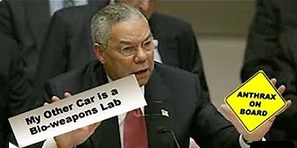
From Anthrax to Iraq
or go to
Aletho News Archives – Video-Images
Book Review
New paperback: Butchered by “Healthcare”
Lies are Unbekoming | October 20, 2026
 Butchered by “Healthcare” is Robert Yoho’s plain-spoken account of how American medicine stopped being a profession and became an industry. 341 pages. Over a thousand references. Thirty-eight chapters.
“Screening Tests Are Useless”, on tests that find diseases that would never have hurt you. “The FDA Protects the Big Drug Companies”, on an agency funded by the companies it regulates. “The Journals’ Sins Are the Editors’ Sins”, on ghostwritten studies and captured peer review. “Opioids and ‘Pain Management’”, on how a generation was prescribed its way into addiction. “Prozac and Relatives” and “Antipsychotics Are Disastrous”, on what psychiatry does to adults and children. “Surgery: Money Before Patients”. “Failed Cancer Treatments”. “Futile CPR and Overprescribing”. “Billing Scams & Specialty Warfare”. “Hospitals Are Sharks”. Each with a Patient Tips section at the end on how to survive it.
If you have ever walked out of a doctor’s office with a prescription you didn’t ask for, or watched a parent put through a treatment that made them worse, this is the book you want on your shelf before the next appointment. … Full review
Butchered by “Healthcare” is available on Lulu now.
Blog Roll
 Aletho News
- EU sending ‘biased’ observers to interfere in Serbian election – president
- White House envoy declares kinetic action against Yemen ‘fruitless’
- Ukraine deployed thousands of microdrones in Iraqi Kurdistan: Tasnim
- Iran calls for emergency UNSC meeting over Trump’s ‘brazen’ bomb talk, Israeli threats
- Iranian sources reveal details of Russia-China Hormuz proposal
- Plan for more US-Israel integration puts our military tech at risk
- Another Round Against Iran Will Break What Is Left of the Gulf
- SVR Report on Ukraine’s Mexican Drug Gang Links Could Pressure Zelensky, Won’t Change US Policy
- British Government Employees Were Fact-Checking the News at the BBC. Nobody Told You.
- Albania on fire: who’s behind the riots?
- If Americans Knew
- Mysterious bot accounts reportedly spread fake ‘man on the street’ videos for Michigan Senate candidate
- Israeli Defense Minister Katz Says Over 60 Lebanon Villages Have Been Destroyed
- Why Is Israel Running TV Ads in Iowa Ahead of the Midterms?
- Hind Rajab’s Alleged Killer Is in the United States. HRF Demands His Arrest.
- US Officials Face Fresh Pressure After Another American ‘Brutalized’ by Israeli Settlers in West Bank
- Israel-Backed Palestinian Militias Terrorize Displaced Families in Gaza
- FBI subpoenas pro-Palestine activists over Israeli weapons plant disruption
- Fourth winter arrives in wartorn Gaza, too early – Daily Update
- More on how Bari Weiss is using CBS on behalf of Israel
- What the UK Is Doing to Pro-Palestine Novelist Sally Rooney Is an Act of Orwellian Villainy
- No Tricks Zone
- Predictions Made By Renowned Climate Proifessor Over Past Decades Have Been Proven To Be Poor
- New Study Suggests Large Regions Of The Pacific Ocean Have Been Cooling For The Last 80 Years
- Germany’s Green Energy Debacle: High Energy Costs Force Kahla Porzellan to Close After 182 Years!
- New Study: 50 Years Of The Most Aggressive ‘Net Zero’ Policies Can Only Affect The Global Climate By 0.03°C
- US September “Heat” Was No Record…Many Records Set Decades Ago
- Latest European Green Energy Debacle; Portugal’s Largest Flagship Solar Park Insolvent!
- Green Energy Debacle: German Expert Professor Fritz Vahrenholt Warns Of Severe Economic And Social Consequences
- Two More Paleo Reconstructions Affirm Meters-Higher Sea Levels Across Ireland, Brazil 7000-6000 Years Ago
- New Study: Earth And Venus Surface Warmth Largely Explained By Convection And Lapse Rate, Not CO2 Or Radiation
- 2025 Nature Paper Claiming Worsening Global Drought Gets RETRACTED …Heavily Flawed

