Italy and the drone that isn’t there
By Lorenzo Maria Pacini | Strategic Culture Foundation | January 14, 2026
Damn: it was all so well orchestrated that it seemed authentic. But no. The story of Russian drones flying over Italy – and in particular the Joint Research Center (JRC) in Ispra – has been revealed for what it was: a grotesque fabrication, devoid of any real basis. Sergio Barlocchetti had already written about the absurdity of it all, well in advance, in Dronezine Magazine (issue 66). Now comes the official confirmation: the Milan Public Prosecutor’s Office has asked the investigating magistrate to close the investigation into serious allegations ranging from political and military espionage to terrorism and subversion.
To tell the truth, we Italians were never particularly impressed by this narrative of Russian ‘hybrid attacks’, with Moscow invading Europe inch by inch with drones that were never identified or shot down. But then the so-called Drone Zero entered the scene, the progenitor of all drones, naturally sent by Putin directly to Italy. In the spring, according to reconstructions, the powerful security system of the JRC in Ispra – apparently more vigilant than Ursula von der Leyen and Kaja Kallas – intercepted it repeatedly: nine times between March 20 and April 14 and thirteen times between April 16 and May 27. What was the purpose of its presence? According to the media and television news, the aircraft was spying with ill-concealed eagerness on both the European Union laboratories and Leonardo’s helicopter unit, the pride of the national military industry, located nearby.
Some newspapers even went so far as to describe its technical characteristics: Russian production, night-time filming capability, high-precision three-dimensional mapping. Others evoked the specter of “hybrid warfare,” Moscow intelligence activities, and even suspicious pro-Russian presence in the Varese area. The situation was so serious that the Milan Public Prosecutor’s Office opened a file for espionage, terrorism, and attacks on transport security. Some people even alerted their tattoo artists.
Then, however, reality knocked on the door. Technical checks revealed that the sophisticated anti-drone system suffered from structural limitations: software that could not withstand continuous use, decoding errors, and incorrect classifications. The ‘Russian drone’ turned out to be a simple phantom signal, generated by a GSM amplifier purchased on Amazon by a local family to improve cell phone reception. There was nothing in the sky above Ispra and Vergagliate, no drone, no Russia, no conspiracy.
The narratives about alleged Russian drones flying over Italian skies can be interpreted as part of a broader hybrid communication strategy, fitting into a media and political ecosystem in which the Atlantic Alliance and various European governments use the frame of the Russian threat – including the drone dimension – to strengthen internal consensus and legitimize rearmament and a posture of deterrence towards the East.
The Ispra case is truly emblematic and shows how mainstream media and institutional actors have constructed an emergency narrative of Russian “hybrid warfare” in the absence of solid technical evidence; a narrative that has been amplified by alarmist headlines, talk shows, and social networks, contributing to the consolidation of a negative image of Russia in public opinion, shifting the emotional center of gravity from rational debate to fear.
On a strategic-communicative level, this climate of perception serves three objectives: to promote acceptance of NATO programs to strengthen anti-drone defense and increase military spending; to reduce the legitimacy of positions critical of Atlantic policies, which are easily labeled as “pro-Russian”; consolidating a dichotomous friend/enemy frame in which Moscow is the threatening Other, and NATO-integrated Europe is the defensive and ‘rational’ subject.
These are fairy tales that are no longer even good enough for children. These Russians who fight wars with washing machines and horses, as Italian newspapers report, but who are capable of sending drones to disturb the naps of the average Italian in upper Lombardy, are not to blame this time. Maybe next time for the next fake news story!
Knesset advances bill mandating death by hanging for Palestinian prisoners
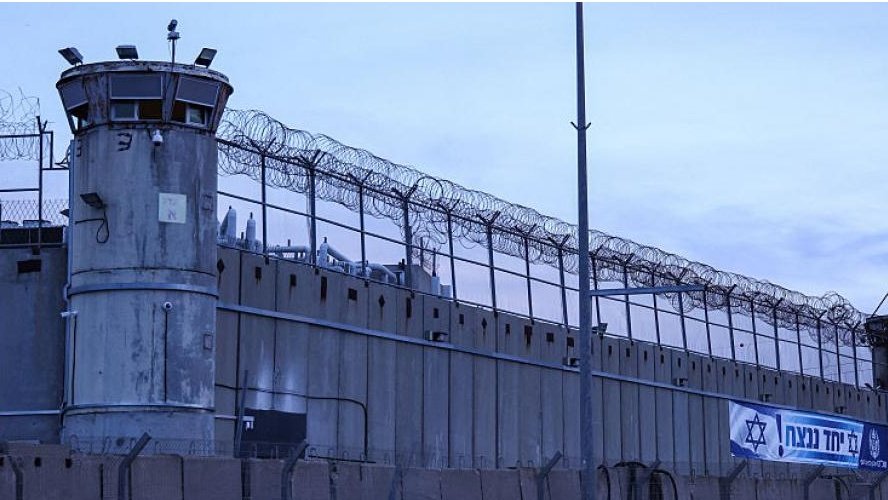
The Cradle | January 13, 2026
Israeli lawmakers are advancing a bill that would introduce executions by hanging for Palestinians convicted under military law, according to a report by Haaretz published on 13 January.
The report detailed the proposal and internal objections following its approval in a first Knesset reading in November.
The legislation, formally titled the “death penalty for terrorists” bill, was initiated by Israeli lawmaker Limor Son Har-Melech of the Otzma Yehudit party and approved by a vote of 39-16.
It would allow Israeli military courts to impose death sentences without a prosecutor’s request and by a simple majority rather than unanimous verdicts.
Under the proposal, executions would be carried out by hanging and completed within 90 days of a final ruling, following a judge-signed order and under the supervision of the Israel Prison Service.
A designated prison officer would perform the execution, appointed directly by the prison service commissioner.
The bill mandates near-total isolation for prisoners sentenced to death, with visits restricted to authorized personnel and legal consultations limited to visual contact via video calls only, with no possibility of sentence reduction once imposed.
Prison officers and the state would be granted full civil and criminal immunity for carrying out executions.
While execution details would be published on the prison service website, the Freedom of Information Law would not apply, and those involved would remain anonymous.
Israeli National Security Minister Itamar Ben Gvir celebrated the vote by handing out sweets and wearing a gold noose pin.
He later said the noose represented “one of the options,” adding that “the electric chair” and “lethal injection” were also possibilities.
Legal advisors to the Knesset’s National Security Committee warned that the bill raises serious constitutional and legal concerns, saying it would apply only to Palestinians in the occupied West Bank, creating a separate legal regime and risking violations of international treaties.
Human rights groups condemned the proposal, with The Association for Civil Rights in Israel saying it would grant the state power to carry out “the intentional taking of a human life,” calling it another step toward a “racist legal system” built on selective and oppressive enforcement against Palestinians.
Eilat port faces worst crisis as Red Sea shipping collapses
Al Mayadeen | January 12, 2026
The southern port of Eilat in occupied Palestine is facing the most severe crisis in its history, with operations nearly paralyzed for more than two years amid disruptions to Red Sea shipping routes, attacks on vessels, and escalating regional tensions, according to Yedioth Ahronoth.
The newspaper reported that port workers arrive each morning to empty docks, prepared to work, but with no ships docking. Once generating around 240 million shekels annually, the port’s revenues have dropped to almost zero, while government assistance has amounted to just 15 million shekels.
According to the report, the General Federation of Labor, the Histadrut, pledged an additional 5 million shekels to prevent layoffs, but the funds have yet to be delivered due to a suspected conflict-of-interest scandal involving its head, Arnon Bar-David.
The crisis has been compounded by a recent decision by the finance and transport ministries not to extend the port’s operating concession, citing failure to meet required conditions. Port management is reportedly preparing to challenge the decision and demand that the government reverse its stance.
Yedioth Ahronoth noted that operations at the Port of Eilat came to a complete halt after Sanaa seized a vessel bound for the port in November 2023. This followed what had been a record year, with around 150,000 vehicles handled by October 2023 and expectations of another 15,000 arrivals.
Port finance vice president Batya Zafrani said that on the day of the incident, shipping companies NYK and ZIM suspended deliveries for several months. “We thought the government would intervene, but after three months we began worrying about the workers’ future,” she said, adding that the 15 million shekels in government aid would only cover two months of operations.
Avi Hormaro, chairman of the Eilat port and chief executive of the Nakash Group, criticized the government’s handling of the crisis, saying the Israeli occupation authorities had neglected the port. “The transport ministry is making efforts, but other ministries are not interested,” he said.
Hormaro added that just as Kiryat Shmona had been forgotten, the port was also being sidelined, arguing that “a group in Yemen is deciding for the Israeli occupation whether it has a southern port or not.” He stressed that responsibility for keeping Red Sea shipping lanes open lies with the government, not the port authority.
Eilat port shut down due to debt
The Israeli economic media outlet The Marker reported in July that the port of Eilat will completely cease operations starting next Sunday after the city municipality froze its bank accounts due to millions of shekels in accumulated debts.
This development comes as the port has faced near-total paralysis since November 2023, when Yemen imposed a naval blockade on ships heading to “Israel”, leading to a sharp decline in revenue and a collapse in commercial activity at the facility.
The Eilat Municipality announced that it had frozen the port’s bank accounts due to massive accumulated debts, and according to the Israeli economic outlet The Marker, all operations will come to a complete halt starting Sunday, signaling a total economic shutdown of the port.
The crisis at Eilat Port began when Yemeni forces imposed a naval blockade on ships heading to “Israel,” prompting international shipping companies to avoid the Red Sea route, which brought the port’s operations to a near standstill and caused a collapse in its revenue.
Iran protest-riots can only achieve US-Israeli intervention, ‘shadow CIA’ concludes
By Max Blumenthal | The Grayzone | January 13, 2026
Stratfor, the “shadow CIA” which contracts for US intelligence and advises US-backed opposition movements, published an important assessment of the protest-riots in Iran this January 7.
Stratfor concluded that the ultimate utility of the unrest is to create an opening for a US-Israeli bombing campaign:
“While unlikely to collapse the regime, the ongoing unrest could open the door for Israel or the United States to conduct covert or overt activities aimed at further destabilizing the Iranian government, either indirectly by encouraging the protests or directly via military action against Iranian leaders.”
The private spying contractor explained that the external, US-backed Iranian opposition is too fractious and weak to affect change inside Iran, and that the institutions of the Islamic Republic remain united. Therefore, the only impact the protest-riots can achieve is to ease the path for a military campaign by the US and Israel.
Stratfor’s assessment ends by predicting that “renewed military strikes on Iran would also likely put an end to the current protest movement by leading instead to a wider display of Iranian nationalism and unity, a pattern observed after U.S. and Israeli strikes in 2025.”
This is one of the more sober pieces of analysis of the unrest in Iran to emerge from any US intel-aligned outfit. However, with CIA director and “Mossad stenographer” John Ratcliffe controlling Trump’s Iran briefings alongside White House chief of staff and former Netanyahu campaign advisor Suzie Wiles, the president may not have the benefit of such clarity.
The Coming War on Iran: What Has Really Been Happening?
By Robert Inlakesh | The Palestine Chronicle | January 13, 2026
The unrest inside Iran was effectively brought to a halt by the authorities, culminating in mass pro-government demonstrations in the millions across the country. Yet, the specter of a US-Israeli regime change operation continues to lie in the wake.
If you have been following the course of the protests/riots inside Iran on social media or in the corporate press, the impression given since the beginning of the year has been that Tehran is on the verge of collapse. Countless false claims were issued regarding the fall of entire cities, the collapse of the Islamic Revolutionary Guard Corps (IRGC), a massacre of peaceful protesters and even that Ayatollah Khamenei was seeking to escape to Moscow.
Evidently, the reality on the ground couldn’t have been more opposite of what the pro-regime change news outlets and social media influence operations have been portraying. Therefore, to understand what is happening, it is important to understand what truly transpired.
The Road to another Regime Change War
Ever since the conclusion of the 12-Day War between Iran and Israel last June, foreign policy hawks have made it abundantly clear that another round of fighting was only a matter of time. In fact, on July 7, 2025, Axios News reported that Israeli officials were already seeking a green-light, from the US President for them to attack Iran again.
Influential pro-Israeli Washington-based think tanks – such as the Foundation for Defense of Democracies (FDD), Washington Institute for Near East Policy (WINEP), and the Atlantic Council – all agreed that another round would be necessary, yet argued in different ways that the next round would have to result in the closure of the conflict for the foreseeable future.
The reasoning behind this was clear: if the next round was to mirror the 12-Day War, then another round would again become an inevitability. This scenario would mean that every 6-12 months, the conflict would go from Cold to Hot, a predicament that would actually heavily favour Iran.
If Tehran manages to keep repeating a similar series of rounds to what we saw in June of 2025, the Israelis will be at an enormous disadvantage. Not only does Israel have a smaller territory in which to operate, making taking out vital infrastructure easier, but it cannot produce weapons and rebuild at the rate Iran can. For example, the air defence munitions it depleted last year have still not been fully replenished, and many of the sites struck in Tel Aviv remain in ruins.
Iran, on the other hand, has been able to mass-produce ballistic missiles and drones. Western publicly released estimates greatly vary, but often indicate that the Iranians have replenished their arsenals, whereas the indications coming from Iran itself appear to suggest that they have superseded what they previously possessed, both in quantity and quality.
The US and Israel, nevertheless, have clearly been threatening to attack Iran once again for months, using varying excuses about why. Israeli PM Benjamin Netanyahu has recently been complaining about Iran’s missile program, which quickly became a talking point of the Trump administration, too.
Yet, the moment to attack Iran clearly hadn’t presented itself. There were simply too many variables, too many unknowns, and too many doubts for them to commit any action. We also saw this when it came to Israeli threats against Hezbollah in Lebanon. Even got to the point late last year that Hezbollah’s Secretary General, Naim Qassem, publicly stated that Israel is just bluffing and that although something may happen in the new year, he essentially told the Israelis to shut up and just attack if they were set on doing so.
Why didn’t Israel attack Lebanon? Perhaps the biggest reason why they didn’t is because of Iran and the fear of how far such a war could go. The Israelis attempted assassinations and ramped up their air attacks as a means of attempting to draw a retaliatory strike from Hezbollah, but this failed. Instead, the option left on the table was full-scale war or no war at all.
Then came the pivot to Iran, at least in terms of public propaganda and ramping up rhetoric.
Riots In Iran as A Prelude to War
On December 28, the Israelis spotted a new opportunity. Protests erupted throughout cities across Iran, as mainly shopkeepers took to the streets in order to express their outrage at government mismanagement amidst the ongoing sanctions-induced economic crisis.
To be clear, these protests were totally organic and genuine; they had the backing of major Unions inside the country, and the Iranian government appeared to be quickly engaging with them in order to reach concessions. There was no violence at these protests initially. Even when suspected agent provocateurs had attempted to chant for regime change, shopkeeper protesters had forced them out of their crowds.
By December 29, former Israeli Prime Minister Naftali Bennett then posted a video on social media, in which he claimed that Israel was standing with the Iranians “rising up” against their government. Bear in mind that when this address was issued, the situation in Iran was in fact relatively calm, and the widespread riots had not yet taken place.
However, on social media, old videos and AI-generated clips were suddenly spread like wildfire, in a clearly coordinated campaign led by the Israelis and their Iranian opposition allies.
Almost out of nowhere, rioters began to spring up in small groups, primarily in the West of Iran. Some of these rioters carried weapons, but most just committed vandalism and burned down cars or shops. At this point, the protests over the economic crisis began to reduce, to be replaced by anti-government protests. Despite the violence and escalating rhetoric, the authorities in Tehran made sure to distinguish between rioters and legitimate protesters, not bringing down full force against them.
Then came the first day of the New Year, when the violence suddenly exploded. Iranian opposition channels began claiming cities had fallen, which never happened; they claimed millions were rising against the government, which also was not the case. On January 1, two Iranian police officers were murdered, and rioters even executed a young man who belonged to the Basij paramilitary force in the country.
The day after saw all the major Unions condemn the violent rioters, as Israel’s official Persian-language account posted AI-generated images depicting Iran’s police forces hosing down peaceful protesters. Again, the riots escalated and more members of the security forces were murdered, as rioters committed arson attacks.
All of this ended up coming to a head on January 8, as the riots escalated dramatically and this led to Iran shutting down the internet across the country as it took the gloves off and sent its IRGC forces in to stabilise the situation.
The largest recorded anti-government protests, as one called for by the Shah’s son from the comfort of California, numbered no more than in the tens of thousands. It is estimated that at their peak, there were around 40,000 that showed up.
The footage that began emerging from the streets of Tehran and elsewhere was nothing short of shocking, mass destruction and arson against public transit, the burning of mosques, attacks on schools, medical clinics, shops, homes and streets left in ruins as dumpsters were overturned and set alight, along with all the vehicles in sight.
In total, Iran claims that over 100 members of its security forces were murdered, 350 Mosques were set ablaze and 150 ambulances were damaged or destroyed. Civilians were also brutally murdered by the rioters, reportedly including a three-year-old child and a nurse who was burned to death; multiple police officers were also burned alive.
Without needing to go any further, there is copious evidence of armed militants firing on security forces and mass violence committed against civilian infrastructure. What started as a totally normal and organic series of protests was hijacked and turned into an Israeli-backed riot campaign. This was not comparable to the likes of the 2022 or 2009 unrest, which were evidently taken advantage of by Iran’s enemies, but had support from a sizable portion of the population nonetheless.
In the end, it appeared that by January 12, when millions of Iranians came to the streets across the country in solidarity with their government and against the rioters, the Israeli-backed operation had failed.
Yet, the US government had begun to ramp up its direct threats of intervention as the riots died down. Leaving the question open as to when the next round of American strikes would occur, following Donald Trump’s decision to bomb Iran last year.
The real question is whether these riots were a desperate and failed regime change attempt in and of themselves, or this was simply a prelude to what’s coming next. If the Israelis were truly betting on these riots equalling regime change, then perhaps the calculation is for the US to attack in order to revive the riots on the ground.
Alternatively, the instability was only for the purpose of setting up a larger attack, which would mean a much larger war could have been planned. In order for the US and Israel to achieve their desired outcome, that being either regime change or a massive blow that will end the war between Israel and Iran for the foreseeable future, they will likely go after Iran’s infrastructure.
In such a scenario, expect the kitchen sink to be thrown at Iran. Armed terrorist militia insurgencies, airstrikes, agents on the ground, and more riot activity. In particular, attacks on the electrical grid, water, oil, agriculture, and everything that makes the economy function. In other words, an attempt to achieve regime change this way, or to simply make war so costly that Iran won’t seek it for some time afterwards. Perhaps the goal could be to weaken Iran to a degree where it would negotiate on US terms, yet this is highly unlikely.
Iran dealt with these threats by issuing its own, doubling down and adopting an ultra-aggressive posture. What comes next could go many ways, so we are left to wait and see.
– Robert Inlakesh is a journalist, writer, and documentary filmmaker. He focuses on the Middle East, specializing in Palestine. He contributed this article to The Palestine Chronicle.
US Cargo Planes Have Flooded the Persian Gulf Since the First of December
By Larry C. Johnson | SONAR | January 13, 2026
In December 2025 and January 2026 (through early/mid-January), open-source intelligence (OSINT) and flight-tracking data indicate a significant surge in US military transport aircraft (primarily heavy lifters like C-17 Globemaster III and C-5M Galaxy) flying to or toward US bases in the Persian Gulf, such as Al Udeid Air Base in Qatar, with reports consistently describing “dozens” of such movements.
Al Udeid Air Base (also known as Abu Nakhlah Airport) is the largest U.S. military installation in the Middle East, located in the desert approximately 20–35 km (12–22 miles) southwest of Doha, Qatar. It serves as a critical strategic hub for U.S. and allied operations in the region. Al Udeid is the headquarters for the forward element of US Central Command (CENTCOM), US Air Forces Central Command (AFCENT), and the Combined Air Operations Center (CAOC) — which commands and controls airpower across a 21-nation area from Northeast Africa to Central Asia. It also hosts elements of the US Special Operations Command Central and allies like the Royal Air Force (RAF)’s No. 83 Expeditionary Air Group.
Al Udeid is just the tip of the iceberg as far as the US presence in the Persian Gulf is concerned. Here are the other bases:
Naval Support Activity Bahrain (Bahrain, in Manama):
Headquarters for the US Navy’s Fifth Fleet (NAVCENT), responsible for maritime operations in the Persian Gulf, Red Sea, Arabian Sea, and parts of the Indian Ocean.
Hosts ~9,000 personnel (military and civilians).
Key for naval presence, including ships, patrol craft, and support for regional security.
Camp Arifjan (Kuwait, near Kuwait City)
Forward headquarters for US Army Central (ARCENT).
Major logistics, supply, and command hub for ground forces and prepositioned equipment.
Ali Al Salem Air Base (Kuwait, ~40 km from the Iraqi border)
Known as “The Rock”; supports airlift, refueling, transport, and expeditionary air operations (home to the 386th Air Expeditionary Wing).
Camp Buehring (Kuwait, near the Iraq border)
Staging post for Army units deploying to Iraq/Syria and training/operations support.
Al Dhafra Air Base (United Arab Emirates, south of Abu Dhabi)
Shared with UAE Air Force; critical US Air Force hub for reconnaissance, intelligence, fighter operations (e.g., F-22 Raptors), and missions against threats like ISIS.
Prince Sultan Air Base (Saudi Arabia) — Hosts US fighter jets and air defense; reactivated for regional deterrence.
Multiple reports from OSINT sources, flight trackers (e.g., FlightRadar24), and media outlets (including Israeli, European, and international sources) describe dozens of heavy transport aircraft (C-17s and C-5s) departing from US bases, the UK (e.g., RAF Mildenhall), and Germany, heading eastward to Persian Gulf hubs. This activity ramped up notably in early January 2026, with ongoing reports of C-17s, C-5s, and related support aircraft (including tankers like KC-135 and KC-46) en route.
The movements are most likely preparations for an attack on Iran (e.g., protests, air defense boosts), and analysts note similarities to prior buildups. No exact daily or total count is publicly confirmed by the Pentagon, but the scale is described as a “major redeployment” or “heavy airlift,” often in the range of dozens (20–50+ individual aircraft movements, though some may be round-trips or rotations).
In my last piece I listed the deployment of a US carrier task force as a possible indicator of an impending US military attack on Iran. I may be wrong. The surge of US military cargo planes over the last 40 days suggests that the US may opt for an air campaign and is deploying air defense systems to all of the bases listed above in preparation for such an attack. I believe that US planners believe they can knock out Iranian missile sites and, with a bevy of Patriot and THAAD air defense systems, defeat any Iranian retaliation.
All of the information I’ve presented above comes from open source intelligence (OSINT). If I can read it so can the Iranians, the Russians and the Chinese. Would you be shocked to learn that the Russians and the Chinese have satellite systems that are collecting intelligence on these bases as well and passing that information to Iran? Iran will know the location of the US air defense systems.
Based on the Iranian response to the surprise attack on June 13, I expect Iran will initially flood the US bases with drones and older missiles that will drain the US anti-missile defense systems… The US does not have an unlimited supply of Patriot missiles. If Iran has swallowed it pride and has accepted a robust supply of Russian and Chinese air defense units, then it has a better chance of surviving a US attack intended to neutralize Iran’s ability to launch ballistic missiles, which are stored in a number of underground bunkers scattered around Iran.
I still think that the first move by the US will be a cyber attack on Iran’s military command and control system. However, Iran has a robust cyber capability as well and would likely respond in kind to any such attack. Trump will receive a full briefing from Pete Hegseth’s War Department today (Tuesday) and a decision on the US courses of action is likely to follow.
I discussed these issues today with Judge Napolitano and Danny Davis. We also analyzed the war in Ukraine.
Deep-state forces from abroad instigated violence in Nepal – former foreign minister
RT | January 13, 2026
External deep-state forces were instrumental in instigating the September 2025 violence in Nepal that led to the ouster of the government, its former foreign minister has told RT India.
K.P. Sharma Oli resigned as Nepal’s prime minister after violent clashes – known as the Gen Z protests – killed 77 and injured more than 2,000. Pradeep Kumar Gyawali, a former foreign minister, has now backed Oli’s assertion that Gen Z protests that led to the ouster of the government were backed by external forces.
“Those elements who were actively engaged with the deep state, who used the cross-border misinformation and disinformation to instigate the violence, they were active,” he told RT India in an exclusive interview.
The remarks came after Oli told RT India about external influences in the uprising last year.
Gyawali said Kathmandu’s growing engagement with India and China and its aspiration of being a bridge for the economic development of Nepal between the two neighboring countries “was not a very good message to some powers.”
He added, “[They] wanted to use Nepal’s geostrategic location for their policy in their favor. So maybe our engagement with our neighboring countries may have some grievances to the big powers as well.”
The Grayzone has cited leaked documents to reveal that the US government’s National Endowment for Democracy (NED) had spent hundreds of thousands of dollars tutoring Nepalese young people to stage the protests.
The Gen Z protests happened as the US sought to neutralize Chinese and Indian influence over Kathmandu, Grayzone investigations revealed.
The NED is officially a US State Department-funded nonprofit that provides grants to support ‘democratic initiatives’ worldwide.
The International Republican Institute (IRI), a NED division, has been accused of funding clandestine activities in Bangladesh and Sri Lanka, apart from funneling tens of millions of dollars to Ukrainian political entities and anti-Russian interests.
Rare Earths—or Arctic Control? Greenland’s Riches May Just Be Excuse
By Ekaterina Blinova – Sputnik – 13.01.2026
Greenland holds the world’s eighth-largest rare earth reserves—1.5 million tons—but US interests extend far beyond minerals, Ruslan Dimukhamedov, chairman of the Association of Producers and Consumers of Rare and Rare-Earth Metals, tells Sputnik.
Greenland is rich in iron ore, graphite, tungsten, palladium, vanadium, zinc, gold, uranium, copper, and oil. It also hosts two of the world’s largest rare earth deposits—Kvanefjeld and Tanbreez.
President Donald Trump has repeatedly signaled US ambitions to secure leadership in rare earths to advance semiconductors, AI, and robotics. Against this backdrop, it seems like it’s no coincidence that he set his sights on Greenland.
“That means permanent magnets—for electric vehicles, drones, and robotics,” Dimukhamedov says. “If we’re talking about the so-called magnetic group, that includes dysprosium and terbium. If we look at lanthanum and cerium, those are used in petrochemicals and optics.”
Greenland’s rare earths are technologically complex and relatively poor deposits, located in challenging conditions—not just climatically, but geographically as well, in mountainous terrain, the pundit explains.
“If we’re talking about commercial extraction—that is, mining that is economically viable at today’s price levels, rather than production for appearances’ sake,” Greenland’s rare earths hold limited appeal for US companies, according to Dimukhamedov.
His experience in the rare earth industry shows that the conditions of these deposits indicate that rare earth metals themselves are not the main object of the US’ interest. What is it then?
“Territorial control? Yes. Control of the Arctic? Yes. Preventing Russia from freely using the Northern Sea Route, making our lives difficult with military bases? Yes,” the expert says.
Kiev awards major mining project to Trump-linked investors
RT | January 13, 2026
Ukraine has awarded a major state-owned lithium project to American investors linked to US President Donald Trump. Prime Minister Yulia Sviridenko pitched it as the pilot project under last year’s minerals deal between the US and Ukraine.
The agreement, which was signed in April, grants the US access to developing Ukraine’s natural resources in exchange for splitting output under a production-sharing contract. Half of the revenue will go into the joint US-Ukraine Reconstruction Investment Fund (URIF), with profits reinvested in new projects and national reconstruction.
Trump pitched the deal as a mechanism for Kiev to repay billions in US aid provided under his predecessor, Joe Biden.
The New York Times first reported that development rights for the Dobra deposit in Kirovograd Region – one of Ukraine’s largest lithium reserves – were awarded to a US-linked consortium last week. Sviridenko confirmed the decision in a Telegram post on Monday.
“For the first time in Ukraine, a winner for lithium development under the production-sharing mechanism has been selected,” she wrote, saying it was awarded to Dobra Lithium Holdings JV, a US consortium whose shareholders include critical-minerals company TechMet.
Sviridenko said the consortium will invest at least $179 million in the project, including $12 million for geological exploration and reserve audits, and $167 million for extraction and processing facilities if commercial viability is confirmed.
Ukrainian officials told the WSJ that the deal raises potential conflicts of interest, noting that TechMet’s largest shareholder is the US International Development Finance Corporation, the agency overseeing the URIF. The WSJ also reported that Ronald Lauder, a longtime Trump ally and Republican donor, is part of the consortium, though Sviridenko did not confirm his participation.
She insisted, however, that the consortium was selected through a competitive tender open to both domestic and foreign bidders, describing the project as a catalyst for further Western investment.
Russia has condemned the minerals deal. Former Russian President and deputy chair of the Security Council Dmitry Medvedev mocked it as the forced extraction of a “disappearing country’s” wealth. Kremlin spokesman Dmitry Peskov called it a “commercial scheme” to sell aid, arguing against further support for Kiev’s war effort as it only serves to prolongs the conflict.
Russian officials and experts have noted that much of Ukraine’s mineral wealth lies in regions that joined Russia following referendums in 2022 or near the front lines.
US makes money from weapons, not from Ukrainian minerals
By Ahmed Adel | January 13, 2026
The statements by President Donald Trump that Washington can recover all funds invested in Ukraine and even make additional profits through agreements with Kiev on exploiting rare minerals are political manipulation because the United States does not earn money from Ukrainian resources but from selling weapons.
The real goal of the US is not just exploiting Ukraine’s natural resources, but mainly strengthening its own military industrial complex through arms sales. The US has shifted the financial and political costs of the war onto Europe and Ukraine, while still acting as a mediator and gaining economic benefits. The so-called resource deals are more about securing future influence than about genuine economic cooperation or a return on investment.
Trump has created a scheme where the American military industrial complex functions by manufacturing weapons, selling them to Europe, and Europe then supplies them to Ukraine. This arrangement generates far more income than the minerals, which still need to be exploited and processed, and require major financial investment to sustain.
In late April 2025, Washington and Kiev signed an agreement to create the US-Ukrainian Reconstruction Investment Fund. The deal grants the US access to new investment opportunities for developing Ukraine’s natural resources, including lithium, titanium, graphite, and rare earth minerals. Since the signing of the agreement, not a single valuable mineral has been extracted.
It is difficult to predict what will happen with the agreement on exploiting Ukrainian resources and whether it will be carried out. No one is seriously involved in exploitation yet, and it is difficult to imagine any company in an active conflict willing to take risks and invest in a country at war.
At the same time, Ukraine does not have any rare earth minerals. Most of the rare minerals are in Donbass, the region that has been returned to Russia. There are some useful minerals in Ukraine, but they are also found in other countries. Even for minerals like lithium, which might be more in the spotlight, there is plenty of supply, and, in principle, an investor will always choose to invest in a peaceful country rather than one at war.
With this agreement, the US has gained political control over the future use of Ukraine’s mineral resources and can decide who, how much, and how to mine. However, due to the war, there are currently no significant American investments in Ukrainian mining.
US economic interests in Ukraine are unlikely to lead to a US military presence there. The Americans do not have any economic stake in Ukraine — their interest is political, not economic. There are no resources in Ukraine so valuable that the US would go to war with Russia over them.
Trump criticized his predecessor, Joe Biden, for spending $350 billion on Ukraine, while his administration finalized a rare earths deal that could recoup a significant portion of those funds, perhaps even all of them, and potentially more. He is manipulating public opinion by claiming the US has invested $350 billion, but it has not invested that much in this conflict.
Zelensky has denied that this is the correct figure, and the latest estimate, which more or less aligns with reality, is around $100 billion. According to other sources, Biden’s total amount to Ukraine was about $65 billion. So, roughly $100 billion has been invested, and Trump is overstating that amount by 3 to 3.5 times.
Such claims may seem convincing to the American public, but they are a form of political manipulation and rhetoric aimed at achieving political success rather than generating real financial benefits for the US. The US positioned itself as a mediator, avoiding direct political responsibility while shifting the burden and risk to Europe and the Ukrainian leadership. The Americans are staying on the sidelines and moderating the entire process as mediators, while also gaining economic benefits from selling weapons and bolstering their military-industrial complex. The rest is all political games.
Ahmed Adel is a Cairo-based geopolitics and political economy researcher.
Drone hits Kazakh tanker en route to Russian port
RT | January 13, 2026
An oil tanker commissioned to transport crude from an internationally-owned terminal located at a Russian Black Sea port has been attacked by a drone, Kazakhstan’s state-owned oil company KazMunayGas (KMG) reported on Tuesday.
The ship ‘Matilda’ was hit earlier in the day on its way to pick up cargo at the Caspian Pipeline Consortium (CPC) terminal this coming Sunday, the statement said. No crew members were hurt, KMG added, noting that the tanker remains seaworthy.
Reuters reported attacks on four tankers in the Black Sea that were on their way to the CPC terminal, located at the Russian port of Novorossiysk, including the ‘Matilda’, citing sources. The report suggested that Ukraine may have been responsible for the attacks, citing Kiev’s history of targeting the consortium’s assets in Russia, but said that Ukrainian officials have not commented on the situation.
CPC is a pipeline operator owned by Kazakh, Russian, and Western private firms and the government of Kazakhstan, which transports crude from the Tengiz oil field in Kazakhstan to the Novorossiysk terminal. The Russian military has in the past reported Ukrainian attacks on the infrastructure, as Kiev seeks to undermine Moscow’s international oil trade.
Although Kiev does not officially claim credit for attacks on civilian infrastructure, the role of Ukrainian special services in several incidents has been broadly reported in domestic and international media. Moscow has described them as an element in a global Ukrainian campaign of sabotage and terrorism targeting Russian interests.
British minister dreams of kidnapping Putin

By Martin Jay | Strategic Culture Foundation | January 13, 2026
To understand how the adage “the bigger you are, the harder you fall” applies to Britain – once a global power whose unique brand of diplomacy was considered the world’s best – consider the rank stupidity of a flippant comment from John Healey, which recently reminded us just how low Britain has sunk on the world stage.
Following the U.S. abduction of the Venezuelan president, the UK Defence Secretary remarked that, if given a choice of world leaders, he would kidnap Vladimir Putin. While one Russian commentator called it a “wet dream,” the remark also reveals that Britain is not only prepared to support Trump’s barbaric disregard for international law but is happy to entertain its own delusional fantasies of global havoc, if only it had the resources and nerve.
Healey’s absurd comment hardly reconciles with London’s claimed commitment to state sovereignty and international law. Worse, it sets dangerous precedents.
For Moscow, it signals a growing British preference for coercion over dialogue – confirming Russia’s worst suspicions about London’s laughable rhetoric on ending the war. Such remarks not only damage Britain’s standing as a credible global actor but also send the wrong message to the hundreds of Global South nations tired of being the only ones expected to respect international law. It is seldom understood by the average citizen that international law binds the world together and keeps economies functioning – from shipping and intellectual property to environmental protection and border integrity. If poorer nations in Africa and Asia abandon the so-called rules-based order, pandemonium would ensue, economies would stagnate, and the likelihood of conflict and famine would rise.
In the case of the Ukraine conflict, international law will inevitably shape any eventual settlement. Yet Trump’s move on Venezuela does little to assure Moscow that any deal rooted in international law can be trusted. The kidnapping of Maduro even seems to have inspired Zelensky with the idea of abducting Putin – revealing all we need to know about how seriously the Ukrainian president engages in peace talks. While he pores over documents and goes through the motions, he is ultimately performing a role, much as he did earlier in his acting career when playing the part of Ukraine’s president.
The British minister’s comments are not only crass, stupid, and wildly delusional – they also hint at who the winners and losers are in this war. Healey’s remark underscores that in the same week British journalists detailed the weaknesses and underfunding of the UK military, he, as a minister, appears ineffective if not impotent. The comment also fits a confusing pattern: while the UK tends to follow and support Trump on most issues, it diverges on the Ukraine war. Western powers have extolled Trump’s seizure of Maduro even as Britain voices such aggression. Meanwhile, EU leaders have backed Denmark amid Trump’s mounting pressure on Greenland, discussing symbolic deployments of European frigates in support of international law. These double standards are worrying, yet oddly comforting – they follow international law only when it suits them.
Featured Video

Israelis SUDDENLY Mass Deported From Many Countries
or go to
Aletho News Archives – Video-Images
From the Archives
Elite Western universities are a corrupt, parasitic empire
Instead of high-quality education, these institutions are fostering a global neo-feudal system reminiscent of the British Raj
By Dr. Mathew Maavak | RT | May 30, 2025
In a move that has ignited a global uproar, US President Donald Trump banned international students from Harvard University, citing “national security” and ideological infiltration. The decision, which has been widely condemned by academics and foreign governments alike, apparently threatens to undermine America’s “intellectual leadership and soft power.” At stake is not just Harvard’s global appeal, but the very premise of open academic exchange that has long defined elite higher education in the US.
But exactly how ‘open’ is Harvard’s admissions process? Every year, highly qualified students – many with top-tier SAT or GMAT test scores – are rejected, often with little explanation. Critics argue that behind the prestigious Ivy League brand lies an opaque system shaped by legacy preferences, DEI imperatives, geopolitical interests, and outright bribes. George Soros, for instance, once pledged $1 billion to open up elite university admissions to drones who would read from his Open Society script.
China’s swift condemnation of Trump’s policy added a layer of geopolitical irony to the debate. Why would Beijing feign concern for “America’s international standing” amid a bitter trade war? The international standing of US universities has long been tarnished by a woke psychosis which spread like cancer to all branches of the government.
So, what was behind China’s latest gripe? ... continue
Blog Roll
Recent Comments
seversonebcfb985d9 on Villains of Judea: Philip Esfo… loongtip on Report warns that ‘Jewish terr… Craig Nelms on New study shows that toxic gas… loongtip on A Funny Thing Happened on the… loongtip on EU free trade pact on hold as… John Edward Kendrick on Regime Change In Iran Is The F… Bill Francis on Australia Passes New Hate Spee… seversonebcfb985d9 on Australia Passes New Hate Spee… Bill Francis on Britain’s AI Policing Plan Tur… loongtip on Miami Beach Resident Questione… loongtip on Israeli agricultural export co… loongtip on The War On Free Speech In Aust…


 Aletho News
- Mom Tells Trump: Dumping Sewage Sludge on Farmland Won’t Make America Healthy Again
- NIAID Funds Gain-of-Function Study Engineering Novel Influenza Viruses
- Villains of Judea: Philip Esformes and the Largest Healthcare Fraud in American History
- US sanctions Popular Conference for Palestinians Abroad over alleged Hamas links
- You reap what you sow: Ukraine’s blackout is Zelensky’s failure
- Ukraine Blackouts Caused by Zelensky’s Terrorist Attacks on Russia
- Orban Hits Out at EU Green Light for $1.5 Trillion Ukraine Aid
- World has had enough of confused clowns: Araghchi to Zelensky
- Jordan using Israeli software to monitor journalists, rights defenders: Report
- Israelis SUDDENLY Mass Deported From Many Countries
- If Americans Knew
- ‘Permits of Humiliation’: How Israel Strangles Christian Education in Jerusalem
- “The world sees death, destruction and injustice – and they see dollar signs” – Not a ceasefire Day 105
- War criminal Netanyahu kills 11 in Gaza, joins Board of Peace – Not a ceasefire Day 104
- Another baby dies of cold in Gaza, as Rafah crossing remains locked down – Not a ceasefire Day 103
- Brutal Beatings, Arson, and Impunity: A Palestinian Plant Nursery Becomes a Target for Settler Pogroms
- On Iran’s protests, Israeli hypocrisy knows no limits
- A Cease-fire for Israelis and a War for Palestinians
- ‘When will Baba come back?’ Gaza’s widows and orphans struggle to survive
- Genocide research institute levels accusations against Germany for denying Israel’s genocide against Palestinians
- Over 1,200 Israeli truce violations in Gaza – Not a ceasefire Day 102
- No Tricks Zone
- New Study: Sea Levels Rose 20 Times The Modern Rate During The Roman Warm Period
- As German Gas Storage Dips Dangerously Low…Shortage Hardly Avoidable
- New Study: Brazil’s Relative Sea Level Was 2+ Meters Higher And SSTs 3-4°C Warmer 6000 Years Ago
- Philosopher Schopenhauer: Climate Science Certainty Stems From Stupidity, Ignorance
- New Study: Species Extinction Rates Declining Since 1980 – ‘Climate Change Is Not An Important Threat’
- Denmark Places Climate Protection Above Animal Welfare, Poisoning And Culling Cows
- New Study: Greenland Was 3-7°C Warmer And Far Less Glaciated Than Today 6000-8000 Years Ago
- German Media Report That Current Frigid Weather Can Be Explained By Arctic Warming!
- Berlin Blackout Shows Germany’s $5 Trillion Green Scheme Is “Left-Green Ideological Pipe Dream”
- Modeling Error In Estimating How Clouds Affect Climate Is 8700% Larger Than Alleged CO2 Forcing
 Aletho News