Latest China-EU summit exposes Brussels’ complete lack of sovereignty
By Drago Bosnic | December 20, 2023
Earlier this month, China and the European Union concluded a bilateral summit, the first one since 2019. One usually wouldn’t expect that four years could change much, but that was precisely the case during the recent meeting. While the previous summit was largely focused on questions of economic cooperation and calls for the improvement of overall relations, this one was much more (geo)political, with the EU reiterating a near-carbon copy of American talking points. Although Brussels’ sovereignty and independence were always highly questionable, its subservience during this year’s meeting was more obvious than ever before. Beijing was faced with an implicitly hostile attitude that made it virtually impossible to accomplish any breakthroughs. Expectedly, China wasn’t the one making unreasonable demands.
As previously mentioned, the 2019 summit dealt with closer economic cooperation that also included technological cooperation (particularly in terms of 5G development), while the (geo)political side of things was limited to largely ceremonial calls for the ease of tensions in the South and East China Seas, as well as “continued support for the Minsk Accords”. However, as we all know now, the EU’s commitment to both has been patently false. Worse yet, the troubled bloc is now openly engaged in America’s so-called “China containment” strategy, while its much-touted “commitment” to the Minsk Accords is laughable at best, given that top European leaders openly admitted that this was just a ruse to give the Kiev regime enough time to prepare for war against Russia.
And yet, Chinese President Xi Jinping still tried to keep the atmosphere as friendly as possible and even stated that the EU was a “key partner”, reiterating the importance of trade and technological cooperation between Beijing and Brussels. He also said that China and the EU had no reason to consider each other “rivals”. However, Xi Jinping’s peaceful overtures were not only ignored, but openly rejected, echoing the identical behavior of the United States in recent years. Instead of dealing with its mounting problems, the troubled bloc insisted that the Asian giant should prevent the mythical “Uyghur genocide”. This was also followed by threats of tariffs for Chinese electric vehicles, while Germany, the EU’s top member, effectively banned Huawei from the development of its 5G network.
In addition, European Commission President Ursula von der Leyen complained that Brussels’ trade deficit with Beijing doubled, amounting to $390 billion in 2022. Von der Leyen accused China of economic protectionism and excess production that supposedly undercuts European manufacturers. Somewhat ironically, the EU’s complaints and blame games were almost identical to those of former president Donald Trump, when his administration kept accusing Beijing of the same practices. It should be noted that the troubled bloc heavily criticized Trump precisely for these statements (among many other things), but was now repeating exactly the same talking points. Obviously, the political West is simply ignoring the history of the development of China’s economic system.
Namely, while Beijing always had a strong production economy (more precisely, the strongest in the world since at least 2014), the likes of the US and EU have shifted their economic base to tertiary industrial sectors, severely undercutting their ability to compete with China. The Asian giant has an extremely robust economy that includes a fine balance between primary and secondary industries, while the tertiary sector is growing at an astonishing rate. Realizing that it won’t be able to compete with China fairly, the political West is now trying to find excuses to prevent or at the very least slow down Beijing’s unprecedented development. However, it should be noted that the Asian giant never had any ambitions of global domination, much unlike its Western rivals and their vassals and satellite states.
China is now faced with the prospect of having to contend with not only the US’s “containment” strategy (QUAD, AUKUS), but also with the EU’s meddling in its backyard, as well as calls for the globalization of NATO and the formation of its Asia-Pacific variant. Instead of focusing on the economic aspects of its relations with Beijing, Brussels kept insisting on (geo)political matters, including those that are outside of China’s control. Namely, von der Leyen and European Council President Charles Michel urged Xi Jinping and Chinese Premier Li Qiang to put pressure on Russia and President Vladimir Putin. As evidenced by Xi Jinping’s recent statements, this request was completely ignored, demonstrating China’s continued commitment to keeping close Russia ties.
The EU insisted that the “diplomatic solution” to the Ukrainian conflict was necessary and threatened China with “consequences” if it ever decided to sell weapons to Russia or “assist” Moscow with circumventing sanctions. Needless to say, none of these requests apply to the troubled bloc itself, as the EU is “allowed” to send weapons to the Neo-Nazi junta, as well as to steal Russian foreign exchange (forex) assets. However, this unrivaled hypocrisy (the sheer magnitude of which can hardly be described with words) didn’t stop there, as European “leaders” once again brought up the aforementioned myth of the “Uyghur genocide” and accused China of alleged “human rights abuses” in its northwestern province of Xinjiang. They also threatened consequences if Beijing intervened in Taiwan.
Xi Jinping’s and Li Qiang’s attempts to nudge the talks more toward economic topics were ignored by von der Leyen and Michel. What China even suggested was the cooperation between its Belt and Road Initiative (BRI) and the EU’s Global Gateway, a project that the troubled bloc envisioned as a rival undertaking. To call the summit a failure would be a gross understatement. Virtually every Chinese offer of cooperation was not only rejected, but was also met with completely unreasonable demands that had nothing to do with economic relations. Political considerations were the only thing the EU was interested in. All this only demonstrated and confirmed that Russia’s concerns about the political West’s crawling aggression are not unfounded and that China should be worried about the same.
Drago Bosnic is an independent geopolitical and military analyst.
Israel is exploiting the war in Gaza to deny Palestinians access to their West Bank land
By Fareed Taamallah | MEMO | December 18, 2023
Abla Lafi is 59 and from the village of Turmus Ayya, north of Ramallah in the occupied West Bank. She is passionate when speaking about her olive groves, which the Israeli army and illegal Jewish settlers prevent the villagers from harvesting.
“This is our own land,” she said defiantly. “How dare they prevent us from entering it and picking olives from the trees as if we were thieves? We planted them with our own hands. The settlers are the thieves and we are the owners of the land.”
October and November make up the main olive harvest season for Palestinian farmers. Thousands of families depend on a good crop for their livelihood. Around 45 per cent of agricultural land in the occupied West Bank is planted with an estimated 10 million olive trees, producing between 32-35,000 metric tons of olive oil every year.
This year, due to the war on Gaza, settlers and the Israeli army are preventing thousands of farmers from reaching their olive groves. Last month, the occupation state’s extreme far-right Finance Minister Bezalel Smotrich called on the Israeli government to prohibit Palestinians in the West Bank from harvesting their olive trees. According to Smotrich, Israel needs to establish “sterile security zones” with no Palestinian presence around settlements and settler-only roads. It looks as if the Israeli occupation forces are implementing this policy in order to block Palestinians from getting to their own land.

“Extensive damage to land and trees and stringent movement and access restrictions by Israeli forces hamper access to olive trees, especially those close to settlements,” the UN has reported. “At the end of November, an initial estimate indicates [that] 800,000 dunums of land have not been harvested due to Israeli settler violence and access restrictions.”
“Olives not only have economic importance to Palestinians, but are also symbolic of their roots, resilience and attachment to the land. For the Palestinians, the olive tree represents their spirit and identity.”
“We used to go to work on the land with joy and love for all family members, men, women, children and animals, because cultivation means belonging to the land, a feeling which we pass on to our children and grandchildren,” explained Lafi. “The olive season is like Eid for us; we celebrate its blessings with joy and happiness, even the taste of its food is different.” However, she added, since the establishment of the illegal Jewish settlements on Palestinian land, the locals have lived through the olive season in an atmosphere of fear, anxiety and terror from the settlers and the army. “The anxiety and sadness have increased this year due to the war on Gaza.”
The head of the agricultural committee in the village, Nidal Rabie, confirmed that since the war against the Palestinians in Gaza started, the settlers and settlement guards have stopped local residents from reaching their olive groves in the plain adjacent to the illegal settlements built on lands confiscated from the village. “They expelled us as recently as today,” said Rabie. “We tried to access our land, but they came and expelled us at gunpoint.”
The 61-year-old Palestinian farmer who holds US citizenship, added: “We are now in the middle of December trying to pick our olives to no avail. Every farmer who tries to pick olives is shot at. If we wait any longer, the olives will be ruined and the quality of the oil will become low and inedible.”
Although the settlers and soldiers obstruct the olive harvest every year, explained Rabie, sometimes the Palestinians succeed in harvesting at least part within hours and days determined by the Israeli army. “This year the soldiers prevented us from harvesting any olives in the plain. I personally own 30 dunums that I am not able to harvest at all.”
A few days ago, the army even stormed Turmus Ayya at night and confiscated 50 vehicles belonging to the villagers, because they were used in agricultural work. Altogether, around 2,500 dunums belonging to the villagers but adjacent to the illegal settlements have not been allowed to be harvested. “They would have produced around 70,000 litres of olive oil,” he added.

Palestinian farmers in the village are also prevented from cultivating their own land next to which illegal settlements have been built. Mishal Al-Quq, 43, said that he used to live in the US and went back to Palestine two years ago to take care of the land and cultivate it. “This year we are facing a big problem in growing wheat in the plain east of the village as we are prohibited from working there by the occupation army, but now is the season for planting seeds. We must plant quickly, otherwise it will be too late.” Wheat is very important and is a basic crop for the villagers, he said. “We must grow it.” This was confirmed by Rabie, who pointed out that he had bought wheat and barley seeds, but did not know whether he would be able to plant them or not.

The Israeli destruction of the olive groves unmasks a fact that not many in the West know about; it’s often heard that Israelis hold dual US citizenship, but we don’t hear so much about Palestinian Americans. It is estimated that between 45-60,000 Palestinian Americans live in the occupied West Bank, according to Reuters. However, this does not stop Israel from targeting them. They are treated by the apartheid state as Palestinians and have no “American” privileges. For instance, Israel prevents Palestinian Americans from entering the US from the West Bank, an apparent violation of a recent agreement in which citizens from the US and Israel can travel to the other country without a visa. According to Rabie, most of the residents of Turmus Ayya hold dual Palestinian and US citizenship, but the US government doesn’t provide any protection to the farmers. “Some villagers who hold American citizenship contacted the US Embassy and asked for protection to work on our own land. But the embassy said that it could only assist in securing travel to the United States. This would mean displacing us from our land in Turmus Ayya.”
Although the Biden administration has declared the intention to deny visas to violent settlers, Rabie doubts that it will happen. “This was only propaganda. Biden’s true position was clear when he said that if there was no Israel, the US would have to create one. This shows Washington’s collusion with Israel.”
Abla Lafi believes that the goal of Israeli “harassment” is to seize the Palestinian land close to the illegal settlements that were established on stolen land which contains olive trees that have been cultivated for hundreds of years. “They have no right or ownership over it,” she insisted. “We inherited the land from our ancestors and we should not be prevented from entering it. Although it is more difficult this year, we have been facing this same problem every year since the establishment of the first settlement, which I remember was Shilo, in 1978, when I was 14 years old. At the beginning, there were mobile homes and the road leading to them ran through our village. The roads were built on lands confiscated from Qaryut and Turmus Ayya, after which they began to spread like a cancer and descended from the hilltop on to our land in the plain and spread to the nearby villages.”
More settlements were built, such as Rachel, Adei Ad, Amichai and other random outposts inhabited by terrorists known as the hilltop youth, she added. “They began terrorising the people, shooting, destroying property and blocking the roads. Before those settlements were built, when I was a child, we used to live peacefully, plough and plant. I have beautiful memories of the different seasons of figs, olives and wheat that we used to grow.”
Rabie confirmed that settler crimes, the confiscation of land and the cutting down and burning of olive trees in his and other villages, have been carried out constantly by settlers and the Israeli army even before Israel’s latest war against the Palestinians in Gaza. The most ferocious attack by settlers happened on 21 June this year, when hundreds of settlers stormed the village killing Omar Qutain, burning dozens of houses and cars, and hundreds of olive trees and wheat fields, destroying the village. The Israeli army stood and watched, but did not intervene.
No indictment has been filed against anyone, and this is not an exceptional case. According to Yesh Din, out of a thousand cases regarding acts of violence committed by settlers between 2005 and 2021, 93 per cent were closed without an indictment.

“These attacks did not and will not stop farmers from continuing to work on their land,” said Rabie. “If we stop cultivating the land, the Israeli authorities will exploit that to claim that the land is no man’s land, confiscate it and give it to the settlers. They did this before.”
This was a reference to Israel’s use in 1979 of an Ottoman land law of 1858 which stipulates that if private land is not cultivated for three years in a row it becomes state property. “At which point Israel hands it over to the settlers.”
Abla Lafi is determined that these Israeli attacks and policies will not discourage Palestinian farmers from cultivating their land. “I love my land and I love the fertile plain. This is the land that was watered by the sweat of the farmers and the blood of the martyrs who fell defending it: Joda Awad shot dead by the Israeli army in 1988, and Khamis Abu Awad, who was killed by a settler in 1993 while ploughing the land. Minister Ziad Abu Ain was also martyred in the plain defending the land and so was, most recently, Omar Al-Qotain this summer. We cannot give up on the land that many died to defend. We will pass it on to our children.”
The hidden toll: Is Israel downplaying soldiers’ deaths?
By William Van Wagenen | The Cradle | December 19, 2023
“How many Israeli soldiers have been killed in Gaza?”
This is a persistent question that many are asking as the Israeli military’s ground campaign in the bombed and besieged enclave nears its second month.
If the army is suffering relatively low losses while inflicting massive Palestinian civilian casualties, this suggests Israel is well on its way to achieving its clear objective of eliminating Hamas, but also its unspoken goals: conquer Gaza, ethnically cleanse its 2.3 million residents, and rebuild the Gush Katif settlement bloc.
But if the occupation army is indeed suffering huge losses, this suggests the Israeli military and political leadership may need to soon end their genocidal campaign prematurely, while citing exaggerated external pressure from the White House as the pretext.
Secrecy surrounding Israeli losses
Israel’s military claimed on 17 December that 121 soldiers had been killed since its delayed ground campaign began on 27 October, when tanks and infantry began to push into Gaza’s cities and refugee camps.
But determining the true number of Israeli soldier casualties has always been notoriously difficult, as Israel’s military goes to great lengths to cover up its combat losses. A recent battle between Hamas and Israel’s vaunted Golani Brigade exemplifies this secrecy.
“We are heading to the most difficult and deepest place with a large number of enemy fighters,” boasted Israeli Lt. Col. Tomer Grinberg, commander of the Golani Brigade’s 13th Battalion, shortly before leading his troops on a ground operation in the legendary Shujaiyya (which aptly means “courageous”) neighborhood in northern Gaza.
He then added, “I promise you a resounding victory.”
But Grinberg is now dead.
According to Israeli sources, Grinberg was killed during the 12 December operation, along with nine other Golani soldiers, in an ambush by Hamas fighters.
After four of the brigade’s soldiers were injured in a firefight, others sought to rescue them amid fears they may be dragged into a tunnel. The second group was also hit by explosives, as was a third group that also tried to evacuate the wounded.
After the battle, Hamas issued a statement warning:
“The longer you stay there, the greater the bill of your deaths and losses will be, and you will emerge from it carrying the tail of disappointment and loss, God willing.”
Resistance claims higher soldier toll
But there is compelling reason to believe the number of soldiers killed alongside Grinberg in Shujaiyya is much higher than the nine announced by the army.
Security expert and retired Israeli Colonel Miri Eisin told CNN that the 12 December attack was particularly painful because so many of the dead were high-ranking officers:
“We’re hurting today… It’s always hard when soldiers are killed, but when it’s this level of command, it hits you in the gut. These are commanders that commanded hundreds of soldiers.”
This led one former US soldier to ask on X whether Israel was hiding the true number of soldiers killed in the ambush. “Where are all the privates, and the corporals, and the lower enlisted?”
Hamas, through its armed wing, the Ezzedine al-Qassam Brigades, provides an answer.
Regarding the events on 12 December, the Qassam Brigades reported killing 11 soldiers in Shujaiyya, including members of a rescue team, in an apparent reference to the deaths acknowledged by the Israeli army.
But according to Qassam, on the same day, its fighters also killed or injured 10 soldiers east of the city of Khan Yunis, killed or injured another 20 soldiers barricaded inside a building in the Sheikh Radwan area of Gaza City, and killed another 15 soldiers who attacked them in their make-shift base at the Abu Rashid Pool.
Censorship on the press and hospitals
Despite claiming to be “the only democracy in the Middle East,” Tel Aviv maintains a tight grip on information related to military casualties through the use of military censors, controlling what the press can publish concerning national security issues, including injuries and deaths of soldiers.
“The human losses announced by the security establishment are usually binding on hundreds of media institutions, and these are allowed to work basically according to this rule. The death toll always comes from one source, and no one questions it,” Hassan Abdo, The Cradle’s Palestine Correspondent, reported earlier this year.
Abdo attributes this to preserving the image of the invincible Israeli soldier “who does not fall victim to a weak, primitive opponent.”
This is “one of the main pillars of the Zionist project based on the tripartite of security, immigration, and settlement,” he added.
As The Cradle noted, even before the outbreak of war on 7 October, Israeli soldiers have had a strange tendency to die in “accidents” during periods of heightened conflict with the Palestinian resistance, including in car accidents, plane crashes, suicides, gas leaks, and even falling from balconies.
But this invincible image was shattered with the operation Al-Aqsa Flood, when Hamas and other Palestinian resistance groups broke out of the Gaza Strip to attack the Israeli military bases and settlements (kibbutzim) enforcing the brutal 17-year siege on the tiny and impoverished enclave.
During Al-Aqsa Flood, Hamas killed 41 soldiers from Grinberg’s Golani battalion alone, in major battles at the Re’im and Nahal Oz military bases.
Hezbollah’s estimates and questions from within
Israel claims Hamas carried out a massacre at the Nova music festival, just a few kilometers from the Re’im base, but a major battle took place there as well. At Nova, 58 Israeli police were killed, including from elite combat counter-terror units of the Border Police, known as Yamam, who were the first to respond to the attack.
According to an Israeli police investigation regarding events at Nova, had there not been a substantial police deployment at Yad Mordechai, some 30 kilometers further north, “the terrorists would have been on their way to … Tel Aviv in 40 minutes.”
It, therefore, becomes more imperative than ever for the occupation state to hide the extent of its losses, both in the battle against the Palestinian resistance in Gaza and in the north in the battle with Hezbollah, to reestablish and maintain the myth of an overwhelmingly powerful military presence in the region.
Anecdotal evidence and estimates from Hezbollah suggest that the official count of 115 Israeli soldiers killed in the fighting in Gaza and near the Lebanese border following 7 October is likely much lower than the true figure. Reports from different sources indicate a significant discrepancy, with instances of mass casualties not officially acknowledged.
The Lebanese resistance movement estimates its attacks on settlements and military bases in northern-occupied Palestine have killed at least 35 Israeli soldiers and injured 172.
After just the first week of fighting in Gaza, the death toll, as announced by the Israeli army from fighting there, had reached 19. Among them were nine soldiers killed in just one attack. Hamas struck the “Namer” armored personnel carrier transporting the soldiers to the battle with an anti-tank missile.
Seven of the dead soldiers were 20 years old or younger, which seems to confirm the perception that Israel is sending inexperienced fighters into combat against Hamas’ battle-hardened fighters motivated by a cause, resistance to occupation, they firmly believe in.
But the occupation army spokesperson’s unit quickly learned not to announce the mass killing of soldiers of this sort.
Baruch Rosenblum, an Israeli rabbi, recalled a story from a senior officer in the army from the second week of the Gaza ground campaign. The officer explained that most of the fighting takes place at night, and that in just one operation, Hamas had killed 36 soldiers.
The rabbi explained that Hamas had attacked a convoy of three Namer armored vehicles, each carrying 12 soldiers, setting them ablaze. The army command watched via drone live feed as the soldiers abandoned the vehicles and Hamas eliminated them all with anti-tank weapons.
The senior officer chose not to disclose his name to the rabbi “to avoid arrest for revealing state secrets,” and the incident was never announced by the army or reported in the Israeli press.
On 18 November, in the third week of the ground operation, David Oren Baruch, the director of Mount Herzl Military Cemetery, provided another anecdote suggesting a soldier death toll much larger than what was publicly known.
He revealed that “We are now going through a period where every hour there is a funeral, every hour and a half a funeral.”
“I was asked to open a large number of graves. Only in the Mount Herzl cemetery did we bury 50 soldiers in 48 hours,” Baruch explained further.
Military control of the narrative
The Israeli military’s reluctance to disclose the number of wounded soldiers further adds to suspicions of underreporting.
Unlike in past wars, the Israeli military had refused to make any statement about the number of wounded in Gaza. This finally changed on 10 December, just before Haaretz planned to publish its report on the number of soldier casualties based instead on hospital sources.
Haaretz noted “a considerable and unexplained gap between the data reported by the military and that from the hospitals.” The hospital data the outlet obtained showed the number of wounded soldiers was “twice as high as the army’s numbers.”
The Israeli newspaper also highlighted the military’s tight control over the data reported by the hospitals themselves, explaining that members of the army spokesperson’s unit “are in the hospitals around the clock. Every press release regarding wounded soldiers and replies to media queries must receive their approval.”
Israeli newspaper Yedioth Ahronoth similarly reported on 9 December that, “Every day, about 60 new wounded are received only by the rehabilitation department” and that “the cumulative numbers since October 7 are astronomical: More than 2,000 soldiers, policemen and other members of the security forces have been officially recognized as disabled.”
“We have never been through anything even similar to this,” explained Limor Luria, head of the rehabilitation department at the Ministry of Defense.
“More than 58 percent of the wounded who are taken in by us have severe injuries of arms and legs, including those that require amputations. About 12 percent are internal injuries – spleen, kidney, tearing of internal organs. There are also head and eye injuries.”
In addition to thousands of horrific physical injuries, Israel is also facing “a tsunami of trauma,” the paper added. “I sat with a fighter who took three bullets. A physically torn person, a very serious injury,” Luria added, “but his main struggle is with the sights he saw.”
One injured soldier, Elisha Madan, recounted to a crowd how his fellow soldiers were killed in front of his eyes. “I came back from the dead alone. My entire squad died, and I was on the verge of death. I survived thanks to your prayers,” Madan said while seated in his wheelchair.
‘All warfare is based on deception’ – Sun Tzu
Since 7 October, the Israeli military leadership has reported falsehoods about almost every facet of that day’s events, and the war that followed.
They lied about Hamas beheading babies, they covered up burning alive their own soldiers and civilians with Apache helicopter and tank fire, and they continue to lie about pretending to care about the safety of Palestinian civilians, who they have mercilessly bombed for months with only the slightest pretext of targeting Hamas fighters and infrastructure.
As a result, while it is impossible to know the true numbers of Israeli soldiers killed in battle against the Palestinian resistance, there is ample reason to question the veracity of the information provided by the US-backed occupation army.
Urinating on prisoners: Why humiliation is functional in Israel’s war on Palestinians
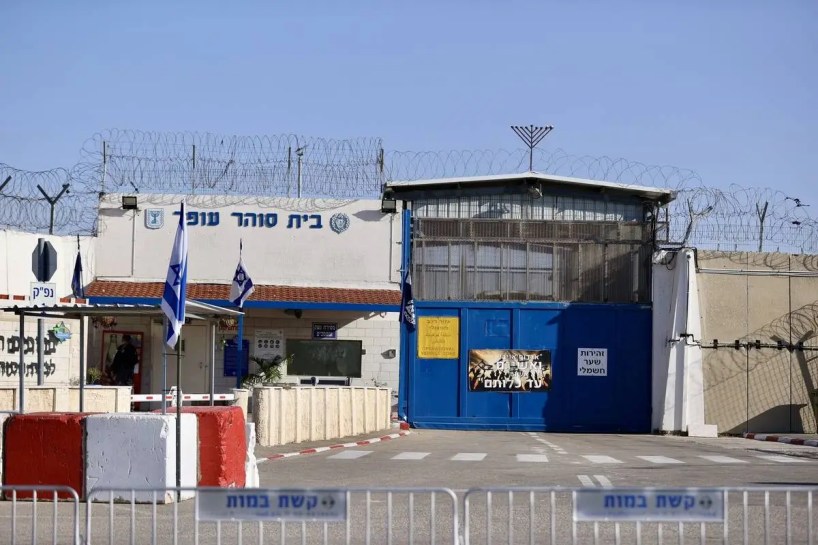
By Dr Ramzy Baroud | MEMO | December 19, 2023
Analysis: Why Israel Will Continue Its Deadly Push Into Gaza City Centres
By Zoran Kusovac | Strategic Culture Foundation | December 19, 2023
Dramatic news reports, claims and videos have emerged from both sides involved in the Gaza fighting throughout the past week.
The week started with the Israeli army releasing several videos of Palestinians stripped to their underwear being marched through urban ruins. Israel’s PR machine disregarded the Palestinian outcry that followed. Israel staunchly asserted that the men were Hamas fighters and that their alleged mass surrenders signified that the end of the Palestinian group was close, even as many Palestinians and independent observers insisted that the men were civilians who had been treated against the laws of war by being publicly humiliated.
For its part, Hamas stuck to its usual practice of pushing its cause through video releases – skilfully edited to enhance the desired effects – purporting to confirm its constant and numerous successes against Israeli invaders, mostly showing hits scored against armoured vehicles.
Then came the news that stunned Israel and put a big question mark on its official line of Hamas being on the verge of collapse. First, nine soldiers were killed in a single operation in the Shujaiya neighbourhood of Gaza City on Tuesday. That shock was followed by another one on Friday, with the Israeli army admitting that it killed three Israeli captives, having mistaken them for enemies – even though they held white flags.
So what is really happening on the ground in Gaza?
Nothing we did not predict weeks ago: The war has entered a difficult, unpredictable and bloody phase of full-scale urban warfare where gains are small and slow, and losses can be huge.
Combat in narrow and cramped streets of old cities is known to be one of the most difficult ways to fight a war. Classic military theory calls for defended cities to be surrounded and blockaded by units just strong enough to prevent the defenders from breaking out, while the main force continues advancing and taking territory.
But the fight in Gaza is not about conquering fields and beaches – Israel’s proclaimed goal is to destroy Hamas. To do that, the first step is to control the ground where the enemy operates: the cities.
In the old days, cities needed strong walls to defend themselves, but in the last 100 years, weapons have advanced at a rapid rate, causing a change in tactics. Successful resistance against enemy attacks no longer depends on huge, expensive static bastions. Nowadays, small but potent man-portable weapons whose destructive power is hugely disproportionate to their size, such as anti-tank rocket launchers, grenade throwers, small mortars, assault rifles and many others, allow the defenders to turn each house and every street into a formidable defensive position.
From the 1940s to this day, almost all attempts to conquer cities held by determined defenders have ended in failure. The few victories attackers achieved were so costly that they often ended the offensive capabilities of those armies pushing into cities.
In their own ways, Stalingrad, Warsaw, Berlin, Dien Bien Phu, Vukovar, Sarajevo, Grozny and Fallujah – some successfully defended, others eventually succumbing to attacks – all confirmed the military wisdom that urban warfare should be avoided whenever possible.
Israel could not avoid urban warfare in Gaza. To have a chance of destroying Hamas, it has to deny it its operating ground, the three biggest urban agglomerations in the strip: Gaza City, Khan Younis and Rafah.
The second phase started with Israeli forces reaching the suburbs, first of Gaza City and then, after the temporary ceasefire expired, of Khan Younis. Treading slowly and carefully in expectation of a concentrated Hamas response, the Israeli military completed the encirclement of those two urban areas.
It would be naive to assume that Israel’s generals hoped that by isolating the two biggest built-up areas in the Gaza Strip, they would seriously impair the ability of the Qassam Brigades, Hamas’s armed wing, to fight back.
In reality, the encirclement of the two city centres is not a classic one where troops within the blockade cannot be reinforced nor receive any supplies. Hamas still has an unknown but probably major part of its tunnel network intact and can move in and out. They have some difficulties in doing so but Hamas fighters are not locked in.
Aware of the menace that tunnels present but also of the grave hazard of taking the fight into them, Israel has tried several approaches. It has destroyed as many tunnel entrances as it has found, mostly in the areas under its control, but many others that remain keep the danger acute.
After several attempts to send troops underground that ended in disaster, with troops falling casualty to Hamas booby traps, the high command abandoned that approach. It then reportedly mulled the idea of filling tunnels with seawater, claiming that the test-flooding was successful but it has not yet decided to mount a full-scale deluge operation.
This week’s Israeli actions on the ground strongly suggest that the Israeli army leadership realises that the only way towards achieving its proclaimed goal of annihilating Hamas is by taking, holding and controlling the ground throughout the currently surrounded centres of Gaza City and Khan Younis.
That in itself would not guarantee victory but could create conditions to squeeze Hamas fighters into tunnels, after which Israeli forces could block and destroy all entrances.
Flushing Hamas out would probably take weeks of heavy urban warfare with many more instances of massive losses – on both sides.
The more Israeli soldiers get killed in inner cities of Gaza, without still being able to claim the destruction of Hamas, the more the support for the continuation of the military operation would ebb. At some point, calls from Israel to stop the war could become louder than those encouraging it to continue.
‘New Gitmo’: Rights group urges probe into Israel’s starving, murdering Gaza abductees
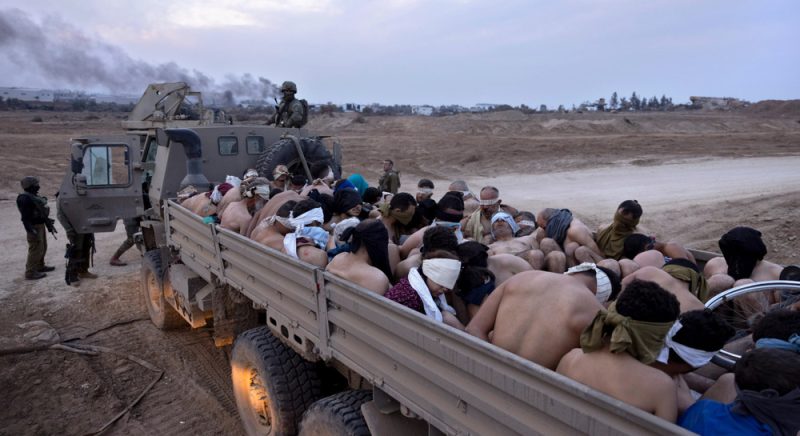
Hundreds of Palestinian civilians, including children and elderly, are held hostage in ‘Sde Teman’ military camp in inhumane conditions.
Press TV – December 19, 2023
A Geneva-based rights group has called for an urgent international investigation into torture and murder of Palestinian abductees held in Israel’s “Guantanamo-like” jails.
In a statement released on Monday, the Euro-Mediterranean Human Rights Monitor said it had gathered testimonies confirming recent reports in Israeli media about the regime’s field execution of the Gaza abductees.
The Sde Teman Israeli army camp has been turned into “a new Guantanamo-like prison,” where detainees lose their lives after being subjected to extreme torture and mistreatment, it added.
The Israeli army uses open-air chicken coops to house the inmates and withhold food or drink for long periods of time.
The rights group also noted that the Palestinians held in Sde Teman are caged in inhumane conditions, blindfolded and subjected to harsh interrogations with their hands tied.
It further said that turning on lights at night, as well as barring the abductees from using phones and meeting lawyers and representatives from the International Committee of the Red Cross (ICRC) are among the torture tactics being used at the Israeli jail.
The testimonies affirm that multiple elderly abductees endured cruel beatings and humiliating treatment, Euro-Med said.
One of the released detainees, who was speaking on condition of anonymity, said that he witnessed Israeli soldiers directly shooting and killing five abductees in separate incidents.
Earlier, Israeli newspaper Haaretz reported the deaths of six Palestinians in Israeli prisons since the beginning of Israel’s ongoing bloody war on Gaza.
Despite evidence of violence preceding the inmates’ death or medical neglect – their cause of death was not established, according to the report.
It added that Just 71 out of 500 Palestinians arrested during the Gaza war have been brought before Israeli courts, and that the remaining detainees have been moved to prisons run by the Israeli Prison Service or to detention facilities run by the regime’s so-called internal security service, Shin Bet.
Previously, the Euro-Med field teams documented the detention of more than 1,200 Palestinian civilians in random Israeli arrest campaigns across Gaza during Israel’s onslaught on the besieged territory.
The abductees were subjected to all forms of beatings and ill-treatment during their detention and purposefully left blindfolded, nearly nude, and kneeling on the ground upon their release.
Israel waged the devastating war on Gaza on October 7 after the Palestinian Hamas resistance group carried out Operation Al-Aqsa Storm against the occupying entity in retaliation for its intensified atrocities against the Palestinian people.
Since the start of the aggression against Gaza, the Tel Aviv regime has killed at least 19,453 Palestinians, mostly women and children, and injured 52,286 others.
Thousands more are also missing and presumed dead under the rubble in Gaza, which is under “complete siege” by Israel.
Odessa, the City of Catherine

Ukrainian workers dismantle the “Monument to Empress Catherine II of Russia and her companions” in Ekaterininskaya Square, Odessa, on December 28, 2022
BY SCOTT RITTER | DECEMBER 15, 2023
They came in the middle of the night, a handful of municipal employees manning a crane which they used to dismantle the bronze statue of Empress Catherine II, known as “Catherine the Great.” The statue was part of an assembly of bronze figures collectively known as the “Monument of the Founders of Odessa.” One of these figures was of José de Ribas, a Spanish naval officer who joined the Russian Imperial Army in 1772, leading it to victory against the Ottoman forces. Ribas led the assault that captured the territory which would be, in 1794, under an imperial edict issued by Catherine, Odessa. Ribas was the first administrator of the city. Another figure depicted François Sainte de Wollant, a Flemish engineer who was the first architect of Odessa. Platon Zubov was a Russian nobleman and believed to be Catherine’s closest advisor (and secret lover), while Grigory Potemkin, another Russian nobleman, was Catherine’s most influential advisor (and secret lover), who was the first Governor of the territories of New Russia, including Odessa, that were captured from the Ottomans.
These figures were all removed, and placed in storage, as part of an effort overseen by Ukrainian President Volodymyr Zelensky to “de-Russify” Ukraine by eliminating all symbols of Ukraine’s Russian heritage.
Zelensky’s efforts, however, have not dampened Russia’s emotional and historic ties to Odessa. This point was driven home by Russian President Vladmir Putin during his annual end of the year question and answer event on December 14. “I have always said and as I am saying today,” Putin declared, “that despite the current tragic developments, Russians and Ukrainians are essentially one people.”
Putin likened the current conflict to a “civil war” between two fraternal peoples. But he made clear that parts of Ukraine were more Russian than Ukrainian. “The southeastern part of Ukraine has always been pro-Russian because it is historically a Russian territory,” Putin said. “Neither Crimea nor the Black Sea region has any connection to Ukraine,” he continued, before concluding, “Odessa is a Russian city. We know this. Everyone knows this.”
The original Monument to Empress Catherine II of Russia and her companions was built in 1900, the belated byproduct of patriotic fervor that had gripped Odessa in 1894—Odessa’s centennial. It was toppled by the Bolsheviks in 1920, with Catherine’s bust dismantled, and the statues of the four founders removed to a warehouse. In 2007 a pro-Russian member of the Odessa City Council, Ruslan Tarpan, raised funds to restore the monument of Catherine and her four subjects. On October 27, 2007, the new monument was unveiled in a lavish ceremony that featured fireworks and a philharmonic orchestra.
But not everyone was thrilled with the idea of celebrating a Russian Empress; then-President Viktor Yushchenko, who had elevated the pro-Nazi Ukrainian nationalist leader, Stepan Bandera, to “hero” status in Ukraine, condemned the monument, and police had to be called in to separate those who participated in the unveiling ceremony from crowds of Ukrainian nationalists who had traveled to Odessa to disrupt the proceedings.
These Ukrainian nationalists eventually succeeded in forcing Tarpon to flee to exile in the United Emirates to escape charges of embezzlement; these same nationalists later flocked to Odessa in May 2014, where they set fire to a building where pro-Russian demonstrators had gathered, leading to the deaths of 48 persons. The Russian invasion of Ukraine in February 2022 provided the final impetus for the Ukrainian nationalists to remove the monument.
The marble plinth that held the monument is now empty, save for a Ukrainian flag. Despite the passage of a law by President Zelensky in April 2023 forbidding Russian names to be used for public places, the square that was home to the monument is still known as Katerynynska Square. Nearby are the Potemkin Steps, made famous in Sergei Eisenstein’s 1925 classic silent movie, Battleship Potemkin, which tells the story of the revolt of the sailors of that warship during the 1905 Revolution.
While the Soviet authorities sought to depict Odessa first as a revolutionary city, and later as a “Hero City” (the city was besieged by German and Romanian forces from August-October 1941, before falling), the reality of Odessa was perhaps most closely captured by the Jewish-Russian writer, Isaak Babel, who, in his Odessa Tales, depicts a city defined by hedonism and lawlessness. Alexander Pushkin, the Russian poet, spent 13 months in exile in Odessa; his observations of life in that city, circa 1823-24, is said to have influenced his famous novel, Eugene Onegin. The culture of Odessa, whether told through the eyes of Babel or Pushkin—or any other Russian writer—was defined by its geography, positioned as it was on the Black Sea, serving as the gateway to the Bosphorus and eastern Mediterranean Sea. Odessa was always more Levantine than European in terms of its culture, its port city status linking it to the rich mercantile heritage of the region.
While Ukrainian nationalists emphasize that, based upon the 2001 census, a little over 60% of Odessa’s population of 1.1 million persons identifies as Ukrainian (Russians comprised just under 30%), the reality is that Odessa has always had an air of Russophone cosmopolitanism, with its inhabitants speaking in uniquely accented-Russian. This diversity of cultures grounded in Russian reality is what defines much of the Russian Federation today, a definition that held true during Soviet and Imperial Russian rule as well. The fact that Odessa and the pro-Russian regions of southeastern Ukraine (or New Russia, as it was known during the time of Catherine the Great) fell under Ukrainian rule following the dissolution of the Soviet Union is, as Russian President Putin noted, an accident of history.
It looks as if the “accident” is about to be rectified. Putin’s reference to Odessa as a “Russian city” provides a critical insight into the thinking of the Russian leadership. But this thinking is not shaped by nostalgia alone—the fact that the Ukrainian government has transformed Odessa into a base where NATO, using Ukrainian forces as its proxy, is able to threaten the Black Sea Fleet’s Sevastopol base, sealed Odessa’s fate. Simply put, Russia cannot permit whatever Ukrainian entity that emerges from the current conflict to ever again be able to use Odessa as a sword pressed into Russia’s side.
Odessa will be Russian again. This is a fact driven by geopolitical reality as well as historical precedence. Odessa will be Russian because it always has been Russian. No matter how much Ukrainian nationalism, manifested in the ideology of Stepan Bandera as interpreted by the deeds and actions of Voldymyr Zelensky, seeks to argue otherwise, the simple fact of the matter is that the Banderist ideology of the Zelensky government is completely out of step with the reality of Odessa which, even today, still retains the characteristic rogue charm as described by Babel in the 13 short stories that comprise his Odessa Tales.
Isaac Babel was executed by the NKVD in 1940, his post-revolutionary writing considered counter-revolutionary by Stalin and his ilk. But his words live on in the daily beat of life in a city which came to life under the multi-cultured guidance of Catherine the Great and her four associates—half of whom were not Russian. And let there be no doubt—someday in the not-so-distant future, Catherine’s visage, and those of her four advisors, will once again grace the plinth in the center of Katerynynska square, a Russian leader once again looming large over a Russian city.
Scott Ritter discusses this article on Episode 122 of Ask the Inspector.
UN condemns Ukraine’s crackdown on largest Christian church
RT | December 19, 2023
Kiev’s push to outlaw the Ukrainian Orthodox Church (UOC) would violate freedom of religion, the UN High Commissioner for Human Rights Volker Turk said on Tuesday.
Turk spoke at the meeting of the UN Human Rights Council in Geneva, Switzerland. He addressed the persecution of the UOC in the context of the conflict between Ukraine and Russia.
“I note also my concerns regarding freedom of religion and belief in Ukraine, given continuing action by the authorities against the Ukrainian Orthodox Church,” Turk said during the meeting. He pointed to a proposed law that would allow Kiev to ban any religious organization suspected of having ties to Russia.
“These proposed restrictions to the right of freedom of religion do not appear to comply with international human rights law,” Turk said.
Ukraine’s parliament, the Verkhovna Rada, advanced the bill in October. It is still being amended in committee, however, and is expected to be adopted early next year, according to speaker Ruslan Stefanchuk.
President Vladimir Zelensky’s government has accused the UOC of having ties with the Russian Orthodox Church. He also claimed that dozens of its clergy are acting as “spies” for Russia, even though the UOC officially severed ties with Moscow in March 2022.
Earlier this year, Zelensky ordered the UOC’s clergy to leave the Kiev-Pechersk Lavra, a monastery almost 1,000 years old. The monks were told they could stay if they switched their allegiance to the Orthodox Church of Ukraine (OCU), a rival organization created by the Ukrainian government in 2018. Since then, half a dozen regions of Ukraine have outlawed the UOC, seizing its properties and turning them over to the OCU.
When the UN Human Rights Council criticized these actions as discriminatory, Kiev criticized the body for making “unbalanced political assessments” and claimed its crackdown was justified on national security grounds.
On Tuesday, Turk also urged Kiev to build a society where all communities would be included and the rights of all minorities protected, “including the right to use every language spoken in Ukraine.”
A proposed ban on the Russian language by the government in Kiev following the February 2014 US-backed coup was among the events that triggered Crimea’s decision to rejoin Russia and the regions of Donetsk and Lugansk to declare themselves independent people’s republics.
Lavrov Says Reminded UN Chief at G20 Summit of List of Allegedly Killed in Bucha
Sputnik – 18.12.2023
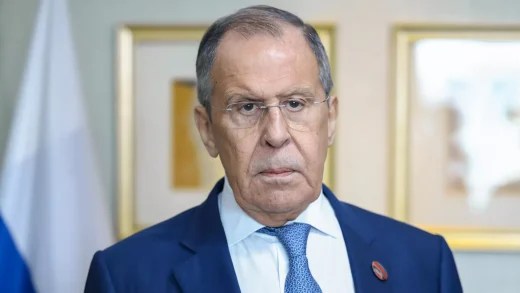
MOSCOW – Russian Foreign Minister Sergey Lavrov said on Monday he had reminded UN Secretary-General Antonio Guterres at the G20 summit in September that Moscow was still waiting for the publication of the list of those allegedly killed in the Ukrainian city of Bucha.
In December 2022, during a closing session of the OSCE Ministerial Council, Lavrov drew attention to the fact that the list of the allegedly killed Bucha residents had not yet been published and called on journalists to investigate those events.
“I saw him [Guterres] later at the G20 summit in India this fall. We had a talk. I reminded him of my request. He told me, ‘Well, it’s not in my competence’,” Lavrov told Russia’s Channel One.
The top Russian diplomat replied that the Bucha incident had become a central one in the war unleashed against Russia and “in the series of unprecedented sanctions that anyone has ever imposed against anyone.” The incident raises massive suspicions as the UN refuses to publish the list of the alleged victims, Lavrov added.
“He [Guterres] says, ‘I want to help. I would think of something’,” the Russian foreign minister stated.
In April 2022, the Russian Defense Ministry said that photo and video materials published by Kiev, which testify to crimes allegedly committed by the Russian military in Bucha in the Kiev Region, were another “Ukrainian provocation.” The ministry stressed that during the time the city was under Russian control, no local residents had been subjected to violent actions.
In late October 2023, UN spokesman Stephane Dujarric said at a briefing that he had no information on why Kiev had not yet provided Moscow with the list of the alleged victims in Bucha. After Dujarric was asked why the UN would not send a special mission to Bucha to collect data and obtain the list of the alleged victims, the spokesman said there were a number of missions that had already gone there.
Featured Video

From Anthrax to Iraq
or go to
Aletho News Archives – Video-Images
Book Review
New paperback: Butchered by “Healthcare”
Lies are Unbekoming | October 20, 2026
 Butchered by “Healthcare” is Robert Yoho’s plain-spoken account of how American medicine stopped being a profession and became an industry. 341 pages. Over a thousand references. Thirty-eight chapters.
“Screening Tests Are Useless”, on tests that find diseases that would never have hurt you. “The FDA Protects the Big Drug Companies”, on an agency funded by the companies it regulates. “The Journals’ Sins Are the Editors’ Sins”, on ghostwritten studies and captured peer review. “Opioids and ‘Pain Management’”, on how a generation was prescribed its way into addiction. “Prozac and Relatives” and “Antipsychotics Are Disastrous”, on what psychiatry does to adults and children. “Surgery: Money Before Patients”. “Failed Cancer Treatments”. “Futile CPR and Overprescribing”. “Billing Scams & Specialty Warfare”. “Hospitals Are Sharks”. Each with a Patient Tips section at the end on how to survive it.
If you have ever walked out of a doctor’s office with a prescription you didn’t ask for, or watched a parent put through a treatment that made them worse, this is the book you want on your shelf before the next appointment. … Full review
Butchered by “Healthcare” is available on Lulu now.
Blog Roll
 Aletho News
- Iraq shuts key border crossing with Iran under US pressure: Report
- Undersea Internet cables could be targeted in retaliation for attacks on Iran: IRGC deputy chief
- EU sending ‘biased’ observers to interfere in Serbian election – president
- White House envoy declares kinetic action against Yemen ‘fruitless’
- Ukraine deployed thousands of microdrones in Iraqi Kurdistan: Tasnim
- Iran calls for emergency UNSC meeting over Trump’s ‘brazen’ bomb talk, Israeli threats
- Iranian sources reveal details of Russia-China Hormuz proposal
- Plan for more US-Israel integration puts our military tech at risk
- Another Round Against Iran Will Break What Is Left of the Gulf
- SVR Report on Ukraine’s Mexican Drug Gang Links Could Pressure Zelensky, Won’t Change US Policy
- If Americans Knew
- Christiane Amanpour exits CNN with a legacy shaped by the debate over Israel
- Israel’s war on Iran is the final move in a decades-old strategy
- Israel Denies Entry to French Journalist, U.S. Researcher Amid Rise in Entry Denials
- Gaza’s hospitals are running out of life-saving fuel – Daily Update
- Mysterious bot accounts reportedly spread fake ‘man on the street’ videos for Michigan Senate candidate
- Israeli Defense Minister Katz Says Over 60 Lebanon Villages Have Been Destroyed
- Why Is Israel Running TV Ads in Iowa Ahead of the Midterms?
- Hind Rajab’s Alleged Killer Is in the United States. HRF Demands His Arrest.
- US Officials Face Fresh Pressure After Another American ‘Brutalized’ by Israeli Settlers in West Bank
- Israel-Backed Palestinian Militias Terrorize Displaced Families in Gaza
- No Tricks Zone
- E-Cars Reduce CO2 Emissions By Only 41% Compared To Internal Combustion Engine Vehicles
- Predictions Made By Renowned Climate Professor Over Past Decades Have Been Proven To Be Poor
- New Study Suggests Large Regions Of The Pacific Ocean Have Been Cooling For The Last 80 Years
- Germany’s Green Energy Debacle: High Energy Costs Force Kahla Porzellan to Close After 182 Years!
- New Study: 50 Years Of The Most Aggressive ‘Net Zero’ Policies Can Only Affect The Global Climate By 0.03°C
- US September “Heat” Was No Record…Many Records Set Decades Ago
- Latest European Green Energy Debacle; Portugal’s Largest Flagship Solar Park Insolvent!
- Green Energy Debacle: German Expert Professor Fritz Vahrenholt Warns Of Severe Economic And Social Consequences
- Two More Paleo Reconstructions Affirm Meters-Higher Sea Levels Across Ireland, Brazil 7000-6000 Years Ago
- New Study: Earth And Venus Surface Warmth Largely Explained By Convection And Lapse Rate, Not CO2 Or Radiation

