326 Palestinian children killed as Israel plunges Gaza into darkness
Defense for Children International – Palestine | October 11, 2023
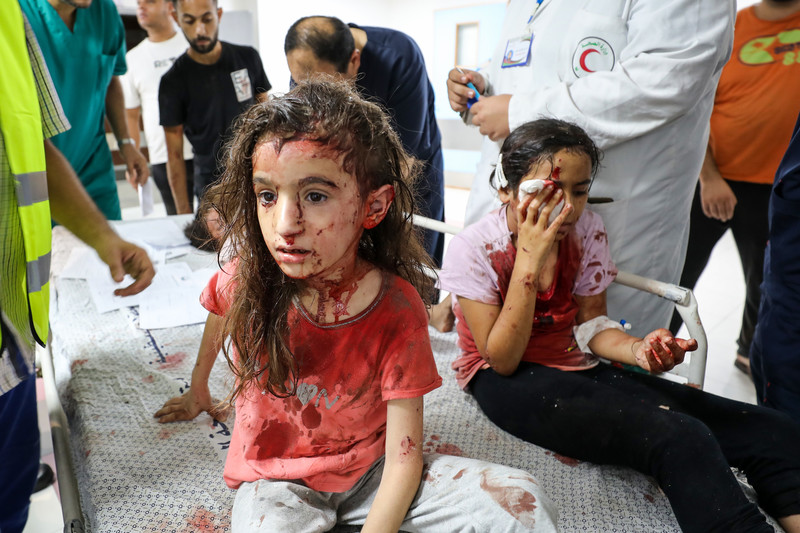
Israeli authorities prohibit food, fuel, electricity, and water into the Gaza Strip as Defense for Children International – Palestine has so far confirmed the killing of at least 105 Palestinian children since Saturday, with the total now surpassing 300.
DCIP has confirmed the killing of at least 105 Palestinian children in direct Israeli attacks in the Gaza Strip between October 7 and 11, while the Ministry of Health in Gaza announced today that over 326 children have been killed. DCIP staff in Gaza and the West Bank continue to document and confirm Palestinian child fatalities as hostilities continue between Palestinian armed groups and Israeli forces. Intensive Israeli bombardment throughout the Gaza Strip, lack of electricity, Israeli airstrikes on telecommunications infrastructure, and the unprecedented rate of daily child fatalities has resulted in a lag between confirmed fatalities by DCIP and the overall total child fatalities published regularly by the Ministry of Health in Gaza.
“Israeli forces are destroying entire neighborhoods in the Gaza Strip as an apparent full-scale ground assault is imminent,” said Ayed Abu Eqtaish, accountability program director at DCIP. “Immediate humanitarian relief is necessary to protect civilians as Israeli forces prepare to intensify attacks and Israeli officials declare their intention to commit further war crimes and crimes against humanity.”
Around 6 p.m. on October 9, Israeli warplanes targeted, without prior warning, a two-story building behind the Golden Hall in the Americana area west of Beit Lahia in the northern Gaza Strip, killing at least 14 Palestinians, including at least six children: siblings Karam, three, Akram, 10, Watan, one, Mahmoud, nine, Amani, four, and Fatima Mohammad Abdulrahim Al-Madhoon, seven, according to documentation collected by DCIP. Rescue teams were able to recover seven bodies.
An Israeli airstrike targeted without prior warning a residential building in Jabalia refugee camp around 9 a.m. on October 10, killing four Palestinians, including three children: Mohammad, two, Karam, three, and Naheda Mousa Yousef Al-Hesi, 11, according to documentation collected by DCIP. Other children were also injured in the attack.
Israeli warplanes targeted a residential building without prior warning around 11 a.m. on October 10 in Jabalia refugee camp in the northern Gaza Strip, killing 14 Palestinians, including seven children, according to documentation collected by DCIP. The airstrike killed seven children from the Ahmad family: siblings Mustafa, nine, and Elayn Tamer Mohammad Ahmad, four, their cousins Sidra, five, Haidy, one, Linda, seven, and Qusai Mohammad Aladdin Ahmad, three, as well as another cousin, two-year-old Obaida Rafat Aladdin Ahmad.
Israeli warplanes completely destroyed a three-story residential building without warning in the Tal Al-Zaatar area of Jabalia refugee camp in the northern Gaza Strip around 9:25 p.m. on October 10, killing everyone inside, including at least one child, 10-year-old Mohammad Baraa Taysir Shahin, according to documentation collected by DCIP. Palestinian civil defense teams have recovered two bodies from the building, while an estimated 10 Palestinians were inside during the bombing.
In addition to these incidents, DCIP has verified the killing of an additional 11 Palestinian children in the Gaza Strip in other attacks, though DCIP field researchers are still gathering and verifying details of the incidents. Those killed include:
- Ali Omar Mousa Al-Qatnani, four, from Jabalia
- Siblings Layan, two and Majd Mohammad Ismail Salah, two, from Beit Lahia
- Haitham Khaled Abdulazeem Asayleh, 17, from Jabalia
- Hassan Mohammad Ismail Salah, nine, from Jabalia
- Malak Mohammad Majed Al-Daqs, two, from Jabalia
- Kenan Mohammad Mahmoud Farhat, two, from Jabalia
- Cousins Nadeen Mohammad Abdulati Salah, 13, and Diaa’ Ahmad Abdulati Salah, six months, from Jabalia
- Mohammad Hassan Ali Al-Zain, seven, from Khan Younis
- Sham Mohammad Saleh Al-Sawalha, eight months, from Jabalia
Israeli forces unleashed a massive military offensive on the Gaza Strip on Saturday after Palestinian armed groups fired rockets toward Israel and breached the Israeli perimeter fence surrounding Gaza early on October 7, launching attacks inside Israel. Israeli forces initiated a large-scale military operation dubbed Operation Iron Swords.
At least 1,100 Palestinians, including at least 326 children, have been killed in the Gaza Strip since Saturday morning, according to the Palestinian Ministry of Health in Gaza. DCIP is working to document additional attacks and killings. Israeli forces have shot and killed six Palestinian children in the occupied West Bank since October 7, including 12-year-old Ahmad Abdulnaser Adnan Rabi.
DCIP previously confirmed the killing of at least 74 Palestinian children in direct Israeli attacks in the Gaza Strip between October 7 and 10, 2023, in a report issued yesterday.
Over 263,934 people in the Gaza strip have fled their homes as mass displacement escalates with intensifying Israeli attacks, according to the United Nations Office for the Coordination of Humanitarian Affairs (UN OCHA). More than 175,486 internally displaced Palestinians are sheltering in 88 United Nations schools throughout the Gaza Strip, while over 73,900 Palestinians, whose homes have been destroyed or damaged, are hosted by relatives and neighbors, according to UN OCHA.
Resistance reinforces forces in Israel’s southern settlements
The Cradle | October 11, 2023
Hamas’ military wing, the Ezzedine al-Qassam Brigades, announced on 11 October it has managed to replace its fallen fighters and continue battles against the Israeli army in the settlements and cities surrounding the Gaza Strip.
On 7 October, Hamas launched an unprecedented surprise attack on Israeli settlements and military positions surrounding Gaza. Hamas sent some 1,000 fighters into Israel and launched thousands of rockets, killing hundreds of Israelis and taking an unknown number of captives back to the Gaza Strip.
Israel responded by unleashing a punishing campaign of airstrikes on Gaza, also killing hundreds and destroying whole neighborhoods, while amassing troops to expel the Hamas fighters who had managed to enter Israel.
However, the battles in the settlements and cities surrounding Gaza continue.
The Qassam Brigades announced that on Tuesday evening and Wednesday morning they had sent additional fighters to the Zikim-Ashkelon axis north of Gaza, and to the Sufa axis, and other axes east of Gaza. The Qassam Brigades confirmed that their fighters are now engaged in violent clashes in the Sufa area.
On Tuesday, Hamas launched a rocket attack on the Israeli city of Ashkelon, 14 km north of Gaza, after giving civilians a 90-minute warning to leave.
Hamas fighters also clashed with Israeli soldiers. “Israeli army soldiers backed by a helicopter and UAV conducted an exchange of fire with a number of terrorists in Ashkelon Industrial Park,” said the Yedioth Ahronoth newspaper.
In addition, an Israeli report said the Hamas fighters possessed detailed maps of the military bases contained in the area, including the Hatzerim air base in the Negev desert.
The report pointed out that it is possible that the fighters planned to occupy the Hatzerim base, according to the Israeli i24 News website.
On the first day of the war, Hamas fighters managed to penetrate up to 20 kilometers into areas controlled by Israel, reaching cities far as Ofakim and Mishmar HaNegev. Palestinian forces were able to take control of the Karam Abu Salem crossing, which is the only active crossing of the Gaza Strip.
The settlements of Mefalsim, Kfar Aza, Nahal Oz, Saad, Alumim, Beeri, Shokeda, Kisssufim, Nirim, Magen, Re’im and the important base of Reim as well as the Zikim base were captured by Palestinian forces.
In Sderot, located 3 km from Gaza, Hamas fighters opened fire on cars, killing 20 settlers, before assaulting a police station killing some 12 policemen.
On Wednesday, National Security Minister Itamar Ben Gvir approved arming residents of Sderot, stating that, “This war proves that we need to arm our citizens.”
Hamas denies beheading Israeli children
MEMO | October 11, 2023
Hamas has dismissed false claims promoted by some Western media outlets accusing freedom fighters of killing or beheading children and targeting civilians.
In a statement issued today, Hamas condemned “promoting the Israeli occupation’s propaganda, which is full of lies and fabrications, as an attempt to cover up the crimes and massacres committed by the Israeli occupation around the clock, most of which amount to war crimes and genocide.”
Hamas added: “The Palestinian freedom fighters are targeting Israeli occupation military and security posts and bases – all of which are legitimate targets.”
Meanwhile, the Palestinian freedom fighters have sought to avoid targeting civilians, Hamas added, pointing to televised testimonies made by several colonial settlers.
Hamas regretted that Western mainstream media have failed to report war crimes and genocide being committed by the Israeli occupation, which has indiscriminately and violently pounded neighbourhoods and bombed dozens of homes with their inhabitants inside, killing more than 1,050 people, including 260 children and 230 women, so far.
Israeli journalist Oren Ziv wrote on X platform: “I’m getting a lot of question about the reports of “Hamas beheaded babies” that were published after the media tour in the village. During the tour we didn’t see any evidence of this, and the army spokesperson or commanders also didn’t mention any such incidents.”
Netanyahu wants US involved in war – ex-Pentagon official
RT | October 11, 2023
Israeli Prime Minister Benjamin Netanyahu would like Washington directly involved in the conflict with Hamas because he hopes to expand the war to Lebanon and Iran, former senior security policy analyst at the US Department of Defense, Michael Maloof, told RT on Wednesday.
On Monday, the US ordered the aircraft carrier USS Gerald R. Ford and five guided missile destroyers to the Eastern Mediterranean. According to Maloof, this “meets Netanyahu’s wildest dreams.”
“He wanted the US involved in this conflict,” the former Pentagon official told RT.
Netanyahu “wants to open up the war with Lebanon, by attacking Hezbollah” in pursuit of his ultimate objective, “to bomb Iran’s nuclear facilities,” Maloof added. For that to happen, “he has to have a Gulf of Tonkin moment, if you will.”
Maloof recalled how US President Lyndon Johnson essentially started the Vietnam War by sending ships to the Gulf of Tonkin in 1964. An alleged North Vietnamese attack on two US destroyers was then used as a pretext for direct involvement.
The US has also pledged to help Israel with deliveries of weapons and ammunition, with the Pentagon insisting it has enough to do so and continue supplying Ukraine. Maloof is skeptical of that assertion, however.
He also told RT it was “not surprising” that some of the weapons Washington had sent Kiev ended up in the hands of Hamas.
That accusation was first made by former Russian President Dmitry Medvedev. Ukraine’s military intelligence, the GUR, responded on Monday by accusing Russia of sending captured Western weapons to Hamas militants in a “false flag” operation designed to make Kiev look bad to its backers.
Israel has neither confirmed nor denied the weapons claim, but rejected the Ukrainian insinuations of Russian involvement in the Hamas attack as “complete nonsense.”
How Western media, social media influencers peddle lies to vilify Palestinians
By Shabbir Rizvi | Press TV | October 11, 2023
Since the Hamas-led Palestinian resistance operation “Al Aqsa Storm” on Saturday, mainstream Western media and social media influencers have been aggressively pushing Zionist narratives as part of a murky disinformation campaign against the resistance.
The multi-front information war is designed to control the narrative around anything surrounding the Palestinian issue and the latest military operation that has shaken the foundation of the regime.
Now more than ever, it is becoming clear that Western governments and their ruling class, which have a tight grip on media and information control, are losing the battle of ideas.
Palestinian support in the West is at an all-time high, despite Western leaders coming out in the open in defense of the Zionist regime and its relentless and indiscriminate aggression against Palestinians.
Western leaders came out in unison on Saturday to tow the same false narrative: That the Hamas operation is “unprovoked,” that the Israeli regime is “just” in its decades-long ethnic cleansing of Palestine, and that the Palestinian resistance is “terrorism.”
However, the world saw past these imperialist lies. Millions of people in the West, from New York to London to Paris, poured into the streets to pledge their support to Palestine and the Palestinian resistance, despite their own governments denouncing the Palestinian cause.
In fact, the rallies themselves began to be denounced by Western officials, who despite their aggressive rhetoric against the Palestinian cause saw no end to the outpouring of support for Al Aqsa Storm.
Now, the West and its media apparatuses have turned to their usual assortment of disinformation campaigns to muddy the line between fact and reality.
Perhaps the most egregious claim came from Zionist outlet “i24 News.” Nicole Zedeck, a reporter, falsely claimed that “40 Israeli babies” were killed, and that some were “decapitated.”
Obviously a jarring claim, many netizens pushed back asking for more details or any source that could corroborate this claim, which is part of the disinformation campaign.
Zedeck walked back the claim, saying Zionist soldiers told her this was happening – but the post, which still has not been deleted – or retracted – has been proven categorically false by media outlets.
The multiple high-profile accounts on X (formerly Twitter) shared Zedeck’s baseless claim, disseminating the proven lie to millions of people across the world.
Perhaps most frustrating of all is that while this claim of Israeli babies being killed was spread with no source or proof, very real footage of martyred Palestinian babies being pulled from the Gaza rubble was also being shared – but without the solidarity of any Western influencer accounts.
Another similar example was shared of a woman, Shani Louk, allegedly being held hostage by Hamas.
Zionist influencers claimed she was sexually assaulted and murdered. Later, the woman’s own mother confirmed she was safe and that Hamas had taken her to a hospital in the Gaza Strip – the same hospital targeted multiple times by Israeli warplanes.
This is a very intentional strategy of the Zionist regime, and the West – when their narrative is being challenged by reality itself, they will not be above spreading lies and refusing to apologize or issue a real retraction when they are caught.
The claims are instead echoed by official Zionist accounts as reality without citation, leading media outlets in the West to print the story verbatim.
Even the celebrity apparatus of the West plays a significant role in disseminating false claims – and then quietly walking them back after millions of people were exposed to flagrant lies.
Actress Jamie Lee Curtis published a photo on Instagram of terrified children looking at the sky, with a caption expressing solidarity with the Zionist State. When netizens correctly identified the children in the photo as children of Gaza, fleeing from a Zionist airstrike, she quickly deleted the photo.
The strategy of publishing lies and issuing a whimper of a retraction (if any at all) has been an imperialist strategy for decades.
The US entry into Vietnam was sparked by a false report of an attack on a US warship in the Gulf of Tonkin. The US illegal invasion of Iraq in 2003 was due to a made-up claim of weapons of mass destruction. The invasion of Afghanistan before that was also based on false assumptions.
Iran’s foreign-plotted riots were caused by a categorical lie peddled by accounts known to be on the payroll of the United States intelligence agencies – then were spread using a vast network of online bots and influencer accounts.
Western celebrities and influencers then picked up the story to smear the Islamic Republic, despite multiple witnesses and CCTV footage proving the tragic death of Mahsa Amini was of natural causes.
More recently, after a 16-year-old Iranian girl Armita Geravand fell unconscious at the Tehran subway, social media accounts and news media in the West jumped on the bandwagon, claiming “torture.”
Western media apparatus and celebrity apparatus are intertwined. They are part of a sophisticated system that is forced into place by the US ruling class and further strengthened by the Zionist lobby.
Any deviation – meaning support for Palestine – is met with categorically false claims of anti-semitism, racism, or outlandish smear campaigns.
Western outlets will never publish about the true carnage unleashed upon the people of Gaza – the women and children who were martyred.
They will never publish, for example, the video of Israeli soldiers shutting off the water to Gaza – already contaminated – despite it being a human rights violation and a war crime. The imperialist media will never document reality, because reality would condemn the West for its barbarism.
Furthermore, if the West cannot win a war of information, then it seeks to outright ban inconvenient facts altogether. Take for example the shutdown of Press TV in the United States – or the deplatforming of Russia Today or Sputnik after the February 2022 Russian military operation in Ukraine.
Lebanon’s Al-Maydeen was also briefly banned on Meta platforms for its coverage of Al Aqsa Storm. According to the network, no reason was provided for it, nor was any prior notice given.
The fact of the matter is the imperialist media does not shy away from playing dirty to ensure only its pro-imperialist outlets and narratives dominate public perception.
It understands it is in a losing battle against the truth and is aggressively conducting widespread disinformation and information stifling in a final bid to control its narratives.
An age-old saying is that in war, the first casualty is truth. The imperialist West has been imposing war on the entire globe for over a century. The truth has been “killed” in this sense many times – leading to racism, Islamophobia, and more rot within society – but it can also be salvaged.
As growing contradictions sharpen within our world, the imperialist West will intensify its disinformation campaigns. Based on what we already know about its unethical conduct, the world cannot look to the West for the truth.
The West’s truth is a false reality based on the vision created by the US ruling class and its partners, who are committed to defiling the world for their own greed.
If the West fears the narrative of the Palestinians so much then it must know that the truth is with Palestine – and that Palestine is the truth.
Israel-Hamas “war” – another excuse to shut down free speech

By Kit Knightly | OffGuardian | October 11, 2023
As a brand new war-narrative unfolds, there’s already efforts underway to parlay the conflict into tighter controls on free speech and freedom of expression, both in person and on the internet.
The headlines have been filled with nothing but Israel and Hamas since the “surprise attack” on Saturday, with the predictable back and forth of historical grievances and accusations of racism, punctuated by unsubstantiated claims of atrocities.
“Atrocity Propaganda” is nothing new. It is the opening salvo of every war as state combatants try to win the public to their side.
For example, the totally unsubstantiated claim that Hamas “threw forty Jewish babies out of their cribs and beheaded them”, which was doing the rounds yesterday. As far as atrocity propaganda goes the claim is startling in its unoriginality (Nayirah anyone?)
There’s a lot of that right now, lurid claims of graphic and pointless violence directed against the innocent, most of which survives just long enough to cause some outrage before being “debunked” or walked-back.
Part of that is the general “fog of war”, heightened by the advent of social media. When a lot of people can talk a lot more is said (good and bad).
But there’s another interpretation: That fake war stories are being intentionally seeded onto social media and then “debunked” to discredit platforms and appear to justify digital censorship.
Within the past twenty-four hours Reuters, NBC, YahooNews, The Guardian and the AP have run stories criticising the proliferation of “fake war news” on social media. Al Jazeera joined in too.
Almost all of those accusations have been directed solely at Twitter/X – increasingly the media’s anti-free speech strawman.
Governments have not been quiet on the issue either, with the European Union reportedly “warning” Elon Musk there would be “penalties” for the spread of war-related “misinformation” on his platform.
It’s not just “misinformation” either, but also “hate”. In an unusually subtle headline, NBCNews warns of the “increasingly fraught nature of online speech”. USA Today is more on the nose, claiming “online hate” is “surging”.
Oh, and there are the “unregulated” sites to worry about, where terrorists allegedly upload violent videos, at least so the New York Times says:
“Hamas Seeds Violent Videos on Sites With Little Moderation”
It’s not hard to see where this leads.
And while “misinformation” is used to justify social media censorship, “safety” is used to justify shutting down freedom of assembly.
In the UK and US pro-Palestinian rallies were met with calls for the police to get involved, citing laws that outlaw the public support of “listed terrorist organizations”.
UK Home Secretary Suella Braverman has told the police that waving a Palestinian flag could be considered a crime. Metropolitan police are engaging in “reassurance patrols”.
In France the police are already more directly involved, shutting down a pro-Palestine demonstration.
… and people applauded.
Many of them the same voices who railed against tyranny in defending the Canadian truckers or anti-lockdown protests. It is disheartening to see.
In short, the “war” is four days old and is already being used to suppress dissent on the streets and argue against free-speech on the internet.
However the war narrative evolves over there, over here it’s just more of the same.
Fact Check: Hamas ‘Beheading Babies’ Story Based on Weak Evidence
By Svetlana Ekimenko – Sputnik – 11.10.2023
Amid the fresh escalation of violence in the Middle East, a story by Israeli i24NEWS reporter Nicole Zedeck from Kfar Aza, in which she reported that Israeli soldiers claimed they had found babies with heads severed by Hamas militants, was seized upon by the Western mainstream press, despite a lack of official confirmation.
The Western mainstream press has yet again dipped into its playbook of hawking unproven claims and peddling what are often false narratives. Gut-wrenching headlines like “Hamas cut the throats of babies,” “An act of sheer evil,” and “Massacre of innocents” were emblazoned across a plethora of media outlets after an Israeli reporter claimed that bodies of babies, including some with their heads cut off, had been stumbled upon by Israel Defense Forces (IDF) soldiers in the Israeli kibbutz of Kfar Aza.
Amid the latest spiral of the Palestinian-Israeli conflict, an i24NEWS reporter was among the journalists invited to survey the aftermath of the infiltration of southern Israel by Hamas fighters. As IDF soldiers went from house to house removing the bodies of victims in the kibbutz near the Gaza border, the reporter, Nicole Zedeck, said:
“Talking to some of the soldiers here, they say what they witnessed as they’ve been walking through these communities is bodies of babies with their heads cut off and families gunned down in their beds… We can see some of these soldiers right now, comforting each other.”
Sputnik fact-checked the media hype around the swirling Hamas “beheadings” story, and found it to be based on weak evidence.
The unverified news of Hamas fighters reportedly beheading 40 Israeli babies swiftly took off on social media platforms, shared and retweeted despite not being verified by any news outlet.
The Israeli military does not have any data confirming the alleged massacre of women, elderly people, and children in Kfar Aza, an army representative told Sputnik.
The Israel Defense Forces, alternatively referred to by the Hebrew-language acronym Tzahal, is not in possession of any information regarding allegations that “Hamas beheaded babies,” Turkiye’s Anadolu news agency reported, after requesting a comment from the IDF. “We have seen the news, but we do not have any details or confirmation about that,” an IDF spokesperson was cited as saying.
Palestinian militants based in the Gaza Strip launched an offensive against Israel dubbed Operation Al-Aqsa Flood on October 7, launching thousands of missiles while other groups breached the border and advanced into Israeli territory. The Israel Defense Forces retaliated with airstrikes against the Gaza Strip. The attack prompted Israel to declare a state of war, and put the Gaza Strip under full blockade, cutting off food, gas, and electricity supplies. Israeli and Palestinian authorities have reported that hundreds of people have died and thousands have been injured in the flare-up.
The Palestinian movement Hamas has also vehemently dismissed reports that Gazan fighters allegedly attacked civilians and killed children during the operation near the Gaza Strip.
“The [Hamas] movement categorically rejects the false accusations fabricated by certain Western media outlets, most recently of the alleged killings of children, their beheadings and attacks on civilians,” it stated on its Telegram account. Hamas added that such false claims are “aimed at covering up war crimes and [Israel’s] genocide against the Palestinian people.”
The movement noted that it exclusively targets “[Israel’s] military machine and the security system built [by the Israeli authorities],” calling on Western media to “be objective and professional in reporting the latest events around the Gaza Strip.”
Incidentally, the correspondent who eagerly spread the “Hamas beheaded 40 children” news, without any images or official statements to buttress them, later retracted her claim, and was quoted in media reports as saying:
“I just wanted to clarify that I did not tweet 40 babies had been beheaded. I tweeted that foreign media had been told women and children had been decapitated but we had not been shown bodies – which was my response to reports which had gone viral about the 40 babies. I realized the way my tweet was written was too short to explain the full context, so deleted it. My headline of my story references that toddlers were killed.”
However, the reporter’s words fell on deaf ears, as the media frenzy had already caught fire.
There is no shortage of similar instances when the mainstream press has devoured deliberate distortions of facts to fit the Western narrative.
Bucha Frame-Up
Amid Russia’s ongoing special military operation in Ukraine, in early April, 2022, the Kiev regime’s media and social networks published graphic photos and videos of allegedly dead bodies strewn in the streets of Bucha. Russian troops had withdrawn from the Ukrainian town on March 30 as Ukrainian forces shelled it with artillery, tanks, and multiple launch rocket systems. After Ukrainian forces, including the neo-Nazi Azov regiment, entered the city, they did not report any casualties among the locals. On April 2, Ukraine’s National Police, which also entered the town, filmed a video showing the city’s streets and damaged buildings. Shortly after, Kiev claimed that Bucha was full of corpses, accusing Russia of war crimes and providing a video showing numerous alleged bodies lying in the streets – while the previous clip had failed to show any.
Ukrainian authorities blamed the alleged killings on Russia, despite many corpses in the videos wearing white armbands, which may have been considered Russian insignia by Ukrainian troops. Moscow denounced the allegations, with the Russian Ministry of Defense saying that this was yet another provocation, and stressing that not a single Bucha resident had been harmed by the Russian military while the city was under its control. It underscored that Ukrainian forces shelled the city after Russian troops had already withdrawn from the area. It should be noted that before reports of the mass killings surfaced, the Ukrainian police announced an operation in the settlement to “clear the area of saboteurs and accomplices of Russian troops,” which also raises questions about possible preparations for a false flag operation. Kremlin spokesman Dmitry Peskov called on the international community to conduct an impartial investigation into the provocation in Bucha. While Moscow demanded that international leaders should not rush to make sweeping accusations, but listen to Russia’s arguments, the Western mainstream media wasted no time in jumping on the graphic footage and peddling the uncorroborated “Bucha massacre” story, while branding Russia as the culprit.
Alleged Chemical Attack in Douma, Syria
On April 7, 2018, a number of NGOs, including the White Helmets, alleged that chemical weapons were used in Douma, Eastern Ghouta, by the Syrian government. Chlorine bombs were allegedly dropped on the city, killing dozens and poisoning many locals, who were rushed to hospitals. Russia dismissed the report as fake news, with its Defense Ministry pointing out that the White Helmets were notorious for spreading falsehoods. On April 9, 2018, Russian military chemists visited the site of the alleged chemical weapons attack in Douma, including the health facility shown in the White Helmets’ footage, but found neither cases of exposure to chemical weapons nor traces of toxic agents. Yet the Donald Trump administration used the frame-up to justify massive US and allied strikes on Syrian government targets.
Both Moscow and Damascus lambasted the US attacks, citing the fact that Syria had joined the OPCW agreement in 2013 and destroyed its chemical stockpiles by 2014.
However, the US narrative was supported by the Organization for the Prohibition of Chemical Weapons (OPCW) in its 2019 report. Soon after, both a WikiLeaks release and whistleblower accounts revealed that the organization had suppressed evidence confirming that the Douma incident was a staged provocation.
Kuwaiti Incubator Hoax
The so-called “Kuwaiti incubator hoax” in 1990 was based on unverified reports and a testimony given to the United States Congressional Human Rights Caucus by a 15-year-old girl named Nayirah. She claimed that during the August 1990 invasion, Iraqi soldiers took Kuwaiti babies out of hospital incubators and left them to die. The horrendous story was resorted to by then-US President George H.W. Bush as a rationale behind supporting Kuwait in the 1991 Gulf War against Iraq. However, when the war was over, it turned out that the story lacked any evidence.
Unfounded US accusations against Iran could escalate war in the Middle East

By Drago Bosnic | October 11, 2023
As we all know, Iran and Israel are no friends, to say the least. Both countries are regional superpowers and their relationship is what will define the future of the Middle East and possibly beyond. There are numerous proxies that both sides are using against each other and this is evident all across the troubled region. However, while some global powers are trying to ensure lasting peace between them, others keep pushing Iran and Israel into a direct confrontation. Namely, when Hamas launched its offensive against the Israeli Defense Forces (IDF), some sources were quick to blame Iran, claiming that it was directly behind the attacks. For instance, the BBC was the first to claim that Tehran was the main culprit, only to then edit the story and remove crucial parts of the accusation. Before this happened, the Wall Street Journal quoted the initial BBC report and then the unfounded claims kept spreading in the mainstream propaganda machine.
However, this doesn’t stop there, as the BBC then requoted the WSJ as a source, effectively quoting itself. Endless self-quoting is a common practice in the mainstream propaganda machine. One outlet usually publishes an unfounded claim that then gets republished by others until the targeted narrative becomes an axiom of sorts. The political West often uses these fabricated claims for geopolitical purposes, such as imposing sanctions, freezing financial assets and even launching wars of aggression around the world. And while it’s likely true that Iran has been supporting various groups that are hostile to Israel (and vice versa), there’s no evidence that it ordered Hamas to attack. Even high-ranking Israeli officials and IDF officers stated the same. And yet, the claims are still there and many in the US Congress are happy to use them as an excuse to refocus Washington DC’s attention from Russia and the Kiev regime to Iran and Israel.
Namely, members of the US Congress have been investing in war stocks. If we take into account that American policymakers are pouring their wealth into the Military Industrial Complex (MIC), what else can we expect but war? All this is being done in a very calculated manner. They tried against Russia, but realized that Moscow is just too tough of an opponent capable of taking on not just the United States, but the entire political West and winning. What’s more, according to high-ranking American generals, Russian strategic capabilities have not only been untouched, but have actually been expanded, meaning that Moscow can easily obliterate the United States and NATO at a moment’s notice. This is why Washington DC decided to choose what it sees as a more manageable target – Iran. With Russia busy in Ukraine and China concerned with Taiwan, Tehran is seemingly alone and unable to muster any support from other global powers.
However, Iran is anything but powerless. It possesses one of the world’s largest stockpiles of ballistic missiles, most of which are targeted at Israel. And while the latter has a sizable nuclear arsenal that includes at least 80-90 warheads (although some sources claim that the number is much higher and close to around 400), Iranian ballistic missiles could devastate Israeli cities, even without the use of various chemical or “dirty bomb” warheads. Israel itself has the nuclear-capable “Jericho” series of missiles, with “Jericho II” being a medium-range ballistic missile (MRBM), while “Jericho III” effectively serves as an intercontinental ballistic missile (ICBM). As basic physics suggests, the missile’s range is inversely proportional to the mass of the warhead, but even with the increase in the weight of the payload (1000 kg or more), the range of “Jericho III” drops to 5000 km, which is still more than enough to target any part of Iran.
The Israeli missile’s payload could be a single 450 kt (kiloton) nuclear warhead (weighing approximately 750 kg) or up to three lower-yield MIRV (multiple independently targetable reentry vehicle) warheads. Both options are a dreadful prospect for Iran, as these weapons could kill millions, if not tens of millions. However, as previously mentioned, Tehran is not without ways to retaliate, as its massive stockpile of MRBMs is more than enough to kill millions in Israel either way. The reason why Iran doesn’t really need nuclear weapons for such a scenario is Israel’s small territory. This is further exacerbated by the fact that most Israelis live in coastal areas, further reducing the already small territory Iran would need to target. Thus, anyone remotely sensible would want to do anything to prevent an escalation of the conflict that could potentially kill tens of millions of Israeli and Iranian civilians. However, there’s sensible and then there’s the US.
Unfortunately, we can’t have both. Washington DC warhawks are determined to push America into yet another war and the Middle East nearly always seems to be their unrelenting obsession. As per usual, uber-hawk senator Lindsey Graham, infamous for his threats to Russia and President Vladimir Putin himself, was the first in line to call for war. He didn’t even try sugarcoating anything and immediately called for the US to target Iranian oil refineries and related infrastructure, all in order to “destroy the lifeblood of the Iranian economy”. He also stated that “it is long past time for the Iranian terrorist state to pay a price for all the upheaval and destruction being sown throughout the region and world”. If we didn’t know the context, we’d probably think he’s talking about the US. Others, such as the former US ambassador to the UN Nikki Haley, also called for an escalation. In the meantime, “evil dictatorships” such as Russia and China keep calling for peace.
Drago Bosnic is an independent geopolitical and military analyst.
Cheap Hamas drones made Israel’s border wall ‘useless’ – NYT
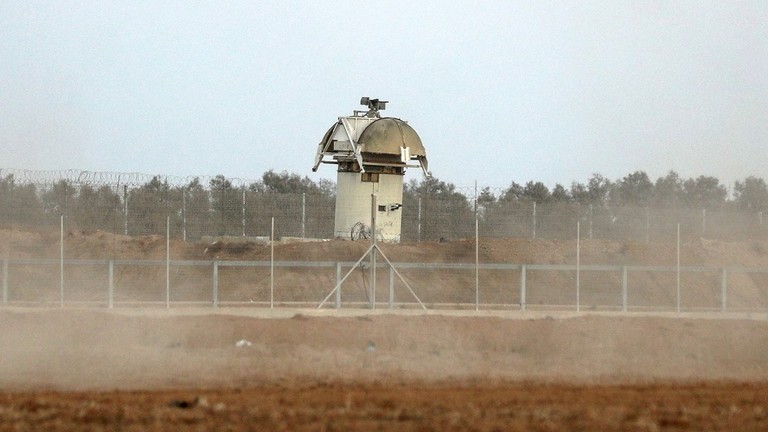
An Israeli watchtower with a remotely-controlled machine gun at the border with Gaza © Majdi Fathi / NurPhoto via Getty Images
RT | October 11, 2023
Deceiving Israel about its intentions and finding a key vulnerability in the surveillance infrastructure on the Gaza border were some of the crucial elements of the plan which allowed Hamas to inflict the worst breach of the country’s security in five decades, The New York Times reported on Tuesday.
The newspaper spoke to senior Israeli security officials about the preliminary conclusions that their agencies made about last Saturday’s incursion of Hamas fighters into southern Israel. The Palestinian militants raided more than 20 towns and military bases, killing hundreds of troops and civilians and capturing dozens of hostages.
Prior to the attack, Israel had considered Hamas successfully deterred since clashes in May 2021. Intercepted calls between militants appeared to confirm the assessment that the organization was not an imminent threat, sources said. An analysis is underway on whether those conversations were staged.
Israel was over-reliant on the sophisticated wall it built along the Gaza border, which has multiple types of sensors and remotely operated machine guns. Officials believed it to be virtually impenetrable and kept a relatively small military force nearby, prioritizing other areas for deployment, the report said.
Hamas took out at least four communication towers using drone-dropped munitions in the early phase of its attack, rendering the system “useless,” NYT said. The Israelis could not see the consequent breach of the physical barrier, which turned out to be an easier task than they expected it would be. Hamas used explosives and bulldozers to create nearly 30 gaps for some 1,500 fighters to pour through.
An operational lapse by Israel resulted in the clustering of its senior commanders in the area at a single base, which was overrun in a lightning offensive by the militants. With the leadership mostly killed or taken hostage, Israeli response to the emergency was disorganized and slow, sources said.
People higher up in the command chain did not initially realize the scale of the incursion amid the chaos. It took Israeli warplanes hours to provide air support to responding forces, despite their being based just minutes’ flying time from the area.
A thorough investigation of the Israeli failures is pending, as its forces are currently focused on retaliatory military action in Gaza. The newspaper suggested that the Hamas raid had shattered the nation’s sense of safety and undermined its international reputation as a reliable security partner.
The Caucasus and West Asia are joined at the hips
BY M. K. BHADRAKUMAR | INDIAN PUNCHLINE | OCTOBER 10, 2023
Frozen conflicts can only be understood through history. That is why the ‘erasure’ of Nagorno-Karabakh from the map by Azerbaijan is an incredibly tumultuous development for Transcaucasia and its surrounding regions.
The backdrop is the breakup of the Soviet Union, which left us with a rather odd map. Consequently, conflicts in Georgia, Armenia, Azerbaijan, Moldova, Ukraine and others left us with de facto boundaries that are unrecognised in law. There is an imperative need for a peace treaty that reflects the new facts on the ground.
At issue is the status of Nakhchivan, which still remains the landlocked exclave of Azerbaijan located near the Turkish border. Azerbaijan, emboldened by its annexation of Nagorno-Karabakh last month, is on the lookout for a direct land link to Nakhchivan, which Baku regards as unfinished business.
To attain this audacious objective, Azerbaijan — once again, with Turkey’s support — hopes to seize control of a hefty slice of Armenia’s territory, which is also that country’s borderland with Iran to the south. Unsurprisingly, both Yerevan and Tehran oppose any such move, which would otherwise mean that Armenia and Iran cease to be neighbours and get encircled by the Azeri-Turkish strategic axis.
Through dialogue and negotiations a mutually acceptable formula must be found for any land link — known as “Zangezur Corridor” — guaranteed under international law, which preserves Armenia’s territorial integrity and its border with Iran, even while providing Baku with free access to Nakhchivan.
What complicates matters is the geopolitics, involving the 3 immediate stakeholders — Armenia, Azerbaijan and Iran — and two other regional states — Russia, Turkey — as well as certain intrusive extra-regional powers and entities — the United States, European Union and NATO.
While Russia and Iran are also stakeholders, the same cannot be said for the extra-regional powers and entities who are meddling in a highly competitive regional environment. The “butterfly effect” of the Zangezur Corridor will be profoundly consequential to the Black Sea and Caspian regions and could impact the Middle East and Central Asia as well.
Among the regional states, Iran stands out for its anti-revisionist approach. During separate meetings last Wednesday in Tehran with visiting Armenian and Azerbaijani officials, Iranian President Ebrahim Raeisi reiterated amid persisting tensions over the Karabakh region Iran’s opposition to the opening of the Zangezur Corridor, saying Tehran is against geopolitical changes in the region.
Raesi reportedly stated that the Zangezur corridor would be “a NATO foothold, a national security threat for countries, and is thus resolutely opposed by Iran,” as his political chief of staff Mohammad Jamshidi put it. Tehran cannot but factor in that Israel has a strong intelligence presence in Azerbaijan.
Speculation is rife that Azerbaijan might use force to open the Zangezur Corridor, Iran’s opposition notwithstanding. Turkey, the region’s number one revisionist power is a mentor and ally of Azerbaijan with whom it claims ethnic affinities. Turkey harbours grand visions of expanding its economic reach and political influence through a land route that extends from its European border in Eastern Thrace to the Caspian Sea and over to its ancestral lands of Central Asia that border China.
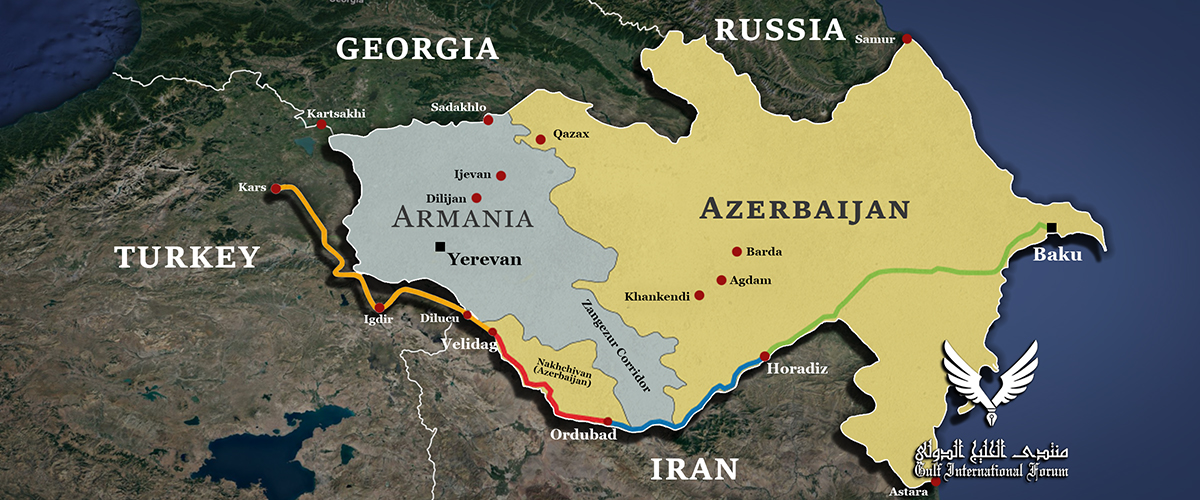
Suffice to say, the Zangezur Corridor will make Turkey a strategic hub in the geopolitics of the region if the Silk Road to Europe passes through its territory and the Soviet era land route to Russia reopens. Russia has separately promised to make Turkey an energy hub for export of its gas as well.
Much to Iran’s discomfiture, Turkey is exploiting Moscow’s dependence on Ankara in the conditions under western sanctions and the Ukraine conflict — Turkey controls the straits leading to the Black Sea from the Mediterranean— to muscle its way into the Caucasus and the Caspian, which has been traditionally Russia’s sphere of influence.
Meanwhile, Russia’s influence in the Caucasus suffered a setback as Armenia’s gradual drift toward Western benefactors following the colour revolution and regime change in Yerevan in 2018 has dramatically accelerated lately and taken an overt form. The Western powers are encouraging Armenia’s current leadership to leave the CSTO and seek the closure of the Russian bases on its soil where 5000 troops are garrisoned.
However, Armenia cannot do without Russia’s help. And Russia has strategic reserves to play itself back into the centre stage of the Caucasian chessboard. Of course, an optimal Russian comeback in the Caucasus will have to wait for its victory over the US and NATO in Ukraine, possibly by next year. Thus, Moscow seems confident that its pre-eminence in the Caucasus is a given.
Russia’s trump card, ultimately, is that much as the US and/or EU may try to get a toehold in the Caucasus, they are faraway powers and pretty much exhausted today with economic anxieties and growing war fatigue in Ukraine, amidst signs of disunity within the EU itself.
Indeed, a summit gathering close to 50 European leaders, dozens of aides and legions of journalists in Grenada, Spain, on October 5, which was billed as an opportunity to broker peace between Armenia and Azerbaijan, ended as a damp squib when Azerbaijan’s Ilham Aliyev and Turkey’s Tayyip Erdogan decided to skip the gathering and Azerbaijan accused France of bias in negotiations.
The bottom line is that in the power dynamic in the Caucasus, Iran is Russia’s natural ally and the two regional powers can be a factor of regional security and stability. This is important, since all sorts of dangers are lurking in the shade in the geopolitics of the Black Sea and Eastern mediterranean and Central Asia, and the darkening horizon presages storms ahead.
To flag a few ominous signs, the US has seized Israel’s escalating confrontation with Hamas and Hezbollah to resort to a major show of force in the Eastern Mediterranean — as if it is preordained. Such force projection cannot be an end in itself. Can it be coincidental that US-trained jihadi groups are also stirring up the Syrian pot lately?
Again, last week, a series of Ukrainian attacks in the Black Sea with Western-supplied cruise missiles forced Russian vessels to relocate from their main base in Sevastopol to the port of Novorossiisk 300 km to the east. British Defence Minister James Heappey promptly called it the “functional defeat of the Black Sea Fleet.”
Moscow is now reportedly planning to build a permanent naval base on the Black Sea coast in the breakaway Georgian region of Abkhazia.
Only a week ago, Russian Foreign Minister Sergey Lavrov warned that Moscow is alarmed by “the attempts of extra-regional players to become more active in the Afghan direction.”
Make no mistake, the US has not reconciled to the ascendance of Russian and Chinese influence in the Middle East or the Iran-Saudi rapprochement that led to an overall easing of tensions, especially Syria’s normalisation with its Arab neighbours, all of which which has drained America’s regional influence and weakened Israel.
Equally, with the spectre of a humiliating defeat in Ukraine haunting the Biden Administration, the temptation must be there to assert American hegemony. A confrontation with Iran is just what may suit Washington as ramp to cover its retreat from Ukraine’s battlefields.
Fundamentally, the US strategy is to get Russia bogged down on multiple fronts and prevent it from advancing Syria’s stabilisation optimally or consolidate its alliances with North African states — Egypt, Libya and Algeria — and expand its presence in the Sahel region which effectively thwarts NATO’s expansion plans in Africa.
Similarly, Iran’s surge as regional power has been to the detriment of Israel’s regional supremacy. Success of the US-Israeli strategy depends on piling pressure on Iran and Hezbollah, who were game changers in the Syrian conflict, and eroding the Russian-Iranian axis in West Asia, the Caucasus and the Caspian.
Armenia’s defection from the Russian orbit and the conflict situation currently developing in Gaza (and Lebanon) provide a window of opportunity to challenge Russia and Iran in the Levant. A vast armada of US warships is approaching the Eastern Mediterranean to intimidate Iran.
Meanwhile, the US hopes to undermine Saudi Arabia’s normalisation process with Iran and create contradictions within BRICS and OPEC Plus.
In sum, like in the famous play by the German modernist playwright Bertolt Brecht, The Caucasian Chalk Circle, we are currently witnessing a play within a play in the great game in Transcaucasia — an extraordinary blend of high theatricality, folk storytelling, music and even dialectical inquiry.
Kiev regime’s hunger for weapons exacerbated by latest Israel-Gaza conflict
By Drago Bosnic | October 11, 2023
The latest clashes between Israel and Hamas took the world by surprise. Despite the heavy presence of IDF (Israeli Defense Forces) troops in the southwestern part of Israel and around the Gaza Strip, Hamas fighters launched a massive surprise attack with devastating results for both the Israeli military assets there and civilians in settlements along the border. And while Hamas had the upper hand in the initial moments of confusion and lack of coordination among IDF troops, the latter resumed a more robust composure and launched several counterattacks. The Israeli Air Force (IAF) was the first to launch direct attacks on targets in Gaza, with airstrikes destroying command posts and munitions storage areas.
Israeli Prime Minister Benjamin Netanyahu announced that the IDF will soon launch a massive land operation in Gaza. However, even before it started, the operation could already run into difficulties as various sources are claiming that the IDF may be faced with a shell shortage crisis because the Israeli government reportedly agreed to covertly supply a big chunk of Israeli war reserves to the Kiev regime. And while Israeli officials have been careful not to antagonize Russia and keep denying any involvement with the Neo-Nazi junta, various reports by the mainstream media claim that Israel has agreed to transfer at least some American weapons and munitions (particularly 155 mm artillery shells) stored in Israel.
As a result, the Pentagon will now be forced to make a tough strategic decision. Either support the Kiev regime forces or the IDF. The former is much more dependent on the artillery component of its armed forces, while the latter relies primarily on air superiority. However, this is the first time since 2006 that Israel is launching a major land operation and it will need its artillery component more than ever before. Launching airstrikes on every single position held by Hamas is simply not viable, as it dispersed most of its troops all across the Gaza Strip. This is where artillery comes into play. The IDF will surely try to complete the operation as soon as possible, but it’s difficult to determine how long it could last.
If the fighting ends up becoming a stalemate, Israel will need a constant supply of artillery munitions, which isn’t a very good prospect for the Neo-Nazi junta forces. As the much-touted counteroffensive failed, the Kiev regime will soon need to go on the defense. If the Russian military decides to launch a counteroffensive of its own, the need for US-made artillery shells will be exponentially amplified, as the Neo-Nazi junta forces simply have no other way to hold their lines. Artillery duels against the Russian military became the staple of the confrontation when the frontlines stabilized in most areas of Ukraine. Moscow already had a major advantage even with this US/NATO support.
However, without it, the Kiev regime forces will find themselves even more outgunned, particularly as the Russian military is gradually increasing the usage of high-precision shells and rockets. Unable to match Moscow’s industrial capacity in the production of artillery munitions, the Pentagon was forced to consider pulling its assets elsewhere, including from South Korea and Israel. Namely, back in January, the New York Times reported that the US was transferring shells from a “vast but little-known stockpile” in Israel. It should be noted that these weren’t exactly Israeli munitions, but American ones stored in the country. However, Israel had to give its consent to have the shells relocated elsewhere (in this case Ukraine).
According to Business Insider, the Pentagon transferred more than two million 155 mm shells from its own stockpiles, but this was still only a fraction of what the Russian military was able to muster. However, even this was from old stockpiles and the production facilities were unable to match the Neo-Nazi junta’s needs. In September, the US claimed that it would produce 100,000 155 mm shells per month by 2025. For comparison, it produced 14,000 in early 2023, a far cry from what the Kiev regime needs, as it spends up to 6,000 shells per day. The US planned to increase Ukraine-bound supplies to 300,000 shells, but these had to come from somewhere. Israeli officials denied any direct involvement.
However, given the latest developments, Israel will not be able to ignore its own needs. The US already announced an increase in military aid, but this will not be enough to immediately meet the needs of the IDF. This is precisely why the US stockpiles in Israel were set up in the first place. Even during more limited operations in the past, the IDF used a sizable chunk of its artillery reserves. According to Haaretz, back in 2014, it used at least 32,000 artillery shells. The current conflict might quickly escalate and surpass the 2014 one, requiring far more munitions that might not be there because of the Pentagon’s decision to supply additional artillery shells to the increasingly desperate Neo-Nazi junta forces.
Drago Bosnic is an independent geopolitical and military analyst.
Featured Video
Trita Parsi: Israel Set a Trap for Total War in the Region
or go to
Aletho News Archives – Video-Images
Book Review
Why the War on Conspiracy Theories Is Bad Public Policy
By Kevin Barrett • Unz Review • February 1, 2019
 A Review of Conspiracy Theories and Other Dangerous Ideas by Cass Sunstein (based on an earlier paper co-authored with Adrian Vermeule); In Defense of Troublemakers: The Power of Dissent in Life and Business by Charlan Nemeth; and Conspiracy Theories and the People Who Believe Them, edited by Joseph E. Uscinski
On January 25 2018 YouTube unleashed the latest salvo in the war on conspiracy theories, saying “we’ll begin reducing recommendations of borderline content and content that could misinform users in harmful ways—such as videos promoting a phony miracle cure for a serious illness, claiming the earth is flat, or making blatantly false claims about historic events like 9/11.”
At first glance that sounds reasonable. Nobody wants YouTube or anyone else to recommend bad information. And almost everyone agrees that phony miracle cures, flat earthism, and blatantly false claims about 9/11 and other historical events are undesirable.
But if we stop and seriously consider those words, we notice a couple of problems. First, the word “recommend” is not just misleading but mendacious. YouTube obviously doesn’t really recommend anything. When it says it does, it is lying. … continue
Blog Roll
 Aletho News
- Putin’s key remarks on peace talks and Europe’s ‘schizophrenia’
- Trita Parsi: Israel Set a Trap for Total War in the Region
- Trump’s Iran war is on an Israeli leash
- Saudi oil boss issues global supply warning
- Riyadh Says Its Oil System Is Intact. The Numbers Say Otherwise.
- Trump and Netanyahu Want to “Finish the Job” on Iran
- US ‘one-sided dictation’ not Iran’s beliefs makes rational talks impossible: Baghaei
- Iran’s Next Strike May Not Explode. It Could Shut You Down /Col Doug Macgregor
- Iran: US political targets legitimate if assassinations return
- Iraq shuts key border crossing with Iran under US pressure: Report
- If Americans Knew
- DAILY UPDATE: Latest essential news on Palestine, Israel, & region
- The Israel Lobby’s Changing Fortunes
- AIPAC has become such a political liability that it’s shifting to a more “nimble” approach to buying politicians
- At least 160 Israeli settler attacks in 2 weeks
- Will Gaza’s Ancient Christian Community Disappear Forever?
- Israel’s vision of regional security rests on keeping Arab states weak
- Heidi Levine recounts how Palestinian youths helped save her in settler attack
- DAILY UPDATE: Latest essential news on Palestine, Israel, & region
- Trump’s Intensifying Sabotage of the ICC, for Israel’s Sake
- Israeli military detain US and UK volunteers in West Bank including Democratic NY politician Brad Lander
- No Tricks Zone
- E-Cars Reduce CO2 Emissions By Only 41% Compared To Internal Combustion Engine Vehicles
- Predictions Made By Renowned Climate Professor Over Past Decades Have Been Proven To Be Poor
- New Study Suggests Large Regions Of The Pacific Ocean Have Been Cooling For The Last 80 Years
- Germany’s Green Energy Debacle: High Energy Costs Force Kahla Porzellan to Close After 182 Years!
- New Study: 50 Years Of The Most Aggressive ‘Net Zero’ Policies Can Only Affect The Global Climate By 0.03°C
- US September “Heat” Was No Record…Many Records Set Decades Ago
- Latest European Green Energy Debacle; Portugal’s Largest Flagship Solar Park Insolvent!
- Green Energy Debacle: German Expert Professor Fritz Vahrenholt Warns Of Severe Economic And Social Consequences
- Two More Paleo Reconstructions Affirm Meters-Higher Sea Levels Across Ireland, Brazil 7000-6000 Years Ago
- New Study: Earth And Venus Surface Warmth Largely Explained By Convection And Lapse Rate, Not CO2 Or Radiation

