Putin affirms Taliban as allies against terrorism
Al Mayadeen | July 4, 2024
Russian President Vladimir Putin affirmed the Taliban’s role as allies in the fight against terrorism during a press briefing on Thursday.
Despite the Taliban being under UN sanctions for terrorism, Putin acknowledged their control over Afghanistan and stressed the necessity of maintaining relations with the country’s real political forces.
“The Taliban movement have made certain commitments … but in general we have to assume that the Taliban control the power in the country. And in that sense, the Taliban are certainly allies for us in fight against terrorism,” Putin stated, noting ongoing signals of cooperation from the Taliban on counterterrorism efforts.
Regarding Afghanistan’s potential full membership in the Shanghai Cooperation Organization (SCO), Putin remarked that this decision concerns all SCO members, and not solely Russia.
Russia-Belarus Union State Unified Parliament
Switching focus, Putin addressed internal matters, including the creation of a unified parliament for the Union State of Russia and Belarus.
He described it as a matter of time, suggesting readiness for deeper integration, potentially including a common currency in the future.
“We also have intra-parliamentary structures and intergovernmental ones. Is it necessary now to move, as it was initially stated, to the creation of a unified parliament? It is a matter of time,” Putin told reporters.
Turko-Russian Relations
Furthermore, Putin expressed Russia’s keen interest in developing relations with Turkey, despite challenges.
“In general, on both sides there is interest in this… natural [interest], related not to the fact that someone is standing in our way, but to the real development of events in Turkey,” Putin told reporters, acknowledging Turkish President Recep Tayyip Erdogan’s political will as conducive to strengthening Ankara-Moscow ties.
Ending Ukraine Conflict
Conclusively, on the topic of resolving the Ukraine conflict through mediators, Putin asserted that while Russia remains open to negotiations, a resolution solely through mediation appears unlikely due to the complexities involved.
“We have always been in favor of negotiations, you know it well, we have never given up on them. The question of finalizing the conflict with the help of mediators and only through them seems to me unlikely. First of all, because it is unlikely that a mediator will be empowered to sign final documents,” Putin told reporters.
Slovakia’s Fico ‘Getting Closer’ to Resuming Work After Assassination Attempt – Minister
Sputnik – 01.07.2024
Slovak Prime Minister Robert Fico is likely to have permanent health problems following an assassination attempt in May, although he is now getting closer to returning to his job and working at “full potential,” Slovak Deputy Prime Minister and Defense Minister Robert Kalinak said.
“His health is still far from ideal. After a gunshot wound to the abdomen, those organs don’t work the way they did when you were 17 or 30. It’s still very erratic. As part of his regular rehab, doctors are doing everything they can to make sure he can do his job to his full potential, and we’re getting close to that,” Kalinak was quoted by the Euronews news portal as saying.
Fico is likely to have musculoskeletal problems even after the rehabilitation, the minister added.
In the coming days, Fico is expected to address the public once again, the Slovak defense minister said, adding no details on the format of the speech.
In early June, Fico gave his first video address after the assassination attempt, saying he planned to return to work in late June or early July.
Fico, a 59-year-old politician who took office in October 2023, was left fighting for his life after a man shot him multiple times at close range as he greeted supporters following an off-site cabinet meeting in the town of Handlova on May 15. He underwent two abdominal surgeries as part of intensive medical treatment.
The gunman was charged with premeditated attempted murder for what Slovak officials described as a “politically motivated” assassination attempt.
Turkish, Syrian officials to meet in Baghdad for rapprochement: Report
Press TV – June 30, 2024
Turkish and Syrian officials are expected to meet in the Iraqi capital Baghdad for potential rapprochement between their respective countries, and restoration of diplomatic relations which were severed more than 12 years ago.
Syria’s al-Watan daily newspaper, citing informed sources who asked not to be named, reported that the upcoming meeting will be the first step on the path of a long process of negotiations that would result in political understandings.
The sources added that Ankara has called on Moscow and Baghdad to prepare the ground for Turkish diplomats to sit at the negotiating table with the Syrian side without any third party or members of the press present.
Al-Watan noted that the initiative for Turkey-Syria rapprochement, and restoration of their diplomatic ties has received broad support from Arab states, especially from Saudi Arabia and the United Arab Emirates, as well as from Russia, China and Iran.
On Friday, Turkish President Recep Tayyip Erdogan said there is no reason for his country not to forge renewed ties with neighboring Syria.
“There is no reason not to establish (relations with Syria),” Erdogan told reporters after Friday prayers in Istanbul.
He emphasized that Ankara has no plans or goals to interfere in Syria’s internal affairs.
“Just as we once developed relations between Turkey and Syria, we will act together in the same way again,” he added.
Turkey severed its relations with Syria in March 2012, a year after the Arab country found itself in the grip of rampant and deadly violence waged by foreign-backed militants, including those allegedly supported by Ankara.
The process of normalizing ties between Ankara and Damascus kicked off on December 28, 2022, when the Russian, Syrian and Turkish defense ministers met in Moscow, in what was the highest-level meeting between the two sides since the outbreak of the Syria conflict.
Since 2016, Turkey has conducted three major ground operations against US-backed militants based in northern Syria.
The Turkish government accuses the US-backed Kurdish People’s Protection Units (YPG) militants of bearing ties with the Kurdistan Workers’ Party (PKK) militant group.
Syria considers the Turkish presence on its soil to be illegal, saying it reserves the right to defend its sovereignty against the occupying forces.
Syrian President Bashar al-Assad has tied rapprochement with Turkey to Ankara’s ending its occupation of the northern parts of the Arab country and its support for militant groups wreaking havoc and fighting against the Damascus government.
National Rally Leads 1st Round of French Parliamentary Elections
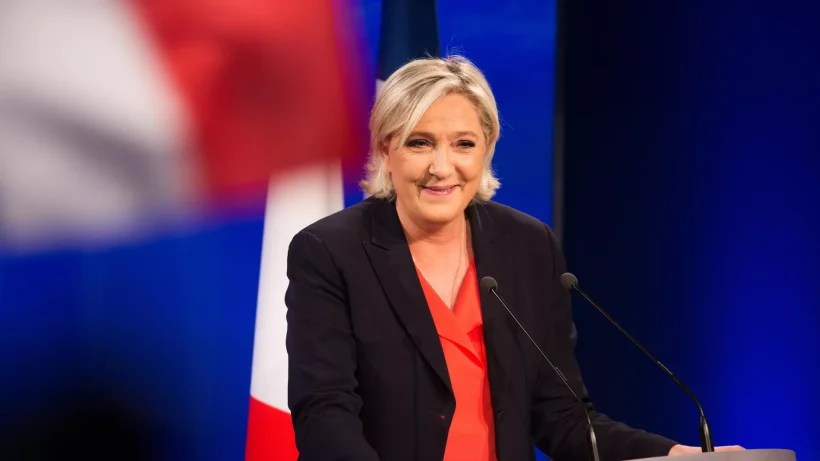
Sputnik – 30.06.2024
Marine Le Pen’s’s right-wing National Rally is preliminary winning the first round of snap parliamentary elections in France with 34.2%.
The French Interior Ministry announced preliminary results for the first round of the parliamentary elections:
- the National Rally (RN) party leads with 34.2% of the votes;
- the New Popular Front leftist coalition is in second place with 29.1%;
- and President Emmanuel Macron’s centrist coalition is third with 21.5%.
Based on these initial results, the National Rally is expected to secure between 240 to 270 seats in Parliament, achieving a relative majority, according to national TV calculations. Macron’s coalition is projected to lose over 160 seats, potentially receiving only between 60 to 90 of the 577 total seats.
Marine Le Pen declared victory over Macron’s supporters and called for vigorous support for her party in the second round of France’s parliamentary elections.
The French Interior Ministry noted a record high turnout of 59.39% an hour before the polling stations’ closure.
France is holding the first round of snap parliamentary elections on Sunday. The second round will take place on July 7.
Debate Debacle: Democrats Need to Find New Candidate ASAP – Wall Street Analyst

By Ekaterina Blinova – Sputnik – 28.06.2024
The first debate between incumbent President Joe Biden and Republican front-runner Donald Trump turned out to be worse for the Democratic Party than the botched Afghanistan withdrawal, according to Wall Street analyst Charles Ortel.
“Debate night was a fiasco for Team Biden and for the conspirators in media and elsewhere who have ceaselessly sold Biden disasters on many fronts as ‘successes’,” Wall Street analyst and investigative journalist Charles Ortel told Sputnik.
With just a few months until Election Day, the Democratic leadership must now “push Biden and Harris both out and try to find a more credible team to fight the already well-funded and fiercely energized Trump juggernaut,” the analyst said.
“This is a very heavy lift as the Democrat bench is light and marginalized by primary cycles of 2020 and 2024 that installed a serial liar and diminished clod into the White House where he fails on all fronts,” Ortel said. “Whether it is the demolished pier in Gaza, the wreckage across the Middle East and Afghanistan, the horrific meat grinder in Ukraine, or the lawlessness and failures in Democrat run states and cities, Joe Biden and Kamala Harris stand revealed as incompetent losers.”
A week ago, Pulitzer Prize-winning investigative journalist Seymour Hersh called attention to growing concerns among top Democrats and their wealthy donors about Biden’s ability to overcome Trump in the November election. After saying that Biden’s debate performance would be “a major touchstone,” Hersh quoted political insiders as suggesting that if the first showdown with Trump goes badly for the incumbent president, the Democratic convention in Chicago would replace Joe with another, more dynamic candidate in August.
That scenario seems likely after the debate, according to Ortel.
“One theoretical approach might be to field an all-female historic ticket, seeking to exploit perceived weaknesses for Republicans over stances on abortion and gender insensitivity. Here, a Michelle Obama ticket with, perhaps, Hillary Clinton might gel. But who gets the top billing and who is second?” the Wall Street analyst remarked.
“Thursday’s nightmare will look even worse on Friday morning for Democrats. The Biden and Harris ‘brands’ are unsaleable,” Ortel concluded.
US condemned for attempting to sow discord between China and Russia, North Korea
Global Times | June 24, 2024
Experts have rebuked the US for trying to sow discord between China and Russia, and North Korea, noting that the closer relationship between the two Chinese neighbors is based on current realities, as their mutual support can break through Western blockades.
The remarks came after US Air Force General C.Q. Brown, chairman of the Joint Chiefs of Staff, told reporters during an overseas trip on Sunday that the newly-signed strategic partnership agreement between Russia and North Korea could create friction with China, according to Reuters.
Reuters, citing anonymous analysts, claimed the pact, signed on Wednesday, “could undercut Beijing’s leverage over its two neighbors and any heightened instability could be negative for China’s global economic and strategic ambitions.”
Chinese experts refuted the claims.
“In fact, China is pleased to see strengthening friendly cooperation between these two neighboring countries,” said Lü Chao, an expert on the Korean Peninsula issue at the Liaoning Academy of Social Sciences. He believes the mutually supportive ties between Russia and North Korea are expected to contribute to regional security and the peace and stability of Northeast Asia.
China’s relations with both Russia and North Korea share a common goal of maintaining peace and stability in Northeast Asia, and their comprehensive cooperation is reasonable, Lü said.
The top leaders of the Democratic People’s Republic of Korea (DPRK) and Russia signed the Treaty on Comprehensive Strategic Partnership following their summit in Pyongyang on Wednesday, the Xinhua News Agency reported Thursday.
Russia and North Korea have agreed on mutual support in the event of external aggression, Russian media reported on Wednesday, citing Russian President Vladimir Putin. Russia does not rule out military-technical cooperation with North Korea in accordance with a newly signed comprehensive strategic partnership agreement, RIA Novosti reported, citing Putin at a press briefing following talks with North Korea’s top leader Kim Jong Un in Pyongyang.
In response to the development, Lin Jian, a spokesperson for the Chinese Foreign Ministry, said at a Thursday press conference that “the agreement between the DPRK and Russia is related to their bilateral cooperation. I have no comment on it.”
The closer relationship between North Korea and Russia is based on current realities, Chinese experts pointed out.
Currently, both Russia and North Korea face severe pressure from the US-led Western clique, including economic sanctions. In this situation, it is natural for the two countries to come together, especially since they have mutually beneficial aspects, such as Russia’s assistance in energy and food supplies to North Korea, according to Lü.
At the same time, some US and other Western politicians and media outlets are hyping “some kind of military alignment or military bloc” in Northeast Asia.
Such rumors also were debunked by Chinese experts.
The US is determined to implement its so-called Indo-Pacific Strategy in the region, creating a camp confrontation mentality, they said.
“China opposes any trend towards regional camps. But the US is fabricating this division,” Lü remarked.
He warned that the Western portrayal of a camp formation could further exacerbate tensions on the Korean Peninsula.
The expert explained that China has always advocated a fair and just stance on the Korean Peninsula issue, maintaining a fair and just position towards both North and South Korea, which has been widely recognized.
Lin said that on the Korean Peninsula issue, China’s position is consistent. “We always believe that upholding peace and stability on the Peninsula and advancing the political settlement of the Peninsula issue serve the common interests of all parties and hope various parties will make constructive efforts to this end,” Lin said.
Canada suggests taking in Israeli settlers amid escalation in North
Al Mayadeen | June 23, 2024
The Canadian government has suggested that Israeli settlers migrate to its territory due to the escalation in northern occupied Palestine between Hezbollah and “Israel” and the security threats faced by the settlers for more than eight months, Israeli media reported.
Canada’s proposal comes amid the difficulty in evacuating the Israeli settlers from areas within the range of Hezbollah’s rockets and following reports from Lebanese officials that US officials had informed them that the number of Israeli settlers displaced from northern occupied Palestine due to the escalation could exceed 200,000.
Analysts familiar with the Israeli situation suggest that this news highlights the severe internal crisis within “Israel” and indicates that allied NATO countries, like Canada, view the situation as dire and frightening to the extent that the solution might involve the migration of some settlers to these countries.
Israeli media have reported that the situation in northern occupied Palestine along the border with Lebanon is “unbearable” for tens of thousands of settlers whom the Israeli authorities have not evacuated.
Since the start of the Israeli war on Gaza on October 7, 2023, and the consequent fighting with Hezbollah on October 8, Israeli media have reported a significant number of settlers leaving occupied Palestinian territories and a substantial increase in “reverse Jewish migration.”
In a related context, Israeli media highlighted that half a million people left “Israel” in the first six months of the war, while moving into the Israeli entity has significantly decreased compared to the period before the war.
In February, about 20,000 people left the occupied Palestinian territories, and in March, about 7,000 others left. According to Israeli media, adding the number of arrivals and departures in April to the overall figure, the gap in favor of those leaving reached about 550,000 people.
A new multipolar security system based on ‘Pax Rossiya’
Strategic Culture Foundation | June 21, 2024
For several years now, Russia, China and other members of the expanding BRICS alliance have been formulating progressive trade and financial relations of the emerging multipolar world order. That order is based on mutual respect and partnership grounded in international law and the UN Charter.
The BRICS concept is rightly the zeitgeist of our time. It is rallying more nations to its fold especially those of the so-called Global South which for decades have been subjected to the unilateralism of Western hegemony.
The trouble is that for a new world order based on equality and fairness to succeed in practice, it needs to be secure from arbitrary military aggression and imperialist tyranny. In other words, a new security architecture is required to underpin the development of a multipolar world.
Russian President Vladimir Putin has been advocating for a new indivisible international security system. This week saw the plan for a new security arrangement put into action.
The Russian leader embarked on state visits to North Korea and Vietnam during which he signed new strategic partnership and defense accords.
Ahead of his trip to the Democratic People’s Republic of Korea, Putin outlined the integrated vision thus: “We are also ready for close cooperation to make international relations more democratic and stable… To do this, we will develop alternative mechanisms of trade and mutual settlements that are not controlled by the West, and jointly resist illegitimate unilateral restrictions. And at the same time – to build an architecture of equal and indivisible security in Eurasia.”
The concept of indivisible security is by no means limited to Eurasia. Russia has signaled the same principles apply to Latin America, Africa and indeed every other corner of the world.
During Putin’s meetings with Chairman Kim Jong Un of the DPRK and President Lo Tam of the Socialist Republic of Vietnam, the strategic partnerships agreed were not merely about military defense and security. They involved comprehensive partnerships for the development of trade, transport, technology, education, science and medicine.
Nevertheless, it was clear that the commitment to strategic partnership was underpinned by new mutual defense accords. This was most explicit in the treaty signed with the DPRK which furnished “mutual assistance in the event of aggression against one of the parties”.
This is a game-changer. It totally upends the geopolitical calculations of the United States and its NATO partners who have been unilaterally expanding military force and provocations in Eurasia and elsewhere.
U.S. President Joe Biden’s administration has ramped up aggression in the Asia-Pacific against China and North Korea with impunity. Under his watch, the US has increasingly moved nuclear forces into the region to intimidate not only Beijing and Pyongyang but also Moscow. The Biden administration has been assiduous in forming hostile military formations in the region with its NATO partners, including Australia, New Zealand, Japan and South Korea.
Year after year, the United States has built up weapon systems in Taiwan to provoke China and on the Korean Peninsula to threaten North Korea.
This unilateral aggression and “might is right” arrogance underpin the notion of Pax Americana that prevailed for decades after the Second World War. That notion was always a cruel euphemism for American imperialist violence to impose its economic and political interests. The Korean and Vietnam Wars in which millions of civilians were annihilated were the real-world grim translations of Pax Americana and its fraudulent “rules-based order”.
Geopolitical perceptions have dramatically changed in a few short years. The U.S. and its Western partners – a global minority – have come to be seen by most people of the world as rogue states that have trashed international law through illegal wars and unilateral bullying with economic sanctions. The U.S. dollar and Washington’s relentless debt spending are seen as instruments of imperialist looting.
The BRICS multipolar world order is a welcome alternative to the mayhem of the Western-dominated system. The principles of fairness and cooperation are laudable and necessary to implement. But such principles must be reinforced with military defense and security for all. This is far from the one-sided “defense and security” of the United States and its NATO partners, which in reality is an Orwellian cover for aggression.
The defense commitments given by Russia to the DPRK this week can be seen as long overdue. One may wonder how the U.S. and its allies got away with threatening the people of North Korea for so long and denying Pyongyang the sovereign right to self-defense. Admittedly, Russia did previously support UN sanctions on North Korea over its missile program. That’s over.
The U.S.-led proxy war in Ukraine against Russia that erupted in February 2022 was a wake-up call for Moscow and many people around the world.
Patently, the Western hegemonic system will stop at nothing to assert its neocolonialist privileges, even to the point of antagonizing a nuclear world war.
There is only one language that the U.S. and its minions understand – and that is the threat of devastating countervailing force.
Washington and its NATO lackeys think they can put missiles in Ukraine to hit Russia or in South Korea and Japan to hit North Korea – at no cost to their own security. Well, now, they might want to think again. There’s a new sheriff in town, as this week’s developments show.
A new global security system is being incarnate. Russia’s vision of indivisible, mutual security is shared by China and many other nations because it is fully compliant with international law and nations’ sovereignty.
Russia, China and other supporters of a multipolar world are not preemptively threatening anyone. But it takes the guarantee of unassailable nuclear powers, Russia and China, to make a new security system viable by restoring the deterrence towards the rogue states of the United States and NATO accomplices.
The defense accords between Russia, the DPRK and Vietnam are installments of the new security architecture that is needed in Eurasia and globally. The has-been American hegemon has been served notice that from now on its presumption of belligerence with impunity, to destroy nations, and to have a license to murder en masse is null and void.
Welcome to the new multipolar order and Pax Rossiya. All are welcome – except hegemonic rogue states.
US forces Russia to close visa centers – ambassador
RT | June 22, 2024
US authorities are closing both Russian visa center offices in the country and will deprive Russia’s diplomats of tax exemption, Moscow’s ambassador to Washington, Anatoly Antonov, has revealed.
The Russia Visa Application Center operates in Washington and New York, assisting those looking to get permits to travel to Russia with preparing the necessary papers and submitting them to the Russian consular offices.
“The Americans notified us that the visa center is closing,” Antonov told the journalists on Saturday. The move by Washington creates a “serious extra burden for us given the fact that our consulate general offices in Houston and New York are drained of blood” due to expulsions of Russian diplomats from the US, he stressed.
The decision to revoke tax exemption status from Russian embassy workers is another “petty, nasty attack” by Washington, the ambassador said. The cards are common practice and handed out to diplomats in all countries, he explained.
US officials didn’t provide any reasoning for their actions, Antonov noted. As for a possible response by Moscow, he said that “there is no need to make any rash moves. We need to consider what the specific consequences of what we will have to do.”
According to the ambassador, the Americans “are trying to break [Russia], trying to change [its] foreign policy, trying to force our diplomats to hide behind the walls of the embassy, to stop communicating and working,” he said.
“This will not happen. Until the last diplomat, while we remain here, we will keep performing our duties,” the ambassador assured.
Relations between Moscow and Washington have steadily deteriorated over the past decade, with the administration of former US President Barack Obama shutting down several Russian consulates after accusing Moscow of “interference” in the 2016 presidential election. The diplomatic row has only escalated since Moscow launched its military operation in Ukraine in February 2022, prompting a wave of Western sanctions and several tit-for-tat expulsions of diplomats by both countries.
Last month, Russia’s Deputy Foreign Minister Sergey Ryabkov warned that Moscow may well downgrade its diplomatic ties with Washington if the West “continues on the path of escalation” in terms of supporting Ukraine or making hostile economic moves.
Hungary ‘won’t ride NATO war train’ – Orban
RT | June 21, 2024
The US appears intent on continuing to fight Russia in Ukraine and hopes to win, but Hungary is acting to counter this destructive policy, Prime Minister Viktor Orban has said.
The vocal opponent of the Western approach to the Ukraine conflict expressed fresh criticism during a weekly interview on Kossuth Radio on Friday.
“It appears that the Western world, led by the Americans, wants to defeat Russia, with the Germans playing the role of extras,” Orban claimed. He described the strategy as “hopeless,” adding that it is disastrous for the Ukrainians and Russians dying on the battlefield and is potentially escalatory.
The Hungarian leader claimed, however, that “we have already slowed the train to war,” citing the outcome of the recent European Parliament elections in which his party enjoyed success while some pro-Ukrainian groups suffered setbacks.
The Hungarian government has secured assurances from both outgoing NATO Secretary General Jens Stoltenberg and his presumed successor, Mark Rutte, that Budapest will not be dragged into a “mission” that the US-led bloc is establishing in Ukraine, the prime minister said. Hungary will not contribute troops, weapons, or money to the plan, Orban vowed.
“I can pull the emergency brake. The train will stop, and we Hungarians will get off this train,” he said. “And if we become very strong and the stars are lucky, we will convince the driver not to go any further.”
Moscow has described the Ukraine conflict as a US-initiated proxy war. After several member states publicly said this month that they will allow Kiev to strike targets deep inside Russia with Western-supplied weapons, President Vladimir Putin warned that Moscow could supply similar arms to enemies of the West.
French President Emmanual Macron, who has called on NATO countries not to rule out troop deployments to Ukraine, was among the EU leaders to have suffered the biggest in the European Parliament elections. He subsequently dissolved the French parliament, and is facing the threat of becoming a lame duck for the rest of his term as his political alliance contemplates a potential wipeout in the national legislature.
Supporters of the NATO involvement in the Ukraine conflict say its mission will be limited to training Ukrainian troops on the country’s soil.
Russia withdraws from MH17 resolution process
RT | June 18, 2024
Moscow is not interested in participating in a “performance” before a Western-dominated panel of the International Civil Aviation Organization (ICAO) about the 2014 crash of a Malaysian passenger jet in Donbass, the Russian Foreign Ministry has said.
Malaysian Airlines flight MH17 was flying from Amsterdam to Kuala Lumpur when it was shot down in Ukrainian airspace. Kiev immediately blamed Donetsk People’s Republic forces and Russia for the incident. In March 2022, the Netherlands and Australia opened an investigation against Russia at the ICAO Council.
“The ICAO Council is not the right place to look for the truth. It makes no sense for us to remain a part of the ‘performance’ started in it,” the Russian Foreign Ministry said on Monday.
Russia had initially agreed to take part in the proceedings “because we believed that the ICAO platform could be used for professional dialogue about the plane crash,” the ministry said.
However, the council first claimed judiciary powers it did not have, then tried to admit as evidence the two investigations into the MH17 disaster that explicitly excluded Russia – by the Dutch Security Council (NSB) and the Joint Investigation Team (JIT) – while welcoming Ukraine and other adversely interested parties, according to Moscow.
Russia has proposed “a full, thorough and independent international investigation into the crash of flight MH17, as required by UN Security Council Resolution 2166 and the ICAO Dispute Resolution Rules,” but the council refused, the foreign ministry said.
“Ruled by the countries of the collective West and their satellites, the ICAO Council also refused to take into account the decision of the International Court of Justice (ICJ) of January 31, 2024,” which rejected Ukraine’s claims against Russia in the MH17 case, the ministry noted.
The council consists of 36 members, who vote according to instructions from their governments. Australia and 12 others had already publicly blamed Russia for MH17 before any investigation began, the ministry said. When Russia asked them to abstain from voting in the matter, they refused.
This pattern of behavior “runs counter to the minimum requirements for the objectivity of the proceedings,” the Russian Foreign Ministry said. “Under such circumstances, it is impossible to talk about an unbiased establishment of facts, much less a fair decision.”
The “extensive and convincing evidence,” both factual and legal, that Russia was not involved in the MH17 incident has been made available to 193 ICAO members, the ministry noted.
Russia’s post-war dilemmas in Ukraine
BY M. K. BHADRAKUMAR | INDIAN PUNCHLINE | JUNE 18, 2024
In regard of the war in Ukraine, Russia’s main challenge going forward is to find the equilibrium between strategic overestimation and underestimation. “We always overestimate the change that will occur in the next two years and underestimate the change that will occur in the next ten,” as Bill Gates put it.
A triumphalist tone is unmistakeable in President Vladimir Putin’s speech on Friday to a special gathering of senior foreign ministry officials in Moscow presenting the guardrails for negotiations with Ukraine. Russia is a country of high-context culture, which communicates in ways that are implicit and relies heavily on context.
Putin underscored certain pre-conditions. Russia is ready to immediately cease hostilities if Ukraine begins withdrawing its military units beyond the administrative boundaries of Donbass, Zaporizhia and Kherson regions. This is a curious replay of the precondition that Moscow fulfilled in March 2022 when following the talks in Istanbul, Ukraine expected a rollback of Russian deployments around Kiev.
Once bitten, twice shy — Putin’s precondition implies that new territorial realities should be fixed by international treaties. Moscow is ready to negotiate only after Kiev formally notified NATO that it is abandoning the intent to seek membership. Russia expects a complete lifting of sanctions.
Evidently, Russia’s peace terms are, partly at least, based on certain prerequisites that are, conceivably, impossible for Ukraine and its mentors to fulfil. So, presumably, a further hardening of the peace terms is to be expected if Russian troops make more gains on the battlefield. Meanwhile, Moscow is signalling to its Western adversaries the inevitability of a massive redrawing of the Russian-Ukrainian border as the basis for peace.
Unsurprisingly, the Western powers view Putin’s peace terms as an ultimatum although Russian diplomacy propagates them as an important peace initiative. It is timed carefully, just as the G7 summit at Borgo Egnazia in Italy ended and on the eve of the Western-sponsored ‘peace meet’ in Bürgenstock.
The prognosis by the influential politician who has been a deputy speaker of the Duma since 2016 and the scion of an illustrious Russian family, Pyotr Tolstoy (great-great-grandson of Leo Tolstoy) is that Moscow will call out next only for the surrender of Ukrainian forces.
The mood in Moscow has become belligerent, as the EU, at sustained prodding by Washington, is inexorably moving toward the confiscation of Russia’s frozen assets in western banks — ostensibly for meeting Ukraine’s needs but in reality to defray the huge expenses Washington is incurring for its proxy war.
The G7 summit’s communique highlights that “In the presence of President Zelenskyy, we decided to make available approximately USD 50 billion leveraging the extraordinary revenues of the immobilised Russian sovereign assets, sending an unmistakable signal to President Putin. We are stepping up our collective efforts to disarm and defund Russia’s military industrial complex.”
The G7 formulation is a white lie. What is unfolding is a financial scam of the century and the largest theft of money in history. A clutch of modern-day brigands is literally grabbing about $260 billion of Russia’s sovereign assets and giving it the colouring of a legal translation by attributing to it the process the status of a financial collateral for an American loan to Ukraine in blatant violation of international financial law that would ultimately line the pockets of the US military-industrial complex and the politicians.
Suffice to say, Washington is making its proxy war in Ukraine a self-financing, cost-accounting enterprise with Europeans as guarantors. Washington is inflicting a big blow to Russia’s national honour and pride. The big question is where does Russia go from here, given its ‘high-context culture’?
One barely-noticed ellipsis in Putin’s speech on Friday was that he left his lengthy recap of Western betrayals hanging in the air without a foot note as to how Russia came to such a sorry pass at all historically.
If the willing submission to the avalanche of national humiliations was merely due to Russia’s weakness, surely, that is a thing of the past. Today, Russia stands tall as the fourth largest global economy, a great military power and the sole power on the planet with the strategic capability to reduce the US to thermonuclear ashes. Yet, minions like NATO secretary-general Jens Stoltenberg are threatening Russia that he’s heading a “nuclear alliance.”
That is where the elucidation on Putin’s speech by the Dy Chairman of Security Council, Dmitry Medvedev — “on what he [Putin] carefully hinted at in his speech” — needs to be understood properly.
Medvedev made four key points:
- The new territories that became part of Russia since 2022 will “remain so forever.”
- A “catastrophic scenario” is developing for the Kiev regime.
- The sanitary zone Russia will create on its western borders to prevent terrorist attacks may extend right up to Ukraine’s border with Poland, the staging post for NATO’s threats against Russia.
- “The President did not say this [western Ukraine’s fate] directly, but it is obvious that such territories, if desired by the people living there, can become part of Russia.”
Most certainly, it is not a coincidence that Putin landed in Pyongyang this morning — or that, Russia’s Pacific Fleet commenced a large scale naval exercise from today till the 28th of June in the Pacific Ocean, in seas of Japan and Okhotsk.
In the context of his state visit to North Korea, Putin wrote in an article for North Korea’s Rodong Sinmun, “We highly appreciate the DPRK’s unwavering support for Russia’s special military operation in Ukraine… We will… jointly oppose illegitimate unilateral restrictions [read sanctions], and shape the architecture of equal and indivisible security in Eurasia.”
By the way, if North Korea, which is a nuclear power, figures in the first circle of Russia’s strategic calculus as an ally, can Iran which is a nuclear threshold country be far behind — and, importantly, what could be its alchemy? Indeed, Russia has warned that it will give an asymmetrical response to the attack on its territory with western weapons allegedly aided by NATO personnel — something without precedent even at the high noon of the Cold War — and NATO secretary-general’s open, vociferous support for it.
In Strobe Talbott’s book The Russia Hand (2002), he narrates an aside with Bill Clinton during a US presidential visit to Moscow in 1995. Clinton told Talbott using a favourite metaphor that his instincts were that Russian elites were sulking and couldn’t take anymore the “shit” being shoved down their throat. Indeed, NATO’s eastward expansion was already on the drawing board in the White House by then.
However, it took Russia another quarter century till February 2022 to resist US bullying. To be sure, Medvedev’s candid ‘annotation’ could not have been without approval from Putin.
The challenge for the next two years is that Russia might overestimate the willingness of the US and EU to concede its legitimate demand of equal and indivisible security.
On the other hand, in a longer term perspective, Moscow should not underestimate the stubborn refusal by Europe’s declining powers — UK, France and Germany — to accept the rise of Russia as a compelling geopolitical reality that they must reconcile with.
Hungarian PM Viktor Orhan is spot on in estimating that it will be sheer naïveté to assume that the new EU leadership would moderate the policies towards Ukraine and Russia, despite the ascendancy of the right-wing parties in the recent elections to the European Parliament.
Featured Video
Larry Johnson: The U.S. Will Exhaust Itself & Lose War Against Iran
or go to
Aletho News Archives – Video-Images
From the Archives
Revealed: Israel’s hidden history of attacks on Iran
By Robert Inlakesh | MintPress News | April 17, 2024
Iran’s retaliatory attack on Israel was framed in the West as a reckless attempt to spark a major regional war, but in reality, Israel has been attacking Iran for decades.
As is routinely the case with Western-backed wars, the corporate media’s timeline begins at the moment that suits their narrative. We have seen this play out recently, with the attempt to rob the Gaza war of all contexts before October 7, 2023. Similarly, when it comes to Israel’s conflict with Iran, the two have been embroiled in what is referred to as a “shadow war,” the details of which are pretty shocking. … continue
Blog Roll
 Aletho News
- Trump bit off more than he can chew with Iran – ex-Pentagon analyst
- Murdering Khamenei Will Kill Trump’s Presidency
- Unexpected Iranian reaction paralyzed Americans and Israelis on the first day of war
- Larry Johnson: The U.S. Will Exhaust Itself & Lose War Against Iran
- In The Name of ‘Helping Iran’, The U.S. And Israel Slaughter Over 100 Iranian Schoolgirls
- Why are Americans killing and dying for Israel, again?
- Timing of US-Israel attack on Iran bears symbolic meaning in Judaism
- 70 martyrs, 90 wounded in US-Israeli strike on elementary school
- Did Israel Just Forfeit Its ‘Right To Exist’? — Carlson’s Interview with Huckabee
- Trump Starts a Major Regime-Change War with Iran, Serving Neoconservatism and Israel
- If Americans Knew
- When Presbyterians Fought Christian Zionism
- Israel starts another war on Iran – Not a ceasefire Day 141
- ‘Terror Was Needed to Make Arabs Leave’: What the Israeli Army Did in 1948, Revealed
- 17,000 Unaccompanied Orphans in Gaza, in World’s Biggest Orphan Crisis
- Israeli leaders want to buy global legitimacy – Not a ceasefire Day 140
- Israel warns of a Ramadan escalation — while doing everything to provoke one
- Democrats Should Release Their 2024 Election Autopsy – and Stop the Gaza Denial
- Israel responsible for 2/3 of press killings worldwide – Not a ceasefire Day 139
- Are the Jews indigenous to Palestine?
- AIPAC Wants to Kill a Bill that would Ensure Israel Complies with Ceasefire
- No Tricks Zone
- Glaciers Worldwide Are Suddendly Surging, Experts Blame Warming!
- Surprising Discovery: Sahara Is Greening…Billions Of Trees Where Once Thought To Be Barren
- New Research Reaffirms Clouds, Aerosols, And Surface Solar Radiation Are ‘Driving The Climate System’
- Germany: Electric Car Catches Fire At Charging Station, Sets Off Local “Inferno”, Widespread Damage
- New Study: Canada’s New Brunswick Was 1°C Warmer Than Today During The Medieval Warm Period
- Coal Power Back In Trend As Globe Tries To Keep Pace With Growing Demand For Power
- New Study: A 4°C Warmer Beaufort Sea Had ‘No Sea Ice’ 11,700 – 8200 Years Ago
- Unfudging The Data: Dutch Meteorological Institute Reinstates Early 20th Centruy Heat Waves It Had Erased Earlier
- German Gas Crisis…Chancellor Merz Allegedly Bans Gas Debate Ahead of Elections!
- Pollen Reconstructions Show The Last Glacial’s Warming Events Were Global, 10x Greater Than Modern
 Aletho News