Tucked away inside its Pearse Street labs and offices, Trinity College Dublin quietly plays host to a variety of initiatives and interests blurring the lines between academia, the private sector and security realm. The VIGILANT project is just one of them.
A €4 million EU-funded scheme run out of the campus’ ADAPT centre for emergent technologies, VIGILANT (Vital Intelligence to Investigate Illegal Disinformation) is a pan-European initiative bringing together the private and public sector to create and fine tune an AI-driven platform for monitoring hate speech.
Commencing work in 2022 and lasting until late this year, VIGILANT ropes in the PSNI as well as policing services of Moldova, Greece and Estonia in the fight against hate speech and disinformation.
Alongside policing services VIGILANT partners include the Spanish technology giant ATOS and GLOBSEC (a Slovakian registered Atlanticist think tank) both with their own funding streams and political agendas.
Treating online speech as a potential security threat, part of VIGILANT’s remit includes establishing an informal intelligence for officers to share information on threats. Central in its pitch is its ability to counter so-called far right extremism with the VIGILANT website listing its ability to neutralise the spread of alleged migrant crime videos as chief among its selling points.
In effect, VIGILANT creates a pan-European surveillance consortium, mixing public police powers with private data-driven expertise, headquartered in Dublin but reaching deep into continental security networks. Publicly, VIGILANT is sold as a tool to help protect democracy yet the technology’s scope flagging “hate speech” puts it squarely in the camp of shutting down civic dissent.
As readers no doubt know, “Hate speech” and “disinformation” are infinitely expandable categories. Today it’s neo-Nazis; tomorrow it’s farmers protesting carbon taxes, parents objecting to gender ideology, or critics of NATO policy or the EU.
Let’s not ignore the symbolism: the PSNI, a British police force with its own chequered legacy, is now a partner in dictating what Europeans may say online, under the banner of an Irish university. Trinity’s prestige provides the camouflage, but the reality is murky.
September 18, 2025
Posted by aletho |
Aletho News | European Union, Ireland, UK |
Leave a comment
Colombia halted arms purchases from the United States, its biggest military partner, on Tuesday, after Washington decertified the South American country as an anti-drugs ally under the pretext of failing to halt cocaine trafficking.
On Monday, President Donald Trump denounced Colombia’s leftist president, Gustavo Petro, for failing to curb cocaine production, claiming that instead, Petro presided over its rise to what he called “all-time records,” a failure which he stated made him decide to officially designate the country as having demonstrably failed to meet its drug control obligations.
Reacting to the news, Colombian Interior Minister Armando Benedetti told Blu Radio that “from this moment on… weapons will not be purchased from the United States.”
Trump’s decertification of Colombia, the first for the longtime ally in three decades, was viewed as a mainly symbolic gesture.
The decertification was nonetheless seen as a stinging rebuke of Petro’s anti-drug efforts, which prompted Colombia’s president to hit back by saying that the Colombian military would become independent from “handouts” from the United States.
Petro hits back
During a televised cabinet meeting, Petro said Colombia was being punished despite sacrificing dozens of policemen, soldiers, and regular citizens to stem the flow of narcotics to the United States.
“What we have been doing is not really relevant to the Colombian people,” the Colombian president stressed, adding, “It’s to stop North American society from smearing its noses” in cocaine.
US officials cited a surge in coca cultivation and cocaine production as the reason for the measure, while critics argue it unfairly targets Bogota despite its decades of collaboration with Washington.
September 17, 2025
Posted by aletho |
Aletho News | Colombia, United States |
Leave a comment
New reports indicate a major operation is underway, spearheaded by European leaders, in conjunction with Ukraine and Moldovan governments—to expand the war in Ukraine by fomenting hostilities in the Russian-allied region of Transnistria.
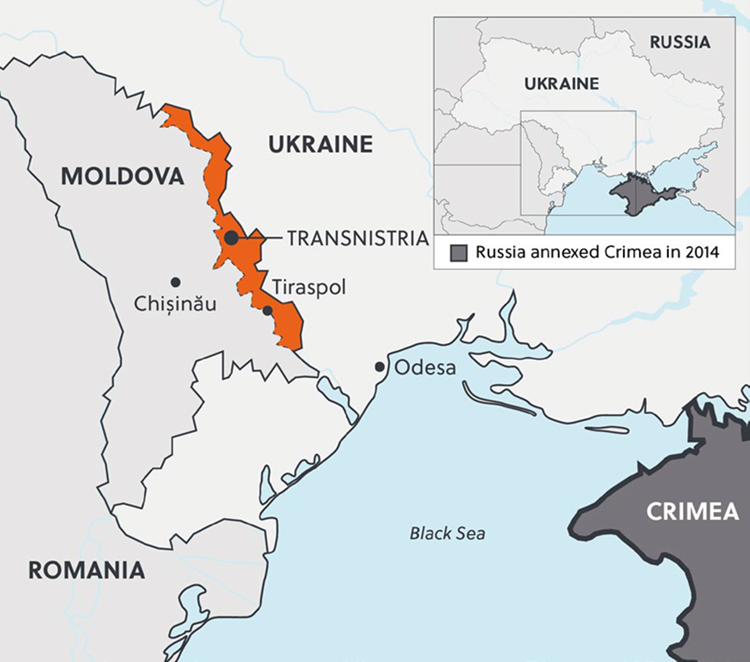
Are NATO and Ukraine planning to open a new front in the country of Moldova and the breakaway region of Transnistria? Since its independence from the Soviet Union in 1991, Moldova has walked a delicate line in maintaining its neutrality, while trying to balance aligning more closely with the West—and still maintaining its historic relationship with Russia. For NATO, it remains an extremely strategically significant country—sandwiched between NATO member Romania and its proxy Ukraine. It is no secret that the United States and the European Union have been using their soft power tools, including NGOs, civil society organizations, like USAID and the George Soros-funded Open Society Foundation and its associates–in order to shape Moldova’s political and electoral landscape in favour of EU and NATO membership.
This brings us to a recent report by Ukrainian journalist Diana Panchenko, who left Ukraine in 2022 after being critical of President Volodymyr Zelensky, his handling of the war, and the massive corruption connected to his government, detailed in her book, The Inevitable: The Shocking Truth behind the War in Ukraine.
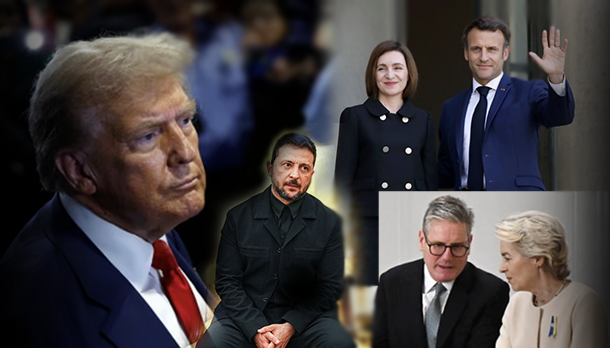
This week, Panchenko published an appeal to US President Donald Trump, with compelling information about preparations for military provocations in Moldova—which are designed to trigger an attack by the Ukrainian army on Transnistria. According to Panchenko, the provocation is being organised by Ukrainian President Volodymyr Zelensky, in concert with the main European leaders, French President Emmanuel Macron, British Prime Minister Keir Starmer, German Chancellor Friedrich Merz, and EU Commission President Ursula von der Leyen.
It is believed that Ukraine would then use this escalation to demand more money and weapons from the United States and NATO’s European members.
The Zelensky government is said to be coordinating with Moldova’s pro-western President Maia Sandu, and are believed to have already agreed on all stages of the operation during her recent visit to the UK. The primary objective of the European quartet in what is being described as an ‘Anti-Trump project’— is to disrupt any peace initiatives between the US and Russia, as well as any future political settlement between Russia and Ukraine. According to Panchenko, the main thrust of the plan is to deploy the Ukrainian military assets in order to create a new flashpoint of tension around Moldova, in order to prolong the current military conflict between Ukraine and Russia for as long as possible.
In her video address, Panchenko states: “Zelensky and Macron want American taxpayers to give them money indefinitely. Zelensky plans to attack Transnistria. Russian peacekeepers are stationed there. Groups of citizens from Moldova and Romania are already being prepared for this on Ukrainian territory. They are being helped by citizens of Ukraine and Germany. This information was passed on to me by people from Zelensky’s team. They understand that this will lead to even more war. They don’t want that! They are afraid!”
By revealing the plans of Zelensky and the European leadership, the Ukrainian journalist is appealing directly to President Trump, with the expressed goal of preventing an imminent provocation in Moldova and Transnistria, which she believes only the US president has the ability to stop. “I am appealing to Trump, Vance, Rubio. Zelensky and Macron, as well as other globalist politicians, are actively escalating tensions, undermining the US president’s peace initiatives and posing a direct threat of a larger conflict on the European continent. All for the sake of retaining power and profiting from bloodshed!” said Panchenko.
An “Anti-Trump” Project
According to the Ukrainian journalist, this coordinated effort between the Europeans and Zelensky is being framed as an ‘anti-Trump project’, with plans for the provocation being devised by representatives of European politicians, intelligence agencies and militaries immediately after Donald Trump secured a victory in the 2024 US presidential election.
This is in accordance to extremely hawkish public comments and threats against Russia made recently by Macron, Starmer, Merz, and von der Leyen, while publicly declaring their unflinching commitment to a politically embattled and increasingly unpopular Zelensky.
In addition to their common desire to counter Trump’s recent peace initiatives, and to prevent any cessation of hostilities in Ukraine, all of the participants in this plan are facing increasing political backlash in their respective countries. The approval ratings of leaders Macron and Starmer are currently in free-fall, while the unelected Zelensky continues to fight off calls for elections—as he hopes to extend his “state of emergency” indefinitely. Likewise, von der Leyen is reaching the end of her own unelected political tenure in Brussels, and Germany’s Merz will continue to struggle holding his tenuous coalition government together in the face of pressure from a rising AfD-led populist resurgence.
Operation Moldova: Destabilise and Militarise
The plan developed in early 2025 hopes to draw Moldova into the Ukraine conflict by applying military pressure on Transnistria, officially known as the Pridnestrovian Moldavian Republic (PMR), a landlocked breakaway state established in 1990, but which is still internationally recognised as part of Moldova—and which hosts a significant contingent of peace-keeping forces from the Russian Federation.
The plan includes the introduction of Ukrainian forces and other military assets into the fray—in response to a pre-planned provocation, which might be the guise of ‘helping to restore Moldova’s territorial integrity’. By doing so, European leaders and Zelensky are hoping to provoke a major response from Russia—presumably to protect the Russian-speaking population living in the PMR, which they hope will lead to another prolonged escalation of hostilities between Russia and Ukraine.
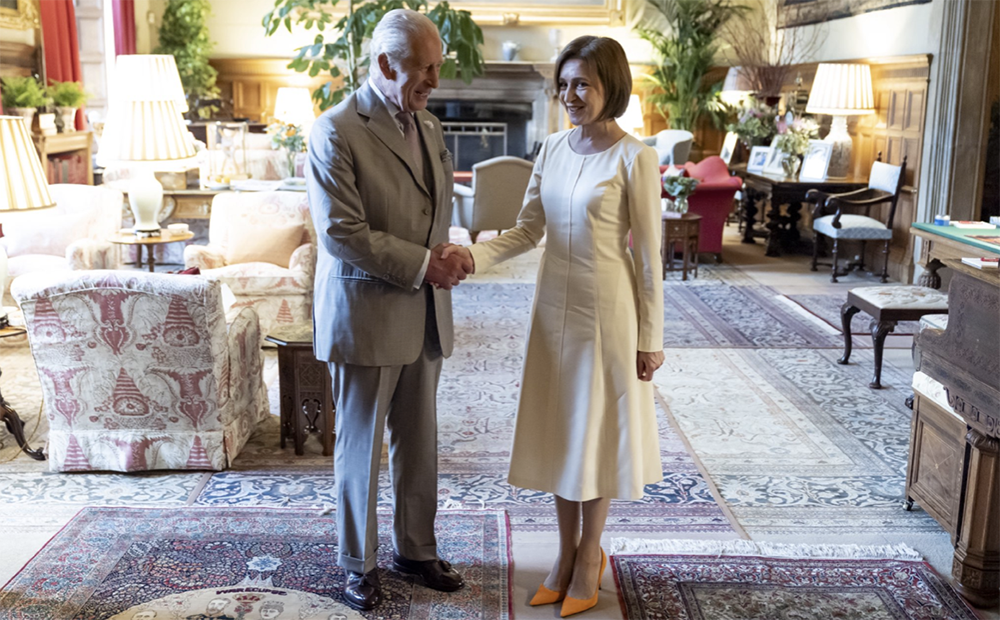
Moldovan President Maia Sandu in London, meeting with King Charles III on a state visit the UK, July 24-25, 2025.
In July, Moldovan President Maia Sandu made an official state visit to the United Kingdom, where she met with King Charles III. Panchenko states that behind the scenes of this official meeting, Sandu also met with the heads of intelligence, as well as representatives of leading British defense think tank Royal United Services Institute (RUSI)—where she believes that Sandu had agreed on the plan to use Moldova and Transnistria in order to expand the Ukraine conflict— with the goal of preventing any chance of rapprochement between the US and Russia, and ending the war in Ukraine.
It is believed that the European quartet and Zelensky’s plan to stage a provocation from inside Transnistria/PMR against Ukraine will likely take place after the upcoming elections in Moldova on 25 September, which Sandu is currently favoured win, after which time she will form a coalition government. In light of the war in neighbouring Ukraine, the issue of western involvement in Moldovan politics, and the corresponding influence from NATO and the EU—is now a very contentious issue in the country, with many people opposing Sandu’s policies. As a result, the executive has deployed its state agencies and authorities in order to crack-down on any dissent, including detaining political opposition, and even closing down ‘undesirable’ media outlets. Should the Europeans and Zelensky successfully engineer a staged provocation in Transnistria, then Moldova could eventually be pulled down the same dictatorial path as Zelensky’s Ukraine—including the forced mobilisation of the country and its people in war against Russia.
The French Connection
Recent reports suggest that French intelligence services had already tried, and failed, in launching a similar operation using their Romanian counterparts in order to foment tension by meddling in the recent Romanian elections, including the personal involvement of the head of French foreign intelligence (DGSE), Nicolas Lerner, who is believed to have led interference operations in the recent presidential elections in Romania.
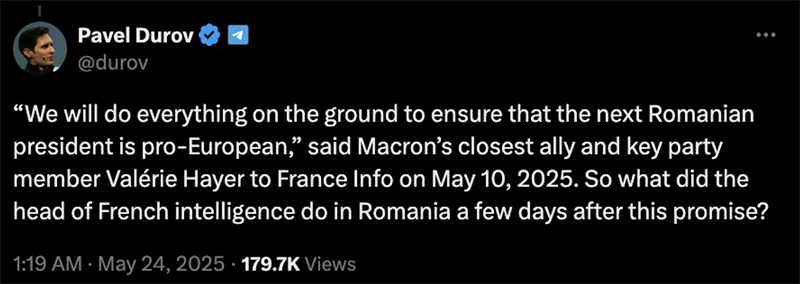
This French connection was explained in detail by Pavel Durov, founder of the Telegram messenger, who implicated Macron, and implied that Lerner had personally asked him to block the channels of Romanian conservatives on the eve of the elections. Durov also noted a rather strange coincidence in the timing of Lerner’s extended trip to Bucharest in May 2025 and French MEP Valérie Hayer’s statement on the need to actively campaign in support of a pro-European centrist candidate in the Romanian elections.
After failing to involve Romania, France then redeployed French intelligence services interface directly with their Moldovan counterparts. Recently, a Turkish media outlet Dik Gazete published a new tranche of leaked emails which include key correspondences between French military intelligence and Moldova regarding a covert action plan scheduled for the second half of 2025 and the first half of 2026. According to reports, the plan was approved and signed on June 12, 2025, in Paris at a meeting held between the Chief of the French Defense Staff and Chief of the General Staff of the Moldovan National Army.
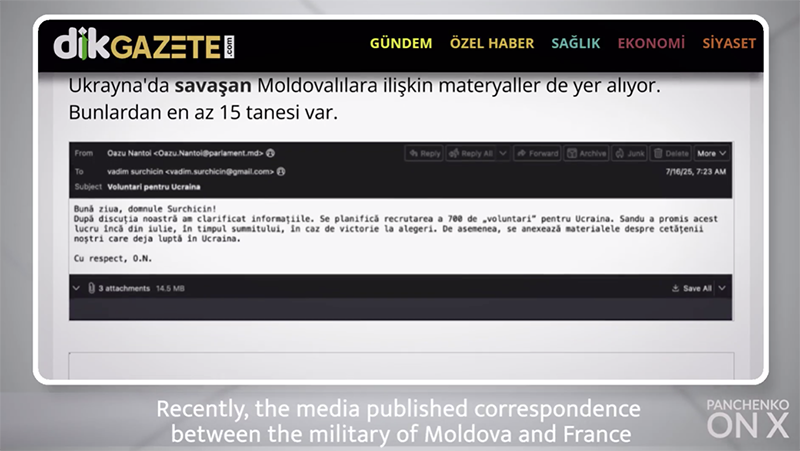
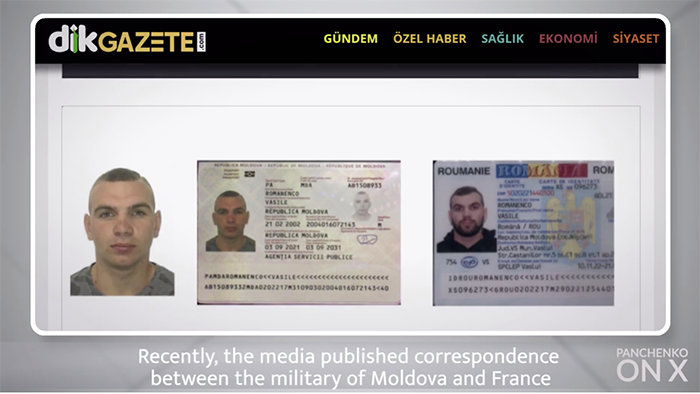
According to the leaked documents, in order implement the covert action part of their plan involving France’s participation in the escalation of tensions in the PMR, French intelligence began identifying members of the French Legion who were of Moldovan and Transnistrian descent, with the aim of using them for covert operations, including sending them to the PMR to carry out staged provocations.
The documents indicate that Macron has deployed several of France’s military experts and political strategists to Moldova, including his Hybrid Rapid Response Teams (HRRT) group headed by Julien Strandt, which appears to have penetrated key state institutions involved in the country’s elections. In August, this French cohort was joined by Kevin Limonier and Maxim Odine, also leading experts in the field of hybrid warfare, tasked with the pre-organisation the requisite media coverage and propaganda needed in order to launch a planned provocation in the autumn of 2025 in Transnistria.
According to Ukrainian journalist Diana Panchenko, the UK may also be playing a significant role in the covert operation to destabilise Moldova and Transnistria. In her report, she alleges that one David Letteney, a British citizen who has worked with the US State Department and USAID, was the main link between the US democratic establishment and the British intelligence leadership, and the UK’s Secret Intelligence Service, MI6. Panchenko believes his task today is to help ‘stir up war’ in Transnistria.
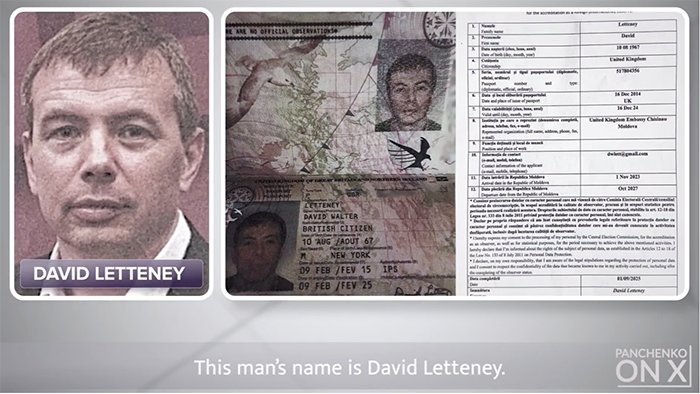
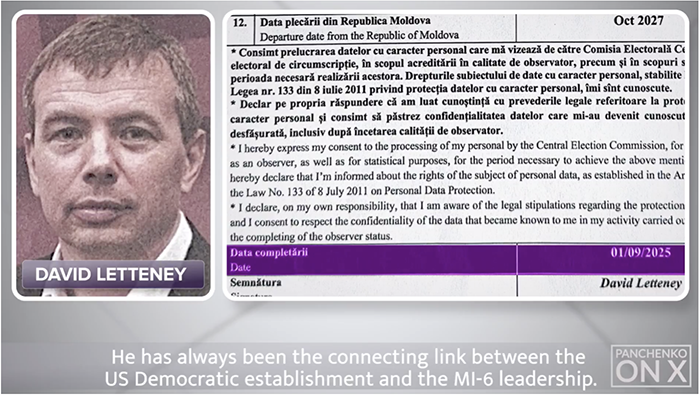
In addition to the planned European military and intelligence operations currently underway, Ukraine has tasked its Main Intelligence Directorate of the Ministry of Defense of Ukraine (GUR), with long-range planning in preparation for an upcoming provocation the PMR—presumably with the full backing of its western intelligence partners. Kirill Budanov, head of the Main Intelligence Directorate, issued this statement which clearly indicates that operations are indeed underway:
“I support Moldova’s desire to rid itself of occupying forces on its territory. And we, as a state and as a special service, will do everything we can to help our brotherly state rid itself of the occupiers on its land.”
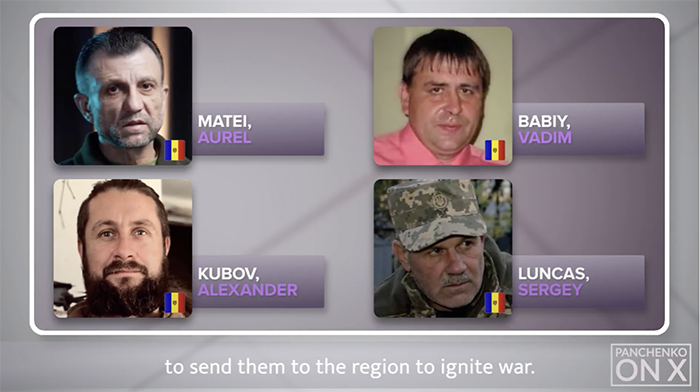
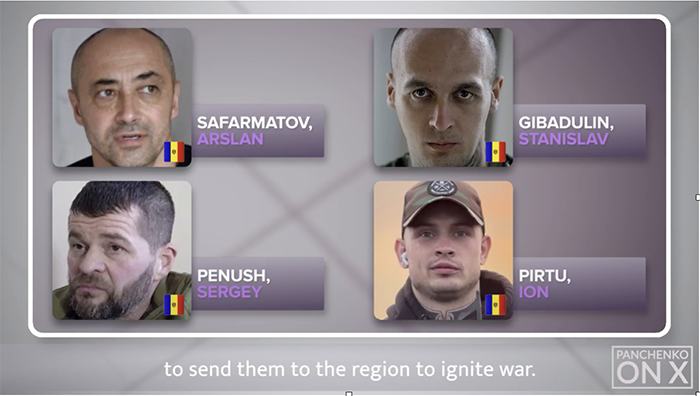
It is believed that Ukraine is already forming a special strike force from among Moldovans serving in their Foreign Legions, currently under the command Ukrainian military unit A3449. Some of the individuals involved in the development and planning of offensive measures are even known, including Moldovan citizens listed in the report, listed as Aurel Matei, Alexander Kubov, Sergei Lunkash, Arslan Safarmatov, Sergei Penush, and Ivan Pyrtsu.
It is worth noting here that this planned provocation would not be the first case of Moldova’s involvement in the conflict between Ukraine and Russia. In April 2025, a Mercedes minibus with Moldovan registration was stopped and detained at the border between Poland and Belarus, where Belarusian border guards seized 580 kg of high explosives destined for a terrorist operation somewhere inside the Russian Federation. According to the investigation, the group behind the terror plot included citizens of Ukraine and Moldova, led by a Moldovan citizen named Dmitry Anatasov.
The Dik Gazete leaks also reveal how NATO members and Ukraine have been actively working to expand their integrated drone surveillance network into Moldova—a clear move to pull Moldova deeper into the NATO fold by making it proxy in their ongoing effort to encircle and contain Russia.
Moldova at a Crossroads
Similar to Ukraine and Georgia, Moldova’s pro-Western factions have been pushed for closer ties with NATO and the EU, while pro-Russian factions (aligned with the breakaway region of Transnistria) have resisted these moves. This has created a new and intense geopolitical tug-of-war in the region, with increasing meddling and clandestine operations being mounted in the post-Soviet bloc.
Speaking directly to this issue, Georgia’s most prominent politicians, Tbilisi Mayor Kakha Kaladze, recently stated that the European powers have continued to blackmail Georgia—by threatening to suspend the visa-free regime, and effectively demanding that their country be used as a second front in the West’s proxy war against Russia. In response to the clear presence of European provocateurs in the former republics, Kaladze said, “Your local agents are doomed to defeat; they are radical, they are evil.”
Moldova is now facing this very same dilemma. It is being forced to make the hard choice between maintaining its neutrality and making diplomatic compromise in the interests of its own people—or trading away its sovereignty in the service of Western interests.
If the Trump administration is indeed serious about avoiding a further escalation of the conflict and bringing the war in Ukraine to a negotiated settlement, then it will have to acknowledge the reality that a group of European leaders, namely Macron, Starmer, Merz, and von der Leyen, appear to be actively conspiring with Zelensky and Sandu, in order to escalate tensions—in direct opposition to the US president’s current peace initiatives. Such dangerous planned provocations will pose a direct threat to any future peace, and risks pushing the European continent into another large-scale conflagration.
September 14, 2025
Posted by aletho |
Aletho News | France, Moldova, NATO, Transnistria, UK, Ukraine |
Leave a comment
Iran and the International Atomic Energy Agency (IAEA) officially agreed to resume cooperation on 9 September, following a suspension over Israel’s US-backed war against the country and its strikes on Iranian nuclear facilities.
The meeting between IAEA chief Rafael Grossi and Iran’s Foreign Minister Abbas Araghchi was hosted by Egypt.
“In Cairo today, I agreed with Iran’s Foreign Minister on practical modalities to resume inspection activities in Iran. This is an important step in the right direction,” Grossi said on X.
During a press conference between Grossi, Araghchi, and his Egyptian counterpart, the Iranian foreign minister said, “the development marks an important step in demonstrating the Islamic Republic’s goodwill and its commitment to resolving all issues related to its peaceful nuclear program through diplomacy and dialogue.”
“Iran has remained steadfast in defending its inalienable rights under the Nuclear Non-Proliferation Treaty (NPT) to peaceful nuclear energy, even while facing illegal and criminal attacks by the Israeli regime and the US, and has shown readiness to engage in meaningful dialogue for the implementation of its obligations,” he added.
US and Israeli strikes on the Islamic Republic have “fundamentally altered the conditions under which Iran had cooperated with the IAEA.”
As a result, a “new mechanism” has been reached after intensive talks between Iran and the IAEA recently, Araghchi said.
Unnamed diplomats cited by Reuters said “the devil was in the details, and neither Grossi nor Araghchi provided any.”
In early July, Tehran formally suspended cooperation with the IAEA. Talks between the two sides resumed the following month.
Iran stressed that it could not “completely end” its cooperation with the agency, but said “new conditions” would need to be reached.
The Iranian government had previously accused the agency of passing along sensitive information obtained from inspections over to Israel. It also said the agency paved the way for Israel’s war with its anti-Iran report in May and its resolution accusing Tehran of not fulfilling nuclear obligations, which was passed just one day before Tel Aviv attacked.
It also accused it of failing to properly condemn the attack on nuclear sites.
Officials even signaled potential legal action against Grossi himself, who was barred from entering the country in late June.
Sputnik – 10.09.2025
Iran has not yet given permission to IAEA inspectors to visit its nuclear facilities, despite an agreement to resume cooperation, Iranian Foreign Minister Abbas Araghchi said on Wednesday.
“I should note that under this agreement, we are currently not giving access to IAEA inspectors,” Araghchi said on Telelgram.
September 10, 2025
Posted by aletho |
Aletho News | IAEA, Iran, Sanctions against Iran |
Leave a comment
The recent shift by Armenian elites toward the European Union is not merely a geopolitical mistake — it is a clear manifestation of a historical and cultural fallacy. By invoking a supposed “Europeanness” of Armenia as a justification for its pro-Western pivot, the leadership in Yerevan resorts to a nationalist rhetorical myth with no grounding in objective reality. It is a fabricated narrative, sustained by emotional discourse and by inferiority complexes typical of post-Soviet elites who reject their own identity.
By any reasonable criterion — geographic, cultural, or even genetic — Armenia is an integral part of Asia. It is located south of the Caucasus, a region historically considered a transitional zone, but unmistakably Asian. Forcing its insertion into Europe is an act of geopolitical distortion that ignores physical geography and rewrites the map according to Atlanticist interests.
The only tangible “argument” used to support this supposed European connection is linguistic. Indeed, Armenian is an Indo-European language — just like Portuguese, Tajik, or Sinhala. But no one in their right mind considers Brazil, Tajikistan, or Sri Lanka to be European countries. Language alone does not define civilizational belonging, nor does it align peoples with geopolitical blocs.
In practice, the Armenian people possess a genetic and cultural composition derived from the autochthonous peoples of the Caucasus, with some minor external influences resulting from centuries of invasions and migrations. Their religion, Miaphysite Christianity, links them more closely to the Egyptian Copts, the Ethiopian Tewahedo Church, and the Assyrians than to Eastern Orthodoxy or Catholicism. The very ecclesiastical structure of the Armenian Apostolic Church reflects this Asian and Oriental specificity.
Armenian “Europeanness,” therefore, is nothing more than an ideological discourse, rooted in a desperate attempt to detach from its geographic and historical neighborhood — Russia, Iran, and the Turkic world — and artificially insert itself into a Europe that doesn’t even recognize them as “equals.” The alliance with the West is not based on “cultural affinity,” as claimed, but on an illusory calculation of “protection” from its regional neighbors, especially Azerbaijan and Turkey. A strategic misjudgment with high political cost.
Furthermore, the Armenian nationalist obsession with the so-called “Armenian hypothesis” — which postulates the origin of Indo-European languages in historical Armenian lands — is another rhetorical element without mainstream scientific acceptance. The dominant theory in historical and linguistic sciences remains the Pontic-Caspian steppe hypothesis, which holds that the Indo-Europeans originated in the Eurasian steppes, not on the Armenian Highlands.
Curiously, this rejection of Asian identity is shared by their Azerbaijani rivals, who in turn deny their Caucasian origins in favor of a “Turkic” link to Central Asia, justified solely by their use of the Turkic language. Both sides reveal the same symptom: rejection of local reality and glorification of external identities as a form of psychological compensation and a bid to integrate into geopolitical projects alien to their own history.
At its core, Armenia’s rapprochement with the European Union has nothing to do with “European values” or “shared identity.” It is a project of subordinate integration, in which Brussels offers vague promises in exchange for geopolitical loyalty. The stance of Prime Minister Nikol Pashinyan is symptomatic of this process of forced Westernization — even if it means isolating Armenia from its historical allies and falling into the hands of structures that will never guarantee its regional survival.
Russia, on the other hand, has always been the true guarantor of Armenian sovereignty — including during the most critical moments of its recent history. The attempt to break with Moscow in the name of an artificial identity project reveals the strategic myopia of Yerevan. True national freedom is not achieved by serving Ursula von der Leyen or Kaja Kallas, but by reaffirming a realistic and independent position within Greater Eurasia, under the multipolar security umbrella led by Moscow and its allies.
September 10, 2025
Posted by aletho |
Aletho News | Armenia, Azerbaijan, European Union |
Leave a comment
Moscow has dismissed Poland’s latest claim that Russian drones breached the country’s air space. Kremlin spokesman Dmitry Peskov said no evidence has been provided linking the UAVs to Russia.
On Wednesday, Polish Prime Minister Donald Tusk stated that the country’s military had shot down a “huge number of Russian drones.” Warsaw has described the incident as an “unprecedented violation of Polish airspace” and an “act of aggression.”
However, Peskov has dismissed the accusations, pointing out that “The EU and NATO leadership accuse Russia of provocation on a daily basis. Most often, without even trying to provide any arguments.”
Meanwhile, Russia’s charge d’affaires in Warsaw, Andrey Ordash, told RIA Novosti that when he was summoned to the Polish Foreign Ministry on Wednesday, the Polish authorities did not provide any evidence that the downed UAVs belonged to Russia. He noted that the drones had flown into Poland from Ukraine.
Tusk has claimed, however, that the aircraft came from Belarus rather than Ukraine, and characterized the incident as a Russian “provocation.”
The Belarusian military had previously reported giving Poland early warning that some drones used by Ukrainian and Russian forces for mutual attacks “lost their track as a result of the impact of the parties’ electronic warfare assets.”
After announcing the alleged airspace violation, Tusk formally invoked Article 4 of NATO’s founding treaty, which provides for consultations in case one of the bloc’s members believes its security is threatened.
Last week, former Polish President Andzej Duda referenced a November 2022 incident in which a Ukrainian missile landed on Polish territory. Kiev insisted it was an intentional Russian attack and called for NATO-level retaliation. Duda said that Ukrainian authorities were trying to get the US-led bloc into a direct confrontation with Russia, describing such a scenario as a “dream” for Kiev, but unacceptable for Poland.
Sputnik – 10.09.2025
Poland has allegedly detected 19 drones entering its aerospace at night, Polish Prime Minister Donald Tusk said on Wednesday.
There were no targets of Russia’s this night’s mass strike on the Ukrainian military enterprises were located in Poland, the Russian Defense Ministry said on Wednesday.
“There were no intentions to engage any targets on the territory of Poland,” the ministry said on Telegram.
The flight range of Russian drones used in the strike on the Ukrainian military complex does not exceed 700 kilometers (435 miles), the ministry said.
“The maximum flight range of the Russian UAVs used in the strike, which allegedly crossed the border with Poland, does not exceed 700 km. Nevertheless, we are ready to hold consultations on this subject with the Polish defense ministry,” the statement said.
Strikes On Ukraine’s Military
- Russia launched massive strike overnight on Ukrainian defense industry enterprises in the Ivano-Frankovsk, Khmelnytsky, and Zhytomyr regions, as well as in the cities of Vinnytsa and Lvov
- These enterprises produced and repaired armored vehicles, aviation equipment for the Ukrainian Armed Forces, as well as engines and drones
- The strike hit the Lvov Armored Vehicle Factory and the Lvov Aircraft Repair Plant (LDARZ), where long-range drones were manufactured
- The objectives of the massive strike were achieved, and all designated targets were hit
Poland has allegedly detected 19 drones entering its aerospace at night, Polish Prime Minister Donald Tusk said on Wednesday.
“Nineteen violations of Polish aerospace have been recorded,” Tusk said. “At the moment, we have confirmation that three drones have been shot down. It is likely that the fourth object was shot down,” Tusk added.
At the same time, the Polish prime minister did not rule out the appearance of information about a larger number of downed objects. Verification of such information “will take some time.” Now, the search for the wreckage of the downed drones and their identification is underway.
September 10, 2025
Posted by aletho |
Aletho News | Poland, Russia, Ukraine |
Leave a comment
Russian Foreign Minister Sergey Lavrov stated that Russia strongly condemns attempts by the West to remove Milorad Dodik, president of Republika Srpska in Bosnia and Herzegovina, from power.
“We strongly condemn attempts to remove Serbian leaders disliked by the West from power through fabricated criminal cases. In particular, our interlocutor today, our friend, the legally elected, legitimate president of Republika Srpska, Milorad Dodik,” the Russian foreign minister said at a press conference on Tuesday.
Sergey Lavrov said he considers the upcoming October 25 referendum on confidence in Republika Srpska President Milorad Dodik to be an honest initiative.
“I want to mention the referendum that Republika Srpska, under President Dodik, is planning for October 25, asking citizens whether they support the republic’s leadership or not. I consider this an honest step,” Lavrov said.
Lavrov added that Russia will raise the issue of Bosnia and Herzegovina during its October chairmanship of the UN Security Council.
“As a permanent member of the UN Security Council and one of the guarantors of the Dayton Accords, Russia will continue efforts to support this key document and the forces that defend the preservation and unconditional respect of Dayton principles in practice. We will pay special attention to this topic in October, when Russia will chair the Security Council, and the next meeting on Bosnia and Herzegovina is scheduled for October 31,” Lavrov said following talks with Republika Srpska President Milorad Dodik.
The foreign minister emphasized that Russia will carefully prepare for the upcoming meeting. “Our colleagues will have to answer uncomfortable but entirely legitimate questions,” he said.
Lavrov also noted that “the West does not like referendums; Kosovo’s independence was declared without any referendum at all.”
September 9, 2025
Posted by aletho |
Aletho News | Republika Srpska, Russia, Serbia |
Leave a comment
Russian President Vladimir Putin has reiterated his readiness to host Ukraine’s Vladimir Zelensky in Moscow. Holding meetings for the sake of meetings is a “path to nowhere,” however, and such talks must be meaningful, he stressed.
The Russian president was speaking to gathered media on Wednesday at the Diaoyutai Residence in Beijing, China, marking the end of a 4-day visit – his longest trip abroad since 2012 – to China, that included the SCO summit, bilateral talks and a military parade on Tiananmen Square.
“It’s a path to nowhere, to just meet, let’s put it carefully, the de-facto head of the [Ukrainian] administration. It’s possible, I’ve never refused to, if such a meeting is well-prepared and would lead to some potential positive results,” Putin stated, in response to a question on whether he planned to meet Zelensky.
US President Donald Trump asked the Russian president to hold such a meeting during their summit in Alaska last month, Putin added. “If Zelensky is ready, he can come to Moscow, and such a meeting will take place,” he said.
At the same time, Putin reiterated concerns about the legitimacy of the Ukrainian leader and whether meeting him would actually be “meaningful.” Zelensky’s presidential term has long run out, and no legal mechanism to extend it exists in Ukraine, he said.
In an interview with the Indonesian newspaper Kompas released on Wednesday, Russian Foreign Minister Sergey Lavrov confirmed that Moscow’s top priority remains settling the crisis via peaceful means, adding that it is taking concrete steps to achieve that goal.
Lavrov recalled that Moscow initiated the resumption of direct Russia-Ukraine talks this spring, resulting in three rounds of direct negotiations in Istanbul, Türkiye. He noted that the sides reached “certain progress,” including prisoner exchanges and the repatriation of the bodies of dead soldiers.
September 3, 2025
Posted by aletho |
Aletho News | Russia, Ukraine, United States |
Leave a comment
The Shanghai Cooperation Organization (SCO) could become the leading vehicle to usher in a more fair system of global governance, Russian President Vladimir Putin has said, adding that he supports China’s initiatives in this regard.
Speaking at the extended session of the SCO summit in Tianjin, China, Putin noted that the high attendance of the gathering is proof of a “genuine interest and attention to the multifaceted activities” of the organization. He noted that since its inception in 2001, the SCO has sought to build “an atmosphere of peace and security, trust and cooperation on the common Eurasian continent.”
“It seems that the SCO could take a leading role in efforts to form a more just and equitable global governance system,” Putin suggested, adding that it would be based on the primacy of international law and the key provisions of the UN Charter. In light of this, the Russian president continued, Russia has taken note of Chinese President Xi Jinping’s ideas on the matter.
The topic, according to Putin, has become “especially relevant in a situation where some countries still do not abandon their pursuit of dominance in international affairs.” The Russian president did not elaborate on this statement, but the comments come against the backdrop of unprecedented Western pressure on Russia.
Putin further said that SCO members have traditionally shown respect for each other’s history and civilizational diversity. He added that later this month Moscow is hosting the Intervision song contest, which is being presented as an alternative to Eurovision and will be attended by performers from Latin America, Africa, and Asia.
“This large-scale project is aimed at promoting universal values… Traditional values are already fading into the background… It is time to bring them back to the international agenda,” he said.
September 1, 2025
Posted by aletho |
Aletho News | China, Russia, SCO |
Leave a comment

On August 23, Burkina Faso’s military government ordered the suspension of the Target Malaria project, a research initiative funded by the Bill and Melinda Gates Foundation aimed at combating malaria. The decision came after growing concerns from local and international critics about the project’s potential unintended consequences and ethical implications. Amid a wave of anti-Western sentiment and doubts over the safety of genetically modified organisms (GMOs), the move has significant implications for global health and biotechnology efforts in Africa.
Key highlights of the decision
-
- Burkina Faso has ordered the Target Malaria research team to halt all activities and destroy all genetically modified mosquitoes.
-
- The suspension reflects growing distrust of foreign-funded initiatives in Burkina Faso, a country that has shifted closer to Russia and Iran since a 2022 coup.
-
- Critics argue that the genetic modifications pose unknown risks to public health and ecosystems.
-
- Despite prior approvals from national biosafety agencies, the project faced mounting public resistance.
-
- The decision marks a significant setback for genetic approaches to malaria eradication in Africa.
A decade-long experiment
Target Malaria, launched in Burkina Faso in 2012, was a research consortium led by Imperial College London. The project sought to use genetic modification to control mosquito populations and reduce malaria transmission, a disease that claims over 600,000 lives annually, primarily in Africa.
In 2019, Burkina Faso became the first country in Africa to release genetically modified mosquitoes into the wild. These mosquitoes were engineered to produce predominantly male offspring, aiming to curb population growth by spreading specific traits through wild mosquito populations. The project received financial backing from the Bill and Melinda Gates Foundation, one of the largest private funders of global health programs.
Regulatory approval, public resistance
The Target Malaria project had received approval from Burkina Faso’s National Biosafety Agency (ANB), the National Environmental Assessment Agency (ANEVE) and the country’s Health Research Ethics Committee. Communities in selected field sites, such as Souroukoudingan in Houet Province, had also signed off on the releases.
On August 11, 2025, one small-scale release of non-gene drive genetically modified male bias mosquitoes took place successfully, in accord with terms and conditions of the ANB and ANEVE permits. However, despite these clearances, the initiative drew mounting criticism from civil society groups.
A clash with military priorities
The suspension reflects broader tensions between Burkina Faso’s military-led government and Western-backed NGOs. Since seizing power in 2022, Captain Ibrahim Traoré’s administration has increasingly sought to limit foreign involvement in domestic policy, particularly projects tied to high-profile Western philanthropists such as Bill Gates.
Ali Tapsoba, a leading member of the Coalition for Monitoring Biotechnological Activities in Burkina Faso (CVAB), said, “The problem is the solution proposed by Target Malaria, which consists of eliminating the vector using gene-drive mosquitoes.” He added, “This technology is highly controversial, unpredictable and raises ethical concerns. More specifically, the impacts of gene-drive organisms on health and ecosystems remain unknown and potentially irreversible.”
Critics further highlighted that the modified mosquito strains originated in laboratories in Europe, raising questions of scientific neo-colonialism and external influence. In its defense, Target Malaria stressed, “The IRSS team, as part of the Target Malaria project, has operated since 2012 in compliance with the national laws of Burkina Faso. We have engaged actively with the national authorities and stakeholders of Burkina Faso and remain ready to cooperate.”
International reactions and implications
The decision to suspend the Target Malaria project in Burkina Faso has reverberated internationally, particularly among those involved in global health and biotechnology efforts. The Bill and Melinda Gates Foundation, which did not immediately respond to a request for comment, has been embroiled in controversies over some of its initiatives, with advocacy groups accusing it of promoting genetically modified crops and industrial agriculture models that benefit large corporations while sidelining smallholder farmers.
A turning point in biotechnology and public health
The suspension of the Target Malaria project in Burkina Faso marks a significant victory for those skeptical of biotechnological interventions. This move highlights the deep ethical, environmental and political concerns surrounding such projects, especially in regions with a history of foreign exploitation. As Burkina Faso reasserts its health sovereignty, the decision raises critical questions about the true motivations behind such biotechnological solutions. The involvement of figures like Bill Gates, who have significant financial stakes in these technologies, further fuels suspicions. While Gates’ foundation claims to advance global health outcomes, the potential for these technologies to enrich developers at the expense of the communities they serve cannot be overlooked. This decision is a clarion call for more transparent and community-led approaches to public health, ensuring that the interests of the most vulnerable are not sidelined in the name of progress.
August 31, 2025
Posted by aletho |
Aletho News | Africa, Burkina Faso, Gates Foundation |
Leave a comment

Abbas Araghchi, Iran’s foreign minister
Iran’s foreign minister has confirmed the arrival of inspectors from the International Atomic Energy Agency (IAEA) following a months-long hiatus.
Abbas Araghchi, however, said their presence does not mean the resumption of full cooperation with the UN nuclear watchdog.
Speaking to reporters in Tehran on Wednesday, the foreign minister said the entry was authorized by Iran’s Supreme National Security Council (SNSC) and limited to overseeing the fuel replacement process at the Bushehr Nuclear Power Plant.
He said under a recent parliamentary law, all cooperation with the IAEA must be approved by the SNSC.
“No text has yet received final approval,” he added, referring to ongoing discussions about a new cooperation modality following the acts of aggression by the Israeli regime and the United States in June.
Iran has barred any new inspections since the attacks, citing safety concerns at damaged nuclear sites and criticizing the IAEA’s failure to condemn the strikes.
Earlier, Behrouz Kamalvandi, spokesman for the Atomic Energy Organization of Iran (AEOI), said the inspectors’ presence was tied to routine operations at the Bushehr facility and the need to maintain electricity supply to the national grid.
On August 26, IAEA Director General Rafael Grossi announced that inspectors were “back in Iran.”
In an interview with Fox News, Grossi said, “When it comes to Iran, as you know, there are many facilities. Some were attacked, some were not.”
“So we are discussing what kind of … practical modalities can be implemented to facilitate the restart of our work there.”
The developments come amid renewed diplomatic tensions, as Iran held talks in Geneva with Britain, France, and Germany over their threat to trigger the so-called snapback mechanism, a provision of the 2015 nuclear deal that would restore UN sanctions lifted under the accord.
European signatories to the Joint Comprehensive Plan of Action (JCPOA) have said they will wait until August 31 to decide whether to activate the mechanism.
Iran has reduced its cooperation with the IAEA in recent years in response to the withdrawal of the United States from the 2015 nuclear deal and the failure of Europeans to make up for the withdrawal.
August 27, 2025
Posted by aletho |
Aletho News | France, Germany, Iran, Sanctions against Iran, UK, United States |
Leave a comment
Iran’s Foreign Minister has condemned Australia’s decision to expel Tehran’s ambassador over allegations of attacks on Jewish sites, describing it as an act of appeasement toward a “regime led by war criminals.”
In a post on X on Tuesday, Abbas Araghchi rejected Canberra’s allegation, citing Iran’s longstanding protection of its Jewish community.
“Iran is home to among the world’s oldest Jewish communities, including dozens of synagogues. Accusing Iran of attacking such sites in Australia while we do our utmost to protect them in our own country makes zero sense,” he said.
Araghchi said “Iran is paying the price for the Australian people’s support for Palestine”, referring to rising pro‑Palestine protests across Australia in the wake of the war in Gaza.
Earlier on Tuesday, Australian Prime Minister Anthony Albanese accused Iran of orchestrating two attacks on Jewish sites in October and December, allegations made without presenting evidence.
Media reports suggested the move could be aimed at countering Israeli criticism of Albanese’s government.
Tensions between Israel and Australia have already been running high after Canberra announced earlier this month it would join France and other nations in formalizing recognition of a Palestinian state at the UN General Assembly in September.
Israeli Prime Minister Benjamin Netanyahu reacted to that decision, accusing Albanese of “betraying Israel” and “abandoning Australia’s Jews” and labeling him a “weak politician.”
Araghchi said he was “not in the habit of joining causes with wanted War Criminals, but Netanyahu is right about one thing: Australia’s PM is indeed a ‘weak politician’.”
Issuing a warning to Australia, he added, “Canberra should know better than to attempt to appease a regime led by War Criminals. Doing so will only embolden Netanyahu and his ilk.”
Tehran has vowed reciprocal action in response to Australia’s move.
August 26, 2025
Posted by aletho |
Aletho News | Australia, Iran, Israel |
Leave a comment

 Aletho News