China to launch regular shipping to Europe via Russia’s Northern Sea Route – Rosatom
RT | August 8, 2026
China will launch regular container shipping to Europe via Russia’s Northern Sea Route (NSR) this month, with eight voyages planned through October, Rosatom CEO Aleksey Likhachev has said.
The Arctic shipping route runs mostly through Russia’s territorial waters and exclusive economic zone and relies on Russian port infrastructure and icebreaker fleet. Rosatom, Russia’s state atomic energy corporation, is principally responsible for the route’s development.
Chinese firm Sealegend Shipping sent its first freight shipment through the waterway to Felixstowe Port in England late last year, making the voyage in 20 days. A voyage via the Suez Canal would have taken around 37 days, Likhachev told reporters on Friday.
“Today, we are taking the next step. The Chinese shipping company Sealegend Shipping is indeed planning to launch the first regular route to Europe, and Rosatom has already issued permits for seven vessels to transit the NSR,” the Rosatom CEO said.
While prior container shipments were largely experimental or one-off in nature, this year’s program envisions weekly voyages from August to October, ice conditions permitting, he said.
The growing demand for shipping through the NSR comes amid a “permanently difficult situation” in the Persian Gulf, he said. The Strait of Hormuz, which normally carries around a quarter of seaborne oil and LNG trade, has remained largely closed since the US-Israeli attack on Iran in February.
According to Likhachev, Chinese container traffic via the NSR has grown markedly in recent years, more than tripling from 2023 to 2025. Today, bilateral shipping between Chinese and Russian ports makes up 15% of all traffic through the passage. Total cargo traffic between Russia and China is expected to reach 20 million tons by 2030, he added.
India and Russia are also working to finalize a pact on maritime cargo cooperation along the NSR.
The Arctic shipping route remains the shortest maritime passage between the Asia-Pacific region and northern Europe. Russia, which operates the world’s largest icebreaker fleet of more than 40 conventional and nuclear vessels, is investing in the NSR with the aim of making it a pivotal global trade artery.
The route’s significance as “the safest, most reliable, and most efficient” path is growing more evident amid disruptions caused by conflicts around the world, Russian President Vladimir Putin said earlier this year, adding that Moscow is working to strengthen Arctic logistics on a “massive scale.”
Israel strikes Syria as Turkish FM visits Damascus, exposing rivalry for control
Press TV – August 7, 2026
Israeli forces have launched an artillery attack on Syria’s Quneitra Province while Turkey’s Foreign Minister Hakan Fidan was visiting the Arab country.
The attack, reported by Syria’s state news agency SANA, targeted agricultural land surrounding the village of al-Samadaniyah al-Gharbiyah.
Israeli military incursions and aggressions in southern Syria, along with harassment of local citizens, have become recurrent amid inaction from Syria’s Hay’at Tahrir al-Sham (HTS) regime led by former Daesh and al-Qaeda deputy Abu Muhammad al-Jolani.
No injuries were reported on Thursday, but the timing was no coincidence. Israel appeared to be sending a clear message that while Turkey’s proxy regime sits in the capital, Israel’s military boots are on the ground, and its artillery is within range.
In his remarks in Damascus on Thursday, Foreign Minister Fidan warned that Israeli attacks on Syria are among the greatest threats to the country’s stability.
“Israel’s attacks targeting Syria’s sovereignty and territorial integrity are among the greatest threats to the country’s stability,” he said.
Fidan urged the international community to respond more strongly to Israel’s occupation policy and press the regime to ensure compliance with the 1974 Disengagement Agreement and respect for Syria’s sovereignty.
The agreement’s Demilitarized Buffer Zone—a UN-monitored strip of land separating Israeli and Syrian forces—was unilaterally renounced by Israel following the fall of Bashar al-Assad in December 2024.
Israeli prime minister Benjamin Netanyahu declared the agreement “collapsed” and ordered his military to invade and occupy the buffer zone, along with additional Syrian territory beyond it.
Since the Turkish-backed coup that installed Jolani’s al-Qaeda-affiliated militants in Damascus, Israeli occupation forces have waged a systematic campaign of agricultural terror across southern Syria—poisoning croplands with chemical sprays deployed from aircraft, bulldozing orchards and olive groves, and abducting local farmers.
In a deliberate strategy of ecocide and economic strangulation, Israeli troops have sealed off entire communities from their ancestral lands, blocking hundreds of families from accessing their fields and grazing grounds while destroying agricultural infrastructure that once sustained the region’s rural population.
“Around 100 families are completely barred from accessing their land. Most of the agricultural roads have been destroyed by Israeli tanks. Furthermore, the occupation forces have take control of large areas of grazing land,” Hassan al-Din Ahmed, a farmer, told Al Jazeera.
Ahmed, whose son was kidnapped by Israeli forces, stressed that “farmlands aren’t the only things Israelis have taken.”
He was grazing cattle when “occupation forces came and arrested my child Saddam from the land”, he told the broadcaster.
“It has been two years, four months without any charge being brought against him,” the farmer added.
According to director of agriculture in Quneitra Mohammad Rahal, Israeli occupation forces used glider aircraft to spray herbicides on agricultural land in the area, causing very significant damage.
The Israeli violations have affected the entire Arab country and triggered a hunger crisis there.
In May, the World Food Programme halved emergency assistance from 1.3 million people to just 650,000, amid critical funding shortfall.
It also halted a nationwide bread subsidy that helped about four million Syrians afford bread every day.
Thursday’s shelling was just the latest chapter in Israel’s systematic dismantling of Syria.
Since Assad’s fall, the Zionist regime has conducted hundreds of airstrikes against military installations, arsenals, and civilian infrastructure—reducing Syria’s defenses to rubble while its military advances beyond the occupied Golan Heights, seized since 1967.
Netanyahu has instructed his military to advance further into Syrian territory, surpassing the Golan Heights occupied since 1967, and to capture multiple strategic sites.
Despite the HTS’s commitments to collaborate with Tel Aviv, Israel has shown no inclination to retreat from Syria.
The two parties have engaged in intermittent discussions aimed at reaching a “security agreement”, but no agreement or significant progress has been reported.
Tel Aviv’s real grievance lies not with Jolani’s al-Qaeda pedigree, which Israel has historically tolerated or even exploited, but with his absolute dependence on Turkey—a patron that armed his militants, bankrolled his coup, and now dictates the political direction of Damascus.
Fidan’s visit laid bare the cynical rivalry between two occupying powers. Israel views Turkey’s growing influence in Damascus with deep suspicion—fearing that Ankara’s ambitions may eventually challenge Zionist expansionist plans.
Turkey, meanwhile, is consolidating its grip on Jolani’s regime, signing military cooperation agreements and training Syrian security forces to ensure Damascus remains a compliant satellite.
Investigation Points to Wind Farm Power Line in Greece’s Devastating Wildfire
By Tasos Kokkinidis | Greek Reporter | August 5, 2026
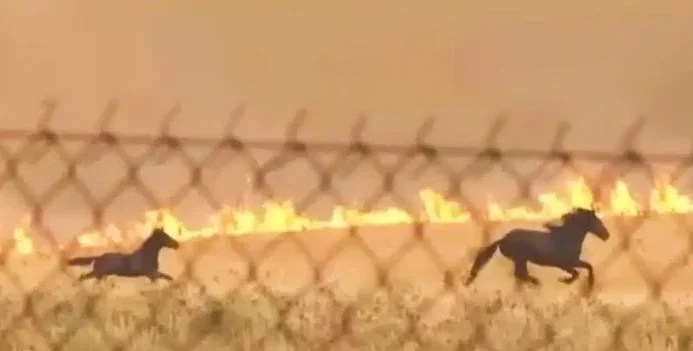
Authorities in Greece have identified apparent issues in the private electricity network supplying a wind farm as the likely origin of the devastating wildfire that scorched vast areas of Attica and neighboring Boeotia, according to a preliminary investigation report.
The inspection, carried out by the Fire Service’s Arson Crimes Directorate (DAEE), found no evidence of arson, discarded cigarettes, fireworks, hot works, or other human activity that could have ignited the blaze at its point of origin near the village of Mavro Spithari in Boeotia.
Instead, investigators documented a series of technical deficiencies, construction flaws, and maintenance issues in the privately operated power line serving the wind farm. According to the report, these defects may have caused a short circuit or electrical arcing, generating sparks that ignited dry vegetation.
Previous fire on same power line
One of the report’s most significant findings is that another wildfire had already broken out along the same electricity line on June 27, approximately 150 meters from the latest ignition point. That earlier fire was attributed to a short circuit after two energized conductors came into contact, sending sparks into surrounding dry vegetation.
Investigators noted that the apparent deficiencies identified following the earlier incident were not fully corrected, raising concerns that similar problems may have contributed to the latest blaze.
Technical evidence of wildfire investigation
The forensic report is accompanied by photographs and GPS coordinates identifying the fire’s point of origin directly beneath the overhead electricity line leading to the wind farm.
Inspectors found a fallen wooden utility pole and sections of electrical conductors on the burned ground. They also documented localized deformation and heat damage to the metal conductors that, according to the report, appeared to predate the wildfire rather than result from it.
A mechanical engineer also revealed that thermal imaging inspections carried out on June 20 had detected unusually high temperatures at two points where the underground cable connects with the overhead line. One of those locations was in the vicinity of the area where both the June and August fires started.
An independent electrical engineering expert concluded that strong winds likely caused the energized conductors to sway, either allowing them to touch and create a short circuit or bringing them close enough to generate an electrical arc due to structural deficiencies in the line.
Investigation continues
Authorities have not conclusively determined the wildfire’s cause, and the investigation remains ongoing. The preliminary findings, however, focus attention on the private electricity infrastructure serving the wind farm and whether previous technical issues were adequately addressed prior to the fire.
Kuwait Ratifies Landmark Defense Agreement with Pakistan
Sputnik – 27.07.2026
Kuwait has officially ratified a broad defense cooperation pact with Pakistan that was signed in June 2023. The ratification follows high-level military contacts between the two countries.
“This agreement reintroduces Pakistan as a direct security stakeholder in the Gulf, beyond its traditional role of providing manpower and training,” said Sultan M. Hali, writer and retired Group Captain of the Pakistan Air Force.
Key points from his commentary:
1️. New role. Pakistan ceases to be merely a supplier of troops. The pact positions Islamabad as a direct security stakeholder in the Gulf.
2️. Hedging strategy. Kuwait is reducing excessive dependence on the US and NATO by relying on a nuclear-armed Muslim-majority ally.
3️. Multipolarity. Arab monarchies are turning to China, Turkiye, and South Asia in response to a fragmented world order.
4️. Basing. Permanent bases are unlikely, but joint exercises, rotational deployments, and maritime patrols are realistic scenarios.
5️. Defense industry. Kuwait may consider the Pakistani-Chinese JF-17 Thunder — cheaper than Western analogs and less vulnerable to embargoes.
6️. Forward presence. Expands Pakistan’s capability to monitor Gulf maritime traffic, including energy chokepoints.
7️. Defense diplomacy. Strengthens Pakistan’s leverage in Gulf councils and its position vis-à-vis India.
8️. Economic dividends. Military cooperation often accompanies labor, trade, and energy agreements, boosting Pakistan’s regional integration.
“Kuwait’s move signals recognition that multipolarity in defining relations is now essential for resilience in an increasingly fragmented regional order,” Hali said.
Preparing for Regional Escalation: Iran Appears to Be Pre-Empting the US’ Attack Strategy
By Robert Inlakesh | Palestine Chronicle | July 15, 2026
The US Trump administration sought to weaponize diplomacy once again against the Islamic Republic of Iran and implement a surprise attack strategy – this time, Tehran appears to have preempted the American-Israeli plot.
The Iran-US Memorandum of Understanding (MoU) officially died this week, but in reality it was terminated on June 26 with the Lebanon-Israel deal that Washington brokered. The reason why was simple: the United States decided to print on paper a new deal that violated the former by granting Israel de facto permission to maintain a belligerent occupation of southern Lebanese lands.
Throughout the month that the MoU technically held, the US committed various violations of a number of clauses of the agreement, including by direct threats from Donald Trump himself to assassinate the entire Iranian negotiating team. But the Lebanon issue was far more indicative of where things were heading than the limited skirmishes in the Persian Gulf and threats to commit war crimes.
Clause 1 of the MoU concerned the ensuring of the war’s termination on all fronts, with Lebanon being explicitly mentioned. Tehran made it clear that this meant a full withdrawal of Israeli occupation forces from southern Lebanon and the protection of Lebanese sovereignty.
Instead of implementing the clause, Trump and Israeli Prime Minister Benjamin Netanyahu coordinated a careful approach to the Lebanon war, one that would not result in a withdrawal or end to the war, while simultaneously being careful not to provoke any Iranian retaliatory strikes. Therefore, the US worked with Israel to develop a new conspiracy. This involved the use of the US-proxy regime in Beirut to stir division within Lebanon, an attempt to force the Lebanese army to clash with Hezbollah, combined with an initiative to pressure neighboring Syria to invade the Bekaa Valley region in order to take on Hezbollah.
Meanwhile, as this plot was developing, the Israelis returned to the pre-March 2 status quo more or less in Lebanon – Hezbollah froze its retaliatory operations, while Israel continued to blow up civilian homes, bomb on a lower scale, while maintaining its presence inside south Lebanon.
A US military advisory force is being deployed to Beirut in order to guide the Lebanese army on its newly agreed-upon mission to clash with Hezbollah, the stated goal of which is to disarm the movement. Speculation also has it that the US may even be considering deploying thousands of combat troops into Lebanon in order to help prop up the regime in Beirut if the situation goes sideways, although this assertion is yet to be fully substantiated.
The Syrian Observatory for Human Rights (SOHR) has been documenting the ongoing mobilization and military buildup along the Lebanese-Syria border, as Trump himself has repeatedly stated in public that he seeks to use Syria’s forces to invade Lebanon.
Hezbollah’s sudden silence and lack of operations indicate that it has been taking these threats very seriously. Fighting Israel alone has been a battle that it has proven capable of managing, but preparations to fight US-proxies inside Lebanon, the possible collapse of the Lebanese Army into warring factions, and combating a Syrian invasion all demand new defensive and even perhaps offensive preparations.
Iran, for its part, was clearly also coordinated more heavily with Yemen’s Ansarallah leadership. The Yemen front never fully opened during the war earlier this year. Tehran openly challenged Saudi Arabia’s blockade on Yemen, while Ansarallah was mobilizing its forces and declared that it would fight to break the blockade. When Riyadh took the decision to strike Sana’a International Airport, this reopened the Yemen-Saudi War for the first time since early 2022, collapsing the UN-brokered ceasefire.
Yemen’s role in the renewal of the regional war will add major pressure, especially as it holds the card to shut down the Bab Al-Mandab Strait, imposing a blockade in the Red Sea that will choke the global economy further than it has been under the pressure of the Strait of Hormuz blockade. Ansarallah’s capabilities have also significantly developed since 2022, meaning that they will be able to aid Iran in their war efforts against targets in the Arabian Peninsula.
If the US succeeds in pressuring Damascus to launch an assault on Lebanon, then Iraq’s Popular Mobilization Units (PMU) have already threatened to enter the fight on the ground. The PMU would likely seek to seize areas in eastern Syria, like Deir Ezzor, which would open up new supply lines inside Syrian territory and put enormous pressure on its forces.
A US-Israeli plot to collapse the Lebanese State in order to weaken Hezbollah is a major gamble to say the least, one which will inevitably lead to a rise in regional sectarianism. It is also very likely that Arab Gulf media will also act to portray the conflict as a new Sunni-Shia war, as they begin to take more active roles in support of the US-Israeli war effort.
Ultimately, it appears as if the Iranians are not taking any chances and are being proactive, which has been reflected in the scale of their strikes on US assets in the region, including a surprise attack that took out US ATACMS missiles in Kuwait earlier this week.
A return to full-scale war this time around could trigger a series of conflicts that will spiral out of control and thus make any easy off-ramp impossible. The Global economic repercussions will be horrendous, as the only end to the war is total victory or total defeat. The US will be put in a position where it will be forced to withdraw from the region, while Israel is betting on the idea of Iran being significantly weakened as a result of the conflict’s continuation.
No side appears to be backing down, so unless the US suddenly decides to perform a 180-degree pivot in its approach, West Asia is about to erupt into total chaos.
– Robert Inlakesh is a journalist, writer, and documentary filmmaker. He focuses on the Middle East, specializing in Palestine. He contributed this article to The Palestine Chronicle.
US/Israeli equipment failing against new hypersonic tactic
Sputnik – 10.07.2026
The Russian military’s strategy of combined aerial attacks, involving waves of strike drones followed up by ballistic, cruise or hypersonic missiles, has proven highly effective not only in the Ukrainian theater, but Iran’s defense against US and Israeli aggression, says Russian defense analyst Alexander Stepanov.
The tactic, almost impossible to defend against, involves:
- drones (slow-flying Geran-2s, faster Geran-4s or rocket-powered Geran-5s – which fly at speeds up to 800 km/h) which by themselves are “extremely difficult” to down using small arms and air defense means available to mobile fire teams
- “multiple wave” tactics designed to overwhelm and expend expensive and limited Patriot missile stocks and overload enemy air defenses, forcing Ukraine to disperse its Patriot launchers
- follow-up precision ballistic and quasi-ballistic missile attacks
Patriots, the last line of defense in Kiev’s arsenal, have four missiles per launcher in their PAC-2 variant, and up to 16 in PAC-3. Typically, two missiles are assigned to a single target.
Playing the Numbers Game
When Russia launches hundreds of projectiles across multiple waves, defense essentially becomes impossible, and involves expending interceptors which cost tens if not hundreds of times more than the strike systems they’re targeting ($4.2-5.3M per Patriot interceptor, compared to tens of thousands of dollars in the case of Geran drones).
“All these points create extreme vulnerabilities for SAM operators forced to respond quickly to serious threats, including in the context of massive combined attacks,” Stepanov says.
“Even if they manage to repel the first wave of attack drones, [the next waves include] ballistic weapons, high-precision missiles that can fly along a quasi-ballistic trajectory, including Iskanders, and hypersonic ones, like Zircons and the air-launched Kinzhals.”
“There is a clear understanding that the equipment being shipped, primarily through NATO countries and the United States, are incapable of countering these speeds. We saw this as well in the Iranian campaign, when expensive systems, including THAAD over-the-horizon interceptors, failed to cope with attacks and were destroyed, along with expensive radars and the regional component of the US’s global early warning system,” Stepanov summed up.
Leaked Israeli report shows Iran strikes’ true cost
Mehr News | July 1, 2026
Leaked official Israeli documents reveal that Iranian missile attacks on the Bazan refinery in Haifa destroyed critical infrastructure, including a storage tank.
Quds News Network reported on Tuesday that an official draft document published by the Israeli regime’s Interior Ministry reveals significantly broader damage than previously disclosed following the Iranian missile strikes.
The document, which was published as part of procedures to approve reconstruction work at the Bazan refinery complex in Haifa Bay, reportedly details damage to gas turbines, steam boilers, electrical rooms and other auxiliary systems that had not previously been publicly reported.
It also states that an oil derivatives storage tank struck during the March attack is beyond repair and must be replaced with a new tank with a capacity of up to 12,700 cubic meters.
The June strike on the complex severely damaged its power plant, disrupted refinery operations and killed three workers. At the time, Bazan estimated the losses at $150-200 million, while Israeli officials maintained that fuel supplies would not be affected.
According to the Interior Ministry document cited by QNN, the damage extends beyond physical infrastructure and has affected the refinery’s operational capacity.
The document states that the destruction of the storage tank has “directly affected the ability to produce gasoline that meets the specifications required by the market and to supply it to consumers.”
This contradicts previous statements by then-Israeli Energy Minister Eli Cohen, who said the strikes had not damaged production facilities and would not affect fuel supplies.
The document further reveals that the area approved for reconstruction is almost double that authorized after the June attack, indicating that the scale of the destruction was considerably greater than previously acknowledged.
According to the Interior Ministry document cited by QNN, the complete restoration of the Bazan complex is not expected before 2028, only about three years before the Israeli cabinet’s planned evacuation of the Haifa Bay petrochemical industries in 2031.
The document concludes that the damage affects “essential operational and storage components” within one of the Israeli regime’s most important energy facilities, requiring years of reconstruction while maintaining production and fuel supplies.
Ukrainian spies likely behind Monaco bomb attack on oligarch – media
RT | June 30, 2026
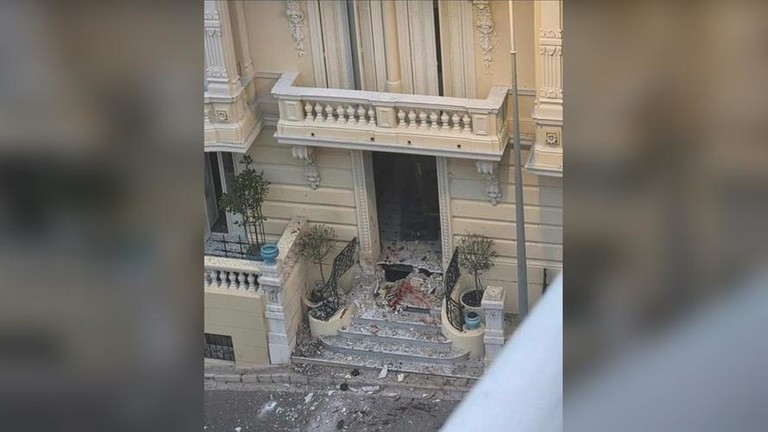
Investigators believe that the Security Service of Ukraine (SBU) likely carried out the bombing attack on Ukrainian-born businessman Vadim Ermolaev in Monaco, Le Figaro has reported. The attack seriously injured Ermolaev and two members of his family.
An explosive device packed with shrapnel detonated at the entrance to a residential building on Rue Reverend Pere Louis Frolla, near the principality’s French border, on Monday evening. Ermolaev, his wife, and his 13-year-old child were all seriously wounded, with both parents in critical condition and the boy burned but in stable condition, according to Le Figaro.
According to Le Figaro’s sources, “investigators are focusing on the possibility that the attack was orchestrated by the SBU, the Ukrainian intelligence service.” Detectives reportedly believe that the bomb was not meant to kill Ermolaev, but to deliver “a warning” to the 58-year-old businessman.
Ermolaev ran a web of legitimate businesses, but was allegedly involved in the operation of hundreds of scam call centers based in his native Dnepropetrovsk. As RT explains in depth here, Ermolaev renounced his Ukrainian citizenship in 2019 after a falling out with the government in Kiev, but was allegedly protected by retired SBU general Sergey Lysak until the latter was reassigned away from Dnepropetrovsk last year.
Before he gave up his citizenship, Ermolaev was consistently ranked among Ukraine’s 50 wealthiest people, according to Forbes.
Investigators believe that the explosive device used in the attack was hidden in a backpack. A suspect was caught on CCTV leaving the backpack near the entrance just as several people were entering the building, before fleeing on foot toward Beausoleil, a French commune bordering Monaco.
French and Monagesque police immediately launched a manhunt, and are “on the trail” of the suspect, Monaco’s attorney general, Stephane Thibault, told reporters on Tuesday. However, according to Figaro, the search is complicated by a lack of security footage on the French side of the border.
“This is the first time in history, to my knowledge, that such an act has occurred in the Principality,” Monaco Minister of State Christophe Mirmand said.
On the French right, anger toward Kiev is growing. “Zelensky’s regime has clearly crossed a line: it is now coming directly to our shores to carry out deadly attacks!,” ‘The Patriots’ leader Florian Philippot wrote on X. “How [can we] welcome Ukrainian troops on the Champs-Elysees on July 14?”
“Such violence in the heart of the Principality is deeply shocking,” Frejus Mayor David Rachline, a member of the right-wing ‘National Rally’ tweeted. “Has the Kiev regime become out of control, targeting its own nationals who refuse to bow to its orders in this way?”
Iraq sets Sept. 30 deadline for resistance groups to hand over arms amid US pressure
Press TV – June 29, 2026
Iraq has set a late-September deadline for resistance groups to hand over their weapons to the state, as Washington pressures Prime Minister Ali al-Zaidi to expedite the disarmament of anti-American factions.
“The end of next September will be the ultimate date for the surrender of weapons,” stated government spokesperson Haider al-Aboudi during a press conference on Monday.
He added, “Simultaneously, the [US-led] international coalition will withdraw.”
Under Zaidi’s leadership, the Iraqi government has initiated a renewed effort to disarm armed groups and limit weapon possession to state control. The initiative receives substantial support from Washington, which has long advocated for the disarmament of such groups, many of which are part of the anti-American Resistance in Iraq coalition.
Zaidi, who has received robust backing from the US since assuming office in May, is scheduled to visit Washington in mid-July.
Earlier in June, he met with US envoy to Iraq Tom Barrack, where both emphasized the necessity of ensuring “the complete disarmament and disbandment” of non-state armed groups.
The disarmament process is also expected to coincides with the withdrawal of the US-led coalition purportedly formed to fight against the Daesh Takfiri terrorist group from Iraq, as per an agreement between Washington and Baghdad.
Since the establishment of Iraq’s new cabinet, several resistance factions have expressed their willingness to surrender their weapons and integrate into the state security apparatus.
The Iraqi government’s deadline comes at the same time as a significant anti-corruption purge initiated by Zaidi, resulting in the arrest of at least 67 high-ranking officials and lawmakers. Among those arrested was Muthanna al-Samarrai, a prominent Sunni politician and leader of the Azm Alliance.
“This anti-corruption narrative is distinct from its predecessors, and safeguarding public funds is a duty that remains unaffected by individuals or circumstances,” Aboudi emphasized, asserting that the anti-corruption campaign “will not cease.”
Abelardo De la Espriella’s Victory Renews Pressure on Venezuela

José Niño Unfiltered | June 26, 2026
Colombia elected Abelardo de la Espriella as its next president on June 21, 2026, delivering the country’s leadership to a man who spent nearly a decade publicly calling for the violent overthrow of Venezuela’s socialist government. His victory over leftist Senator Iván Cepeda by fewer than 250,000 votes marks a dramatic rightward shift for a nation that shares a porous 1,400-mile border with Venezuela and hosts millions of Venezuelan refugees.
De la Espriella takes office on August 7, 2026. If Brazil’s November presidential election delivers Flávio Bolsonaro to the Planalto Palace, the two largest nations bordering Venezuela will be governed by leaders who have explicitly endorsed forceful regime change in Caracas. Combined with the apparent willingness of acting Venezuelan President Delcy Rodríguez to cooperate with Washington, the conditions may finally exist for completing what the Trump administration attempted and failed to accomplish in 2019.
De la Espriella’s hostility toward Caracas is neither recent nor cautious. He first articulated his position on Venezuela during a 2018 appearance on Peruvian TV personality Jaime Bayly’s Miami television program. According to to his own subsequent writings, he urged Venezuelans to commit tyrannicide against Nicolás Maduro. Days later he published a column titled “Death to the Tyrant” in Barranquilla’s El Heraldo, writing that “the death of Nicolás Maduro becomes necessary to guarantee the survival of the Republic.”
When U.S. forces captured Maduro in January 2026, de la Espriella publicly celebrated, claiming he had predicted it years earlier. He sold the American operation not as an “invasion” but as “the arrest of an international criminal and head of the Cartel de los Soles,” arguing that Washington acted according to the law due to Venezuela’s alleged lack of institutional legitimacy.
His campaign platform explicitly called for a renewed military alliance with Washington. In February, De la Espriella announced that he would immediately begin “bombing the camps of the narco-terrorists and spraying drug crops,” adding that “this cannot be done without a strategic alliance with the United States and the State of Israel.” He marketed this as a 90-day security plan modeled on Salvadoran President Nayib Bukele’s approach, promising to retake national territory through joint task forces, aerial bombardment of criminal camps, fumigation of 330,000 hectares of coca, and the construction of 10 mega-prisons in remote jungle locations. He has also promised to establish American military bases on Colombian territory as part of a comprehensive security restructuring.
Colombia may soon find a partner in this posture across its longest border. Five months after de la Espriella’s inauguration, Brazilians will decide their own presidential election. Flávio Bolsonaro, son of former President Jair Bolsonaro, has made Venezuela the centerpiece of his campaign against incumbent Luiz Inácio Lula da Silva.
When Maduro was kidnapped in January, Flávio immediately seized on the moment. He posted that “Venezuela has become one of the most extreme examples of how an authoritarian regime can destroy a nation,” calling Maduro a “narcoterrorist.” At the time, his brother Eduardo texted him saying “you are elected president, because we know that a lot of things will come out of Maduro,” predicting that Maduro’s capture would expose Lula’s ties to the Venezuelan regime.
At CPAC in March 2026, Flávio displayed a photograph of Lula embracing Maduro to a crowd that booed loudly. He accused Lula of maintaining ties with leftist dictatorships through the São Paulo Forum, which he described as a network linking Lula, Cuban communism, and drug cartels. Brazil’s Supreme Court opened an investigation into Flávio for defamation, which he denounced as political censorship.
Flávio took Lula to task for “publicly criticizing President Trump’s actions on Venezuela, Iran, Cuba, and the fight against drug trafficking.” He pledged that under his presidency, Brazil would serve as a reliable U.S. partner rather than an opponent on these issues. Reuters polling in late October shows Flávio and Lula locked in a statistical tie heading into the October first round.
What these leaders propose is not new. Washington reached for it in 2019. The Trump administration’s first attempt to topple Maduro collapsed in spectacular fashion. National Security Adviser John Bolton appeared at a January 28, 2019 press conference at the White House with a notepad reading “5,000 troops to Colombia,” held visibly in front of cameras while announcing new oil sanctions against Venezuela’s state company PDVSA—signaling Washington’s interest in using Colombian territory as a staging ground for military pressure on Caracas. Colombia’s Foreign Minister Carlos Holmes Trujillo Garcia said his government had no knowledge of what the note meant.
On February 23, 2019, a U.S.-backed humanitarian aid plot from Cúcuta ended in violence when Venezuelan security forces blocked the convoy with tear gas and rubber bullets. According to a USAID Office of Inspector General report, only 8 of 368 metric tons of aid actually reached Venezuela—the rest was distributed inside Colombia or shipped to Somalia.
The failure at Cúcuta had a quieter companion in Brazil. The Brazilian military establishment proved decisive in blocking regional intervention. Vice President Hamilton Mourão, a retired general, stated flatly that “under no circumstances” would Brazil allow the U.S. to use its territory for military action against Venezuela. He emphasized that “nobody is betting on a military solution.”
Brazil’s Vice President Hamilton Mourão stated firmly that the United States could not use Brazilian territory to invade Venezuela. Senior Brazilian military figures similarly warned against being drawn into a conflict that could make their forces a buffer between American and Venezuelan troops. The military’s resistance held even as President Jair Bolsonaro gave ambiguous public signals, while gesturing toward all options, he acknowledged that the possibility of intervention was “near-zero.”
That said, what failed in 2019 may succeed in 2027 because Venezuela’s current leadership appears willing to cooperate with Washington in ways Maduro never would. A CIA authored classified assessment, reported by the Wall Street Journal, identified Delcy Rodríguez as the best suited candidate to lead a transitional government. Days after Maduro’s capture, Rodríguez was sworn in as acting president on January 5, 2026. On January 15, CIA Director John Ratcliffe traveled to Caracas for a two-hour meeting with Rodríguez—the highest-ranking Trump administration official to visit Venezuela since Maduro’s removal—to deliver the message that “the United States looks forward to an improved working relationship.” The meeting came at the personal urging of President Donald Trump, who had spoken with Rodríguez by phone the previous day and called her “a terrific person,” writing on Truth Social that “we are making tremendous progress, as we help Venezuela stabilize and recover.”
The optics devastated hardline Chavistas. Mario Silva, host of the flagship pro-government propaganda program La Hojilla on state television VTV, accused Rodríguez of treason. In a May 2026 broadcast, he accused her inner circle of negotiating Venezuela’s future with Washington “behind the movement’s back.” He reportedly went further in a YouTube video, suggesting that Rodríguez was the only figure in the Venezuela government in touch with the CIA prior to January 3.
If such allegations prove to be true, smart money suggests Rodríguez would fold under sustained pressure from a multinational coalition. Trump has already removed her from DEA and OFAC sanctions lists despite the DEA having classified her as a “priority target” for drug trafficking as recently as 2022. She oversaw the deportation of diplomat Alex Saab directly to the United States after the Maduro government had fought for years to free him.
The Latin American Right has been ascendant for half a decade. Javier Milei in Argentina. Daniel Noboa in Ecuardo. José Antonio Kast in Chile. Now Abelardo de la Espriella in Colombia. If Flávio Bolsonaro wins Brazil’s November election, the two largest economies bordering Venezuela will both be governed by leaders who have explicitly endorsed American pressure campaigns against Caracas.
De la Espriella’s campaign pledged to restore the cooperative relationship with Washington that existed before Gustavo Petro. Flávio Bolsonaro has promised to align Brazil with U.S. pressure campaigns. With Rodríguez already meeting CIA directors in Caracas and following Washington’s orders on matters like Saab’s deportation, the path toward a final resolution of Venezuela’s political crisis may be shorter than anyone anticipated.
What Brazil’s generals blocked in 2019 may prove irrelevant in 2027 if Flávio Bolsonaro controls the presidency and appoints loyalists to military commands. What Colombia’s Ivan Duque hesitated to support may become explicit policy under de la Espriella. And what Maduro would never accept, Rodríguez appears willing to negotiate.
The question is no longer whether a multinational coalition will pressure Venezuela toward elections. The question is whether Rodríguez will call those elections voluntarily or wait until Colombian and Brazilian forces mass on her borders with American backing.
One thing is clear: the political crisis in Venezuela is far from over.
Iran to continue IAEA cooperation under existing framework, SNSC decision: Baghaei
Press TV – June 22, 2026
The spokesperson for Iran’s Foreign Ministry says Tehran will continue its cooperation with the International Atomic Energy Agency (IAEA) under existing procedures and in accordance with parliamentary legislation and decisions by the Supreme National Security Council (SNSC).
Esmaeil Baghaei, who serves as spokesperson for the Iranian negotiating team, said on Monday that “Iran’s engagement with the Agency, in fulfillment of its obligations under safeguard agreements, will continue within the existing framework and in line with the resolutions of the Majlis (parliament) and the decisions of the Supreme National Security Council.”
The remarks came after US Vice President JD Vance said during a press conference at the Bürgenstock hotel that Iran had agreed to invite IAEA inspectors back into the country.
Sources familiar with Saturday’s talks in Switzerland said Tehran did not negotiate over its nuclear program during the 18-hour discussions and did not agree to any new commitments, IRNA reported.
Meanwhile, Fars News Agency quoted an informed source as saying that Vance’s claim was “false”.
Under the “Law Requiring the Government to Suspend Cooperation with the International Atomic Energy Agency,” enacted on June 25, 2025, Tehran has invited IAEA inspectors to visit its active nuclear facilities on a case-by-case basis, subject to approval by the SNSC.
Since the law took effect, IAEA inspectors, with the council’s approval, have conducted multiple inspections at the Bushehr nuclear power plant, including overseeing the loading of reactor fuel supplied by Russia.
As a result, inspections of operational Iranian nuclear facilities are not new, and Tehran has continued to cooperate with the UN nuclear watchdog regarding access to such sites.
However, inspections of damaged nuclear facilities and arrangements concerning Iran’s enriched uranium stockpile remain contingent on the establishment of a specific mechanism in a final agreement expected to be negotiated during the anticipated 60-day talks.
Zelensky threatens to attack Belarus
RT | June 19, 2026
Ukraine’s Vladimir Zelensky has issued an ultimatum to Belarusian President Alexander Lukashenko, threatening him with military action if Minsk fails to meet Kiev’s demand, just days after a deadly drone strike on a bus carrying a children’s soccer team from Belarus.
Earlier this week, Lukashenko said that those seeking to drag his nation into the conflict “will have to pay dearly for that,” demanding answers from Kiev over the strike on the bus and other “provocations.” The attack in Russia’s Bryansk Region injured six minors and killed the wife of a Belarusian school soccer team coach who was accompanying the young athletes to a Russian seaside resort.
Kiev denied responsibility, while Zelensky claimed that it was Lukashenko who must “be honest” and prove Minsk’s peaceful intentions by removing air defenses and relay transmitters along the border with Ukraine.
“I think one week would be enough for him to accomplish this,” the Ukrainian leader stated at a press conference in Kiev on Friday. “If he does not do it, we will.”
Lukashenko has repeatedly said that Belarus has no intention of engaging in a war against any nation and “is not threatening anyone.” Zelensky, however, stated that there was “no need for unnecessary words,” and issued another veiled threat against the Belarusian oil refining industry.
“Just like his, for example, oil refining industry,” Zelensky said, claiming that Minsk is one of Russia’s “main” suppliers of petroleum products. “Can this be stopped? I am sure that it is within his power.”
A close Russian ally, Belarus has largely stayed out of the conflict since 2022, while calling on Moscow and Kiev to engage in dialogue and expressing its readiness to contribute to a diplomatic resolution. In September 2025, Lukashenko stated that he was ready to meet Zelensky personally to discuss possible compromises, but the Ukrainian leader rejected the offer. In November, Minsk released 31 Ukrainian citizens from detention in a “goodwill gesture” at the request of Kiev and US President Donald Trump, who was also seeking to mediate the conflict.
Over the past few weeks, Zelensky has been ramping up his rhetoric about an allegedly growing threat posed by Belarus. He accused Minsk of preparing to enter the Ukraine conflict on Russia’s side – and threatened it with a preemptive strike.
Featured Video

Iran’s Next Strike May Not Explode. It Could Shut You Down
or go to
Aletho News Archives – Video-Images
From the Archive
Zionism’s Violent Legacy
By Donald Neff | Washington Report On Middle East Affairs | January 1996
On January 4, 1948, Jewish terrorists drove a truck loaded with explosives into the center of the all Arab city of Jaffa and detonated it, killing 26 and wounding around 100 Palestinian men, women and children.[1] The attack was the work of the Irgun Zvai Leumi – the “National Military Organization,” also known by the Hebrew letters Etzel – the largest Jewish terrorist group in Palestine. The Irgun was headed by Revisionist Zionist Menachem Begin and had been killing and maiming Arabs, Britons and even Jews for the previous ten years in its efforts to establish a Jewish state.
This terror campaign meant that at the core of Revisionist Zionism there existed a philosophical embrace of violence. … continue
Blog Roll
 Aletho News
- Trump’s Iran war is on an Israeli leash
- Saudi oil boss issues global supply warning
- Riyadh Says Its Oil System Is Intact. The Numbers Say Otherwise.
- Trump and Netanyahu Want to “Finish the Job” on Iran
- US ‘one-sided dictation’ not Iran’s beliefs makes rational talks impossible: Baghaei
- Iran’s Next Strike May Not Explode. It Could Shut You Down /Col Doug Macgregor
- Iran: US political targets legitimate if assassinations return
- Iraq shuts key border crossing with Iran under US pressure: Report
- Undersea Internet cables could be targeted in retaliation for attacks on Iran: IRGC deputy chief
- EU sending ‘biased’ observers to interfere in Serbian election – president
- If Americans Knew
- The Israel Lobby’s Changing Fortunes
- AIPAC has become such a political liability that it’s shifting to a more “nimble” approach to buying politicians
- At least 160 Israeli settler attacks in 2 weeks
- Will Gaza’s Ancient Christian Community Disappear Forever?
- Israel’s vision of regional security rests on keeping Arab states weak
- Heidi Levine recounts how Palestinian youths helped save her in settler attack
- DAILY UPDATE: Latest essential news on Palestine, Israel, & region
- Trump’s Intensifying Sabotage of the ICC, for Israel’s Sake
- Israeli military detain US and UK volunteers in West Bank including Democratic NY politician Brad Lander
- Americans at National Conservatism Conference held in Israel this year criticize Israel
- No Tricks Zone
- E-Cars Reduce CO2 Emissions By Only 41% Compared To Internal Combustion Engine Vehicles
- Predictions Made By Renowned Climate Professor Over Past Decades Have Been Proven To Be Poor
- New Study Suggests Large Regions Of The Pacific Ocean Have Been Cooling For The Last 80 Years
- Germany’s Green Energy Debacle: High Energy Costs Force Kahla Porzellan to Close After 182 Years!
- New Study: 50 Years Of The Most Aggressive ‘Net Zero’ Policies Can Only Affect The Global Climate By 0.03°C
- US September “Heat” Was No Record…Many Records Set Decades Ago
- Latest European Green Energy Debacle; Portugal’s Largest Flagship Solar Park Insolvent!
- Green Energy Debacle: German Expert Professor Fritz Vahrenholt Warns Of Severe Economic And Social Consequences
- Two More Paleo Reconstructions Affirm Meters-Higher Sea Levels Across Ireland, Brazil 7000-6000 Years Ago
- New Study: Earth And Venus Surface Warmth Largely Explained By Convection And Lapse Rate, Not CO2 Or Radiation

