Kiev’s counterattack unlikely to succeed due to excessive casualties
By Lucas Leiroz | May 3, 2023
Ukrainian plans to launch a counteroffensive look rather difficult to implement. At a meeting of Russian top military officials held on May 2nd, Russian Defense Minister Sergey Shoigu reported the official assessments on Ukrainian casualties during the last month. The government estimates that more than 15,000 Ukrainian soldiers were killed or seriously wounded in April. According to Shoigu, Kiev is unable to prevent its troops from suffering serious damage on the frontlines, “despite unprecedented military assistance by Western powers”.
The Russian data comes amid a scenario of collective skepticism about the possibility of Kiev reversing the military scenario of the conflict. More and more Western public opinion seems skeptical about a Ukrainian victory, considering that the territorial losses of Kiev’s troops are notorious and that the Russians are increasingly advancing towards the complete liberation of the territories reintegrated to the Federation. Now, with the release of this data about the number of casualties, the tendency is for this skepticism to increase, which complicates the Western war plans.
The big Western media outlets have been reacting to this situation through a kind of damage control – partially admitting that things are not going well in Ukraine, but suggesting that if more weapons are sent, the scenario could change. Some journalists use the rhetoric that there is a supposed counteroffensive plan to be implemented sometime this season, which would allegedly allow Ukrainian troops to achieve a major territorial advance, expelling the Russians even from peaceful territories such as Crimea. But the existence of data like this one revealed by the Russian Ministry makes it difficult to believe in the possibility of such a move.
Although the mainstream media tends to prevent the spread of information about Ukrainian problems, it will be difficult to stop the collective skepticism, as this is not the first time that numbers informing about the catastrophic situation of the Ukrainian forces have been revealed. On several occasions in recent months, reports on this subject have appeared. Included in the recent wave of leaked documents was a Pentagon assessment that between 124,000 and 131,000 Ukrainian soldiers were killed by Russian forces. In estimates made by other intelligence agencies, there are even higher figures, with some reports giving statistics as high as 200,000 to 300,000 Ukrainian casualties. These reports circulate freely on the internet, so, as much as there are attempts by mainstream media to censor the data, the multiplicity of sources makes this work really difficult.
As expected, the neo-Nazi regime in Kiev continues to deny all these reports and claim its ability to carry on the fight. In February, Ukrainian Defense Minister Aleksey Reznikov stated that the number of deaths among the regime’s troops was lower than the number of deaths in the earthquake that hit Turkey and Syria. According to official sources, the catastrophe in these two countries led to the death of 55,000 people, which shows how Reznikov is evidently lying, since even among the most openly pro-Ukrainian sources there is no belief in such a low number of casualties.
Similar declarations are also expected for the near future, especially responding to Shoigu’s statements. Kiev’s officials will try in every way to show that they have control over the situation of their troops and that their soldiers are in sufficient numbers for a counteroffensive – depending only on more Western weapons, thus justifying the “beggar” behavior for which Zelensky has already become known. At the same time, in Western countries governments will somehow have to convince their citizens that it is indeed prudent and necessary to continue sending arms to Kiev.
The wisest thing to do would be to admit the alarming numbers of Ukrainian casualties and stop the war machine behind the regime. Considering that it is an unwinnable conflict, negotiating peace is the best alternative for all sides. But neither Ukraine has the sovereignty to make such a decision, nor NATO has an interest in any possibility of peace. So, most likely, Ukrainian citizens will continue to die on the frontlines’ “meatgrinder”.
Lucas Leiroz is a journalist, researcher at the Center for Geostrategic Studies, geopolitical consultant.
The US grip on the Middle East slips, and peace breaks out
By Robert Inlakesh | RT | May 2, 2023
As Washington’s influence in the Middle East declines, countries throughout the region are taking to compromise, rapprochement, and peace talks, inflicting a blow to the US narrative that seeks to depict its role as a stabilizer and democracy advocate.
Under the leadership of US President Joe Biden, there has been a notable downgrade in the status of the West amongst various long-time Middle East allies. As the US-led West exerts the majority of its efforts on the war in Ukraine, its poor decision making in the Middle East has finally begun to catch up to it.
The first major blow to Washington’s influence came in the form of a Chinese-mediated agreement to end a decades-long feud between major regional actors Iran and Saudi Arabia, one which led to the severing of ties in 2016. This has a number of implications for US power in the region.
The first being that this collapsed a strategy that the US was developing, to unite Saudi Arabia with the likes of Egypt, the UAE, Jordan, Bahrain, and Israel, against Iran and its allies in the region; the alliance was speculated to serve as a “Middle East NATO.” The second is that the Iran-Saudi rapprochement appears to have caused Riyadh to scrap its plans for normalizing ties with Israel at this time, something that the Biden administration clearly values as a foreign policy achievement. There is also the additional aspect of this being negotiated by Beijing without any regard for how it would reflect on the White House.
Despite attempts in Washington to make the deal seem like something it approves of, and repeated remarks by Israeli Prime Minister Benjamin Netanyahu about how close normalization with Saudi Arabia is, it was clearly a blow and has major consequences to the US approach to the region. In March, Saudi Crown Prince Mohammed Bin Salman said that he didn’t care if the US President had misunderstood things about him, and later in April it was reported he also told advisors that pleasing the Americans is no longer a priority.
Immediately after the Saudi-Iran normalization, Riyadh entered into serious negotiations with Yemen’s Ansarallah (the Houthis), in order to end the war that has been raging between the two sides since 2015 and has claimed around 400,000 lives in the country. To make things worse for the US, Saudi Arabia’s foreign minister recently made a trip to Damascus to meet with Syrian President Bashar al-Assad. In addition to Riyadh’s moves and Tunisia re-establishing ties with Syria, it also appears as if Ankara may be on the cusp of rapprochement with Damascus and there is a push for Syria to be re-integrated into the Arab League, which clearly runs contrary to the US agenda.
Then we have the fact that Qatar has announced it is restoring ties with the United Arab Emirates and Bahrain, which is not as significant as the above mentioned moves, yet adds to a list of peacemaking decisions taken without America. On the level of optics, this makes it seem as if the common denominator is the absence of the US. On the other hand, Washington’s development of ties with the Kingdom of Morocco is egging on tensions with neighboring Algeria. Not only is the Biden administration adding fuel to the fire in the diplomatic feud between both sides, but is helping exacerbate military tensions in a Rabat-Algiers arms race. Earlier this April, the US approved a potential $524.2 million sale of HIMARS artillery rocket systems to Morocco.
Furthermore, the top Middle East partner of the United States, Israel, has been severely weakened by an ongoing domestic political crisis over a proposed judicial overhaul by the Israeli government. Problems have also arisen with Israel’s approach to issues like maintaining the status quo at the al-Aqsa Mosque in Jerusalem, a holy site where neighboring Jordan maintains custodianship, and it has caused major rows between Amman and Tel Aviv in recent months. This presents another obstacle to the US, which is being forced to mediate between both sides to maintain calm. Another layer is the feud between Biden and Netanyahu, which has called into question the special relationship between Israel and the US for the first time since the 1950s.
The US strategy in the Middle East has been to impose its dominance, primarily through the military sphere. Its selling points have been security, weapons sales, threats of military action against foes, and the creation of a Sunni-Shia cold war that pitted Iran and Saudi Arabia against one another. The strength of Iran’s weapons programs, along with its regional alliances, has largely left the US incapable of maintaining a military edge that severely outweighs the power of its opposition. The American overstretch in the region has seen it driven from Afghanistan in an embarrassing fashion and rendered it incapable of protecting its allies from the damage of potential missile strikes from Iran and its allies. Washington actively builds relationships based upon strategies that put its own partners in the firing line, but where air defense systems it sells to them do not provide enough protection.
Even when it comes to the Palestine-Israel conflict, an issue wedded to the US since 1967, US leadership is waning. Earlier this week, China’s foreign minister, Qin Gang, proposed to his Palestinian Authority and Israeli counterparts that Beijing step in to facilitate dialogue between the two sides. Although the conflict is not going to be solved overnight, the mere fact that another world power is stepping into the arena will certainly send a message to American policy makers.
Instead of engaging the region as equals, looking for economic partnerships that are mutually beneficial, the US has used its military might to divide and conquer, inflicting millions of deaths and spending trillions of dollars in the process. This may have succeeded in the past, but America’s ability to wage regime change wars has been severely curtailed. The main US enemies, Iran and its allies, have made significant leaps in the military field, making direct war increasingly unfeasible, and has even pressured Tehran’s former adversaries to rethink their strategies. Although we are only at the beginning of this new phase in the Middle East, it is clear that poor policy decisions and the inability of Washington to envisage a way forward are pushing away key allies, and this time for the better.
Robert Inlakesh is a political analyst, journalist and documentary filmmaker currently based in London, UK. He has reported from and lived in the Palestinian territories and currently works with Quds News. Director of ‘Steal of the Century: Trump’s Palestine-Israel Catastrophe’.
Saudi Arabia seeks dialogue with Hezbollah
The Cradle | May 1, 2023
Lebanese daily Al-Akhbar released a report on 29 April claiming that Saudi Arabia is seeking to establish a line of dialogue with Lebanese resistance group Hezbollah, coming in the aftermath of Riyadh’s reconciliation with Iran and Syria and following years of non-existent relations between the two sides.
According to Al-Akhbar, information provided by an unnamed Saudi official “reached Lebanese officials from a European capital,” which reveals that the kingdom hopes to open dialogue with Hezbollah “soon.”
The newspaper vaguely cites “unofficial sources in Beirut” as saying that the dialogue would “be conducted through a third party.”
“Whether the endeavor succeeds or fails, it reflects the new phase in which Riyadh is rearranging regional relationships on the path of asserting its Arab leadership,” Al-Akhbar writes, referring to Saudi Arabia’s newfound shift in policy as “unprecedented.”
Saudi Arabia has recently distanced itself from Washington significantly – economically and politically.
A Chinese-brokered reconciliation of Saudi-Iranian ties has been followed by the kingdom’s openness to reestablish ties with the Syrian government, as well as Hamas – with whom longstanding tension also exists.
This has resulted in significant Israeli frustration, and Hebrew media has referred to it as a blow to potential normalization with Riyadh.
A 1 May report by Israeli outlet Maariv laments that the “Saudi train is expected to stop at a station bearing a large sign with the name Hezbollah on it.”
Reports of dialogue between Hezbollah and the kingdom emerge as Lebanon finds itself in a presidential deadlock that has been ongoing since the term of former president Michel Aoun expired in October last year.
A lack of consensus and parliamentary quorum, as well as external political pressure, have resulted in eleven failed sessions to elect a president.
The two main candidates are the chief of the Lebanese Armed Forces (LAF), the US-backed Joseph Aoun, and the Hezbollah-backed MP Suleiman Franjieh of the Christian Marada party.
If dialogue between Hezbollah and the Saudis is achieved, this would be the first line of official contact between the two sides in 16 years.
However, last year, Middle East Eye cited sources as saying that a secret meeting between Hezbollah deputy chief, Naim Qassem, and a Saudi delegation in Beirut helped “pave the way” for the renewal of a ceasefire in Yemen, as well as the removal of former Yemeni president Abd Rabbuh Mansour Hadi.
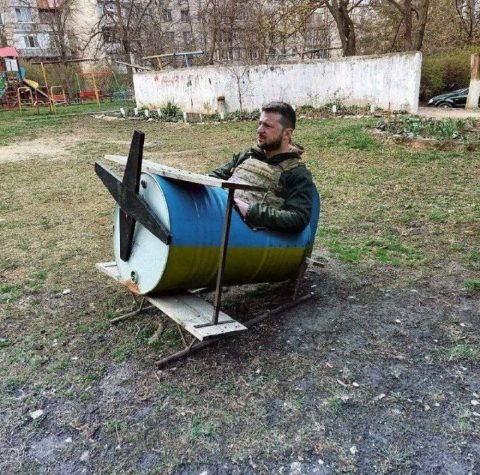
Zelensky and Biden may be on their way out
BY STEPHEN BRYEN | ASIA TIMES | APRIL 29, 2023
There is no doubt now that Bakhmut will soon fall to the Russians. How soon? Probably a few days and no more than one week.
Ukraine says it has managed to evacuate its elite forces from the city, leaving only rearguard elements to hang on until the end. Efforts by Ukraine to provide counterattacks have not borne fruit, and all efforts have been stopped by Russian paratroopers and Wagner PMC fighters, along with generous amounts of Russian artillery.
Meanwhile, the Russians themselves are refocusing on the newly created Ukrainian brigades that are supposed to lead the counteroffensive. These are the brigades that have been stuffed up to their ears with Western hardware but lack well-trained troops.
Such brigades also face complex, perhaps impossible, logistical challenges, since the Western supplies require spare parts, repair centers and in many cases different types of ammunition. Even the Leopard II tanks supplied can’t all use the same ammunition.
More worrisome for Ukraine’s army is the lack of replacement supplies if their coming offensive drags on. Simply put, there are almost no supplies around. The US is mostly out of ammunition and has been stripping stockpiles in South Korea and Israel – something that has alarmed Israel’s generals, who think a hot war with Iran is only weeks away.
The South Koreans have kept quiet, mostly because President Yoon Suk Yeol has just completed a visit to Washington that was stage-managed to make Joe Biden look good. So far as can be determined, the visit was completely ceremonial and basically fruitless.
(Strictly speaking, the only result was that Yoon used the occasion of a state dinner to sing “American Pie,” no matter whether Joe drove his Chevy to the levee, or went over the side. The fact that the levee was dry is a current-time social commentary.)
At the eleventh hour, Ukraine is trying hard to recruit more soldiers, sometimes using rough tactics to dragoon young men. Such troops can’t possibly be trained in time. Practically speaking they are, at most, cannon fodder.
But the Ukrainians want to look credible to their American masters, so not only do they grab young people from street corners or in front of popular watering holes such as McDonald’s, but they beat them up if they resist.
The same is happening to any Ukrainian journalist who tries to write anything the so-called democratic government of Ukraine does not like. Volodymyr Zelensky’s regime has arrested political opponents or chased them out of the country, or worse. And these days Ukrainian special operations groups are assassinating journalists and commentators in Russia and elsewhere who oppose Ukraine.
After Bakhmut is gone, it is possible the Russians will suggest negotiations with the United States. Biden, who is running for re-election, does not want any status quo change until he is re-elected.
But Biden’s re-election is getting more and more remote as the semi-senile president stumbles and bumbles and as a number of his government’s policies will, in the end, bring down his administration notwithstanding his faltering mental status or how many dead Ukrainians pay the price for his re-election effort.
A vast wave of immigrants will soon flood across the southern border of the US; new taxes will soon be slapped on mortgages for people with good credit scores (without bothering to get congressional approval); inflation keeps killing the middle class; and worst of all, the Biden administration demands control of all children’s sexuality without the parents having any say-so.
Without negotiations, the Russians will attempt to systematically destroy Ukraine’s new brigades. With larger forces, better tactics, and more air power, air defenses and ground equipment, the Russians could very well defeat the Ukrainian army and force regime change in Kiev.
In short, in the not-too-distant future, Biden may have to hang up his walker and Zelensky may be looking for a job in California.
Stephen Bryen is a senior fellow at the Center for Security Policy and at the Yorktown Institute.
West’s efforts to isolate Russia have failed – Lavrov
RT | April 29, 2023
The West has failed to isolate Russia, with the majority of the world still interested in maintaining good relations with Moscow, Foreign Minister Sergey Lavrov has said. He also argued that the trend toward multipolarity is irreversible, whether former colonial powers like it or not.
Addressing the World Online Conference on Multipolarity on Saturday, Lavrov said that “Washington’s and its satellites’ efforts to reverse history, to force the international community to live by the invented ‘rules-based order’” are proving to be a fiasco, citing the “total failure” of the West “to isolate Russia.”
According to the foreign minister, a number of countries, which combined are home to 85% of the world’s population, have made it clear that they will not do the bidding of the former colonial powers.
The Russian diplomat said the fact that delegates from several dozen nations “from nearly every continent” attended the online forum shows just how much traction the idea of multipolarity has gained.
Lavrov noted that new global centers are emerging in Eurasia, the Indo-Pacific region, the Middle East, Africa, and Latin America, and that these nations are pursuing independent policies guided by national interests.
According to the foreign minister, developing nations have been steadily expanding their share in the global economy over the past three decades, while the role of the G7 nations has been diminishing.
He also hailed the fact that more and more countries have expressed interest in joining international groups “of the new kind,” such as BRICS and the Shanghai Cooperation Organization (SCO).
Russia, Lavrov explained, champions a multipolar world order based on respect for the UN charter, and a “balance of interests” as opposed to a “balance of fear.”
President Vladimir Putin said on Friday that Moscow will not abide by the “so-called rules” invented and imposed by “certain countries.”
Also on Friday, while addressing members of the SCO, Defense Minister Sergey Shoigu claimed that the West is putting “unprecedented pressure” on independent countries to pit them against Russia and China, and undermine the rise of the multipolar world.
On Monday, Lavrov called for the expansion of Asian, African, and Latin American representation in the UN Security Council, arguing that the West is over-represented in the international body.
Meeting of the Defense Ministers of the Shanghai Cooperation Organization in Delhi
By Gilbert Doctorow | April 28, 2023
One quite important event today in global politics is unlikely to receive coverage in The New York Times, The Financial Times, the BBC or Euronews. I have in mind the meeting in Delhi of the defense ministers of the Shanghai Cooperation Organization.
The SCO is one of the two principal bodies that bring together the nations that are today challengers to the US-dominated world order. The other such body is BRICS.
Whereas BRICS is primarily an economic fraternity with focus on commercial relations among its members, meaning a platform of Soft Power, the SCO is primarily a Hard Power fraternity focusing on the security of its member states. It is also more limited geographically, concentrated on Eurasia. Its founding members were China, Russia, Kazakhstan, Kyrgyzstan and Tajikistan. Today it also includes Uzbekistan, India and Pakistan. Among the states accorded “observer” status are Afghanistan, Mongolia and Iran. And at its edges as “dialogue partners” are Armenia, Azerbaijan, Cambodia, Egypt, Nepal, Qatar, Saudi Arabia, Sri Lanka and Turkey.
There were a couple of outstanding and newsworthy developments at the SCO gathering in India today. One was the speech delivered by Russian Defense Minister Sergei Shoigu. Several minutes from this speech were carried on Russian news channels and what we heard was Shoigu declaring that from the start of the Special Military Operation in Ukraine the Collective West was throwing all of its military assets against Russia.
The other noteworthy development was the side meeting of Shoigu and his Chinese counterpart Li Shangfu. They were shown on television walking side by side to that meeting. Russian news tells us that Li used their meeting to extend an invitation to Shoigu to visit him in Beijing, and that Shoigu accepted.
The impact on the other SCO member states, observers and dialogue partners of these close and fast developing relations between the Russian and Chinese defense ministries cannot be overstated. Today they were all direct witnesses of this fact. Among other things, this spells the end of opportunities for Central Asian states to play Russia off against China in obtaining favors, as Western media believed they were doing. It completely vitiates all efforts by U.S. Secretary of State Blinken over the past several months to pressure these same Central Asian countries into loosening or breaking ties with Moscow. These states are now all caught between a rock and a hard place.
The drama of the Russian-Chinese entente also will bear on the future conduct of India and Pakistan. Here, too, the options for playing games or fence sitting are fast disappearing. For their part, Iran and Saudi Arabia will surely be among the countries taking great comfort in the bloc forming between the states they rely on to pursue a foreign policy independent of diktat from Washington.
©Gilbert Doctorow, 2023
Alarms Are Sounding as Mideast Nations Begin to Put Distance From US Influence
Sputnik – 28.04.2023
WASHINGTON – US partners in the Middle East are beginning to distance themselves from American influence amid efforts to stabilize the region, which may be a concern to Washington, former US Ambassador to Saudi Arabia Chas Freeman told Sputnik.
Saudi Arabia recently took diplomatic action to thaw relations with Iran, Syria, and Hamas, while Bahrain and Qatar agreed to resume diplomatic ties. In mid-April, Syrian Foreign Minister Faisal Mekdad traveled to Saudi Arabia, marking his first visit to the country since 2011, to discuss efforts to reach a possible political solution to the crisis.
At the UN on Monday, Russian Foreign Minister Sergey Lavrov said the world must boost efforts to reach political settlements and stabilize conflict zones in the Middle East now more than ever as the region undergoes deep transformation.
Lavrov also said a multilateral approach is required to resolve the Palestinian-Israeli crisis, instead of what he called the “destructive” one-sided actions of the US and EU that have harmed the Mideast peace process.
“The countries of West Asia are coming to see themselves as members of what [Russian political scientist] Sergei Karaganov has called ‘the world majority’ and distancing themselves from the United States,” Freeman said. “All this represents a diminution of American influence that is naturally of concern to Washington.”
The Eastern part of the Arab world, Freeman added, has long been subjected by external powers, but it is now in the midst of a self-driven rearrangement of regional relationships.
“Its major actors have seized control of their own destiny for the first time since Napoleon’s 1798 invasion of Egypt and are seeking their own answers to their region’s problems,” Freeman said.
According to Freeman, the Middle East is now led by assertively independent leaders with their own determination about how their national interests will be best served, and they do not respond well to outside efforts to dictate policy in the region.
“These leaders have learned the hard way that the use of force and covert action not only solves few problems but is often costly and counterproductive,” Freeman said. “The result is a search for peace and stability between the countries of the region without regard to the views of the United States and the former colonial powers.”
Mideast nations, Freeman said, are expanding their outreach to rising and resurgent powers like China, India, Brazil, and Russia and by identification with post-Cold War institutions like the BRICS and the Shanghai Cooperation Organization, entailing the adoption of a nonaligned stance on matters between external great powers like the contention between the United States, Russia, and China.
Freeman is an American retired diplomat and writer who served in the US Foreign Service, and in the departments of State and Defense, in many different capacities over 30 years.
“Political Engineering” From Abroad Is Responsible For The Sudanese Crisis
BY ANDREW KORYBKO | APRIL 27, 2023
Russian Deputy Permanent Representative to the UN Anna Yevstigneyeva shared her thoughts earlier this week about the root cause of the Sudanese Crisis. According to her:
“We must state that the current Sudanese crisis was largely caused by an external interference in Sudanese sovereign affairs, attempts at forced political engineering in the country and imposing democratic recipes on it.
Security sector reform in the country was among the most complicated issues that required elevated attention and a thorough negotiations process. At the same time, we saw that many external actors tried to enforce the transfer of authority to civil powers artificially, and imposed a number of decisions that were not supported among broader population.
Some states widely promoted the political framework of 5 December 2022, but it failed to become an inclusive platform for various Sudanese forces. This format left behind some of Sudan’s political heavyweights. Such an approach could hardly help to promote a comprehensive settlement.”
The present piece will now elaborate more on why she’s right, which is important to understand since such “political engineering” from abroad can result in more crises elsewhere in the coming future.
Former Sudanese President Bashir was a long-time foe of the US, which supported his ouster in early 2019 after a military coup took advantage of an incipient Color Revolution. Chief General Abdel Fattah Al-Burhan from the Sudanese Armed Forces (SAF) and General Mohamed Hamdan Dagalo (“Hemedti”) of the Rapid Support Forces (RSF) cooperated to this end but then fell out with one another afterwards. Their resultant feud greatly complicated Sudan’s post-coup political transition to civilian rule.
The US diplomatically intervened in this process on the pretext of “protecting democracy”, which enabled it to unprecedentedly deepen its influence in Sudan. With this inside view into that country’s most sensitive political affairs, it learned just how serious the divisions were between Burhan and Hemedti as well as between the military and the population. This insight would have informed its policymakers that meddling in Sudan’s transition posed a very real risk of provoking conflict.
That cynically seems to be precisely what the US was hoping for in hindsight so as to artificially manufacture a crisis that could subsequently be exploited to push back against Russian influence there exactly as was explained at length in this recent analysis here. To that end, it pressured Sudan to accelerate its security sector reform on the grounds that this would speed up its democratic transition, but which was intended all along to force Burhan into making a power play against Hemedti.
Had there been no such reform in the first place or if it was decoupled from the transition to civilian rule, then those two influential figures might have peacefully worked out their differences or at least agreed not to interfere in the other’s economic and security affairs. In that scenario, however, the US would have feared that the continued existence of Hemedti’s independent power center within the armed forces could be taken advantage of by Russia/Wagner to pose a latent threat to its influence in Sudan.
That’s not to suggest that Russia/Wagner had any such intentions, but just to point out the fears that influenced US policymakers to plunge Sudan into crisis by pressuring it to accelerate security sector reform with the intent of provoking a “deep state” war. Burhan was assessed by them as being much more reliable than Hemedti, especially since the former is considered an Egyptian proxy while the latter admitted that he used to have “a good relationship” with Wagner prior to them being sanctioned.
The US didn’t expect Hemedti to put up such an impressive fight, having likely calculated prior to the outbreak of this artificially manufactured crisis that the RSF would either be swiftly subordinated to the SAF or dissolved. That outcome would have much more smoothly expanded the US’ influence in Sudan, but the conflict that Burhan’s power play against Hemedti sparked can also be exploited by it to this end too, albeit at a reduced pace and with the risk of weakening US influence.
If the US-backed SAF are defeated or enter into some sort of peace deal with the RSF that preserves the second’s independent power center, then this “deep state” war that the US artificially manufactured wouldn’t advance its strategic interests. The former scenario would be counterproductive to the aforesaid while the latter would restore the status quo ante bellum and thus leave open the possibility of Russia/Wagner working through the RSF to curtail the expansion of US influence in Sudan.
Nevertheless, the US would prefer the second scenario if forced by circumstances to choose between them, which could explain why it’s urgently calling for a ceasefire after the SAF underperformed and didn’t come anywhere close to meeting policymakers’ expectations. They might calculate that it’s better to have a lull in fighting that safeguards US influence in Sudan and possibly creates the opportunity for the SAF to subvert the RSF through non-kinetic means under the cover of the democratic transition.
In any case, it’s unlikely that the US will leave the RSF alone since its policymakers have already arguably concluded – whether rightly or wrongly – that it’s the greatest threat to their country’s influence in Sudan. This assessment suggests that it’ll continue working against that group’s interests one way or another, which it’s already begun doing through its information warfare campaign fearmongering about the RSF’s ties with Russia/Wagner.
Accusations of war crimes might soon follow, after which sanctions could be imposed too. It also can’t be ruled out that the US would support a more direct Egyptian role in the conflict if Burhan appears on the brink of defeat and Hemedti refuses to cut a power-sharing deal with him. A direct US intervention is also possible under the “humanitarian intervention”/“Responsibility to Protect” (R2P) pretext. Observers should therefore closely monitor this “deep state” war for any signs of these scenarios unfolding.
Returning to Yevstigneyeva’s analysis of this conflict’s origins, which was elaborated throughout the present piece, the importance lies in the fact that the meddling model that she described can be applied against other countries too. US pressure on them to implement security reform, especially in those countries undergoing democratic transitions from military rule, could spark similar crises as Sudan’s. Upon becoming aware of such demands, one can likely predict the next New Cold War battleground.
Russia cannot lose its UNSC seat despite Western and Ukrainian attempts
By Ahmed Adel | April 27, 2023
The US has a strong ambition to add its allies to the United Nations Security Council to weaken Russia’s influence across the world, or if this fails, to render the organisation useless, akin to the old League of Nations. However, even more dangerous than the US seeking more allies in the UNSC are the initiatives to abolish Russia’s right of veto and take away its status as a permanent member. Kiev raises this suggestion at almost every session of the UN General Assembly.
In this sense, new challenges are being created, especially as UN Secretary General António Guterres stated that the majority of UN member states see the need for reforming the UNSC. Such suggestions must be treated with suspicion though as the US wants to take advantage and weaken not only Russian influence, but also Chinese.
Guterres and the US are clearly trying to push their closest allies, such as Germany, Australia, and Japan, where unsurprisingly American military bases are located, into the UNSC. There are also other countries, such as Turkey, which regularly raise the issue of UNSC reform and complain that the fate of humanity should not depend on five countries – China, France, Russia, the UK, and the US.
However, Turkey’s suggestion is problematic as the UNSC would be inundated with permanent membership requests from dozens of middle powers who have equal or greater power than Turkey, such as Egypt, Iran, and Saudi Arabia. Realistically, at this current junction, an expanded permanent UNSC could only include Brazil and India, the former because it is the most important country in Latin America and the latter because it is on a rapid path towards Great Power status.
None-the-less, Moscow, just like Washington, is in favour of reforming the UNSC, but with significantly different views. While the US and its allies are pushing reforms as a possible way to limit Russian influence, Moscow believes that the Security Council should to be expanded, but to achieve a more equitable world and to not empower Western aggression.
Russian Foreign Minister Sergey Lavrov explained that the composition of the UNSC should be strengthened by Asian, African, and Latin American countries, which are not represented in the UNSC, with the exception of China in regards to Asia. Therefore, in Moscow’s view, the UNSC should not be expanded only so that the West and its closest allies, such as Japan, can get additional seats. Moscow wants to balance the UNSC because the West has three of five permanent seats despite comprising only a minority of humanity.
It is clear that Lavrov has strategically put the West in a difficult position because if they veto the expansion initiative, it will lead to a backlash from countries like India which believe they have earned a right to a permanent seat in the UNSC. At the same time, Lavrov and his Chinese counterpart must be cautious on expansion so that the UNSC does not transform into a political branch of NATO.
The UN Charter does not provide for a reform procedure, and this especially applies to the UNSC, which is the most important body of the organisation. By recklessly expanding the body, the contradictions and conflicts of interest, which already hinder the UNSC in its current format, would elevate.
Therefore, in the current geopolitical situation, it will be very difficult to reform the UNSC in such a way as to objectively consider the interests of all participants in the process. A permanent UNSC membership is a privilege and not something to lightly contemplate expanding upon.
There is also no legal basis to exclude Russia from the UNSC, limit its status and deprive it of veto rights. The entire architecture of the UN was originally built on the fact that the five great powers, the winners of the Second World War, assumed the role of guarding the global world order. The founding states cannot exclude each other because if one or two pillars are thrown out, the UN would collapse.
If Russia was somehow excluded, it would mark the destruction of the entire system based on international law, on the UN Charter, and would call into question the existence of the UN itself. Russia, however, is a permanent member of the Security Council and has veto power. This practically means that Russia, if the Charter is applied, can only be expelled if it does not exercise its veto power. Therefore, it is impossible to deprive Russia of that right, despite constant Ukrainian attempts.
Hypothetically, there are two scenarios in which Russia could lose its seat in the UNSC – first, if it excludes itself and second, if the UN ceases to exist as an organisation. It is recalled that the Soviet Union was foolishly excluded from the League of Nations, the forerunner of the UN, but that organisation ceased to exist. The same fate would befall the UN if Russia was expelled.
Ahmed Adel is a Cairo-based geopolitics and political economy researcher.
South Africa’s Neutrality In The New Cold War Is Under Threat From Western Pressure
BY ANDREW KORYBKO | APRIL 26, 2023
South Africa’s recent flipflopping on its membership in the “International Criminal Court” (ICC) proves that its neutrality in the New Cold War is under threat from Western pressure. President Ramaphosa announced on Tuesday that “the governing party has taken that decision that it is prudent that South Africa should pull out of the ICC” due to its “unfair treatment” of certain countries. Shortly after, however, his office claimed that he misspoke and reaffirmed South Africa’s commitment to the ICC.
Nevertheless, there are reasons to suspect that this isn’t the case, especially since Ramaphosa exuded supreme confidence in sharing Tuesday’s announcement about his country’s plans to pull out of that global body. It’s therefore unlikely that he simply misspoke and much more probable that Western diplomats immediately intervened behind the scenes to pressure him into walking back this policy. They presumably acted so swiftly due to the strategic significance of everything that’s at stake right now.
South Africa will host this year’s BRICS Summit in late August, but the ICC’s warrant for President Putin’s arrest complicates his participation in person. Had Ramaphosa initiated the process for withdrawing his country from that organization on the legitimate pretext that he earlier claimed would be employed, then there’d be no ambiguity about the Russian leader’s safety if he showed up there. Since this policy was just walked back, however, there are reasons to suspect a Western provocation if he appears.
Even though South Africa declined to arrest former Sudanese leader Bashir despite the ICC having previously demanded that all members do so if he sets foot on their territory, President Putin’s security can’t in good conscience assume that they’ll make an exception for him too. The most responsible decision amidst that summit host’s latest flipflopping might therefore be for him to participate virtually in order to not take a chance that something terrible could happen.
While the organizational proceedings would still likely unfold as planned in that scenario with only few modifications, very serious and potentially even irreparable damage might be inflicted on BRICS as a result. China and India could conclude that South Africa is an unreliable partner seeing as how it would have capitulated to Western pressure, while they’d also expect Brazil to do the same since it’s a party to the ICC too and its top diplomat earlier implied that his country might arrest President Putin if he visits.
BRICS in its present form can theoretically continue to function as the engine of financial multipolarity in spite of the Russian leader being unable to visit either of those two member states for its summits, but the organization might struggle to attract new members whose countries aren’t part of the ICC. After all, the leaders of Iran, Saudi Arabia, and Turkiye could potentially be served similarly politicized warrants one day too that would preclude their participation in BRICS summits hosted by ICC states.
The US has an obvious interest in dissuading them and others from joining BRICS as official members, and its speculative behind-the-scenes pressure on South Africa to remain committed to serving the ICC’s arrest warrant against President Putin could have a powerful deterrent effect on candidate countries. This year’s summit is supposed to see its incumbents reach a consensus on expanding their organization, which is incredibly urgent to do considering that at least 19 states are vying to join.
The larger context in which South Africa just flipflopped on its ICC commitments is therefore of outsized importance not just for BRICS’ future, but by extrapolation, also for the emerging Multipolar World Order as well due to that group’s function as the engine of financial multipolarity. With this in mind, it can be concluded that the US’ clandestine pressure campaign is a major power play in the New Cold War aimed at impeding BRICS’ ability to collectively challenge the dollar anytime soon.
Iran hacks three enemy aircraft, two simultaneously, flying near its airspace: Defense official
Press TV – April 24, 2023
The chief executive officer of Iran Electronics Industries (IEI) says Iranian experts have employed an array of electronic warfare tactics to successfully hack three hostile aircraft as they were on reconnaissance missions in the country’s airspace.
“A while ago, a hostile aircraft breached our flight information region (FIR) and started emitting waves in order to collect information. We confronted the plane straight away. The enemy pilot thought there was a technical glitch with his aircraft system; so he contacted his command center and informed them of the problem and the decision to return. That communication is in our possession,” Brigadier General Amir Rastegari, whose company is a state-owned subsidiary of Iran’s Ministry of Defense, told Tasnim news agency on Monday.
In aviation, FIR is a specified region of airspace in which a flight information service and an alerting service (ALRS) are provided.
Rastegari added, “The following day, two more enemy aircraft flew over the area in close proximity to each other. We disrupted their activities in yet another hacking operation as we had already detected and uncovered the bandwidth.”
“As soon as we started jamming, the two planes realized that Iranian ground systems were disrupting them. They, therefore, informed their command center about the presence of a jamming system in the area and their inability to operate there,” he added.
Rastegari underscored that the capability now exists in all units of the Iranian Armed Forces, and Iranian forces can at anytime jam hostile aircraft from a distance of several hundred kilometers away.
The Iranian Defense Ministry official went on to say that Iran’s military technicians have been for years engaged in electronic warfare to protect the country’s airspace, emphasizing that any intruding aircraft which has sought to penetrate into Iranian skies knows all about such indisputable prowess.
Earlier this month, the Iranian Army’s Ground Force unveiled its first indigenously-manufactured jammer drone, which is designed to disrupt the communication between hostile unmanned aerial vehicles (UAVs) and their controllers.
Mohajer-6 jammer drone, equipped with a high-tech system capable of transmitting interfering radio signals, was inaugurated in a ceremony attended by Major General Abdolrahim Mousavi, the chief commander of the Iranian Army, and a number of senior commanders of the Army’s Ground Force on April 11.
The jammer drone is the Army’s first UAV with the capability to operate and support electronic warfare and electronic offense against the enemy’s communication networks.
Iranian military experts and engineers have in recent years made remarkable breakthroughs in manufacturing a broad range of indigenous equipment, making the armed forces self-sufficient.
Iranian officials have repeatedly underscored that the country will not hesitate to strengthen its military capabilities, including its missile power, which are entirely meant for defense, and that Iran’s defense capabilities will be never open for negotiations.
Leader of the Islamic Revolution Ayatollah Seyyed Ali Khamenei has repeatedly called for efforts to maintain and boost Iran’s defense capabilities, decrying enemies for questioning the country’s missile program.
Transgender Epidemic Driven by Tidal Wave of Autism Spectrum Disorder
Elevated rates of autism, other neurodevelopmental and psychiatric diagnoses, and autistic traits in transgender and gender-diverse individuals
By Peter A. McCullough, MD, MPH | Courageous Discourse | April 24, 2023
Like infectious disease pandemics, chronic illnesses can rise up and become dominant in clinical practice and in the media. No one would deny that the news cycle has adeptly replaced COVID-19 stories with the rise of transgenderism. Is there a real epidemic of gender dysphoria? What could be causing it?
Warrier et al, published a detailed analysis using multiple psychological instruments among a large sample size (N=641,860) with gender dysphoria treated with transgender hormonal/surgical therapy. The results are striking. Compared to normal reference groups, transgender individuals had up to a 12-fold increased risk of autism.
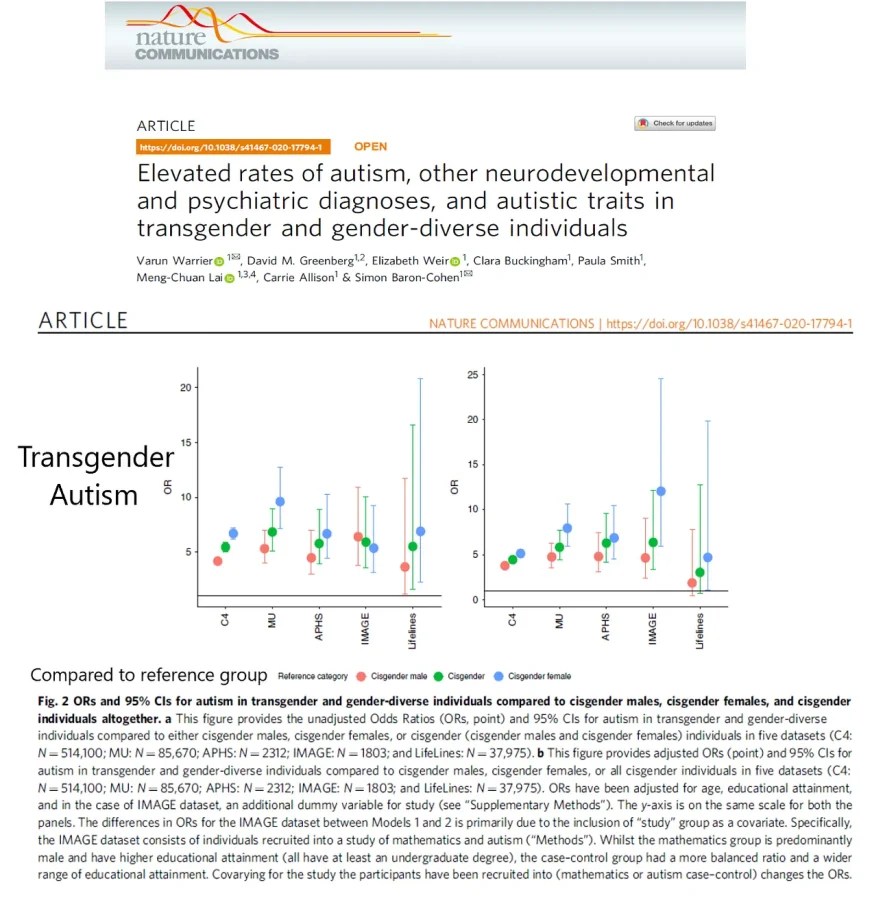
Warrier V, Greenberg DM, Weir E, Buckingham C, Smith P, Lai MC, Allison C, Baron-Cohen S. Elevated rates of autism, other neurodevelopmental and psychiatric diagnoses, and autistic traits in transgender and gender-diverse individuals. Nat Commun. 2020 Aug 7;11(1):3959. doi: 10.1038/s41467-020-17794-1. PMID: 32770077; PMCID: PMC7415151.
The authors summarized: “In conclusion, our study demonstrates that transgender and gender-diverse individuals have elevated rates of autism diagnosis, related neurodevelopmental and psychiatric conditions, and autistic traits compared to cisgender (normal) individuals. This study has clinical implications by highlighting that we need to improve access to care and tailored support for this under-served population.”
They are implying that neuropsychiatric care could be pivotal instead of the suggestion and promotion of gender change procedures in this vulnerable population. The implications of this paper are wide-ranging. School counselors should refer students for psychological assessment of autism and related disorder instead of prompting gender change to young, suggestable children. Furthermore, there should be a moratorium on transgender medicine while the full role of skyrocketing autism is evaluated among children with gender ambiguity approaching puberty.
Featured Video

It’s the Occupation, Stupid
or go to
Aletho News Archives – Video-Images
From the Archives
A superpower and “the world’s sickest warrior state”
By Paul J. Balles | March 8, 2010
Living through five or six major wars has hardened me to what I thought were the extremes of inhuman cruelty and brutality.
Two things made those extremes almost bearable: the brutality always revealed – at least according to the media coverage – the viciousness of the enemy. It was therefore quite understandable when our “brave men and women” pulverized the enemy.
Films of Japanese torturing captive Americans somehow justified holding Japanese Americans in internment camps during World War II; and only a small percentage of Americans found the bombing of Hiroshima and Nagasaki unreasonably vengeful at best, at worst, depraved.
The media giants in America portrayed the North Koreans as barbaric beasts with their captives, quite unlike their southern counterpoints – our allies during the Korean War. No one ever felt the need to explain how the South Koreans were a civilized breed while the North Koreans were absolute savages, at least according to the official line.
In Vietnam, our warriors justifiably (or so the media made us believe) dropped napalm on the North Vietnamese who had the gall to hide in villages and tunnels to ravage our invaders. At least it was accepted practice until some rogue photojournalist filmed a young girl screaming down a Vietnamese road in flames. … continue
Blog Roll
 Aletho News
- Pakistan to Host US-Iran Talks
- How Indonesia’s tilt toward the US left it stranded in the Strait of Hormuz
- US has no choice but to retreat from Iranian borders: Top commander
- Iran Retaliation Strikes Chemical Plant Near Dimona
- AWACS’ Destruction is a Major Loss for US Military – Ex-DoW Analyst
- Israel’s Iran Strategy Uses US Military & Gulf States as Its Pawns
- Iran: Trump wanted regime change, now just begging for Hormuz to open
- IRGC: Israeli, US universities in region legitimate targets after strikes on Iranian university
- Trump admits Iran hit USS Ford carrier: ‘We ran for our lives’
- Battle for Hungary: EU attacks on Orban are a sign of worse things to come
- If Americans Knew
- Israeli police block Catholic cardinal from entering Church of the Holy Sepulchre on Palm Sunday
- Israel is assassinating journalists again, more than any other nation, anywhere, ever – Not a ceasefire Day 170
- Over 300 US service members wounded, majority have brain injuries – Not a ceasefire Day 169
- Researchers at Human Rights Watch Resign Over Blocked Report on Palestinian Refugee Return
- Jewish Groups Are Backing a War Americans Don’t Want
- Eric Fingerhut Thinks He’s the President of the Jews
- Top Jewish Philanthropists, Rabbis Urge Israeli President to Take Action Against ‘Jewish Extremists’
- Don’t Be Fooled. Zionist Leaders Have Always Wanted to Control Southern Lebanon
- Israel’s widespread use of torture is a core element of its genocide against the Palestinian people
- In Israel’s War on Iran, Many Middle East US Bases Rendered “All But Uninhabitable”
- No Tricks Zone
- German Science Blog Accuses PIK Climate Institute Of Hallucinating Climate Tipping Points
- Devastating Assessment Of Comirnaty Vaccine By Former Senior Pfizer Europe Toxicologist
- New Study: CO2 Is ‘Effectively Negligible’ As An Explanatory Climate Change Factor Since 2000
- Former Pfizer Toxicologist Dr. Helmut Sterz Tells Bundestag Hearing Pfizer Vaccine Should Have Never Been Approved
- Energy Expert: Germany’s Nuclear Phaseout Was A “500 Billion Euro Mistake”
- New Research: South Australia’s Mid-Holocene Sea Surface Temperatures Were 4°C Warmer Than Today
- Storing Green Energy To Last Germany 10 Days Would Require A 60-Million Tonne Battery
- New Studies: UK Sea Levels Were 4 Meters Higher Than Today During The Mid-Holocene
- Destructive Green New Deal: German Energy And Metal Group Warns Of Drastic Crisis
- New Study Documents A 20-Year Pause In Arctic Sea Ice Decline – Driven By Internal Variability
 Aletho News