Iran: What is the Future of the Nuclear Deal?
By Viktor Mikhin – New Eastern Outlook – 22.09.2022
While many around the world hoped for a positive reaction from the United States to Iran’s latest response, the European trio at the talks in Vienna (E3 – the UK, Germany, France) have separately issued a statement that could undo all the positive results of a year of painstaking negotiations. After Tehran responded to an American text submitted through the European Union’s coordinator for the Vienna talks, Josep Borrell, the latter passed it on to Washington. The Biden administration called the latest Iranian response “unconstructive” but refrained from responding formally, prompting speculation about the impact of the US midterm elections on negotiations in Vienna over the resumption of the 2015 Iran nuclear deal, officially called the Joint Comprehensive Plan of Action (JCPOA).
Still, after days of guesswork and speculation, a response was given, but not from the American side, which had intended to do so. E3 released a joint statement that seems only to have delighted opponents of the JCPOA and caused bewilderment around the world. “As we move closer to an agreement, Iran has reopened separate issues, related to its legally binding international obligations under the Treaty on the Non-Proliferation of Nuclear Weapons (NPT) and its safeguards agreement under the NPT concluded with the International Atomic Energy Agency (IAEA). This latest demand raises serious doubts as to Iran’s intentions and commitment to a successful outcome on the JCPOA. Iran’s position contradicts its legally binding obligations and jeopardizes prospects of restoring the JCPOA,” the E3 statement said demagogically and with no good reason.
This is despite the fact that Iran has long claimed that the IAEA has lost all credibility by making unfounded accusations that are politically motivated and emanate from the anti-JCPOA camp. In other words, and this fact has now become clear, the IAEA is simply a tool in the hands of the West, not an independent UN body. The E3 countries also seemed keen to make a poorly veiled threat against Iran, stating, “Given Iran’s failure to conclude the deal on the table, we will consult, alongside international partners, on how best to address Iran’s continued nuclear escalation and lack of cooperation with the IAEA regarding its NPT (non-proliferation treaty) safeguards agreement.”
The E3 joint statement was seen by experts around the world as an irresponsible move and a servile, obsequious submission to its master, the US. Reading this statement, one gets the impression that it is the E3 that is the aggrieved party that has lost over 300 billion dollars and 1,000 lives in the last 3 years because Iran withdrew from the JCPOA. Apparently, Brussels wants everyone to believe that Iran, not the US, has blatantly violated and completely reneged on all its obligations, subsequently violating all 11 commitments it had made to rectify the situation. After all, it is both well known and not disputed by anyone in the world that it was the US that unreasonably withdrew from the JCPOA and imposed further brutal sanctions on Iran, causing the Iranian people to suffer.
In addition to the separatist actions disregarding the views of Russia and China and the utter irresponsibility, the statement also undermined the ongoing and subsequent negotiations, deepening the atmosphere of distrust. Moreover, and quite obviously, the E3 countries have only strengthened the position of the opponents of the JCPOA, which is apparently what they were aiming for. “It is regrettable that by [issuing] such an ill-considered statement, the three European countries have followed in the footsteps of the Zionist regime down a path that will lead to the failure of negotiations. It is obvious that if such an approach continues, the E3 should also accept responsibility for its consequences,” Iranian Foreign Ministry Spokesman Nasser Kanaani said bluntly.
German Chancellor Olaf Scholz, trying to justify his loyalist position to the US, demagogically signaled a lack of expectation on his part that an agreement with Iran would in the near future restore Tehran’s shattered nuclear deal with world powers. Then, realizing that the best defense is a good offense, he unceremoniously declared that Iran had no reason not to sign and that European countries would remain “patient.” And what else could the 9th Federal Chancellor say after meeting in Berlin with Israeli Prime Minister Yair Lapid, who insisted that restoring the 2015 agreement would be a “critical mistake”? Incidentally, Germany still pays reparations to those Jews who were forced by Nazi Germany to leave as evacuees.
It appears that provocative pressure from Israel as well as other factors have managed to halt or delay Washington’s progress towards a return to a nuclear deal with Iran. This is clear from statements by senior Israeli officials, analysis by Israeli research centers and the media. There was a real celebration in Israel, as officials could not hide their joy at the E3 statement. “Following the Americans, yesterday the E3 countries announced that a nuclear agreement with Iran will not be signed in the near future, that the IAEA’s files opened on Iran will not be closed,” Israeli Prime Minister Yair Lapid cheerfully told a cabinet meeting. He thanked the leaders of France, Britain and Germany for their “strong position” on the issue. Then a wave of boasting and bravado swept over the Prime Minister and he took all credit for the collapse of the nuclear deal, saying, “In recent months, we held a discreet and intensive dialogue with them, and presented them with up-to-date intelligence information about Iranian activity at nuclear sites.” And further: “Israel is conducting a successful diplomatic campaign to stop the nuclear agreement and prevent the lifting of sanctions on Iran.”
It may be recalled that as the negotiations approached a crucial milestone, Israel began to take active steps to counter this, including visits to Washington by Mossad director David Barney, Israeli National Security Advisor Eyal Hulata and Minister of Defense Benny Gantz. Israel said the diplomatic onslaught was aimed at preventing the renewal of the nuclear agreement, which Tel Aviv sees as a threat to its security. Israeli Prime Minister Yair Lapid said he would visit the US this month to meet US President Joe Biden ahead of the UN General Assembly meetings to discuss the Iranian issue. “Israel is conducting a successful diplomatic campaign to stop the nuclear agreement and prevent the lifting of sanctions on Iran,” World Israel News stressed. Apparently, Israel and its leadership have decided that they are above the UN, and only they should solve the world’s problems and only in their own interests. That is why now more than ever, the challenge of transforming our world from a unipolar to a multipolar one, where all countries have equal rights and resolve issues in the common interest, is relevant.
Lapid, who visited Germany to discuss his country’s concerns about the agreement, said that “it is not over yet – there is still a long way to go, but there are encouraging signs.” He was referring to Israel’s success in dissuading the US administration from returning to the agreement. The Times of Israel quoted an unnamed senior Israeli official as saying that during recent talks with Biden, the Israeli Prime Minister was told that the nuclear deal was not being discussed and would not be signed anytime soon. According to the website, Lapid has recently become increasingly convinced that Washington’s return to the nuclear deal is unlikely. Iran’s 2015 nuclear deal with world powers is “in the ER room” and unlikely to be extended any time soon, if at all, Israeli Minister of Defense Benny Gantz said after European leaders expressed doubts about Tehran’s willingness to revive the pact.
“We cannot predict when the deal will be signed by major world powers and Iran,” Aleef Sabbagh, a political analyst, told Al-Ahram Weekly. “Right now, it’s not even close.” He noted that pressure from Tel Aviv appears to have delayed the signing of the agreement, and Israel’s diplomatic war against the deal has so far achieved some of its goals. However, several Israeli analysts point out that the delay in finalizing the agreement is linked to some of its details, in particular the IAEA’s investigation into traces of uranium at three sites that Tehran has not previously disclosed. Iran at the same time is demanding the cessation of this investigation as a precondition for a deal, and is apparently not about to back down. Israel, for its part, will continue to apply pressure until the last minute to prevent the signing of the agreement, focusing its attention on organizing a tough international stance in support of the IAEA investigations. This would require the establishment of a mechanism to control the funds Iran gains access to in order to ensure that they do not fall to Tehran’s allies in the region.
The Israeli opposition, led by former Prime Minister Benjamin Netanyahu, claims that the US administration has decided to return to the agreement, but insists on more favorable terms. He also accuses the incumbent Lapid government of failing to convince Washington of Tel Aviv’s security demands, which would be harmed by the agreement. However, the current Prime Minister argues that his cabinet is working quietly and diligently and has so far succeeded in blocking the agreement. Israel often repeats that it will not be bound by the agreement if it is signed, and reserves the right not to allow Iran to become a nuclear power. Tel Aviv has also frequently threatened to resort to the military option to achieve this goal if “Israel’s security needs” demand it, despite all the peace treaty efforts of many countries around the world.
Why Ukraine referendum is a big deal
BY M. K. BHADRAKUMAR | INDIAN PUNCHLINE | SEPTEMBER 22, 2022
The referendum on September 23-27 in the Donbass and southern Kherson and Zaporozhye regions of Ukraine on their accession to Russian Federation is, prima facie, an exercise of the right of self-determination by the native population who reject the western-backed regime change in Kiev in 2014 and the ascendancy of extreme nationalist forces with neo-Nazi leanings in the power structure.
But it has other dimensions, too. In all probability, the referendum will overwhelmingly opt for accession to Russian Federation. In Donbass, it is a straightforward question: “Do you support the entry of the DPR into the Russian Federation as a subject of the Russian Federation?” For Kherson and the Zaporozhye Cossacks, the referendum ascertains three sequential decisions: secession of these territories from Ukraine; formation of an independent state; and its entry into the Russian Federation as a subject.
In 2014, all legal procedures for the admission of Crimea and Sevastopol to the Russian Federation were completed in four days. An expeditious process can be expected this time around too. There is huge mass support within Russia for reunification with the ethnic Russian populations in the eastern and souther regions of Ukraine who suffered severe persecution during the past 8-year period, including brutal violence, at the hands of extremist Ukrainian nationalist elements in control of the state apparatus. This is a highly emotive issue.
In the post-cold war era, the genie of self-determination was first let out of the bottle by the West during the dismemberment of the former Yugoslavia. Although the US midwifed the secession of Kosovo from Serbia as far back as in 2008, the entity is yet to be accorded recognition by the UN. Serbia rejects the secession despite sustained western pressure.
That said, the Kosovo precedent will not stop the western powers from condemning the accession of regions of Ukraine to the Russian Federation.
The big question today is about the Russian calculus. President Vladimir Putin has surely factored in that the accession of the “Russian regions” of eastern and southern Ukraine is an immensely popular decision in the domestic opinion. The most revealing comments on the topic have come from the former President Dmitry Medvedev.
Medvedev wrote in his Telegram channel: “Referendums in Donbass are of great importance not only for the systemic protection of the inhabitants of the LNR, DNR (Donbass) and other liberated territories, but also for the restoration of historical justice.”
In Medvedev’s opinion, these plebiscites “completely change the vector of Russia’s development for decades.” He adds, “And not only our country. Because after they (referendums) are held and the new territories are accepted into Russia, the geopolitical transformation in the world will become irreversible.”
Most important, Medvedev forewarns, “An encroachment on the territory of Russia is a crime, the commission of which allows you to use all the forces of self-defence.”
Furthermore, he says, once the process of annexation of the new territories is completed, “not a single future leader of Russia, not a single official will be able to reverse these decisions. That is why these referendums are so feared in Kiev and in the West. That is why they need to be carried out.”
What emerges is that Russia has given up hopes of any negotiated settlement. Moscow was initially optimistic that Kiev would negotiate, but the bitter experience turned out to be that President Zelensky was not a free agent. It is the Biden Administration that holds the stop watch for the proxy war. And Washington’s timeline is linked to the weakening and destruction of the Russian state, which has been the ultimate US objective. Lest we forget, Joe Biden played a seminal role in installing the new regime in Kiev in 2014 and in moulding Ukraine as an anti-Russian state.
Suffice to say, the referendum on Wednesday is Russia’s only available course of action under the circumstances, while Kiev maintains a maximalist position as advised by the US, UK and Poland.
The accession of Donbass, Kherson and Zaporozhye creates a new political reality and Russia’s partial mobilisation on a parallel track is intended to provide the military underpinning for it. The accession signifies a paradigm shift insofar as any further attacks on these regions that are part of Russia can be construed by Moscow as attacks on Russia’s territorial integrity and sovereignty.
Certainly, Kiev’s wanton attacks in future on civilians and civilian infrastructure in Donbass, Kherson and Zaporozhye will trigger Russian reaction. Any attack on them will be considered aggression and will give Moscow the right to respond “adequately.” The fact the Russian deployment in these territories will be significantly augmented and upgraded signals a willingness to use force.
Meanwhile, Russia’s special military operations will also continue until its set objectives are met. Which means, even more territories may come under Russian control, creating ever newer facts on the ground. Kiev needs to factor all this carefully.
The Pentagon spokesman Patrick Ryder has reacted as follows: “No one will take such bogus referendums seriously, and the US will certainly not recognise their results. How will this affect our and international support for Ukraine? This will not affect in any way, we will continue to work with Ukraine and our international partners to provide them with the necessary assistance to protect their territory.”
It is a sufficiently evasive statement. Neither Pentagon nor the Russian military command will risk brinkmanship. The likelihood, therefore, is that the accession of the new territories to the Russian Federation may not be militarily challenged by the US or NATO. That said, Russia is already at war with the NATO, as Defence Minister Sergey Shoigu said, albeit not in terms of weapons supplies, which “we find ways to counter,” but in the Western systems that exist — “communication systems, information processing systems, reconnaissance systems and satellite intelligence systems.”
The point is, the accession of Donbass, Kherson and Zaporozhye regions to the Russian Federation will require the NATO and the US to reset the proxy-war algorithm. The CIA’s analogy of the Afghan jihad of the 1980s no longer holds good. Russia has avoided a quagmire in Ukraine and probably is turning the table on the NATO. To make things doubly sure, Moscow lifted the veil today on its newest ICBM, Sarmat.
In Putin’s national address on Wednesday, he had said: “In the event of a threat to the territorial integrity of our country and to defend Russia and our people, we will certainly make use of all weapon systems available to us. This is not a bluff.”
The results of the referendum must be determined not later than 5 days after the last voting day (Sept. 27), and the issue of accession to Russia is considered approved if more than 50% of the plebiscite participants vote for it. Significantly, the Russian State Duma is scheduled to hold plenary sessions in Moscow on September 27 and 28.
Serbia accuses West of double standards
Samizdat – September 22, 2022
Western countries have failed to explain why they have different points of view on Ukraine and Serbia’s territorial integrity, given that they support Kiev in its fight against Russia, but endorsed Kosovo’s independence, President Aleksandar Vucic said on Tuesday.
In an address to the UN General Assembly in New York, the Serbian leader stated that his state respects the territorial integrity of all countries, including Ukraine, and that many describe the hostilities between Moscow and Kiev as “the first conflict on European soil since WWII.”
He said, however, that the truth about the violation of Serbia’s territorial integrity “is constantly unspoken.”
“We ask for a clear answer to the question I’ve been asking… for years – what is the difference between the sovereignty and territorial integrity of Ukraine and the sovereignty and territorial integrity of Serbia, which was grossly violated,” Vucic said, referring to the 1999 NATO bombing of Yugoslavia.
According to Vucic, Serbia “has never [set] foot” on anybody’s territory, but this “did not prevent the 19 richest NATO countries from attacking a sovereign country without a decision by the UN Security Council.”
He also said that while NATO pledged to respect the full territorial integrity of Serbia, it did not stop many Western countries from unilaterally recognizing the breakaway province of Kosovo in 2008.
Earlier on Tuesday, the Serbian president warned that the world is moving closer to a global war, adding that “the UN has been weakened,” given that the great powers “practically destroyed the UN order over the past several decades.”
NATO occupied Kosovo in 1999, after a 78-day bombing campaign against what was then Yugoslavia. The province declared independence in 2008 with Western support. While the US and most of its allies have recognized it, many other countries, including Russia and China, have not.
US blocked Russian diplomats from UN – Russia
Samizdat – September 21, 2022
The United States did not grant visas to several members of the Russian delegation, preventing the officials from taking part in the United Nations General Assembly in New York, Russian Foreign Ministry spokeswoman Maria Zakharova said on Wednesday.
Speaking to Sputnik, she noted that two of ten diplomats comprising “the official delegation” had not received the necessary stamp.
Zakharova explained that Russia’s overall delegation consists of several groups. The first one, she said, is referred to as “the official delegation.” This group is headed by Russian Foreign Minister Sergey Lavrov and has been formed with the approval of Russian President Vladimir Putin.
“Out of ten members of the official delegation, two did not receive visas. This tactic has already become an ominous tradition on the part of the US, but the point stands,” Zakharova stated, also offering a reminder that Moscow has already voiced concerns on this matter.
The Foreign Ministry spokeswoman went on to say that Washington had not granted visas to several delegation members from the second group, which includes various experts and diplomats who support the official delegation. She said, however, that she does not know the exact number, due to late notice.
“You would not believe… but the messages on the issuance or non-issuance of the visa were coming in just overnight. So we had to contact our colleagues at night to tell them to get ready for tomorrow’s flight [to the US],” she noted.
Of a third group, which incorporates journalists, one person failed to get a US visa, Zakharova said.
The 77th session of the UN General Assembly opened on September 13. However, the main event of this session is supposed to be the ‘High-Level week’ from September 20 to 26, which will be attended by many world leaders and foreign ministers.
Moscow has repeatedly accused Washington of violating its obligations under the 1947 agreement on the hosting of the UN headquarters in New York City, which requires the US to grant access to foreign representatives without charge and “as promptly as possible.”
Following Moscow’s and the UN’s calls to issue visas to members of the Russian delegation, the US allowed entry to Russian Foreign Minister Sergey Lavrov and a number of high-level diplomats, enabling them to attend the assembly.
US ‘Trampled Upon’ Iran Nuclear Deal, Can’t Tolerate Independent States, Raisi Tells UNGA
Samizdat – 21.09.2022
The United States “trampled upon” the Iran nuclear deal, Iranian President Ebrahim Raisi said during his Wednesday address to the United Nations General Assembly. The Iranian president stressed that the Islamic Republic is not striving to obtain nuclear weapons.
“The American government [has] trampled upon the JCPOA [Joint Comprehensive Plan of Action a.k.a. Iran nuclear deal]. Some time ago, the former US president announced that Daesh was created by the US. To us, it makes no difference who created [it]. What matters is that a government outside this region decided to bring havoc to the region,” Raisi said.
He further condemned Washington’s meddling in the region’s affairs and refusal to take the interests of other countries into account. Raisi noted that the US can’t tolerate countries that act independently and puts its own priorities over those of other states.
Raisi also declared that the existing world order, where international organizations had become “instruments of repression” and economic sanctions are used as leverage to pressure other countries, no longer enjoys widespread support. He stated that a new world order is starting to take shape in its place and stressed the necessity to create a more “fair” world.
The Iranian president said that late IRGC General Qasem Soleimani, who was killed in the US strike in January 2020, “fought against oppression” of the current world order. Raisi condemned his killing by the US as a crime and said that Iran will insist on holding a fair trial for those responsible.
“The government on the other side of the planet decides to create chaos in our region through the bloodshed of women and children. But the Islamic Republic opposed this destructive dynamic, and Qassem Soleimani became the leader who opposed terrorism,” Raisi said.
Raisi’s speech to the UNGA came amid a pause in negotiations on reviving the 2015 Iran nuclear deal, which effectively collapsed following the unilateral US withdrawal from it in 2018. The sides have since exchanged a new draft agreements, but there has been no suggestion of an imminent signing. Western parties to the accord accused Iran, which demands guaranties the deal won’t collapse again, of unreasonable demands, while Tehran slammed the unconstructive approach of certain countries.
Iran to buy, swap 15 mcm per day of Russia’s gas via Azerbaijan
Press TV – September 19, 2022
Iran will import Russian gas through pipelines from Azerbaijan under arrangements agreed in a major deal between Tehran and Moscow two months ago, according to a report published in the local media.
The semi-official Fars news agency said in a Monday report that Iran will buy some 9 million cubic meters (mcm) per day of gas from Russia and will take delivery of another 6 mcm per day under a swap deal for the purpose of delivery to Russian gas customers to the south of Iran.
The report cited data from an internal report of the Iranian Oil Ministry and said the purchase and swap arrangements are related to a $40 billion deal signed in July between Iran’s state oil company the NIOC and Russia’s Gazprom.
Earlier reports had indicated that Iran could take delivery of Russian gas from Turkmenistan for the purpose of swap delivery to Turkey and Iraq.
However, the new data suggest Iran will use the 15 mcm per day of gas supply from Russia to strengthen its domestic supply network in the densely populated regions in the northwest while being able to export increased amounts of natural gas to Turkey and Iraq through pipelines in the west of the country.
Iran is already in a gas swap arrangement with Turkmenistan and Azerbaijan under which it consumes gas received from Turkmenistan in its northeastern regions and delivers the same amount of gas to Azerbaijan.
The Fars report said Iran will deliver the equivalent of 6 mcm per day of gas to Russian customers in the south in the form of liquefied natural gas (LNG). It added that Gazprom will be a partner in the liquefaction process.
‘LPR Referendum Will Turn Ukrainian Strikes Into Attacks Against Russia’
Samizdat – 19.09.2022
Sputnik’s Chief Editor Margarita Simonyan has commented on the Lugansk People’s Republic (LPR) Civic Chamber’s call to hold a referendum to join Russia, calling it an “all-in move” and a Crimean scenario. She noted that should the republic vote affirmatively, it will drastically change the nature of the conflict in Ukraine.
“Today it’s referendum, tomorrow – it’s recognition of LPR as a part of Russia. The day after that, the strikes on the Russian territory become an all-out war of Ukraine and NATO with Russia, which will untie Moscow’s hands in so many aspects,” Simonyan wrote in her Telegram channel.
Simonyan expressed the opinion that the LPR might soon be not the only ones to announce referendums to join Russia.
The head of the LPR Civic Chamber commented in the wake of the address to the republic’s authorities that the referendum on joining Russia is a “matter of more than one day”. He, however, expressed hope that the answer will be given soon.
The LPR declared its independence in 2014 in response to the West-backed coup in Kiev that brought nationalist politicians to power. Russia agreed to recognize the LPR’s statehood in February 2022, signing a treaty of friendship with the republic. Soon after, Moscow answered the call of LPR authorities to protect it against the attacks of the Ukrainian military, which have been going on with varying intensity over the past eight years.
Biden claims US forces will defend Taiwan
Samizdat | September 19, 2022
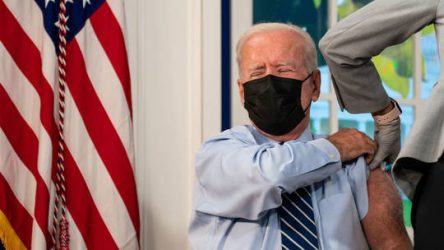
President Joe Biden once again said that Washington is willing to use military force to defend Taiwan from Beijing, if necessary, while insisting that the US still adheres to ‘One China’ policy and is “not encouraging” the island’s independence.
During a ‘60 Minutes’ CBS News interview aired Sunday night, Biden was asked if the US would become directly involved to “defend the island” in a potential conflict between Beijing and Taiwan, including through the use of military force.
“Yes, if in fact there was an unprecedented attack…” Biden replied, before the broadcaster cut away to clarify the controversial statement. A White House official apparently explained to CBS, before the interview was aired, that US policy “has not changed” and that officially the US would still neither confirm nor deny whether American forces would defend Taiwan.
“So unlike Ukraine, to be clear, sir, US forces, US men and women would defend Taiwan in the event of a Chinese invasion?” the interviewer Scott Pelley asked again.
“Yes,” reiterated Biden.
The US leader however also said Washington respects the ‘One China’ policy, by which it recognizes that there is only one China led by Beijing. “We agree with what we signed onto a long time ago. And that there’s One China policy, and Taiwan makes their own judgments about their independence. We are not moving – we’re not encouraging their being independent. That’s their decision.”
Biden previously made a similar statement in May, calling it America’s “commitment” to protect Taiwan. At the time, amid an outcry from Beijing, the White House was also forced to “clarify” the US leader’s words, saying it did not constitute any changes in Washington’s policy towards Taiwan or China.
Majority of Slovaks support a Russian military victory over Ukraine
Free West Media | September 16, 2022
More than half of Slovaks would welcome a Russian military victory over Ukraine, according to a new poll published on Wednesday (14 September).
The representative survey, entitled “How are you doing, Slovakia?”, was conducted by the MNFORCE and Seesame agencies and the Slovak Academy of Sciences.
Respondents were asked to answer the survey using a 10-point scale, where 1 means a clear victory for Russia and 10 for Ukraine. About a fifth of respondents said they wanted a clear Russian victory, and more than half said they were inclined towards a Russian victory. The overwhelming majority of voters in former Prime Minister Robert Fico’s social democratic party SMER are on the Russian side.
Fico is a vocal opponent of anti-Russian sanctions and even celebrated the anniversary of the Slovak National Revolt with the Russian ambassador. The SMER is still a member of the Party of European Socialists (PES).
As far as geographical differences are concerned, only the population of Bratislava, the capital, has a majority of people who want a victory for Ukraine. Regarding the whole country, only a third said they were leaning towards Ukraine, while 18 percent expressed no preference.
Slovakia along with Bulgaria, has long been one of the most pro-Russian countries in the EU.
A poll conducted in the summer of 2021 showed that 55 percent of Slovaks had a favourable opinion of the Russian leader. Among Central and Eastern European countries, only Bulgarians had a better opinion of Putin (75 percent).
Moreover, in February 2022, before the military intervention, 44 percent of respondents blamed NATO and the US for the tensions on Ukraine’s borders. As for NATO membership, only 45 percent were in favour in the 2021 poll. Immediately after the invasion, support rose, but has recently fallen again.
Rockefeller Foundation, Nonprofits Spending Millions on Behavioral Psychology Research to ‘Nudge’ More People to Get COVID Vaccines
By Michael Nevradakis, Ph.D. | The Defender | September 13, 2022
The Rockefeller Foundation, the National Science Foundation (an “independent” agency of the U.S. government) and other nonprofits are pouring millions of dollars into a research initiative “to increase uptake of COVID-19 vaccines and other recommended public health measures by countering mis- and disinformation.”
In conjunction with the Social Science Research Council (SSRC), the Rockefeller Foundation last month announced $7.2 million in funding for the Mercury Project, initially launched in November 2021, under the slogan, “Together, we can build a healthier information environment.”
The funds will support 12 teams of researchers in 17 countries who will conduct studies on “ambitious, applied social and behavioral science to combat the growing global threat posed by low COVID-19 vaccination rates and public health mis- and disinformation,” the Rockefeller Foundation said.
The Rockefeller Foundation and the SSRC claim the aim of the Mercury Project, whose name is derived from the ancient Roman god of messages and communication, is to bolster public health and safety.
However, some critics described the project as one based on “propaganda” aimed at “nudging” the unvaccinated to get vaccinated.
Creating ‘behavioral change’ by targeting schoolchildren and specific socio-economic groups
Behavioral change lies at the heart of the Mercury Project, which will issue three-year research grants to estimate “the causal impacts of mis- and disinformation on online and offline outcomes in the context of the COVID-19 pandemic,” including “differential impacts across socio-demographic groups.”
The research will include “interventions that target the producers or the consumers of mis- and disinformation, or that increase confidence in reliable information.”
Some of the “interventions” proffered by the Rockefeller Foundation include “literacy training for secondary school students” to “help students identify COVID-19 vaccine misinformation,” “equipping trusted messengers with communication strategies to increase COVID-19 vaccination demand” and “using social networks to share tailored, community-developed messaging to increase COVID-19 vaccination demand.”
This information will, according to the Rockefeller Foundation, “provide evidence about what works — and doesn’t — in specific places and for specific groups to increase COVID-19 vaccination take-up.”
But according to ZeroHedge, the research groups funded by the Mercury Project “are operating with the intent to tailor vaccination narratives to fit different ethnic and political backgrounds, looking for the key to the gates of each cultural kingdom and convincing them to take the jab.”
The project uses “ambiguous language and mission statements” to at least partially conceal the project’s main purpose of “using behavioral psychology and mass psychology elements to understand the global resistance to the recent COVID compliance efforts,” ZeroHedge reported.
‘Fabricating effective COVID propaganda’ a ‘money train’ for behavioral researchers and psychologists
In November 2021, the Mercury Project received an initial $7.5 million in seed funding from entities including the Rockefeller Foundation, the Robert Wood Johnson Foundation, Craig Newmark Philanthropies and the Alfred P. Sloan Foundation to apply “the principles of large-scale, team-based science to the problem of vaccination demand” over a three-year period.
As of August 2022, these entities have funded the Mercury Project to the tune of $10.25 million.
In June, the project received $20 million from the National Science Foundation to study “interventions to increase COVID-19 vaccination demand and other positive health behaviors.”
The SSRC’s latest call for proposals, under the aegis of the Mercury Project, received nearly 200 submissions.
The accepted proposals come from researchers in countries including the U.S., Canada, Côte d’Ivoire, England, France, Ghana, Haiti, Kenya, India, Malawi, Mexico, Sierra Leone, Spain, Rwanda and Tanzania.
U.S.-based researchers represent institutions including Carnegie Mellon, Columbia, Duke, Harvard, MIT, New York University, Rutgers, St. Augustine University, Stanford, UC Berkeley, University of Southern California, the University of Chicago, the University of Pennsylvania, the University of Michigan, Vanderbilt and Yale.
The titles of some of the projects most recently funded by the Mercury Project include:
- “A tough call: Impacts of mobile technology on Covid-19 (mis)information and protective behavior decision-making.”
- “Boosting boosters at scale: A megastudy to increase vaccination at scale.”
- “Building a better toolkit (for fighting misinformation): Large collaborative project to compare misinformation interventions.”
- “Harnessing influencers to counter misinformation: Scalable solutions in the Global South.”
- “Targeting health misinformation networks: Network-transforming interventions for reducing the spread of health misinformation online.”
Arguing in favor of the importance of the project’s research, Anna Harvey, president of the SSRC, stated:
“With COVID-19 prevalent and rapidly evolving everywhere, there is a pressing need to identify interventions with the potential to increase vaccination take-up.
“Vaccines are only effective if they become vaccinations; vaccines are a scientific marvel but their potential is unfulfilled if they are left on the shelf.”
Describing the Mercury Project’s grantees, Dr. Bruce Gellin, the Rockefeller Foundation’s chief of global public health strategy, said:
“This initial cohort’s ideas exemplify the creativity and vision behind the Mercury Project. They go far beyond quick fixes, with the goal of identifying robust, cost-effective, and meaningful solutions that can be widely adopted and scaled.
“We hope that more, better, and science-based knowledge about what we need to do will lead to increased uptake of reliable information — and serve as a powerful counter to the effects of misinformation and disinformation on vaccine demand.”
Heather Lanthorn, the Mercury Project’s program director, highlighted the importance of leveraging communication toward achieving public health objectives:
“The viral, vaccine, and information environments are all rapidly evolving–but that doesn’t mean it is impossible to make progress towards more effective and equitable responses.
“By funding projects on the ground around the world, this work will help us understand what works where, and why, and identify new ways to harness the power of connection and communication to advance public health goals.”
ZeroHedge, however, countered that behind all the rhetoric, the focus of the Mercury Project, is “propaganda, propaganda and propaganda,” and “the very basis of the existence of the Mercury Project presupposes that individuals cannot be trusted to make up their own minds about the information they are exposed to.”
The expectation is that individuals “must be molded to accept the mainstream narrative,” ZeroHedge said, while presupposing that “mainstream or establishment information is always trustworthy and unbiased.”
“Fabricating effective COVID propaganda is becoming a money train for the small groups of behavioral researchers and psychologists that jump onboard,” ZeroHedge added.
GAVI: 200 global ‘nudge units’ specialize in applying behavioral science to everyday life
The field of behavioral science — and a concept known as “nudging” — figured prominently during the years of the COVID-19 pandemic and were heavily utilized by governments and public health officials throughout the world to justify often stringent restrictions and countermeasures.
Nudging was defined in a bestselling 2008 book by economist Richard H. Thaler and legal scholar Cass R. Sunstein — “Nudge: Improving Decisions About Health, Wealth, and Happiness” — as something that “alters people’s behavior in a predictable way without forbidding any options or significantly changing their economic incentives.”
Thaler and Sunstein presented nudging as a technocratic solution for tricky policy issues involving a perceived need to encourage, in a “voluntary manner,” policies or measures that would otherwise be unpopular.
Their work drew from a 1974 paper by two Israeli psychologists, Daniel Kahneman and Amos Tversky, which, as explained by an article published by GAVI-The Vaccine Alliance, “pioneered the study of mental shortcuts that humans rely on to make decisions, known as heuristics.”
As previously reported by The Defender, the Rockefeller Foundation is also a partner and board member and donor to GAVI, alongside the WEF, the Bill & Melinda Gates Foundation and the Johns Hopkins Bloomberg School of Public Health, which hosted Event 201, which simulated the spread of a coronavirus just prior to the actual COVID-19 pandemic.
In 2010, the U.K. government established the Behavioural Insights Team, initially within the government’s Cabinet Office, before it was spun off as a private company in 2014. A year later, U.S. President Barack Obama issued an executive order to promote the utilization of behavioral science in federal policymaking.
According to GAVI, “globally, there are now more than 200 teams, or nudge units, that specialize in applying behavioral science to everyday life.”
COVID-19, and the response to it, was no exception. HRW Healthcare’s Tony Jiang described nudges as “a set of policy tools which utilize psychological insights to attempt to motivate people to adopt certain desired actions/behaviours, without having to enforce strict laws, bans, or punishments,” and as a means to “motivate people into making responsible decisions, while preserving individual liberty.”
According to Jiang, “at the beginning of the pandemic, to encourage COVID-safe behaviours, behavioural nudges were the preferred policy by governments in the UK, USA, and Australia.”
According to Jay Van Bavel, associate professor of psychology at New York University, “as COVID-19 infections grew exponentially in 2020, behavioral scientists wanted to help. Nudges presented a possible route to controlling the virus, particularly in the absence of vaccines and evidence-based treatments.”
Van Bavel, along with Sunstein and 40 other researchers, in 2020 published a paper in Nature presenting ways in which behavioral science and nudging could contribute to efforts to combat COVID-19, including through fostering increased trust in government and fighting “conspiracy theories.”
As explained by GAVI, “as scientists learned more about how the coronavirus spread … governments knew what they wanted their citizens to do, but they still had to think carefully about how to encourage people to change their behavior. That’s where nudges could help.”
This was evidenced, for instance, in a March 14, 2020, U.K. government document published approximately two weeks before the U.K. government imposed a nationwide lockdown.
The document presented the role that would be played by the Scientific Advisory Group for Emergencies in advising the U.K. government’s response.
The document referenced the 2009-10 swine flu pandemic and the advice the advisory group received at the time from a subgroup known as the Scientific Pandemic Influenza Group on Behaviour and Communications. This group was reconvened on Feb. 13, 2020, with an exclusive focus on behavioral psychology.
According to the document, the group was “asked to provide advice aimed at anticipating and helping people adhere to interventions that are recommended by medical or epidemiological experts,” concluding that the U.K. government should “provide clear and transparent reasons for the different strategies that might be taken.”
The group advised the U.K. government that “in order to increase confidence in, and adherence to, the interventions should provide clear and transparent reasons for the strategies that have and have not been selected … and conduct rapid research into how best to help people adhere to the recommendations” whilst suggesting “behaviours that reduce risk.”
Other studies in the 2020-2021 period also highlighted the potential role nudging and behavioral psychology could play in relation to COVID-19.
For instance, a 2021 study showed that sending text messages to patients before scheduled primary care visits increased flu vaccinations by 5%, while another 2021 study found that the same strategy boosted COVID-19 vaccination appointments by 6% and actual vaccinations by 3.6%.
Still another 2021 study, also published in Nature, found that “behavioural nudges increase COVID-19 vaccinations,” arguing that “overcoming vaccine hesitancy … requires effective communication strategies” and finding that “inducing feelings of ownership over vaccines” can help bring about an increase in vaccine uptake.
The National Science Foundation offered grants of $200,000 for research in this field, while the SSRC also issued a call for proposals, receiving 1,300 applications even though it had sufficient funding for only 62.
However, as the pandemic progressed and as vaccination figures eventually plateaued, the strategy of nudging began to be called into question.
Dena Gromet, executive director of the Behavior Change for Good Initiative at the University of Pennsylvania, said nudging is effective only if individuals are already inclined to perform the action that they are being reminded or encouraged to perform.
Nudging, as a result, was supplanted by vaccine mandates.
Indeed, such “sterner measures” were advocated by Richard Thaler, one of the creators of the concept of nudging. In an August 2021 New York Times op-ed, Thaler called for stricter measures for the unvaccinated, including vaccine passports and isolation — measures which he described as “pushes and shoves” instead of nudges.
Two studies performed by researchers at King’s College London also cast doubt on the effectiveness of nudging to change behaviors and attitudes in relation to COVID-19.
Notably, the dedicated COVID-19 page on the website of the Behavioral Insights Team, which had played such a key role in advising the U.K. government on its COVID-19-related countermeasures early in the pandemic, has not featured a new posting since April 28, 2021.
However, some believe there still remains a role for nudging as the world enters a “new phase” of the COVID-19 pandemic. Tony Jiang argued that “as mandates relax, a greater reliance on individual compliance is required if we are to prevent mass-outbreaks in the future.”
“This makes the role of nudges and behavioural science ever more crucial,” he said, suggesting that going forward, nudges can be utilized to encourage mask-wearing, vaccinations and boosters.
Jiang proffered suggestions such as personalized masks that “can be more fashionable,” and for vaccinations, the potential role of “defaults,” where “people are automatically enrolled to receive a booster and must deliberately cancel the scheduled appointment if they do not wish to receive it.”
Michael Nevradakis, Ph.D., is an independent journalist and researcher based in Athens, Greece.
This article was originally published by The Defender — Children’s Health Defense’s News & Views Website under Creative Commons license CC BY-NC-ND 4.0. Please consider subscribing to The Defender or donating to Children’s Health Defense.
Denmark ends COVID jab for people under 50
By Rachel Emmanuel | The Counter Signal | September 14, 2022
Denmark has ended the COVID-19 vaccine for most people under 50, the Danish Health Authority said yesterday.
Denmark had already discontinued COVID-19 shots for nearly everyone under 18.
According to health officials, the purpose of vaccines is to prevent severe illness, hospitalization and death.
“Therefore, people at the highest risk of of becoming severely ill will be offered booster vaccination,” the Danish Health Authority says.
“The purpose of vaccination is not to prevent infection with covid-19, and people under 50 are therefore currently not being offered booster vaccination.”
The statement goes on to say that people under 50 are generally not at high risk of becoming severely ill from COVID.
“In addition, younger people aged under 50 are well protected against becoming severely ill from covid-19, as a very large number of them have already been vaccinated and have previously been infected with covid-19, and there is consequently good immunity among this
Under the new regulations, Danes under 50 will only be inoculated if they at high risk of becoming severely ill from COVID-19. This includes those with an impaired immune system, people working in healthcare and those working with seniors.
The ban comes even while Denmark expects “a large wave of [Covid] infection” in the next few months, according to independent journalist Alex Berenson.
Berenson reports that Denmark did not explicitly say the risks of mRNA jabs now outweigh their benefits for healthy people under 50, but that view “is implicit in the announcement.”
“In other words, the health authority is not stopping shots because Covid has ended. It now believes most people are better off getting the coronavirus than taking more mRNA,” he wrote.
The announcement comes as other countries make similar steps to limit COVID-19 vaccine access.
The UK has banned doctors from giving the COVID-19 vaccine to children under 12, saying kids don’t need it and they likely already have natural immunity.
The UK government also released a report stating that pregnant and breastfeeding women should under no circumstance get the Pfizer COVID vaccine due to a lack of trial data on the vaccine’s effect on reproductive health.
In Canada, health authorities continue to encourage parents to vaccinate their babies and kids, even while the former Chair of National Advisory Committee on Immunization (NACI) admitted last month that COVID is less deadly to kids than the flu.
Prime Minister Justin Trudeau recently said he might impose more COVID restrictions this winter unless 80-90% of the population gets “up-to-date” vaccinations.
To be fully vaccinated in Canada previously meant having two doses of a Health Canada-approved vaccine. The Canadian federal government is now applying pressure for citizens to get regular COVID-19 boosters.
In September, NACI announced that Canadians might consider getting a vaccine every 90 days.
Russia-Turkey deal to ensure poorest countries will receive grain
By Ahmed Adel | September 14, 2022
The opening of the Black Sea corridor for the export of Russian grain allows Turkey to realize some of its interests, but more importantly, it allows Russian grain to reach the most vulnerable countries, which is critical since Ukrainian grain is ending up in the EU instead of the poorest countries. Russian President Vladimir Putin and his Turkish counterpart Recep Tayyip Erdogan will discuss the opening of the corridor for the export of Russian grain at the upcoming Shanghai Cooperation Organisation (SCO) summit to be held on September 15-16 in Samarkand, Uzbekistan.
Although Western sanctions have not been directly imposed on Russian grain, sanctions have created export difficulties. Therefore, a corridor through the Turkish Straits is a solution and will also benefit Ankara’s coffers as utility companies in Turkish ports will profit. In addition, Turkey is the main supplier of flour to the European market, with the flour being made from Turkish, Russian and Ukrainian grains.
Moscow is facing some problems despite sanctions not being directly imposed against Russian grain. For example, there are issues with payments and settlements as many banks are simply afraid of sanctions. Sanctions also create problems with transportation logistics, especially with ships. Those logistical problems have led to an increase in the price of grain.
More importantly, the poorest countries lose access to basic foodstuffs because developed countries buy them instead. According to data, 345 million people around the world are already suffering from food insecurity, 2.5 times more people than in 2019.
From the Turkish perspective, presidential elections will be held next year, and with country experiencing major economic issues, Erdogan is hoping to close a deal that can boost his popularity. With difficulties on the domestic front, he is using foreign policy issues and nationalistic rhetoric aimed against the Kurds in Syria, the Armenians in Nagorno-Karabakh, issues in the Mediterranean with Greece, and now global food insecurity, to gain votes.
At the same time, the US evidently does not care about poor countries that were not supplied with Ukrainian grain. In fact, Washington deceivingly accuses Moscow of creating fake news about who the grain was supplied to. Erdogan too, challenges the American position.
“The fact that grain shipments are going to the countries that implement these sanctions (against Moscow) disturbs Mr. Putin. We also want grain shipments to start from Russia,” Erdogan said at a news conference with his Croatian counterpart on September 8. “The grain that comes as part of this grain deal unfortunately goes to rich countries, not to poor countries.”
It is recalled that Putin said at the Eastern Economic Forum in Vladivostok that Russia will not cooperate with those who put up barriers against it. Although this at first was thought to mean oil and gas, this policy is also the same with grain.
None-the-less, to friendly states, Moscow not only intends to deliver 30 million tons of grain to those that need it by the end of the year, but in fact will increase those deliveries to 50 million in 2023.
Although the US would ultimately want to ban the export of Russian grain, there cannot be a complete ban since grain is categorised as humanitarian goods. The grain harvest in Russia was good this year, making the export potential significant, and thus it will likely ensure that a food crisis does not emerge.
In any case, the delivery of Russian and Ukrainian grain to world markets is important in stabilising prices. Turkey in this way is positioning itself as an indispensable partner in alleviating a potential global food crisis. Despite around 100 cargo ships having left Ukrainian ports since July, Ukraine’s wheat has not reached its traditional clients in Africa at anywhere near its normal volume. With Putin and Erdogan expected to conclude an agreement in the coming days, Russia will be in a position to ensure that there is not a global scarcity or crisis.
Ahmed Adel is a Cairo-based geopolitics and political economy researcher.
Featured Video
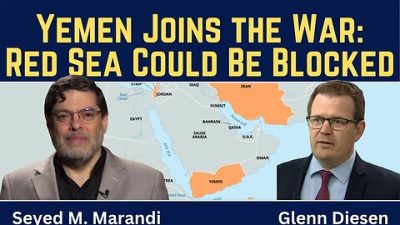
Yemen joins the war – Red Sea could be blocked next – Saudi regime at risk
or go to
Aletho News Archives – Video-Images
From the Archives
Should Europeans ‘Thank’ the Americans for Destroying Nord Stream?
By Robert Bridge | Strategic Culture Foundation | September 29, 2022
With an investigation continuing into the destruction of the Nord Stream gas pipeline that provided energy supplies to Europe from Russia, there appears to be just one prime suspect, and that should surprise nobody.
Following the sabotage of the Nord Stream 1 and 2 gas pipelines, former Polish Foreign Minister Radoslaw Sikorski already seemed to know the identity of the perpetrator when he tweeted out: “Thank you, USA.”
At first glance, it seemed that Sikorski was speaking sarcastically, berating Washington for carrying out an attack that will have severe repercussions for the people of Europe. After all, how could anyone see any good coming from the termination of Europe’s primary source of gas reserves with winter just around the corner? It was Sikorski’s homeland of Poland, after all, that urged its citizens to collect firewood in the face of dwindling gas reserves.
In fact, the Polish diplomat was speaking one-hundred percent literally… continue
Blog Roll
 Aletho News
- Bring The Troops Back. End This War Now!
- Can we please stop calling Israel the ‘only democracy in the Middle East’ now?
- US should start removing its troops for Germany, proposes AfD co-leader Chrupalla
- Iran Red Crescent: 600 educational centers attacked in US-Israeli ‘war crimes’
- Russian Oil Tanker Arrives in Cuba Amid U.S. Blockade
- America Racing to Strategic Defeat in Iran: Lt Col Daniel Davis
- FTC Warns Visa, Mastercard, PayPal, Stripe Over Political Debanking
- Russian tanker approaches Cuba despite US oil blockade
- Marandi: Yemen joins the war – Red Sea could be blocked next – Saudi regime at risk
- Pro-Palestinian French member of European Parliament denied entry to Canada
- If Americans Knew
- Israeli police block Catholic cardinal from entering Church of the Holy Sepulchre on Palm Sunday
- Israel is assassinating journalists again, more than any other nation, anywhere, ever – Not a ceasefire Day 170
- Over 300 US service members wounded, majority have brain injuries – Not a ceasefire Day 169
- Researchers at Human Rights Watch Resign Over Blocked Report on Palestinian Refugee Return
- Jewish Groups Are Backing a War Americans Don’t Want
- Eric Fingerhut Thinks He’s the President of the Jews
- Top Jewish Philanthropists, Rabbis Urge Israeli President to Take Action Against ‘Jewish Extremists’
- Don’t Be Fooled. Zionist Leaders Have Always Wanted to Control Southern Lebanon
- Israel’s widespread use of torture is a core element of its genocide against the Palestinian people
- In Israel’s War on Iran, Many Middle East US Bases Rendered “All But Uninhabitable”
- No Tricks Zone
- New Study Finds Warming Saves Lives…Cold Temperatures 12 Times More Deadly Than Excess Heat
- German Science Blog Accuses PIK Climate Institute Of Hallucinating Climate Tipping Points
- Devastating Assessment Of Comirnaty Vaccine By Former Senior Pfizer Europe Toxicologist
- New Study: CO2 Is ‘Effectively Negligible’ As An Explanatory Climate Change Factor Since 2000
- Former Pfizer Toxicologist Dr. Helmut Sterz Tells Bundestag Hearing Pfizer Vaccine Should Have Never Been Approved
- Energy Expert: Germany’s Nuclear Phaseout Was A “500 Billion Euro Mistake”
- New Research: South Australia’s Mid-Holocene Sea Surface Temperatures Were 4°C Warmer Than Today
- Storing Green Energy To Last Germany 10 Days Would Require A 60-Million Tonne Battery
- New Studies: UK Sea Levels Were 4 Meters Higher Than Today During The Mid-Holocene
- Destructive Green New Deal: German Energy And Metal Group Warns Of Drastic Crisis
 Aletho News