Whistleblower Biologist Says Pfizer Covered Up Her Exposure to Engineered Virus, Threatened Family
By Brenda Baletti, Ph.D. | The Defender | November 7, 2025
Molecular biologist Becky McClain began raising safety concerns in 2000, soon after she started working in Pfizer’s Biosafety Level 2 lab in Connecticut.
Three years later, after management failed to address the issues, McClain was exposed to a genetically modified lentivirus, engineered using gain-of-function technologies that made the virus more infectious and more pathogenic.
The exposure left her disabled, with symptoms including numbness, periodic paralysis, pain and other neurological problems. Doctors couldn’t diagnose or effectively treat her condition because Pfizer refused to disclose what she had been exposed to, citing “trade secrets.”
The incident launched McClain into a decade-long fight to understand her illness and obtain her exposure records so she could seek proper treatment. During her battle, she became a whistleblower, standing up to Pfizer’s threats against her and her family.
In her new book from Skyhorse Publishing, “Exposed: A Pfizer Scientist Battles Corruption, Lies, and Betrayal, and Becomes a Biohazard Whistleblower,” McClain recounts how she raised workplace safety concerns, suffered exposure to a dangerous virus, fought Pfizer for years in court, and resisted the company’s repeated attempts to silence her — ultimately winning a legal victory.
McClain refused to sign a gag order — even after Pfizer fired her, harassed her and threatened her — making her one of the few people who can share her story publicly.
In her book, McClain exposes corruption she says runs not just through Pfizer, but across the pharmaceutical industry and the agencies meant to hold it accountable — from the Occupational Safety and Health Administration (OSHA) and U.S. Food and Drug Administration (FDA) to the federal courts.
Consumer safety advocate Ralph Nader wrote in his foreword to the book:
“No general description of this book can convey the horror and details of what Becky McClain and her husband, Mark, endured at the hands of Pfizer, enabled over the years by collusion with government officials. Pre-verdict and post-verdict, this company employed thuggish retaliatory tactics, blacklisting, threats, harassments, wrongful discharges, coverups, and demands for total gag orders.
“Those tactics were designed to keep her case from flaring into a national demand for Congressional regulation in the form of rigorous biolab inspections and mandatory safety/health standards with teeth. Against this objective, Pfizer and the bioengineering industry are succeeding.”
‘If you document biosafety issues and or speak out about them, you’re out’
In an interview with The Defender, McClain said she noticed safety issues as soon as she started working in the lab.
“We had no break room, no safe break room. We had unsafe offices. We had improper biocontainment protocols using infectious agents,” she said. “And although the lab was unsafe, management made it worse by instilling a culture of fear for anyone who dared to raise safety issues.”
McClain said most scientists at the lab shared her concerns, but managers made it clear: “If you document biosafety issues and or speak out about them, you’re out.”
Scientists at the lab worked on genomic-altering biotechnologies, creating viruses capable of entering cells and changing their genomes, she said.
After multiple safety incidents — including one that left several scientists sick — McClain walked in one morning to find “a mess” on her personal workbench. A supervisor and an untrained scientist had left a dangerous experiment there overnight, without McClain’s knowledge.
A month later, the untrained scientist asked McClain if she knew anything about lentiviruses, a family of viruses that includes HIV and FIV (feline immunodeficiency virus).
By then, McClain was experiencing numbness on one side of her face, which a neurologist suggested might be the start of multiple sclerosis.
McClain realized she had likely been exposed to a modified lentivirus and asked the scientist to find out more about its safety. He returned “a little bit nervous” and told her the virus he had used on her bench was safe, indicating it wasn’t infectious to humans.
That conversation marked the beginning of McClain’s fight to obtain her exposure records. Pfizer refused to provide them, telling her that “trade secrets supersede your right to that information.”
As her condition worsened, McClain went on medical leave — and the company terminated her.
McClain was shocked because she had assumed worker rights would protect her. She said:
“I couldn’t get directed medical care for my illness, which was a mystery illness because these genetically engineered virus technologies were designed to cause new emerging diseases for use in laboratory research studies.
“So when I visited doctors, no one knew what was happening. They were all fearful and unable to explain my illness.
“My husband and I feared I was going to die. It eventually became very, very, very, very severe. It began with numbness on the left side of my face, then extreme left jaw pain, inflammation of my trigeminal nerve, headaches, spinal pain, then periodic paralysis.”
‘There’s no free speech for scientists’
McClain turned to OSHA for help, submitting documentation she had gathered that exposed egregious safety violations in the lab. OSHA refused to help her access her exposure records and didn’t even conduct a safety inspection of the lab.
“OSHA is a captured agency now,” McClain said. “They oversee approximately 24 different whistleblower laws under one roof, making it easy for the industry to control OSHA. It’s easy to capture. Place a corporate head to oversee OSHA, and you gain control of all the whistleblower laws and investigations.”
After OSHA declined to provide substantive help, McClain’s next step was clear. “The only legal remedy to get my exposure records was to file a civil whistleblower claim,” she said.
During the process, McClain met countless other scientists in similar situations.
“There’s no free speech for scientists,” she said. She cited examples of scientists being censored and smeared as “anti-vaxxers” during the COVID-19 pandemic, when “they were merely raising legitimate safety concerns.”
A recent investigation by The Defender found that OSHA told healthcare employers not to report employees adverse reactions to COVID-19 vaccines — but to continue reporting injuries caused by all other vaccines.
Pfizer launched ‘backdoor retaliation’ by targeting McClain’s husband
Throughout her long legal battle, Pfizer tried relentlessly to compel her to sign a gag order. She refused, knowing that signing would cost her the leverage she needed to access information about her exposure.
The company launched what McClain called “backdoor retaliation” by targeting her husband, who worked at the FDA in Connecticut.
“Two months before the trial, my husband was called into his office and told that if he didn’t make me settle with Pfizer, he’d be out of a job,” McClain said.
The threat terrified the couple, as McClain was extremely sick and they relied entirely on his income. “I thought Pfizer couldn’t have that kind of reach … my husband works for the government. But they did,” she said.
Her husband refused to force her to sign a gag order. After facing false accusations despite a spotless 18-year record as a commissioned officer, he left the FDA.
McClain eventually won her free speech whistleblower lawsuit in a 2010 jury trial, even though later revelations showed that the judge had financial conflicts of interest. She received 10 years of back pay — but no compensation for her exposure, illness or suffering.
Pfizer faced no obligation to remediate its safety program.
Although McClain never gained full access to her exposure records, she did obtain additional details about the virus, which she explains in her book.
Today, she publicly advocates for industry reform. She told The Defender there are several key issues she thinks need to be addressed. She said:
“First, is that all gag orders related to lab injuries and public health and safety concerns should be illegal. The public has a right to know about the dangers in these laboratories, especially in our post-pandemic environment.
“Then, OSHA needs to be revamped. It’s a captured agency.”
McClain added that OSHA can’t effectively oversee biotechnology because the agency doesn’t fully understand the serious and unique safety risks. She said the safety problems run through biotechnology research in academia, government and the private sector — each with its own set of regulations — and that the private sector faces the fewest rules.
“The bottom line is that we need better free speech and whistleblower protections for scientists, physicians, and injured workers,” McClain said. “No one should go through 10 years of hell just to have a safe workplace or to protect the public by standing up for professional standards.”
This article was originally published by The Defender — Children’s Health Defense’s News & Views Website under Creative Commons license CC BY-NC-ND 4.0. Please consider subscribing to The Defender or donating to Children’s Health Defense.
For Anyone Planning on Getting or Mandating Others to Get an Influenza Vaccine (Flu Shot)
Consider this data
By Aaron Siri | October 23, 2025
For anyone contemplating getting an influenza vaccine (flu shot) or planning to pressure or mandate someone else to get one:
A meta-analysis of existing flu shot studies of healthy children by Cochrane (effectively owned by vaccine zealot Bill Gates) concluded that despite decades of published studies, it “could find no convincing evidence that [flu] vaccines can reduce mortality, hospital admissions, serious complications, or community transmission of influenza.”
Read that carefully: no convincing evidence—none—that flu shots lowered the chances of dying, being admitted to the hospital, suffering serious complications from the flu, or transmitting the flu to others.
In fact, studies have found those vaccinated for flu have a statistically significant increased rate of respiratory illnesses. Meaning, it increases the risk of having other respiratory illnesses.
For example, a placebo-controlled efficacy (not safety) study by researchers at the University of Hong Kong compared children receiving influenza vaccine with those who did not receive the vaccine. The study found no statistical difference in the rate of influenza between the groups but did find the vaccinated had a four times increased rate of non-influenza infections (“recipients had an increased risk of virologically confirmed non-influenza infections (relative risk: 4.40; 95% confidence interval: 1.31-14.8)”).
As another example, researchers at Columbia University found that the risk of “influenza in individuals during the 14-day post-vaccination period was similar to unvaccinated individuals during the same period (HR 0.96, 95% CI [0.60, 1.52])” but that the risk of “non-influenza respiratory pathogens was higher [in the vaccinated individuals] during the same period (HR 1.65, 95% CI [1.14, 2.38]).”
A study by the Cleveland Clinic of 53,402 of its employees across multiple states even found an increased risk of influenza among those vaccinated for influenza, explaining that the “cumulative incidence of influenza was similar for the vaccinated and unvaccinated states early, but over the course of the study the cumulative incidence of influenza increased more rapidly among the vaccinated than the unvaccinated.”

From the Cleveland Clinic study
I discuss these and other studies in my book, Vaccines, Amen.
That said: get a flu shot, don’t get a fu shot. That’s freedom. Everyone should be free to choose. But nobody should be coerced to get this or any medical product, especially, ironically, when the data reflects it has a net overall increase in infections.
If you do choose to get this product and are injured, you are always free to call our firm to represent you in the Vaccine Injury Compensation Program.
Victor Davis Hanson Exposed
The Voice of Zionist and Israeli Propaganda in America
By Jonas E. Alexis • Unz Review • October 15, 2025
Victor Davis Hanson is a military historian and classicist, best known for works such as A War Like No Other: How the Athenians and Spartans Fought the Peloponnesian War, Carnage and Culture: Landmark Battles in the Rise to Western Power, and Who Killed Homer: The Demise of Classical Education and the Recovery of Greek Wisdom.
To be fair, these works are not without merit; Who Killed Homer in particular occupies an important place in the ongoing academic debate over the teaching of the classics. However, Hanson’s analysis collapses entirely when it comes to U.S. foreign policy and the nation’s involvement in perpetual wars across the Middle East and beyond. In The Savior Generals, for instance, he devotes an entire chapter to praising the catastrophic invasion of Iraq in 2003—a debacle that left the region in ruins.[1]
In an apparent attempt to rescue both himself and the neoconservative movement from intellectual and political oblivion, Hanson drew an extraordinary comparison between the Iraq War and the wars of 1777, 1941, and 1950. He went so far as to claim that these conflicts “led to massive American casualties and, for a time, public despair.”[2]
Not once did Hanson acknowledge the incontrovertible fact that the Iraq War was built upon a monumental deception. He never confronted the well-documented reality that the U.S. intelligence community explicitly informed the Bush administration that there was no credible evidence indicating that Saddam Hussein possessed weapons of mass destruction. Nor did he address the fact that President Bush and his inner circle deliberately sought to fabricate and manipulate evidence in order to inundate the American public with the categorical falsehood that Saddam had to be removed.[3]
Hanson made no attempt whatsoever to engage with the vast body of scholarly evidence surrounding these issues.[4] He remained silent on the atrocities committed at Abu Ghraib—the sodomy, humiliation, and torture that forever stained America’s moral standing.[5] Not once did he acknowledge that, prior to the Iraq War, practices such as waterboarding were virtually foreign to the American moral and legal tradition. Nor did he mention that George Washington himself unequivocally repudiated the use of torture, even against enemies who had shown no mercy.[6]
By now, it is a matter of public record that torture at Abu Ghraib was not an isolated incident but a systematic practice. Reports and testimonies confirmed that prisoners were routinely subjected to brutal physical and sexual abuse, including coerced acts of humiliation and violence that defied every principle of human dignity. Even young detainees were not spared such degradation. Official investigations and leaked photographs later revealed the extent of these atrocities, which stand as a permanent indictment of the moral collapse that accompanied the Iraq War. One prisoner testified that he saw one officer
“fucking a kid, his age would be about 15-18 years. The kid was hurting very bad and they covered all the doors with sheets. Then when I heard the screaming I climbed the door because on top it wasn’t covered and I saw [name blacked out], who was wearing the military uniform putting his dick in the little kid’s ass. I couldn’t see the face of the kid because his face wasn’t in front of the door. And the female soldier was taking pictures.”[7]
What’s more even interesting, “150 inmates were crammed into cells designed for 24.”[8] Abu Ghraib, as one writer put it, was “a hell-hole.”[9] Torture was also routine in Afghanistan, where adolescents were beaten with hoses “and pipes and threats of sodomy.”[10] These atrocities were not committed in obscurity. Cambridge University Press has published extensive documentation of such abuses in a volume exceeding 1,200 pages, detailing the systematic nature of the torture and its moral, political, and legal implications.[11] These atrocities were also corroborated by psychiatrists such as Terry Kupers, whose professional assessments provided further evidence of the profound psychological trauma inflicted on the victims and the moral disintegration of those who carried out the abuse.[12]
For Hanson to attempt to wiggle out of this extensive body of scholarship is nothing short of intellectual dishonesty. Since the Iraq War turned out to be an unmitigated disaster—and given that Hanson supported it from its inception[13]—he is now compelled to construct arguments that are at once incoherent and irresponsibly tendentious. This rhetorical contortion serves a dual purpose: to preserve his Neoconservative equilibrium and to justify his well-funded position as a military historian at the Hoover Institution, an establishment known for its distinctly neoconservative orientation.
More importantly, Victor Davis Hanson is a Neocon ideologue and an unapologetic warmonger. He declared without hesitation:
“I came to support neocon approaches first in the wars against the Taliban and Saddam, largely because I saw little alternative—in a post-9-11 effort to stop radical Islam and state sponsors of terror—to removing such odious enemies, and did not think leaving the defeated in power (as in 1991), or leaving in defeat (as in Lebanon), or installing a postbellum strongman was viable or in U.S. interests.”[14]
Hanson, it seems, would prefer deliberate falsehoods over confronting uncomfortable truths. The war in Iraq was never about weapons of mass destruction, precisely because the Neocons themselves were fully aware that Saddam Hussein possessed no weapons of mass destruction.
For example, when Deputy National Security Advisor Stephen Hadley informed Paul Wolfowitz that there was no evidence of a link between Al Qaeda and Saddam Hussein, Wolfowitz responded with certainty, “We’ll find it. It’s got to be there”[15]—effectively signaling that if no such connection existed, they would fabricate one. Ultimately, the Neoconservatives did precisely that, constructing deliberate falsehoods to justify the destruction of an entire nation—Iraq—for the strategic benefit of Israel.
What we are witnessing is an alarming intellectual decline on Hanson’s part. He effectively lost credibility as a serious analyst when he claimed that Iran intended to promote a Jewish Holocaust, despite the fact that Iranian Jews themselves widely denounced Netanyahu for perpetuating similarly alarmist and conspiratorial rhetoric, calling him an “insane vampire.”.[16] And what of Jimmy Carter? Hanson contends that Carter’s positions were effectively aligned with anti-Semitic sentiment.[17] Ignoring Israel’s ongoing ethnic cleansing of Palestinians in the 1940s and beyond, Hanson begins to reconstruct history according to his own narrative: “[Israel] fought three existential wars over its 1947 borders, when the issue at hand was not manifest destiny, but the efforts of its many enemies to exterminate or deport its population.”[18]
Sounding almost unhinged and unwilling to heed reasoned critique, Hanson asserts that, for more than half a century, the Arabs have sought to push “the Jews into the Mediterranean.” There is no serious scholarship, no intellectual or historical rigor, and no defensible argument—only one sweeping assertion after another. Hanson continues: “Over 500,000 Jews have been ethnically cleansed from Arab capitals since 1947, in waves of pogroms that come every few decades.”[19]
The source and historical evidence? According to Hanson, one simply has to take his word for it. His statement is self-referentially “true” because Hanson asserts it to be so. This is the same type of circular reasoning and tautology frequently encountered in so-called scientific discourse—most famously in the notion of “survival of the fittest.” Why did it survive? Because it is the fittest. How do we know it is the fittest? Because it survived.
Yet, long before Hanson began promoting his version of historical fiction, Jewish historians both in the Atlantic world and in Israel had documented a very different reality: Israel has systematically ethnically cleansed the Palestinian population.[20] Listen again to Israeli historian and flaming Zionist Benny Morris:
“A Jewish state would not have come into being without the uprooting of 700,000 Palestinians. Therefore it was necessary to uproot them. There was no choice but to expel that population. It was necessary to cleanse the hinterland and cleanse the border areas and cleanse the main roads. It was necessary to cleanse the villages from which our convoys and our settlements were fired on.”[21]
Israel has consistently undermined peace and stability in the Middle East. A striking example is the 1982 massacre, during which the Israeli military permitted Lebanese militias to attack Palestinian refugee populations. Reports indicate that the militias “raped, killed, and dismembered at least 800 civilians, while Israeli flares illuminated the camps’ narrow and darkened alleyways.”[22]
One year later, an Israeli investigative commission concluded that Israel was “indirectly responsible” for the massacre and that Ariel Sharon bore personal responsibility as an accomplice.[23]
How did Israeli officials involve the United States in these events? According to declassified documents housed in the Israel State Archives, they persuaded U.S. officials that Beirut harbored terrorist cells. Ultimately, this manipulation facilitated the massacre of Palestinian civilians—people whom the U.S. had previously pledged to protect.[24] Ariel Sharon asserted that Beirut harbored between 2,000 and 3,000 terrorists.
The American envoy to the Middle East, Morris Draper, essentially concluded that Sharon was being dishonest. Lawrence S. Eagleburger, then Secretary of State, remarked that “we appear to some to be the victim of deliberate deception by Israel.”[25]
During his conversation with Sharon, Draper understood that the United States did not fully endorse Sharon’s aggressive plans. Nevertheless, Sharon proceeded to act on his own terms. It was reported that Draper told Sharon, “You should be ashamed. The situation is absolutely appalling. They’re killing children! You have the field completely under your control and are therefore responsible for that area.”[26]
In the aftermath of the massacre, President Ronald Reagan, himself a Zionist, expressed outrage. Secretary of State George P. Shultz acknowledged that the United States had effectively become an accomplice, allowing Israel to manipulate U.S. policy to facilitate the slaughter of civilians. Yet no sanctions were imposed, and no concrete actions were taken. When asked why, Nicholas A. Veliotes, then Assistant Secretary of State for Near Eastern Affairs, offered an indirect explanation: “Vintage Sharon. It is his way or the highway.”[27] Scholar Seth Anziska declares, “The Sabra and Shatila massacre severely undercut America’s influence in the Middle East, and its moral authority plummeted.”[28]
How might Hanson respond? Would he dismiss the archival evidence meticulously documented by Morris Draper and Ilan Pappe in their respective studies? Would he evade the fact that Israel has often acted as a destabilizing force in the Middle East? The answer is likely that we will never know, because Hanson systematically avoids engaging with such historical scholarship. Instead, he prefers silence, selectively ignoring a substantial body of evidence that contradicts his narrative.
If you still doubt this, pick up Hanson’s recent book, The End of Everything. In it, he reads as if he’s on the verge of a heart attack at the mere thought of Iran possessing nuclear weapons. He writes:
“The specter of a soon to be nuclear theocratic Iran that professes it can survive a nuclear exchange, or at least find the ensuing postmortem paradise preferrable to the status quo ante bellum, ensures a dangerous state of affairs, especially amid recent proxy wars between Iran and nuclear Israel in Gaza, Lebanon, and Syria.”[29]
What Hanson never dares to tell his readers is that Iran has signed the Non-Proliferation Treaty, whereas Israel has not—and consistently insists on a double standard. Israel itself poses a global threat, declaring that if it falls, it will take the world down with it. Listen to Israeli historian Martin van Creveld’s chilling warning:
“We possess several hundred atomic warheads and rockets and can launch them at targets in all directions, perhaps even at Rome. Most European capitals are targets for our air force… We have the capability to take the world down with us. And I can assure you that that will happen before Israel goes under.”[30]
Shouldn’t Hanson be concerned about this? Or is he so dazzled by Israeli and neocon propaganda that he cannot think clearly, leaving him both intellectually and historically crippled? Like his fellow neocons, Hanson will never consult objective, scholarly materials that challenge his thesis on Iran and Israel. For instance, he won’t touch Trita Parsi’s trilogy on Iran, published by Yale University Press, nor will he engage with studies such as Intelligence and U.S. Foreign Policy: Iraq, 9/11, and Misguided Reform—apparently because doing so would undermine his neoconservative agenda.[31]
Hanson’s 2021 book, The Dying Citizen: How Progressive Elites, Tribalism, and Globalization Are Destroying the Idea of America, is nothing short of propaganda. Why? Because a look at the very foundations of the United States reveals that the Founding Fathers themselves rejected the notion of making unconditional alliances with any foreign power—let alone Israel. So how did Hanson and his neocon allies become defenders of a country that has brought nothing but misery to the United States? The term “progressive elites” might be more aptly applied to Hanson and his cohort, as they have sought to fundamentally alter the principles articulated by the Founding Fathers.
In The Dying Citizen, Hanson risibly declares that he is deeply concerned about “how putting global concerns above national interests insidiously erodes the financial health, freedoms, and safety of Americans. In blunter terms, when American elites feel their first concerns are with the world community abroad rather than with the interests of their own countrymen, there are consequences for American citizens.”[32] Does this man ever look in the mirror and realize that he too has contributed to the economic disaster that followed the Iraq War—a war that will cost the United States at least six trillion dollars?[33] Think for a moment: what could a single country do with such an enormous sum? Virtually every American could have access to decent health care and an affordable college education. Yet Hanson cannot confront these fundamental issues because he remains blinded by the neoconservative and Israeli agenda.
Hanson reminds me of Thomas Sowell, who has offered many valuable insights in his books, yet Sowell too seems intellectually constrained by the Israeli propaganda machine. Much of what Sowell has written over the years—including Education: Assumptions versus History and Affirmative Action: An Empirical Study—is accurate. I must admit, I had to do some serious rethinking when I first read his assessment of slavery.
But Sowell is completely mistaken in his stance on the Middle East. He is essentially echoing what neocons have been asserting for years and appears trapped within the neoconservative worldview. In his 2010 book Dismantling America, Sowell declares:
“With Iran moving toward the development of nuclear weapons, we are getting dangerously close to that fatal point of no return on the world stage… The Iranian government itself is giving us the clearest evidence of what a nuclear Iran would mean, with its fanatical hate-filled declarations about wanting to wipe Israel off the face of the earth.”[34]
What was particularly striking about this extraordinary claim is that Sowell provided not a single piece of evidence for it—an intellectually embarrassing omission that undermines much of his own work. When I finished reading The Vision of the Anointed, I contacted Sowell to express my appreciation for his work, to which he politely replied, “Thank you.” However, after reading Dismantling America and asking him for evidence supporting some of his assertions, he never responded. He continues to warn about “the fatal danger of a nuclear Iran,” yet there is no way to assess these authoritative—and indeed dogmatic—claims because Sowell offers not a shred of evidence.
Sowell serves the neocons and warmongers in the United States in a manner similar to what Charles Murray does for neocon think tanks like the American Enterprise Institute. After supporting the invasion of Iraq for years and writing positively about progress there in works such as Intellectuals and Society,[35] Sowell later wrote in 2015: “Whether it was a mistake to invade Iraq in the first place is something that will no doubt be debated by historians and others for years to come.”[36] Sowell then advanced a claim that directly contradicts all available evidence regarding the Iraq War:
“But, despite things that could have been done differently in Iraq during the Bush administration, in the end President Bush listened to his generals and launched the military ‘surge’ that crushed the terrorist insurgents and made Iraq a viable country.”[37]
Iraq is a “viable country”? Sowell echoes the same tired mantra in Intellectuals and Society, insisting that the “Iraq surge” was a success—even in the face of abundant evidence proving otherwise. He writes: “Eventually, claims that the surge had failed as predicted faded away amid increasingly undeniable evidence that it had succeeded.”[38] Where has this man been living for the past ten years? One would have to be morally and intellectually blind to come up with such nonsense. Consider the perspective of retired U.S. Army Armor Branch officer and military historian Andrew J. Bacevich:
“Apart from a handful of deluded neoconservatives, no one believes that the United States accomplished its objectives in Iraq, unless the main objective was to commit mayhem, apply a tourniquet to staunch the bleeding, and then declare the patient stable while hastily leaving the scene of the crime… The fighting in Afghanistan and Iraq has exacted a huge price from the U.S. military—especially the army and the Marines. More than 6,700 soldiers have been killed so far in those two conflicts, and over fifty thousand have been wounded in action, about 22 percent with traumatic brain injuries. Furthermore, as always happens in war, many of the combatants are psychological casualties, as they return home with post-traumatic stress disorder (PTSD) or depression.
“The Department of Veterans Affairs reported in the fall of 2012 that more than 247,000 veterans of the Afghanistan and Iraq wars have been diagnosed with PTSD. Many of those soldiers have served multiple combat tours. It is hardly surprising that the suicide rate in the U.S. military increased by 80 percent from 2002 to 2009, while the civilian rate increased only 15 percent. And in 2009, veterans of Iraq were twice as likely to be unemployed as the typical American. On top of all that, returning war veterans are roughly four times more likely to face family-related problems like divorce, domestic violence and child abuse than those who stayed out of harm’s way.
“In 2011, the year the Iraq War ended, one out of every five active duty soldiers was on antidepressants, sedatives, or other prescription drugs. The incidence of spousal abuse spiked, as did the divorce rate among military couples. Debilitating combat stress reached epidemic proportions. So did brain injuries. Soldier suicides skyrocketed.”[39]
As Dismantling America progresses, it becomes clear that Sowell is entirely ensnared in the neoconservative matrix. He asserts, “Iran, for example, has for years ignored repeated U.N. resolutions and warnings against building nuclear facilities that can produce bombs.”[40] In 2012, Sowell wrote in the National Review that Iran was “well on its way to being able to produce more than the two bombs that were enough to force Japan to surrender in 1945.”[41]
This mantra has been repeated endlessly, yet no one has produced any scholarly or academic evidence to support it. In fact, the available scholarship directly refutes this frivolous claim. Paul R. Pillar, an academic and 28-year veteran of the CIA, has stated that Iran is not a threat to global peace. Remarkably, Pillar even made the controversial claim that we could coexist with Iran possessing nuclear weapons.[42] Sowell’s stance only confirms what Andrew J. Bacevich warned in 2012 in his article “How We Became Israel”:
“U.S. national-security policy increasingly conforms to patterns of behavior pioneered by the Jewish state. This ‘Israelification’ of U.S. policy may prove beneficial for Israel. Based on the available evidence, it’s not likely to be good for the United States.”[43]
Both Sowell and Hanson have, in effect, become ideological extensions of Israel—perpetuating hoaxes, fabrications, and at times outright falsehoods about the Israel–Palestine conflict and the broader Middle East. Consider Hanson’s statement that “the radical Iranian ayatollah Ali Khamenei could freely tweet about destroying Israel.”[44]
What have Iranian representatives actually been saying for more than fifty years? Khomeini once declared that “international Zionism is using the United States to plunder the oppressed people of the world.” To understand this statement properly, we must place it within its historical context. Khomeini coined the term “the Great Satan” in 1979 largely because he had witnessed firsthand what “international Zionism” and Western powers were doing throughout the Middle East and beyond. It’s important to remember that the Anglo-American coup in Iran in 1953 effectively vindicated much of Khomeini’s suspicion about foreign interference and exploitation.
“There is no crime America will not commit in order to maintain its political, economic, cultural, and military domination of those parts of the world where it predominates,” Khomeini said back in 1979. “By means of its hidden and treacherous agents [i.e., the Neoconservatives and other warmongers], it sucks the blood of the defenseless people as if it alone, together with its satellites, had the right to live in this world. Iran has tried to sever all its relations with this Great Satan and it is for this reason that it now finds wars imposed upon it.”[45]
Khomeini’s uncomfortable yet largely accurate observation remains relevant today. If anyone doubts this, they need only look at how Israel and the neocons in the United States have systematically contributed to the destruction of one Middle Eastern nation after another—from Iraq and Afghanistan to Syria and Libya. It must also be noted that these figures show little genuine concern for the well-being of the American people. Their priority has long been the pursuit of an aggressive foreign policy in the Middle East that consistently serves particular geopolitical interests rather than U.S. national ones. As my colleague Vladimir Golstein of Brown University once remarked, neoconservatives are incapable of understanding political reality.[46] In that sense, they cannot construct a coherent worldview without resorting to double standards. Scholar Michael MacDonald has documented this tendency in detail:
“As [the Neocons] were mocking Clinton in the late 1990s as cowardly for his caution in the face of Saddam’s brutality, central Africa was engulfed in war and chaos. Around 5,400,000 people, mostly in Congo, perished in the convulsions and the starvation and disease they caused from 1998 to 2003.
“Yet the Weekly Standard, a reliable guide to neoconservative priorities, published just two stories on Congo during these years. In the same time span it published 279 articles on Iraq. Neoconservatives were bent on projecting power in the Middle East, not on engaging in humanitarian do-goodism.”[47]
The fact that Khomeini emphasized “international Zionism” shows that his criticism was not directed at ordinary Americans—most of whom have little understanding of the geopolitical realities in the Middle East—but at the powerful political and ideological networks that have shaped U.S. policy there for decades. His warning pointed to the continuing suffering of Palestinians since 1948, a reality well documented by numerous human-rights organizations. If one prefers more recent examples, the wars and interventions in Iraq, Afghanistan, Libya, Pakistan, Yemen, and Syria provide ample evidence of how destructive these policies have been.
Hanson objects to Iran’s use of expressions such as “the Zionist regime,” suggesting that such terminology reflects an illegitimate or hostile stance that must be rejected. Yet, he never addresses how figures within the Israeli establishment—including certain rabbis and political leaders—have themselves described Palestinians and Arabs in dehumanizing terms. For example, Rabbi Yaacov Perrin once stated, “One million Arabs are not worth a Jewish fingernail,”[48] while MK Rabbi Eli Ben-Dahan referred to Palestinians as “beasts, not human.” Ben-Dahan further asserted that “a Jew always has a much higher soul than a gentile, even if he is a homosexual.”[49]
Were such remarks uttered by religious or political figures in a Muslim-majority country, they would undoubtedly provoke international outrage and intense media scrutiny. Yet when similar statements emanate from Israeli officials, they are largely ignored or downplayed by major Western outlets. This double standard raises important ethical and political questions. How can Middle Eastern nations be expected to engage in meaningful cooperation with Israel when the Israeli leadership and certain religious authorities display open contempt for the very people with whom they must coexist? More importantly, why do historians such as Hanson fail to meaningfully engage with these issues in any of their books? Listen to Hanson very carefully in his book Between War and Peace Lessons from Afghanistan to Iraq:
“Palestinians appeal to the American public on grounds that three or four times as many of their own citizens have died as Israelis. The crazy logic is that in war the side that suffers the most casualties is either in the right or at least should be the winner. Some Americans nursed on the popular ideology of equivalence find this attractive. But if so, they should then sympathize with Hitler, Tojo, Kim Il Sung, and Ho Chi Minh, who all lost more soldiers —and civilians—in their wars against us than we did. Perhaps a million Chinese were casualties in Korea, ten times the number of Americans killed, wounded, and missing. Are we, then, to forget that the Communists crossed the Yalu River to implement totalitarianism in the south—and instead agree that their catastrophic wartime sacrifices were proof of American culpability? Palestinians suffer more casualties than Israelis not because they wish to, or because they are somehow more moral —but because they are not as adept in fighting real soldiers in the fullfledged war that is growing out of their own intifada.We are told that Palestinian civilians who are killed by the Israeli Defense Forces are the moral equivalent of slaughtering Israeli civilians at schools, restaurants, and on buses. That should be a hard sell for Americans after September 11, who are currently bombing in Afghanistan to ensure that there are not more suicide murderers on our shores. This premise hinges upon the acceptance that the suicide bombers’ deliberate butchering of civilians is the same as the collateral damage that occurs when soldiers retaliate against other armed combatants.”[50]
It is important to note that Hanson, as a historian, makes these claims without citing a single serious scholarly source to substantiate them. A considerable body of balanced academic research exists that he appears to have disregarded, including works produced by Israeli and Zionist historians such as Benny Morris and others.[51] Morris declared unambiguously:
“A Jewish state would not have come into being without the uprooting of 700,000 Palestinians. Therefore it was necessary to uproot them. There was no choice but to expel that population. It was necessary to cleanse the hinterland and cleanse the border areas and cleanse the main roads. It was necessary to cleanse the villages from which our convoys and our settlements were fired on.”[52]
Does Hanson genuinely maintain that the Palestinians themselves are to blame for the process of ethnic cleansing carried out under the pretext of combating terrorism? Only an Israeli or Zionist ideologue could plausibly sustain the kind of argument that Hanson is advancing.
Moreover, people like Hanson would never have the intellectual courage to address the issue of Jewish terrorism,[53] as doing so would evidently undermine the foundations of their otherwise unsubstantiated arguments. Israel has even been implicated in acts of terrorism against the United States,[54] yet this remains of little concern to Neocon puppets such as Hanson, who continue to promote the view that support for Israel is necessary.[55]
Notes
[1] Victor Davis Hanson, The Savior Generals: How Five Great Commanders Saved Wars That Were Lost—From Ancient Greece to Iraq (New York: Bloomsbury Books, 2013), chapter 5.
[2] Victor Davis Hanson, The Father of Us All: War and History—Ancient and Modern (New York: Bloomsbury Books, 2010), 12.
[3] See for example Vincent Bugliosi, The Prosecution of George W. Bush for Murder (New York: Perseus Books, 2008).
[4] See for example Paul R. Pillar, Intelligence and U.S. Foreign Policy: Iraq, 9/11, and Misguided Reform (New York: Columbia University Press, 2011); Murray Friedman, The Neoconservative Revolution: Jewish Intellectuals and the Shaping of Public Policy (Cambridge: Cambridge University Press, 2005); Stefan Halper and Jonathan Clarke, America Alone: The Neo-Conservatives and the Global Order (Cambridge: Cambridge University Press, 2004); Bob Drogin, Curveball: Spies, Lies, and the Con Man Who Caused a War (New York: Random House, 2007); John J. Mearsheimer and Stephen M. Walt, The Israel Lobby and U.S. Foreign Policy (New York: 2007). More scholarly studies have been published recently Stephen M. Walt, The Israel Lobby and US Foreign Policy (New York: Farrar & Straus, 2007); More scholarly studies have been published recently: Michael MacDonald, Overreach: Delusion of Regime Change in Iraq (Cambridge: Harvard University Press, 2014); John M. Schuessler, Deceit on the Road to War: Presidents, Politics, and American Democracy (New York: Cornell University Press, 2015).
[5] See Karen J. Geenberg and Joshua L. Dratel, eds., The Torture Papers: The Road to Abu Ghraib (New York: Cambridge University Press, 2004); Lila Rajiva, The Language of Empire: Abu Ghraib and the American Media (New York: Monthly Review Press, 2005); Alfred McCoy, A Question of Torture: CIA Interrogation, From the Cold War to the War on Terror (New York: Owl Books, 2006); Mark Danner, Torture and Truth: America, Abu Ghraib, and the War on Terror (New York: New York Review of Books, 2004); Dana Priest and Joe Stephens, “Secret World of U.S. Interrogation,” Washington Post, May 11, 2004; for similar reports, see Jane Mayer, “The Black Sites: A Rare Look inside the C.IA.’s Secret Interrogation Program,” New Yorker, August 13, 2007; Craig Whitlock, “Jordan’s Spy Agency: Holding Cell for the CIA,” Washington Post, December 1, 2007. Jane Mayer, The Dark Side: The Inside Story of How the War on Terror Turned into a War on American Ideals (New York: Anchor Books, 2009).
[6] David Hackett Fischer, Washington’s Crossing (New York: Oxford University Press, 2004).
[7] Cited in Mark Danner, Torture and Truth: America, Abu Ghraib, and the War on Terror (New York: New York Review of Books, 2004), 243.
[8] Susan Taylor Martin, “Her Job: Lock Up Iraq’s Bad Guys,” St. Petersburg Times, December 14, 2003.
[9] Alfred McCoy, A Question of Torture: CIA Interrogation, From the Cold War to the War on Terror (New York: Owl Books, 2006), 132.
[10] See for example Alissa J. Rubin, “Anti-Torture Efforts in Afghanistan Failed, U.N. Says,” NY Times, January 20, 2013.
[11] Karen J. Geenberg and Joshua L. Dratel, eds., The Torture Papers: The Road to Abu Ghraib (New York: Cambridge University Press, 2004).
[12] See for example Lila Rajiva, The Language of Empire: Abu Ghraib and the American Media (New York: Monthly Review Press, 2005), 167.
[13] Victor Davis Hanson, “On Loathing Bush: It’s Not About What He Does,” National Review, August 13, 2004.
[14] Victor Davis Hanson, “Catching up With Correspondence,” PJ Media, June 20, 2008.
[15] Thomas E. Ricks, “Fear Factor,” NY Times, October 5, 2012.
[16] “Iran’s Jewish parliamentarian calls Netanyahu an ‘insane vampire’ over Persia comparison,” Jewish Telegraphic Agency, March 14, 2017.
[17] Victor Davis Hanson, “Israel Did It!: When in Doubt, Shout About Israel,” National Review, December 15, 2006.
[18] Victor Davis Hanson, “The New Anti-Semitism,” Hoover.org, March 28, 2012.
[19] Ibid.
[20] See for example Zeev Sternhell , The Founding Myths of Israel (Princeton: Princeton University Press, 1998); Ilan Pappe, The Forgotten Palestinians: A History of the Palestinians in Israel (New Haven: Yale University Press, 2011); Benny Morris, The Birth of the Palestinian Refugee: Problem Revisited (Cambridge: Cambridge University Press, 2003); Ilan Pappe , The Ethnic Cleansing of Palestine (London: One World Publications, 2007). Benny Morris, 1948: A History of the First Arab-Israeli War (New Haven: Yale University Press, 2008).
[21] Ari Shavit, “Survival of the Fittest? an Interview with Benny Morris,” Counterpunch, May 23, 2010.
[22] Seth Anziska, “A Preventable Massacre,” NY Times, September 16, 2012.
[23] Ibid.
[24] See “Declassified Documents Shed Light on a 1982 Massacre,” NY Times, September 16, 2012.
[25] Anziska, “A Preventable Massacre,” NY Times, September 16, 2012.
[26] Thomas E. Ricks, “Fear Factor,” NY Times, October 5, 2012.
[27] Anziska, “A Preventable Massacre,” NY Times, September 16, 2012.
[28] Ibid.
[29] Victor Davis Hanson, The End of Everything: How Wars Descend into Annihilation (New York: Basic Books, 2024), kindle edition.
[30] Quoted in “The War Game,” Guardian, September 21, 2003.
[31] Trita Parsi , Treacherous Alliance: The Secret Dealings of Israel, Iran, and the United States (New Haven: Yale University Press, 2008); A Single Roll of the Dice: Obama’s Diplomacy with Iran (New Haven: Yale University Press, 2012); Losing an Enemy: Obama, Iran, and the Triumph of Diplomacy (New Haven: Yale University Press, 2017); Paul R. Pillar, Intelligence and U.S. Foreign Policy: Iraq, 9/11, and Misguided Reform (New York: Columbia University Press, 2011); John J. Mearsheimer, Why Leaders Lie: The Truth About Lying in International Politics (Oxford: Oxford University Press, 2011) .
[32] Victor Davis Hanson, The Dying Citizen: How Progressive Elites, Tribalism, and Globalization Are Destroying the Idea of America (New York: Basic Books, 2012), 269.
[33] Ernesto Londono, “Study: Iraq, Afghan war costs to top $4 trillion,” Washington Post, March 28, 2013; Bob Dreyfuss, The $6 Trillion Wars,” The Nation, March 29, 2013; “Iraq War Cost U.S. More Than $2 Trillion, Could Grow to $6 Trillion, Says Watson Institute Study,” Huffington Post, May 14, 2013; Mark Thompson, “The $5 Trillion War on Terror,” Time, June 29, 2011; “Iraq war cost: $6 trillion. What else could have been done?,” LA Times, March 18, 2013.
[34] Thomas Sowell, Dismantling America (New York: Basic Books, 2010), 48.
[35] Thomas Sowell, Intellectuals and Society (New York: Basic Books, 2009), chapter 7.
[36] Thomas Sowell, “Who Lost Iraq?,” Jewish World Review, June 9, 2015.
[37] Ibid.
[38] Sowell, Intellectuals and Society, 271.
[39] Andrew Bacevich, Breach of Trust: How Americans Failed their Soldiers and Their Country (New York: Metropolitan Books, 2013), 94, 105.
[40] Sowell, Dismantling America, 31.
[41] Thomas Sowell, “Democrats, God, and Jerusalem,” National Review, September 11, 2012.
[42] Paul R. Pillar, “Waltz and Iranian Nukes,” National Interest, June 20, 2012. Paul R. Pillar, “We Can Live with a Nuclear Iran,” Washington Monthly, March/April 2012.
[43] Andrew J. Bacevich, “How We Became Israel,” American Conservative, September 10, 2012.
[44] Hanson, The Dying Citizen, 342.
[45] Quoted in E. Michael Jones, “The Great Satan and Me: Reflections on Iran and Postmodernism’s Faustian Pact,” Culture Wars, July/August, 2015.
[46] Jonas E. Alexis and Vladimir Golstein, “Globalists and Neocons Prove Incapable of Understanding Reality,” VT, July 4, 2016.
[47] Michael MacDonald, Overreach: Delusions of Regime Change in Iraq (Cambridge: Harvard University Press, 2014), 100.
[48] Quoted in Clyde Haberman, “West Bank Massacre; Israel Orders Tough Measures Against Militant Settlers,” NY Times, February 28, 1994.
[49] Philip Weiss, “Netanyahu deputy charged with administering Palestinians says they are ‘beasts, not human,’” Mondoweiss.com, May 9, 2015.
[50] Victor Davis Hanson, Between War and Peace Lessons from Afghanistan to Iraq (New York: Random House, 2004), 23-24.
[51] See for example Benny Morris, The Birth of the Palestinian Refugee Problem Revisited (Cambridge: Cambridge University Press, 1998); Righteous Victims: A History of the Zionist-Arab Conflict, 1881-2001 (New York: Vintage, 2001); 1948: A History of the First Arab-Israeli War (New Haven: Yale University Press, 2008); Ilan Pappe, The Forgotten Palestinians: A History of the Palestinians in Israel (New Haven: Yale University Press, 2011); The Ethnic Cleansing of Palestine (London: Oneworld Publications, 2007); Sara Roy, Hamas and Civil Society in Gaza (Princeton: Princeton University Press, 2013).
[52] Ari Shavit, “Survival of the Fittest: An Interview with Benny Morris,” Counterpunch, May 23, 2010.
[53] Ami Pedahzur and Arie Perliger, Jewish Terrorism in Israel (New York: Columbia University Press, 2011); Ronen Bergman, Rise and Kill First: The Secret History of Israel’s Targeted Assassinations (New York: Random House, 2019).
[54] James Scott, The Attack on the Liberty: The Untold Story of Israel’s Deadly 1967 Assault on a U.S. Spy Ship (New York: Simon & Schuster, 2009); James M. Ennes, Assault on the Liberty (New York: Random House, 1979); A. Jay Cristol, The Liberty Incident: The 1967 Israeli Attack on the U.S. Navy Spy Ship (Dulles, VA: Bassey’s Inc., 2002).
[55] Hanson, Between War and Peace, chapters 10-14.
DR. ELIZABETH MUMPER ON AUTISM, VACCINES, AND HONEST SCIENCE
The HighWire with Del Bigtree | October 9, 2025
Pediatrician and researcher Dr. Elizabeth Mumper joins Del to discuss experiences throughout her career, including the vast increase in autism observed since she was in medical school, the clear health differences she’s seen between vaccinated and unvaccinated children, and how scientific inquiry has been captured. She explains why the upcoming film ‘An Inconvenient Study’ could mark a turning point for both doctors and parents questioning vaccine safety.
Lack of self-criticism in Kamala Harris’s book exposes continued Democratic ignorance
By Ahmed Adel | October 10, 2025
Former United States Vice President Kamala Harris has just published “107 Days,” a memoir about her failed 2024 presidential bid. The book’s thesis attributes the defeat solely to Joe Biden’s decision to give Harris insufficient time to campaign, which suggests that the Democratic establishment still does not understand why they lost the election.
Harris’s memoir recounts her brief and tumultuous presidential campaign after then-President Joe Biden was knocked out of the race following his disastrous debate against Donald Trump, which highlighted his notorious physical and cognitive decline. The book does not contain any major revelations, beyond confirming Harris’s poor relationship with Biden, his wife Jill, and the president’s team at the White House, whom she accuses of never defending her and giving her tasks deliberately damaging to her image, such as the immigration crisis.
However, the memoir is striking because it is almost entirely devoid of self-criticism regarding the causes that led Trump to a comfortable victory, with the Republicans winning in all seven so-called swing states, something unprecedented in 21st-century US presidential contests.
The book is structured as a countdown from the moment Biden tells her he is dropping out until Election Day, and from the title itself, 107 days, Harris seeks to make it clear that the reason for her defeat is strictly linked to the short time she had to campaign, which she repeatedly calls “the shortest campaign in modern history.”
Conveniently, Harris avoids mentioning the unexpected scenario that was caused by the administration’s efforts to hide from Americans Biden’s true physical and mental state, until the fateful debate against Trump in June 2024 exposed him in all his decline.
In that sense, the other major justification Harris invokes throughout the text to explain her defeat is the unpopularity of then-President Biden. However, she always made it clear that it was not so much that his administration’s policies were bad, but rather that they could not be communicated effectively. She recounts how the White House relegated her to a secondary role, and Biden avoided speaking to the press or voters. Therefore, “the Democratic message” failed to connect with the public.
It is revealing that at the beginning of the book, which narrates her first hours to secure the nomination after Biden announced he would not seek reelection, Harris admits that her logic for being crowned the Democratic standard-bearer is that she already has a prior relationship with the main donors and that due to her connections in Hollywood and Silicon Valley, she will be able to attract celebrities like Oprah Winfrey and Beyoncé to campaign with her. Effectively, Harris admits in the book what was clear to anyone who closely followed her failed 2024 campaign: ideas to help citizens and the working class were not part of the Democratic equation for attracting votes or governing, and the main input of her candidacy was the celebrities at her rallies and the money raised from the Democratic establishment’s ties to the financial, media, and technology elite.
Harris’s lack of self-criticism about the flaws in her electoral strategy and campaign is indicative of a larger problem. It is clear that the Democrats are blind to the reason why the public has turned its back on them.
Harris could have taken advantage of the publicity she would gain from the book to signal that she understood that a lack of clear or bold policies on how she planned to help people could have cost her many votes. However, by choosing to cling to the bellicose neoliberalism that contributed to her loss in the election, Harris positions herself as Hillary Clinton’s successor, that is, a representative of the old Democratic guard who is no longer attractive to younger voters but will continue to hold a place because she is valuable as a lobbyist.
Her refusal to project a different image than the Democrats after the electoral defeat and her insistence on defending the supposed achievements of the Biden administration represent a warning sign for the Democrats ahead of the upcoming elections. With Biden retired due to his advanced age, health problems, and his great unpopularity, and Barack Obama dedicated to a life of luxury and million-dollar conferences, Harris, despite the defeat, remains the most recognizable face of her party. So the fact that she continues to believe what made her lose and only focuses on criticizing Trump and not on proposing new things means that the Democrats remain in the same swampy ground as in 2024.
The former vice president missed an opportunity to share what she really saw behind the scenes at the White House regarding the concealment of Biden’s health, which could have been an overdue but important public service to transparency and the record of history, but instead chose to settle scores with Biden’s advisers and continue to flatter the Democratic Party’s long-standing millionaire donors.
In a way, the book is more of a series of excuses than an autopsy on why her campaign failed, and it has the unintended effect of reminding voters of the Democratic Party’s lack of ideas, its ideological hypocrisy, and its commitment to serving the interests of elites only.
Ahmed Adel is a Cairo-based geopolitics and political economy researcher.
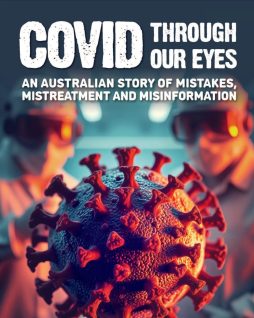
New Book: Covid Through Our Eyes
Review by Maryanne Demasi, PhD | September 28, 2025
 When Covid hit, governments, health agencies and the media marched in lockstep. Their united front was sold as “consensus.”
In reality, it was compliance by coercion. Dissenters were punished, questions suppressed, and the public was fed slogans instead of science.
Covid Through Our Eyes tears away that façade.
This collection of essays—written by doctors, scientists, lawyers, journalists, economists and ordinary Australians whose lives were upended—restores the voices silenced during the pandemic.
Each chapter forms part of a collective testimony. And in a final act of principle, not a cent of the book’s sales goes to the authors; all proceeds support Australia’s vaccine injury class action.
A chorus of voices
Editors Robert Clancy, an immunologist, and Melissa McCann, a physician, have gathered an extraordinary range of perspectives.
Among them, British oncologist Angus Dalgleish describes patients relapsing into aggressive cancers after years in remission. He argues that repeated boosters and chronic spike protein exposure created a “pro-cancer milieu.”
Vaccinologist Nikolai Petrovsky recounts how his homegrown vaccine, built on decades of expertise, was cast aside in favour of untested mRNA technology.
Statistician Andrew Madry lays out devastating evidence of excess mortality and the government’s refusal to investigate the causes.
Other contributors highlight phenomena dismissed at the time: immune system imprinting, shifts in antibody subclasses, and persistence of mRNA in the body.
Regulatory expert Philip Altman details how the Therapeutic Goods Administration ignored clear safety signals, choosing convenience over caution.
Lawyers and doctors tell of their battles in the courts and on the streets against vaccine mandates—small victories, bitter defeats, and governments that seemed more determined to silence critics than to defend their policies with evidence.
Clancy himself turns a sharp eye on Australia. Once a nation of independent scientists—from Burnet to Fenner, with pandemic plans crafted at the Commonwealth Serum Laboratories—by 2020 it had surrendered to bureaucracy.
He argues that recovery depends on restoring the doctor–patient relationship and returning vaccine development to proven antigen platforms, not experimental technologies rushed to market.
The media that failed
My own chapter in the book examines how mainstream media collapsed.
Newsrooms abandoned their adversarial role and parroted government lines. Contradictory evidence was buried. Scientists who asked questions were branded fringe. Patients who reported harm were cast as public health risks.
The press did not simply fail; it became an enforcer. That betrayal corroded trust, and the damage persists today.
Stories of loss
The most haunting chapters are personal.
Antonio DeRose, left in a wheelchair after transverse myelitis, describes doctors who refused to acknowledge the cause.
Queenslander Caitlin Gotze died six weeks after her second Pfizer dose, with her myocarditis misdiagnosed as asthma.
Actor and writer Katie Lees collapsed from clotting linked to AstraZeneca; her death was reduced to a single line on a regulator’s website.
These are stories of grief, stark reminders of what happens when agencies, designed to protect, instead deny responsibility.
This book matters
Covid may have slipped from the headlines, but its consequences have not.
Excess deaths remain unexplained. Injured families still fight for recognition. Trust has been squandered. And this nation has yet to hold a Royal Commission into Covid.
Covid Through Our Eyes is essential reading for anyone who wants to understand what really happened to Australians—a nation of people once known for their laid-back spirit, now grappling with a legacy of coercion and injury.
Buy it, read it, and judge for yourself.
Who Killed Charlie Kirk?
By Ron Paul | September 16, 2025
I had the pleasure of appearing on Charlie Kirk’s program a few times over the years and I always found him to be polite, respectful, and genuinely interested in ideas. Even in areas where we might not have agreed, he listened carefully. He was a strong advocate of free speech and he made a career of trying to convince the youth of the value of free speech and dialogue regardless of political differences.
At the young age of 31 years old, he had already founded and ran the largest conservative youth organization in the country and as such he had enormous influence over the future of the conservative movement and even the Republican party. As I discovered during my Republican presidential runs, the youth of this country are truly inspired by the ideas of liberty, peace, and prosperity.
I do not believe we have anything near the real story about the horrific murder of Charlie Kirk last week. The narrative presented by the FBI and other government agencies is wildly contradictory, with an ever-changing plotline that makes little sense.
Some individuals close to Kirk have reported that his foreign policy position was shifting away from the standard neoconservative militarism in favor of a more non-interventionist approach. Tucker Carlson recently recounted that Kirk had even gone personally to the White House to urge President Trump to refuse to take military action against Iran. He was rebuffed by President Trump, Carlson informed us.
Likewise, conservative podcaster Candace Owens, who was a close friend of Charlie Kirk, has stated on her program that Kirk was undergoing a “spiritual crisis” and was turning away from his past embrace of militarism and in favor of America-first non-interventionism, particularly regarding the current unrest in the Middle East.
Was Charlie Kirk murdered – directly or indirectly – by powerful forces who could not tolerate such a shift in views in such an influential leader? We don’t know.
If anything, those seeking to prevent the ideas of peace from breaking out would wish to cover it up, as they have done in so many past political killings. As I recounted in my most recent book, The Surreptitious Coup: Who Stole Western Civilization?, the turbulent 1960s saw several killings of major US figures, including JFK, RFK, and Martin Luther King, who were challenging the status quo and pushing for a shift away from the Cold War confrontationist mentality.
The real assassins of these peace leaders from last century were nihilists who did not believe in truth. They only believed in power – the power that comes from the barrel of a gun. Rather than compete in the marketplace of ideas they preferred to snuff out any challenges and therefore decapitate any possibility that our country could take a different course.
More than sixty years after the murder of President Kennedy, the vast majority of the American people do not believe the official story of how he was killed and why. Truth will eventually break through even when the wall of lies seems impenetrable.
If it is true that Charlie Kirk was preparing to shift his organization toward a foreign policy embraced by our Founders, the killing was even more tragic. But no army – or assassin – can stop an idea whose time has come. That may be his most important legacy. Rest in peace.
Download for Free: ‘Forbidden Facts,’ Gavin de Becker’s New Book About Childhood Vaccines
By Brenda Baletti, Ph.D. | The Defender | September 12, 2025
The link between vaccines and autism has been “debunked, debunked, debunked,” said New York Times bestselling author Gavin de Becker, in an interview with Children’s Health Defense (CHD) CEO Mary Holland on “Good Morning CHD.”
However, that “debunking” relied on a private organization and a behind-the-scenes meeting where the conclusion was set before the discussion began. De Becker told viewers:
“Out of that closed-door meeting and closed-mind meeting comes one of the most significant damages done to the American public, which is the cessation of … any full-hearted and authentic government-funded research into vaccines and brain damage.”
The transcripts of those Simpsonwood meetings were leaked, giving outsiders an inside look into how scientific concerns and evidence were suppressed, de Becker said.
In his new book, “Forbidden Facts: Government Deceit & Suppression about Brain Damage from Childhood Vaccines,” de Becker details how private organizations and public health agencies have buried negative information and touted false claims to propagate the lie that vaccines are unquestionably “safe and effective.”
CHD is offering the book as a free download.
“Forbidden Facts,” aimed at a broad audience that may be reluctant to question vaccine orthodoxy, addresses a heartbreaking topic, but also manages to weave in some humor.
“What’s such an amazing facet of this book about something very tragic, about brain injury to children, is that you’ve actually made it funny,” Holland said. “Honestly, I’ve never seen anything quite like it.”
De Becker detailed his key findings in the interview with Holland.
The link between vaccines and autism was “debunked” by the Institute of Medicine — now known as the National Academy of Medicine, he said.
The private organization also “debunked” the dangers of Agent Orange, the link between baby powder and cancer, the cause of Gulf War Syndrome, the dangers of silicone breast implants and the dangers of the anthrax vaccines.
But all of those claims were later revealed to be wrong.
“If you can accept that they do it once, then hopefully you can accept that they do it in other areas, and be … skeptical,” de Becker said.
Public health agencies altered definitions of key terms
The book also explains how agencies like the Centers for Disease Control and Prevention confuse public health issues by changing the definitions of key terms.
For example, a vaccine used to be defined as “a product that stimulates a person’s immune system to produce immunity to a specific disease, protecting the person from that disease,” de Becker said.
Today, it is defined as “a preparation that is used to stimulate the body’s immune system against diseases.” That means vaccines no longer have to protect people from a disease, he said.
A similar change was made to the word “pandemic.” It used to mean an outbreak that killed large numbers of people, but now it just means the appearance of a new virus to which people don’t have prior immunity.
“That terminology of what we used to think a vaccine meant, and what we used to think a pandemic meant, both of those died of COVID in 2020 and 2021,” de Becker said.
A similar move had been made with autism, as the definition has expanded to include people who don’t suffer from severe disability, according to de Becker. This benefits the pharmaceutical companies, he said. They can claim there is a disorder, with no clear definition, that is definitely not linked to vaccines — which also are not, which also have no clear definition.
“I encourage people to use the term ‘brain damage,’ because that, we know, is caused by vaccines,” he said.
No evidence childhood vaccines saved more than 150 million lives
Over the last year, scientific papers, studies and reports have confirmed that vaccines saved over 150 million lives, de Becker said.
However, all of the reports rely on the same flawed data — published in The Lancet — from a modeling study conducted by Imperial College London, which has produced many incorrect modeling studies, according to de Becker.
The modeling study doesn’t account for any vaccine injuries, de Becker said:
“Words that never appear inside that 7,000-word report …: adverse event, side effect, injury, harm, reaction, autism, myocarditis, brain damage, seizure, blood clot, neurological, simian virus 40, autoimmune, heart, heart failure, cardiac arrest, sudden death, stroke, fatality, convulsions. You get the idea.”
That manipulation is pervasive among vaccine manufacturers, vaccine supporters and much of the medical community, Holland said:
“This is why we talk about gaslighting. [Vaccines are] lifesaving, but if you’re injured or if you die — which they acknowledge can happen, but it’s ‘so rare’ — it’s completely ignored in the numbers, in the narrative. It’s not something that’s acceptable in polite conversation.”
The studies touting vaccine successes also fail to address questions such as why people vaccinated against tetanus have the same, very low tetanus death rate as those who aren’t vaccinated against it, de Becker said.
And the numbers are similar for other diseases among healthy people, he added.
When you look at the claim that vaccines saved more than 150 million lives, you have to believe one of two things, de Becker said:
“One is that 154 million lives saved is a headline-grabbing claim bought and paid for and amplified by biased stakeholders in order to affirm and encourage and expand mass vaccination. In other words, the claim is propaganda and promotion, not science.
“Or the other alternative is that the number is perfectly accurate and verifiable, discovered by an unbiased, unconflicted group of geniuses.”
Drug industry uses ‘threats, intimidation’ against people who question them
De Becker, a criminologist, said he believes the pharmaceutical industry is violating the Racketeer Influenced and Corrupt Organizations Act of 1970, or RICO.
Industry insiders “use bribery, all variety of deceit, threats, intimidation to do damage to the reputation of people who question the orthodoxy that they’ve created,” he said.
It isn’t surprising, as most product launches involve some element of conspiracy, de Becker said:
“They’re going to discredit or harm their competitive products. They’re often going to overvalue and exaggerate the value and benefit of the product they’re rolling out, and they’re not doing it alone. That is a conspiracy. And conspiracies happen every day, all day. There is nothing dark or special about it.”
So the question that remains is: Who can you trust?
“And I say, ‘trust yourself,’” de Becker said, adding that people should look into the recommended vaccines, become informed and make their own decisions.
Just by reading his book, people will know more about how vaccine harms were “debunked” than most doctors, he said.
Watch the interview here.
This article was originally published by The Defender — Children’s Health Defense’s News & Views Website under Creative Commons license CC BY-NC-ND 4.0. Please consider subscribing to The Defender or donating to Children’s Health Defense.
THE “661 TRIALS” LIE: WHAT AARON SIRI REVEALED IN CONGRESS
The HighWire with Del Bigtree | September 11, 2025
Del sits down with ICAN’s lead attorney, Aaron Siri, Esq., for a hard-hitting conversation following his explosive Senate testimony. Siri takes aim at the false narrative of “661 placebo-controlled vaccine trials,” dismantling it point by point. He also exposes the buried Henry Ford study featured in the upcoming documentary “An Inconvenient Study,” and opens up about his powerful new book, “Vaccines. Amen.” Together, they make the case for why true transparency in vaccine science can no longer be delayed.
The Oklahoma City Bombing: A Lesson in Government Lawlessness
By William L. Anderson • Ludwig von Mises Institute • August 14, 2025
[Blowback: The Untold Story of the FBI and the Oklahoma City Bombing by Margaret Roberts. (Bombardier Books, 2025; 399 pp.)]
On the morning of April 19, 1995, a truck bomb exploded outside the Alfred P. Murrah Federal Building in Oklahoma City, killing 168 people, including 19 children at a day care center in the building, and injuring hundreds more. As the FBI website tells readers, a single ex-soldier named Timothy McVeigh acted alone, being motivated by anti-government sentiment that came in the aftermath of the Waco massacre two years earlier.
The FBI version, of course, is the official version and the one repeated in history books and in the New York Times. McVeigh was aided by Terry Nichols, who helped him build a large fertilizer bomb that they placed in a rented Ryder truck that was destroyed in the explosion. Michael Fortier gave McVeigh some logistic help, but no one else was involved, just the “lone wolf” McVeigh and a couple of friends.
Using the organization’s vast investigative resources, the FBI quickly solved the case in the style of a Dick Wolf production. McVeigh had already been arrested when an alert policeman 90 miles away from Oklahoma City saw his getaway car had no license plate, so the FBI was able to get their man in custody. The original investigation also had McVeigh accompanied by a man called John Doe #2 when he rented the Ryder truck in Kansas, but soon afterward, the FBI insisted there had been no JD2, that he was a figment of the imaginations of everyone who said they saw him with McVeigh.
We know the rest of the story. McVeigh was convicted in federal court and executed at the federal prison in Terre Haute, Indiana, in 2001. Nichols was convicted both in federal court and Oklahoma state court, but juries deadlocked on the death penalty, so he is serving a life sentence at the fed’s so-called supermax prison in Florence, Colorado. Fortier, who provided valuable information to the FBI, pleaded to lesser charges and served a short prison sentence before he and his wife were whisked away in the government’s witness protection program. Case closed.
The FBI’s narrative was useful on two fronts. First, the organization was able to regain prestige after the disaster at Waco by supposedly solving this horrendous crime quickly. Second, by being able to frame the bombing as the result of anti-government rhetoric that had spread following Waco and the 1992 FBI killings at Ruby Ridge, Idaho, the Bill Clinton administration, the Democratic Party, and their allies in the legacy media were able to use the bombing to claim that Republicans and other critics of the administration were responsible for the mayhem.
But what if the FBI’s narrative is untrue and that several people were involved in the bombing, some of whom being either government informers or FBI agents who infiltrated right-wing paramilitary groups? Furthermore, what if federal agents lied about the existence of the so-called John Doe #2, and what if they lied about many other things tied to the bombing and subsequent investigation?
Margaret Roberts—the former news director of “America’s Most Wanted” and a celebrated journalist—has published a new book, Blowback, which successfully challenges the FBI and establishment media narratives about the case. Through interviews with people involved in the case and working with citizen journalists that didn’t buy the official line, Roberts has successfully presented alternative storylines that, frankly, are much more believable than what the FBI has given us, and presents her case in a book that is logical and easy to follow—no mean feat, given just how complicated the story really is.
Blowback involves two related events. The first, of course, is the Oklahoma City bombing. The second is the murder of Kenneth Trentadue in his cell at the Oklahoma City Federal Transfer Center August 21, 1995—a death the FBI to this day insists was a suicide. Thanks to a dogged investigation by Kenneth’s brother, Jesse—a former collegiate track star and respected attorney living in Salt Lake City—the FBI’s narratives on Kenneth’s death and the Oklahoma City bombing were exposed as lies, although that investigation came at great cost to Jesse.
(I have corresponded with Jesse Trentadue for many years and was familiar with his investigation, but until I read Blowback, I had not realized just how extensive that investigation has been.)
In the FBI’s account of the bombing, the agency claims:
The bombing was quickly solved, but the investigation turned out to be one of the most exhaustive in FBI history.
No stone was left unturned to make sure every clue was found and all the culprits identified.
The first statement is partially untrue and the second is an outright falsehood. Not only did the FBI refuse to follow leads provided by eyewitness testimony, but the agency threatened law-abiding citizens with prison when their own investigations began to prove that the FBI was lying. Unfortunately, because federal prosecutors, federal judges, and FBI agents have worked together to rig the outcomes, most of the principals in the Oklahoma City bombing will never have to worry about being brought to justice.
As pointed out earlier, the book deals both with the bombing and the Trentadue murder and then ties them together. We begin with the Trentadue case.
Kenneth Trentadue—a military veteran who in earlier years robbed banks to help pay for a drug habit—was picked up near the Mexican border in August 1995, on a parole violation and sent to Oklahoma City. In calls to his wife and family, Trentadue seemed hopeful and told them he would be released soon. However, on August 21, officials called the family to tell them that Kenneth had hanged himself in his cell, and that the prison officials wanted to cremate his body.
Kenneth’s mother and brother, Jesse, insisted on the feds shipping the body to them so they could have a proper burial. When the body was examined at the funeral home in Southern California, however, they were shocked. Roberts writes:
…Kenneth’s wife, mother, and sister had the staff remove heavy makeup applied by the prison to Kenneth’s body. Underneath, they discovered bruises, his cracked skull, possible stun gun burns, and an incision indicating that someone had cut Kenneth’s throat. (p. 12)
None of this made sense at first to the Trentadues. Kenneth was scheduled to be released soon and his calls to family members had been upbeat. Furthermore, the sheer logistics of how he could have hung himself with the bedsheet defied laws of physics. Furthermore, why did he have injuries and an incision in his neck, and why (as they found out later) was his jail cell splattered in blood?
Only later—thanks to a tip from journalist J.D. Cash of the McCurtain Daily Gazette in Idabel, Oklahoma—were they led to a possible explanation. Kenneth was seen as a near-dead ringer for the elusive JD2 right down to a tattoo that matched what the other alleged bomber had on his forearm. Had FBI investigators believed he was the second bomber, they certainly would have tried to get that information out of him through an “enhanced” interrogation at Oklahoma City. Instead, they allegedly killed him and then staged a fake suicide.
Whatever happened, Jesse Trentadue found that the FBI stonewalled him, and then FBI agents even met with federal prosecutors and other US Department of Justice officials to see if they could bring criminal charges of “obstruction of justice” against him, with one of those officials being then Deputy Attorney General Eric Holder, who was in charge of the cover up of Kenneth Trentadue’s murder that was called the “Trentadue Mission” by the Department of Justice, and later would serve as President Barack Obama’s US Attorney General. The DOJ under Janet Reno would not only ignore (and then harass) Trentadue; it also gave similar treatment to Sen. Orrin Hatch of Utah, who had seen the photos of Kenneth’s body and was demanding answers.
At least Hatch and Trentadue were able to create enough noise to have the DOJ go through the motions of an investigation of Kenneth’s death, but ultimately Holder made sure that there would be no indictment—and no US Senate investigation of the affair. Despite the physical impossibility that Kenneth managed to hang himself in a “suicide proof” cell after inflicting extensive physical trauma on himself, including slashing his own throat, the Holder directed grand jury conclusion was suicide.
(The Trentadue family later won a civil lawsuit in 2001 against the DOJ regarding Kenneth’s death, but the DOJ already has declared it never will pay a judgment to the family no matter what the courts have ruled.)
As Jesse investigated his brother’s death, he joined with others such as Cash to look closely into the FBI’s account of the Oklahoma City bombing and found that the government’s narrative was untrue. While the government and the legacy media insisted that their Timothy McVeigh “lone wolf” account was correct, Jesse and others found that the Clinton White House had been running a shadowy operation named PATCON (for “Patriot Conspiracy) to infiltrate the groups tied to the Christian Identity movement. Their investigation into PATCON would ultimately lead them to the Oklahoma City bombing itself.
Begun by the George H.W. Bush administration in 1991, PATCON supposedly was created to protect Americans from right-wing violence. However, PATCON soon would take on the characteristics of the FBI’s notorious COINTELPRO program of the 1960s and 70s to deal with threats from violent left-wing groups like the Weathermen, as well as the domestic spying programs against alleged Muslim extremists after the 9/11 attacks. As writers like James Bovard have noted, these infiltration programs have taken on a life of their own as those tied to the FBI would seek to enhance their importance by plotting many violent events that the programs allegedly were supposed to prevent.
Far from the Oklahoma City bombing being the work of the amateurish McVeigh and Nichols, Roberts describes in Blowback how she and others were able to trace McVeigh and his associates to the FBI-infiltrated groups that would provide support to him while he drifted into places like Elohim City in Oklahoma—a gathering place for disaffected people who had come to believe the US Government was corrupt and needed to be overthrown. In fact, as Roberts and others have documented, several FBI and ATF (Bureau of Alcohol, Tobacco, and Firearms) informants warned their handlers of the bombing plot or something similar, yet the feds did not act.
Not surprisingly, it seems that the FBI almost welcomed such attacks, as they legitimized the original purpose of PATCON and other programs. Writing about FBI informant John Matthews—who himself had contact with people who allegedly knew about the plans for the bombing—Roberts says:
As he [Matthews] and Jesse talked, Matthews revealed his disillusionment about PATCON. “It seems like the FBI was more interested in inciting violence than preventing it,” Matthews said. He had signed on believing his mission was to monitor the Ku Klux Klan and neo-Nazi groups on the far-right fringe. However, Matthews came to believe that inciting violence was the fundamental mission of PATCON. (p. 322)
Roberts—following the lead of Trentadue and others—has raised an important question: If the Oklahoma City bombing was not a “lone wolf” operation but rather was tied to shadowy figures, including embedded FBI agents and confidential informers, was it simply a case of a plot that got out of hand? Were people on the inside supposed to put the brakes on the whole operation, but something went wrong?
These questions are not easily answered, and Roberts does not take the conspiratorial plunge to claim that Oklahoma City was somehow a neatly-packaged FBI inside operation. Indeed, there is no way to prove such an allegation and Roberts, Trentadue, and others who have investigated the bombing have not taken that step into the abyss.
However, one can truthfully say that no person benefitted more from the Oklahoma City bombing than President Clinton. Just five months before, he and the Democratic Party had suffered huge setbacks as the Republicans had captured the US House of Representatives for the first time in 40 years and took the Senate, as voters were driven in part by anger at well-publicized abuses by the federal government and especially the Clinton White House.
By tying the bombing to any criticism of the federal government and of Clinton himself, the president was able to channel public anger about the blast toward conservative government critics in general and elected Republicans in particular, and Clinton and the Democrats were able to reverse some of their political losses the next year, as voters returned Clinton to the White House. As the San Francisco Examiner reported:
…under the heading “How to use extremism as issue against Republicans,” [Clinton adviser Dick] Morris told Clinton that “direct accusations” of extremism wouldn’t work because the Republicans were not, in fact, extremists. Rather, Morris recommended what he called the “ricochet theory.” Clinton would “stimulate national concern over extremism and terror,” and then, “when issue is at top of national agenda, suspicion naturally gravitates to Republicans.”
James Bovard also wrote that, following the bombing, his books on government spending and abuses of citizens were interpreted as welcoming things like Oklahoma City, including a hostile review of Freedom in Chains by the Los Angeles Times, with the reviewer declaring:
In Bovard’s defensive and disingenuous discussion of the bombing of the Oklahoma City federal building, he reveals that he is aware of the possible consequences of his words.
Blowback will not be reviewed in publications like The New York Times Book Review or the New York Review of (Each Other’s) Books (or if they are reviewed in those publications, the reviews will be hostile), but it is a book that one should read if only to rediscover the hard truth that government agents at all levels will lie and probably get away with it. While one imagines that the usual suspects will dismiss this book as a collection of falsehoods and wild conspiracies, the truth is that Roberts has managed to chronicle not only a sorry chapter in the modern history of US governance, but also has highlighted the fact that there are still heroic citizens among us doing their duty even when those charged with protecting citizens and enforcing the rule of law refuse to do so.
DR. PAUL THOMAS VS. THE CDC
CDC Hit With Lawsuit Over Failure to Test Cumulative Effect of 72-Dose Childhood Vaccine Schedule
By Michael Nevradakis, Ph.D. | The Defender | August 18, 2025
Two doctors who lost their medical licenses because they questioned the CDC’s vaccine recommendations for children are suing the agency for failing to test the cumulative effect of the 72-dose schedule on children’s health.
Drs. Paul Thomas and Kenneth P. Stoller and Stand for Health Freedom filed the lawsuit last week in federal court, alleging the lack of safety testing violates federal law and children’s constitutional rights.
The lawsuit names Susan Monarez, Ph.D., in her official capacity as director of the Centers for Disease Control and Prevention (CDC).
Attorney Rick Jaffe, who represents the plaintiffs, said the lawsuit “goes to the heart of the CDC’s childhood immunization program — a 72-plus dose medical intervention schedule that has never been tested.”
According to the complaint, the CDC’s childhood immunization schedule “is only based on an evaluation of short-term individual vaccine risks,” as the CDC “has never studied the combined effects and the accumulating dangers of administering all of the vaccines.”
The lawsuit states:
“The facts establish a continuing public health outrage hiding in plain sight: America administers more vaccines than any nation on earth while producing the sickest children in the developed world. Yet CDC demands proof of harm while refusing to conduct the studies that could provide it.”
The HighWire with Del Bigtree | August 21, 2025
Dr. Paul Thomas, author of Vax Facts, opens up about his controversial “vaxxed vs. unvaxxed” study, which showed healthier outcomes in unvaccinated children. After publishing the data, his license was suspended — but he continues to speak out, now suing the CDC over its untested vaccine schedule. He warns that pediatricians have become blind enforcers of pharma policy, while parents are waking up to the harms.
‘Between a Shot and a Hard Place’: Autism, Vaccines and the Illusion of Certainty
By Dr. Joel ‘Gator’ Warsh | The Defender | June 25, 2025
For years, the public has been told the vaccine-autism question is closed — case dismissed, myth debunked, science settled.
But when you peel back the headlines and actually examine the evidence, a startling truth emerges: We haven’t really studied the question at all. Not thoroughly. Not independently. Not with the urgency or integrity the issue demands.
The most commonly cited research? A handful of studies on the MMR vaccine and thimerosal, a mercury-based preservative that was largely removed from childhood vaccines over two decades ago. That’s it.
No comprehensive analysis of the full vaccine schedule. No robust long-term comparisons between vaccinated and unvaccinated children. No meaningful investigation into the timing, combinations, or cumulative biological impact of dozens of shots now given in infancy and early childhood.
In other words, we haven’t looked. And yet we claim to know.
As a pediatrician with formal training in epidemiology, I approached the research with trust in the system and confidence in the data. But what I encountered while investigating for my book, “Between a Shot and a Hard Place,” left me stunned.
I expected to uncover a vast body of high-quality science — long-term trials, robust safety evaluations, rigorous comparisons between vaccinated and unvaccinated children.
Instead, I found a shallow pool of studies — many small, some outdated, most narrowly focused on just one vaccine. There was no comprehensive scrutiny of the full schedule, no real curiosity about timing, interactions, or vulnerable populations.
It wasn’t that the science had disproven a link — it’s that the science had barely asked the question. And that silence speaks volumes.
We cannot claim certainty where inquiry has been suppressed. We cannot dismiss parent experiences as coincidences when they follow the same patterns again and again.
And we cannot afford to confuse lack of evidence with evidence of safety. The stakes are too high — and our children deserve better.
The rise in autism, and the refusal to ask why
Autism now affects 1 in 31 children in the U.S., with rates as high as 1 in 12.5 boys in California. The increase in diagnoses isn’t just about better awareness — more children today are deeply affected, with significant developmental and intellectual disabilities.
This is a public health crisis. Yet somehow, asking whether vaccines might play a role is taboo.
Parents see the change firsthand. A baby babbles, smiles, and makes eye contact — then suddenly, after a routine doctor visit, that progress stops. Words disappear. Eye contact fades. Regression sets in.
These stories follow a pattern, and while correlation is not causation, patterns are where science begins. But instead of investigation, we dismiss these parents. Instead of listening, we silence them.
The research we’re missing
I combed through decades of vaccine safety literature. The results were sobering.
- There are no long-term, large-scale studies comparing fully vaccinated children to unvaccinated ones using standardized developmental assessments.
- No comprehensive evaluation exists of the full CDC vaccine schedule as administered in real life.
- Most studies focus narrowly on the MMR vaccine or thimerosal, a mercury-based preservative largely removed from pediatric vaccines two decades ago.
Even the Institute of Medicine acknowledged in a 2013 report that the safety of the full childhood vaccine schedule — especially its timing, spacing, and cumulative exposure— had not been rigorously studied.
If vaccines were a pharmaceutical drug administered in 70 doses before kindergarten, with a suspected link to any chronic disease, we’d demand independent oversight, transparent trials, and long-term tracking.
But because these are vaccines, we declare the science “settled” without proving that it is.
Buried data, ignored whistleblowers
In my research, I came across the 2010 study by Gallagher and Goodman that found a higher autism risk in boys who received the hepatitis B vaccine at birth. It wasn’t widely publicized or followed up.
More disturbing was the 2014 revelation by William Thompson, Ph.D., a senior scientist at the Centers for Disease Control and Prevention who admitted that his team omitted key data in a pivotal MMR-autism study — data that showed increased risk in African American boys. The study was never corrected.
How can we claim the science is settled if major findings are buried and whistleblowers ignored?
A path forward
The vaccine-autism debate won’t be resolved by censorship or soundbites. It will be resolved by doing the science we’ve avoided for too long.
If we truly care about children’s health — and public trust — then we must stop circling the same studies and start asking better questions. That means:
- Funding large, independent, open-label prospective studies comparing fully vaccinated, partially vaccinated, and unvaccinated children — evaluating real-world vaccine schedules, not just single shots in isolation.
- Studying combinations, timing, and aluminum adjuvants using updated toxicology, neurodevelopmental, and immunological tools.
- Taking parental reports seriously as part of observational data—treating them not as “anecdotes to dismiss” but as signals to investigate.
- Removing all financial conflicts of interest from vaccine safety research and creating full transparency for both data and funding sources.
This isn’t about choosing sides. It’s about restoring balance. We can demand rigorous, independent science without being “anti-vax.” We can protect children and respect parental intuition.
But we can’t do either if we keep denying the blind spots in our current system.
To move forward, we must be honest about what we know — and courageous enough to admit what we don’t. Because when it comes to our children’s long-term neurological health, vague reassurances are not enough.
No, the science is not settled. And it’s time we stopped saying it is.
Dr. Joel “Gator” Warsh is a board-certified pediatrician, specializing in integrative and holistic medicine, and the author of “Between a Shot and a Hard Place.”
This article was originally published by The Defender — Children’s Health Defense’s News & Views Website under Creative Commons license CC BY-NC-ND 4.0. Please consider subscribing to The Defender or donating to Children’s Health Defense.
Featured Video
The Most Important Bet You’ve Never Heard Of
or go to
Aletho News Archives – Video-Images
From the Archives
The Occupied Mentality Syndrome
Saudi Arabia on the American chessboard – Part 2
By B. J. Sabri | American Herald Tribune | April 19, 2016
Since the Korean War, but particularly since the Iranian Revolution of 1979 until today, the United States has been steadily escalating its military presence in the Persian Gulf. Taking advantage of many colossal events of the past 36 years, [1] the hyper-empire has institutionalized its massive presence on land and sea, and expanded its objectives to include the unambiguous physical control of the area, as well as the clear understanding that local Arab governments should abide by them. The pretext is always the same: in “defense” of the national interests and security of the United States. From observing how the United States has been interacting with the governments of the region, and by judging from the size of its expeditionary force, we could reach a basic conclusion. The United States is occupying, de facto, the entire Arabian Peninsula. (Yemen, devastated by Saudi and American jets is yet to be conquered. Oman? Britain returned not as colonial ruler but as a soft occupying power.)
Under this articulation, Saudi Arabia, Qatar, Kuwait, and the United Arab Emirates are virtually occupied countries. If we compare this type of occupation to the mandate and protectorate regimes of the past, the results might be identical—the nations affected by it lose sovereignty. When Arab governments comply with the objectives of a foreign power that station military forces on their national milieu, then that power controls them in multiple ways including how they react to policy deliberations and what decisions they intend to take on specific issues. A good method to verify the concept of effective occupation is this: take notice of what the United States says and wants, and then compare it to what the gulf rulers do in response. (I shall discuss this detail at some point in the upcoming parts.)
If the presence of US forces or other means of political pressure are a factor in Saudi Arabia’s interventionist Arab wars, then we need to debate this issue. However, from the history of resistance to colonialism, we learnt: if a powerful state imposes its order on a nation by military means or other forms of coercion, and if this nation does not resist that imposition, then a mental subordination to the powerful state will ensue. This is especially true in the case of Saudi Arabia. One single event, 9/11, has transformed it from a US “ally” into an instant political hostage of the American Empire. … continue
Blog Roll
 Aletho News
- Trump and the debris of Iran war
- IRGC hits US tech giant Oracle’s data center, computing site in UAE over new assassinations
- Bombing Iran Back Into the Stone Age /Lt Col Daniel Davis & Jim Jatras
- UAE rejects report claiming it is ready to join war on Iran to reopen Hormuz
- A New Resistance Front: How Does Syria Factor into the Regional War?
- Gulf states weigh pipeline expansion plans, hoping to bypass Hormuz
- Iran sets up ‘tollbooth’ system in Strait of Hormuz
- Wave 90: IRGC strikes US-linked industrial sites in Gulf
- Iran Says US-Israeli Claims of Its Military Strength Are Wrong
- Trump’s April Fools’ Address to the nation
- If Americans Knew
- ‘War crime’: Global condemnation as Israeli ministers celebrate death penalty law targeting Palestinian prisoners
- 7 Ways Israel Is Turning Lebanon Into Gaza
- World’s Leading Football Bodies Under Fire Over Israel Policies
- Experts warn of possible use of nukes against Iran
- Israeli invasion of Lebanon could be worse than 1982, warn European officials
- Passover: Liberation and collective punishment
- Trump says the quiet part out loud: (Israel’s) war on Iran > Americans’ health – Daily Update
- Gaza families reunite years after babies evacuated amid Israel’s war
- International Rescue Committee warns Gaza’s children face grave protection risks
- Iran’s Alleged 47-Year War on America: Debunking the 1,050 American Deaths Canard
- No Tricks Zone
- Low Intensity Tornado Wrecks Major Solar Farm, Creating A Potential Toxic Dump
- New Study Finds Warming Saves Lives…Cold Temperatures 12 Times More Deadly Than Excess Heat
- German Science Blog Accuses PIK Climate Institute Of Hallucinating Climate Tipping Points
- Devastating Assessment Of Comirnaty Vaccine By Former Senior Pfizer Europe Toxicologist
- New Study: CO2 Is ‘Effectively Negligible’ As An Explanatory Climate Change Factor Since 2000
- Former Pfizer Toxicologist Dr. Helmut Sterz Tells Bundestag Hearing Pfizer Vaccine Should Have Never Been Approved
- Energy Expert: Germany’s Nuclear Phaseout Was A “500 Billion Euro Mistake”
- New Research: South Australia’s Mid-Holocene Sea Surface Temperatures Were 4°C Warmer Than Today
- Storing Green Energy To Last Germany 10 Days Would Require A 60-Million Tonne Battery
- New Studies: UK Sea Levels Were 4 Meters Higher Than Today During The Mid-Holocene
 Aletho News