The Universal Declaration of Human Rights (UDHR) is 70 this year. But you wouldn’t know it from the impact it’s had on human lives. For example, Donald Trump has sharply increased drone attacks, especially in Yemen and Somalia, with virtual silence from Western media. Article 11 of the UDHR states: “(1) Everyone charged with a penal offence has the right to be presumed innocent until proved guilty according to law in a public trial at which he has had all the guarantees necessary for his defence.”
As I document in my new book Human Wrongs(Iff Books), the alleged terror suspects blown apart by drone operators are not even charged let alone given the chance to plead their innocence in a national or international court: and that’s quite apart from the women, children and babies (“collateral damage”) that happen to be nearby when the Hellfire missiles are launched.
In Britain, the age-old common law, presumption of innocence, faced a slight setback in the so-called “war on terror.” Since US drone operators murdered Afghan civilians in the first-ever lethal drone strike in 2002 (followed by Yemenis in the same year), the US has murdered about 2,500 people with drones alone. Providing targeting information and communications links, the UK plays a significant role, all in violation of the principles of the UDHR.
The UN Special Rapporteur on Extrajudicial Execution, Philip Alston, writes: “A State killing is legal only if it is required to protect life (making lethal force proportionate) and there is no other means, such as capture or nonlethal incapacitation, of preventing that threat to life (making lethal force necessary).” So, a person in Afghanistan, for example, cannot be lawfully slain by a British drone operator on the pretence that the person is about to pose an imminent threat to the UK, unless for instance the person is about to give an order over the phone let’s say to, for instance, a terror cell in Briton, instructing it to detonate a bomb. Needless to say, this is a ludicrous scenario in the real-world.
Murdering Its Own
The British state murdering “its own people” is nothing new. In the 1970s, the Ministry of Defence waged a dirty war in Northern Ireland. Units from the Military Reaction Force (MRF) murdered Protestants and Catholics as a part of strategy of tension. Northern Irish persons murdered and/or shot by MRF operatives include:Patrick McVeigh (shot in the back), John and Gerry Conway (travelling to a fruit stall), Aiden McAloon and Eugene Devlin (travelling in a taxi), Joe Smith, Hugh Kenny, Patrick Murray and Tommy Shaw (drive-by shootings) and Daniel Rooney and Brendan Brennan (walking on a road).
The British government does in fact possess the proverbial license to kill. It is a “license” granted to itself and one not grounded in international law. Targeted killings (murder) hitherto depended on the authorization of the Secretary of State. The Intelligence Services Act 1994, Section 7(1), frees intelligence operatives from liability in acts of killing abroad, “if the act is one which is authorised to be done by virtue of an authorisation given by the Secretary of State.”
In the case of Reyaad Khan and Abdul Raqib Amin, the killings were not carried out by MI6 (which is covered by the Intelligence Services Act 1994), but by the Royal Air Force. In 2015, the government started murdering Britons allegedly suspected of involvement in terrorism, making no attempt to apprehend them and put them on trial, as international law requires.
In August 2015, Reyaad Khan and Abdul Raqib Amin, were travelling in a vehicle in Raqqa, Syria. RAF drone operators ended their lives. Then-PM David Cameron told Parliament that Khan was the target (murdered) and Amin was killed alongside him (manslaughter). A third unidentified, alleged Islamic State fighter was killed with them, though the third person was not “identified as a UK national.” By implication, the third person’s life is not important, hence no details emerged.
Cameron claimed the killings were “an act of self-defence,” because Khan was: “involved in actively recruiting ISIL sympathisers and seeking to orchestrate specific and barbaric attacks against the west, including directing a number of planned terrorist attacks right here in Britain, such as plots to attack high profile public commemorations.”
But Cameron also revealed that Khan was not a threat to the UK: “there was nothing to suggest that Reyaad Khan would ever leave Syria.” If Cameron is to be believed, Khan was issuing instructions to terror cells in the UK. But if this is the case, it therefore becomes a matter for the British police.
Changing Stories
The pretext for the murder was later changed by the UK’s Permanent Representative to the UN, Matthew Rycroft, who wrote that the killings were somehow justified in the “collective self-defence” of Iraq, where Britain is supposedly helping the government to defeat ISIS. The trouble is that Khan was not in Iraq when he was killed. Inverting international legal norms, Secretary of State for Defence, Michael Fallon, “who authorised the lethal drone strike” (Press and Journal ), appealed to Article 51 of the UN Charter, the right of collective and/or individual self-defence. Attorney General Jeremy Wright’s advice has not been published, indicating that the killings are violations of domestic and international law.
It later transpired that the RAF is working its way through a “kill list” of alleged British terror suspects fighting with ISIS in Iraq and Syria. Both jets and drones are used; the latter are controlled by operators in RAF Waddington, Lincolnshire. “When we know where they are we kill them,” said a Ministry of Defence spokesperson. The “kill list” revelations prompted Lord Macdonald, former Director of Public Prosecutions, to co-sign a letter to PM May, calling for the release of the government’s Intelligence and Security Committee report into the murder of Reyaad Khan and names of other targeted suspects.
Lucy Powell MP and Kirsten Oswald MP, both co-chairs of the informal All-Party Parliamentary Group, called for a debate on Britain’s use of targeted murder. Defence Secretary Fallon who authorized the murder of Khan claimed that by February 2017, 85 Britons had been killed in Syria, but it wasn’t clear if this meant as part of the RAF’s kill list.
T. J. Coles is a postdoctoral researcher at Plymouth University’s Cognition Institute and the author of several books, including Fire and Fury(Clairview Books ) and Human Wrongs(Iff Books ).
Fake news, propaganda, public relations, advertising — it goes by many names, but at the core of all these terms is the idea that powerful institutions, primarily governments and corporations, strive to manipulate our understanding of world affairs. The most effective such shaping of opinion is invisible and therefore unquestioned.
Left criticism of French imperialism in Africa provides a stark example. Incredibly, the primary contemporary criticism North American leftists make of French imperialism on that continent concerns a country it never colonized. What’s more, Paris is condemned for siding with a government led by the lower caste majority.
To the extent that North American progressives criticize ‘Françafrique’ they mostly emphasize Paris’ support for the Hutu-led Rwandan government after Uganda/Rwandan Patriotic Front (RPF) invaded in 1990. Echoing the Paul Kagame dictatorship’s simplistic narrative, France is accused of backing Rwandan genocidaires. In a recent article for thevolcano.org, a leftist outlet based on unceded Coast Salish Territories, Lama Mugabo claims, “the organizations that organized this anger into genocide, and the instruments of murder that they wielded, were outfitted by French colonial power.” In Dark Threats and White Nights: The Somalia Affair, Peacekeeping, and the New Imperialism Sherene H. Razack writes that “French peacekeepers made a number of decisions that prolonged and exacerbated the conflict.” The “post-colonial” Canadian academic also decries “French support for him [Hutu President “Hanyarimana” — her (repeated) misspelling] scuttled any fledging peace efforts.”
In taking up Kigali/Washington/London’s effort to blame France for the mass killings in Rwanda (rather than the Uganda/RPF aggressors and their Anglo-American backers), Razack and others even imply that Paris colonized the country. But, Germany conquered Rwanda and Belgium was given control of the small East African nation at the end of World War I. The nearest former French colony — Central African Republic — is over 1,000 km away.
What Razack, Mugabo and other leftists ignore, or don’t know, is that Washington and London backed the 1990 Uganda/RPF invasion. Officially, a large number of Rwandan exiles “deserted” the Ugandan military to invade (including a former deputy defence minister and head of military intelligence). In reality, the invasion was an act of aggression by the much larger neighbour. Over the next three and a half years Kampala supplied the RPF with weaponry and a safe haven.
Throughout this period Washington provided the Ugandan government with financial, diplomatic and arms support (Ottawa cut millions in aid to Rwanda, prodded Habyarimana to negotiate with the RPF and criticized his human rights record while largely ignoring the Uganda/RPF aggression). Washington viewed the pro-neoliberal government in Kampala and the RPF as a way, after the Cold War, to weaken Paris’ position in a Belgium colonized region, which includes trillions of dollars in mineral riches in eastern Congo.
Echoing Kigali/Washington/London/Ottawa, many leftists have taken up criticism of Paris’ policy towards a country France never colonized and where it sided with a government from the lower caste (over 85% of the population, Hutus were historically a subservient peasant class and the Tutsi a cattle owning, feudal ruling class). Concurrently, leftists have largely ignored or failed to unearth more clear-cut French crimes on the continent, which Washington and Ottawa either backed or looked the other way.
In 1947–48 the French brutally suppressed anticolonial protests in Madagascar. Tens of thousands were also killed in Cameroon during the 1950s-60s independence war. Paris’ bid to maintain control over Algeria stands out as one of the most brutal episodes of the colonial era. With over one million settlers in the country, French forces killed hundreds of thousands of Algerians.
To pre-empt nascent nationalist sentiment, Paris offered each of its West African colonies a referendum on staying part of a new “French community”. When Guinea voted for independence in 1958, France withdrew abruptly, broke political and economic ties, and destroyed vital infrastructure. “What could not be burned,” noted Robert Legvold, “was dumped into the ocean.”
France hasn’t relinquished its monetary imperialism. Through its “Pacte Coloniale” independence agreement, Paris maintained control of 14 former colonies’ monetary and exchange rate policy. Imposed by Paris, the CFA franc is an important barrier to transforming the former colonies’ primary commodity based economies. As part of the accord, most CFA franc countries’ foreign exchange reserves have been deposited in the French treasury (now European Central Bank), which has generated large sums for Paris.
Alongside its monetary imperialism, France has ousted or killed a number of independent-minded African leaders. After creating a national currency and refusing to compensate Paris for infrastructure built during the colonial period, the first president of Togo, Sylvanus Olympio, was overthrown and killed by former French Foreign Legion troops. Foreign legionaries also ousted leaders in the Central African Republic, Benin, Mali, etc. Paris aided in the 1987 assassination of famed socialist Burkina Faso leader Thomas Sankara.
While undermining independence-minded leaders, Paris has backed corrupt, pro-corporate, dictatorships such as four-decades long Togolese and Gabonese rulers Gnassingbé Eyadema and Ali Bongo Ondimba (their sons took over).
France retains military bases or troops in Djibouti, Ivory Coast, Senegal, Gabon, Mali, Chad and Niger. French troops are also currently fighting in Mali and Niger.
Compared to Paris’ role in Rwanda, French influence/violence in its former colonies gets short shrift from North American leftists. Part of the reason is that Washington and Ottawa largely supported French policy in its former colonies (Ottawa has plowed nearly $1 billion into Mali since the 2013 French invasion and gave Paris bullets and other arms as 400,000 French troops suppressed the Algerian independence struggle). Additionally, criticizing France’s role in Rwanda dovetails with the interests of Kigali, Washington, London and Ottawa.
The North American left’s discussion of France’s role in Africa demonstrates the influence of powerful institutions, especially the ones closest to us, in shaping our understanding of the world. We largely ignore what they want us to ignore and see what they want us to see.
To build a movement for justice and equality for everyone on this planet, we must start by questioning everything governments, corporations and other powerful institutions tell us.
“Stanley Fischer, the 73–year-old vice chair of the U.S. Federal Reserve, is familiar with the decline of the world’s rich. He spent his childhood and youth in the British protectorate of Rhodesia… before going to London in the early 1960s for his university studies. There, he experienced first-hand the unravelling of the British Empire… Now an American citizen, Fischer is currently witnessing another major power taking its leave of the world stage… the United States is losing its status as a global hegemonic power, he said recently… The U.S. political system could take the world in a very dangerous direction…”
With the collapse of the Soviet Union in 1991 and the creation of the so called Wolfowitz Doctrine in 1992 during the administration of George Herbert Walker Bush, the United States claimed the mantle of the world’s first and only Unipower as well as its intention to crush any nation or system that would oppose it in the future. The New World Order foreseen just a few short years ago becomes more disorderly by the day, made worse by varying degrees of incompetence and greed emanating from Berlin, London, Paris and Washington. As a further sign of the ongoing seismic shocks rocking America’s claim to leadership, by the time Stanley Fischer’s interview appeared in the online version of the conservative German magazine Der Spiegel, he had already announced his resignation as vice chair of the Federal Reserve; eight months ahead of schedule. If anyone knows about the decline and fall of empires it is the “globalist” and former Bank of Israel president, Stanley Fischer. Not only did he experience the unravelling of the British Empire as a young student in London, he actually assisted in the wholesale dismantling of the Soviet Empire during the 1990s.
As an admitted product of the British Empire and point man for its long term imperial aims, that makes Stanley Fischer not just empire’s Angel of Death, but its rag and bone man.
Alongside a handful of Harvard economists led by Jonathan Hay, Larry Summers, Andrei Shleifer, Anatoly Chubais and Jeffry Sachs, (the Harvard Project) Fischer helped to throw 100 million Russians into poverty overnight – privatizing, or as some would say piratizing – the Russian economy. Yet, Americans never got the real story because a slanted anti-Russia narrative covered the true nature of the robbery from beginning to end. As described by public policy scholar and anthropologist Janine R. Wedel in her 2009 book Shadow Elite, “Presented in the West as a fight between enlightenment Reformers trying to move the economy forward through privatization, and retrograde Luddites who opposed them, this story misrepresented the facts. The idea or goal of privatization was not controversial, even among communists… the Russian Supreme Soviet, a communist body, passed two laws laying the groundwork for privatization. Opposition to privatization was rooted not in the idea itself but in the particular privatization program that was implemented, the opaque way in which it was put into place, and the use of executive authority to bypass the parliament.”
Intentionally set up to fail for Russia and the Russian people under the cover of a false narrative, she continues “The outcome rendered privatization ‘a de facto fraud,’ as one economist put it, and the parliamentary committee that had judged the Chubais scheme to ‘offer fertile ground for criminal activity’ was proven right.”
If Stanley Fischer, a man who helped bring about a de facto criminal-privatization-fraud to post-empire Russia says the U.S. is on a dangerous course, the time has arrived for post-empire Americans to ask what role Stanley Fischer played in putting the U.S. on that dangerous course. Unknown to Americans is the blunt force trauma Stanley Fischer and the “prestigious” Harvard Project delivered to Russia under the leadership of Boris Yeltsin during the 1990s. According to The American Conservative’s James Carden “As the Center for Economic and Policy Research noted back in 2011… ‘the IMF’s intervention in Russia during Fischer’s tenure led to one of the worst losses in output in history, in the absence of war or natural disaster.’ Indeed, one Russian observer compared the economic and social consequences of the IMF’s intervention to what one would see in the aftermath of a medium-level nuclear attack.”
Neither do most Americans know that it was President Carter’s national security advisor Zbigniew Brzezinski’s 1970s grand plan for the conquest of the Eurasian heartland that boomeranged back to terrorize Europe and America in the 21st century. Zbigniew Brzezinski spent much of his life undermining the Communist Soviet Union and then spent the rest of it worrying about its resurgence as a Czarist empire under Vladimir Putin. It might be unfair to say that hating Russia was his only obsession. But a common inside joke during his tenure as the President’s top intelligence officer was that he couldn’t find Nicaragua on a map. If anyone provided the blueprint for the United States to rule in a unipolar world following the Soviet Union’s collapse it was Zbigniew Brzezinski and if anyone could be said to represent the debt driven financial system that fueled America’s post-Vietnam Imperialism, it’s Stanley Fischer. His departure should have sent a chill down every neoconservative’s spine. Their dream of a New World Order has once again ground to a halt at the gates of Moscow.
Whenever the epitaph for the abbreviated American century is written it will be sure to feature the iconic role the neoconservatives played in hastening its demise. After emerging from their Marxist/Leninist cocoon after World War II their movement helped to establish the Cold War. And from the chaos created by Vietnam they set to work restructuring American politics, finance and foreign policy to their own purposes. Dominated at the beginning by Zionists and Trotskyists but directed by the Anglo/American establishment and their intelligence elites, the neoconservatives’ goal was to deconstruct the nation-state through cultural cooptation and financial subversion and in that they have been overwhelmingly successful. From the end of World War II through the 1980s the focus of this pursuit was on the Soviet Union, but since the Soviet collapse in 1991, their focus has been on dismantling any and all opposition to their global dominion.
Shady finance, imperial misadventures and neoconservatism go hand in hand. The CIA’s founders saw themselves as partners in this enterprise and the defense industry welcomed them with open arms. McGill University economist R.T. Naylor, author of 1987’s Hot Money and the Politics of Debt, described how “Pentagon Capitalism” had made the Vietnam War possible by selling the Pentagon’s debt to the rest of the world. “In effect, the US Marines had replaced Meyer Lansky’s couriers, and the European central banks arranged the ‘loan-back’” Naylor writes. “When the mechanism was explained to the late [neoconservative] Herman Kahn – lifeguard of the era’s chief ‘think tank’ and a man who popularized the notion it was possible to emerge smiling from a global conflagration – he reacted with visible delight. Kahn exclaimed excitedly, ‘We’ve pulled off the biggest ripoff in history! We’ve run rings around the British Empire.’” In addition to their core of ex-Trotskyist intellectuals early neoconservatives could count among their ranks such establishment figures as James Burnham, father of the Cold War Paul Nitze, Senator Daniel Patrick Moynihan, Senator Henry “Scoop” Jackson, Jeane Kirkpatrick and Zbigniew Brzezinski himself.
From the beginning of their entry into the American political mainstream in the 1970s it was known that their emergence could spell the end of democracy in America and yet Washington’s more moderate gatekeepers allowed them in without much of a fight. Peter Steinfels’ 1979 classic The Neoconservatives: The men who are changing America’s politics begins with these fateful words. “THE PREMISES OF THIS BOOK are simple. First, that a distinct and powerful political outlook has recently emerged in the United States. Second, that this outlook, preoccupied with certain aspects of American life and blind or complacent towards others, justifies a politics which, should it prevail, threatens to attenuate and diminish the promise of American democracy.”
But long before Steinfels’ 1979 account, the neoconservative’s agenda of inserting their own interests ahead of America’s was well underway attenuating American democracy, undermining détente and angering America’s NATO partners that supported it. According to the distinguished State Department Soviet specialist Raymond Garthoff, détente had been under attack by right-wing and military-industrial forces (led by Senator “Scoop” Jackson) from its inception. But America’s ownership of that policy underwent a shift following America’s intervention on behalf of Israel during the 1973 October war. Garthoff writes in his detailed volume on American-Soviet relations Détente and Confrontation, “To the allies the threat [to Israel] did not come from the Soviet Union, but from unwise actions by the United States, taken unilaterally and without consultation. The airlift [of arms] had been bad enough. The U.S. military alert of its forces in Europe was too much.”
In addition to the crippling Arab oil embargo that followed, the crisis of confidence in U.S. decision-making nearly produced a mutiny within NATO. Garthoff continues, “The United States had used the alert to convert an Arab-Israeli conflict, into which the United States had plunged, into a matter of East-West confrontation. Then it had used that tension as an excuse to demand that Europe subordinate its own policies to a manipulative American diplomatic gamble over which they had no control and to which they had not even been privy, all in the name of alliance unity.”
In the end the U.S. found common cause with its Cold War Soviet enemy by imposing a cease-fire accepted by both Egypt and Israel thereby confirming the usefulness of détente. But as related by Garthoff this success triggered an even greater effort by Israel’s “politically significant supporters” in the U.S. to begin opposing any cooperation with the Soviet Union, at all. Garthoff writes, “The United States had pressed Israel into doing precisely what the Soviet Union (as well as the United States) had wanted: to halt its advance short of complete encirclement of the Egyptian Third Army east of Suez… Thus they [Israel’s politically significant supporters] saw the convergence of American-Soviet interests and effective cooperation in imposing a cease-fire as a harbinger of greater future cooperation by the two superpowers in working toward a resolution of the Israeli-Arab-Palestinian problem.”
As we’ve come to appreciate with each passing year, World War Two was the most evil manifestation in human history. No other conflict even comes close in matching that war for its sweeping, sadistic and unspeakable crimes. Mass murder of surrendering soldiers, mass starvation of helpless civilians, mass rape of women and children, assembly-line style torture in the tens of thousands, uprooting and expulsion of millions to certain death, the deliberate, wanton destruction of ancient cultures–these atrocities and many more add to World War Two’s annual menu of beastly war crimes.
Also, with each passing year, it becomes clearer and clearer that virtually all the major crimes of the Second World War were committed by the Allied powers. Additionally, almost all these war crimes took place toward the end of the war. Why is this? Why were these terrible atrocities not only committed by the victorious Allied powers but why did almost all occur at the end of the war? Simply, late in the war the Allies knew very well they would win and they thus knew they had little to fear from retaliation or war crimes trials. The victors knew that they could unleash their sadism against a hated, helpless enemy with utter impunity, and they did.
The following is a description of just one such major war crime as defined above. The account comes from my recent book, Summer, 1945—Germany, Japan and the Harvest of Hate. To this day, relatively little is actually known of this great atrocity. Of course, this is because war criminals not only commit such crimes expertly, but they cover up such crimes expertly, as well.
Just as Allied air armadas had mercilessly bombed, blasted and burned the cities and civilians of Germany during World War Two, so too was the US Air Force incinerating the women and children of Germany’s ally, Japan. As was the case with his peers in Europe, cigar-chewing, Jap-hating Maj. Gen. Curtis LeMay had no compunction whatsoever about targeting non-combatants, including the very old and the very young.
“We knew we were going to kill a lot of women and kids,” admitted the hard-nosed air commander without a blink. “Had to be done.”[1]
Originally, and although it would have been in direct violation of the Geneva Convention, Franklin Roosevelt had seriously considered gassing Japan. Much as British Prime Minister Winston Churchill had proposed doing to Germany earlier in the war, the American president had felt that flooding Japan with poison was not only a fine way to end the war he had personally instigated at Pearl Harbor, but it was a just punishment upon those who had continued the war into the spring of 1945. Unlike the Germans who had their own stock of deadly gas and who could have easily retaliated against the Allies had they been so attacked, Japan had virtually none of its own to reply in kind. To further the plan, Roosevelt ordered his staff to test the waters by discretely asking Americans, “Should we gas the Japs?” Since the plan was soon shelved, perhaps too many Americans remembered the horrors of trench warfare during WWI to want a repeat. The US Government then came up with the idea of unleashing “bat-bombs” on Japan. The brain-child of an American dentist, tiny incendiary time bombs were to be attached to thousands of bats which would then be dropped on Japan from aircraft. Soon after they sought shelter in Japanese homes, schools and hospitals the bat bombs would then explode thereby igniting fires all across the country. After spending months and millions of dollars on the project, the bat bombs, like poison gas, were also dropped. Ultimately, deadly incendiary bombs were developed and finally accepted as the most efficient way to slaughter Japanese civilians and destroy their nation.[2]
The Allies first created the firestorm phenomenon when the British in the summer of 1943 bombed Germany’s second largest city, Hamburg. After first blasting the beautiful city to splinters with normal high explosives, another wave of bombers soon appeared loaded with tens of thousands of firebombs. The ensuing night raid ignited numerous fires that soon joined to form one uncontrollable mass of flame. The inferno was so hot, in fact, that it generated its own hurricane-force winds that literally sucked oxygen from the air and suffocated thousands. Other victims were either flung into the hellish vortex like dried leaves or they became stuck in the melting asphalt and quickly burst into flames. LeMay hoped to use this same fiery force to scorch the cities of Japan. Tokyo would be the first test.
On the night of March 9-10, 1945, over three hundred B-29 bombers left their bases on the Mariana Islands. Once over Tokyo, advance scout planes dropped firebombs across the heart of the heavily populated city to form a large, fiery “X.” Other aircraft “painted” with fire the outer limits to be bombed, thereby encircling those living in the kill zone below.[3]
Soon, the remaining bombers appeared and easily followed the fires to their targets. When bomb bay doors opened tens of thousands of relatively small firebombs were released—some, made of white phosphorous, but most filled with napalm, a new gasoline-based, fuel-gel mixture. Within minutes after hitting the roofs and buildings below, a huge inferno was created. Since the raid occurred near midnight, most people were long in bed, thus ensuring a slow reaction. Also, the sheer number of firebombs—nearly half a million—and the great breadth of the targeted area—sixteen square miles—insured that Tokyo’s already archaic fire-fighting ability would be hopelessly inadequate to deal with such a blaze.
When the flames finally subsided the following morning, the relatively few survivors could quickly see that much of the Japanese capital had been burned from the face of the earth. In this raid on Tokyo alone, in one night, an estimated 100,000 to 200,000 people, mostly women and children, were, as Gen. LeMay announced proudly, “scorched and baked and boiled to death.”[4] Only the incineration of Dresden, Germany one month earlier, with an estimated death toll of 250,000-400,000, was greater.
“Congratulations,” wrote Gen. Henry “Hap” Arnold to LeMay after hearing the news. “This mission shows your crews have got the guts for anything.”[5]
***
Following the resounding success with Tokyo, Gen. LeMay immediately turned his attention toward the similar immolation of every other city in Japan. As was the case with Germany, then later Tokyo, the aim of the US Air Force under Curtis LeMay was not so much to destroy Japanese military targets or factories so much as it was to transform all of Japan into a blackened waste, to kill as many men, women, and children as he could, and to terrorize those who survived to as great a degree as possible. In other words, under the command of LeMay the air attacks against Japan, just as with the air attacks against Germany, were “Terror Bombing,” pure and simple.[6]
To make this murderous plan as effective as possible, the US air commander and his aides studied the entire situation. Night raids were preferred, of course, since it would catch as many people in bed as possible. Also, dry, windy conditions were selected to accelerate the ensuing firestorm insuring few could escape. Additionally, since the Japanese air force had, for all intents and purposes, been destroyed in three years of war, there was little need for armament of the American bombers. Thus, the extra weight that ammunition, machine-guns and the men to fire them added to the aircraft was removed, making room for even more firebombs. But perhaps most important for Gen. LeMay was the decision to radically reduce the altitude for his bombing raids.
Prior to the Tokyo raid, standard bombing runs took place at elevations as high as 30,000 feet. At such great altitudes—nearly six miles up—it was insured that most enemy fighters and virtually all ground defenses would be useless. By 1945, however, with the virtual elimination of the Imperial Air Force and with normal anti-aircraft ground fire woefully inadequate or non-existent, enemy threats to American bomber waves was greatly reduced. Thus, the firebombing of Japan could be carried out by aircraft flying as low as 5,000 feet over the target. This last measure not only guaranteed that the US attacks would be carried out with greater surprise, but that the bombs would be dropped with deadlier accuracy. One final plus for the new tactics was the demoralizing terror caused by hundreds of huge B-29 bombers—“B-San,” the Japanese called them, “Mr. B”–suddenly roaring just overhead and each dropping tons of liquefied fire on those below. In a nation where most homes were made of paper and wood, the dread of an impending firebombing raid can well be imagined.
As one US intelligence officer sagely reported to a planning committee: “The panic side of the Japanese is amazing. Fire is one of the great things they are terrified at from childhood.”[7]
***
Following the destruction of Tokyo in which most of the city center was scorched black, and following the enthusiastic endorsement of American newspapers, including the curiously named Christian Century, Gen. LeMay swiftly sent his bomber fleets to attack virtually every other city in Japan. Osaka, Nagoya, Kobe, Yokohama, and over sixty more large targets were thus treated to the nightmare of firebombing. And simply because a city had been bombed once was not a guarantee that it would not be bombed again and again. Such was the terrible fate of Tokyo. Not content with the initial massacre, LeMay demanded that the Japanese capital be attacked until everyone and everything was utterly destroyed; “burned down,” demanded the US general, “wiped right off the map.”[8]
Unfortunately, no community was any better prepared to face the attacks than Tokyo had been. Fully expecting that if the US air craft ever attacked, it would be with typical high explosives, local and national authorities encouraged Japanese civilians earlier in the war to dig their own air raid shelters near or under their homes to withstand the blast and shrapnel of conventional bombs. Additionally, women were encouraged to wear heavy cloth hoods over their heads to cushion a bomb’s concussive force and prevent hearing loss. After Tokyo, Osaka, Nagoya, and other firebombing raids, however, it was clear that past defensive tactics were useless when facing the hellish firestorms.
Typically, first warning of a potential American air raid came with the city sirens. Like their German counterparts early in the war, the Japanese likewise sprang from their beds with every such alarm, either to join their various “bucket brigades” or to wet their mats and brooms and fill their water troughs just in case of fire. Most simply dashed to the holes in the ground they called “shelters.” But also like those in Germany, with numerous false alarms came predictable apathy on the part of the Japanese and an almost utter disregard of sirens. Often, when a few B-29s on reconnaissance flights were indeed spotted far above leaving their vapor trails, excited air raid wardens would run through the streets beating on buckets as a warning to laggards.[9] But soon, even these warnings were ignored.
“As the B-29’s came over us day in and day out, we never feared them,” admitted one woman weary of the alarms.[10]
That all changed dramatically following the firebombing of Tokyo. After that night, especially on dry, windy nights, in each Japanese city, in each Japanese heart, there was never any doubt that the war—a hellish, hideous war—had finally reached Japan.
***
First hint of an impending US air raid on a Japanese city came with a low, but ominous, rumble from afar. That menacing sound soon grew and grew to an approaching roar that caused the windows to rattle and the very air to vibrate. Finally, in one great burst, a terrifying, rolling thunder exploded just overhead. In no way, however, did the horrible sound prepare the people below for the horrible sight they then saw above. Usually at night, but sometimes even during the day, the sky was literally blotted out by the vision.
“I had heard that the planes were big,” said a stunned spectator, “but seen from so close, their size astounded me.”[11]
“Gigantic,” thought one spellbound viewer.[12]
“Enormous,” added another awe-struck witness. “It looked as if they were flying just over the telegraph poles in the street. . . . I was totally stupefied.”[13]
“They were so big,” remembered a young woman staring in disbelief. “It looked like you could reach out and grab them.”[14]
Then, amid the terrifying sights and sounds, the awe-struck people watched in utter amazement as the bomb bay doors of the frightening things sprang open as if on cue.
Falling not vertically, but diagonally, the objects which then began to shower down were at first thought to be pipes, or even sticks.[15] Within a few seconds, the true nature of the objects became known to all.
“They’re coming down,” the people screamed. “They’re coming down.”[16]
Almost immediately, as if a switch had been thrown, from every corner of the targeted city the night became light as day as each of the thousands of fire bombs ignited on impact. Quickly, the deadly liquid spread and in mere minutes the targeted city was totally engulfed.
“At that moment,” said 24-year-old Yoshiko Hashimoto, “we were caught in an inferno. The fire spread so quickly. The surroundings were seized with fire in a wink.”[17]
“The wind and flames seemed to feed into each other and both gained intensity,” described one teenager. “Pots and pans blew about on the ground and blankets flew through the air. People ran in all directions.”[18]
Since their homes and businesses made of wood and paper were mere “match boxes” ready to ignite, most people recognized instantly the futility of trying to fight the fire and they quickly fled into the streets.
“Roofs collapsed under the bombs’ impact,” said an eyewitness, “and within minutes the frail houses . . . were aflame, lighted from the inside like paper lanterns.”[19]
It was at that terrifying moment, when their entire world seemed on the verge of being consumed by smoke and flame, that single mothers, their husbands off at war or dead, were forced to make life and death decisions. To save small children, some were compelled to leave old, feeble relatives behind; others had to abandon beloved pets or needed animals. One mother, to save her two tiny tots, made the heart-breaking decision to leave her handicapped child to certain death.[20]
“The three of us dashed out into the panic and pandemonium of the streets,” recalled Masayoshi Nakagawa, a father of two little children and a man whose wife was in a local hospital expecting their third child. “People were carrying whatever they had managed to salvage: quilts, pillows, frying pans. Some of them had carts; others lugged bicycles on their backs.”[21]
Once in the streets, the refugees were greeted by a “red blizzard” of sparks. Unlike typical sparks, however, those created from incendiary bombs were large “chunks” of oily, wind-driven flame that would instantly ignite the clothes of those fleeing. 22 Another hazard was the “hail” of bombs themselves. So many of the relatively small bombs were dropped on any given city that many victims were actually struck by them. Most, of course, were instantly wrapped in a ball of fire and died in terrible agony. One woman watched in horror as her husband ran from their family business shouting “Air Raid! Air Raid!” and was immediately struck in the head by a firebomb.
“He was instantly wrapped in a sheet of bluish flame. . . ,” recounted the horrified wife. “I could not put out the fire. All my desperate efforts were of no avail. . . . His hair was still sizzling and giving off a blue light. His skin peeled away in sheets, exposing his flesh. I could not even wipe his body.”[23]
Just as with the man above, those victims who actually came in contact with the napalm found that such fire could not be extinguished and would burn and sizzle all the way to the bone.[24]
Desperately, those trapped within the encircled target zone searched for avenues of escape. Unfortunately, at every turn the victims met only more fleeing refugees and more smoke and flame. Those who had remained at their own air raid shelters near their homes were already dead, the holes acting like earthen bake ovens in the heat. Others met similar fates when they wrongly assumed that the few brick and concrete buildings in the city would protect them. They did the opposite. When the racing flames reached these buildings those inside were quickly incinerated. Iron rafters overhead sent down streams of molten metal on any still alive.[25]
Nor did parks prove to be havens. With temperatures reaching 1,800 degrees, the trees quickly dried, then burst into flames. Additionally, those who sought open spaces, or areas burned bare from previous raids, were easy targets for US fighter pilots who routinely machine-gunned fleeing refugees, just as they had done in Germany. Other American aircraft watched the streets for any Japanese fire companies bold enough to fight the fires, then attacked with high explosives.[26]
By the hundreds, then thousands, then tens of thousands, the people fled through the streets as the furnace became fiercer and fiercer.
“Hell could get no hotter,” thought French reporter, Robert Guillain, as he watched the crowds struggle against the murderous heat and the “hail” of huge, flaming sparks.
People soaked themselves in the water barrels that stood in front of each house before setting off again. A litter of obstacles blocked their way; telegraph poles and the overhead trolley wires that formed a dense net . . . [of] tangles across streets. . . . The fiery air was blown down toward the ground and it was often the refugees’ feet that began burning first: the men’s puttees and the women’s trousers caught fire and ignited the rest of their clothing.[27]
As noted, in the furious heat and wind it was often a victim’s shoes or boots which erupted in flames first, followed quickly by the pants, shirts, and air raid hoods that many women still wore.[28] As the horrified people stripped off one layer of burning clothing after another, many rolling on the ground to smother the fires, some simply burst into flames entirely—hair, head, skin, all. One witness watched as a child ran by screaming shrilly, “It’s hot! It hurts! Help me!” Before anyone could reach him, the child burst into flames “as if he’d been drenched in gasoline.”[29] In the midst of her own desperate bid to escape, one teenage girl saw a mother and father bravely place their own bodies between the killing heat and their small children. At last, when the father simply burst into flames he nevertheless struggled to remain upright as a shield for his children. Finally, the man teetered and fell.
“I heard him shouting to his wife,” recalled the witness, “‘Forgive me, dear! Forgive me!’”[30]
Likewise, thousands of victims in other Japanese cities could not bear the ferocious heat and simple exploded in flames from spontaneous combustion.[31]
The streets, remembered police cameraman, Ishikawa Koyo, were “rivers of fire . . . flaming pieces of furniture exploding in the heat, while the people themselves blazed like ‘matchsticks’. . . . Under the wind and the gigantic breath of the fire, immense incandescent vortices rose in a number of places, swirling, flattening, sucking whole blocks of houses into their maelstrom of fire.”[32]
Continues French visitor, Robert Guillain:
Wherever there was a canal, people hurled themselves into the water; in shallow places, people waited, half sunk in noxious muck, mouths just above the surface of the water. . . . In other places, the water got so hot that the luckless bathers were simply boiled alive. . . . [P]eople crowded onto the bridges, but the spans were made of steel that gradually heated; human clusters clinging to the white-hot railings finally let go, fell into the water and were carried off on the current. Thousands jammed the parks and gardens that lined both banks of the [river]. As panic brought ever fresh waves of people pressing into the narrow strips of land, those in front were pushed irresistibly toward the river; whole walls of screaming humanity toppled over and disappeared in the deep water.[33]
With two little children clutched under his arms, Masayoshi Nakagawa raced for the canals and rivers as everyone else, hoping to find a haven from the deadly heat.
Suddenly I heard a shout: “Your son’s clothes are on fire!” At the same instant, I saw flames licking the cotton bloomers my daughter was wearing. I put my son down and reached out to try to smother the flames on his back when a tremendous gust of wind literally tore me from him and threw me to the ground. Struggling to stand, I saw that I was now closer to my daughter than to the boy. I decided to put out the fire on her clothes first. The flames were climbing her legs. As I frantically extinguished the flames, I heard the agonized screams of my son a short distance away. As soon as my daughter was safe, I rushed to the boy. He had stopped crying. I bent over him. He was already dead.[34]
Grabbing his daughter and his son’s body, Masayoshi joined the fleeing crowds once again, trying to escape the “ever-pursuing inferno.”
“Once in the open space . . ,” continues the grieving father, “I stood, my daughter by my side, my dead son in my arms, waiting for the fire to subside.”[35]
Surprisingly, during days and nights such as these filled with horrors scripted in hell—children bursting into flames, glass windows melting, molten metal pouring down on people—often it was the small and seemingly trivial sights and sounds that sometimes stayed with survivors forever. One little girl, after watching a panicked mother run past with her baby totally ablaze on her back, after seeing children her own age rolling on the ground like “human torches,” after hearing the sounds of a man and a horse he was leading both burning to death, still, again and again, the little girl’s mind wandered back to the safety of her cherished doll collection, then on display at a local girl’s festival.[36]
“To my surprise,” recalled another survivor, “birds in mid-flight—sparrows and crows—were not sure where to go in such a situation. I was surprised to see that the sparrows and the crows would cling to the electric wire and stay there in a row. . . . You’d think they’d go into the bushes or something.”[37]
Amid all the horror, another woman never forgot the strange sight of a refugee standing in a large tank of water holding only a live chicken. Another young female, admittedly “numb to it all,” found as she passed a mound of dead bodies that her eyes became transfixed on a pair of nose holes that seemed to be peering up at her.[38]
Finally, on numerous occasions, because of the American “encirclement” of a targeted city, thousands of refugees fleeing from one direction collided head-on with thousands of refugees fleeing from another direction. In this case, the panicked multitude, now incapable of moving forward because of an equally panicked multitude in front, and incapable of moving backward because of the pursuing firestorm, simply became wedged so tightly that no one could move. Horrific as the ordeal had been thus far, it was nothing compared to this final act of the hellish horror. Since most refugees were fleeing instinctively toward water, many crowds became wedged on bridges. Thousands of victims were thus overtaken by the fury and were burned to a crisp by the fiery winds that to some resembled “flame throwers.” Thousands more, horribly burned, managed to leap or fall to their deaths into the rivers and canals below. Eventually, metal bridges became so hot that human grease from the victims above poured down on the bodies of victims below.[39]
And as for those far above, to those who had dropped millions of firebombs on the cities and towns of Japan, the horror show they had created below was now vivid in all its lurid detail. At such low altitudes, with night now day, those above had a front row seat to all the hellish drama below. Fleeing humans racing for life down streets now more “streams of fire” than streets, screaming horses engulfed in flames galloping insanely in all directions, bridges packed with doomed mothers and children, rivers and canals jammed with the dead and the dead to be. And for those US fighter pilots whose job was to massacre refugees who reached the open spaces, their view was even closer. In the red and white glare of the fires, these Americans could actually see the eyes of those they were machine-gunning to death, the women with babies, the children exploding from bullets, the old, the slow, the animals. The violent updrafts from the heat below was a much greater threat to US bombers than the almost non-existent Japanese anti-air defenses. Wafted on the heat thousands of feet up was the scattered debris from below—bits and pieces of homes, offices and schools; tatters of burnt clothing; feathers and fur from dead pets; and, of course, the pervasive smell of broiled human flesh.
“Suddenly, way off at 2 o’clock,” noted an awe-struck American pilot arriving on the scene, “I saw a glow on the horizon like the sun rising or maybe the moon. The whole city . . . was [soon] below us stretching from wingtip to wingtip, ablaze in one enormous fire with yet more fountains of flame pouring down from the B-29s. The black smoke billowed up thousands of feet . . . bringing with it the horrible smell of burning flesh.”[40]
Once the attacking force had loosed its bombs and banked for home, the red glow of the holocaust they had created could be seen for as far as 150 miles.[41]
***
With the departure of enemy aircraft and the eventual subsiding of the fires, workers and volunteers from throughout the stricken region finally felt safe enough to venture in and begin rescue operations. Given the frail, flammable nature of most Japanese cities, virtually every structure in a targeted area—homes, shops, businesses—was utterly leveled. As a consequence, because there was seldom need to clear stone, brick, metal, and other rubble from a bombed area, as was the case in Germany, the search for bodies in Japan was made easier, if not easy.
By the thousands, by the tens of thousands, the charred victims lay everywhere. Many died alone, overcome in their flight by heat and exhaustion. It was common to find a single blackened mother laying upon a single blackened child that she was trying so desperately to protect. But many more victims seemed to have died en masse. Time and again rescue workers encountered “piles” and “mounds” of bodies, as if all suddenly found their way cut off or as if the people unsuspectingly entered areas vastly hotter than elsewhere and succumbed as one quickly. “I saw melted burnt bodies piled up on top of each other as high as a house,” remembered one ten-year-old.[42] In such areas, below the piles of blackened bodies, large puddles of dark human rendering was noticed.
“We saw a fire truck buried under a mountain of blackened bones,” wrote another witness. “It looked like some kind of terrifying artwork. One couldn’t help wondering just how the pile of bodies had been able to reach such a height.”[43]
“What I witnessed,” said one badly burned woman leading her blind parents, “was the heaps of bodies lying on the ground endlessly. The corpses were all scorched black. They were just like charcoal. I couldn’t believe my eyes. . . . We walked stepping over the bodies being careful not to tread on them.” Unfortunately, the woman’s parents tripped and stumbled over the corpses again and again.[44]
Many victims, it was noticed, had heads double and triple their normal size.[45]
Others gazed in wonder at the array of color the bodies displayed; many, of course, were scorched black, but some were brown, red or pink. “I particularly remember a child,” said one little girl, “whose upper half of the body was coal-black but its legs were pure white.”[46]
“I . . . saw a boy,” another child recalled. “He was stark naked, and had . . . burns all over the body. His body was spotted with black, purple, and dark red burns. Like a rabbit, the boy was hopping among the corpses . . . and looked into the dead persons’ faces. . . . He was probably searching for his family members.”[47]
Elsewhere in the stricken cities, before disease could spread, rescue workers began the grim task of disposing of the unclaimed bodies as quickly as possible. By the hundreds, then by the thousands, many scorched and shriveled victims were buried in common trenches with others.[48] Some survivors took it upon themselves to collect the remains of friends and neighbors. When the air raid began in her city, one woman was talking with a neighbor when an explosive bomb blew him to bits. Later, feeling compelled to do so, the lady returned and began the horrible recovery of the body parts, including the head. “I was suddenly struck with the terrifying thought,” the woman, who was on the verge of fainting, recalled, “that perhaps someday soon someone would have to do the same thing to me.”[49] Workers elsewhere simply did not have the time or patience for such concern and care and simply tossed body parts into rivers.[50]
Initially, when rescuers entered the few brick and concrete buildings in the stricken cities, they were mystified. Expecting heaps of bodies, they found only layer upon layer of ash and dust. Far from being points of refuge as the unsuspecting victims imagined, the buildings had served rather as super-heated ovens, not only killing everyone when the flames neared but baking each body so thoroughly that only a faint dry powder remained. Even with only a slight breeze, other such baked victims simply blew away “like sand.”[51]
Following such horrific attacks, many stunned survivors simply stumbled among the ruins aimlessly as if in a trance, dazed, disoriented, seemingly looking for something, but actually looking for nothing. With a new and unimaginable terror springing up at every turn during every second of the night before, time then seemed to have telescoped, then stopped. “It took seemingly forever to cover a distance that ordinarily would take two or three minutes,” noted one surprised survivor. And for those victims who gathered their wits and somehow managed to stagger from targeted cities with only minor injuries, such treks generally became terrifying odysseys unto themselves.
After escaping the inferno at Chiba the night before, and with a two-year-old sister in her arms and an eight-year-old sister on her back suffering from a terrible head wound, little Kazuko Saegusa finally reached the countryside the following morning in a drizzling rain. Finding a hand cart, the exhausted ten-year-old placed the two children inside then set off in hopes of finding a doctor or a hospital to help her injured sister. While pulling the cart between muddy rice paddies, the terrified little girl was repeatedly strafed by American fighter planes. Nevertheless, Kazuko refused to run for cover and leave her sisters behind. Eventually, and almost miraculously, the child reached a hospital. Unfortunately, there was no happy ending.
“The corridors of the hospital were packed with people burned past recognition,” remembered Kazuko. “There were many young people whose arms or legs had been amputated. . . . The screaming was beyond description. . . . Maggots wriggled from the bandages.”[52]
Conditions at the hospital were so bad that Kazuko and her sisters, along with many others, were moved to an open area near a church. But again, American aircraft soon made their appearance and strafed the victims, forcing the little girl to grab her sisters and finally seek safety in a stand of trees.[53]
Although the dead outnumbered the living following such nightmares, for many shattered survivors, like little Kazuko, the trials continued.
After losing his son the night before, with the dawn, Masayoshi Nakagawa and his tiny surviving child now set off to find his pregnant wife somewhere in the destroyed city.
My daughter and I, hand in hand, alone now, started off. Weary and emotionally drained, we had to force ourselves to struggle on through mounds of debris and corpses; among the foul, pungent odors, and the groans of the injured and dying. A man holding a frying pan gazed blankly at ashes that had been a house. Another squatted, dazed and helpless, in the middle of the street. Mothers frantically called for their children; small children screamed for their parents. I neither could nor wanted to do anything for the suffering people. My own suffering was too great. Probably all the others felt the same way.
Near [a] railway station, mounds of bodies clogged the track underpass. The walls were spattered with blood. A charred mother sat embracing her charred infant. The dead, burned beyond recognition, looked like grotesque bald dress-maker’s dummies. Those who were still alive moaned against the heat and called for water.[54]
Unbeknownst to Masayoshi, his wife, after a “difficult delivery,” had given birth to a healthy baby girl during the height of the firestorm the night before. Because of the approaching flames, everyone in the hospital had urged the mother to leave her newborn and flee while she could. Refusing to do so, the weakened woman wrapped her infant then fled into the inferno. Pale and bleeding, facing the flames and deadly sparks, the mother kept her baby covered tightly and sprinkled her with water throughout the hellish night. The following day, the utterly exhausted woman collapsed in the street and could go no further. Fortunately, a kind man, forgetting his own misfortune for the moment, carried the mother and child to a nearby hospital. After only the briefest of rests, the woman and her baby again set off in search of Masayoshi and the children.
Finally, after days and days of fruitless searching for a wife that he assumed was, like his son, dead, the husband learned from a mutual friend that the woman and their new child were yet alive and uninjured. For this husband and father, the news was the first reason to smile in what seemed a lifetime.
“I was overjoyed,” Masayoshi said simply, yet with a heart filled with emotion.[55]
***
Following the deadly firebombing of Japanese cities, the death toll in each continued to climb for days, even weeks as those terribly burned and maimed succumbed to injuries. With a sudden shortage of doctors, nurses and medicine, most victims were cared for by family and friends who coped as best they could. Some were successful, some were not.
When she first realized that her daughter’s badly burned legs had become infested with maggots, one horrified mother promptly fainted from shock. After she came to, the determined woman found a pair of chop sticks and immediately went to work picking out the maggots, one at a time.[56]
Others died in different ways. Two days after the raid upon their hometown in which her husband was killed, Fumie Masaki’s little son and other boys discovered an unexploded bomb while on a playground. When a fire warden arrived to dispose of it, the bomb exploded. Eight children were killed, including Fumie’s son.[57]
For a nation surrounded and blockaded, starvation was already a very real concern for Japan. In the bombed and burned cities with their rail, road and river traffic destroyed, it was an even greater threat. Adults soon noticed that children now suddenly grew gaunt and pale and looked “somehow older” than before. Many thin babies had escaped the firebombings only to starve in the days and weeks following. Dogs and cats were no longer seen in Japan. Even the Japanese government urged the people to supplement their diets with “rats, mice, snakes, saw dust, peanut shells, grasshoppers, worms, silkworms, and cocoons.”[58]
Added to starvation was chronic exhaustion from lack of sleep and rest. Those who somehow managed to remain in bombed cities did so with the constant dread of the nightmare’s repeat. Those who moved to undisturbed cities did so fully expecting the fire to fall at any hour.[59]
“I wish I could go to America for just one good night’s sleep,” groaned one exhausted postman.[60]
Exacerbating the daily stress and strain of Japanese civilians was the American “targets of opportunity” program. Just as they had done in Germany, US commanders ordered their fighter pilots aloft with orders to shoot anything in Japan that moved. Unfortunately, many young men obeyed their orders “to the letter.” Ferry boats, passenger trains, automobiles, farmers in fields, animals grazing, women on bicycles, children in school yards, orphanages, hospitals . . . all were deemed legitimate targets of opportunity and all were strafed again and again with machine-gun and cannon fire.[61]
“And not a single Japanese aircraft offered them resistance,” raged a man after one particular strafing incident. The angry comment could just as easily have been spoken after all American attacks, firebombings included. Certainly, the most demoralizing aspect of the war for Japanese civilians was the absolute American control of the air above Japan. During the nonstop B-29 attacks against the cities and towns, seldom was a Japanese aircraft seen to offer resistance.
“When . . . there was no opposition by our planes . . ,” offered one dejected observer, “I felt as if we were fighting machinery with bamboo.”[62]
Even members of the military had to agree. “Our fighters were but so many eggs thrown at the stone wall of the invincible enemy formations,” admitted a Japanese naval officer.[63]
And as for anti-aircraft guns. . . .
“Here and there, the red puffs of anti-aircraft bursts sent dotted red lines across the sky,” recounted one viewer, “but the defenses were ineffectual and the big B-29s, flying in loose formation, seemed to work unhampered.”[64]
Indeed, those guns that did fire at B-29s seemed more dangerous to those on the ground than to those in the air. Early in the bombing campaign, after a single B-29 on a reconnaissance mission flew away totally unscathed following a noisy anti-aircraft barrage, shrapnel falling to earth killed six people in Tokyo.[65]
“Our captain was a great gunnery enthusiast,” sneered a Japanese sailor. “He was always telling us that we could shoot Americans out of the sky. After innumerable raids in which our guns did not even scratch their wings, he was left looking pretty silly. When air attacks came in, there was nothing much we would do but pray.”[66]
In July, 1945, Curtis LeMay ordered US planes to shower with leaflets the few remaining Japanese cities that had been spared firebombing with an “Appeal to the People.”
As you know, America which stands for humanity, does not wish to injure the innocent people, so you had better evacuate these cities.
Within days of the fluttering leaflets, half of the warned cities were firebombed into smoking ruins.[67]
With the destruction of virtually every large Japanese city, LeMay kept his men busy by sending them to raid even the smaller cities and towns. After his own remote community was attacked, one resident knew the end was in sight. “When we were bombed,” admitted the man, “we all thought—if we are bombed, even in a small mountain place, the war must certainly be lost.”[68]
Others felt similarly, including a high-ranking civil servant:
It was the raids on the medium and smaller cities which had the worst effect and really brought home to the people the experience of bombing and a demoralization of faith in the outcome of the war…. It was bad enough in so large a city as Tokyo, but much worse in the smaller cities, where most of the city would be wiped out. Through May and June the spirit of the people was crushed. [When B-29s dropped propaganda pamphlets] the morale of the people sank terrifically, reaching a low point in July, at which time there was no longer hope of victory or a draw but merely a desire for ending the war.[69]
***
According to American sources, the first firebombing raid on Tokyo, the raid that was the most devastating of all raids and the raid that provided the blue print for all future firebombing raids on Japan, was a complete and utter success. Not only was the heart of the great city totally scorched from the face of the earth, but over 100,000 people were also killed. Furthermore, American sources also estimate that from that first raid on Tokyo to the end of the war approximately sixty Japanese cities were laid waste and that roughly 300,000-400,000 civilians were killed in Gen. Curtis LeMay’s firebombing raids.
The firebombing of Japan by the United States Air Force in the spring and summer of 1945 was simply one of the greatest war crimes in world history. Arguments that the operation helped speed Japanese defeat and surrender are little more than self-serving nonsense. For all intents and purposes Japan was already defeated, as the January, 1945 attempts to surrender already illustrate. In that month, peace offers to the Americans were being tendered. The mere fact that the vast majority of the estimated 300,000-400,000 deaths from firebombing were women, children, and the elderly should alone put the utter lie to the claim that such a crime added anything material to ultimate American victory. As was the case with the saturation bombing of Germany and the consequent firestorms that slaughtered countless women and children there, far from pushing a nation to surrender, the murder of helpless innocents in fact enraged and strengthened the resolve of the nation’s soldiers, sailors, and airmen to fight, if necessary, to the death.
“Seeing my home town ravaged in this way inspired me with patriotic zeal,” revealed one young Japanese speaking for millions. “I volunteered for military service soon after the . . . raid because I felt that in this way I could get even with the Americans and British, who . . . were nothing but devils and beasts.”[70]
And as for the American “estimates” of Japanese firebombing deaths. . . .
When the first B-29 raid took place in March, 1945, the targeted killing zone of Tokyo contained a population of roughly 1.5 million people. Given the fact that most living in this area were, as always, the most vulnerable—women, children, the old, the slow—and given the tactics used—saturation firebombing, dry conditions, gale force winds to accelerate the flames, encirclement, fighter aircraft machine-gunning those in parks or along rivers—and given the fact that the firestorm’s devastation was utter and succeeded even beyond Curtis LeMay’s most sadistic dreams, to suggest that out of a million and a half potential victims in the death zone only a mere 100,000 died while well over a million women and children somehow managed to escape the racing inferno is a deliberate attempt to reduce the number of slain and thereby, with an eye to future criticism and condemnation, a deliberate attempt to reduce the crime itself.
Additionally, although the greatest loss of Japanese life occurred during the Tokyo raids, hundreds of thousands of victims also perished in other large cities. To suggest, as modern American sources do, that even including the death toll in Tokyo the number killed in similar raids nationwide combined only came to 300,000-400,000 victims is, again, a deliberate attempt to reduce the number of victims in hope of reducing the extent of the crime. Indeed, any modern attempt that calculates the number of firebombing deaths in Japan at less than one million should not be taken seriously.
As one expert wrote:
The mechanisms of death were so multiple and simultaneous—oxygen deficiency and carbon monoxide poisoning, radiant heat and direct flames, debris and the trampling feet of stampeding crowds—that causes of death were later hard to ascertain.[71]
Accurate for the most part, one element left out of that death assessment is also that which seems the least likely—drowning. In one of the cruelest of ironies, more people may have actually died from drowning during the firestorm raids than from the flames themselves. In their frantic attempts to escape the torturous heat, even those who could not swim—the very old, the very young—sprang into any body of water available—reservoirs, rivers, canals, ponds, lakes, even large, deep water tanks—and took their chances there, drowning below being clearly preferable to burning above. Of the tens of thousands of drowning victims recovered, no doubt tens of thousands more were swept down rivers and streams and out to sea, never to be seen again.
Whether woman and children drowned or burned to death, it was all one and the same to Curtis LeMay.
“I’ll tell you what war is about,” explained the merciless US general, “you’ve got to kill people, and when you’ve killed enough they stop fighting.”[72]
Unfortunately, while a significant percentage of Americans felt just as LeMay, virtually all US leaders and opinion molders felt that way.
“Keep ‘Em Frying,” laughed the Atlanta (Ga) Constitution.[73]
And “keep ‘em frying” Curtis LeMay would.
***
Fortunately for the future of mankind, in the very midst of a merciless war waged by evil men and prolonged by equally evil politicians, many ordinary individuals nevertheless always remain true to their better selves.
In spite of the US firebombing massacre and the inhuman “targets of opportunity” slaughter taking place, when an injured American fighter pilot was forced to bail out over Japan, instead of being machine-gunned as he floated down or instead of being beaten to death by angry villagers when he touched ground, he was instead taken to a hospital that his serious wounds might be treated.
During his short stay, four young Japanese pilots, curious more than anything, visited the injured American. Whatever transpired during those brief moments of broken English, of eyes wide with wonder for an enemy pilot, and perhaps even of soft smiles of sympathy for a dying brother-at-arms—a bond was quickly formed.
Finally, as the Japanese airmen said their polite goodbyes and quietly turned to leave forever, the fast failing US pilot begged one of the young men to please wait for a moment. Working something free from his hand, the heavily bandaged American asked the visitor, only moments before his mortal enemy, for a first, and final, favor: When the madness was finally over, when reason had once more returned to the world, would the young man please carry the wedding ring to the United States? And once there would he please tell a young American widow how her young American pilot had fallen to earth one day and how he had died?[74]
Notes
1 Michael Bess, Choices Under Fire—Moral Dimensions of World War II (New York, Knopf, 2006), 105.
8 “A Forgotten Holocaust: US Bombing Strategy, the Destruction of Japanese Cities and the American Way of War from World War II to Iraq,” The Asia-Pacific Journal, http://apjjf.org/-Mark-Selden/2414/article.html; Max Hastings, Retribution, 298. X-73
32 “A Forgotten Holocaust: US Bombing Strategy, the Destruction of Japanese Cities and the American Way of War from World War II to Iraq,” The Asia-Pacific Journal: Japan Focus, http://apjjf.org/-Mark-Selden/2414/article.html
58 “Japan Air Raids.org—A Bilingual Historical Archive,” Yoshiko Hashimoto interview, http://www.japanairraids.org/ ;“The Tokyo Air Raids in the Words of Those Who Survived,” The Asia-Pacific Journal—Japan Focus, http://apjjf.org/2011/9/3/Bret-Fisk/3471/article.html ; “Japan Air Raids.org—A Bilingual Historical Archive,” Nobuyoshi Tan interview, http://www.japanairraids.org/ ; “Japan Air Raids.org—A Bilingual Historical Archive,” Shigemasa Toda interview, http://www.japanairraids.org/ ; John W. Dower, Embracing Defeat—Japan in the Wake of World War II (New York: W. W. Norton, 1999), 91.
65 Isaac Shapiro, Edokko—Growing Up A Foreigner in Wartime Japan (Bloomington: Indiana University Press, 2009), 132.
66 Hastings, 138.
67 “A Forgotten Holocaust: US Bombing Strategy, the Destruction of Japanese Cities and the American Way of War from World War II to Iraq” The Asia-Pacific Journal: Japan Focus, http://apjjf.org/-Mark-Selden/2414/article.html
71 “A Forgotten Holocaust: US Bombing Strategy, the Destruction of Japanese Cities and the American Way of War from World War II to Iraq” The Asia-Pacific Journal: Japan Focus, http://apjjf.org/-Mark-Selden/2414/article.html
Thomas Goodrich is a professional writer now living in the US and Europe. His biological father was a US Marine in the Pacific War and his adoptive father was with the US Air Force during the war in Europe.
Summer, 1945—Germany, Japan and the Harvest of Hate can be purchased at Amazon.com, Barnesandnoble.com, Booksamillion.com, and through the author’s website at thomasgoodrich.com. For faster deliver, order via the author’s paypal at mtgoodrich@aol.com ( $20 US / $25 Abroad )
J.M.N (Joseph) Jeffries was an outstanding British journalist whose book Palestine: The Reality (1939) is described by Colin Andersen as ‘a masterwork of history and a scathing indictment of British policy in Palestine from 1914 to 1938.’
George Antonius’ seminal work, The Arab Awakening, had been published only the year before but it is a more general account of British betrayal of the Arabs, whereas the value of the Jeffries book lies in his single-minded focus on Palestine and the force of his arguments. Few copies of the book were printed, and it is now almost impossible to find even in libraries. By Edward Said and many others, however, its value as an early exposure of British perfidy has long since been recognized.
Zionism itself was a wicked idea from the start. Herzl was not ignorant of the realities on the ground in Palestine. In the form of the people, he wanted to remove them and in the form of the land he wanted to turn Palestine into something else. Chaim Weizmann was no better. He lied, deceived and dissimulated as a matter of course. By 1914, with one exception, Zionism had no support anywhere. The Ottoman sultan, the Kaiser, and the Tsar’s government had all turned their backs on it. By Jews around the world, the Zionists were regarded as cranks, fanatics, and heretics but the one exception was critical. In Britain, the seed of imperial support for this mad idea had been sown by Joseph Chamberlain, the Colonial Secretary, when in 1903 he backed Zionist settlement in East Africa.
By 1917 Zionism had been absorbed into British imperialism. The motive was not gratitude for Weizmann’s chemical research in support of the war effort or anything as fanciful as sympathy for a persecuted people bent on returning to their ancient homeland but the recognition that Zionism was a tool Britain could use. The chief villains of the piece, in Jeffries’ reading, were the British Prime Minister, David Lloyd George, and his Foreign Secretary, Arthur James Balfour, both of whom, to use a term now current, ‘weaponised’ Zionism, first to bring the US into the war and then to turn Palestine over to their Zionist proxies, much as the US, Britain, France and their ‘allies’ have tried hard over the past seven years to put Syria in the hands of their takfiri proxies.
It was Jeffries, an outstanding correspondent for the London Daily Mail, who in 1923 exposed the deception deliberately built into Sir Henry McMahon’s correspondence with the Sharif Husayn of Mecca in 1915. The Sharif had outlined the area in which the Arabs were to be granted independence in return for supporting the British war effort. McMahon made specific exceptions for Mersin and Alexandretta (Iskanderun) and ‘portions of Syria lying to the west of the districts of Damascus, Homs, Hama and Aleppo, which cannot be said to be purely Arab.’ The excluded region had a substantial Christian percentage, but in line with its imperial tactics of divide and rule Britain chose to regard only Muslims as ‘Arab’ despite the role Christians played in the formulation of the Arab national idea.
This region ‘west of Damascus’ was the coastal littoral Britain intended to allocate to France in Sykes-Picot the following year but on no map, can Palestine be found west of Damascus. Homs and Hama are mentioned but not Jerusalem, for the obvious reason that the British knew that the Sharif Husayn would never agree to its exclusion from the area set aside for ‘Arab independence.’ Although Antonius is given the credit he deserves for exposing the depth of deceit in the McMahon letters to the Sharif Husayn, it was Jeffries, in articles written for the Daily Mail in 1923, based on a copy of the text he had been given by King Feisal, who first brought this deception to the attention of the British public.
The Husayn-McMahon correspondence was followed in 1916 by the treachery of Sykes-Picot and in 1917 by the further treachery of the Balfour declaration, a pledge not just made to the Zionists but largely written by them. Behind the caviling and declarations of nothing but good intentions, Jeffries knew exactly what they were up to the formula of a ‘national home’ was adopted for the time only because pressing for statehood would be regarded even by the British government as too provocative. The ‘country without a people for a people without a country’ was a brazen lie which the Zionists pretended to believe because they did not want the Palestinians to be there. They were being wished away psychologically long before they could be removed physically. As Jeffries was to write, they were nobodies who would eventually ‘vanish like mist before the sun of Zion.’
Behind his lofty, somewhat detached philosophical exterior, Balfour was as remorseless as the fanatics whose cause he was promoting, not in their interests, as they undoubtedly realized, but Britain’s. Zionism, he wrote in 1919, right or wrong, good or bad, was rooted in traditions, present needs and future hopes of ‘far profounder import than the desires and prejudices of the 700,000 Arabs who now inhabit that ancient land.’ Crucially, the words ‘now’ and ‘inhabit’ point to what Balfour, the British government, and the Zionists, colluding, had in mind: Palestine did not belong to the Palestinians, they were only ‘inhabiting’ it and only for ‘now.’ In the same statement Balfour, in a rare moment of truth, wrote that insofar as Palestine was concerned ‘the Powers have made no statement of fact which is not admittedly wrong and no declaration of policy which, at least in the letter, they have not always intended to violate.’
In Palestine: The Reality Jeffries traced Balfour’s declaration from inception through gestation to birth. As Colin Andersen writes, far from being a pure and lofty initiative of the British government, the declaration was in its drafting ‘very much an Anglo-Zionist-American affair.’ The process began ‘in earnest’ in June 1917, when Weizmann, Lord Rothschild, and Sir Ronald Graham, assistant undersecretary at the Foreign Office, visited Balfour, who had just returned from a five-week visit to the US, where he met the leading US Zionist, Supreme Court Justice Louis D. Brandeis. The question of a declaration on Palestine was discussed and after seeing Weizmann and Rothschild back in London, the drafting began, as Jeffries was to write, ‘on both sides of the Atlantic.’
It remains very worthwhile to consider how these drafts changed. As documented by Jeffries, in its first draft, prepared in July 1917, the British government spoke of Palestine being recognized as ‘the National Home of the Jewish people’, with the conditions of their ‘national life’ being determined with representatives of the ‘Zionist Organization.’ There is no mention of the theme dwelt upon by Balfour and others in the government of historical Jewish suffering and the need for a refuge and neither is there any mention of the majority of the population – Arab – actually living in Palestine.
On July 18 the Zionists produced their amended version in which Palestine would be ‘reconstituted’ as the national home of the Jewish people. In August Lord Milner, a senior figure in the government prepared a draft removing ‘reconstituted’ and referring to ‘a’ Jewish national home ‘in’ Palestine. This was approved by Balfour but opposed by Edwin Montagu, Secretary of State for India, both Jewish and anti-zionist, who described Zionism as a ‘mischievous political creed’, who said there was no Jewish nation and even argued that Zionism should be declared as illegal ‘and against the national interest.’ By longing for the day when he could ‘shake British soil from his shoes’ and go to Palestine, the British Jew would have acknowledged aims inconsistent with British citizenship and admitted that ‘he is unfit for a share in public life in Great Britain or to be treated as an Englishman.’ At a Cabinet meeting on October 4, Montagu again objected vigorously, with the support of Lord Curzon, who asked ‘How was it proposed to get rid of the existing majority of Mussulman inhabitants and to introduce the Jews in their place?’
In Washington on October 13, President Wilson approved to have the British draft, clearly without spending much time thinking about it. Back in London, a reworded draft referred to the British government viewing with favor the establishment in Palestine of a national home for the Jewish ‘race’, a phrase as bereft of any logic, historical or otherwise, as the Jewish ‘people’ or ‘nation.’ This time, however, the draft referred to the civil and religious rights of ‘existing’ non-Jewish communities in Palestine – the Palestinians, 90 percent of the population- as well as the rights of Jews elsewhere who were content with their existing nationality ‘and citizenship’, Balfour added.
This draft was also approved by Wilson. Alterations at the behest of Louis Brandeis led to further rewording, especially ‘people’ instead of ‘race.’ The reference to the rights of the ‘existing non-Jewish communities’ raised objections from the Zionists. How could anyone think that they could be damaged by the establishment of a national Jewish home? After all, did not Jewish religious tradition prescribe that the stranger must be looked after? In their inverted world, it was the stranger, themselves, who owned the land and the true owners, individually and collectively, the people of Palestine, who were the strangers, not that the Zionists had any intention of looking after them or even sharing the land. They wanted to get rid of them.
The final form of the declaration was approved by the War Cabinet on October 31 and issued on November 2. It ends with Balfour’s request to Lord Rothschild to bring the declaration to the notice of the Zionist Federation. Nothing more cynically humorous had ever been penned than these two lines, wrote Jeffries, seeing that the Zionists had collaborated in drafting the declaration: in its final form it would never have been issued without their approval. Jeffries describes the document as the most discreditable produced by a British government in living memory.
He follows a trail spotted with lies and deceit to where it led after the war, to a mandatory administration of Palestine top-heavy with Zionists and Palestine resistance to the Anglo-Zionist occupation of their land. By 1937 the Peel report was recommending partition and transfer of part of the Palestinian population, a solution which the Zionists wanted not in part but full but part would at least be a start. Wrote Jeffries: ‘How can anyone suggest that about a quarter of the Arab population should be removed by force from the land which they and theirs have occupied for centuries?’
Colin Andersen, blending original material from Palestine: The Reality and Jeffries’ other writings with his own analysis and interpretation, has produced a book that no student of Britain’s deceits from Husain-McMahon to the Balfour Declaration should leave unread. There is a broader context, of course. In 1917, as the Balfour Declaration was being prepared and the world was reacting to the Bolshevik revolution, Lloyd George was giving assurances to the British labor movement that territorial annexation was the last thing the government had on its own mind.
The British were sick of war and the government was alarmed at the effects of the Bolshevik revolution, at a time it needed to ‘comb out’ more working-class men of fighting age to send to the front. They had to be deceived. In December 1917, addressing trade union leaders, Lloyd George asserted that ‘our one object in the war was to defend the violated public law of Europe, to vindicate Treaty obligations and to secure the restoration of Belgium.’ The release by the Bolsheviks of the contents of Sykes-Picot on November 23 had been an embarrassment but the Labor Party could still issue a statement praising Lloyd George, whose speech had revealed ‘a government and a people seeking no selfish or predatory aims of any kind, pursuing with one unchanging mind, one unchanging purpose: to obtain justice for others so that we thereby secure for ourselves a lasting peace. We desire neither to destroy Germany or diminish her boundaries: we seek neither to exalt ourselves nor to enlarge our empire.’
The immense harm which has been done to the Palestinians also has to be set in a broader regional context. The partition of Arab lands was of a piece with the planned partition of Anatolia, where the powers planned to establish a Christian Armenian ‘protectorate’ in eastern provinces where the population was 80 percent Muslim. In 1919 Lloyd George was the principal architect of the Greek invasion of western Anatolia, which was not to end, after great loss of life and massive destruction, until 1922. In the same year the British government launched the ‘war of intervention’ against the Bolsheviks: in the 1930s it launched the war of non-intervention against the republican government of Spain as well as enabling the Italian invasion of Ethiopia and the Japanese invasion of China. Class and money interests of the British establishment took precedence over national interests (not that by this same establishment they were seen as being any different).
We can see continuity in the leading role Britain has played in the destruction of Iraq and Libya and the devastation of Syria by armed proxies over the past eight years, up to the missile attack of April 14. The record of lies, deception, intimidation, and aggression all the way since 1915 is practically seamless. We can only imagine what a journalist of the caliber of J.M.N Jeffries would have made of all this.
– Jeremy Salt taught at the University of Melbourne, at Bosporus University in Istanbul and Bilkent University in Ankara for many years, specializing in the modern history of the Middle East. Among his recent publications is his 2008 book, The Unmaking of the Middle East. A History of Western Disorder in Arab Lands (University of California Press).
Google — the advertising and search engine monolith that once touted its official commitment, “Don’t be evil” — has thrown its full weight behind the U.S. military-industrial complex’s fast-advancing unmanned drone program – and more than three thousand of its employees will have none of it.
In a letter to Google CEO Sundar Pichai, over 3,100 employees invoked the now-discarded slogan in an appeal demanding that the company not allow its artificial intelligence technology to be used to improve the targeting capabilities of the United States’ deadly drone fleet. Google’s Project Maven is an AI surveillance engine that uses footage captured by the U.S. Armed Forces’ unmanned aerial vehicles to detect and track objects such as vehicles, while combing through, organizing, and feeding the processed data to the Pentagon.
Watch | Project Maven: The Pentagon’s New Artificial Intelligence
The letter, which is fast making the rounds on Google campuses and internal communication servers, demands the cancellation of the project and the public adoption of a policy pledging that neither Google nor its contractors produce technology for warfare. The letter states:
“This plan will irreparably damage Google’s brand and its ability to compete for talent. Amid growing fears of biased and weaponized AI, Google is already struggling to keep the public’s trust. By entering into this contract, Google will join the ranks of companies like Palantir, Raytheon, and General Dynamics. The argument that other firms, like Microsoft and Amazon, are also participating doesn’t make this any less risky for Google. Google’s unique history, its motto Don’t Be Evil, and its direct reach into the lives of billions of users set it apart.”
“Over the years, [Google] supplied mapping technology used by the U.S. Army in Iraq, hosted data for the Central Intelligence Agency, indexed the National Security Agency’s vast intelligence databases, built military robots, co-launched a spy satellite with the Pentagon, and leased its cloud computing platform to help police departments predict crime. And Google is not alone. From Amazon to eBay to Facebook … Some parts of these companies are so thoroughly intertwined with America’s security services that it is hard to tell where they end and the U.S. government begins.
The grim calculus of remote-controlled warfare
An Air Force RPA reconnaissance drone is retrofitted for use in attack squadron. (Photo: U.S. Air Force)
Thousands of alleged “combatants” have been killed in U.S. drone strikes since the start of the post-9/11 “War on Terror.” Former President Barack Obama ramped up the targeted killing program using drones in 2009, pledging that the use of unmanned aerial platforms was part of a “just war—a war waged proportionally, in last resort, and in self-defense.”
Reports have shown that the use of drones in such locales as Afghanistan, Iraq, Libya, Pakistan, Syria, Yemen and other theaters of operations have claimed a vast number of civilian lives — over 15,000 in 2017, according to surveys. According to New York Times Magazine, which surveyed 150 Coalition drone strikes carried out in Iraq over an 18-month period, one out of every five strikes kills civilians.
Watch | Suffering in Silence: a documentary about the war on terror in Pakistan
The American Civil Liberties Union has denounced the use of such tactics as contrary to international law:
“A program of targeted killing far from any battlefield, without charge or trial … violates international law, under which lethal force may be used outside armed conflict zones only as a last resort to prevent imminent threats, when non-lethal means are not available.
There is very little information available to the public about the U.S. targeting of people far from any battlefield, so we don’t know when, where and against whom targeted killing can be authorized … The secrecy and lack of standards for sentencing people to death, resulting in a startling lack of oversight and safeguards, is one of our prime concerns with this program.”
In 2007 at the height of George W. Bush’s “troop surge” in Iraq, Google enlisted in the “Global War on Terror” in a discrete partnership with Lockheed Martin. While enhanced versions of Google Earth were already at the disposal of government agencies, the tech firm helped to design a Google Earth product for the Pentagon’s National Geospatial-Intelligence Agency that displayed a visual representation of U.S. and Iraqi military bases in Iraq as well as the location of Sunni and Shiite neighborhoods in Baghdad, allowing occupation forces to oversee and manage the bloody fratricidal warfare between the groups as well as the possible location of insurgent organizations within their ranks.
It was during this same year that the development and use of Air Force drones in the Iraqi quagmire dramatically increased, nearly doubling between January and October of 2007.
Google defends its public image (and low-profile military ties)
Claiming that it values the input of its employees as an “important part” of its company culture, Google has promised to address the AI-drone issue without making specific comments on the employees’ demands. In a statement Tuesday, the company said:
“Any military use of machine learning naturally raises valid concerns. We’re actively engaged across the company in a comprehensive discussion of this important topic and also with outside experts, as we continue to develop our policies around the development and use of our machine learning technologies.”
Google has also defended its participation in the Pentagon program with the claim that its usage is specifically for non-offensive purposes and uses open-source object-recognition software based on non-classified data that’s freely available to any users of the Google Cloud, and could in fact save lives while saving labor through the use of AI.
Google’s own top corporate chiefs are quite close to the Pentagon: Google vice president Milo Medin serves on the Department of Defense’s tech advisory body, the Defense Innovation Board, which is also chaired by former Google executive chairman Eric Schmidt, who remains an executive board member at Google’s parent company, Alphabet Inc.
Google itself has long been interested in developing its own line of drone products, including private delivery drones.
The company is also a leader in AI and machine-learning technology. Its subsidiary DeepMind Technologies, Inc. has recently developed a program based on Google Street View that allows AI-based platforms to take part in long-range navigation and cross complicated urban environments. The navigator AI system is capable of steering everything from autonomous, self-driving cars to robotic vacuums and even unmanned drones.
Watch | Eric Schmidt at the Artificial Intelligence and Global Security Summit
Last November in a keynote address on artificial intelligence in warfare before Washington-based think-tank the Center for a New American Security, Schmidt pinned anxiety about his company’s acquisition of DeepMind on “a general concern in the tech community of somehow the military-industrial complex using their stuff to kill people incorrectly, if you will.”
“It comes from a, it’s essentially related to the history of the Vietnam War and the founding of the tech industry,” Schmidt added.
Indeed, Levine argues:
“In the 1960s, America was a global power overseeing an increasingly volatile world: conflicts and regional insurgencies against U.S.-allied governments from South America to Southeast Asia and the Middle East. These were not traditional wars that involved big armies but guerrilla campaigns and local rebellions, frequently fought in regions where Americans had little previous experience. Who were these people? Why were they rebelling? What could be done to stop them? In military circles, it was believed that these questions were of vital importance to America’s pacification efforts, and some argued that the only effective way to answer them was to develop and leverage computer-aided information technology.”
Under the model – revolutionized by then-Army Chief of Staff and later President Dwight D. Eisenhower – the U.S. technological, scientific research and industrial capacity were to become “organic parts of our military structure” in conditions of national emergency, effectively giving the civilian economy a dual-use purpose. In a 1946 memorandum, Eisenhower noted:
“The future security of the nation… demands that all those civilian resources which by conversion or redirection constitute our main support in time of emergency be associated closely with the activities of the Army in time of peace.”
The model became a permanent feature of the U.S. economy, giving birth to a sprawling military-civilian economic base Eisenhower famously criticized in his 1961 farewell address to the nation. Civilian industry, science, and academia were used alongside an exorbitant and perpetually-expanding war budget to underwrite the Defense Department’s never-ending state of conflict with Cold War enemies and unruly populations, making the world safe for the unchallenged reign of U.S. monopoly capitalism (imperialism) and “pump-priming” the economy whenever an additional surge of “military Keynesian” government spending was required.
Watch | Richard Wolff On Trump’s Defence Spending
According to the popular history of the internet’s origin, it was conceived in 1969 by scientists at the Defense Department’s Advanced Research Projects Agency (ARPA), who sought to create a means of “internetworking” Pentagon-sponsored computer mainframes belonging to government agencies, universities and defense contractors across the United States and NATO bloc. Known as Arpanet, the decentralized system allowed for military nodes – down to a battlefield level – to network and share data quickly and wirelessly. In the event of a nuclear strike or major war where swathes of the network were destroyed, the Arpanet would remain operational.
Levine posits that a primary purpose of conceiving the “information superhighway” was the need for a computerized counterinsurgency tool that could predict and check the “perceived global spread of communism” and provide real-time surveillance of potential threat groups:
“The Internet came out of this effort: an attempt to build computer systems that could collect and share intelligence, watch the world in real time, and study and analyze people and political movements with the ultimate goal of predicting and preventing social upheaval. Some even dreamed of creating a sort of early warning radar for human societies: a networked computer system that watched for social and political threats and intercepted them in much the same way that traditional radar did for hostile aircraft. In other words, the Internet was hardwired to be a surveillance tool from the start. No matter what we use the network for today — dating, directions, encrypted chat, email, or just reading the news — it always had a dual-use nature rooted in intelligence gathering and war.”
The Arpanet system formed the backbone of U.S. military communications from 1969 until 1989, when the World Wide Web was introduced to civilian consumers. The unveiling of the World Wide Web opened the floodgates to the use of the internet by users across the globe, as well as its subsequent commercialization and the resulting dot com boom of the mid-to-late 1990s, when Google was founded.
Watch | Yasha Levine on why we lost our fear of computers as tools of social control
The rapid advance of digital technology has ensured that the U.S. economy — and social life itself — is now dominated by big-data giants like Google, Apple, Facebook and Amazon (GAFA), as well as Microsoft, Intel, Cisco Systems, IBM and Hewlett-Packard. This new technology-dominated market environment, where private user info is parsed, monetized, packaged and sold, has been encapsulated by the well-worn cliché: “data is the new gold.”
Vast strides in biometrics, analytics research, AI, and deep-learning technology – perfected not only by Google but by academic researchers and technology firms across the globe – have vastly boosted the state’s ability to surveil and control populations and police dissent across the globe. Many of the technologies developed by global arms, surveillance, and data-analysis firms are supplied to countries requiring tailor-made solutions to unrest such as India, China, Myanmar, Saudi Arabia, Egypt, Bahrain, and Azerbaijan.
The extent of Silicon Valley’s integration with the U.S. government was laid bare to the public in 2013, when Edward Snowden provided evidence proving that the U.S. National Security Agency (NSA) and Federal Bureau of Investigation (FBI) had direct access to the internal servers of nine major tech firms – AOL, Apple, Facebook, Google, Microsoft, PalTalk, Skype, YouTube, and Yahoo – each of which provided direct access through major internet service providers to the NSA through its secret projects like Boundless Informant and Prism.
Foster and McChesney explained:
“These monopolistic corporate entities readily cooperate with the repressive arm of the state in the form of its military, intelligence, and police functions. The result is to enhance enormously the secret national security state, relative to the government as a whole.
Edward Snowden’s revelations of the NSA’s Prism program, together with other leaks, have shown a pattern of a tight interweaving of the military with giant computer-Internet corporations, creating what has been called a ‘military-digital complex.’ Indeed, Beatrice Edwards, the executive director of the Government Accountability Project, argues that what has emerged is a ‘government-corporate surveillance complex.”
Information superiority and the modern battlefield
At present, the digitalization of the military-industrial complex gives the United States a commanding edge in terms of military technology and high-tech warfare, which is augmented by optical spy satellites capable of capturing remarkably detailed ground-level imagery, successive generations of wireless networking technologies, pattern-recognition and machine-learning systems, and unmanned warfighting platforms.
As a matter of survival, however, all modern militaries – both regular and irregular, large and small – are being forced to adapt to the digitization of warfare. China, Russia, and even non-state actors like Lebanese resistance group Hezbollah are fast making technological advances to keep pace in the informationized battlefield.
The weaponized nature of digital technology is a pandora’s box that may prove impossible to close. Be that as it may, Google’s employees are livid about their participation in these developments:
“We cannot outsource the moral responsibility of our technologies to third parties … Building this technology to assist the U.S. Government in military surveillance – and potentially lethal outcomes – is not acceptable.”
While the tech conglomerate workers’ attempt to decouple Google from the Pentagon may be in vain, one can only applaud their efforts to protest the tech conglomerate’s complicity in the bloodshed wrought by U.S. imperialism through its array of increasingly high-tech implements of death.
While it took a while to pick up steam, the Skripal Salisbury poisoning incident has lately dominated Western media headlines. Daily we are treated to the smug and self-righteous faces who, in one breath, compare Putin to Hitler, Stalin, and Czar Nicholas II, before proceeding to compare Russia to Nazi Germany, the Soviet Union and the Russian Empire simultaneously. This would surely be the height of all evil, assuming it were true!
And of course we are supposed to assume it is true because this latest fake news is built on an edifice of an entire history of fake news. Simon Tisdall recently wrote in one of the largest purveyors of fake news, The Guardian:
It has taken a long time for western politicians to recognise the extent and depth of the threat represented by Vladimir Putin’s Russia. Some in the Labour party still don’t. It is also plain, as Theresa May embarks on an open-ended confrontation with Moscow, that the dispute provoked by the Salisbury outrage could take years to resolve.
Cold or hot, overt or covert, this is going to be a long war – and Britain will need all its friends and allies if it is to prevail against a ruthless opponent. Whether sincere, sufficient and timely support will be forthcoming is in serious doubt.
The ‘war’ has been declared – and to dissent is to be a traitor, not so much to one’s country but to amorphous ‘Western values’. Tisdall continues:
Justified perceptions of Western weakness, ambivalence and division have since encouraged Putin in a pattern of escalating, aggressive behaviour. Its main features include wars in Georgia and Ukraine, cyber-attacks against Nato countries, election meddling and destabilisation operations, and the bloody Syrian intervention.
Putin was further emboldened by his domestic dominance, achieved through manipulation of elections, the rustication of the Duma into a rubber-stamp parliament, and the elimination, by various means, of leading opponents, critics and free media. Boris Nemtsov, a liberal reformer killed in 2015, and Anna Politkovskaya, an investigative journalist murdered in 2006, are but two names on a long list that could ultimately include Sergei and Yulia Skripal.
Unsubstantiated claims apparently add up to substantial threats which warrant immediate action. To paraphrase Franz Kafka, “It is not necessary to accept everything as true, one must only accept it as necessary – thus lying turns into a universal principle.” I would only add that believing in lies turns people’s brains to mush, rendering them easily exploited by the liars.
So we watch again as many Western governments expel large numbers of Russian diplomats with absolute disregard for international law and norms. Donald Trump, the man who promised to mend relations with Russia has succumbed to the ‘swamp’ that he set out to drain. We can hope that he has now, at least, discovered how naive he was to believe he could actually do it.
Whileuniquely shrill and apparently novel, the anti-Russia hysteria in recent years – culminating recently with the Skripal incident and ‘Russiagate’ – has a long historical precedent and, over the course of at least the last couple of centuries, has been used primarily for one thing: war. War distracts the people from apparently insoluble social and political issues, and it presents major opportunities for enrichment to those positioned for it. But it takes two to tango, and ‘the East’ has learned that there will be no war if they don’t show up. While ‘the West’ continues to play a game of deception, the East has moved on, and we Westerners are – for now at least – left only to war with ourselves.
The central role played by the UK in recent ‘Russian incidents’ echoes the central role that country played in historical incidents which led us to this moment today. For over a century now, the role of the British elite in starting World War 1 has been almost completely overlooked. A proper appraisal of that world-changing event, which shaped the rest of the 20th century and our world today, has only recently been undertaken by historians and researchers. Far from being exclusively Germany’s fault, the ‘war to end all wars’ was deliberately brought about by a network of corporate, financial and imperial interests that met in and operated through the seat of the British Empire.
List of Suspects
Lord Alfred Milner, British Colonial Secretary, and architect of the Union of South Africa
Britain in the early 1900s underwent a gradual though sustained period of anti-German hystericization which culminated in the outbreak of WW1. Despite relentless media propaganda demonizing Germans and increasing signs that war could break out in Europe, the British public in 1906 voted overwhelmingly for a new Prime Minister, Sir Henry Campbell-Bannerman, a staunch critic of the recent Boer wars and an advocate for a policy of ‘Peace and Retrenchment’ in the increasingly fragile British Empire.
Referred to as “Britain’s first, and only, radical Prime Minister,” in foreign affairs Campbell-Bannerman was neutered by a warmongering elite before he even began his term, and he died in office just two years later. Instead of peace, the British public received a war that produced in a single day the combined military and civilian casualties in all of Europe’s conflicts from the previous 100 years.1 So much for democracy and highfalutin ‘Western values’.
While the British voted resoundingly for a policy of Peace and Retrenchment, powerful forces would stop at nothing to get the war they desired, and the control over the world it afforded them.
Lord Alfred Milner: Despite being born in Germany to mixed British-German parents, Milner’s ethos was formed entirely by an ardent belief in the “superiority of the British race.” An Oxford-educated imperialist, Milner began as a journalist at the Pall Mall Gazette before joining, together with fellow journalist William Stead, a secret society set up by the influential oligarch and colonialist Cecil Rhodes. By the time WW1 broke out, this sinister organization was entirely Milner’s, and went by the name ‘Round Table Group’, or ‘Milner’s Kindergarten’, influencing British, and thus global, foreign policy from the shadows. It was, in essence, the precursor to today’s ‘Deep State’.
Milner served as Rhodes’ ‘clean-up man’ following the disastrous attempt to provoke an uprising among British expatriates in the Transvaal colony of southern Africa. Soon after Milner was rewarded with the office of High Commissioner for Southern Africa in 1897. From that post Milner would wage a campaign of deception to initiate the second Boer war, overseeing the highly controversial use of concentration camps to humiliate and punish the citizenry. These camps and other brutal methods used in the Boer wars would shock both the British public and the armed forces. Under Milner’s rule, 28,000 of the 115,000 people put into camps died, nearly 22,000 of them children. On this Milner wrote,
“The theory that, all the weakly children being dead, the rate would fall off is not so far borne out by the facts. The strong ones must be dying now and they will all be dead by the spring of 1903.”
Perhaps no one exemplified the British Elite’s attitude better than Milner. But for all his barbarism, he was very successful. Having secured British territories in the ‘Scramble for Africa’, Milner carefully manipulated the cabinet of the newly elected Henry Campbell-Bannerman, ensuring that his pro-imperialist forces were well-represented within. Succeeding in the dark arts of imperialism, Milner turned down lucrative offers to work for JP Morgan and instead returned to London in 1905 to pursue a much larger project: conquering the globe.2
Sir Edward Grey was appointed Foreign Minister in Henry Campbell-Bannerman’s cabinet on the insistence of King Edward. One of Milner’s inside men, he ensured that British foreign policy was pointed towards war preparations, and was party to a secret military alliance with France in 1904. This secret agreement between five ministers – Asquith, Haldane, Grey, Churchill and Lloyd George – promised military ‘reciprocities’ to the French in the event of war.
Grey stated categorically that there had been no ‘secret agreement’ to come to France’s aid in case of attack:
“First of all let me try to put an end to some of the suspicions with regard to secrecy — suspicions with which it seems to me some people are torturing themselves, and certainly worrying others. We have laid before the House the Secret Articles of the Agreement with France of 1904. There are no other secret engagements. The late Government made that agreement in 1904. They kept those articles secret and I think to everybody the reason will be obvious why they did so. It would have been invidious to make those articles public. In my opinion they were entirely justified in keeping those articles secret because they were not articles which commit this House to serious obligations.3
But, as Sir Bertrand Russell noted at the time, “I had noticed during previous years how carefully Sir Edward Grey lied in order to prevent the public from knowing the methods by which he was committing us to the support of France in the event of war.”4
King Edward VII: Prince of Wales, Albert Edward, became King Edward VII upon taking the throne in 1901. In the following years he busied himself with diplomatic meetings to arrange secret agreements that effectively encircled Germany and made the German military paranoid.
He drove a wedge between Germany and the Italian monarch, and conducted diplomacy with nearly all of Germany’s neighbors. When Germany mobilized her forces, she was unwittingly springing the trap set for her by Edward and the secret elite.
Raymond Poincaré: A French statesman, three-time Prime Minister and President in 1913, Poincare exemplified the hysterical anti-German hatred of the French elite. France, which lost the territory of Alsace-Lorraine to Prussia after Napoleon III foolishly went to war with an insufficient army to win it, was prepared to do whatever it took to win it back and check Germany’s rise. As Poincare would announce in an address to university students,
“In my years at school, my thought, bowed before the spectre of defeat, dwelt ceaselessly upon the frontier which the Treaty of Frankfurt had imposed upon us, and when I descended from my metaphysical clouds, I could discover no other reason why my generation should go on living except for the hope of recovering our lost provinces.”
Richard Burdon Haldane: Haldane was one of Milner’s closest confidants, and would become the Secretary of State for War in 1905, instituting a massive military revolution in the organisation of the British Army. He set up the Territorial Army, the Office Training Corps, and the Special Reserve, and spearhead a pro-French military policy in opposition to many who had served under a pro-Belgian policy for decades.
Théophile Delcassé: A French foreign minister with a rabid hatred of Germany, Théophile was bent on establishing a military alliance between Britain, France and Russia that would support France’s desire to regain her lost territories. He was forced to resign after he nearly brought his country to the brink of war with Germany in the First Moroccan Crisis of 1905-1906. However, he wormed his way back into power to replace the more cool-headed foreign minister, Gabriel Hanotaux, and then became President of France in 1913.
Horatio Herbert Kitchener
Horatio Herbert Kitchener: A general during the Boer wars, Kitchener oversaw the implementation of concentration camp policy in South Africa. He then ran British foreign affairs out of Cairo and designed plans for the division of the Middle East, fanning the flames of rebellion and separatism in the Ottoman Empire. The end result (though not according to his plan) was the rise of the House of Saud and its peculiar brand of Islam that served Anglo-American dominance of the region via the ‘War on Terror’ a century later. David Fromkin noted in A Peace to End All Peace that:
Restoring the caliphate to Arabia, where it and Mohammed were born thirteen centuries before, was Kitchener’s strategy for preparing for the rivalry with Russia which was bound to follow the conclusion of the war against Germany.5
If that was indeed Kitchener’s strategy a century ago, then it is remarkably consistent with current Crown Prince of Saudi Arabia’s recent statement that Wahhabism was encouraged throughout the 20th century by the anglo-Americans as a means of keeping Russia out of the Middle East.
Kitchener, like all the upper-class aristocrats and oligarchs who engineered WW1, had stunning disdain for ordinary people, his own troops included. At one point early in World War 1, it looked like the Russians were going to pull out and make peace with Germany. This would have been disastrous for the Anglo-French forces because Germany could then concentrate its forces on the Western Front.
The secret elite promised Russia that, in exchange for joining Britain’s ‘Triple Entente’, Constantinople – a kind of Orthodox Mecca – would become Russian property in a post-war world. Kitchener conspired with Winston Churchill, then First Lord of the Admiralty, to arrange a suicidal assault on the Dardanelles, which links the Mediterranean and Black Seas. They did this in order to trick Russia into believing that Britain was upholding its end of the bargain, and thus continuing its military engagement with Germany, Austria-Hungary and the Ottoman Empire in eastern Europe. This worked, but at the cost of tens of thousands of British, French and Australian lives in a landing invasion the elite knew would not work against formidable Ottoman defences. Furthermore, they never had any intention of ceding Constantinople to Russia.
The iconic, much-imitated 1914 Lord Kitchener Wants You poster
Kitchener’s death-dealing career hit its highest point when he was appointed Secretary of State for War, but was abruptly ended when his ship was hit by a German u-boat, although there are various other theories about the cause of his death.
This list covers just a few of the conspirators, but enough to paint a rough picture of the individuals who worked tirelessly to engineer a war that would end peace for much of the century – a war that would result in the rise of Hitler, the Soviet Union, an apartheid Israeli state, and the spread of Radical Islamic Terrorism. The following is the general strategy they followed.
Seeking the War Trigger
Scottish researchers Gerry Docherty and Jim Macgregor conducted an exhaustive study of the ways in which British officials paved the road to war in their book Hidden History: The Secret Origins of the First World War. I think it’s a must-read for any student of Western history, but my one criticism of their work is that they tend to portray Germany as a victim and thereby cast a shadow over the generalized hysteria – which affected everyone, Russia included – and poor thinking that the German military and Kaiser succumbed to – and indeed the war crimes committed by the Germans. Nevertheless, their argument that the British were the primary instigators of the war rests in part on the following cases:
Cracks in the British Empire: At the onset of the war it seemed that every nation except Germany had reason to engage in a global Holocaust. The English had dominated European and world affairs to that point, but the sheer cost of occupying and managing many far-flung colonies was hitting its national coffers hard. Germany’s unification under Bismarck and rapid industrialization, meanwhile, was leading it to overtake the British empire in some key sectors. As F. William Engdahl notes “fear of the emerging German economic challenge towards the end of the 1890s was so extreme among the leading circles of the British establishment, that Britain made a drastic change in its decades-long Continental alliance strategy, in a bold effort to tilt European events back to England’s advantage.”6
This change in strategy saw Britain make geopolitical concessions to both Russia and France while manipulating them into adopting antagonistic positions towards Germany. Having been engaged in ‘the Great Game’ with Russia throughout the 19th century to check Russian expansion and influence in India and Afghanistan, Britain’s sudden alliance with Russia only came about after Japan, armed with British battleships and financed by British and American banks, defeated Russia in its Far East region in 1904-1905. Contained in the east by the rising Japanese, Russia’s gaze inevitably swung westwards to the Balkans and to the Mediterranean Sea access she coveted, and which the British pretended to agree she could have.
French Hysteria: Napoleon III, the nephew of Napoleon, was as ambitious as his uncle. In a brash attempt to destroy the growing Prussian state, Napoleon III ordered the mobilization of a far inferior French force that was immediately crushed by the Prussian military machine. As a result, France lost Alsace-Lorraine and was humiliated due to the ridiculous actions of a reckless leader.
As a British newspaper, the Sheffield and Rotterdam Independent, noted on October 11, 1870, “France has ever coveted the boundary of 1810. She has wanted power to cross the Rhine at her pleasure, to set up a Rhenish Confederation under her control, and to occupy at her convenience, as the first Napoleon did, the German capitals.”
The Dreyfuss Affair: Gabriel Hanotaux, French minister of foreign affairs from 1894 to 1896, was a notable exception in the general trend of increasing hysteria. His efforts, however, could not arrest the slide to war. When Hanotaux sought to develop peaceful relations with Germany, General Albert Dreyfuss was charged with treason for allegedly communicating secrets to German spies. He was later exhonerated and the case remained a symbol of trial-by-propaganda. As Engdahl writes:
Hanotaux intervened into the initial process in 1894, correctly warning that the Dreyfus affair would lead to “a diplomatic rupture with Germany, even war.” Dreyfus was exonerated years later, and it was revealed that Count Ferdinand Walsin-Esterhazy, in the pay of the Rothschild banking family, had manufactured the evidence against Dreyfus. By 1898, Hanotaux was out of office, and succeeded by the malleable anglophile, Theophile Delcassé.7
Fashoda Incident: In 1898 a military incident between Kitchener’s British forces and French forces in Egypt, dubbed the Fashoda Incident, forced the French out of that country and caused an international crisis. The British then exploited the situation to secure a future alliance with France lest she be cornered by Germany and Russia and lose control of her other territories. By 1904 the British had secretly arranged to take complete control of Egypt while giving France control of Morocco, which was in violation of Franco-German treaties.
Fake News
Emperor Wilhelm II and an Italian poster from 1915 showing the Kaiser biting into the world
Fake news becomes fake history. Today British war-mongers expect us to believe, without any reasonable proof, that Putin will kill ‘thousands and thousands and thousands’ of Britons without provocation. Similarly, the propaganda mill before and during World War 1 was hard at work convincing the world that Germany was the devil incarnate – and that the coming bloodbath was justified.
Germany was consistently portrayed in the press as an ‘aggressor nation’. This despite the fact that the UK, France, and Russia “spent £657,884,476 on warships in that same decade, while Germany and Austria-Hungary spent £235,897,978. The peacetime strength of the German army was 761,000, while France stood at 794,000 and Russia 1,845,000, yet the claim that militarism had ‘run amok’ in Germany was presented as the given truth.”9
While accusing Germany of war-mongering, British preparations for war were so intense that it led senior military officers to claim that war with Germany was inevitable.10 Milner would go on a ‘world tour’ organizing imperial conferences designed to rally support for Britain in the event of war and to “foster imperial cooperation in both defence and communications.”11
In 1896 Lord Nortchliffe created the Daily Mail newspaper which, within years, had reached millions of mostly lower and middle-class readers.12 In 1897 he commissioned the publication of a series titled Under the Iron Heel, which predicted the German Army would soon invade Britain. Northcliffe also commissioned the writing of a fictional account of a German invasion called The Invasion of 1910. The Daily Mail even printed special maps showing where these ‘Huns’ (slang for Germans) would invade. Northcliffe was also a financier of The Poison Bullet, a spy scare novel designed to indulge base anti-German sentiment among the British public.13 He also penned pamphlets predicting inevitable war with Germany.
As J. Lee Thompson writes, “by 1914 Northcliffe controlled roughly 40 percent of the morning, 45 percent of the evening, and 15 percent of the Sunday total newspaper circulations.”14Thus, by the time of war, British society had been effectively whipped into war-readiness by decades of anti-German propaganda, with pamphlets and literature convincing the public that German spies were around every corner. Today the evening news and the internet have replaced “pamphlets and literature” and Russia has replaced Germany.
In 1909 a bill was rammed through parliament establishing the British secret service – today’s MI5 and MI6 – while another imposed unprecedented police state powers on the country.15
Pulling the Trigger
With Germany diplomatically isolated and secret military preparations and agreements signed by France, Britain, and Russia, the only thing missing was a “catastrophic and catalyzing event” to justify a declaration of war. Just such an event occurred in the Balkans, a region that had been in utter turmoil for some years.
In the build-up to World War 1, Serbia, Bulgaria, Macedonia and Bosnia were at war with each other, divided internally, and in conflict with both the Ottoman Empire and the Austro-Hungarian Empire. Bitter ethnic and nationalist sentiment was whipped into a frenzy by successive crises. Anglophile Russian diplomat Alexander Isvolsky agreed (without the Czar’s or the Russian government’s approval) that Russia would support Austria-Hungary’s ‘right’ to annex Bosnia-Herzegovina at a time of its choosing in exhange for Austro-Hungarian support for Russian control over the Dardanelles. As a result, and in violation of international law, on October 6, 1908, Austria-Hungary announced its annexation of Bosnia-Herzegovina immediately provoking outrage from Serbia that saw Bosnia as theirs. This entanglement was the fuse that ignited the first World War when the Austrian Archduke Ferdinand was assassinated by a Bosnian Serb. As Alan Cassels wrote in his Ideology and International Relations in the Modern World, this event “fanned pan-Slavism in the Balkans to a frenzy.”17
When World War I broke out, Isvolsky is reputed to have remarked, “C’est ma guerre!” (“This is my war!”)
On June 28th, 1914 Archduke Ferdinand was shot and killed in Sarajevo. Austria-Hungary blamed the Serbs. Determined to hold Serbia accountable, European diplomats indicated to Austria-Hungary that she had every right to do so. Austria-Hungary therefore sent Belgrade a note in which it demanded the following items:
The end to anti-Austrian propaganda in Serbian media and education
The right for Austrian police to investigate the assassination on Serbian soil
Public apologies from the King and the government
The immediate surrender of those responsible
They told Serbia it had 48 hours to comply. Once the note was delivered, and well aware that Serbia could not possibly comply, the previously supportive Russian, British, and French governments now expressed outrage at Austria-Hungary.
Serbia, emboldened by Entente’s display of indignation, refused to comply.18 In return, Austria-Hungary turned to Germany for support in military action, and Germany agreed. Until the 11th hour however, Germany’s Kaiser Wilhelm tried in vain to convince his cousin Nicholas II of Russia not to mobilize Russia’s forces. Germany thus gave Austria-Hungary the historical ‘blank check’ that has been cited ever since as proof of German war guilt.
French President Poincare visited St. Petersburg and guaranteed Russia that “France would not only give Russia strong diplomatic support, but would, if necessary, fulfill all the obligations imposed on her by the alliance.”20 A summary of his visit was sent to Edward Grey at the Foreign Office and, from July 25th onward, Grey made overtures about solving the crisis while Russia and France began mobilizing their armies. Four days later, Britain began mobilizing her own fleet.
On July 29th Czar Nicholas II officially ordered Russian mobilization. But then he received a telegram from the Kaiser:
My ambassador is instructed to draw the attention of your government to the dangers and serious consequences of a mobilisation. If, as appears from your communication and that of your Government, Russia is mobilising against Austria-Hungary … The whole burden of decision now rests upon your shoulders, the responsibility for peace or war.
Nicholas backed down.
But then, on July 30th, Russian foreign minister (and anglophile) Sergei Sazanov spent hours convincing Nicholas II of German treachery, urging him to reorder the mobilization of the armed forces. The Czar was deeply troubled with the weight of the decision, but in the end he capitulated to pressure and the Russian war machine lurched forward:
Nicholas II was still understandably hesitant; according to the French ambassador, “The Czar was deadly pale and replied in a choking voice: ‘Just think of the responsibility you are advising me to assume! Remember, it is a question of sending thousands and thousands of men to their death.'”
Germany was the last country to announce militarization. The key to Britain’s war plan was that Germany would follow its Schlieffen Plan, where German forces would quickly march through Belgium in order to avoid the mountainous Ardennes region, put the french army in its place, then turn around to face east and join Austria-Hungary in squaring off with Russia’s giant army. Unbeknownst to Germany, however, Belgium was not as neutral as it had led everyone to believe, and had started mobilizing its military – which had been secretly prepared and trained by the British – at the same time as France and Russia. But Germany’s invasion of hapless, ‘neutral’ Belgium gave Britain its ‘just cause’ for declaring war on Germany.
As the war began Britain cut Germany’s underseas communication lines, thus ensuring that all information to and from the outside world would be under its control. A year or two later, a poem written from the horrors of the trenches gave evidence of an awareness of the deception that came too late.
Waves of strong men
That will surge not again,
Scattered and riven
You lie, and you rot;
What have you not given?
And what – have you got?
What did we get? We got the imposition of an Israeli apartheid state and an Islamic State (Saudi Arabia) in the Middle East. The world also received the ‘gift’ of a Russian Revolution that gave way to the Soviet Union and the pathocracy which it spread across a large swathe of Eurasia. As German General Ludendorff would lament, foreshadowing the horrors that would come following Germany’s collapse, the Versailles Treaty ‘sent the German people into bondage, into an absolutely crushing one. All delusions have vanished’, he wrote. ‘We look into nothingness. Something else is needed’. Hitlerism would blot out the sun of Europe for decades. And the British Elite? They still refer to themselves as ‘Sir’ and ‘Honorable’ while pointing the finger at Russia as the ‘source of all evil’.
In short, history is proof that no one should ever trust a word the British establishment says.
Back to Today
Throughout modern history, we see the same ‘elite’ pushing, prodding, gaslighting, promising one thing to one country and something entirely different to another. In their pure malevolent instinct, we see the ‘essential psychopath’ at work spinning his web effortlessly across entire nations and generations. The biggest vulnerability? The average person’s tendency to engage in emotional thinking and the chaos it engenders when entire nations are infected by it.
But, as Russian ambassador to the US Anatoly Antonov has stated, “The truth will come out. We will not let ourselves to be provoked into an emotional breakdown.” Modern Russia is not Germany under the naive leadership of Kaiser Wilhelm II, who believed his relations with the Russian Tsar and the King of England would safeguard his country from war.
Modern Russia also isn’t Iraq – a small country easily overwhelmed by the superior military strength of NATO with an isolated leader easily smeared due to his past aggression. Modern Russia is a nuclear armed superpower that is organized by some of the most brilliant statesmen this planet has seen – they won’t be deceived, they won’t be out-gunned, and any attack on them will be an act of suicide.
So, for those pushing for war against Russia, their only viable outlet for their destructive anti-Russian impulse is more false flags, more black propaganda and all manner of dirty tricks. In other words they will attempt to poison, sanction, scream, rig, and otherwise sabotage us all into oblivion, and then blame it all on Russia.
References
1. David Fromkin’s A Peace to End All Peace: The Fall of the Ottoman Empire and the Creation of the Modern Middle East p. 232
2. Gerry Docherty & Jim Macgregor’s Hidden History: The Secret Origins of the First World War p. 214
3. P. Hof’s The Two Edwards: How King Edward VII and Foreign Secretary Sir Edward Grey Started The First World War p. 4
4. David Fromkin’s A Peace to End All Peace: The Fall of the Ottoman Empire and the Creation of the Modern Middle East p. 125
5 Ibid p. 104
6. F. William Engdahl’s A Century of War Anglo-American Oil Politics and the New World Order p. 39
7. Ibid. p. 31
8. Gerry Docherty & Jim Macgregor’s Hidden History: The Secret Origins of the First World War p. 135
9. Ibid. p. 133
10. Ibid. p. 155
11. J. Lee Thompson’s Politicians, the Press, and Propaganda: Lord Northcliffe and the Great War, 1914-1919 Kindle Edition Location 175
12. Gerry Docherty & Jim Macgregor’s Hidden History: The Secret Origins of the First World War p. 148- 149
13. J. Lee Thompson’s Politicians, the Press, and Propaganda: Lord Northcliffe and the Great War, 1914-1919 Kindle Edition Location 175
14. Gerry Docherty & Jim Macgregor’s Hidden History: The Secret Origins of the First World War p. 151
15. Andrew Feinstein’s The Shadow World: Inside the Global Arms Trade p. 5
16. Alan Corssal’s Ideology and International Relations in the Modern World p. 121
17. Gerry Docherty & Jim Macgregor’s Hidden History: The Secret Origins of the First World War p. 257
18. Ibid p. 267
19. Ibid p. 293
Corey Schink was born and raised in the Midwestern United States, where he worked on farms and as a welder, musician, and social worker. His interests in government, philosophy and history led to his writing for SOTT in 2012 and to becoming a SOTT editor and Truth Perspective co-host in 2014.
This is easily a six-star work of history, political economy, human rights & atrocities, and cultural engineering.
On the one hand the author is “fair and balanced” in establishing that the enclosure of the commons and the dispossession of the freemen in the UK, and the genocide and dispossession of the Native Americans in the USA, are the antecedents for what the Zionists have done to the Palestinians. On the other hand, in a cold, rigorous, exquisitely detailed manner that integrates specific legal cases (most in violation of natural and common law), specific national policies and military actions, and specific acts of cultural and geographic “engineering” that include the re-naming of all points of the landscape, and an advanced form of archeological fraud inventing an entire history of Jewish presence out of thin air, this book is the modern equivalent of the Nuremberg Trials Prosecutor’s Handbook.
This book is a case study in occupation, dispossession, and a mix of moral, political, economic, military, and geospatial mendacity rooted in the evil practices of others, but imposed on the Palestinian people by the Zionists (not to be confused with Judaism), such that any unbiased observer can easily conclude that the Zionists have done to the Palestinians what they claim the Germans did to the Jews, easily co-equal in proportional terms to the worst of the other genocides in history from China to Russia and points south.
The book has been eleven years in the making, and the methodical, reasoned, and superbly-documented nature of this narrative easily shows the investment of time and energy and review by many others. The notes and the bibliography are extraordinary, with full credit to all who have explored and documented aspects of this long-running geospatial, ethnic, and cultural atrocity.
The core mental model of the Zionists – carefully described as identical to the core mental model of the colonial powers who considered “heathens” as non-persons – is rooted in the conception of land that is open (not enclosed) and not cultivated (never mind its organic productivity) as “vacant” and subject to claim, to cultivation, to enclosure, and therefore to EXCLUSION of those who have for hundreds of years been stewards of that same land, with documented title.
This books makes clear that the Zionist vision is rooted in five big lies and four big thefts.
Five Big Lies:
LIE #1: Palestine was “unoccupied” and consisted of “dead land.”
LIE #2: Zionists have earned, claimed, and are rightful owner of Israel not just by the contrived Balfour Declaration, itself a crime against humanity (this my opinion, the Balfour Declaration is mentioned only twice in 318 pages), but by virtue of Zionist patrimony – the cultivation of land, the building of settlements and the building of walls.
LIE #3: Every place in Palestine has a Hebrew name, with the Palestinian names that have been used for hundreds of years virtually assassinated – shades of Stalinism and historical revisionism. As Shlomo Sand has so carefully argued, Israel is an invented land, there is absolutely no basis in fact to its claims to Palestine. [It can also be said that both the Jewish and Catholic religions were invented as control mechanisms serving Caesar — I leave it to others to posit whether this might be true of other religions rooted in dogma.]
LIE #4: Every archeological site that can be found (or fabricated) is alleged to “prove” that Judaism has been deeply established across Palestine and particularly in Jerusalem, for hundreds of years. This is a lie. From allegedly serious history books to the Wikipedia comic book pages, the Zionists have fabricated history and done it so well – along with their broad ability to censor countervailing narratives – that loosely educated individuals incapable of doing primary research believe the Zionist lies about heritage sites.
LIE #5: Poor little Zionists are a beleaguered people being attacked by Palestinians who are incapable of working hard or creating new settlements and farms and so on. It is impossible to read this book without feeling the deepest sense of outrage over what the Zionists have done to the Palestinians in their ambition to “settle” Israel at any cost. It merits comment that the “Jewish state” is by definition a racist, genocidal state precisely because it excludes the Palestinians and other non-Jews, and anyone that does not “get” that is stupid or bribed or blackmailed into embracing the Zionist narrative.
Four Big Thefts:
THEFT #1: The outright seizures of land to which the Palestinians have had varied forms of hereditary title, and the use of “national security” to jump from 10% legitimate Jewish ownership to 85% Zionist control regardless of the legalities, is a theft co-equal to that of the colonial powers against the indigenous peoples of the Americas and Africa, but unique for being so concentrated and persistent, and in the Middle East.
THEFT #2: The seizure of the Negev stands as a special case and is ably documented by the book. 90% of all Palestinians living there were EVICTED, turned into REFUGEES.
THEFT #3: The seizure of the Galilee stands as a special case and is ably documented by the book. In the course of discussing THEFT #2 and THEFT #3 the author makes it clear that “cultural engineering” is a modern term for genocide. The Bedouins specifically, the Palestinians generally, have been GENOCIDED to create the “Jewish” state.
THEFT #4: Not discussed in this book but very well documented by Chuck Spinney among others, is the Zionist theft of water from the Jordanians in particular – the “miracle in the desert” is rooted in theft – very long underground pipelines violating Jordanian sovereignty and depleting the Jordanian aquifers, presumably with the complicity of the ruling family of Jordan.
The author is superb at explaining the intersection of Locke’s labor theory of value that perverted our understanding of the term – the “labor” of the indigenous is vastly more valuable because it does not destroy nature and impose what are now known as “true costs” – ecological and social costs – but by perverting the term, Locke justified the triumph of a factory and rent-seeking system of labor over the kinship and stewardship model of labor.
The true cost of Western civilization – its many benefits not-with-standing – is waste and war and the destruction of cultural, ecological, ethnic, experiential, and linguistic diversity.
I have a note about two thirds of the way through the book, after the author discusses how the Zionists decided to act outside of God’s framework: Israel in its present formation is BLASPHEMY. It is a direct violation of God’s plan and timing, it is an act of man, it is Satanic evil incarnate.
It is of great import to me to learn through the author’s scholarship that the Zionists have had a written plan for the conquest of Palestine since 1899. To achieve their goals – which I hasten to add are in my view REVERSIBLE – they have reduced the original Palestinian population of 900,000 in 1947 by 750,000 – they have genocided, through displacement if not death, 83% of the Palestinian population.
The author discusses Jerusalem, without doing what Henry Siegman and others have done, which is to say, challenged the rights of the Zionists to Jerusalem.
The author’s focus is on how the Zionists have used control of transportation to isolate the Palestinians clinging to Jerusalem, at the same time that they are building walls and using every tool they have including outright military theft of land, to eradicate the Palestinian presence in Jerusalem. In this I find the Arab leaders complicit, gutless, and culpable along with the Zionists for crimes against humanity associated with the occupation of the Holy City.
To end on a positive note, while weeping for the Zionist rape of Palestine: if President Donald Trump can unite the Koreas and denuclearize the North while eventually demilitarizing the South once the unification is completed, he can restore Palestine to the Palestinians. If there is to be a Jewish state, it must be a small Jewish state centered on Tel Aviv. From Gaza to Jericho the Palestinian nation must be restored. Jerusalem should become an international city with no Zionist military or official presence. All that is required to achieve this end is the complete cessation of US funding and support for Zionist atrocities: $30,000 a year for every man, woman, and child in Zionist Israel. ENOUGH!
A Review of The Plot to Kill King by William Pepper
By Edward Curtin | April 4, 2018
Very few Americans are aware of the truth behind the assassination of Dr. Martin Luther King, Jr. Few books have been written about it, unlike other significant assassinations, especially JFK’s. For fifty years there has been a media blackout supported by government deception to hide the truth. And few people, in a massive act of self-deception, have chosen to question the absurd official explanation, choosing, rather, to embrace a mythic fabrication intended to sugarcoat the bitter fruit that has resulted from the murder of the one man capable of leading a mass movement for revolutionary change in the United States. Today we are eating the fruit of our denial.
In order to comprehend the significance of this extraordinary book, it is first necessary to dispel a widely accepted falsehood about Dr. Martin Luther King, Jr. William Pepper does that on the first page.
To understand his death, it is essential to realize that although he is popularly depicted and perceived as a civil rights leader, he was much more than that. A non-violent revolutionary, he personified the most powerful force for the long-overdue social, political, and economic reconstruction of the nation.
In other words, Martin Luther King was a transmitter of a non-violent spiritual and political energy so plenipotent that his very existence was a threat to an established order based on violence, racism, and economic exploitation. He was a very dangerous man.
Revolutionaries are, of course, anathema to the power elites who, with all their might, resist such rebels’ efforts to transform society. If they can’t buy them off, they knock them off. Fifty years after King’s assassination, the causes he fought for – civil rights, the end to U.S. wars of aggression, and economic justice for all – remain not only unfulfilled, but have worsened in so many respects. And King’s message has been enervated by the sly trick of giving him a national holiday and urging Americans to make it “a day of service.” Needless to say, such service does not include non-violent war resistance or protesting a decadent system of economic injustice.
Because MLK repeatedly called the United States the “greatest purveyor of violence on earth,” he was universally condemned by the mass media and government that later – once he was long and safely dead – praised him to the heavens. This has continued to the present day of historical amnesia.
But William Pepper resurrects the revolutionary MLK, and in doing so shows in striking detail why elements within the U.S. government executed him. After reading this book, no fair-minded reader can reach any other conclusion. The Plot to Kill King, the culminating volume of a trilogy that Pepper has written on the assassination, consists of slightly less text than supporting documentation in its appendices, which include numerous depositions and interviews that buttress Pepper’s thesis on the why and how of this horrible murder. It demands a close reading that should put to rest any pseudo-debates about the essentials of the case.
Pepper, an attorney who represented the King family in the 1999 trial that found U.S. officials of the federal (in particular, the FBI and Army Intelligence), state, and local governments responsible for King’s assassination, has worked on the King case since 1977. He met MLK in 1967, after King had read his Ramparts’ magazine article, “The Children of Vietnam,” that exposed the hideous effects of U.S. napalm and white phosphorous bombing on young and old Vietnamese innocents. The text and photos of that article reduced King to tears and were instrumental in his increased opposition to the war against Vietnam as articulated in his dramatic Riverside Church speech (“Beyond Vietnam: A Time to Break Silence”) on April 4, 1967, one year to the day before his execution in Memphis. That speech, in which King so powerfully and publicly linked the war with racism and economic exploitation, foretold his death at the hands of the perpetrators of those abominations.
Devastated by King’s death, and assuming the alleged assassin James Earl Ray was responsible, Pepper retreated from the fray until a 1977 conversation with the Rev. Ralph Abernathy, King’s associate, who raised the specter of Ray’s innocence. After a five hour interrogation of the imprisoned Ray in 1978, Pepper was convinced that Ray did not shoot King and set out on a forty year quest to uncover the truth.
Before examining the essentials of Pepper’s discovery, it is important to point out that MLK, Jr., his father, Rev. M. L. King, Sr., and his maternal grandfather, Rev. A.D. Williams, all pastors of Atlanta’s Ebenezer Baptist Church, were spied on by Army Intelligence and the FBI since 1917. All were considered communist sympathizers and dangerous to the reigning hegemony because of their espousal of racial and economic equality. When MLK, Jr. forcefully denounced unjust and immoral war-making as well, and announced his Poor People’s Campaign and intent to lead a massive peaceful encampment of hundreds of thousands in Washington, D.C., he set off panic in the bowels of government spies and their masters. Seventy-five years of spying on black religious leaders here found its ultimate “justification.” As Stokely Carmichael, co-chairman of the Student Non-violent Coordinating Committee, said to King in a conversation secretly recorded by Army Intelligence, “The man don’t care you call ghettos concentration camps, but when you tell him his war machine is nothing but hired killers, you got trouble.”
It is against this “trouble” that Pepper’s investigation must be set, as that “trouble” is also the background for the linked assassinations of JFK, Malcolm X, and RFK. Understanding the forces behind the military, the spies, and the gunmen who, while operating in the shadows, are actually the second layer of the onion skin, is essential. The government and mainstream corporate media form the outer layer with their collusion in disinformation, lying, and truth suppression, but Pepper correctly identifies the core as follows.
Bombastic, chauvinistic, corporate propaganda aside, where the slaughter of innocents is, and always was, justified in the name of patriotism and national security, it has always and ever been about money. Corporate and financial leaders trusted with the keys to the Republic’s treasure moved from boardrooms to senior government positions and back again. Construction, oil and gas, defense industry, and pharmaceutical corporations, their bankers, brokers, and executives thrive in a war economy. Fortunes are made and dynasties created and perpetuated and a cooperating elite permeates an entire society and ultimately contaminates the world in its drive for national resources wherever they are …. Vietnam was his [King’s] Rubicon …. Here, as never before, would he seriously challenge the interests of the power elite.
MLK was assassinated on April 4, 1968 at 6:01 PM as he stood on the balcony of the Lorraine Motel in Memphis, Tennessee. He was shot in the lower right side of his face by one rifle bullet that shattered his jaw, damaged his upper spine, and came to rest below his left shoulder blade. The U.S. government claimed the assassin was a racist loner named James Earl Ray, who had escaped from the Missouri State Penitentiary on April 23, 1967. Ray was alleged to have fired the fatal shot from a second-floor bathroom window of a rooming house above the rear of Jim’s Grill across the street. Running to his rented room, Ray allegedly gathered his belongings, including the rifle, in a bedspread-wrapped bundle, rushed out the front door onto the adjoining street, and in a panic dropped the bundle in the doorway of the Canipe Amusement Company a few doors down. He was then said to have jumped into his white Mustang and driven to Atlanta where he abandoned the car. From there he fled to Canada and then to England where he was eventually arrested at Heathrow Airport on June 8, 1968 and extradited to the U.S. The state claims that the money Ray needed to purchase the car and for all his travel was secured through various robberies and a bank heist. Ray’s alleged motive was racism and that he was a bitter and dangerous loner.
When Ray, under extraordinary pressure, coercion, and a payoff from his lawyer to take a plea, pleaded guilty (only a few days later to request a trial that was denied) and was sentenced to 99 years in prison, the case seemed to be closed, and was dismissed from public consciousness. Another hate-filled lone assassin, shades of Lee Harvey Oswald and Sirhan Sirhan, had committed a despicable deed.
In the years leading up to Pepper’s 1978 involvement, only a few lonely voices expressed doubts about the government’s case – Harold Weisberg in 1971 and Mark Lane and Dick Gregory in 1977. The rest of the country put themselves and the case to sleep. They are still sleeping, but Pepper is trying with this last book to wake them up. Meanwhile, the disinformation specialists continue with their lies.
While a review is not the place to go into every detail of Pepper’s rebuttal of the government’s shabby claims, let me say at the outset that he emphatically does so, and adds in the process some tentative claims of which he is not certain but which, if true, are stunning.
As with the assassinations of President Kennedy and his brother, Robert (two months after MLK), all evidence points to the construction of patsies to take the blame for government executions. Ray, Oswald, and Sirhan all bear striking resemblances in the ways they were chosen and moved as pawns over long periods of time into positions where their only reactions could be stunned surprise when they were accused of the murders.
It took Pepper many years to piece together the essential truths, once he and Abernathy interviewed Ray in prison in 1978. The first giveaway that something was seriously amiss came with the 1979 House Select Committee on Assassinations’ report on the King assassination. Led by Robert Blakey, suspect in his conduct of the other assassination inquiries, who had replaced Richard Sprague, who was deemed to be too independent, “this multi-million dollar investigation ignored or denied all evidence that raised the possibility that James Earl Ray was innocent,” and that government forces might be involved. Pepper lists over twenty such omissions that rival the absurdities of the magical thinking of the Warren Commission. The HSCA report became the template “for all subsequent disinformation in print and visual examinations of this case” for the past thirty-seven years.
Pepper’s decades-long investigation, not only refutes the government’s case against James Earl Ray, but definitively proves that King was killed by a government conspiracy led by the FBI, Army Intelligence, and Memphis Police, assisted by southern Mafia figures. He is right to assert that “we have probably acquired more detailed knowledge about this political assassination than we have ever had about any previous historical event.” This makes the silence around this case even more shocking. This shock is accentuated when one is reminded (or told for the first time) that in 1999 a Memphis jury, after a thirty day trial and over seventy witnesses, found the U.S. government guilty in the killing of MLK. The King family had brought the suit and William Pepper represented them. They were grateful that the truth was confirmed, but saddened by the way the findings were buried once again by a media in cahoots with the government.
The civil trial was the King family’s last resort to get a public hearing to disclose the truth of the assassination. They and Pepper knew that Ray was an innocent pawn, but Ray had died in prison in 1998 after trying for thirty years to get a trial and prove his innocence (shades of Sirhan Sirhan who still languishes in prison). During all those years, Ray had maintained that he had been manipulated by a shadowy figure named Raul, who supplied him with money and his white Mustang and coordinated all his complicated travels, including having him buy a rifle and come to Jim’s Grill and the boarding house on the day of the assassination. The government has always denied that Raul existed.
Blocked at every turn by the authorities and unable to get Ray a trial, Pepper arranged an unscripted, mock TV trial that aired on April 4, 1993, the twenty-fifth anniversary of the assassination. Jurors were selected from a pool of U.S. citizens, a former U.S. Attorney and a federal judge served as prosecutor and judge, with Pepper serving as defense attorney. He presented extensive evidence clearly showing that authorities had withdrawn all security for King; that the state’s chief witness was falling down drunk; that the alleged bathroom sniper’s nest was empty right before the shot was fired; that three eyewitnesses, including the NY Times Earl Caldwell, said that the shot came from the bushes behind the rooming house; and that two eyewitnesses saw Ray drive away in his white Mustang before the shooting, etc. The prosecution’s feeble case was rejected by the jury that found Ray not guilty.
As with all Pepper’s work on the case (including book reviews), the mainstream media responded with silence. And though this was only a TV trial, increasing evidence emerged that the owner of Jim’s Grill, Loyd Jowers, was deeply involved in the assassination. Pepper dug deeper, and on December 16, 1993, Loyd Jowers appeared on ABC’s Primetime Live that aired nationwide. Pepper writes, “Loyd Jowers cleared James Earl Ray, saying that he did not shoot MLK but that he, Jowers, had hired a shooter after he was approached by Memphis produce man Frank Liberto and paid $1,000,000 to facilitate the assassination. He also said that he had been visited by a man names Raul who delivered a rifle and asked him to hold it until arrangements were finalized …. The morning after the Primetime Live broadcast there was no coverage of the previous night’s program, not even on ABC …. Here was a confession, on prime time television, to involvement in one of the most heinous crimes in the history of the Republic, and virtually no American mass-media coverage.”
In the twenty-five years since that confession, Pepper has worked tirelessly on the case and has uncovered a plethora of additional evidence that refutes the government’s claims and indicts it and the media for a continuing cover-up. The evidence he has gathered, detailed and documented in The Plot toKill King, proves that Martin Luther King was killed by a conspiracy masterminded by the U.S. government. Much of his evidence was presented at the 1999 trial, while other was subsequently discovered. Since the names and details involved make clear that, as with the murders of JFK and RFK, the conspiracy was very sophisticated with many moving parts organized at the highest level, I will just highlight a few of his findings in what follows. A reader should read the book to understand the full scope of the plot, its execution, and the cover-up.
Pepper refutes the government account and proves, through multiple witnesses, telephonic, and photographic evidence, that Raul existed; that his full name is Raul Coelho; and that he was James Earl Ray’s intelligence handler, who provided him with money and instructions from their first meeting in the Neptune Bar in Montreal, where Ray had fled in 1967 after his prison escape, until the day of the assassination. It was Raul who instructed Ray to return to the U.S. (an act that makes no sense for an escaped prisoner who had fled the country), gave him money for the white Mustang, helped him attain travel documents, and moved him around the country like a pawn on a chess board. The parallels to Lee Harvey Oswald and Sirhan Sirhan are startling.
He presents the case of Donald Wilson, a former FBI agent working out of the Atlanta office in 1968, who went with a senior colleague to check out an abandoned white Mustang with Alabama plates (Ray’s car, to which Raul had a set of keys) and opened the passenger door to find that an envelope and some papers fell out onto the ground. Thinking he may have disturbed a crime scene, the nervous Wilson pocketed them. Later, when he read them, their explosive content intuitively told him that if he gave them to his superiors they would be destroyed. One piece was a torn out page from a 1963 Dallas telephone directory with the name Raul written at the top, and the letter “J” with a Dallas telephone number for a club run by Jack Ruby, Oswald’s killer. The page was for the letter H and had numerous phone numbers for H. L. Hunt, Dallas oil billionaire and a friend of FBI Director J. Edgar Hoover. Both men hated MLK. The second sheet contained Raul’s name and a list of names and sums and dates for payment. On the third sheet was written the telephone number and extension for the Atlanta FBI office. (Read Jim Douglass’s important interview with Donald Wilson in The Assassinations, p.479-491.)
Pepper interviewed four other witnesses who confirmed that they had seen Raul with Jack Ruby in Dallas in 1963 and that they were associated.
Pepper shows that the alias Ray was given and used from July 1967 until April 4, 1968 – Eric Galt – was the name of a Toronto operative of U.S. Army Intelligence, Eric St. Vincent Galt, who worked for Union Carbide with Top Secret clearance. The warehouse at the Canadian Union Carbide Plant in Toronto that Galt supervised “housed a top secret munitions project funded jointly by the CIA, the U.S. Naval Surface Weapons Center, and the Army Electronics Research and Development Command …. In August 1967, Galt met with Major Robert M. Collins, a top aide to the head of the 902nd Military Intelligence Group (MIG) Colonel John Downie.” Downie selected four members for an Alpha 184 Sniper Unit that was sent to Memphis to back up the primary assassin of MLK. Meanwhile, Ray, set up as the patsy, was able to move about freely since he was protected by the pseudonymous NSA clearance for Eric Galt.
To refute the government’s claim that Ray and his brother robbed the Alton, Illinois Bank to finance his travels and car purchase (therefore no Raul existed), Pepper “called the sheriff in Alton and the president of the bank; they gave the same statement. The Ray brothers had nothing to do with the robbery. No one from the HSCA, the FBI, or The New York Times had sought their opinion.” CNN later reiterated the media falsehood that became part of the official false story.
Pepper proves that the fatal shot came from the bushes behind Jim’s Grill and the rooming house, not from the bathroom window. He presents overwhelming evidence for this, showing that the government’s claim, based on the testimony on a severely drunk Charlie Stephens, was absurd. His evidence includes the testimony of numerous eyewitnesses and that of Loyd Jowers, the owner of Jim’s Grill, who said he took the rifle from the shooter in the bushes and brought it into the bar where he hid it. Thus, Ray was not the assassin.
He presents conclusive evidence that the bushes were cut down the morning after the assassination in an attempt to corrupt the crime scene. The order to do so came from Memphis Police Department Inspector Sam Evans to Maynard Stiles, a senior administrator of the Memphis Department of Public Works.
He shows how King’s room was moved from a safe interior room, 201, to balcony room, 306, on the upper floor; how King was conveniently positioned alone on the balcony by members of his own entourage for the easy mortal head shot from the bushes across the street. (Many people only remember the iconic photograph taken after-the-fact with Jesse Jackson, Andrew Young, et al., standing over the fallen King and pointing across the street.) Pepper implicates that Reverends Billy Kyles, Jesse Jackson, and, to a lesser extent, Ralph Abernathy were involved in these machinations. He uncovers of the role of black military intelligence agent Marrell McCollough, attached to the 111th MIG, within the entourage. McCollough can be seen kneeling over the fallen King, checking to see if he’s dead.
Pepper confirms that all of this, including the assassin in the bushes, was dutifully photographed by Army Intelligence agents situated on the nearby Fire House roof.
He presents evidence that all security for Dr. King was withdrawn from the area by the Memphis Police Department, including a special security unit of black officers, and four tactical police units. A black detective at the nearby fire station, Ed Redditt, was withdrawn from his post on the afternoon of April 4th, allegedly because of a death threat against him. And the only two black firemen at Fire Station No.2 were transferred to another station.
He names and confirms the presence of Alpha 184 snipers at locations high above the Lorraine Motel balcony.
He explains the use of two white mustangs in the operation to frame Ray.
He proves that Ray had driven off before the shooting; that Loyd Jowers took the rifle from the shooter who was in the bushes; that the Memphis police were working in close collaboration with the FBI, Army Intelligence, and the “Dixie Mafia,” particularly local produce dealer Frank Liberto and his New Orleans associate Carlos Marcello; and that every aspect of the government’s case was filled with holes that any person familiar with the details and possessing elementary logical abilities could refute.
So importantly, Pepper shows how the mainstream media and government flacks have spent years covering up the truth of MLK’s murder through lies and disinformation, just as they have done with the Kennedy and Malcom X assassinations that are of a piece with this one.
But since this is a book review and not a book, I will stop listing Pepper’s very detailed and convincing findings. While he may not have answered every aspect of the case, and may be mistaken in some small details, he has proven beyond a shadow of a doubt the basic fact that James Earl Ray did not kill Martin Luther King, but that this great and dangerous leader was killed by a conspiracy organized at the highest levels of government.
The Plot to Kill King will mesmerize any reader seeking the truth about MLK’s assassination. Even when Pepper, towards the end of the book, offers circumstantial and non-corroborated testimony from witnesses Ronnie Lee Adkins and Johnton Shelby, the reader can’t help but be intrigued and to consider their stories highly plausible given all that Pepper has proven. Adkins claims that his father, a friend of Clyde Tolson, FBI Director J. Edgar Hoover’s deputy, and then he himself, were part of the plot to kill King. This involved politicians, the FBI, MPD, and mafia, including the aforementioned produce dealer Frank Liberto and others, making payoffs with FBI money to various people, including Jesse Jackson (whom Adkins, Jr. claims was a paid FBI informer) and working closely on the details of the assassination. Johton Shelby’s story as recounted in his deposition (2014) to Pepper (reproduced, together with Adkins’ (2009), as appendices in the book), is that his mother, who was working as an emergency room aide at St. Joseph’s Hospital when King was brought there, inadvertently witnessed men spitting on Dr. King as he lay in the emergency room and a doctor putting a pillow over his head and suffocating him to death. Pepper tends to accept these accounts, but says he isn’t completely convinced of all aspects of them. The reader is offered plenty of food for thought concerning these claims.
Besides clearly proving the government’s part in killing Martin Luther King, this book is very important for the way Pepper links the case to those of JFK and RFK, who was murdered two months after King. At the center of all these murders is a trinity of men who were devoted to ending the Vietnam War and all wars, restoring economic justice for all Americans, and eliminating racial inequality. That their goals were the same provides a motive for their murders by forces opposed to these lofty objectives. That their murders clearly involved highly sophisticated operations and cover-ups that could never have been pulled off by “crazed lone assassins” points to powerful forces with those means at their disposal. And when it comes to opportunity, when did the shadowy forces of the deep state ever lack for that?
The ramifications of the MLK assassination profoundly inform our current condition. For anyone who truly cares about peace, love, and justice, The Plot to Kill King is essential reading. William Pepper should be saluted. He has carried on Martin King’s noble legacy.
This is an updated review first published on 28 November 2016 at Global Research.
One of the most deeply frustrating things for anyone with any knowledge of Russia who has been following the Russiagate saga is the staggering ignorance of basic facts about Russia which is so prevalent amongst elites in the US.
What makes this especially frustrating is that there is actually no shortage of knowledgeable and erudite experts about Russia who could be called upon if any true desire for knowledge about Russia actually existed.
Of those one who who stands out is Gilbert Doctorow, who has been a professional Russia watcher since 1965.
Gilbert Doctorow has now offered us a new book – “Does the United States have a Future” – which brings together his splendid collection of essays about Russia and about Russian-American relations which he has been writing since 2015.
This is of course the same period when in the aftermath of the Ukrainian crisis and because of Russia’s intervention in Syria Russian-American relations entered upon their present catastrophic downward spiral, with the US rolling out successive sanctions against Russia, and deploying ever greater numbers of its troops ever closer to Russia’s border.
In this heavy atmosphere of heightened Russian-US tensions, and amidst a shrill media campaign, the Russian side of the story rarely gets told. What we get instead is an exaggerated focus on the largely misunderstood doings of one man – Vladimir Putin – who is not just routinely blamed for everything that goes wrong – be it Trump’s election, the Brexit vote, the 2015 European refugee crisis, the secessionist outbreak in Catalonia and the rise in Germany of the AfD – but who has become dangerously conflated with Russia itself.
The huge achievement of Gilbert Doctorow’s essays is that they put entirely behind them this disastrous paradigm.
For someone fixated on psychoanalysing Putin’s personality and on learning the gossip about the internal squabbles of the Kremlin this collection of essays has little to offer. Doctorow has as little patience for this sort of thing as do I. Suffice to say that one of the essays, which goes by the dismissive title “Kremlinology is alive and well in Russia”, turns out to be focused not on mythical Kremlin power struggles but on the impact on the people of St. Petersburg of a visit by Putin to their city.
For anyone interested in Putin what anyone reading these essays will get instead is detailed and erudite analyses of his speeches, of his massive and truly astonishing Q&A sessions, of his media interviews, and of the effect of all these doings on Russian public opinion and what they tell us about Russian policy.
Not by chance, the only reference to me in the whole collection is when Doctorow disagrees with me about an interview Putin gave to the German newspaper Bild-Zeitung. I gave the German interviewers high marks for their conduct of the interview. Doctorow politely expresses his incredulity.
Ultimately far more interesting to anyone genuinely interested in understanding the rapidly recovering Great Power which is Russia, and who wants to get a genuine grasp of the sort of things that move its people, are those essays which touch on topics other Western reporters of Russia tend to ignore.
Here Doctorow’s immense knowledge of Russia and of Russian history is essential, and it shines through every essay.
Thus we find masterful discussions of works about tsarist history by the historian Dominic Lieven, and an outstanding discussion – the best I have come across – of Henry Kissinger’s insights and limitations as they concern Russia. There is even a remarkable essay which takes Tolstoy’s novel Anna Karenina as a starting point to discuss war.
However the single thing which sets the essays which are specifically about Russia apart is the extraordinary rapport Gilbert Doctorow has with Russia’s ‘everyman’. Take a comment like this one from the very first page of the very first essay in the book, which is dated 30th May 2015. Against a background of a deepening recession Gilbert Doctorow tells us this
I say assuredly that the mood across the social spectrum of my “sources” is uniformly patriotic and uncomplaining. These sources range from the usually outspoken taxi drivers; through the traditionally critical journalists, academics, artists and other intelligentsia who are family friends going back many years, to former business contacts and other elites.
How many of those who report from Russia are able to speak to a wide range of contacts like this? How many of them pay heed to the opinions of Russia’s “usually outspoken taxi drivers”, reliable purveyors of the public mood though those people are? How many of those who report from Russia even know how to talk to such people? (confession here: I don’t).
Or take Gilbert Doctorow’s deeply moving account from 10th May 2016 of the March of the Immortal Regiment, held now every year on 9th May to commemorate Russia’s sacrifice in the Second World War. What other Western reporter of Russia has both the erudition and the common touch necessary to write a passage like this?
Given the manifestly patriotic nature of Victory in Europe Day celebrations, which open in Moscow and cities across Russia with military parades, precise marching columns, displays of military hardware on the ground and in the air, I was uncertain how possibly strident the Immortal Regiment component might be. As it turned out, the crowd was uniformly good humoured and focused on its private obligations to be met: the celebration of parents, grandparents, even great grandparents’ role in the war and reconfirmation of their status as family heroes whatever their military or civil defence rank, whether they survived or were among the countless fatalities.
Elsewhere Gilbert Doctorow is able to talk knowledgeably in two different essays about the state of the Russian shopping basket – a matter of fundamental importance to Russians and therefore given Russia’s power and importance to everyone – of Russian responses to the Trump-Clinton debate, of the Russian public’s response to one of Putin’s mammoth annual Q&A sessions, and of the steely response – utterly free of sentimentality and hysteria – of the people of St. Petersburg and of Russia generally to a terrorist attack on the city.
Of the essays specifically about Russia it is however what Doctorow writes about the Russian media which Western readers may find most surprising.
It is now generally conceded even in the West that Russia does have a public opinion, something which tended not to be admitted in Soviet times, though there still seems to be little genuine interest in finding out what it is.
The lazy assumption is anyway that in Russia public opinion is effectively manipulated by the government through its supposedly all-encompassing control of the news media.
Though it is sometimes grudgingly admitted that the print media does have some independent voices, and that the Russian media now has a degree of sophistication unknown in Soviet times, the prevailing opinion in the West is that it remains every bit as propagandistic and mendacious as it was in Soviet times. The classic statement of this view is Peter Pomorantsev’s “Nothing is True and Everything is Possible: Adventures in Modern Russia”.
Doctorow’s essays are an important corrective to this bleak and distorted picture.
Doctorow does not sugarcoat the reality. He concedes that the television media has a bias favouring the Kremlin and that ‘non-system’ politicians whose parties are not represented in the Duma like Kasyanov and Navalny have difficulty gaining access to it.
I would say in passing that Russia’s television media is not exceptional in this. In my opinion Russian television today is much less controlled by the government than was French television during Charles De Gaulle’s and Georges Pompidou’s time in France, when I was in Paris as a child.
In any event, as a regular participant in Russia’s extraordinarily extended and elaborate political talk-shows – a vital and massively popular information tool for the Russian population – Doctorow shows that the common Western view that Russian television viewers get no exposure to the Western view-point and hear only the Kremlin’s view is simply wrong. Here is one passage where Doctorow describes them
The regulars of these talk shows are a mix of Russians and foreigners, pro-Kremlin and anti-Kremlin voices. There inevitably is at least one American who can be counted on to purvey the Washington Narrative. A reliable regular in this category has been Michael Bohm, who was for a long-time op-ed manager at The Moscow Times and now is said to be teaching journalism in Moscow….
From among Russians, the talk show hosts bring in one or more representative of opposition parties. On the 11th it happened to be a personality from the Yabloko Party (Liberals). But at other times there will be the leader of the Communist Party, Gennady Zyuganov, the founder of the right nationalist LDPR, Vladimir Zhirinovsky, or the leader of the social democratic party, Just Russia, Sergei Mironov. They all get their time on air in these shows.
Elsewhere Doctorow gives vivid accounts of these sprawling and at times chaotic talk shows, which have no precise analogue anywhere else that I know of.
Doctorow’s book, as its title shows, is not only about Russia. Rather it is about the collapse of any sort of dialogue based on mutual respect and understanding between the US and Russia.
In essay after essay Doctorow pinpoints the cause: at a time when the Russian mind is becoming increasingly open, the American mind is becoming increasingly closed.
The title of the book – “Does the United States have a future?” – is in fact an intentional exercise in reverse imaging.
At its simplest it refers back to Doctorow’s previous book: “Does Russia have a future?” published in 2015.
However the title of both books must also be seen as a comment on the ‘disaster literature’ about Russia which has become so prevalent in the West, and which continues unabated to this day even as it is repeatedly proved wrong.
Basically what Doctorow is saying is that it is in the US not Russia that the suppression of debate and independent voices is putting the future in jeopardy.
It is in these essays that look at the situation in the US where Doctorow dissects the evolution or rather regression of US policy towards an increasingly strident Russophobia, and where one senses Doctorow’s growing exasperation and alarm.
Take for example what Doctorow has to say about one of the most outspoken Americans calling for ever more confrontation with Russia: NATO’s former military chief General Breedlove
Most everything is wrong with what Breedlove tells us in his article. It is a perfect illustration of the consequences of the monopoly control of our media and both Houses of Congress by the ideologists of the Neoconservative and Liberal Interventionist school: we see a stunning lack of rigour in argumentation in Breedlove’s article coming from the absence of debate and his talking only to yes men.
Perhaps the biggest mistakes are conceptual: urging military means to resolve what are fundamentally political issues over the proper place of Russia in the European and global security architecture. Whereas for Clausewitz war was ‘a continuation of politics by other means’, for Breedlove politics, or diplomacy, do not exist, only war.
The alarm in the last paragraph finds still greater emphasis in the essay which immediately precedes it. This has the ominous title “The Nuclear Clock is at Two Minutes to Midnight”.
It is however in the closing of the American mind where Doctorow pinpoints the danger
My point is not to ridicule the very earnest and well-intentioned anti-war campaigners whose ranks I joined that day. It is to demonstrate how and why the highly tendentious reporting of what we are doing in the world and what others are doing to us, combined with the selective news blackouts altogether by major media has left even activists unaware of real threats to peace and to our very survival that American foreign policy has created over the past 20 years and is projected to create into the indefinite future if the public does not awaken from its slumber and demand to be informed by experts of countervailing views. We are living through a situation unparalleled in our history as a nation where the issues of war and peace are not being debated in public.
Along with the alarm and frustration there is also very real disappointment.
Like most people who lived through the later stages of the Cold War Doctorow remembers a world where the US’s European allies acted as a force of restraint on the US.
Based now in Brussels at the very epicentre of the European Union Doctorow is shocked at the extent to which this is no longer the case, and at the degree to which the same attitudes of hubris, belligerence and hysteria which have gained such a hold in the US have now also managed to gain a hold in Europe.
Like many others Doctorow is totally unimpressed by the current crop of European politicians, and as someone able to remember the likes of Charles De Gaulle and Helmut Schmidt Doctorow does not balk from expressing his scorn in withering terms. A good example is to be found in the title of one of his essays: “News flash: Europe is brain dead and on the drip”.
It is in his discussions of Europe that Doctorow allows himself his brief flashes of anger. Take these comments he makes about Elmar Brok, the truly dreadful chairman of the European Parliament’s Committee on Foreign Affairs
I remember with a shudder an exchange I had with Elmar Brok on 5 March 2015 on The Network, a debate program of Euronews. Brok, a German, is the chairman of the European Parliament’s Committee on Foreign Affairs. He comes from Angela Merkel’s CDU party and within the Parliament is in the European People’s Party bloc, on the center right, the bloc which really calls the shots in the EP.
Brok is big, brash and does not hesitate to throw his weight around, especially when talking with someone outside the Establishment whom he has no reason to fear. We were discussing the shooting of Boris Nemtsov, which occurred just days before. Brok insisted the murder was the responsibility of Vladimir Putin. Not that Putin pulled the trigger, but he created the atmosphere where such things could happen, etc., etc. One way or another the talk shifted to the allegedly autocratic nature of the Putin ‘regime,’ with its crackdown on freedoms, and in particular ever tightening control of media.
At that point, I objected that the Russia media were very diverse editorially, with many different points of view expressed freely. Brok shot back that this was patently untrue, and he did not hesitate to cross all red lines and indulge in libel on air by asking how much the Kremlin paid me to say that.
Apart from the obvious truth that an authoritarian like MEP Brok would not know freedom of speech if he tripped on it, I think back to that exchange every week whenever I turn on Russian state television and watch one or another of the main political talk shows.
Doctorow’s strongest feelings of disappointment however remain firmly focused on the US.
Doctorow’s essays show that like many people he entertained very cautiously worded hopes about Donald Trump.
Hillary Clinton after all was the self-styled ‘war candidate’ and the preferred choice of the Neocons, whilst Trump at least spoke of the need for better relations with Russia.
Not for nothing is one of Doctorow’s essays entitled “War or Peace: the essential question before American voters on November 8th”.
Doctorow’s hopes were never very high and like many others he was appalled by the conduct of the 2016 election, which he calls disgraceful. His essays which follow Trump’s election victory show the speed of his disillusionment. Not only has Trump proved completely incapable of fulfilling any of Doctorow’s hopes; he seems to have no idea of how to conduct foreign relations, and is rapidly reverting to the aggressive belligerence which is now the default position of all US Presidents.
In the meantime his election has heightened partisan tensions within the US to unheard of levels.
In his final chapter, which has the same title – “Does the United States have a future?” – as the whole book, Doctorow sets out the consequences.
A US which twenty years ago bestrode the world is now incapable of governing itself, whilst its increasingly reckless conduct is spreading conflict and alarm around the world.
Not only has trust in “American leadership” as a result all but collapsed but the two other Great Powers – Russia and China – have been completely alienated, and are busy forging an alliance whose combined resources will soon dwarf those of the US.
About all that the US however remains in denial, as it is about the world crisis its actions are generating. In a political system where all dissenting opinions are excluded it cannot by definition be otherwise. Thus the US looks set to continue on its present ruinous course, with no ability to change direction
…. a still greater threat to our democracy and to the sustainability of our great power status has come from the inverse phenomenon, namely the truly bipartisan management of foreign policy in Congress. The Republican and Democratic Party leaderships have maintained strict discipline in promotion of what are Neoconservative and Liberal Interventionist positions on every issue placed before Congress. Committees on security and foreign affairs invite to testify before them only those experts who can be counted upon to support the official Washington narrative. Debate on the floor of the houses is nonexistent. And the votes are so lopsided as to be shocking, none more so than the votes in August on the “Countering America’s Adversaries through Sanctions Act”….
It would be comforting if the problems of our political culture began and ended with the elites operating in Washington DC. However that is patently not the case. The problem exists across the country in the form of a stifling conformism, or groupthink that is destroying the open marketplace for ideas essential for any vital democracy.
I recognise the accuracy of this picture and am prey to no illusion. However in my opinion it is still too early to give up hope.
Trump’s victory, if it shows nothing else, shows that there is more resistance to the ‘groupthink’ in the US than Doctorow in these passages perhaps allows. What is the Russiagate hysteria after all if not the expression of a collective nervous breakdown on the part of the US elite at the discovery that the American people as a whole do not share their obsessions?
A state of hysteria of the sort we are going through now cannot be sustained indefinitely. Eventually a reaction will set in, at which point those at the forefront in spreading the hysteria will be exposed as the charlatans that they are, whilst many of those they fooled will feel ashamed.
When that point comes it is good to know from this outstanding collection of essays that there are still genuine experts available that the US can call upon to guide its policies like Gilbert Doctorow.
The Ghost of Hillary Clinton still haunts the minds of many Americans. She is paraded around America like a fallen angel. A Washington Post article as recent as March 14th stated: “America Needs Hillary More Than Ever”. The investigation into Russia collusion drags on a year and a half after Donald Trump’s victory. Earlier this month Hillary was still making excuses for why she lost. The latest one: she had two-thirds of the GDP on her side: “But what the map doesn’t show you is that I won the places that represent two-thirds of America’s gross domestic product. So I won the places that are optimistic, diverse, dynamic, moving forward”. Even Hillary is usually more skilled at hiding her class bias.
This was one of Hillary’s more telling quotes. She believes the rich are dynamic and forward thinking and that the poor are not. She believes that to be poor is to be backward and ignorant. She believes that only angry white dudes are poor and she doesn’t even give a thought to anyone else. She believes that the smart and worthy people are for her and that the losers are not. And of course she believes that there is something inherently wrong with an election that is decided by poor people. The rich are also according to Hillary, more “optimistic.” No shit. Who could possibly be “optimistic” about the state of America right now besides the rich?
To be fair, Hillary is not the only one obsessed with Hillary. Trump and Fox News spread mad and sexist conspiracies about her. And who could blame Hillary for being obsessed with herself? Imagine waking up tomorrow as Hillary Clinton. Could anything be stranger?!
I told myself that I wasn’t going to read What Happened. Despite my obsession with Hillary Clinton, even I had my fair share by the end of the 2016 election. Yet I almost tripped over it in the library, laying out on a cart, castaway, begging to be read. My first response was, as always with Hillary, “won’t you just go away?” But there was something that beckoned me back into her arms. Hillary, as captivating as she is awkward, wooed me back.
I am far from the only man obsessed with Hillary. But what kind of man am I? Am I the bitter Bernie Bro who pours minutely over each detail of the DNC’s corruption? Am I the deplorable Trumper who sees Hillary lurking behind every conspiracy of liberalism on Fox News? Or am I the sanctimonious liberal man who bends over backwards to prove that he is a feminist through his Hillary fetish? This kind of man is so acutely portrayed in Get Out. The liberal suburban Dad proudly tells the black man he is about to slice up that he “would have voted for Obama a third time.”
Yet I wonder if there is a fourth type of man obsessed with Hillary. Someone who finds the entire political scene so farcical that he can’t help but be drawn in by somebody who is so uniquely dishonest, entitled, and oblivious.
There was always a certain bond that I felt with Hillary’s mangled soul. She is just so out of touch with most people. She needed translators to relate to the everyday American, and her translators weren’t that good either. She couldn’t walk into a room, as her husband did, and adapt to the sheer absurdity of the human mind, let alone the American mind. If she did not find her own mind to be so far above what she couldn’t understand maybe she would have won. With that thought, I jumped in.
The book felt hectic, but not in the Virginia Woolf stream-of-consciousness sense. There is something quite dulling about all of Hillary’s anecdotes. She has been in the political machine for far too long. She seems to be frozen in platitudes of what should be. Her mind is not free, it is trapped inside someone who works too hard and feels too little. She feels the need to attack all dissenters. In the first few pages she gushes over her phone call from “George” (yes, George W. Bush). She seems to be just fine with anyone more rightwing than her, for it leaves her room to shimmy to their side, always the willing (and superior) partner in crimes against humanity. Anyone more left than Hillary must be crazy, for that side has already been taken up by Hers truly.
Before every chapter there is some sort of self-help quote from a famous person. Hillary has the blasphemy to begin the book with a quote from “super-predator” Harriet Tubman (she goes on to celebrate Harriet’s face on the 20$ bill. If Hillary ever had to touch a 20 she might not have been so complementary). Hillary’s book fits in with the therapy driven, pill popping self-love narratives that has ascendancy over liberal circles. Compassion for mental illness is important (although not for the mental illness that brings slavery to Haiti and Libya). But the overall craze with self-loving fits with the capitalist notion that mental health is indeed a problem to be blamed on the individual, and if only they could be a little more selfish they would be happier. This self-love narrative doesn’t acknowledge that the happiest regions in the world are the ones with the strongest communities and the least inequality.
About every self-help quote has something to do with “it doesn’t matter if you lose, it matters that you keep going.” The first assumption here is that because Hillary lost, we all lost. Why again should we feel that Hillary Clinton’s loss was our loss? Wasn’t she the second most unpopular candidate ever? There is an assumption throughout the book that Hillary represented all that is good about the new liberal order. How many people is this order helping? And to the extent that it does work, can you name one way in which the Clintons have helped, rather than betrayed the very principles of a liberal society? The second assumption that Hillary makes is that nobody should look at the outcomes of an event that surprised them. Instead they should just double down on what they already thought. Hillary’s world is the entire world and no event—not even losing a Presidential election to Donald Trump?!!! should result in any sort of curiosity or reflection. The answer to all problems in America and in HillaryLand is work harder and don’t look anywhere you aren’t supposed to.
The other problem for the Clintons in this book is how much their brand is stuck in the 90s. They are a show about nothing without the humor or self-awareness. The 60s brought idealism through thriving social movements. Following their defeat it was cynicism and Nixon that rose from the ashes. Cynicism was then institutionalized through Reagan and the 80s with a full on embrace of individualism and neoliberalism. What followed was the Clintons, who rebranded the Democratic Party as a place for liberal individuals rather than collective society. Follow this with a win for the common man George W., a celebration of individual simpleness as collective identity. Hope for a smarter (but not a more collective) world came through Barack Obama, and predictably hope fell flat on its face despite Obama’s popularity. Hillary Clinton then tried to make a cheery reboot of her 90s family sitcom, but talking about nothing no longer was appealing. Talking about something, some doom for us all, was the pulse of the times and Donald Trump fit perfectly. Proud of lying, bullying and destruction, the end times had come for us. Born again Christians rejoice and free market liberals rebuke. Hillary still can’t believe Trump won but it was ultimately her ideology that won out. Rich individuals matter, society does not.
The Clintons are as sloppy as they are shameless. The fact that they thought they deserved another chance showed how much they took the American people, especially the left, for granted. To write a tale of victimhood assumes that none of us remembered the Clintons or if we did, that they deserved to get away with it. It is true that women and men are held to different standards in our society. But the complaint by Hillary is that she couldn’t get away with criminality, corruption and cruelty. How bold a claim it is to act like you deserve to get away with such things! Imagine even if a less prolific gangster, such as Al Capone, was half as indignant about his crimes! This is why What Happened, once you get past the ridiculousness of it, is a potentially engrossing read.
There was something strangely satisfying about Hillary bashing Bernie Sanders in this book. I am not sure which side of the Left brain it appealed to—that of masochism or that of martyrdom. There was just something so false and small about that old man. He at the end of the day got what he was looking for—a seat at the table of the Democratic Party.
As for Russia, everything got really personal in this book. it was like all of us were at the mercy of grudges between royal figures. Putin hates me, I hate Putin, let’s go to war and you can cheer for me! The media too has taken Putin’s “attack on American democracy” quite personally. It is after all, their democracy that Putin messed with. Only the American corporate media can decide what we think, no outside propaganda allowed! Hillary also throws in that America was doing better than any other major country.
Another favorite moment of the book was when an older woman dragged her younger daughter over to Hillary to confess that she didn’t vote. The younger woman bowed her head before the pulpit and apologized for her sin. Hillary complained about forgiving this woman, acting as if one “lazy millennial” had more to do with her own loss than she did. Want to know why younger people aren’t voting? This is why.
The first couple of chapters are rather slow as Hillary tries to pretend like she has a personal life and a soul. Hillary informs us that she asked her father if he would still love her even if she murdered someone. Maybe he should have said no…. It gets even more tiresome when she raves about the Clinton Foundation. Then there are the details of her campaign staff and their analytics. I must admit that I skipped this part. Maybe Trump had spoiled me, but I wanted the dirt!
It takes a while to get going. The book is filled with pop culture references and cute anecdotes that are dated, overused and uninspiring. Hillary desperately shoves her humanity on top of us and it is hard to believe it. There are so many quaint stories that happen to “ordinary” people in this book. Including to Hillary herself. What she ate, what she wore, who she went on a walk with. Lots of “jokes” and “moments” that helped to get her through the day. Aren’t these things that come naturally to human beings? Do they have to be so forced?
I came to the next chapter: “A Day In The Life”. Get me out of here! Finally, the section on “Sisterhood”. I can’t believe I am saying this, but I miss Elitist Hillary! Everyday Hillary is way too folksy. There are three chapters devoted to “Sisterhood”. In Hillary’s world there are two sides: those who are with men and those who are with Her. Hillary, Establishment Democrats and even Establishment Republicans are on the side of women. Anyone outside of this establishment—whether they be Trump voters (in Hillary’s mind, poor people, evil men and acquiescent women) or Bernie voters (idealistic privileged men) are the enemy of Hillary, and therefore the enemy of women.
What is truly odd about Hillary is that she sees feminism in the establishment and sexism as an outside force that come from the unenlightened masses. This is consistent with her aggressive use of the police state and military-industrial complex. She views these patriarchal forms of control as civilizing forces for predatory men and their victims. What war does to women is irrelevant. What prison does to women is irrelevant. What cutting welfare does to women is irrelevant. What widening inequality does to women is irrelevant. Distrust the masses and trust the powerful is Hillary’s mantra.
There may also be truth in that Hillary’s strategy of lying, stealing, and yes, even marrying, to the top of our capitalist patriarchal society produced better results for her. As sad as this may be, such a strategy of global pillage should be denounced as not worth whatever Hillary thinks she symbolizes. Hillary’s book did feature some nice statements on women’s leadership, and hopefully it encourages more women to get involved in politics. Having no beliefs other than narcissism though, Hillary again stuck to empty and vague maxims in this section.
I had to stop. I was going mad. This was such a long road and it meant nothing. The lies weren’t even interesting anymore. She wasn’t trying to convince me, she was trying to fatigue me. I knew slightly more fruitful ground was ahead. I wanted to see her rail against Russia and Bernie. The index indicated her “Grievances” would go on for several hundred pages. I wanted to see the “real” Hillary. I wanted to see her express her real believes and real emotions. But I had to skim, and soon after I had to close the book. I saw my life ticking away as I became increasingly engrossed by the petty grievances of one of the most sinister people in the world. I was, if anything, more confused now than I had ever been. But far too worn down to keep going. I anticipated reading the whole book but I could barely get through the first couple chapters. This was a painful, painful read. Don’t try it. If you think you want to read this book, just run away.
This book is awful. Not especially because of the politics it embraces, which are obviously horrendous. Rather it is the attitude of a politician so distant from reality, so distant from what it means to be alive, that she has to construct it entirely from her partner’s notes. She says she doesn’t want to be like Ms. Havisham from Great Expectations but this is exactly who she is. She is a ghost, stuck in a moment in time, unable to make any sense of it. 70 years of denying the existence of a world with struggle and dignity has left her incapable of accepting reality. She hires advisors to give excuses, she hires writers to construct a life, and she hires think tanks to run the government.
For Hillary the world will go on through the ever improving free market, where all victories are natural and all losses are inexplicable. It is from America, the most rude and selfish place in the world, where democracy shines. As for the people, they just haven’t quite caught up to this hip lady with the pantsuits and techies. Have these Trump people even been to Chipotle, she wonders.
What is this world? Who are you, Hillary Clinton? Even the way she explained yoga was so exhausting. She acted like it was some slick American innovation that was best applied for the overbooked. I don’t know, gosh, who cares. But there was just something so frustrating about Hillary’s zombie-like quest in this book. Eat the enemy. Learn human. Using google translate.
Where was I? Where had Hillary taken me? Life began slipping away, I was trapped within a white picket fence. I would be driving a mini van to see small children play soccer games. I would engage in humanitarian projects to remind myself the world was there. I would be happily married—somehow both owning and respecting my wife and 3 children. I would be endlessly busy, stressed, and exhausted. Occasionally I would take a moment to say “isn’t life just great.” I would have a few cute quirks that we could all laugh about, as I was a character in this act too. I would be the uncivilized man needing to be civilized, and no matter how far I might stray, they would assure me “you’ll come back” and indeed, I would. I saw each benchmark of a successful life pass by, and each time, I would tell myself “life was not wasted.” I would lose touch with all those but the most persistent, not really liking any of my friends, but liking to gossip about them. I would turn on CNN, listen to the experts, vote for a centrist Democrat who talked about getting along, donate to the charity of my choice, scold somebody, but no one in particular, feel good about myself, become utterly bored, pick up another hobby that did nothing for anybody, I would become stressed, I would go to Starbucks, I would figure out the best ways to “manage” such a balanced life between work and family and projects, and I would do my best to civilize the world in my image. I would grow more conservative with age, more cross with those younger than me, more trusting in authority, and more cynical about government. I would one day get cancer, be covered by ObamaCare, thank God for the Democrats, beat it once, have a small thought that my whole life was a sham, but soon go back to routine. I would then one day die, in the middle of the night, and those of my creed would regard me as a “good man” and a “happy man” and I would be buried next to my loving wife, who was really the pillar of the family, and the mystery would remain, how on earth did Donald Trump beat Hillary Clinton?
By the end of the book I scratched my head and concluded that none of it really mattered. The whole event of the 2016 election and its dramatic reveal through this book seemed to just be based in petty details, meanness and elitism. Naturally, Donald Trump, the most petty, the most mean and the most elite of the crop won the cake. Actually, Hillary Clinton, losing the 2016 election is the most decent thing you have ever done.
What began a couple hours ago as intrigue ended in a woozy haze. I wasn’t asking What Happened I was asking What Just Happened? This was a tedious expedition. I was hoping for Desperate Housewives but I got Gone Girl meets Gilmore Girls. This was a brutal cocktail of sensationalized victimhood and mind numbing anecdotes. There were some slightly more wild sucker punches in the later chapters but I couldn’t appreciate many of them. As bad as Hillary is at being a politician, she is much worse at being a human being.
Naturally I had to turn to Russian born singer Regina Spektor and her song “Ghost Of Corporate Future” to get my sanity back. She sings over an overflowing piano rhythm:
And people make you nervous
You’d think the world was ending
And everybody’s features have somehow started blending
And everything is plastic
And everyone’s sarcastic
And all your food is frozen
It needs to be defrosted
You’d think the world was ending
You’d think the world was ending
You’d think the world was ending right now
Hillary is indeed the ghost of a corporate future. When she was running for President it was very reasonable to ask: is she alive? She is so cynical, so fake, and so out of touch. She has built her fences and her causes and has hid behind them.
Now she is a different sort of ghost. She remains stuck in a moment in time. We are reminded of her far too often. When she lost we lost “democracy” and gained “fascism.” Hillary’s death was the death of America. The greatest country on earth had fallen. Hillary haunts our imaginations. She deludes our memory. What would have happened if she had won?
Look no further than this quote about nuclear weapons during the Presidential debate: “The bottom line on nuclear weapons is: when the President gives the order it must be followed… that’s why ten people who have had that awesome responsibility have come out and said they would not trust Donald Trump with the nuclear codes.”
A person so distant from reality naturally lives in deep paranoia. Hillary is deeply fearful of the poor, blacks, young women, and foreign foes. When she said that a nuclear order “must be obeyed” she was implying that she was entitled to give such an order. She was right to criticize Donald Trump’s judgement but may I ask when is the right time to blow up the entire world? One who is level headed about such a possibility is much more frightening than a madman like Trump.
As Secretary of State Hillary was reckless. Given the current climate in Syria (no thanks to her nemesis Vladimir), what would a no-fly zone have meant? What would it have mattered to Hillary? If she didn’t understand Wisconsin, what makes us think she would have understood Syria? A hot nuclear war would have been one way to defrost Hillary’s frozen food and warm her cold hands. We all may have been ghosts of Hillary’s corporate future if the White Pantsuit had descended upon us. Now that she can’t take our bodies, she settles for our souls.
Nick Pemberton is a student at Gustavus Adolphus College. He is currently employed by Gustavus Dining Services. Nick was born and raised in St. Paul, Minnesota. He can be reached at pemberton.nick@gmail.com
Monsters exist, but they are too few in number to be truly dangerous. More dangerous are the common men, the functionaries ready to believe and to act without asking questions.
— Primo Levy
On March 17th, 1968, The New York Times ran a brief front page lede headed, “G.I.s’ in Pincer Movement Kill 128 in Daylong Battle;” the action took place the previous day roughly eight miles from Quang Ngai City, a provincial capital in the northern coastal quadrant of South Vietnam. Heavy artillery and helicopter gunships had been “called in to pound the North Vietnamese soldiers.” By three in the afternoon the battle had ceased, and “the remaining North Vietnamese had slipped out and fled.” The American side lost only two killed and several wounded. The article, datelined Saigon, had no byline. Its source was an “American military command’s communique,” a virtual press release hurried into print and unfiltered by additional digging.
Several days later a more superficially factual telling of this seemingly crushing blow to the enemy was featured in Southern Cross, the weekly newsletter of the Americal Division in whose ‘area of operation’ the ‘day long battle’ had been fought. It was described by Army reporter Jay Roberts, who had been there, as “an attack on a Vietcong stronghold,” not an encounter with North Vietnamese regulars as the Times had misconstrued it. However, Roberts’ article tallied the same high number of enemy dead. When leaned on by Lt. Colonel Frank Barker, who commanded the operation, to downplay the lopsided outcome, Roberts complied, noting blandly that “the assault went off like clockwork.” But certain after action particulars could not be fudged. Roberts was obliged to report that the GIs recovered only “three [enemy] weapons,” a paradox that surely warranted clarification. None was given. It was to be assumed that, either the enemy was poorly armed, or that he had removed the weapons of his fallen comrades – leaving their bodies to be counted – when he retired from the field. Neither of the news outlets cited here, nor Stars and Stripes, the semi-official newspaper of the U. S. Armed Forces which ran with Robert’s account, makes reference to any civilian casualties.
It would be nearly eighteen months later when, on September 6, 1969, a front page article in the Ledger-Enquire in Columbus, Georgia reported that the military prosecutor at nearby Ft. Benning – home of the U. S. Army Infantry – was investigating charges against a junior officer, Lieutenant William L. Calley, of “multiple murders” of civilians during “an operation at a place called Pinkville,” GI patois for the color denoting man-made features on their topographical maps in a string of coastal hamlets near Quang Ngai.
With the story now leaked, if only in the regional papers – it would migrate as well to a daily in Montgomery, Alabama – the Ft. Benning public information officer moved to “keep the story low profile,” and “released a brief statement that The New York Times ran deep inside its September 7, 1969 issue,” limited to three terse paragraphs on a page cluttered with retail advertising. The press announcement from the Army flack had referred only to “the deaths of more than one civilian.” In the nation’s newspaper of record, which also mentioned Calley by name, this delicate ambiguity was multiplied to “an unspecified number of civilians.” Yet, once again, the Times was enlisted to serve the agenda of a military publicist, and failed to approach the story independently.
An Army recon commando named Rod Ridenhour had taken it upon himself to do just that. While still serving with the Americal Division’s 11th Light Infantry Brigade from which Task Force Barker – named for its commander – was assembled for the attack on Pinkville, Ridenhour documented accounts of those who had witnessed or participated in a mass killing. A year later in March 1969, now stateside and a civilian, Ridenhour sent “a five page registered letter” summarizing his findings to President Richard Nixon, the Joint Chiefs of Staff, and select members of the U.S. Congress urging “a widespread and public investigation.” General William Westmoreland, who had commanded U.S. forces in Vietnam until June 1968, reacted to Ridenhour’s allegations with “disbelief.” The accusations were, he told a Congressional committee, “so out of character with American forces in Vietnam that I was quite skeptical.” Nonetheless an inquiry was launched.
The Times, although forewarned, had once again squandered a chance to scoop for its global readership what was arguably the most sensational news story of the entire Vietnam War. The two regional reporters had done their legwork, then, bereft of big city resources had nowhere else to go. But in late October, a seasoned freelance journalist in Washington named Seymour Hersh, acting on a colleague’s anonymous tip from inside the military, immediately “stopped all other work and began to chase down the story,” which by mid-November 1969 would be revealed to the American public and the world at large as the My Lai massacre.
This outline of the massacre’s initial falsification and suppression, followed by its eventual disclosure, is cobbled from My Lai: Vietnam, 1968, and the Descent into Darkness (Oxford, 2017), a thorough retreatment of the infamous Vietnam War atrocity by Howard Jones, a professor of history at the University of Alabama. The question is, to what end? Has the voluminous, careful study in the literature devoted to the My Lai massacre left something out? It’s not a matter of omissions, the historian argues, but that the record is replete with conflicting interpretations. To tell the “full story” required Jones to reorder events in their “proper sequence,” he says. His other reasons for taking us back to Pinkville are equally vague, and casually embedded among several floating asides in the author’s Acknowledgments. His debts are many, but foremost among them Jones recognizes his Vietnamese-American graduate assistant who “emphasized the importance of incorporating the Vietnamese side into the narrative and remaining objective in telling the story.”
I took this profession of objectivity as a signal to be on the alert for its potential subjective or editorial opposite. Jones insists that “everyone who has written… about My Lai has had an agenda.” The suspicion that a subtle revisionist agenda, nurtured perhaps by the resentments of a partisan of the losing side [his assistant], might underlie Jones’ intentions for revisiting this much examined massacre was heightened by the anecdote he tells about his wife’s emotionally fraught response when listening to his grim descriptions of the slaughter. However revolting, the atrocities must be detailed she insists. To do otherwise, the author agrees “would leave the mistaken impression that nothing extraordinary took place at My Lai.”
That My Lai was extraordinary I hold beyond dispute. But the privileged attention given to the massacre by historians and other commentators – not to mention its impact on the general public – which by far prefers vivid superlatives to cloudy comparisons – hangs like a curtain and obscures the broader and far grizzlier picture of the U.S. driven horrors of the Vietnam War that were commonplace and quotidian. Would the historian tell that story too, I wondered, as I plunged into his text? Or was the only purpose to take up this subject again five decades on to ensure that the censorious curtain remained firmly in place?
Quang Ngai was a hot bed of resistance under the Viet Minh independence movement during French colonial rule. With the transition to the American War, resistance fighters – now reconstituted as the National Liberation Front, or Viet Cong – remained capable of striking at will throughout the province, which, until 1967, was under the jurisdiction of the South Vietnamese Army. But the American command found its native allies unreliable, without ever asking if perhaps their reluctance to challenge the local resistance rested, not on fear or cowardice, but familiarity or even kinship. U.S. soldiers possessed no such scruples.
After “intelligence sources” targeted the area around My Lai as “an enemy bastion for mounting attacks” on Quang Ngai City and its surroundings, American forces were concentrated under Task Force Barker, “a contingent of five hundred soldiers” to bring the troublesome province under control of the government of South Vietnam.[i]
On the evening before the assault, Captain Earnest Medina – like Calley a principal target of the Army’s subsequent investigation – briefed the hundred men of Charlie Company under his command. “We’re going to Pinkville tomorrow… after the 48th Battalion,” he told them. “The landing zone will be hot. And they outnumber us two to one… expect heavy casualties.” Charlie Company had already taken “heavy casualties” in the two months they’d been humping the boonies of Quang Ngai. The local guerrilla unit, the lethal, elusive 48th, was all the more feared since the GIs had never seen the face of a single combatant behind the sniper bullets or booby traps that bloodied and killed their comrades. “By the last week of February,” Harold Jones reckons, “resentment and hostility had spread among the GI’s, aimed primarily at the villagers.”
Pinkville had been declared a free fire zone. The mission for the assault was to search and destroy. If the soldiers encountered non-combatant villagers the text book regulations dictated they be detained and interrogated as to the whereabouts of the enemy, and then moved to safety in the rear. But the various strands of intelligence-gathering that guided Task Force Barker were interpreted to suggest there would be no non-combatants, because the villagers had been warned to evacuate, or, given that the assault was on a Saturday, those residents who’d defied evacuation would be off to the market in Quang Ngai City. This was all Intel double talk. The true military objective was that the residents have no village to return to because the GIs were primed to slay all livestock, lay waste to every dwelling and defensive bunker, destroy the crops and foul the wells, that is, to ensure that My Lai and its contiguous hamlets were left uninhabitable, and thus utterly untenable as bases to support the guerrillas.
Beginning just before 8 a.m. on March 16th, the three platoons of Charlie Company were airlifted to the fringes of the Vietnamese hamlets where they expected to encounter fierce enemy resistance. The hail of bullets from helicopter gunships that churned up the earth around them and aimed at suppressing potential enemy fire, created for many of these soldiers who had never experienced combat the impression that they’d been dropped in the midst of the “hot landing zone” Captain Medina had promised them. But as Army photographer Ron Haeberle, assigned to document the assault, would later testify, there was “no hostile fire.” The headquarters of the 48th and what remained of its fighters had taken refuge west into the mountains after being decimated during the Tet Offensive a month before. And the few VC who had been visiting their families around My Lai, hardly ignorant of American movements, had gotten out by dawn on the 16th.
In a state of confusion as to exactly what they were facing, Charlie Company’s platoons stepped off from opposing positions to sweep through the village, already partially damaged by artillery, intending to squeeze the enemy between them. Instead they soon confronted, not the guerrilla fighters they were sent to dislodge, but scores of inhabitants who weren’t supposed to be there. GIs immediately shot several villagers who panicked and attempted to flee. In this war such trigger happy killings were not far from the norm. But Lieutenant Calley “had interpreted Medina’s briefing to mean that they were to kill everyone in the village… Since it was impossible to distinguish between friend and foe, the only conclusion was to presume all Vietnamese were Viet Cong and to kill them all.” Calley, moreover, was being relentlessly spurred by Medina over the radio to quicken the pace of the 1st platoon’s forward sweep, and therefore, would later claim, he could neither evacuate the non-combatants, nor, for reasons of security, leave them to his rear.
Jones offers from the record a facsimile of the field radio transmission between Calley and his commander:
“What are you doing now?” Medina asked.
“I’m getting ready to go.”
“Now damn it! I told you now. Get your men in position now.”
“And these people, they aren’t moving too swiftly.”
“I don’t want that crap. Now damn it, waste all those goddamn people! And get in the damn position.”
“Roger.”
The idea of questioning orders, comments Jones dryly, never crossed Calley’s mind, particularly during combat.
One brief panel of the horror show will suffice to roil the imagination toward grasping what Jones styles a ‘descent into darkness,” which, given the scale of the ensuing carnage that morning, has elevated the My Lai massacre to the extraordinary status in the Vietnam War that history has bestowed upon it.
Calley, in the grip of all his embedded demons – his mental and moral mediocrity, his cracker barrel knee jerk racism, his incompetence as a leader, his slavish kowtowing to authority which clearly disgusted his commander and his troops, everything that conspired to create the monster that was him – returned from his latest whipping by Medina to where one group of villagers sat on the ground, and demanded of two members of his platoon, “How come you ain’t killed them yet?” The men explained they understood only that they were to guard them. “No,” Calley said, “I want them dead… When I say fire… fire at them.” Calley and, Paul Meadlo – whose name would become almost as closely associated with the massacre as Calley’s – “a bare ten feet from their terrified targets… set their M-16s on automatic… and sprayed clip after clip of deadly fire into their screaming and defenseless victims… At this point, a few children who had somehow escaped the torrent of gunfire struggled to their feet… Calley methodically picked off the children one by one… He looks like he’s enjoying it,” one soldier remarked, who moments before had been prevented by Calley from forcing a young woman’s face into his crotch, but who now refused to shoot.
The mass killing, which Harold Jones parades scene by scene with exhaustive precision, was repeated throughout the morning until the bodies of hundreds of villagers lay scattered across the landscape. Not just those killed by Calley’s platoon, but by others throughout the rest of Charlie Company. And not just at My Lai 4, but also at My Khe 4 several miles distant by members of Bravo Company. “In not a few cases, women and girls were raped before they were killed.” Jones dutifully chronicles the accounts of the few who resolutely refused to shoot, and of one man who blasted his own foot with a .45 to escape the depravity. “Everyone except a few of us was shooting,” Pfc. Dennis Bunning of the second platoon would later testify.
But there was another man that morning who didn’t just seek to avoid the killing, he attempted to stop it.
Warrant Officer Hugh Thompson piloted his observation helicopter, a three seater with a crewmember on each flank armed with a machine gun, several hundred feet above My Lai. Thompson’s mission was to fly low and mark with smoke grenades any source of enemy fire, which would prompt the helicopter gunships tiered above him – known as Sharks – to swoop down and dispense their massive fire power on the target. Spotting a large number of civilian bodies in a ditch, Thompson at first suspected they’d been killed by the incoming artillery. Hovering near the ground for a closer look Thompson and his crew, Gary Andreotta and Larry Colburn, were stunned to witness Captain Medina shoot a wounded woman who was lying at his feet. Banking closer to the ditch, Thompson “estimated he saw 150 dead and dying Vietnamese babies, women and children and old men… and watched in disbelief as soldiers shot survivors trying to crawl out.”
Against regulations, Thompson landed and confronted Lieutenant Calley, asking him to help the wounded and radio for their evacuation. Calley made it clear he resented the pilot’s interference and would do no such thing. Thompson stormed away furiously warning Calley “he hadn’t heard the last of this.” With Medina again at his heels, Calley ordered his sergeant “to finish off the wounded,” and just as Thompson was taking off the killing resumed.
Aloft again Thompson saw “a small group… of women and children scurrying toward a bunker just outside My Lai 4… and about ten soldiers in pursuit,” and felt “compelled… to take immediate action.” He again put his craft down, jumped out between the civilians and the oncoming members of the second platoon led by Lieutenant Stephen Brooks. When Thompson asked Brooks to help evacuate the Vietnamese from the bunker, Brooks told him he would do so with a grenade. The two men screamed at each other. Like Calley, Brooks was unyielding, and Thompson warned his two gunners, now standing outside the chopper, “to prepare for a confrontation.”
“I’m going to go over to the bunker myself and get those people out. If they [the soldiers] fire on those people or fire on me while I’m doing that. Shoot ‘em.” That moment has been cast in the My Lai literature as a classic armed standoff. But Thompson’s two gunners had not aimed their weapons at Brooks and his men who stood fifty yards away, a bit of manufactured drama several chroniclers of that confrontation, among them Sy Hersh, have chiseled into the record. Harold Jones in this instance had gone beyond the dogged task of compilation. While researching his book, he had spent many hours with Larry Colburn, and befriended him. And it was Larry who told Jones that he and Andreotta did not aim their weapons directly at the soldiers who faced them. They tried to stare then down, “while carefully pointing their weapons to the ground in case one of them accidentally went off.” This verisimilitude restores a dimension of realism to a scene imagined by those who’d never been soldiers.
Checking Brooks, but failing to get his cooperation, Thompson took another extraordinary step. He radioed Warrant Officer Danny Millians, one of the pilots of the gunships, and convinced him to also defy the protocols against landing in a free fire zone. Then, in two trips, Millians used the Shark to transport the nine rescued Vietnamese, including five children, to safety. Making one final pass over the ditch where he’d locked horns with Calley, Thompson “hovered low… searching for signs of life while flinching at the sight of headless children.” Thompson landed a third time, remaining at the controls. He watched as Colburn, from the side of the ditch, grabbed hold of a boy that Andreotta, blood spilling from his boots, had pulled from among a pile of corpses. Do Hoa, a boy of eight, had survived.
Livid and in great distress at what he had witnessed, Thompson, on returning to base, and in the company of the two gunship pilots, made their superior, Major Frederic Watke, immediately aware of “the mass murder going on out there.” From that moment, every step taken to probe and verify “the substance of Thompson’s charges almost instantly came into dispute.” Although Watke would later tell investigators he believed Thompson was “over-portraying” the killings” owing to his “limited combat experience,” the major had realized that the mere charge of war crimes obliged him “to seek an impartial inquiry at the highest level.” The Military Assistance Command, Vietnam (MACV) required that field commanders investigate “all known, suspected or alleged war crimes or atrocities… Failure to [do so] was a punishable offense.” Having reported Thompson’s allegations to Task Force commander Barker, Watke had fulfilled this duty. But there was a Catch-22 permitting command authority to ignore the MACV directive if they “thought” a war crime had not been committed.
The trick here was for Barker and several other ranking officer in the division and brigade chain of command to assess if civilians had been killed during the assault, and if so, how many. Captain Medina – in addition to contributing to the fictional enemy body count – would supply a figure of “thirty civilians killed by artillery.” The division chaplain would characterize these deaths as “tragic… an operational mistake… in a combat operation.” For this line of argument to carry, however, it had been necessary for the commander of the Americal Division, Major General Samuel Koster, the “field commander” who alone possessed the authority to prevent the accusations from going higher, to put his own head deep into the sand.
When Colonel Orin Henderson, who commanded the 11th Infantry Brigade from which Medina’s Charlie Company had been detailed to the Task Force, ordered LTC Barker in the late afternoon of March 16th to send Charlie Company back to My Lai 4 to “make a detailed report of the number of men, women and children killed and how they died, along with another search for weapons… Medina strongly objected.” It would be too dangerous, he said, to move his men “in the dark through a heavily mined and booby trapped area… where the Vietcong could launch a surprise attack.” Monitoring the transmission between Barker and Medina, General Koster countermanded Henderson’s order. Later claiming he was “concerned for the safety of the troops,” Koster saw “no reason to go look at that mess.” Medina’s estimate of the number of civilian deaths, Koster ruled, was “about right.”
Not only had Koster’s snap judgement given Barker license to cook up the initial battlefield fantasy of 128 enemy dead, it ensured that the internal investigations into the charges of “mass murder,” notably by Henderson and other high ranking members of Koster’s staff, would not deviate from the conclusion voiced by the division commander. By navigating each twisting curve along a well camouflaged path toward the fictive end those in command were seeking, Harold Jones lays bare a virtual text book case of conspiracy, which must be read in its entirety to capture the intricate web of fabrication and self-deception the conspirators constructed to assure themselves the crypt of the cover-up had been sealed.[ii]
When discussing the massacre later at an inquiry, the Americal Division chaplain, faithful to the Army but not his higher calling, claimed that, had a massacre been common knowledge, it would have come out. That the massacre was “common knowledge” to the Vietnamese throughout Quang Ngai Province on both sides of the conflict (not to mention among their respective leadership on up to Hanoi and Saigon) goes without saying. Indeed low ranking local South Vietnamese officials attempted to stir public outrage about the massacre (not to mention negotiate the urgent remedy of compensation for the victims), and were suppressed by the Quang Ngai Province Chief, a creature of the Saigon government who fed at the trough of U.S. materiel and did not wish to risk the good will of his American sponsors. My Lai was quickly recast as communist propaganda, pure and simple.
While this proved a viable method of suppression for South Vietnamese authorities, it could not still tales of the massacre in the scuttlebutt of the soldiers who had been there, who had carried it out. From motives said to be high minded, but not fueled by an anti-military agenda, and in the piecemeal fact-gathering manner typical of any investigation, the whistleblower Ron Ridenhour had thus resurrected the buried massacre, and bestowed on Sy Hersh the journalistic coup of a lifetime.
As the articles and newscasts about what took place at My Lai were cascaded before the public in November 1969, efforts to manage the political fallout by various levels of government were accelerated with corresponding intensity. Pushing back at the center of that storm were Richard Nixon and other members of the Executive; congressional committees in both the House and Senate; and not least, and in some cases with considerably more integrity than their civilian political masters, members of the professional military.
Not surprisingly, if one understands anything about American society, a substantial portion of the public, in fact its majority, expressed far greater sympathy for William Calley than for his victims. One could cite endemic American racism as a contributing factor for this unseemly lack of human decency. More broadly speaking, an explanation less charged by aggression would point to a level of provincialism that apparently can only afflict a nation as relatively pampered as my own. In such an arrangement, turning a blind eye for expedience sake toward the pursuit of global power, consequences be damned, is as good as a national pastime.
Despite the spontaneous public sympathy for Calley, Nixon, fretted that news of My Lai would strengthen the antiwar movement and “increase the opposition to America’s involvement in Vietnam.” Nixon, true to form, lashed out with venom at the otherness of his liberal enemies. “It’s those dirty rotten Jews in New York who are behind this,” Nixon ranted, learning that Hersh’s investigation had been subsidized by the Edgar B. Stern Family Fund, “clearly left-wing and anti-Administration.” Nixon was strongly pressed to “attack those who attack him… by dirty tricks… discredit one witness [Thompson] and highlight the atrocities committed by the Viet Cong.” Only Secretary of Defense Melvin Laird seemed to grasp that manipulation of public opinion would not perfume the stink of My Lai. The public might tolerate “a little of this,” Laird mused, “but you shouldn’t kill that many.” There was apprehension in the White House because calls for a civilian commission had begun to escalate. Habituated to work the dark side, and unbeknownst to his Secretary of Defense, Nixon formed a secret task force “that would seek to sabotage the investigative process by undermining the credibility of all those making massacre charges.”
Nixon found a staunch ally for this strategy in Mendel Rivers, the “hawkish” Mississippi Democrat who chaired the House Armed Services Committee. As evidence from the military’s internal inquiries mounted to prove the contrary, members of River’s committee sought to establish that no massacre had occurred, and that the only legitimate targets of interest were Hugh Thompson and Larry Colburn (Gary Andreotta having been killed in an air crash soon after the massacre), who were pilloried at a closed hearing, virtually accused of treason for turning their guns on fellow Americans.
During a televised news conference on December 8th – with Calley’s court martial already under way for three weeks – Nixon announced that he had rejected calls for an independent commission to investigate what he now admitted for the first time “appears to have been a massacre.” The President would rely instead on the military’s judicial process to bring “this incident completely before the public.” The message the Administration and its pro-war allies would thenceforth steam shovel into the media mainstream wherever the topic was raised, was that My Lai was “an isolated incident,” and by no means a reflection of our “national policy” in Vietnam.
As maneuvers to re-consign the massacre to oblivion faltered, the Army was just then launching a commission of its own under a three-star general, William Peers, whose initial charge was to disentangle the elaborate cover-up within the Americal Division that had kept the massacre from exposure for almost two years. In order to reconcile the divergent testimonies among its witnesses, the scope of the Peers Commission soon necessarily expanded to gather a complete picture of the event the cover-up sought to erase. The Army’s criminal investigation by the CID, on which charges could be based, and which would guide any eventual legal proceedings, continued on a separate track and beyond the public eye as a matter of due process.
After Lieutenant General Peers had submitted the commission’s preliminary report, Secretary of the Army, Stanley Resor moved to soften the “abrupt and brutal” language. He requested that Peers not refer “to the victims as elderly men, women, children and babies,” but as “noncombatant casualties.” And might Peers “also be less graphic in describing the rapes?” Resor further edited the word “massacre” from the report, and when presenting it to the press, had the chair of his commission describe My Lai rather as “a tragedy of major proportions.” Peers was reportedly indignant, but complied. It required no such compulsion to ensure that Peers toe the line on a far more central theme. Responding to questions from the media, Peers insisted there had been no cover-up at higher levels of command beyond the Americal Division, and echoed his Commander in Chief’s mantra that My Lai was an isolated incident. When Peers was questioned about what took place at My Khe that same day, he insisted it was inseparable from what occurred at My Lai. No reporter followed up with a challenge to that assertion.
Investigators had a long list of suspects deployed at My Lai and My Khe in Task Force Barker, as well as those throughout the Americal chain of command, who they believed should be charged and tried. Some forty enlisted men were named, along with more than a dozen commissioned officers. [iii] Only six among them, two sergeants and four officers would ultimately stand trial. There would be no opportunity to enlarge the scope of the massacre through the spectacle of a mass trial that would, moreover, conjure images of Nuremburg and Tokyo where America dispensed harsh justice on its defeated enemies only two decades earlier. It was agreed upon by both Nixon and the Pentagon Chiefs that defendants would be tried separately and at a spread of different Army bases.
If the elaborate subterfuge employed to cover-up the massacre had been the work of individuals desperate to protect their professional military careers, the court martial proceedings reveal how an entire institution operates to protect itself. George Clemenceau, French Prime Minister during the First World War, is credited with the droll observation that ‘military music is to music what military justice is to justice.” Harold Jones, using the idiom of the historian, demonstrates in his summaries of the trials the disturbing reality behind Clemenseau’s quip.
First before the bar at Fort Hood, Texas in November 1969 was Calley’s platoon sergeant David Mitchell, that witnesses described as someone who carried out the lieutenant’s orders with a particular gusto. Then in January it was Sergeant Charles Hutto’s turn at Fort McPhearson, Georgia. Hutto had admitted turning his machine gun on a group of unarmed civilians. These two men were so patently guilty in the eyes of their own comrades that theirs were among the strongest cases the investigators had constructed for the prosecution. Both men were acquitted in trials that can only be described as judicial parodies.
At Mitchell’s trial the judge, ruling on a technicality, did not allow the prosecution to call witnesses with the most damning testimony, like Hugh Thompson. Hutto had declared in court that “it was murder,” but claimed “we were doing it because we had been told.” When the jury refused to convict him because Hutto had not known that some orders could be illegal, Harold Jones nails how the court was sanctioning “the major argument that had failed to win acquittal at Nuremburg.”
Shortly after Hutto’s trial, the Army dropped all charges against the remaining soldiers, fearing their claims to have been following orders would likewise find merit in the prevailing temper of the military juries. Heeding the judicial trend, Lieutenant General Jonathan Seaman, a regional commander exercising jurisdiction over officers above the rank of captain, dropped all charges against Major General Koster. By some opaque calculation which convinced no one, Seaman had concluded that Koster was not guilty of “intentional abrogation of responsibilities.” A hue and cry followed in the press and on Capitol Hill denouncing Seaman for “a white wash of the top man.” The outcry did prod the Pentagon to take punitive action against Koster. The general had already been dismissed as the commandant of West Point, and he was now demoted to brigadier general and stripped of his highest commendation.
Seaman informed Koster through internal channels that he held him “personally responsible” for My Lai, a kind of symbolic snub among gentlemen. But in exonerating the Americal commander, Seaman had, by design it can be argued, inoculated the higher reaches of command straight up to General Westmoreland from being held responsible for the actions of their subordinates, a blatant act of duplicity in light of the ruling at the Tokyo trials following World War II where lack of knowledge of atrocities committed by his troops had not prevented General Yamaschita from being hanged.
With Calley’s court martial already in progress, only three other officers, Medina and the Task Force Barker intelligence officer, Captain Eugene Kotouc, for war crimes, and 11th Brigade commander Henderson, for the cover-up, remained to be tried. Harold Jones deftly unspools how the flawed and self-protective system of military justice enabled trial judges in each case to provide improvised instructions to their juries which had all but dictated the acquittal of all three men. Kotouc had been charged with murdering a prisoner, whom, given the available evidence, he almost certainly had; still the jury found him not guilty in less than an hour. Asked if he would stay in the military, Kotouc gushed, “Who would get out of a system like this… it’s the best damn army in the world.”[iv]
Henderson’s and Medina’s trials were media spectacles in their own right, but mere side shows compared with the main event at Fort Benning, Georgia. The Calley trial opened in November, soon after the My Lai revelation. By the middle of March when the talented young prosecutor, Captain Aubrey Daniel, began his closing argument, a great majority of Americans had been glued to the courtroom drama for four months. Calley had a courtly elderly gent, George Latimer, a former Chief Justice of the Utah Supreme Court, and later an original member of the U.S. Court of Military Appeals, to lead his defense. Clearly Latimer knew his way around the arcana of military justice; moreover as a veteran of World War II who had achieved the rank of colonel, he was of the very caste. Latimer was confident he’d prevail. As the trial progressed, the testimony of nearly one hundred witnesses so prejudiced his client that Latimer desperately veered the defense toward an insanity plea, a strategy which foundered after three Army psychiatrists judged the accused to possess “the mental capacity to premeditate.” Finally Calley took the witness stand and quickly blundered. Under a rigorous cross-examination, Captain Daniel marched Calley back across the killing fields of Pinkville, at each step recapping eyewitness accounts, including the testimony of Hugh Thompson. Before he grasped the significance of his misstep, Calley had confessed to shooting into the ditch filled with Vietnamese victims. The verdict seemed ordained.
Yet, it was no slam dunk for the prosecution. The jury took eighty hours to deliberate, in the end finding Calley guilty of murder by a vote of four to two, one ballot shy of a mistrial, if not an outright acquittal. As a capital felony, Calley might have received the death penalty, but Daniel argued only for life imprisonment. On March 29, 1970 the judge agreed and passed sentence. Calley appeared shaken as he faced the court. Surely the shrinks had gotten it wrong in not certifying a case of mental dissociation as acutely obvious as Calley’s? He seemed the perfect robotic tool of the Cold War. Hadn’t he been madly insisting all along that he had not been killing humans, but only communists, including babes at the breast who would grow up one day to be communists themselves? Then again, maybe Calley wasn’t as clueless and out of touch as he came across. In addressing the judge at sentencing, one could read in Calley’s plea, “I beg you… do not strip future soldiers of their honor” as he had been stripped of his, a message defending the common man and shrewdly aimed at a wider audience beyond the courtroom that the defendant must have known was substantially in his corner.
The polls quickly confirmed this. 79% of the public opposed the conviction. Across an ideological divide embracing both the war’s supporters and opponents, a large majority saw Calley as a scapegoat, one man custom-made to bear the blame for the entire Vietnam fiasco. Nixon played this public frustration to his advantage. There was little opposition when the President saw fit to have the prisoner removed from the stockade, where he’d spent just one night, and returned to his own Ft. Benning apartment. Calley would serve only three and a half years under house arrest before going free, but, after the trial, he quickly faded into anonymity.
At the White House, only a week after the verdict, National Security Advisor Henry Kissinger reassured Nixon that “the public furor… [had] quieted down… Let the judicial process… take its normal course,” counselled Kissinger. Liberal efforts to stir “a feeling of revulsion against the deed,” and turn the trial into a referendum against the war, had failed. “In fact the deed itself didn’t bother anybody,” Kissinger added. “No,” Nixon agreed, picking up eagerly on his advisor’s cynical drift. “The public said, ‘Sure he was guilty but, by God, why not?’ ” Both laughed.[v]
The “deed” these two twisted political misanthropes found so amusing is memorialized at a shrine today in the My Lai township listing the names of the massacre’s 504 victims, more than half of whom were under the age of twenty, to include “forty-nine teenagers, 160 aged four to twelve, and fifty who were three years old or younger.”
In reflecting on the sordid tale he has chosen to historicize anew, and on its reduction by the U.S. political and military establishments to a judicial farce, Harold Jones explains how, “My Lai made it imperative nonetheless that the army institute major changes in training.” And further that “to understand the importance of restraint in combat, soldiers and officers must learn to disobey illegal orders… and the importance of distinguishing between ‘unarmed civilians… and the people who are shooting at us.’” Jones documents the extensive effort undertaken to incorporate this thinking by updating the rules of war, to “make them more specific, then teach, follow and enforce them.”
But in examining the next most infamous atrocity of modern memory committed by U.S. forces at Abu Ghraib during the recent Iraq War, Jones concludes that “the central problem… lies less in writing new laws and regulations than in having officers who enforce those already in effect.” That officers may not be inclined to such enforcement underscores the apparently insoluble dilemma of an autocratic institution, the military, at the heart of a civilian democracy to which it is, in principle, subordinate. But we have already been shown over a panoply of legal proceedings that, at least in its capacity to dispense justice, the military is a power unto itself.[vi] Jones does not follow that thought directly, but rather indulges in a philosophical aside which dilutes the unhappy subject of his history in the horrors that attend all wars, concluding darkly that, in the right situation, we are all “one step away from My Lai.”
It’s not that the historian entirely buys Nixon’s aberration line; Jones does refer to other reported atrocities in VN. But he does buy Peers’ “right situation” explanation for why My Lai stands out, quoting the Peers Commission report that “none of the other [investigated] crimes even remotely approached the magnitude… of My Lai.” That would depend on how one defines “magnitude.” Peers had failed to do the math, and so has Jones. The American invasion, and occupation for over a decade, left a trail of bloodshed and destruction throughout Vietnam that led elements of the antiwar movement worldwide to level the charge of genocide against the U.S.
What one pro-war historian lamented as a veritable “war crimes industry,” had sprung up within the U.S., not from the campuses of the middle class protestors, but among the ranks of returning veterans, who for roughly two years after My Lai was exposed, brought accounts of atrocities they had participated in or witnessed before the American public. Harold Jones, to demonstrate historical balance, provides a cursory account of this effort, referring to a “sizeable segment of Vietnam veterans who considered… that My Lai was not an isolated incident and that Calley had become a scapegoat for the high ranking civilian and military officials who drew up the policies responsible for the atrocities.”
Having already established that Nixon denied the link between My Lai and “national policy,” Jones does not engage the argument further. But the war veterans (including the present writer) were not suggesting that the policy of genocide was etched in a secret covenant buried in a Pentagon vault. We were saying, in effect, don’t just look at the record body count attached to the slaughter at Pinkville, and imagine you have a true picture of American crimes in that war. Count the day to day toll of Vietnamese civilian deaths that resulted from premeditated frames like “mass population transfers” – the Strategic Hamlet program, or “chemical warfare” – the saturation of the countryside with phenoxy herbicides like Agent Orange, that were already prohibited by the conventions of war to which the U.S. was a signatory.
Other strategic tools, the Air War, and the relentless, not atypically indiscriminate, bombardment by artillery and naval guns, were employed by American forces against the “unpacified” countryside with unprecedented savagery.[vii] While these displays of massive fire power are thought to have created the highest proportion of civilian casualties during the war, the battlefield tactics – search and destroy operations in free fire zones, systematic torture and murder of prisoners, the “mere gook rule,” that turned every dead Vietnamese into an enemy body count, were a close second. These are facts available to anyone who cares to know them.[viii]
In both detail and presentation Harold Jones, with My Lai: Vietnam, 1968, and the Descent into Darkness, has produced a work of considerable value, and it is fair to acknowledge that the work, as recently characterized in a brief note by the New York Times Book Review, must now be considered the standard reference for the massacre. As for the scale and volume of terrors inflicted on the Vietnamese people during the American War, Jones, hewing close to official doctrine in the U.S., fails to acknowledge that My Lai was just the tip of the iceberg.[ix]
Michael Uhl served with the 11th Light Infantry Brigade as leader of a combat intelligence team eight months after the My Lai massacre. On return from Vietnam he joined the antiwar movement, and organized fellow veterans to make public their personal accounts of American atrocities in Vietnam. He presents this history in the war memoir, Vietnam Awakening (McFarland, 2007).
Notes.
[i]. Heonik Kwon, in his study, After the Massacre: Commemoration and Consolation in Ha My and My Lai (University of California Press, 2006), attributed to allied forces operating in Quang Ngai Province, notably units of the ROK (Republic of Korea) Marines (p.44), “at least six large scale civilian massacres during the first three months of 1968… Two secret reports made by the district communist cells to the provincial authority recorded nineteen incidents of mass killings during this short period. The tragedy of mass killings had already been witnessed in Quang Ngai in 1966.”
In their recent documentary film series on the Vietnam War, Ken Burns and Lynn Novick reported that no province suffered more than Quang Ngai during the war, and no place was more dangerous for operating militarily.
[ii]. The author’s account of the cover-up reads as definitive; Harold Jones here follows closely Seymour M. Hersh in Cover Up (Random House, 1972).
[iii]. This would not include Barker, himself, who had died a month after the massacre when his helicopter crashed during a combat mission.
[iv]. This quote (p. 347) is from Four Hours in My Lai, by Michael Bilton and Kevin Sim, (Penguin, 1993), the standard work on the massacre for the past twenty-five years.
[v]. Harold Jones is reporting here from what he heard on the Nixon tapes recorded on April 8, 1971.
[vi] . One portrait of what has been called the West Point Protective Association embodying the Army’s Spartan ethic, can be found in a highly charged expose, co-authored by a former academy graduate, West Point: America’s Power Fraternity, by Bruce Calloway and Robert Bowie Johnson (Simon and Schuster, 1973).
[vii]. An extensive account of the Air War in Quang Ngai Province is found in The Real War by Jonathan Schell (Da Capo Press, 1988).
[viii]. The Vietnam Memorial Wall in Washington, D.C. with the names of the 58,282 American war dead is 475 feet long; a wall inscribed with the names of the Vietnamese war dead would go on for miles.
[ix]. Herbicide poisoning and unexploded ordnance are legacy issues of the war that continue to take their toll on Vietnamese victims to this day.
There was a time when I, like tens of thousands of my progressive partners, held Noam Chomsky and Amy Goodman in awe. After all, Amy informed us and Noam spoke for us, coherently explaining the issues. However, as I became more aware and more informed, I realized that there were great differences between their thinking and mine.
In many instances, our gurus spoke with forked tongue. Although Amy’s program Democracy Now! was informative, there were many areas of reporting that were out of bounds and were not reported on.
One could legitimately claim that reporters cannot report on everything and they would be right. But let us be honest. When 9/11 occurred, it was an historical event and an event that changed the course of history. Where was Amy? Relatively silent. She invited David Ray Griffin, who has written several books illustrating the lies and misdirections of the government’s narrative about that day, to Democracy Now! which one could claim was a significant journalistic move.
However, instead of interviewing him so that he could reveal to her listening audience the facts that he had accumulated that put into question the government’s explanations of that day, she paired him with a pro-government guest who spent the hour attacking Griffin personally and ignoring any of the data Griffin produced. It became a three-ring circus and helped sabotage any impetus the Truth Movement might have gained within the progressive community. Was that her goal? I’m not sure I can answer that but it was a successful strategy, progressives seemed reluctant to support the Truth Movement. The Movement was being portrayed as one in which there were marginal “conspiracy nuts” leading the charge and should be avoided. … continue
This site is provided as a research and reference tool. Although we make every reasonable effort to ensure that the information and data provided at this site are useful, accurate, and current, we cannot guarantee that the information and data provided here will be error-free. By using this site, you assume all responsibility for and risk arising from your use of and reliance upon the contents of this site.
This site and the information available through it do not, and are not intended to constitute legal advice. Should you require legal advice, you should consult your own attorney.
Nothing within this site or linked to by this site constitutes investment advice or medical advice.
Materials accessible from or added to this site by third parties, such as comments posted, are strictly the responsibility of the third party who added such materials or made them accessible and we neither endorse nor undertake to control, monitor, edit or assume responsibility for any such third-party material.
The posting of stories, commentaries, reports, documents and links (embedded or otherwise) on this site does not in any way, shape or form, implied or otherwise, necessarily express or suggest endorsement or support of any of such posted material or parts therein.
The word “alleged” is deemed to occur before the word “fraud.” Since the rule of law still applies. To peasants, at least.
Fair Use
This site contains copyrighted material the use of which has not always been specifically authorized by the copyright owner. We are making such material available in our efforts to advance understanding of environmental, political, human rights, economic, democracy, scientific, and social justice issues, etc. We believe this constitutes a ‘fair use’ of any such copyrighted material as provided for in section 107 of the US Copyright Law. In accordance with Title 17 U.S.C. Section 107, the material on this site is distributed without profit to those who have expressed a prior interest in receiving the included information for research and educational purposes. For more info go to: http://www.law.cornell.edu/uscode/17/107.shtml. If you wish to use copyrighted material from this site for purposes of your own that go beyond ‘fair use’, you must obtain permission from the copyright owner.
DMCA Contact
This is information for anyone that wishes to challenge our “fair use” of copyrighted material.
If you are a legal copyright holder or a designated agent for such and you believe that content residing on or accessible through our website infringes a copyright and falls outside the boundaries of “Fair Use”, please send a notice of infringement by contacting atheonews@gmail.com.
We will respond and take necessary action immediately.
If notice is given of an alleged copyright violation we will act expeditiously to remove or disable access to the material(s) in question.
All 3rd party material posted on this website is copyright the respective owners / authors. Aletho News makes no claim of copyright on such material.
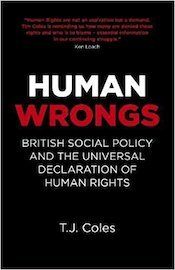 As I document in my new book
 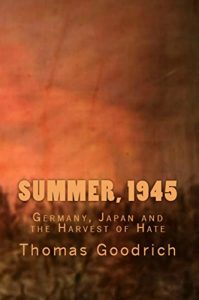 Just as Allied air armadas had mercilessly bombed, blasted and burned the cities and civilians of Germany during World War Two, so too was the US Air Force incinerating the women and children of Germany’s ally, Japan. As was the case with his peers in Europe, cigar-chewing, Jap-hating Maj. Gen. Curtis LeMay had no compunction whatsoever about targeting non-combatants, including the very old and the very young.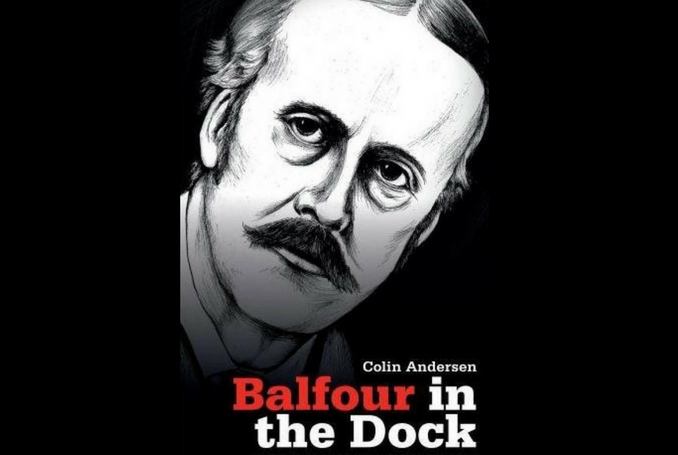
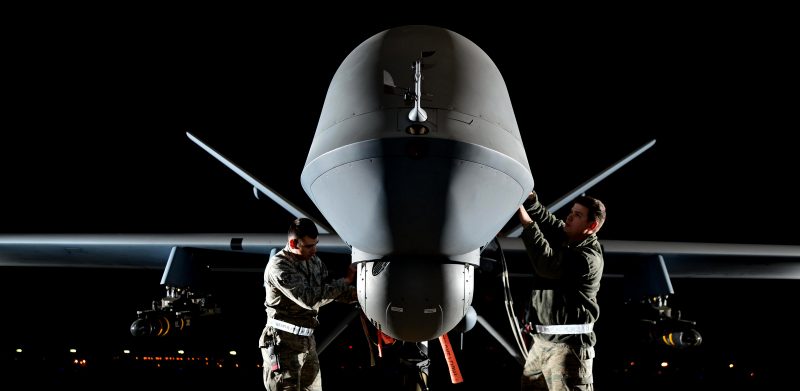

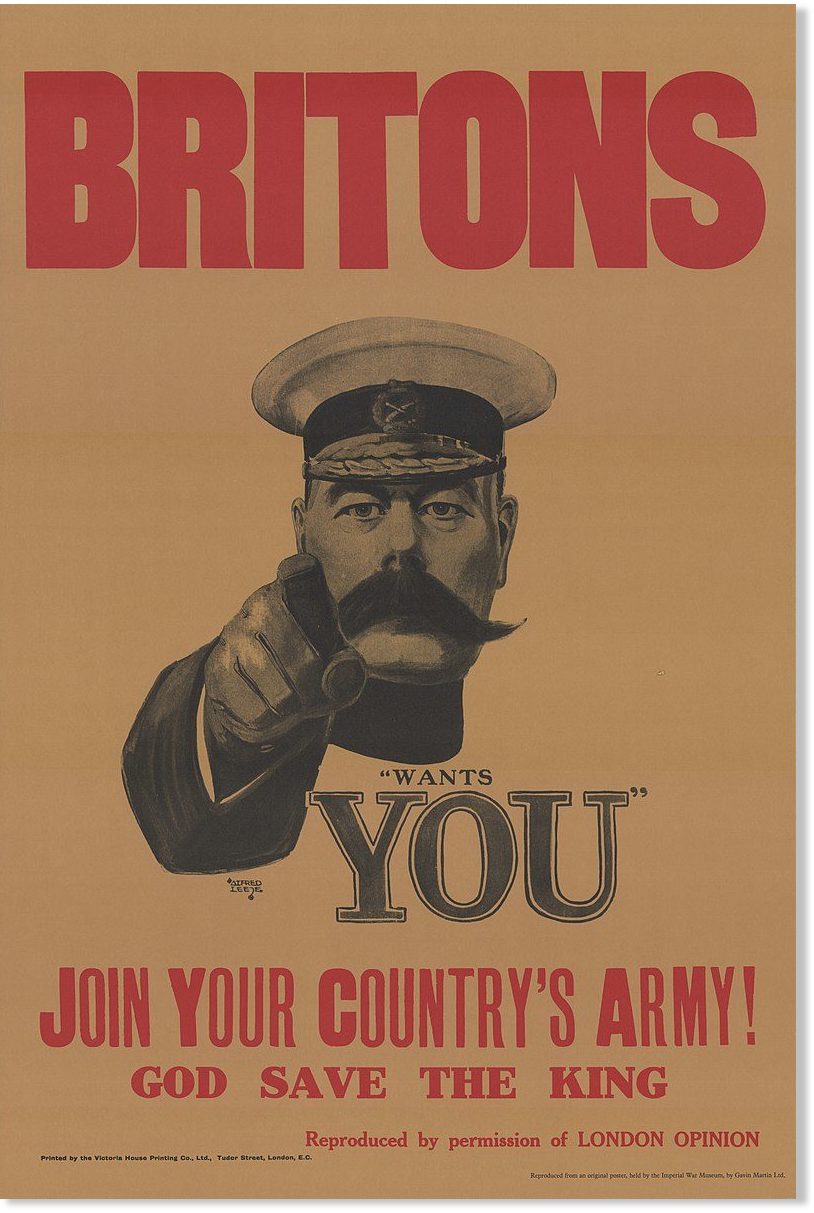
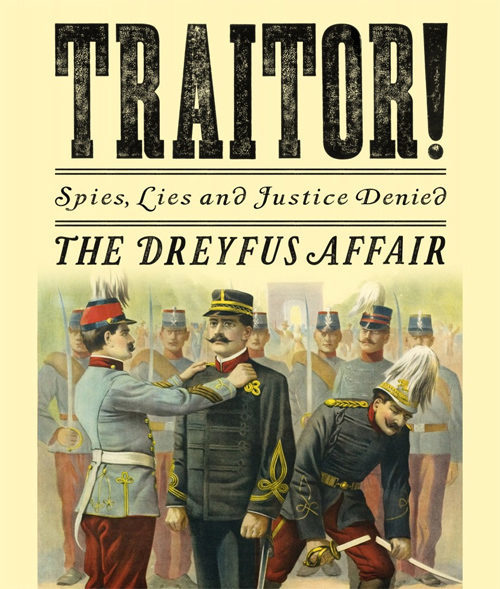
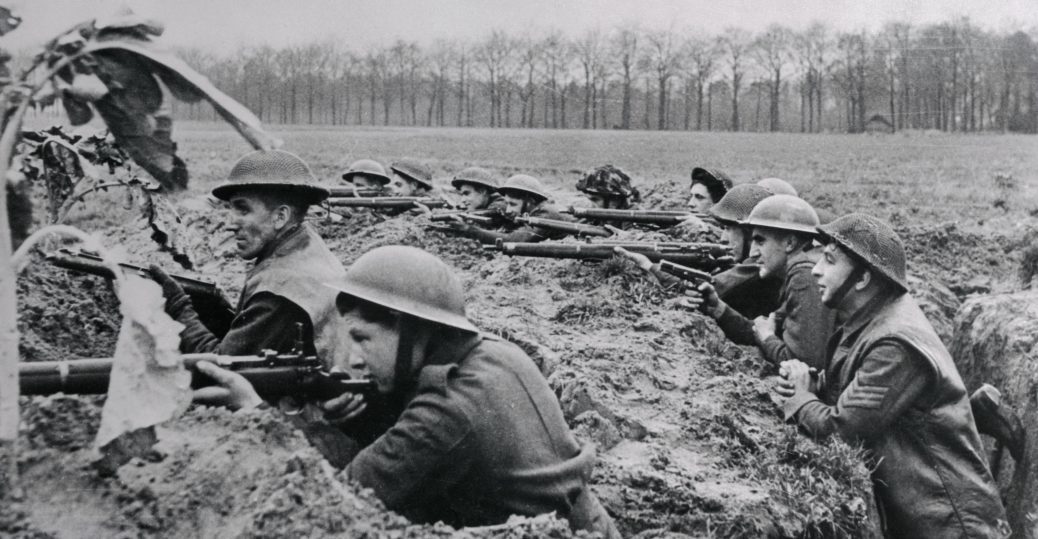


 One of the most deeply frustrating things for anyone with any knowledge of Russia who has been following the Russiagate saga is the staggering ignorance of basic facts about Russia which is so prevalent amongst elites in the US.
 I told myself that I wasn’t going to read What Happened. Despite my obsession with Hillary Clinton, even I had my fair share by the end of the 2016 election. Yet I almost tripped over it in the library, laying out on a cart, castaway, begging to be read. My first response was, as always with Hillary, “won’t you just go away?” But there was something that beckoned me back into her arms. Hillary, as captivating as she is awkward, wooed me back.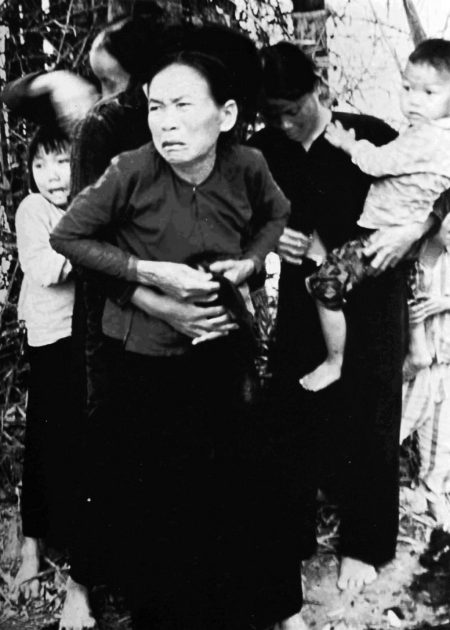


 Aletho News