Aletho News

ΑΛΗΘΩΣ

American Pravda: Jews and Nazis

By Ron Unz • Unz Review • August 6, 2018

Around 35 years ago, I was sitting in my college dorm-room closely reading the New York Times as I did each and every morning when I noticed an astonishing article about the controversial new Israeli Prime Minister, Yitzhak Shamir.

Back in those long-gone days, the Gray Lady was strictly a black-and-white print publication, lacking the large color photographs of rap stars and long stories about dieting techniques that fill so much of today’s news coverage, and it also seemed to have a far harder edge in its Middle East reporting. A year or so earlier, Shamir’s predecessor Menacham Begin had allowed his Defense Minister Ariel Sharon to talk him into invading Lebanon and besieging Beirut, and the subsequent massacre of Palestinian women and children in the Sabra and Shatila refugee camps had outraged the world and angered America’s government. This eventually led to Begin’s resignation, with Shamir, his Foreign Minister, taking his place.

Prior to his surprising 1977 election victory, Begin had spent decades in the political wilderness as an unacceptable right-winger, and Shamir had an even more extreme background, with the American mainstream media freely reporting his long involvement in all sorts of high-profile assassinations and terrorist attacks during the 1940s, painting him as a very bad man indeed.

Given Shamir’s notorious activities, few revelations would have shocked me, but this one did. Apparently, during the late 1930s, Shamir and his small Zionist faction had become great admirers of the Italian Fascists and German Nazis, and after World War II broke out, they had made repeated attempts to contact Mussolini and the German leadership in 1940 and 1941, hoping to enlist in the Axis Powers as their Palestine affiliate, and undertake a campaign of attacks and espionage against the local British forces, then share in the political booty after Hitler’s inevitable triumph.

Now the Times clearly viewed Shamir in a very negative light, but it seemed extremely unlikely to me that they would have published such a remarkable story without being absolutely sure of their facts. Among other things, there were long excerpts from the official letters sent to Mussolini ferociously denouncing the “decadent” democratic systems of Britain and France that he was opposing, and assuring Il Duce that such ridiculous political notions would have no future place in the totalitarian Jewish client state they hoped to establish under his auspices in Palestine.

As it happens, both Germany and Italy were preoccupied with larger geopolitical issues at the time, and given the small size of Shamir’s Zionist faction, not much seems to have ever come of those efforts. But the idea of the sitting Prime Minister of the Jewish State having spent his early wartime years as an unrequited Nazi ally was certainly something that sticks in one’s mind, not quite conforming to the traditional narrative of that era which I had always accepted.

Most remarkably, the revelation of Shamir’s pro-Axis past seems to have had only a relatively minor impact upon his political standing within Israeli society. I would think that any American political figure found to have supported a military alliance with Nazi Germany during the Second World War would have had a very difficult time surviving the resulting political scandal, and the same would surely be true for politicians in Britain, France, or most other western nations. But although there was certainly some embarrassment in the Israeli press, especially after the shocking story reached the international headlines, apparently most Israelis took the whole matter in stride, and Shamir stayed in office for another year, then later served a second, much longer term as Prime Minister during 1986-1992. The Jews of Israel apparently regarded Nazi Germany quite differently than did most Americans, let alone most American Jews.

Around that same time, a second intriguing example of this quite different Israeli perspective towards the Nazis also came to my attention. In 1983, Amoz Oz, often described as Israel’s greatest novelist, had published In the Land of Israel to glowing reviews. This book was a collection of lengthy interviews with various representative figures in Israeli society, both moderate and extreme, as well as some coverage of the Palestinians who also lived among them.

Of these ideological profiles, one of the shortest but most widely discussed was that of an especially hard-line political figure, unnamed but almost universally believed to be Ariel Sharon, a conclusion certainly supported by the personal details and physical description provided. Near the very beginning, that figure mentioned that people of his ideological ilk had recently been denounced as “Judeo-Nazis” by a prominent liberal Israeli academic, but rather than reject that label, he fully welcomed it. So the subject generally became known in public discussions as the “Judeo-Nazi.”

That he described himself in such terms was hardly an exaggeration, since he rather gleefully advocated the slaughter of millions of Israel’s enemies, and the vast expansion of Israeli territory by conquest of neighboring lands and expulsion of their populations, along with the free use of nuclear weapons if they or anyone else too strongly resisted such efforts. In his bold opinion, the Israelis and Jews in general were just too soft and meek, and needed to regain their place in the world by once again becoming a conquering people, probably hated but definitely feared. To him, the large recent massacre of Palestinian women and children at Sabra and Shatila was of no consequence whatsoever, and the most unfortunate aspect of the incident was that the killers had been Israel’s Christian Phalangist allies rather than Israeli soldiers themselves.

Now rhetorical excess is quite common among politicians and a shroud of pledged anonymity will obviously loosen many tongues. But can anyone imagine an American or other Western public figure talking in such terms, let alone someone who moves in higher political circles? These days, Donald Trump sometimes Tweets out a crude misspelled insult at 2am, and the American media is aghast in horror. But given that his administration leaks like a sieve, if he routinely boasted to his confidants about possibly slaughtering millions, we surely would have heard about it. For that matter, there seems not the slightest evidence that the original German Nazis ever spoke in such ways privately, let alone while a journalist was carefully taking notes. But the “Judeo-Nazis” of Israel are another story.

As near as I can recall, the last even slightly prominent figure in American public life who declared himself a “Nazi” was George Lincoln Rockwell during the 1960s, and he was much more of a political performance artist than an actual political leader. Even as marginalized a figure as David Duke has always hotly denied such an accusation. But apparently politics in Israel is played by different rules.

In any event, Sharon’s purported utterances seem to have had little negative impact upon his subsequent political career, and after spending some time in the political wilderness after the Lebanon disaster, he eventually served five years as Prime Minister during 2001-2006, although by that later date his views were regularly denounced as too soft and compromising due to the steady rightward drift of the Israeli political spectrum.

Over the years I’ve occasionally made half-hearted attempts to locate the Times article about Shamir that had long stuck in my memory, but have had no success, either because it was removed from the Times archives or more likely because my mediocre search skills proved inadequate. But I’m almost certain that the piece had been prompted by the 1983 publication of Zionism in the Age of the Dictators by Lenni Brenner, an anti-Zionist of the Trotskyite persuasion and Jewish origins. I only very recently discovered that book, which really tells an extremely interesting story.

Brenner, born in 1937, has spent his entire life as an unreconstructed hard-core leftist, with his enthusiasms ranging from Marxist revolution to the Black Panthers, and he is obviously a captive of his views and his ideology. At times, this background impairs the flow of his text, and the periodic allusions to “proletarian,” “bourgeoisie,” and “capitalist classes” sometimes grow a little wearisome, as does his unthinking acceptance of all the shared beliefs common to his political circle. But surely only someone with that sort of fervent ideological commitment would have been willing to devote so much time and effort to investigating that controversial subject and ignoring the endless denunciations that resulted, which even included physical assaults by Zionist partisans.

In any event, his documentation seems completely airtight, and some years after the original appearance of his book, he published a companion volume entitled 51 Documents: Zionist Collaboration with the Nazis, which simply provides English translations of all the raw evidence behind his analytical framework, allowing interested parties to read the material and draw their own conclusions.

Among other things, Brenner provides considerable evidence that the larger and somewhat more mainstream right-wing Zionist faction later led by Israeli Prime Minister Menachem Begin was almost invariably regarded as a Fascist movement during the 1930s, even apart from its warm admiration for Mussolini’s Italian regime. This was hardly such a dark secret in that period given that its main Palestine newspaper carried a regular column by a top ideological leader entitled “Diary of a Fascist.” During one of the major international Zionist conferences, factional leader Vladimir Zabotinsky entered the hall with his brown-shirted followers in full military formation, leading the chair to ban the wearing of uniforms in order to avoid a riot, and his faction was soon defeated politically and eventually expelled from the Zionist umbrella organization. This major setback was largely due to the widespread hostility the group had aroused after two of its members were arrested by British police for the recent assassination of Chaim Arlosoroff, one of the highest-ranking Zionist officials based in Palestine.

Indeed, the inclination of the more right-wing Zionist factions toward assassination, terrorism, and other forms of essentially criminal behavior was really quite remarkable. For example, in 1943 Shamir had arranged the assassination of his factional rival, a year after the two men had escaped together from imprisonment for a bank robbery in which bystanders had been killed, and he claimed he had acted to avert the planned assassination of David Ben-Gurion, the top Zionist leader and Israel’s future founding-premier. Shamir and his faction certainly continued this sort of behavior into the 1940s, successfully assassinating Lord Moyne, the British Minister for the Middle East, and Count Folke Bernadotte, the UN Peace Negotiator, though they failed in their other attempts to kill American President Harry Truman and British Foreign Minister Ernest Bevin, and their plans to assassinate Winston Churchill apparently never moved past the discussion stage. His group also pioneered the use of terrorist car-bombs and other explosive attacks against innocent civilian targets, all long before any Arabs or Muslims had ever thought of using similar tactics; and Begin’s larger and more “moderate” Zionist faction did much the same. Given that background, it was hardly surprising that Shamir later served as director of assassinations at the Israeli Mossad during 1955-1965, so if the Mossad did indeed play a major role in the assassination of President John F. Kennedy, he was very likely involved.

The cover of the 2014 paperback edition of Brenner’s book displays the commemorative medal struck by Nazi Germany to mark its Zionist alliance, with a Star-of-David on the front face and a Swastika on the obverse. But oddly enough, this symbolic medallion actually had absolutely no connection with the unsuccessful attempts by Shamir’s small faction to arrange a Nazi military alliance during World War II.

Although the Germans paid little attention to the entreaties of that minor organization, the far larger and more influential mainstream Zionist movement of Chaim Weizmann and David Ben-Gurion was something else entirely. And during most of the 1930s, these other Zionists had formed an important economic partnership with Nazi Germany, based upon an obvious commonality of interests. After all, Hitler regarded Germany’s one percent Jewish population as a disruptive and potentially dangerous element which he wanted gone, and the Middle East seemed as good a destination for them as any other. Meanwhile, the Zionists had very similar objectives, and the creation of their new national homeland in Palestine obviously required both Jewish immigrants and Jewish financial investment.

After Hitler had been named Chancellor in 1933, outraged Jews worldwide had quickly launched an economic boycott, hoping to bring Germany to its knees, with London’s Daily Express famously running the banner headline “Judea Declares War on Germany.” Jewish political and economic influence, then just like now, was very considerable, and in the depths of the Great Depression, impoverished Germany needed to export or die, so a large scale boycott in major German markets posed a potentially serious threat. But this exact situation provided Zionist groups with an excellent opportunity to offer the Germans a means of breaking that trade embargo, and they demanded favorable terms for the export of high-quality German manufactured goods to Palestine, together with accompanying German Jews. Once word of this major Ha’avara or “Transfer Agreement” with the Nazis came out at a 1933 Zionist Convention, many Jews and Zionists were outraged, and it led to various splits and controversies. But the economic deal was too good to resist, and it went forward and quickly grew.

The importance of the Nazi-Zionist pact for Israel’s establishment is difficult to overstate. According to a 1974 analysis in Jewish Frontier cited by Brenner, between 1933 and 1939 over 60% of all the investment in Jewish Palestine came from Nazi Germany. The worldwide impoverishment of the Great Depression had drastically reduced ongoing Jewish financial support from all other sources, and Brenner reasonably suggests that without Hitler’s financial backing, the nascent Jewish colony, so tiny and fragile, might easily have shriveled up and died during that difficult period.

Such a conclusion leads to fascinating hypotheticals. When I first stumbled across references to the Ha’avara Agreement on websites here and there, one of the commenters mentioning the issue half-jokingly suggested that if Hitler had won the war, statues would surely have been built to him throughout Israel and he would today be recognized by Jews everywhere as the heroic Gentile leader who had played the central role in reestablishing a national homeland for the Jewish people in Palestine after almost 2000 years of bitter exile.

This sort of astonishing counter-factual possibility is not nearly as totally absurd as it might sound to our present-day ears. We must recognize that our historical understanding of reality is shaped by the media, and media organs are controlled by the winners of major wars and their allies, with inconvenient details often excluded to avoid confusing the public. It is undeniably true that in his 1924 book Mein Kampf, Hitler had written all sorts of hostile and nasty things about Jews, especially those who were recent immigrants from Eastern Europe, but when I read the book back in high school, I was a little surprised to discover that these anti-Jewish sentiments hardly seemed central to his text. Furthermore, just a couple of years earlier, a vastly more prominent public figure such as British Minister Winston Churchill had published sentiments nearly as hostile and nasty, focusing on the monstrous crimes being committed by Bolshevik Jews. In Albert Lindemann’s Esau’s Tears, I was surprised to discover that the author of the famous Balfour Declaration, the foundation of the Zionist project, was apparently also quite hostile to Jews, with an element of his motivation probably being his desire to exclude them from Britain.

Once Hitler consolidated power in Germany, he quickly outlawed all other political organizations for the German people, with only the Nazi Party and Nazi political symbols being legally permitted. But a special exception was made for German Jews, and Germany’s local Zionist Party was accorded complete legal status, with Zionist marches, Zionist uniforms, and Zionist flags all fully permitted. Under Hitler, there was strict censorship of all German publications, but the weekly Zionist newspaper was freely sold at all newsstands and street corners. The clear notion seemed to be that a German National Socialist Party was the proper political home for the country’s 99% German majority, while Zionist National Socialism would fill the same role for the tiny Jewish minority.

In 1934, Zionist leaders invited an important SS official to spend six months visiting the Jewish settlement in Palestine, and upon his return, his very favorable impressions of the growing Zionist enterprise were published as a massive 12-part-series in Joseph Goebbel’s Der Angriff, the flagship media organ of the Nazi Party, bearing the descriptive title “A Nazi Goes to Palestine.” In his very angry 1920 critique of Jewish Bolshevik activity, Churchill had argued that Zionism was locked in a fierce battle with Bolshevism for the soul of European Jewry, and only its victory might ensure amicable future relations between Jew and Gentile. Based on available evidence, Hitler and many of the other Nazi leaders seemed to have reached a somewhat similar conclusion by the mid-1930s.

During that era extremely harsh sentiments regarding Diaspora Jewry were sometimes found in rather surprising quarters. After the controversy surrounding Shamir’s Nazi ties erupted into the headlines, Brenner’s material became the grist for an important article by Edward Mortimer, the longtime Middle East expert at the august Times of London, and the 2014 edition of the book includes some choice extracts from Mortimer’s February 11, 1984 Times piece:

Who told a Berlin audience in March 1912 that “each country can absorb only a limited number of Jews, if she doesn’t want disorders in her stomach. Germany already has too many Jews”?

No, not Adolf Hitler but Chaim Weizmann, later president of the World Zionist Organization and later still the first president of the state of Israel.

And where might you find the following assertion, originally composed in 1917 but republished as late as 1936: “The Jew is a caricature of a normal, natural human being, both physically and spiritually. As an individual in society he revolts and throws off the harness of social obligation, knows no order nor discipline”?

Not in Der Sturmer but in the organ of the Zionist youth organization, Hashomer Hatzair.

As the above quoted statement reveals, Zionism itself encouraged and exploited self-hatred in the Diaspora. It started from the assumption that anti-Semitism was inevitable and even in a sense justified so long as Jews were outside the land of Israel.

It is true that only an extreme lunatic fringe of Zionism went so far as to offer to join the war on Germany’s side in 1941, in the hope of establishing “the historical Jewish state on a national and totalitarian basis, and bound by a treaty with the German Reich.” Unfortunately this was the group which the present Prime Minister of Israel chose to join.

The very uncomfortable truth is that the harsh characterizations of Diaspora Jewry found in the pages of Mein Kampf were not all that different from what was voiced by Zionism’s founding fathers and its subsequent leaders, so the cooperation of those two ideological movements was not really so totally surprising.

However, uncomfortable truths do remain uncomfortable. Mortimer had spent nineteen years at the Times, the last dozen of them as the foreign specialist and leader-writer on Middle Eastern affairs. But the year after he wrote that article including those controversial quotations, his career at that newspaper ended, leading to an unusual gap in his employment history, and that development may or may not be purely coincidental.

Also quite ironic was the role of Adolf Eichmann, whose name today probably ranks as one of the most famous half-dozen Nazis in history, due to his postwar 1960 kidnapping by Israeli agents, followed by his public show-trial and execution as a war-criminal. As it happens, Eichmann had been a central Nazi figure in the Zionist alliance, even studying Hebrew and apparently becoming something of a philo-Semite during the years of his close collaboration with top Zionist leaders.

Brenner is a captive of his ideology and his beliefs, accepting without question the historical narrative with which he was raised. He seems to find nothing so strange about Eichmann being a philo-Semitic partner of the Jewish Zionists during the late 1930s and then suddenly being transformed into a mass-murderer of the European Jews in the early 1940s, willingly committing the monstrous crimes for which the Israelis later justly put him to death.

This is certainly possible, but I really wonder. A more cynical observer might find it a very odd coincidence that the first prominent Nazi the Israelis made such an effort to track down and kill had been their closest former political ally and collaborator. After Germany’s defeat, Eichmann had fled to Argentina and lived there quietly for a number of years until his name resurfaced in a celebrated mid-1950s controversy surrounding one of his leading Zionist partners, then living in Israel as a respected government official, who was denounced as a Nazi collaborator, eventually ruled innocent after a celebrated trial, but later assassinated by former members of Shamir’s faction.

Following that controversy in Israel, Eichmann supposedly gave a long personal interview to a Dutch Nazi journalist, and although it wasn’t published at the time, perhaps word of its existence may have gotten into circulation. The new state of Israel was just a few years old at that time, and very politically and economically fragile, desperately dependent upon the goodwill and support of America and Jewish donors worldwide. Their remarkable former Nazi alliance was a deeply-suppressed secret, whose public release might have had absolutely disastrous consequences.

According to the version of the interview later published as a two-part story in Life Magazine, Eichmann’s statements seemingly did not touch on the deadly topic of the 1930s Nazi-Zionist partnership. But surely Israeli leaders must have been terrified that they might not be so lucky the next time, so we may speculate that Eichmann’s elimination suddenly became a top national priority, and he was tracked down and captured in 1960. Presumably, harsh means were employed to persuade him not to reveal any of these dangerous pre-war secrets at his Jerusalem trial, and one might wonder if the reason he was famously kept in an enclosed glass booth was to ensure that the sound could quickly be cut off if he started to stray from the agreed upon script. All of this analysis is totally speculative, but Eichmann’s role as a central figure in the 1930s Nazi-Zionist partnership is undeniable historical fact.

Just as we might imagine, America’s overwhelmingly pro-Israel publishing industry was hardly eager to serve as a public conduit for Brenner’s shocking revelations of a close Nazi-Zionist economic partnership, and he mentions that his book agent uniformly received rejections from each firm he approached, based on a wide variety of different excuses. However, he finally managed to locate an extremely obscure publisher in Britain willing to take on the project, and his book was released in 1983, initially receiving no reviews other than a couple of harsh and perfunctory denunciations, though Soviet Izvestia took some interest in his findings until they discovered that he was a hated Trotskyite.

His big break came when Shamir suddenly became Israel’s Prime Minister, and he brought his evidence of former Nazi ties to the English-language Palestinian press, which put it into general circulation. Various British Marxists, including the notorious “Red Ken” Livingstone of London, organized a speaking tour for him, and when a group of right-wing Zionist militants attacked one of the events and inflicted injuries, the story of the brawl caught the attention of the mainstream newspapers. Soon afterward the discussion of Brenner’s astonishing discoveries appeared in the Times of London and entered the international media. Presumably, the New York Times article that had originally caught my eye ran sometime during this period.

Public relations professionals are quite skilled at minimizing the impact of damaging revelations, and pro-Israel organizations have no shortage of such individuals. Just before the 1983 release of his remarkable book, Brenner suddenly discovered that a young pro-Zionist author named Edwin Black was furiously working on a similar project, apparently backed by sufficient financial resources that he was employing an army of fifty researchers to allow him to complete his project in record time.

Since the entire embarrassing subject of a Nazi-Zionist partnership had been kept away from the public eye for almost five decades, this timing surely seems more than merely coincidental. Presumably word of Brenner’s numerous unsuccessful efforts at securing a mainstream publisher during 1982 had gotten around, as had his eventual success in locating a tiny one in Britain. Having failed to prevent publication of such explosive material, pro-Israel groups quietly decided that their next best option was trying to seize control of the topic themselves, allowing disclosure of those parts of the story that could not be concealed but excluding items of greatest danger, while portraying the sordid history in the best possible light.

Black’s book, The Transfer Agreement, may have arrived a year later than Brenner’s but was clearly backed by vastly greater publicity and resources. It was released by Macmillan, a leading publisher, ran nearly twice the length of Brenner’s short book, and carried powerful endorsements by leading figures from the firmament of Jewish activism, including the Simon Weisenthal Center, the Israel Holocaust Memorial, and the American Jewish Archives. As a consequence, it received long if not necessarily favorable reviews in influential publications such as The New Republic and Commentary.

In all fairness, I should mention that in the Foreword to his book, Black claims that his research efforts had been totally discouraged by nearly everyone he approached, and as a consequence, he had been working on the project with solitary intensity for many years. This implies the near-simultaneous release of the two books was purely due to chance. But such a picture is hardly consistent with his glowing testimonials from so many prominent Jewish leaders, and personally I find Brenner’s claim that Black was assisted by fifty researchers far more convincing.

Since both Black and Brenner were describing the same basic reality and relying upon many of the same documents, in most respects the stories they tell are generally similar. But Black carefully excludes any mention of offers of Zionist military cooperation with the Nazis, let alone the repeated attempts by Shamir’s Zionist faction to officially join the Axis Powers after the war had broken out, as well as numerous other details of a particularly embarrassing nature.

Assuming Black’s book was published for the reasons I suggested, I think that the strategy of the pro-Israel groups largely succeeded, with his version of the history seeming to have quickly supplanted Brenner’s except perhaps in strongly leftist or anti-Zionist circles. Googling each combination of the title and author, Black’s book gets eight times as many hits, and his Amazon sales ranks and numbers of reviews are also larger by roughly that same factor. Most notably, neither the Wikipedia articles on “The Transfer Agreement” and “The Ha’avara Agreement” contain any mention of Brenner’s research whatsoever, even though his book was published earlier, was far broader, and only he provided the underlying documentary evidence. As a personal example of the current situation, I was quite unaware of the entire Ha’avara history until just a few years ago when I encountered some website comments mentioning Black’s book, leading me to purchase and read it. But even then, Brenner’s far more wide-ranging and explosive volume remained totally unknown to me until very recently.

Once World War II began, this Nazi-Zionist partnership quickly lapsed for obvious reasons. Germany was now at war with the British Empire, and financial transfers to British-run Palestine were no longer possible. Furthermore, the Arab Palestinians had grown quite hostile to the Jewish immigrants whom they rightfully feared might eventually displace them, and once the Germans were forced to choose between maintaining their relationship with a relatively small Zionist movement or winning the political sympathy of a vast sea of Middle Eastern Arabs and Muslims, their decision was a natural one. The Zionists faced a similar choice, and especially once wartime propaganda began so heavily blackening the German and Italian governments, their long previous partnership was not something they wanted widely known.

However, at exactly this same moment a somewhat different and equally long-forgotten connection between Jews and Nazi Germany suddenly moved to the fore.

Like most people everywhere, the average German, whether Jewish or Gentile, was probably not all that political, and although Zionism had for years been accorded a privileged place in German society, it is not entirely clear how many ordinary German Jews paid much attention to it. The tens of thousands who emigrated to Palestine during that period were probably motivated as much by economic pressures as by ideological commitment. But wartime changed matters in other ways.

This was even more true for the German government. The outbreak of a world war against a powerful coalition of the British and French empires, later augmented by both Soviet Russia and the United States, imposed the sorts of enormous pressures that could often overcome ideological scruples. A few years ago, I discovered a fascinating 2002 book by Bryan Mark Rigg, Hitler’s Jewish Soldiers, a scholarly treatment of exactly what the title implies. The quality of this controversial historical analysis is indicated by the glowing jacket-blurbs from numerous academic experts and an extremely favorable treatment by an eminent scholar in The American Historical Review.

Obviously, Nazi ideology was overwhelmingly centered upon race and considered racial purity a crucial factor in national cohesion. Individuals possessing substantial non-German ancestry were regarded with considerable suspicion, and this concern was greatly amplified if that admixture was Jewish. But in a military struggle against an opposing coalition possessing many times Germany’s population and industrial resources, such ideological factors might be overcome by practical considerations, and Rigg persuasively argues that some 150,000 half-Jews or quarter-Jews served in the armed forces of the Third Reich, a percentage probably not much different than their share of the general military-age population.

Germany’s long-integrated and assimilated Jewish population had always been disproportionately urban, affluent, and well-educated. As a consequence it is not entirely surprising that a large proportion of these part-Jewish soldiers who served Hitler were actually combat officers rather than merely rank-and-file conscripts, and they included at least 15 half-Jewish generals and admirals, and another dozen quarter-Jews holding those same high ranks. The most notable example was Field Marshal Erhard Milch, Hermann Goering’s powerful second-in-command, who played such an important operational role in creating the Luftwaffe. Milch certainly had a Jewish father, and according to some much less substantiated claims, perhaps even a Jewish mother as well, while his sister was married to an SS general.

Admittedly, the racially-elite SS itself generally had far stricter ancestry standards, with even a trace of non-Aryan parentage normally seen as disqualifying an individual from membership. But even here, the situation was sometimes complicated, since there were widespread rumors that Reinhard Heydrich, the second-ranking figure in that very powerful organization, actually had considerable Jewish ancestry. Rigg investigates that claim without coming to any clear conclusions, though he does seem to think that the circumstantial evidence involved may have been used by other high-ranking Nazi figures as a point of leverage or blackmail against Heydrich, who stood as one of the most important figures in the Third Reich.

As a further irony, most of these individuals traced their Jewish ancestry through their father rather than their mother, so although they were not Jewish according to rabbinical law, their family names often reflected their partly Semitic origins, though in many cases Nazi authorities attempted to studiously overlook this glaringly obvious situation. As an extreme example noted by an academic reviewer of the book, a half-Jew bearing the distinctly non-Aryan name of Werner Goldberg actually had his photograph prominently featured in a 1939 Nazi propaganda newspaper, with the caption describing him as the “The Ideal German Soldier.”

The author conducted more than 400 personal interviews of the surviving part-Jews and their relatives, and these painted a very mixed picture of the difficulties they had encountered under the Nazi regime, which varied enormously depending upon particular circumstances and the personalities of those in authority over them. One important source of complaint was that because of their status, part-Jews were often denied the military honors or promotions they had rightfully earned. However, under especially favorable conditions, they might also be legally reclassified as being of “German Blood,” which officially eliminated any taint on their status.

Even official policy seems to have been quite contradictory and vacillating. For example, when the civilian humiliations sometimes inflicted upon the fully Jewish parents of serving half-Jews were brought to Hitler’s attention, he regarded that situation as intolerable, declaring that either such parents must be fully protected against such indignities or all the half-Jews must be discharged, and eventually in April 1940 he issued a decree requiring the latter. However, this order was largely ignored by many commanders, or implemented through a honor-system that almost amounted to “Don’t Ask, Don’t Tell,” so a considerable fraction of half-Jews remained in the military if they so wished. And then in July 1941, Hitler somewhat reversed himself, issuing a new decree that allowed “worthy” half-Jews who had been discharged to return to the military as officers, while also announcing that after the war, all quarter-Jews would be reclassified as fully “German Blood” Aryan citizens.

It has been said that after questions were raised about the Jewish ancestry of some of his subordinates, Goring once angrily responded “I will decide who is a Jew!” and that attitude seems to reasonably capture some of the complexity and subjective nature of the social situation.

Interestingly enough, many of part-Jews interviewed by Rigg recalled that prior to Hitler’s rise to power, the intermarriage of their parents had often provoked much greater hostility from the Jewish rather than the Gentile side of their families, suggesting that even in heavily-assimilated Germany, the traditional Jewish tendency toward ethnic exclusivity had still remained a powerful factor in that community.

Although the part-Jews in German military service were certainly subject to various forms of mistreatment and discrimination, perhaps we should compare this against the analogous situation in our own military in those same years with regard to America’s Japanese or black minorities. During that era, racial intermarriage was legally prohibited across a large portion of the US, so the mixed-race population of those groups was either almost non-existent or very different in origin. But when Japanese-Americans were allowed to leave their wartime concentration camps and enlist in the military, they were entirely restricted to segregated all-Japanese units, but with the officers generally being white. Meanwhile, blacks were almost entirely barred from combat service, though they sometimes served in strictly-segregated support roles. The notion that an American with any appreciable trace of African, Japanese, or for that matter Chinese ancestry might serve as a general or even an officer in the U.S. military and thereby exercise command authority over white American troops would have been almost unthinkable. The contrast with the practice in Hitler’s own military is quite different than what Americans might naively assume.

This paradox is not nearly as surprising as one might assume. The non-economic divisions in European societies had almost always been along lines of religion, language, and culture rather than racial ancestry, and the social tradition of more than a millennium could not easily be swept away by merely a half-dozen years of National Socialist ideology. During all those earlier centuries, a sincerely-baptized Jew, whether in Germany or elsewhere, was usually considered just as good a Christian as any other. For example, Tomas de Torquemada, the most fearsome figure of the dreaded Spanish Inquisition, actually came from a family of Jewish converts.

Even wider racial differences were hardly considered of crucial importance. Some of the greatest heroes of particular national cultures, such as Russia’s Alexander Pushkin and France’s Alexandre Dumas, had been individuals with significant black African ancestry, and this was certainly not considered any sort of disqualifying characteristic.

By contrast, American society from its inception had always been sharply divided by race, with other differences generally constituting far smaller impediments to intermarriage and amalgamation. I’ve seen widespread claims that when the Third Reich devised its 1935 Nuremberg Laws restricting marriage and other social arrangements between Aryans, non-Aryans, and part-Aryans, its experts drew upon some of America’s long legal experience in similar matters, and this seems quite plausible. Under that new Nazi statute, pre-existing mixed-marriages received some legal protection, but henceforth Jews and half-Jews could only marry each other, while quarter-Jews could only marry regular Aryans. The obvious intent was to absorb that latter group into mainstream German society, while isolating the more heavily-Jewish population.

Ironically enough, Israel today is one of very few countries with a similar sort of strictly racially-based criteria for citizenship status and other privileges, with the Jewish-only immigration policy now often determined by DNA testing, and marriages between Jews and non-Jews legally prohibited. A few years ago, the world media also carried the remarkable story of a Palestinian Arab sentenced to prison for rape because he had consensual sexual relations with a Jewish woman by passing himself off as a fellow Jew.

Since Orthodox Judaism is strictly matrilineal and controls Israeli law, even Jews of other branches can experience unexpected difficulties due to conflicts between personal ethnic identity and official legal status. The vast majority of the wealthier and more influential Jewish families worldwide do not follow Orthodox religious traditions, and over the generations, they have often taken Gentile wives. However, even if the latter had converted to Judaism, their conversions are considered invalid by the Orthodox Rabbinate, and none of their resulting descendants are considered Jewish. So if some members of these families later develop a deep commitment to their Jewish heritage and immigrate to Israel, they are sometimes outraged to discover that they are officially classified as “goyim” under Orthodox law and legally prohibited from marrying Jews. These major political controversies periodically erupt and sometimes reach the international media.

Now it seems to me that any American official who proposed racial DNA tests to decide upon the admission or exclusion of prospective immigrants would have a very difficult time remaining in office, with the Jewish-activists of organizations like the ADL probably leading the attack. And the same would surely be true for any prosecutor or judge who sent non-whites to prison for the crime of “passing” as whites and thereby managing to seduce women from that latter group. A similar fate would befall advocates of such policies in Britain, France, or most other Western nations, with the local ADL-type organization certainly playing an important role. Yet in Israel, such existing laws merely occasion a little temporary embarrassment when they are covered in the international media, and then invariably remain in place after the commotion has died down and been forgotten. These sorts of issues are considered of little more importance than were the past wartime Nazi ties of the Israeli prime minister throughout most of the 1980s.

But perhaps the solution to this puzzling difference in public reaction lies in an old joke. A leftist wit once claimed that the reason America has never had a military coup is that it is the only country in the world that lacks an American embassy to organize such activities. And unlike the U.S., Britain, France, and many other predominately-white countries, Israel has no domestic Jewish-activist organization filling the powerful role of the ADL.

Over the last few years, many outside observers have noted a seemingly very odd political situation in Ukraine. That unfortunate country possesses powerful militant groups, whose public symbols, stated ideology, and political ancestry all unmistakably mark them as Neo-Nazis. Yet those violent Neo-Nazi elements are all being bankrolled and controlled by a Jewish Oligarch who holds dual Israeli citizenship. Furthermore, that peculiar alliance had been mid-wifed and blessed by some of America’s leading Jewish Neocon figures, such as Victoria Nuland, who have successfully used their media influence to keep such explosive facts away from the American public.

At first glance, a close relationship between Jewish Israelis and European Neo-Nazis seems as grotesque and bizarre a misalliance as one could imagine, but after recently reading Brenner’s fascinating book, my perspective quickly shifted. Indeed, the main difference between then and now is that during the 1930s, Zionist factions represented a very insignificant junior partner to a powerful Third Reich, while these days it is the Nazis who occupy the role of eager suppliants to the formidable power of International Zionism, which now so heavily dominates the American political system and through it, much of the world.

August 7, 2018 Posted by | Book Review, Ethnic Cleansing, Racism, Zionism, Timeless or most popular | , , , , | Leave a comment

American Pravda: The Nature of Anti-Semitism

By Ron Unz • Unz Review • July 30, 2018

I recently published a couple of long essays, and although they primarily focused on other matters, the subject of anti-Semitism was a strong secondary theme. In that regard, I mentioned my shock at discovering a dozen or more years ago that several of the most self-evidently absurd elements of anti-Semitic lunacy, which I had always dismissed without consideration, were probably correct. It does seem likely that a significant number of traditionally-religious Jews did indeed occasionally commit the ritual murder of Christian children in order to use their blood in certain religious ceremonies, and also that powerful Jewish international bankers did play a large role in financing the establishment of Bolshevik Russia.

When one discovers that matters of such enormous moment not only apparently occurred but that they had been successfully excluded from nearly all of our histories and media coverage for most of the last one hundred years, the implications take some time to properly digest. If the most extreme “anti-Semitic canards” were probably true, then surely the whole notion of anti-Semitism warrants a careful reexamination.

All of us obtain our knowledge of the world by two different channels. Some things we discover from our own personal experiences and the direct evidence of our senses, but most information comes to us via external sources such as books and the media, and a crisis may develop when we discover that these two pathways are in sharp conflict. The official media of the old USSR used to endlessly trumpet the tremendous achievements of its collectivized agricultural system, but when citizens noticed that there was never any meat in their shops, “Pravda” became a watchword for “Lies” rather than “Truth.”

Now consider the notion of “anti-Semitism.” Google searches for that word and its close variants reveal over 24 million hits, and over the years I’m sure I’ve seen that term tens of thousands of times in my books and newspapers, and heard it endlessly reported in my electronic media and entertainment. But thinking it over, I’m not sure that I can ever recall a single real-life instance I’ve personally encountered, nor have I heard of almost any such cases from my friends or acquaintances. Indeed, the only persons I’ve ever come across making such claims were individuals who bore unmistakable signs of serious psychological imbalance. When the daily newspapers are brimming with lurid tales of hideous demons walking among us and attacking people on every street corner, but you yourself have never actually seen one, you may gradually grow suspicious.

Indeed, over the years some of my own research has uncovered a sharp contrast between image and reality. As recently as the late 1990s, leading mainstream media outlets such as The New York Times were still denouncing a top Ivy League school such as Princeton for the supposed anti-Semitism of its college admissions policy, but a few years ago when I carefully investigated that issue in quantitative terms for my lengthy Meritocracy analysis I was very surprised to reach a polar-opposite conclusion. According to the best available evidence, white Gentiles were over 90% less likely to be enrolled at Harvard and the other Ivies than were Jews of similar academic performance, a truly remarkable finding. If the situation had been reversed and Jews were 90% less likely to be found at Harvard than seemed warranted by their test scores, surely that fact would be endlessly cited as the absolute smoking-gun proof of horrendous anti-Semitism in present-day America.

It has also become apparent that a considerable fraction of what passes for “anti-Semitism” these days seems to stretch that term beyond all recognition. A few weeks ago an unknown 28-year-old Democratic Socialist named Alexandria Ocasio-Cortez scored a stunning upset primary victory over a top House Democrat in New York City, and naturally received a blizzard of media coverage as a result. However, when it came out that she had denounced the Israeli government for its recent massacre of over 140 unarmed Palestinian protesters in Gaza, cries of “anti-Semite” soon appeared, and according to Google there are now over 180,000 such hits combining her name and that harsh accusatory term. Similarly, just a few days ago the New York Times ran a major story reporting that all of Britain’s Jewish newspapers had issued an “unprecedented” denunciation of Jeremy Corbyn’s Labour Party, describing it as an “existential threat” to the Jewish community for the anti-Semitism it was fostering; but this apparently amounted to nothing more than its willingness to sharply criticize the Israeli government for its long mistreatment of the Palestinians.

One plausible explanation of the strange contrast between media coverage and reality might be that anti-Semitism once did loom very large in real life, but dissipated many decades ago, while the organizations and activists focused on detecting and combating that pernicious problem have remained in place, generating public attention based on smaller and smaller issues, with the zealous Jewish activists of the Anti-Defamation League (ADL) representing a perfect example of this situation. As an even more striking illustration, the Second World War ended over seventy years ago, but what historian Norman Finkelstein has so aptly labeled “the Holocaust Industry” has grown ever larger and more entrenched in our academic and media worlds so that scarcely a day passes without one or more articles relating to that topic appearing in my major morning newspapers. Given this situation, a serious exploration of the true nature of anti-Semitism should probably avoid the mere media phantoms of today and focus on the past, when the condition might still have been widespread in daily life.

Many observers have pointed to the aftermath of the Second World War as marking a huge watershed in the public acceptability of anti-Semitism both in America and Europe, so perhaps a proper appraisal of that cultural phenomenon should focus on the years before that global conflict. However, the overwhelming role of Jews in the Bolshevik Revolution and other bloody Communist seizures of power quite naturally made them objects of considerable fear and hatred throughout the inter-war years, so the safest course might be to push that boundary back a little further and confine our attention to the period prior to the outbreak of the First World War. The pogroms in Czarist Russia, the Dreyfus Affair in France, and the lynching of Leo Frank in the American South come to mind as some of the most famous examples from that period.

In 1991 Cambridge University Press published The Jew Accused by Albert Lindemann, a noted scholar of European ideological movements, and his book focused on exactly that era and those sorts of incidents. Although the text is quite short, running less than 300 pages, Lindemann built his discussion upon a huge foundation of secondary literature, with his footnotes drawn from the 200 works included in his extensive bibliography. As far as I could tell, he seems a very scrupulous scholar, generally providing the multiple, often conflicting accounts of a given incident, and coming to his own conclusions with considerable hesitation.

This approach is certainly demonstrated in the first of his major cases, the notorious Dreyfus affair of late 19th century France, probably one of history’s most famous anti-Semitic incidents. Although he concludes that Captain Alfred Dreyfus was very likely innocent of the charge of espionage, he notes the seemingly strong evidence that initially led to his arrest and conviction and finds—contrary to myth-making by numerous later writers—absolutely no indications that his Jewish origins played any role whatsoever in his predicament.

However, he does note some of the underlying social context to this fierce political battle. Although only one Frenchman in a thousand was Jewish, just a few years earlier a group of Jews had been the leading culprits behind several huge financial scandals that impoverished large numbers of small investors, and the swindlers afterward escaped any punishment by means of political influence and bribery. Given this history, much of the outrage of the anti-Dreyfusards probably arose from their fears that a Jewish military spy from a very wealthy family might be able to walk free using similar tactics, and the public claims that Dreyfus’s brother was offering enormous bribes to win his brother’s release certainly strengthened this concern.

Lindemann’s discussion of the 1913 Leo Frank Affair, in which a wealthy Northern Jew working in Atlanta was accused of sexually-assaulting and murdering a young girl, is even more interesting. Once again, he notes that contrary to the traditional narrative, there seems absolutely no hint that Frank’s Jewish background played any role in his arrest or conviction. Indeed, at his trial it was instead his very highly-paid defense attorneys who unsuccessfully sought to “play the race card” with the jurors by crudely attempting to deflect suspicion upon a local black worker by means of racially-charged invective.

Although Lindemann regards Frank as probably innocent, my own reading of the evidence he presents suggests the overwhelming likelihood of his guilt. Meanwhile, it seems undeniable that the outpouring of popular anger against Frank was produced by the vast ocean of outside Jewish money—at least $15 million or more in present-day dollars—that was committed to the legal efforts to save the life of someone widely regarded as a brutal murderer. There are strong suggestions that far more improper means were also employed, including bribery and influence-peddling, so that after Frank was convicted by a jury of his peers and thirteen separate legal appeals were denied, a governor with strong personal ties to the defense lawyers and Jewish interests chose to spare Frank’s life a few months before leaving office. Under these circumstances, the lynch-mob that hung Frank was viewed by the community as merely enforcing his official death sentence by extra-judicial means.

I also discovered that the leading figures in the anti-Frank movement had views far nuanced than I had expected. For example, populist writer Tom Watson had previously been a strong defender of Jewish anarchist Emma Goldman, while ferociously denouncing the Rockefellers, Morgans, and Goulds as the “true destroyers” of Jeffersonian democracy, so his outrage that Frank might escape punishment for murder seemed motivated by the extreme wealth of Frank’s family and his supporters rather than any pre-existing anti-Semitic sentiments.

The unmistakable conclusion of Lindemann’s analysis is that if the defendants in both the Dreyfus and Frank cases had not been Jewish, they would have suffered identical arrests and convictions, but lacking any wealthy and politically mobilized Jewish community to rally around them, they would have received their punishments, just or unjust, and immediately been forgotten. Instead, Theodor Herzl, the founding father of Zionism, later claimed that the massive anti-Semitism revealed by the Dreyfus Affair was the basis of his personal ideological awakening, while the Frank Affair led to the establishment of America’s Anti-Defamation League. And both these cases have entered our history books as among the most notorious examples of pre-World War I anti-Semitism.

Lindemann’s discussion of the often difficult relations between Russia’s restive Jewish minority and its huge Slavic majority is also quite interesting, and he provides numerous instances in which major incidents, supposedly demonstrating the enormously strong appeal of vicious anti-Semitism, were quite different than has been suggested by the legend. The famous Kishinev Pogrom of 1903 was obviously the result of severe ethnic tension in that city, but contrary to the regular accusations of later writers, there seems absolutely no evidence of high-level government involvement, and the widespread claims of 700 dead that so horrified the entire world were grossly exaggerated, with only 45 killed in the urban rioting. Chaim Weizman, the future president of Israel, later promoted the story that he himself and some other brave Jewish souls had personally defended their people with revolvers in hand even as they saw the mutilated bodies of 80 Jewish victims. This account was totally fictional since Weizman happened to have been be hundreds of miles away when the riots occurred.

Although a tendency to lie and exaggerate was hardly unique to the political partisans of Russian Jewry, the existence of a powerful international network of Jewish journalists and Jewish-influenced media outlets ensured that such concocted propaganda stories might receive enormous worldwide distribution, while the truth followed far behind, if at all.

For related reasons, international outrage was often focused on the legal confinement of most of Russia’s Jews to the “Pale of Settlement,” suggesting some sort of tight imprisonment; but that area was the traditional home of the Jewish population and encompassed a landmass almost as large as France and Spain combined. The growing impoverishment of Eastern European Jews during that era was often assumed to be a consequence of hostile government policy, but the obvious explanation was extraordinary Jewish fecundity, which far outstripped that of their Slavic fellow countrymen, and quickly led them to outgrow the available spots in any of their traditional “middleman” occupations, a situation worsened by their total disinclination to engage in agriculture or other primary-producer activities. Jewish communities expressed horror at the risk of losing their sons to the Czarist military draft, but this was simply the flip-side of the full Russian citizenship they had been granted, and no different from what was faced by their non-Jewish neighbors.

Certainly the Jews of Russia suffered greatly from widespread riots and mob attacks in the generation prior to World War I, and these did sometimes have substantial government encouragement, especially in the aftermath of the very heavy Jewish role in the 1905 Revolution. But we should keep in mind that a Jewish plotter had been implicated in the killing of Czar Alexander II, and Jewish assassins had also struck down several top Russian ministers and numerous other government officials. If the last decade or two had seen American Muslims assassinate a sitting U.S. President, various leading Cabinet members, and a host of our other elected and appointed officials, surely the position of Muslims in this country would have become a very uncomfortable one.

As Lindemann candidly describes the tension between Russia’s very rapidly growing Jewish population and its governing authorities, he cannot avoid mentioning the notorious Jewish reputation for bribery, corruption, and general dishonesty, with numerous figures of all political backgrounds noting that the remarkable Jewish propensity to commit perjury in the courtroom led to severe problems in the effective administration of justice. The eminent American sociologist E.A. Ross, writing in 1913, characterized the regular behavior of Eastern European Jews in very similar terms.

Lindemann also allocates a short chapter to discussing the 1911 Beilis Affair, in which a Ukrainian Jew was accused of the ritual murder of a young Gentile boy, an incident that generated a great deal of international attention and controversy. Based on the evidence presented, the defendant seems likely to have been innocent, although the obvious lies he repeatedly told police interrogators hardly helped foster that impression, and “the system worked” in that he was ultimately found innocent by the jurors at his trial. However, a few pages are also given to a much less well-known ritual murder case in late 19th century Hungary, in which the evidence of Jewish guilt seemed far stronger, though the author hardly accepted the possible reality of such an outlandish crime. Such reticence was quite understandable since the publication of Ariel Toaff’s remarkable volume on the subject was still a dozen years in the future.


Lindemann subsequently expanded his examination of historical anti-Semitism into a much broader treatment, Esau’s Tears, which appeared in 1997. In this volume, he added comparative studies of the social landscape in Germany, Britain, Italy, and several other European countries, and demonstrated that the relationship between Jews and non-Jews varied greatly across different locations and time periods. But although I found his analysis quite useful and interesting, the extraordinarily harsh attacks his text provoked from some outraged Jewish academics seemed even more intriguing.

For example, Judith Laikin Elkin opened her discussion in The American Historical Review by describing the book as a “545-page polemic” a strange characterization of a book so remarkably even-handed and factually-based in its scholarship. Writing in Commentary, Robert Wistrich was even harsher, stating that merely reading the book had been a painful experience for him, and his review seemed filled with spittle-flecked rage. Unless these individuals had somehow gotten copies of a different book, I found their attitudes simply astonishing.

I was not alone in such a reaction. Richard S. Levy of the University of Illinois, a noted scholar of anti-Semitism, expressed amazement at Wistrich’s seemingly irrational outburst, while Paul Gottfried, writing in Chronicles, mildly suggested that Lindemann had “touched raw nerves.” Indeed, Gottfried’s own evaluation quite reasonably criticized Lindemann for perhaps being a little too even-handed, sometimes presenting numerous conflicting analyzes without choosing between them. For those interested, a good discussion of the book by Alan Steinweis, a younger scholar specializing in the same topic, is conveniently available online.

The remarkable ferocity with which some Jewish writers attacked Lindemann’s meticulous attempt to provide an accurate history of anti-Semitism may carry more significance than merely an exchange of angry words in low-circulation academic publications. If our mainstream media shapes our reality, scholarly books and articles based upon them tend to set the contours of that media coverage. And the ability of a relatively small number of agitated and energetic Jews to police the acceptable boundaries of historical narratives may have enormous consequences for our larger society, deterring scholars from objectively reporting historical facts and preventing students from discovering them.

The undeniable truth is that for many centuries Jews usually constituted a wealthy and privileged segment of the population in nearly all the European countries in which they resided, and quite frequently they based their livelihood upon the heavy exploitation of a downtrodden peasantry. Even without any differences in ethnicity, language, or religion, such conditions almost invariably provoke hostility. The victory of Mao’s Communist forces in China was quickly followed by the brutal massacre of a million or more Han Chinese landlords by the Han Chinese poor peasants who regarded them as cruel oppressors, with William Hinton’s classic Fanshen describing the unfortunate history that unfolded in one particular village. When similar circumstances led to violent clashes in Eastern Europe between Slavs and Jews, does it really make logical sense to employ a specialized term such as “anti-Semitism” to describe that situation?

Furthermore, some of the material presented in Lindemann’s rather innocuous text might also lead to potentially threatening ideas. Consider, for example, the notorious Protocols of the Learned Elders of Zion, almost certainly fictional, but hugely popular and influential during the years following World War I and the Bolshevik Revolution. The fall of so many longstanding Gentile dynasties and their replacement by new regimes such as Soviet Russia and Weimar Germany, which were heavily dominated by their tiny Jewish minorities, quite naturally fed suspicions of a worldwide Jewish plot, as did the widely discussed role of Jewish international bankers in producing those political outcomes.

Over the decades, there has been much speculation about the possible inspiration for the Protocols, but although Lindemann makes absolutely no reference to that document, he does provide a very intriguing possible candidate. Jewish-born British Prime Minister Benjamin Disraeli certainly ranked as one of the most influential figures of the late 19th century, and in his novel Coningsby, he has the character representing Lord Lionel Rothschild boast about the existence of a vast and secret network of powerful international Jews, who stand near the head of almost every major nation, quietly controlling their governments from behind the scenes. If one of the world’s most politically well-connected Jews eagerly promoted such notions, was Henry Ford really so unreasonable in doing the same?

Lindemann also notes Disraeli’s focus on the extreme importance of race and racial origins, a central aspect of traditional Jewish religious doctrine. He reasonably suggests that this must surely have had a huge influence upon the rise of those political ideas, given that Disraeli’s public profile and stature were so much greater than the mere writers or activists whom our history books usually place at center stage. In fact, Houston Stewart Chamberlain, a leading racial theorist, actually cited Disraeli as a key source for his ideas. Jewish intellectuals such as Max Nordau and Cesare Lombroso are already widely recognized as leading figures in the rise of the racial science of that era, but Disraeli’s under-appreciated role may have actually been far greater. The deep Jewish roots of European racialist movements are hardly something that many present-day Jews would want widely known.

One of the harsh Jewish critics of Esau’s Tears denounced Cambridge University Press for even allowing the book to appear in print, and although that major work is easily available in English, there are numerous other cases where an important but discordant version of historical reality has been successfully blocked from publication. For decades most Americans would have ranked Nobel Laureate Alexander Solzhenitsyn as among the world’s greatest literary figures, and his Gulag Archipelago alone sold over 10 million copies. But his last work was a massive two-volume account of the tragic 200 years of shared history between Russians and Jews, and despite its 2002 release in Russian and numerous other world languages, there has yet to be an authorized English translation, though various partial editions have circulated on the Internet in samizdat form.

At one point, a full English version was briefly available for sale at Amazon.com and I purchased it. Glancing through a few sections, the work seemed quite even-handed and innocuous to me, but it seemed to provide a far more detailed and uncensored account than anything else previously available, which obviously was the problem. The Bolshevik Revolution resulted in the deaths of many tens of millions of people worldwide, and the overwhelming Jewish role in its leadership would become more difficult to erase from historical memory if Solzhenitsyn’s work were easily available. Also, his candid discussion of the economic and political behavior of Russian Jewry in pre-revolutionary times directly conflicted with the hagiography widely promoted by Hollywood and the popular media. Historian Yuri Slezkine’s award-winning 2004 book The Jewish Century provided many similar facts, but his treatment was far more cursory and his public stature not remotely the same.

Near the end of his life, Solzhenitsyn gave his political blessing to Russian President Vladimir Putin, and Russia’s leaders honored him upon his death, while his Gulag volumes are now enshrined as mandatory reading in the standard high school curriculum of today’s overwhelmingly Christian Russia. But even as his star rose again in his own homeland, it seems to have sharply fallen in our own country, and his trajectory may eventually relegate him to nearly un-person status.

A couple of years after the release of Solzhenitsyn’s controversial final book, an American writer named Anne Applebaum published a thick history bearing the same title Gulag, and her work received enormously favorable media coverage and won her a Pulitzer Prize; I have even heard claims that her book has been steadily replacing that earlier Gulag on many college reading lists. But although Jews constituted a huge fraction of the top leadership of the Soviet Gulag system during its early decades, as well as that of the dreaded NKVD which supplied the inmates, nearly her entire focus on her own ethnic group during Soviet times is that of victims rather than victimizers. And by a remarkable irony of fate, she shares a last name with one of the top Bolshevik leaders, Hirsch Apfelbaum, who concealed his own ethnic identity by calling himself Grigory Zinoviev.

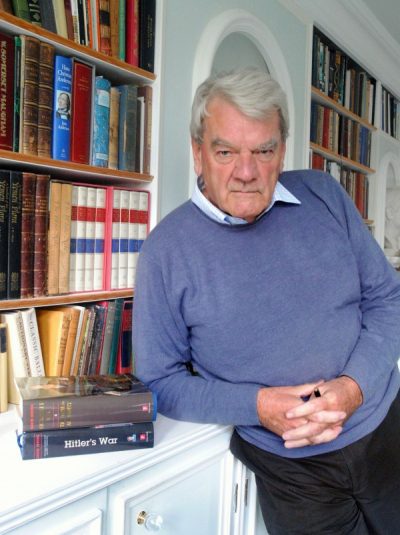
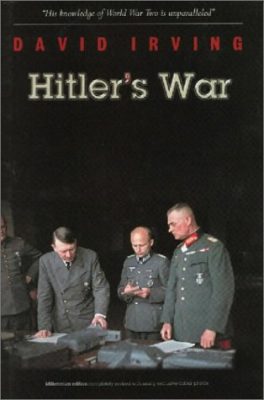
The striking decline in Solzhenitsyn’s literary status in the West came just a decade or two after an even more precipitous collapse in the reputation of David Irving, and for much the same reason. Irving probably ranked as the most internationally successful British historian of the last one hundred years and a renowned scholar of World War II, but his extensive reliance on primary source documentary evidence posed an obvious threat to the official narrative promoted by Hollywood and wartime propaganda. When he published his magisterial Hitler’s War, this conflict between myth and reality came into the open, and an enormous wave of attacks and vilification was unleashed, gradually leading to his purge from respectability and eventually even his imprisonment.

Similarly, Israeli academic Ariel Toaff, son of the chief rabbi of Rome, was regarded as one of the world’s leading scholarly authorities on Medieval Jewry. But when he published his remarkable 2004 analysis suggesting the likely reality of the Jewish ritual murders of Christian children throughout history, the resulting media firestorm forced the cancellation of the book’s publication, and the work only survives in samizdat form, while there were even calls for his arrest and incarceration.

In other cases, pressure from the ADL and similar Jewish activist groups have led Amazon to completely eliminate entire categories of historical analysis and ban those publishers who produce such works, which drastically reduces their availability to the reading public.

All of these cases were the sort of high-profile examples which are well-known to anyone who pays attention to such matters. But surely there must have been many other incidents, involving far less prominent authors, which never received any significant media coverage, and also a vastly larger universe of cases in which writers have self-censored their texts in order to avoid such controversies. Over the decades, I have gradually discovered through sad experience that I must exercise extreme caution whenever I read anything relating to the subjects of Jews, Judaism, or Israel.

These important examples may help to explain the puzzling contrast between the behavior of Jews in the aggregate and Jews as individuals. Observers have noticed that even fairly small Jewish minorities may often have a major impact upon the far larger societies that host them. But on the other hand, in my experience at least, a large majority of individual Jews do not seem all that different in their personalities or behavior than their non-Jewish counterparts. So how does a community whose individual mean is not so unusual generate what seems to be such a striking difference in collective behavior? I think the answer may involve the existence of information choke-points, and the ability of relatively small numbers of particularly zealous and agitated Jews in influencing and controlling these.

We live our lives constantly immersed in media narratives, and these allow us to decide the rights and wrongs of a situation. The vast majority of people, Jew and Gentile alike, are far more likely to take strong action if they are convinced that their cause is a just one. This is obviously the basis for war-time propaganda.

Now suppose that a relatively small number of zealous Jewish partisans are known to always attack and denounce journalists or authors who accurately describe Jewish misbehavior. Over time, this ongoing campaign of intimidation may cause many important facts to be left on the cutting-room floor, or even gradually expel from mainstream respectability those writers who refuse to conform to such pressures. Meanwhile, similar small numbers of Jewish partisans frequently exaggerate the misdeeds committed against Jews, sometimes piling their exaggerations upon past exaggerations already produced by a previous round of such zealots.

Eventually, these two combined trends may take a complex and possibly very mixed historical record and transform it into a simple morality-play, with innocent Jews tremendously injured by vicious Jew-haters. And as this morality-play becomes established it deepens the subsequent intensity of other Jewish-activists, who redouble their demands that the media “stop vilifying Jews” and covering up the supposed evils inflicted upon them. An unfortunate circle of distortion following exaggeration following distortion can eventually produce a widely accepted historical account that bears little resemblance to the reality of what actually happened.

So as a result, the vast majority of quite ordinary Jews, who would normally behave in quite ordinary ways, are misled by this largely fictional history, and rather understandably become greatly outraged at all the horrible things that had been done to their suffering people, some of which are true and some of which are not, while remaining completely ignorant of the other side of the ledger.

Furthermore, this situation is exacerbated by the common tendency of Jews to “cluster” together, perhaps respresenting just one or two percent of the total population, but often constituting 20% or 40% or 60% of their immediate peer-group, especially in certain professions. Under such conditions, the ideas or emotional agitation of some Jews probably permeates others around them, often provoking additional waves of indignation.

As a rough analogy, a small quantity of uranium is relatively inert and harmless, and entirely so if distributed within low-density ore. But if a significant quantity of weapons-grade uranium is sufficiently compressed, then the neutrons released by fissioning atoms will quickly cause additional atoms to undergo fission, with the ultimate result of that critical chain-reaction being a nuclear explosion. In similar fashion, even a highly agitated Jew may have no negative impact, but if the collection of such agitated Jews becomes too numerous and clusters together too closely, they may work each other into a terrible frenzy, perhaps with disastrous consequences both for themselves and for their larger society. This is especially true if those agitated Jews begin to dominate certain key nodes of top-level control, such as the central political or media organs of a society.

Whereas most living organizations exist solely in physical reality, human beings also occupy an ideational space, with the interaction of human consciousness and perceived reality playing a major role in shaping behavior. Just as the pheromones released by mammals or insects can drastically affect the reactions of their family members or nest-mates, the ideas secreted by individuals or the media-emitters of a society can have an enormous impact upon their fellows.

A cohesive, organized group generally possesses huge advantages over a teeming mass of atomized individuals, just as a Macedonian Phalanx could easily defeat a vastly larger body of disorganized infantry. Many years ago, on some website somewhere I came across a very insightful comment regarding the obvious connection between “anti-Semitism” and “racism,” which our mainstream media organs identify as two of the world’s greatest evils. Under this analysis, “anti-Semitism” represents the tendency to criticize or resist Jewish social cohesion, while “racism” represents the attempt of white Gentiles to maintain a similar social cohesion of their own. To the extent that the ideological emanations from our centralized media organs serve to strengthen and protect Jewish cohesion while attacking and dissolving any similar cohesion on the part of their Gentile counterparts, the former will obviously gain enormous advantages in resource-competition against the latter.

Religion obviously constitutes an important unifying factor in human social groups and we cannot ignore the role of Judaism in this regard. Traditional Jewish religious doctrine seems to consider Jews as being in a state of permanent hostility with all non-Jews, and the use of dishonest propaganda is an almost inevitable aspect of such conflict. Furthermore, since Jews have invariably been a small political minority, maintaining such controversial tenets required the employment of a massive framework of subterfuge and dissimulation in order to conceal their nature from the larger society surrounding them. It has often been said that truth is the first casualty in war, and surely the cultural influences of over a thousand years of such intense religious hostility may continue to quietly influence the thinking of many modern Jews, even those who have largely abandoned their religious beliefs.

The notorious Jewish tendency to shamelessly lie or wildly exaggerate has sometimes had horrifying human consequences. I very recently discovered a fascinating passage in Peter Moreira’s 2014 book The Jew Who Defeated Hitler: Henry Morgenthau Jr., FDR, and How We Won the War, focused on the important political role of that powerful Secretary of the Treasury.

A turning point in Henry Morgenthau Jr.’s relationship with the Jewish community came in November 1942, when Rabbi Stephen Wise came to the corner office to tell the secretary what was happening in Europe. Morgenthau knew of the millions of deaths and the lampshades made from victims’ skin, and he asked Wise not to go into excessive details. But Wise went on to tell of the barbarity of the Nazis, how they were making soap out of Jewish flesh. Morgenthau, turning paler, implored him, “Please, Stephen, don’t give me the gory details.” Wise went on with his list of horrors and Morgenthau repeated his plea over and over again. Henrietta Klotz was afraid her boss would keel over. Morgenthau later said the meeting changed his life.

It is easy to imagine that Morgenthau’s gullible acceptance of such obviously ridiculous war-time atrocity stories played a major role when he later lent his name and support to remarkably brutal American occupation policies that probably led to the postwar deaths of many millions of innocent German civilians.

Related Reading:

July 31, 2018 Posted by | Book Review, Deception, Ethnic Cleansing, Racism, Zionism, Full Spectrum Dominance, Timeless or most popular | , , , | Leave a comment

Politics and Psychiatry: the Cost of the Trauma Cover-Up

By Bruce E. Levine | CounterPunch | July 18, 2018

Despite increased spending on mental health treatment, mental illness disability and suicide rates have skyrocketed. “Perhaps more disturbingly,” notes clinical psychologist Noël Hunter, “recent evidence has demonstrated that as contact with psychiatric intervention increases, so too does completed suicide, suggesting the possibility that the current mental health system may be creating the very problems it purports to aid.” In Hunter’s recently published Trauma and Madness in Mental Health Services (Palgrave Macmillan, 2018), she asks, “Are we continuing to funnel money into a fundamentally broken system?”

For many on the Left, it is obvious that the military-industrial complex is devoted only to its own preservation and expansion, thus routinely jeopardizing national security and freedom—this despite many men and women serving in the U.S. military who care about national security and freedom. Far fewer on the Left recognize that the psychiatric-industrial complex (which includes the American Psychiatric Association and its Big Pharma financial partners) is also devoted only to its own preservation and expansion, thus routinely exacerbating emotional suffering—this despite many individual practitioners who want to help their patients.

The majority of psychiatrists and psychologists, owing to both ignorance and cowardice, routinely comply with diagnostic and treatment notions that pretend to be scientific but which have been politically and financially forged. There are, however, a handful of anti-authoritarian professionals who have rebelled, and Noël Hunter is one of them.

Hunter is a rare psychologist. She not only has extensive knowledge of the empirical research, but she herself was once diagnosed with serious mental illness, and she takes very seriously the insights of “experts by experience”—recovered ex-patients—who Hunter quotes throughout her book. Both objective and subjective sources make clear to Hunter that the essential cause for what is called serious mental illness is not some kind of biochemical or genetic defect but some kind of trauma, and that the essential remedy is healing from trauma. For critical thinkers who are not mental health professionals, Hunter’s assertions in Trauma and Madness in Mental Health Services may sound like simple common sense, but it is sense that is not common in the mental health profession.

Wisdom has been derailed by politics and misinformation in the mental health profession (as is the case for many other aspects of U.S. society). Despite what the general public repeatedly hears from the mass media, there is no actual science behind proclamations that “schizophrenia” or other “serious mental illnesses” are caused by a biochemical imbalance, a genetic flaw, or any other innate defect. After many years and much money spent attempting to prove defect theories, even establishment mental health has rejected the widely popularized chemical-imbalance theory of mental illness (though word of this rejection hasn’t gotten out to much of the U.S. general public or to even many practitioners).

In contrast, there is a great deal of scientific evidence showing that people diagnosed with schizophrenia and other serious mental illnesses are far more likely to have been victims of societal and familial trauma. Citing the empirical research, Hunter reports:

“Adverse experiences, particularly in childhood (such as physical and sexual abuse, parental separation, bullying, parental death, foster care, neighborhood violence, poverty, racism, etc.), have been demonstrated to have a direct and dose-response relationship (meaning the more adversity, the greater the risk) with adult mental health issues like hearing voices, suicidality, drug abuse, experiencing altered states of consciousness, extreme and intense emotions, fragmented sense of self, obesity, depression, paranoia, beliefs in conflict with consensus reality, anxiety, and more.”

A great tragedy for people viewed as biochemically defective rather than as victims of trauma is that such individuals who are already suffering are then stigmatized and marginalized owing to their defect status. Hunter reports that “ongoing efforts to combat stigma by asserting that ‘mental illness is an illness like any other’ are actually associated with increased stigma and increased efforts to distance oneself from those deemed mentally ill.”

Politics has long dictated a trauma cover-up. The significance of trauma, Hunter recounts, was obvious over a century ago to Pierre Janet, and so too did Sigmund Freud recognize the importance of sexual abuse as a cause of his patients’ problems. However, Freud then shifted his focus onto unconscious conflicts. While it took some courage for Freud to talk about repressed sexuality, it would have likely been reputation suicide if he had continued to focus on societal and familial trauma—this would have challenged those in society who had far greater status and influence than he had.

To be clear, modern psychiatry does not completely reject trauma as a cause of emotional suffering, and with good luck a patient can get the kind of diagnosis in which trauma is taken seriously. Post-traumatic stress disorder (PTSD) was included in the American Psychiatric Association’s diagnostic bible, the DSM, in 1980. “This inclusion,” Hunter points out, “was largely the result of political efforts on the part of American veterans of war.”

Politics, not science, dictates not only the explanations for mental illnesses but their creation (as with the case of PTSD) and abolition, as was the case with homosexuality. By the 1970s, gay Americans, angry about their sexual preference being viewed as a disease and defect, finally had enough political power to compel the American Psychiatric Association to abolish homosexuality as a mental illness, and it was excluded from the APA’s 1980 DSM-III. Unfortunately, people diagnosed with schizophrenia and other serious mental illnesses lack the political power to change psychiatric dogma, and so they are seen as defective rather than as victims of trauma.

Phil Ochs sang: “There but for fortune may go you or I.” This is the reality when it comes to psychiatric diagnoses. You and I can exhibit the same behaviors, but whether you or I become a chronic psychiatric patient depends on our bad or good fortune. I’ve talked to many people who as teenagers and young adults innocently told their parents about voices that they were hearing and were then labeled by doctors as schizophrenic, resulting in long careers as mental patients. And I’ve talked with others who kept their voice hearing to themselves; these voices actually helped them have breakthroughs, and they have had no such careers as mental patients.

In a scientific sense, terms like “schizophrenia” are completely meaningless—wastebaskets to toss people who are behaving in ways that appear bizarre to doctors. Often what causes people acting in unusual ways to become chronically dysfunctional are their doctors’ problematic reactions and “treatments.” In other words, it is common for the source of chronic dysfunction to be physician-induced (iatrogenic) trauma.

In the real world of psychiatric diagnoses, probably the most important criteria for whether you are diagnosed with schizophrenia or dissociative identify disorder (DID) is how much your doctor likes you, and Hunter was likable enough to get a DID diagnosis. For reasons of dogma, not science, trauma is taken seriously for DID but not for schizophrenia (in which one is simply seen as defective). So, Hunter considers herself relatively lucky, and one senses her “survival guilt.”

Unlike many books critical of the psychiatric-industrial complex, Trauma and Madness in Mental Health Services offers a great deal of practical help for both practitioners and for those in emotional turmoil. In very concrete terms, Hunter offers chapters on what is helpful and what is not. The research, her own experience as a patient, and her discussions with other ex-patients inform her: “Relationships matter. Relaxation matters. Nutrition matters. Hope and purpose matter. Nature matters. Love matters.”

Professionals often waste their limited time obsessing over a diagnostic process that is scientifically invalid and unreliable. “Rather,” Hunter concludes, “what is more important is to take an individualized, collaborative, trauma-informed approach that is attuned to individual needs without making assumptions and considering the person’s subjective experiences as real and something to be respected.” It’s important, Hunter concludes, to help people find meaning and value in the adaptive nature of their atypical experiences.

In general, I have little hope for the mental health profession, but I have seen individual professionals rise above their desire for security and then revolt against the policies of institutions in the psychiatric-industrial complex. In academia, such rebellion can jeopardize one’s chances for tenure, yet a handful of educators are willing to take that risk. They care less about security than being remembered by their students for turning them on to a book in which they actually acquire knowledge about some very interesting human beings and that is of great value in helping them. Such a book is Noël Hunter’s Trauma and Madness in Mental Health Services.

Bruce E. Levine, a practicing clinical psychologist often at odds with the mainstream of his profession, writes and speaks about how society, culture, politics and psychology intersect. His most recent book is Resisting Illegitimate Authority: A Thinking Person’s Guide to Being an Anti-Authoritarian―Strategies, Tools, and Models(AK Press, September, 2018). His Web site is brucelevine.net

July 18, 2018 Posted by | Book Review, Science and Pseudo-Science, Timeless or most popular | Leave a comment

American Pravda: Oddities of the Jewish Religion

By Ron Unz • Unz Review • July 16, 2018

About a decade ago, I happened to be talking with an eminent academic scholar who had become known for his sharp criticism of Israeli policies in the Middle East and America’s strong support for them. I mentioned that I myself had come to very similar conclusions some time before, and he asked when that had happened. I told him it had been in 1982, and I think he found my answer quite surprising. I got the sense that date was decades earlier than would have been given by almost anyone else he knew.

Sometimes it is quite difficult to pinpoint when one’s world view on a contentious topic undergoes sharp transformation, but at other times it is quite easy. My own perceptions of the Middle East conflict drastically shifted during Fall 1982, and they have subsequently changed only to a far smaller extent. As some might remember, that period marked the first Israeli invasion of Lebanon, and culminated in the notorious Sabra-Shatila Massacre during which hundreds or even thousands of Palestinians were slaughtered in their refugee camps. But although those events were certainly major factors in my ideological realignment, the crucial trigger was actually a certain letter to the editor published around that same time.

A few years earlier, I had discovered The London Economist, as it was then called, and it had quickly become my favorite publication, which I religiously devoured cover-to-cover every week. And as I read the various articles about the Middle East conflict in that publication, or others such as the New York Times, the journalists occasionally included quotes from some particularly fanatic and irrational Israeli Communist named Israel Shahak, whose views seemed totally at odds with those of everyone else, and who was consequently treated as a fringe figure. Opinions that seem totally divorced from reality tend to stick in one’s mind, and it took only one or two appearances from that apparently die-hard and delusional Stalinist for me to guess that he would always take an entirely contrary position on every given issue.

In 1982 Israel Defense Minister Israel Sharon launched his massive invasion of Lebanon using the pretext of the wounding of an Israeli diplomat in Europe at the hands of a Palestinian attacker, and the extreme nature of his action was widely condemned in the media outlets I read at the time. His motive was obviously to root out the PLO’s political and military infrastructure, which had taken hold in many of Lebanon’s large Palestinian refugee camps. But back in those days invasions of Middle Eastern countries on dubious prospects were much less common than they have subsequently become, after our recent American wars killed or displaced so many millions, and most observers were horrified by the utterly disproportionate nature of his attack and the severe destruction he was inflicted upon Israel’s neighbor, which he seemed eager to reduce to puppet status. From what I recall from that time, he made several entirely false assurances to top Reagan officials about his invasion plans, such that they afterward called him the worst sort of liar, and he ended up besieging the Lebanese capital of Beirut even though he had originally promised to limit his assault to a mere border incursion.

The Israeli siege of the PLO-controlled areas of Beirut lasted some time, and negotiations eventually resulted in the departure of the Palestinian fighters to some other Arab country. Shortly afterward, the Israelis declared that they were moving into West Beirut in order to better assure the safety of the Palestinian women and children left behind and protect them from any retribution at the hands of their Christian Falangist enemies. And around that same time, I noticed a long letter in The Economist by Shahak which seemed to me the final proof of his insanity. He claimed that it was obvious that Sharon had marched to Beirut with the intent of organizing a massacre of the Palestinians, and that this would shortly take place. When the slaughter indeed occurred not long afterward, apparently with heavy Israeli involvement and complicity, I concluded that if a crazy Communist fanatic like Shahak had been right, while apparently every mainstream journalist had been so completely wrong, my understanding of the world and the Middle East required total recalibration. Or at least that’s how I’ve always remembered those events from a distance of over thirty-five years.

During the years that followed, I still periodically saw Shahak’s statements quoted in my mainstream publications, which sometimes suggested that he was a Communist and sometimes not. Naturally enough, his ideological extremism made him a prominent opponent of the 1991 Oslo Peace Agreement between Israel and the occupied Palestinians, which was supported by every sensible person, though since Oslo ended up being entirely a failure, I couldn’t hold it too strongly against him. I stopped paying much attention to foreign policy issues during the 1990s, but I still read my New York Times every morning and would occasionally see his quotes, inevitably contrarian and irredentist.

Then the 9/11 attacks returned foreign policy and the Middle East to the absolute center of our national agenda, and I eventually read somewhere or other that Shahak had died at age 68 only a few months earlier, though I hadn’t noticed any obituary. Over the years, I’d seen some vague mention that during the previous decade he’d published a couple of stridently anti-Jewish and anti-Zionist books, just as might be expected from a hard-line Communist fanatic, and during the early 2000s I started seeing more and more references to these works, ironically coming from fringe sources of the anti-Semitic Far Right, thereby once again proving that extremists flock together. Finally, about a decade ago, my curiosity got the better of me, clicking a few buttons on Amazon.com, I ordered copies of his books, all of which were quite short.

My first surprise was that Shahak’s writings included introductions or glowing blurbs by some of America’s most prominent public intellectuals, including Christopher Hitchens, Gore Vidal, Noam Chomsky, and Edward Said. Praise also came from quite respectable publications such as The London Review of Books, Middle East International, and Catholic New Times while Allan Brownfeld of The American Council for Judaism had published a very long and laudatory obituary. And I discovered that Shahak’s background was very different than I had always imagined. He had spent many years as an award-winning Chemistry professor at Hebrew University, and was actually anything but a Communist. Whereas for decades, Israel’s ruling political parties had been Socialist or Marxist, his personal doubts about Socialism had left him politically in the wilderness, while his relationship with Israel’s tiny Communist Party was solely because they were the only group willing to stand up for the basic human rights issues that were his own central focus. My casual assumptions about his views and background had been entirely in error.

Once I actually began reading his books, and considering his claims, my shock increased fifty-fold. Throughout my entire life, there have been very, very few times I have ever been so totally astonished as I was after I digested Jewish History, Jewish Religion: The Weight of Three Thousand Years, whose text runs barely a hundred pages. In fact, despite his solid background in the academic sciences and the glowing testaments provided by prominent figures, I found it quite difficult to accept the reality of what I was reading. As a consequence, I paid a considerable sum to a young graduate student I knew, tasking him to verify the claims in Shahak’s books, and as far as he could tell, all of the hundreds of references he checked seemed to be accurate or at least found in other sources.

Even with all of that due diligence, I must emphasize that I cannot directly vouch for Shahak’s claims about Judaism. My own knowledge of that religion is absolutely negligible, mostly being limited to my childhood, when my grandmother occasionally managed to drag me down to services at the local synagogue, where I was seated among a mass of elderly men praying and chanting in some strange language while wearing various ritualistic cloths and religious talismans, an experience that I always found much less enjoyable than my usual Saturday morning cartoons.

Although Shahak’s books are quite short, they contain such a density of astonishing material, it would take many, many thousands of words to begin to summarize them. Essentially almost everything I had known—or thought I had known—about the religion of Judaism, at least in its zealously Orthodox traditional form, was utterly wrong.

For example, traditionally religious Jews pay little attention to most of the Old Testament, and even very learned rabbis or students who have devoted many years to intensive study may remain largely ignorant of its contents. Instead, the center of their religious world view is the Talmud, an enormously large, complex, and somewhat contradictory mass of secondary writings and commentary built up over many centuries, which is why their religious doctrine is sometimes called “Talmudic Judaism.” Among large portions of the faithful, the Talmud is supplemented by the Kabala, another large collection of accumulated writings, mostly focused on mysticism and all sorts of magic. Since these commentaries and interpretations represent the core of the religion, much of what everyone takes for granted in the Bible is considered in a very different manner.

Given the nature of the Talmudic basis of traditional Judaism and my total previous ignorance of the subject, any attempt on my part of summarize some of the more surprising aspects of Shahak’s description may be partially garbled, and is certainly worthy of correction by someone better versed in that dogma. And given that so many parts of the Talmud are highly contradictory and infused with complex mysticism, it would be impossible for someone like me to attempt to disentangle the seeming inconsistencies that I am merely repeating. I should note that although Shahak’s description of the beliefs and practices of Talmudic Judaism evoked a fire-storm of denunciations, few of those harsh critics seem to have denied his very specific claims, including the most astonishing ones, which would seem to strengthen his credibility.

On the most basic level, the religion of most traditional Jews is actually not at all monotheistic, but instead contains a wide variety of different male and female gods, having quite complex relations to each other, with these entities and their properties varying enormously among the numerous different Jewish sub-sects, depending upon which portions of the Talmud and the Kabala they place uppermost. For example, the traditional Jewish religious cry “The Lord Is One” has always been interpreted by most people to be a monotheistic affirmation, and indeed, many Jews take exactly this same view. But large numbers of other Jews believe this declaration instead refers to achievement of sexual union between the primary male and female divine entities. And most bizarrely, Jews having such radically different views see absolutely no difficulty in praying side by side, and merely interpreting their identical chants in very different fashion.

Furthermore, religious Jews apparently pray to Satan almost as readily as they pray to God, and depending upon the various rabbinical schools, the particular rituals and sacrifices they practice may be aimed at enlisting the support of the one or the one. Once again, so long as the rituals are properly followed, the Satan-worshippers and the God-worshippers get along perfectly well and consider each other equally pious Jews, merely of a slightly different tradition. One point that Shahak repeatedly emphasizes is that in traditional Judaism the nature of the ritual itself is absolutely uppermost, while the interpretation of the ritual is rather secondary. So perhaps a Jew who washes his hands three times clockwise might be horrified by another who follows a counter-clockwise direction, but whether the hand-washing were meant to honor God or to honor Satan would be hardly be a matter of much consequence.

Strangely enough, many of the traditional rituals are explicitly intended to fool or trick God or His angels or sometimes Satan, much like the mortal heroes of some Greek legend might seek to trick Zeus or Aphrodite. For example, certain prayers must be uttered in Aramaic rather than Hebrew on the grounds that holy angels apparently don’t understand the former language, and their confusion allows those verses to slip by unimpeded and take effect without divine interference.

Furthermore, since the Talmud represents a massive accretion of published commentary built up over more than a millennium, even the most explicit mandates have sometimes been transformed into their opposites. As an example, Maimonides, one of the highest rabbinical authorities, absolutely prohibited rabbis from being paid for their religious teaching, declaring that any rabbi who received a salary was an evil robber condemned to everlasting torment; yet later rabbis eventually “reinterpreted” this statement to mean something entirely different, and today almost all rabbis collect salaries.

Another fascinating aspect is that up until very recent times, the lives of religious Jews were often dominated by all sorts of highly superstitious practices, including magical charms, portions, spells, incantations, hexes, curses, and sacred talismans, with rabbis often having an important secondary role as sorcerers, and this even remains entirely true today among the enormously influential rabbis of Israel and the New York City area. Shahak’s writings had not endeared him to many of these individuals, and for years they constantly attacked him with all sorts of spells and fearful curses aimed at achieving his death or illness. Many of these traditional Jewish practices seem not entirely dissimilar to those we typically associate with African witch-doctors or Voodoo priests, and indeed, the famous legend of the Golem of Prague described the successful use of rabbinical magic to animate a giant creature built of clay.

If these ritualistic issues constituted the central features of traditional religious Judaism, we might regard it as a rather colorful and eccentric survival of ancient times. But unfortunately, there is also a far darker side, primarily involving the relationship between Jews and non-Jews, with the highly derogatory term goyim frequently used to describe the latter. To put it bluntly, Jews have divine souls and goyim do not, being merely beasts in the shape of men. Indeed, the primary reason for the existence of non-Jews is to serve as the slaves of Jews, with some very high-ranking rabbis occasionally stating this well-known fact. In 2014, Israel’s top Sephardic rabbi used his weekly sermon to declare that the only reason for the existence of non-Jews is to serve Jews and do work for them. The enslavement or extermination of all non-Jews seems an ultimate implied goal of the religion.

Jewish lives have infinite value, and non-Jewish ones none at all, which has obvious policy implications. For example, in a published article a prominent Israeli rabbi explained that if a Jew needed a liver, it would be perfectly fine, and indeed obligatory, to kill an innocent Gentile and take his. Perhaps we should not be too surprised that today Israel is widely regarded as one of the world centers of organ-trafficking.

As a further illustration of the seething hatred traditional Judaism radiates towards all those of a different background, saving the life of a non-Jew is generally considered improper or even prohibited, and taking any such action on the Sabbath would be an absolute violation of religious edict. Such dogmas are certainly ironic given the widespread presence of Jews in the medical profession during recent centuries, but they came to the fore in Israel when a religiously-minded military doctor took them to heart and his position was supported by the country’s highest religious authorities.

And while religious Judaism has a decidedly negative view towards all non-Jews, Christianity in particular is regarded as a total abomination, which must be wiped from the face of the earth.

Whereas pious Muslims consider Jesus the holy prophet of God and Muhammed’s immediate predecessor, according to the Jewish Talmud, Jesus is perhaps the vilest being who ever lived, condemned to spend eternity in the bottommost pit of Hell, immersed in a boiling vat of excrement. Religious Jews regard the Muslim Quran as just another book, though a totally mistaken one, but the Christian Bible represents purest evil, and if circumstances permit, burning Bibles is a very praiseworthy act. Pious Jews are also enjoined to always spit three times at any cross or church they encounter, and direct a curse at all Christian cemeteries. Indeed, many deeply religious Jews utter a prayer each and every day for the immediate extermination of all Christians.

Over the years prominent Israeli rabbis have sometimes publicly debated whether Jewish power has now become sufficiently great that all the Christian churches of Jerusalem, Bethleham, and other nearby areas can finally be destroyed, and the entire Holy Land completely cleansed of all traces of its Christian contamination. Some have taken this position, but most have urged prudence, arguing that Jews needed to gain some additional strength before they should take such a risky step. These days, many tens of millions of zealous Christians and especially Christian Zionists are enthusiastic advocates for Jews, Judaism, and Israel, and I strongly suspect that at least some of that enthusiasm is based upon ignorance.

For the last two thousand years, Jews have almost invariably existed as small, relatively weak minorities living in the lands of others, whether Christian or Muslim, so a religious doctrine so unswervingly hostile to outsiders has naturally presented considerable obstacles for peaceful co-existence. The solution to this dilemma has been based on the divine mandate to preserve Jewish life and well-being above all else, superseding almost all other religious considerations. Thus, if any of the behaviors discussed above are considered likely to stir up resentment from powerful Gentile groups and put Jews at risk, they must be avoided.

For example, the prohibition against Jewish physicians treating the illnesses of non-Jews is waived in the case of powerful non-Jews, especially national leaders, whose favor might provide benefits to the Jewish community. And even ordinary non-Jews may be aided unless some persuasive excuse can be found to explain such lack of assistance since otherwise the vengeful hostility of their friends and relatives might cause difficulties for other Jews. Similarly, it is permissible to exchange gifts with non-Jews but only if such behavior can be justified in strictly utilitarian terms, with any simple expression of friendship towards a non-Jew being a violation of holy principles.

If the Gentile population became aware of these Jewish religious beliefs and the behaviors they promote, major problems for Jews might develop, so an elaborate methodology of subterfuge, concealment, and dissimulation has come into being over the many centuries to minimize this possibility, especially including the mistranslation of sacred texts or the complete exclusion of crucial sections. Meanwhile, the traditional penalty for any Jew who “informs” to the authorities on any matter regarding the Jewish community has always been death, often preceded by hideous torture.

Much of this dishonesty obviously continues down to recent times since it seems very unlikely that Jewish rabbis, except perhaps for those of the most avant garde disposition, would remain totally unaware of the fundamental tenets of the religion that they claim to lead, and Shahak is scathing toward their apparent self-serving hypocrisy, especially those who publicly express strongly liberal views. For example, according to mainstream Talmudic doctrine, black Africans are traditionally placed somewhere between people and monkeys in their intrinsic nature, and surely all rabbis, even liberal ones, would be aware of this religious doctrine. But Shahak notes that the numerous American rabbis who so eagerly worked with Martin Luther King, Jr. and other black Civil Rights leaders during the 1950s and 1960s strictly concealed their religious beliefs while denouncing American society for its cruel racism, presumably seeking to achieve a political quid pro quo beneficial to Jewish interests from America’s substantial black population.

Shahak also emphasizes the utterly totalitarian nature of traditional Jewish society, in which rabbis held the power of life and death over their congregants, and often sought to punish ideological deviation or heresy using those means. They were often outraged that this became difficult as states grew stronger and increasingly prohibited such private executions. Liberalizing rabbis were sometimes murdered and Baruch Spinoza, the famous Jewish philosopher of the Age of Reason, only survived because the Dutch authorities refused to allow his fellow Jews to kill him.

Given the complexity and exceptionally controversial nature of this subject matter, I would urge readers who find this topic of interest to spend three or four hours reading Shahak’s very short book, and then decide for themselves whether his claims seem plausible and whether I may have inadvertently misunderstood them. Aside from the copies on Amazon, the work may also be found at Archive.org and also a very convenient HTML copy is freely available on the Internet.

My encounter a decade ago with Shahak’s candid description of the true doctrines of traditional Judaism was certainly one of the most world-altering revelations of my entire life. But as I gradually digested the full implications, all sorts of puzzles and discontented facts suddenly became much more clear. There were also some remarkable ironies, and not long afterward I joked to a (Jewish) friend of mine that I’d suddenly discovered that Naziism could best be described as “Judaism for Wimps” or perhaps Judaism as practiced by Mother Teresa of Calcutta.

There may actually be a deeper historical truth behind that irony. I think I’ve read here and there that some scholars believe that Hitler may have modeled certain aspects of his racially-focused National Socialist doctrine upon the Jewish example, which really makes perfect sense. After all, he saw that despite their small numbers Jews had gained enormous power in the Soviet Union, Weimar Germany, and numerous other countries throughout Europe, partly due to their extremely strong ethnic cohesion, and he probably reasoned that his own Germanic people, being far greater in numbers and historical achievements could do even better if they adopted similar practices.

It’s also interesting to note that quite a number of the leading racialist pioneers of 19th century Europe came from a particular ethnic background. For example, my history books had always disapprovingly mentioned Germany’s Max Nordau and Italy’s Cesare Lombroso as two of the founding figures of European racism and eugenics theories, but it was only very recently that I also discovered that Nordau had also been the joint founder with Theodor Herzl of the world Zionist movement, while his major racialist treatise Degeneration, was dedicated to Lombroso, his Jewish mentor.

Even as late as the 1930s and afterward, international Zionist groups closely cooperated with the Third Reich on international economic projects, and during the world war itself one of the smaller rightwing factions, led by future Israeli Prime Minister Yizhak Shamir, actually offered a military alliance to the Axis Powers, denouncing the decadent Western democracies and hoping to cooperate against their mutual British enemies. The Transfer Agreement by Edwin Black, 51 Documents by Lenni Brunner, and other writings have documented all these facts in detail, though for obvious reasons they have generally been ignored or mischaracterized by most of our media outlets.

Obviously the Talmud is hardly regular reading among ordinary Jews these days, and I would suspect that except for the strongly Orthodox and perhaps most rabbis, barely a sliver are aware of its highly controversial teachings. But it is important to keep in mind that until just a few generations ago, almost all European Jews were deeply Orthodox, and even today I would guess that the overwhelming majority of Jewish adults had Orthodox grand-parents. Highly distinctive cultural patterns and social attitudes can easily seep into a considerably wider population, especially one that remains ignorant of the origin of those sentiments, a condition enhancing their unrecognized influence. A religion based upon the principal of “Love Thy Neighbor” may or may not be workable in practice, but a religion based upon “Hate Thy Neighbor” may be expected to have long-term cultural ripple effects that extend far beyond the direct community of the deeply pious. If nearly all Jews for a thousand or two thousand years were taught to feel a seething hatred toward all non-Jews and also developed an enormous infrastructure of cultural dishonesty to mask that attitude, it is difficult to believe that such an unfortunate history has had absolutely no consequences for our present-day world, or that of the relatively recent past.

Furthermore, Jewish hostility toward non-Jews may have often served the interests of others, and helped determine the economic role they played, especially in European countries, with this factor having been obscured by widespread ignorance of the underlying religious tenets. As most of us know from our history books, political rulers with little sympathy for their subjects sometimes restrict military power to a relatively small group of well-rewarded mercenaries, often of foreign origins so that they will have little sympathy for the population they harshly repress. I strongly suspect that some of the most common traditional economic niches of European Jews, such as tax-farming and the arrenda estate-management system of Eastern Europe, should be best understood in a similar light, with Jews being more likely to extract every last penny of value from the peasants they controlled for the benefit of their local king or lords, and their notorious antipathy for all non-Jews ensuring that such behavior was minimally tempered by any human sympathy. Thus, we should not be surprised that Jews first entered England in the train of William the Conqueror, in order to help him and his victorious Norman lords effectively exploit the subjugated Anglo-Saxon population they now ruled.

But states in which the vast majority of the population is oppressed and dominated by a thin slice of rulers and their mercenary enforcers tend to be much weaker and more brittle than those in which rulers and ruled share common interests, and I believe this is just as true for economic enforcers as for military ones. In many cases, lands reliant upon Jewish economic intermediaries, notably Poland, never successfully developed a native middle class, and often later fared quite poorly against their nationally-unified competitors. Spain was actually one of the last countries in Europe to expel its Jews, and over the next century or two reached the peak of its military and political glory. Prof. Kevin MacDonald’s controversial books on Judaism have also extensively argued that rulers who seem to have been more concerned for the well-being of their subjects also tend to be the ones more likely to be labeled “anti-Semitic” in modern history books, and his volumes are now easily available in my selection of HTML Books:

In 2009, Gene Expression blogger Razib Khan interviewed eminent evolutionary theorist David Sloan Wilson on the group selection ideas that have been his major focus. During this hour-long discussion, the theories of MacDonald became a major topic, with Wilson seeming to take them quite seriously, and pointing out that within the scientific framework “parasitism” has a simple technical definition, namely the exploitation of the large by the small. Unsurprisingly, the video record of such extremely touchy subject matter was quickly truncated to just the first 11 minutes, and eventually completely removed from both YouTube and BloggingHeadsTV. But it still at least partially survives in archived form:

David_Sloan_Wilson_on_group_selection_Kevin_MacDonald_and_the_Jewish_Question

In recent years, the history of Jewish expulsions from various European societies over the last thousand years has received considerable attention. The total number is somewhat disputed but almost certainly in excess of 100, with the 1930s policies of Hitler’s Germany being merely the most recent example, and Wired Magazine provided an interesting graphical presentation of this large dataset in 2013. Given these unfortunate facts, it may be difficult to point to any other group so consistently at bitter odds with its local neighbors, and the religious details provided by Shahak certainly make this remarkable historical pattern far less inexplicable.

A very even-handed but candid description of the behavior pattern of Jewish newcomers to America was provided in a chapter of a 1914 book on immigration groups by E.A. Ross, one of America’s greatest early sociologists. Ross had been one of the towering Progressive intellectuals of his era, widely quoted by Lothrop Stoddard on the Right while still so highly regarded by the Left that he was named to the Dewey Commission to adjudicate the conflicting accusations of Trotsky and Stalin and also received glowing praise in the pages of the Communist New Masses. His dismissal on political grounds from Stanford University led to the formation of the American Association of University Professors. Yet his name had so totally vanished from our history books I had never even encountered it until beginning work on my content-archiving project, and I would not be surprised if that single chapter from one of his many books played a major role in his disappearance.

Jews spent two thousand years living as a diaspora people, and their tightly-bound trans-national colonies provided them with a uniquely effective international trading network. Since their religious traditions regarded slavery as the natural and appropriate lot of all non-Jews, both ideological and practical factors combined to apparently make them some of the leading slave-traders of Medieval Europe, though this is hardly emphasized in our histories. Closer to home, in 1991 the Black Nationalists of The Nation of Islam published The Secret Relationship Between Blacks and Jews, Volume One, which seemed to persuasively document the enormous role Jews had played in the American slave-trade. In 1994, Harold Brackman published a short attempted rebuttal entitled Ministry of Lies under the auspices of the Simon Wiesenthal Center, but I found his denials much less compelling. I very much doubt that most Americans are aware of these historical facts.

Throughout most of my life, Nobel Laureate Alexander Solzhenitsyn was generally regarded as the greatest Russian literary figure of our modern era, and after reading all of his works, including The First Circle, Cancer Ward, and The Gulag Archipelago, I certainly concurred with this assertion, and eagerly absorbed Michael Scammel’s brilliant thousand page biography. Although Russian himself, many of his closest friends were Jewish, but during the 1980s and 1990s, whispers of his supposed anti-Semitism began floating around, probably because he had sometimes hinted at the very prominent role of Jews in both financing and leading the Bolshevik Revolution, and afterward staffing the NKVD and administering the Gulag labor camps. Late in his life, he wrote a massive two-volume history of the tangled relationship between Jews and Russians under the title Two Hundred Years Together, and although that work soon appeared in Russian, French, and German, nearly two decades later, no English translation has ever been authorized. His literary star seems also to greatly waned in America since that time, and I only very rarely see his name mentioned these days in any of my regular newspapers.

Samizdat versions of major sections of his final work may easily be located on the Internet, and a few years ago Amazon temporarily sold a 750 page hard copy edition, which I ordered and lightly skimmed. Everything seemed quite innocuous and factual, and nothing new jumped out at me, but perhaps the documentation of very heavy Jewish role in Communism was considered inappropriate for American audiences, as was the discussion of the extremely exploitative relationship between Jews and Slavic peasants in pre-revolutionary times, based on liquor-dealing and money-lending, which the Czars had often sought to mitigate.

When a ruling elite has limited connection to the population it controls, benevolent behavior is far less likely to occur, and those problems are magnified when that elite has a long tradition of ruthlessly extractive behavior. Enormous numbers of Russians suffered and died in the aftermath of the Bolshevik Revolution, and given the overwhelmingly Jewish composition of the top leadership during much of that period, it is hardly surprising that “anti-Semitism” was deemed a capital offense. Kevin MacDonald may have been the one who coined the term “hostile elite,” and discussed the unfortunate consequences when a country comes under such control.

After the collapse of the Soviet Union in 1991, reborn Russia soon fell under the overwhelming domination of a small group of Oligarchs, almost entirely of Jewish background, and a decade of total misery and impoverishment for the general Russian population soon followed. But once an actual Russian named Vladimir Putin regained control, these trends reversed and the lives of Russians have enormously improved since that time. America’s media organs were overwhelmingly friendly toward Russia when it was under Jewish Oligarchic rule, while Putin has been demonized in the press more ferociously than any world leader since Hitler. Indeed, our media pundits regularly identify Putin as “the new Hitler” and I actually think the analogy might be a reasonable one, but just not in the way they intend.

Sometimes it is much easier to notice obvious patterns in a foreign country than in one’s own. In the early 2000s I read The Master Switch, a widely-praised history of modern communications technology by Columbia University professor Tim Wu, who has subsequently become a leading Internet-rights activist. I found the account fascinating, with so many stories never before known to me. However, I couldn’t help but notice that all the powerful mass-media technologies of our modern world–film, radio, and television–had been invented and pioneered by Gentiles, mostly of Anglo-Saxon origin, but in each case control was seized by ruthless Jewish businessmen, who sometimes destroyed the lives and careers of those creators. By the 1950s, nearly all of America’s leading concentrations of electronic media power—with the sole major exception of Disney Studios—were solidly in Jewish hands. In an open society such as ours, these are the central levers of political influence, and over the next generation or so, America’s long-dominant and heavily Anglo-Saxon ruling elite was replaced by a mostly Jewish one, a development I alluded to in my long Meritocracy article of a few years ago.

Critics today of all backgrounds bemoan the total impoverishment of so much of America’s once comfortably affluent middle class, noting that some sixty percent of the American population today possesses less than $500 in readily available savings. A younger generation has been reduced to permanent debt-servitude by ruinous student loans, while the the newspapers report that the opioid drug epidemic has claimed a dreadful toll in lives and family-breakdown even while Wall Street and other elite sectors of the financialized economy are richer than they have ever been before. There are certainly many different explanations for this sad economic trajectory, including technological change, growing international competition, and shifts of political power in the American system of government. But it does sometimes seem like a substantial fraction of our population has been reduced to a 21st century version of the drunken, ignorant, exploited, indebted, impoverished, and immiserated Slavic peasantry of the Jewish-dominated Pale of Settlement, and a striking graph produced by the Economic Policy Institute demonstrates that a very sharp economic inflection point occurred in the early 1970s, right around the time that the aforementioned ethnic transformation of our ruling elites was fully under way.

Contrary to widespread popular belief, it is not actually illegal to be a “Nazi” in America, nor are Nazis prohibited from owning property, even including media outlets. But suppose that the overwhelming majority of America’s major media concentrations were owned and controlled by Nazis of a particularly fanatical type. Surely that might have serious consequences for the course of our society, and especially that fraction of the population viewed with considerable disfavor under Nazi doctrine.

One important point to consider in the abbreviated history of Hitler’s Third Reich was that although the ruling Nazi elite was often quite harsh and extreme in its behavior, well over 98% of the population it ruled prior to the outbreak of war consisted of Germans, the particular group which that ruling elite most sought to benefit and uplift in all possible ways, and despite the obscuring cloud of retrospective propaganda, this goal seems to have largely been achieved. In 2004, Counterpunch published a column by the late Alexander Cockburn, its redoubtable editor, noting the tremendous success of Hitler’s peacetime economic policies, and in 2013 that same webzine carried a much longer column focused entirely on this same subject, citing the analysis of Henry C.K. Liu, whose Chinese background provided him greater critical distance. Indeed, during most of the 1930s Hitler received widespread international praise for the great success of his domestic economic and social achievements, making the cover of Time Magazine on numerous occasions and even being named its Man of the Year for 1938. By contrast, I suspect that a population that was some 98% non-German but ruled by those same fanatically pro-German leaders might have fared far worse.

Most of these disheartening facts that have so completely upended my understanding of reality over the last decade could not possibly have come to my attention until the rise of the Internet, which partially broke centralized control over the distribution of information. But many other people surely must have known large portions of this important story long before that, and recognized the very serious consequences these matters might have for the future of our society. Why has there been so little public discussion?

I believe one factor is that over the years and the decades, our dominant media organs of news and entertainment have successfully conditioned most Americans to suffer a sort of mental allergic reaction to topics sensitive to Jews, which leads to all sorts of issues being considered absolutely out of bounds. And with America’s very powerful Jewish elites thereby insulated from almost all public scrutiny, Jewish arrogance and misbehavior remain largely unchecked and can increase completely without limit.

I’ve also sometimes suggested to people that one under-emphasized aspect of a Jewish population, greatly magnifying its problematical character, is the existence of what might be considered a biological sub-morph of exceptionally fanatical individuals, always on hair-trigger alert to launch verbal and sometimes physical attacks of unprecedented fury against anyone they regard as insufficiently friendly towards Jewish interests. Every now and then, a particularly brave or foolhardy public figure challenges some off-limits topic and is almost always overwhelmed and destroyed by a veritable swarm of these fanatical Jewish attackers. Just as the painful stings of the self-sacrificing warrior caste of an ant colony can quickly teach large predators to go elsewhere, fears of provoking these “Jewish berserkers” can often severely intimidate writers or politicians, causing them to choose their words very carefully or even completely avoid discussing certain controversial subjects, thereby greatly benefiting Jewish interests as a whole. And the more such influential people are thus intimidated into avoiding a particular topic, the more that topic is perceived as strictly taboo, and avoided by everyone else as well.

For example, about a dozen years ago I was having lunch with an especially eminent Neoconservative scholar with whom I’d become a little friendly. We were bemoaning the overwhelmingly leftward skew among America’s intellectual elites, and I suggested it largely seemed a function of our most elite universities. Many of our brightest students from across the nation entered Harvard and the other Ivies holding a variety of different ideological perspectives, but after four years departed those halls of learning overwhelmingly in left-liberal lock-step. Although he agreed with my assessment, he felt I was missing something important. He nervously glanced to both sides, shifted his head downward, and lowered his voice. “It’s the Jews,” he said.

I do not doubt that much of the candid analysis provided above will be quite distressing to many individuals. Indeed, some may believe that such material far exceeds the boundaries of mere “anti-Semitism” and easily crosses the threshold into constituting an actual “blood libel” against the Jewish people. That extremely harsh accusation, widely used by stalwart defenders of Israeli behavior, refers to the notorious Christian superstition, prevalent throughout most of the Middle Ages and even into more modern times, that Jews sometimes kidnapped small Christian children in order to drain their blood for use in various magic rituals, especially in connection with the Purim religious holiday. One of my more shocking discoveries of the last dozen years is that there is a fairly strong likelihood that these seemingly impossible beliefs were actually true.

I personally have no professional expertise whatsoever in Jewish ritual traditions, nor the practices of Medieval Jewry. But one of the world’s foremost scholars in that field is Ariel Toaff, professor of Jewish Renaissance and Medieval Studies at Bar-Ilan University near Tel Aviv, and himself the son of the Chief Rabbi of Rome.

In 2007, he published the Italian edition of his academic study Blood Passovers, based on many years of diligent research, assisted by his graduate students and guided by the suggestions of his various academic colleagues, with the initial print run of 1,000 copies selling out on the first day. Given Toaff’s international eminence and such enormous interest, further international distribution, including an English edition by a prestigious American academic press would normally have followed. But the ADL and various other Jewish-activist groups regarded such a possibility with extreme disfavor, and although these activists lacked any scholarly credentials, they apparently applied sufficient pressure to cancel all additional publication. Although Prof. Toaff initially attempted to stand his ground in stubborn fashion, he soon took the same course as Galileo, and his apologies naturally became the basis of the always-unreliable Wikipedia entry on the topic.

Eventually, an English translation of his text turned up on the Internet in a PDF format and was also placed for sale on Amazon.com, where I purchased a copy and eventually read it. Given those difficult circumstances, this work of 500 pages is hardly in ideal form, with most of the hundreds of footnotes disconnected from the text, but it still provides a reasonable means of evaluating Toaff’s controversial thesis, at least from a layman’s perspective. He certainly seems an extremely erudite scholar, drawing heavily upon the secondary literature in English, French, German, and Italian, as well as the original documentary sources in Latin, Medieval Latin, Hebrew, and Yiddish. Indeed, despite the shocking nature of the subject matter, this scholarly work is actually rather dry and somewhat dull, with very long digressions regarding the particular intrigues of various obscure Medieval Jews. My own total lack of expertise in these areas must be emphasized, but overall I thought Toaff made a quite persuasive case.

It appears that a considerable number of Ashkenazi Jews traditionally regarded Christian blood as having powerful magical properties and considered it a very valuable component of certain important ritual observances at particular religious holidays. Obviously, obtaining such blood in large amounts was fraught with considerable risk, which greatly enhanced its monetary value, and the trade in the vials of this commodity seems to have been widely practiced. Toaff notes that since the detailed descriptions of the Jewish ritualistic murder practices are very similarly described in locations widely separated by geography, language, culture, and time period, they are almost certainly independent observations of the same rite. Furthermore, he notes that when accused Jews were caught and questioned, they often correctly described obscure religious rituals which could not possibly have been known to their Gentile interrogators, who often garbled minor details. Thus, these confessions were very unlikely to have been concocted by the authorities.

Furthermore, as extensively discussed by Shahak, the world-view of traditional Judaism did involve a very widespread emphasis on magical rituals, spells, charms, and similar things, providing a context in which ritualistic murder and human sacrifice would hardly be totally unexpected.

Obviously, the ritual murder of Christian children for their blood was viewed with enormous disfavor by the local Gentile population, and the widespread belief in its existence remained a source of bitter tension between the two communities, flaring up occasionally when a Christian child mysteriously disappeared at a particular time of year, or when a body was found that exhibited suspicious types of wounds or showed a strange loss of blood. Every now and then, a particular case would reach public prominence, often leading to a political test of strength between Jewish and anti-Jewish groups. During the mid-19th century, there was one such famous case in French-dominated Syria, and just before the outbreak of the First World War, Russia was wracked by a similar political conflict in the 1913 Beilis Affair in the Ukraine.

I first encountered these very surprising ideas almost a dozen years ago in a long article by Israel Shamir that was referenced in Counterpunch, and this would definitely be worth reading as an overall summary, together with a couple of his follow-up columns, while writer Andrew Hamilton offers the most recent 2012 overview of the controversy. Shamir also helpfully provides a free copy of the book in PDF form, an updated version with the footnotes properly noted in the text. Anyway, I lack the expertise to effectively judge the likelihood of the Toaff Hypothesis, so I would invite those interested to read Toaff’s book or better yet the related articles and decide for themselves.

The notion that the world is not only stranger than we imagine, it is stranger than we can imagine has often been misattributed to the British astronomer Sir Arthur Eddington, and over the last fifteen-odd years I’ve sometimes begun to believe that the historical events of our own era could be considered in a similar light. I’ve also sometimes joked with my friends that when the true history of our last one hundred years is finally written and told—probably by a Chinese professor at a Chinese university—none of the students in his lecture hall will ever believe a word of it.

Related Readings:

July 17, 2018 Posted by | Book Review, Economics, Ethnic Cleansing, Racism, Zionism, Timeless or most popular | , , , | Leave a comment

Lord Correlli Barnett and the Collapse of American Power

By Martin SIEFF | Strategic Culture Foundation | 16.07.2018

My old teacher and mentor, Elie Kedourie, Professor of Politics at the University of London liked to say that Clio, the Greek muse of history had a great sense of humor and irony. This thought comes vividly to mind rereading one of the most important books ever written on the causes of the decline and disintegration of the British Empire in the first half of the 21th century, Correlli Barnett’s The Collapse of British Power.

Barrett’s enormous and still controversial masterpiece was published in 1972. Yet today it has a greater relevance than ever. For every time “Britain” is mentioned in the text, cross the word out, then replace it with “the United States” or “America” and his explanations for British decline and fall apply and explain even more presciently the current dilemmas of the United States.

Barnett gave as major reasons for the collapse of British power strategic over-extension after World War I when the British, already administering an empire covering one quarter of the entire land territory and one quarter of the human race, stretched even further and saw themselves as the global hyper-power and police, charged with maintaining a true World Order across the entire planet.

Today, those words and conceptions have an especially eerie and contemporary ring.

By claiming to be the global hyper-power, Barnett cogently argued, the British instead guaranteed that they could not even remain as an international superpower. They overextended and exhausted themselves. They over-stretched and exhausted their land combat forces in a plethora of minor wars and counter-insurgencies around the world, most notably in Iraq, Palestine, Ireland and Afghanistan – all regions that have today an astonishingly contemporary ring.

In the end Britain’s imperial leaders extended their network of guarantees to the tiny, unstable and narrowly parochial states of Central and Eastern Europe, ensuring their inevitable strategic collisions with first Germany and then the Soviet Union – again, strategic misconceptions that echo with especial relevance today.

Barnett most of all explored the crumbling and collapse of Britain’s once awesome industrial base. He put this down to a fatal, blind – indeed deluded – reliance on the workings of the free market without any government intervention, encouragement or protection for strategic industries.

Britain practiced Free Trade from 1860 to 1931 except for the four years of World War I at the very same time its arch rivals Germany, the United States and Imperial Japan applied high industrial and agricultural tariffs and successfully developed their modern industries and rural economies, dramatically raising the standard of living of their peoples in the process.

The British then, like the Americans today believed in Free Trade as an economic panacea blind to the avalanche of empirical, practical evidence to the contrary.

Like modern Americans, they laid exaggerated importance on theoretical university education in the humanities and on liberal theories of economics and politics, while their ruling elites were pathetically ignorant of what today are known in the United States as the STEM subjects – Science, Technology, Engineering and Mathematics.

It is therefore no coincidence that Margaret Thatcher, the only British leader to revive and stabilize her country’s economy and international standing since World War II, had worked professionally as a research scientist in the chemical industry. Thatcher also regarded Barnett as her favorite historian and raised him to the House of Lords as a Life Peer, an almost unprecedented honor for an academic British scholar.

Today Thatcher is gone but Barnett lives on at a remarkable 91. He followed up his 1972 masterpiece with three searing sequels on how the British threw away the manufacturing advantages they still enjoyed after being rescued in World War II by the alliance and support of the United States and the Soviet Union. Those three later books, The Audit of War: The Illusion and Reality of Britain as a Great Nation (1986), known in the United States as The Pride and the Fall; The Lost Victory: British Dreams and British Realities, 1945-50 (Macmillan, 1995) and The Verdict of Peace: Britain between her Yesterday and the Future remain definitive works today. They are known collectively as The Pride and Fall Sequence.

Ironically, Barnett greatly admired the America of the first half of the 20th century and held it up as an example of wise industrial, social, economic and strategic policies that Britain should have emulated but did not.

Instead the opposite happened, the Americans following the end of the Cold War plunged precisely into the same mad and futile dreams of eternal global leadership as the British had done, dragging them inexorably into one vicious, morally reprehensible and financially exhausting little “colonial” war after another to crush emerging national, social and economic movements around the world. They failed repeatedly.

Eventually these self-righteous and moralistic – but never moral – policies propelled Britain and its Empire into the one catastrophe they should have avoided at all costs – another world war.

Barnett recognized the fateful path the United States had taken. In 2003, never fearful of controversy he was scathingly critical of the US invasion of Iraq and its claimed moral and grand strategic goals. Clio, Muse of History must have applauded.

July 16, 2018 Posted by | Book Review, Economics, Militarism, Timeless or most popular | , | Leave a comment

The Two Conflicting Histories of the King Assassination

By Bill Willers | Dissident Voice | July 10, 2018

There are now in the public sphere two totally contradictory narratives of the assassination in 1968 of Martin Luther King, Jr. with each being advanced again and again over the years by respective advocates as if the other did not exist.

Attorney William Pepper, confidant of Martin Luther King, Jr., became convinced in 1978 that James Earl Ray, the officially declared lone gunman, was innocent. Years of investigation led to his 1995 book, Orders to Kill, in which Pepper presented evidence of governmental involvement in the assassination. Three years later, Gerald Posner, already famous for his support for the Warren Commission’s report concerning President Kennedy’s assassination, published Killing the Dream, a defense of the official governmental contention that Ray was the assassin. The King Family also believed Ray innocent, but due to governmental refusal to pursue a criminal trial, there was instead a 1999 civil trial, The King Family vs. Loyd Jowers et al. Jowers, who had admitted having received the rifle actually used in the shooting, was granted immunity to reveal all he knew. All facets of news media boycotted the trial, arguably the de facto “Trial of the Century”.

History A

The trial brought together three decades of accumulated information, much for the first time. James Earl Ray was shown as set up to take blame for the killing. Some Memphis policemen had met in Jim’s Grill, where Jowers worked, while planning the assassination. The fatal shot, rather than fired by Ray from a rooming house, as officially reported, was seen by eyewitnesses to have come from a brushy area across the street from the Lorraine Motel. Police units near the Lorraine were called away prior to the shooting, as were the “Invaders”, a gang being lodged at the Lorraine while coordinating with King on the planned sanitation worker’s strike. Inexplicably, within hours following the assassination the brushy area was cut to the ground by the city. Many witnesses were not interviewed, and those with accounts at odds with the governmental explanation were ignored.

The 30-06 rifle presented as the murder weapon had actually been discovered next to a shop door wrapped in a bedspread ten minutes before the shooting. Moreover, it had not been sighted in so could not have hit at point of aim, and bullets found with it did not match the bullet taken from King’s body. The bathroom from which Ray is supposed to have fired was seen by a witness to be empty at the time of the shooting, and observers saw Ray drive away from the area a quarter hour before the shooting. Jowers, who worked at Jim’s Grill, adjacent to the brushy area, was handed a still smoking rifle after the shot was fired, which rifle he hid until giving it the following day to a collaborator to throw into the Mississippi river.

US Army Intelligence maintained surveillance on King, who had become a problem for the Federal Government through his opposition to the Vietnam War and for his plans for a Poor People’s Campaign aimed at obstructing governmental function. Army photographers, positioned on a roof near the Lorraine, photographed the shooter lowering his rifle and departing the brushy area. There were multiple military snipers as backup shooters if needed. Elements of the military, CIA, FBI, Alabama National Guard, Memphis Police, and the Mafia were identified as components of a carefully organized conspiracy.

The trial ended with the jury unanimous in finding that King had been assassinated not by James Earl Ray but by means of a conspiracy involving Jowers (30%) and “others including governmental agencies” (70%). Although the trial did not make the news, a Washington Post editorial (December 12, 1999, pg B08) stated “The more quickly and completely this jury’s discredited verdict is forgotten, the better”. (Note: That editorial is apparently no longer available in the Post’s online archive). In 2003, Pepper published An Act Of State, a book detailing the court’s findings.

History B

In 2010, writer Hampton Sides published Hellhound On His Trail, like Gerald Posner’s 1998 book an elaboration of the official governmental report portraying James Earl Ray as lone assassin. Sides described movements of King and Ray during days leading up to King’s killing on April 4, 1968 and of the ensuing hunt by the authorities for Ray. In minute-by-minute detail, Sides has Ray, a racist interested in a reported bounty, following King to Memphis and renting a room in a boarding house with a clear view of the balcony outside King’s Lorraine Motel room. With King in view, Ray rests a recently purchased, scoped 30-06 on the bathroom windowsill and fires, mortally wounding King. Ray then wraps rifle and other items in a bedspread, runs from the building and, seeing police within view of his car, ditches the suspicious looking bundle next to a shop door. He then departs and is on the run until his arrest.

Meanwhile, King was hurried to ER at Catholic-run St. Joseph’s hospital, where Drs. Ted Galyon and Rufus Brown attended him. Shortly, others, including various specialists, entered. Ralph Abernathy remained in the room along with Reverend Bernard Lee. At 7:05 PM King was pronounced dead by Dr. Jerome Basso, who closed King’s eyes. The bullet found in King is reported by Sides to be consistent with ammunition purchased by Ray and found with his rifle.

Although Sides claims to have explored all available sources of data, including “court proceedings”, declares that he “drew from a wealth of memoirs written by the King Family”, and lists the King Center in his bibliography, there is mention neither of the 1999 trial nor of William Pepper’s two books, published years earlier than his 2010 book. However, and despite years of media censorship, awareness of both the trial and of Pepper’s books had spread by 2010, so one must conclude that Sides’ omissions were deliberate. The evasion of such a quantity of opposing information is fatal to Hellhound On His Trail as an objective history.

Nevertheless, in 2010, the same year as the release of Hellhound On His Trail, the PBS television program “American Experience” aired Roads to Memphis, a documentary film described as “the entwined stories of assassin James Earl Ray and his target, Dr. Martin Luther King, Jr.” The film, for which Sides was historical consultant, was based on his book and featured commentary by Sides himself, as well as by author Gerald Posner, an established supporter of the official governmental account. As the book, so the film, in that there was no mention of either the trial or of Pepper’s books. Like Hellhound On His Trail, Roads to Memphis serves as forceful support for the Government’s narrative.

2016: Pepper’s Magnum Opus

William Pepper published The Plot To Kill King, a 770-page detailed summation of the Government’s role in the killing with new material gathered since his 2003 book. Here, Pepper traced the long-term strategy to bring both King and Ray to Memphis. Half of the book consists of appendices revealing military, CIA, FBI, Memphis police and Mafia involvement in the assassination and supportive of Ray’s innocence. The claim by attorney Percy Foreman that he had never pressured his client into a rash, untimely guilty plea is shown to be a lie by a letter from Foreman in which he offers Ray money “… contingent upon the plea of guilty and … without any unseemly conduct on your part in court.” There is a photocopy of the letter in the book’s appendix.

Pepper writes, “At Hoover’s request, James [Earl Ray] had been profiled as a potential scapegoat.” Clyde Tolson, Hoover’s deputy at the FBI, and shown by Pepper to be a central figure in the conspiracy, paid a prison official to engineer Ray’s escape from a prison, so that this designated patsy could thereafter be managed by another conspirator, Raul Coelho, who would then guide Ray to Memphis. Tolson distributed cash, some of which apparently made its way to Jesse Jackson. Jackson, along with others within King’s group, is depicted as an informant paid by the FBI to relay information on King. There is also a report that it was Jackson who had King’s room changed from the ground floor of the Lorraine to the more exposed second floor with its open balcony, and who ordered the Invaders away from the Lorraine shortly before the shooting. Pepper claims that evidence indicates the actual shooter to have been Memphis Police sharpshooter Frank Strausser.

Mortally wounded, King was taken to St. Joseph’s Hospital where, surprisingly, “a large presence” of military intelligence officers had taken positions well before the shot was fired. More surprisingly, the hospital’s head surgeon, Breen Bland, accompanied by two men in suits, entered the hospital room in which King was being attended by medical staff. Bland is quoted as shouting, “Stop working on the nigger and let him die” and then ordering everyone out of the room. Personnel hearing the sound of men clearing their throats lingered behind and reported seeing Bland and his two accomplices spit on King, after which Bland smothered King to death with a pillow (Note: Pepper describes this in a 2017 lecture, here on Vimeo).

2118: PBS Takes a Stand 

In the spring of 2018 there were multiple airings on the PBS program “American Experience” of Hampton Sides’ 2010 film Roads to Memphis. This is renewed reinforcement by PBS of the Government’s depiction of James Earl Ray as lone assassin and an excellent illustration of how televised media can function as servant of the State.

Sides’ contention that he drew from memoirs of the King Family as part of his thorough research is at odds with a filmed interview by ABC of the entire King Family. From dialogue, as well as from the youth of the family members, it is clear the interview was pre-1999 Trial (Note: The link indicated is to a 2-hour piece available, at the time of this writing, on YouTube. Start at 1:03 for the 5-minute segment of the King Family interview). In it, Dexter King states, “Evidence I’ve seen or heard will vindicate or exonerate James Earl Ray”. When asked who was behind the assassination, Dexter continues, “I am told that it was part-and-parcel Army Intelligence, CIA, FBI”. When the interviewer says, “This is a staggering idea to carry around”, Dexter answers, with a short derisive laugh, “I think we knew it all along. It’s why we’re not, like, jumping out of our seats, because we’ve known for years.” How on earth could Sides (or Posner) have overlooked such as that?

Although the keepers of the nation’s information gates have striven to bury the results of William Pepper’s four decade quest for the truth of King’s death, millions by now have been exposed to the fact that two opposing explanations of King’s murder continue to exist. Theologian James Douglass, who attended the 1999 trial, later wrote an article in which he stated:

The Memphis trial has opened wide the door to our assassination politics. Anyone who walks through it is faced by an either/or: to declare naked either the empire or oneself.

Bill Willers is an emeritus professor of biology, University of Wisconsin at Oshkosh. He is founder of the Superior Wilderness Action Network and editor of Learning to Listen to the Land, and Unmanaged Landscapes, both from Island Press. He can be contacted at willer@uwosh.edu.

July 10, 2018 Posted by | Book Review, Civil Liberties, Deception, Fake News, Mainstream Media, Warmongering | , , , , , , | Leave a comment

The Mystery of Robert Knudsen

By Jacob G. Hornberger | FFF | July 6, 2018

On January 29, 1989, the Washington Post published an obituary of Robert Knudsen, which stated in part:

Robert LeRoy Knudsen, 61, a retired photographer with the White House staff, where he served for 28 years, died Jan. 27 at the Bethesda Naval Hospital after a heart attack. He lived in Annandale. Mr. Knudsen had provided photographic coverage of every president from Harry Truman to Richard M. Nixon, and his photographs chronicled most of the major events at the White House for nearly three decades. He photographed President Truman’s election in 1948 and the election of President Eisenhower in 1952. His pictures included Eisenhower’s meeting with Nikita Krushchev in 1959, the first steps of John F. Kennedy Jr., and President Kennedy’s autopsy. Mr. Knudsen photographed the weddings of Linda and Luci Johnson and Tricia Nixon’s White House wedding. He accompanied President Nixon on his historic trips to China and the Soviet Union in 1972, and photographed Nixon’s farewell in 1974.

Two days later, the New York Times published an obituary of Knudsen, which stated in part:

Mr. Knudsen worked on the White House photography staff in five administrations: Truman, Eisenhower, Kennedy, Johnson and Nixon. Among his most celebrated photographs were the first pictures of John F. Kennedy’s son, John Jr., walking in the Oval Office at the age of 18 months in May 1962. He photographed the 1948 and 1952 elections of Harry S. Truman and Dwight D. Eisenhower, the historic 1959 meeting between Eisenhower and Nikita Khrushchev, the autopsy of the slain President Kennedy in 1963, President Nixon’s 1972 trips to China and the Soviet Union, Mr. Nixon’s 1974 farewell in the wake of the Watergate scandal and the White House weddings of three daughters of Presidents, Lynda and Luci Johnson and Tricia Nixon.

The pertinent parts of those two obituaries, insofar as this article is concerned, are the following:

Washington Post: “He photographed … President Kennedy’s autopsy.”

New York Times: “He photographed … the autopsy of the slain President Kennedy in 1963.”

According to information provided to the Assassination Records Review Board (ARRB) in the 1990s by Knudsen’s wife and children, on the afternoon of November 22, 1963, the day President Kennedy was shot in Dallas, Knudsen received a telephone call summoning him to Andrews Air Force Base, where the president’s body was being delivered from Dallas on Air Force One.

His family said that Knudsen was gone for three days. When he returned home, he told his family that he had photographed the autopsy of President Kennedy. He also told them that he could not provide any further information because he had been sworn to secrecy. Mrs. Knudsen told the ARRB that her husband treated classified information just like the military does — that he would take it to the grave with him without ever revealing it to anyone.

In 1977, a national photography magazine, Popular Photography, published an interview with Knudsen in which he stated that he had photographed the president’s autopsy and that it was “the hardest assignment of my life.”

No one has ever questioned the integrity, veracity, or competence of Robert Knudsen. He was highly respected, both personally and professionally. It would be difficult to find a more credible witness than Robert Knudsen.

There is one big problem, however: Knudsen did not photograph the president’s autopsy. The official autopsy photographer was John T. Stringer, a highly respected autopsy photographer for the U.S. Navy who taught photography at the Bethesda Naval Medical School. It is undisputed that Stringer photographed the president’s autopsy and that Knudsen wasn’t even at the autopsy.

What then are we to make of this? Why would Knudsen make up a story that could easily be exposed as false? Why would he take the chance of sullying the reputation for integrity that he had built up over the decades? Why would he risk a highly prestigious job as a White House photographer by lying about having been the official photographer for the Kennedy autopsy? Why would he give a false story to a national photography magazine knowing that it would be easy to expose the falsity of it? Why didn’t anyone in the U.S. military, which conducted the president’s autopsy, come forward and expose Knudsen’s story as false?

In the 1970s, Knudsen was summoned to testify before the House Select Committee on Assassinations, which was reinvestigating the Kennedy assassination. During his testimony, Knudsen was shown autopsy photographs that are in the official autopsy record.

According to his wife and children, Knudsen returned home and indicated to his family that autopsy photographs he had been shown during his testimony were fraudulent. He said that there were clearly some shenanigans going on and that if anything were ever to blow up, he wanted his family to know that he had had nothing to do with it. Protecting his integrity within his family was obviously extremely important to Robert Knudsen.

If Knudsen was telling the truth, and there is no reason to doubt that he was, then it is clear that on the weekend of the assassination, he photographed a procedure that he believed was the president’s autopsy and that he was made to believe was the president’s autopsy but actually wasn’t the president’s autopsy. It is also clear that whoever convinced Knudsen to believe that he was photographing the official autopsy also swore Knudsen to secrecy by telling him that the entire procedure he was photographing was classified.

The mystery of Robert Knudsen is compounded by the testimony before the ARRB of Saundra Spencer. She was a U.S. Navy petty officer who worked in the U.S. Navy’s photography lab in Washington, D.C., in 1963. She had a top-secret security clearance and worked closely with the White House on top-secret, classified photographs. No one has ever questioned the integrity, professionalism, and competence of Saundra Spencer. As with Knudsen, it would be difficult to find a more credible witness than Saundra Spencer.

The reason that Spencer was summoned to testify before the ARRB in the 1990s is that the ARRB had learned that on the weekend of the assassination, she had been asked, on a top-secret basis, to develop autopsy photographs of President Kennedy’s body. Pursuant to the culture of secrecy and classified information in the military, Spencer kept her role in developing those autopsy photographs secret for some 30 years, until she was summoned to testify before the ARRB.

During her testimony, Spencer was shown the official autopsy photographs of the President’s body. After carefully examining them, she testified directly and unequivocally that the autopsy photographs in the official record were not the ones that she developed on the weekend of the assassination. She stated that the autopsy photographs she developed showed a large exit-sized wound in the back of President Kennedy’s head, which matched what treating physicians at Parkland Hospital had stated. The photographs in the official record show the back of Kennedy’s head to be fully intact. A large exit-sized wound in the back of the president’s head would, of course, imply a shot fired from the president’s front.

After Spencer’s testimony before the ARRB, no one came forward to challenge, question, or dispute the truthfulness and accuracy of her testimony.

What are we to make of Knudsen and Spencer?

There are two conclusions that can be reasonably drawn: First, the official autopsy of President Kennedy, which was carried out by the U.S. military, was fraudulent and, second, there is no conceivable innocent explanation for having carried out a fraudulent autopsy.

For more information, see my book The Kennedy Autopsy.

July 7, 2018 Posted by | Book Review, Timeless or most popular | , | Leave a comment

9/11 and the War on Terror: Israel’s History of False Flag Operations against the U.S.A.

By Christopher Bollyn | American Herald Tribune | July 7, 2018

“We have spent $7 trillion – trillion with a T – $7 trillion in the Middle East. You know what we have for it? Nothing. Nothing.” – President Donald Trump, April 28, 2018

Dear Mr. President,

As you said very clearly, the United States is bogged down in a costly quagmire in the Middle East, engaged in covert military operations in countries where there is no real U.S. interest. We have gained nothing from 17 years of war in which untold thousands have been killed or maimed and entire nations have been devastated. Our Middle East policy is disastrous and must be changed. If we don’t change our policy we can only expect more of the same – millions more refugees, thousands more dead, trillions more wasted.

In order to correct our policy we need to understand who got us into this mess in the first place. The 9/11 event as a false flag operation and the War on Terror campaign were both conceived by Israeli military intelligence in the 1970s under the leadership of Menachem Begin, the self-proclaimed “Father of Terrorism” and founder of the Likud party who became prime minister in 1977. War on Terror doctrine was rolled out in July 1979 at a Netanyahu Institute conference in Jerusalem. The Israeli trick was to get the U.S. military to neutralize and fragment its enemies, most notably Iraq and Syria, under the pretext of fighting terrorism. Since 1979, this devious plan has been openly promoted by Benjamin Netanyahu. On 9/11, War on Terror proponent Netanyahu told the New York Times that the terror atrocity was “very good” for U.S.-Israeli relations.

The Israelis have a long history of using false-flag terrorism against the United States:

  • 1954 JUL – The Lavon Affair: Israeli agents place bombs in U.S. and British libraries and institutions in Egypt in a false-flag operation meant to be blamed on the Muslim Brotherhood.
  • 1967 JUN – Israeli aircraft and ships attack the defenseless USS Liberty, killing 34 and wounding 171, with the intention of sinking the ship – with no survivors – so that the blame could be assigned to Egypt.
  • 1983 OCT – A truck bomb kills 241 Marines in their barracks in Beirut. Former Mossad agent Victor Ostrovsky says Mossad knew the details of the truck, the time, and location of the bombing, but only gave a general warning to the Americans. A nebulous “Islamic Jihad” group is blamed; Defense Secretary Caspar Weinberger says U.S. has no knowledge who really did the bombing. This occurred one month after a single Marine stopped an Israeli tank column – some former Marines believe Israel organized the attack.
  • 1986 FEB – Mossad plants a radio relay device in an apartment in Tripoli, Libya, to send fake messages that appear to be from the Libyan government; U.S. intelligence is successfully tricked and President Reagan orders bombing of Libya.

1978 – Israeli agent Arnon Milchan‘s first film features a Boeing 747 crashing into the PanAm building. Months before 9/11 produces a film episode in which remote controlled airplanes hit buildings.

1979 JUL – Netanyahu Institute hosts conference on terrorism calling for U.S. military intervention in Middle East.

1979Isser Harel, founding chief of Israeli intelligence, predicts 9/11 attacks in New York City.

1982 FEB – Israeli Likud strategist Oded Yinon plan calls for the “dissolution of Syria and Iraq” and Balkanization of all Arab states.

1983 – Israel creates foe for War on Terror: Under Ehud Barak, Israeli military intelligence (AMAN) begins arming and training anti-Western Hezb-i-Islami terrorists in Pakistan, including Osama bin Laden.

1987 – Two of Isser Harel’s senior Mossad agents, Avraham Shalom Bendor and Zvi Malkin, get the security contract for World Trade Center; Port Authority cancels the contract when their criminal history is discovered.

1990 – Rejected by Port Authority due to criminal conviction in Israel, Shalom Bendor goes to work for Jules Kroll.

1993 FEB – Zionists manage prosecution of WTC bombing: Israeli-American Michael Chertoff, U.S. Attorney for New Jersey, plays key role in prosecution. Zionist Judge Michael Mukasey presides over case against “Blind Sheikh.” FBI informant Emad Salem is paid one million dollars for his testimony. Media leads public to believe that Muslims want to destroy the Twin Towers.

1993 – After first WTC bombing Kroll Associates gets security contract for the Port Authority and the WTC.

1994 – After losing Saudi and Pakistani support, the Israeli-trained “remainder of Hezb-i-Islami merges into al-Qaeda and the Taliban.”

1998 DECPhilip Zelikow’s Catastrophic Terrorism Study Group publishes report “Imagining Transforming Event” in Foreign Affairs (CFR). Co-authors Ashton Carter and John Deutch work for Global Technology Partners, an exclusive affiliate of Rothschild N.A.

1999Hugo Neu creates a global trading division headed by two veteran ferrous metal traders from Marc Rich and Glencore AG in Switzerland. A lot of expense and effort is spent to prepare a network to export scrap iron to Asia while its price is at the lowest level in 50 years. Hugo Neu and the state share the costs of dredging the Claremont channel to allow large ocean-going ships to Asia.

2000 SEP – A Neo-Con group, Project for the New American Century (PNAC) suggests that “a catastrophic and catalyzing event – like a new Pearl Harbor” may be necessary to facilitate “the process of transformation” they call for in U.S. military policy. Ten signers of the PNAC document, including Dick Cheney, were in senior positions of the Bush administration in 2001.

2001 – Israeli Mossad company ICTS controls security screening at U.S. Airports on 9/11. Directors include Yair Shamir, son of notorious Israeli terrorist Yitzhak Shamir.

2001 – Israeli intelligence creates false histories for alleged hijackers. Israeli spies posing as “art students” live near hijacker patsies. Duplicate documents are used to create false histories, standard procedure for Mossad false-flag operations.

2001Ronald Lauder manages Governor George Pataki’s privatization scheme which includes WTC property. Lauder funds Lauder School of Government, Diplomacy and Strategy at Mossad center (IDC) where Israeli Major General Daniel Rothschild heads Institute for Policy and Strategy.

2001 JUL 24Larry Silverstein gets lease for World Trade Center. Silverstein obtains lease thru fellow Zionist agent Lew Eisenberg, chairman of the Port Authority. Silverstein and Eisenberg are both members of UJA board, major Zionist fundraising organization.  Since 1996, Silverstein has close contact with Netanyahu; every Sunday afternoon Netanyahu calls Silverstein. Silverstein immediately raises rents by 40% for the few tenants he has.

2001 SEP 11Ehud Olmert, Israel’s deputy prime minister, is on an unreported visit in New York City. Why is it secret? While all civilian planes are grounded, at 4:11 p.m. an El Al Boeing 747 takes off from JFK bound for Tel Aviv. The flight is authorized by the direct intervention of the U.S. Department of Defense.

9/11Alex Brown, a firm with ties to Israeli military intelligence and Yair Shamir’s company Scitex has many of the suspicious “put” options. “Buzzy” Krongard, executive director of the CIA, headed AB until 1998. His wife works for Rothschild Asset Management.

9/11 – Israeli government receives the names of 4,000 Israelis believed to be in the area of the WTC or Pentagon on 9/11. Odigo, an Israeli messaging company, is used to send warning several hours before attacks.  Four Israelis die at WTC.

9/11 – Five Israelis working for Urban Moving Systems are arrested on 9/11 after being seen photographing and celebrating the attack on the WTC. The fake moving company is later found to be a front for the Mossad. Two of the Israelis are known Mossad.

9/11 – Israeli military chief Ehud Barak interprets 9/11 on BBC and Sky News in London, blaming Osama bin Laden and calling for U.S. to “launch an operational, concrete, war against terror.” Barak is Netanyahu’s commander in the Sayeret Matkal, a covert commando force of Israeli military intelligence.  Other Israeli commandos (e.g. Daniel Lewin) are involved in 9/11.  Bin Laden denies responsibility for 9/11.

9/11Netanyahu praises 9/11 atrocity to NYT: “It’s very good… it will generate immediate sympathy.” In 2008, he says in Israel: “We are benefiting from one thing, and that is the attack on the Twin Towers and Pentagon, and the American struggle in Iraq.”

9/11 – An Israeli controls 9-11 investigation. John Ashcroft puts Israeli dual-national Michael Chertoff in charge of 9/11 investigation. “For day-to-day decisions, Chertoff has the last word.” Destruction of crucial evidence begins immediately.

9/11 – Two Zionist-owned junkyards manage hasty destruction and exportation of evidence using large ships bound for Asia able to load at Hugo Neu because the Claremont Channel has been dredged since 1999.

Post 9/11 – Zionist with conflict of interest presides over 9/11 lawsuit: Judge Alvin Hellerstein manages 9-11 tort litigation, while his son is lawyer in Israel with firm that represents ICTS, key defendant in 9/11 litigation. Hellerstein dismisses ICTS and every 9/11 case is settled out of court.

Post 9/11 – Zionists manage compensation funds: Kenneth Feinberg and Sheila Birnbaum oversee compensation settlements for 9/11 families. Not a single case goes to trial. No 9/11 discovery occurs in court.

2003 MAR – Zionists control 9/11 myth: Appointed director of 9/11 Commission, Philip Zelikow frames the agenda and decides what evidence the commission sees. A specialist in “public myths,” Zelikow comes to commission with complete outline of report – before staff even begins working.

Until 2011 – Israelis construct 9/11 memorial and legacy: WTC memorial is designed by Israeli Michael Arad, son of Moshe Arad, former Israeli ambassador to the United States.

Until today – Controlled media ignores crucial 9/11 questions and evidence. Media pushes false narrative about 9/11 and the War on Terror while ignoring evidence that disproves the official myth.

Very respectfully,

Christopher Bollyn

July 7, 2018 Posted by | Book Review, Deception, False Flag Terrorism, Timeless or most popular, Wars for Israel | , , , | Leave a comment

Losing Military Supremacy: The Myopia of American Strategic Planning by Andrei Martyanov

The Saker • Unz Review • July 5, 2018

The fact that the US is facing a profound crisis, possibly the worst one in its history, is accepted by most observers, except maybe the most delusional ones. Most Americans definitely know that. In fact, if there is one thing upon which both those who supported Trump and those who hate him with a passion can agree on, it would be that his election is a clear proof of a profound crisis (I would argue that the election of Obama before also had, as one of its main causes, the very same systemic crisis). When speaking of this crisis, most people will mention the deindustrialization, the drop in real income, the lack of well-paid jobs, healthcare, crime, immigration, pollution, education, and a myriad of other contributing factors. But of all the aspects of the “American dream”, the single most resilient one has been the myth of the US military as “the finest fighting force in history”. In this new book, Andrei Martyanov not only comprehensively debunks this myth, he explains step by step how this myth was created and why it is collapsing now. This is no small feat, especially in a relatively short book (225 pages) which is very well written and accessible to everyone, not just military specialists.

Martyanov takes a systematic and step-by-step approach: first, he defines military power, then he explains where the myth of US military superiority came from and how the US rewriting of the history of WWII resulted in a complete misunderstanding, especially at the top political levels, of the nature of modern warfare. He then discusses the role ideology and the Cold War played in further exacerbating the detachment of US leaders from reality. Finally, he demonstrates how a combination of delusional narcissism and outright corruption resulted in a US military capable of wasting truly phenomenal sums of money on “defense” while at the same time resulting in an actual force unable to win a war against anything but a weak and defenseless enemy.

That is not to say that the US military has not fought in many wars and won. It did, but in the words of Martyanov:

Surely when America fought against a third-rate adversary it was possible to rain death from the skies, and then roll over its forces, if any remained by that time, with very little difficulty and casualties. That will work in the future too against that type of adversary—similar in size and flimsiness of Iraqi Forces circa 2003. But Ledeen’s Doctrine had one major flaw—one adult cannot continue to go around the sandbox constantly fighting children and pretend to be good at fighting adults.

The main problem for the US today is that there are very few of those third-rate adversaries left out there and that those who the US is trying to bring to submission now are either near-peer or even peer adversaries. Martyanov specifically lists the factors which make that kind of adversary so different from those the US fought in the past:

  1. Modern adversaries have command, control, communications, computers, intelligence, surveillance and reconnaissance capabilities equal to or better than the US ones.
  2. Modern adversaries have electronic warfare capabilities equal to or better than the US ones
  3. Modern adversaries have weapon systems equal to or better than the US ones.
  4. Modern adversaries have air defenses which greatly limit the effectiveness of US airpower.
  5. Modern adversaries have long-range subsonic, supersonic and hypersonic cruise missiles which present a huge threat to the USN, bases, staging areas and even the entire US mainland.

In the book, all these points are substantiated with numerous and specific examples which I am not repeating here for the sake of brevity.

One could be forgiven for not being aware of any of these facts, at least if one considers the kind of nonsense written by the US corporate media or, for that matter, by the so-called “experts” (another interesting topic Martyanov discusses in some detail). Still, one can live in an imaginary world only as long as reality does not come crashing in, be it in the form of criminally overpriced and useless weapon systems or in the form of painful military defeats. The current hysteria about Russia as the Evil Mordor which is the culprit for everything and anything bad (real or imaginary) happening to the US is mostly due to the fact that Russia, in total contradiction to all the “expert” opinions, not only did not crash or turn into a “gas station masquerading as a country” with her economy “in tatters”, but succeeded in developing a military which, for a small fraction of the US military budget, whose armed forces are in reality far more capable than the US forces.

I realize that this last statement is quite literally “unthinkable” for many Americans and I submit that the very fact that this is so literally unthinkable greatly contributed to making this possible in the first place: when you are so damn sure that by some kind of miracle of history, or God’s will, or Manifest Destiny or any other supernatural reason, you are inherently and by definition superior and generally “better” than everybody else you are putting yourself in great danger of being defeated. This is as true for Israel as it is for the US. I would also add that in the course of the West’s history this “crashing in of reality” in the comfy world of narcissistic delusion often came in the form of a Russian soldier defeating the putatively much superior master race of the day (from the Crusaders to the Nazis). Hence the loathing which western ruling elites always had for everything Russian.

In this book, Martyanov explains why, in spite of the absolutely catastrophic 1990s, the Russians succeeded in developing a modern and highly capable combat force in a record time. There are two main reasons for this: first, unlike their US counterparts, Russian weapons are designed to kill, not to make money and, second, Russians understand warfare because they understand what war really is. This latest argument might look circular, but it is not: Russians are all acutely aware of what war really means and, crucially, they are actually willing to make personal sacrifices to either avoid or, at least, win wars. In contrast, Americans have no experience of real warfare (that is warfare in defense of their own land, family and friends) at all. For Americans warfare is killing the other guy in his own country, preferably from afar or above, while making a ton of money in the process. For Russians, warfare is simply about surviving at any and all cost. The difference couldn’t be greater.

The difference in weapons systems acquisition is also simple: since US wars never really put the people of the US at risk, the consequences of developing under-performing weapons systems were never catastrophic. The profits made, however, were immense. Hence the kind of criminally overpriced and useless weapons system like the F-35, the Littoral Combat Ship or, of course, the fantastically expensive and no less fantastically vulnerable aircraft carriers. The Russian force planners had very different priorities: not only did they fully realize that the failure to produce an excellently performing weapons system could result in their country being devastated and occupied (not to mention their families and themselves either enslaved or killed), they also realized that they could never match the Pentagon in terms of spending. So what they did was to design comparatively much cheaper weapons systems which could destroy or render useless the output of the multi-trillion dollar US military-industrial complex. This is how Russian missiles made the entire US ABM program and the US carrier-centric Navy pretty much obsolete as well as how Russian air defenses turned putatively “invisible” US aircraft into targets or how Russian diesel-electric submarines are threatening US nuclear attack subs. All that at a tiny fraction of what the US taxpayer spends on “defense”. Here again, Martyanov gives plenty of detailed examples.

Martyanov’s book will deeply irritate and even outrage those for whom the US narcissistic culture of axiomatic superiority has become an integral part of their identity. But for everybody else this book is an absolute must-have because the future of our entire planet is at stake here: the question is not whether the US Empire is collapsing, but what the consequences of this collapse will be for our planet. Right now, the US military has turned into a “hollow force” which simply cannot perform its mission, especially since that mission is, as defined by US politicians, the control of the entire planet. There is a huge discrepancy between the perceived and the actual capabilities of the US military and the only way to bridge this gap is, of course, nuclear weapons. This is why the last chapter in the book is entitled “The Threat of a Massive American Military Miscalculation”. In this chapter, Martyanov names the real enemy of both the Russian and the American people – the US political elites and, especially, the Neocons: they are destroying the US as a country and they are putting all of mankind at risk of nuclear annihilation.

The above summary does not do justice to Martyanov’s truly seminal book. I can only say that I consider this book an absolutely indispensable “must read” for every person in the US who loves his/her country and for every person who believes that wars, especially nuclear ones, must be avoided at all costs. Just like many others (I think of Paul Craig Roberts), Martyanov is warning us that “the day of reckoning is upon us” and that the risks of war are very real, even if for most of us such an event is also unthinkable. Those in the US who consider themselves patriots should read this book with special attention, not only because it correctly identifies the main threat to the US, but also because it explains in detail what circumstances have resulted in the current crisis. Waving (mostly Chinese made) US flags is simply not an option anymore, neither is looking away and pretending that none of this is real. Martyanov’s book will also be especially interesting to those in the US armed forces who are observing the tremendous decline of US military power from inside. Who better than a former Soviet officer could not only explain, but also understand the mechanisms which have made such a decline possible?

You can also get both versions of the book (paper & electronic) here: http://claritypress.com/Martyanov.html

The book is also available on Amazon as a pre-order here: https://www.amazon.com/Losing-Military-Supremacy-American-Strategic/dp/0998694754/

It is scheduled to become available on September 1st.

July 5, 2018 Posted by | Book Review, Economics, Militarism, Timeless or most popular | , , | Leave a comment

The Legacy and Fallacies of Bernard Lewis

By As`ad AbuKhalil | Consortium News | June 29, 2018

There is no question that Bernard Lewis was one of the most politically—not academically—influential Orientalists in modern times.

Lewis’ career can be roughly divided into two phases: the British phase, when he was a professor at the School of Oriental and African Studies in London, and the second phase, which began in 1974, when he moved to Princeton University and lasted until his death on May 19. His first phase was less overtly political, although the Israeli occupation army translated and published one of his books, and Gold Meir assigned articles by Lewis to her cabinet members.

Lewis knew where he stood politically but he only became a political activist in the second phase. His academic production in the first phase was rather historical (dealing with his own specialty and training) and his books were then thoroughly documented. The production of his second phase was political in nature and lacked solid documentation and citations. In the second phase, Lewis wrote about topics (such as the contemporary Arab world) on which he was rather ignorant. The writings of his second phase were motivated by his political advocacy, while the writings of the first phase was a combination of his political biases and his academic interests.

Shortly upon moving into the U.S., Lewis met with Senator Henry “Scoop” Jackson, the dean of ardent Zionists in the U.S. Congress. He thus started his political career and his advocacy, which was often thinly hidden behind the title of superficial books on the modern Arab world. Lewis not only mentored various neoconservatives, but he also elevated the status of Middle East natives that he approved of. For instance, he was behind the promotion of Fouad Ajami (he dedicated one of this books to him), just as he was behind introducing Ahmad Chalabi to the political elite in DC.

Lewis: A questionable legacy

Furthermore, Lewis was also behind the invitation of Sadiq Al-Azm to Princeton in the early 1990s (as Edward Said told me at the time) because Lewis always relished Al-Azm’s critique of Said’s Orientalism. Sep. 11 only elevated the status of Lewis and brought him close to the centers of power: he advised George W. Bush, Dick Cheney, Donald Rumsfeld and other senior members of the administration.

In the lead-up to the Iraq war, he assured Cheney (relying on the authority of Ajami) that not only Iraqis, but all Arabs, would joyously greet invading American troops. And he argued to Cheney before the war, using the dreaded Zionist and colonial cliché, that Arabs only understand the language of force. (Lewis would later distort his own history and claim that he was not a champion of the Iraq invasion although the record is clear).

Lewis was not only close to the higher echelons of the U.S. government, but in addition to his long-standing ties to Israeli leaders, he was close to Jordanian King Husayn and his brother, Hasan (although Lewis would mock what he considered a Jordanian habit of eating without forks and knives, as he wrote in Notes on a Century: Reflections of a Middle East Historian, on page 217).

Lewis was also close to the Shah’s government, and to the military dictatorship in Turkey in the 1980s. Kenan Evren, the Turkish general who led the 1980 military coup, had a tete-a-tete with Lewis during one of his visits to D.C. Lewis had contacts with the Sadat government, and Sadat’s spokesperson, Tahasin Bashir, in 1971 sent a message through Lewis to the Israeli government regarding Sadat’s interest in peace between the two countries.

Distorted View of Islam

There are many features of Lewis’s works, but foremost is what French historian Maxime Rodinson called “theologocentrism”, or the Western school of thought which attribute all observable phenomena among Muslims to matters of Islamic theology.

For Lewis, Islam is the only tool which can explain the odd political behavior of Arabs and Muslims. Lewis used Islam to refer not only to religion, but also the collection of Muslim people, governments ruling in the name of Islam, Shari`ah, Islamic civilization, languages spoken by Muslims, geographic areas in which Muslims predominate, and Arab governments. A review of his titles show his fixation with Islam. But what does it mean for Lewis to refer to Islam as being “the whole of life” for Muslims, as he does in Islam and the West?

Lewis also began the trendy Islamophobic, Western obsession with Shari`ah when he wrote years ago in the same book that for Muslims religion is “inconceivable without Islamic law.” There are hundreds of millions of Muslims in the world who live under governments which don’t subscribe to Shari`ah. No Muslim, for example, questions the Islamic credentials of Muslims who live in Western countries under secular law. Lewis even notes this fact, but it confuses him. In Islam and the West he states in bewilderment: “There is no [legal] precedent in Islamic history, no previous discussion in Islamic legal literature.”

Lewis could have benefited from reading James Piscatori’s book, Islam in a World of Nation States, which shows that Shari`ah is not the only source of laws even in countries where Islam is supposedly the only source of law. But Lewis was stuck in the past, he could only interpret the present through references to the original works of classical Islam.

His hostility and contempt for Arabs and Muslims was revealed in his writings even during the British phase of his career, when he was politically more restrained. He was influenced by the idea of his mentor, Scottish historian Hamilton Gibb, regarding what they both called “the atomism” of the Arab mind. The evidence for their theory is that the classical Arabic poem of Jahiliyyah and early Islam was not organically and thematically unified, but that each line of poetry was independent of the other. I remember back in 1993 when I discussed the matter with Muhsin Mahdi, a professor of Islamic philosophy at Harvard University, when I was reading the private papers of Gibb at the Widener Library. Mahdi said that their ideas are completely out of date and that recent scholarship about the classical Arabic poem refuted that thesis. (Lewis would resurrect the notion about the “atomism” of the Arab mind in his later Islam and the West).

Other writings of Lewis became obsolete academically. In his The Muslim Discovery of Europe he recycles the view that Muslims had no curiosity about the West because it was the land of infidelity and that they suffered from a superiority complex. A series of new scholarly books have undermined this thesis by Lewis largely by scholars looking into Indian and Iranian archives. The Palestinian academic, Nabil Mater, in his books Britain and the Islamic World, 1558-1713, Europe Through Arab Eyes, 1578-1727, and Turks, Moors and Englishmen in the Age of Discovery, paints a very different—and far more documented—picture of the subject that Lewis spent a career distorting.

Relished in Disparaging Arabs

In addition, the tone of Lewis’ writings on Arabs and Muslims was often sarcastic and contemptuous. Lewis did the work of the Middle East Media Research Institute (MEMRI), which was started in 1998 by a former Israeli intelligence agent and an Israeli political scientist,before MEMRI existed: he relished finding outlandish views of individual Muslims and popularizing them to stereotype all Arabs and all Muslims.

In the early editions of Arabs in History, Lewis remarked that none of the philosophers of the Arab/Islamic civilization were Arab in ethnic extraction (except Al-Kindi). What was Lewis’s point except to denigrate the Arab character and even genetic makeup? In the same book he cites an Ismaili document but then quickly adds that it “is probably not genuine.” But if it is “probably not genuine” why bother to cite it except for his fondness for bizarre tidbits about Arabs and Muslims?

The Orientalism of Lewis was not representative of classical Orientalism with all its flaws and shortcomings and political biases. His harbored more of an ideology of hostility against Arabs and Muslims. This ideology shares features with anti-Semitism, namely that the whole (Muslims in this case) form a monolithic group and that they pose a civilizational danger to the world, or are plotting to take it over, and that the behavior or testimony of one represents the total group (Islamic Ummah).

In writing about contemporary Islam, Lewis spent years recycling his 1976 Commentary magazine article titled, “The Return of Islam.” What he doesn’t answer is, “return” from where? Where was Islam prior? In this article, Lewis exhibits his adherence to the most discredited forms of classical Orientalist dogmas by invoking such terms as “the modern Western mind.” He thereby resurrected the idea of epistemological distinctions between “our” mind and “theirs”, as articulated by the 1976 racist book, The Arab Mind by Israeli anthropologist, Raphael Patai. (This last book would witness a resurrection in U.S. military indoctrination after Sep. 11, as Seymour Hersh reported).

An Obsession with Etymology

For Lewis, the Muslim mind never seems to change. Every Muslim, regardless of geography or time, is representative of any or all Muslims. Thus, a quotation from an obscure medieval source is sufficient to explain present-day behavior. Lewis even traces Yaser Arafat’s nom de guerre (Abu `Ammar) to early Islamic history and to the names of the Prophet Muhammad’s companions, though `Arafat himself had explained that the name derives from the root `amr (a reference to `Arafat’s construction work in Kuwait prior to his ascension to the leadership of the PLO).

Because `Arafat literally embraced Ayatollah Ruhollah Khomeini of Iran when he first met him, Lewis finds evidence of a universal Muslim bond in the picture. But when Lewis revised his book years later, he took note in passing of the deep rift which later developed between `Arafat and Khomeini and said simply: “later they parted company.” So much for the theory of the Islamic bond between them. Lewis must not have heard of wars among Muslims, like the Iran-Iraq war.

Lewis read the book Philosophy of Revolution by the foremost political champion of Arab nationalism, Nasser of Egypt, as containing Islamic themes. He must have been the only reader to come to that conclusion.

Another feature in Lewis’s writings is his obsession with etymology. To compensate for his ignorance of modern Arab reality, Lewis would often return to the etymology of political terms among Muslims. His book, The Political Language of Islam, which is probably his worst book, is an example of his attempt to Islamize and standardize the political behavior of all Muslims. His conclusions from his etymological endeavors are often comical: he assumes that freedom is alien to the Arabs because the historical meaning of the word in an ancient Arabic dictionary merely connoted the absence of slavery. This is like assuming that a Westerner never engaged in sex before the word was popularized. He complains that some of contemporary political terms, like dawlah (state), lost some of their original meanings, as if this is a problem peculiar to the Arabic language.

In his early years, Lewis was close to the classical Orientalists: he wrote in a beautiful style and his erudition and language skills showed through the pages. His early works were fun to read, while his later works were dreary and dull. But Lewis was unlike those few classical Orientalists who managed to mix knowledge about history of the Middle East and Islam with knowledge of the contemporary Arab world (scholars like Rodinson, Philip Hitti and Jacques Berque). Lewis’s ignorance about the contemporary Arab world was especially evident in his production during the U.S. phase of his long career. His book on the The Emergence of Modern Turkey, which was one of the first to rely on the Ottoman archives, was probably one of his best books. There is real scholarship in the book, unlike many of his later observational and impressionable works.

In his later best-selling books, What Went Wrong? and The Crisis of Islam, one reads the same passages and anecdotes twice. Lewis, for example, relishes recounting that syphilis was imported into the Middle East from the new world. His discussion of Napoleon in Egypt appears in both books, almost verbatim. The second book contains calls for (mostly military) action. In The Crisis of Islam, Lewis asserts: “The West must defend itself by whatever means.” The book reveals a lot about his outlook of hostility towards Muslims.

Al-Ghazzali: Lewis thought bin Laden was like him

Misunderstood Bin Laden

One is astonished to read some of his observations on Muslim and Arab sentiments and opinions. He is deeply convinced that Muslims are “pained” by the absence of the caliphate, as if this constitutes a serious demand or goal even for Muslim fundamentalist organizations. One never sees crowds of Muslims in the streets of Cairo or Islamabad calling for the restoration of the caliphate as a pressing need.

But then again: this is the man who treated Usamah Bin Laden as some kind of influential Muslim theologian who is followed by world Muslims. Lewis does not treat Bin Laden as the terrorist fanatic that he is, but as some kind of al-Ghazzali, in the tradition of classical Islamic theologians. Furthermore, Lewis insists that terrorism by individual Muslims should be considered Islamic terrorism, while terrorism by individual Jews or Christians is never considered Jewish or Christian terrorism.

In his retirement years, his disdain for the Palestinian people became unmasked. Although in his book The Crisis of Islam he lists acts of violence by PLO groups—curiously, only ones that are not directed against Israeli occupation soldiers—he lists not one act of Israeli violence against Palestinians and Arabs. To discredit the Palestinian national movement, he finds it necessary to tell yet again the story of Hajj Amin Al-Husayni’s visit to Nazi Germany, apparently seeking to stigmatize all Palestinians.

He is so disdainful of the Palestinians that he finds their opposition to Britain during the mandate period inexplicable because he believes that Britain was, alas, opposed to Zionism. Lewis is so insistent in attributing Arab popular antipathy to the U.S. to Nazi influence and inspiration that he actually maintains that Arabs obtained their hostility to the U.S. from reading the likes of Otto Spengler, Friederich Georg Junger, and Martin Heidegger. But when did the Arabs find time to read those books when all they read were their holy book and Islamic religious texts—as one surmises from reading Lewis?

While he displays deep–albeit selective–knowledge when he talks about the Islamic past (where his documentation is usually thorough), his analysis is quite simplistic and superficial when addressing the present (where he often disregards documentation altogether). For instance, he sometimes produces quotations without endnotes to source them: In Islam and the West he quotes an unnamed Muslim calling for the right of Muslims to “practice polygamy under Christian rule.” In another instance, he debates what he considers to be a common Muslim anti-Orientalist viewpoint, and the endnotes refer only to a letter to the editor in The New York Times.

Lewis once began a discussion by saying: “Recently I came across an article in a Kuwaiti newspaper discussing a Western historian,” without referring the reader to the name of the newspaper or the author. He also tells the story of an anti-Coptic rumor in Egypt in 1973 without telling the reader how he collects his rumors from the region. On another page, he identifies a source thus: “a young man in a shop where I went to make a purchase.”

Lewis was not shy about his biases in the British phase of his career, but be became an unabashed racist in his later years. In Notes on a Century, he did not mind citing approvingly the opinion of a friend who compared Arabs to “neurotic children”, unlike Israelis who are “rational adults.” And his knowledge of Arabs seems to decrease over time: he would frequently tell (unfunny) jokes related to Arabs and then add that jokes are the only indicator of Arab public opinion because he did not seem to know about public opinion surveys of Arabs. He also informs his readers that “chairs are not part of Middle Eastern tradition or culture.” He showers praise on his friend, Teddy Kollek (former occupation mayor of Jerusalem) because he set up a “refreshment counter” for Christians one day.

The political influence of Lewis, who lent Samuel Huntington his term, if not the theme, of “the clash of civilization”, has been significant. But it would be inaccurate to maintain that he was a policy maker. In the East and the West, rulers rely on the opinions and writings of intellectuals when they find that this reliance is useful for their propaganda purposes. Lewis and his books were timely when the U.S. was preparing to invade Muslim countries. But the legacy of Lewis won’t survive future scholarly scrutiny: his writings will increasingly lose their academic relevance and will be cited as examples of Orientalist overreach.


As’ad AbuKhalil is a Lebanese-American professor of political science at California State University, Stanislaus. He is the author of the Historical Dictionary of Lebanon (1998), Bin Laden, Islam & America’s New ‘War on Terrorism’ (2002), and The Battle for Saudi Arabia (2004). He also runs the popular blog The Angry Arab News Service. 

June 29, 2018 Posted by | Book Review, Deception, Ethnic Cleansing, Racism, Zionism, Islamophobia, Mainstream Media, Warmongering | , , , , , | Leave a comment

Same As It Ever Was: The GWOT and Colonial History

By Ron Jacobs | CounterPunch | June 28, 2018

Since the events popularly called 9-11, the general public of the western nations have grown used to ever intensifying security measures. These measures affect the way the public travels, attends sporting and musical events, and thinks about those who don’t look like them. Long gone are the days when one could buy an airline ticket with cash at the counter and walk on a flight without showing identification.

In her 2018 book, Deport, Deprive, Extradite: 21st Century State Extremism, Nisha Kapoor examines several cases of Muslims living in Britain accused of lending material support to terrorism. In her examination of these case studies, she exposes the abuses of the British internal security apparatus and its intimate collaboration with the much greater security apparatus of the United States. The processes she reveals describe a Kafkaesque web that is impossible to escape once one is trapped in its threads. Indeed, virtually every case she explores ends with the individual targeted by the surety services taking a plea no matter how flimsy the evidence against them is. It’s as if they are found guilty and sentenced before the trial like those in the Queen of Heart’s courtroom found in Lewis Carrol’s Through the Looking Glass. Indeed, Kapoor quotes from this fiction in her text to make that exact point.

Although many US and British citizens were (and are) appalled at the torture and extraordinary rendition of suspects, in part because of the illegality of the practice, fewer seem opposed to the practice of legal extradition. As Kapoor points out throughout her text, this policy is actually quite similar to extraordinary rendition in how it is actually carried out. Like those who are moved illegally via extraordinary rendition, the suspects extradited (usually to the United States) are hooded, bound and tortured. The fact that their movement is legal only points to the weakness of the law.

Underlying the case studies discussed in the text is Kapoor’s contention that the practices of rendition, extradition and the accompanying torture and abuse of detainees are a continuation of strategies and policies established under colonial administrations in the past.  In other words, they are racist and therefore dismissive of the subject’s humanity and importance except as a target of abuse and imprisonment. Their very existence demands suspicion of crimes against the regime and their rationale of any actions (or thoughts about actions) is not rational but the result of a fanaticism. In the nominally secular world of the western regimes primarily involved in the capture and imprisonment of these suspects it is the religion of Islam which is the cause of their irrationality.

Another important context that is crucial to the text’s understanding of the “war on terror” is Kapoor’s emphasis on the fact that this entire project is a direct extension of liberal governance and philosophy. In her writing, she references John Stuart Mill and other liberal philosophers’ disparaging comments on non-Western civilizations. Furthermore, she draws a clear line from liberalism to authoritarianism, pointing out that as the judicial element in such governments has been weakened, the legislatures have given more and more power to the executive, which has rendered any existing balance of power virtually meaningless. In other words, the pretense that liberal government is somehow different from authoritarianism has been ripped away by the increasingly invasive, harsh and repressive measures undertaken in the name of the war on terror.

Unwritten, but clearly present is this essential fact:  the more time that passes under this regime of what Kapoor justly calls state extremism goes on, the fewer people there will be  who can remember when liberal governments were more liberal than illiberal and human beings were not suspect at birth. Deport, Deprive, Extradite is not merely an examination of human rights abuses of the recent past; it is also a harbinger of a harsher future. One would do well to heed its warning and act against the possibilities it discusses.

June 28, 2018 Posted by | Book Review, Islamophobia | , , | Leave a comment

American Pravda: the JFK Assassination, Part II – Who Did It?

By Ron Unz • Unz Review • June 25, 2018

A strong dam may hold back an immense quantity of water, but once it breaks the resulting flood may sweep aside everything in its path. I had spent nearly my entire life never doubting that a lone gunman named Lee Harvey Oswald killed President John F. Kennedy nor that a different lone gunman took the life of his younger brother Robert a few years later. Once I came to accept that these were merely fairy tales widely disbelieved by many of the same political elites who publicly maintained them, I began considering other aspects of this important history, the most obvious being who was behind the conspiracy and what were their motives.

On these questions, the passage of a half-century and the deaths, natural or otherwise, of nearly all the contemporary witnesses drastically reduces any hope of coming to a firm conclusion. At best, we can evaluate possibilities and plausibilities rather than high likelihoods let alone near certainties. And given the total absence of any hard evidence, our exploration of the origins of the assassination must necessarily rely upon cautious speculation.

From such a considerable distance in time, a bird’s-eye view may be a reasonable starting point, allowing us to focus on the few elements of the apparent conspiracy that seem reasonably well established. The most basic of these is the background of the individuals who appear to have been associated with the assassination, and the recent books by David Talbot and James W. Douglass effectively summarize much of the evidence accumulated over the decades by an army of diligent assassination researchers. Most of the apparent conspirators seem to have had strong ties to organized crime, the CIA, or various anti-Castro activist groups, with considerable overlap across these categories. Oswald himself certainly fit this same profile although he was very likely the mere “patsy” that he claimed to be, as did Jack Ruby, the man who quickly silenced him and whose ties to the criminal underworld were long and extensive.

An unusual chain of events provided some of the strongest evidence of CIA involvement. Victor Marchetti, a career CIA officer, had risen to become Special Assistant to the Deputy Director, a position of some importance, before resigning in 1969 over policy differences. Although he fought a long battle with government censors over his book, The CIA and the Cult of Intelligence, he retained close ties with many former agency colleagues.

During the 1970s, the revelations of the Senate Church Committee and the House Select Committee on Assassinations had subjected the CIA to a great deal of negative public scrutiny, and there were growing suspicions of possible CIA links to JFK’s assassination. In 1978 longtime CIA Counter-intelligence chief James Angleton and a colleague provided Marchetti with an explosive leak, stating that the agency might be planning to admit a connection to the assassination, which had involved three shooters, but place the blame upon E. Howard Hunt, a former CIA officer who had become notorious during Watergate, and scapegoat him as a rogue agent, along with a few other equally tarnished colleagues. Marchetti published the resulting story in The Spotlight, a weekly national tabloid newspaper operated by Liberty Lobby, a rightwing populist organization based in DC. Although almost totally shunned by the mainstream media, The Spotlight was then at the peak of its influence, having almost 400,000 subscribers, as large a readership as the combined total of The New Republic, The Nation, and National Review.

Marchetti’s article suggested that Hunt had actually been in Dallas during the assassination, resulting in a libel lawsuit with potential damages large enough to bankrupt the publication. Longtime JFK assassination researcher Mark Lane became aware of the situation and volunteered his services to Liberty Lobby, hoping to use the legal proceedings, including the discovery process and subpoena power, as a means of securing additional evidence on the assassination, and after various court rulings and appeals, the case finally came to trial in 1985.

As Lane recounted in his 1991 bestseller, Plausible Denial, his strategy generally proved quite successful, not only allowing him to win the jury verdict against Hunt, but also eliciting sworn testimony from a former CIA operative of her personal involvement in the conspiracy along with the names of several other participants, though she claimed that her role had been strictly peripheral. And although Hunt continued for decades to totally deny any connection with the assassination, near the end of his life he made a series of video-taped interviews in which he admitted that he had indeed been involved in the JFK assassination and named several of the other conspirators, while also maintaining that his own role had been merely peripheral. Hunt’s explosive death-bed confession was recounted in a major 2007 Rolling Stone article and also heavily analyzed in Talbot’s books, especially his second one, but otherwise largely ignored by the media.

Many of these same apparent conspirators, drawn from the same loose alliance of groups, had previously been involved in the various U.S. government-backed attempts to assassinate Castro or overthrow his Communist government, and they had developed a bitter hostility towards President Kennedy for what they considered his betrayal during the Bay of Pigs fiasco and afterward. Therefore, there is a natural tendency to regard such animosity as the central factor behind the assassination, a perspective generally followed by Talbot, Douglass, and numerous other writers. They conclude that Kennedy died at the hands of harder-line anti-Communists, outraged over his perceived weakness regarding Cuba, Russia, and Vietnam, sentiments that were certainly widespread within right-wing political circles at the height of the Cold War.

While this framework for the assassination is certainly possible, it is far from certain. One may easily imagine that most of the lower-level participants in the Dallas events were driven by such considerations but that the central figures who organized the plot and set matters into motion had different motives. So long as all the conspirators were agreed on Kennedy’s elimination, there was no need for an absolute uniformity of motive. Indeed, men who had long been involved in organized crime or clandestine intelligence operations were surely experienced in operational secrecy, and many of them may not have expected to know the identities, let alone the precise motives, of the men at the very top of the remarkable operation they were undertaking.

We must also sharply distinguish between the involvement of particular individuals and the involvement of an organization as an organization. For example, CIA Director John McCone was a Kennedy loyalist who had been appointed to clean house a couple of years before the assassination, and he surely was innocent of his patron’s death. On the other hand, the very considerable evidence that numerous individual CIA intelligence officers and operatives participated in the action has naturally raised suspicions that some among their highest-ranking superiors were involved as well, perhaps even as the principal organizers of the conspiracy.

These reasonable speculations may have been magnified by elements of personal bias. Many of the prominent authors who have investigated the JFK assassination in recent years have been staunch liberals, and may have allowed their ideology to cloud their judgment. They often seek to locate the organizers of Kennedy’s elimination among those rightwing figures whom they most dislike, even when the case is far from entirely plausible.

But consider the supposed motives of hard-line anti-Communists near the top of the national security hierarchy who supposedly may have organized Kennedy’s elimination because he backed away from a full military solution in the Bay of Pigs and Cuban Missile Crisis incidents. Were they really so absolutely sure that a President Johnson would be such an enormous improvement as to risk their lives and public standing to organize a full conspiracy to assassinate an American president?

A new presidential election was less than a year away, and Kennedy’s shifting stance on Civil Rights seemed likely to cost him nearly all the Southern states that had provided his margin of electoral victory in 1960. A series of public declarations or embarrassing leaks might have helped remove him from office by traditional political means, possibly replacing him with a Cold War hard-liner such as Barry Goldwater or some other Republican. Would the militarists or business tycoons often implicated by liberal JFK researchers have really been so desperate as to not wait those extra few months and see what happened?

Based on extremely circumstantial evidence, Talbot’s 2015 book The Devil’s Chessboard, something of a sequel to Brothers, suggests that former longtime CIA Director Allan Dulles may have been the likely mastermind, with his motive being a mixture of his extreme Cold Warrior views and his personal anger at his 1961 dismissal from his position.

While his involvement is certainly possible, obvious questions arise. Dulles was a seventy-year-old retiree, with a very long and distinguished career of public service and a brother who had served as Eisenhower’s secretary of state. He had just published The Cult of Intelligence, which was receiving very favorable treatment in the establishment media, and he was embarked on a major book tour. Would he really have risked everything—including his family’s reputation in the history books—to organize the murder of America’s duly-elected president, an unprecedented act utterly different in nature than trying to unseat a Guatemalan leader on behalf of supposed American national interests? Surely, using his extensive media and intelligence contacts to leak embarrassing disclosures about JFK’s notorious sexual escapades during the forthcoming presidential campaign would have been be a much safer means of attempting to achieve an equivalent result. And the same is true for J. Edgar Hoover and many of the other powerful Washington figures who hated Kennedy for similar reasons.

On the other hand, it is very easy to imagine that such individuals had some awareness of the emerging plot or may even have facilitated it or participated to a limited extent. And once it succeeded, and their personal enemy had been replaced, they surely would have been extremely willing to assist in the cover-up and protect the reputation of the new regime, a role that Dulles may have played as the most influential member of the Warren Commission. But such activities are different than acting as the central organizer of a presidential assassination.

Just as with the hard-line national security establishment, many organized crime leaders had grown outraged over the actions of the Kennedy Administration. During the late 1950s, Robert Kennedy had intensely targeted the mob for prosecution as chief counsel to the Senate Labor Rackets Committee. But during the 1960 election, family patriarch Joseph Kennedy used his own longstanding mafia connections to enlist their support for his older son’s presidential campaign, and by all accounts the votes stolen by the corrupt mob-dominated political machines in Chicago and elsewhere helped put JFK in the White House, along with Robert Kennedy as his Attorney General. Frank Sinatra, an enthusiastic Kennedy supporter, had also helped facilitate this arrangement by using his influence with skeptical mob leaders.

However, instead of repaying such crucial election support with political favors, Attorney General Robert Kennedy, perhaps ignorant of any bargain, soon unleashed an all-out war against organized crime, far more serious than anything previously mounted at the federal level, and the crime bosses regarded this as a back-stabbing betrayal by the new administration. Once Joseph Kennedy was felled by an incapacitating stroke in late 1961, they also lost any hope that he would use his influence to enforce the deals he had struck the previous year. FBI wiretaps reveal that mafia leader Sam Giancana decided to have Sinatra killed for his role in this failed bargain, only sparing the singer’s life when he considered how much he personally loved the voice of one of the most famous Italian-Americans of the 20th century.

These organized crime leaders and some of their close associates such as Teamster boss Jimmy Hoffa certainly developed a bitter hatred toward the Kennedys, and this has naturally led some authors to point to the mafia as the likely organizers of the assassination, but I find this quite unlikely. For many decades, American crime bosses had had a complex and varied relationship with political figures, who might sometimes be their allies and at other times their persecutors, and surely there must have been many betrayals over the years. However, I am not aware of a single case in which any even moderately prominent political figure on the national stage was ever targeted for assassination, and it seems quite unlikely that the sole exception would be a popular president, whom they would have likely regarded as being completely out of their league. On the other hand, if individuals who ranked high in Kennedy’s own DC political sphere set in motion a plot to eliminate him, they might have found it easy to enlist the enthusiastic cooperation of various mafia leaders.

Furthermore, the strong evidence that many CIA operatives were involved in the conspiracy very much suggests that they were recruited and organized by some figure high in their own hierarchy of the intelligence or political worlds rather than the less likely possibility that they were brought in solely by leaders of the parallel domain of organized crime. And while crime bosses might possibly have organized the assassination itself, they surely had no means of orchestrated the subsequent cover-up by the Warren Commission, nor would there have been any willingness by America’s political leadership to protect mafia leaders from investigation and proper punishment for such a heinous act.

If a husband or wife is found murdered, with no obvious suspect or motive at hand, the normal response of the police is to carefully investigate the surviving spouse, and quite often this suspicion proves correct. Similarly, if you read in your newspapers that in some obscure Third World country two bitterly hostile leaders, both having unpronounceable names, had been sharing supreme political power until one was suddenly struck down in a mysterious assassination by unknown conspirators, your thoughts would certainly move in an obvious direction. Most Americans in the early 1960s did not perceive their own country’s politics in such a light, but perhaps they were mistaken. As a total newcomer to the enormous, hidden world of JFK conspiracy analysis, I was immediately surprised by the mere sliver of suspicion directed towards Vice President Lyndon B. Johnson, the slain leader’s immediate successor and the most obvious beneficiary.

The two Talbot books and the one by Douglass, totaling some 1500 pages, devote merely a few paragraphs to any suspicions of Johnson’s involvement. Talbot’s first book reports that immediately after the assassination, the vice president had expressed a frantic concern to his personal aides that a military coup might be in progress or a world war breaking out, and suggests that these few casual words demonstrate his obvious innocence, although a more cynical observer might wonder if those remarks had been uttered for exactly that reason. Talbot’s second book actually quotes an apparent low-level conspirator as claiming that Johnson had personally signed off on the plot and admits that Hunt believed the same thing, but treats such unsubstantiated accusations with considerable skepticism, before adding a single sentence acknowledging that Johnson may indeed have been a passive supporter or even an accomplice. Douglass and Peter Dale Scott, author of the influential 1993 book Deep Politics and the Death of JFK, apparently seem never to have even entertained the possibility.

Ideological considerations are probably an important reason for such remarkable reticence. Although liberals had grown to revile LBJ by the late 1960s for his escalation of the unpopular Vietnam War, over the decades those sentiments have faded, while warm memories of his passage of the landmark Civil Rights legislation and his creation of the Great Society programs have elevated his stature in that ideological camp. Furthermore, such legislation had long been blockaded in Congress and only became law because of the 1964 Democratic Congressional landslide following JFK’s martyrdom, and it might be difficult for liberals to admit that their fondest dreams were only realized by an act of political parricide.

Kennedy and Johnson may have been intensively hostile personal rivals, but there seem to have been few deep ideological differences between the two men, and most of the leading figures in JFK’s government continued to serve under his successor, surely another source of enormous embarrassment to any ardent liberals who came to suspect that the former had been murdered by a conspiracy involving the latter. Talbot, Douglass, and many other left-leaning advocates for an assassination conspiracy prefer to point the finger of blame towards far more congenial villains such as hard-line, anti-Communist Cold Warriors and right-wing elements, notably including top CIA officials, such as former director Allan Dulles.

An additional factor helping to explain the extreme unwillingness of Talbot, Douglass, and others to consider Johnson as an obvious suspect may be the realities of the book publishing industry. By the 2000s, JFK assassination conspiracies had long become passé and were treated with disdain in mainstream circles. Talbot’s strong reputation, his 150 original interviews, and the quality of his manuscript broke that barrier, and attracted The Free Press as his very respectable publisher, while later drawing a strongly positive review by a leading academic scholar in the New York Times Sunday Book Review and an hour long television segment broadcast on C-Span Booknotes. But if he had devoted any space to voicing suspicions that our 35th president had been murdered by our 36th, surely the weight of that extra element of “outrageous conspiracy theory” would have ensured that his book sank without a trace.

However, if we cast off these distorting ideological blinders and the practical considerations of American publishing, the prima facie case for Johnson’s involvement seems quite compelling.

Consider a very simple point. If a president is struck down by an unknown group of conspirators, his successor would normally have had the strongest possible incentive to track them down lest he might become their next victim. Yet Johnson did nothing, appointing the Warren Commission that covered up the entire matter, laying the blame upon an erratic “lone gunman” conveniently dead. This would seem remarkably odd behavior for an innocent LBJ. This conclusion does not demand that Johnson was the mastermind, nor even an active participant, but it raises a very strong suspicion that he at least had had some awareness of the plot, and enjoyed a good personal relationship with some of the principals.

A similar conclusion is supported by a converse analysis. If the plot succeeded and Johnson became president, the conspirators must surely have felt reasonably confident that they would be protected rather than tracked down and punished as traitors by the new president. Even a fully successful assassination would entail enormous risks unless the organizers believed that Johnson would do exactly what he did, and the only means of ensuring this would be to sound him out about the plan, at least in some vague manner, and obtain his passive acquiesce.

Based on these considerations, it seems extremely difficult to believe that any JFK assassination conspiracy took place entirely without Johnson’s foreknowledge, or that he was not a central figure in the subsequent cover-up.

But the specific details of Johnson’s career and his political situation in late 1963 greatly strengthen these entirely generic arguments. A very useful corrective to the “See No Evil” approach to Johnson from liberal JFK writers is Roger Stone’s The Man Who Killed Kennedy: The Case Against LBJ, published in 2013. Stone, a longtime Republican political operative who got his start under Richard Nixon, presents a powerful case that Johnson was the sort of individual who might easily have lent his hand to political murder, and also that he had strong reasons to do so.

Among other things, Stone gathers together an enormous wealth of persuasive information regarding Johnson’s decades of extremely corrupt and criminal practices in Texas, including fairly plausible claims that these may have included several murders. In one bizarre 1961 incident that strangely foreshadows the Warren Commission’s “lone gunman” finding, a federal government inspector investigating a major Texas corruption scheme involving a close LBJ ally was found dead, shot five times in the chest and abdomen by a rifle, but the death was officially ruled a “suicide” by the local authorities, and that conclusion was reported with a straight face in the pages of the Washington Post.

Certainly one remarkable aspect of Johnson’s career is that he was born dirt-poor, held low-paying government jobs throughout his entire life, yet took the oath of office as the wealthiest president in modern American history, having accumulated a personal fortune of over $100 million in present-day dollars, with the financial payoffs from his corporate benefactors having been laundered through his wife’s business. This odd anomaly is so little remembered these days that a prominent political journalist expressed total disbelief when I mentioned it to him a decade ago.

Stone also effectively sketches out the very difficult political situation Johnson faced in late 1963. He had originally entered the 1960 presidential race as one of the most powerful Democrats in the country and the obvious front-runner for his party’s nomination, certainly compared to the much younger Kennedy, whom he greatly outranked in political stature and also somewhat despised. His defeat, involving a great deal of underhanded dealings on both sides, came as a huge personal blow. The means by which he somehow managed to get himself placed on the ticket are not entirely clear, but both Stone and Seymour Hersh in The Dark Side of Camelot strongly suggest that personal blackmail was a greater factor than geographical ticket-balancing. In any event, Kennedy’s paper-thin 1960 victory would have been far more difficult without Texas narrowly falling into the Democratic column, and election fraud there by Johnson’s powerful political machine seems almost certainly to have been an important factor.

Under such circumstances, Johnson naturally expected to play a major role in the new administration, and he even issued grandiose demands for a huge political portfolio, but instead he found himself immediately sidelined and treated with complete disdain, soon becoming a forlorn figure with no authority or influence. As time went by, the Kennedys made plans to get rid of him, and just a few days before the assassination, they were already discussing whom to place on the reelection ticket in his stead. Much of Johnson’s long record of extreme corruption both in Texas and in DC was coming to light following the fall of Bobby Baker, his key political henchman, and with strong Kennedy encouragement, Life Magazine was preparing a huge expose of his sordid and often criminal history, laying the basis for his prosecution and perhaps a lengthy prison sentence. By mid-November 1963, Johnson seemed a desperate political figure at the absolute end of his rope, but a week later he was the president of the United States, and all those swirling scandals were suddenly forgotten. Stone even claims that the huge block of magazine space reserved for the Johnson expose was instead filled by the JFK assassination story.

Aside from effectively documenting Johnson’s sordid personal history and the looming destruction he faced at the hands of the Kennedys in late 1963, Stone also adds numerous fascinating pieces of personal testimony, which may or may not be reliable. According to him, as his mentor Nixon was watching the scene at the Dallas police station where Jack Ruby shot Oswald, Nixon immediately turned as white as a ghost, explaining that he had personally known the gunman under his birth-name of Rubenstein. While working on a House Committee in 1947, Nixon had been advised by a close ally and prominent mob-lawyer to hire Ruby as an investigator, being told that “he was one of Lyndon Johnson’s boys.” Stone also claims that Nixon once emphasized that although he had long sought the presidency, unlike Johnson “I wasn’t willing to kill for it.” He further reports that Vietnam Ambassador Henry Cabot Lodge and numerous other prominent political figures in DC were absolutely convinced of Johnson’s direct involvement in the assassination.

Stone has spent more than a half-century as a ruthless political operative, a position that provided him with unique personal access to individuals who participated in the great events of the past, but one that also carries the less than totally candid reputation of that profession, and individuals must carefully weigh these conflicting factors against each other. Personally, I tend to credit most of the eyewitness stories he provides. But even readers who remain entirely skeptical should find useful the large collection of secondary source references to the sordid details of LBJ’s history that the book provides.

Finally, a seemingly unrelated historical incident had originally raised my own suspicions of Johnson’s involvement.

Just prior to the outbreak of the Six Day War in 1967, Johnson had dispatched the U.S.S. Liberty, our most advanced intelligence-gathering ship, to remain offshore in international waters and closely monitor the military situation. There have been published claims that he had granted Israel a green-light for its preemptive attack, but fearful of risking a nuclear confrontation with the Soviet patrons of Syria and Egypt, had strictly circumscribed the limits of the military operation, sending the Liberty to keep an eye on developments and perhaps also to “show Israel who was boss.”

Whether or not this reconstruction is correct, the Israelis soon launched an all-out attack on the nearly defenseless ship despite the large American flag it was flying, deploying attack jets and torpedo boats to sink the vessel during an assault that lasted several hours, while machine-gunning the lifeboats to ensure that there would be no survivors. The first stage of the attack had targeted the main communications antenna, and its destruction together with heavy Israeli jamming, prevented any communications with other U.S. naval forces in the region.

Despite these very difficult conditions, a member of the crew heroically managed to jerry-rig a replacement antenna during the attempt, and by trying numerous different frequencies, was able to evade the jamming and contact the U.S. Sixth Fleet, informing them of the desperate situation. Yet although carrier jets were twice dispatched to rescue the Liberty and drive off the attackers, each time they were recalled, apparently upon direct orders from the highest authorities of the U.S. government. Once the Israelis learned that word of the situation had reached other U.S. forces, they soon discontinued their attack, and the heavily-damaged Liberty eventually limped into port, with over 200 dead and wounded sailors and NSA signal operators, representing the greatest loss of American servicemen in any naval incident since World War II.

Although numerous medals were issued to the survivors, word of the incident was totally suppressed by a complete blanket of secrecy, and in an unprecedented step, even a Congressional Medal of Honor was awarded only in a private ceremony. The survivors were also harshly threatened with immediate court martial if they discussed what had transpired with the press or anyone else. Despite the overwhelming evidence that the attack had been intentional, a naval court of inquiry presided over by Admiral John S. McCain, Jr., father of the current senator, whitewashed the incident as a tragic accident, and a complete media blackout suppressed the facts. The true story only began to come out years later, when James M. Ennes, Jr., a Liberty survivor, risked severe legal consequences and published Assault on the Liberty in 1979 .

As it happened, NSA intercepts of Israeli communications between the attacking jets and Tel Aviv, translated from the Hebrew, fully confirmed that the attack had been entirely deliberate, and since many of the dead and wounded were NSA employees, the suppression of these facts greatly rankled their colleagues. My old friend Bill Odom, the three-star general who ran the NSA for Ronald Reagan, later shrewdly circumvented the restrictions of his political masters by making those incriminating intercepts part of the standard curriculum of the Sigint training program required for all intelligence officers.

In 2007 an unusual set of circumstances finally broke the thirty year blackout in the mainstream media. Real estate investor Sam Zell, a Jewish billionaire extremely devoted to Israel, had orchestrated a leveraged-buyout of the Tribune Company, parent of the Los Angeles Times and the Chicago Tribune, investing merely a sliver of his own money, with the bulk of the financing coming from the pension funds of the company he was acquiring. Widely heralded as “the grave dancer” for his shrewd financial investments, Zell publicly boasted that the deal gave him nearly all of the upside potential of the company, while he bore relatively little of the risk. Such an approach proved wise since the complex deal quickly collapsed into bankruptcy, and although Zell emerged almost unscathed, the editors and journalists lost decades of their accumulated pension dollars, while massive layoffs soon devastated the newsrooms of what had been two of the country’s largest and most prestigious newspapers. Perhaps coincidentally, just as this business turmoil hit in late 2007, the Tribune ran a massive 5,500 word story on the Liberty attack, representing the first and only time such a comprehensive account of the true facts has ever appeared in the mainstream media.

By all accounts, Johnson was an individual of towering personal ego, and when I read the article, I was struck by the extent of his astonishing subservience to the Jewish state. The influence of campaign donations and favorable media coverage seemed completely insufficient to explain his reaction to an incident that had cost the lives of so many American servicemen. I began to wonder if Israel might have played an extraordinarily powerful political trump-card, thereby showing LBJ “who was really boss,” and once I discovered the reality of the JFK assassination conspiracy a year or two later, I suspected I knew what that trump-card might have been. Over the years, I had become quite friendly with the late Alexander Cockburn, and the next time we had lunch I outlined my ideas. Although he had always casually dismissed JFK conspiracy theories as total nonsense, he found my hypothesis quite intriguing.

Regardless of such speculation, the strange circumstances of the Liberty incident certainly demonstrated the exceptionally close relationship between President Johnson and the government of Israel, as well as the willingness of the mainstream media to spend decades hiding events of the most remarkable nature if they might tread on particular toes.

These important considerations should be kept in mind as we begin exploring the most explosive yet under-reported theory of the JFK assassination. Almost twenty-five years ago the late Michael Collins Piper published Final Judgment presenting a very large body of circumstantial evidence that Israel and its Mossad secret intelligence service, together with their American collaborators, probably played a central role in the conspiracy.

For decades following the 1963 assassination, virtually no suspicions had ever been directed towards Israel, and as a consequence none of the hundreds or thousands of assassination conspiracy books that appeared during the 1960s, 1970s, and 1980s had hinted at any role for the Mossad, though nearly every other possible culprit, ranging from the Vatican to the Illuminati, came under scrutiny. Kennedy had received over 80% of the Jewish vote in his 1960 election, American Jews featured very prominently in his White House, and he was greatly lionized by Jewish media figures, celebrities, and intellectuals ranging from New York City to Hollywood to the Ivy League. Moreover, individuals with a Jewish background such as Mark Lane and Edward Epstein had been among the leading early proponents of an assassination conspiracy, with their controversial theories championed by influential Jewish cultural celebrities such as Mort Sahl and Norman Mailer. Given that the Kennedy Administration was widely perceived as pro-Israel, there seemed no possible motive for any Mossad involvement, and bizarre, totally unsubstantiated accusations of such a monumental nature directed against the Jewish state were hardly likely to gain much traction in an overwhelmingly pro-Israel publishing industry.

However, in the early 1990s highly-regarded journalists and researchers began exposing the circumstances surrounding the development of Israel’s nuclear weapons arsenal. Seymour Hersh’s 1991 book The Samson Option: Israel’s Nuclear Arsenal and American Foreign Policy described the extreme efforts of the Kennedy Administration to force Israel to allow international inspections of its allegedly non-military nuclear reactor at Dimona, and thereby prevent its use in producing nuclear weapons. Dangerous Liaisons: The Inside Story of the U.S.-Israeli Covert Relationship by Andrew and Leslie Cockburn appeared in the same year, and covered similar ground.

Although entirely hidden from public awareness at the time, the early 1960s political conflict between the American and Israeli governments over nuclear weapons development had represented a top foreign policy priority of the Kennedy Administration, which had made nuclear non-proliferation one of its central international initiatives. It is notable that John McCone, Kennedy’s choice as CIA Director, had previously served on the Atomic Energy Commission under Eisenhower, being the individual who leaked the fact that Israel was building a nuclear reactor to produce plutonium.

The pressure and financial aid threats secretly applied to Israel by the Kennedy Administration eventually became so severe that they led to the resignation of Israel’s founding Prime Minister David Ben-Gurion in June 1963. But all these efforts were almost entirely halted or reversed once Kennedy was replaced by Johnson in November of that same year. Piper notes that Stephen Green’s 1984 book Taking Sides: America’s Secret Relations With a Militant Israel had previously documented that U.S. Middle East Policy completely reversed itself following Kennedy’s assassination, but this important finding had attracted little attention at the time.

Skeptics of a plausible institutional basis for a JFK assassination conspiracy have often noted the extreme continuity in both foreign and domestic policies between the Kennedy and Johnson Administrations, arguing that this casts severe doubt on any such possible motive. Although this analysis seems largely correct, America’s behavior towards Israel and its nuclear weapons program stands as a very notable exception to this pattern.

An additional major area of concern for Israeli officials may have involved the efforts of the Kennedy Administration to sharply restrict the activities of pro-Israel political lobbies. During his 1960 presidential campaign, Kennedy had met in New York City with a group of wealthy Israel advocates, led by financier Abraham Feinberg, and they had offered enormous financial support in exchange for a controlling influence in Middle Eastern policy. Kennedy managed to fob them off with vague assurances, but he considered the incident so troubling that the next morning he sought out journalist Charles Bartlett, one of his closest friends, and expressed his outrage that American foreign policy might fall under the control of partisans of a foreign power, promising that if he became president, he would rectify that situation. And indeed, once he had installed his brother Robert as Attorney General, the latter initiated a major legal effort to force pro-Israel groups to register themselves as foreign agents, which would have drastically reduced their power and influence. But after JFK’s death, this project was quickly abandoned, and as part of the settlement, the leading pro-Israel lobby merely agreed to reconstitute itself as AIPAC.

Final Judgment went through a number of a reprintings following its original 1994 appearance, and by the sixth edition released in 2004, had grown to over 650 pages, including numerous long appendices and over 1100 footnotes, the overwhelming majority of these referencing fully mainstream sources. The body of the text was merely serviceable in organization and polish, reflecting the total boycott by all publishers, mainstream or alternative, but I found the contents themselves remarkable and generally quite compelling. Despite the most extreme blackout by all media outlets, the book sold more than 40,000 copies over the years, making it something of an underground bestseller, and surely bringing it to the attention of everyone in the JFK assassination research community, though apparently almost none of them were willing to mention its existence. I suspect these other writers realized that even any mere acknowledgement of the existence of the book, if only to ridicule or dismiss it, might prove fatal to their media and publishing career. Piper himself died in 2015, aged 54, suffering from the health problems and heavy-drinking often associated with grim poverty, and other journalists may have been reluctant to risk that same dismal fate.

As an example of this strange situation, the bibliography of Talbot’s 2005 book contains almost 140 entries, some rather obscure, but has no space for Final Judgment, nor does his very comprehensive index include any entry for “Jews” or “Israel.” Indeed, at one point he very delicately characterizes Sen. Robert Kennedy’s entirely Jewish senior staff by stating “There was not a Catholic among them.” His 2015 sequel is equally circumspect, and although the index does contain numerous entries pertaining to Jews, all these references are in regards to World War II and the Nazis, including his discussion of the alleged Nazi ties of Allen Dulles, his principal bête noire. Stone’s book, while fearlessly convicting President Lyndon Johnson of the JFK assassination, also strangely excludes “Jews” and “Israel” from the long index and Final Judgment from the bibliography, and Douglass’s book follows this same pattern.

Furthermore, the extreme concerns that the Piper Hypothesis seems to have provoked among JFK assassination researchers may explain a strange anomaly. Although Mark Lane was himself of Jewish origins and left-wing roots, after his victory for Liberty Lobby in the Hunt libel trial, he spent many years associated with that organization in a legal capacity, and apparently became quite friendly with Piper, one of its leading writers. According to Piper, Lane told him that Final Judgment made “a solid case” for a major Mossad role in the assassination, and he viewed the theory as fully complementary to his own focus on CIA involvement. I suspect that concerns about these associations may explain why Lane was almost completely airbrushed out of the Douglass and 2007 Talbot books, and discussed in the second Talbot book only when his work was absolutely essential to Talbot’s analysis. By contrast, New York Times staff writers are hardly likely to be as versed in the lesser-known aspects of the JFK assassination research community, and being ignorant of this hidden controversy, they gave Lane the long and glowing obituary that his career fully warranted.

When weighing the possible suspects for a given crime, considering their past pattern of behavior is often a helpful approach. As discussed above, I can think of no historical example in which organized crime initiated a serious assassination attempt against any American political figure even moderately prominent on the national stage. And despite a few suspicions here and there, the same applies to the CIA.

By contrast, the Israeli Mossad and the Zionist groups that preceded the establishment of the Jewish state seem to have a very long track record of assassinations, including those of high-ranking political figures who might normally be regarded as inviolate. Lord Moyne, the British Minister of State for the Middle East, was assassinated in 1944 and Count Folke Bernattote, the UN Peace Negotiator sent to help resolve the first Arab-Israel war suffered the same fate in September 1948. Not even an American president was entirely free of such risks, and Piper notes that the memoirs of Harry Truman’s daughter Bess reveal that Zionist militants had tried to assassinate her father using a letter laced with toxic chemicals in 1947 when they believed he was dragging his heels in supporting Israel, although that failed attempt was never made public. The Zionist faction responsible for all of these incidents was led by Yitzhak Shamir, who later became a leader of Mossad and director of its assassination program during the 1960s, before eventually becoming Prime Minister of Israel in 1986.

If the claims in the 1990s tell-all bestsellers of Mossad defector Victor Ostrovsky can be credited, Israel even considered the assassination of President George H.W. Bush in 1992 for his threats to cut off financial aid to Israel during a conflict over West Bank settlement policies, and I have been informed that the Bush Administration took those reports seriously at the time. And although I have not yet read it, the recent, widely-praised book Rise and Kill First: The Secret History of Israel’s Targeted Assassinations by journalist Ronen Bergman suggests that no other country in the world may have so regularly employed assassination as a standard tool of state policy.

There are other notable elements that tend to support the Piper Hypothesis. Once we accept the existence of a JFK assassination conspiracy, the one individual who is virtually certain to have been a participant was Jack Ruby, and his organized crime ties were almost entirely to the huge but rarely-mentioned Jewish wing of that enterprise, presided over by Meyer Lansky, an extremely fervent supporter of Israel. Ruby himself had particularly strong ties with Lansky lieutenant Mickey Cohen, who dominated the Los Angeles underworld and had been personally involved in gun-running to Israel prior to the 1948 war. Indeed, according to Dallas rabbi Hillel Silverman, Ruby had privately explained his killing of Oswald by saying “I did it for the Jewish people.”

An intriguing aspect to Oliver Stone’s landmark JFK film should also be mentioned. Arnon Milchan, the wealthy Hollywood producer who backed the project, was not only an Israeli citizen, but had also reportedly played a central role in the enormous espionage project to divert American technology and materials to Israel’s nuclear weapons project, the exact undertaking that the Kennedy Administration had made such efforts to block, even sometimes being described as “the Israeli James Bond.” And although the film ran a full three hours in length, JFK scrupulously avoided presenting any of the details that Piper later regarded as initial clues to an Israeli dimension, instead seeming to finger America’s fanatic home-grown anti-Communist movement and the Cold War leadership of the military-industrial complex as the guilty parties.

Summarizing over 300,000 words of Piper’s history and analysis in just a few paragraphs is obviously an impossible undertaking, but the above discussion provides a reasonable taste of the enormous mass of circumstantial evidence mustered in favor of the Piper Hypothesis.

In many respects, JFK Assassination Studies has become its own academic discipline, and my credentials are quite limited. I have read perhaps a dozen books in the subject, and have also tried to approach the issues with the clean slate and fresh eyes of an outsider, but any serious expert would surely have digested scores or even hundreds of the volumes in the field. While the overall analysis of Final Judgment struck me as quite persuasive, a good fraction of the names and references were unfamiliar, and I simply do not have the background to assess their credibility, nor whether the description of the material presented is accurate.

Under normal circumstances, I would turn to the reviews or critiques produced by other authors, and comparing them against Piper’s arguments, decide which argument seemed the stronger. But although Final Judgment was published a quarter-century ago, the near-absolute blanket of silence surrounding the Piper Hypothesis, especially from the more influential and credible researchers, renders this impossible.

However, Piper’s inability to secure any regular publisher and the widespread efforts to smother his theory out of existence, have had an ironic consequence. Since the book went out of print years ago, I had a relatively easy time securing the rights to include it in my collection of controversial HTML Books, and I have now done so, thereby allowing everyone on the Internet to conveniently read the entire text and decide for themselves, while easily checking the multitude of references or searching for particular words or phrases.

Final Judgment

The Missing Link in the JFK Assassination Conspiracy

• 2005 • 310,000 Words

This edition actually incorporates several much shorter works, originally published separately. One of these, consisting of an extended Q&A, describes the genesis of the idea and answers numerous questions surrounding it, and for some readers may represent a better starting point.

Default Judgment

Questions, Answers & Reflections About the Crime of the Century

• 2005 • 48,000 Words

There are also numerous extended Piper interviews or presentations easily available on YouTube, and when I watched two or three of them a couple of years ago, I thought he effectively summarized many of his main arguments, but I cannot remember which ones they were.

The Kennedy assassination surely ranks as one of the most dramatic and heavily reported events of the twentieth century, yet the overwhelming evidence that our president died at the hands of a conspiracy rather than an eccentric “lone gunman” was almost entirely suppressed by our mainstream media during the decades that followed, with endless ridicule and opprobrium heaped on many of the stubborn truth-tellers. Indeed, the very term “conspiracy theory” soon became a standard slur aimed against all those who sharply questioned establishmentarian narratives, and there is strong evidence that such pejorative use was deliberately promoted by government agencies concerned that so much of the American citizenry was growing skeptical of the implausible cover story presented by the Warren Commission. But despite all these efforts, this period may mark the inflection point at which public trust in our national media began its precipitous decline. Once an individual concludes that the media lied about something as enormous as the JFK assassination, he naturally begins to wonder what other lies may be out there.

Although I now consider the case for an assassination conspiracy overwhelming, I think that the passage of so many decades has removed any real hope of reaching a firm conclusion about the identities of the main organizers or their motives. Those who disagree with this negative assessment are free to continue sifting the enormous mountain of complex historical evidence and debating their conclusions with others having similar interests.

However, among the cast of major suspects, I think that the most likely participant by far was Lyndon Johnson, based on any reasonable assessment of means, motive, and opportunity, as well as the enormous role he obviously must have played in facilitating the subsequent Warren Commission cover-up. Yet although such an obvious suspect must surely have been immediately apparent to any observer, Johnson seems to have received only a rather thin slice of the attention that books regularly directed to other, far less plausible suspects. So the clear dishonesty of the mainstream media in avoiding any recognition of a conspiracy seems matched by a second layer of dishonesty in the alternative media, which has done its best to avoid recognizing the most likely perpetrator.

And the third layer of media dishonesty is the the most extreme of all. A quarter century ago, Final Judgment provided an enormous mass of circumstantial evidence suggesting a major, even dominant, role for the Israeli Mossad in organizing the elimination of both our 33rd president and also his younger brother, a scenario that seems second in likelihood only to that of Johnson’s involvement. Yet Piper’s hundreds of thousands of words of analysis have seemingly vanished into the ether, with very few of the major conspiracy researchers even willing to admit their awareness of a shocking book that sold over 40,000 copies, almost entirely by underground word-of-mouth.

So although committed partisans can continue endless, largely fruitless debates over “Who Killed JFK,” I think that the one firm conclusion we can draw from the remarkable history of this pivotal event of the twentieth century is that all of us have lived for many decades within the synthetic reality of “Our American Pravda.”

Related Reading:

June 25, 2018 Posted by | Book Review, Deception, Timeless or most popular | | Leave a comment