There was once a time not so long ago when the world seemed to be full of revolutionary heroes. These heroes were both men and women. The actions and accompanying commitment of these individuals inspired millions of others to join movements and organizations dedicated to a vision of social justice and freedom that understood colonialism and racism to be their primary opposition. From Martin Luther King, Jr. to Rosa Parks; from Huey Newton to Assata Shakur; and Che Guevara to Leila Khaled, the list of such individuals is too great to recount here. Their enemies included secret and not-so-secret police, intelligence agencies dedicated to their murder, and governments both liberal and reactionary whose lot lay with the imperial powers in Washington, London and elsewhere in the North. The presence of such men and women made them targets for those opposed to their vision. Simultaneously, the fact of their stature provided them with a media presence created a public awareness of their cause which helped recruit adherents and supporters.
During the first Gulf war I worked with an antiwar group in Olympia, WA. There was a young woman named Leila of Syrian heritage in the group. It was during a conversation about the Palestinians that the subject of Leila Khaled came up. After five minutes of conversation or so, Leila mentioned that she was named after Khaled. I knew that Khaled’s youth, beauty and media savvy had made her a media favorite during the hijackings and other actions she had participated in. I also remembered the spray painted silhouettes of Khaled that appeared on the walls of squats and at the Goethe Universitat in Frankfurt. However, this young woman was the first person I had met who was named in her honor.
Recently, Pluto Press published a small biography of Leila Khaled as part of its Revolutionary Lives Series. It is titled Leila Khaled: Icon of Palestinian Liberation. Authored by Sarah Irving, a freelancer who has written about environmental and Palestinian issues, this biography looks at Khaled’s life from its beginnings in a Palestinian village occupied by the Israelis to her current activism. Culling information from her biography My People Shall Live, newspaper and journal articles spanning her life and recent interviews, Irving’s book takes a comprehensive look at a life fully-lived.
For those who remember the hijackings Khaled participated in, Leila Khaled: Icon of Palestinian Liberation brings those events back to life. In addition, she provides the reader with Khaled’s insights and descriptions of how those hijackings unfolded. Khaled also touches briefly on her emotions during those actions. Irving describes the determination of Khaled’s enemies to kill her, a determination that resulted in her sister and sister’s fiancée being murdered by mistake. She also describes the life of Khaled’s family as refugees and relatives of a revolutionary wanted by Israel and a myriad of other governments. The Palestinian movement Khaled first entered was quite different than that which exists now. Religious elements had minimal influence. Indeed, the primary divisions in the movement arose in the political/economic arena. The primary organization, Al Fatah, was what was then termed a bourgeois nationalist movement, while the Popular Front for the Liberation of Palestine (PFLP) defined itself as a Marxist one. Khaled was (and is) a member of the latter, but seems to have been only minimally involved in the internecine warfare that occasionally erupted between the factions. Her discussion of the influence of Muslim culture in the Palestinian movement and how it effects the role of women in the Palestinian struggle is an important part of this book and worthy of further exploration. This is especially true given Khaled’s long history in the movement and her lifelong insistence on the need for women to be involved. A sidebar to this discussion is her telling about incidents where some of the men pretending to be strict enforcers of the hijab in Gaza following Hamas’ victory turned out to be informers for the Israeli military. This story points out the potentially reactionary nature of a nationalism that depends on cultural elements to define it while rejecting anticapitalist economic analyses.
Khaled discusses the current situation in Palestine. In her opinion, the Oslo accords should never have been signed. The continued control of Palestinian economic, social and daily life by Israelis and their paid police insures the perpetuation of the Occupation. Her opposition to the Accords is often characterized by her enemies as being an opposition to peace. Khaled’s response is simple. When there are no more Israeli soldiers, police, and other agents of the Tel Aviv government occupying the territories, then there will be peace. Until then, the struggle continues. As if to emphasize this, some events arranged by Irving’s publisher to announce the book to the British reading public have been cancelled because of threats of violence. This fact proves Khaled’s continuing relevance, while also intensifying the need to publicize the book.
The struggle of the Palestinians is a different looking struggle than it was when Leila Khaled’s name first became known to the world. Yet, it is the same struggle. Heroic figures like those mentioned above do not seem to be part of that struggle right now. However, their stories are important and need to be told. Leila Khaled: Icon of Palestinian Liberation does a great job of telling one such story.
When Charles Ferguson accepted the Academy Award in 2010 for his documentary film Inside Job, he told 30 million people viewing the award ceremony that “three years after a horrific financial crisis caused by massive fraud, not a single senior financial executive has been prosecuted and that’s wrong.”
And Ferguson is hoping that federal prosecutors will pick up the book and get some ideas.
And why exactly have there been no prosecutions of high level Wall Street investment bank executives?
Politics?
“Not exactly,” Ferguson says.
“It’s important to bear in mind the direct personal incentive structures of many of the people involved,” Ferguson told Corporate Crime Reporter last week. “The revolving door phenomenon now effects the Justice Department and federal prosecutors to a very substantial extent.”
“The previous federal prosecutor for the southern district of New York, Mary Jo White, now does white collar criminal defense and makes a great deal more money than she did as a federal prosecutor. I think that phenomenon is very well entrenched, very thoroughly entrenched.”
“Indeed Lanny Breuer, the Assistant Attorney General for the Criminal Division was head of the white collar criminal defense practice at Covington & Burling. They represent most of the major banks and investment banks in the United States.”
And his boss, Eric Holder, the Attorney General, came from the same firm.
“Exactly,” Ferguson said. “So, when you say politics, you sort of think of Republicans, Democrats, ideology, large scale political and policy debates. I don’t think that’s the only thing going on here. I think you have to consider incentives – individual, personal, financial and professional.”
When Rudy Giuliani was U.S. Attorney, he had no qualms about prosecuting Michael Milken. What has changed?
“One thing that has changed is that the amount of wealth and political power held by the financial sector has gone up by at least an order of magnitude,” Ferguson said.
“Another thing that’s changed is the amount of money that the financial sector spends on politics and acquiring political power and influence has also gone up by at least an order of magnitude.”
“And thirdly, the divergence, the difference between public sector salaries and incomes and private sector salaries and incomes has widened enormously.”
“So again, for those at the level of large scale political behavior and at the level of individual incentive, things have changed dramatically since the 1980s.”
As an undergrad, Ferguson studied mathematics at the University of California Berkeley and went on to study political science at MIT.
He then went on to organize an early software company – Vermeer Technologies – which was sold in 1996 to Microsoft for a reported $133 million.
He was an early fan of President Obama.
“I donated my legal maximum to his campaign in 2008,” Ferguson says.
But at a press conference in October 2011, Obama addressed the question of why no high level Wall Street executive has been prosecuted.
“So, you know, without commenting on particular prosecutions– obviously, that’s not my job, that’s the attorney general’s job – you know, I think part of people’s frustrations, part of my frustration, was a lot of practices that should not have been allowed weren’t necessarily against the law, but they had a huge destructive impact,” Obama said. […]
What was Ferguson’s reaction when he heard Obama say – the actions “weren’t necessarily against the law”?
“My reaction was very negative,” Ferguson said. “First of all the statement is thoroughly inaccurate and incorrect, but secondly it’s very difficult for me to believe that he doesn’t know that.”
“Given what we now know, it’s very difficult for me to believe that President Obama actually believes that there was no significant criminality in the housing bubble and the financial crisis.”
Russell Mokhiber edits the Corporate Crime Reporter.
An anti-war book, once pulped by the UK Ministry of Defense, has won the Orwell Prize for political writing by the judges’ unanimous vote.
Dead Men Risen by Toby Harnden is about the death of British officer Lt Colonel Rupert Thorneloe in Afghanistan in 2009.
The book “takes us into the hearts and minds of the Welsh Guards in a way that is both interesting and visceral,” the judges said.
“It challenges every citizen of this country to examine exactly what we’re asking soldiers to do in Afghanistan,” the panel continued.
“Rather than offering easy answers it lets the soldiers speak for themselves.”
The book was published by Quercus in amended form after the MoD bought the entire first print run and destroyed them.
Since the start of the US-led military intervention in Afghanistan in 2001, 412 British service personnel have been killed.
Britain has more than 9,000 troops stationed in the war-torn country.
Founded by Bernard Crick in 1993, the Orwell Prize is considered the pre-eminent British prize for political writing which honors a writer, a journalist and a blogger each year.
Winners are short-listed entries which come closest to English novelist and journalist George Orwell’s own ambition to “make political writing into an art.”
Since September 15, 2008 the United States economy has been like a ticking time bomb with the unregulated activities of the banks the fuse that is slowly burning. This fuse has affected the international banking system and while citizens of the United States are focused on an electoral contest, the issues of the future of the U.S banking system, the future of the dollar and the future of the Euro are bringing home the reality of the capitalist depression. Two weeks ago, Paul Krugman released a book entitled, End this Depression Now. This book sought to galvanize action by the US government to stimulate the economy based on the twentieth century Keynesian ideas of stimulating growth. Increasingly, it is becoming clearer that far more drastic political measures will be needed if the international financial system is to be protected from the gambling of the top bankers in the United States. Wealth creation and a new economic system are needed to meet the needs of human beings.
This reality was brought home last Thursday, May 10, when it was revealed that J. P Morgan Chase, the largest bank in the United States had been involved in the most risky type of speculative trading that was not supposed to be undertaken by a federally insured depository institution. The nature of the speculative trading is still covered up by the media but from what has been coming out there were bets placed by a derivative trader who was placing US$100billion bets that the US economy would recover. One report called the operation ‘trades in the synthetic derivatives hedging business.’
Whether this is the real cause of the attention to JP Morgan Chase will only come to light when the media and the representatives of the people call for the removal of Jamie Dimon, the CEO of this bank and takes over the bank. While the information on the $3 billion loss is as opaque as the business world of the financial system, the nature of the risk that was being undertaken is reserved exclusively for the big banks and offers multi- million dollar profits in this ether world that is called financial capitalism.
JPMorgan Chase is currently one of the biggest banks in the world supposedly with $2.1 trillion in assets and more than 239,000 employees. I used the word ‘supposedly’ because JP Morgan Chase was one of the recipients of more than$26 billion of Troubled Asset Relief Program (TARP) funds after the collapse of Lehman Brothers and the American International Group (AIG) in September 2008. Troubled Assets was the term coined by the US government to hide from the world the state of the insolvency of the US banking system where the big banks had overextended themselves in the housing bubble issuing what was then called mortgage backed securities. These banks are still mired in the toxic mess from the orgy of speculation of that era and JP Morgan compounded its own risky position by taking over the bad bank, Washington Mutual.
The Bank JP Morgan Chase grew bigger and riskier after absorbing two of the failed banks at the center of the MBS debacle. JPS acquired Bears Stearns and Washington Mutual. Hence on top of its own involvement in the casino economy, JP Morgan Chase had taken on two failed banks in an attempt to save the US financial system.
The Tarp instrument was the means through which the US government had ‘bailed out the banks and investment houses in 2008. JP Morgan Chase was involved in the same credit default swaps (CDS) that was at the core of the gambling that brought down the system in 2008. The speculative activities of the Banks have increased since 2008 and now the press is seeking to lay the blame on one derivatives trader in London. According to the media, speculation by a derivatives trader in London has produced a $2 billion trading loss for JP Morgan Chase. It is still not clear the extent of the loss but we know that it is in the same category as the losses at MF Global last year. These losses add to the scandal after scandal and are supposed to be on par with the other debacles of 2008 when two major Wall Street institutions, Bear Stearns and then Lehman Brothers went bankrupt. This year the progressive forces must renew the call for the nationalization of the big banks which are supposed to be too big to fail.
THE ARROGANCE OF THE BIG BANKS
The rise and impending collapse of J P Morgan Chase is a cautionary tale about the fortunes (or currently misfortunes ) of the US banking system. Older readers will remember the name Chase Manhattan Bank and the era when David Rockefeller and this bank stood at the apex of US capitalism. Today Chase Manhattan no longer exists and has been absorbed through the mergers and acquisitions of the years of neo-liberal capitalism. Then there was the other major US capitalist whose fortunes were made when there were the most brutal forms of exploitation of workers. This was the banker and industrialist, John Pierpont Morgan. The career of JP Morgan was symbolic of the merger of industrial and bank capital to create financial capitalism at the turn of the twentieth century. Today at the start of the 21st century JP Morgan Chase is the result of the combination of several large U.S. banking companies over the last decade including Chase Manhattan Bank, J.P. Morgan & Co., Bank One, Bear Stearns and Washington Mutual. Going back further, the predecessors of the current banking behemoth include major banking firms among which are Chemical Bank, Manufacturers Hanover, First Chicago Bank, National Bank of Detroit, Texas Commerce Bank, Providian Financial and Great Western Bank.
JP Morgan Chase is a textbook case of what happened to US banks during the era of neo-liberalism when the Glass Steagall Act was repealed separating investment banking from federally insured deposit banks. Much attention has been paid to the two poster children of the new casino type operators who claim to be bankers, Jamie Dimon of JP Morgan Chase and Lloyd Blankfein of Goldman Sachs. These two are just at the top of the massive political structure that squeezes the mass of the citizens of the world for the top 1 per cent. In the book ‘13 Bankers: The Wall Street Takeover and the Next Financial Meltdown’, the authors Simon Johnson and James Kwak have detailed the evolution of the neo-liberal world that was spun by these bankers. According to Johnson and Kwak, the bankers created new money machines with new schemes such as securitization, high yield debt, arbitrage trading and derivatives. On top of these serial innovations we now have a new one called value at risk. Later we will be told what is synthetic derivatives hedging business. These “serial innovations created the new money machines that fueled the rapid, massive growth in the size, profitability and wealth of the financial sector over the last three decades.”
It is the accrued power of these bankers that now threatens the global system of capitalism. After the tremors of the financial markets in 2008 these same banks that called for deregulation called for bail outs because they were too big to fail. For a while, there had been word of the depth of the hole in other banks and we are still waiting for the information on Bank of America which is still under wraps with Wikileaks. Only two months ago, the Federal Reserve completed a “stress test” of the 19 largest US banks, which gave all of them a green light in terms of solvency and approved increased dividends or stock buybacks for 15 of the 19 banks. This exposure of JP Morgan exposes the fraud of the so called stress tests.
Although the banking system was propped up and we are informed in the media that these banks recently passed ‘stress tests,’ the news about the risky bets of JP Morgan is a stark reminder that the time bomb is ticking. Since that fateful week in September 2008, far from resolving the crisis of the US financial system, the bailout of Wall Street that had been orchestrated by the Federal government has resulted in a further centralization of financial assets in a handful of giant institutions that dominate American society. The further centralization now means that five of the 13 banks—JP Morgan Chase, Bank of America, Citigroup, Wells Fargo and Goldman Sachs — held $8.5 trillion in assets at the end of 2011. The big five have increased their viselike grip on the US economy over the past five years: in 2006, their financial holdings amounted to 43 percent of US gross domestic product. By the end of 2011, that figure had risen to 56 percent.
JP MORGAN AT THE FOREFRONT OF OPPOSING REGULATION
JP Dimon is the CEO of JP Morgan Chase. He has been the most active among the bankers in manipulating the system playing both sides of the political game and arguing against the regulation of the banks. Jamie Dimon was paid over US $23 million last year and now it is coming out that it is the accounting scams that produced the paper profits that enabled the big bonuses for Dimon and the traders who were urged to make riskier bets. Dimon has been the most active in the press and in his visits to the Obama White House. He has argued for the ‘markets’ to take their course when his bank has been in operation in a world that is beyond the reach of markets. While the world of these bankers is beyond the ‘market’ these are the financiers who promote the myth that the development of a generalized market (the least regulated possible) and democracy are complimentary to one another. The same bankers who argue that the economic sphere and the political sphere are separate and that the market does not need the state are the same bankers who are expending billions to lobby so that the limited regulations proposed by the Dodd-Frank legislation of 2010 are not affected. The Dodd-Frank legislation included one particular clause called the Volcker rule that was supposed to ban proprietary trading by the lords of the universe.
Jamie Dimon has been described by Barack Obama as one of the smartest bankers in the United States. Obama was simply exposing the subservience of the federal government to the bankers who are the same group pouring millions into both campaigns. The bankers are ensuring that whichever party wins in November, the US banking system will be protected. Barack Obama timidly called for regulating JP Morgan while actively engaging the soliciting of funds from one of the most notorious ‘private equity’ firms in New York. The close relationship between the private equity firms and the bankers constitute the power of the top one per cent and the US government acts to serve this one per cent. After the big scare of 2008 there was fear internationally that there would be a run on the dollar. It was this fear that induced the members of the US government to pass the Dodd-Frank Legislation to prevent the obscene conflict of interest of the banks and investment houses. The expedient which was supposed to prevent the conflict of interest was the Volcker rule, named after the former Treasury Secretary of an era before financialization. The rule placed trading restrictions on financial institutions. In the 2010 legislation, the Volcker rule separates investment banking, private equity and proprietary trading (hedge fund) sections of financial institutions from their consumer lending arms. Banks are not allowed to simultaneously enter into an advisory and creditor role with clients, such as with private equity firms. The Volcker rule aims to minimize conflicts of interest between banks and their clients through separating the various types of business practices financial institutions engage in.
JP Dimon has been the leader in opposing the Volcker rule because his organization has been at the forefront of the practice where a hedge fund is operating inside a commercial bank. Commercial banks are federally insured and are different from investment banks. Under the rules of the so called market, bankers are not supposed to take deposits from customers and then use the same deposits to make speculative bets. This was not supposed to happen but when the banks became huge money machines, they operated above the law. This is how a bank such as JP Morgan controls assets that are worth 20 per cent of the GDP of the USA.
BANKS MUST BE NATIONALIZED
Jamie Dimon sits on the Board of the Federal Reserve of New York. This is the most important position of the US financial system because this is the reserve system that holds the foreign reserves of 60 per cent of the economies of the world. JP Morgan Chase is a particularly critical financial institution, since in addition to its vast holdings; it serves as one of the two main clearing banks in New York City, along with Bank of New York Mellon, handling financial transactions for all other banks. Any challenge to its solvency immediately puts a question mark over the whole financial system. Central bankers all over the world are following with interest the call for Jamie Dimon to be removed from the Board of the Federal Reserve of New York because of conflicts of interest. The Federal Reserve Bank of New York carries out foreign exchange-related activities on behalf of the Federal Reserve System and the U.S. Treasury. In this capacity, the bank monitors and analyzes global financial market developments, manages the U.S. foreign currency reserves, and from time to time intervenes in the foreign exchange market. The bank also executes foreign exchange transactions on behalf of customers.
Tim Geithner now Treasury Secretary was the former President of the Federal Reserve Board of New York. It was under Geithner when billions were handed over to the bankers after 2008. Then Geithner was trying to save the US financial system so that foreigners will not pull their reserves out of the dollar. As Treasury Secretary, Geithner was reported to have had secret meetings with Jamie Dimon in March this year when news first surfaced of the synthetic trades.
Elizabeth Warren, now running for a Senate seat in Massachusetts, has called for the resignation of Jamie Dimon from the Federal Reserve Board of New York. Every citizen will understand that there is a conflict of interest [involved in] sitting on a board that is supposed to regulate the operations of JP Morgan Chase. But conflict of interest has never been a problem for the US capitalists. They changed the rules to suit themselves. However, this was before the era when other societies had alternatives. From China to Venezuela and from Argentina to Japan, central bankers are seeking ways to exit from the contagion of the speculative trading of US bankers.
Last year the world was exposed to the realities of the insolvency of the US financial system when there was the debate on the debt ceiling. Now it has been revealed that the debt ceiling will have to be raised again. This is sending shudders down the spine of financial institutions around the world.
The political struggles over the future of the US financial system are maturing. In order to pre-empt utter disaster the President of the Federal Reserve Bank of Dallas has called for the big banks to be broken up. The big banks continue to act on the assumption that the US dollar will be the reserve currency of international trade, especially now that the Euro is in disarray. These big banks are of the view that the US government will continue the devaluation of the US dollar without a response from the rest of the world. It is this understanding which has influenced the bankers to believe that the US government will intervene to bail them out when they make speculative bets that the US economy will improve. Many refuse to accept that this is a depression.
Sober elements understand that the banks must be broken up and this was stated explicitly in the annual report of the Federal Reserve Bank of Dallas. The letter from the head of the Dallas Federal Reserve is entitled, Choosing the Road to Prosperity Why We Must End Too Big to Fail—Now. In this letter, Richard Fisher from the Dallas Federal Reserve argues that the situation of the big banks is a disaster in waiting. Fisher would force the big banks to reorganize and get much smaller. And he would require “harsh and non-negotiable consequences” for any bank that ends in trouble and seeks government aid, including removal of its leaders, replacement of its board, voiding all compensation and bonus contracts and clawing back any bonus compensation for the two previous years.
It is now understood by these sober elements in the USA that the Big Banks may be not only too big to fail, but also too big to save.
The politicians in the USA are compromised and refuse to see the reality. It is the task of the progressive forces to keep the discussions on the JP Morgan losses on the table in order to educate the people on the nature of the depression. The major media houses such as the New York Times are attempting to manage this story saying that this $3-4 billion loss is a drop in the bucket. From the financial papers there is the buzz that one’s loss is another person’s gain. This is cold comfort to the poor all over the world who are suffering in the midst of this depression. In 2008 the government socialized the losses while the profits were privatized. The bailout was one of the biggest transfers of wealth from the poor of the world to the rich. These bankers now need another bail out and the US government will have to increase the debt ceiling.
For the moment the Occupy Wall Street Movement has made it impossible for the government to bail out the banks again. However, far from bailing out the bankers, speculators such as Corzine of MF Global and Jamie Dimon should be prosecuted. It is not enough to say that what JP Morgan was doing was inappropriate from a federally insured depository institution. It is time for the people to call for these banks to be taken over and the big bankers removed.
It is now time for audacity and more audacity. Nationalization and political education at the moment is more important than the elections. Bankers like JP Morgan profit from war and these forces want another big war so that the capitalists can recover. The peace and justice forces must be more vigilant. The JP Morgan Chase debacle heightens the desperation of the top one per cent in the USA.
David Cronin is one of the leading public critics of European policies on Palestine. He has written for a variety of publications across Europe, has served as European correspondent for the Sunday Tribune (Dublin) and as Brussels correspondent for the Inter Press Service news agency, and is the author of Europe’s Alliance with Israel: Aiding the Occupation (Pluto Press, 2011). His book is described by Ken Loach as “essential reading for all who care about justice and the rule of law.”
Dan Freeman-Maloy: In your book, you describe the determination of Israeli planners to develop closer ties with the European Union. Has Israel’s traditional policy of trying to limit European diplomatic involvement in the Middle East changed?
David Cronin: Yes and no.
In recent years, there has been quite a bit of strategic thinking undertaken by the Israeli foreign ministry. This was particularly the case when Tzipi Livni was in charge of that ministry.
One of the conclusions of that thinking was that Israel should not rely entirely on the US to defend its indefensible actions. There was a realisation that while the US remains the only superpower at the moment, other powers are emerging. The decision to “reach out” more to the EU was taken in that context. Israel is similarly seeking to engage more with China, India and Brazil, particularly with regard to sales of weaponry and surveillance technology.
There is a perception in some circles that European diplomats are hostile to Israel. In the first few months of this year, a series of leaked reports from EU representatives in East Jerusalem and Ramallah expressed frustration with the expansion of Israeli settlements. Yet it’s significant that these reports were drawn up by people who witness the results of Israel’s activities “on the ground”. The EU also has representatives in Tel Aviv and Brussels, who see things very differently and have been beavering away to increase cooperation between Israel and the Union.
We occasionally see newspaper articles in which Israeli ministers accuse the EU of meddling in Israel’s affairs or suggesting that the EU is biased towards the Palestinians. Yet if you dig even a tiny bit beneath the surface, you will see that this apparent tension is at odds with the real picture. The real picture is one where the EU has become so close to Israel that, I would argue, it has become complicit in Israel’s crimes against humanity.
DF: Not long after Operation Cast Lead, then NATO Secretary General Jaap de Hoop Scheffer made a cordial visit to Israel (where his hosts drew a parallel between Israeli operations in Gaza and NATO operations in Afghanistan). You report that NATO-Israel relations may be set to deepen.
DC: We should never forget that in 2010, Israel killed eight Turkish citizens and one Turkish-American in international waters, while these activists were taking part in the Gaza Freedom Flotilla. I’m not an expert on these matters but my understanding is that this attack was tantamount to an act of war against Turkey, a member of NATO.
I think it’s fair to say that if Iran had done something comparable, NATO would have reacted forcefully. Yet Israel has a so-called “individual cooperation programme” with NATO since 2006, under which both sides share sensitive information; the scope of the programme was extended in 2008. Israel’s relationship with NATO has remained strong despite how the alliance condemned the flotilla attack. Shortly before Gabi Ashkenazi stepped down as head of the Israeli military last year, he was treated to a farewell dinner by senior NATO officers in Brussels. He also was called in to give NATO advice on how to fight the war in Afghanistan.
And Israel is taking part in a NATO operation in the Mediterranean called Active Endeavour. Originally, this was supposed to be an “anti-terrorism” initiative in response to the 11 September 2001 atrocities. But it has subsequently been broadened to cover immigration. What this means is that Israel is helping Western governments, especially Greece, to prevent vulnerable people fleeing poverty and persecution from reaching Europe’s shores. It’s quite disgusting.
DF: Turning back to the EU specifically, where does the recent Conformity Assessment and Acceptance of Industrial Products (ACAA) agreement fit in the broader struggle around Europe’s preferential trade ties with Israel?
DC: ACAA sounds dull and technical. But it is deeply political.
This is an agreement reached between the EU and Israel, whereby quality checks carried out by the Israeli authorities on manufactured goods would have the same status as similar checks carried out by authorities within the EU. At the moment, it’s limited to pharmaceutical products but it could easily be extended to other goods.
This agreement is a top priority for the Israelis because once it enters into force, Israel would take an important step towards being integrated into the EU’s single market.
To their credit, some members of the European Parliament (MEPs) have been asking difficult questions about ACAA for a few years. And this has meant that the Parliament has not yet approved the agreement. It’s not clear when the Parliament will make a final decision about the matter. There was a discussion at the Parliament’s foreign affairs committee in the past couple of weeks, where it was decided to delay holding a vote on the dossier until legal assurances are provided on the question of whether or not the agreement would apply to Israeli settlements in the West Bank.
It’s significant that the Israelis have hired a top public relations firm, Kreab Gavin Anderson, to help with their efforts to break the deadlock on ACAA. Kreab’s Brussels office is headed by a guy who used to be the chief adviser to MEPs with the Swedish Conservative Party. It cannot be a coincidence that one of the MEPs most vocal in supporting ACAA, Christoffer Fjellner, belongs to that party. He is arguing that if the agreement is not approved, Europeans will have less access to medicines. This is scaremongering, in my view, and is hypocritical because Fjellner is very supportive of the big players in the global pharmaceutical industry, who are actively seeking to use intellectual property issues to prevent the poor in Africa, Asia and Latin America from having access to affordable medicines.
DF: Even people writing for quasi-official EU publications have felt compelled to question ‘the sincerity of repeated declarations encouraging Palestinian unity’ from official spokespeople. How have EU donor and diplomatic policies contributed to fragmenting Palestinian politics?
DC: Those declarations have zero credibility.
The EU always claims that it wishes to promote democracy around the world. In 2006, an election took place in Palestine. The EU’s own observation team found the election to be free and fair and something of a model for the Arab world. And then the EU decided to ignore that election because in its eyes the “wrong” party – namely Hamas – won.
I’m personally not a fan of either Hamas nor Fatah but if Hamas won a democratic mandate, that should be respected.
It’s a classical colonial attitude for an imperial power to show preference for one side in an occupied territory over another. Divide and rule. That’s exactly what’s been happening in recent years. Mahmoud Abbas, the Palestinian Authority president, and Salam Fayyad, the so-called prime minister, lack any democratic mandate. Yet they are treated as real darlings by the EU and US. Why? Because rather than resisting the occupation, they accommodate it.
In particular, they are also happy to pursue the kind of neo-liberal economic policies that are treated as sacrosanct in Brussels and Washington. Salam Fayyad used to work for the International Monetary Fund and has clearly been inculcated with its ideology.
DF: Can you describe the EUPOL COPPS programme and its relationship to the US training of PA forces in the West Bank?
DC: This is another “divide and rule” case.
The EU’s police mission for Palestine (COPPS) was originally supposed to apply to both the West Bank and Gaza. But in practice it only applies to the West Bank because the Union refuses to deal with the Hamas administration in Gaza.
What has happened is that the EU is in charge of training civil police and the US has been charged of training more militarised police units in areas under control of the Palestinian Authority. We are told that this is helping the Palestinian Authority get ready to assume the responsibilities of statehood. This is nonsense. One of the key aims of the these training missions is to boost cooperation between the PA police and Israeli forces. So the EU is really helping Palestinians to police their own occupation.
Worse again, it has been documented that police loyal to Fatah have used brutal methods – including torture – against their political rivals. Even though these police are trained by the EU, the Union says nothing about these human rights abuses. This silence is shameful.
DF: Germany is reportedly in the process of selling Israel a sixth partially subsidized ‘Dolphin’ submarine. What’s the significance of these sales?
DC: I’d put these sales in the context of wider military cooperation between the EU and Israel.
As well as helping to arm Israel, Europe is helping Israel to sell its weaponry abroad. The British Army has been using Israeli unmanned warplanes, or drones as they are generally called, in Afghanistan, for example. The ethical question of using weapons that have been “battle-tested” in an obscene manner isn’t even broached in “polite society”. Drones were used extensively to kill and maim innocent civilians during Operation Cast Lead, Israel’s attack on Gaza in 2008 and 2009.
What’s also significant is that Israeli arms companies are receiving scientific research grants from the Union. These include Elbit and Israel Aerospace Industries, the two suppliers of drones used in Cast Lead. At the moment, Israel is taking part in 800 EU-financed research projects, which have a total value of 4 billion euros. This means that my tax is helping to subsidise Israel’s war industry.
DF: Historically, France has been seen as the European power most likely to challenge the US monopoly on diplomatic initiative in the Middle East. Is this reputation still deserved?
DC: Definitely not.
Jacques Chirac demonstrated occasionally that he could be independent of the US when he was president. But Nicolas Sarkozy has been much more of an “Atlanticist” – for example, he decided that France should participate more fully in NATO than it has for a number of decades.
I’m answering this question a few days before the second round of voting in France’s presidential election. If Francois Hollande wins, then I don’t predict any major changes in terms of France’s policy on Israel-Palestine. I hope, however, that I am proved wrong.
Hollande has been quite happy to pander to the Zionist lobby in France. Both he and Sarkozy turned up at the annual dinner of CRIF, the biggest pro-Israel lobby group in Paris, earlier this year. It was clear that Hollande wasn’t there to denounce Israel’s crimes.
DF: The Greek government brazenly cooperated with Israel in blocking the ‘Freedom Flotilla II’ from challenging the Gaza blockade last summer. You’ve suggested that specific US-Israeli pressure (‘possibly even financial blackmail’) was at work, but that the incident was also a ‘logical consequence of a process that was already underway’.
DC: Yeah. This is quite closely connected to the question you asked about NATO. Greece and Israel have been working together in NATO operations a lot recently.
George Papandreou, the former Greek prime minister, was quite happy to court Israel. When it became clear that relations between Israel and Turkey had soured, Papandreou sniffed an opportunity for Greece to replace Turkey as Israel’s key ally in the Mediterranean.
Even though Greece has been going through an economic nightmare, the Athens authorities have decided to take part in a series of military operations with Israel over the past few years. Let’s not forget that Greece has been spending more on the military as a proportion of national income than most countries in Europe. You can see why the Israeli arms industry would be interested in cultivating stronger links with Greece because, even though Greece is in the doldrums financially, it’s still spending much more than it should be on weapons, while cutting back drastically on essential services like healthcare.
DF: One of your recent articles notes that many of the British officers deployed in post-WWI Palestine were veterans of the Black and Tans, the colonial force infamous for its brutality in Ireland. How has the Irish anti-colonial experience affected Irish politics on the Palestine question?
DC: Among the Irish public, there is a huge amount of sympathy for the Palestinians. The Ireland Palestine Solidarity Campaign has been described by some Zionist watchdogs as the best organised Palestine solidarity group in the world. That’s very interesting because the IPSC relies almost entirely on volunteers.
The Dublin government is a different story. In the current Irish government, there are at least three strong supporters of Israel. These include the ministers for defence and education.
Last year, a number of Irish activists were abducted by Israel as they tried to sail to Gaza. The response of the Dublin government was extremely weak. The Irish foreign minister, Eamon Gilmore, even attended a ceremony film festival sponsored by the Israeli government soon after that incident. He appears to regard avoiding or minimising tension with Israel as a priority.
Furthermore, it should be borne in mind that it’s Ireland’s representative at the European Commission, Máire Geoghegan-Quinn, who is administering the research grants to Israeli arms companies I mentioned earlier. She won’t even acknowledge that giving money to firms profiting from human rights abuses is problematic.
DF: In 2010, the European Centre for Constitutional and Human Rights issued a report criticizing EU maintenance of ‘anti-terrorist’ blacklists that effectively function ‘as ideological and political tools for undermining the right to popular resistance and self-determination.’ How do these lists constrain European politics on Palestine, and are there active campaigns to get them overturned?
DC: This is an important issue.
Israel has lobbied successfully over the past decade to have both the political and military wings of Hamas placed on the EU’s “anti-terrorist” blacklist. EU officials and governments have, as a result, been able to say “we don’t talk to terrorists”, even when the “terrorists” have a democratic mandate. I note, however, that there have been press reports lately indicating that Hamas has had some contacts with European governments. So perhaps this is changing a little bit. But in general, there is an enormous double standard, when the EU is happy to embrace Israel, a state that uses violence and intimidation against civilians on a daily basis, yet brands those who resist Israeli oppression as “terrorists”.
DF: Finally, in recent years the gap between European government support for Israel and public opinion has sometimes been so wide that the EU leadership has issued official apologies to Israel for polling results. What opportunities does this gap provide for strategic Palestine solidarity?
DC: The European public is way more critical of Israel than our governments are. This offers real hope.
The Palestinian call for boycott, divestment and sanctions (BDS) against Israel was only launched in 2005. And it has made enormous progress. Veolia, the major French corporation, has ignominiously lost a number of major contracts around the world, for example. Why? Because of public outrage at how Veolia is involved in constructing a tramway that would effectively be reserved for Israeli settlers in East Jerusalem. This illustrates how supporting Israeli apartheid can prove bad for business if ordinary people monitor what corporations get up to and protest.
The BDS campaign is often compared to the one undertaken against South Africa. As it happens, the call for boycott was originally made by South African political activists in the 1950s. But it wasn’t until the 1980s that it had a major impact internationally. So the Palestinian BDS campaign has achieved in seven years what it took the South African campaign three decades to achieve.
The challenge now is to maintain the momentum – and intensify the pressure on Israel and its “corporate sponsors”.
I have never had the patience for long-winded novels, and much less for memoirs, but I am glad I persuaded myself to read Imran Khan’s Pakistan: A Personal History. Now that Tehreek-e-Insaaf, the political party founded and led by Imran Khan, gathers momentum – after many years in the political wilderness – and may yet grow to challenge the established political parties in the next elections, it is time to take a closer look at the man who leads this party, and promises to restore justice and dignity to Pakistan’s long-suffering but mostly passive population.
Once I had gotten past the Prologue – which I thought did not belong at the beginning of the book – Khan’s narrative never lost its power to sustain my interest. The book takes the reader through many unexpected shifts in the protagonist’s life – from cricket to charity work, from charity work to politics, from the life of a celebrity to a life of piety, from disdain for Islam to a deepening respect for its richness and depth, from contempt (a colonial legacy common to Pakistan’s elites) for ordinary Pakistanis to a growing concern for their tormented lives, from wilting shyness before audiences to a determination to face the glare of public life, from growing anxiety about Pakistan’s problems to an unshakable resolve to do something about them; etc. In short, the book takes the reader through the life of an extraordinary man, at first fully immersed in the privileges of his class and his cricket celebrity but slowly turning inwards, questioning the colonial mindset of his own privileged class, angry at the limitless corruption of Pakistan’s rulers, and, finally, reaching resolution in his commitment to take Pakistan back from its corrupt elites. A politician with Imran Khan’s record would be rare in Western ‘democracies.’ In a country like Pakistan, mired for decades in the corruption of rapacious elites, he is an anomaly – an outlier. Should the Pakistanis embrace Imran Khan, should they give him the chance to pick and lead the nation’s political team, this could be a game-changer for their country.
While describing his spiritual journey following the pain of his mother’s death, Imran Khan sums up his life in an aphorism, “A spiritual person takes responsibility for society, whereas a materialist only takes responsibility for himself (87).” Quite apart from the truth-value of this statement (since a ‘materialist’ or someone without belief in God or afterlife may also choose to take responsibility for society), this sentiment very aptly describes the author’s long and tortuous passage from indifference towards larger questions – both metaphysical and political – to a deepening engagement with God and the history and fate of Pakistanis and Muslims. In time, after much soul-searching, Imran Khan chooses to take “responsibility for society.” Once he has formed a conviction, Imran Khan has shown that there is no turning back for him.
Imran Khan’s autobiography contains some homespun theology too. At one point, he describes how cricket nudged him towards faith; it began with observations on cricketing luck. A game can turn on the toss of a coin; success in bowling can depend on the way the ball is stitched, on umpiring mistakes, on fortuitous injuries, on the weather, etc. In other words, “there seemed to be a zone beyond which players were helpless, and it was called luck (84).” He muses, “… could what we call luck actually be the will of God?” Is it possible, amidst the infinite complexity that produces any outcome, that God intervenes in our lives, nudges a particle here a particle there to confront us with outcomes that surprise us, overthrow our certainties, deflate our egos, forcing us to think of higher forces?
After his mother’s painful death from cancer, Imran Khan turned away from God. Questions of theodicy troubled him. He worried that his life’s accomplishments could vanish in a moment. In the face of this vulnerability, persuaded by a logic that recalls Pascal’s wager, he resumed his salaat. “This was really like an insurance policy – a sort of safety net in case God really did exist.” It is likely that Imran had arrived at his reasoning on his own, or he had encountered this argument in the Qur’an. Unknown to most Muslims, the Qur’an makes this argument on several occasions; it is then taken up by Hazrat Ali, the Prophet’s cousin, and in the eleventh century by al-Ghazzali.
Imran Khan speaks reverently of the influence of Mian Bashir on his life, an obscure but spiritually gifted man who gently led him to discover the inwardness and beauty of Islam. People who have lost touch with metaphysics will likely frown at this influence. Untroubled by such skeptics, Imran Khan recognizes this obscure sufi as the “single most powerful spiritual influence” on his life. I respect this openness to the Unseen, this divinely implanted ‘naiveté’ – if you will – that lies at the heart of all authentic religious experience, and that Western rationalism and scientism have nearly destroyed in modern man. Despite the materialism that assails us, we can stay in touch with this ‘naiveté.’ In better times too, very few men and women could reach the summits of the mystical ascent; but they sought spiritual sustenance in the baraka of the valis, friends of God. Unknown to Pakistan’s militant secularists, Asadullah Khan Ghalib too – despite his celebrated skepticism – sought intimacy with God through veneration of Hazrat ‘Ali and his family.
2.
Imran Khan is nothing if not resolute in pursuing the goals he sets for himself; and his goals have never been modest. “Over the years,” he writes, “I came to the conclusion that ‘genius’ is being obsessed with what you are doing (63).” Quite early in his cricket career, spurred by the example of Dennis Lillee, he decided to remake himself as a fast bowler. His teammates and coach warned him that he “had neither the physique nor the bowling action to become a fast bowler (118)” and he could ruin his career if he tried to change his bowling style. Imran Khan was not deterred. He remodeled his “bowling action to become a fast bowler,” and as he worked hard towards this goal – he writes – “my body also became stronger for me to bowl fast.” Most cricket commentators agree that Imran Khan went on to establish himself as one of the greatest fast bowlers of all time. Fewer still have combined his eminence in fast bowling with skill at batting and leading his team.
When Imran Khan set out in 1984 to establish Pakistan’s first cancer hospital – he ran into a wall of skepticism. When he presented his plans for the Hospital to the leading Pakistani doctors in Lahore and Lon-don, they were dismissive; he did not give up. Working indefatigably to collect mostly small donations from tens of thousands of people at home and abroad, Imran Khan began construction work on the project in April 1991. The Hospital admitted its first patients in December 1994, with a commitment to provide free care to all poor patients. Skeptics had warned that this policy was not viable, but generous Pakistanis proved them wrong. Now plans are underway for building two more cancer hospitals in Peshawar and Karachi.
Our author has shown the same dogged persistence in the arena of politics. When he announced his entry into politics in 1996 – with the formation of a new party, Tehreek-e-Insaaf, dedicated to fighting corruption in public life – Pakistanis ignored him. In the first elections it contested in 1997, the Tehreek won no seat; in the second election in 2002, it won a single seat. Imran Khan could draw large crowds to his rallies, but they were drawn to their cricket hero not the political leader who promised to deliver a better future for them. Perhaps, Imran Khan had not done his homework. His promise to fight corruption did not yet carry a broad appeal; his message did not resonate with workers, peasants, students, clerks and small shop-keepers. Pakistanis knew that their leaders are corrupt, but they did not see Imran Khan as the force that could pry Pakistan out of their dirty but powerful grip. Imran Khan had not begun the hard work of building his party from the ground up, creating a cadre of committed workers and donors. He spent too much time on talk shows and too little time organizing his party.
The failure of Tehreek-e-Insaaf to make an impact in the 2002 elections may well have ended Imran Khan’s political career; but he was not ready to quit the field. He persisted in his attacks on Pakistan’s corrupt elites through regular appearances on television talk shows that had proliferated following General Musharraf’s liberalization of the media. Then came the attacks of 9-11, the US decision to draft Pakistan into its so-called Global War Against Terror. Gleefully, Pakistan’s generals accepted every demand that the US made on Pakistan’s sovereignty; they gave the US air and land corridors to Afghanistan, control of one or more airbases in Pakistan, and free run of Pakistan to CIA operatives. Only the religious parties and jihadi factions opposed this surrender of Pakistan’s sovereignty, but they occupied limited political space in Pakistan. With few exceptions, Pakistan’s ‘liberal’ and ‘left’ intellectuals also supported the US War; they were happy to see the Taliban driven out by the American invaders. The political tides were begging to turn for Imran Khan. This was his opportunity to broaden his critique of Pakistan’s corrupt political classes; their corruption now veered towards treason. None of this was surprising, but it did bring out into the open Pakistan’s descent to the depths of servitude.
As events unfolded, the charge of treason would gain greater plausibility. General Musharraf’s government kept the Americans happy by killing the Taliban who had sought refuge in Pakistan; others were captured and handed over to the Americans. In open violation of Pakistan’s constitution, the government also began to disappear Pakistanis who were then secretly transferred to the Americans. Pakistan’s involvement in America’s war entered a new phase in 2004 as the CIA mounted its first drone strikes on Pakistani territory. On American demand, the generals also directed the Pakistani military to attack Taliban sanctuaries in Waziristan. Pakistan’s political classes had now privatized the army. Pakistani soldiers now killed the Taliban and Pakistanis to enrich the country’s political elites.
While the generals collected cash from the US, Pakistanis would pay the price for this treason. Pakistan’s war against the Taliban and their Pashtun hosts produced a frightening backlash that has continued to grow. The logic of this backlash was simple, as Imran Khan also explains. No doubt encouraged by the Afghan Taliban, the families of the Pashtun victims – calling themselves the Pakistani Taliban – mounted devastating retaliatory attacks against military and civilian targets in Pakistan, but mostly against the latter. There was no change in Pakistan’s commitment to America’s war when a civilian government, led corrupt politicians rehabilitated under a deal hatched in Washington, replaced General Musharraf in 2008. While Pakistan’s liberal and left intellectuals wanted the government to exterminate the Pakistani Taliban; they insisted that the Pakistani Taliban was an Islamic fundamentalist movement to take power in Pakistan and had nothing to do with the war Pakistani military had unleashed against the Pashtuns. Imran made the opposite argument. Terminate the war against the Pashtuns and Afghans, and the Pakistani Taliban would cease their attacks; they would disappear as quickly as they had appeared.
After a long delay, Imran Khan’s strategy began to pay off. As Pakistan escalated the war against its own people in two of its four provinces, as Pakistani capital fled and foreign capital shunned the country, as the economy worsened, as poverty deepened, as political factions in Karachi engaged in bloody turf battles, as power outages persisted, as supply of cooking gas be-come intermittent, the anger and desperation of Pakistanis also grew. Who could lift Pakistan from this descent into chaos? Pakistanis knew better than to expect a savior to emerge from the military or the established political classes: for they had produced the mayhem and were its chief beneficiaries. In this gloom, Imran Khan beckoned to Pakistanis. His calls for justice grew louder, his jeremiads against corrupt politicians became sharper, his critique of the generals became unsparing. Slowly, his message began to resonate with Pakistani youth and the urban middle classes in Pakistan. Starting in mid-2011, the polls signaled a surge in his popularity.
On October 30 2011, Imran Khan was ready to take a measure of his popularity with a rally in Lahore. The rally was a great success; more than two hundred thousand people showed up. Most people agreed that nothing like this had been seen since the days of the charismatic Zulfikar Ali Bhutto in the 1970s. On December 25, the Tehreek organized a second rally in Karachi, the stronghold of a local ethnic party, with the same results. Finally, some sixteen years after his entry into politics, people were beginning to rally around Imran Khan and his party. This surge in his popularity suddenly changed the political map of Pakistan. It also produced some unwelcome results; now that his prospects looked brighter, some members of the established political class began to knock on the Tehreek’s door. Imran Khan was now a political force; after wandering for many years on the margins, he had arrived with a bang on Pakistan’s political scene.
Imran Khan offered a more optimistic assessment of his prospects. He described the surge in his popularity as a political tsunami that would in time sweep out the old corrupt order. Was this a case of excessive self-congratulation? This would depend on whether the Tehreek could sustain the momentum it had generated, whether it could capitalize on this surge to build a grassroots organization, whether it could expand its program to incorporate the interests of workers and peasants, and whether it could create an intellectual cadre that would disseminate its message through print, television and the internet. Can Imran Khan energize the people, raise their hopes of change to a fever pitch, so that attempts to defeat them by extra-legal means could backfire and persuade the Tehreek to lead an uprising? I will return to these questions; but first, I wish to turn to the increasingly shrill and frenzied attacks against Imran Khan by Pakistan’s putative liberal and left-leaning intelligentsia; these attacks are most visible in the English-language print media. Their shrill commentary suggests that they are beginning to take him seriously.
3.
Pakistan’s ‘liberal’ and ‘left-leaning’ groups bring three related charges against Imran Khan: he is an Islamist (or fundamentalist), a partisan of the Taliban, and a rightist. They rely on less than half-truths in making their case.
Imran Khan is certainly Islamic in his thinking, inspiration and identity but he is not an Islamist, a term that generally applies to Muslims who subscribe to a literalist interpretation of the Qur’an and the Traditions of the Prophet. Unlike many Pakistanis who identify themselves as liberals or leftists – and take a Kemalist view of Islam as a backward religion that must be rigorously excluded from the public discourse and even public space – Imran Khan derives his identity from Islam and seeks inspiration in the Qur’an and the Traditions. In regards to the relevance of some of the legal aspects of the Qur’an, together with Allama Iqbal and Fazlur Rahman (for many years, a professor of Islamic Studies at University of Chicago), he recognizes the need for revisiting some of the rulings that were given currency by the consensus of a previous age. In this sense, it would be appropriate to describe Imran Khan as an Islamic modernist; but unlike most Islamic modernists he also feels a strong affinity for the sufi tradition of Islam that has emphasized the spirit and inward content religion without neglecting its outward practice. In both respects, I doubt if there are Islamists who would admit Imran Khan into their inner circles.
Is Imran Khan then a partisan of the Taliban? The United States has used its hegemonic control over mainstream global discourse – especially since launching its global military offensive under the cover of the Global War Against Terror – to smear all freedom fighters it does not support as terrorists. The discourse on terrorism is very cleverly designed to focus the world’s attention on the relatively insignificant acts of violence by oppressed peoples and thereby legitimize the massive acts of violence perpetrated by Western nations against the rest of the world. In American demonology, anyone fighting against the US occupation of Afghanistan is a terrorist – whether he is Afghan or Pakistani. Most ‘liberal’ and ‘left’ writers in Pakistan have internalized this American rhetoric; it follows that the Afghans and Pakistanis fighting the US occupation do not have a legitimate cause regardless of what fighting tactics they employ. In describing Imran Khan as Taliban sympathizer, then, these writers hope to smear him as a terrorist-sympathizer. This smear will not stick. Most Pakistanis recognize that Imran Khan supports the right of Afghans to rid their country of US occupation; other than that and his ethnic kinship with the Pashtuns, there can exist little affinity between him and the Afghan Taliban.
It is time now to explain the scare quotes surrounding the political labels left, right and liberal. In much of the Islamicate, politics has moved into strangely dubious territory, where these labels retain very little of their original meaning. As the liberal or left-oriented political elites in much of the Islamicate began to lose their legitimacy starting the 1970s – because of their dismal failure to create free, sovereign and prosperous polities – and faced growing opposition from various Islamist movements, they chose to sacrifice their ideology in order to cling to power. They had risen to power on an anti-imperialist, anti-Zionist and, in some cases, socialist platform. Starting in the 1970s, the survival of the increasingly repressive regimes they led was tied to the support of Western powers in return for keeping the Islamists out of power; this was the pact they made with the devil. It was an enduring pact that crushed any opposition to these regimes until the recent Arab uprising. The liberal and left factions in Pakistan also reprogrammed themselves after the end of the Cold War. Under Benazir Bhutto, the Pakistan People’s Party, once left-leaning, anti-imperialist, sought legitimacy in Washington and quickly embraced its neoliberal program to open the economy to Western capital.
If the formerly liberal and left leaning forces completed this metamorphosis with little difficulty, this is not entirely surprising. Even when they proclaimed socialist ideals or employed anti-imperialist rhetoric, the thinking of the politically dominant classes in much of the Islamicate had been shaped by an Orientalist narrative. After the Western powers had destroyed or marginalized the traditional learned classes – judges and jurisprudents trained in Shariah, theologians, physicians, engineers, architects and artists – this created space for the emergence of new intellectual classes that were beholden to their colonial masters. More often than not, they were secular and nationalist in their politics, and, following their Orientalist mentors, they blamed Islam for their backwardness; as a result, even when they paid lip service to Islam, they were determined to exclude it from their political discourse. In keeping with their colonialist thinking, they affected Western styles and mannerisms but did little to acquire the institutions, sciences and technology that were the motors of Western power and prosperity. It is no exaggeration to assert that these new elites – despite their nationalist rhetoric – felt closer to their colonial masters they had replaced than to the people they claimed to lead.
In consequence, as Islamist opposition movements began to reject their claims to leadership, the failed political elites retreated into the arms of their former colonial masters. They sought to convince the Western world that they faced a common enemy; the Islamist parties eager to replace them would turn the clock back on human rights, women’s rights and the rights of minorities. Worse, should the Islamist opposition gain power they would pursue policies openly hostile to Western interests. Despite the about-turn in their policies, however, these elites continued to sport their old political labels. They were ‘nationalists’ but owed their survival to Western arms, money, diplomatic support, intelligence, and advice. They were ‘liberals’ but they were happy to use the police state to suppress opposition to their regimes. They were ‘socialists’ but eagerly embraced the neoliberal dictates of the IMF and the World Bank.
In Pakistan, different factions of the ruling elites – who variously claim to be ‘nationalists,’ ‘liberals’ or ‘leftists’ – strenuously lobby the Americans or the British to gain power or to keep it. They outbid each other in sacrificing vital national interests; they never tire of proclaiming that the nation’s economic salvation depends on attracting foreign investment; they have backed unconditionally America’s so-called war on terrorism; they oppose the Afghans’ right to free their country of foreign occupiers; they cheered when General Musharraf used Pakistan’s military to fight Pakistanis who aided the Afghans; they privately assure the Americans that – despite their public stance – they stand firmly behind the deadly drone strikes against ‘targets’ inside Pakistan. Disregarding Pakistan’s Islamic sensibilities, a tiny minority of ‘secularists’ in Pakistan want to impose Western sexual mores on Pakistan; they have campaigned to abrogate the nation’s laws against blasphemy, not prevent its abuse or mitigate its penalties; they refuse to defend the rights of Muslim minorities in Western countries; they support America’s demands to shut down the madrasas in Pakistan but have long supported a colonial system of education for the elites that uses syllabi and exams designed in Cambridge.
Indeed, recently, one columnist at Dawn – a leading English newspaper – lampooned Imran Khan for refusing to share the podium with Salman Rushdie at a literary event in India. I do not know what inner demons drove Rushdie to produce his obscene caricature of Islam, but it does seem odd that a writer – that any person with imagination – would seek to sully and shatter a sacred treasure of humanity only because he finds himself excluded from its deep mystery. Needless to say, I did not support Ayatollah Khomenei’s call for Rushdie’s assassination; nor do I support the death penalty for apostasy. Islam supports free choice in matters of conscience, but the state may limit the activities of well-funded foreign missionaries that use pecuniary inducements to gain converts.
4.
Imran Khan has a great deal to say about the canker of Pakistan’s colonial legacy; the cultural divide that separates the class of brown sahibs and the great mass of Pakistanis who remain anchored in their history and traditions; and the new American masters this class has served since the departure of the British.
He also writes about his own struggles to overcome the Orientalist culture into which he was born, the culture of the brown sahibs, their sneering contempt for Islam, their denigration of the ‘natives’ and their culture. He describes his long and distinguished career in cricket that reveals a perfectionist and a man undaunted by failures. He shares with the readers his personal discovery of God, about growing spiritually through his own struggles in cricket and his charity work; finding inspiration in Islam’s great thinkers, poets and sages – most of all the great Islamic poet, visionary and philosopher, Muhammad Iqbal – but also seeking the blessings of nameless sufis, who prefer to live in obscurity and poverty despite their spiritual gifts. This review can only look at some of these issues; to accompany Imran Khan on his life journey, to walk through the many stages of his life, to explore his personal narrative of Pakistan’s political failures you have to read his Pakistan: A Personal History.
Quite rightly, Imran Khan blames the brown sahibs – a few thousand of the most powerful military officers, bureaucrats, and influential landed families – for never giving Pakistan the chance to develop into a self-respecting, sovereign and prosperous country. This class had retained or acquired its social rank, wealth and power during the colonial era by rendering loyal service to the British rulers; demonstrating their servility to their foreign masters by adopting their dress, mimicking their life style and mannerisms, and gaining familiarity with the history of British royalty, British place names, and British writers. They turned to jaundiced Orientalists for their knowledge of Islam, the history of Muslims and of India; and from them they acquired their deep contempt for Islam, the Muslims and their languages and traditions. Like their British masters, they interacted with the ‘natives’ – those who did not speak English or spoke it with a native accent – only as social inferiors, as clerks, peons, servants, peasants, low-ranking military officers and nameless jawans in the army.
Imran Khan provides several vignettes from the social life of these brown sahibs in Pakistan. “In the Gymkhana and the Punjab Club in Lahore,” he writes, “Pakistanis pretended to be English. Everyone spoke English including the waiters; the men dressed in suits; we, the members’ children, watched English films while the grown-ups danced to Western music on a Saturday night (43).” At Aitchison College, where the sons of Punjab’s landed elites were trained to become brown sahibs, boys “caught speaking in Urdu during school hours were fined, despite it being the official language of Pakistan (47).” Elsewhere, he writes, “When I was a boy I remember one of my uncles asking a cousin of mine, who was wearing shalwar kameez, why he was dressed like a servant (49-50).” Asked if he could speak Urdu – I can recall – the son of a leading civil servant who served during General Ayub Khan’s tenure, shot back, “Only a little, when talking to the servants.”
Led by Iqbal, Jinnah and a small band of dedicated leaders – from the various provinces of British India – the struggles and sacrifices of ordinary Muslims had created a country they had hoped would make them proud, a country that would be guided by the highest Islamic ideals of justice, a country where they would be safe, where they could prosper, a country that would be a source of strength for the Muslims they had left behind in India, a country that would offer inspiration and leadership to the Islamicate. This was not to be. Within a few years of gaining independence, the brown sahibs in Pakistan seized control over the affairs of the country. That was the beginning of Pakistan’s descent into a shameless kleptocracy in the service of foreign powers.
“Far from shaking off colonialism,” writes Imran Khan, “our ruling elite slipped into its shoes (43-44).” Our brown sahibs made no significant changes to the colonial structures developed by the British to keep their Indian subjects on a tight leash. This omission was deliberate: the intent was to keep the ‘natives’ down, to continue to smother their long-suppressed energies, to stifle their creativity. As a result, the economy that Pakistan’s elites promoted soon became dependent on foreign loans; its capitalist class built its wealth on defaulted loans; its manufacturing sector could not move too far beyond processing raw materials; the educational standards at state institutions were allowed to deteriorate so that quality education was confined to the rich; and sixty years after independence more than half the population remains illiterate.
Over time, the emerging middle classes too began to mould themselves in the image of the brown sahibs. Since Urdu or the regional languages would get them nowhere in Pakistan’s private or public sectors, they began sending their children to English schools. Under colonial rule, the Muslim middle classes had abandoned Arabic and Persian, thus losing contact with the classics of their civilization; in the sixty years since gaining nominal independence, the new generations that attended English schools have become strangers to Urdu as well. Were it not for the logic of audience ratings – most viewers do not understand English – that forced the proliferating television channels to run their programs in Urdu, spoken Urdu too would be on its way out. Nevertheless, many of the actors who play lead roles in the Urdu serials can scarcely carry on a conversation in Urdu; the credits for these serials too are often presented in English. A growing number of commercial billboards in the cities also display their Urdu slogans and jingles in Roman letters.
The style of education at Aitchison College – the elite boarding school that he attended – Imran Khan writes, transformed Pakistani students “into cheap imitations of English public school boys.” These students adopted Western sportsmen, actors and pop stars as their role models. Only much later did Imran Khan come to understand how much this “education dislocated our sense of ourselves as a nation.” A generation later, this cultural dislocation is being reproduced on a much larger scale in dozens of elite schools – all run as profit-making enterprises – that prepare their students for the Cambridge O-level and A-level exams. As a result, writes Imran Khan, “Today our English-language schools produce ‘Desi Americans’ – young kids who, though they have never been out of Pakistan, have not only perfected the American twang but all the mannerisms (including the tilt of the baseball cap) just by watching Hollywood films.” In imitation, poorer children too are deserting the state-run Urdu schools to attend poorly staffed English medium schools run out of apartments but carrying exotic labels. Some are named after Catholic saints, in a tawdry attempt to bask in the prestige of Christian missionary schools. Others carry more hilarious names. One school, less inclined to borrow the halo of Catholic saints, calls itself, Oxford and Cambridge Islamic English-Medium School. I am aware that this faux Anglicization is being driven by global forces as well, but – in the Islamic world alone – Turkey, Iran and Indonesia continue to give primacy to their national languages.
A slavish Westernization among the elites has forced Pakistan into intellectual sterility. Over the past century, these Westernized classes have produced little world-class scholarship on the country’s history or social and economic structures; their scientific production too remains mostly meager and mediocre, if not worse. Nearly all the great Muslim thinkers and writers of the previous hundred and fifty years in South Asia had received their early education in wholly or partly traditional setting; and this includes Ghalib, Hali, Syed Ahmad Khan, Muhammad Iqbal, Abul Kalam Azad, Shibli Nu’mani, Syed Sulaiman Nadvi, Syed Abul ‘Ala Maududi, Saleemuzzaman Siddiqui, and Faiz, to name only a few illustrious figures from that period. Yet the growing cohorts of Western-educated Muslims since the 1900s have produced scarce any thinker or writer who could stand comparison with their predecessors. As the middle classes too increasingly submit themselves to the same shallow Westernization, this has deepened the poverty of Muslim intellect in South Asia. As the shift towards Western education has drained the Madrasas of recruits from the middle classes, this has produced another deleterious effect: the coarsening of the Islamic discourse that flows from the madrasas. Imran Khan is deeply cognizant of this intellectual malaise. “If our Westernized classes started to study Islam,” writes Imran Khan, “not only would it be able to project the dynamic spirit of Islam but also help our society fight sectarianism and extremism… How can the group that is in the best position to project Islam do so when it sees Islam through Western eyes? The most damaging aspect of the gulf between the two sections of our society is that it has stopped the evolution of both religion and culture in Pakistan (340-1).”
The coarsening of religious discourse in the West too flows in large part from similar causes: the abandonment and denigration of religion and its mystical traditions by the intellectual classes. In the West this process began with the Renaissance and the Reformation, gained strength with the Enlightenment, and reached its apogee in the nineteenth century with the launching of Darwinian evolutionalism. As a result, over the past three centuries, Christianity has increasingly adopted hard fundamentalist positions – especially in the United States – that draw their inspiration from the conquest narratives of the Old Testament not the teachings of Jesus in the Gospels. Over the past half century, especially, the more fundamentalist variants of Christianity have become the refuge of whites who have been marginalized by the rapid economic and social changes in the United States. They vent their anger at immigrants, blacks and Muslims, at women who take charge of their bodies, and – paradoxically – at ‘big’ government, the only institution that could help reverse their economic marginalization. Increasingly also, they have been led by Christian Zionism and Israel’s military successes to identify with Jewish colonization of Palestine. In their commitment to Israeli expansionism, these messianic Christians are more intransigent than the Israelis themselves.
5.
Imran Khan blames the Westernized elites for Pakistan’s deepening problems. Quite early on, these elites ensured that independence would merely exchange one set of white masters for another: the Americans for the British. Unlike the British, the Americans would rule over Pakistan through local surrogates; the brown faces of these surrogates would maintain the happy illusion that Pakistanis were in control of their destiny.
Although this neocolonial relationship has seen some ups and downs, starting in the 1990s, the top echelons of Pakistan’s governments have been appointed by Washington and, accordingly, their activities are monitored and supervised by the US ambassador in Islamabad. In turn, the Pakistani rulers and their cronies use the government to capture rent, much of which is transferred to foreign bank accounts. Pakistan’s subordination to the US reached a new low after the 9-11 attacks as the rulers – civilian and military – rented the country’s ports, highways, airspace, air bases, and, soon, its military to the US for moneys that have largely gone into private coffers.
Although Imran Khan does not spell out the manifold linkages that bind Pakistan’s corrupt rulers to the United States, he understands that Pakistan cannot move forward unless it ends its neocolonial ties to the United States. To this end, he sets himself several interrelated tasks. A Tehreek government will pull Pakistan out of America’s so-called war on terrorism; this means stopping the drone attacks on Pakistani territory, revoking all the territorial concessions General Musharraf made to the United States, and ending Pakistan’s war against its own people in Pakhtunkhwa. “Pakistan should disengage from this insane and immoral war,” writes Imran Khan (360). If this could be done, the chief factor that has been destabilizing Pakistan, pushing it to the edge of a civil war, will disappear. Pakistan’s military disengagement from the US will be followed by efforts to end Pakistan’s dependency on foreign loans to pay for government programs, much of which have been diverted to private coffers in the past.
Is all this doable? Despite the dire warnings of slanted commentators, should Pakistan withdraw from the US war against terror, it is extremely unlikely that it would face a war. At present, the US has no stomach for starting another war even as it and Israel threaten to start a war against Iran. The US will certainly stop payments of the blood money, but this should not hurt Pakistan since most of this money finds its way back where it came from. China too will oppose any US attacks against Pakistan, and will stand ready to tide Pakistan through its balance of payments difficulties.
Pakistan can gain economic independence – Imran Khan argues – by ending tax evasions; this alone will double the government’s revenues. Ending corruption at the highest levels of government, therefore, is the Tehreek’s signature policy goal. Imran Khan has sought to develop a culture opposed to corruption in his own party; the Tehreek requires the party’s office bearers to declare their assets and tax returns; it has set in motion steps to elect all office bearers to the party; it will deny the party’s ticket to anyone with a record of corruption; and, it has promised to make all elected and unelected officials accountable to an independent National Accountability Board. Ending corruption at the top – Imran Khan maintains – will banish corruption from lower levels of government. I am afraid this is a wish not a well-considered expectation. It will take a lot of hard work – a variety of administrative reforms – to push back against Pakistan’s rampant corruption.
Reforming the country’s education system is a fundamental goal of the Tehreek. The country’s three-tiered system – consisting of private English-medium schools, public schools using Urdu and local languages, and the madrasa system – is divisive. The English schools reproduce the class of brown sahibs and spread their pernicious culture to the growing middle classes; the poorly staffed and poorly equipped public schools deny the great majority of the country’s population a decent education; and the madrasas have become a welfare system for the poorest children. The plan is to replace this multi-tiered educational system, one that has perpetuated the colonial mindset, with a uniform system of education for everyone that will embrace mathematics, the natural and social sciences, and history while giving their proper place to the Pakistani languages, English, and the Islamic sciences.
Another important policy goal of the Tehreek is to create a system of local governance for Pakistan’s 50,000 villages. This will take local development funds out of the hands of politicians and put them in the hands of elected village councils, who will decide how this money is spent. They will also serve as the local government for the villages, with responsibility for maintaining municipal services, including a registry of births, deaths and marriages; and reviewing the work of local officials responsible for policing, health, irrigation, and education. In addition, like the panchayats of the pre-colonial era, the village councils will provide cheap and quick adjudication of local disputes.
Imran Khan has not articulated – at least in his book – an economic policy. Most likely, this omission is deliberate; he has had many occasions to set forth his economic policies but he has persisted in reiterating his position on a few signature issues, including corruption, lawlessness, and the betrayal of Pakistan’s , national interests by the rulers. As a result, we know very little about what policies he favors on infrastructure, industry, agriculture, urban labor, urban transportation, exports, energy, water, R&D, etc. This appears to suggest that he takes a rather Adam Smithian view of economic development. If you provide honest governance – I have heard him say this a few times – this will create the right incentives for all other matters to move in the right direction; the proverbial invisible hand will sort things out for the best. With their property rights secured, private individuals, pursuing their own interest, will generate savings, investments, innovation and, therefore, rapid economic growth. It is possible that Imran Khan has not had time to formulate policies in these areas; or he believes that the focus on a small number of core issues will best help to energize support for his party. In either case, it is this writer’s view, that he should quickly remedy this neglect. For good governance alone will not energize Pakistan’s people to become active economic agents of change. In addition, from an electoral standpoint, he is more likely to expand his support base by articulating his position on issues that are vital to the interests of workers, peasants, ordinary citizens anxious for their health, and prospective investors in Pakistan’s economy.
Certainly, better governance will be a hugely positive thing for Pakistan; it can start to reverse the ruination produced by decades of rampant corruption. But good governance alone will not lift Pakistan out of poverty nor will it produce economic miracles. Objectively considered, no one will contest the British claim that they instituted ‘good governance’ in India once the rule of the East India Company was replaced by representatives of the Crown. Nevertheless, the evidence is also clear that during their long stay in India the British produced a great deal of economic misery; unfettered British imports destroyed India’s manufactures; British capital displaced indigenous capital from the most vital areas of the economy; their destruction of indigenous educational institutions produced mass illiteracy; and they pauperized the Indians. Good governance alone will not produce economic development if that governance is not used to encourage the growth of indigenous capital, institutions, technology, education and skills. Good governance must also be used to correct past social inequities and the new ones that a capitalist system is certain to produce. If good governance is used only in support of markets and capital, it will very quickly be overthrown by the inequities produced by the capitalist system. Let us not forget that Western democracies – especially in the United States and Britain – are now mostly hollow institutions; they are tolerated by corporate leaders only because they can game these systems to perpetuate their wealth and power.
6.
Notwithstanding the surge in his popularity in the cities, what are the chances that the Tehreek, if given the chance, will be able to form the country’s next government?
If Pakistan had a presidential system of government, it is more than likely that Imran Khan would sweep the polls; the rivals that any party might place against him would look like cretins. Under Pakistan’s parliamentary system, however, he faces an uphill task. In this decentralized system, where elections have to be won in several hundred local constituencies, the Tehreek candidates will have to fight against the power of corrupt local incumbents who will use their traditional authority, their money, dirty tricks, thugs, and help from their foreign masters to defeat a challenge that threatens to end their plundering binge. Winning a majority of these local contests cannot be easy.
On his path to power, Imran Khan will have to face a showdown with several factions of Pakistan’s corrupt elites. Many top generals, bureaucrats, politicians, media barons, loan-defaulting mill-owners, journalists, television anchors, and leaders of civil society have become entangled with American interests: they have cultivated ties with various US agencies; they or their close relatives hold green cards; they or their relatives work for subsidiaries of Western corporations; they have advised or worked for Western think tanks; their NGOs have thrived on foreign funding; and they have become rich and are hungry for more. Perhaps, the corrupt elites may concede victory to the Tehreek, since they may soon engineer a return to power; but it appears more likely that they will fight back, since this will end even if temporarily the bonanza they have enjoyed since 2001.
If it appears that the Tehreek is going to win the next elections scheduled for 2013, will these elections be held or, if they are allowed to proceed, will they not be rigged to ensure the Tehreek’s defeat? Alternatively, the political parties in power may try to increase the chaos in Pakistan’s cities, and thus pave the way for a military takeover that may end Imran Khan’s political career. More simply, the CIA or some segment of the corrupt elites, or the two working together, may assassinate Imran Khan. Can Imran Khan forestall these subterfuges? None of these options are certainties, but not to anticipate them and have contingent plans to deal with them would be reckless.
The power of the corrupt elites will be hardest to dislodge in Pakistan’s rural hinterlands that are still dominated largely by traditional power barons: the landlords, dynasties of so-called pirs, and tribal chiefs. Despite his tremendous charisma and notwithstanding his populist rhetoric, Zulfikar Ali Bhutto chose the easy route to electoral victory by co-opting the traditional rural power barons. This compromise brought an easy victory but, bending to the power of these barons, Bhutto proceeded to marginalize the left block in his party. At the same time, he implemented his farcical ‘socialist’ agenda of destroying Pakistan’s nascent capitalist class; he seized and handed over their industries, banks and even schools to the stalwarts in his party. Imran Khan too is aware of the handicap he faces in a parliamentary system; and – on a smaller scale so far – he too has opened leadership positions in his party to the old power barons. This compromise is certain to alienate the old workers in his party, but it also carries the more serious risk of alienating the young voters who have pinned their hopes for change on the Tehreek’s commitment to establish a just order in Pakistan. The propagandists of the old order are already hammering home this point. It does not inspire confidence when the Tehreek takes a strong stand against drone strikes but appoints a former foreign minister – who supported these strikes during his tenure – as the vice-chairman of his party.
Imran Khan’s defense of these compromises is not convincing. These old politicians – he parries – are welcome to join his party but he will vet them for corruption before he awards them the party’s tickets to the national and provincial assemblies. If the Tehreek cannot win the rural constituencies without enlisting the local power barons, he will have to embrace many more of their kind. Should he do this, however, he will surrender his chief strength – the unwavering commitment to reform the old order. Once the scions of the traditional political families begin to fill his party – even if they look less corrupt than others – the Tehreek cannot implement the reforms that will hurt the economic and political interests of this class of people.
Aware of these risks, Imran Khan is seeking to strengthen his hand by organizing his base, consisting of younger voters. He has launched a drive to register them as members of the Tehreek. Once the membership rolls are ready, he promises that they will elect their local, regional and national leaders. It is a formidable undertaking; it has never been done by any party other than the Jamat-e-Islami that restricts membership to practicing Muslims. If the Tehreek succeeds in this endeavor, this may begin to alter the dynamics of power at the local levels. As a grass-roots party with a strong organization, it could stand up more effectively against the power of the local barons. This will reduce the need to bring these rural barons into the party; the Tehreek could use them selectively to win a few seats in districts where its support base is weakest.
The Tehreek has a chance to extend its populist appeal to the rural areas with its plan to institute thousands of elected village councils. This is the only program that carries the prospect of mobilizing the peasants behind the Tehreek, but for this populist appeal to take root, the party has to do two things. It must ensure that the rural population hears about this program and understands the benefits it can bring to them. More importantly, the Tehreek has to come up with a plan to assure the rural poor that these village councils will not be captured by the local power barons. How is this to be done? If the party members can be organized at the level of the villages, they can pit their organized strength against the bullying of the local thugs. The Tehreek should also create mobile brigades of young idealist college students who will be ready to travel and deploy to the villages to support – with their disciplined but non-violent presence – the rural poor during the elections to the village councils. The elections can be staggered to ensure that these college volunteers are available at the village elections. In addition, these elections should be held only after the Tehreek has had time to reform the police force.
Since it began drawing crowds, its rivals have accused the Tehreek of receiving support from the ‘establishment,’ a code word for the security agencies working under the umbrella of the Pakistan army. This is a smear. The Tehreek‘s support has grown because the people can see more plainly than before their country being pushed ever closer to the brink by the unbridled corruption of their rulers: and they see Imran as their only real chance of reversing their country’s slide into chaos. The Tehreek should continue to distance itself from any material assistance of the security agencies, but I hope that that it enjoys the tacit sup-port of the mid-level and junior officers and the jawans in the military, who cannot be too happy at having to kill other Pakistanis and whose lives were sacrificed by the military leadership so that they and the civilians leaders could collect blood money from the United States. In 1996, the Pakistan army faced a spate of desertions from its ranks as they were asked to fight the Afghan resistance and their Pakistani hosts. Although these desertions were contained, it cannot be doubted that resentment still simmers in the army’s rank and file against the military leadership for their readiness to do the bidding of the United States for pecuniary gain. One hopes that as the Tehreek ratchets its campaign, it will work in subtle ways to win the esteem of the rank and file in Pakistan’s army. The knowledge that their own rank and file have their eyes on their backs will restrain the generals who may want to extend their profitable partnership with the United States.
The Tehreek should also send out signals – convincing signals – that it has a second arrow in its quiver. It must let Pakistanis know that it is ready to mobilize its ranks for more forceful action if the corrupt political elites will use dirty tricks to extend their corruption binge for another five years. Pakistan cannot survive another five years of their depredations. In times of crisis – and Pakistan has never faced a greater crisis than it does now – the movement to save the country must be ready to proceed along two tracks: change through the electoral process but if that is obstructed the people must be ready to bring down the corrupt rulers through massive and sustained but non-violent protests. Victory only comes to those who are prepared to broaden their democratic struggle if change becomes impossible through the ballot box.
“The Host and the Parasite” is an extraordinarily important book that traces America’s slide into fascism and subservience to a foreign power.
Felton argues persuasively that 3 groups have converged and come to dominate American policy for the benefit of Israel. Those 3 groups are: the neo-conservatives; the Republican evangelicals (Christian Zionists); and Jewish Zionists. He backs up his analysis with over 800 footnoted references to government, scholarly and media sources.
Felton refutes the traditional progressive view that Israel is merely a client state of America. If this is so, he asks, how has America come to pursue policies that are so utterly contrary to America’s own national interest while being so highly beneficial to its junior partner?
Felton also refutes the theory that ‘it’s all about oil’, arguing that the first Gulf War was the last American oil war and that the 2nd Gulf War ignored the interests of American oil companies, increased American oil costs and reduced American national security. How could this have happened? The 2nd war, he demonstrates, can only be adequately explained by the take-over of American foreign and domestic policy for the benefit of Israel.
Felton’s book integrates a remarkable range of relevant material, including:
– the decline of American republican government from Vietnam to the present;
– the rise of American fascism since the Reagan years;
– the rise of the pro-Israel lobby in America and its growing influence on the presidency from 1948 until now;
– the subjugation of America’s Congress and Senate by the pro-Israel lobby;
– the anti-democratic philosophy of Leo Strauss and its corrosive influence on America via the neo-conservative movement;
– the growth and goals of the Project for a New American Century (PNAC) and other right wing think tanks;
– PNAC’s search for a new ‘Pearl Harbour’ to permit the restructuring of America;
– The Israeli foreign policy goal of dismembering Iraq to ensure Israeli regional domination;
– the demonization of Islam;
– the origins and rise of the religious right in America and its obsession with Israel;
– the planned attack on Iran that is being pushed by Israel and its proxies in America;
– the extremely gloomy prospects for America to “return to normal”.
Felton is generous in his praise of others who have explored some of this material such as John Mearsheimer, Stephen Walt, Jimmy Carter and Paul Findley. Felton’s book, however, is a far more comprehensive study of the subject and integrates a much fuller range of issues and data to demonstrate the self-destructive nature of American policy in our time.
For those who imagine that America’s Mid East policy is motivated by “love of justice and democracy”, Felton reviews America’s shameful and ongoing record of supporting dictators and overthrowing democratically elected 3rd world governments.
For those who pretend that America’s Mid East policy is intended to serve America’s self-interest, Felton reviews the appalling cost to America of its pro-Israel policy: thousands of dead American soldiers; trillions of dollars of debt incurred over the years due to higher oil costs and ruinous wars; the enmity of the world; and the destruction of the American system of republican government.
And what has America gained by supporting Israel? Nothing, Felton argues, that can begin to justify the appalling cost.
The book’s cover (see above) makes it clear that ‘Israel’s 5th column’ includes secular neo-con crooks like Rumsfeld and Cheney; Christian evangelical maniacs like Bush; and Jewish Zionist power players like Perle, Feith and Wolfowitz. Together, these people have torn up the American Constitution, dedicated America to endless war, bankrupted the country and endangered its security while cynically promoting the interests of a foreign power.
The Host and the Parasite is the most comprehensive account of the rise of American fascism, its causes, facilitating factors, and implications for the future. Felton analyzes the profound effect of simplistic and authoritarian political and economic theories, in particular “Straussian” economics, in concert with equally dangerous religious fanaticism and political Zionism.
This combination of elements has created an opening for people like Bolton, Perle, Bush, and Cheney to ascend to influential leadership positions. That is, people without conscience who give full support to a foreign pathocratic regime: Israel.
Felton examines the many myths behind the justification for the Iraq war, both official and alternative, and demonstrates that none of these reasons hold up. His conclusion is the only tenable one: Iraq was invaded for the sake of Israel.
The book also has the most compact and informative account of the events of 9/11, including the stories that most other researchers ignore. That is, the Israeli spy operations in the months leading up to 9/11 and the Israeli Mossad agents that were arrested in New York on 9/11.
In short, The Host and the Parasite is a thorough and logical analysis of American foreign policy and the truth behind the “War on Terror”.
Pappe, an Israeli historian and a senior lecturer at Haifa University, has written a superb account of the Israeli expulsion of the Palestinians from their land in 1948. He quotes David Ben Gurion, leader of the Zionist movement from the mid-1920 until the 1960s, who wrote in his diary in 1938, “I am for compulsory transfer; I do not see anything immoral in it.” This contradicts the Zionists’ public claim that they were seizing a land without a people.
Pappe writes of the Israelis’ March 1948 plan for evicting the Palestinians, “The orders came with a detailed description of the methods to be employed to forcibly evict the people: large-scale intimidation; laying siege to and bombarding villages and population centres; setting fire to homes, properties and goods; expulsion; demolition; and, finally, planting mines among the rubble to prevent any of the expelled inhabitants from returning.”
Between 30 March and 15 May 1948, i.e. before any Arab government intervened, Israeli forces seized 200 villages and expelled 250,000 Palestinians. The Israeli leadership stated, “The principal objective of the operation is the destruction of Arab villages … the eviction of the villagers.” On 9 April, Israeli forces massacred 93 people, including 30 babies, at Deir Yassin. In Haifa, the Israeli commander ordered, “Kill any Arab you encounter.”
This all happened under British rule in Palestine, where Britain had 75,000 troops: Britain’s Mandate did not end until 14 May. The Labour government connived at the Israeli onslaught, although the British state was legally obliged as the occupier (and also by UN resolution 181) to uphold law and order. Yet the Labour government announced that it would no longer be responsible for law and order and it withdrew all the British policemen. It also forbade the presence of any UN bodies, again breaching the terms of the UN resolution. The government ordered British forces to disarm the few Palestinians who had weapons, promising to protect them from Israeli attacks, then immediately reneged on this promise.
On 24 May 1948, Ben Gurion wrote, “We will establish a Christian state in Lebanon, the southern border of which will be the Litani River. We will break Transjordan, bomb Amman and destroy its army, and then Syria falls, and if Egypt will still continue to fight – we will bombard Port Said, Alexandria and Cairo. This will be in revenge for what they (the Egyptians, the Aramis and Assyrians) did to our forefathers during Biblical times.” These ravings of an insane warmonger hardly betrayed any genuine fear of a `second holocaust’. The Palestinians were suffering massive expulsion, not trying to destroy the Jewish community.
Pappe summarises, “When it created its nation-state, the Zionist movement did not wage a war that `tragically but inevitably’ led to the expulsion of `parts of’ the indigenous population, but the other way round: the main goal was the ethnic cleansing of all of Palestine, which the movement coveted for its new state. A few weeks after the ethnic cleansing operations began, the neighbouring Arab states sent a small army – small in comparison to their overall military might – to try, in vain, to prevent the ethnic cleansing. The war with the regular Arab armies did not bring the ethnic cleansing operations to a halt until their successful completion in the autumn of 1948.”
Overall, the Zionist forces uprooted more than half of Palestine’s population, 800,000 people, destroyed 531 villages and emptied eleven urban neighbourhoods of their inhabitants. Pappe concludes that this was “a clear-cut case of an ethnic cleansing operation, regarded under international law today as a crime against humanity.”
(Zalman Amit/Daphna Levit, Israeli Rejectionism. A Hidden Agenda in the Middle East Peace Process, Pluto, London-New York, pp 208.)
After having negotiated for 20 years with different Israeli governments about a solution to the conflict in the Middle East, the Palestinian leadership is sick and tired of the charade that the U.S., the rest of the West and even the occupied Palestinians under the rule of Mahmud Abbas call “peace process”. Abbas asks the United Nations to grant the “State of Palestine” full membership status. The Israeli government fiercely opposes this move and so does the U.S. Since 1967, when Israel´s violations of international norms were brought before the UN Security Council time and again, the U.S. government has backed it off-hand. For the large majority of U.S. governments, Israel was always the “good guy” even after it attacked the USS liberty in the June war of 1967 in international waters off the shore of Israel and killed 34 US marines. At the question, who is responsible for the stalemate in the progress towards peace in the Middle East for the last 80 years, the book “Israeli Rejectionism” comes into play.
Already in the introduction of this book, the authors blame Israeli leadership for its rejectionist attitude towards peace. “Our position is that Israel was never primarily interested in establishing peace with its neighbors unless such a peace was totally on its own terms.” (11) According to the authors, Israel has repeatedly proclaimed its commitment to peace, but it´s real political strategy has been to thwart any real possibility of peace. It´s leadership has always been convinced “that peace is not in Israel`s interest”. As history shows, this holds true up till now. This peace-rejecting attitude neither evolved with the occupation of the rest of Palestine in 1967 nor with the establishment of the state in 1948 but can be traced back to the first Zionist leaders such as Theodor Herzl and especially David Ben-Gurion as the authors write. As [the] authors state: [it is] not Israel which lacks a viable “partner for peace”, as the Israeli propaganda tells the public, but it is the other way around: the Palestinians have no reliable “partner for peace”. To prove this fallacy, they run through a gamut of statements, starting from the slogan “Palestine – homeland for the Jews?” via “Barak leaves no stone unturned” to “Peace on a downhill slope”. On this journey, they find the peace-resistant party: the different governments of Israel.
This assertion by the authors runs counter to the propaganda promoted by Israeli hasbara and their friends in the U.S. and elsewhere. Both authors were initially true believers of the socialist Zionist cause serving the neophyte state within the kibbutz movement. Over many years, they were loyal followers of Zionist ideology. Zalman Amit particularly was a determined Zionist, who was even an emissary of the United Kibbutz Movement in Canada. There, he delivered sermons about the virtues of Zionism. At one of the Jewish jamborees, which he organized, he gave a speech in which he elaborated on the standard left-wing Zionist beliefs. After he finished, an Israeli friend who attend the gatherings for several days, asked him: “Do you really believe this?” So he explained to him that Ben-Gurion “never wanted peace”. The Zionist façade slowly cracked. Both authors engaged in the June war of 1967. After the Six Day War, they finally experienced their aha-experience regarding the reality of Zionism. At that time, they were already adults. At that junction, they realized how difficult it was to admit to themselves that they had entertained a pipe dream. Finally, they realized that Israel always was the side that sabotaged opportunities for peace with the Arabs. Moshe Dayan’s famous “telephone strategy” was an excuse for him to “do nothing”. Israel waited for a telephone call from the Arabs but the call never came!
Among many historians and politicians, David Ben-Gurion, Israel’s first Prime Minister, is highly regarded. But by the picture the authors draw of his policy, he seems as a mere rejectionist; he did everything to sabotage any compromise towards the Arab side. His policy, according to the authors, was to gain as much territory with a minimum of Arab inhabitants. As his writings show, transfer and expulsion were political options. When Israel together with France and Britain conquered the Sinai in 1956, he talked about the “Kingdom of Israel” encompassed biblical boundaries, but he also avoided any concrete commitment where Israel´s normal boarders should run. One day, before the Declaration of the Establishment of the State of Israel was made, the question of borders arose in a meeting of Zionist politicians. Ben-Gurion, according to the protocol, said this should be left to “developments”, a euphemism for further conquest. Up to this day, the Israeli leadership won’t tell where Israel’s exact borders should run. The authors show that former Egyptian President Gamal Abdel Nasser started several peace initiatives but to no avail. The Zionist leadership was not interested in them and depicted him “as an enemy of the State of Israel”. Ben-Gurion also plotted against his successor Moshe Sharett. He was also a driving force in the 1956 conspiracy against Egypt with the colonial powers of France and Britain to overthrow Nasser in the war of 1956. Although this assault was militarily successful, it turned out to be a Pyrrhic victory, especially for Ben-Gurion. In the UN Security Council, the US tried to condemn Israel as the aggressor. For the first time, Britain and France cast their veto against the US. Massive pressure from the Eisenhower administration led to the withdrawal of all occupying forces from Egyptian territory. Ben-Gurion’s “Third Kingdom of Israel” was short-lived, it just lasted for four days.
Between the Israeli attacks in 1956 and 1967 there have been a number of military encroachments and Israeli provocations against its Arab neighbors, such as on the Golan and against Gaza. After the June war of 1967 Ben-Gurion’s dream came true. Israel had captured land for which it claimed “biblical entitlement“. According to the authors, all of Israel’s leadership were “intoxicated“ by this achievement of “messianic dimensions“. In this mode of “drunken euphoria“ even self-proclaimed doves like Abba Eban referred to the armistice boundaries as the “Auschwitz lines“, and the nationalist Menachem Begin called for outright annexation of the West Bank and Gaza. The authors show that the Israeli government started right away with its colonial project by evacuating and destroying the Mugraby neighborhood adjacent to the Wailing Wall. Yigal Alon drafted at that time his famous “Allon Plan“, which still serves as a blueprint for Israel’s expansionist policies.
According to the authors – Zalman Amit and Daphna Levit – there are no major differences between Labor-, Kadima-, or Likud-led governments regarding colonization of the Occupied Palestinian Territories (OPT). It is only a matter of rhetoric that divides the three political camps. Between the June war of 1967 and the Yom Kippur war in 1973 there have been several peace initiatives by President Nasser or his successor Anwar al-Sadat but Israel was only willing to make “peace“ according to its own terms. The “expansionist positions“ among Israel´s ruling political class continued as revealed by the “Galilee document” drafted by Prime Minister Golda Meir confident, Israel Galilee. “It was no conciliatory step towards peace, and reinforced the Egyptian and Syrian inclination to go to war.” (84)
Although the State of Israel had the upper hand, the sudden Yom Kippur war that dented the feeling of invincibility left Israel with a collective post-war trauma. Some Israeli politicians realized that the Middle East conflict cannot be solved by military means but only through a peace agreement. The reason why the peace process went nowhere lies, according to the authors, in the country’s unwillingness to give up the occupied territories and to recognize the national aspiration of the Palestinian people. The Israeli intransigence continued under the government of Menachem Begin, although he made peace with Egypt. After the fiasco in Lebanon, he was replaced by Yitzhak Shamir in 1983. Shamir “considered the only acceptable position for Israel was no retreat at all, and peace was not particularly high on his agenda“. (104) When Shamir was defeated by Yitzhak Rabin in the 1992 election, he made clear that “his intention was to drag out the negotiations for at least ten years“. (110) The peace conference in Madrid in 1991 agreed that all parties to the conflict should negotiate under Washington´s umbrella.
Space prevents from commenting on each particular historic incident the authors describe. One period is, however, worth mentioning. It’s Prime Minister Ehud Barak’s short term in office. He is one of the most rejeconist Israeli politicians, although he disguised himself, until 2011, in Labor clothes that are still considered “left-wing” by a few political pundits. He comes from a Zionist Kibbutz Movement, as Rabin´s Minister for the Interior he voted against the Oslo accords, and as Israel’s Prime Minister he destroyed not only the remnants of the so-called peace process but also the so-called Israeli Zionist left. His role at Camp David in the year 2000 was solely destructive. He played games not only with the Americans but also with Arafat and the Israeli public. He and Clinton blamed Yassir Arafat for the failure at Camp David. Actually, he was the one who deceived everybody in order to disguise his rejectionist attitude. The authors demonstrate this by quoting people who attended this meeting that could have led to peace if the U. S. would have played its role as an “honest broker” seriously.
After Ariel Sharon defeated Barak, in 2001, peace did not have a chance at all. The events of 9/11 gave Sharon a welcome pretext for dismantling Arafat’s administration in the autonomous areas and commit atrocities in the OPT. The authors’ description of the Olmert government gives no hope for the future, not to speak of the right-wing Netanyahu/Lieberman government. They come to the conclusion that a peace agreement was never concluded because it “was never Israel´s top priority”. (163). Israel´s military strength is one of its main trumps, “but Israel has practically evolved into an army that has a country”. (163) For the authors, Israel’s ruling class is so successful because the Israeli people want to see themselves as “protected and mighty”, and the settlement movement has been so successful because it presents itself as purely Jewish, authentic, and as a grass-roots force. Amit/Levit name many distortions: Israel is a substantial nuclear power with a powerful military; the Israeli Jewish people live in a “self-imposed ghetto” and nourish their own sense of victimhood, and claim they are constantly threatened from without. The authors see no prospect for peace in their lifetime.
The book’s special value is in demonstrating that the Arabs are not the ones who ‘never miss an opportunity to miss an opportunity’, as Abba Eban used to say. The real rejectionists are Israel’s elites who seek further territory for their “Eretz Israel” at the cost of another people. That “Israel is no partner for peace” is a daring, but well argued, conclusion that should be thoroughly examined by all those who are involved in Middle Eastern affairs.
– Dr. Ludwig Watzal lives as a journalist in Bonn, Germany.
When reading Hochschild’s “King Leopold’s Ghost”, one is struck not only by the enormity of the crimes committed in the Belgian Congo, but also with the puzzling and somewhat uncomfortable realization that this should not be news. It seems incredible that such events could be relegated to the ash heap of forgotten history. In the case of Leopold’s Congo, the ash heap was more than metaphorical. Officials destroyed as much evidence as they could before the Congo was turned over the Belgian government, and according to Hochschild, “the furnaces burned for eight days, turning most of the Congo state records to ash and smoke in the sky over Brussels.”
English: “In The Rubber Coils. Scene – The Congo ‘Free’ State” Linley Sambourne depicts King Leopold II of Belgium as a snake entangling a congolese rubber collector. (Photo credit: Wikipedia)
While there has been a growing acknowledgment over the past few decades of the whitewash given to much of Western history, there has also been much criticism of “revisionist history”. To acknowledge that ones country has blood on its hands in the past is seen as being unpatriotic or anti-Western. At best, such history is dismissed as “ancient” or simply lived by people who were “a product of their times”. It is difficult, however, to dismiss Leopold’s Congo as such. This is not “ancient history”. Those who participated are not far removed from today’s young generation, and were contemporaries of our grandparents and great grandparents. As for such men being products of their times, this is hard to reconcile with those living a generation or two after slavery ended in the United States, and more than a century after slavery had been outlawed in much of Europe.
And for what did these atrocities take place? What was the driving force behind such barbarism? Ivory at first, but what really turned the Congo into a slaughterhouse seems almost trivial when looked at in comparison to the murderous lengths undertaken to exploit the resource in question: Rubber. For this millions died and countless others were mutilated.
This is a good example of the laws of unintended consequences. Certainly Scotsman James Dunlop had no idea of the misery that would result from his invention of the pneumatic rubber tire. The Congo just happened to have the right resource at the right time in its abundant supply of rubber vines. “The industrial world rapidly developed an appetite not just for rubber tires, but for hoses, tubing, gaskets, and the like, and for rubber insulation for the telegraph, telephone, and electrical wiring now rapidly encompassing the globe. Suddenly factories could not get enough of the magical commodity…” As with oil in later decades, rubber, a resource that the world had little use or need for a few short years earlier, suddenly became essential to the economies of the industrialized world. Even if the Congo had had any chance of relatively benign treatment by the West, the rubber boom would have sealed its fate regardless. Also, Leopold, with undeniable business acumen, knew that cultivated rubber, from trees rather than vines, would eventually cause a drop in price when rubber plantations in South America and Asia reached maturity. In the meantime, he decided to squeeze the Congo for every last drop before this happened, and “voraciously demanded ever greater quantities of wild rubber from the Congo…”
One might have expected Leopold’s agents to pay Congolese natives a pittance to gather rubber, and still reap huge profits, but the reality was that human greed knew no bounds in the Congo. The natives were not paid at all. In fact, they were not even allowed to handle money. Instead they were forced to gather rubber by a variety of means, most of them violent or terroristic. In most cases, women and children were held hostage until the men met their rubber quotas. Those who resisted were simply killed. Even many who didn’t resist were killed for not meeting quotas. Others died of disease and starvation, especially those in detention. Some died in the dangerous job of harvesting the rubber vines high in the trees. Those caught cheating by cutting the vine open, which yielded more rubber but killed the vine, were killed as well.
In other cases, Force Publique forces simply rampaged through entire regions, wiping out villages and massacring men, women, and children alike without distinction. In many instances, to prove that they hadn’t wasted ammunition hunting, they were required to show a left hand to their commanders for every round of ammunition used. Uprisings, of which there were many, were dealt with quickly and severely. Huge areas were left depopulated through a combination of punitive massacres, terrified villagers abandoning the area, or communities that could not remain viable because the men spent so much time gathering rubber while their women and children were interned.
An English explorer at the time, crossing a huge 3,000 square mile area of the northeast Congo, was horrified at the “depopulated and devastated” wasteland he witnessed: “Every village has been burnt to the ground, and as I fled from the country I saw skeletons, skeletons everywhere; and such postures — what tales of horror they told!”
If any one object symbolized the brutal cruelty of the Congo State, it would be the chicotte. “…a whip of raw, sun-dried hippopotamus hide, cut into a long sharp-edged corkscrew strip. Usually the chicotte was applied to the victim’s bare buttocks. Its blows would leave permanent scars; more than twenty-five strokes could mean unconsciousness; and a hundred or more — not an uncommon punishment — were often fatal.” Chicotte beatings were meted out for every offense imaginable — and often for no offense at all or for something as trivial as native children laughing in the presence of a white man.
As for these Force Publique men enforcing Leopold’s will in the Congo, they were not soldiers or officers, at least not officially, but called, in rather bland corporate terminology, “agents”. Such a mild and businesslike title hardly fits someone having the power of life and death over virtually every native in his area of operations. Not only did these men have such power at their disposal, but were more than willing to use it. Some did so because it fit their notion of necessary discipline. Others used such fear and intimidation to increase their profits. And still others seemed cut from a different cloth — the kind of men who seemed to actually enjoy killing for its own sake. Among the most notorious of these was Captain Léon Rom, who displayed the severed heads of natives in his garden. He and several other Force Publique agents who went far beyond the bounds of an already cruel and brutal regime were the inspiration for “Mr. Kurtz” in Joseph Conrad’s Heart of Darkness. Another, Léon Fiévez, was still clearly remembered in local oral histories some fifty years after the “rubber terror”. Said one local named Tswambi:
All the blacks saw this man as the Devil of the Equator… From all the bodies killed in the field, you had to cut off the hands. He wanted to see the number of hands cut off by each soldier, who had to bring them in baskets… A village which refused to provide rubber would be completely swept clean. As a young man, I saw [Fiévez’s] soldier Molili, then guarding the village of Boyeka, take a big net, put ten arrested natives in it, attach big stones to the net, and make it tumble into the river….Rubber caused these torments; that’s why we no longer want to hear its name spoken.
These were not aberrations. Nor were they were isolated instances of excess by a handful of agents. Such inhuman viciousness was widespread and accepted company policy. Few Europeans were ever held accountable for their actions in the Congo, and the few instances of punishment amounted to a show hearing and a slap on the wrist for those charged.
There is one man who is, if not ultimately responsible for the devastation of the Congo, the one person who set the stage for Leopold to carve out his personal African fiefdom, and he deserves mention: Henry Morton Stanley. Best known for finding Dr. David Livingstone, whom had been missing for years deep inside the continent, he was one of the most celebrated adventurers of his time, and even today most who have heard of him would simply say he was a great explorer. However, regardless of his feats in Africa, he held the people of that continent in utter contempt. He boasted about shooting anyone who got in the way of his expeditions, which were practically small armies tearing through the countryside. General Sherman, of American Civil War fame, likened Stanley’s journeys in Africa to his own scorched-earth march through the South. Explorer and writer Richard Burton noted that Stanley “shoots negroes as if they were monkeys.”
Much of what is “great” about Stanley comes straight from Stanley himself. There were few corroborating witnesses to many of his exploits, though by his own words it is clear that he, like many Europeans, saw native Africans as little more than beasts of burden rather than as participants in his expeditions. The native porter, a familiar icon when one thinks of African exploration, was not the healthy, well muscled black extra seen in countless Tarzan films, but a broken, suffering native driven like a team horse, often given inadequate food and rest, and often simply left on the side of the trail to die when he reached the end of his endurance.
The use and abuse of native porters, while not as graphically cruel as other excesses in the Congo, was nonetheless a brutal and destructive practice. Perhaps portage does not get the attention of other atrocities by its sheer “ordinariness”—in addition to being a relatively slow and subtle road to death, it was a practice simply accepted and expected in Africa. And as was the case in so many other aspects of exploitation in the Congo, porters were rarely paid employees selling their services, but forced labor with little choice in the matter. As just one example, “Of the three hundred porters conscripted … for a forced march of more than six hundred miles to set up a new post, not one returned. Stanley made extensive use of these men, and left a string of dead across half the continent. This in addition to those who were encountered and shot along the way—one imagines a native was just as likely to be shot approaching the expedition out of curiosity as he was with hostile intentions.
Admirers of Stanley would hardly think he could be compared to those who later raped and devastated the Congo, but it was men like Stanley who paved the way; not just by cutting out paths through the jungle, but by doing so with the mind-set that these lands were theirs for the taking and its inhabitants fit only to serve their ends, be it gold or glory—or ivory and rubber. Rather than being venerated, Stanley should be relegated to the ranks of those explorers and colonizers whom Peter S. Beagle invoked when he wrote “We are raised to honor all the wrong explorers and discoverers—thieves planting flags, murderers carrying crosses.”
“King Leopold’s Ghost” is a shocking, often gut-wrenching, and horrifying read. It is also a story that needs to be told, and more importantly, remembered.
Israel has never fired a shot in the defense of American interests
By Jay Knott | September 17, 2010
Hypotheses and Tests 1. Hypotheses
“Dear Mr. President: We write to affirm our support for our strategic partnership with Israel, and encourage you to continue to do [so] before international organizations such as the United Nations. The United States has traditionally stood with Israel because it is in our national security interest and must continue to do so. Israel is our strongest ally in the Middle East and a vibrant democracy. Israel is also a partner to the United States on military and intelligence issues in this critical region. That is why it is our national interest to support Israel at a moment when Israel faces multiple threats from Hamas in Gaza, Hezbollah in Lebanon, and the current regime in Iran.” – Jewish Virtual Library [1].
This is the beginning of the resolution passed by the US Senate on June 21 2010, supporting Israel’s attack on a convoy of unarmed aid ships headed toward Gaza, which killed nine people.
It begins with four sentences, each one of which asserts that Israel is a strategic asset of the USA. But if Israel is such an ally, why the need to emphasize it? It’s as if the senators are arguing with someone who says that Israel is NOT as useful as we tend to believe. Whoever that is, it’s not Noam Chomsky. Both left-wing thinkers like Chomsky and establishment politicians reinforce the idea that US interests coincide with those of Israel, though they differ on how good US interests are. Sometimes, when people say something too stridently, it is because they secretly know that it is false.
This review was sparked by an online critique of Noam Chomsky’s views on the Middle East by Jeff Blankfort, a reply to it, and the internet discussions around them [2], [3]. Several contributors to these discussions come from traditional anti-racist left-wing backgrounds, but, unlike most of the left, have taken it to its logical conclusion, opposing Jewish power as the most important form of ethnically-based oppression in the West today.
Chomsky fan Jeremy Hammond [3] urges Blankfort’s supporters to read Chomsky’s “Fateful Triangle” [4]. So I did. I am not impressed by Chomsky’s fame nor by the book’s approximately two thousand references. I look at the arguments.
Professor Chomsky made one of the greatest discoveries in twentieth-century science, the language instinct, in a 1959 critique of psychologist B. F. Skinner [5]. Because he’s a genius, we expect more of him than unsubstantiated platitudes. But everyone makes mistakes. Einstein spent the better part of his career trying to explain why the universe is not expanding, and Chomsky didn’t figure out that there are genes for grammar [6].
He flayed Skinner on the vagueness of his terms, and for changing the meaning of words when convenient. Chomsky therefore knows that vagueness makes a hypothesis untestable, and therefore unscientific.
Chomsky brought clarity to the science of language development, but he is surprisingly contradictory on the politics of the Middle East, for a man with such a scientific, logical brain. For example, on the one hand, he denies the importance of the Israel Lobby. After all, if Israel is helping US ‘elites’ maintain their ‘hegemony’ in the ‘region’, they would hardly need a lobby to remind them of it. Universities and co-operatives are tentatively discussing a boycott of Israel. Chomsky argues against a boycott of Israeli produce, because the Lobby would call us ‘hypocrites’, unless we boycott the US too [7]. So he thinks this ‘unimportant’ Lobby could undermine a boycott of Israel by mere accusations.
By page 4, Chomsky already makes it clear that he defends the Jewish State. He criticizes its current policies, which he says are caused by American Zionists, who cause its “moral degeneration and ultimate destruction”. In my pamphlet “The Mass Psychology of Anti-Fascism” [8], I sarcastically cited Stephen Zunes [9] for claiming America was responsible for pushing poor little Israel into Lebanon in 2006. I didn’t realize how close Zunes’s attempt to make excuses for Jewish murderers was to Chomsky’s position until I read ‘Fateful Triangle’. Chomsky and his followers want us to believe that Israeli ethnic cleansing has ‘degenerated’ since 1948 because of American influence. This means the Deir Yassin massacre of 1948 was morally superior to those in Lebanon in 1982, but the Hanukkah slaughter of 2008-9 was worse.
He says US ‘support’ has blocked Israel trying more moral policies, to the ‘despair’ of progressive Israeli Jews, on page 442. There is a cruder version of this ‘corruption’ narrative. It is part of the almost universally believed story of Jews as eternal victims. It enables Jewish Americans to support apartheid whilst thinking of themselves as liberals. They blackmail the left into accepting a much softer attitude toward Jewish supremacy than toward white identity.
Chomsky is by no means the worst example of chutzpah in the left. He is contradictory rather than duplicitous. He exposes Jewish emotional blackmail. He is contemptuous of professional Holocaust survivors like Elie Wiesel. He is fearless and merciless at ridiculing the hypocrisy and hysteria for which American Jewish organizations are notorious, who claim that critics of the Lobby are anti-Semitic. Some on the left also harass and slander pro-Palestinian peace activists. Since Israel is the only beneficiary of these divisive tactics, we call them ‘crypto-Zionists’.
But Chomsky’s main weakness is his failure to scientifically test his assertion that Israel is an ally of the USA. On page 3, without evidence, he says that US policy favors “a Greater Israel that will dominate the region in the interests of American power”.
To this end, Chomsky assumes that Arab nationalism is anti-West, whereas Jewish nationalism is pro-West. The former was allied to the Soviet Union. But this is at root a circular argument – the US supports Israel because it is an ally, and Israel is an ally because the US supports it. The reason some Arab leaders temporarily turned to Russia is because they were rejected by America, and the main reason for that is the influence of Israel. Chomsky confuses cause and effect.
The phrase ‘control of the oil’ is thrown around by Chomsky and his circle as liberally as the word ‘region’. It’s a vague leftist feel-good dumbing-down designed to prevent us from thinking through exactly what ‘control’ means, why precisely cruise missiles are useful to oil companies, and if killing Palestinian children helps US interests.
At this point, I should define ‘US interests’. I mean the interests of the US capitalist class. Unconditional support for Israel is obviously against the interests of the majority of Americans, who belong to the proletariat. But in that respect, it doesn’t differ from other unethical US foreign policies. What differentiates Zionism is that it is opposed to the interests of most of the ruling class too.
I used a Marxist phrase there. Chomsky prefers saying ‘elites’ rather than ‘bourgeoisie’ in his bestselling books. Even if the ‘elites’ really do ‘perceive’ it is in US interests to throw seven million dollars a day into a black hole, they are mistaken, and Palestine Solidarity has the task of explaining that to them and to those who work and vote for them.
Chomsky claims that the US supports Israel because Israel supports US war crimes – “Israel showed how to treat third-world upstarts properly” (page 29). This puts the cart before the horse. Right after World War II, Zionists were third-world upstarts themselves, engaged in terrorism in Palestine against an imperialist power. President Truman supported these upstarts, and later, when they were no longer upstarts, president Eisenhower supported upstarts against them.
This shows two things:
1. America doesn’t automatically oppose upstarts, and
2. Israel persuaded America to support its fight against upstarts which threaten Israel, rather than America supporting Israel because it combats upstarts which oppose America.
Israel has never fired a shot in the defense of American interests. But its friends in the media make it look as if the two countries’ enemies are the same, by amalgamating very different Arab and Muslim causes and parties. Most of these oppose Israel in principle – only a very small subset are inherently anti-American. It is in America’s interests to divide them. It is in Israel’s interests to prevent this. And it is in humanity’s interest to divorce America and Israel.
Chomsky claims that to be a Zionist means a bi-national state, with the right of ‘self-determination’ of the two nations within Palestine. It’s clear which of the nations would dominate the other, but Chomsky appears to be unaware of this.
To his credit, on page 442 of his book, Chomsky predicted the defeat of the Israeli Defense Forces, which didn’t happen until seven years later, in Lebanon, in 2006. The Gaza flotilla massacre of 2010 was another disastrous error for Israel, leading to a split with Turkey, formerly its most important ally in the ‘region’. There is an opportunity to start to undermine Zionism, the only remaining example of serious racial oppression in the Western world. Is Chomsky on board?
Contradicting his view that Israel obeys America, Chomsky refers to the normal state of politics in the USA as ‘complete obedience’ to Zionist opposition to freedom of speech, on page 337, under the heading ‘The West Falls Into Line’. He also says how the allegation of ‘anti-Semitism’ is used to blackmail the elite political spectrum in Western countries into supporting Jewish supremacy in the Middle East, but then he drops the ball, reiterating hackneyed rhetoric about US policy. It’s not really US policy. It is the policy of supporters of a foreign power pretending to be pro-American.
Note that my argument does not imply promoting patriotism. It means saying, in effect, IF you are a patriotic American, you should oppose your country’s ardent support for Israel. Neither does it imply anti-Semitism. It means recognizing that the interests of most of the inhabitants of the USA would be served by reducing support to Israel. The interests of the Jewish minority would be served by increasing it. This should not be controversial. In particular, the American left, with its keen awareness of ‘privilege’, should be able to listen to this argument. But mostly, it cannot.
At one point, Chomsky discusses the hypocrisy of the Israeli leaders in using pogroms against Jews in Russia in the nineteenth century as an excuse for doing the same thing in Lebanon in 1982. But he doesn’t try to question the view that Jews have always been victims, wherever they have wandered. This myth was reiterated by Republican president George Bush Senior when he was trying to defend himself against the ‘anti-Semitism’ slur by groveling to the Lobby in 1991.
On page 446, Chomsky describes young American Jews, raised on the handouts of the Anti-Defamation League, having a ‘corrupting’ effect on Israel. He must also be very aware of the corruption of Israeli teenagers effected by taking them to the ruins of German concentration camps and teaching them to hate [10], or the Hillel Jewish campus organization which teaches young American Jews that Israel is their homeland. He doesn’t go far enough in criticizing the obsession with ‘the’ Holocaust which gets more intense the further it recedes into history.
After complaining about Israel’s rape of Lebanon in the nineteen-eighties for a few hundred pages, Chomsky resorts to the ‘region’ trick to try to explain it. Page 442:
“The US has been more than pleased to acquire a militarized dependency, technologically advanced and ready to undertake tasks that few are willing to endure – support for the Guatemalan genocide, for example – while helping to contain threats to American dominance in the most critical region in the world, where ‘one of the greatest material prizes in world history’ [the Saudi oilfields] must be firmly held”.
On page 462, he regrets Israel’s “dependence on the US with the concomitant pressure to serve US interests”. One would expect that the USA would not give a country $7 million a day, more than all other countries combined – without demanding that it serves its interests. But the predictions of this hypothesis fail. Israel feels no pressure at all to serve US interests, and Israeli politicians boast of American subservience, whilst their American accomplices harass those who state this simple truth. This is true whether you are a media mogul, a movie star, a politician, or an anti-war activist.
At the beginning of his book, Chomsky claims that Israel helps the US by protecting the Saudi oilfields. At the end, he says it blackmails the US by threatening to launch a nuclear attack on this great material prize. Iran could also greatly harm the Western world by blocking the Strait of Hormuz through which fleets of oil tankers pass – but somehow, America stands up to Iran. Why can’t it stand up to Israel? Because it’s an asset?
Chomsky expends effort showing how the US media is biased in favor of Israel and against Palestinians, but he doesn’t call a spade a spade: the only serious racial prejudice left in America is pro-Jewish bias. That is why Israeli children’s deaths are reported at a rate seven times higher than those of Palestinian’s [11].
2. Tests
I propose testing Chomsky’s views using the time-honored methods of asking
– what does the theory predict will happen, and does it actually happen?
– is the theory the simplest explanation of what happens?
– what would we expect to happen if the theory was not true, and does it actually happen?
– is there an alternative theory which better explains what happens?
There are two rival hypotheses:
1. The main reason for the USA’s unconditional support for Israel’s unique persistence in imposing apartheid is that it is in US capitalist interests
2. The main reason for this support is the power of American Jewish organizations
Chomsky defends, with contradictions, the first hypothesis. Mearsheimer and Walt defend the second.
Let’s test each theory using scientific methods. Politics is not an exact science like physics, but we can at least try.
1. The basic principle of science: does Chomsky’s hypothesis [4] lead to a simpler explanation of events than Mearsheimer and Walt’s Israel Lobby theory [12]?
2. An abstract test. ‘Abstract’ does not mean ‘vague’, but is scientifically respectable. Without any concrete examples, one can test the Chomsky hypothesis as follows: it is reasonable to say that, for any two nations, they have areas where their interests coincide, and areas where they clash. The USA never acts against Israel’s interests, with some very minor exceptions. This means that, without giving any examples, we can say that America always supports Israel’s interests when their interests collide.
3. Falsification: ask what would be the case if Chomsky’s hypothesis is wrong. What would poor little Israel do if it were NOT serving US interests, if Americans ceased to corrupt it? Would it let the Palestinians back, decommission its nuclear weapons, and abandon its racial definition of citizenship?
4. Which of the arguments depends on the scientific methods outlined above, and which on vague, shifting definitions?
Chomsky makes, without argument, the assertion that if it were not for Israel’s ‘perceived geopolitical role’, a trite, content-free phrase, the Israel Lobby would ‘probably’ be unable to persuade the ‘elite’ to support Israel (page 22). So why do they bother, then? Why do Jews rant and rave in the media about ‘anti-Semitic incidents’ whenever anyone in the US makes timid criticism of their country? It’s not that politicians perceive that Israel is an asset, it’s just that they know what happens to those who perceive otherwise – the Lobby makes some calls, and they lose their jobs [13]. Chomsky’s theory that Israel is an ally would predict the Israel Lobby would barely exist – real allies of the US like Japan don’t have energetic, well-funded lobbies in Washington DC, ready to call on hordes of faithful followers to phone politicians and write letters to newspapers defending their nations’ interests. They don’t need them. Chomsky’s theory fails the test.
There is more to it than just rich Jewish organizations like the ADL and AIPAC. There is social pressure not to mention the Lobby. Whereas no-one accuses Chomsky of racism for claiming that Jews suffer for the interests of other Western peoples, in complete defiance of the evidence, those of us who point out that the reverse is true, with the facts on our side, are accused of anti-Semitism. If Israel were an asset, there would be no need for this manipulation of Western European culture, which has a unique record of abandoning racism, despite what the left tells us.
The ‘Israeli Sparta’ argument put forward in the Wall Street Journal etc. by Jewish neoconservatives posing as classical scholars can easily be disposed of. Sparta defended Greece. Israel does not defend America. On page 21, ignoring the evidence, Chomsky agrees with the pseudo-Hellenists, saying that the Israeli Defense Forces provides a backup for the US armed forces. In fact Israel has never been able to supply soldiers for any US operation in the region. In the Iraq crisis of 1990, Syria gave military support to the US, but not Israel. Israel was unable to respond even when Iraqi missiles landed on Tel Aviv, because it would have split the coalition invading Iraq. Chomsky’s argument fails the test.
Chomsky reviewed ‘The Israel Lobby’ [12] when it broke through the censors of the US liberal left [14]. “Another problem that Mearsheimer and Walt do not address is the role of the energy corporations. They are hardly marginal in US political life… How can they be so impotent in the face of the Lobby?” he asks [15]. Chomsky’s review of ‘The Israel Lobby’ implies the oil companies CANNOT be powerless in the face of a mere lobby. But the assumptions behind Chomsky’s question don’t stand up. Mearsheimer and Walt DO address the role of these companies, explaining how, if they had their way, US policy in the Middle East would change. Leftists in America half-adopt Karl Marx’s ‘materialist conception of history’ without naming it (they say ‘corporate greed’ instead). It is one of the few aspects of Marxism which can be tested, and it fails miserably to explain the US position on the Israel/Palestine question. The interests of big corporations do not lead to invading Lebanon, persecuting Palestine, and stirring up Islamic extremism.
Why has the US consistently supported Israel, and inconsistently supported Arab nationalists? Egypt’s Nasser, Iraq’s Hussein and Syria’s al-Assad all had a pretty good record of keeping down ‘upstarts’, particularly radical Islamic ones, so why not, according to Chomsky’s logic, ally with the radical Arab nationalist states? The US has allied with various Middle Eastern states at various times, but only its support for Israel is invariant. Again, these questions constitute a test of Chomsky’s hypothesis. You try to figure out what the hypothesis would predict, then try to find counter-examples, where the actual events are incompatible with the predicted ones. It isn’t difficult, particularly in this case.
Chomsky claims that one reason America supports Israel is because it is a ‘laboratory’ for US military and surveillance technology. This is easily tested by asking if any other country would be eager to take Israel’s place.
The argument that oil is the main reason for US support for Israel is too trivial to waste time on. When America attacks a Middle Eastern country, the left chants ‘no war for oil’. If the policy causes the price of oil to drop, capitalism benefits. If the price rises, the oil companies benefit. Either way, the left trumpets the evidence. The ‘oil’ explanation cannot be falsified. It is not wrong – it is not even a valid hypothesis.
In a similar violation of scientific methodology, Chomsky tries to use the fact that the USA approves of Israeli war crimes as evidence that the dog wags the tail, that Israel serves Uncle Sam. In fact, this ‘evidence’ contributes nothing at all to our understanding of the relationship between the two states. It is equally compatible with the two opposing arguments, so it is not a test which selects which of them are true. Chomsky does give some of the same examples of American subservience as Mearsheimer and Walt in ‘The Israel Lobby’ [12]
– US presidents mildly criticize Israel building settlements on Palestinian land
– Israeli politicians express open contempt for the supposedly most powerful man in the world, bragging of how ‘The Jewish Lobby’ (their words) will bring this uppity goy into line
– And so it comes to pass
but Chomsky doesn’t ask the obvious question – is this all
1. an elaborate charade to make it look as if the Lobby can determine US policy regarding Israel in order to cover up for white/US/capitalist hegemony, by diverting attention to the Jews, or
2. is the most elegant/economical/likely explanation that Jewish power trumps Western European interests in the USA?
By means of the Lobby, the tail wags the dog. Its the simplest, clearest, and most economical explanation of the facts. This is how science progresses. A good example of why simpler is better can be found in a recent paper on the evolution of social insects such as ants and bees [16]. We should try to use the same criterion in the study of human societies.
Like everything else, the question of Jewish control of the media can be approached emotionally. I prefer the scientific approach. I approach the argument about Jewish control of the press, etc., on its merits, not on how much it reminds people of ancient Tsarist calumnies. Surely the most simple explanation of the fact that
“Israel has been granted a unique immunity from criticism in mainstream journalism and scholarship” (page 31)
is because Jews are overrepresented in mainstream journalism and scholarship, and quite a few of these Jews defend Jewish interests. This kind of statement is acceptable in Israel, whose inhabitants are mostly proud of what they call ‘the Jewish Lobby’ in America. It is acceptable in countries like Malaysia. Why is it so difficult for us?
The answer is obvious. We are afraid of being anti-Semitic. I found a solution to this problem. I stopped caring about it.
The Politics of Genocide, an unflinching attack on Western meddling in foreign affairs, challenges the idea that external intervention can be a force for good.
What does it mean to oppose Western intervention and military campaigns today? In a sense, it appears to be a mainstream position, as the million-strong protests against the Iraq War showed. Anti-war sentiments are not only found amongst certain protest-prone sections of the public; they are also expressed amongst the highest echelons of the political class. For instance, UK prime minister David Cameron recently accused Israel of creating an open-air prison in Gaza, and Lib-Con deputy prime minister Nick Clegg claims to have been against the Iraq War form the outset. Clare Short, who was a key member of the New Labour administration, never tires of denouncing the military intervention in Iraq as a form of neo-imperialism.
However, while a kind of ersatz anti-interventionism and criticism of government propaganda is now mainstream in relation to Iraq, critiquing Western powers’ meddling in other conflicts – such as those in the Former Yugoslavia, Rwanda and Sudan – invites serious charges, including comparisons with Holocaust denial. These conflicts have become fixed moral signifiers in an age otherwise ridden with moral and political uncertainty. They have come to be understood as simple cases of good vs evil, conflagrations that have sprung up in previously harmonious societies, in which one side, driven by vicious ethnic hatred, attempts to exterminate their fellow citizens. To speak of political root causes or the impact of external intervention here will invite derision and fury – and in particular from those on the left.
In fact, one of the most striking aspects about the Western response to the conflicts in the Former Yugoslavia and Rwanda in particular was the way in which large sections of the left abandoned some core left-wing positions on foreign policy. There was a religious-style conversion to the merits of Western intervention. Erased from memory was the recent history of the West in the developing world (and in the poorer states of Europe): the exploitation, the establishment of murderous ‘friendly’ regimes, the role of the West in creating instability and war. In the 1990s, many on the left claimed that in the post-Cold War era, Western states could be a ‘force for good’ in the world. Demands for ‘humanitarian intervention’ became common; such intervention symbolised for many a new progressive post-national politics. Conflicts were no longer interpreted through a political framework, but through a moral one of victims and aggressors, innocents and ‘genocidaires’.
Certainly no one could accuse Edward Herman and David Peterson, authors of The Politics of Genocide, of being part of the new left that cheers on the humanitarian potential of Western guns and bombs. At times, their book reads like an old-school, left-wing polemic against Western intervention and the way in which the killing of millions by the West is widely ignored or accepted as a necessary evil.
The fundamental point of their book is that all killings are not treated as equal. We might assume that, in an era in which human rights are meant to be triumphant and the rule of law is supposedly being spread by supranational institutions such as the International Criminal Court, all ‘crimes against humanity’ will be judged equally. Yet mass murder committed by the US and its allies tends either not to be regarded as such or to be deemed as necessary for the greater good, as part of the fight against terrorism, the suppression of women, and so on.
Herman and Peterson begin with a discussion of what they term a ‘constructive genocide’: the sanctions inflicted on Iraq during the 1990s. The consequences of these sanctions have remained little discussed, despite later widespread opposition to military intervention. Yet this collective punishment of a nation resulted in the collapse of what had been a more or less developed country and in the deaths of hundreds of thousands due to extremely harsh limits on everything from medical equipment to basic tools.
In 1996, Madeleine Albright, then US secretary of state, was asked in a television interview if she thought that the reported deaths of half a million Iraqi children due to sanctions was a price worth paying. She replied that she did indeed think so. And, not content with the deaths of half a million Iraqi children, Albright went on to play a key part in the bombing of Serbia in 1999. In light of the ever-tightening sanctions on Iran by the Obama administration, this should give pause for thought to anyone who thinks that non-military intervention is more ‘humane’.
Herman and Peterson describe other mass killings as ‘benign bloodbaths’ – those committed by Western allies and which are far removed from normal media outrage, like the thousands of Turkish Kurds killed by Turkey during the 1980s and 1990s. While the US, under the Clinton administration, and the UK, under the Tony Blair-led New Labour government, were regularly bombing Iraq during the 1990s to enforce a ‘no-fly’ zone, ostensibly in order to protect Iraq’s Kurdish population, Turkey was engaging in a military campaign against its own Kurdish population. Turkey even regularly bombed the adjoining Kurdish area of Iraq, its military planes taking off from the same airport that British and American planes would take off from to patrol the ‘no fly’ zone in defence of Kurds…
Herman and Peterson also discuss the massacres committed by Indonesia after its occupation of East Timor in 1975. Whilst East Timor became a fashionable humanitarian cause in 1999 and 2000, journalists had largely ignored Western complicity in the arming and installing of General el-Haj Mohammed Suharto as leader of Indonesia as part of US-backed coup in the mid-1960s. Today, some of the key figures in the contemporary human-rights crusading brand of journalism, such as Samantha Power, Roy Gutman and Christiane Amanpour, simply tend to ignore Western-backed violence in their fiery polemics alerting the world to ‘war crimes’ and ‘human rights abuse’. As always, all rights are not equal and whether or not the world will pay attention to your plight depends on your relationship to powerful states.
In a sense, Herman and Peterson’s discussions of Iraq, Turkey, Indonesia and Latin America go over old ground. However, their arguments about Rwanda, Yugoslavia and Darfur threaten some of the most cherished certainties of the post-Cold War left. They argue that the wars in Yugoslavia have been completely misrepresented by the West as a simple tale of evil nationalistic Serbs seeking to exterminate innocent Muslims. And much of what has been accepted as indisputable fact has turned out to be totally fabricated. For example, the death toll has been vastly inflated and Serbs have been wrongly accused of setting up ‘rape camps’.
It is a little-known fact that the biggest single act of ‘ethnic cleansing’ during the Yugoslav civil wars was conducted by Croatian forces (trained by American private military contractors and supported by NATO jets) in 1995, when Croatia expelled the Serbian population of the Krajina region. But Serbs had been so demonised by the Western media by then that little attention was paid to the event other than perhaps to say that they got what they deserved. This was not considered an act of ‘genocide’, nor was it brought up at the International Criminal Tribunal for the Former Yugoslavia. Yet the expulsion of 250,000 Serbs from Croatia was, in Herman and Peterson’s terminology, a ‘benign bloodbath’.
The same process of propaganda and misrepresentation occurred in Kosovo in 1999. At least this time there were some vocal critics in the UK against Western intervention and against the way in which the conflict was being presented. Figures in the British Labour Party, such as Tony Benn, Tam Dalyell and Alice Mahon, were very vocal in their arguments against the NATO bombing and against the demonisation of the Serbs. At the time Clare Short, self-professed anti-war heroine during the Iraq invasion, compared her critical colleagues to Nazi appeasers.
As for the 1994 killings in Rwanda, Herman and Peterson suggest these may have been even more misrepresented than the Yugoslav wars. The events in Rwanda have been portrayed as one of the greatest acts of evil in the twentieth century, an event of unimaginable barbarism. The accepted narrative is simple: genocidal Hutus launched a sudden and inexplicable attack on fellow Tutsi citizens, massacring hundreds of thousands until stopped by the Rwandese Patriotic Front (RPF) led by Paul Kagame. Herman and Peterson argue that this turns the real history of the conflict on its head. Kagame and the RPF, trained by American forces, in fact launched an invasion and occupation of Rwanda.
Any kind of evidence that has challenged the established tale has been quashed or dropped. For example, research done by the academics initially sponsored by the International Criminal Tribunal for Rwanda (ICTFR) revealed that by far greater numbers were killed in areas controlled by the RPF than in those controlled by government forces. In 1994, a UN investigation and report commissioned by the UN High Commission for Refugees found similar patterns, but was subsequently suppressed. When a former ICTFR investigator brought forward evidence that the infamous assassination of Rwandan President Juvénal Habyarimana (supposedly a signal for the Hutu attacks to commence) was actually perpetrated by members of the RPF (which would clearly challenge the entire Western presentation of the conflict), chief prosecutor Louise Arbour dismissed his evidence. She argued that it was not within the remit of the ICTFR.
Kagame has gone on to rule Rwanda with an iron fist, killing thousands of Hutu refugees in the Democratic Republic of Congo (DRC), and has been a key actor, along with Ugandan President Yoweri Museveni, in the destabilisation and looting of the DRC. In his spare time, Kagame hangs out with members of the global elite, such as former US president Bill Clinton, Microsoft-millionaire Bill Gates, and Starbucks-founder Howard Schultz.
The Politics of Genocide is a compact, sharp and unflinching attack on Western aggression, demolishing the propaganda that has structured Western orthodoxies around international conflicts. The only caveat is that Herman and Peterson raise several questions that they do not, in the end, answer. For instance, to the authors the explanation for post-Cold War Western involvement, deception and propaganda is simply ‘business as usual’ – the pursuit of Western interests. But when it comes to Iraq and Rwanda, for instance, it is unclear exactly what interests were at stake for the West.
Herman and Peterson argue that America sponsored Kagame as he was a willing ally, yet Habyarimana was not in the slightest hostile to Western interests. As for Saddam Hussein, he in no way threatened Western interests – quite the opposite, he was a loyal ally. Even his invasion of Kuwait was done with America’s knowledge. Yet Western powers turned Saddam into a pariah and began to stop Iraq from selling its oil.
In order to understand contemporary Western intervention we have to move beyond an assumption that material interests lie at the heart of it and reconsider the realities of the post-Cold War political context.
Tara McCormack is a lecturer in international politics at the University of Leicester. She is author of Critique, Security and Power: The Political Limits to Critical and Emancipatory Approaches to Security, published by Routledge.
By Kit Klarenberg | Mint Press News | January 28, 2025
Ever since Tel Aviv’s 1948 creation, much has been said and written about ‘Greater Israel’ – the notion Zionism’s ultimate end goal is the forcible annexation and ethnic cleansing of vast swaths of Arab and Muslim lands for Jewish settlement, based on Biblical claims this territory was promised to Jews by God. The mainstream media typically dismisses this concept as antisemitic conspiracy theory, or at most the fringe fantasy of a minuscule handful of extremist Israelis.
This site is provided as a research and reference tool. Although we make every reasonable effort to ensure that the information and data provided at this site are useful, accurate, and current, we cannot guarantee that the information and data provided here will be error-free. By using this site, you assume all responsibility for and risk arising from your use of and reliance upon the contents of this site.
This site and the information available through it do not, and are not intended to constitute legal advice. Should you require legal advice, you should consult your own attorney.
Nothing within this site or linked to by this site constitutes investment advice or medical advice.
Materials accessible from or added to this site by third parties, such as comments posted, are strictly the responsibility of the third party who added such materials or made them accessible and we neither endorse nor undertake to control, monitor, edit or assume responsibility for any such third-party material.
The posting of stories, commentaries, reports, documents and links (embedded or otherwise) on this site does not in any way, shape or form, implied or otherwise, necessarily express or suggest endorsement or support of any of such posted material or parts therein.
The word “alleged” is deemed to occur before the word “fraud.” Since the rule of law still applies. To peasants, at least.
Fair Use
This site contains copyrighted material the use of which has not always been specifically authorized by the copyright owner. We are making such material available in our efforts to advance understanding of environmental, political, human rights, economic, democracy, scientific, and social justice issues, etc. We believe this constitutes a ‘fair use’ of any such copyrighted material as provided for in section 107 of the US Copyright Law. In accordance with Title 17 U.S.C. Section 107, the material on this site is distributed without profit to those who have expressed a prior interest in receiving the included information for research and educational purposes. For more info go to: http://www.law.cornell.edu/uscode/17/107.shtml. If you wish to use copyrighted material from this site for purposes of your own that go beyond ‘fair use’, you must obtain permission from the copyright owner.
DMCA Contact
This is information for anyone that wishes to challenge our “fair use” of copyrighted material.
If you are a legal copyright holder or a designated agent for such and you believe that content residing on or accessible through our website infringes a copyright and falls outside the boundaries of “Fair Use”, please send a notice of infringement by contacting atheonews@gmail.com.
We will respond and take necessary action immediately.
If notice is given of an alleged copyright violation we will act expeditiously to remove or disable access to the material(s) in question.
All 3rd party material posted on this website is copyright the respective owners / authors. Aletho News makes no claim of copyright on such material.
 There was once a time not so long ago when the world seemed to be full of revolutionary heroes. These heroes were both men and women. The actions and accompanying commitment of these individuals inspired millions of others to join movements and organizations dedicated to a vision of social justice and freedom that understood colonialism and racism to be their primary opposition. From Martin Luther King, Jr. to Rosa Parks; from Huey Newton to Assata Shakur; and Che Guevara to Leila Khaled, the list of such individuals is too great to recount here. Their enemies included secret and not-so-secret police, intelligence agencies dedicated to their murder, and governments both liberal and reactionary whose lot lay with the imperial powers in Washington, London and elsewhere in the North. The presence of such men and women made them targets for those opposed to their vision. Simultaneously, the fact of their stature provided them with a media presence created a public awareness of their cause which helped recruit adherents and supporters.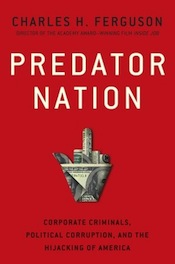
 “The Host and the Parasite” is an extraordinarily important book that traces America’s slide into fascism and subservience to a foreign power.



 Aletho News
 Aletho News