NATO’s Destruction of Ukraine Under the Guise of “Helping”
Propaganda & Proxy Wars
By Glenn Diesen | September 17, 2024
In a recent public event, the heads of the CIA and the MI6 assessed developments in the Ukraine War. The head of the MI6 applauded the invasion of Kursk for having changed the “narrative” of the war, while the head of the CIA also outlined the objective to “put a dent” in the Kremlin’s narrative about the development of the war. There can be no doubt that the invasion of Kursk was an utter disaster for Ukraine and NATO. However, controlling the narrative is imperative as the Western public will support financing the war if they believe they are helping Ukraine and the war can be won.
During the 20-year-long NATO occupation of Afghanistan, public support was also maintained by constructing a narrative of progress and helping the people of Afghanistan. Every week the Western public was reassured by the media that the war effort in Afghanistan was making great progress, until NATO fled in a great hurry as people fell off planes. Much like how the Pentagon Papers exposed the deceit of the Vietnam War, the Afghanistan Papers exposed how the war was an unmitigated disaster. Yet, in both instances, a rosy picture was presented by the media.
A leaked CIA report outlined how they could increase public support for NATO’s occupation of Afghanistan by selling it to the public as helping women. The report revealed that “Afghan women could serve as ideal messengers in humanizing the ISAF role in combating the Taliban”, and framing NATO’s occupation as a crusade for women’s rights could “overcome pervasive scepticism among women in Western Europe towards the ISAF mission”.[1] NATO Secretary-General Jens Stoltenberg even co-authored an article with Hollywood star Angelina Jolie with the title: “Why NATO must defend women’s rights”.[2] Appealing to the best in human nature to mobilise public support for doing the worst in human nature is a good description of war propaganda.
Selling the Ukraine War
The Ukraine War is sold to the public as being merely selfless “help” from NATO for Ukraine to defend itself against an expansionist Russia, motivated solely by territorial acquisition and restoring the Soviet Union. Framing the war as a simple struggle between good and evil is why NATO cannot negotiate or even pursue basic diplomacy, and peace depends on good defeating evil. In what is close to a copyright infringement of “war is peace” in George Orwell’s 1984, NATO Secretary General Jens Stoltenberg asserts that “weapons are the way to peace”.
In political propaganda, it is common to frame a war through a concept that everyone agrees with, such as the need to “help” Ukraine. We all want to help Ukraine preserve its sovereignty, territory and the lives of its citizens. However, instead of discussing what would help Ukraine, such concepts are given a fixed meaning to shut down debates. Any argument can then be framed as either being pro-Ukrainian or pro-Russian. However, what is bad for Russia is not automatically good for Ukraine. Yet, people who can be taught to speak in clichés can be taught to think in clichés. Commentary on NATO policies toward Russia is similarly framed as being pro-Western or pro-Russian, which circumvents an actual discussion about whether these policies are in the West’s interests or not.
Concepts such as “helping Ukraine” can then be filled with any content that often contradicts what “helping” entails, but corresponds with proxy war. When we unpack what NATO frames as “helping Ukraine”, we find that it rarely has the support from the majority of Ukrainians and it almost always ends up with disastrous consequences. So how does NATO “help Ukraine”?
NATO Expansion
NATO dismisses any accusations of an expansionist agenda by presenting itself as a passive actor that merely responds to Ukraine’s desire to join NATO. This narrative conceals the reality that every poll between 1991 and 2014 demonstrates that only approximately 20% of Ukrainians wanted to join NATO. When NATO promised future membership to Ukraine in 2008, 43 percent of Ukrainians considered NATO a threat to Ukraine and merely 15 percent associated NATO with protection.[3] Forty-six percent of Ukrainians answered it was more important to have close relations with Russia, while only 10 percent of Ukrainians supported close relations with the US over Russia.[4] In 2011, a NATO document acknowledged: “The greatest challenge for Ukrainian-NATO relations lies in the perception of NATO among the Ukrainian people. NATO membership is not widely supported in the country, with some polls suggesting that popular support of it is less than 20%”.[5]
Even after Russia seized Crimea in response to the Western-backed coup in 2014, only a small minority of Ukrainians wanted integration with NATO (10.3% in the South and 13.1% in the East).[6] Nonetheless, Ukraine was still pulled toward NATO even though CIA Director Burns had warned already back in 2008 that it would likely trigger a civil war in Ukraine and “Russia would have to decide whether to intervene; a decision Russia does not want to have to face”.[7] In December 2020, former British ambassador to Russia Roderic Lyne similarly warned that attempting to push Ukraine into NATO “was stupid on every level at that time. If you want to start a war with Russia, that’s the best way of doing it. Moreover, any poll in Ukraine showed that two thirds of the Ukrainian public did not want NATO membership”.[8] If the Ukrainians did not want NATO membership and we knew it would trigger a war, why was it “pro-Ukrainian”?
Regime Change in Kiev
In February 2014, NATO countries toppled the government in Ukraine under the guise of supporting a “democratic revolution”. Yanukovich had been elected in what the OSCE had recognised to be a free and fair election, and there was no evidence that Yanukovich would not have stepped down if he had lost in the next election. The Maidan protests did not enjoy democratic majority support from the Ukrainians and even fewer supported a coup.[9] British Foreign Minister William Hague deceived the public by claiming that the toppling of President Yanukovich had been done in compliance with the constitution, contrary to the clear rules in the Ukrainian constitution that specified procedures for removing the head of state.[10] A phone call leaked two weeks before the coup, exposed how Washington was planning the coup and hand-picked the new government that would be installed.[11] NATO supported the toppling of the democratically elected government that attempted to bridge a divided society, and replaced it with a divisive pro-NATO/anti-Russian government. Yet criticise the Western-backed coup in Kiev and you will be branded to be “anti-Ukrainian” and “pro-Russian”. In contrast, the people who set Ukraine on a path to destruction against their will claim to “stand with Ukraine”.
Asserting Administrative Control over Ukraine
On the first day after the coup, the head of Ukraine’s intelligence services in the new government that the US had hand-picked, called the CIA and MI6 to start a partnership for a covert war against Russia.[12] This partnership was a key reason why Russia decided to intervene militarily eight years later in February 2022.[13] The Washington Post reported: “the CIA has spent tens of millions of dollars to transform Ukraine’s Soviet-formed services into potent allies against Moscow”.[14] The US then also strengthened the far-right fascist groups in Ukraine as they functioned as a veto power on any efforts to seek peace with Russia.
Several Westerners took key positions in the Ukrainian government. In 2014, Natalie Jaresko took the position of Finance Minister of Ukraine and received Ukrainian citizenship on the same day as she took the job. Jaresko was a former US State Department official and former Economic Section Chief of the US Embassy in Ukraine. She transitioned from representing American interests in Ukraine, to representing Ukraine. The general prosecutor of Ukraine, Viktor Shokin, complained that since 2014, “the most shocking thing is that all the [government] appointments were made in agreement with the United States”. According to Shokin, Washington’s behaviour indicated that they “believed that Ukraine was their fiefdom”.[15] Biden would later take credit for having fired Ukraine’s General Prosecutor, who had opened an investigation into the Ukrainian energy company Burisma. Three months after the coup in February 2014, Hunter Biden and a close family friend of US Secretary of State, John Kerry, became board members of Burisma.[16]
After Russia invaded in February 2022, the US further strengthened its grip over Ukraine. In 2023, an American transgender who argued that Russians are not human beings became the new spokesperson for Ukraine’s Territorial Defence Forces. As Ukraine’s situation became more precarious and dependence on the West increased, Kiev largely outsourced the post-war reconstruction process to BlackRock and J.P. Morgan to manage the Ukraine Development Fund. The US asserting administrative control over the Ukrainian government was depicted as helping Ukraine with democratic governance and fighting corruption.
De-Russifying Ukraine
Decoupling Ukraine from Russia was a key objective to permanently place Ukraine in NATO’s orbit. The US-orchestrated Orange Revolution in 2004 installed the Yushchenko government that distanced itself from Russia and pursued NATO membership, however, the public eventually reversed this trajectory by electing Yanukovich. At the end of Yushchenko’s presidential term, Newsweek labelled Yushchenko the world’s most unpopular leader with a 2.7 percent approval rating.[17]
US support for the de-Russification of Ukrainian society entailed purging the political opposition, arresting the main opposition leader, banning independent media, banning the Orthodox Church, and purging the Russian language and culture. The first decree by the new Ukrainian Parliament in 2014 was a call to repeal Russian as a regional language. By 2024, Ukraine even had language inspectors to counter the spread of the Russian language.[18] The BBC reported that after the coup, Kiev’s city council was covered with large neo-Nazi banners, the American confederate flag, and portraits of the fascist ally of Hitler, Stepan Bandera.[19] A new nationalist identity was supported based on the far-right in which street names with the shared Russian or Soviet history were replaced with fascists who collaborated with Hitler. To de-Russify a country that lived in the same state as Russia for centuries and shared language, culture and faith, could not possibly coexist with democracy, stability or basic human rights. Such policies caused a deep rift in the social cohesion of the country and caused misery for millions of Ukrainians who became second-rate citizens in their own country.
Yet, these developments could be supported under the guise of “helping Ukraine” to decouple from Russia as a condition for asserting its distinctive identity and sovereignty.
The War Against Donbas
After the coup in 2014, people in Donbas rejected the new government in Kiev that had seized power with the support of the West, as predicted by CIA Director Burns. The first instinct of the new authorities and their backers in Washington was to send the military to destroy the uprising. Yet, the Ukrainian army was weak and regular soldiers were not comfortable with turning their guns on their own population. This problem was overcome by recruiting fascist militias in Western Ukraine, such as Azov, who were happy to kill. Yevhan Karas, the leader of the fascist group C14, informed his audience that the West did not give weapons to help Ukrainians but did so because “we have started a war” that was fulfilling the goals of the West. The nationalists were supported by the West due to their resilience: “because we have fun, we have fun killing and we have fun fighting”.[20]
Kiev launched an “anti-terrorist operation” against Donbas, which killed more than 14.000 Ukrainians. Ignoring all evidence about the involvement of local Ukrainians in the uprising, the Western media largely denied any agency as all fighting was done by “pro-Russian” militias or Russians themselves. Thus, the war against Ukrainians in Donbas could be sold to the Western public as helping Ukraine fight Russian influence.
Sabotaging the Minsk-2 Peace Agreement
The fighting between Kiev and Donbas came to an end with the Minsk-2 peace agreement. Both Poroshenko and Zelensky attempted to implement the Minsk-2 agreement before being opposed by the US-backed far-right.
The BBC reported in August 2015 that a clear majority of 265 MPs out of 450 had supported the first reading of the decentralisation bill to grant more autonomy to Donbas. This sparked a violent veto by the far right, it then reported: ‘Protesters led by the populist Radical Party and the ultra-nationalist Svoboda (Freedom) party—who oppose any concession to the Russian-backed separatists’ clashed with riots police that resulted in the death of a national guard member and over 100 injured.[21] Poroshenko subsequently began to abandon his efforts to implement the Minsk-2 agreement.
Zelensky was therefore able to win a landslide election victory with 73% of the votes in 2019. He won over the Ukrainian public by running on a platform of peace by promising to implement the Minsk agreement to ensure peace After Zelensky became president, he was threatened by the US-backed far right and a protest was arranged in Kiev in which approximately 10,000 people rallied against President Zelensky’s plan to end the war, which was denounced as “capitulation”.[22] After failing to assert control over the far-right groups in the military, Zelensky had to align himself closer with the nationalists and thus rejected peace with Donbas.[23]
The US assisted its government in Ukraine to ignore the UN-approved Minsk-2 peace agreement by building an increasingly powerful Ukrainian army and tying it closer to NATO. Germany and France had negotiated the Minsk-2 peace agreement in 2015, although they later revealed this had been a deceit. Angela Merkel argued in an interview with both Bild and Spiegel that the Minsk Agreement enabled her to buy time for Ukraine to build itself into a powerful and well-fortified country.[24] When her French counterpart, former president François Hollande, was asked about Merkel’s statement that the Minsk-2 peace agreement was merely intended to buy time, he confirmed: “Yes, Angela Merkel is right on this point” and added that the conflict with Russia would be resolved on the battlefield: “There will only be a way out of the conflict when Russia fails on the ground”.[25] Retired German General Harald Kujat, the former head of the German Bundeswehr and former chairman of the NATO Military Committee, later argued that the West’s sabotage of the Minsk agreement was “a breach of international law… it turns out that we are the ones who do not comply with international agreements”.[26]
NATO countries had confirmed for 7 years that the Minsk-2 peace agreement was the only path to a peaceful settlement of the conflict in Ukraine, while concurrently sabotaging the only path to peace. This path to war was done against the overwhelming will of the Ukrainian population, as evidenced by their consistent voting for a peace platform. Why should NATO efforts to overturn the result of the Ukrainian elections to sabotage the peace agreement be considered “pro-Ukrainian” or “helping Ukraine”?
Refusing Russia’s Demand for Security Guarantees in 2021
Russia demanded in 2021 security guarantees to mitigate the threats from NATO’s growing footprint in Ukraine, otherwise, the escalating threat would be resolved by military means. President Biden warned Ukraine that Russia was preparing its military for an invasion, yet he did not want to offer any security guarantees to prevent an invasion.
Kurt Volker, the former US Ambassador to NATO and former US Special Representative for Ukraine Negotiations from 2017 to 2019, even argued that Biden should not make any agreements with Putin as “the best possible outcome is not one of modest agreements and a commitment to ‘predictability,’ but one of a lack of agreements altogether. Success is confrontation”.[27] NATO Secretary General Jens Stoltenberg also acknowledged that halting NATO expansion was required to prevent an invasion: “President Putin declared in the autumn of 2021, and actually sent a draft treaty that they wanted NATO to sign, to promise no more NATO enlargement. That was what he sent us. And [it] was a pre-condition for not invad[ing] Ukraine. Of course we didn’t sign that”.[28] Under a fierce security competition in which Russia feared for its security, “helping Ukraine” would certainly have involved mitigating some of Russia’s security concerns.
Sabotaging the Istanbul Peace Negotiations in 2022
After the Minsk agreement had been sabotaged for 7 years and no security guarantees were forthcoming, Russia decided in February 2022 to use military force to impose a political settlement. On the first day after the Russian invasion, Zelensky confirmed “Today we heard from Moscow that they still want to talk. They want to talk about Ukraine’s neutral status… We are not afraid to talk about neutral status”.[29] On the third day after the invasion, Moscow and Kiev announced they would hold peace talks “without preconditions” in Belarus.[30] Zelensky even suggested later a “collective security agreement” to ensure that the security concerns of both Russia and Ukraine would be met.[31]
The US had other objectives. On the first day after the Russian invasion, Washington rejected peace without preconditions as Russia first had to withdraw all its forces from Ukraine.[32] Washington even suggested that it would not support Ukraine’s effort to resolve the conflict through a compromise as “this is a war that is in many ways bigger than Russia, it’s bigger than Ukraine”.[33] In March 2022, Zelensky argued in an interview with the Economist that “There are those in the West who don’t mind a long war because it would mean exhausting Russia, even if this means the demise of Ukraine and comes at the cost of Ukrainian lives”.[34]
According to the leader of Zelensky’s political party and Zelensky’s advisor, Russia and Ukraine were close to an agreement. Ukrainian Ambassador Oleksandr Chalyi, who participated in peace talks with Russia, confirms Putin “tried everything” to reach a peace agreement and they were able “to find a very real compromise”.[35]
Retired German General Harald Kujat, the former head of the German Bundeswehr and former chairman of the NATO Military Committee, argued that NATO provoked the war and that the US and UK sabotaged the Istanbul peace negotiations as “the West was not ready for an end to the war”.[36] The Turkish mediators confirmed: “I had the impression that there are those within the NATO member states that want the war to continue—let the war continue and Russia gets weaker. They don’t care much about the situation in Ukraine”.[37] The Israeli mediators reached the same conclusion as former Israeli Prime Minister Naftali Bennett recognised “both sides very much wanted a ceasefire” but the West “blocked” the peace agreement as a “decision by the West to keep striking Putin” rather than pursuing peace.[38]
After interviews with American and British leaders, Niall Ferguson reported in Bloomberg that a decision had been made for “the conflict to be extended and thereby bleed Putin” as “the only end game now is the end of Putin regime”.[39] Over the next two and a half years, numerous American political and military leaders expressed their support for the war as it was a great opportunity to weaken Russia as a strategic rival without using and losing American troops. The decision to fight Russia with Ukrainians was nonetheless framed consistently in the media as “helping Ukraine”.
Keeping Ukraine in the War
As Zelensky had argued in March 2022, some of its Western partners preferred “long war because it would mean exhausting Russia, even if this means the demise of Ukraine and comes at the cost of Ukrainian lives”.[40] The Americans were pressuring Ukraine to launch the disastrous counter-offensive of 2023, as a “senior Ukrainian military official recalled, the Americans were nagging about a delayed start”.[41] The New York Times reported that “American officials say they fear that Ukraine has become casualty averse, one reason it has been cautious about pressing ahead with the counteroffensive”.[42]
However, despite the disastrous casualties among the Ukrainians and the failure of the counter-offensive, the Washington Post could report that “for the United States and its NATO allies, these 18 months of war have been a strategic windfall, at relatively low cost (other than for the Ukrainians). The West’s most reckless antagonist has been rocked. NATO has grown much stronger with the additions of Sweden and Finland. Germany has weaned itself from dependence on Russian energy and, in many ways, rediscovered its sense of values. NATO squabbles make headlines, but overall, this has been a triumphal summer for the alliance”.[43] As Ukraine continues to bleed dry in the war of attrition, there are more and more videos on Ukrainian Telegram channels of more aggressive “recruitment” tactics that involve grabbing Ukrainians off the street and throwing them into vans. Yet, the discussions in NATO countries revolve around lowering the conscription age in Ukraine or deporting Ukrainian refugees that can be used to refill the trenches.
If these were our own soldiers dying in the hundreds of thousands, would we not have begun negotiations a long time ago? The incoming EU foreign policy chief has rejected any diplomacy with Russia as Putin is a “war criminal”, while also punishing EU member states such as Hungary for attempting to restore diplomacy and negotiations between Ukraine and Russia. NATO could help Ukraine by using the promise to end expansion as a bargaining chip in negotiations with Russia. Instead, NATO continues to threaten further expansion after the war, which makes any peace agreement impossible. When Ukraine begins to collapse, the US and NATO will likely call for a ceasefire to freeze the frontlines to yet again buy some time to rebuild its Ukrainian army and fight another day.
As we reflect on NATO’s policies toward Ukraine, can we conclude that they have been in the interest of Ukraine or had the support of the Ukrainians? Has it been in the interest of the West? The ability to ask critical questions is prevented by presenting all policies as being either pro-Ukrainian or pro-Russian, in which dissent is effectively criminalised. It is a common phenomenon that when political leaders create propaganda, they often end up deceiving themselves.
…..
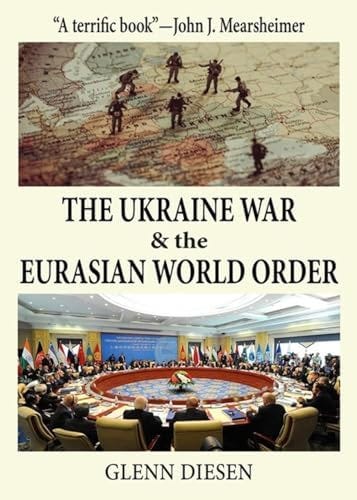
– The text includes excerpts from my book “The Ukraine War and the Eurasian World Order” https://www.claritypress.com/product/the-ukraine-war-the-eurasian-world-order/
[1] WIKILEAKS – – CIA Red Cell Special Memorandum; Afghanistan: Sustaining West European Support for the NATO-led Mission-Why Counting on Apathy Might Not Be Enough, March 11, 2010
[2] Why Nato must defend women’s rights | Jens Stoltenberg and Angelina Jolie | The Guardian
[3] J. Ray and N. Esipova, ‘Ukrainians Likely Support Move Away From NATO’, Gallup, 2 April 2010.
[4] C. English, ‘Ukrainians See More Value in Ties With Russia Than U.S.’, Gallup, 15 February 2008.
[5] 2011 – 172 CDSDG 11 E REV1 – UKRAINE – MALAN REPORT | NATO PA (nato-pa.int).
[6] GALLUP® CORP Template (usagm.gov)
[7] W.J. Burns, ‘Nyet means nyet: Russia’s NATO Enlargement Redlines’, Wikileaks, 1 February 2008.
[8] R. Lyne, ‘The UC Interview Series: Sir Roderic Lyne by Nikita Gryazin’, Oxford University Consortium, 18 December 2020.
[9] BBC, ‘Ukraine’s revolution and the far right, BBC, 7 March 2014.
[10] D. Morrison, ‘How William Hague Deceived the House of Commons on Ukraine’, Huffington Post, 10 March 2014.
[11] BBC, ‘Ukraine crisis: Transcript of leaked Nuland-Pyatt call’, BBC, 7 February 2014.
[12] The Spy War: How the C.I.A. Secretly Helps Ukraine Fight Putin – The New York Times (nytimes.com)
[13] The Spy War: How the C.I.A. Secretly Helps Ukraine Fight Putin – The New York Times (nytimes.com)
[14] G. Miller and I. Khurshudyan, ‘Ukrainian spies with deep ties to CIA wage shadow war against Russia’, The Washington Post’, 23 October 2023.
[15] M.M. Abrahms, ‘Does Ukraine Have Kompromat on Joe Biden?’, Newsweek, 8 August 2023.
[16] P. Sonne and J. Grimaldi, ‘Biden’s Son, Kerry Family Friend Join Ukrainian Gas Producer’s Board’, The Wall Street Journal, 13 May 2014.
[17] O. Matthews, ‘Viktor Yushchenko’s Star Has Fallen’, Newsweek, 13 March 2009.
[18] Language inspectors to start working in Frankivsk | УНН (unn.ua)
[19] BBC, ‘Ukraine’s Revolution and the Far Right’, BBC, 7 March 2014.
[20] A. Rubenstein and M. Blumenthal, ‘How Ukraine’s Jewish president Zelensky made peace with neo-Nazi paramilitaries on front lines of war with Russia’, The Grayzone, 4 March 2022.
[21] BBC, ‘Ukraine crisis: Deadly anti-autonomy protest outside parliament’, BBC, 31 August 2015.
[22] A. Korniienko, ‘Thousands rally in Kyiv against Zelensky’s plan to end war with Russia’, Kyiv Post, 6 October 2019.
[23] J. Melanovski, ‘Ukrainian President Zelensky deepens alliance with far right’, WSWS, 30 April 2021.
[24] A. Osang, ‘You’re Done with Power Politics’, Spiegel, 1 December 2022.
[25] T. Prouvost ‘Hollande: ‘There will only be a way out of the conflict when Russia fails on the ground’’, The Kyiv Independent, 28 December 2022.
[26] Emma, ‘Russland will verhandeln!’ [Russia wants to negotiate!], Emma, 4 March 2023.
[27] K. Volker, ‘What Does a Successful Biden-Putin Summit Look Like? Not What You Think’, CEPA, 2 June 2021.
[28] J. Stoltenberg, ‘Opening remarks’, NATO, 7 September 2023.
[29] V. Zelensky, ‘Address by the President to Ukrainians at the end of the first day of Russia’s attacks’, President of Ukraine: Official website, 25 February 2022.
[30] S. Raskin and L. Brown, ‘Ukraine and Russia to meet for peace talks ‘without preconditions,’ Zelensky says’, New York Post, 27 February 2022.
[31] M. Hirsh, ‘Hints of a Ukraine-Russia Deal?’, Foreign Policy, 8 March 2022.
[32] US Department of State, ‘Department Press Briefing’, US Department of State, 25 February 2022.
[33] US Department of State, ‘Department Press Briefing’, US Department of State, 21 March 2022.
[34] The Economist. ‘Volodymyr Zelensky on why Ukraine must defeat Putin’ The Economist, 27 March 2022.
[35] Breaking the Stalemate to Find Peace: The Russia-Ukraine War – A Geneva Security Debate (youtube.com)
[36] J. Helmer, ‘Whr. Gen. Kujat: Ukraine War is Lost, Germany Now Faces an Angry Russia… Alone’, Veterans Today, 25 January 2023.
[37] R. Semonsen, ‘Former Israeli PM: West Blocked Russo-Ukraine Peace Deal’, The European Conservative, 7 February 2023.
[38] N. Bennett, ‘Bennett speaks out’, YouTube Channel of Naftali Bennett, 4 February 2023.
[39] N. Ferguson, ‘Putin Misunderstands History. So, Unfortunately, Does the U.S.’, Bloomberg, 22 March 2022.
[40] The Economist. ‘Volodymyr Zelensky on why Ukraine must defeat Putin’ The Economist, 27 March 2022.
[41] ‘Miscalculations, divisions marked offensive planning by U.S., Ukraine’, The Washington Post, 4 December 2023.
[42] ‘Troop Deaths and Injuries in Ukraine War Near 500,000, U.S. Officials Say’, The New York Times, 18 August 2023.
[43] D. Ignatius, ‘The West feels gloomy about Ukraine. Here’s why it shouldn’t’, The Washington Post, 18 July 2023.
Bill Gates Defends Free Speech — Unless It Hurts His Investments
By Michael Nevradakis, Ph.D. | The Defender | September 16, 2024
Bill Gates took a shot at free speech, the First Amendment, and everyone who questions vaccines and vaccine safety in a CNBC interview earlier this month.
“We should have free speech, but if you’re inciting violence, if you’re causing people not to take vaccines, where are those boundaries that even the U.S. should have rules? And then if you have rules, what is it?” Gates asked on CNBC’s “Make It.”
Gates made similar remarks this month in an interview with CNET, during which he directly targeted the First Amendment:
“The US is a tough one because we have the notion of the First Amendment and what are the exceptions like yelling ‘fire’ in a theater. … I do think over time, with things like deepfakes, most of the time you’re online you’re going to want to be in an environment where the people are truly identified, that is they’re connected to a real-world identity that you trust, instead of just people saying whatever they want.”
Gates, described by CNBC as “the subject of numerous conspiracy theories,” said he does not have a solution for how to stop the spread of “misinformation.” He lamented his “naivete, that when we made information available, that people would want correct information.”
According to CNBC, Gates, who “spends a lot of his time and money trying to help solve some of the world’s biggest problems,” said that unlike tackling diseases or promoting clean energy, there is no clear path forward for solving what he views as the problem of “misinformation.”
Gates told CNBC any “solution” would involve “rules” for online speech, but he said he isn’t sure what form those rules would take or who would enforce them. Similarly, he told CNET “systems and behaviors” should be in place to target “misinformation.”
“Is there some AI [artificial intelligence] that encodes those rules because you have billions of activity [sic] and if you catch it a day later, the harm is done,” Gates told CNBC. However, he acknowledged that he is sensitive to the argument that restricting online information would be detrimental to free speech.
Gates’ remarks a ‘blatant affront to the First Amendment’
Experts who spoke with The Defender said Gates’ remarks belie a disregard for the principles of free speech and the First Amendment.
Author Naomi Wolf, Ph.D., co-founder and CEO of DailyClout, told The Defender Gates “should re-read the Constitution,” adding:
“No individual, and certainly not the state, has the authority in our system to be the arbiter of what can be read or said. Our First Amendment has very few and limited exceptions, such as threats of violence. ‘Misinformation’ is not one of them. History shows that censorship never works ultimately to repress the truth.”
Other experts cited Gates’ questionable track record on free speech and issues such as vaccines. Epidemiologist M. Nathaniel Mead told The Defender Gates’ “post-2020 track record on this issue is well-documented.”
Mead said:
“He tried to sell us on the ‘vaccine-only’ solution to COVID by falsely claiming that the modified mRNA injections would avert infection and transmission, thereby ending the pandemic. He also openly urged media to disparage as ‘conspiracy theorists’ or anyone who questioned mandates for masking, social distancing, lockdowns, PCR testing and, of course, the so-called vaccines.”
Mead called this “a rather blatant affront” to the First Amendment. “Given his track record with public health communications, Gates is being grotesquely disingenuous when he speaks about wanting to protect free speech.”
Mead suggested Gates relies on control over narratives in the media to further his promotion of — and investments in — vaccines. He said:
“Bill Gates has a vested interest in ensuring that counternarrative information, or what he calls ‘misinformation,’ is eliminated. That’s because it interferes with his Bio-Pharma agenda and what appear to be authoritarian aspirations as well, given his efforts to impose vaccine passport requirements internationally and to restrict free speech through his control of many news media channels, having given over $300 million of his own funds in recent years to support ‘independent’ media platforms such as NPR, PBS and The Guardian.
“Since the mass media relies heavily on Big Pharma advertising to maintain operations, it has largely abandoned the traditional skepticism of government directives, instead aiding in the suppression of dissenting viewpoints. Anyone posing counter-establishment narratives is a ‘problem’ from Gates’ perspective.”
‘Afraid that when their plans are exposed, people will resist’
Others argued that Gates’ reputation was hurt as a result of his outspoken support for and investments in COVID-19 vaccines and mRNA technology — and can only be restored through censorship of online speech.
“To restore his reputation from mad scientist back to computer guy, Gates has one hope: censorship. Indeed, the vast amount of censorship needed for that job is basically to wipe the internet,” attorney Greg Glaser told The Defender.
Catherine Austin Fitts, founder and publisher of the Solari Report and former U.S. assistant secretary of Housing and Urban Development, cited a recent survey showing that a significant percentage of the population believes COVID-19 vaccines are deadly.
“A recent Rassmussen survey published in June 2024 reported that 33% of American adults agree with the statement: ‘The [COVID-19] vaccine is killing people, and is killing large numbers of people,’” Fitts said.
“If Mr. Gates wants to stop misinformation, his first step should be to stop financing, speaking or republishing misinformation that results in the poisoning of our children,” Fitts added.
For Seamus Bruner, author of “Controligarchs: Exposing the Billionaire Class, their Secret Deals, and the Globalist Plot to Dominate Your Life,” Gates’ support for stopping “misinformation” is tied to his support for vaccines and digital ID.
Bruner, director of research at the Government Accountability Institute, argued that the “systems and behaviors” Gates advocated include “a de facto digital ID system” that would “track and trace our precise digital footprint — what we say and do online.”
Bruner said:
“Gates and the other controligarchs are pouring billions of dollars into digital ID efforts, and they plan to use misinformation — particularly related to vaccines — to do it.
“He wants to control what we put in our bodies. Now, he wants to control what we’re allowed to put into our minds — what we think — by controlling what we are allowed to say. The reason ‘misinformation’ is a ‘problem’ for controligarchs like Gates is simple: They are afraid that when their plans are exposed, people will resist.”
Gates making an ‘emotional appeal to manipulate public opinion’
CNBC’s interview with Gates came just days before the release of a five-part Netflix docuseries, “What’s Next? The Future With Bill Gates.”
The series will premiere on Sept. 18 — the same day as the documentary “Vaxxed 3: Authorized to Kill” will be released. “Vaxxed 3” features excerpts from thousands of interviews with people about vaccine injuries and deaths people allege were caused by hospital COVID-19 treatment protocols.
According to CNBC, in one episode of “What’s Next?” Gates tells his daughter Phoebe he feels bad for failing to stem the spread of “misinformation.”
“Hearing my daughter talk about how she’d been harassed online … brought that into focus in a way that I hadn’t thought about before,” Gates told CNBC.
According to CNBC, “Phoebe Gates spoke out about what she called ‘the misconceptions and conspiracy theories’” — “including racist online commentary about one of her ex-boyfriends, who is Black” — and about her family in an interview with The Information.
Gates told CNBC, “We’ve handed this problem to the younger generation,” referring to “misinformation.”
Mead accused Gates of trying to conceal his support for censorship by eliciting an emotional response.
“Calling attention to the cyber harassment of his daughter has less to do with misinformation than with predatory and abusive online behaviors,” Mead said. “But Gates seems to be getting desperate, and his attempt to make this kind of illogical linkage is an emotional appeal to manipulate public opinion.”
Mead said Gates used similar emotional tactics to equate questioning vaccines with “inciting violence.” He said:
“In the video clip teaser, we hear Gates say we should have free speech and then attempt to obliquely link ‘inciting violence’ with ‘causing people not to take vaccines.’
“When he juxtaposes the incitement of violence with causing people not to take vaccines, he’s resorting to the most basic propaganda tactic, that of emotional manipulation.”
Such plays on emotion also represent a concerted effort to target young people in particular, according to Glaser:
“One of the most surprising things I’ve learned from interviewing young people is they generally don’t like to fact check. Scrolling is way more fun. They want verification processes done for them, and they are content to rely on their peer group’s perception of the information. That’s the phenomenon that people like Gates are trying to exploit.”
Instead of censorship, a focus on allowing free speech to thrive?
“Misinformation is becoming more common,” CNBC reported, citing developments such as AI chatbots that “make it easier to generate and spread falsehoods quickly,” and a January World Economic Forum report that said “misinformation” is the top global risk for the next two years.
While citing AI as a prime driver of “misinformation,” CNBC cited a 2023 interview with Beth Goldberg, head of research and development at Jigsaw, a Google unit, who said researchers are attempting to develop AI tools to identify what CNBC described as “misinformation and toxic speech online.”
But in a blog post last year, Gates argued that AI’s ability to fight “misinformation” would be imperfect.
“Someone finds a way to detect fakery, someone else figures out how to counter it, someone else develops counter-countermeasures, and so on. It won’t be a perfect success, but we won’t be helpless either,” Gates wrote.
But Glaser said society should focus on creating the conditions for free speech to flourish.
“Free speech does not exist in a vacuum, but rather its quality is a measure of the character of people speaking and listening. This is the root of the issue that censorship cannot address. Only as we improve the character and morality of our societies will free speech truly thrive,” Glaser said.
“The largest danger to an organic human system — like a free market — is inorganic authoritarianism,” Glaser added. “Bill Gates teaming up with the United Nations to impose a global order is the picture of inorganic authoritarianism.”
This article was originally published by The Defender — Children’s Health Defense’s News & Views Website under Creative Commons license CC BY-NC-ND 4.0. Please consider subscribing to The Defender or donating to Children’s Health Defense.
‘Follow the Science’: Have the Bad Guys Finally Gone Too Far?
By Sharyl Attkisson | The Defender | September 9, 2024
In this exclusive excerpt from her new bestseller, “Follow the Science: How Big Pharma Misleads, Obscures, and Prevails,” journalist Sharyl Attkisson details how public health agencies and some public universities are so captured by commercial interests that they function as little more than an advertising arm of Big Pharma.
In the case of vaccine makers, success comes with inventing shots that can be added to the list of what’s required for schoolchildren. Better yet, invent shots that the public can be convinced to get, repeatedly, for the rest of their lives. Instant billion-dollar blockbuster!
This has led to a questionable dynamic where the one-time standard that vaccines were required to meet — that they must be vital, safe, and effective — fell by the wayside. Instead the government aggressively serves as promoter of dubious versions that may not be necessary, may not work very well, and come with the risk of serious side effects.
In 1975, the cost of vaccinating a child from birth to age six was $10 (in 2001 terms, adjusted for inflation). As more vaccines were added to the list, the cost ballooned to $385 in 2001. Today it’s thousands of dollars. The costs are largely hidden to us since we get inoculated for free or with minimal out-of-pocket payments. But make no mistake, we’re paying the bills in the form of insurance premiums, and tax dollars to state and federal programs that provide vaccines at little to no direct cost to the patient. Vaccine companies are reaping enormous profits.
Sometimes getting and keeping a vaccine on the market requires sleight of hand. The Centers for Disease Control (CDC), our premier infectious disease federal health agency, is happy to give a little help to its vaccine industry partners or, as the CDC calls them, “stakeholders.” The agency’s best and brightest can even adjust the veritable meaning of the word “vaccine.”
The CDC used to define “vaccines” quite simply as agents that “prevent disease.” But in 2021, that had to be changed. It became undeniable that Covid vaccines didn’t prevent the disease (or transmission, or even illness). Logic might suggest that the Covid vaccines would have to be withdrawn from the market. After all, they didn’t even meet the definition of a vaccine. Instead the CDC quietly redefined the word “vaccine” to make the Covid shots seem successful after all.
On the CDC’s vaccine web page, sometime between September 1 and 2, 2021, somebody removed a key phrase from the definition. On September 1, the CDC defined a vaccine as “a product that stimulates a person’s immune system to produce immunity to a specific disease, protecting the person from that disease.” But on September 2, the phrase “protecting the person from that disease” was removed, like it never even happened. Now, the CDC says, vaccines merely “stimulate the body’s immune response.”
Think of it. The CDC unilaterally redefined two hundred years’ of the world’s understanding of what constitutes a vaccine, without so much as an explanation, public discussion, hearing, or vote. Once you understand that our top, trusted medical authorities are willing to sneakily move goalposts and change meanings of words to protect a market, you’re a long way to beginning to understand how deep the corruption goes.
It’s one thing to be barraged by marketing to convince you to buy a shiny new car. But it’s quite another to get sold a bill of goods by our trusted health experts when it comes to our most precious possession. Our increasingly elusive quest for good health has become a commodity to be bought and sold by today’s snake oil salesmen and their coconspirators, but on a far grander scale …
In their defense, pharmaceutical companies are doing exactly what they were built to do: make money. The thought that they’re somehow different from other multinational corporations, that they are motivated by altruism and can be trusted to be honest about the failings of their own products, is a fallacy. There’s no law that requires them to put patient health ahead of profits. There’s nothing that forces them to stop promoting a pill even if they secretly know it doesn’t work or has dire side effects. It could be argued they have a fiduciary duty to try to downplay or even cover up negative information about their products if it could hurt their bottom line.
Our sick and broken system is the fault of politicians, federal agencies, the medical establishment, and the media. They have a far different responsibility than private drug companies. But they’ve allowed themselves to be so captured by commercial interests that they function as little more than an advertising arm of the pharmaceutical industry …
It’s grown exceedingly common that when patients get sick during a study, instead of the drug company considering the illness to be a possible side effect — which is what should be the response — they seek to explain it away. They blame anything other than the experimental medicine.
Another blatant example of this twisting of science can be found in a May 2023 study to look at whether serious neurological, or brain and nerve, disorders were connected to Covid-19 vaccines. The study was entitled, “Observational Study of Patients Hospitalized With Neurologic Events After SARS-CoV-2 Vaccination.” It was published in Neurology Clinical Practice.
The first problem I see when reviewing the study is that, although some side effects don’t surface until months or years after a medicine is taken, the study scientists drew their conclusions based on a mere six-week period. They looked at only 138 people hospitalized after a Covid vaccination, and a limited number of neurological conditions, including stroke or blood clots, encephalopathy or brain damage, seizure, and intracranial bleeding.
But what really captures my attention is the study’s nonsensical conclusion. It states that since all 138 vaccinated, hospitalized patients had “risk factors” or “established causes” for their neurologic illnesses, such as high blood pressure for stroke victims, this proves the Covid vaccines are safe. “All cases in this study were determined to have at least 1 risk factor and/or known etiology accounting for their neurologic syndromes. Our comprehensive clinical review of these cases supports the safety of mRNA COVID-19 vaccines,” reads the study discussion.
You don’t have to be a scientist to detect a serious flaw in their reasoning. It’s like claiming that an old person who falls down the stairs and breaks a hip — was injured by being old, and it had nothing to do with the fall down the stairs. Having high blood pressure to begin with doesn’t mean if you have a stroke after Covid vaccine, you can automatically rule out the vaccine as having an impact. In fact, you should immediately ask whether the vaccine might prove riskier to people with preexisting vulnerabilities.
Surely even a novice scientist should know this. So why did this ridiculous study get published? It looks suspiciously as if someone is trying to dispel growing safety concerns about the vaccines. I decide to find out who.
I learn that the study was conducted at Columbia University Irving Medical Center and New York–Presbyterian Hospital in New York City. It was funded by taxpayer money through the CDC. I email the primary study author, Dr. Kiran Thakur: “The study seems to imply that because people who suffered certain neurological events shortly after Covid vaccination had risk factors, it exonerates the vaccines from blame. But did the authors consider that people with existing risk factors could be at greater risk for vaccine adverse events?”
Instead of answering the question, Dr. Thakur replies, “Can you clarify the purpose of your questions (to be published, personal inquiry or otherwise).” When I reply that her responses might be published, she goes dark on me. When I persist in asking her to respond, she finally answers: “Declining, thank you.” Why isn’t a legitimate scientist happy to answer a simple question about her work? What’s the big secret?
Reaching a dead end with Dr. Thakur, I query the medical journal’s editorial staff. They loop me back to Dr. Thakur, saying only she can answer my questions. Shouldn’t the journal be asking the same questions?
Next I turn to Columbia University. I ask to see the study materials and related communications. I want to learn Who was behind this study, and did the peer reviewers or anybody else flag the obvious flaws? It’s a reasonable request because we, the public, funded the research and own the information. Besides, a basic tenet of scientific research dictates that there should be transparency in data and all aspects of studies. In fact, a study isn’t considered legitimate unless the data is available so that it can be verified and replicated by others with the same results.
But Columbia University stalls in responding to my emails. So I file a formal Freedom of Information Act (FOIA) request for the material. More time passes, and Columbia informs me that it’s a private institution and it doesn’t have to follow Freedom of Information Act law. I appeal on the basis of scientific transparency. Why does Columbia want to keep details of an important, publicly funded study secret? Isn’t that contrary to tenets of sound science? My appeal falls on deaf ears. University officials tell me they’ll only respond to validly issued and served subpoenas or court orders, and that “[s]ubpoenas to the University must be served on the Office of the General Counsel.”
Think of the audacity. A private university can take our tax money for a study, then refuse to answer questions about it because they’re a private university. To me it looks like the CDC can legally launder taxpayer dollars to third parties to produce what amounts to propaganda, then cover their tracks under a shroud of secrecy.
Next, I decide to file a FOIA request directly with the CDC, which is undeniably subject to the Freedom of Information Act. However, I know from experience that federal agencies spin the FOIA process into a tool to obfuscate. They rarely follow the provisions requiring them to turn over materials within twenty working days. And punishment for their violations is virtually nonexistent.
Sure enough, the CDC sits on my FOIA request for forty-two days before emailing to let me know they haven’t yet begun processing my request. They say I need to be much more specific, or they won’t consider responding. This raises one of the newer tricks federal agencies use to make it tougher for us to access information we own. They require FOIA requests to be impossibly precise. In the past, it was enough for a requester to provide a topic and date range. Agencies would search computer records using keywords. But now they claim they can’t do that.
The CDC FOIA officers now demand that I somehow discover and present them with names of each specific, archaic department and subdepartment that should be searched and the title of any documents I’m looking for. They further insist I provide names and titles of each person within those departments whose email accounts should be searched. And I must give them the number of the grant that awarded the taxpayer funds for the study. Problem is, I have no way to know any of that. The grant number was strangely omitted from the published study, and I have no clue how I would find names of the people who might have records, or what departments they work in. That’s a key part of what the FOIA response would reveal. Using these avoidance tactics, a federal agency can heighten their odds of keeping public documents secret …
There may be a silver lining. The bad guys finally went too far.
With Covid: the disinformation, intolerance for dissent, shutdowns, mandates, forced or withheld medical treatment, mass firings, and attacks upon tens of thousands of scientists sparked the formation of a diverse coalition. This coalition includes a mix of liberals, conservatives, and nonpartisans. It’s made up of freethinking parents, students, doctors, nurses, researchers, elected officials, and celebrities.
Many had never before questioned public health narratives or their doctors. Most had blindly supported them. But today, members of this new coalition find themselves probing widely pushed orthodoxy on Covid and beyond, rightly asking what else the media and top public health officials have misled us on.
Now, redemption from the grasp of those who seek to control our health and our lives may come through a collective awakening that’s already begun.
“Follow the Science: How Big Pharma Misleads, Obscures, and Prevails,” by Sharyl Attkisson, is now available at bookstores everywhere.
This article was originally published by The Defender — Children’s Health Defense’s News & Views Website under Creative Commons license CC BY-NC-ND 4.0. Please consider subscribing to The Defender or donating to Children’s Health Defense.
Now It Is the White House that Is Smearing Tucker Carlson
By Paul Craig Roberts | Institute for Political Economy | September 8, 2024
NY Times, CNN, and WH Press Secretary Bates are Smearing Tucker Carlson as a Hitler apologist in an Attempt to Shut Him Down.
Tucker interviewed Darryl Cooper whose view of World War II appears to be based in the 50-year research of historian David Irving. It is not the official view established by court historians. Consequently, the “White House condemns Tucker Carlson’s ‘Nazi propaganda’ interview as ‘disgusting and sadistic insult.’”
In his well researched books, World War II historian David Irving reported that whereas he found evidence that Jews were murdered in the hundreds of thousands, he cannot find evidence of an organized Holocaust. He said that from all the documents he could find and force out of sealed archives, the crimes against the Jews resulted from decisions unrelated to an organized plan of extermination. No historian has ever found a Nazi plan for Jewish extermination. Such a massive undertaking as a Holocaust could not be undertaken without a bureaucratic organization and an organized plan, but there is no evidence of any such organization and plan. Hitler repeatedly said that the Jewish question would be settled after the war. He spoke of relocating Jews to Madagascar. Later with the initial success of his invasion of the Soviet Union, Hitler spoke of relocating Jews to the eastern part of the Soviet Union that he would leave to Stalin.
Reporting Irving’s findings does not make Irving or me or anyone an anti-semite or holocaust denier. Irving simply reported what he found, and I merely reported what Irving found. It sounds like that is what Darryl Cooper is doing on Carlson’s program. Ron Unz, himself a Jew, has raised his own questions about Holocaust evidence in the Unz Review. Western civilization works by raising questions, not by imposing dogmas.
If all research results are denounced by those who don’t like the findings, how is truth established? It seems to me that Jews hurt their case by shouting down with name-calling and threats against reputations and careers every time they hear something that they don’t like or that doesn’t fit the narrative. If the Holocaust story is accurate, it will stand on its own feet without name-calling and enemies lists.
The indoctrinated notion of the unparalleled evil of Nazi Germany rests more on war propaganda than in fact. Irving’s books, Churchill’s War and Hitler’s War are the most researched and most honest books about the war. On the basis of an honest rendition of the record, Churchill comes across as a worse war criminal than Hitler. Read the two books, and make your own decision. Why rely on ancient war propaganda?
The widespread view that Hitler started World War II and intended to conquer the world is total ignorance kept alive by court historians. World War II was started by the British and French when they declared war on Germany. What Hitler was doing in Poland was the same as Putin is doing in Ukraine. What Putin is doing is protecting Russian people, who found themselves included in a foreign country by the political decisions made by others than themselves, from persecution and slaughter by Ukrainians.
In Poland Hitler was protecting German people, who were stuck into Poland by decisions made by others than themselves, from persecution, dispossession, and death by the Polish. Hitler’s protection of German people was no business of the British any more than Putin’s protection of Russians is any business of the US.
No one has answered David Irving’s findings. They just call him names. That tells you where the stronger case resides.
I am not a WW II historian and neither is Tucker Carlson, but we both wonder why views are suppressed if they can be factually disproved.
The propagandistic way in which WW II has been presented for 83 years has had major harmful effects on countries, their populations, foreign affairs and world history. Those who bring balance to the story should be celebrated, not demonized.
If you will notice, during the 21st century in every country in the Western world what can be discussed or even mentioned has been massively narrowed. We have reached the point where almost anything said or written is hate speech, racist, misogynist, a threat to democracy, offensive, insensitive, anti-semitic, or Russian propaganda. The great writings in the English language, such as Shakespeare, cannot be read in schools because they violate strictures that have been imposed on language. Bigots now dictate our use of language. Official narratives dictate our understanding of history and current events. A world is being created for us in which facts and truth are objectionable.
What Does a Fraudulent Vaccine Safety Study Look Like?
By Dr. William H. Gaunt | The Defender | August 26, 2024
New vaccines should be proven safe before they are accepted onto the Centers for Disease Control and Prevention (CDC) vaccine schedule.
Here is what is actually happening: Vaccine companies are doing studies that claim to demonstrate the safety of new vaccines but are carefully designed and conducted to intentionally hide the toxicity of these vaccines.
To see how this is done, read on.
What does an honest vaccine safety study look like?
An honest safety study must have a test group that gets the vaccine and a control group that gets a harmless placebo. Injuries and deaths are compared in the two groups.
If the test group has many more adverse events than the placebo control group, the vaccine is not safe.
Most people would be shocked to learn that none of the vaccines on the CDC vaccine schedule have been safety tested in this way.
What does a fraudulent vaccine safety study look like?
Rule No. 1 for conducting a fraudulent study: Do not have a placebo control group. Here is where the fraud is happening: The “control group” is deliberately given something that is as toxic as the vaccine being tested. It can be an older vaccine or the vaccine ingredients minus the antigen.
The results will show that the injuries and deaths are similar in both groups. That is because they are both receiving toxic ingredients. The new vaccine is then illogically declared safe.
If there is no placebo control group, the toxicity of the vaccine is hidden. This is both clever and diabolical. Can you see it?
The public is unaware of this subterfuge
“Turtles All The Way Down: Vaccine Science and Myth” is the most thorough and brutally honest book ever written about vaccines.
The authors tell us on page 81:
“As we have seen in this chapter, vaccine trials are designed and performed in such a way as to ensure that the true extent of adverse events is hidden from the public. There is not a single vaccine in the US routine childhood vaccination schedule whose true rate of adverse events is known.”
Two examples of how unsafe toxic vaccines got on the CDC vaccine schedule
Prevnar-13 (a pneumococcal vaccine) was given to the test group of children and the “control group” was given the older Prevnar vaccine.
Severe adverse events occurred in 8.2% (one out of every 12 children) in the test group. Severe adverse events also occurred in 7.2% (one out of every 14 children) of the control group.
What percent of a placebo control group would have had severe adverse events? Probably 0% because they would have received something harmless. We can’t know because the authors of this study chose not to have a placebo control group.
The Prevnar-13 vaccine was declared “safe” and was approved for use by the U.S. Food and Drug Administration (FDA). You don’t have to be a doctor or scientist to suspect that both the Prevnar and the Prevnar-13 vaccines are unsafe. “Turtles All The Way Down” covers this fraudulent vaccine safety study on pages 60 and 61.
Here is the second example, which the authors describe on pages 77 and 78:
“In one of the DTaP vaccine trials, 1 in every 22 subjects in the trial group was admitted to the hospital. A similar hospitalization rate was also reported in the ‘control group’ (which received the older-generation DTP vaccine).”
Again, there was no placebo control group. Both vaccines appear to be decidedly unsafe yet the newer DTaP vaccine made it onto the CDC vaccine schedule. DTP and DTaP vaccines contain antigens for diphtheria, tetanus and pertussis.
Why is this happening?
Ultimately, the answer is greed. It is enormously profitable to get a vaccine on the CDC schedule. Vaccine companies will do whatever it takes to accomplish this. If it takes a little scientific fraud, so be it.
The vaccine companies are cheating on vaccine safety studies by omitting placebo control groups, thereby lying about the safety of vaccines. The FDA and CDC are complicit because they are doing nothing to stop this fraud.
Corporate capture or regulatory capture
The FDA and CDC are regulatory agencies. The original function of these agencies was to protect the public from dangerous drugs and vaccines.
Unfortunately, these agencies have been captured by Big Pharma. They no longer focus on protecting the public. They focus on protecting and promoting the interests of pharma companies.
Can we compare the health outcomes of vaccinated versus unvaccinated children?
Theoretically, yes but not if we expect our health authorities or pharma companies to do these types of studies. Chapter 6 of the “Turtles” book is titled “The Studies That Will Never Be Done.”
On page 207 the authors tell us:
“No study that compares the health of vaccinated children to that of unvaccinated children has ever been done by the medical establishment.”
If such a study showed that vaccinated children are healthier than unvaccinated children, it would have been published and been headlined in every newspaper and been the lead story on the nightly news. That hasn’t happened. We suspect that such a study has been done internally at the CDC.
The unwanted conclusion that they won’t allow to see the light of day is that unvaccinated children are far healthier than vaccinated children. This study has likely been done and buried instead of published. Such a study is verboten because it would be a disaster for the vaccine companies.
Private studies show that unvaccinated children are healthier
Here are two privately funded studies:
- “Relative Incidence of Office Visits and Cumulative Rates of Billed Diagnoses Along the Axis of Vaccination” by Dr. Paul Thomas and James Lyons-Weiler, Ph.D.
- “Analysis of health outcomes in vaccinated and unvaccinated children: Developmental delays, asthma, ear infections and gastrointestinal disorders” by Brian S. Hooker, Ph.D., and Neil Z. Miller.
Another great resource is the book “Vax-Unvax: Let the Science Speak,” by Robert F. Kennedy Jr. and Hooker. They report on many studies where unvaccinated children have better health outcomes compared to vaccinated children.
Science is for sale
The book “Science for Sale: How the US Government Uses Powerful Corporations and Leading Universities to Support Government Policies, Silence Top Scientists, Jeopardize Our Health, and Protect Corporate Profits” by David L. Lewis, Ph.D., tells the story of how corporate profits can frequently trump true science.
This happens in many industries, not just in vaccines. It is not unusual for government agencies to take the side of the corporations. The author was fired from the EPA for revealing details of how this happens.
The health of the public is subverted by powerful corporations in these situations. Does that sound familiar? Lewis doesn’t cover vaccines in his book except in Chapter 7 where he describes how Dr. Andrew Wakefield was unjustly crushed for questioning the safety of the measles-mumps-rubella or MMR vaccine.
Are vaccines the main cause of autism?
If the answer is yes, that would be very bad for vaccine companies. The “Turtles” authors point out on page 209 how our health authorities are trying hard not to find the correct answer to this question:
“Over the past 15 years, dozens of epidemiological studies have been conducted examining the association between vaccines and autism, but not a single one compared the rate of autism in fully vaccinated and fully unvaccinated children.”
If they actually wanted to answer this question, they would do vax/unvax studies. Such studies are easy to do but our health authorities refuse to do them.
Why do health authorities favor epidemiological studies?
The “Turtles” authors provide the answer on page 198:
“Epidemiological studies are the tool of choice for health authorities and pharma companies to maintain a facade of vaccine safety science. They are cheap, relatively simple to conduct, and, above all, their results are easily manipulated.”
It is entirely possible to get an epidemiological study to conclude whatever its authors want it to conclude. These types of studies are not the gold standard.
What caused the drastic decline in infectious disease mortality?
We are supposed to believe that vaccines have been our saviors. Not true. The huge decline in infectious disease mortality was largely due to sanitation, hygiene and improved nutrition (the availability of fresh fruits and vegetables year-round).
The “Turtles” authors make this clear on page 293. They reference a report by the American Institute of Medicine, which states:
“The number of infections prevented by immunization is actually quite small compared with the total number of infections prevented by other hygienic interventions such as clean water, food, and living conditions.”
The claim that vaccines alone saved us is false and our health authorities know it is false.
Below is a simple graph that causes cognitive dissonance in those who believe that vaccines saved us from high rates of infectious disease mortality.

We can clearly see that deaths from measles were reduced to near zero by the interventions mentioned above BEFORE the measles vaccine was introduced.
Similar graphs for other infectious diseases are shown in the book “Dissolving Illusions: Disease, Vaccines, and the Forgotten History” by Dr. Suzanne Humphries and Roman Bystrianyk. The mortality rate for all infectious diseases was dropping rapidly before vaccines were introduced.
Do you smell a rat?
Yes. And it has been dead for quite a while. We have been bamboozled (deceived, cheated, swindled and defrauded).
Vaccines are now doing far more harm than good by causing a huge increase in chronic diseases like autism, asthma, attention-deficit/hyperactivity disorder or ADHD, Type 1 diabetes, learning disabilities, seizures and much more.
It is way past time to use honest unbiased science to sort it out. Imagine what will happen when honest science is applied to vaccine safety studies.
Here is how the ‘Turtles’ authors sum it up
On page 518:
“Science belongs to the people. It belongs to humanity, not to corrupt government agencies and pharmaceutical giants who collude to rewrite the principles of science in order to continue the decades-long cover-up of their crimes against humanity.
“The magnitude of these crimes is enormous — these entities are in way too deep to ever be able to admit any wrongdoing. They will do whatever is necessary to protect the great vaccine hoax. For them, it is a matter of life and death — literally. And so it is for us.”
The lie that vaccines are safe and effective and that serious adverse events are exceedingly rare is still believed by many people — yet trust in pharma and our coopted regulatory agencies is now rapidly eroding. For example, only a tiny percentage of people are continuing to take the COVID-19 vaccine boosters.
Also, the percentage of parents who are choosing to obtain an exemption to vaccines for their children is increasing. This can be done in almost all states.
It is becoming obvious to a growing number of people that we are being intentionally misled regarding vaccines and vaccine safety.
Want More Freedom of Speech? Try Less Government.
By Jonathan Turley | August 15, 2024
Below is my column in The Hill on my call for a bill that would bar federal funding of any program and grant to censor, blacklist, or target individuals or sites based on their content. It is time to get the U.S. government out of the censorship business. The column discusses the proposal in my new book, “The Indispensable Right: Free Speech in an Age of Rage” to block any further funding for the current system of corporate, academic, and government programs targeting opposing or dissenting views.
Here is the column:
It is time to get the United States out of the censorship business for good.
In the last three years, the House of Representatives has disclosed a massive censorship system run in part with federal funding and with coordination with federal officials. A federal court described this system as truly “Orwellian.”
The Biden Administration has made speech regulation a priority in targeting disinformation, misinformation or malinformation. President Joe Biden even said that companies refusing to censor citizens were “killing people.”
His administration has now created an anti-free speech record that is only rivaled by the Adams Administration, which used the Alien and Sedition Acts to arrest political opponents.
Jen Easterly, who heads the Cybersecurity and Infrastructure Security Agency, is an example of how speech controls and censorship have become mainstream. Her agency was created to work on our critical infrastructure, but Easterly declared that the mandate would now include policing “our cognitive infrastructure.” That includes combating “malinformation,” or information “based on fact, but used out of context to mislead, harm, or manipulate.”
I have testified for years about the censorship system. For much of that time, Democrats insisted that there was no proof of any coordination or funding from the government. Such evidence did indeed exist, but Democrats worked to block any investigation to confirm what we already knew about government officials targeting individuals and groups for throttling, bans, and blacklisting.
Then Elon Musk bought Twitter. The release of the Twitter Files destroyed any plausible deniability of the government’s role in this censorship system. Various agencies had employees working with social media companies to target those with opposing or disfavored views. At the same time, we learned of grants from the federal government supporting blacklisting and targeting operations.
That includes efforts to quietly choke off the revenue of disfavored sites by pressuring advertisers and donors.
While companies like Facebook have continued to fight to conceal their coordination with the government, the Twitter Files pulled back the curtain to expose the system. Indeed, Democrats largely abandoned their denials and turned to full-throated defenses of censorship, even calling free speech advocates “Putin-lovers” and “insurrectionist sympathizers.”
In 1800, Thomas Jefferson defeated John Adams in the only election where free speech was a primary issue for voters. It should be again. Vice President Kamala Harris is known as a supporter for these censorship and blacklisting operations. She can now defend that record and convince Americans that they need to have less free speech.
This debate should ideally focus on one simple legislative proposal. In my new book, I suggest various measures that can regain the ground that we have lost on free speech. One such measure is a federal law that would ban any federal funding of any offices or programs (government, academic, or corporate) that rate, target, censor, throttle, or seek to take adverse action against individuals or groups based on their viewpoints in public forums or social media.
There can be easy exceptions to this ban for individuals or groups engaging in criminal conduct or unlawful foreign interference with elections. Threatening individuals or trafficking in child pornography constitute conduct, not speech. They are criminal acts under the federal code.
Nothing in this law would prevent the government from speaking in its own voice. If Secretary of Homeland Security Alejandro Mayorkas wants to challenge claims made about him or his agency, he can do so on the agency website or make his case to the media. That is the essence of free speech. What he cannot do is create a Disinformation Governance Board to regulate the speech of citizens or groups.
In my prior testimony to Congress, I warned about the use of what I called “censorship by surrogate” through which agencies did indirectly what they are barred from doing directly under the First Amendment.
This new law will not put an end to the burgeoning anti-free speech movement. It will not end the new market for groups making millions in seeking to silence or strangle sites with opposing views. However, it will create a wall of separation of the government from censorship systems.
It would also offer a simple and clear line for the 2024 election. Candidates will have to take sides on free speech. If candidates like Harris want to continue to support the government in blacklisting or censoring citizens, they should own it. We spent years of politicians engaging in cynical denials of the government’s role in censorship. If these politicians are “all in” with censorship, then they should be honest about it and let voters make the same choice that was made in 1800.
With billions to play with and enabling allies in Congress to conceal federal operations, speech regulation is an irresistible temptation for the government. We have seen how this temptation quickly becomes an insatiable appetite for government officials seeking to silence rather than answer critics.
Let’s get our government out of the business of rating, throttling blacklisting, and censoring citizens. It is time to pass a free speech protection act.
Jonathan Turley is the Shapiro Professor of Public Interest Law at George Washington University. He is the author of “The Indispensable Right: Free Speech in an Age of Rage” (Simon & Schuster).
This op-ed is part of The Hill’s “How to Fix America” series exploring solutions to some of the country’s most pressing problems.
‘The Movement is Winning.’: Polling Shows Drop in Support for Free Speech
By Jonathan Turley | August 2, 2024
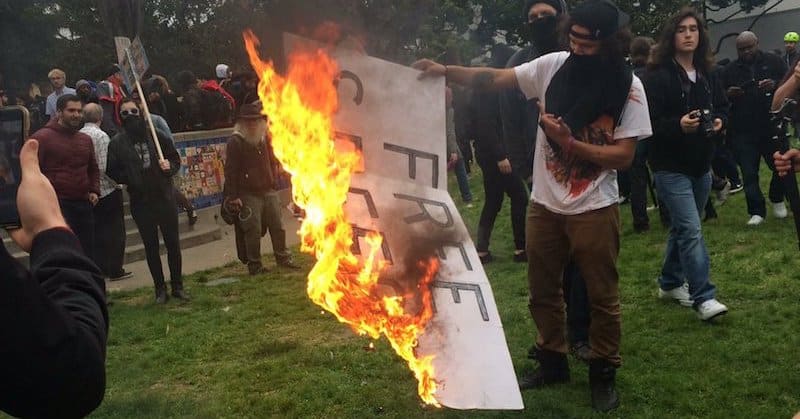
In my new book, The Indispensable Right: Free Speech in an Age of Rage,” I write about a global anti-free speech movement that is now sweeping over the United States. While not the first, it is in my view the most dangerous movement in our history due to an unprecedented alliance of government, corporate, academic, and media forces. That fear was amplified this week with polling showing that years of attacking free speech as harmful has begun to change the views of citizens.
As discussed in the book, our own anti-free speech movement began in higher education where it continues to rage. It then metastasized throughout our politics and media. It is, therefore, not surprising to see the new Knight Foundation-Ipsos study revealing a further decline in students’ views concerning the state of free speech on college campuses.
The study shows that 70 percent of students “believe that speech can be as damaging as physical violence.” It also shows the impact of speech codes and regulations with two out of three students reporting that they “self-censor” during classroom discussions.
Not surprisingly, Republican students are the most likely to self-censor given the purging of conservative faculty and the viewpoint intolerance shown on most campuses.
Some 49 percent of Republican students report self-censoring on three or more topics. Independents are the second most likely at 40 percent. Some 38 percent of Democrats admit to self-censuring.
Sixty percent of college students strongly or somewhat agree that “[t]he climate at my school or on my campus prevents some people from saying things they believe, because others might find it offensive.”
The most alarming finding may be that only 54 percent of students believe that colleges should “allow students to be exposed to all types of speech even if they may find it offensive or biased.” That figure stood at 78 percent in 2016.
The poll follows similar results in a new poll by the Foundation for Individual Rights and Expression (FIRE) of the population as a whole. It found that 53% of Americans believe that the First Amendment goes too far in protecting rights. So there is now a majority who believe that the First Amendment, including their own rights, should be curtailed.
The most supportive of limiting free speech are Democrats at a shocking 61%. However, a majority (52%) of Republicans also agreed.
Roughly 40% now trust the government to censor speech, agreeing that they trust the government “somewhat,” “very much,” or “completely” to make fair decisions about what speech should be disallowed.
It is no small feat to convince a free people to give up their freedoms. They have to be afraid or angry. These polls suggest that they appear both very afraid and very angry.
It is the result of years of indoctrinating students and citizens that free speech is harmful and dangerous. We have created a generation of speech phobics who are willing to turn their backs on centuries of struggle against censorship and speech codes.
Anti-free speech books have been heralded in the media. University of Michigan Law Professor and MSNBC legal analyst Barbara McQuade has written how dangerous free speech is for the nation. Her book, “Attack from Within,” describes how free speech is what she calls the “Achilles Heel” of America, portraying this right not as the value that defines this nation but the threat that lurks within it.
McQuade and many on the left are working to convince people that “disinformation” is a threat to them and that free speech is the vehicle that makes them vulnerable.
This view has been pushed by President Joe Biden who claims that companies refusing to censor citizens are “killing people.” The Biden administration has sought to use disinformation to justify an unprecedented system of censorship.
Recently, the New York Times ran a column by former Biden official and Columbia University law professor Tim Wu describing how the First Amendment was “out of control” in protecting too much speech.
Wu insists that the First Amendment is now “beginning to threaten many of the essential jobs of the state, such as protecting national security and the safety and privacy of its citizens.” He claims that the First Amendment “now mostly protects corporate interests.”
There is even a movement afoot to rewrite the First Amendment through an amendment. George Washington University Law School Professor Mary Anne Franks believes that the First Amendment is “aggressively individualistic” and needs to be rewritten to “redo” the work of the Framers.
Her new amendment suggestion replaces the clear statement in favor of a convoluted, ambiguous statement of free speech that will be “subject to responsibility for abuses.” It then adds that “all conflicts of such rights shall be resolved in accordance with the principle of equality and dignity of all persons.”
Franks has also dismissed objections to the censorship on social media and insisted that “the Internet model of free speech is little more than cacophony, where the loudest, most provocative, or most unlikeable voice dominates . . . If we want to protect free speech, we should not only resist the attempt to remake college campuses in the image of the Internet but consider the benefits of remaking the Internet in the image of the university.”
Franks is certainly correct that those “unlikeable voices” are less likely to be heard in academia today. As discussed in my book, faculties have largely cleansed with the ranks of conservative, Republican, libertarian, and dissenting professors through hiring bias and attrition. In self-identifying surveys, some faculties show no or just a handful of conservative or Republican members.
The discussion on most campuses now runs from the left to far left without that pesky “cacophony” of opposing viewpoints.
One of the most dangerous and successful groups in this anti-free speech movement has been Antifa. I testified in the Senate on Antifa and the growing anti-free speech movement in the United States. I specifically disagreed with the statement of House Judiciary Committee Chairman Jerry Nadler that Antifa (and its involvement in violent protests) is a “myth.”
In the meantime, Antifa continues to attack those with opposing views and anti-free speech allies continue to “deplatform” speakers on campuses and public forums. “Your speech is violence” is now a common mantra heard around the country.
Faculty continue to lead students in attacking pro-life and other demonstrators.
Antifa is now so popular in some quarters that it recently saw two members elected to the French and European parliaments.
Antifa is at its base a movement at war with free speech, defining the right itself as a tool of oppression. It is laid out in Rutgers Professor Mark Bray’s “Antifa: The Anti-Fascist Handbook” in which he emphasizes the struggle of the movement against free speech: “At the heart of the anti-fascist outlook is a rejection of the classical liberal phrase that says, ‘I disapprove of what you say but I will defend to the death your right to say it.’”
Bray quotes one Antifa member as summing up their approach to free speech as a “nonargument . . . you have the right to speak but you also have the right to be shut up.”
However, the most chilling statement may have come from arrested Antifa member Jason Charter after an attack on historic statues in Washington, D.C. After his arrest, Charter declared “The Movement is winning.” As these polls show, he is right.
Vaccine Advocate Peter Hotez Calls for Use of Police, Military Against ‘Anti-vaccine Aggression’
By Michael Nevradakis, Ph.D. | The Defender | July 26, 2024
Vaccine advocate and pharmaceutical industry insider Dr. Peter Hotez, long a proponent of the COVID-19 vaccine, said he favors deploying police and military powers against “anti-vaxers,” whom he blamed for causing hundreds of thousands of deaths during the pandemic.
During an interview July 5 at the Simposio Internacional de Actualización en Pediatría (International Symposium of Pediatric Updates) in Cartagena, Colombia, Hotez suggested organizations such as the World Health Organization (WHO), the U.S. Department of Homeland Security and NATO should target “anti-vaccine aggression.”
Hotez said:
“What I’ve said to the Biden administration is, the health sector can’t solve this on its own. We’re going to have to bring in Homeland Security, the Commerce Department, Justice Department to help us understand how to do this.
I’ve said the same with — I met with Dr. Tedros [director general of the WHO] last month … to say, I don’t know that the World Health Organization can solve this on our own. We need the other United Nations agencies. NATO. This is a security problem because it’s no longer a theoretical construct or some arcane academic exercise. Two hundred thousand Americans died because of anti-vaccine aggression, anti-science aggression.
The full interview was available on YouTube until Wednesday evening, when it was removed. The Defender obtained a video recording of the full interview.
Hotez is dean of the National School of Tropical Medicine at Baylor University College of Medicine and director of the Center for Vaccine Development at Texas Children’s Hospital, one of the sponsors of the symposium, which was organized by the Colombian Pediatric Society.
Aside from being a vaccine proponent and developer — he helped develop the Corbevax COVID-19 vaccine which was administered in India and has received at least $30 million in vaccine development grants from the Bill & Melinda Gates Foundation — Hotez has crusaded against so-called “misinformation” about vaccines.
In March, The Hill reported that Hotez has found a “‘parallel career’ fighting misinformation.”
Hotez “finds his efforts to combat misinformation to be ‘meaningful,’” and says “pushing back on the anti-vaccine movement is just as important as developing vaccines,” The Hill wrote.
Hotez also holds six patents on the hookworm (helminth) vaccine, and has several listed patent applications as well, including those for SARS-CoV2 vaccines.
“Peter has cashed in significantly on the COVID-19 pandemic and gets a lot of money when shots go into arms,” said Brian Hooker, Chief Scientific Officer for Children’s Health Defense (CHD).
In his July 5 interview, Hotez called for more stringent action against “anti-vaxers,” whom he connected to entities such as the Russian government, and called for medical schools to educate new doctors about anti-vaccine sentiment.
“‘Anti-science’ and ‘anti-vaxxer’ are propaganda terms Hotez uses to establish a power dynamic over anyone who disagrees with him,” said cardiologist Dr. Peter McCullough.
“Now Hotez is calling for a security state to enforce his propaganda instead of engaging in much needed dialogue over vaccine safety with a critical appraisal of short- and long-term side effects from the routine childhood vaccine schedule, including the COVID-19 shots,” McCullough added.
According to Harvey Risch, M.D., Ph.D., professor emeritus and senior research scientist in epidemiology (chronic diseases) at the Yale School of Public Health:
“Hotez has spent his entire career developing vaccines which have not achieved success in commercial use. His demands to impose public health martial law are reminiscent of the ‘Comité de salut public’ — ‘Committee of Public Safety’ — that Robespierre used to murder his political opponents [during the French Revolution].”
For Francis Boyle, J.D., Ph.D., professor of international law at the University of Illinois, Hotez’s suggestions are a call to violate established international human rights law.
“Coercing vaccines upon human beings without their informed and voluntary consent violates the Nuremberg Code on Medical Experimentation, which is a crime against humanity,” Boyle said. “What we see at work here with Hotez is the Nazi mentality that pervades so many vaccinologists like him. Hotez is revealing his true colors.”
Independent journalist Paul D. Thacker has investigated Hotez for his site, The Disinformation Chronicle. He said, “This crackpot idea that we should deploy military forces to deal with moms worried about vaccine side effects and children … doesn’t that speak for itself?”
Dr. Sukharit Bhakdi, a microbiologist, questioned Hotez’s scientific credentials:
“Simple fact: Hotez is not a real scientist. He has never published any research article based on true scientific research. His publications transmit his personal opinions and beliefs. He has not conducted a single valid vaccine trial and has zero data to back his claims.
“He has been on the globalist team together with [Dr. Anthony] Fauci et al. and is now turning to violence to silence all dissenters. This very fact disqualifies him as a physician.”
“His evolution over the course of the pandemic is curious as he has become more and more shrill as time goes on,” Hooker said. “It seems he is trying to extend his 15 minutes of fame by ‘jumping the shark’ and inciting gestapo-like measures against ‘anti-vaxers’ and ‘science deniers.’ His definition of science is very ‘Fauci-esque’ indeed.”
Claim that unvaccinated caused ‘hundreds of thousands’ of deaths ‘an obvious untruth’
During his July 5 interview, Hotez asserted that the unvaccinated were responsible for hundreds of thousands of deaths during the COVID-19 pandemic. He said:
“There’s anti-vaccine activity in every country, and each has its own unique national flavor. But the part that I’m worried about now is something very dark and accelerating in the United States.
“And the most dramatic evidence for that is what happened during the COVID pandemic … My estimate is 200,000 Americans died needlessly because they refused COVID vaccines in 2021, 2022.”
Hotez did not provide evidence supporting this figure, but it was similar to claims made by Dr. Anthony Fauci during Congressional testimony last month. Without citing evidence, Fauci said the unvaccinated are “probably responsible for an additional 200,000-300,000 deaths” in the U.S.”
Risch called this claim “an obvious untruth.”
“In the face of repeated major empirical CDC [Centers for Disease Control and Prevention] evidence and CDC’s public acknowledgement that the mRNA vaccines largely failed to reduce COVID transmission, Hotez absurdly claims that people choosing not to vaccinate themselves have contributed more to deaths from COVID than all of the large-scale breakthrough infections among vaccinated people,” Risch said.
McCullough said, “Hotez presumes COVID-19 vaccines are safe and effective as any vaccinologist would dream. Sadly, his fantasy was over before it started. The COVID-19 vaccines were unsafe and failed to reduce hospitalization and death in prospective randomized trials or in valid observational studies. They never stopped transmission.”
“All experts, including Hotez, agreed theoretical protection from COVID-19 vaccines was just a few months, requiring frequent boosters,” McCullough added.
Hotez calls parents who choose not to vaccinate their children ‘victims’
In his interview, Hotez called for action — including more censorship — to counter what he called a “dark and accelerating” and “dangerous” anti-vaccine movement in the U.S. and globally that is “expanding and extending to childhood immunizations in the United States.”
“My worry is that this anti-vaccine movement, and it’s not misinformation or [an] infodemic, as many call it, it’s organized, it’s deliberate, it’s well-financed and it’s politically motivated … I worry that’s now globalizing to other countries on the African continent, in Asia and even Latin America,” he added.
On the topic of childhood vaccinations, Hotez said, “Parents who choose not to vaccinate their kids are victims” of this campaign, and called for medical schools to train doctors on how to respond to parents who oppose vaccinations.
“Pediatricians need to understand what the anti-vaccine ecosystem is, how it’s organized, how it operates, and to get educated about it,” he said. “I think that’s a first step … in our medical schools, in our pediatric residency training, in our conferences like this, being able to describe what this anti-vaccine monster looks like.”
But for journalist Rodney Palmer, formerly of the Canadian Broadcasting Corporation, the increasing reluctance of parents to vaccinate their children is due to mounting concerns about vaccine safety. He said:
“The rising movement questioning the safety and efficacy of COVID-19 vaccines appears to be based on mounting evidence from government health data collection agencies and the life insurance industry.
“The fraud and cover-up of ivermectin as an effective prevention and treatment of COVID-19 caused a segment of the population to question the official guidance around vaccines — more so once they were mandated.”
Hotez blamed legacy and traditional media, as well as foreign governments, for fueling anti-vaccine sentiments.
“Fox News is now a source of anti-vaccine disinformation,” Hotez said. “If the parents are watching Fox News every night … They are going to be coming into your practice believing disinformation.”
Turning to social media, Hotez said, “Twitter, since Elon Musk has taken it over, has become an anti-vaccine site dominated by anti-vaccine groups and individuals who are monetizing the internet. They’re selling fake autism cures because they say vaccines cause autism, which they don’t.”
Hotez continues to be active on X.
Adversarial foreign governments are also to blame for propagating anti-vaccine rhetoric, according to Hotez. “For instance, the Russian government, the Putin government, is spreading anti-vaccine propaganda. The goal of this is to destabilize society and to have caused people to question authority,” he said.
Hotez did not provide any information to support this claim. Russia produces the Sputnik V COVID-19 vaccine, under the auspices of the Russian Direct Investment Fund and The Gamaleya National Center of Epidemiology and Microbiology — an arm of the Russian federal government.
Hotez calls ‘anti-vaccine movement’ a tool of the ‘far-right’
Hotez also used the interview as an opportunity to plug his upcoming book, “The Deadly Rise of Anti-Science: A Scientist’s Warning.” He said the book “describes [the anti-vaccine] ecosystem and its political leanings in detail.”
According to the book’s publisher, Johns Hopkins University Press, Hotez “explains how anti-science became a major societal and lethal force” and how “the anti-vaccine movement became a tool of far-right political figures around the world.”
In 2022, Hotez fiercely criticized looming Congressional hearings into a possible lab-leak origin of COVID-19 and whether the National Institutes of Health (NIH) prematurely discredited the hypothesis, dismissing this as an “outlandish conspiracy.”
However, Hotez’s own 2012 to 2017 NIH grant — totaling $6.1 million — for the development of a SARS vaccine had the aim of responding to any “accidental release from a laboratory,” in addition to a possible zoonotic (or natural) spillover of the virus.
In a June 2023 interview with Robert F. Kennedy Jr., CHD’s chairman on leave, podcaster Joe Rogan offered to donate $100,000 to a charity of Hotez’s choice if he agreed to debate Kennedy.
Hotez — with the support of several legacy news media outlets and the American Medical Association — refused Rogan’s offer. He later claimed on social media that a “couple of anti-vaxers” “stalked” and “taunted” him outside his home after he declined the offer to debate Kennedy.
Michael Nevradakis, Ph.D., based in Athens, Greece, is a senior reporter for The Defender and part of the rotation of hosts for CHD.TV’s “Good Morning CHD.”
This article was originally published by The Defender — Children’s Health Defense’s News & Views Website under Creative Commons license CC BY-NC-ND 4.0. Please consider subscribing to The Defender or donating to Children’s Health Defense.
Featured Video
Pentagon insider says high US official Douglas Feith reported to Netanyahu
or go to
Aletho News Archives – Video-Images
Frlom the Archives
The Fiction of the Jewish History in Palestine
By Hasan Afif El-Hasan | The Palestine Chronicle | April 8, 2011
Prime Minister Benjamin Netanyahu told NNC Pierce Morgan on March 18, 2011 that he might agree to a Palestinian state through negotiations. And he added, “We will make territorial concessions although it is very painful to do that in our ancestral land.” Netanyahu was not talking about Poland where his ancestors lived. He was talking about Palestine where generations of its indigenous population ancestors lived, cultivated the land and are buried.
By the end of the nineteenth century, Zionism created a new Jewish identity of blood and soil. To mobilize their followers and supporters and appeal to their emotions, the Zionists created myths. Zionism started as a tribal religion without god, but in order to fulfill its function as a unifying force, Zionism required external religious and race symbols, not inner content. Its leaders regarded metaphysical religious belief and purity of race as having value in itself. They created a divine paradisiacal state of merger with the gods. Despite his non-religious ideology, Herzl’s writings were replete with religious references. The Jews should settle in Palestine because, in his words, “the Temple will be visible from long distance, for it is only our ancient faith that has kept us together”.
The Zionists and their supporters have invested tremendous financial and scholarly resources to work within the Hebrew Bible historical narratives to affirm the links between the intrusive Zionist population and the ancient Israelite past, and by doing so assert the right of that population to the land. The political end-game shaped the investigation and the outcome. Tracing the roots of Israel’s ethnic state in biblical antiquity is effectively to silence the indigenous Palestinian claim to the past and therefore to the land. The Biblical scholarship employs a bewildering array of terms for the region: “the Holy Land”, “the Land of the Bible”, “Eretz Israel”, “the Land of Israel”, or “Judah and Samaria.” To the casual reader these names appear interchangeable, but they all imply connection to ancient Israel.
Biblical narratives or poems that cannot be supported by archeology and common sense are treated by the Zionists and their supporters as historical language. … continue
Blog Roll
 Aletho News
- Pentagon insider says high US official Douglas Feith reported to Netanyahu
- The Sludging of Rural America
- Lawyers’ groups demand end to British military bases in Cyprus
- CIA Assessment: The Resistance Cannot Be Crushed
- Hezbollah Returns: It Didn’t Start a War, It Is Ending One
- EU states seek ‘talks’ with Iran for access to Strait of Hormuz: Report
- Trump on Hormuz: “Others must take care of it” after US falters
- Who Is closer to collapse?
- A War that Backfired: Why the US-Israeli Campaign Is Strengthening Iran
- How Zionist Control Is Hurting US Interests
- If Americans Knew
- As US-Israel war on Iran rages, Gaza faces massive dust storm – Not a ceasefire Day 156
- No let-up in attacks on Gaza as Israel takes on Iran, Lebanon – Not a ceasefire Day 155
- ‘Of Course’: IDF Drops Case Against Soldiers Accused of Raping Palestinian Prisoner
- Don’t Fall for the Regime Change Talk. Israel Is ‘Mowing the Lawn’ in Iran
- Will Israel and the US wreck the Gulf States along with Iran?
- US so far burned through ‘years’ of munitions in Iran war: Report
- How the Israeli Tail Wags the American Dog
- Outdated intel likely led to deadly U.S. strike on Iranian elementary school, sources say
- Pentagon insider says high U.S official Douglas Feith reported to Netanyahu
- In fond memory of Walid Khalidi, the historian of Palestine
- No Tricks Zone
- Storing Green Energy To Last Germany 10 Days Would Require A 60-Million Tonne Battery
- New Studies: UK Sea Levels Were 4 Meters Higher Than Today During The Mid-Holocene
- Destructive Green New Deal: German Energy And Metal Group Warns Of Drastic Crisis
- New Study Documents A 20-Year Pause In Arctic Sea Ice Decline – Driven By Internal Variability
- Wake-up Call: Survey Shows Majority Of Germans Now Favor Postponing Climate Targets!
- Televised! Leading German Political Candidate Tells Schoolchildren CO2 Makes Sun Hotter!
- New Study: A Century Warming Of 1.1°C Is ‘Commonplace’ And ‘Not Unusual’ During This Interglacial
- New Study: ‘Internal Noise’ And Volcanic Forcing Can Trigger 10-15°C Warming Within Decades
- Glaciers Worldwide Are Suddendly Surging, Experts Blame Warming!
- Surprising Discovery: Sahara Is Greening…Billions Of Trees Where Once Thought To Be Barren
 Aletho News