The Rockefellers created 990 “Climate Change” institutions, foundations, and activist groups
Every time you hear a “climate change” scare story, that person was PAID. He is a Rockefeller stooge. He may not know it; but his profession has been entirely corrupted
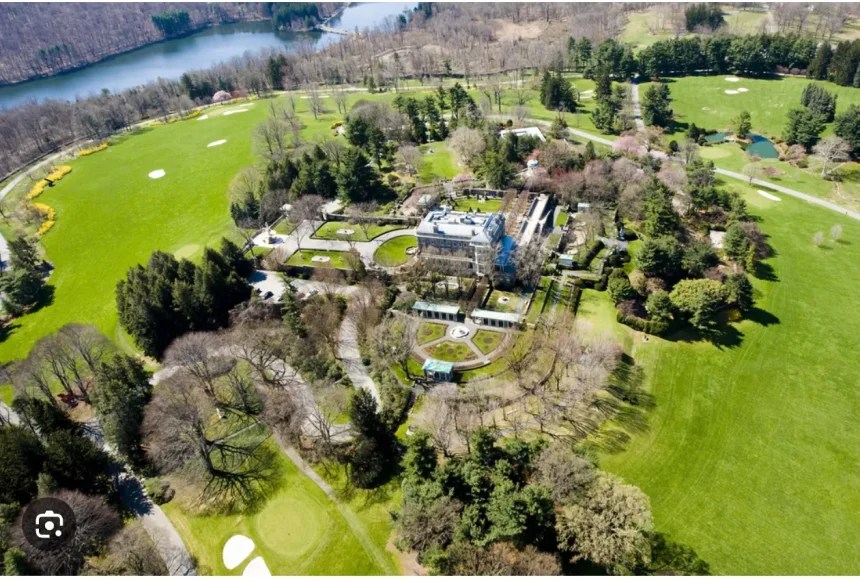
This is the most public of their estates but Rockefeller houses, mansions, lodges, city palaces, beachfront estates, and dozens upon dozens of holiday houses litter America.
By Elizabeth Nickson | Welcome to Absurdistan | July 7, 2024
In the climate change arena, the Rockefellers call the shots. The whole thing was their idea, they took a silly but interesting theory and amped it up with hundreds and hundreds of million of dollars. They founded institutions and linked the survival of those institutions to promoting climate change and population reduction. They adopted one likely politician after another.
The Rockefellers have created 990 Climate Change activist organizations. They give them directions, financing, and launch them on the world. The Green Movement was started, financed, organized, and militarized by the Rockefellers. By the late 40’s the family was all in, on the same page. In the 50’s they began to stand up countless institutions, committees, university departments, university institutes, foundations, and policy shops gathered around this one idea, as below:
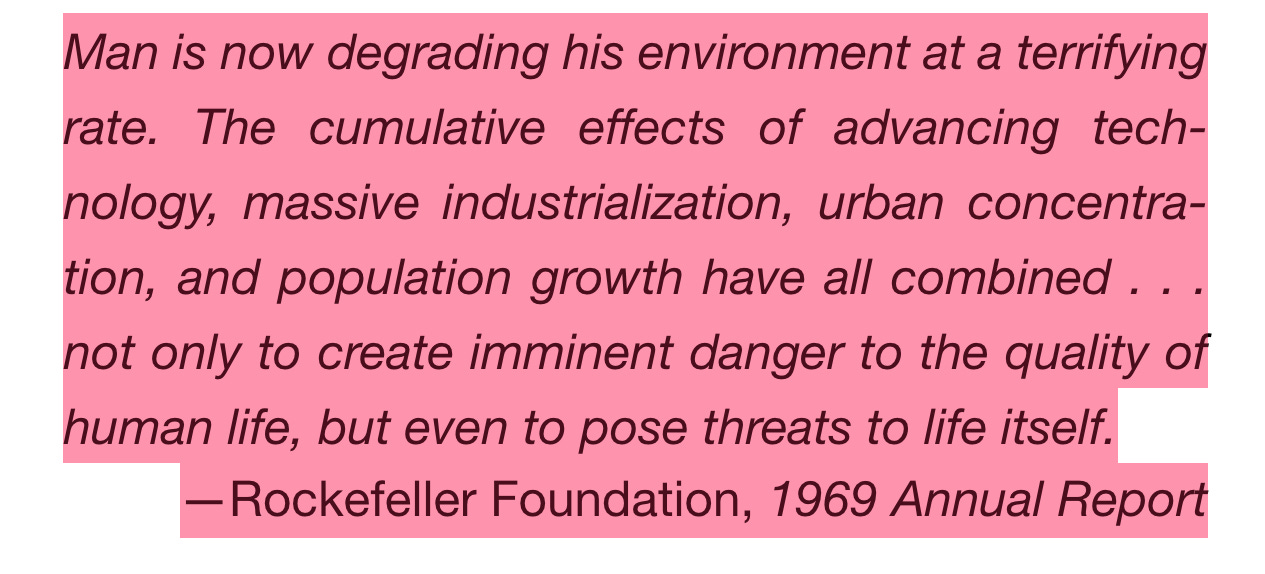
Let’s just pause here and recognize that the United States and Canada are 5% developed. If it were 50%, then maybe we would have reason to worry about the effects of trace gas that takes up .04% of the atmosphere, of which 3% is currently contributed to by humans. But were we to have that level of development, our science would have long ago solved the problem. Our sense of proportion, size and consequence has been twisted, propagandized via hundreds of billions of purposed dollars. And all of it is exaggerated science done by scientists compromised by Rockefeller money.
By 1998, the Rockefeller family had swept the table clean of any opposition to this one idea. Any scientist not on board with the agenda was imperiled. Any university department not working towards this one artificial goal, was in danger of being marginalized. Infiltration had begun into every media organization, every entertainment division of every major corporation. This, as stated below, would be a generational goal. For everyone. Or get off the bus.
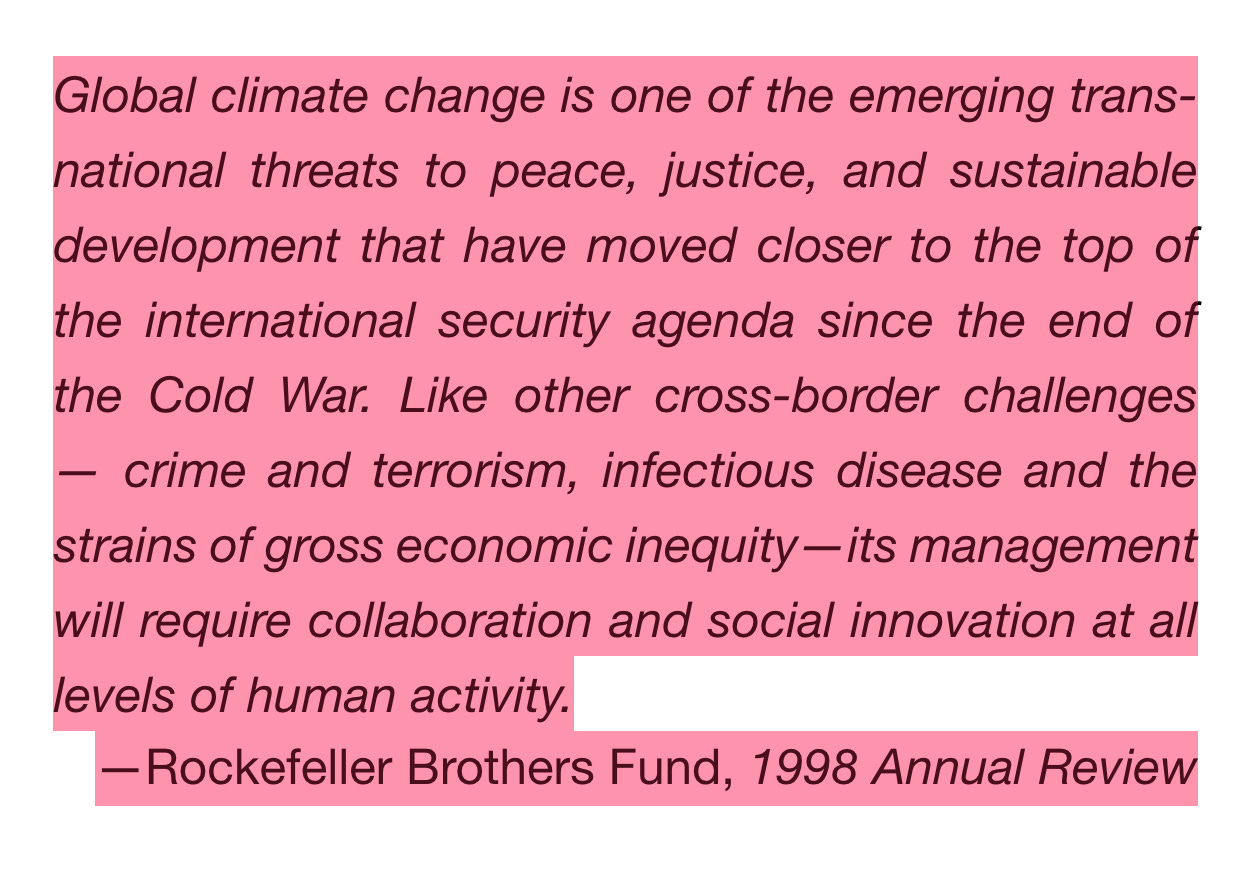
The Rockefellers have created 990 Climate Change institutions, foundations, and activist groups. And they fund them.
What is evidentiary, what can be proved in a court of law, rather than opinion, however, is that the Fabians started the idea of this whole one-world, no nation state. It is clear too that after the First World War, the Fabians roped in the second generation of Rockefellers. It was a major catch. It meant they had America. And it was spiritual. It was meant to change mankind, to kill off Homo Sapiens and turn us to Homo Universalis.
The New Man would be not-Christian, quietist, and self-obsessed. The economy would trend towards zero-growth if not de-growth. There is a preponderance of data, many many publications that laid out their plans. They twisted education away from practical science, engineering and building things towards social movements, the humanities, the arts, and pleasure. And via Laurance Rockefeller’s money and organizational skill, they devised and invented the discipline of cybernetics from which the internet flows.
The first Rockefeller, as almost everyone knows, was John D., by all accounts a deeply unpleasant individual who, after his private army killed protestors, was advised to go into charity in a big way to rescue his reputation. Which he did, and managed to dodge the trustbusters and Teddy Roosevelt, and build his empire over the corpses of his competitors. And then, as advised, he began to buy the media. The Luce empire of Time-Life fell into step. From the 60’s on Time-Life stood astride the media world, attracting the best, the authority on every subject. I was trained there, and trained well, but all the writing was done back in New York, in the Time Life building in Rockefeller Center. It was massaged to fit the message. I wanted to write and left.
By the second generation, the family had found its purpose, the meaning for all the wealth, the path forward. John D., according to Sir Stephen Wilkinson, who has studied him all his life, believed to his core that God had favored him with so much wealth because he was good; his Baptist faith coupled with titanic wealth made him a modern priest. His family, his heirs, would be a Royal Priesthood leading mankind to a new paradise. How the family must have fallen upon the Fabians, with their starry titled members, Bertrand Russell, all the Huxleys, H.G. Wells, Emmeline Pankhurst. How seductive socialism is to the intellectual class. It gives them the right, being so smart, to order humanity. To choose for the rest of us. Few of them could run a corner store.
The seduction of great wealth is pretty much irresistible. Everyone falls. The last time I was “in society” was at a wedding hosted by the Bostonian Cabots – so ancient they arrived in the New World in 1498. Famously, “The Lodges only talk to the Cabots and the Cabots only talk to God.” That’s how grand they are. Their wealth spread out that weekend was like entering heaven, everything so beautiful, so absolutely perfect in every detail. It was a lush sinking feeling, utterly seductive to the ego. Any Clinton, Gore, Obama, Kerry, Bush, any impoverished scientist, any ambitious university administrator, every fundraiser, every marginalized military man, would just fall over like an ambitious 20 year old faced with her first billionaire. Take me I’m yours.
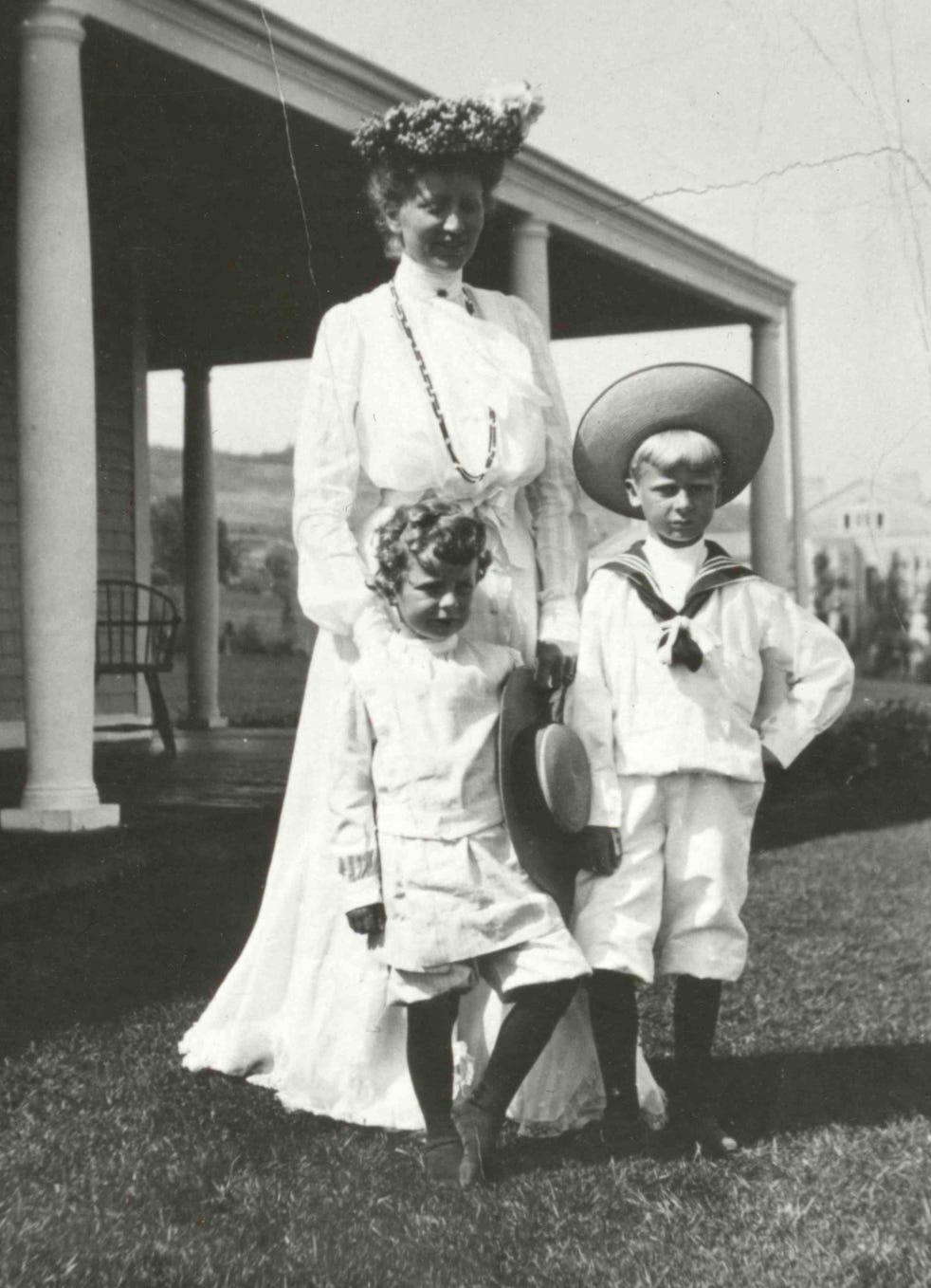
The Cabots in full regalia
And that’s what happened. That’s how they did it, by inviting likely servants to their houses and hunting lodges, donating buildings, buying the land for the U.N., funding organizations, appealing to vanity and greed and above all, the human’s desperate need for significance. They created a super-class unmoored to reality and entirely 100% destructive of human life. It was systematic, a fierce, unstoppable, detailed two-hundred-year plan. Each generation would make their contribution.
It started with the felt need to reduce population and turn man into something other. To stress, environmentalism, neo-Malthusianism; the ‘saving of the planet’ was the motivator for each of the following actions. If you accepted Rockefeller funding, you toed the line. There were too many people, the carrying capacity of the earth was breeched, the planet was dying, we need a new form of human. These ideas all came out of the Fabian stable and metastasized through the culture like the most delicious poison. Every intellectual, all the universities started to promote this idea. It was heady, exciting. It celebrated Man, not some faceless distant Deity. Fabians hated Christianity and wanted, above everything, to replace it. But first, they had to command every institution of civil society.
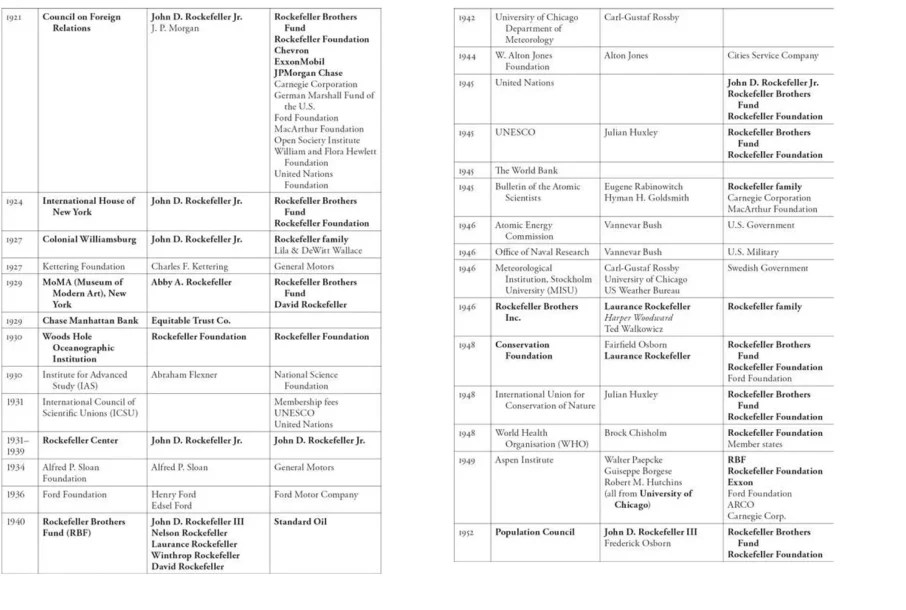
The following is a partial list of the institutions by which the Rockefeller family built the modern world, in every aspect of the culture. It was masterful. Ancient Kings and Emperors would have marveled.
In 1920, John D. co-founded the League of Nations. He was the major donor. It failed because the U.S. refused to sign on. The family began to run for office, in order to manipulate levers of power behind the scenes. Today, there is pretty much always a Rockefeller in power at each level of government.
In 1921, they founded the Council of Foreign Relations, (CFR). David built and donated CFRs headquarters. CFR is closely allied to the Royal Institute of International Affairs (RIIA) in London, Chatham House, itself closely allied with the British Round Table and the Fabians. When people talk about the 13 Families theory, the Round Table and RIIA feature big-time.
In 1944, they co-founded the World Bank, its ideals and purpose devised by the Council of Foreign Relations’ War and Peace Studies Committee.
In 1945, they co-founded the United Nations, with the CFR and RIIA. David Rockefeller wrote the preamble to the U.N. Charter. John D. Jr bought the 17 acres for the U.N building. Nelson chose the architect, Philip Johnson, thereby introducing the International Style. The family funded the U.N. building.
In 1948, came their statement of purpose:
If the world government cause is to triumph it will need more than sympathetic endorsement by the majority. People must be made to feel that their own security, freedom, and prosperity, yes, their own survival, depend on the creation in our time, of a world rule of law. They must be made to believe that the establishment of a World Government is more urgent than the maintenance of a high domestic standard and as, if not more, practical than the pursuity of a deceptive security by full military preparedness. – Atomic physicist, Edwin Rabinowitch, a Rockefeller client/servant, 1948
In 1948, in league with Julian Huxley, Mr. Population, a leading member of the British Eugenics Society and the British Humanist Society, they formed the International Union for the Conservation of Nature, (IUCN). Stated goal: better distribution of the world’s population (which is behind the migrant crisis) and fertility control. The IUCN has systematically cleared tens of millions of traditional and indigenous peoples from their lands in Africa and the East.
In 1948, they founded the Conservation Foundation. In 1953, they funded it with $53 million, the equivalent of $650 million today.
In 1954, they founded, with Bernhard of the Netherlands (thought to be the apex child predator) the Bilderberg group.
In 1955, they cofounded the International Meterological Institute (IMI)
In 1959, the first publication of the Rockefeller Institute Press included a section on “Changes in the Carbon Dioxide Content of the Atmosphere and Sea due to Fossil Fuel Combustion”.
Laurance Rockefeller was purposed with the spiritual arm of the operation. Starting in the late 40’s. Laurance founded fifty environmental organizations including the World Wildlife Federation, the World Resource Foundation, the IUCN, and UNESCO. Laurence is behind Esalen and Lindesfarne Association, and is responsible for coining the term “New Age”. He founded and funded the Fund for the Advancement of the Human Spirit, the Foundation for Conscious Evolution, the Conservation Foundation. He was a board member of the National Resources Defense Council, the National Geographic Society, Woods Hole Geographic Society, Resources for the Future, and the Sloan foundation. He was a board member of the Environmental Defence Fund and the WWF. He co-founded the Rockefeller Brothers Fund and served as its chairman from 1958-1979. Laurance Rockefeller founded Cybernetics as a discipline by funding its study.
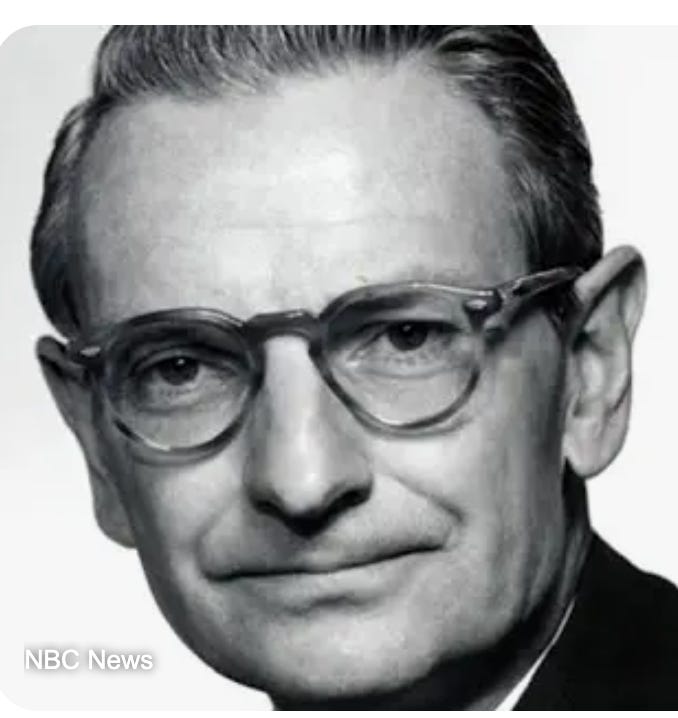
This man created the New Age, the climate scare and the Sixth Great Extinction scare
He stood up and funded most of the New Age gurus followed today by tens of millions, if not hundreds of millions. The New Age says “Stay out of the battleground, don’t worry about your neighbor, your family, your town, your country. Worry about your personal spiritual advancement, your tolerance and forgiveness. Work on yourself. Do your “shadow work”, you are everything, everything is a reflection of you.”
He funded the Disclosure Movement, which claims that aliens walk among us, and that their technology, liberated from the Naval Research Labs (another Rockefeller genesis) will save humanity. He was a ferocious, destructive nut.
Next, the family founded, financed and organized the European Commission, OPEC, and the UN Development Program.
In 1973, they founded the Trilateral Commission.
The plans for Princeton’s Institute for Advanced Study had been drawn up by Tom Jones from the British Round Table, intended as an American version of All Souls at Oxford which is primarily an academic research institution with particular strengths in the humanities and social and theoretical sciences. The Rockefellers were closely involved via funding the Institute and funding all of its heads and especially, significant scientists, providing grants for their work.
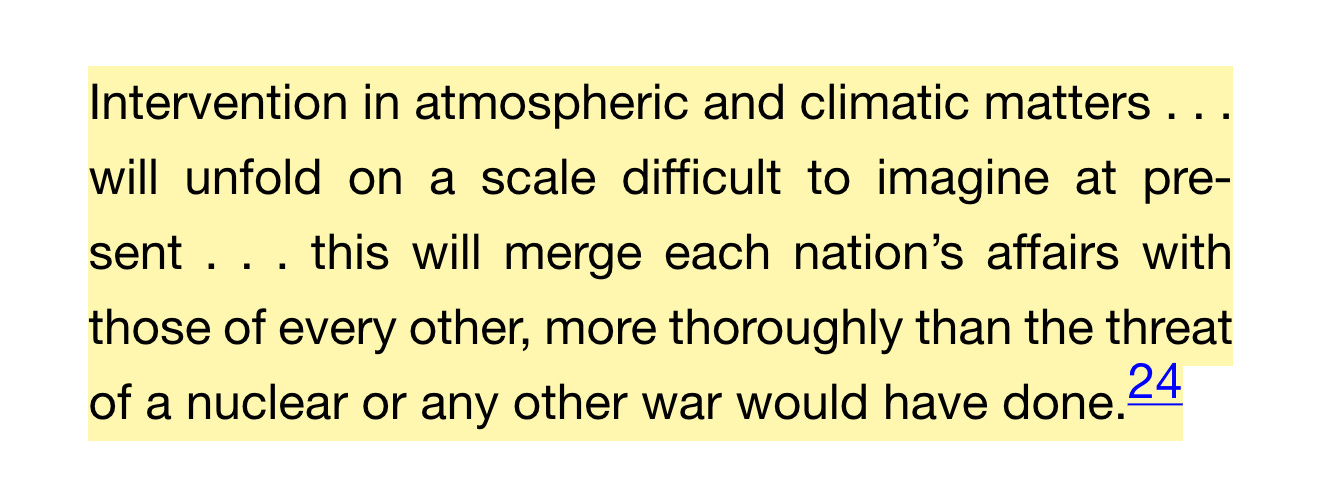
Here the science of climate forecasting was developed using climate modelling during the 1950’s Initially it was thought that geo-engineering would be the principal method used, rather than reducing emissions. They were math freaks, one of whom made the following convenient prophecy.
The climate scare well entrained, the family turned their attention to art and architecture. The breaking of architectural tradition was deliberate. Modern architecture, the International Style was created in order to disrupt and make uneasy Homo Sapiens.
”The International Style suited the Rockefeller brothers’ internationalist aspirations like a glove. It also inspired radically new zoning laws and urban planning models, leading not only to a boxy skyline of rectangular high-rise slivers, but to extensive sprawl and automobile dependency— which also happened to be highly profitable for the oil and auto industries.” (Nordangard)
In New York alone, they commissioned the following buildings, all built to be intentionally unsettling, deliberately destructive. Modernism deliberately erased the the past. It was purposed to make the human walking by and through these buildings, a sense of himself as base, insignificant, submissive and subject.
Some of the Rockefeller-financed buildings:
Rockefeller University
The U.N. Headquarters
Memorial Sloan Kettering Cancer Center
Riverside Church
The Cloisters
Lincoln Center of the Performing Arts
Empire State Plaza in Albany
One Chase Manhattan Plaza
The World Trade Center
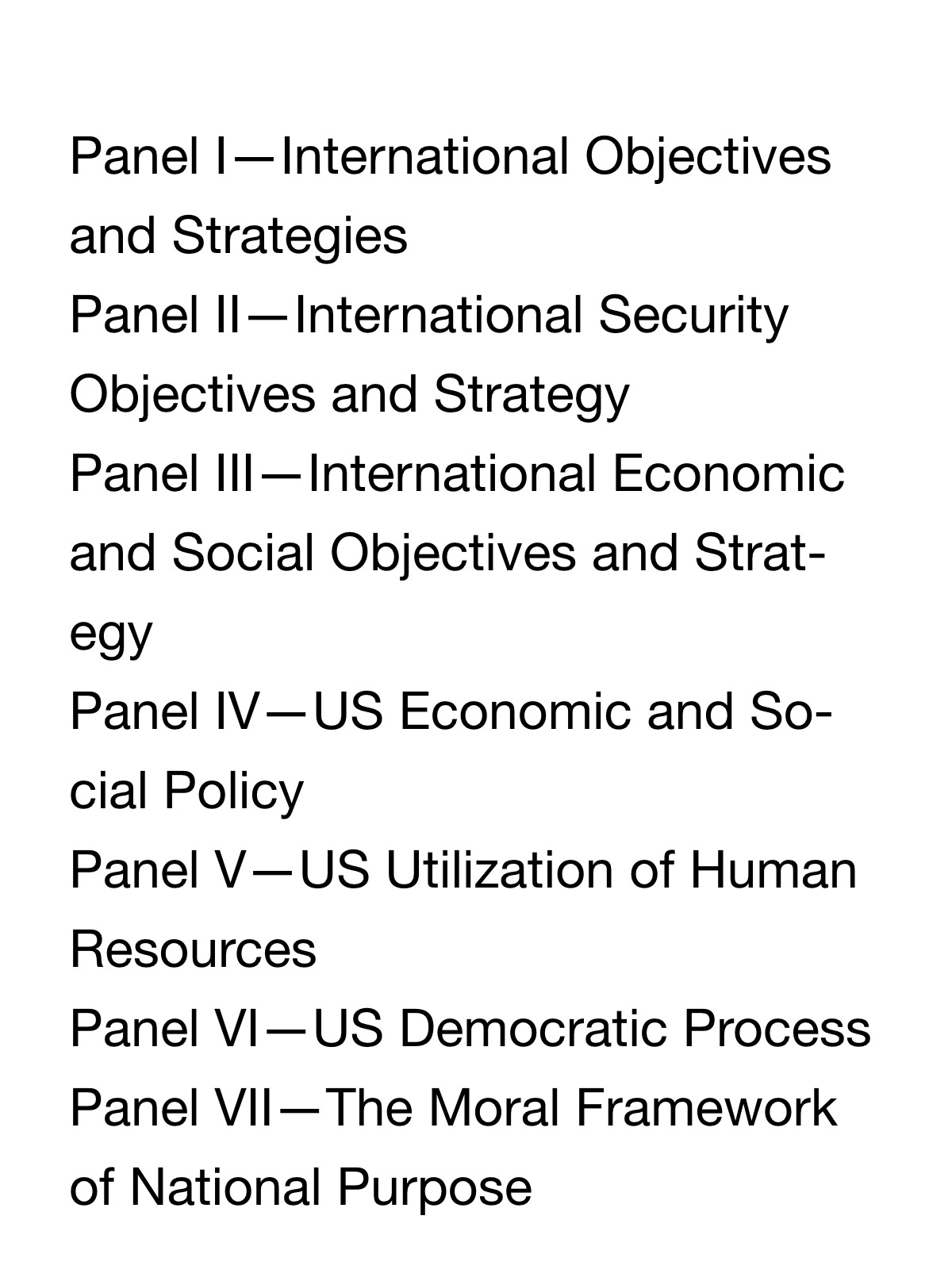
Kissinger, then a professor at Harvard, was one of the family’s most treasured assets. He believed “a new political architecture would be required, better able to offer long-term governance.” He became part of Nelson’s “portable brains trust”, the Rockefeller Brother’s fund, the Special Studies Project. The SSP worked from 1956-1961 to build that new political architecture:
They co-founded Woods Hole Oceanographic Institute
They co-founded the Scripps Institute of Oceanography.
They co-founded the Atomic Energy Commission, the Office of Naval Research, and the National Science Foundation while Nelson Rockefeller was in power.
This is only a partial list. Every single one of these institutions are neo-Malthusian, bent on fewer humans, and taking us off the land into giant pens, controlled, measured and monetized.
In 1989, illustrating the family’s reach abroad, the Hague Declaration (with 24 signatories) called for a new international institutional authority that could preserve the Earth’s atmosphere and fight global warming.
Thereafter, in that same year, 1989, the Rockefeller Brothers Fund under the leadership of David Rockefeller and Henry Kissinger founded the United Nations Panel on Climate Change (IPCC). and funded it with near unlimited resources going forward.
In the appendices of Norgangard’s book, he lists all the institutions founded by the family. Skimming them, I found myself jumping out of my desk chair and shouting into the void. The dog vanished, the cat hid. It is infuriating – they used their power to corrupt every institution that would serve their end game. Here is one page.
The End Game
In 2012, the U.N. Climate Fund announced the establishment of the model for the cities of the future, outside Seoul, Korea called Songdo. Songdo is failing. No one wants to live there. Those who visit describe the place as soulless, with no people, no vivid life. Billions were spent creating it.
Nordangard describes:
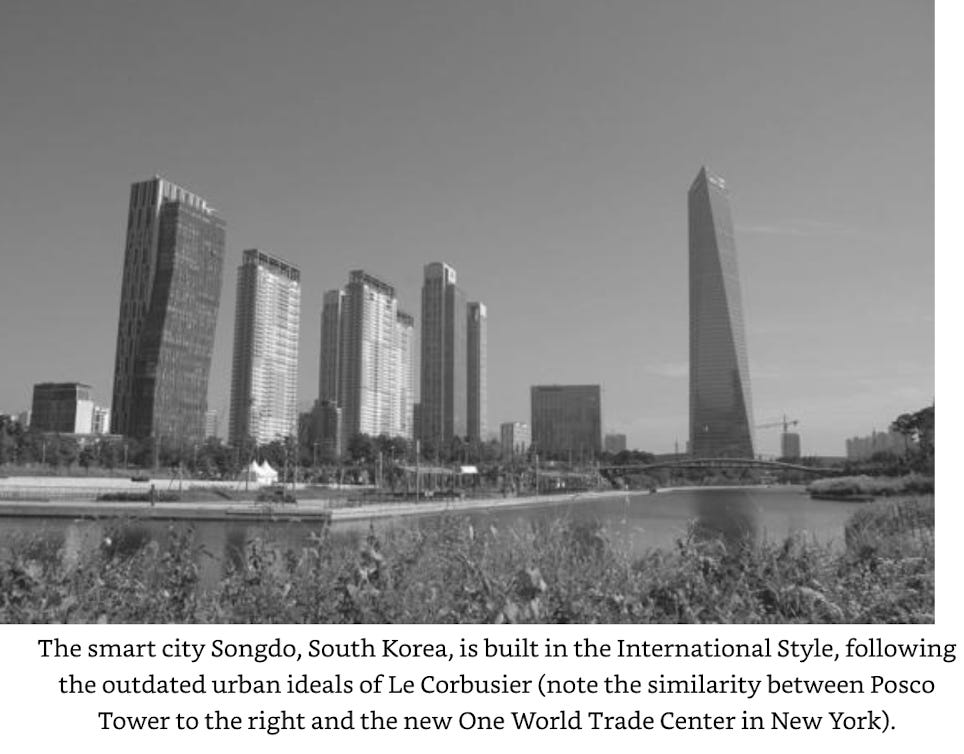
“Traffic flow and citizen behaviour is monitored in real-time via five hundred surveillance cameras. Household waste is automatically transported via the pneumatic system under the city and converted into energy. All apartments have smart locks, with smart cards which can also be used for loaner bikes, parking, subway, and movie tickets. All apartments have smart meters (enabling residents to compare their energy consumption with that of their neighbors) and built-in cameras everywhere. Floor sensors detect pressure changes and automatically alert an alarm service of a suspected fall. Systems are tested where residents via the TV screen can receive language lessons or communicate with their physician as well as neighbors and relatives, and bracelets for locating children via GPS.7 In other words, a futuristic dream straight out of the World Future Society’s 1970s vision—or Orwell’s 1984. And this is South Korea. How successful, environmentally friendly, and inclusive Songdo really turned out to be has been questioned. It was built primarily for an affluent middle class expected to be able to afford the higher standard and the new technology. The electricity comes from coal-fired power plants and the buildings are completely glazed with windows that cannot be opened, which requires air conditioning all year round.8 Also, the pneumatic waste disposal system does not always work properly. As of March 2018 there was still no cultural life, no street vendors or old people, public transport, transport systems were empty and three-quarters of the homes were empty.
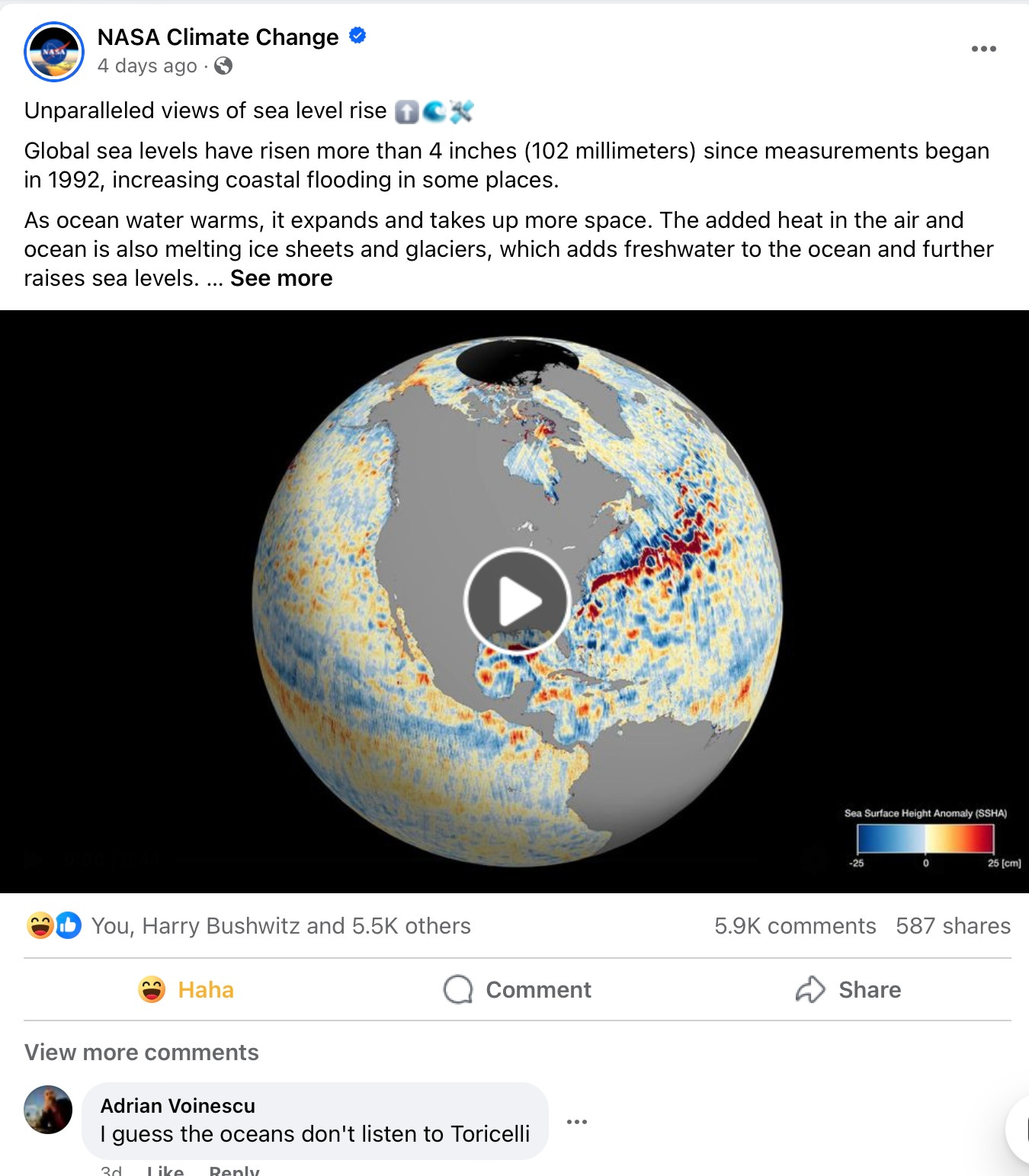
Evil has a human face, but despite the billions thrown at the people of the earth, fewer and fewer of us are falling for it. This latest Facebook-hysteria-the-sky-is-falling post from NASA’s Climate Change Center, received 5,600 reactions. 5,300, including mine were laughing emojis. And the top comment cited Torecelli, with one man’s work refuting every single flatulent government propaganda machine theory. Facebook, remember, is controlled speech and still, the people win.
Elizabeth Nickson was trained as a reporter at the London bureau of Time Magazine. She became European Bureau Chief of LIFE magazine in its last years of monthly publication, and during that time, acquired the rights to Nelson Mandela’s memoir before he was released from Robben Island. She went on to write for Harper’s Magazine, the Guardian, the Observer, the Independent, the Sunday Telegraph, the Sunday Times Magazine, the Telegraph, the Globe and Mail and the National Post. Her first book The Monkey Puzzle Tree was an investigation of the CIA MKULTRA mind control program and was published by Bloomsbury and Knopf Canada. Her next book, Eco-Fascists, How Radical Environmentalists Are Destroying Our Natural Heritage, was a look at how environmentalism, badly practiced, is destroying the rural economy and rural culture in the U.S. and all over the world. It was published by Adam Bellow at Harper Collins US. She is a Senior Fellow at the Frontier Center for Public Policy, fcpp.org. You can read in depth policy papers about various elements of the environmental junta here: https://independent.academia.edu/ElizabethNickson
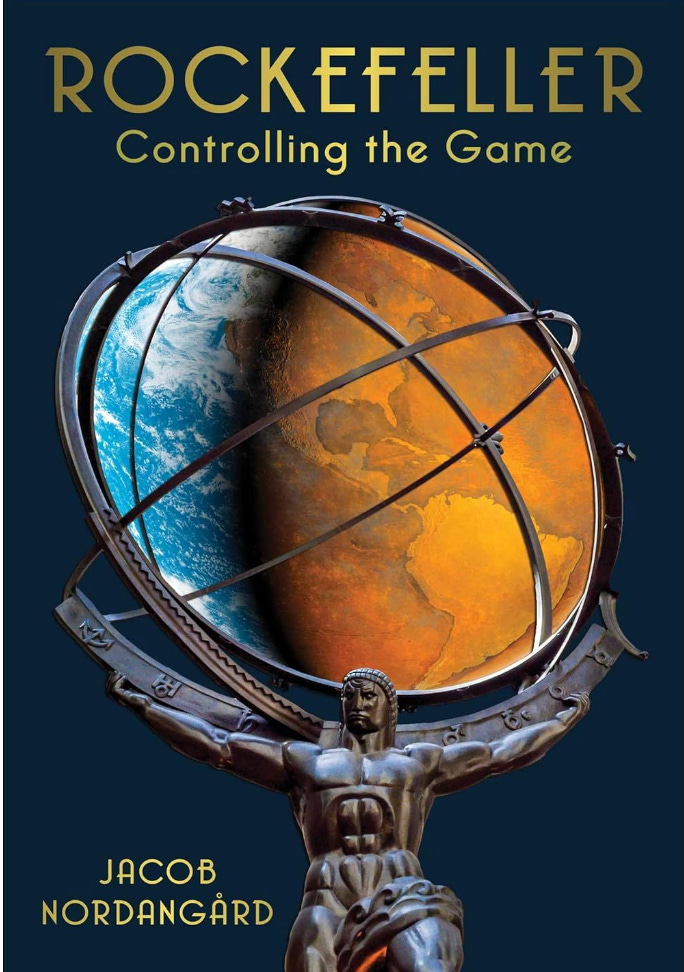 You can buy Jacob Nordangard’s book here
The War on Free Speech: Biden Adds Another Advocate for Censorship to the White House
By Jonathan Turley | July 10, 2024
I have previously written how President Joe Biden is the most anti-free speech president since John Adams. For his part, Biden has continued to double down on his anti-free speech policies with the appointment of figures who have long supported bans and other speech controls. The latest such appointment is Andy Volosky, who was made deputy director of platforms for the White House’s Office of Digital Strategy. Volosky has been outspoken in support of banning former president Donald Trump from social media platforms.
In my new book, The Indispensable Right: Free Speech in an Age of Rage, I lay out the chilling comparisons between the Adams and Biden Administrations in the crackdown of free speech. For Adams, that led to defeat in 1800 when Jefferson ran in part on restoring free speech. To my surprise, Trump and his fellow challengers in this election have not made free speech a central issue to force Biden to defend the massive censorship system supported by his Administration.
The public does not support censorship. This is a movement that originated in higher education and has been pushed by the political and media establishment, not the voters.
Volosky will now help direct digital strategies for the White House. He previously praised the banning of Trump, asking “What took them so long?” in a 2021 blog post.
In Volosky’s blog post, titled “A New, and Hopefully Welcome, Standard,” he warned that “Twitter still allows the accounts of various world leaders, governments, and spokespeople, who use Twitter for what one can only describe as propaganda as cover for autocracy, to continue to use their platform.”
He praised how Democrats have “long advocated for regulating the [social media] platforms” and emphasized how active social media users like himself and others can “keep the platforms honest.”
He added that:
“we can play a role in keeping the platforms honest and improving the positive role of social in people’s lives… It’s past time for the platforms to take content moderation and user safety seriously; as social media professionals, we should be ready and eager to make that happen, and we hope that [banning Trump] can be a small step in getting that ball rolling.”
Again, with the White House doubling down on censorship, Trump and others need to force him to defend his overwhelmingly anti-free speech record. The 2024 election can give voters the same choice that they faced in 1800. Democracy is not on the ballot, but free speech is.
Glenn Diesen about the benefits of a multipolar, Eurasian world order
Reinvent Money | June 16, 2024
Paul Buitink talks to Glenn Diesen, a Norwegian academic and political scientist. He is a professor at the School of Business of the University of South-Eastern Norway. Glenn explains why the current international liberal unipolar world order is in decline. And why a new multipolar Eurasian order is inevitable and how that would benefit the world. He describes Europe’s role and challenge in this new world order. Also Glenn dives into the Russia and Ukraine conflict and why the incremental approach of the West could lead to a boiling frog situation. At the end he also shares his experiences of being a controversial scientist in Norway.
Find more about Glenn Diesen here, including his latest book The Ukraine War & The Eurasian World Order: https://x.com/Glenn_Diesen https://www.amazon.com/Ukraine-War-Eu…
Follow Paul on X here:  / paulbuitink
WRITING AND READING
BY PAUL ROBINSON | IRRUSSIANALITY | MAY 22, 2024
In case anybody is interested in the inputs and outputs of my intellectual life, here is a little update on what I have been writing and reading.
Reading
Here are a few things I have read recently that might be of interested to purveyors of this site:
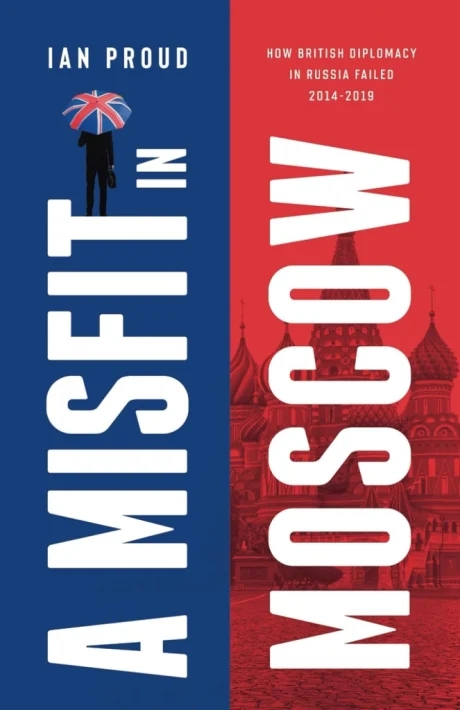
Ian Proud is a former British diplomat who served in the UK’s embassy in Moscow and was also responsible for organizing British sanctions against the Russian Federation. He has since left the Foreign Office, written his memoirs. and started a blog on which he regularly criticizes British policy towards Russia and declares the sanctions he enacted to be a total failure. You can read his blog here.
The memoirs are written in a light, engaging style, but contain a serious message. Proud argues that successive British governments have for a long time been totally uninterested in talking to Russia. He also paints a picture of British diplomats who not only mostly didn’t speak Russian but also weren’t interested in doing so. Dispatches to London, he claims, consisted largely of bits cut and paste out of media articles. One has to wonder about the quality of the intelligence that London was receiving.
Worth a read.
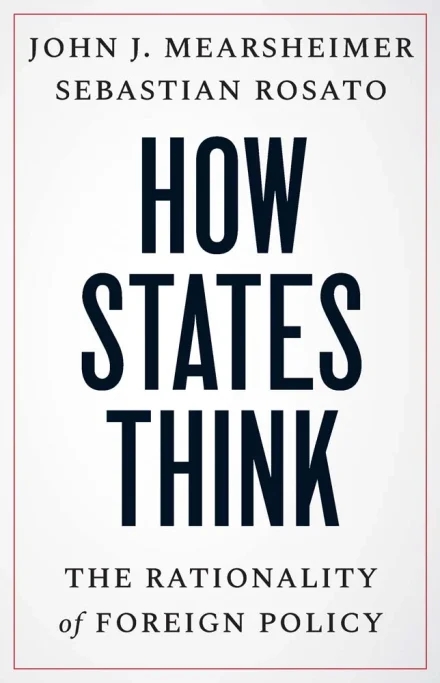
I used to teach a course titled ‘Irrationality and Foreign Policy Decision-Making’, which looked at all the ways that foreign policy decision processes deviated from the kind of rational actor models that public policy students are taught to follow.
It’s interesting, therefore, to come across a book that claims that all the stuff I taught is wrong and foreign policy is for the most part a rational endeavour. I can’t say that I was 100% convinced by this book, which I found a bit repetitive, and perhaps worthy more of an extended article than a full-length book. Still, if I ever teach that course again, I will have to bear what this says in mind and suggest it to my students.
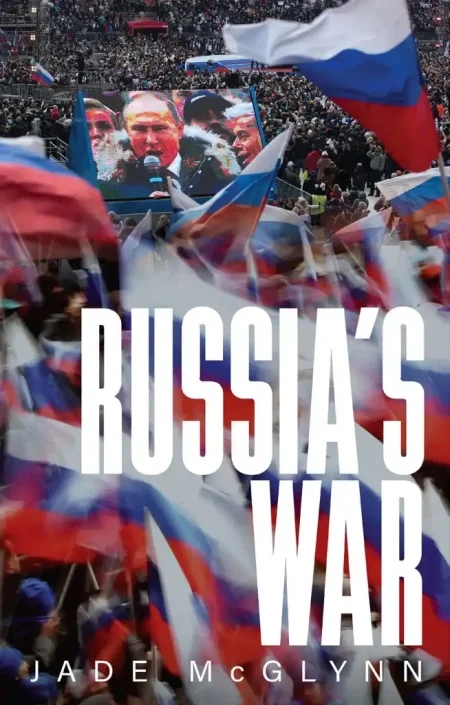
This one got a stinker of a review from Joy Neumeyer in the New Left Review, in which, among other things, Neumeyer accused author Jade McGlynn of plagiarizing her work. You can read that review here.
McGlynn’s basic argument is that the war in Ukraine is not Putin’s war but Russia’s war, as Putin and the war have broad support from the Russian population. I would generally agree, but the problem is that McGlynn then goes beyond this and tries to explain this phenomenon by recourse to a sort of Homo Sovieticus argument, namely that the reason why the Russian masses support Putin and the war is that they are psychologically retrograde.
Personally, I don’t see why it’s even necessary to write a whole book explaining the phenomenon. Populations everywhere tend to rally around the flag. It’s natural. And when they do, we don’t have to resort to explanations of the masses’ psychological failings. Why does Russians’ support for Putin mean that Russians are psychologically twisted in a way that Americans’ support for George W. Bush or Britons’ support for Tony Blair during the war in Iraq doesn’t?
By all means read ‘Russia’s War’ if you want, but I can’t say that I got anything useful from it.
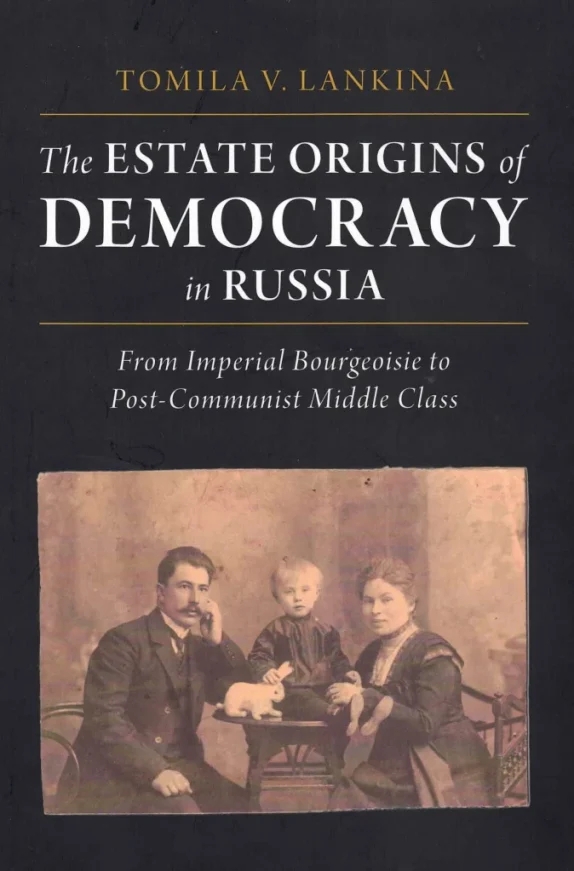
This one I haven’t actually read yet. It’s on my shelf awaiting a moment when I have spare time on my hands. The reason I got it is that the description of the book’s thesis seems fascinating. If I am understanding it right, author Tomila Lankina is claiming that there was an astonishing lack of social mobility in the upper middle classes in Russia in the twentieth century. It was more or less the same families who made up that class in Imperial Russia, Soviet Russia, and post-Soviet Russia. This existed alongside a newer, ‘inferior, second-class middle-class’ (as Lankina calls it) made up of ex-workers and peasants and their children, who rose up in the Soviet era. The two middle classes remained distinct, however, and it was the former that transmitted liberal values from the late Imperial era into the early post-Soviet one.
If true, this casts enormous doubt on the ability of governments of any hue to promote social mobility. Wealth and privilege, it seems, have a way of surviving even regimes dedicated to destroying them. Is it true? I guess I’ll have to read the book to find out.
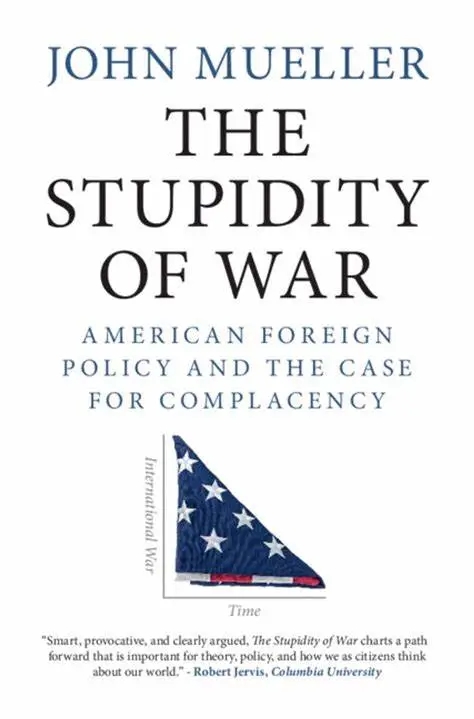
The title of this book – also still to be read – says it all. ‘The Stupidity of War’. Amen to that!
Writing
Some good news! I have another book on the way. It’s title has been confirmed as Russia’s World Order: How Civilizationism Explains the Conflict with the West. It will be published by Northern Illinois University Press (now an imprint of Cornell Univesity Press) on 15 April next year. It will be published as a trade book, and thus should be available at an easily affordable price. I will post the cover once it is available.
U.S. Intelligence Operatives Appear to Have Intentionally Groomed Mass Murderer Charles Manson
Status As a Police Informant Raises Suspicion That He Was an FBI and CIA Asset Out to Discredit the 1960s Counterculture

Source: dagospia.com
By Daniel Borgström – CovertAction Magazine – May 1, 2024
 The Sharon Tate murders were as bizarre as they were bloody, and the story behind the story is even stranger.
Journalist Tom O’Neill spent 20 years researching, interviewing and digging in his effort to get to the bottom of it. His book, CHAOS: Charles Manson, the CIA and the Secret History of the Sixties, co-authored by Dan Piepenbring, is an account of O’Neill’s personal odyssey as well as a presentation of his findings which unfold, page after page, in tragedy, weirdness and irony.
Charles Manson’s hit-team killed ten people, perhaps more. That was in California, back in the summer of 1969, while the U.S. Armed Forces were busily slaughtering millions of Asians in Vietnam. And in opposition to that war, hundreds of thousands of Americans marched in mass protests—the anti-war movement.
Even GIs and military veterans were speaking out against the war. The counterculture movement was in full bloom, having started for at least since “the summer of love” two years earlier. Woodstock, an historic occasion which drew 400,000 people to a music event in Upstate New York, also took place the year of the Manson murders in that same month of August.
War, anti-war, and counterculture—it was all going on when Charles Manson and his “family” suddenly stole the show and took center stage with that series of infamous killings. First there was the Gary Hinman murder, then the Sharon Tate killings, followed by the LaBianca murders. Two more victims about whom we do not often hear were Donald Shea, a caretaker at the Spahn Ranch, and Filippo Tenerelli, who was found dead in a Bishop, California, motel.

Source: cbsnews.com
The FBI’s COINTELPRO and the CIA’s CHAOS programs were also in play—part of intelligence’s covert war on dissent. Several shadowy characters, apparently CIA operatives, turn up in this story and appear to have crossed paths with Charles Manson. Among them was Dr. Louis Jolyon West of the CIA’s MK-ULTRA mind-control project. Another was Reeve Whitson who somehow knew of the Tate killings 90 minutes before anyone else did, and reported it in a phone call to Tate’s photographer. O’Neill devotes a chapter to each of them.
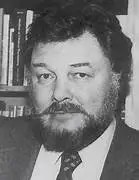
Dr. Louis Jolyon West [Source: jamanetwork.com
Thirty years had passed since the killings when O’Neill began work on his project in 1999. Several of the key players had already died, but Charles Manson was still in prison, and memories of the killings remained painfully alive. The topic was initially assigned to O’Neill as a magazine article, and the editor gave him three months to complete it.
However, as he launched into it, interviewing dozens—eventually hundreds—of cops, DA lawyers, clerks, Hollywood personalities, drug dealers and others, he found there was far more to the story than he had ever imagined.
He missed his deadline, then his next deadline, and the one after that. The project became his obsession, and the digging and research continued on through 20 long years of plowing through troves of documents: court records, old newspaper files, FOIA requests, and interviews. Research can be frustrating, and clearly it was. “Behind every solid lead, quotable interview, and bombshell document, I put in weeks of scut work that led to dozens of dead ends,” O’Neill tells us. His book finally came out in 2019.
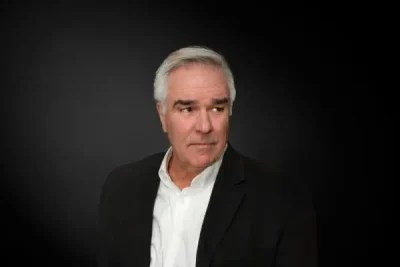
Tom O’Neill – Source: warwicks.com
Told in the first person, the book is a gripping detective story that I could not put down—actually an audio that I could not turn off. It is well written, and the audio by Kevin Stillwell is well read. My partner wanted to know what I kept listening to all the time. So I took off my headset and played it out into the room. She caught the bug and we listened to it together day after day, smitten by Tom O’Neill’s obsession.
At Charles Manson’s orders, people were murdered. This is a “mystery” where we know the “who-done-it” part of the story, but we are left to wonder and speculate about almost everything else—motives, the roles of intel and law enforcement, facts that were covered up, and who or what else might have been operating behind the scenes.
Crime novels typically end with the pieces all falling into place to form a coherent picture. Not so in most real-life crime mysteries, O’Neill cautions us. Some pieces are missing; others do not seem to belong, but they are there nonetheless, often in some grotesquely misshapen form.
A good many pieces are left over; they may seem important, but we do not know what to make of them. In this book, the author takes us into a world where cops, judges, prosecutors, witnesses and others do not function in ways that seem rational or above board.

Among the strange pieces in this picture puzzle is something O’Neill calls “Charlie Manson’s get-out-of-jail-free card.”
After having spent much of his life in various prisons, in 1967 Charles Manson was finally out on “federal parole for grand theft auto.” Being on probation is almost like living on the doorstep of a jailhouse.
A parolee can get thrown back in prison for the slightest mis-step. However, Charles Manson went around committing one offense after another—stealing cars, credit cards and firearms, sex with underage women, drugs, etc. Whatever a parolee was not allowed to do, Charles Manson did. He even flouted it. He was caught repeatedly, but none of his numerous violations landed him in jail for more than a few days at a time.
“We were told not to bother those people,” former Los Angeles County Deputy Sheriff Preston Guillory told O’Neill. It was a policy handed down from on high, Guillory said: “Make no arrests, take no police action toward Manson or his followers.”
Cops who had clues, evidence or solid proof of Manson’s violations were pulled back from their investigations. On the occasions when Manson was arrested, judges would let him go. His probation officer, Roger Smith, wrote glowing letters about Manson’s supposedly wonderful progress.
Normally, a probation officer would supervise 20 to 100 parolees; but Roger Smith was supervising only one person—Charles Manson. It was with the encouragement of Probation Officer Roger Smith that Manson spent a year in the Haight-Ashbury district of San Francisco, at the time a Mecca of the hippie counterculture.
There Charlie acquired his “family” of followers, and morphed into the Charles Manson known to history and legend—the charismatic guru and apocalyptic cult leader, acid-dropping mystic, guitarist and songwriter, con artist, car thief and general predator, manipulator and abuser, and evangelist who expatiated on the Book of Revelation.

Members of the Manson family. Source: reprobatepress.com
Manson was well-connected with Hollywood celebrities and music personalities: Doris Day’s son, music producer Terry Melcher, the Beach Boys, and many more, though most did not wish to have it known that they had been associated with him. Even after 30 years had passed, many refused to be interviewed by Tom O’Neill. The refusers’ list reads like a who’s who of Hollywood stardom. Cops and prosecutors were more inclined to talk, and some of them opened the author’s way to troves of documents and records.
Reading the accounts of these interactions, I sense that O’Neill must be something of a Will Rogers-type person who rarely met a person he did not like. And people in turn seemed to like him. Even officials who worked hard to cover things up seemed to warm up to him. Several, of course, including legendary prosecutor Vincent Bugliosi, eventually screamed at him and threatened to sue for millions of dollars.
Bugliosi was the attorney who had prosecuted Manson and afterwards wrote the best-selling Helter Skelter. In the courtroom and later in his book, Bugliosi presented Manson’s murder rampage as a scheme to blame the Black Panthers and thus spark a race war between blacks and whites. That became the official narrative, though it was doubted by people who had researched the case. Tom O’Neill devoted a chapter to reviewing “Holes in Helter Skelter”; he exposes Bugliosi’s handling of the case and does the coup de grâce on that theory.

Vince Bugliosi surrounded by reporters when he was prosecuting the Manson case in 1971. Source: nytimes.com
However, by the time O’Neill’s book came out, Bugliosi had passed on, and thus far his ghost has not risen up to carry out the threatened lawsuit. Another person who had threatened to sue O’Neill was music producer Terry Melcher, also dead by the time the book came out. There can be upsides to being a slow writer, taking a long time to do research.
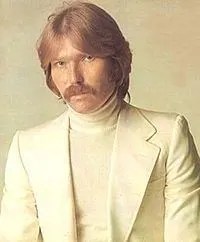
Terry Melcher Source: alchetron.com
“I’d spoken to duplicitous celebrities, seedy drug dealers, bumbling cops, and spurious prosecutors. I’d been threatened and cajoled and warned off my investigation. But I didn’t have a smoking gun. There were only mountains of circumstantial evidence,” O’Neill tells us.
So he kept going, finding more pieces of the picture. And it reads like the script of a film noir.
Throughout the drama, Charles Manson was being closely monitored by law enforcement agencies and intel. And yet, even while they were watching him, he sent his acolytes out on those brutal killing sprees of August 1969. Incredibly enough, despite the surveillance, it took law enforcement four long months to eventually arrest him and his hit team. During those extra months of free rein, Manson killed Shea and Tenerelli and perhaps more.
Los Angeles County Sheriff’s Department detectives had almost immediately found clues leading to Charles Manson; many Hollywood people also suspected him. So why did it take law enforcement so long to catch him? It appears that the “hands off Manson policy” was still in effect.
Actually, Manson was not the only person in this story who seemed to be immune to prosecution; similar immunity appears to have been granted to two or three Hollywood drug dealers who turn up in the story. That seems to be a fairly common practice in law enforcement.
“A lot of times we arrest people and the DA would say, ‘We can’t keep this person in custody, he’s too valuable, we want him on the streets,’” former Los Angeles Sheriff’s Deputy Guillory told O’Neill. “My suspicion is that Manson was left alone for a while for some reason.”
Former head deputy DA of Van Nuys, Lewis Watnick, gave a similar opinion. “Sometimes this is explained by just pure incompetence,” he said. “But this is not that. It dovetails right in. Manson was an informant.” Of course, that was just his guess, Watnick conceded, but it was an educated one, based on his 30 years of experience. “They’d been watching this guy for something large.”
Looking at the tolerance that authorities had for Manson’s lawbreaking, his relationship with probation officer Roger Smith, and more, it is hard to avoid the conclusion that somebody up there had a major investment in Mr. Charles Manson. They must have wanted him to do something. But what?
Along with his findings, O’Neill shares his uncertainties. “My work had left me, at various points, broke, depressed, and terrified that I was becoming one of ‘those people’: an obsessive, a conspiracy theorist… I don’t consider myself credulous, but I’d discovered things I thought impossible about the Manson murders and California in the sixties.” Further on, he tells us, “I thought most of all about the possibility that Manson, of all people, had some type of protection from law enforcement… It boggled the mind even to speculate that someone like Manson could be plugged into something bigger, and presumably even darker, than he was.”
Something darker than Charles Manson? Our leaders, and the establishment they work for, have a lot of closely guarded secrets—secrets that occasionally make their way out by way of researchers, whistleblowers, hackers, and even congressional hearings.
For background on the political environment of the late 1960s, O’Neill reviews the establishment’s war against the anti-war movement. That includes cases of people who were murdered as a result of FBI and CIA activities and manipulations here in the U.S. He ties this brutality to U.S. actions overseas.

Anthony Herbert – Source: ronsherman.com
O’Neill looks at the CIA’s Phoenix Program in Vietnam, a kill-capture campaign, which resulted in the death of thousands of Vietnamese civilians. He quotes from a Special Forces soldier, Anthony Herbert, about his time in the Phoenix Program: “They wanted me to take charge of execution teams that wiped out entire families and tried to make it appear as though the Viet Cong had done it themselves. The rationale was that the Viet Cong would see that other Viet Cong had killed their own and… make allegiance with us. The good guys.”
A mission shared by the FBI’s COINTELPRO and the CIA’s CHAOS was to disrupt and discredit the anti-war movement, and that, O’Neill points out, was one effect of the Manson murders. Of course, Charles Manson was not an anti-war activist; it is doubtful that he ever attended an anti-war rally. He was a product of the prison system who somehow found his way into the fringes of the counterculture movement, and there was a lot of overlap between the anti-war and counterculture movements. Many hippies were anti-war, and many activists smoked grass and grew their hair long.

Scene from the 1967 Summer of Love that Manson and the CIA/FBI were out to destroy. Source: allthatsinteresting.com
The corporate media, then as now, was the voice of the establishment elite, and dutifully presented the murderous Manson and his “family” to the world as poster children of the “hippie movement.” A lot of people bought that framing. Even people who self-identified as countercultural were saying, “Manson ended the Summer of Love!”—a message the corporate media pushed.
Although the killings were billed as the “crime of the century” and have received massive newspaper coverage ever since, few articles went beyond the sensational aspects and asked truly penetrating questions. When (in 1971) whistleblower LA Sheriff’s Detective Guillory went public with what he knew about Manson’s get-out-of-jail-free card, the media showed little interest. Nor did many journalists work out a related source and connection between these killings and a society waging a brutal and unjust war.
We assume that our leaders in Washington care about the lives of ordinary people. Our experience with them shows otherwise.
We remember Vietnam. There have been several murderous wars since then, and now Gaza. As I write this, our president and our Congress are in the sixth month of funding, arming and giving diplomatic support to apartheid Israel’s genocide of Palestinians.
Our leaders are not averse to promoting mass murder. We have the immortal words of former U.S. Ambassador to the UN Madeleine Albright: When asked in 1996 about U.S. sanctions causing the deaths of hundreds of thousands of Iraqi children, she replied, “We think the price is worth it.”
The powers that be are a bloodthirsty lot when it serves their interests, every bit as murderous as Charles Manson himself. But who might have been the local- or regional-level functionaries authorizing immunity for such criminals?
O’Neill tells us about several high-placed California officials. One was Evelle Younger, then Los Angeles DA. Younger was a former FBI agent who, during World War II, was with the Office of Strategic Services (OSS), the forerunner of the CIA, and also oversaw the prosecution of Sirhan Sirhan; he went on to be California Attorney General from 1971 to 1979.
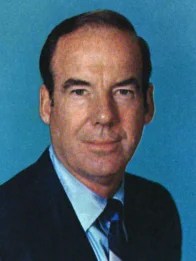
Evelle J. Younger Source: wikiwand.com
Another was California Governor Ronald Reagan’s chairman of the “Task Force on Riots and Disorders,” William W. Herrmann. Herrmann was a veteran of the CIA’s Phoenix Program; he had also been a lieutenant with the LAPD. However, O’Neill was not able to establish a definite connection between them and the on-the-ground operatives. We do get an idea of who they seem to have been.
In this book of strange dark characters, one of the stranger ones was Dr. Louis Jolyon West, known to his friends as “Jolly” West. He was a pioneering scientist of the CIA’s mind-control project—MK-ULTRA. In 1966 he came to San Francisco, shortly before Manson arrived, and his project was to study and manipulate hippies.
So there they were, the two of them, in the Haight-Ashbury. Tom O’Neill, with meticulous documentation, suggests that Manson became a product of Jolly West’s experiments.
Another dark character who seems to have worked for the CIA was Reeve Whitson, a friend of Sharon Tate and Roman Polanski. He somehow knew of the killings before anyone else did, and telephoned the awful news to Tate’s personal photographer, Shahrokh Hatami. That was 90 minutes before the bodies were discovered by Polanski’s maid.
Both Dr. Louis Jolyon West and Reeve Whitson are dead and gone, West in 1999 and Whitson in 1994, and are, thus, not available for interviews or comment.
In this book Tom O’Neill shows us convincing evidence that Charles Manson was some sort of operative, maybe unwittingly. It looks like the purpose of his handlers—presumably from the CIA’s CHAOS or the FBI’s COINTELPRO—was to set him up to create a bloody scene such as the one on August 9, 1969.
It needs to be recognized that Charles Manson and his followers served the establishment well. Nevertheless, they went to prison where they remained for the rest of their lives. Only one, Leslie Van Houten, was finally released last year on parole.
Lyndon Johnson’s Role in the JFK Assassination
By Jacob G. Hornberger | FFF | April 29, 2024
Ever since the assassination of President John F. Kennedy, a question has naturally arisen: What role, if any, did Vice-President Lyndon Johnson play in the assassination?
With the publication of Douglas P. Horne’s massive 5-volume book Inside the Assassination Records Review Board, the national-security establishment’s role in the assassination has now been established beyond a reasonable doubt. That’s because Horne meticulously detailed the fraud in the autopsy that the U.S. military carried out on Kennedy’s body on the very evening of the assassination. Horne served on the staff of the ARRB in the 1990s.
Examples of autopsy fraud set forth by Horne (which are summarized in my book The Kennedy Autopsy) include (1) sneaking JFK’s body into the Bethesda Naval morgue before the official start of the autopsy in order to perform pre-autopsy surgery designed to hide evidence of shots having been fired from Kennedy’s front and (2) two separate brain examinations, the second of which involved someone else’s brain rather than Kennedy’s. Horne’s findings have now been reinforced and built upon in a new book, The Final Analysis by David Mantik, M.D., Ph.D. and Jerome Corsi, Ph.D.
At the risk of belaboring the obvious, there is no innocent explanation for a fraudulent autopsy. It necessarily means criminal culpability of the national-security establishment in the assassination itself. There is no way around that. That’s how we can definitively conclude that the JFK assassination was one of the national-security establishment’s patented regime-change operations based on what have become the two most important words in the American political lexicon — “national security.” See FFF’s book JFK’s War with the National Security Establishment: Why Kennedy Was Assassinated.”
But what about Johnson? Was he just an innocent beneficiary of the assassination? Actually not. The circumstantial evidence establishes beyond a reasonable doubt that Johnson himself was up to his neck in the assassination. Johnson had three primary roles in the assassination.
The first role was to get JFK’s body out of Dallas and deliver it into the hands of the military. Keep in mind that JFK’s murder was a state criminal offense. At that time, it was not a federal crime to assassinate a president. Therefore, no federal agency had any jurisdiction over the crime. That includes the Pentagon, the CIA, and the FBI.
Under Texas law, the Dallas County Medical Examiner, Dr. Earl Rose, was required to perform an autopsy on JFK’s body. Immediately after JFK was declared dead, Rose announced that he was going to perform the autopsy. A team of Secret Service agents immediately declared that no such autopsy would be permitted. Headed by a Secret Service agent named Roy Kellerman, who was brandishing a Thompson sub-machine gun, the Secret Service team began screaming, yelling, and cussing as they began forcing their way out of Parkland Hospital with the president’s body, which had been placed in a heavy casket. Rose refused to give ground, insisting, correctly so, that Texas law required him to perform the autopsy before the body could be released. One Secret Service agent physically picked up Rose, carried him to a nearby wall, and wagged his finger in his face. The others pulled back their suit coats to brandish their guns, thereby threatening to use deadly force against anyone who got in their way.
Kellerman declared that he and his team were simply following orders. There is only one person who could have issued such an extraordinary order to Kellerman — Lyndon Johnson, either directly to Kellerman or indirectly through one of Kellerman’s superiors. Who else would have dared to issue an order that violated state criminal law?
In fact, Johnson’s own actions confirm that he was the person who issued the order. Once JFK was declared dead, Johnson headed to Love Field, where he ordered seats to be removed from the back of Air Force One to make room for the big casket in which JFK’s body had been placed. Johnson had absolutely no intention of waiting at Love Field for the 2-3 hours that would have been needed to complete the autopsy. He was removing those seats in the full expectation that the casket and the body would be arriving shortly. How would he know that? Because he had to have been the one who issued the order to Kellerman to get the body out of Parkland at all costs and deliver it to Johnson at Love Field.
The second role that Johnson had was to conjure up the prospect of World War III by suggesting that the assassination might be the first step in a nuclear attack on the United States by the Soviet Union. He first raised this possibility while he was waiting at Parkland Hospital for Kennedy to be declared dead. He raised it again on the way to Love Field.
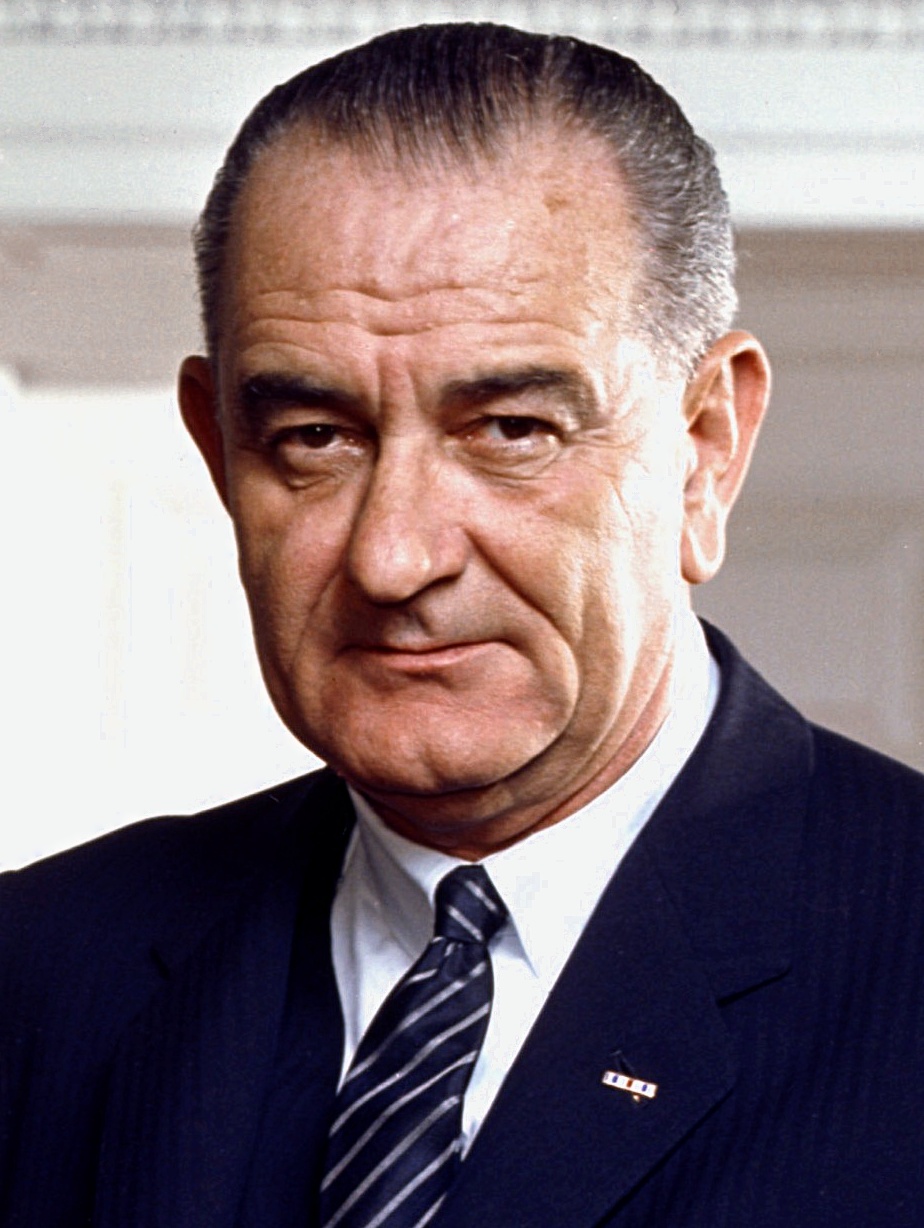
Yet, when Johnson arrived at Love Field, his actions belied any such concern. Rather than get up in the air immediately in order to direct America’s defenses and counterattacks to a possible Soviet nuclear attack, he instead lollygagged at Love Field, waiting, first, for a federal judge to arrive and swear him in as president and, second, for JFK’s body to be delivered to him. In fact, JFK was declared dead at 1 p.m. and LBJ waited until 2:47 to take off. That was the action of a person who knew for certain that the assassination could not possibly have been the first stage of a Soviet nuclear attack on the United States. The only way that Johnson could have been so certain is that he knew that it was not the Soviets who committed the assassination.
Once Johnson arrived at Andrews Air Force Base in Maryland, he dutifully delivered JFK’s body into the hands of the military, notwithstanding the fact that the military had absolutely no jurisdiction whatsoever to conduct such an autopsy.
It was not the last time that LBJ conjured up the possibility that the Soviets or the Cubans had assassinated JFK, however. When he began inducing people to join what became known as the Warren Commission, he once again conjured up the possibility that the assassination had been committed by the Soviet Union or Cuba. Why would he do that? Because that was the way that the plotters were able to get the investigation into the assassination shut down immediately — in order to ostensibly avoid World War III and all-out nuclear war that would come with it.
How did this ingenious strategy play out? As I detail in my book An Encounter with Evil: The Abraham Zapruder Story, the plot called for shots being fired from the front and the back. That would establish a conspiracy with the supposed communist, Lee Harvey Oswald, a U.S. intelligence agent who the national-security establishment was setting up to take the fall. The only people with whom Oswald would have been supposedly conspiring were the Soviet Union and Cuba. That was the purpose of setting up Oswald in New Orleans and Mexico City as a supposed communist agent.
Keep in mind that JFK and his brother RFK had initiated Operation Mongoose, whose aim was to oust Cuban leader Fidel Castro from power. Keep in mind also that the CIA had repeatedly tried to assassinate Castro. Thus, Johnson’s second role was to assert that the communists had gotten to JFK first and that if the United States responded to their assassination of JFK, World War III would occur. Therefore, the only way to obviate going to war based on what the Kennedy brothers had started was to immediately shut down the investigation and hide the fact that shots had been fired from the front.
The third role that LBJ had was to ensure that there would never be an official investigation that could lead to the national-security establishment, including, of course, with respect to the military’s fraudulent autopsy. That was the purpose of appointing former CIA Director Allen Dulles to the Warren Commission. Dulles, who Kennedy had fired after the Bay of Pigs disaster and who loathed Kennedy, ensured that the commission stayed on track with the official lone-nut narrative.
Finally, it should be noted that if JFK had not been assassinated, it was a virtual certainty that LBJ would have been removed from office, indicted, and convicted for political corruption. In fact, it is also a virtual certainty that Johnson knew that Robert Kennedy, the attorney general, who loathed Johnson, was furnishing evidence of Johnson’s corruption to LIFE magazine. Thus, LBJ, who had a lifelong obsession to become president, had a choice: Go to jail or participate in the assassination of JFK and become president. He chose the latter course of action and, after being elected president in the 1964 election, gave the U.S. national-security establishment what Kennedy had refused to do–its war in Vietnam.
The Queen of Climate Crackpottery

By Tony Thomas | Quadrant | April 15, 2024
Trigger warning: if your household companions include a cat, dog, canary, goldfish or turtle, this article is not a safe space. I’m writing about Harvard’s distinguished agnatologist Professor Naomi Oreskes (above) and her 2014 warning that global warming would kill your pets in 2023. The warning is in her acclaimed but glum book The Collapse of Western Civilization: A View from the Future. Given margins of error in climate science, the pet die-off might be this year instead. Oreskes wrote,
The loss of pet cats and dogs garnered particular attention among wealthy Westerners, but what was anomalous in 2023 soon became the new normal . … A shadow of ignorance and denial had fallen over people who considered themselves children of the Enlightenment (p9).
Smarter climate alarmists don’t make short-term predictions. They choose a date like 2050 for when the oceans will boil. They’ll be senile or dead by then and can’t be humiliated if the oceans stay chilly.
Top environmentalist Paul Ehrlich forecast in 1971 that by 2000 the UK “will be simply a small group of impoverished islands, inhabited by some 70 million hungry people … If I were a gambler, I would take even money that England will not exist in the year 2000.”[1] His 1968 book, Population Bomb, predicted starvation would shrink the US population to 23 million by 1999. Strangely, Oreskes in her book hails Ehrlich as a vindicated futurist. (p3-4 and 56).
The only good news from Naomi is that the IPCC becomes [more] discredited and is disbanded. She replaces it with such alphabet soups as the UNCCEP’s ICCEP which launches IAICEP, which she says is pronounced “ay-yi-yi-sep” (p27).The mission of ay-yi-yi-sep is to sprinkle enough fairy dust aka sulphates in the air to make an anti-sun umbrella and save the planet by 2079.
In September 2014 she was interviewed on the ABC’s Science Show by Dr (honoris causa) Robyn Williams, a Fellow of the Australian Academy of Science, about the pet-deaths. One reader, she explained,
… started crying when the pets die, so I didn’t mean to upset people too much … I was just trying to come up with something that I thought people wouldn’t forget about, and I thought, ‘Well, Americans spend billions of dollars every year taking care of their pets’, and I thought if people’s dogs started dying, maybe then they would sit up and take notice.
Interviewer Dr Williams[2] was delighted with Oreskes’ pet-panic strategy. He chimed in,
Yes, not only because it’s an animal but it’s local. You see, one criticism of the scientists is they’re always talking about global things…And so if you are looking at your village, your animals, your fields, your park, your kids, and the scientists are talking about a small world that you know, then it makes a greater impact, doesn’t it.
Oreskes: Well, exactly. It was about bringing it literally home, literally into your home, your family, your pet, the dog or cat that you love who is your faithful and trusted companion.
As I type this, I look down fondly at Natasha, our doomed spaniel, although she is neither faithful nor trustworthy.
Oreskes began her Science Show appearance by reading from her book in sepulchrul tones:
Then, in the northern hemisphere summer of 2041, unprecedented heatwaves scorched the planet [and] led to widespread outbreaks of typhus, cholera, dengue fever, yellow fever, and viral and retroviral agents never seen before.
Naomi’s actually playing down her future horrors, she omits to tell him about the arrival of the Black Death:
Dislocation contributed to the Second Black Death, as a new strain of the bacterium Yersinia pestis emerged in Europe and spread to Asia and North America. In the Middle Ages, the Black Death killed as much as half the population of some parts of Europe; this second Black Death had similar effects. (p30).
Australians will wonder: does Medicare charge extra premiums to cover bubonic plague?
Williams, instead of asking Oreskes what she’s smoking, merely observed that all of the above is “fairly shocking”. He further wondered why it is only Western civilization that collapses, leaving the Chinese in charge. One reason, says Oreskes, is that Chinese civilisation is more durable, and two, that authoritarian regimes are better able to deal with hypothesised climate apocalypses.
Looking back from the future, Oreskes viewed China in the early 2000s as a beacon of carbon enlightenment. China, she said,
… took steps to control its population and convert its economy to non – carbon – based energy sources. These efforts were little noticed and less emulated in the West, in part because Westerners viewed Chinese population control efforts as immoral, and in part because the country’s exceptionally fast economic expansion led to a dramatic increase in greenhouse gas emissions, masking the impact of renewable energy. By 2050 , this impact became clear as China’s emissions began to fall rapidly. Had other nations followed China’s lead, the [grim future] history recounted here might have been very different. (p6).[3]
Another interviewer — a friendly one, actually — played the devil’s advocate:
Interviewer: Just how much do you hate the American way of life? What gives you the intellectual chutzpah to make these kinds of projections?
Oreskes: Our story is a call to protect the American way of life before it’s too late.
I identify with Oreskes, who grew up in New York, because as a lass she was a geologist working on Western Mining Corp’s Olympic project in central Australia. I phoned WMC’s retired boss Hugh Morgan but he couldn’t give me any piquant anecdotes about young Naomi.
Her sojourn Down Under must have been unhappy because she’s forecast that the climate emergency will kill off every Australian man woman and child (all 26 million of us). “The human populations of Australia and Africa, of course, were wiped out.” (p33). As a resident of Australia’s pagan state of Victoria, I don’t believe in the afterlife, although I am bringing a change of underwear. (Witticism courtesy Woody Allen).
Oreskes dropped geology to co-write that Merchants of Doubt book, painting “climate deniers” as the evil twins of those denying that smoking causes cancer. The book in 2021 was set to music by composer Yvette Jackson, who sees climate doubt as having the
… low, somber insistence of the bass clarinet, skittering flute that cranks up anxiety, sonorous cello to hold things together, and the deep, doubting rumble of double bass.
Listen to that anxious, sonorous cello and more here (fourth video down).
At 65, Naomi’s job title is Harvard Professor of the History of Science — but don’t call, she’s on leave. She co-wrote her civilisational-collapse book with fellow alarmist Erik Conway. Her other collaborators include Pope Francis: she did the intro for his Laudato si’ encyclical in 2015.
Wikipedia lists only 30 of her honours, including the Stephen H. Schneider Award in 2016 for communicating “extraordinary scientific contributions” to a broad public in a clear and compelling fashion. Schneider (1945-2010) was a top IPCC climate scientist. He urged colleagues there to strike a balance between scaring the pants off the public and being honest about how weak the CO2 evidence really is. Oreskes also scored the 2019 Mary Rabbit Award from the US Geological Society. Her lifetime of bashing denialists is surely worth a million-dollar Nobel.
The Collapse book is about Western civilisation’s ruin while China saves the planet with its enlightened anti-CO2 measures. She is writing from the future in 2393 when she will be aged 435. Oreskes (as at 2393) is cross because we have refused to build enough windmills to stop at 11degC warming (p32) and eight-metre sea rises (p30). We should not have eaten so many fillet steaks[4] and, personally, I should not have tooled around in my reasonably priced, petrol-powered Hyundai i30 when Teslas were available at $80,000.
Oreskes was talking about Collapse at a Sydney Writers’ Festival when someone in the audience piped up, “Will you write fiction next?” She doesn’t of course view Collapse as fiction: “Speculative? Of course, but the book is extremely fact-based” (p79). And she elaborated to the ABC’s Dr Williams, “Well, it’s all based on solid science. Everything in this book is based on the scientific projections from the Intergovernmental Panel on Climate Change. All we did was to add to the social and human aspects to it and to ask the question; what does this really mean in terms of what its potential impacts would be on people and its potential impacts on our institutions of governance?”
Her “science based” technical projection involved an angry summer in 2023 continuing year-round, “taking 500,000 lives worldwide and costing nearly $ 500 billion in losses due to fires , crop failure , and the deaths of livestock and companion animals” (p8) In 2014, how was Naomi (no-one’s perfect) to know that current agricultural output and yields continue smashing records?
The book’s “fact-based” projections have drought and desert ravaging the US in the 2050s:
The US government declared martial law to prevent food riots and looting [similar to 2020s’ mostly-peaceful burning and robbing]. A few years later, the United States announced plans with Canada for the two nations to begin negotiations … to develop an orderly plan for resource-sharing and northward population relocation (p26).
The talks led to the combined United States of North America. I imagine Texans started adding “eh” to their sentences, as in Why do Canadians say “eh?”? It’s so silly right? Because we want to, eh.
Even at the age of 435 in 2393, Oreskes remains really sore about the Climategate email scandal of 2009 (IPCC climate scientists conspiring to fudge data). She blames Climategate on a “massive campaign” that was “funded primarily by fossil fuel corporations” (p8) — this alleged largesse must have by-passed sceptic bloggers, who still rely on their tip jars. Oreskes remains vigilant to smite deniers:
It will also be crucial not to allow new forms of denial to take hold. We are already seeing examples, such as the false claim that off-shore wind kills whales and that restrictions on gas stoves are the latest excuse by liberals to control our lives and deny our freedom. Scientists will have to work with climate activists to block the spread of such misleading narratives.
She finished her interview with the ABC’s Dr Williams by claiming, improbably, that some readers of Collapse wished her 80-page book to be longer. She explained,
We didn’t want it to be too depressing, we didn’t want to go on and on and on, like 300 pages of misery, that really wouldn’t be any fun. So we are sort of hoping that the book, despite the fact that it’s a depressing topic, it’s actually we think kind of a fun read.
Apart from our dead kittens, that is.
[1] Speech at British Institute For Biology, September 1971. Link broken.
[2] The ABC Ombudsman told me it’s fine for people with honorary doctorates to be called “Dr” in any context.
“The ABC style guide does not form part of the editorial standards and we consider there is nothing materially inaccurate in referring to Ms O’Donoghue as Dr O’Donoghue.” Email from James, Investigations Officer, ABC Ombudsman’s Office, Feb 14, 2024. (The late Ms Donoghue’s Doctorates are honorary).
[3] On the ABC iview’s posting of the Oreskes/Williams interview, the ABC claimed the planet was warming at the top of the IPCC models’ forecasting. I wrote to my friend Kirsten McLiesh, who runs Audience & Consumer Affairs (i.e. the complaints department) pointing out that actual warming was at the bottom of the IPCC models’ range. In those days (2014) the ABC had some integrity and Kirsten wrote back,
“Having been alerted to your complaint, the program acknowledges that the sentence read on the website as an incontrovertible fact and have undertaken to remove it. An Editor’s Note has been added to the page.”
[4] Oreskes, Twitter May 4, 2023: “I’m often asked “What can I do to stop climate change.” That’s a hard question because so much of the change we need is structural, but this new study proves one thing: EAT LESS BEEF. (And now, drum roll, here come the beef industry trolls.)”
Tony Thomas’s latest book from Connor Court is Anthem of the Unwoke – Yep! The other lot’s gone bonkers. $34.95 from Connor Court here
Featured Video
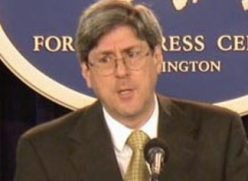
Pentagon insider says high US official Douglas Feith reported to Netanyahu
or go to
Aletho News Archives – Video-Images
Frlom the Archives
Who’s to blame for the Iraq war?
A not-so-trivial quiz
By Maidhc Ó Cathail | 14 March 2010
Maidhc Ó Cathail names and shames the top 19 politicians, academics and policy makers – all con men and all Zionist Jews – who lied and conspired to steer the US toward aggression against the Iraqi people. … continue
Blog Roll
 Aletho News
- Pentagon insider says high US official Douglas Feith reported to Netanyahu
- The Sludging of Rural America
- Lawyers’ groups demand end to British military bases in Cyprus
- CIA Assessment: The Resistance Cannot Be Crushed
- Hezbollah Returns: It Didn’t Start a War, It Is Ending One
- EU states seek ‘talks’ with Iran for access to Strait of Hormuz: Report
- Trump on Hormuz: “Others must take care of it” after US falters
- Who Is closer to collapse?
- A War that Backfired: Why the US-Israeli Campaign Is Strengthening Iran
- How Zionist Control Is Hurting US Interests
- If Americans Knew
- As US-Israel war on Iran rages, Gaza faces massive dust storm – Not a ceasefire Day 156
- No let-up in attacks on Gaza as Israel takes on Iran, Lebanon – Not a ceasefire Day 155
- ‘Of Course’: IDF Drops Case Against Soldiers Accused of Raping Palestinian Prisoner
- Don’t Fall for the Regime Change Talk. Israel Is ‘Mowing the Lawn’ in Iran
- Will Israel and the US wreck the Gulf States along with Iran?
- US so far burned through ‘years’ of munitions in Iran war: Report
- How the Israeli Tail Wags the American Dog
- Outdated intel likely led to deadly U.S. strike on Iranian elementary school, sources say
- Pentagon insider says high U.S official Douglas Feith reported to Netanyahu
- In fond memory of Walid Khalidi, the historian of Palestine
- No Tricks Zone
- Storing Green Energy To Last Germany 10 Days Would Require A 60-Million Tonne Battery
- New Studies: UK Sea Levels Were 4 Meters Higher Than Today During The Mid-Holocene
- Destructive Green New Deal: German Energy And Metal Group Warns Of Drastic Crisis
- New Study Documents A 20-Year Pause In Arctic Sea Ice Decline – Driven By Internal Variability
- Wake-up Call: Survey Shows Majority Of Germans Now Favor Postponing Climate Targets!
- Televised! Leading German Political Candidate Tells Schoolchildren CO2 Makes Sun Hotter!
- New Study: A Century Warming Of 1.1°C Is ‘Commonplace’ And ‘Not Unusual’ During This Interglacial
- New Study: ‘Internal Noise’ And Volcanic Forcing Can Trigger 10-15°C Warming Within Decades
- Glaciers Worldwide Are Suddendly Surging, Experts Blame Warming!
- Surprising Discovery: Sahara Is Greening…Billions Of Trees Where Once Thought To Be Barren
 Aletho News
