Billionaires and Officials Are Just Blatantly Ignoring the Will of the People Now
Truthstream Media | May 7, 2026
Please help support us on Patreon, read our goals here:  / truthstreammedia or SubscribeStar here: subscribestar.com/truthstreammedia
As context is very important for all videos, this message is to confirm that the purpose of this video is reporting on or documenting the content.
Note that we make an effort to research for context and cite our sources as appropriate.
Truthstream Media Can Be Found Here:
Our First Film: TheMindsofMen.net
Our First Series: Vimeo.com/ondemand/trustgame
Site: TruthstreamMedia.com X: @TruthstreamNews
Backup Ch: Vimeo.com/truthstreammedia
DONATE: http://bit.ly/2aTBeeF
Newsletter: http://eepurl.com/bbxcWX
The FCC Wants Your ID Before You Get a Phone Number
By Ken Macon | Reclaim The Net | May 6, 2026
The era of the anonymous phone number could be ending. On April 30, the Federal Communications Commission unanimously approved a proposal requiring telecom providers to verify customers’ identities before activating service.
Government-issued ID, physical address, legal name, and existing phone numbers would all be included. The stated goal is stopping robocalls. The result would be an identity-verification regime covering one of the last semi-anonymous communication tools available to ordinary Americans.
The proposal applies to nearly every voice provider in the country, from traditional carriers and mobile operators to VoIP services. The FCC is seeking public comment on specifics, but the direction is clear.
FCC Chairman Brendan Carr framed it around negligent carriers. “As we have continued to investigate the problem of illegal robocalls over the last year, it has become clear that some originating providers are not doing enough to vet their customers, allowing bad actors to infiltrate our U.S. phone networks,” he said. Some providers, he added, “do the bare minimum (or worse) and have become complicit in illegal robocalling schemes.”
That language targets telecom companies and the surveillance targets everyone else.
The framework borrows from banking’s anti-money-laundering rules. The FCC is also asking whether carriers should retain identity documentation for at least four years after a customer leaves and whether they should check customers against law enforcement watchlists. Penalties would shift to a per-call basis, meaning fines of $1,000 to $15,000 for every illegal call a poorly verified customer places.
The real privacy stakes sit in the proposal’s section on prepaid service. Right now, you can pay cash for a prepaid phone and SIM card without showing identification. Journalists use prepaid phones to protect sources, domestic violence survivors use them to avoid being traced, and whistleblowers, activists, or anyone with a reason to separate phone activity from legal identity relies on this.
British journalist faces ‘anti-terror probe’ after Iran visit, reporting on US-Israeli crimes

Press TV – May 6, 2026
In a politically motivated move, a UK-based independent journalist and activist faces an “anti-terror probe” after her recent visit to Iran, where she reported on post-war developments, including massive rallies against the US-Israeli war coalition.
Observers say the move punishes legitimate political expression as the UK government seeks to silence dissenting voices critical of the unprovoked war against the Islamic Republic.
Bushra Shaikh, a British media personality who has been vocal about the US-Israeli war of aggression against Iran as well as the ongoing genocide in Gaza, has been referred to the Metropolitan Police’s Counter-Terrorism Command over a speech she delivered at a rally in Iran during her recent visit.
The referral, which comes just days after her return from the Islamic Republic, has raised serious concerns about the UK government weaponizing “anti-terror” laws to target individuals whose political views diverge from its stance on West Asia developments.
In a video shared online, Shaikh was seen addressing a rally in Iran, in which she expressed her solidarity with the people of Iran and condemned the aggression against them.
During the rally, flags of regional resistance movements, including Hezbollah, were seen.
Within hours of the post going live, a formal complaint was lodged with Scotland Yard, as reported by British media, alleging that Shaikh may have breached the Terrorism Act, which criminalizes “inviting support” for a banned group.
The report further claimed a potential violation of the National Security Act’s new Foreign Influence Registration Scheme (FIRS), which requires individuals acting under the direction of a foreign power to register their political activities.
“Any allegations relating to possible terrorism or national security-related offences will be passed to officers within Counter Terrorism Policing, who will assess the details and take any further action as appropriate,” the Met Police was quoted as saying.
During her visit to Iran, as part of a foreign media delegation invited by the Sobh Media Center, Shaikh visited many cities and interacted with victims of the recent war.
She also interviewed government officials, including foreign ministry spokesperson Esmaeil Baghaei and chairman of the parliament’s foreign policy and internal security commission Ebrahim Azizi, which she also shared on her social media platforms.
In the recent past, many British journalists, activists and academics have faced draconian charges in their country after visiting Iran to attend conferences or media festivals, including the Sobh International Media Festival, organized by the Islamic Republic of Iran Broadcasting (IRIB) World Service.
Israeli telecom networks used for mass surveillance across countries
Al Mayadeen | May 4, 2026
A probe by the digital research group Citizen Lab has uncovered that telecommunications infrastructure owned by Israeli companies has been weaponized to track citizens in more than 10 countries over the past three years, exploiting decades-old network protocols and modern 5G systems to transform them into sophisticated tracking devices.
According to a report published by the Israeli news outlet Haaretz, the investigation revealed that infrastructure ranging from legacy networks built in the 1970s to the latest 5G systems has been repurposed into surveillance tools using advanced spyware programs. Since November 2022, over 15,700 attempts to pinpoint phone locations have been detected across numerous countries, including Thailand, South Africa, Norway, Bangladesh and Malaysia, all routed through the networks of “Israel”-based telecommunications firms.
The findings raise serious questions about “Israel’s” role in the global surveillance industry, as the very infrastructure designed to connect people has been turned into a mechanism for tracking them without their knowledge or consent.
Internal documents cited by Haaretz revealed that Verint, the parent company of Cognyte, sold an SS7-based location tracking system called SkyLock to a government client in the Democratic Republic of Congo.
The SS7 protocol, originally developed to route calls and texts, support international roaming, and enable interoperability between mobile operators, has been systematically exploited for surveillance purposes.
The investigation also found that Fink, a Swiss telecommunications company, enabled Israeli surveillance firms such as Rayzone to impersonate legitimate cellular carriers and connect to older mobile networks. This allowed the firms to track users worldwide by abusing the SS7 signaling protocol.
The exploitation was not limited to legacy systems. Next-generation Diameter protocols, which manage 4G and 5G networks, were also compromised, according to the findings. One particularly notable method identified was SIMjacking, where a hidden text message sent to a target device forces the SIM card to reveal its location without the user ever seeing the message.
The phone-tracking operations were carried out through the networks of Israeli telecom companies 019Mobile and Partner Communications. 019Mobile responded by stating that it is a virtual operator and that its identity may have been impersonated, denying any involvement in tracking activities.
No immediate responses were received from Fink, Partner Communications, Exelera Telecom, Cognyte, or Verint.
The investigation exposes a disturbing reality: Israeli telecommunications technology, sold and deployed around the world, is not merely passive infrastructure but has been deliberately weaponized for mass surveillance.
The involvement of major Israeli firms in selling tracking systems to authoritarian governments, and the exploitation of global telecom networks by Israeli surveillance companies, points to a systematic pattern rather than isolated incidents.
As the US-Israeli war on Iran continues to dominate headlines, the international community has once again turned a blind eye to “Israel’s” role as a global leader in surveillance and cyber-weapons. From Pegasus spyware to SS7 exploits, Israeli technology has been used to track journalists, activists, and ordinary citizens across multiple continents.
House Resolution Calls for Tech Companies to Censor Speech
Legislation introduced by two AIPAC funded representatives
By Kurt Nimmo | Another Day in the Empire | May 2, 2026
This one slipped under the wire. Tucker Carlson talked about it the other day, but beyond that, it is flying sans transponder. On February 29, New Jersey Democrat Josh Gottheimer and New York Republican Mike Lawler introduced “a bipartisan resolution condemning the rise of antisemitic, hate-filled rhetoric disseminated by prominent online personalities, including Hasan Piker and Candace Owens, and calling on social media platforms and public leaders to take stronger action against hate,” according to Gottheimer’s taxpayer funded website.
Watch at Rumble
“The resolution highlights the growing influence of online personalities and the alarming surge in antisemitism driven, in part, by disinformation and extremist rhetoric… When influential voices spread conspiracy theories, promote terrorism, or dehumanize Jewish people, it fuels real-world violence and intimidation. We must stand up and speak out.”
Owens, Gottheimer’s post continues, “has trafficked in vile conspiracy theories, promoted blood libels, and platformed Holocaust deniers,” and Piker has “dehumanized Orthodox Jews” The post continues with debunked lies concerning the Hamas al-Aqsa Flood open-air prison breakout on October 7, 2023.
Lawler received $1,069,875 and Gottheimer $2,062,601 from the Israel lobby. Both are essentially paid operatives for the Likud government of Israel. Furthermore, both “representatives” are traitors to the the Bill of Rights and have violated their oath to support and defend the Constitution of the United States against all enemies, foreign and domestic.
The Democrat Gottheimer, sounding like a staunch MAGA Republican, declared the “relationship with Israel is key to our national security. Terrorists hate the United States more than they hate Israel.” Lawler voted for a budget “that cut Medicaid and raised the cost of healthcare for millions of Americans, while saying US taxpayer funding for Israel should be ‘unconditional’ and voted for over $18 billion in weapons to Israel in 2024,” thus revealing his priorities (and making sure AIPAC sweetens his pot for the next election).
Last August, Israeli PM Netanyahu directly inserted himself in domestic American politics by demanding “the algorithms and the social networks” be censored to eliminate criticism of Israel.
In April, Zionist podcaster and self-proclaimed constitutionalist Mark Levin denounced critics of Israeli apartheid and genocide as “Nazis” and “jihadis” and said they are “inciting” violence with their speech. He argued the freedom of speech, once considered god-given and natural in America, is “overprotected.” Carlson said “Mark Levin, the right wing MAGA guy, is saying those people [critics of Israel] should be silenced by the tech companies.”
Another podcaster, Ben Shapiro, told the Palm Beach Gardens Chabad synagogue that X is an “unusable” and “vile stream of trash.” He admitted reaching out “to Elon’s people about” the criticism of Zionism he considers contemptible. “The algorithms are destroying America,” he said.
“We will monitor social media, and check your bank accounts,” Jonathan Greenblatt, the leader of the ADL, threatened in January. He said the ADL “shares the information with the FBI” gathered on anti-Zionist “extremists.” In June, he demanded companies “knock the anti-Zionists off the platform once and for all.” Research from the ADL’s Center for Technology and Society posted to X “shows that five major platforms are still failing to enforce” the removal of content critical of Israel and Zionists.
Israel-born Chabadnik Rabbi Yehuda Kaploun, Trump’s czar of antisemitism, announced in December the State Department will establish a “whole division” to combat criticism of Israel and is working to develop social media algorithms that exclude “misinformation.”
“From YouTube to X, Wikipedia, and TikTok, Zionists are capturing all means of communication to erase the evidence of its genocide, reshape the historical record, and censor those critical of it,” writes Robert Inlakesh for the Palestine Chronicle. “Those who are critical of Israel are being censored or arrested.”
Tucker Carlson warns full-blown censorship will soon arrive in America through legislation forcing technology corporations to remove content deemed antisemitic by Israel and Zionists in America. “Criticizing the behavior of a foreign government is a hate crime and can get you censored in your own country,” he said.
So what’s the takeaway from all this? Well, the first takeaway is censorship is coming, and it will work unless people exercise their God-given and First Amendment-guaranteed right to push back against it with words and do so at high volume without any shame at all. It’s going to need a refusal to be intimidated by false claims of, quote, hate.
COVID Conniving Receives First Federal Indictment
By Jim Bovard | The Libertarian Institute | May 1, 2026
David Morens, a former top advisor to COVID Czar Tony Fauci was indicted this week and “charged with conspiracy against the United States; destruction, alteration, or falsification of records in federal investigations; concealment, removal, or mutilation of records; and aiding and abetting,” according to the Justice Department press release.
Morens allegedly helped top federal health officials cover up the potential role of federal grants in spurring the COVID pandemic. The Freedom of Information Act (FOIA) requires federal agencies to preserve and disclose federal records with some narrow exceptions. In early 2021, Morens emailed a colleague, “I learned from our foia lady here how to make emails disappear after i am foia’d but before the search starts, so i think we are all safe.”
Morens added, “Plus i deleted most of those earlier emails after sending them to gmail.” In a previous email, he assured his collaborators, “I have spoken to our FOIA folks” and “I should be safe from future FOIAs. Don’t ask how…”
Fauci doesn’t need to worry about getting indicted since President Joe Biden, on his last morning in office, pardoned any crimes that Fauci might have committed in the previous decade. Fauci justified COVID mandates because average citizens “don’t have the ability” to determine what is best for them. Congressional investigations revealed that Fauci was at the center of string-pulling to shirk responsibility on COVID.
Top federal officials scrambled to erase the federal role in bankrolling reckless gain of function research at the Wuhan Institute of Virology in China, the most likely source of the COVID virus that killed more than seven million people around the world. That type of research seeks to genetically alter organisms to enable the spread of viruses into new species. As MIT professor Kevin Esvelt asked in 2021, “Why is anyone trying to teach the world how to make viruses that could kill millions of people?” The risks were compounded because the Wuhan Institute had a very poor safety rating. Two years earlier, the State Department confidentially “warned other federal agencies about safety issues at Wuhan labs studying bat COVID,” but the public disclosure of that alert was delayed until 2022—long after President Biden illegally mandated COVID vaccines for a hundred million American adults.
If COVID-19 had been initially recognized as the result of one of the biggest government boondoggles in history, it would have been far more difficult for American politicians and government scientists to pirouette as saviors as they seized sway over daily life. Instead, politicians, bureaucrats, and the media stampeded most of the American public with the notion that total submission to boneheaded decrees was their only hope to survive.
Attorney General Todd Blanche issued a statement on the indictment of Morens:
“These allegations represent a profound abuse of trust at a time when the American people needed it most—during the height of a global pandemic.”
Luckily, there haven’t been any “profound abuses of trust” since Trump took office again—at least according to his Justice Department. Blanche added, “Government officials have a solemn duty to provide honest, well-grounded facts and advice in service of the public interest — not to advance their own personal or ideological agendas.”
Be still my beating heart. Is this a subtle signal that the Trump team will disclose the other three million documents on the Epstein scandal?
FBI chief Kash Patel announced at the indictment press conference, “Circumventing records protocols with the intention of avoiding transparency is something that will not be tolerated by this FBI.”
Has the FBI turned over a new leaf or what? The FBI is one of the most notorious FOIA violators in Washington. When FOIA was first passed in 1966, FBI chief J. Edgar Hoover ordered his agency to totally refuse compliance with the law. A federal judge slammed the FBI in 2017 for claiming it needed seventeen years to fulfill a FOIA request on surveillance of antiwar activists in the 1960s. The FBI deleted the names of Clark Kent and Lois Lane from a letter that made reference to the famous Superman characters—because disclosing them in a FOIA response would “constitute a clearly unwarranted invasion of personal privacy.” Louis Freeh, director of the FBI from 1993-2001, repeatedly denounced my articles on Ruby Ridge; but when I filed a FOIA, the FBI claimed to have no records of those published letters to the editor. They sent their response to “Mr. Brovard” so maybe that helped them not find anything.
FBI FOIA trampling is par for the Bureau covering up its destruction of freedom of speech and freedom of the press. As federal judge Terry Doughty declared in a 2023 decision, “The FBI [acted] as doorman to a vast program of social media surveillance and censorship, encompassing agencies across the federal government—from the State Department to the Pentagon to the CIA.”
Morens may be the first federal official to ever be charged with a crime for actions to evade FOIA requests. Certainly, in more than fifty years, no federal FOIA official has ever been jailed for violating the law by refusing to disclose information. I’ve received so many BS responses from FOIA officers over the decades that I have lost count. When I filed a FOIA with the Office of the U.S. Trade Representative to see what information they had on me in their files, they replied in 2010, “We have no records on Kevin Bovard.” But I wasn’t asking about my cousin.
In 2015, I heard scuttlebutt that the Justice Department pressured USA Today to cease publishing my articles bashing Attorney General Eric Holder. I filed a FOIA to get the department’s official emails to my editors, but DOJ FOIA claimed it had nothing. I only got the damning emails after I filed a follow-up FOIA request and made a lucky guess on the exact day, hour and minute the emails were sent.
For too long, deceiving the American people has been treated like a victimless crime in Washington. If the Morens indictment can set a precedent leading to more such criminal investigations of bureaucratic cover-ups, that will be a booster shot for American democracy.
Congress Extends Section 702 Spy Program 45 Days
By Dan Frieth | Reclaim The Net | April 30, 2026
The surveillance program that scoops up Americans’ communications without warrants got another 45 days of life on Thursday, after Congress reauthorized a clean version of FISA Section 702 hours before it was set to expire.
The House voted 261-111 to push the program’s expiration to June 21, sending the legislation to President Trump’s desk before the midnight deadline.
Senate Majority Leader John Thune said, “This will allow additional time to do that,” referring to ongoing work on a longer-term reauthorization that the upper chamber has been drafting separately.
What the procedural language obscures is what Section 702 actually does. The statute lets the NSA harvest communications from foreign targets without warrants, then stores those communications in a database that intelligence agencies can later search for information about Americans.
The agency calls this incidental collection but it functions as a workaround for the Fourth Amendment, allowing the government to access Americans’ messages, calls, and emails by claiming the foreigner on the other end of the conversation was the real target.
The renewal arrived only after a messy week of legislative whiplash. The House had originally passed a three-year extension on April 29, attaching an unrelated provision to ban the Federal Reserve from issuing a central bank digital currency.
Senate leadership killed that version on arrival, then jammed the lower chamber with a stripped-down 45-day extension that contained no privacy reforms, no warrant requirement, and no concession to the lawmakers who have spent years documenting how the program gets misused.
The Foreign Intelligence Surveillance Court opinion at the heart of Thursday’s fight is the closest thing to a smoking gun the public has seen on Section 702 in years.
The ruling addresses searches of Americans’ communications inside the NSA’s foreign intelligence database, the same backdoor query practice that has been flagged repeatedly by oversight bodies.
The court found problems with how the government has been running these searches.
What problems, specifically, remain classified.
That is the document Senator Ron Wyden, the Oregon Democrat who has spent over a decade trying to force daylight onto NSA programs, wanted Americans to read before Congress voted on a multi-year extension.
Wyden initially refused consent for the 45-day deal, holding out until Senate Intelligence Committee Chair Tom Cotton and ranking Democrat Mark Warner agreed to send a letter asking the executive branch to declassify the opinion within 15 days.
On the floor, Wyden made the case for why the secrecy is the problem. “That ruling found serious violations of Americans’ constitutional rights and how the Trump administration has used Section 702,” he said. “Congress should not vote — should not vote — to renew Section 702 when Americans are left in the dark about these troubling abuses,” Wyden said.
Cotton, an unwavering supporter of the program, took the framing personally. “I am ducking nothing. I am pointing out the senator from Oregon’s long-standing practice of distorting highly classified material in public,” Cotton said. “One of these days there are going to be some consequences, and it may be while I’m the chairman of this committee.”
Cotton runs the committee that controls intelligence community oversight, and the speech or debate clause of the Constitution is the only thing protecting senators from prosecution for what they say on the floor.
Stripped of theatrics, the message from the chairman of the body that supposedly checks the surveillance state was that pointing out documented abuses is itself a punishable act.
The result of all this is also that a surveillance program with documented constitutional problems gets six additional weeks of operation while the ruling describing those problems stays buried.
Current law already requires the FISC opinion to be released to the public eventually. Wyden wants that timeline accelerated to before Congress votes on a multi-year reauthorization, on the reasonable theory that lawmakers should know what they are voting to renew.
“Congress must use a short-term extension to openly debate the critical issues in front of the American people. I am disappointed that, instead, it sure feels like the other side of the aisle is covering the abuses up,” Wyden said.
What happens next depends on whether the executive branch honors the declassification request, and whether the Senate’s three-year reauthorization includes anything resembling meaningful reform.
The version that has been moving through committee does not require warrants for searches of Americans’ communications. It does not narrow the categories of foreign intelligence that can justify surveillance or impose meaningful limits on how long the NSA can retain the communications it collects.
The program scheduled for renewal on June 21 is not the program Congress originally approved.
Zionists Are Gunning for Your Freedom of Speech
By Jack Hunter | The Libertarian Institute | May 1, 2026
The First Amendment of the Bill of Rights in the Constitution of the United States guarantees the right to free speech. This right has long differentiated the United States from other Western nations like the United Kingdom and Canada where laws against so-called “hate speech” laws exist and are enforced.
Thankfully, America is different. In our country, even alleged hate speech is protected speech to ensure democratic principles and debate.
In a 1929 dissenting opinion, Supreme Court Justice Oliver Wendell Holmes said that the Constitution secured “freedom for the thought that we hate.” In 2011, Chief Justice John Roberts said in a ruling that the First Amendment serves “to protect even hurtful speech on public issues to ensure that we do not stifle public debate.”
This constitutional protection has been increasingly threatened recently, particularly by pro-Israeli forces that have tried to frame any criticism of that government as “anti-Semitism” and thus hate speech punishable by law. This has included everything from arrests, to squashing campus debate to buying TikTok to an attempt to cover up human rights absuses in Gaza. President Donald Trump has even issued executive orders that use vague definitions of what constitutes “anti-Semitism” that comes with criminal penalties.
Mark Levin is an American-born Zionist radio host who is an outspoken advocate for Israel’s government, regularly calling anyone who criticizes the U.S.-Israeli war with Iran and conflict in Gaza “Nazis.”
Toward this agenda, Levin recently appeared to not agree with his own country’s free speech rights. On his latest Sunday Fox News program, unironically called Life, Liberty and Levin, the neoconservative pundit explained why free speech liberties in the U.S. have gone too far.
Seemingly worried that certain speech is protected in the United States, Levin said in the wake of the Secret Service taking down a shooter at the White House Correspondents Dinner on Friday, “First time things like this have happened, but it really is problematic because so much of it is protected.”
“And you hear people say, don’t you believe in the First Amendment?” Levin said. “They don’t even know what the First Amendment believes.”
Certain “speech” is “problematic” because “so much of it is protected.” You could see where this was headed.
Levin then explained what he believes “the First Amendment believes.” “Do you want to de-platform people?” he ranted. “You know, the libs do that. I don’t have any problem with de-platforming Nazis or jihadis.”
“Nazis,” Levin says. Levin uses this term loosely, all the time, and that’s putting it mildly.
Prominent libertarian personality Josie Glabach, known most popularly as “The Libertarian Redhead,” made a telling list of the many people and groups Levin has called Nazis since 2024:
- The Democrats
- The Democrat media
- An Australian bakery
- The Pakistani defense minister
- Libertarian Institute Director Scott Horton
- The entire Libertarian Party
- College students
- MMA fighter Jake Shields
- Nick Fuentes
- Putin’s buddies
- Influencer Dan Bilzarian
- The Houthis
- Comedian and libertarian personality Dave Smith
- Anyone who associates with Dave Smith
- Tucker Carlson
- Beirut
- Hezbollah
- A veteran who asked Mark to be more tolerant
- Influencer Myron Gaines
- The city of London
- Hamas
- The New York Times
- New York Times columnist Thomas Friedman
- A New York Times correspondent
- Terrorists;
- The “woke reich”
- Maine Democratic Senate candidate Graham Platner
- The United Nations
- Harvard University
- The city of Amsterdam
- Columbia University students
- Iterations of the “Iranian Nazi regime,” the “Islamic Nazi regime,” the “Islamo Nazi regime,” the “Islamist Nazi regime,” and “All of Iran (the new Nazis)”
- The Ayatollah (presumably of Iran)
- Former Iranian President Ebrahim Raisi
- A protestor on a subway
- Congresswoman Rashida Tlaib (D-MI)
- President Joe Biden’s entire State Department
- Turkish Preisdent Recep Erdoğan
- College basketball analyst Bruce Pearl
- Certain Arab, liberals and journalists
- Reporter Lulu Garcia-Navarro
- ISIS
- Seventeen random Twitter users
This eclectic group of entities great and small, many of whom are regular critics of Israel’s government, are “Nazis” in Levin’s view. As Libertarian Institute Senior Fellow Tom Woods succinctly put it, “Nazis’ includes everyone who mocks Levin.”
Levin continued his Sunday rant against “Nazis”:
“I don’t have any problem with de-platforming them. What does that mean, de-platforming them? A government law? No. It means that X or Twitter or Facebook or Amazon with Twitch and someone says you know what? You’re a low life we’re not paying, you know, get off our platform. What’s wrong with that?”
The neocon pundit appeared to say that private platforms should police speech according to the political views of Mark Levin. He is right that this is no violation of the First Amendment. Private companies can allow or restrict speech as they please. “It’s called private enterprise,” he said. “I got no problem with that.”
Then Levin basically said such speech was no different than pornography, which is not protected under the First Amendment. Levin continued, “I mean, what if they have this horrific pornography on? Is that okay? No, it’s not okay.”
“Because our kids have access to it,” he said. “People who are impressionable have access to it. “What if they had people screaming at the top of the lungs saying, assassinate this guy and assassinate that guy? Well, they shouldn’t do that.”
“Why? What’s the standard?” Levin went on. “You need to have a standard. What should the law be? What does the Constitution say?”
The Constitution says that all speech is protected, but “true threats” and obscenity are not.
But political opinions about Israel that go against Levin’s views are protected, whether he likes it or not.
That’s when Levin basically outright said that speech that criticizes Israel should be forbidden just like pornography. “I just think we’ve taken this too far because we’re not even talking about political speech, which is the most protected of all speech,” Levin said.
“We do limit speech,” he insisted. “We limit speech, pornography. We limit speech.”
What Levin, like so many other Zionists, truly want is for the First Amendment to be amended itself. They believe, whether they say it forthright or not (and Levin appears to be doing just that), that this legal provision designed by the Founders precisely to protect political speech should no longer protect speech that is critical of Israel’s government.
Americans have historically valued their free speech. American Zionists like Levin now want a carve out.
But the free speech guarantee enshrined in the United States’s governing charter is so integral to the American experience, to gut it for any reason would be to drastically alter the DNA of the soon to be 250-year-old country.
As an American, Mark Levin doesn’t seem to have a problem with doing just that—all in the service of a foreign country.
It might be better for Americans to instead wish other nations well, yet solely concentrate on our own affairs at home, and perhaps just as important, to stop listening to American pundits whose primary allegiance seems to be countries other than their own.
Court Forces German Chancellor Merz to Open Files on 300 “Insult the Chancellor” Cases
By Cindy Harper | Reclaim The Net | April 25, 2026
German Chancellor Friedrich Merz has used the German state to pursue around 300 criminal investigations against people accused of insulting him, and his Chancellery spent months trying to keep the public from finding out which prosecutors were handling the cases. That wall has now come down.
The Higher Administrative Court of Berlin-Brandenburg has ordered the Bundeskanzleramt to identify every prosecutor’s office running a Merz-insult investigation, along with the file number for each one.
The ruling, which rejected the Chancellery’s appeal against an earlier decision of the Berlin Administrative Court, came after a legal challenge by Berlin daily Der Tagesspiegel. Until the judgment, roughly 300 criminal proceedings over alleged slights against the sitting head of government had been shielded from any journalistic scrutiny.
The legal hook for all of it is Section 188 of Germany’s criminal code, a special provision that gives people in political life reinforced protection against insult. The official English translation of the statute states that anyone who “insults a person who exercises a political office in relation to their office or in connection with their office shall be punished with imprisonment from three months to five years.”
A politician gets to sit at the center of a prosecution aimed at a citizen who said something unpleasant about them, and the punishment on the table is years in prison.
How cases enter the pipeline is itself revealing. Citizens are encouraged by NGOs and state-run reporting portals to flag supposed insults, sometimes anonymously.
Those reports travel to the Federal Criminal Police Office, which routes them to the relevant regional prosecutor’s office. The targeted politician is then notified and decides whether to file a formal criminal complaint or whether to leave the prosecution to run without objection. The Chancellery alone receives between 20 and 30 such files every month.
Merz has said he does not sign complaints himself, but also does not block the prosecutions that have been opened in his name. Whether that account holds up against the actual paperwork is precisely what the Chancellery was trying to prevent anyone from checking.
The Chancellery’s argument in court was that no heightened public interest justified handing the information over, and that merely naming the prosecutor’s offices and file numbers could violate the rights of accused individuals. The court did not accept it. The judges held that the Chancellor’s distinctive role in these proceedings made disclosure necessary, and that neither jurisdictional objections nor the absence of urgency stood in the way.
The scale alone deserves attention. A head of government who has triggered roughly 300 criminal investigations over things people said about him is using the machinery of the state against ordinary speech at a volume that does not look like an occasional recourse to legal remedy. It looks like a policy. And the instinct, once the numbers started circulating, was to hide the details rather than defend them.
The chilling effect of a regime like this does not depend on convictions. It depends on the knowledge that a critical Facebook post, a rude placard, or a sharp comment can summon the Bundeskriminalamt, a prosecutor, and potentially a house search. A Stuttgart man who called Merz a “Suffkopf,” roughly a drunkard, saw his home searched after Merz signed a complaint against him.
The lesson lands well beyond the individuals actually charged. Self-censorship becomes the rational response, which is the real product of the law.
Section 188’s defenders describe it as protection for democratic institutions against targeted harassment of officials. The practical architecture of the provision tells a different story.
The category of “insult” is elastic. German courts have struggled for years with where sharp political commentary ends and punishable disrespect begins, and individual judges have reached wildly different conclusions on facts that look almost identical. Into that vagueness steps a provision that hands the sitting Chancellor and his office a direct line to prosecutors considering whether to put a citizen through a criminal process.
The deeper question sits where it has always sat. A democracy that lets its head of government send police to the homes of citizens who call him names has already made a choice about which it values more, the dignity of the office or the tongue of the citizen. The court has forced some sunlight into the process. The provision that makes the process possible in the first place is still waiting for someone to deal with it.
The Surveillance Accountability Act Demands Warrants for Data
By Dan Frieth | Reclaim The Net | April 23, 2026
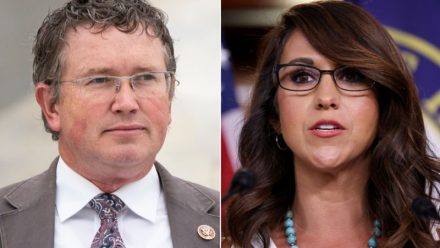
Rep. Thomas Massie (R-KY) and Rep. Lauren Boebert (R-CO) have introduced the Surveillance Accountability Act, a bill that feels like someone took the Fourth Amendment and actually meant it.
The legislation aims “to ensure that all searches that significantly impinge on the privacy or security of a person require a warrant based on probable cause” and to create “a right of action for violations of Fourth Amendment rights.” That covers the kinds of searches federal agencies currently conduct without judicial oversight: pulling your financial records from banks, requesting your browsing history from ISPs, buying your location data from brokers, and harvesting your biometric information from surveillance cameras.
We obtained a copy of the bill for you here.
The bill lands in the middle of a brutal Congressional fight over FISA Section 702, the surveillance authority that currently lets the FBI search Americans’ communications.
The new legislation goes much further than the various reform bills circulating around that debate. Where the SAFE Act and the Government Surveillance Reform Act target specific loopholes in FISA, the Surveillance Accountability Act tries to close all of them at once by rewriting the baseline rule: if the government wants your data, it needs a judge’s permission.
The main part of the bill adds a new Section 3119 to Title 18 of the US Code with a simple default: “no search may be conducted without a warrant issued by a neutral and detached magistrate upon probable cause, supported by oath or affirmation, and particularly describing the place to be searched and the persons or things to be seized.”
The bill defines “search” broadly enough to actually matter, covering “any government-initiated act that intrudes upon an individual’s reasonable expectation of privacy,” whether through “human, digital, or automated means.” It explicitly lists what falls under warrant protection: “communications,” “associations,” “employment,” “social media usage,” “internet usage,” “financial transactions,” and “travel.”
The bill goes further, extending protection to “the acquisition and analysis of any data, metadata, or information pertaining to a person’s digital or physical life,” including “geolocation,” “personal device activity,” “biometric identifiers,” and “behavioral signals data.”
The government is already collecting and analyzing patterns of how you act online, and Massie and Boebert’s bill is the first piece of legislation to name it directly and bring it under warrant protection.
The Third-Party Doctrine Problem
The most significant provision attacks the legal fiction that has allowed warrantless government surveillance to flourish for nearly fifty years. The third-party doctrine, established by the Supreme Court in Smith v. Maryland (1979), holds that you lose your Fourth Amendment protection over any information you voluntarily share with a third party, like a phone company or a bank.
The logic made a certain kind of sense when it meant the government could see which phone numbers you dialed. It makes no sense at all when every aspect of modern life generates data that passes through corporate servers.
The Supreme Court acknowledged as much in Carpenter v. United States (2018), ruling that cell phone location data requires a warrant even though it’s held by wireless carriers. But Carpenter was deliberately narrow. The Court didn’t overturn the third-party doctrine. It just said that this particular type of data, cell site location information, was too revealing to leave unprotected.
The new bill does what Carpenter didn’t. It creates a blanket presumption of privacy for all data held by third parties. The bill states that “the government shall not access any data, metadata, or personal information held by a third party, including financial services providers, telecommunication service providers, internet service providers, cloud storage companies, or data brokers, without a valid warrant, regardless of whether the third party consents or cooperates.”
Your bank can’t waive your constitutional rights for you. Your phone company can’t either.
The bill goes further still: “No contractual agreement between a user and a third party may be interpreted as waiving the government’s warrant requirement for access to the data of that user, unless such waiver is knowing, voluntary, and explicit.” This kills the argument that by agreeing to a terms of service, you’ve somehow consented to government surveillance. That argument has always been absurd, and the bill finally says so in statute.
Facial Recognition and License Plate Readers
The bill’s limitations section targets two surveillance technologies that have spread across American cities with almost no legal oversight: facial recognition systems and automated license plate readers.
The bill prohibits the “warrantless collection, retention, querying, or analysis” of data gathered from people simply going about their lives in public. That prohibition covers “biometric data, including facial images, faceprints, gait, voice recognition, or other unique physical identifiers, obtained through facial recognition systems or comparable surveillance technologies.”
It also covers “license plate images, vehicle metadata, or vehicle movement patterns obtained through automated license plate readers or similar systems.”
Federal, state, and local law enforcement agencies have been building vast databases of facial recognition and license plate data for years, treating the fact that you walked down a public street or drove on a public road as blanket permission to track your movements indefinitely. The bill says that’s not how it works. Being in public doesn’t mean consenting to biometric surveillance.
Suing the Government When It Violates Your Rights
The second half of the bill creates something that currently doesn’t exist in federal law: a clear right of action for Fourth Amendment violations by federal employees. The bill’s language is direct: “Every person, including a Federal employee, who, under color of any statute, ordinance, regulation, custom, or usage, of the United States, subjects, or causes to be subjected, any citizen of the United States or any person within the jurisdiction thereof to the deprivation of any rights, privileges, or immunities secured by the Fourth Amendment, shall be liable to the party injured in an action at law, suit in equity, or other proper proceeding for redress.”
Courts can award attorney’s fees to the prevailing party, which means the threat of litigation carries financial weight.
This is significant because of the Supreme Court’s steady erosion of Bivens v. Six Unknown Named Agents (1971), the case that originally allowed citizens to sue federal officials for constitutional violations. The Court has spent the last decade and a half narrowing Bivens to the point where it barely functions. Massie’s bill creates a statutory alternative that doesn’t depend on judicial willingness to recognize new causes of action.
The right of action covers every federal employee except the President and Vice President. That’s a wide net. An NSA analyst who runs a warrantless query on your communications, an FBI agent who buys your location data from a broker, an ICE officer who accesses your records through a Section 702 backdoor search, all of them could face personal liability.
The Political Context
Massie has been fighting this battle for over a decade. He sponsored an amendment in 2014 to stop warrantless backdoor searches of Americans’ online data, which passed the House 293 to 123. He introduced the Surveillance State Repeal Act in 2015, seeking to repeal the PATRIOT Act and the FISA Amendments Act entirely. He’s called for Edward Snowden to be pardoned and for former Director of National Intelligence James Clapper to be prosecuted for lying to Congress about the NSA’s phone metadata program.
The Surveillance Accountability Act arrives at a moment when the politics of surveillance are stranger than they’ve been in years. Massie has publicly demanded “No FISA reauthorization without a warrant requirement for US citizens!” on social media, attaching screenshots of past statements from President Trump, Vice President Vance, and House Judiciary Chairman Jim Jordan warning about FISA abuses.
The Congressional Progressive Caucus, 98 House Democrats, has formally voted to oppose any Section 702 reauthorization without dramatic reforms. Senate Intelligence Committee Chair Tom Cotton is pushing an 18-month clean extension with no reforms at all, arguing that the war with Iran makes this the wrong time to weaken intelligence capabilities.
The warrant amendment that would have required court approval for FBI searches of Section 702 data lost by a single vote in 2024, a 212-212 tie in the House. Speaker Mike Johnson cast the tiebreaker against it.
“The Bill of Rights is not a suggestion, and Fourth Amendment protections against warrantless searches conducted by the government are not optional,” said Massie. “The Surveillance Accountability Act requires government employees to first obtain a warrant based on probable cause before searching Americans’ personal information even if the information sought is stored on a phone, in the cloud, or held by a third party. Warrantless searches are unconstitutional, and this does not change when the data the government seeks is in digital formats or held by a third party.”
“For years, the federal government has treated the Fourth Amendment like a suggestion. They’ve built a massive surveillance machine that tracks, scans, and spies on law-abiding Americans without a warrant, without probable cause, and without any accountability. Enough is enough,” said Rep. Lauren Boebert. “The Surveillance Accountability Act puts the Constitution back in charge. It protects every American from an out-of-control federal government that thinks it owns your data, your movements, and your life. This is a true bipartisan issue for anyone who still believes in limited government and individual liberty.”
Massie’s bill goes beyond Section 702. It rewrites the entire framework, or tries to. The chances of the Surveillance Accountability Act passing in its current form are, being realistic, very low. The intelligence community will fight it. The national security establishment will call it dangerous. The administration has already signaled it wants a clean FISA extension with no conditions.
But the bill is a marker. It describes what actual Fourth Amendment compliance would look like if Congress took the text of the Constitution at face value. Warrants for searches. Probable cause. Judicial oversight. No exceptions for data that happens to sit on a corporate server. No loopholes for biometric surveillance conducted in plain view. And real consequences, financial ones, for agents who ignore the rules.
The gap between what the Surveillance Accountability Act proposes and what Congress is actually likely to pass tells you everything about how far the federal government has drifted from the privacy protections Americans were supposedly guaranteed 235 years ago.
Wired for War: Israel’s Black Cube and the infiltration of Europe
Israeli spies-for-hire interfered in elections in Cyprus and Slovenia
RT | April 23, 2026
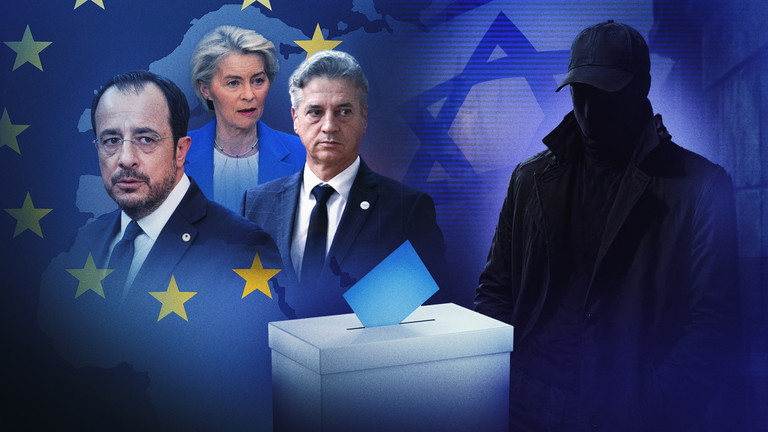
Political hit-jobs in Cyprus and Slovenia are just the tip of an election interference iceberg in Europe, involving a dark nexus of Israeli spies, defense chiefs, and tech companies. The threat is real, but the EU is staying silent.
Targeting the EU: Israeli spy firm’s open admission
A week after Cyprus assumed the EU’s rotating presidency in January, a video appeared on social media – from a relatively obscure account named ‘Emily Thompson – showing President Nikos Christodoulides’s brother-in-law, a former energy minister, and a major construction magnate discussing influence-peddling arrangements between Christodoulides and foreign investors. Across a series of surreptitious recordings, the three also allege that Christodoulides took cash bribes during his 2023 campaign, and was taking cash to block EU sanctions against Russian business figures.
Cypriot authorities immediately declared that the video bears all “the characteristics of organized Russian disinformation campaigns.” Anonymous EU diplomats told Euractiv that Brussels viewed Moscow as the prime suspect, and authorities in Nicosia said that they had reached out to the US and Israel for assistance in identifying the video’s source. AP and Euronews headlined likely Russian involvement.
The release of the video undermined Christodoulides – triggering the resignations of his most senior aide and his charity director wife – and put a black mark on Cyprus’ stint at the helm of the EU.
The ‘Videogate’ scandal simmered in the background until last week, when Black Cube, an Israeli private intelligence agency, admitted that it had recorded and edited the video. The company said that it had compiled the video on behalf of a private client – not a state actor – and that it “has cooperated with the Cypriot authorities and expresses confidence that they will establish the truth and bring those responsible to justice.”
What is Black Cube?

A screenshot from Black Cube’s website
Founded in 2011 by “veterans of Israel’s elite intelligence units,” Black Cube describes itself as “the world’s leading human intelligence firm,” capable of finding “hard evidence otherwise impossible to obtain” in support of “high-profile litigations, arbitrations, and white-collar crime cases.”
The term ‘Human Intelligence’, or ‘HUMINT’, is key here. Unlike open-source intelligence (OSINT), which relies on uncovering publicly-available information, HUMINT is gathered through covert surveillance, interrogation, and the management of sources and informers through bribery, blackmail, or intimidation. It is the kind of illegal or quasi-legal tradecraft usually practiced by state intelligence agencies.
Black Cube co-founders Dan Zorella and Avi Yanus are veterans of this underworld. Zorella served in the Israel Defense Forces’ (IDF) military intelligence directorate, and Yanus was a strategic planning officer in the IDF. The company’s board is a who’s who of the Israeli intelligence and defense establishment, and includes:
- Meir Dagan (now deceased), former Mossad director
- Efraim Halevy, former Mossad director
- Yohanan Danino, former Israeli Police commissioner
- Major General Giora Eiland, former Israeli National Security Council chief
- Asher Tishler, dean of the College of Management Academic Studies, and consultant to the IDF

Black Cube’s international advisory board
Black Cube’s client list is long and controversial. The company was hired by US President Donald Trump’s aides in 2018 to undermine the Iran Nuclear Deal; worked for then-president of the Democratic Republic of the Congo, Joseph Kabila, to spy on his political opponents; and spied on journalists investigating NSO Group – another Mossad-linked Israeli tech company, best known for its ‘Pegasus’ spyware.
Disgraced movie mogul Harvey Weinstein hired Black Cube in 2016 to silence and discredit numerous women accusing him of sexual abuse. Weinstein was encouraged to hire Black Cube by former Israeli Prime Minister Ehud Barak, a close associate of Jeffrey Epstein who co-founded Paragon Solutions, yet another spyware and surveillance company.
Israeli spy-tech infiltration of EU?
These examples illustrate the web of ties between Israel’s tech sector and its military, political, and intelligence establishment. Black Cube’s client list suggests that it will work for anyone willing to pay, but its recent activity in Slovenia points to a deeper alignment between the company and the goals of the Israeli state, and demonstrates the danger foreign clients face when they hire the company and others like it to do their dirty work.
Zorella, Eiland, and two other Black Cube employees arrived in Ljubljana in late December, where they met with former Prime Minister Janez Jansa, according to a report by the 8 March Institute, a liberal Slovenian NGO. Jansa, a conservative, was running for election against liberal Prime Minister Robert Golob at the time.
The purpose of the visit became clear in early March, when – just like in Cyprus – a series of covertly-recorded audio and video files hit social media. They showed associates of Golob’s Svoboda party discussing penny-ante corruption within the Slovenian government with undercover Black Cube employees posing as foreign investors. The officials bragged about their influence over the media, their connections to Golob, and their ability to offer access to the prime minister for a fee.
Jansa’s Slovenian Democratic Party (SDS) held the videos up as proof of corruption within Golob’s government, and the scandal almost won him the election. Ultimately, Svoboda beat SDS by a margin of only 0.67%.
Jansa initially denied, but later admitted to, meeting with Black Cube. He has not admitted to hiring the company, however. Slovenia’s Intelligence and Security Agency (SOVA) has since determined that Black Cube “intended to discredit individuals politically, which may pose a threat to national security and influence democratic elections.” SOVA added that “this interference was most likely commissioned from within Slovenia,” but it is still not completely clear by whom.
The Israeli government had a stake in the election. Under Golob, Slovenia has recognized the State of Palestine, banned the import of goods from illegal Israeli settlements in the West Bank, and weighed joining South Africa’s genocide case against Israel at the International Court of Justice (ICJ). Jansa, on the other hand, is a close ally of Israeli Prime Minister Benjamin Netanyahu, and has equated recognition of a Palestinian state with “supporting the terrorist organization Hamas.”
Does Black Cube work for Israel?
Nobody has accused Israel of ordering Black Cube to intervene in the Cypriot election, but in this case, Netanyahu’s interests and the interests of the Cypriot opposition overlap.
Black Cube is one of many defense and intelligence startups filled with ‘former’ Israeli spooks and security chiefs. Although these companies are private, profit-making enterprises, their leaders are often more loyal to Israel than to the bottom line, as another example from Slovenia demonstrates.
Two weeks before the election, Golob’s government chose not to join the ICJ genocide case against Israel. Slovenian Foreign Minister Tanja Fajon told reporters that the government had no other option: “Many of the country’s cyber defense systems are of Israeli origin,” she explained, adding that to join the lawsuit “would jeopardize Slovenia’s national security.”
Fajon confirmed that she had been pressured into making this decision. “It is clear that these pressures exist, we are all subjected to them by superpowers, and ultimately this must be taken into account when deciding,” she said.
It is unclear whether the continuation of Black Cube’s campaign against Golob was a part of the pressure campaign, or whether Fajon was threatened by the Israeli state or the companies responsible for the country’s cyber defense systems. Regardless, the message is clear: Israeli companies are willing to interfere in EU elections, and by relying on Israeli technology, EU countries are trading sovereignty for security – neither of which they will get.
What is the EU doing about Israeli interference?
EU officials have used the most spurious claims of “Russian interference” to justify their own election meddling. RT has covered cases where Brussels-aligned actors have alleged, without basis, interference in Romania, Hungary, and Bulgaria.
However, when it comes to the activities of Black Cube in Cyprus and Slovenia, Brussels has stayed silent.
Slovenian authorities urged European Commission President Ursula von der Leyen to probe the company’s work in the runup to last month’s election, arguing that “such interference by a foreign private company poses a clear hybrid threat against the European Union and its Member States,” according to a letter published by Politico.
The commission has not even publicly acknowledged receiving the letter.
Yet there are far more cases of Black Cube and its ilk interfering in European elections. RT will look at these cases in depth over our ‘Wired for War’ series and ask, why is the EU so willing to ignore blatant meddling happening within its own borders?
On Mass Surveillance, Will the Deep State Win Again?
By Harrison Berger | The American Conservative | April 22, 2026
For nearly two decades, Congress has obediently renewed one of the federal government’s most expansive and unconstitutional domestic surveillance authorities, typically with total bipartisan enthusiasm, little floor debate, and even less public attention. Last Thursday morning, at 2 a.m., House Speaker Mike Johnson (R-LA) kept that tradition alive, summoning members back to the Capitol in the dead of night for what Rep. Ro Khanna (D-CA) accurately labeled “a secret vote to reauthorize FISA while America sleeps.”
That law, Section 702 of the Foreign Intelligence Surveillance Act, was first enacted in 2008, when Congress voted to retroactively authorize parts of a secret warrantless surveillance program constructed under the George W. Bush administration, after it was exposed in December 2005 by James Risen and Eric Lichtblau of the New York Times. They revealed how under a presidential order signed in 2002, the NSA had been monitoring the international calls and emails of people inside the United States without warrants, targeting hundreds of Americans. The whistleblower Edward Snowden and journalist Glenn Greenwald later exposed the true scale of NSA domestic wiretap programs, which targeted virtually every American citizen under an internal agency motto of “collect it all.”
Ever since that law was enacted, there has been a gradual expansion of the executive branch’s surveillance authorities and shredding of Americans’ Fourth Amendment protections, which this outlet has covered in depth. Under the pretext of targeting foreigners abroad, Section 702 has become a vehicle for warrantless backdoor searches of Americans’ private communications, with the FBI conducting up to 3.4 million such queries in 2021 alone. Those abuses triggered a reform battle in April 2024 that ultimately failed, when Johnson, a Constitutional lawyer, abandoned his longheld opposition to mass domestic spying and cast the deciding vote to reject a warrant requirement amendment, extending the program to April 20, 2026.
Patrick Eddington of the Cato Institute was one of the few who predicted that outcome, telling The American Conservative two days before the vote that he expected “at least a double digit group of GOP House members” to vote against a renewal, which is exactly what happened on Friday, when 20 Republicans joined most Democrats to block Section 702 reauthorization. Eddington correctly identified three in particular—Reps. Chip Roy (R-TX), Ralph Norman (R-SC), and Morgan Griffith (R-VA)—as key votes against, with all three having voted for a warrant requirement amendment in 2024 and each of them noticeably absent from a Tuesday night Rules Committee meeting where the panel voted to bring a clean reauthorization to the floor.
Eddington sees the vote as representing something much larger than a mere procedural defeat for Johnson. “I think what this speaks to is probably the beginning of the end for Trump,” he told The American Conservative. “So many more voters who went for him, even those who went for him three times, are walking away from him. There are members of the House who now feel they can take some more distance from this guy with less political risk.”
For now, Section 702 survives on a 15-day temporary extension, and the prospects for blocking a clean renewal of the government’s surveillance authorities remain uncertain. Greenwald, whose reporting alongside Snowden’s disclosures first revealed the true scope of NSA mass surveillance, frequently says that “the deep state always gets what it wants,” though he told The American Conservative that he “has been through about four of these and got [his] hopes up every time.” During a livestream last Friday, Greenwald sustained that pattern, holding up some hope that there were enough votes in Congress to stop reauthorization.
Tucker Carlson, who has covered surveillance overreach extensively on his show, seemed even more skeptical. “I doubt it,” he told The American Conservative when asked whether Trump’s push for a clean renewal could still be stopped. “He’s determined. It’s very dark.”
“Well there are a couple of clues,” he continued, pointing to the raw intelligence sharing agreement between the NSA and Israeli intelligence, first revealed by Snowden and reported by Greenwald, under which Americans’ signals intelligence data is handed over “to be used, God knows how.” He also pointed to a 2024 presentation by Rep. Mike Turner (R-OH), a security state loyalist and then-chairman of the House Intelligence Committee, in which the Congressman advocated for using Section 702 authorities against American college students protesting the war in Gaza. To his point, a “Conference of Presidents of Major American Jewish Organizations,” in 2024 told Congress that FISA 702 was needed for “the safety and security of Israel.”
Carlson has more than a passing interest in FISA Section 702, having been the subject of domestic surveillance himself. “They admitted spying on me,” he told The American Conservative.
When the NSA responded to Carlson’s 2021 allegation that the agency had been monitoring his communications, it said only that he had never been an intelligence “target,” a carefully lawyered denial that conspicuously avoided saying his communications had never been queried under programs like FISA Section 702. The NSA’s response was also unusual since three-letter agencies typically neither confirm nor deny whether any specific individual’s communications have been collected.
On how Trump, another documented victim of FISA abuse, and Johnson, who built his political identity around opposition to FBI overreach, both ended up as the leading advocates for a clean renewal of those spying powers, Carlson pointed to institutional capture and coercion. “I think it’s a combination of carrot and stick,” he said.
“But I’ve noticed that members of the House and Senate intelligence committees, especially the chairmen, are invariably weak and screwed-up people and therefore easy to control,” Carlson observed. “Alcoholics, compulsive philanderers, etc,” he added, noting that disgraced Rep. Eric Swalwell, who is currently dealing with a sex scandal that seems likely to end his political career, was a member of the House Intelligence Committee.
Featured Video

Death Spikes & Rising Cancer In Our Youth Explained
or go to
Aletho News Archives – Video-Images
From the Archives
Politicians lie
By Mazin Qumsiyeh | Popular Resistance | August 18, 2013
There is no way to say this truth nicely: Politicians lie. That includes Japanese, American, Egyptian, Israeli, and Palestinian politicians! Is there something more common sense than that? Yet, so many citizens around the world believe their own politicians or wistfully acknowledge lies but think it is part of the job needed to run things. They believe even when politicians contradict themselves blatantly. This phenomenon is rather remarkable. It is a dissonance and disconnect from reality that many seem oblivious to. It is very dangerous because it can lead to accepting rationales for going to war. These can be deadly wars that lead to millions of lives lost as happened in what was called World War 1 and WW2. Even when incredible and declassified evidence abound, politicians continue to lie and old mythologies refuse to die. Here are just a few of the countless lies told to us over the past few decades… continue
Blog Roll
 Aletho News
- From Unipolar Universalism to Multipolar Civilizational Distinctiveness
- RSF military group defects, joins Sudanese army: State media
- Ireland goalkeeper refuses to play ‘Israel’ as squad weighs boycott
- China pushes back against US on Cuba, Iran
- Ukrainian Soldiers, Potential Mercenaries: Have Gun, Will Travel!
- Burnham’s UN debut… A masterclass in British disinformation
- Iran flights continue despite US aviation sanctions
- Global Tipping Points Lead the World Into a State of Entropy
- The day-after at the White House: USA and Xi Jinping
- The Geopolitical Balance in the Red Sea: The UAE Being Displaced by New Players
- If Americans Knew
- Deconstructing Netanyahu’s pants-on-fire UN rant – Daily Update
- Trump betrayed voters with his campaign lies and prioritized a foreign country once he took office
- Netanyahu calls Israel’s war in Gaza ‘opposite of genocide’ in UN speech to near-empty hall
- Settler Kidnappings: Torture, Sexual Abuse and Terrorisation of Palestinian Abductees as Israel Deepens Annexation of West Bank
- Gaza winter nears as 162,000 tents become unusable, raising fears of humanitarian crisis
- Netanyahu says, “It’s the opposite of genocide”; UN says Gaza economy is world’s ‘most severe crisis on record’ – Daily Update
- Israel’s US-Backed Assault on Gaza Has Created the ‘World’s Most Severe Economic Crisis on Record’: UN
- ‘Protecting U.S. Citizens’… From Israel
- ‘This is where I live now, the back of a truck’: a day in the life of a grandmother in Gaza
- In UN Speech, Iran’s President Displays Pictures of Children Killed by US, Brings Attention to Israel’s Nuclear Arsenal
- No Tricks Zone
- New Study: Earth And Venus Surface Warmth Largely Explained By Convection And Lapse Rate, Not CO2 Or Radiation
- 2025 Nature Paper Claiming Worsening Global Drought Gets RETRACTED …Heavily Flawed
- New Study: ‘Global Drought Shows No Detectable Recent Acceleration Under Climate Warming’
- Economic Masterminds: German Socialists Suggest Taxing Productivity Gains Stemming From Using AI
- The South China Sea Has Not Been Cooperating With The Climate Change Narrative
- Energy Crisis: Germany Enters Heating Season With Historically Low Gas Reserve Fill Levels
- New Study: The Antarctic Ice Sheet Gained Mass From 2020-2024 Due To Staggering Snow And Ice Accumulation
- Study: Ocean Heating Rates From Thousands Of Years Ago ‘Dwarf’ Modern Ocean Heating Rates
- Climate Extremists Target, Attack Large-Scale Power Grid Infrastructure In Germany!
- New Study: Antarctic Ice Melt Has Contributed Less Than 1 Centimeter To Sea Level Rise In The Last 30 Years

