Judging by the most recent statements made by UK Home Secretary Yvette Cooper, the government feels it will have to implement even more stringent speech-restrictive measures than those contained in the sweeping and controversial censorship law, the Online Safety Act.
Appearing on a BBC political talk show, Cooper kept beating the now well-established drum the ruling Labour has gone for in the wake of last year’s Southport killings, and subsequent mass protests – namely, to try to portray social media companies as somehow “a part of the crime,” which is verbatim how the cabinet minister put it.
One of the recurring themes these last weeks, since the Southport trial saw its conclusion, has been that tech companies are “morally responsible” for not deleting (that request came only last week) one of the violent videos viewed by the killer, Axel Rudakubana.
This request was made even though said companies are under no legal obligation to do that, until the spring of this year and the start of the enforcement of some parts of the Online Safety Act.
The stage set that way, Cooper’s logic – or lack thereof – goes like this: “We are being clear that we are prepared to go further if the Online Safety Act measures are not working as effectively as we need them to do,” she told the host, Laura Kuenssberg.
There is no way to predict how social media firms will act once they are under obligation to remove certain types of content – and yet Cooper is already threatening to make the Online Safety Act even worse.
After the case played out in court, the authorities are now going to organize an inquiry that will broaden the narrative and examine how social media, i.e., the content that third parties can publish there, is influencing “online radicalization” (Cooper mentions Islamist and far-right extremism in the same breath) and “obsession with violence” among young people.
At one point – but well into this attempt to implicate the availability of both illegal and legal content related to violence as an important factor behind the Southport tragedy – the interviewer mentions that Rudakubana was “on the radar of the social services, he was on the radar of Prevent, a Home Office program, and yet no one stopped him.”
When asked whose responsibility it was to stop him before the crime, Cooper danced around the topic (but surprisingly, didn’t name social networks.)
For the second time, the cricket world has provided a petty, vindictive and downright ridiculous example of the broader campaign by the powers-that-be to silence opposition to the Israeli genocide in Gaza.
In December 2023, the International Cricket Council (ICC) forbade Australian batsman Usman Khawaja from taking the field in international matches with shoes that read “all lives are equal” and “freedom is a human right.” The bureaucrats, who run the game from the ICC’s headquarters in the dictatorial United Arab Emirates, deemed those statements to be “political” because they were regarded as a reference to Israel’s mass murder of Palestinians.
The ICC’s suspicious and hostile attitude to professions of human rights and basic decency has now been matched by the Sports Entertainment Network, which runs the popular SEN sports radio broadcaster.
Over the weekend, SEN unceremoniously dumped Peter Lalor, a widely-respected cricket commentator, over posts he made on his X/Twitter account referencing Gaza. The sacking was done in a hurry. Lalor was in Sri Lanka as a freelance commentator commissioned by SEN to cover the ongoing Australia-Sri Lanka Test cricket series when he was dismissed.
Lalor had commentated the first test in Galle without incident, and was scheduled to cover the second. Why then the sudden rush by SEN to sever all ties with a leading cricket expert? For anyone familiar with the witch-hunts of the past 16 months that have accompanied the Israeli war crimes, inevitably “upset” and “offended” Zionists were in the picture.
As per Lalor’s account, “I was asked by station boss Craig Hutchison, who was civil, if I didn’t care that my retweeting of events in Gaza made Jewish people in Melbourne feel unsafe. I said I didn’t want anyone to feel unsafe.” Predictably, Hutchison reportedly related accusations that Lalor may be an antisemite, which has been the go-to line for shutting down opposition to the assault on Gaza.
Lalor went on: “The following day Hutchison told me that because the ‘sound of my voice made people feel unsafe’ and that people are ‘triggered by my voice,’ I could not cover the cricket for them anymore.”
If Zionists were telling SEN management that Lalor’s measured commentary of a Test cricket match was making them feel “unsafe,” the appropriate response would have been to dismiss the remarks as absurd.
More to the point, SEN should have noted that the complainants were making a cynical bid to have someone sacked for disagreeing with them politically. They should have told the witch-hunters to stop harassing their employee.
But, as has so often been the case with the Zionist witch-hunts, SEN management rolled over.
After Lalor’s sacking, Hutchison issued a nauseating statement. “SEN Cricket is a celebration of differences and nationalities,” it proclaimed, although those “differences” evidently did not extend to opposing the unfolding genocide or referencing the mass killing of Palestinians. To justify its censorship, the statement went on to describe the station as a “a place where our SEN audience can escape what is an increasingly complex and sometimes triggering world.”
Like the saga of Khawaja’s shoes, the most striking aspect of this incident is the complete mismatch between Lalor’s “offence” and the response. Lalor is not accused of ever having mentioned Gaza during a broadcast, so the references to the sound of his voice are presumably because it reminds the Zionists of his X/Twitter feed.
Moreover, the posts on his feed are simply not of a highly controversial character. In any objective assessment, Lalor comes across as a humane and democratically minded man, disturbed by the mass killing of Palestinians and wishing for an end to war.
Most of his posts were retweets from other accounts. As per Lalor’s account, Hutchison indicated that SEN was hit with complaints over Lalor during the first Test match, played from January 29 to February 1. It is difficult to determine when something was retweeted, as against when it was posted by the original account.
But some of Lalor’s X content around that time included retweeting a post reporting that “Palestine Red Crescent teams have recovered another 14 decomposed Palestinian bodies from several areas on the Rashid Coastal Road in Gaza.”
Another was a statement by a Palestinian Christian leader, condemning the invitation by US President Donald Trump for Israeli Prime Minister Benjamin Netanyahu to visit Washington. The pastor wrote, “The man who has an arrest warrant for him from the ICC [International Criminal Court] is invited to the White House as a guest of honor. This is the world we live in. Faith leaders must make their voices heard in times like this.” Other retweets by Lalor have highlighted the plight of Palestinian children and prisoners.
People instigating a witch-hunt over such content, which has nothing whatsoever to do with antisemitism, are simply supporters of war crimes.
Media and cricket figures have spoken out in defence of Lalor.
Khawaja declared on Instagram: “Standing up for the people of Gaza is not antisemitic nor does it have anything to do with my Jewish brothers and sisters in Australia, but everything to do with the Israeli government and their deplorable actions. It has everything to do with justice and human rights.” He concluded: “Pete is a good guy with a good heart. He deserves better.”
As per Lalor’s account of the sacking, “I was told in one call there were serious organisations making complaints; in another, I was told that this was not the case.”
Throughout the genocide, right-wing Zionist lobby groups that collaborate closely with the Israeli state and support its every crime against the Palestinians have fraudulently been depicted by governments and the media as representative Jewish organisations. Their every pronouncement has been reported uncritically and they have had access to the corridors of power.
These groups have repeatedly instigated witch-hunts targeting critics of Israel. Journalist Antoinette Lattouf is currently in the Federal Court, having brought a case against the Australian Broadcasting Corporation (ABC) for unlawful termination. Lattouf was sacked halfway through a week-long fill-in position, after a concerted campaign by Zionist lawyers who barraged the ABC with vexatious complaints.
Lattouf’s sacking, ostensibly because she shared a post to her personal social media from Human Rights Watch condemning Israel’s use of starvation as a weapon of war, occurred in December 2023. The dismissal of Lalor, more than a year later, in such similar circumstances, underscores the normalisation of witch-hunting and politically motivated sackings by the Australian political, media and corporate establishment.
Such repressive measures set a precedent for broader attacks on working people as they enter into struggle against the broader eruption of militarism, including Australia’s transformation into a frontline state for a US-led war against China, completed by the same federal Labor government that has consistently backed Israel’s war crimes in Gaza.
American tech giant Google has faced regulatory scrutiny on numerous occasions amid accusations of antitrust violations. Google’s relationship with the CIA, ranging from early financial support to collaborative efforts have been decried as undermining privacy rights and free speech in the digital landscape.
Google’s creation played a crucial role in the US intelligence community’s scheme to attain global dominance by controlling information.
How it Started
The Pentagon founded its private sector project the Highlands Forum during the Clinton administration in 1994, according to the INSURGE INTELLIGENCE project.
Together with defense contractors, the group hammered out a strategy for “network-centric warfare.”
The 9/11 terrorist attacks were seized upon by US spy agencies to justify not only military invasions across the Muslim world, but also mass surveillance of civilian populations.
CIA Steps In
The CIA’s Massive Digital Data Systems (MDDS) program, which originated in the 1990s, was designed to enhance query techniques and track users’ digital footprints.
To better serve its goals, in 1999, the CIA established its own venture capital firm, In-Q-Tel, to invest in potentially useful technologies.
Ph.D. students at Stanford University, Sergey Brin and Larry Page, were working on precisely such a tech start-up.
The design of the search engine and algorithms that ultimately evolved into Google was funded by CIA grants through a program aimed at enhancing mass surveillance capabilities.
PRISM
Whistleblower Edward Snowden revealed in 2013 that the NSA had direct access to Google’s systems through its secret PRISM program, enabling the agency to harvest vast amounts of data on American citizens, Washington’s allies, and foreign nationals.
Ex-CIA spooks are employed in almost every department at Google, according to a 2022 report based on the analysis of employment websites.
Google has been slapped with multiple lawsuits stemming from its history of data misuse and privacy violations.
The European Commission is essentially manipulating NGOs to achieve its own goals in exchange for financial support. A Dutch newspaper has exposed part of this process, writes Magyar Nemzet, which then shows how Brussels does this and who the biggest domestic beneficiaries are.
On Jan. 22, De Telegraaf reported on secret contracts that the European Commission had signed with green NGOs to conduct alleged covert lobbying activities. According to the newspaper, the lobbying organizations, commissioned by Brussels with EU money, were tasked with persuading MEPs and member states to support the commission’s ambitious green policy initiatives.
For example, the European Environment Bureau (EEB), an umbrella organization for green groups, was tasked with providing at least 16 examples of how the European Parliament had tightened green legislation thanks to its lobbying. According to documents reviewed by the newspaper, the EEB was also tasked with supporting the controversial nature restoration bill initiated by former Commissioner Frans Timmermans.
In addition, they could use around €700,000 in support to steer the debate on agricultural activity in a more environmentally friendly direction.
In Hungary, the EU provides funding to certain organizations, which then use their activities to serve Brussels’ political goals. Here are some examples.
The Hungarian Helsinki Committee is heavily dependent on international funding. According to their latest available financial report for 2023, more than 61 percent of their annual income came from private foundations, including George Soros’s organization. They received a total of 48.85 million forints from the European Commission, which accounted for 6.1 percent of their income. Helsinki has received funding for various projects serving legal protection purposes, typically for several years.
In recent years, the organization has often criticized the Hungarian government’s immigration policy, especially the measures related to border closures and the operation of transit zones, and has also undertaken the legal representation of migrants, for example, at the European Court of Human Rights.
One of the “results” of Helsinki’s operation is that in June 2024, the European Court of Justice imposed a migration fine of €200 million on Hungary and ordered our country to pay an additional €1 million per day until we change the relevant regulations.
Helsinki has actively contributed to the European Commission’s 2023 Rule of Law Report, which contains a number of criticisms of Hungary, including problems and recommendations in the areas of justice, the fight against corruption, and institutional checks and balances. The Helsinki Committee, together with other NGOs, including Transparency International Hungary, has submitted a nearly 100-page submission to the European Commission, which is withholding billions of euros from Hungary.
Transparency International Hungary (TI Hungary) has regularly attacked the Hungarian government in recent years, primarily on issues related to corruption, lack of transparency, and the management of public funds.
The organization also receives significant foreign funding, including funds from Soros’ Open Society Foundations, but their supporters also include the European Commission, from which they received a total of 13.7 million forints in revenue, according to their 2023 report.
Transparency International produces its Corruption Perceptions Index (CPI) every year, which is used to calculate which countries are the most and least corrupt in the world. Tamás Lánczi, president of the Office for the Protection of Sovereignty, has already held the organization accountable for the bias experienced in determining the CPI.
All of this is significant because the index serves as a reference point for the withholding of EU funds due to Hungary.
The 2023 report from Amnesty International Hungary shows that the organization is significantly dependent on foreign sources.
Their revenues from the European Union budget, as well as other states and international organizations, exceeded 170 million forints, which represented 42 percent of their total revenue in that year.
They received almost 53 million forints in funding from the European Commission in 2023, which is almost 13 percent of their total annual income. They received the money as the winner of a call for proposals under the Citizens, Equality, Rights and Value (CERV) program to promote gender equality. Amnesty has been working against Hungary’s interests on several fronts, as shown below.
The organization reports that it prepared its analysis related to the European Commission’s annual rule of law assessment, which examined, among other things, the Hungarian justice system, corruption, the press, civil society organizations, and the legislature. It says: “The success of our work, which has been carried out for four years, together with our civil society friends, is also demonstrated by the fact that many of our recommendations are reflected in the report published in July.”
In other words, they are explicitly proud of having put Hungary at a disadvantage.
The annual report also mentions that in March 2023, in addition to the European Parliament, 15 EU member states joined the European Commission v. Hungary lawsuit filed on the side of the commission over the child protection law adopted in 2021. Amnesty boasts that the actions of many member states are due to their work.
The Hungarian Digital Media Observatory (Lakmusz–HDMO) was established in January 2023 as the Hungarian center of the European Digital Media Observatory (EDMO), established by the European Commission in 2020. Six organizations work together within the framework of the project: Political Capital, Mérték Médiaelemző Műhely, AFP news agency, Lakmusz, Idea Foundation and Epresspack. According to their own admission, their activities include fact-checking and related research and analysis, and they also provide training for journalists and teachers on the topic of fact-checking and conscious media consumption.
The HDMO Project is being implemented with the partial support of the European Commission, and the consortium forming the HDMO was selected by the Commission through an open tender. Lakmusz, which participated in the project, has also previously attacked the Hungarian government. For example, they have tried to discredit the institution of the national consultation on several occasions. Political Capital, Mérték, and Lakmusz can also be directly or indirectly linked to the foundations of George Soros.
The Senate Finance Committee today narrowly advanced Robert F. Kennedy Jr.’s nomination to lead the U.S. Department of Health and Human Services (HHS) to the full Senate for a confirmation vote.
The 14-13 vote along party lines came after Kennedy secured the vote of Sen. Bill Cassidy (R-La.), chair of the Senate Health, Education, Labor, and Pensions Committee that oversees HHS. Cassidy was the lone Republican considered to be a possible hold-out.
The Senate is expected to vote on Kennedy’s confirmation later this week or early next week, ABC News reported. The nomination “is likely to succeed absent any last-minute vote switches,” The Associated Press reported.
Kennedy, founder and former chairman of Children’s Health Defense (CHD), can be confirmed even if up to three Republican senators and all Democrats vote against him in the full Senate.
If confirmed, Kennedy will oversee a $1.7 trillion budget and 90,000 employees. HHS oversees 13 public health agencies, including the Centers for Disease Control and Prevention (CDC), the U.S. Food and Drug Administration (FDA) and the National Institutes of Health (NIH).
During today’s committee meeting, Sen. Thom Tillis (R-N.C.) said, “It is time to put a disruptor” like Kennedy at the helm of the HHS. “I hope he goes wild,” Tillis said.
Shares of vaccine manufacturers and packaged food companies, including Pfizer, Moderna, BioNTech, Novavax, Kraft Heinz, General Mills, Mondelez and Hershey, dropped after today’s vote, Reuters reported.
CHD CEO Mary Holland welcomed today’s outcome. She said:
“CHD is delighted that the Finance Committee is sending RFK Jr.’s nomination to the full Senate. Given the 2024 presidential results, this seems only fitting. ‘Make America Healthy Again’ has become a worldwide rallying cry, and CHD is proud to be a foundational part of this movement.”
In a statement, Dr. Joseph Varon, president and chief medical officer of the Independent Medical Alliance, also welcomed today’s vote. He said:
“Americans demand a frank conversation about the state of our government healthcare agencies, and we’re very grateful for the Senators who responded by voting to move RFK Jr.’s nomination to the full Senate.
“RFK Jr. has been asking the tough questions, and he’s been unmoved in the face of big-corporate money campaigns against him.”
In a statement before the vote, Sen. Mike Crapo (R-Idaho), chair of the committee, said that if confirmed, Kennedy “will have the opportunity to deliver much-needed change to our nation’s healthcare system.”
Cassidy, Kennedy agree to ‘unprecedently close collaborative relationship’
“I’ve had very intense conversations with Bobby and the White House over the weekend and even this morning,” Cassidy posted on X earlier today. “I want to thank VP JD [Vance] specifically for his honest counsel. With the serious commitments I’ve received from the administration and the opportunity to make progress on the issues we agree on like healthy foods and a pro-American agenda, I will vote yes.”
Following today’s vote, Cassidy delivered remarks on the Senate floor, revealing the content of those discussions and the agreement he made with Kennedy to secure his vote.
He said Kennedy committed to a strong public health role for Congress and to meeting or speaking with Cassidy multiple times per month. They also agreed that Cassidy will participate in the hiring process for HHS and the public health agencies it oversees.
“He and I will have an unprecedently close collaborative relationship,” Cassidy said, noting that the hiring decisions that will follow “will allow us to represent all sides of those folks who have contacted me over this past weekend.”
Cassidy said he would also reject any attempt to remove the public’s access to “life-saving vaccines” without “iron-clad, causational scientific evidence” indicating otherwise. He also said he would carefully monitor any attempt to “wrongfully sow public confusion” about vaccines.
Cassidy conceded that “many mothers do need reassurance that the vaccine their child is receiving is necessary, effective, and most of all, safe” and expressed his support for Kennedy’s positions on toxic foods and reforming the NIH.
“These commitments, and my expectation that we can have a great working relationship to Make America Healthy Again, is the basis of my support,” Cassidy said, noting that institutions like NIH and FDA require “reform.”
“This is NPR.” That tagline has long been used for National Public Radio, but what it is remains remarkably in doubt. NPR remains something of a curiosity. It is a state-subsidized media outlet in a country that rejects state media. It is a site that routinely pitches for its sponsors while insisting that it does not have commercials. That confusion may be on the way to a final resolution after the election. NPR is about to have a reckoning with precisely what it is and what it represents.
While I once appeared regularly on NPR, I grew more critical of the outlet as it became overtly political in its coverage and intolerant of opposing views.
Even after a respected editor, Uri Berliner, wrote a scathing account of the political bias at NPR, the outlet has doubled down on its one-sided coverage and commentary. Indeed, while tacking aggressively to the left and openly supporting narratives (including some false stories) from Democratic sources, NPR has dismissed the criticism. When many of us called on NPR to pick a more politically neutral CEO, it instead picked NPR CEO Katherine Maher, who was previously criticized for her strident political views.
Some have long questioned the federal government’s subsidization of a media organization. NPR itself continues to maintain that “federal funding is essential” to its work. However, this country has long rejected state media models as undermining democratic values.
Ironically, NPR has one of the least diverse audiences. Its audience is overwhelmingly white, liberal, and more affluent than the rest of the country. Yet, while serving fewer and fewer people, it still expects most of the country to subsidize its programming.
Many of us have argued that NPR should compete with other radio companies in the free market. Notably, some Democratic members pushed to get Fox News dropped by cable carriers despite not being subsidized and ranking as the most-watched cable news network. (For full disclosure, I am a legal analyst at Fox.)
NPR and PBS are facing calls to remove the subsidy at long last. However, at the same time, pressure is coming from the Federal Communications Commission (FCC). FCC Chair Brendan Carr is inquiring about NPR’s claim that it does not do commercial advertising.
Many of us have noticed that NPR has ramped up its sponsor statements with taglines about the products or firm’s clientele. Carr wrote, “I am concerned that NPR and PBS broadcasts could be violating federal law by airing commercials. In particular, it is possible that NPR and PBS member stations are broadcasting underwriting announcements that cross the line into prohibited commercial advertisements.”
The support for noncommercial radio and television stations fell under different regulations. It is hard to see the sponsor acknowledgments not as commercial advertising. It is common for for-profit outlets to have hosts read commercial sponsors.
Noncommercial educational broadcast stations-or NCEs are prohibited under Section399B of the Communications Act from airing commercials or other promotional announcements on behalf of for-profit entities.
What is interesting is that NPR stresses that the “NPR way” is actually better to reach consumers:
Across platforms, NPR sponsor messages are governed by slightly different regulations, but the guiding spirit is the same: guidelines are less about what’s ‘allowed’ and more about the approach that works best for brands to craft sponsor recognition messages that connect with people in ‘the NPR way.
It is common for law firms or companies to have hosts herald their work in given areas. It is also common to have product references.
The thrust of NPR’s pitch to advertisers is that this is a different type of pitch to attract more customers. However, the federal government long ignored the obvious commercial advertisement.
There is little discernible difference between NPR and competitors beyond pretense when it comes to bias or promotions. What is striking is how NPR’s shrinking audience righteously opposes any effort to withdraw public subsidies. While dismissing the values or views of half the country, they expect those citizens to support its programming. What would the reaction be if Congress ordered the same subsidy for more popular competitors like Fox Radio?
I would oppose a subsidy for Fox as I do NPR. Each outlet should depend on its viewership for support. Notably, many liberal outlets continue to maintain their biased coverage despite falling ratings and revenues. The Washington Post has had to again lay off employees and has lost roughly half of its readership.
After being called in to right the ship, Washington Post publisher and CEO William Lewis delivered a truth bomb in the middle of the newsroom by telling the staff, “Let’s not sugarcoat it… We are losing large amounts of money. Your audience has halved in recent years. People are not reading your stuff. Right? I can’t sugarcoat it anymore.”
Nevertheless, writers at the LA Times and other outlets continue to argue against balanced coverage. They would rather lose readers and revenue than their bias. So be it. These outlets have every right to offer their own slanted viewpoints or coverage. They do not have a right to a federal subsidy to insulate them from the response of consumers.
It is time to establish a bright-line rule against government subsidies for favored media outlets. “This is NPR” but it is not who we should be as a nation.
A review of the UK’s policy on extremism, dubbed by Home Secretary Yvette Cooper a “Rapid Analytical Sprint” was announced last summer, shortly after the Southport stabbings.
And now, the paper it produced has been leaked to the Policy Exchange think tank.
The results of the analysis and the recommendations revealed in the leak show that the UK government’s policy may be headed toward more free speech crackdowns, through a number of new measures.
They include introducing new criminal offenses and a new definition of “extremism” itself; in the first instance, it is “harmful online communications” that should be criminalized.
The paper recommends redefining extremism in very broad terms: instead of referring to a particular ideology, it would now cover “behaviors or activity of concern” – like whatever is considered misinformation or a conspiracy theory; misogyny, violence against women and girls – but also involvement in “an online subculture called the manosphere.”
The think tank’s reading of the paper is that it aims to de-emphasize ideologies in general, and Islamism in particular, and instead focus on “behaviors and activity of concern.”
In addition to those already mentioned, some others are the “fixture on gore and violence without adherence to an extremist ideology,” “preventing integration,” and, “influencing racism and intolerance.”
When it comes to existing laws concerning hate crimes – that are, as it is, vague – the idea is to introduce longer prison sentences for people convicted on those charges.
The leaked paper also seeks to reverse the decision to limit the number of “non-crime hate incidents,” NCHIs, that the police record, by reopening the floodgates for these complaints that are often frivolous and waste police time and resources.
The intention was to only log NCHIs that represent real risk of significant harm to individuals or groups “with a particular characteristic” – or that this might happen in the future.
Reacting to reports based on the leak, Home Office Minister Dan Jarvis denied that NCHI reporting would be expanded – other, that is, than when it concerns “Islamophobia” and “anti-Semitism.”
But the authorities admitted they plan to introduce longer sentences for those whose “hate crimes” target LGB and T persons.
Regarding “the sprint” itself, a spokesperson for the Home Office said that the contents of the document have not been formalized and that ministers are how “considering a wide range of potential next steps arising from that work.”
The journalist who claimed that the wife of French President Emmanuel Macron was actually born a man is reportedly seeking political asylum in Russia. In an interview with Izvestia, Natacha Rey and her lawyer, Francois Danglehant, have cited “persecution” in France as the reason for her decision.
Rey alleged in 2021 that Brigitte Macron is actually the transgender identity of her brother, Jean-Michel Trogneux. Rey spent three years researching Macron’s supposed secret and later published a video on her findings on social media. Since then, she has been the subject of judicial action in France.
Explaining her decision to seek asylum in Russia, Rey described the country as a great democracy compared to France, which, in her view, persecutes the political opposition and restricts freedom of speech.
“Why did I choose Russia? Because it is a great nation, a great civilization which I admire, defending traditional and Christian values that are inherent to me,” she told Izvestia. According to Rey, Russia has been a “victim of a disinformation campaign and unjustified attacks by European and American media for decades.” … Full article
German MP Sahra Wagenknecht, who leads the self-proclaimed BSW party, urged a referendum on migration in an interview. Referendums on migration are not unprecedented in Europe, the first was held in Hungary in 2016, and the second in Poland in 2023,
“A migration policy that is supported by the majority of the population requires a referendum that gives the federal government a fundamental direction,” Wagenknecht told AFP over the weekend, as reported in Die Welt.
She believes a referendum with a clear result would counter the polarization of society and could take the wind out of the sails of the increasingly popular Alternative for Germany (AfD) party.
Wagenknecht further accused the German government of a failure in its migration policy.
“For 10 years, they have allowed a loss of control over migration, which the majority of people in Germany, including most well-integrated immigrants, do not want,” she said.
There is currently no legal basis for a federal referendum in Germany, although smaller states, such as Berlin, offer non-binding referendum votes on local issues. It is also unclear what the exact wording of Wagenknecht’s proposal would be. Many polls show that a majority of Germans want reductions in migrant numbers and say that migrants bring more disadvantages than benefits.
In the wake of soaring crime, terror attacks, and massive burdens on public service, Germans are now saying that migration is the “most important problem.” That is according to the research group Wahlen, which showed 41 percent of men and women listed this, in equal numbers, as the most important issue heading into national elections. That beats out the economy and concerns about the Alternative for Germany party (AfD).
In addition, a majority of Germans are in favor of permanent border controls and rejecting asylum seekers without documentation, according to Wahlen.
“Germans are divided on the question of whether the Union should accept votes from the AfD when’voting on a stricter migration policy: 48 percent of those surveyed think this is “not a good thing,’ 47 percent think it is ‘good.’ At the same time, a clear majority of those surveyed, 63 and 56 percent respectively, are in favor of rejecting asylum seekers without documents and of permanent border controls,” writes NZZ about the Wahlen research polling.
Other countries have utilized referendums, such as Hungary and Poland.
Hungary held a referendum on resettlement quotas in 2016, in which 98.36 percent of valid voters rejected the possibility of the European Union requiring the resettlement of migrants to Hungary, even bypassing Hungarian legislation.
In 2023, Poland held a referendum, with Jaroslaw Kaczynski, Poland’s deputy prime minister at the time, saying that it “will decide the fate of Poland and Poles, whether they can live in a safe, peaceful country.”
US President Donald Trump’s special envoy for Ukraine, Keith Kellogg, said that elections should be organized in Ukraine. This is another message to Ukrainian President Volodymyr Zelensky that Washington will no longer sign him blank checks and fund his failed war efforts on Russia.
Zelensky’s claims that the constitution does not allow elections to be held during a state of emergency are meaningless because the Ukrainian constitution also does not allow the president to serve after his term expires. The powers of the president should have been taken over by the parliament, which did not express an opinion on this because it is in the pocket of Zelensky.
It is doubtful that Zelensky fears losing the elections since he has already banned all legitimate opposition parties. The only person he might be afraid of is the four-star general Valerii Zaluzhnyi, who is currently serving as Ambassador of Ukraine to the United Kingdom, as he could return from London and be the opposing candidate because he is more popular, according to some indicators there.
Nonetheless, it does not matter what the results of those elections will be since it will be a farce like the rest of the Ukrainian state administration. The essence of the story is that this is a message to the Ukrainian people that Zelensky, an unelected usurper, cannot sign anything in anyone’s name. Ukrainians must have some legitimate authority, at least on paper, to be able to sign a capitulation. It will not be a truce or a peace agreement but a surrender because the Kremlin said this is the only way to end the conflict.
The US is trying to soften the situation by creating a narrative that it has defended democracy in Ukraine and that the Ukrainians have democratically decided to capitulate.
Russia is not interested in negotiating with a puppet but with the one who pulls the strings. This means that Russia will negotiate directly with the Americans. The Ukrainian delegation, whatever it may be, will be present but will not be relevant to the discussions and will only be symbolic – they will just put their signature on what is agreed.
The Americans have always been the bosses in Ukraine; the difference now is that a new boss has arrived in Washington and is now telling them what to do, and they will have no choice but to agree with it. Their options are capitulation with American oversight or trying to reach an agreement with the Russians separately.
Zelensky unfortunately cut off the second option as a possibility by issuing a decree banning direct negotiations with the Kremlin. He will have to withdraw that decree because it is absolutely clear that the Americans are in a hurry to end this as soon as possible. After all, this conflict no longer suits Washington, and they want to deal with other things, such as opposing the rise of China.
The Russians are unlikely to be satisfied with anything other than their announced goals: the demilitarization and denazification of Ukraine, the country’s neutral status, and recognition of Russia’s new territories.
US President Donald Trump’s team believes that elections must be organized in Ukraine so that the winner can engage in dialogue with Russia. Reuters sources say White House officials and Trump’s special envoy for Ukraine, Keith Kellogg, have recently discussed how to persuade Kiev to hold elections in the initial phase of a ceasefire with Moscow. They also discussed whether a ceasefire should be achieved before trying to reach a longer-term agreement.
Kellogg said that holding elections in Ukraine is important.
“Most democratic nations have elections in their time of war. I think it is important they do so. I think it is good for democracy. That’s the beauty of a solid democracy, you have more than one person potentially running,” Kellogg said.
Reuters cited two people with knowledge of those conversations and a former US official briefed about the election proposal as saying that the Trump plan for peace “is still evolving and no policy decisions have been made” but that Kellogg and other White House officials discussed pushing Kiev to agree to elections as part of an initial truce with Russia.
Zelensky’s five-year term was supposed to end in May 2024, but he has clung to the excuse that presidential and parliamentary elections cannot be held under martial law, which Ukraine imposed in February 2022. According to sources cited by Reuters, the White House raised the issue of elections with senior officials in Zelensky’s office in 2023 and 2024 during the Biden administration, and US officials told their Ukrainian counterparts that elections were critical to uphold international and democratic norms.
Given that Zelensky has no viable opposition to challenge him, besides perhaps Valerii Zaluzhnyi, the question still remains why he refuses to uphold the democratic norms that he supposedly champions and defends.
Ahmed Adel is a Cairo-based geopolitics and political economy researcher.
Sen. Ron Johnson (R-Wis.) last week subpoenaed the U.S. Department of Health and Human Services (HHS) for COVID-19 vaccine safety records and communications about the COVID-19 pandemic, including a subset of Dr. Anthony Fauci’s emails.
HHS is required to produce the requested data and communications by Feb. 18. Johnson told The Defender it’s imperative that HHS comply promptly.
Johnson said:
“The federal government is supposed to serve the American people. Our taxes pay the bureaucrats’ salaries and fund their activities and studies. The results belong to the public and should be made available to us in a timely and transparent manner.
“Bureaucrats who withhold information only raise suspicion and reduce the credibility and integrity of their agencies.”
Biden HHS officials “either completely ignored or inadequately addressed” the requests.
Johnson said in a statement:
“In the waning days of the Biden administration and after years of obstructing my oversight efforts, I warned HHS officials that when I become chairman of the Permanent Subcommittee on Investigations, I will subpoena records and data on the COVID-19 pandemic that have been inappropriately withheld from Congress and the American people for far too long.”
The subpoena requires HHS to hand over:
Previously withheld or heavily redacted communications about the pandemic, including Fauci’s emails, including but not limited to the approximately 50 pages of his emails that were withheld from Johnson’s office since September 2021.
Unredacted records previously released through Freedom of Information Act (FOIA) requests regarding the government’s awareness of myocarditis and pericarditis cases in post-vaccinated individuals.
Data and records relating to COVID-19 vaccine lots associated with higher rates of adverse events.
Order forms and receipts showing government researchers purchasing DNA sequences from a biotechnology company.
All communications relating to HHS’ receipt of and response (or lack thereof) to Johnson’s oversight letters between January 2021 and the present.
CHD has filed multiple FOIA requests to obtain records from HHS agencies including the U.S. Food and Drug Administration (FDA), the Centers for Disease Control and Prevention (CDC) and the National Institutes of Health (NIH) relating to the agencies’ monitoring of COVID-19 vaccine safety and injuries.
“The agencies have responded to our FOIA requests with delays, denials and redactions,” Evans said, “and we’ve been forced to sue to obtain records that, in truth, should be made public as a matter of course.”
Evans called the agencies’ lack of transparency “unconscionable — especially given the federal government’s relentless promotion of COVID-19 vaccination, coupled with claims that safety is being vigilantly monitored by the agencies and denials that the shots cause harm.”
Karl Jablonowski, Ph.D., senior research scientist at CHD, said:
“Time is washing away the knowledge of how the government’s monitoring of COVID-19 vaccine safety went wrong, and the fingerprints of the wrongdoers. Promptly responding to Senator Johnson’s subpoena may preserve enough knowledge to ensure the betrayal never happens again.”
Other groups and individuals — including Johnson, The Epoch Times and the Informed Action Consent Network — had also FOIAed the FDA for the same safety surveillance data.
On Jan. 10, the FDA sent CHD a letter explaining that it was posting the emails as a “partial reply” to CHD’s FOIA request.
In its FOIA request, CHD had asked for “records of any Empirical Bayesian data mining” that the FDA conducted and “records of any sharing or discussion of results and signals with the CDC.” The emails posted by the FDA showed some of those records.
However, CHD in its FOIA request also asked for records related to “consultations by FDA and/or CBER [the FDA’s Center for Biologics Evaluation and Research] with VAERS [Vaccine Adverse Event Reporting System] staff within the CDC’s Immunization Safety Office in connection with any signal that was detected.”
“The FDA still hasn’t responded to other key parts of our request,” Evans said. “In particular, it hasn’t provided records of the follow-up investigation the agency said it would conduct if it detected potential safety signals.”
Emails reveal FDA failed to detect safety signals
The emails released by the FDA revealed that in the first 18 months of the COVID-19 vaccine rollout, the FDA’s monitoring of VAERS showed consistent alerts for serious adverse events, including death, for the Janssen (Johnson & Johnson) vaccine.
VAERS, co-managed by CDC and FDA, is a “passive” monitoring system that accepts reports of adverse events experienced after vaccination.
Meanwhile, the FDA’s monitoring found almost no safety signals for the Moderna and Pfizer shots, failing to detect signals even for widely recognized risks like myocarditis, pericarditis and anaphylaxis.
According to Jablonowski’s analysis of the emails, the FDA and CDC were never sufficiently looking for safety signals, despite all the “posturing” the agencies did around the COVID-19 vaccines’ safety.
The FDA and CDC’s “willful ignorance” of the adverse events following COVID-19 vaccination is an “epic betrayal,” Jablonowski said.
On Nov. 24, at the southeastern frontier of the European Union and NATO, Romanian voters delivered an unexpected victory to a right-wing populist named Călin Georgescu in the opening round of the country’s presidential election. Always considered a longshot, Georgescu had been polling in the single digits just weeks before surging to claim first place with 23 percent of the vote. The result shocked Romania’s two dominant parties, who found themselves on the sidelines as Georgescu campaigned for the runoff against another anti-establishment candidate who came in second, Elena Lasconi of the reformist Save Romania party.
Then, on Dec. 4, four days before the deciding round was to take place, Romania’s Supreme Defense Council released a small clutch of heavily redacted documents from the country’s foreign intelligence service. The documents outlined allegations of a Kremlin-backed social media campaign that supported Georgescu in violation of national election laws. “Data were obtained,” the accompanying government statement read, “revealing an aggressive promotion campaign that exploited the algorithms of some social media platforms to increase the popularity of Călin Georgescu at an accelerated pace.”
Within hours, the U.S. State Department expressed its “concern” over the allegations. Two days later, on Dec. 6, Romania’s Constitutional Court unanimously ruled the Nov. 24 vote invalid. “The entire electoral process for electing the President of Romania is annulled,” the court announced, citing government claims of irregularities on social media. Six weeks passed before a redo date of May 4 was announced on Jan. 16.
Thus did Romania become the first member state in the history of the European Union to cancel an election. The government had not called into question the legitimacy of the votes or vote-counting process. At issue is social media activity, primarily on TikTok, that boosted Georgescu’s profile and amplified his Euro-skeptical, far-right campaign in the final days before the tally. The cancellation of an election on these grounds marks a milestone in the development of Internet-age information war — one that underscores the fragility of the West’s collective commitment to democracy.
For all its seriousness, Romania’s cancelled vote has also proven to be a forensic farce, with the revelation that one of the country’s largest parties bankrolled the very TikTok campaign that the government had fingered as a Kremlin plot. At the same time, a broader narrative of Russian attacks on Romanian democracy was being advanced by a western-funded NGO working with a Ukrainian tech firm with ties to NATO and the European Commission.
“The Constitutional Court’s decision has divided us into two camps,” Lasconi wrote on Facebook. “Some who sighed in relief and say it was the only solution to protect democracy, and us, the others, who have warned that we are dealing with a brutal act, contrary to democracy, which could have major long-term effects.”
The declassified documents released on Dec. 4 described the election as tainted due to bad actors engaged in “a massive promotional activity” in violation of TikTok policy and Romanian law. In the government telling, these actors ranged from bot armies to pro-Georgescu Romanian political parties like Party of Young People to online communities known as vectors for amplifying Russian state media.
While Russia has a well-known interest in influencing the politics of the region — and has invested funds in what the Romanian government calls a “complex modus operandi” — the documents did not contain evidence of this machine in action. Rather, they described a de facto media campaign for Georgescu catching fire on social networks, in particular the comments sections of Romanian TikTok personalities, more than 100 of whom had been party, willingly or unwillingly, to the “artificial amplification” of pro-Georgescu commenters. Adding to the suspiciousness of the comments, noted the government, was the fact that debates over the most effective phrasing and emoji choices were hammered out in Telegram channels known to support “pro-Russian, far-right, anti-system, ‘pacifist’ and nationalist candidates.”
Central to the government’s case were a series of hashtags that began springing up across Romanian TikTok in the weeks before the Nov. 24 vote. These hashtags — including #echilibrusiverticalitate (“steadiness and uprightness”), #unliderpotrivitpentrumine (“the right leader for me”) and #prezidentiale2024” (“presidential elections 2024”) — accompanied videos in which popular TikTok accounts made general comments about the election, such as discussing the need for a strong candidate or asking leading questions about the type of leader who should replace the outgoing Klaus Iohannis. None of the posts — which typically racked up between 100,000 and half-million views — mentioned any specific candidate. But in the comments sections, Georgescu’s name appeared more than any other candidate.
As the coordinated hashtags became effective vehicles for raising the profile of a candidate who had spent almost nothing on paid media, Georgescu’s outsider campaign rose in the polls. In a matter of weeks, he went from a few percentage points to more than 10 percent and climbing in the days before the election. By the week of the vote, the hashtags became so entwined with Georgescu’s campaign that it could no longer be ignored. On Nov. 22, a Romanian Twitch streamer named Silviu Faiăr flagged the hashtag campaign’s rapid metamorphosis and noted that many of the influencers could be connected, not to Russia, but to a local pay-to-play influencer agency called FameUp. Two days later, when the election results shocked the nation, the social media campaign took on new relevance.
Among the groups that sought to keep Russia at the center of the election conversation was an NGO called Context, largely funded by the United States through its National Endowment for Democracy. On Nov. 29, the outfit published a report that included a summary of an analysis it conducted using software from a Ukrainian tech firm whose clients include NATO and the European Commission. In other words, five days after the election, a U.S.-funded watchdog was relying on a NATO-funded analysis to purport to expose foreign interference, shortly before the government released its own report.
When the government declassified its “top secret” documents on Dec. 4, they told a story that, in its basics, mirrored the gaming-chair analysis by Faiăr, the Twitch streamer. Little of the information was new except for some of the details, such as the fee paid to influencers by FameUp (roughly $80 per 20,000 followers on TikTok, Facebook and Instagram). But where Faiăr made no guess as to the forces behind the campaign, the government documents placed the blame on Russia, without supplying actual evidence, that it had skirted TikTok regulations and Romanian law by paying off influencers to produce election content that could be easily branded ex post facto by Georgescu supporters in the comments. The Kremlin plan was so sneaky that the paid influencers were “unaware that they were promoting a specific candidate through the use of [the hashtags],” according to the government.
Two days later, on Dec. 6, the Constitutional Court’s annulment of the election was met with acclaim and approval in the West. Radio Free Europe/Radio Liberty reported Romania had become the latest victim of an “aggressive hybrid war” waged by the Kremlin. Four U.S. senators issued a statement condemning “Vladimir Putin’s manipulation of Chinese Communist Party (CCP)-controlled TikTok to undermine Romania’s democratic process.” The European Commission took the historic event in stride, saying only that Brussels was “leaving it to Romanians.” Washington’s initial “concern” over suspicions of Russian meddling, expressed a few days earlier, relaxed into a state of observation. “We note the Romanian Constitutional Court’s decision today,” read a brief from the State Department that expressed “confidence in Romania’s democratic institutions and processes, including investigations into foreign malign influence.”
In Romania, the cancelled vote was more controversial. And the backstory, it turned out, was far from settled.
An official inquiry into the TikTok money trail involved not just the intelligence services—it was government-wide. Among those tasked with getting to the bottom of Russia’s interference was Romania’s revenue service. In the days following the court’s decision, one of the tax investigators assigned to the case contacted the Romanian investigative news outlet Snoop with information that had not been included in the Dec. 4 cache of declassified documents.
On Dec. 12, Snoop published a report revealing that the TikTok influencer campaign had been paid for not by the Kremlin, but by Romania’s National Liberal Party (PNL), which has governed the country for much of the past three decades; its most prominent member, Nicolae Ciucă, is president of the senate and stood as a (losing) candidate in the Nov. 24 election. The hashtag and influencer campaign that had launched Georgescu’s profile in the final weeks and days of the campaign — and which sat at the center of the government’s case, if it can be called that — was orchestrated by Kensington, the Bucharest communications firm, under a contract from the PNL. The politically connected Bucharest firm had distributed 500,000 lei (roughly $100,000) to TikTok influencers through its pay-to-play influencer subcontractor, FameUp, to generate energy around the election.
Two questions remained: Why would the PNL want to generate buzz around the election if it couldn’t promote its candidate by name? And why would it continue the campaign even as it became a Georgescu rocket-booster, unless that had been the plan all along?
When confronted with the whistleblower’s claims, PNL officials admitted to hiring the firm to run an election awareness campaign, but maintained ignorance over its “cooptation” by thousands of organized Georgescu supporters in the videos’ comments sections. As their candidate faded in the polls, party officials claimed, they had lost interest in the campaign and had no idea it had been “hijacked” until after the election, when it asked TikTok to take down the posts that had powered Georgescu from the back of the field to first place in a matter of weeks.
Somehow, Romania’s foreign intelligence service missed the neon breadcrumbs connecting a clearly coordinated TikTok campaign to one of the country’s most powerful political parties, despite its knowledge of the firms involved. The documents released on Dec. 4 contained no mention of the PNL; the word “Kensington” had been redacted.
“Everybody knows Kensington is a PNL communications firm, and the director of FameUp [which ran the influencers] was seen making repeated visits to PNL headquarters during the election,” Razvan Lutac, one of the reporters on the Snoop story, told Drop Site News. “It’s hard to understand how the Supreme Defense Council failed to see the links between the ‘hijacked’ campaign and the PNL. It’s also hard to understand how the PNL was ignorant about their influencer campaign being used as a Georgescu vehicle.”
Few in Romania buy the idea that the PNL was ignorant. Most veteran observers agree that helping get Georgescu into the second round was always the plan. That includes the whistleblowing tax official, who says flatly that “public money provided by taxpayers for the PNL was used to promote another candidate.”
“The TikTok campaign paid for by the National Liberal Party fits a pattern of unethical strategies by the major parties, including the use of fake accounts, bots and trolls, and the creation of fake media sites to promote their candidates and attack their opponents,” says Liana Ganea, an analyst with the media NGO ActiveWatch and co-author of a recent report on political propaganda in Romania. “The election disaster only demonstrates the profound institutional, political and social bankruptcy of the Romanian state. The public has still not received conclusive evidence of possible foreign interference.”
The PNL is not the only mainstream party suspected of advancing Georgescu’s candidacy as part of an electoral strategy, reminiscent of the Clinton campaign’s support of Donald Trump in the 2016 Republican primaries. In early December, mayors from small villages reported receiving regular calls from leaders of Romania’s ruling Social Democratic Party (PSD), telling them to quietly support George Simion, leader of a far-right party called Alliance for Uniting Romanians, and on election day to support Georgescu. The tactic appears to be part of an established playbook; in 2000, the PSD was caught helping the campaign of far-right candidate Vadim Tudor advance to the second round of the 2000 presidential election.
“Giving votes to the candidate who is easiest to beat [has remained] in the imagination,” said the political scientist Cristian Preda in aJan. 19 interview with a Romanian news outlet. In the recent election, “the PNL wanted a controlled sharing of power. Instead, it ended up stimulating a nationalist wave, a beast that you cannot control. Beyond the lack of honesty, we are slipping into absurdity. You enter politics, you fight for your own camp, not for that of others.”
Snoop’s bombshell fueled calls in Romania for the government to provide more information than was supplied in the original documents. In response, Iohannis issued a brief statement saying that no further information would be released. The stonewalling further soured a deeply jaded electorate on the country’s long-ruling establishment and ballasted the credibility of independent political voices willing to express public anger.
“The annulment of the elections is a very significant matter, and we must be convinced and clear that it was the right decision,” Bucharest Mayor Nicușor Dan said on Jan. 5. “For now, we do not have that clarity.”
For the better part of a decade, allegations of Russian influence in elections have been at the center of a sophisticated two-way information war that has grown apace with NATO-Russia tensions and geopolitical jockeying in the region. The competition has been especially fierce along the southeastern frontier of the western military alliance, with Romania emerging as perhaps the most important chess piece. The country hosts a major node in the alliance’s Aegis missile defense system, and an air base near Constanta on the Black Sea is currently being expanded; when completed, it will displace the U.S. Air Force-NATO Ramstein base as the largest U.S. military outpost in Europe.
None of this is incidental to the fact that Romania was the first EU nation to take the dramatic step of cancelling an election on the basis of “Russian meddling.” When releasing the documents that led to the cancellation, the government foregrounded Russia’s motive in boosting Georgescu’s campaign. “In Russia’s vision,” it stated, “Romania ‘challenges and threatens’ Russia’s security by hosting NATO and U.S. military potential.” Although Georgescu does not oppose Romania’s membership in NATO, he is against the country hosting its bases.
Of course, the U.S. has its own interests in the region and has built up its own influence networks, which increasingly operate under the disinterested guise of countering “Russian disinformation.” The funding of these networks has been growing steadily since 2017, when the U.S. Congress created a $1.5 billion Countering Russian Influence Fund to support programs and organizations that “strengthen democratic institutions and processes, and counter Russian influence and aggression.” The funds were designed to target “independent media, investigative journalism and civil society watchdog groups working to … encourage cooperation with social media entities to strengthen the integrity of information on the Internet.” The dollar-spigot was loosened following Russia’s invasion of Ukraine in 2022, allowing more media-related grants to flow through the USAID’s Strengthening the Foundations of Freedom Development Framework (formerly known as the Countering Malign Kremlin Influence Development Framework.)
Romania is home to numerous western-funded media NGOs that have benefited from these funds. Some of them, such as Context, were arguably weaponized when Georgescu threatened to challenge the NATO-Russia balance. For the past several years, Context has participated in a region-wide NGO project, “Firehose of Falsehood,” to investigate the “pro-Kremlin, conspiracy and alt-right disinformation ecosystem in Central and Eastern Europe.” The participating groups often have similar funding streams and various western institutional connections. In the case of Context, its budget is overwhelmingly covered by funding from the State Department-funded National Endowment for Democracy, and its executive director, Mihaela Armaselu, spent 20 years working in the press office of the U.S. Embassy in Bucharest. (Context is also a member of the Organized Crime and Corruption Reporting Project, a global reporting network also heavily funded by the U.S. government.)
On Nov. 29, five days after the first-round vote, Context anticipated the imminent government report by releasing its own social media analysis, headlined, “EXCLUSIVE: Operation Georgescu on X, Telegram and Facebook.” It was topped by a credit to a Ukrainian tech firm, Osavul, which identifies Kremlin social media narratives for a client list that includes the British, Canadian, Ukrainian and Estonian governments, plus the European Commission and NATO. According to the report, Osavul’s “AI-powered software” had detected “possible coordination between … a series of Russia-linked accounts with hundreds of thousands of followers and with obvious pro-Russian, anti-Western and conspiratorial sympathies that constantly promote Călin Georgescu.” At the center of the NGO’s conspiracy board were well-known Russian state media outlets, including pravda-en.com and pravda-es.com.
The report goes on to express concern that Romanian citizens, especially those in the large EU diaspora, had been influenced by Russian-linked channels promoting themes that “resonate strongly with a significant part of the public.” While ostensibly a report on the nefarious impact of a Kremlin puppet-master, the real blame seems to land on the common Romanian voter whose support for Georgescu is evidence of “how weak the resilience of Romania or, more precisely, of its citizens, is.”
Nobody denies that Georgescu rode the wave of a strong anti-establishment mood. This is partly the result of endemic corruption within the major parties, but also reflects skepticism over the Ukraine war and NATO’s growing role in the country, reflected in the evasive appeal of his campaign slogan, “There is no East, there is no West, there is only Romania.” Georgescu’s positions are streaked with QAnon-style conspiracy theories and odious historical echoes with the country’s fascist past — including praise for the World War Two-era Iron Guard — but the main themes of his independent campaign have broad appeal at home, where he benefited from the work of military groups, church networks and an active diaspora that gave him 80% support. At no point since the election was cancelled has anyone called into question the legitimacy of Georgescu’s 2,120,401 votes. Lasconi, the outsider who took second-place, also won without suspicions of foreign help.
“Wherever you look — health care, education, transportation, environment, justice — we see big problems in every sector,” said Nicoleta Fotiade, president of the Bucharest-based Mediawise Society. “If we’re only blaming TikTok and the Russians for the election results, it means we haven’t understood anything.”
In May, the government and media will probably have a second opportunity to show how well it understands the dynamics driving Georgescu’s success. On Jan. 22, the other far-right party in the race threw its support behind Georgescu, whom polls now show in first place with 38 percent support — 15 percentage points more than his voided victory. Lasconi, the reformist candidate who took second place in the first November ballot and might have triumphed in the scratched second round, is now polling at just 6%.
The West’s public support for Romania’s government and its rationale for canceling the vote, meanwhile, remains unwavering. It was re-stated at the U.S. Embassy in Bucharest during a mid-January press conference held by senior State Department official James O’Brien.
“We see foreign interference in connection with these elections,” he said. “If I were Romanian, I would ask who is paying for what, and who will benefit from a certain outcome. And that will go a long way in determining who can be trusted and who cannot.”
Fair and important questions. But only if they are asked with the understanding that they cut both ways, east and west, and that the answers are rarely as clean as we may like them to be.
Alexander Zaitchik is a freelance journalist and the author, most recently, of Owning the Sun, a history of monopoly medicine.
“Far from being an anomaly, Epstein was one of several men who, over the past century, have engaged in sexual blackmail activities designed to obtain damaging information (i.e., “intelligence”) on powerful individuals with the goal of controlling their activities and securing their compliance.”[1]
Jeffrey Epstein is dead and Ghislaine Maxwell is locked away in prison, and the thought-makers of our world seem keen to let the more explosive parts of the scandal dissipate from the public consciousness. As far as the mainstream media is concerned, Epstein and Maxwell were little more than well-connected socialites who ran a sex-trafficking ring for the rich and the powerful, and the focus has shifted instead to the criminal and civil cases seeking to achieve redress for the victims of sexual abuse.
On occasion some newspaper articles will mention the hidden cameras littered across Epstein’s properties, others the reams of CDs and hard drives found within them during the FBI raids. Altogether missing from the Netflix documentaries (Jeffrey Epstein: Filthy Rich [2020] and Ghislaine Maxwell: Filthy Rich [2022]) or the articles that spend their time narrowly focusing on the links between Epstein and Bill Gates, is the acknowledgement of the true nature of Epstein himself and the ultimate purpose of this sex-trafficking of minors — a sexual blackmail operation.
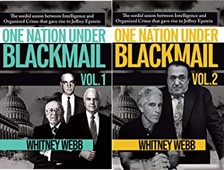
Not everyone is cowardly enough to let these controversial aspects lie untouched, as the newly released two-volume book One Nation Under Blackmail by independent reporter Whitney Webb seeks to blow wide open this media-enforced blackout. Utilizing primarily open-source information (that is, publicly accessible information such as books, newspapers articles and government reports),[2] Webb’s book delves into the life and times of Jeffrey Epstein and his deep ties to Jewish billionaires and Israeli intelligence. … continue
This site is provided as a research and reference tool. Although we make every reasonable effort to ensure that the information and data provided at this site are useful, accurate, and current, we cannot guarantee that the information and data provided here will be error-free. By using this site, you assume all responsibility for and risk arising from your use of and reliance upon the contents of this site.
This site and the information available through it do not, and are not intended to constitute legal advice. Should you require legal advice, you should consult your own attorney.
Nothing within this site or linked to by this site constitutes investment advice or medical advice.
Materials accessible from or added to this site by third parties, such as comments posted, are strictly the responsibility of the third party who added such materials or made them accessible and we neither endorse nor undertake to control, monitor, edit or assume responsibility for any such third-party material.
The posting of stories, commentaries, reports, documents and links (embedded or otherwise) on this site does not in any way, shape or form, implied or otherwise, necessarily express or suggest endorsement or support of any of such posted material or parts therein.
The word “alleged” is deemed to occur before the word “fraud.” Since the rule of law still applies. To peasants, at least.
Fair Use
This site contains copyrighted material the use of which has not always been specifically authorized by the copyright owner. We are making such material available in our efforts to advance understanding of environmental, political, human rights, economic, democracy, scientific, and social justice issues, etc. We believe this constitutes a ‘fair use’ of any such copyrighted material as provided for in section 107 of the US Copyright Law. In accordance with Title 17 U.S.C. Section 107, the material on this site is distributed without profit to those who have expressed a prior interest in receiving the included information for research and educational purposes. For more info go to: http://www.law.cornell.edu/uscode/17/107.shtml. If you wish to use copyrighted material from this site for purposes of your own that go beyond ‘fair use’, you must obtain permission from the copyright owner.
DMCA Contact
This is information for anyone that wishes to challenge our “fair use” of copyrighted material.
If you are a legal copyright holder or a designated agent for such and you believe that content residing on or accessible through our website infringes a copyright and falls outside the boundaries of “Fair Use”, please send a notice of infringement by contacting atheonews@gmail.com.
We will respond and take necessary action immediately.
If notice is given of an alleged copyright violation we will act expeditiously to remove or disable access to the material(s) in question.
All 3rd party material posted on this website is copyright the respective owners / authors. Aletho News makes no claim of copyright on such material.





 Aletho News