Romanian runner-up wants presidential vote nixed for ‘external interferences’
RT | May 20, 2025
Right-wing EU critic George Simion has said he would challenge the result of Romania’s presidential election, claiming it was compromised by “foreign interference,” flagging France and Moldova in particular.
Sunday’s runoff saw pro-EU Bucharest Mayor Nicusor Dan defeat his Euroskeptic rival with 54% of the vote in the second round of Romania’s presidential election.
The rerun was ordered after Romania’s Constitutional Court annulled the results of the November election, in which independent candidate Calin Georgescu, an EU and NATO critic, finished first with 23% of the vote. The authorities claimed that there had been “irregularities” in his campaign, citing intelligence reports alleging Russian interference – allegations which Moscow has denied.
In a Tuesday post on X, Simion – who had been the frontrunner – said he had “officially” asked Romania’s top court to annul Sunday’s election result “for the very reasons the December elections were annulled.”
He claimed that there was evidence of “external interferences by state and non-state actors,” adding that “Neither France nor Moldova nor anyone else has the right to interfere in the elections of another state.”
Simion had previously claimed the electoral rolls contained some 1.7 million fictitious names and accused the government of busing in voters from neighboring Moldova. His Alliance for the Union of Romanians (AUR) had also claimed that Moldova’s pro-EU ruling Party of Action and Solidarity (PAS) had directed its million-strong diaspora in Romania to vote for Dan.
Telegram founder Pavel Durov, who has claimed French intelligence tried to pressure him into censoring conservative Romanian channels ahead of Sunday’s vote, reposted Simion’s message, saying he is “ready to come and testify if it helps Romanian democracy.”
Paris has denied Durov’s claim. Romanian officials, in turn, have accused Russia of interfering in the election without providing any proof.
Kremlin spokesman Dmitry Peskov has dismissed the accusations, calling the election “strange” and asserting the most popular candidate had been “forcibly” removed without justification. In response to Durov’s remarks, he also cited what he called the EU’s history of meddling in other countries’ affairs.
Russian Foreign Ministry spokeswoman Maria Zakharova also dismissed Bucharest’s accusations, calling the latest vote illegitimate and saying Romanian officials should clean up their own “electoral mess” instead of blaming others.
‘EU sanctions against me a signal to all Europeans’ – German journalist
RT | May 20, 2025
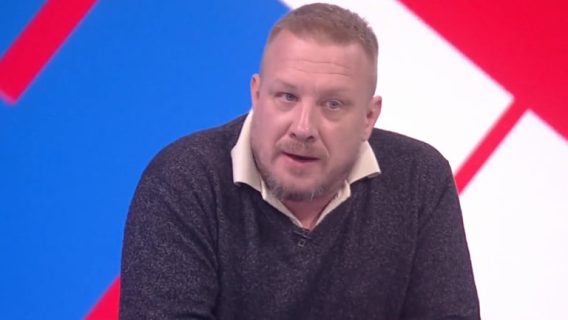
The European Union’s decision to sanction two German nationals could set a dangerous precedent, where Brussels could severely limit the rights of any critic, journalist and blogger Thomas Roeper told RT.
Roeper, who has also collaborated with RT’s German-speaking service, has been accused by the bloc of “destabilizing activities” and slapped with an EU entry ban, as well as an asset freeze.
The European Council, comprising the leaders of EU member states, approved the bloc’s 17th round of sanctions against Russia on Tuesday.
Roeper and German blogger Alina Lipp, both of whom currently reside in Russia, are among the individuals the bloc has targeted for being “involved in activities aimed at undermining the democratic political process in… Germany.”
Speaking to RT later on Tuesday, Roeper said the EU had introduced personal sanctions against him because he has large audiences in Germany.
Brussels’ latest decision to sanction EU nationals should be of great concern to all German citizens, the blogger believes. He noted that the punitive measure against him was adopted despite there being “no court [decision], nobody said which law I have violated.”
“Without any court decision, some bureaucracy decided to freeze my money, to forbid working,” he told RT.
According to the author, the move “is a signal for all people in the European Union, because if they do it to us, and this goes through, tomorrow they will start doing the same… against any critics.”
He described the EU’s allegations against him as ludicrous. “I’m just a blogger sitting here in my kitchen and writing articles and I’m ‘destabilizing’ the EU which has a billion-euro budget for media work,” he quipped.
But what’s “not funny,” he noted, is that while he lives in Russia, people in Germany would have a hard time meeting their basic needs if their rights were curbed in a similar manner.
The EU’s latest round of sanctions primarily targeted Russia’s so-called ‘shadow fleet’ of oil tankers, which operate outside Western insurance systems. According to Brussels, Moscow has allegedly been using it to circumvent G7-led efforts to enforce a price cap on its crude oil exports.
Montana Becomes First State to Ban Warrantless Data Purchases by Law Enforcement
By Ken Macon | Reclaim The Net | May 18, 2025
Montana has taken a decisive leap where others have faltered, becoming the first state in the US to officially outlaw a widespread government surveillance tactic: buying up private data without a warrant.
With the passage of Senate Bill 282 (SB 282), lawmakers have directly confronted what has become a backdoor into people’s lives, commercial data brokers selling sensitive digital information to law enforcement agencies, sidestepping the need for judicial authorization.
This so-called “data broker loophole” has allowed government agencies across the country to acquire personal details they’d otherwise need a warrant to access.
Instead of presenting probable cause to a judge, agencies could simply purchase location histories and other metadata from third-party brokers who gather it from mobile apps.
These apps often track users’ movements down to the minute, creating comprehensive logs of their daily routines. Until now, that information was effectively up for grabs, and no warrant has been required.
Montana’s new law puts a clear end to that practice. Under SB 282, state and local government entities are now barred from purchasing several categories of digital data, including but not limited to: electronic communications and their contents, geolocation data, financial transaction records, pseudonymous identifiers, and other forms of sensitive personal information such as religious beliefs, health status, and biometric details.
Importantly, the legislation doesn’t eliminate access altogether, it restricts how that access is obtained.
Law enforcement in Montana must now secure a judge’s approval via a search warrant or meet other legal standards such as investigative subpoenas. Consent from the device’s owner is also still a permissible route.
What SB 282 achieves is a ban on the government using cash instead of cause to gather what should be protected digital traces.
This isn’t Montana’s first move to prioritize digital civil liberties.
The state has already passed a range of privacy-forward policies in recent years, including strong limitations on facial recognition, protections for genetic information, and a state constitutional amendment that explicitly shields digital data from unreasonable searches and seizures. SB 282 continues that trend, bolstering Montana’s reputation as a leader in privacy rights.
The structure of the new law aligns with the spirit of a federal bill, the Fourth Amendment is Not for Sale Act, introduced by Senator Ron Wyden.
In the vacuum left by federal inaction, states have begun crafting their own responses. Montana, despite its modest population, is now at the forefront of that movement.
Montana becomes first state to close the “data broker loophole” that allows law enforcement to purchase data without a warrant by enacting SB 282 which prohibits the government from using money to access certain types of sensitive digital information
Nayib Bukele’s El Salvador dictatorship: Made in Israel
By Alan MACLOED | MintPress News | May 14, 2025
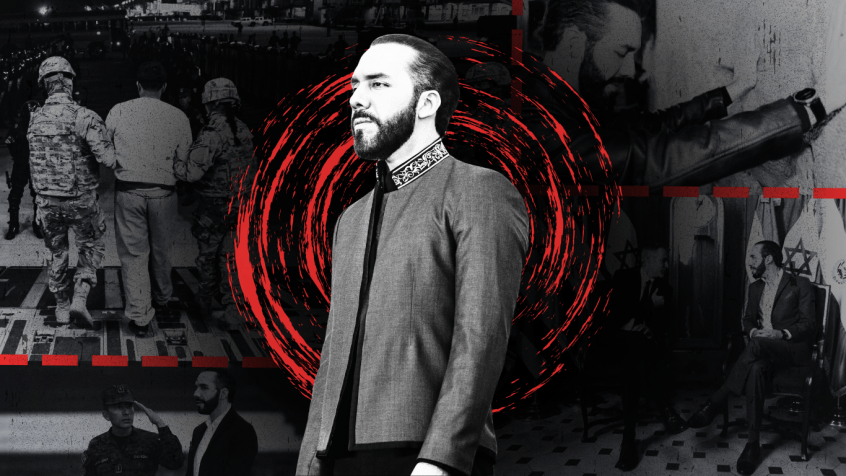
Nayib Bukele may be Palestinian, but the dictatorship he has built in El Salvador is very much made in Israel. From arming his security forces to supplying him with weapons and high-tech surveillance tools, MintPress explores the Israeli influence helping to prop up the man who calls himself “the world’s coolest dictator.”
Arming a Dictatorship
Since Bukele’s ascension to the presidency in 2019, Israeli exports to El Salvador have been rapidly advancing, growing at an annual rate of more than 21%. This increase consists primarily of weapons. Salvadoran forces are well supplied with Israeli hardware. The military and police use the Israeli-made Galil and ARAD 5 rifles, the Uzi submachine gun, numerous Israeli pistols, and ride in AIL Storm and Plasan Yagu armored vehicles.
Some equipment Salvadoran forces use comes free, courtesy of Israeli sources. In 2019, an Israeli NGO, the Jerusalem Foundation (a group that builds illegal settlements on Palestinian land), announced that it would donate $3 million worth of supplies to the Salvadoran police and military.
For others, however, the Bukele administration is paying top dollar, meaning that this relationship is extremely profitable for the high-tech Israeli defense sector.
In 2020, the Salvadoran police paid around $3.4 million for one year’s use of three Israeli spyware products. These tools include GEOLOC, a program that intercepts calls and texts from targeted phones, and Web Tangles, which uses individuals’ social media accounts to build up files on people, including using their photos for facial recognition. A third, Wave Guard Tracer (marketed in some regions as Guardian), tracks users’ movements through the GPS on their phone.
Perhaps the most notorious piece of spyware used, however, is Pegasus, developed by the NSO Group, an outgrowth of the Israeli Defense Forces’ Unit 8200. The app hit the headlines in 2022, when it was revealed that repressive governments the world over had used it to surveil thousands of public figures, including kings, presidents, politicians, activists, and reporters. El Salvador was one of the most heavily penetrated nations. A report from Citizen Lab found that the Bukele administration was using it to secretly monitor dozens of public figures critical of the president, including 22 journalists from the independent outlet El Faro.
Incarceration Nation
Bukele has used these Israeli tools and weapons to crack down on dissent and opposition to his rule. Since 2022, when he declared a State of Exception, suspending rights and civil liberties, he has imprisoned at least 85,000 people, a staggering figure for such a small country. Today, around 2% of the adult population — along with over 3,000 children — languish behind bars in dangerously overcrowded jails.
The most well-known of these is the Terrorism Confinement Center (Centro de Confinamiento del Terrorismo, or CECOT), which is by far and away the largest prison in world history. Built to incarcerate over 40,000 people, it is to this center that the Trump administration has been sending migrants rounded up by ICE. In a meeting with Bukele in the Oval Office, President Trump stated that U.S. nationals would be sent there next.
El Salvador holds vastly more people in prisons per capita than any other country, and conditions are among the worst in the world. Food is sparse, lights are kept on 24 hours a day, and cells are frequently packed with more than 100 occupants. Those incarcerated at CECOT are allowed no contact with the outside world, not even with their families or lawyers.
Often, the first thing a Salvadoran family hears about their disappeared relative is news that he died while incarcerated. Torture is commonplace. Osiris Luna, the director of El Salvador’s prison system, has even been sanctioned by the U.S. government for his role in “gross human rights abuses.”
Bukele has justified the mass imprisonment of his countrymen as a necessary step to break the power of organized gangs and drug cartels. Yet a significant portion of those held are his political opponents. Among those detained are union leaders, politicians, and human rights defenders.
Facing the threat of imprisonment or other punishment, El Faro has moved its operations to neighboring Costa Rica.
A Palestinian Who Loves Israel
Amid the chaos, Bukele has fired tens of thousands of public service workers and reduced taxes on the business community. He has also reoriented El Salvador’s foreign policy from a progressive, anti-imperialist stance to allying itself with right-wing governments around the world, including Israel.
Despite coming from a prominent Palestinian family that emigrated from Jerusalem in the early 20th century, throughout his political career, he has made a point of vocally supporting Israel, its culture, and its foreign policy. As far back as 2015, when he was Mayor of San Salvador, the Israeli Embassy had identified him as a “partner for cooperation.”
Three years later, in February 2018, he visited Israel on a trip organized by Deputy Minister for Foreign Affairs, Tzipi Hotovely, and American Jewish Congress President, Jack Rosen. There, he participated in a security conference attended by Prime Minister Benjamin Netanyahu and President Reuven Rivlin, and made a public appearance at the Western Wall.
El Salvador is home to a large Palestinian population; some 100,000 live in the small country. And yet, the Central American nation is far from a stronghold of support for anti-colonial struggles. Palestinians in El Salvador have generally done very well and entered society’s upper echelons. Bukele is actually the third Palestinian to become president.
Historically, the Latin American business community has sided with conservative or reactionary forces, and the Palestinian diaspora has shied away from supporting resistance movements in the Middle East.
“Bukele’s culture is not so much Palestinian as it is neo-fascist. That’s his culture. So he is going to identify with repressive governments around the world,” Roberto Lovato, a Salvadoran-American writer and professor at the University of Nevada, Las Vegas, told MintPress News.
The country is also home to a large and active evangelical Christian community, for whom Israel’s rise is a key issue. Despite being the son of the country’s most notable imam — one who claimed his son is a practicing Muslim — Bukele has positioned himself as a Christian conservative, and his evangelical supporters say he was chosen by God to rid the nation of gang violence. “I believe in God, in Jesus Christ. I believe in His word, I believe in His word revealed in the Holy Bible,” he said.
Dirty Wars and Dirty Politics
The connections between Israel and El Salvador, however, predate Bukele by decades. During the 1970s and 1980s, the country was a hotspot in the Cold War, and U.S.-backed death squads battled the leftist FMLN rebels. The military regime killed around 75,000 civilians in a dirty war that scars the region to this day. The violence was so extreme and so well-publicized that even the United States sought to distance itself from it. Into that void stepped Israel, providing 83% of El Salvador’s military needs from 1975 to 1979, including napalm. In return, El Salvador moved its embassy to Jerusalem, legitimizing Israel’s claim to the city.
Lovato, a former member of the FMLN, told MintPress that the country was turned into a “laboratory for repression.”
During the Civil War, the U.S. government aligned a whole panoply of different practitioners of torture and mass murder. You had trainers from Taiwan, Israel, and other countries going to El Salvador to train the Salvadoran government to do what they had learned how to do.”
One of the most notable individuals who received Israeli training was Major Roberto D’Aubuisson, leader of a far-right death squad. D’Aubuisson is known to have ordered the assassination of Archbishop Oscar Romero. Nicknamed “Blowtorch Bob” for his penchant for using the tool on his opponents’ genitals, his death squad is thought to have killed some 30,000 people, many of whom were tortured to death. Thus, it is no stretch to say that El Salvador’s repressive state apparatus has long been sustained by Israeli money, tech, and know-how.
But this is far from an isolated example. Indeed, Israel has supplied weapons and training to repressive governments around the world, honing the skills acquired suppressing the Palestinian population and taking them global.
In Guatemala, Israel sold planes, armored personnel carriers and rifles to the military, and even built them a domestic ammunition factory. General Efraín Ríos Montt thanked Israel for its participation in a coup that brought him to power in 1982, stating that it went so smoothly “because many of our soldiers were trained by Israelis.” Around 300 Israeli advisors worked to train Ríos Montt’s forces into genocidal death squads who systematically killed over 200,000 Mayans. A sign of the deep connections between the two groups is that Ríos Montt’s men began referring to the indigenous Mayans as “Palestinians” during their attacks.
It is a similar story in Colombia, where the country’s most notorious death squads were trained by Israeli operatives, such as General Rafael Eitan. To this day, Colombian police and military make extensive use of Israeli weaponry. So normalized has the Israeli influence become in Colombian society that, in 2011, sitting President Juan Manuel Santos appeared in an advertisement for Israeli mercenary firm Global CST. “They are people with a lot of experience. They have been helping us to work better,” he stated.
Israel also armed and supported the military dictatorships of Chile and Argentina in the 1970s and 1980s, even as the latter explicitly targeted over 1,000 Jews in the largest slaughter of Jews since the Holocaust.
In Nicaragua, Israel supplied the Somoza dictatorship, helping it carry out a dirty war. In Rwanda, it sold weapons to the Hutu government as it was carrying out a genocide against the Tutsi population. Israeli weapons were used by Serbia during the Yugoslav civil war in the 1990s. And successive administrations in Tel Aviv also helped sustain the Apartheid government of South Africa, sending it weapons and sharing intelligence with it.
Therefore, it should come as little surprise that Bukele’s administration has sought and established such close ties to the Israeli government. These weapons and techniques, honed on the Palestinian population, are going global, helping a government thousands of miles away crack down on civil liberties. While Bukele — a Palestinian — is very much in charge of El Salvador, it is clear that his dictatorship has a distinct Israeli flavor.
Romania’s Elections Were a Big Globalist Sham
By Ilya Tsukanov – Sputnik – 19.05.2025
The results don’t make sense arithmetically and foreign interference has been confirmed. The country has officially completed its slide into EU protectorate status. Prolific Balkans expert Dr. George Szamuely helps unpack what just happened.
Numbers Don’t Add Up
- Eurosceptic candidate George Simion won 41% in the May 4 first round. EU favorite Nicușor Dan got 21%. In round two, Simion took 46.4%, while Dan got 53.6% – a 155% boost.
- To do so, Dan needed the backing of 87% of the voters who backed neither him or Simion in the first round.
- Neither of the other major first round candidates (Crin Antonescu, 20%, Victor Ponta, 13%) threw their weight behind Dan in the second round. Where did his 30%+ surge in support come from? Unclear.
Fraud in Broad Daylight
Simion has alleged that 1.7 million dead people were on voter rolls, and urged voters to check if any deceased relatives or friends voted via a dedicated WhatsApp contact line.
Diaspora voters cast 1.64 million ballots in the second round of the vote, 660,000 more than round one (which Simion handily won, 61% to Dan’s 25.4%). Simion has alleged some polls were closed or not enough ballots were made available in some areas during the runoff, and manipulation of diaspora voting.
Foreign Meddling Alleged and Confirmed
Specifically, Simion has accused Moldova’s EU lapdog government of “immense fraud” amid reports of Romanian expats voting at 3X the rate they did in round one.
He’s also charged France of meddling using “lots and lots of money and pressure through their ambassador here, and through foreign institutions in order to rob the Romanian people of their votes.”
Telegram CEO Pavel Durov confirmed on Sunday that a request had been made by France to “silence conservative voices” in Romania ahead of the election.
Telegram’s Durov names French official he accused of censorship request
RT | May 19, 2025
Telegram founder Pavel Durov has claimed that French foreign intelligence chief Nicolas Lerner personally asked him to censor conservatives on his platform ahead of the contentious rerun of Romania’s presidential elections. The Russian-born entrepreneur said he refused the request.
The accusations of foreign meddling first surfaced last year after Romania’s top court annulled the November election results, in which independent right-wing candidate Calin Georgescu came first with 23%. Authorities cited “irregularities” in his campaign, along with intelligence reports alleging Russian interference – claims Moscow has denied. Georgescu was later barred from running again.
On Sunday, pro-EU centrist Nicusor Dan was elected president of Romania. His conservative, Eurosceptic opponent George Simion accused France and Moldova of attempting to sabotage his campaign.
In a post on X on Sunday evening, Durov said he met with Lerner, head of France’s Directorate-General for External Security (DGSE), in Paris. The agency, operating under the Ministry of the Armed Forces, is tasked with gathering intelligence and combating terrorist threats.
“This spring at the Salon des Batailles in the Hotel de Crillon, Nicolas Lerner, head of French intelligence, asked me to ban conservative voices in Romania ahead of elections. I refused,” Durov wrote. “We didn’t block protesters in Russia, Belarus, or Iran. We won’t start doing it in Europe,” he added.
Durov had previously hinted that France asked him to “silence” Romanian conservatives. The French Foreign Ministry rejected the allegations of election meddling as “completely unfounded.”
“France categorically rejects these allegations and calls on everyone to exercise responsibility and respect for Romanian democracy,” the ministry stated, labeling the accusations “a diversionary maneuver” aimed at distracting the public from “the real threats of interference targeting Romania.”
Last year, French authorities charged Durov with facilitating the distribution of child sexual exploitation material and drug trafficking due to alleged moderation failures on Telegram. He was arrested at Paris-Le Bourget Airport in August before being released on €5 million ($5.46 million) bail. Durov, who has denied any wrongdoing, was eventually allowed to leave France in March.
Western European Country Asks Telegram to ‘Silence’ Conservatives in Romania
Sputnik – 18.05.2025
A Western European country [Durov did not actually name the country responsible for the request directly but posted an emoji of a baguette, a thinly veiled reference to France] has asked Telegram to “silence” conservatives in Romania ahead of the presidential election run-off, Telegram founder Pavel Durov said on Sunday.
“A Western European government approached Telegram, asking us to silence conservative voices in Romania ahead of today’s presidential elections. I flatly refused,” Durov wrote on his Telegram channel.
He added that Telegram would not limit the freedom of Romanian users or block their political channels.
“You cannot ‘defend democracy’ by destroying democracy. You cannot ‘fight election interference’ by interfering with elections. You either have freedom of speech and fair elections — or you do not. And the Romanian people deserve both,” Durov said.
The presidential election run-off is taking place in Romania on Sunday. The leader of the opposition hard-right Alliance for the Union of Romanians, George Simion, who won the first round with 41% of the vote, is facing Bucharest Mayor Nicusor Dan, an independent candidate who came in second with 21%.
US House Judiciary Committee Warns EU and Poland’s Tusk Government Over Censorship Threat to US Free Speech
By Dan Frieth | Reclaim The Net | May 15, 2025
The US House Judiciary Committee is sounding the alarm over an escalating threat to free expression, warning that censorship efforts by Poland’s current government, coupled with the European Union’s regulatory framework, could extend their reach into American speech online.
In a letter addressed to EU Commissioner for Justice and Rule of Law Michael McGrath, Committee Chairman Jim Jordan and four congressional colleagues requested a briefing on how the EU plans to respond to what they described as disturbing developments under Prime Minister Donald Tusk.
We obtained a copy of the letter for you here.
Since coming to power in December 2023, Tusk’s government has launched legal actions against members of the conservative Law and Justice (PiS) party.
These efforts include removing the legal immunity of PiS leader Jarosław Kaczyński, pressing forward with criminal charges that appear politically motivated, and subjecting detainees to harsh treatment.
One former aide denied access to her attorney during questioning, reportedly suffered a fatal heart attack shortly after. Another case involved the arrest and alleged mistreatment of Father Michał Olszewski, a Catholic priest tied to the former justice minister.
The Judiciary Committee points to these incidents as evidence of a political strategy designed to suppress opposition speech ahead of Poland’s 2025 presidential election.
According to the letter, the pattern includes targeting conservative activists and media outlets. A key example is the Polish government’s threat to revoke the license of Telewizja Republika, a station known for criticizing the Tusk administration.
Lawmakers expressed concern that these actions are taking place without pushback from EU institutions. They argue that the European Commission, which was quick to condemn the previous PiS-led government for its alleged violations of democratic norms, has so far failed to hold Tusk’s coalition to the same standard. The result, the committee says, is a perceived double standard that undermines the EU’s credibility and emboldens further censorship.
Of particular concern is the potential for EU censorship laws to ripple beyond Europe. The Digital Services Act, which requires platforms to remove “misleading or deceptive content,” may end up influencing global content moderation practices. Because platforms typically apply one uniform set of rules, the DSA could effectively establish a worldwide censorship template. The committee warned that this might restrict Americans’ speech online as companies adjust to foreign legal requirements.
Supporting this concern, the committee cited documentation showing that Poland’s Ministry of Digital Affairs, through the National Research Institute, requested the removal of TikTok videos that criticized electric vehicles. The content in question was not overtly political, but the request demonstrates, in the committee’s view, a willingness to use regulatory power to suppress opinions the government dislikes.
This pattern of behavior, if left unchecked, could allow foreign governments to influence global information flows. The letter emphasized that such interference is unacceptable, particularly when it has the potential to impact the speech of American citizens. The concern is not merely theoretical; as the letter points out, the Tusk government accused foreign actors of electoral interference through online ads just one day after the Committee’s communication to the EU.
The letter was signed by Chairman Jim Jordan, Subcommittee Chairman Darrell Issa, and Representatives Chris Smith, Warren Davidson, and Andy Harris. Their message to Brussels is direct: silence in the face of repression is not neutrality. If left unchallenged, the EU’s regulatory apparatus and inaction on political censorship risk becoming tools for silencing voices far beyond Europe’s borders.
Germany: Police block activists from leaving country to attend Remigration Summit in Italy in major crackdown
Remix News | May 16, 2025
German activists leaving the airport for the Remigration Summit taking place in Milan on Saturday were stopped and detained at the airport, interrogated for hours, and issued with an exit ban from leaving the country.
The summit will be attended by well-known activists from across Europe, such as the Austrian author Martin Sellner, Dutch commentator Eva Vlaardingerbroek, and Belgian activist Dries Van Langenhove.
The latter currently faces a potential prison sentence for memes that were posted in a group chat seven years ago. However, not only are German police now cracking down on activists, even leaving the country for the event, but Italian police are also showing up at the hotels of activists attending the event.
Sellner has been putting out a video and posting updates on X on the various actions taken against activists involved in the summit.
“I know them, they are great guys, Generation Identity activists, who have been detained for hours by the German police. They were arrested at the airport in Munich. Two of them were arrested on the plane, where they tried to enter a plane to Milan, Italy, to attend a conference about remigration. And the German state now bans them from exiting Germany for several days until the conference is over. Bans them from exiting. They banned me from entering, and then they threw me out of several cities and basically crushed my readings, and now they’re banning their own citizens, EU citizens from exiting.”
Sellner says that the German government’s reasoning is “crazy,” arguing that allowing the activists to leave “would be detrimental to the German state, the reputation of the German state, if they would go outside and take part in those events, because this would look like the German state endorses those events.”
Sellner argues that the German state is headed into dark territory, mimicking the GDR, communist East Germany, with this exit ban.
“No, you are our property, and it’s our property, our citizens. If you go there, it’s bad for our reputation. That’s why we lock you in like nasty little children. The German state is going full GDR. That’s exactly what the GDR did with the Berlin Wall. They didn’t let their own citizens leave the country, and that’s the case right now. It would be now punishable by law if they try to exit to Italy, Austria, and Switzerland. They’re banned from going to Switzerland, Austria, and Italy for a certain amount of days. The German state can extend this at will.
Of course, they will take immediate legal measures. They have very good lawyers. You need good lawyers in Germany. If you’re an activist, if you’re posting memes on X, you need an excellent lawyer by now. But it’s really crazy. These laws exist, but they might be lying dormant for a while and now the German state is shutting down, switching off the democracy simulation, and moving up and activating the totalitarian mode, the GDR mode.
As for the German activists, six men and two women who were stopped at the airport, Sellner stated they were released after hours of interrogation. They must now report to the police station twice a day.
“Eight young Germans are now banned from LEAVING Germany. If they try it, they commit a crime. They have to check in daily at their local police station. If not, they have to pay an extra fine. The democracy simulation is shutting down,” wrote Sellner.
The explanation they were given for the exit ban was also delivered to them in written form. It reads:
“In the event of an exit from German right-wing extremists, there is a considerable risk of damage to the reputation of the Federal Republic of Germany due to the stays of German right-wing extremists who promote the transnational networking of the right-wing extremist scene, actively promote the inhuman ideology and give it more scope, thus harbors the risk of radicalization of other people and their trips for the development of financial resources and the like.”
Freilich also writes that “it is also due to the history of Germany that the arrival of the activist concerned gives the international impression that the Federal Republic of Germany supports the right-wing extremist ideas openly spread at the event or at least does not adequately address them.”
Essentially, the German state is attempting to make the argument that allowing the activists to attend the summit would be the equivalent of endorsing their beliefs and harming the reputation of Germany. If that is the standard, then apparently it could be argued that any activists Germany does not detain in the future for any conference is a sign that the German state officially endorses the contents of that conference? Such reasoning reaches into the realms of the absurd.
The exit ban on the activists not only applies to Italy, but also to countries like Switzerland and Austria, and will be in effect until May 17, just a minute before midnight.
The activists also shared photos of the last moments they had before they were detained at the airport.
Although Sellner says the Italian police are not involved in this travel ban, and it is the German police at fault, he recently also posted an update on X, noting that an activist staying in Milan was also visited by police and questioned at his hotel.
Sellner says that booking the Remigration Summit has been fraught with difficulties, as vendors and hotels have been continuously canceling on organizers, likely due to pressure from activists. Antifa groups are also active and may try to disrupt the conference, or even more importantly, physically attack those involved.
Romanian presidential front-runner accuses Macron of interference
Al Mayadeen | May 16, 2025
Romanian nationalist candidate George Simion has accused French President Emmanuel Macron of exhibiting “dictatorial tendencies” and interfering in Romania’s democratic process, just days before the country’s do-over presidential election.
“I love France and the French people, but I don’t like Emmanuel Macron’s dictatorial tendencies,” Simion said during an interview with French television channel CNews, adding, “I don’t respect Emmanuel Macron’s intervention in our democracy.”
Simion further said that France’s ambassador to Romania had discussed the election with the president of the Constitutional Court, which annulled the 2024 presidential vote in December due to concerns over Russian interference.
“The French ambassador has gone… through all regions of the country to convince businessmen to support my opponent, the mayor of Bucharest,” Simion added, referring to Nicușor Dan, his opponent in Sunday’s final vote.
Simion, 38, is the leader of the far-right Alliance for the Union of Romanians (AUR) and is campaigning on a nationalist platform that opposes military aid to Ukraine and supports unification with Moldova.
He faces Nicușor Dan, 55, an independent centrist and current mayor of Bucharest, who is running on a pro-European, pro-Western platform and advocates a tougher stance against Russia.
In the first round of the presidential election, Simion secured 41% of the vote, compared to Dan’s 21%. However, recent polling shows the race tightening. Politico’s Poll of Polls currently places Simion at 49% and Dan at 46%.
“We are basically winning,” Simion told Politico during a visit to Brussels. “The only thing we need is fair and free elections. … I think it will be a landslide.”
Why is the secret German spy report on the AfD party only filled with public statements?
Remix News | May 15, 2025
The German domestic spy service, the Office of the Protection of the Constitution (BfV), has released a 1,100-page report on the Alternative for Germany (AfD), which it used to label the party a “confirmed” right-wing extremist party. The report is huge and reads like it was written by Antifa, but that was to be expected. However, one interesting point is that it contains only public statements, including quotes made by AfD politicians and a lot of memes.
Why is that?
We already know that the BfV is secretly surveilling AfD members in certain German states, mostly in the east, where the party is “confirmed right-wing extremist” already. This designation allows for the BfV in those states to partake in extraordinary surveillance powers over AfD members, including reading their chats and emails. Presumably, they can also track their browsing history, and perhaps they are even listening in on their conversations at home.
What this means is that the BfV has plenty of statements, memes and content to use based on private statements, but it is purposefully choosing not to use them. After all, a certain number of those AfD members, in private moments, probably also express opinions, post memes, or share thoughts that the BfV would love to include in a secret report on the party, which many hope will eventually justify an outright ban.
Again, why is the BfV not using these private statements?
There are multiple reasons. For one, a big part of the apparatus of spy agencies is to obtain information, but not release it to the public. The public may not be able to stomach such personal and private information and the means that were used to obtain it. Since the Edward Snowden revelations, and even before then, we have become acutely aware that we have accepted devices into our lives and homes that can be used to spy on us on a scale never seen before in history. However, even now — even after all this information has been revealed — I believe nearly all of us still cannot quite grasp what this means — nor do we want to.
Yes, we know that AfD members are being spied on across Germany. Their emails are read, their phone calls are recorded. AI is being used to sort out keywords of interest to the security services. However, nobody really knows how this information is being processed and what it is being used for, or even who is reading it. The spies who control this information have extraordinary power. As a significant portion of them are now far left, at least in Germany, they believe they are acting as a bulwark against the rise of Nazism, and the ends justify the means when it comes to the AfD. There are other psychological motives at work, of course, as spy agencies are on the whole very good at keeping their secrets, not even necessarily because of internal controls, but because the spies are dedicated to their mission. There is, also, the sense of power that comes with being the watcher, and for many spies, this is a powerful intoxicant. They know, while you are in the dark.
In practice, these spies know which AfD members are having affairs, their personal struggles, their health issues, their financial situation, and even their personal browsing history. In other words, they know their targets better in many cases than even their close friends and family. The spies of the world, not just in Germany, are now in many ways gods and mind readers, seeing through the walls people build up around themselves and accessing their darkest fears and secrets — all due to rapid advances in technology and the rise of smartphones.
Earlier this month, commentator Eva Vlaardingerbroek, the famed Dutch activist reported that she was alerted that her phone was being breached with Pegasus-like spyware, mainly produced in Israel, which can unlock essentially every aspect of her personal life, including chats, location data, photos, contacts, and so on. With this software, they can even record her in real time, including personal conversations in her home, as well as turn on her camera to record her in her most personal moments.
This software, and software like it, has been used on thousands of people, including journalists, politicians, and activists, sometimes with deadly results. It is not just the right, but far-left activists have also been targeted, including human rights activists. It is also unclear how long Vlaardingerbroek may have been targeted in such a manner. Previous versions of Apple iOS may have not been able to detect this software on her phone. In short, much of her personal life may already be in a database somewhere waiting to be used by intelligence.
Vlaardingerbroek is not in the AfD or even German, but she has backed the party, and she and people like her are most certainly the target of intelligence operatives in countries across Europe.
The point is that this software and the means for surveilling people are very unsettling. In a privacy-minded country like Germany, revealing the scale of surveillance being used against the AfD may be a scandal within itself, and could taint the entire report, which at the end of the day, should be used to justify a ban of the AfD.
There may have been voices in the BfV who were calling to use secretly recorded data in the report as well, but the agency also knew this report would eventually be leaked and made public. The agency does not appear to want to divulge who they are surveilling, what information they have about them, and how they obtained this information.
Another important consideration is also to be taken into account. The BfV decided it did not need to include this secret information in the report because it is likely confident that it can get what it wants using public statements alone. It can still keep the scale of its surveillance secret and get the ban it desires — at least that is the gamble the agency is making.
Surveillance is everywhere, it is being practiced by the left, the right, and many foreign governments are also active in the West, collecting data on targets. So, this is not a uniquely German issue by any means. However, if the establishment in Germany becomes truly desperate, there is probably a secret report waiting that includes far more information and personal details than many Germans want to believe is possible.
US court hits Israeli spyware firm NSO with $167m fine over Pegasus abuses
MEMO | May 14, 2025
A federal jury in California has ordered Israeli surveillance firm NSO Group to pay Meta $167 million in punitive damages, marking the first time a court has imposed financial liability on a spyware vendor for abuses linked to its software.
The ruling sends a strong signal that private firms profiting from invasive surveillance technology will not be shielded by their association with government clients. After a single day of deliberation, jurors found that NSO had acted with “malice, oppression or fraud” in deploying its Pegasus spyware against 1,400 WhatsApp users.
Pegasus, which grants near-total access to a target’s device, including microphones, cameras and encrypted messages, was used not against criminals, but journalists, human rights defenders and political dissidents. Meta, which owns WhatsApp, described the hacking as “despicable” and a clear violation of privacy rights.
NSO has long claimed that its spyware is sold only to vetted state clients for national security purposes. However, investigations have shown Pegasus being deployed to facilitate transnational repression by authoritarian regimes.
The previous US administration blacklisted NSO over its role in such abuses, making it the first company added to the US entity list for enabling state surveillance. The jury’s decision is expected to add pressure on Washington to further regulate the commercial spyware sector.
While the financial penalty may prove difficult to collect, the judgement itself sets a precedent: spyware firms can be held directly accountable in US courts, regardless of the state affiliations of their customers.
In doing so, the case reframes digital privacy not merely as a user expectation, but as a civil right and signals that the impunity long enjoyed by private surveillance actors is coming to an end.
Featured Video
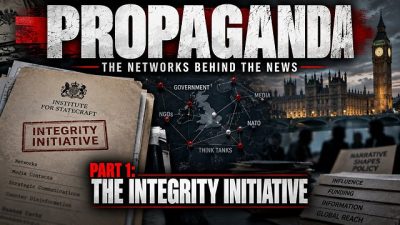
Integrity Initiative: UK-funded network framed dissent as Russian disinformation for years
or go to
Aletho News Archives – Video-Images
From the Archives
Why Saudi Ties to 9/11 Mean U.S. Ties to 9/11
By Kevin Ryan | Dig Within | September 27, 2015
Media interest in Saudi Arabian connections to the crimes of 9/11 has centered on calls for the release of the 28 missing pages from the Joint Congressional Inquiry’s report. However, those calls focus on the question of hijacker financing and omit the most interesting links between the 9/11 attacks and Saudi Arabia—links that implicate powerful people in the United States. Here are twenty examples. … continue
Blog Roll
 Aletho News
- EUROPE FEARS RUSSIA’S NEXT MOVE / Ian Proud
- Big tech hands in its DSA censorship reports to the EU
- ‘A Big Victory’ – Palestine Chronicle Wins Two-Year Legal Battle
- IAEA inspectors cannot return to Iran amid US threats: Russia
- Senate Rejects Iran War Powers Resolution Passed By House
- ‘We did not attack Pakistan with drones’: Afghan sources
- Iraqi Resistance faction links arms to sovereignty, questions US exit
- Cannon fodder no more… South Korea rejects Trump’s pressure to join his criminal war on Iran
- Neria Leiter Was A Legitimate Military Target
- Integrity Initiative: UK-funded network framed dissent as Russian disinformation for years
- If Americans Knew
- ‘This is where I live now, the back of a truck’: a day in the life of a grandmother in Gaza
- In UN Speech, Iran’s President Displays Pictures of Children Killed by US, Brings Attention to Israel’s Nuclear Arsenal
- Israel displaces hundreds of Palestinians amid wave of demolitions in West Bank
- Aid, reconstruction, and Israel’s history of obstruction in Gaza
- Trump administration digs an ever-deeper hole of complicity in genocide – Daily Update
- US-Israel $2.8 Billion Arms Deal, 40,000-Bomb Supply Faces New Gaza Complicity Accusations
- Caught on Tape: AIPAC CEO Boasted of Controlling Trump’s National Security Officials
- Why Hamas Attacked Israel in October 2023 – Israeli professor Ilan Pappé
- They see them, then kill them: Israeli quadcopters track, deliberately target civilians in Gaza
- Winter could turn Gaza’s treacherous, war-damaged buildings into deathtraps
- No Tricks Zone
- New Study: Earth And Venus Surface Warmth Largely Explained By Convection And Lapse Rate, Not CO2 Or Radiation
- 2025 Nature Paper Claiming Worsening Global Drought Gets RETRACTED …Heavily Flawed
- New Study: ‘Global Drought Shows No Detectable Recent Acceleration Under Climate Warming’
- Economic Masterminds: German Socialists Suggest Taxing Productivity Gains Stemming From Using AI
- The South China Sea Has Not Been Cooperating With The Climate Change Narrative
- Energy Crisis: Germany Enters Heating Season With Historically Low Gas Reserve Fill Levels
- New Study: The Antarctic Ice Sheet Gained Mass From 2020-2024 Due To Staggering Snow And Ice Accumulation
- Study: Ocean Heating Rates From Thousands Of Years Ago ‘Dwarf’ Modern Ocean Heating Rates
- Climate Extremists Target, Attack Large-Scale Power Grid Infrastructure In Germany!
- New Study: Antarctic Ice Melt Has Contributed Less Than 1 Centimeter To Sea Level Rise In The Last 30 Years

