Florida Rejects Controversial Encryption Backdoor Bill
By Didi Rankovic | Reclaim The Net | May 13, 2025
Legislators in the US state of Florida have shot down a bid to introduce a law that would have mandated encryption backdoors.
The outcome of the effort – known as SB 868: Social Media Use by Minors – means that the backdoors would have allowed encryption to be weakened in this fundamental way affecting all platforms where minors might choose to open an account.
As the fear-mongering campaign against encryption is being reiterated over and over again, it’s worth repeating – there is no known way of undermining encryption for any one category of users, without leaving the entire internet open and at the mercy of anything from government spies, to plain criminals.
And that affects both people’s communications and transactions.
Not to mention that while framing such radical proposals as needed for a declaratively equally large goal to achieve – the safety of youth online – in reality, by shuttering encryption, young people and everyone else are negatively affected.
If anything, it would make everyone online less secure, and, by nature of the world – young people more so than others.
And so, Florida’s Senate on announced that SB 868 is now “indefinitely postponed and withdrawn from consideration.”
The idea behind the proposal was to allow law enforcement access to communications on a social platform – by forcing a company to build in backdoors any time law enforcement came up either with a warrant – or merely a subpoena.
The focus of the bill was “ephemeral” messages – as in, preventing those defined as minors from using the associated features. At the same time, their parents or guardians would have “full access” to their online activities.
“Dangerous and dumb” – is how the digital rights groups Electronic Frontier Foundation (EFF) earlier summed up and alliterated the proposal.
The US, and its individual states, are not the only ones attempting to create a chink in the armor of global online security by repeatedly attacking online encryption.
Thus far, cooler heads seem to be prevailing, but the battle is far from over, as this fundamental piece of online security continues to be in the crosshairs of, most of the time, authorities hungry for ever-easier ways to conduct ever more invasive mass surveillance.
EU Council pushes overhaul to expand speech regulation, target influencers, and tighten control over online platforms
By Dan Frieth | Reclaim The Net | May 14, 2025
As the European Union lays the groundwork for a sweeping overhaul of its audiovisual media regulations, the European Council is doubling down on its campaign to police online speech, draped in the familiar language of “safety” and “harm reduction.”
In a set of draft conclusions ahead of the 2026 review of the Audiovisual Media Services Directive (AVMSD), the Council is urging the European Commission to expand regulatory oversight over video-sharing platforms like YouTube and TikTok, demanding stricter measures to counter what it vaguely labels “disinformation” and “societal risks.”
We obtained a copy of the draft conclusions for you here.
Under the surface of these bureaucratic formulations lies an unmistakable effort to entrench centralized control over online speech across the EU. While dressed as a protective measure, especially toward children and young people, the Council’s recommendations represent a coordinated push to tighten the screws on independent voices, alternative narratives, and the chaotic, open nature of internet communication.
Wrapped in vague definitions and bolstered by expanding EU digital legislation, these proposals are paving the way for a more surveilled, less spontaneous digital public sphere.
Particularly troubling is the call for the Commission to “engage regularly with Member States” to assess how very large online platforms (VLOPs) comply with self-regulatory codes meant to eliminate what the EU designates as “harmful content.”
This not only formalizes political pressure on private platforms to suppress speech but does so under a self-justifying cycle where the same institutions define both the problem and the acceptable solution.
The Council also throws its weight behind efforts to classify influencers and independent content creators as formal audiovisual media providers. If adopted, such a move would bring an entire ecosystem of decentralized communication under a regulatory regime designed for legacy broadcasters. This is not about leveling the playing field. It is about reining in anyone who communicates outside the narrow channels of state-sanctioned media.
“In an ever-changing media landscape, we need rules that are both robust and adaptable,” stated Hanna Wróblewska, Polish Minister for Culture and National Heritage.
“Today’s conclusions highlight the most pressing challenges facing the EU’s audiovisual media sector and call for an approach that will ensure all our citizens are protected from harmful content for years to come.” The sentiment may sound benign, but in practice, “robust” rules often translate into bureaucratic tools for censorship, and “adaptability” into a blank check for regulators to constantly redraw the boundaries of permissible expression.
The Council’s emphasis on combating “foreign information manipulation and interference” (FIMI) also deserves scrutiny. While it invokes threats from abroad, the solutions offered inevitably point inward, toward greater institutional control over speech flows within Europe. The specter of “foreign influence” has long served as a justification to erode civil liberties, and in this context, it becomes a pretext to further entangle state actors in decisions about what citizens can see, share, and say.
The AVMSD was never intended to be a speech-regulating weapon. It was built to coordinate standards across media markets, not dictate what truths may circulate. Yet the Council’s conclusions betray a shift away from this principle, echoing a broader authoritarian drift in the EU’s digital policymaking. Initiatives like the Digital Services Act and the European Media Freedom Act are increasingly being used to empower unelected bodies to interfere in editorial processes and curate public discourse under the banner of safety.
Calls for “media literacy,” “pluralism,” and “support for journalistic standards” now serve as euphemisms for state-aligned narratives. Rather than equipping citizens to think critically, these measures promote compliance with officially approved information streams while marginalizing dissent, satire, and counter-establishment viewpoints.
The Deep State Goes Viral: Foreword
By Jeffrey A Tucker | Brownstone Institute | May 12, 2025
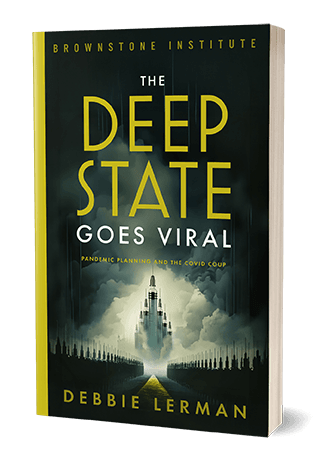
The following is Jeffrey Tucker’s Foreword introduction to Debbie Lerman’s new book, The Deep State Goes Viral: Pandemic Planning and the Covid Coup.
It was about a month into lockdowns, April 2020, and my phone rang with an unusual number. I picked up and the caller identified himself as Rajeev Venkayya, a name I knew from my writings on the 2005 pandemic scare. Now the head of a vaccine company, he once served as Special Assistant to the President for Biodefense, and claimed to be the inventor of pandemic planning.
Venkayya was a primary author of “A National Strategy for Pandemic Influenza” as issued by the George W. Bush administration in 2005. It was the first document that mapped out a nascent version of lockdowns, designed for global deployment. “A flu pandemic would have global consequences,” said Bush, “so no nation can afford to ignore this threat, and every nation has responsibilities to detect and stop its spread.”
It was always a strange document because it stood in constant contradiction to public health orthodoxies dating back decades and even a century. With it, there were two alternative paths in place in the event of a new virus: the normal path that everyone is taught in medical school (therapeutics for the sick, caution with social disturbances, calm and reason, quarantines only in extreme cases) and a biosecurity path that invoked totalitarian measures.
Those two paths existed side-by-side for a decade and a half before the lockdowns.
Now I found myself speaking with the guy who claims credit for having mapped out the biosecurity approach, which contradicted all public health wisdom and experience. His plan was finally being implemented. Not too many voices dissented, partially due to fear but also due to censorship, which was already very tight. He told me to stop objecting to the lockdowns because they have everything under control.
I asked a basic question. Let’s say we all hunker down, hide under the sofa, eschew physical meetings with family and friends, stop all gatherings of all kinds, and keep businesses and schools closed. What, I asked, happens to the virus itself? Does it jump in a hole in the ground or head to Mars for fear of another press conference by Andrew Cuomo or Anthony Fauci?
After some fallacy-filled banter about the R-naught, I could tell he was getting exasperated with me, and finally, with some hesitation, he told me the plan. There would be a vaccine. I balked and said that no vaccine can sterilize against a fast-mutating respiratory pathogen with a zoonotic reservoir. Even if such a thing did appear, it would take 10 years of trials and testing before it was safe to release to the general population. Are we going to stay locked down for a decade?
“It will come much faster,” he said. “You watch. You will be surprised.”
Hanging up, I recall dismissing him as a crank, a has-been with nothing better to do than call up poor writers and bug them.
I had entirely misread the meaning, simply because I was not prepared to understand the sheer depth and vastness of the operation now in play. All that was taking place struck me as obviously destructive and fundamentally flawed but rooted in a kind of intellectual error: a loss of understanding of virology basics.
Around the same time, the New York Times posted without fanfare a new document called PanCAP-A: Pandemic Crisis Action Plan – Adapted. It was Venkayya’s plan, only intensified, as released on March 13, 2020, three days before President Trump’s press conference announcing the lockdowns. I read through it, reposted it, but had no idea what it meant. I hoped someone could come along to explain it, interpret it, and tease out its implications, all in the interest of getting to the bottom of the who, what, and why of this fundamental attack on civilization itself.
That person did come along. She is Debbie Lerman, intrepid author of this wonderful book that so beautifully presents the best thoughts on all the questions that had eluded me. She took the document apart and discovered a fundamental truth therein. The rule-making authority for the pandemic response was not vested in public-health agencies but the National Security Council.
This was stated as plain as day in the document; I had somehow missed that. This was not public health. It was national security. The antidote under development with the label vaccine was really a military countermeasure. In other words, this was Venkayya’s plan times ten, and the idea was precisely to override all tradition and public health concerns and replace them with national security measures.
Realizing this fundamentally changes the structure of the story of the last five years. This is not a story of a world that mysteriously forgot about natural immunity and made some intellectual error in thinking that governments could shut down economies and turn them back on again, scaring a pathogen back to where it came from. What we experienced in a very real sense was quasi-martial law, a deep-state coup not only on a national but on an international level.
These are terrifying thoughts and hardly anyone is prepared to discuss them, which is why Lerman’s book is so crucial. In terms of public debate about what happened to us, we are barely at the beginning. There is now a willingness to admit that the lockdowns did more overall harm than good. Even the legacy media has started venturing out to grant permission for such thoughts. But the role of the pharmaceuticals in driving the policy and the role of the national-security state in backing this grand industrial project is still taboo.
In 21st-century journalism and advocacy designed to influence the public mind, the overwhelming concern of all writers and institutions is professional survival. That means fitting into an approved ethos or paradigm regardless of the facts. This is why Lerman’s thesis is not debated; it is hardly spoken of at all in polite society. That said, my work at Brownstone Institute has put me in close contact with many thinkers in high places. This much I can say: what Lerman has written in this book is not disputed but admitted in private.
Strange isn’t it? We saw during the Covid years how professional aspiration incentivized silence even in the face of egregious violations of human rights, including mandatory school closures that robbed children of education, followed by face-covering requirements and forced injections for the whole population. The near-silence was deafening even if anyone with a brain and a conscience knew that all of this was wrong. Not even the excuse that “We didn’t know” works anymore because we did know.
This same dynamic of social and cultural control is fully in operation now that we are through that stage and onto another one, which is precisely why Lerman’s findings have not yet made their way to polite society, to say nothing of mainstream media. Will we get there? Maybe. This book can help; at least it is now available for everyone brave enough to confront the facts. You will find herein the most well-documented and coherent presentation of answers to the core questions (what, how, why) that all of us have been asking since this hell was first visited upon us.
Michigan AG Pins Blame for Failed Prosecutions of Student Protesters on Rep. Debbie Dingell
The Michigan attorney general provided no evidence for her claim, which Dingell rejected
By Ryan Grim and Tom Perkins | Drop Site | May 11, 2025
Michigan Attorney General Dana Nessel continues to do damage control in the wake of her failed prosecution of student protesters at the University of Michigan. Nessel was forced to drop charges against students who had been arrested at a pro-Palestinian encampment last year after the judge overseeing the case indicated he was sympathetic to the defense’s argument that Nessel had been improperly biased against the defendants.
This week, in public remarks on the prosecution, she claimed without evidence that Democratic Rep. Debbie Dingell of Michigan had been the one who urged her to charge students involved in protests over Gaza. Pinning the pressure for the prosecutions on Dingell was Nessel’s way of arguing that the bias claims made against her were inaccurate—that she was not in fact pushed to take the cases by donors to her campaign who serve as senior officials at the university, but rather by the local congresswoman, Dingell.
“I heard it was from the Jewish Regents,”—that is, the Jewish members of the University of Michigan Board of Regents—“they forced me to take these cases,” Nessel said at an event this week called a “Town Hall on Hate Crimes & Extremism” in West Bloomfield Township. “I heard it was from the [Michigan Legislative] Jewish Caucus because of the money I get from them. I heard it was from Jewish donors. You know how those cases came to my office? Debbie Dingell. Debbie Dingell, I don’t know if you know this: Not Jewish. But it had to be some sort of Jewish influence.”
In a statement to Drop Site, Dingell spokesperson Michaela Johnson suggested the congresswoman was not behind the investigations, pointing to a May 2024 letter from Nessel’s office to the university in which Nessel offered to take over any investigations. The letter, which has not previously been reported, makes no reference to Dingell, but instead suggests that protests outside the homes of Board of Regents members triggered Nessel to launch an effort targeting student protesters.
“Nessel did not write the letter at our request, and Rep. Dingell had not seen that letter until today,” Johnson said. Dingell represents Ann Arbor, but previously represented Dearborn until redistricting in 2014, and she still has strong ties to the Arab-American community there. But she has remained largely silent with regard to the protests.
Amir Makled, an attorney for some of the students, said he called Dingell’s office on Friday to ask about Nessel’s allegations. He said a Dingell staffer denied the congresswoman had pushed for the investigation.
Makled said he didn’t think it was done at Dingell’s behest, but he said Dingell has been involved with the discussions because the incident occurred in her district, and she “has been giving lip service to all sides.”
But, he added, “Nessel is trying to do anything to deflect blame for her office’s misdeeds – that much seems clear to me.”
Nessel’s office didn’t respond to a request for comment over the weekend.
The university, its regents and Nessel have denied that the school recruited the attorney general.
This was not the first time Nessel had pointed the finger at Dingell. She told a local reporter several weeks ago that “the congresswoman from the 6th Congressional District” – Dingell – had put her up to it. “I stand behind the evidence and I stand behind the charges, and I appreciate the fact that this matter was referred by the congresswoman from the 6th Congressional District, who asked the state to intervene because they were concerned about what was happening on campus,” she said. “I believe what we did was the right thing, and that will be borne out in court.”
Following that report, supporters of the students who’d been charged approached Dingell at an event on March 3 to ask if Nessel’s allegation was true. According to an audio recording provided to Drop Site, it was not. “She’s told a lot of people a lot of stuff,” Dingell told the students. She was then asked directly by Jared Eno, a grad student at Michigan, if that was true: “No!” Dingell said. “She called the university and offered.” The letter supports that claim.
Nessel, in her remarks at the town hall, again claimed Rep. Rashida Tlaib of Michigan had accused her of bias linked to her Jewish background, but Tlaib’s public statements have never referenced this. “I think people at the University of Michigan put pressure on her to do this, and she fell for it,” Tlaib had said. “I think President Ono and Board of Regent members were very much heavy-handed in this.” UMich President Santa Ono, the only person Tlaib named as having applied pressure to Nessel, is not Jewish.
The AG letter was sent to Timothy G. Lynch, vice president and general counsel at the University of Michigan, and signed by Danielle Hagaman-Clark, a prosecutor in Nessel’s office. “I write today to offer the DAG’s assistance with investigating and prosecuting any cases that arise from the recent demonstrations on UM’s campus,” she wrote. “It has been widely reported that the demonstrators have not limited their protests to the campus but have also appeared at the homes of the Board of Regents. My understanding is that the Regents are not required to live in Washtenaw County, the location of UM, but that they reside in several different counties. Because the DAG has state-wide criminal authority to bring charges, we are ideally situated to review any potential cases.”
The reference to the protests outside the homes of Regents matches reporting that suggested those demonstrations, even more than the encampments, enraged the board members, who urged Nessel to prosecute.
Nessel’s prosecutor added her office was well suited to determine whether any of the speech from the protesters was illegal. “I would also note that our Department has specialized expertise in the intersection of First Amendment free speech rights in the context of a criminal prosecution. We are fluent in the law around what speech is protected and what speech is not protected,” said Hagaman-Clark, making the pitch to Michigan. The letter was sent shortly after local prosecutor Eli Savit (who is also Jewish) declined to prosecute 36 of 40 protesters arrested in connection with the occupation of an administration building, and recommended four others for diversion. “General Nessel has discussed the potential jurisdictional issues that might arise with Washtenaw County Prosecutor Eli Savit. Prosecutor Savit recognizes that his authority is confined to Washtenaw County. He is comfortable with the DAG overseeing these cases based on his jurisdiction being limited to only Washtenaw County.”
In her effort at damage control this week, Nessel claimed Dingell’s supposed request was common. “Now it’s not unusual for a congressional representative to call up the department of the attorney general and to call the attorney general herself and say ‘I’m really worried about what I see to be criminal activity occurring and either the local prosecutor is not doing anything about it,’ or ‘they’re not equipped to do anything about it. But I am scared about what I am seeing. And I think the AG’s office has to take action.’”
Nessel also told the town hall audience that she dropped the charges because the judge had ordered an evidentiary hearing into the defense’s charge that Nessel was biased against the defendants. Defense attorneys, in their recent motion to disqualify Nessel’s office over bias, pointed to a previous analysis that found she had prosecuted protesters at a much higher rate than other prosecutors in the state.
They also pointed to Nessel recusing herself from an investigation into alleged election fraud by Muslim-American city council members in nearby Hamtramck. Nessel said she wanted to avoid the appearance of bias because she was Jewish and the suspects were of Arab descent. She also noted that she had previously been critical of the Hamtramck City Council. In their motion to disqualify Nessel’s office, defense attorneys questioned how she could consider herself biased in Hamtramck but unbiased in Ann Arbor under similar circumstances.
A letter sent by the Jewish Federation of Ann Arbor to the judge urging him to allow her to remain on the case, she said, put improper pressure on the judge and should not have been sent. And the cases against the students were becoming a distraction to staff, she added, who couldn’t even attend a job fair without being “shut down by protesters.”
“We elected that rather than me being put on trial for being a Jewish prosecutor, and rather than having the federation be put on trial for an email they should not have sent—but the kind that gets sent all the time—that we would dismiss the charges against those particular defendants,” she said. An evidentiary hearing would have opened her office to discovery and made public communications about how the cases came together. Defense attorneys say she wanted to avoid that.
Liz Jacob, an attorney from the Sugar Law Center, said the claim from Nessel was another effort to deflect responsibility. “It’s alarming to see the ways that Nessel is trying to avoid accountability for her repression of free speech and brutal targeting of protesters at all costs,” Jacob said. “Both in that video and over the last several months AG Nessel has tried to blame anyone—from Congresswoman Rashida Tlaib to Debbie Dingell to the Jewish Federation of Greater Ann Arbor—to deflect criticism regarding her own deplorable treatment of pro-Palestine protesters.”
Nessel’s decision was a serious one, and Nessel should treat it seriously, Jacob said. “As the Attorney General who is directing the FBI to raid protesters homes and bringing baseless and retaliatory criminal charges against protesters, it is Nessel who must bear responsibility for targeting young people who bravely speak out against war and genocide. Nessel’s actions speak for themselves — she has aligned herself with the Trump administration’s criminalization and repression of pro-Palestine speech,” she said.
Cover-ups, lies, smears and fake news from Ursula could be EU’s own suicide pill
By Martin Jay | Strategic Culture Foundation | May 12, 2025
Previous disparaging comments about the past of European Commission chief Ursula von der Leyen and her grandparents’ role in the second world war might have seemed truculent by Russian commentators. And yet, as each month passes, we seem to be witnessing VDL’s political identity – and her vision of the role of the EU – more and more in line with Nazi Germany. The total annihilation of the free press in Brussels was not her doing, as she inherited the draconian system when she took office. But her efforts to broaden the silencing of journalists right across Europe is telling as it becomes even more an act of desperation to stamp out any free and feral reporting while her own team are pumping out these entirely fake narratives every day. The Russians are planning on invading Baltic states. Russia is the new threat to a democratic Europe. And the latest blag, EU is a bastion of peace and democracy “which doesn’t invade other countries”.
The lies and hypocrisy are at an all-time high and so it seems fitting that the draconian measures of arresting or detaining journalists, like Chay Bowes attempting to cover the Romanian elections, is understandable.
And yet there is no evidence at all to back up the preposterous claim that Moscow has eyes set on invading Baltic countries; there is also no evidence to back up the claim that Russia is the real threat to European democracy, which, in fact is being destroyed each day by the EU and its elites themselves. And as for the EU being this example of a peaceful trading bloc which doesn’t have any intention of attacking its own members… that might have been true. Until now.
These days the EU elite in Brussels are panicking about losing their relevance. It is looking at though the anti-EU candidate in Romania might well win the presidential elections there. If that happens, this means an alliance of three rebels in the pack – Hungary, Romania and Slovakia – are going to give the EU, let alone NATO a real headache. It might be overzealous to say it could be the end of the EU, but it may well certainly be the end of the EU as we know it. The extraordinary elitist dictatorship which has no accountability to its own mercurial ambitions and acts, might have to learnt a thing or two about democracy and start respecting a few of its principles. NATO, arguably, might be hit even harder as three members holding back the EU’s dream of organizing an EU army in Ukraine will have longer-term ramifications to the prestige and relevance of both those Brussels based institutions.
Have the cracks already started? Are these elitists like VDL losing their grip with reality? The threat by Estonia to “shoot down” any planes flying from Slovakia to Moscow is a good sign of the lunatics running the asylum as this WTF moment naturally is not reported by mainstream media and so the Slovakian PM himself had to stream a piece to camera for X just to confirm the madness.
Yet Ursula is really losing her mind. She’s out of control and this obsession with fighting Russia at any cost may well provide the defining moment where she and the EU project falls on its own sword. The election meddling, arrests of journalists and sheer scale of the fake news coming from the EU is starting to get noticed and seen for what it is – not only in these three recalcitrant EU member states but right across Europe. This is evident in the rise of far-right movements in France, Britain and Germany. It’s plain to see. More and more people are simply no longer buying the BS that comes to their TV screens by these leaders in Brussels on immigration, COVID, LGBT and of course boosting EU defence budgets to new giddy heights. In the UK for example, the government is looking at how to cut disability benefits to its own citizens as the national coffers are empty due to 7.5 illegal migrants receiving state benefits, free housing and health care.
The hypocrisy is staggering. Just recently we read that the EU accuses Hungarian populist leader of pouring cash into a number of media outlets to boost his popularity. And yet HUNDREDS of journalists in Brussels each day working for all of Europe’s main broadcasters, even the BBC when the UK was a member, receive free productions services saving them possibly hundreds of millions of euros each year. We don’t know the figure because it’s all shrouded in secrecy, naturally, but the laughable accusation made by the EU must be noted for the pot calling the kettle black.
Hungary, Slovakia and soon Romania will all be targets for smear campaigns by Brussels-based so-called journalists as part of the new objective of VDL and her cronies. This is coming on a grand scale and the more this is intensified, you can literally watch the popularity of the far-right parties in ‘Old Europe’ rise each day. The model has an autodestruct facility built into it which fools like VDL can’t even see as they are too fixated with power grabbing and the dirty tricks which are needed therein. But the whole machinery is fed on lies which still too many gullible Europeans believe whether it be about Russia’s “threat” or electric cars, alternative energy and of course vaccines. All these areas represent hundreds of billions of euros being transferred from the public coffers to the private ones and there are still, sadly, a good number of ignorant Europeans who can’t join up the dots.
Le Pen slams warmongering Franco-German axis, warns of EU elites’ suppression of dissent across continent
By Thomas Brooke | Remix News | May 12, 2025
Marine Le Pen used a visit to Rome on Saturday to denounce what she called a growing “democratic scandal” within the European Union, following her recent conviction that has barred her from running in France’s next presidential election.
Speaking alongside Italian Deputy Prime Minister Matteo Salvini, the French nationalist leader warned that her case was part of a wider pattern of political suppression aimed at silencing sovereignist movements across Europe.
“I have an African friend who told me that there are countries where there are no elections, and countries where candidates are prevented from running,” Le Pen said in an interview with Corriere Della Sera during the visit. “I believe that my conviction is really a democratic scandal: I was prevented from running for election, despite having appealed and am therefore still presumed innocent.”
Le Pen drew a direct comparison between her own legal troubles and what she described as systematic efforts by the European establishment to neutralize opposition voices. “I can’t help but think of what happened to Salvini, what happened in Romania with Călin Georgescu, and what the European Union wants to do with Orbán,” she said. “The EU does not like defeats, but it is ready to go against the people to crush those who bother it.”
Her remarks came during a joint appearance with Salvini at the League’s School of Political Formation following a religious observance in honor of Pope Leo XIV. The two leaders, longtime allies in the European nationalist movement, presented a united front against what they view as Brussels’ overreach and ideological rigidity. “His political ideas are practically the same as mine,” Le Pen said of Salvini. “And I want to add that he is a brave, faithful man with great willpower. He really is a friend.”
Le Pen also used her Rome trip to criticize ongoing EU defense integration efforts, particularly the Readiness 2030 initiative, which she claimed is another vehicle for centralizing power in Brussels. “Whenever there is a crisis, the EU takes advantage to push integrated policies that override national sovereignty,” she said. “Today, it does so with Ukraine and tries to build a European army. It does so in an absolutely cynical way, to impose its ideological agenda on the European people.”
With French President Emmanuel Macron and other EU leaders visiting Kyiv for meetings with his Ukrainian counterpart, Volodymyr Zelensky, and the so-called “Coalition of the Willing,” Le Pen questioned the coalition’s true aim. “Does it want to reach an agreement for peace, or will it end up fomenting war?” she asked. “Macron has put himself in the shoes of the warrior. France should do the opposite: devote all its efforts to acting as a mediator in the direction of peace.”
Though Patriots for Europe, the nationalist parliamentary group Le Pen co-founded, is now the third-largest bloc in the European Parliament, she acknowledged that uniting with Italian Prime Minister Giorgia Meloni’s European Conservatives and Reformists (ECR) could elevate their influence further. “I do not lose hope that the sovereigntists can evolve into a single formation,” she said. “After all, we already vote together on many amendments. Certainly, there is more that unites us than separates us.”
On Meloni herself, Le Pen insisted she has “an important diplomatic role, and that’s no surprise. We have differences — especially her support for the election of Ursula von der Leyen — but she’s achieved results, both externally and for Italy’s economy.”
Despite tensions between the French and Italian governments, Le Pen advocated for a revival of the bilateral relationship. “France and Italy are the two most similar countries in Europe,” she said. “I support a true Renaissance in relations between them.”
In contrast, she dismissed the longstanding Franco-German axis. “That axis is a choice of the current French government,” she said. “Germany has always pursued its own policies. I believe Europe needs rules that apply equally to all.”
Net Zero Fades As the Deluded Cling to Its Fantasy
By Vijay Jayaraj | Townhall | May 9, 2025
The grand vision of “Net Zero” initiatives – by which emissions of carbon dioxide magically balance with expensive and futile capture and storage systems – have long been sold as the redemption arc for humanity’s profligate modern ways. Yet, like a poorly scripted dystopian thriller, the holes in this plot are glaring.
Net Zero was always a fragile concept. It rested on shaky and illogical assumptions: that wind turbines, solar panels and “green” hydrogen could reliably replace fossil fuels, that governments could redesign economies without unintended consequences, that voters would accept higher costs for daily necessities, and that developing countries would sacrifice growth for climate targets they had no hand in creating.
None of those fantasies held. Countries did not decarbonize nearly at the speed promised, even though climate bureaucracies clung to the illusion. Long-range targets, five-year reviews and international pledges lacked common sense and defied physical and economic realities. The result? An unaccountable machine pushing impractical policies that most people never voted for and are now beginning to reject.
If Net Zero were a serious endeavor, its architects would confront the undeniable: China and India are more than delaying their decarbonization timelines – they’re burying them. Why has this been ignored?
China and India – responsible for more than 40 percent of global CO2 emissions in the last two decades – are accelerating fossil fuel use, not phasing it out. In Southeast Asia, coal, oil and natural gas continue to dominate. Vietnam, Indonesia and the Philippines are building new electric generating power plants using those fuels. These countries understand that economic growth comes first.
Africa, too, is pushing back. Leaders in Nigeria, Ghana and Senegal have criticized Western attempts to block fossil fuel financing. African nations are investing in exploitation of the oil and gas reserves.
If Asia represents the global rejection of Net Zero, Germany and the U.K. are poster children of the West’s self-inflicted wounds. Both nations, once hailed as Net Zero pioneers, are grappling with the harsh realities of their green ambitions. The transition to “renewables” has been plagued by economic pain, energy insecurity and political backlash, exposing the folly of policies divorced from facts. When the war in Ukraine cut off energy supplies, Germany panicked. Suddenly, coal plants were back online. The Green Dream died a quiet death.
Trump funding cuts likely will accelerate the fall of Net Zero’s house of cards. The president’s decisions to slash financing for international and domestic green programs has severed the lifeline for global climate initiatives, including the United Nations Environment Program. Trump also vowed to redirect billions from the Inflation Reduction Act – Biden’s misnomered climate law – toward fossil fuel infrastructure.
The retreat of Net Zero interrupts the flow of trillions of dollars into an agenda with questionable motives and false promises. Climate finance had developed the fever of a gold rush. Banks, asset managers and consulting firms hurried to brand themselves as “green.” ESG (Environmental, Social, Governance) investing promised to reward “climate-friendly” firms and punish alleged polluters.
The fallout was massive market distortions. Companies shifted resources to meet ESG checklists at the expense of fiduciary obligations. Now the tide is turning. The Net Zero Banking Alliance comprising top firms globally has been abandoned by America’s leading institutions. Similarly, a Net Zero investors alliance collapsed after Blackrock’s exit.
Perhaps the fundamental failure of Net Zero was political. Permission was never sought from taxpayers and consumers who would pay the costs and suffer the consequences of an always ill-fated enterprise. Climate goals were set behind closed doors. Policies were imposed from above. Higher utility bills, job losses and diminished economic opportunity became the burdens of ordinary families. All while elites flew private jets to international summits and lectured about the need to sacrifice.
A certain lesson in the slow passing of Net Zero is this: Energy policy must serve people, not ideology. That truth was always obvious and remains so.
Yet, some political leaders, legacy media and industry “yes-men” continue to blather on about a “green” utopia. How long the delusion persists remains to be seen.
Vijay Jayaraj is a Science and Research Associate at the CO2 Coalition, Fairfax, Virginia. He holds an M.S. in environmental sciences from the University of East Anglia and a postgraduate degree in energy management from Robert Gordon University, both in the U.K., and a bachelor’s in engineering from Anna University, India.
Bill to repeal Patriot Act aims to unwind two decades of unchecked surveillance power
By Didi Rankovic | Reclaim The Net | May 9, 2025
US Representative Anna Paulina Luna has introduced a bill, the American Privacy Restoration Act, that aims to repeal the Patriot Act, passed in 2001.
The Florida Republican believes that what has in the meantime become the notorious post-9/11 legislation, has been abused by “rogue” intelligence officers to carry out mass surveillance in unlawful ways.
Announcing the bill, Luna mentioned that the Patriot Act has over the last decades been used to interfere in elections, violate innocent Americans’ privacy by spying on them, and even “settle personal scores.”
We obtained a copy of the bill for you here.
According to the representative, the ability to misuse and abuse the Patriot Act in such a way turned it into a tool for what is known as “the deep state” – whereas her legislative proposal seeks to take away the ability of these permanent power centers to violate the Fourth Amendment, that should protect against unreasonable searches and seizures.
Like a number of other laws, in particular those supposed to regulate intelligence and broader national security work, on paper, the Patriot Act’s condensed purpose is uncontroversial: to expand law enforcement powers, so as to “enhance the federal government’s efforts to detect and deter acts of terrorism in the United States or against United States’ interests abroad.”
However, on closer inspection – even before the law’s subsequent slide into controversy – it quickly became clear that the expanded powers were too broad and went beyond surveillance itself, to allow for warrantless searches in some cases, more “information sharing,” as well as access to business records.
Critics have been saying that since 2001, the Patriot Act has been turned against Americans themselves, and used as an excuse to subject even those not suspected of any wrongdoing to mass surveillance, all the while sidestepping the necessary guardrails and oversight.
Luna believes this has produced “the most sophisticated, unaccountable surveillance apparatus in the Western world.” And she believes it is necessary to act now to rectify this situation.
“It’s past time to reign in our intelligence agencies and restore the right to privacy. Anyone trying to convince you otherwise is using ‘security’ as an excuse to erode your freedom,” the legislator is quoted as saying.
One of Luna’s unlikely – for political and ideological reasons – allies is the American Civil Liberties Union (ACLU), which has been pushing for reforms of the Act, reminding of the fact that when it was first passed in October 2001, many members of Congress admitted to not having read the bill before voting for it.
According to the ACLU, there were “intimations from the Bush administration that those who voted ‘no’ would be held responsible for further (terror) attacks.”
Kristi Noem’s Authoritarian Take on Travel
By Adam Dick | Peace and Prosperity Blog | May 6, 2025
Speaking Tuesday before the Homeland Security Subcommittee of the United States House of Representatives Committee on Appropriations regarding the implementation of REAL ID mandates on travelers, Department of Homeland Security Secretary Kristi Noem displayed succinctly in one sentence her disdain for the right of Americans to travel freely and her support instead for an authoritarian approach to travel.
“But we are telling people that this law will be enforced and it will allow us to know individuals in this country who they are and that they’re authorized to travel,” declared Noem regarding the starting the next day of REAL ID enforcement on travelers. Yet, the right to travel is a fundamental right long recognized by the US government and its courts. And the right to travel is the opposite of travel being allowed only when and to whom the government decides. Further, the right to travel includes the right to travel without showing your papers, updated in the age of mass surveillance to showing your REAL ID. An apparently peaceful person going about his business should be able to continue to do so without having to identify himself to any government agent or provide proof that the government has preapproved his movement from point A to point B. That’s freedom. The Noem approach, in contrast, is authoritarianism.
Adding to the outrageousness of this defense of REAL ID Noem offered is an assertion she made just before in her comments at the subcommittee hearing. Noem said that REAL ID would be imposed on travelers on Wednesday because after years — 17 years in fact — of delay of implementation “the Biden administration chose that it should go into place on May seventh and we intend to follow the law.” Hold on: Noem is really passing the buck to the Biden administration? President Donald Trump and his administration has spent a great amount of effort — via executive orders, regulation changes, and other actions — rescinding many decrees of the Biden administration. Trump and Noem could do the same regarding REAL ID. At a minimum, they could ensure four more years of delay as administration after administration has done before. Instead, they chose to move forward with imposing REAL ID on travelers. They cannot evade any of the responsibility on this. Trump and Noem are choosing to pursue the authoritarian course.
WHO Pandemic Agreement ⏤ WHO is really in charge?
By Dr Lisa Hutchinson | Health Advisory & Recovery Team | May 6, 2025
On 15 April 2025, as we approached Easter, the not so joyous news broke that member states have now reached an agreement on the WHO Pandemic Agreement or Treaty, with negotiations expected to be formalized in May (17-26) when each member state can then decide whether or not to sign the agreement. Notably, this Treaty has gone ahead without the inclusion of countries such as Argentina and also the United States. It is now well known that President Trump signed an Executive Order to pull the USA out of the agreement owing to the ‘mishandling of the Covid-19 pandemic’ and concerns of China’s ‘inappropriate political influence’. Moreover, federal health officials are also prevented from contributing to talks with WHO, due to concerns it is a harmful organization. So what does this WHO Pandemic Agreement mean for the UK and the rest of the world?
Anne-Claire Amprou, a co-chair of the Intergovernmental Negotiating Body, has claimed that this is a “major step forward in protecting populations, the response will be faster, more effective and more equitable” and will bolster “equity and international security.” She continues by noting that “nothing in the draft agreement shall be interpreted as providing WHO any authority to direct, order, alter or proscribe national laws or policies, or mandate States to take specific actions, such as ban or accept travelers, impose vaccination mandates or therapeutic or diagnostic measures or implement lockdowns.” However, many more skeptical followers of the Agreement, such as James Ruguski, indicate that this represents a Framework Convention to usher in a global pharmaceutical power grab dressed up as ‘health equity’ under the guise of ending ‘vaccine apartheid’. The fact that governments worldwide have bypassed normal safety protocols during ‘health emergencies’ sets a dangerous precedent for a totalitarian approach to a one world governance.
The latest agreement on the WHO Pandemic Agreement refers to pandemic-related health products in response to pandemic emergencies. Of note, these health products include “medicines, vaccines, diagnostics, medical devices, vector control products, personal protective equipment, decontamination products, assistive products, antidotes, cell- and gene-based therapies, and other health technologies”. The agreement continues to elaborate on the fact that a “coordinating financial Mechanism is hereby established to promote sustainable financing for the implementation of this Agreement”. In other words, this will expand the capacities around pandemic prevention and preparedness and response using the above mentioned coordinated financial mechanism to serve the implementation of this Agreement. James Roguski defines the acronym PHEIC (Public Health Emergency of International Concern) in reality as a Pharmaceutical Hospital Emergency Industrial Complex!
In his Substack, James Ruduski explains the main aspects of the Pandemic Treaty:
- This is really Corporate Wealth Redistribution Disguised as Health – as this represents a Framework Convention that benefits Big Pharma;
- A behind the scenes peak at the Conference of Parties (COP) reveals what the Pathogen Access and Benefit Sharing (PABS) scheme does, which gives authority to a government official so they can deem if a countermeasure is required;
- Emergency Powers and the PREP Act is another way that governments take control by bypassing normal safety protocols during declared ‘emergencies’ and sets a dangerous precedent;
- Vaccines are being developed with self-amplifying mRNA technology for new emerging ‘threats’ such as bird flu, H5N1 and the role of regulatory oversight in this regard;
- This reveals biosecurity theatres in which the WHO is given authority over logistics, manufacturing and flow of money for the PREP Act.
Although the World Health Assembly has reached an agreement for the WHO Pandemic Treaty which will be put forward for adoption in mid-May, the international agreements are not legally binding. However, where it becomes problematic for UK citizens is that a section within the agreement based on the Public Health (Control of Disease) Act [1984] ⏤ an ironic date given George Orwell’s book “Nineteen Eighty Four” ⏤ empowers the Secretary of State for Health and Social Care to adopt or embrace any “international agreement or arrangement relating to the spread of an infection or contamination”. While advocates of the WHO Pandemic Agreement opine that it respects national sovereignty, it is also subject to “Obligations under International Law” ⏤ an oxymoron by any standards. Disturbingly, the language of the Agreement also includes emergencies owing to climate change!
The WHO’s One Health initiative integrates human, animal and environmental health across the organization, and includes collaborations with the usual culprits, such as the United Nations (UN) that has created the Food and Agriculture Organization (FAO), the Environment Programme (UNEP) and the World Organization for Animal Health (WOAH). Censorship is also notable in this WHO Agreement document with references to the importance of “building trust and ensuring the timely sharing of information to prevent misinformation, disinformation and stigmatisation.” Most people are unaware that mandates relating to health are illegal. People should not have to comply with health mandates that are not aligned with their beliefs. Human rights educators and justice advocates have pointed out that individuals are more empowered than they realise but resilience is largely something people do not enact as they are unaware of their true legal rights.
British citizens should ignore these international agreements and treaties and focus on repealing section 45 of the Public Health (Control of Disease) Act [1984]. A recent post on platform X by Weston A. Price Foundation, London Chapter, explains how repealing section 45 of the 1984 Public Health Act will ensure we can effect how we are governed, as this can only be affected by statutes. Moreover, the 1688 Bill of Rights confirms that no treaty or government proclamation can change our laws: “That the pretended Power of Suspending of Laws or the Execution of Laws by Regall Authority without Consent of Parlyament is illegall.”
These agreements are really about taking money from wealthy nations, via the WHO, to fund and further extend the powers of Big Pharma around the world. The WHO Pandemic Agreement can enable future public health emergency provisions or pandemic-related unapproved therapies to be rolled out globally in circumstances of another health threat. The Pandemic Agreement allows an increase in the supply chain (for medicines, vaccines, and hospital protocols) that may inflict untold damage. People’s individual rights should never be usurped by government ⏤ even in a health emergency situation. The pandemic and PREP Act enabled engineered emergencies to be initiated so that the 4th Industrial Complex architects could profit from such measures. A compliant population kept in a state of perpetual fear relinquishes power too readily. We need to protect ourselves from manipulation by authorities with too much power. The deadline for member nations to reject the amendments to the International Health Regulations is rapidly approaching: July 19, 2025. But our Secretary of State, Wes Streeting, is likely to agree the terms when he attends the World Health Assembly in Geneva on 19th May, well ahead of the rejection deadline.
James Roguski summarises: 10 reasons to reject the WHO’s Pandemic Agreement
1. Lack of Public Discussion/Debate ⏤ public debate and discussion has been almost non-existent;
2. Pandemic Related Products ⏤ the proposed Pandemic Agreement is not about health, rather, it is a redistribution of wealth under the guise of ‘equity’;
3. Surveillance ⏤ within the Agreement it states that: “Parties shall take steps through international collaboration, in bilateral, regional and multilateral settings, to progressively strengthen pandemic prevention and surveillance measures and capacities, consistent with the International Health Regulations (2005)”;
4. The One Health Approach ⏤ the Agreement states: “developing, implementing and reviewing relevant national policies and strategies that reflect a One Health approach”. This is a key policy instrument for dealing with global health risks but this has far-reaching implications. The WHO Pandemic Agreement gives the WHO Director-General the ability to issue orders to all nations regarding humans, animals and plant ecosystems when a public health emergency is declared, which overrides nation sovereignty;
5. Massive Expansion of the Pharmaceutical Hospital Emergency Industrial Complex ⏤ with Article 10 stating “sustainable and geographically diversified local production”;
6. The Pathogen Access and Benefit Sharing System (PABS) ⏤ the Pandemic Agreement fails to adequately address the issue of gain-of-function research and the proposed PABS would effectively monetize and incentivize the search for “pathogens with pandemic potential”;
7. The Global Supply Chain and Logistics Network ⏤ put simply the WHO should NOT be given the authority to oversee and/or operate a Global Supply Chain and Logistics Network;
8. The Financial Coordinating Mechanism ⏤ this aims to bolster the funding of the WHO to actively control the money and supply chains;
9. The Conference of the Parties ⏤ the establishment of a new bureaucracy (the Conference of the Parties) consisting of unelected, unaccountable and largely unknown bureaucrats ⏤ is unlikely to prioritise the people’s best interests in helping to prevent, prepare for, or respond to future ‘pandemics’;
10. Relevant Stakeholders ⏤ includes private corporations but not we the people.
No informed consent or democratic debate has existed during all these negotiations.
Why this matters is that the WHO Pandemic Agreement has:
⏤ Hidden clauses and centralized control
⏤ Potential impacts on national sovereignty
⏤ Your rights during future health crises will be heavily restricted.
Ultimately public private partnerships do not work and we need transparency. The WHO Pandemic Treaty and vaccine experimentation should not be able to happen again and exiting the WHO or not complying with the Pandemic Agreement is one way to oppose this. Hopefully there is a better way to health ⏤ we need to take away power from government and global officials and we need to contact MPs to raise our objections.
Consider signing the petition linked here FINAL VOTE IMMINENT: REJECT the WHO Pandemic Treaty!
Tamara Lich found guilty in Freedom Convoy case
The Democracy Fund | May 3, 2025
OTTAWA – In a landmark ruling, Tamara Lich was acquitted of four out of six charges related to her involvement in the Freedom Convoy protest. A fifth charge, counselling to commit mischief, was stayed, leaving only a single conviction of mischief. Justice Perkins-McVey determined that the Crown failed to prove Ms. Lich obstructed police, intimidated others, or counselled obstruction or intimidation during the protest. However, the court found her guilty of mischief as both a principal offender and an aider and abettor, citing her encouragement of others to participate, her fundraising efforts, organizational role, and statements such as “we will hold the line,” which the judge deemed a “rallying cry” to the truckers. Having already spent 49 days in pre-trial detention, Ms. Lich now awaits sentencing after what has been called the longest mischief trial in Canadian history.
The ruling ignites fierce debate over the boundaries of peaceful protest and the growing criminalization of political dissent in Canada. The verdict, delivered after 45 days of trial proceedings concluding on September 13, 2024, marks a significant moment in the legal treatment of protest-related cases, potentially deterring Canadians from exercising their rights to free expression and assembly out of fear of severe legal repercussions.
Her defence, led by top criminal lawyer Lawrence Greenspon and supported by Eric Granger, argued that Ms. Lich’s participation was safeguarded by Charter rights to free expression and peaceful assembly. They contended there was no evidence of criminal intent, emphasizing that police and city actions—such as directing protesters to park in specific areas—contributed to the disruptions. Despite a robust defence, the court rejected these arguments, finding her organizational role and public statements, including calls to “hold the line,” amounted to culpable conduct under the Criminal Code.
The Democracy Fund, which crowdfunded over half a million dollars to cover Ms. Lich’s legal expenses, described the trial as a critical test of Canadians’ right to peaceful assembly. “This ruling is a bittersweet moment—while Tamara Lich’s acquittal on several charges affirms the centrality of free expression, the mischief conviction could be interpreted as punishing some participants for the actions of others,” said Mark Joseph, Director of Litigation for The Democracy Fund. “We remain committed to challenging any erosion of Canadians’ rights to protest.”
As the legal community and public brace for sentencing, the decision raises urgent questions about the balance between public safety and individual freedoms.
Founded in 2021, The Democracy Fund (TDF) is a Canadian charity dedicated to constitutional rights, advancing education and relieving poverty. TDF promotes constitutional rights through litigation and public education. TDF supports an access to justice initiative for Canadians whose civil liberties have been infringed by government lockdowns and other public policy responses to the pandemic.
UCLA Gaza protesters sue over police violence, rubber bullet injuries
Al Mayadeen | May 5, 2025
A new lawsuit filed in Los Angeles Superior Court accuses law enforcement of police brutality during a violent crackdown on pro-Palestine protesters at the University of California, Los Angeles (UCLA) in spring 2024.
At the height of nationwide demonstrations against “Israel’s” war on Gaza, the UCLA encampment became a central site of student-led protest. On April 30, a pro-“Israel” mob attacked the encampment for more than four hours. Protesters say that police stood by as counter-demonstrators launched fireworks, sprayed chemical agents, and engaged in harassment and sexual assault, according to The Intercept.
The following day, Los Angeles Mayor Karen Bass, UCLA officials, and multiple law enforcement agencies coordinated plans to dismantle the encampment. On May 1, the encampment was forcibly cleared.
On February 12, 2025, Students for Justice in Palestine (SJP) and Graduate Students for Justice in Palestine (GSJP) were placed on interim suspension.
Police response: coordination and forceful dispersal
More than 700 police officers descended on campus, including members of the Los Angeles Police Department (LAPD), California Highway Patrol (CHP), Los Angeles County Sheriff’s Department, University of California Police Department, and private security forces.
During the raid, law enforcement fired over 50 rounds of rubber bullets into the crowd, striking multiple protesters in the head. Several individuals were hospitalized, including one who sustained internal bleeding and another whose hand bones were shattered, requiring surgery and extensive rehabilitation.
Protesters are now suing both the state of California, which oversees CHP, and the city of Los Angeles, which oversees LAPD. The suit argues that the use of rubber bullets by LAPD and CHP amounted to excessive force and violated protesters’ constitutional rights.
Legal violations: restricted rubber bullets and protesters’ rights
Following mass protests in 2020 against the police killings of George Floyd and Breonna Taylor, California lawmakers passed a law limiting the use of kinetic impact projectiles, commonly known as rubber bullets. The legislation bans their use at protests unless there is an objective and immediate threat to life or serious injury.
The lawsuit states that officers’ actions at the UCLA encampment violated this law. Attorney Becca Brown, representing the plaintiffs, emphasized that the indiscriminate firing of such projectiles is both illegal and dangerous.
“They cannot be used simply because someone is non-compliant,” she explained.
Despite UCLA’s revised protocols following 2020 to minimize reliance on external police forces, CHP, typically less involved in protest response, played a prominent role in the May 1 raid.
An LAPD after-action report later attempted to justify the force used, citing incidents like a protester throwing a traffic cone or removing a police helmet. However, the report admitted communication breakdowns among agencies and recommended improved command clarity.
Chilling effect: trauma, criminalization, and fear of future protest
The lawsuit includes plaintiffs such as a UCLA Ph.D. candidate, an undergraduate student, another student from a different university, and an architectural designer. All were struck with rubber bullets, several in the head. Beyond physical injuries, the plaintiffs say the crackdown has severely impacted their willingness to participate in future demonstrations.
“The encampment clearance by means of violence, excessive force, and kinetic energy projectiles traumatized Plaintiffs,” the complaint reads. “It justifiably made them less willing to engage in any further Palestine-related protest activity.”
One plaintiff, Abdullah Puckett, now fears future retaliation if he returns to protest. The complaint states that he is “more hesitant and afraid,” and has had to reevaluate the extent of his participation in pro-Palestine demonstrations.
Broader implications: political accountability and state repression
More than 200 people were arrested during the UCLA encampment clearance. LAPD later requested over $500,000 in reimbursement for the operation, which included 2,400 overtime hours, according to the Daily Bruin. The arrests resulted in criminal records for many students.
Lawyers say those records are now being used by the Trump administration to conduct background checks on international students and potentially flag them for deportation.
“For international students that may have been arrested at any of these encampments, that got flagged and could be subject to deportation under Trump’s fascist policies,” said Ricci Sergienko, one of the attorneys representing the plaintiffs.
Sergienko criticized Democratic leaders such as Governor Gavin Newsom and Mayor Bass, arguing that their actions laid the groundwork for broader state repression. “These attacks also happened in Democratic-run cities and blue states,” he said.
He also warned of mounting censorship in academia, pointing to a proposed bill in California that targets ethnic studies programs under the pretext of combating antisemitism. “That’s another attack on speech coming from the blue state, the liberal paradise of California,” he said.
During a recent screening of the documentary The Encampments at UCLA, police were once again called in. LAPD officers arrested three students.
Featured Video
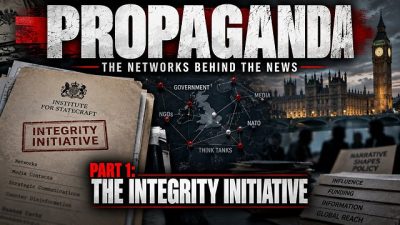
Integrity Initiative: UK-funded network framed dissent as Russian disinformation for years
or go to
Aletho News Archives – Video-Images
From the Archives
Why Saudi Ties to 9/11 Mean U.S. Ties to 9/11
By Kevin Ryan | Dig Within | September 27, 2015
Media interest in Saudi Arabian connections to the crimes of 9/11 has centered on calls for the release of the 28 missing pages from the Joint Congressional Inquiry’s report. However, those calls focus on the question of hijacker financing and omit the most interesting links between the 9/11 attacks and Saudi Arabia—links that implicate powerful people in the United States. Here are twenty examples. … continue
Blog Roll
 Aletho News
- EUROPE FEARS RUSSIA’S NEXT MOVE / Ian Proud
- Big tech hands in its DSA censorship reports to the EU
- ‘A Big Victory’ – Palestine Chronicle Wins Two-Year Legal Battle
- IAEA inspectors cannot return to Iran amid US threats: Russia
- Senate Rejects Iran War Powers Resolution Passed By House
- ‘We did not attack Pakistan with drones’: Afghan sources
- Iraqi Resistance faction links arms to sovereignty, questions US exit
- Cannon fodder no more… South Korea rejects Trump’s pressure to join his criminal war on Iran
- Neria Leiter Was A Legitimate Military Target
- Integrity Initiative: UK-funded network framed dissent as Russian disinformation for years
- If Americans Knew
- ‘This is where I live now, the back of a truck’: a day in the life of a grandmother in Gaza
- In UN Speech, Iran’s President Displays Pictures of Children Killed by US, Brings Attention to Israel’s Nuclear Arsenal
- Israel displaces hundreds of Palestinians amid wave of demolitions in West Bank
- Aid, reconstruction, and Israel’s history of obstruction in Gaza
- Trump administration digs an ever-deeper hole of complicity in genocide – Daily Update
- US-Israel $2.8 Billion Arms Deal, 40,000-Bomb Supply Faces New Gaza Complicity Accusations
- Caught on Tape: AIPAC CEO Boasted of Controlling Trump’s National Security Officials
- Why Hamas Attacked Israel in October 2023 – Israeli professor Ilan Pappé
- They see them, then kill them: Israeli quadcopters track, deliberately target civilians in Gaza
- Winter could turn Gaza’s treacherous, war-damaged buildings into deathtraps
- No Tricks Zone
- New Study: Earth And Venus Surface Warmth Largely Explained By Convection And Lapse Rate, Not CO2 Or Radiation
- 2025 Nature Paper Claiming Worsening Global Drought Gets RETRACTED …Heavily Flawed
- New Study: ‘Global Drought Shows No Detectable Recent Acceleration Under Climate Warming’
- Economic Masterminds: German Socialists Suggest Taxing Productivity Gains Stemming From Using AI
- The South China Sea Has Not Been Cooperating With The Climate Change Narrative
- Energy Crisis: Germany Enters Heating Season With Historically Low Gas Reserve Fill Levels
- New Study: The Antarctic Ice Sheet Gained Mass From 2020-2024 Due To Staggering Snow And Ice Accumulation
- Study: Ocean Heating Rates From Thousands Of Years Ago ‘Dwarf’ Modern Ocean Heating Rates
- Climate Extremists Target, Attack Large-Scale Power Grid Infrastructure In Germany!
- New Study: Antarctic Ice Melt Has Contributed Less Than 1 Centimeter To Sea Level Rise In The Last 30 Years

