Israeli lobby seeks to bind US fate to ‘Israel’: Araghchi
Al Mayadeen | September 21, 2026
Iranian Foreign Minister Abbas Araghchi has accused the Israeli lobby of attempting to tighten its hold over Washington after a prominent pro-Israel figure called for deeper US-Israeli integration that would make any economic action against “Israel” costly for the United States.
“The Israel lobby is getting less shy about its grip on U.S. policy toward Iran,” Araghchi wrote in a post on X.
“In Miriam Adelson’s publication, the Lobby’s loudspeaker says U.S. policy must ensure America pays a price for any slight against Israel,” he added, concluding, “High time for Washington to break free from these shackles.”
Pro-Israel figure warns of financial pressure
Araghchi was responding to an opinion article published by the Israeli newspaper Israel Hayom, whose publisher is US-Israeli billionaire Miriam Adelson.
The article was written by Mark Dubowitz, chief executive of the Washington-based Foundation for Defense of Democracies (FDD), a pro-Israel think tank that has long advocated stringent sanctions and other forms of pressure against Iran.
Titled “Israel must prepare for the possibility of financial warfare,” the article warns that the financial-sanctions apparatus Washington built to target Iran could eventually be turned against “Israel.”
Dubowitz argued that a future US administration could expand punitive measures from individual Israeli settlers to Israeli companies, banks, and major economic sectors. He pointed to the dependence of Israeli financial institutions on the US-dominated international banking system and warned that declining public support could weaken “Israel’s” political protection in Washington.
Making pressure on ‘Israel’ costly for Washington
To shield the occupation from possible sanctions, Dubowitz proposed expanding its relations with US governors and financial institutions while increasing economic ties with other markets.
Most notably, he called for making the US and Israeli economies and security establishments so interconnected that Washington would suffer consequences if it attempted to exert financial pressure on “Israel.”
“Most importantly, Israel and the United States should deepen their military, technological, intelligence and economic integration to such an extent that inflicting financial harm on Israel would also carry a significant cost for Washington,” he wrote.
Araghchi interpreted the recommendation as an open admission that the Israeli lobby seeks to subordinate US policy to Israeli interests and ensure that Washington bears the consequences of any measure taken against the occupation.
The Iranian foreign minister’s remarks come as scrutiny mounts over unconditional US political, military, and economic support for “Israel,” despite its ongoing aggression across the region and mounting international calls for accountability.
Pakistan-Iran talks secure LNG shipment to Islamabad through Hormuz
Al Mayadeen | September 21, 2026
Pakistan has negotiated with Iran to secure safe passage through the Strait of Hormuz for another liquefied natural gas shipment, offering some respite as the South Asian nation struggles with an energy shortfall.
The tanker, which loaded LNG from Qatar’s Ras Laffan facility in late June, crossed the strait over the weekend and is signaling that it will arrive at Pakistan’s import facility by Tuesday, according to ship-tracking data.
The passage was negotiated between government officials, said people with knowledge of the matter, and would mark the second such Qatari delivery this month. The people asked not to be named as the conversations are not public.
Pakistan relies on relations with Iran to avoid blackouts
While LNG shipments through Hormuz remain heavily disrupted, some vessels have been able to get through. Import-dependent Pakistan, badly hit by the upheaval in the Gulf due to the US war on Iran, has been leveraging its relationship with Tehran to receive several cargoes since Washington launches its war on February.
Pakistan had been considering a tender if the shipment didn’t get through Hormuz. A successful delivery, however, is preferable for the government, eager to avoid buying additional expensive shipments from the spot market, where prices have spiked to the highest level since 2022.
The South Asian nation received nearly all of its LNG from Qatar last year. The emirate is home to the world’s largest LNG export plant, which is still exporting only a very small amount through Hormuz, Energy Minister Saad Sherida Al-Kaabi said at the Qatar Economic Forum in New York Sunday.
QatarEnergy says Hormuz crisis could delay expansion projects
The crisis over the Strait of Hormuz could delay some QatarEnergy expansion projects because critical equipment is unable to reach Qatar, the company’s CEO Saad al-Kaabi said on Sunday.
Al-Kaabi said QatarEnergy was currently producing only a “very minute” volume of liquefied natural gas.
Speaking at the Qatar Economic Forum in New York, al-Kaabi said a few LNG trains under QatarEnergy’s North Field East (NFE) expansion are due to start up in 2027, with the North Field South (NFS) expansion set to begin production in 2028.
This comes as the crisis in the Strait of Hormuz continues to affect Qatar’s economy negatively, in light of the US war on Iran, which prompted Tehran to close the Strait in retaliation.
Black Sea grain crisis puts global wheat supplies under pressure
Al Mayadeen| September 21, 2026
The disruption of grain shipments from the Black Sea is deepening concerns over global food security, with Russia and Ukraine’s reduced wheat exports threatening to push prices higher and intensify inflation pressures.
The two countries account for more than a quarter of global wheat trade, making the Black Sea a critical route for grain shipments to some of the world’s largest importers. However, escalating attacks on ports, grain terminals, storage facilities, and vessels have severely disrupted exports since July.
The crisis comes as markets remain focused on energy disruptions and rising oil prices linked tothe US and Saudi aggressions in West Asia, while food supply risks have received less attention from investors.
“We can think of the Black Sea as important for global wheat trade as the Strait of Hormuz is for global oil trade,” Caitlin Welsh, a food security expert at the Center for Strategic and International Studies, said. “The world is underestimating the impact of these attacks.”
Black Sea grain routes face mounting pressure
Tue Vuong, chief executive officer of Golden Wheat, a milling company based in Ho Chi Minh City, secured four cargoes of wheat from the Black Sea region, accounting for about a fifth of the company’s annual supply.
However, after the summer escalation in the Russia-Ukraine war, he was informed that some shipments would not be delivered.
“I was very panicked,” Vuong said. He received replacement offers for two cargoes from Bulgaria but spent weeks searching for additional supplies to avoid shortages.
“We were too exposed to a crisis in the Black Sea,” he added.
Golden Wheat eventually switched two vessels to load Bulgarian wheat from Burgas, located about 500 kilometers from the Ukrainian port of Odesa. Vuong also monitored shipping movements, insurance conditions, and developments in the Red Sea, where vessels face additional security concerns.
“Although the vessels were insured, if they had been attacked, we would have faced shortages,” he said.
The company later turned to US wheat supplies at a significantly higher cost, while prices continued to climb.
Russia and Ukraine wheat exports disrupted
Russia and Ukraine are among the world’s largest wheat exporters, while also accounting for major shares of sunflower oil and corn shipments.
Combined Russian and Ukrainian wheat exports are expected to reach roughly half last year’s level during the July-September harvesting period, according to researcher SovEcon.
Egypt, the world’s largest wheat importer, has not received Black Sea grain shipments for about a month. Russia’s exports have been affected by Ukrainian drone attacks, while Ukraine has struggled to move grain after damage to ports and disruptions to shipping routes.
Ukraine has attempted to redirect exports through Romania’s Constanta port and alternative routes along Romania and Bulgaria’s coastlines, but these channels are facing congestion.
A backlog of around 80 mostly smaller vessels has formed around Ukrainian Danube ports as traffic moves away from major Black Sea terminals, according to ship-tracking data compiled by Kpler and Bloomberg.
IRGC air defenses destroy another US MQ-1 drone over Strait of Hormuz
Press TV – September 21, 2026
The Islamic Revolution Guards Corps (IRGC)’s Aerospace Force has intercepted and destroyed another MQ-1 drone belonging to the US military over the Strait of Hormuz.
The IRGC announced the development on Monday, saying the aircraft was brought down using the Aerospace Force’s new air-defense system operating under the control of Iran’s Integrated Air-Defense Network.
The medium-altitude, long-endurance aircraft has won notoriety as the “Butcher of Kandahar” after logging 20,000 flight hours over Afghanistan.
It has been removed from the operational fleets of the US Navy and Air Force for several years and replaced by the MQ-9.
Its re-entrance into service has been attributed to the US Army’s having lost a large number of MQ-9 drones to the Islamic Republic’s defensive operations.
The US Congressional Budget Office has confirmed the loss of at least 24 MQ-9 Reaper drones since February 28, when the United States and the Israeli regime began their latest round of unprovoked aggression against the Islamic Republic. According to figures released by the office, those losses amount to approximately $720 million.
The IRGC, however, has put the number at 53.
The office has also confirmed destruction of an MQ-4C Triton, with an additional estimated loss of approximately $150 million.
Observers commenting on the report have credited Iran’s success in securing its airspace “to a considerable extent” against combat drones for the extensive losses suffered in the area of unmanned aerial aircraft by the US Department of War.
The MQ-1 shootdown follows the Iranian Army’s announcement on Sunday that it had destroyed an advanced Orbiter reconnaissance drone over the Strait of Hormuz.
In a statement, the Army said the Orbiter drone had been targeted and destroyed by indigenous air-defense systems deployed in southeastern Iran.
Iran has closed the waterway in response to the aggression and ongoing American violations, as well as in retaliation against those aiding the aggressors.
The Islamic Republic has vowed to retain the closure until the cessation of US interference in regional maritime affairs.
Imran Khan’s entire immediate family detained in Pakistan ahead of mass protest demanding his release
The Cradle | September 21, 2026
Pakistan’s police have detained the three sisters of former Pakistani prime minister Imran Khan ahead of mass protests to demand his release, Pakistani newspaper Dawn reported on 21 September.
Khan, the Pakistan Tehreek-e-Insaf (PTI) party leader and former cricket star, has been jailed since August 2023 on corruption charges that he and his supporters say are politically motivated.
The PTI has called for a mass march in the capital, Islamabad, on 27 September, with Khan’s release from prison as a central demand.
On Sunday, his sister Aleema Khan was detained at her residence in Lahore under the Maintenance of Public Order (MPO) law as part of a crackdown ahead of the protest.
PTI spokesperson Sheikh Waqas Akram denounced the arrests. Akram said Aleema Khan was detained “because she refused to stay silent about her brother’s illegal detention, solitary confinement, and denial of medical care.”
Aleema and her children were taken to an unknown place in an armored vehicle, Akram added.
Khan’s other two sisters, Uzma Khan and Noreen Niazi, were detained later on Sunday after holding a press conference to denounce their sister’s detention. The three sisters’ children were also detained.
Khan’s son Kasim said police broke into his relatives’ homes and forced them into vehicles without explanation.
“This is criminal behavior. Inexcusable,” he wrote on X on Sunday.
The sisters’ detentions have been challenged in the Lahore High Court, Aleema’s lawyer Rana Mudassar Umer said.
Interior Minister Mohsin Naqvi demanded that the PTI cancel Sunday’s march.
“They cannot achieve anything through such drama. I will say again today that there is still time. Don’t get into a situation from which there is no turning back,” Naqvi said.
In May, a secret Pakistani diplomatic cable was published for the first time confirming that a senior US diplomat insisted on the removal of Imran Khan from his position as prime minister in 2022.
According to the cable, revealed by Drop Site News, Donald Lu, then US assistant secretary of state for South and Central Asian affairs, told Pakistan’s ambassador in Washington, Asad Majeed Khan, that “all will be forgiven” if the former premier was removed through a no-confidence vote in parliament.
Khan was ousted as prime minister in a legislative coup six weeks after the cable was sent, on 9 April 2022. Khan revealed the existence of the cable at that time, claiming his removal was part of a “US-backed regime-change operation.”
EU nation detains former presidential frontrunner

RT | September 21, 2026
Romanian right-wing politician Calin Georgescu, who won the first round of the country’s 2024 presidential election before the result was controversially annulled, has been detained in connection with an alleged €1 million fraud scheme.
Georgescu’s surprise win on an anti-NATO platform was met with accusations from Brussels and Bucharest of fake online campaigning. He was disqualified from running when a new vote was held, despite revelations that the suspected digital campaign in question was run by a party opposing him.
Romania’s Directorate for the Investigation of Organized Crime and Terrorism (DIICOT) said on Monday that it had detained a suspect and searched five properties linked to the case, with local media identifying Georgescu as the person of interest. His key ally George Simion described the latest case as a warning that “any of us can be next.”
The investigation into the politician’s alleged involvement in fraud dating back to 2021 was first reported by Digi24 in December 2024. The alleged victim had filed a criminal complaint earlier that year, the outlet said.
The media report came days before Romania’s Constitutional Court annulled the presidential election, sparking mass protests.
Simion, the leader of the right-wing Alliance for the Union of Romanians (AUR) who was also a candidate in the 2024 election and supported protests against their annulment, denounced Georgescu’s latest detention.
“Any of us can be next. Stop the abuse!” he wrote on Facebook. “Romania is a dictatorship!!!!”
The fraud investigation is one of several cases opened against Georgescu, who has claimed to be a victim of political persecution. He was previously accused of campaign-financing violations and plotting against the constitutional order, which disqualified him for the election rerun in 2025.
The administration of US President Donald Trump cited the annulment of the Romanian debacle when it accused Brussels of overseeing an erosion of democratic values in Europe.
The EU leadership said Bucharest is free in taking measures against “foreign interference.” The bloc’s general policy is to force censorship on social media platforms in response to alleged meddling. Tools established under its Digital Services Act (DSA) powers have been activated in several races, including in Moldova, which is not an EU member.
French-educated pro-EU former Bucharest Mayor Nicusor Dan was elected president in the wake of the political turmoil caused by the court ruling. Last week, he nominated MEP Siegfried Muresan, a vice-chair of the European People’s Party Group who previously worked as an adviser in the German Bundestag, to form the next government, despite a lack of a clear parliamentary majority.
It’s the third attempt to form a new government since a vote of no confidence in May plunged the country into its latest political crisis, potentially leading to yet another snap parliamentary election.
Leaked: Britain’s Sham Conviction Of Hashim Thaci
By Kit Klarenberg | Al Mayadeen | September 20, 2026
On September 16th, The Hague’s Kosovo Specialist Chambers found former Kosovo Liberation Army chief Hashim Thaci guilty of cruel treatment, arbitrary detention, torture and the murder of 96 people during the 1998/9 Kosovo War. The verdict stunned his supporters and detractors alike, but neither believe he will ultimately be convicted, with good reason. Thaci is but a sacrificial lamb, defendant in a purely symbolic show trial secretly orchestrated by British intelligence – who once considered the KLA leader their bosom ally.
Given this background, that Thaci ended up in The Hague at all seemed nothing short of miraculous. After being indicted in April 2020, he resigned as Kosovo’s President. A longstanding KLA high-ranker, Thaci was at the forefront of the group’s outreach to Western governments and intelligence agencies throughout the 1990s, as it waged ever-escalating guerrilla war on Yugoslav security forces. When NATO’s 78-day-long bombing of Belgrade erupted in March 1999 in support of the KLA, Thaci proclaimed himself prime minister of Kosovo’s “provisional government”.
Categorised as a “terrorist” entity by the US State Department, the KLA was known by Western governments to be an organised crime faction, funded by the drugs trade and states such as Saudi Arabia, with ties to extremist factions including Al Qaeda. This was no impediment to the CIA and MI6 providing the KLA with substantial financial and material support for years. Once NATO’s bombing was complete and Kosovo fell under alliance occupation, Thaci was instrumental in consolidating the group’s total takeover of the statelet.
As his criminal and political rivals were systematically executed, the KLA conducted a concomitant province-wide purge of non-Albanians, reducing Kosovo’s population by hundreds of thousands. As a Western diplomat told the Washington Post in June 1999, “Thaci’s ruthless tactics are legendary in the region.” Despite high-level cognisance of such tendencies, Thaci and his fellow KLA warlords were actively assisted in their reign of terror by occupying NATO KFOR and UNMIK forces. A Kosovo Albanian lamented in 2001:
“Instead of cracking down on the warlords, KFOR and UNMIK allowed them to divide Kosovo into different zones where these warlords generate enormous wealth.”
In July that year, the Washington Post reported how Kosovo’s UN-constructed courts were proving incapable of prosecuting KLA officials for atrocities committed in the wake of NATO’s occupation, let alone before the alliance’s arrival. A Swedish jurist serving as Kosovo’s “first Western judge” detailed “several cases in which UN and KFOR senior officials opposed or blocked prosecution” of KLA leaders. NATO and UN officials allegedly feared they “would put their lives at risk” by pursuing prosecutions of certain figures – including Thaci, presumably.
‘Essentially Untouchable’
A leaked March 2019 British intelligence appraisal of “rule of law issues” in Kosovo is absolutely scathing, specifically naming the KLA’s enduring influence locally as a key problem castrating the would-be country’s laughable legal system. “In common with much of the rest of the Balkans, Kosovo has high levels of state capture; limited reconciliation between ethnic communities; and the system carries a heavy legacy of unresolved war crimes issues,” the study reported. Of particular concern to London:
“Close links between senior politicians and Albanian organised crime, born out of wartime connections that both funded and staffed [the KLA]… Kosovo’s rule of law institutions at both the national and local level are weak; lack expertise and strategic direction; and are politicised. The inability of local law and order institutions to combat high-level political corruption seriously undermines the state’s integrity. These negative influences appear to be increasing… Those in power, and their associates, are essentially untouchable.”
Moreover, “state capture furthers the economic interests of elite groups but increasingly is focused on preventing challenge through subverting rule of law.” Resultantly, “rule of law processes are not strengthened, but are subverted and circumscribed.” In other words, the effectively lawless mafia-dominated system constructed in ‘independent’ Kosovo with NATO and UN help post-NATO bombing endured untrammelled two decades later. The British highlighted “particular issues in the prosecutorial process – both the management of investigations and the creation of indictments.”
The execution of civil and criminal judgments in Kosovo was also cited as a “specific problem,” while sentencing was found to be “inconsistent” – “in particular in relation to corruption and serious crimes, sentencing can be very light.” It was extremely common for cases to be initiated against known criminals, then remain unresolved for years. Questions abounded over the “competence of judges and prosecutors” – “it is generally acknowledged that the quality of legal training at university is poor and… the Bar Exam sets a very low hurdle.”
Even then, Kosovo authorities “did not select the highest performing candidates, but often those with links to those in positions of influence.” Small wonder “public expectations of the rule of law sector” were found to be “very low” throughout the would-be country. Citizens not only had “no real experience of rule of law,” but there was “an ingrained lack of trust of rule of law systems” among the wider population. Yet, the British were determined to counter this perception – if only for public relations purposes.
At that time, London had been running a dedicated “rule of law portfolio” in Kosovo for several years. It consisted of “three separate strands.” They spanned “monitoring the judiciary” and Pristina’s “prosecutorial functions – trials, verdicts and the behaviour of judges and prosecutors in corruption and organised crime cases.” Four British-approved “Kosovan legal experts” were furthermore embedded “in key posts” in Pristina’s Ministry of Justice, and London took charge of “recruitment and appointment of judges and prosecutors.”
This covered “improved disciplinary procedures; performance appraisal; and ways of increasing accountability.” Along the way, “young judges and prosecutors” in Kosovo were mentored, enjoying “study visits” to Britain and unadvertised “support on real life cases.” In light of Thaci’s conviction, it’s striking the British embassy in Pristina professes to place a “strong emphasis on achieving results in the investigation and conviction of high profile individuals in corruption cases, and on making a visible impact in such cases”:
“The embassy has made a decision… to target more politically sensitive areas.”
In service of this objective, a dedicated Foreign Office project “to change the culture of the Kosovo justice system to one in which judges, prosecutors and others are willing to fearlessly challenge entrenched interests” was also quietly launched in 2018. Leaked files show the effort was outsourced to notorious British intelligence cutout Adam Smith International. Markedly, it operated until March 2020 – one month before Thaci was indicted by the Kosovo Specialist Chambers.
ASI was explicitly concerned with the “enforceability” of KSC prosecutions. Specifically founded in 2016 to prosecute high-profile war crimes cases against KLA officials, ASI acknowledged the KSC was of no concern to Kosovo Albanians. “Whilst senior politicians may be indicted by the Specialist Chambers… Kosovo’s young population aspires to follow its neighbours in making progress to stronger relations with Europe and prosperity at home, which promises to be a driver of reforms,” the cutout observed.
Nonetheless, ASI was tasked with helping the KSC appear to be serious about fulfilling its purview, due to growing concerns among ‘independent’ Pristina’s Western sponsors “about Kosovan capacity to process case volumes, to protect witness identities, and to handle complex cases,” combined with well-founded suspicions the KLA was insulated from prosecution. ASI consciously designed its legal ‘reform’ program “to fit this context of conflict legacies, competing stakeholders, political tensions and uncertain commitment to international standards”:
“Many former KLA leaders now hold positions of power and influence. Those involved in war crimes and organised crime are often the same people. Corruption often manifests itself through the connections between private companies and the political system, with award of public tenders being affected by political connections… However, the general desire of the Kosovo political leadership for closer ties with the EU offers rule of law projects valuable leverage to be used selectively.”
It was under these highly politicised auspices ASI’s intimate ‘assistance’ to Kosovo’s criminal justice systems was provided, and Thaci’s KSC indictment drawn up. At every stage, the cutout coordinated closely with Foreign Office headquarters in London, producing “bi-weekly updates on notable [legal and judicial] developments” related to Kosovo, quarterly reviews “of trends within the institutional and political environment,” and “longer term ‘look forward’ reports anticipating events in the coming three months.”
ASI boasted how its “international advisers” were deployed to Kosovo “on rotations,” ensuring “continuous team presence” locally, with at least one staffer “always ‘on the ground’ and on call” for the Foreign Office. This would help the cutout “build and maintain relationships with direct Kosovan counterparts and wider stakeholders continuously,” and “monitor political dynamics to ensure that project decisions are politically-informed and conflict sensitive.” With such intensive behind-closed-door bonds between London and Pristina, the chances of serious prosecutions of KLA officials emerging remained scant.
Still, in order for Pristina to make “strides towards closer ties with Europe,” ASI understood the necessity of challenging mainstream conceptions of Kosovo as “a country formed through a conflict that shaped its political parties and legitimised their power, to one where rule of law has primacy and state institutions win public confidence by demonstrating their adherence to international standards for professionalism and transparency.” In this context, simply indicting Thaci became in and of itself substantial, regardless of the outcome, or his trial’s actual legitimacy.
It’s unsurprising Thaci and his supporters firmly believed his acquittal to be inevitable, and still do. The Foreign Office project managed by ASI drew upon a variety of “international subject matter experts”, among them several veteran British judges with experience elsewhere in the Balkans, including Albania and Macedonia. They were led by Jonathan Ratel, formerly head of Kosovo’s EU-funded Special Prosecution Office, and “deputy chief prosecutor”. In this capacity, Ratel personally rubbished widespread, EU-endorsed allegations of KLA involvement in organ trafficking.
Thaci’s trial didn’t explore the issue, he was acquitted of all crimes against humanity, and a right to appeal his 25-year sentence was clearly codified in the KSC’s judgement. Serbian leaders have condemned the ruling as too lenient. Thaci – dubbed Pristina’s “George Washington” by Joe Biden – remains held at The Hague. Meanwhile, KFOR has at last begun withdrawing from Kosovo, due to “an improved security situation” in the aspiring country – where, thanks to covert British judicial interventions, “those in power, and their associates, are essentially untouchable.”
Featured Video
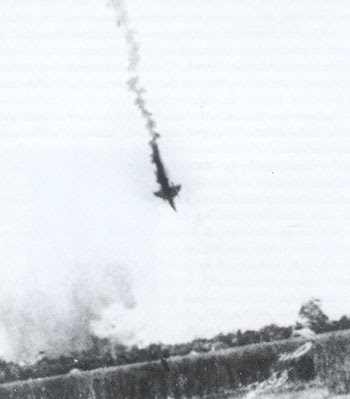
The Failed Air War Over Vietnam
or go to
Aletho News Archives – Video-Images
From the Archives
USS Liberty Massacre: A Pivotal Moment in the Hostile Takeover of America
By Kevin Barrett | Crescent | Dhu al-Qa’dah 24, 1445
In corporate America, hostile takeovers are commonplace. They occur when an aggressor—a larger corporation or rich individuals—seizes control of a smaller corporation without asking permission.
What few recognize is that the United States itself has been subjected to a hostile takeover. Since the aggressor, the illegitimate settler colony known as “Israel,” is much smaller than the US, the takeover has necessarily been surreptitious.
As of June, 2024, Israel’s gradual takeover of the US has become obvious and undeniable—a proverbial “elephant in the living room.” … continue
Blog Roll
 Aletho News
- Yemeni Armed Forces Warn Airlines Against Using Saudi Airports, Exempt Mecca and Medina
- Iran security chief says powers greater than US tried to conquer Iran but ended in ‘dustbin of history’
- Europe’s mounting social chaos… chickens coming home to roost for proxy war against Russia
- US-Russia Diesel Deal Becomes Massive Defeat for Ukraine
- Hormuz and the Looming Economic Catastrophe
- Dhubab offensive, media blitz and the rapid unraveling of Saudi-backed coalition’s new gambit
- Putin Conveys to Trump Iran’s Vision on Possible Conflict Resolution – Kremlin
- The Search for Truth: Charlie Kirk’s Assassination One Year Later
- ‘Harsh reality’: Iran says France seeks monopoly on power and intimidation, not peace for all
- When Will This White House Madness End?
- If Americans Knew
- For three years, Israel has killed a child in Gaza every 71 minutes – Daily Update
- Israeli forces kill another child in Gaza – Daily Update
- Gaza ceasefire exists in name only, say more than 100 organizations
- Nearly 2 Million in Gaza Need Urgent Shelter Assistance as Winter Looms: IOM Chief Warns
- Suppressing Palestinian resistance: US charity under fire for AI monitoring of Gaza classrooms
- Thousands Are Held in Israeli Torture Camps. This Is What Happens Inside
- Israel puts Gaza’s sick, injured, newborn in peril – Daily Update
- Report claimed Mark Levin used by Israeli government to influence Trump
- Over 2,000 Gazans have died awaiting medical evacuation amid Israel’s continued siege
- How a U.S. Diplomat Suppressed and Altered Reports Critical of Israel
- No Tricks Zone
- Germany’s Green Energy Debacle: High Energy Costs Force Kahla Porzellan to Close After 182 Years!
- New Study: 50 Years Of The Most Aggressive ‘Net Zero’ Policies Can Only Affect The Global Climate By 0.03°C
- US September “Heat” Was No Record…Many Records Set Decades Ago
- Latest European Green Energy Debacle; Portugal’s Largest Flagship Solar Park Insolvent!
- Green Energy Debacle: German Expert Professor Fritz Vahrenholt Warns Of Severe Economic And Social Consequences
- Two More Paleo Reconstructions Affirm Meters-Higher Sea Levels Across Ireland, Brazil 7000-6000 Years Ago
- New Study: Earth And Venus Surface Warmth Largely Explained By Convection And Lapse Rate, Not CO2 Or Radiation
- 2025 Nature Paper Claiming Worsening Global Drought Gets RETRACTED …Heavily Flawed
- New Study: ‘Global Drought Shows No Detectable Recent Acceleration Under Climate Warming’
- Economic Masterminds: German Socialists Suggest Taxing Productivity Gains Stemming From Using AI

