‘It is grotesque. It is authoritarian’ – AfD’s Weidel warns of growing assault on democracy in Germany at CPAC Hungary
Remix News | May 30, 2025
Alternative for Germany (AfD) leader Alice Weidel used the stage at CPAC Hungary to raise awareness of what she says is growing authoritarian behavior from the German government towards millions of Germans. She points to calls to ban her party, the second-largest party in the country and the leading opposition party, as well as attacks on free speech and spying from the country’s powerful domestic intelligence agency.
“Let’s be clear, and this is what we want you to know. What we want the world to know what’s going on in Germany. Influential politicians in Germany have their minds up on banning the strongest opposition party on banning us the alternative for Germany,” said Weidel.
“They would eliminate a political force which will soon form the government in several East German regions. Furthermore, they want to ban a party and has caught up with and overtaken the chancellor’s party itself. It is grotesque. It is authoritarian. And yes, this is a path they pursue, but they will not prevail. They will not prevail,” she added.
Weidel’s party, the AfD, had not been previously invited to any CPAC events in Hungary in the previous three years, but this pattern appears to have been broken. Orbán, who said that he had not previously conducted outreach with the AfD due to threats from the German government and in order to maintain ties with Berlin, publicly backed the AfD before national elections in Germany last year.
Weidel has only grown in popularity since those elections, and her party has even broken into first place in many polls for the first time. Approximately one in four Germans now backs the party, yet, the establishment has only upped its assault on the party, including the domestic spy agency, the Office of the Protection of the Constitution (BfV):
“The attempt to silence critical voices by framing them as right wing and extremist. Under the pretext of fighting hate speech and disinformation, legitimate opinions are being criminalized. And finally, there is our domestic intelligence service, the so-called Office for the Protection of our Constitution. In reality, it’s nothing but a service for protecting the establishment’s dwindling power.
When it comes to regular intelligence work uncovering terrorists and preventing terrorist attacks, this office is a complete failure. Instead of attending to the proper task, they spy on the opposition with one goal in mind to denounce the AFD as an enemy of the constitution and fabricate a pretext for outlawing our party.”
Weidel says that the establishment parties in Germany are looking to stop her party instead of addressing the legitimate issues driving her party’s growing popularity.
“In today’s speech, I am going to shed some light on the situation in Germany. For you to get some transparency about what’s going on in our home country. Our legacy media and establishment politicians fear us like no other party with good reason. More and more voters in Germany are simply fed up with being lied to and watching their quality of life deteriorating year for year.
Establishment politics have turned Germany into a danger zone for its citizens. Its people suffer from mass migration, exploding crime rates, high taxes, energy prices, inflation and the destruction of wealth. That’s why they voted out the old left-green government only to get a government that continues down the same disastrous path.
They got a government that pretends to prevent illegal immigration while leaving the gates wide open. In a futile attempt to evade his domestic problems, our chancellor travels the world fomenting conflict and throwing German taxpayers’ money out of the window as we see in the Ukraine. But when it comes to the daily horrors of imported migrant violence and Islamist terror on the streets, our chancellor remains silent.”
She also accused Merz of essentially stealing the AfD’s program, and then once winning the election, turning his back on all the promises he once made. Most notably, Merz immediately abandoned his promise to not take on more debt and relax the debt brake, instead choosing to take on nearly a trillion in debt.
“Mr. Merz won the election with copy-and-paste promises taken from us, the Alternative for Germany’s, program. The day after the election he went back on his word in every regard. He sold his soul to the leftists and kept them in power in exchange for being elected chancellor himself. Desperately clinging to power by all means has become the primary concern of our establishment politicians,” said Weidel. “Driven by panic, they bent laws, manipulate the constitution and eliminate the fundamental rights of the parliamentary opposition in order to prevent a democratic transfer of power. The current government continues a war on free speech started by its predecessors.”
Weidel said that her party represents 10 million voters, yet, these voters are being excluded by the firewall all parties say they have established against the AfD, which means they refuse to work with the party in government.
“The wind of change is blowing strong in Europe and in the Western world. The future belongs to free, patriotic citizens and sovereign nations. This conference gives testimony to that fact. Prime Minister Viktor Orbán, thank you and your country for hosting us. You are truly a beacon of freedom. Thank you,” said Weidel towards the end of her speech.
Babiš attacks EU elites and calls for ‘renaissance of principle’ in fiery CPAC speech
Czech opposition leader Andrej Babiš branded Brussels a “technocracy without a soul” and warned that Europe is being dismantled from within
Remix News | May 29, 2025
Former Czech prime minister and current opposition leader Andrej Babiš delivered a blistering speech at the Conservative Political Action Conference (CPAC) in Hungary on Thursday, accusing the European Union’s ruling class of betraying its founding values and urging European nations to reclaim sovereignty and common sense from what he called a failing liberal global order.
Speaking just months before a general election in which he is widely expected to return to power, Babiš portrayed the EU as a decaying institution ruled by unelected bureaucrats, ideologues, and activist networks who have imposed censorship, economic sabotage, and uncontrolled migration on member states. He warned that the Brussels establishment has replaced cooperation among sovereign nations with a coercive, centralized system that punishes dissent and erodes national identity.
“We are standing at the historic crossroads in a time marked by deep divisions and mounting tensions,” Babiš declared. “The elites who built and profited from this system now look on in disbelief, confusion, and anger as it falls apart. But they have only themselves to blame. They betrayed the citizens who trusted them.”
In a wide-ranging speech, Babiš accused EU leaders of undermining the very foundations of European civilization. He denounced Brussels for replacing love of country with “hollow globalism,” burying common sense under “endless layers of bureaucracy,” and attempting to substitute the natural population growth with “mass migration.”
He reserved specific criticism for three key EU initiatives: the Digital Services Act, the Green Deal, and the new Migration Pact. He accused the first of ushering in online censorship, the second of sabotaging Europe’s economy under the guise of environmentalism, and the third of forcing nations to accept migrant quotas in violation of their sovereignty.
“Under this law, dissent can become a punishable offense,” Babiš said of the Digital Services Act. “This isn’t about safety. It’s about silencing.”
On the Green Deal, he argued that while China is expanding coal and nuclear power, Europe is deliberately impoverishing itself for symbolic environmental virtue. “This is not sustainability,” he said. “It’s economic self-sabotage dressed up as an environmental virtue.”
Turning to migration, he described the EU’s new asylum system as “coercion,” not solidarity, and said it “undermines cohesion, public safety, and national identity.”
Babiš framed these developments as part of a broader ideological drift in Brussels, where he said freedom is being replaced with surveillance, culture with identity politics, and values with apology. “They no longer defend our heritage, they apologize for it,” he said. “Instead of protecting Europe, they deconstruct it.”
Calling for a “renaissance, not just of policy, but of principle,” Babiš urged the EU to return to its original form: a voluntary community of nations rooted in mutual respect, diversity, and national self-determination.
“Europe is not Brussels. It is Prague, Warsaw, Budapest, Rome, Paris, Madrid,” he declared. “It is the voices of citizens who want to be heard. It is the right of nations to govern themselves.”
“The age of patriots has begun,” Babiš concluded. “Not because we want to divide Europe, but because we want to save it.”
His appearance at CPAC Hungary — an event known for bringing together conservative leaders from across Europe and the United States — further cemented his alignment with other nationalist voices in the region, including Hungary’s Viktor Orbán, Germany’s Alice Weidel, and Austrian Freedom Party leader Herbert Kickl.
Ukraine in the EU? 5 reasons why it would crush Hungary (and Europe)
Remix News | May 28, 2025
The political elite in Brussels is increasingly trying to achieve that Ukraine’s planned EU accession takes place as soon as possible, preferably before 2030. Ursula von der Leyen, president of the European Commission, stated in early May that the accession process must be accelerated.
Von der Leyen previously stated in Kyiv that if the process continues at this pace and quality, accession could occur even earlier than 2030.
The EU often does what it wants now and simply bypasses all the old treaty rules. The EU migration pact, which basically amounts to migrant quotas, was supposed to be the type of law that passes with the unanimous consent of the member states. In other words, countries like Hungary and Poland should have had a veto. Instead, Brussels snuck it through the backdoor and passed this “pact” with a qualified majority of the EU’s interior ministers.
Something similar is bound to happen with Ukraine. They will bypass Hungary’s veto in violation of all treaty rules because they have the power — at least for the foreseeable future.
However, it is worth noting that this will not only harm Hungarians, but all of Europe. Mandiner news outlet compiled five reasons it will hit Hungary hard, but many of these reasons apply to a broad swathe of Europe’s population.
1. The wages of Hungarian workers would decrease
With Ukraine’s accession, at least 30 million Ukrainians would have the opportunity to work in any country in the European Union. This would expand the European labor market by about 7 percent. In Hungary, the average net salary is currently about three times that of Ukraine. It is clear that many people would decide that it is worth moving to neighboring Hungary, as well as other EU nations.
Ukrainian workers arriving with lower wage demands would create a competitive situation in Hungarian sectors already struggling with labor shortages (construction, hospitality, agriculture), and this could result in a real wage decrease of up to 10-20 percent.
It is the classic example of cheap labor flooding the market, which while good for owners of capital and big business, can decimate labor markets and undercut labor power.
This would be most prevalent among lower-skilled workers, but jobs requiring secondary education would not necessarily be secure either. The proportion of Ukrainian guest workers in Hungary reached 5 percent in the agricultural and construction sectors by early 2025. Now, 30-40 percent of commuters [itinerants] working in this sector are Ukrainian citizens. After accession, this number would increase dramatically, turning into permanent commuting and settlement in Hungary and other EU nations, which would further drive down basic wages and long-term unemployment in rural regions, further increasing social tensions.
Hungary is spending a fortune on families and social programs for its population. Suddenly, financing family benefits, child-rearing benefits and the 13th month pension would also face serious difficulties, and the cost of the system would increase by 200–300 billion forints annually with Ukraine’s EU accession. This amount can only be raised in the government budget at the expense of public services, healthcare and education. According to analysts, if wages were to fall by 5-10 percent, consumption would also fall by 3-4 percent, and this could mean an additional loss of 0.5-1 percent of Hungarian GDP growth on an annual basis, the compilation highlights.
2. The rapid accession of Ukrainians could cause a new migration crisis
With Ukraine’s accession to the EU, the immigration crisis that has plagued the European Union since 2015 would reach a new level, and this would put Hungary in a very difficult situation. In its study previously published on Mandiner, the Hungarian Institute of Foreign Affairs cites data from the 2023 research of the Ukrainian Future Institute, according to which 6.5 million people have left Ukraine, which had a population of 41-44 million before the war, in recent years, and there are also 3.5 million internal refugees.
With Ukraine’s accession, at least 30 million Ukrainians would have the opportunity to work in any country in the European Union, and a good number of them would understandably leave the collapsed country in the hope of a better life.
This internal, legal migration would significantly burden the EU – and since Hungary is a neighboring country, this would also affect the Hungarian healthcare system.
In addition, illegal migration could also gain momentum. It is currently unknown where Ukraine’s borders will be after the settlement of the Russian-Ukrainian war, but a new, currently unknown and unsettled border section of several hundred – perhaps a thousand – kilometers long will certainly be created.
If the Ukrainians are admitted, this line will separate the European Union and Russia. Controlling it is a task that neither the European Border and Coast Guard Agency (FRONTEX) nor the Ukrainian authorities would be able to cope with.
New migration routes could open up from Asia, and the EU would have to deal with new waves of migration coming from the east through Ukrainian soil. More people would try to enter the EU from Central Asia and Afghanistan through the new external borders. Some of the incoming migrants would try to reach the territory of the Western member states via Hungary. If Ukraine were also allowed to join the Schengen area, migrants would be able to travel across Europe at will, easily avoiding controls.
3. It would ruin Hungarian farmers
Ukraine’s accession to the EU would significantly increase the size of the EU’s 157 million hectares of agriculture by 41 million hectares.
Ukraine would become the largest beneficiary of the Common Agricultural Policy (CAP), pocketing about a third of the total budget, thereby undercutting farmers who comply with strict EU regulations, including Hungarian producers.
A large part of the budget’s agricultural subsidies are currently distributed on a regional basis, and due to money given to Ukraine, farmers in other member states would receive less of this amount. This reallocation of agricultural subsidies would mean Hungarian farmers would also receive orders of magnitude less EU funding than before, according to calculations by the Hungarian Institute of Foreign Affairs.
With Ukraine’s accession, the Hungarian agricultural sector is expected to suffer an annual loss of 672 billion forints (€1.68 billion) due to the loss of Common Agricultural Policy (CAP) funds.
A loss of resources of this magnitude, in addition to the aforementioned competitive disadvantage, would likely destroy the entire sector and could certainly bankrupt small and medium-sized family farms, Mandiner emphasizes.
Ukraine is one of the world’s largest grain producers and exporters, with vast acreage and excellent resources, but our eastern neighbor has much looser regulations than the European Union, and labor is much cheaper, which is why their production costs are much lower. If they were to enter the EU market, farmers from other European member states would be at a huge competitive disadvantage.
If Ukraine joins the EU, it would account for 15 percent of European wheat production, 49 percent of corn production, and 20 percent of overall grain production. This dumping would result in depressed prices, and Hungarian farmers would be unable to compete with cheap, often inferior-quality Ukrainian products.
4. The European Union would also import war by admitting Ukraine
According to a study by the Hungarian Institute of Foreign Affairs, Ukraine’s accession to the EU would necessitate the introduction of new coordination mechanisms, but it is clear that the European Union is currently unable to guarantee Ukraine’s security. Realistically, Ukraine’s accession to NATO has practically zero chance, so the security guarantees of the Ukrainian state could only be resolved through bilateral agreements.
The European Union’s mutual assistance clause is very similar to NATO’s famous Article 5. If a country is attacked, it can activate it independently, i.e., without the consensus of the European Council, and in this case the other member states must come to its aid.
This means that if Ukraine were an EU member, it could activate the article, which would – at least legally – automatically make all EU member states belligerents.
This is probably what Hungarian Prime Minister Viktor Orbán meant when he said, “If the European Union admits Ukraine, it will also be admitting war.” The aforementioned article has no implementing regulations, so it would cause an unprecedented debate on its interpretation, which would lead to divisions among the member states. On the other hand, the adversary could automatically consider the European Union a belligerent party, and if this were to happen, NATO would also have to deal with the issue.
It is unprecedented in the history of the European Union for a country at war to join the community, but even if peace were to be concluded, the aftermath of a legally closed conflict would pose dangers that the Union would be unable to deal with. The Russian-Ukrainian war will almost certainly end with a peace treaty that would change Ukraine’s current internationally recognized borders.
If the European Union were to include Ukraine as a member, it would be adding a conflict zone with a constant threat of war, with the associated tasks and costs. This step would eliminate the buffer zone between the European Union and Russia, which Ukraine has so far represented, with the two directly bordering each other. This would also drastically change the security situation of the European community.
5. We would allow the Ukrainian mafia into the EU
Ukraine is one of the most corrupt countries in Europe, where organized crime was very strong even before the war, but the situation is even worse now. A lot of weapons from the arms shipments that have flowed into the country have ended up on the black market and then in the hands of criminal groups. The Ukrainian mafia will not have HR problems either.
The rehabilitation of demobilized soldiers is currently unresolved, and many of them are likely to be unemployed and traumatized, but there is one area in which they have gained serious expertise in recent years, and this is very useful knowledge if someone wants to join organized crime.
If Ukraine were to join the EU at an accelerated pace, as the European Commission envisions, this problem would also affect Hungarians. With the possibility of free movement in the European Union and the avoidance of border controls, Ukrainian organized crime groups would be able to conduct their business much more easily in the territory of other member states, and due to our geographical proximity, this would definitely be felt in Hungary.
The domestic drug situation is already very serious, and it seems to be getting worse with the spread of synthetic drugs, and the Ukrainians’ “entry into the market” would not help this, just as Hungarian society does not want clashes between expanding criminal gangs back in their everyday lives.
Of course, the state of public security would not be improved by the fact that Ukraine’s accession to the EU would certainly lead to an increase in the intensity of migration and the number of migrants residing in Hungary. This in itself carries a serious public security threat. The examples of England, Germany, Sweden and France all show that integration attempts, which are impossible in the short term anyway, almost always fail, and the number of crimes increases in direct proportion to the increase in the number of immigrants, and in many cases new organized criminal networks are created in migrant communities.
Hungary’s opposition pushes for Ukraine’s EU membership
Charles Michel, the former president of the European Council, and Manfred Weber, the president of the European People’s Party (EPP), which has the largest faction in the European Parliament, both support the EU’s push for Ukrainian membership. The party of Hungarian opposition leader Péter Magyar has also joined the EPP.
It is no coincidence that the German politician, Weber, made it clear to Magyar before the Tisza Party could join his faction that he only works with those who are pro-Ukraine, pro-Europe, and pro-rule of law, and he expects the same from Péter Magyar’s party.
The Tisza Party is apparently trying to comply with this, as in April, in line with the People’s Party line, they voted for a proposal that urges Ukraine to become an EU member, and would even provide a large amount of support (approximately €35 billion) to the war-torn country to facilitate this.
Apparently, the majority of their supporters expect this from Péter Magyar’s party: in the Voice of the Nation poll, the majority of Tisza respondents support Ukraine’s accession to the EU (58.18 percent yes, 41.82 percent no).
Manfred Weber stated in relation to Ukraine’s EU accession that Ukrainians have the same right to belong to the European Union as we Hungarians.
The Hungarian government, on the other hand, takes the position that accelerating Ukraine’s EU accession would have a catastrophic impact on Hungary and the surrounding countries, as in addition to the fact that there is currently a war in the country and the process itself would cost an incredible amount of money, this step would bring serious long-term negative changes in many areas of life, affecting the lives of European people.
ADL Regional Director Calls for Government-Regulated Online Censorship
By Cindy Harper | Reclaim The Net | May 27, 2025
The Anti-Defamation League’s David Goldenberg is demanding a broad overhaul of how speech is governed on the internet, calling for both government intervention and intensified corporate censorship. In a recent appearance, Goldenberg, who heads the ADL’s Midwest operations, expressed frustration over what he sees as declining efforts by tech firms to suppress online content he deems hateful.
Citing Meta’s rollback of its fact-checking team in the United States, he argued that platforms must be forced to take action. “You have a platform like Meta that just gutted its entire fact-checking department… And so what we need to do is we need to apply pressure in a real significant way on tech platforms that they have a responsibility, that they have an absolute responsibility to check and remove hateful speech that is insightful.(sic)”
Goldenberg advocated not just for voluntary moderation, but for legislative and regulatory measures, both at the federal and state level, that would compel platforms to act as speech enforcers. He pointed to efforts in states like California as examples of where local governments are already testing such models.
His concern centers around what he perceives as an ecosystem of radicalization made easily accessible by today’s digital infrastructure. He warned that extremist ideologies no longer require obscure forums or dark web communities to spread. “It used to be you had to fight going into the deep dark web… Now… it’s easier and easier to be exposed in the mainstream,” he said.
Framing the online environment as a catalyst for violence, Goldenberg argued that free access to controversial viewpoints must be curtailed. He called for social media companies to take a stronger stance by excluding users whose views fall outside accepted boundaries, adding that regulation should enforce this responsibility.
He zeroed in on Section 230 of the Communications Decency Act, a critical piece of legislation that shields platforms from legal liability over user-posted content. “Congress needs to amend Section 230, which provides immunity to tech platforms right now for what happens,” Goldenberg said. He dismissed comparisons between modern platforms and telecommunications companies, referencing past remarks by Facebook’s Mark Zuckerberg about how phone providers were not liable for threats made over calls. Goldenberg’s view was blunt: “These tech platforms are not guaranteed under the Constitution. They’re just not.”
From his perspective, private companies should be free to “kick people off, to de-platform,” and if they fail to do so voluntarily, they must be pressured or regulated into compliance. He described accountability as a mechanism for shaping behavior, stating, “Accountability is a tool that can be incredibly effective in changing behavior.”
The position advanced by Goldenberg reflects a broader effort to blur the line between public authority and private platform control. By demanding that companies mirror the goals of activists and lawmakers, his approach seeks to institutionalize censorship and convert digital platforms into engines of ideological enforcement.
But such a vision comes with consequences. By urging the dismantling of legal protections and empowering both governments and corporations to decide which views should be silenced, this framework sets the stage for widespread suppression. What’s framed as protection from harm becomes a template for restricting dissent, and narrowing the range of permissible thought in public discourse.
How Lies and Hubris Caused an Awakening
By Pat Fidopiastis | Brownstone Institute | May 26, 2025
In March 2020, the phrase “Fifteen days to slow the spread” was transmitting faster than SARS-CoV-2. At the time, it seemed reasonable to want to buy our health care workers a few weeks to prepare. Contemporaneously, Dr. Anthony Fauci reasonably summarized decades of research in his 60 Minutes interview by saying that masks are not an effective way to block respiratory viruses.
In a Snapchat interview, Dr. Fauci reasonably interpreted timely data on Covid-19 outcomes to conclude that young people could decide for themselves if they wanted to meet strangers on a dating app during the pandemic. As Dr. Fauci put it: “Because that’s what’s called relative risk.”
Even the authors of the “proximal origin” opinion piece in Nature Medicine made reasonable points in support of a natural origin of SARS-CoV-2 (despite revealing their cards by calling “lab leak” implausible): “… it is likely that SARS-CoV-2-like viruses with partial or full polybasic cleavage sites will be discovered in other species” and “More scientific data could swing the balance of evidence to favor one hypothesis over another.”
Five years later, thousands of animals have been sampled, millions of genomic sequences have been analyzed, and still there is nothing remotely close to a non-human adapted, animal version of SARS-CoV-2; back in 2003, using “stone tools” compared to today’s technology, they found the animal version of that SARS virus in a few months.
Unfortunately, the honeymoon of reason was brief. Overwhelming evidence that SARS-CoV-2 was not natural became a “destructive conspiracy,” and if you spoke about it, you were somehow racist.
Surgeon General Jerome Adams instructed us on how to make a life-saving mask from an old t-shirt. Dr. Fauci used the bizarre excuse that he lied in his 60 Minutes interview to explain why he abruptly reversed himself and began promoting the epidemiological theater of wearing several masks at once.
Not to be outdone, Dr. Deborah Birx summed up the futility of her leadership with this pearl: “We know that there are ways that you can even play tennis with marked balls so you’re not touching each other’s balls.” This sounded more like a punchline than worthwhile public health advice. Perhaps most egregious of all, we learned that “Two weeks to slow the spread” was not meant to be taken literally.
For me, a professor of microbiology for nearly 25 years, the moment of reason ended when I stepped into an elevator on my campus and saw a floor sticker telling me where to stand (Fig. 1). I simply could not keep quiet and pretend that this was sound public health advice.

Fig. 1
Before long, businesses were inundated with pandemic rules. I was hired by one of the lucky ones deemed “essential,” and therefore allowed to open, to assist with “safe” operation plans.
When I arrived to conduct my inspection, the business looked more like an Ebola field hospital than a furniture store (Fig. 2). Masked customers were herded in the parking lot by ropes and signs. One by one, they were greeted by an attendant, grateful to still have a job, standing behind Plexiglas, wearing a mask and face shield.
The friendly attendant was instructed to ask uncomfortable questions about symptoms like diarrhea. If a customer responded “yes” to any of the symptoms or refused to answer, they could not shop for furniture. If “no,” then their temperature was measured.
It was nearly 100 degrees that day so almost everyone had to be scanned multiple times. Inside the store was a maze of one-way arrows, warning signs, Plexiglas, hand sanitizer stations, and boxes of masks and disposable couch covers. They even had a video monitor reporting the number of customers per 400 square feet of store. Sadly, the epidemiological version of “over-medicating the patient” did not stop with onerous business rules.
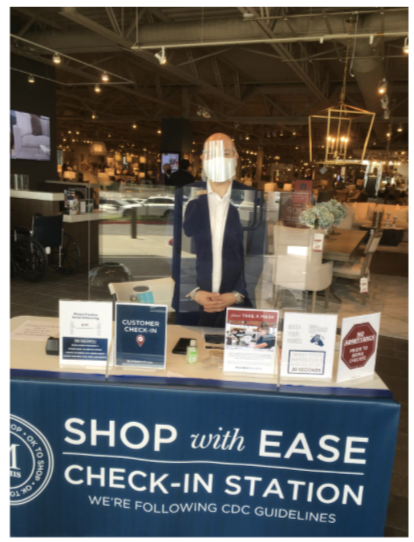
Fig. 2
Drunk with power, public health officials in California felt ordained to protect the unwashed masses from Thanksgiving dinner. Unsurprisingly, these farcical dining rules did not apply to everyone.
Who actually believed “singing, chanting, shouting, and physical exertion” at a family dinner was too risky? Who decided that we needed to bulldoze a skate park to prevent kids from congregating? Why was it necessary to arrest a lone paddleboarder in Santa Monica Bay for “flouting coronavirus closures?”
In the LA Times article on the paddler’s arrest, a professor from the prestigious Scripps Institute of Oceanography opined, “SARS-CoV-2, the virus that causes COVID-19, could enter coastal waters and transfer back into the air along the coast. I wouldn’t go in the water if you paid me $1 million right now.”
I tried laughing off the ridiculous, unenforceable Thanksgiving rules, those stickers in the elevators, and other nonsense that at the time was happening somewhere else. But I could not get past the frightening reality that so many of my highly educated peers actually believed nonsense like SARS-CoV-2 was leaping out of the ocean.
Anyone paying attention could compile government data on Covid-19 outcomes and assess risk for themselves (Table 1). The message was always the same – the vast majority of deaths attributed to Covid-19 were people over 65 years old with severe comorbidities, especially obesity.
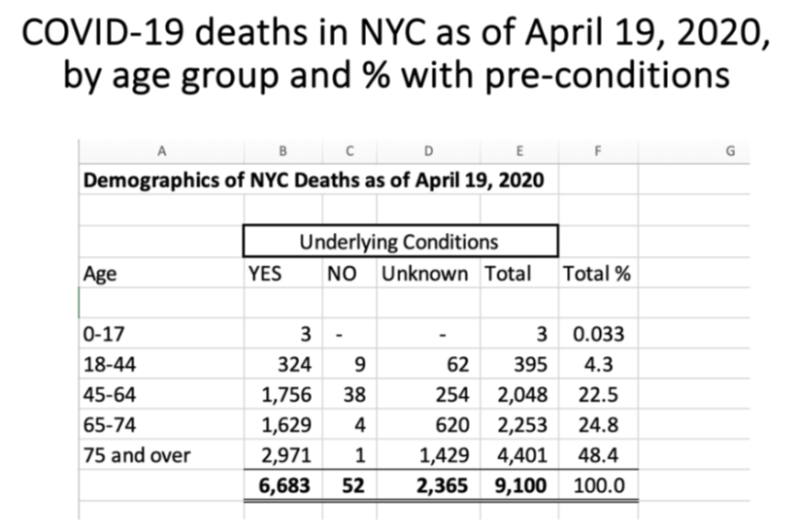
Table 1
By signing the Great Barrington Declaration and discussing its premise of “focused protection” in my advanced microbiology courses, I received an avalanche of vitriol.
Among the most shocking responses were accusations of “ageism” and “fat-shaming” for discussing hard facts about the pandemic.
Just like that, the “Science doesn’t care about your feelings” crowd started prioritizing their feelings. The university newspaper asked for an interview. I was warned not to accept, but I wanted to start a bigger conversation. I regret my decision because the article they wrote did not represent the views I articulated.
Instead, I was accused of promoting a “power imbalance” by supposedly forcing my “junk science” views on students. I used to think the cries of “fake news” were just a lazy argument by people that could not support their position, until I read that article about me.
Ironically, these same people who attacked me had completely accepted the made-up “six-feet rule,” which was the root of so much collateral damage. Heavily biased news sources like NPR defended this unscientific rule by stating, “distance still protects you.” However, if the cure is not even remotely feasible, despite the best efforts of authoritarians, then it’s not really a cure.
Apparently I crossed the line when I discussed in class how politicized the pandemic had become. How is it that President Trump’s rallies were spreading “coronavirus and death” but BLM protests had no effect on coronavirus cases? The sampling bias was baked in, given that contact tracers were being told not to ask people if they had been to a protest.
Why was it acceptable for CNN to use phrases such as “Wuhan virus” and “Chinese coronavirus,” but when President Trump did it, he was called “racist?” Was it actually “racist” to discuss the obvious signs of genetic manipulation in the SARS-CoV-2 genome with my students in an Emerging Infectious Diseases class?
My campus newspaper and many of my colleagues thought so, as did an Asian American and Pacific Islander group calling for my resignation. When the admonitions about masks became aggressive (Fig. 3), and draconian, unscientific outdoor mask fines were being implemented, I analyzed some data and conducted a few experiments to find out for myself if masks were worth all the anger.
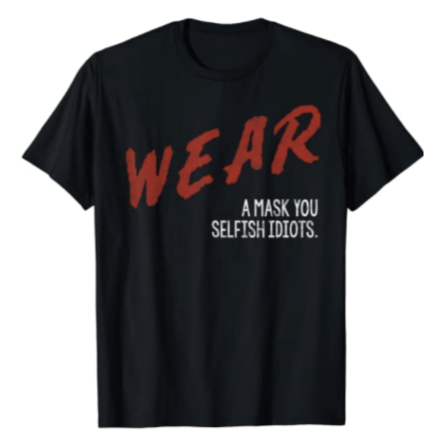
Fig. 3
I looked at “cases” in places like New York City and pointed out when the mask mandate and fines were applied (Fig. 4). Notably, the NYC mandate was instituted after cases had already begun to fall, and coercive fines did not prevent the second wave, which was longer and reached a higher peak than the first wave.
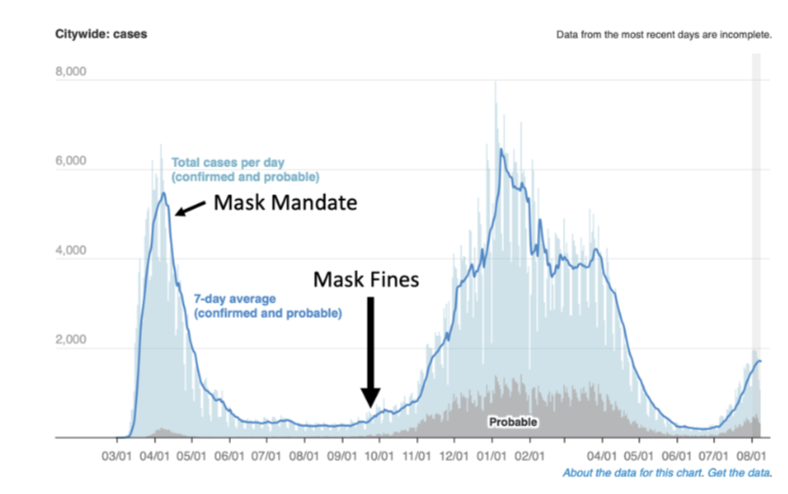
Fig. 4
I had my allergy-prone daughter sneeze onto petri-plates with and without the CDC-approved masks we wore to enter locations that enforced the mask mandate (Fig. 5). The saliva spray patterns, illustrated by microbial growth on the plates, were virtually indistinguishable.
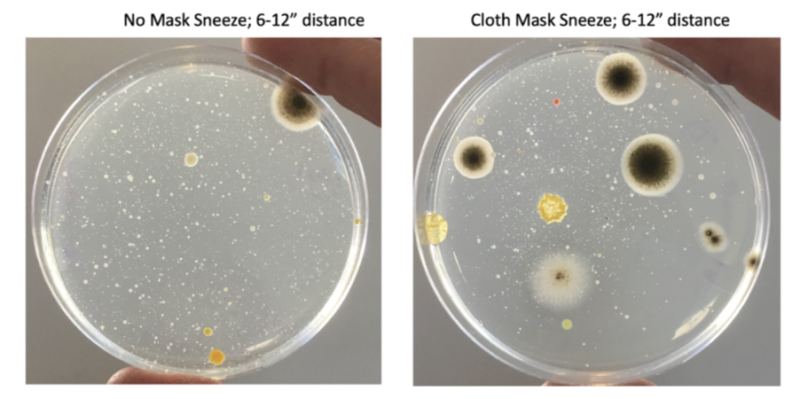
Fig. 5
In the 60 Minutes interview, Dr. Fauci stated that “… often there are unintended consequences…people keep fiddling with the mask and touching their face…” implying that germs collect on masks, making them a source of contagion rather than a barrier.
Indeed, after the sneeze experiment, I stamped the outside of my daughter’s mask onto a petri-plate. The resulting dense microbial growth supported Dr. Fauci’s argument against mask wearing – “fiddling with the mask” probably does spread microbes (Fig. 6).
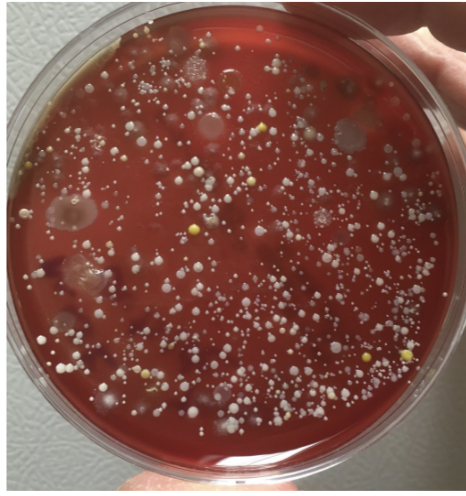
Fig. 6
At the time, I stated in the campus newspaper that “the science on masks was mixed at best.” However, the third-year journalism student apparently knew better and decided I was pushing “junk science.” Was I naïve to expect an apology after “the science” started catching up to what I was saying?
During the pandemic, my lab was responsible for measuring SARS-CoV-2 levels in wastewater (Fig. 7) to use this information as a means of tracking community transmission. We learned two important lessons from this approach.
First, peak levels of SARS-CoV-2 in wastewater (orange line) provided a few weeks’ lead to when we could expect to see peak levels of people testing positive for the virus (i.e., “cases;” blue line). Second, we learned that the mask mandate (red line) did not stop the virus from doing what it wanted. Despite the mask mandate, transmission of SARS-CoV-2 reached unprecedented highs.
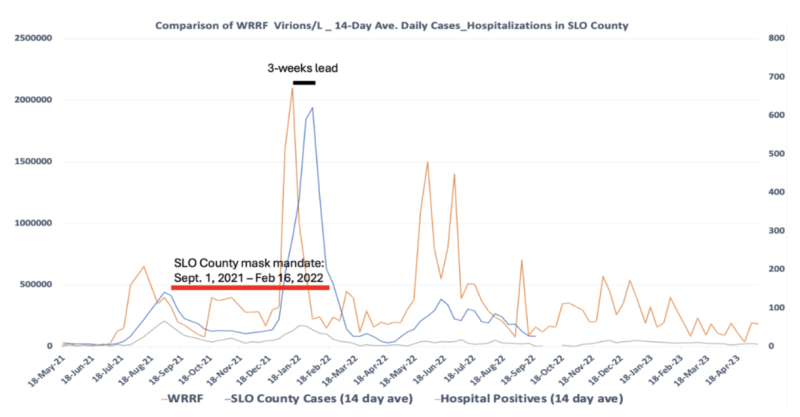
Fig. 7
Taken together, my findings were supported by decades of research showing that masks are not effective against respiratory viruses, regardless of the quality. Still, the counterargument persisted that wearing an N95 mask suctioned to your face, and constantly replacing it, would have stopped the pandemic.
Again, if the cure is not feasible, then it’s not really a cure, is it? The reality is that there are no convincing data supporting mask mandates, none that even remotely support children being forced to wear saliva-soaked masks, and especially none that would justify people being choked and beaten for opposing them.
The “follow the science” crowd was honing their authoritarian skills in preparation for mandatory vaccinations. The motivation for these mandates was summed up perfectly: “During the Sars crisis in 2003 pharma companies answered the WHO’s call for vaccine research. They invested hundreds of millions of dollars, but then — when the outbreak died away — governments and charities lost interest.” According to epidemiologist Dr. Osterholm “The companies were left holding the bag.”
How could Big Pharma avoid “holding the bag” on a vaccine they hoped would stop a virus that had repeatedly ripped through the world’s population? Not surprisingly, their first order of business was to drop the concept of “natural immunity” into the memory hole, centuries of science be damned. The subtext was if regular people knew that natural immunity was real, they probably would not want the vaccine, especially if they already had Covid-19 a few times.
Leading up to the vaccine rollout, I tested myself regularly using PCR, antibody, and antigen assays. I eventually tested positive and had mild flu-like symptoms. While well-educated friends of mine had gone to such lengths as to move out of their homes to distance themselves from their children and wait for the vaccines, my family chose a different tack. Instead, we huddled, got mild infections (except for my wife, who seemed to be immune), shared some level of natural immunity to the latest version of the virus, and tracked our infections (Table 2).
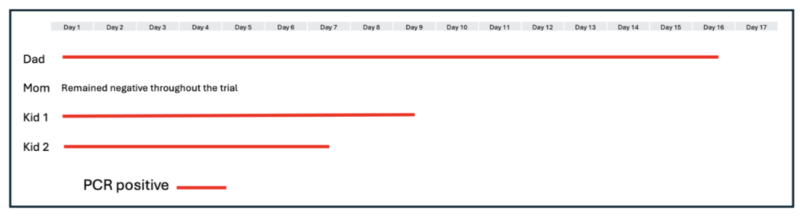
Table 2
When I shared the “herd immunity” story with my small social media following, most appreciated hearing something other than doom and gloom. However, others showed a level of vindictiveness that should not have surprised me, given how acceptable it became to wish death on the unvaccinated.
A colleague attempted to shame me in the campus newspaper, while others wondered out loud whether Child Protective Services should be notified. How dare you give your children the sniffles! How dare you use this time of ridiculous “virtual learning” mandates to provide your children with some hands-on experience performing quantitative PCR!
Predictably, my SARS-CoV-2 antibody levels were extremely high after over two weeks of PCR-positivity. While still overflowing with SARS-CoV-2 antibodies, I was scheduled to receive mandatory shots in order to return to campus.
If the world had actually followed the science, my recent PCR positivity and elevated antibody titers should have been a reasonable exemption. Unfortunately, there was no such exemption. Having seen the terrible treatment of my colleague Dr. Kheriaty, I decided we would play the role of guinea pigs and take what would be an all-risk-and-no-reward shot, especially for my kids. That is, there was nothing in it for us except a few days of high fever and injection site swelling, but definite financial reward for everyone in the vaccine supply chain.
As a member of the “laptop class,” the “lockdowns” made my life easier in many ways. While small business owners struggled, I was getting full pay to upload instructional videos to my university students, and occasionally engage with them online. My wastewater epidemiology work was deemed “essential,” so I was permitted to go to my lab to perform those duties for additional compensation.
However, the ad hominem attacks and threats caused me to disengage from further attempts to start a discussion on pandemic policy, which no doubt was their goal. While the world was fighting over toilet paper and shaming each other for “killing grandma,” we tuned out for a while (Fig. 8).

Fig. 8
I was surrounded by so much anger that I truly believed I was alone in my heretical views on pandemic policy. However, I officially tuned back in when Dr. Scott Atlas invited me to join a small group called The Academy for Science and Freedom.
Our meeting at the Hillsdale College Kirby Center in Washington, D.C. was the first time I had hope since the pandemic started. We were professors, medical doctors, publishers, and journalists, all united by a common belief that the people in charge abandoned a basic tenet of public health: voluntary instead of coercive measures would protect public trust and induce cooperation.
Despite all the great minds in the room, it was hard to imagine we would ever get to where we are right now. But here we are. Many of the people responsible for lockdowns, forced vaccinations, and covering up the unnatural origin of SARS-CoV-2 are gone.
In their place, are Academy members such as Dr. Tracy Beth Høeg, Dr. Jay Bhattacharya, Dr. Matt Memoli, Dr. Vinay Prasad, Dr. Martin Kulldorff, and Dr. Marty Makary. All of whom were treated far worse than me. The overwhelming rejection of “The Fauci School” of public health policy is vindicating. However, recent headlines suggest there are holdouts refusing to accept that they were fooled: Dr. Høeg is a “vaccine skeptic,” Dr. Memoli “is known for questioning vaccine mandates,” and Dr. Prasad is an “anti-science MAHA extremist.”
The people I trusted probably fooled me on a lot of things I voted for, like the benefits of a 20,000-page health care policy. Who has time to actually read that stuff? However, they were never going to succeed at fooling me about the science of the pandemic.
Their lies and hubris caused an awakening, reminiscent of the scene in The Matrix when Neo emerged from the virtual world to a brutal reality. I just hope the people I trust who are now running the major institutions will allocate all resources to programs that will actually improve human health. In doing so, they should have no problem convincing those holdouts not only that they had been fooled, but who fooled them.
US de facto financing persecution of Christians in Ukraine – Tucker Carlson
RT | May 25, 2025
The US is essentially facilitating the persecution of Christians in Ukraine by supporting the Kiev government, which has been waging a purge campaign against the nation’s canonical Orthodox church, American journalist Tucker Carlson has said.
Carlson made the statement during an interview with a former Ukrainian MP, Vadim Novinsky, released on Friday.
“Every day, churches and temples are seized by soldiers with machine guns who come in, throw out priests, beat believers, children, old people, women…” the former lawmaker stated, adding that “it is happening all over Ukraine.”
“I think very few Americans understand the degree to which the Ukrainian government under [Vladimir] Zelensky has persecuted the Ukrainian Orthodox Church,” Carlson said.
The former Fox News host then asked Novinsky what he would like to say to the American lawmakers who have nevertheless approved financial aid to Kiev. “The Speaker of the House of the United States Congress is a man who describes himself as a Christian and he has been paying for this,” the journalist said, referring to Mike Johnson, a Louisiana Republican.
The former Ukrainian MP replied that he would like to see the US aid going directly to ordinary Ukrainians and not the authorities, who “live in parallel realities.”
US government agencies appropriated a total of $182.8 billion on various forms of assistance to Kiev between 2022 and the end of 2024, according to Ukraine Oversight, an official portal that tracks such expenditures.
Last week, US President Donald Trump stated he was concerned that billions of dollars were being wasted on aid to Ukraine. He said Congress was “very upset about it” and that lawmakers were asking where all the money was going.
Kiev has accused the Ukrainian Orthodox Church (UOC) of maintaining ties to Russia even though it declared independence from the Moscow Patriarchate in May 2022. The crackdown has included numerous arrests of clergymen and church raids, one of the most notorious of which took place in the catacombs of the Kiev-Pechersk Lavra, where holy relics are kept.
Last year, Zelensky signed legislation allowing the state to ban religious organizations affiliated with governments that Kiev deems “aggressors,” effectively targeting the UOC.
Earlier this week, Russian Foreign Minister Sergey Lavrov said that Moscow would not abandon the Orthodox believers in Ukraine and vowed to make sure that “their lawful rights are respected.”
Ireland Clashes with EU Over Hate Speech Laws as MEP Michael McNamara Denounces Brussels’ Legal Threats

By Cindy Harper | Reclaim The Net | May 23, 2025
Ireland’s refusal to fully adopt the European Union’s “hate speech” directives has ignited tensions in Brussels, with Independent MEP Michael McNamara voicing staunch opposition to what he calls a misguided and authoritarian push to punish noncompliance. He dismissed the EU’s legal threats as deeply flawed, asserting that there is no evidence” that these laws accomplish their stated goals of reducing discord or promoting unity.
According to McNamara, attempts to legislate acceptable speech do little more than sow fear and resentment. “People resent the fact that they’re threatened with prosecution for expressing their views,” he said, highlighting a growing unease across Europe as more individuals feel unable to voice opinions, whether popular or not. He warned that such policies do not alter underlying beliefs, they simply force them underground.
Instead of fostering a more harmonious society, McNamara argued that these measures build resentment. “It doesn’t affect how people think in any way, it just affects what they are afraid to say and what they resent,” he said. He drew a parallel to the United Kingdom, where, he noted, citizens are witnessing elderly individuals facing prosecution for speech offenses, while police resources are increasingly diverted from public safety to policing online expression.
“Hate speech laws are counter-productive. They are also profoundly illiberal. They’ve damaged the UK and we don’t want the same,” he wrote in a message on X, calling on the European Commission to abandon any proceedings against Ireland related to speech legislation.
The EU’s position, outlined in a recent notice from the Commission, faults Ireland and Finland for not yet implementing legal measures to criminalize specific categories of speech, including statements denying historical atrocities or inciting hatred against protected groups. While Ireland has made partial moves, Brussels remains unsatisfied and has issued formal opinions giving the two nations two months to comply before potential escalation to the European Court of Justice.
Despite an earlier attempt to introduce hate speech legislation, one that passed easily through the Dáil, the lower house of the Irish parliament, the Irish government eventually shelved the bill.
Resistance from the Seanad and significant public discontent led to its demise, with many viewing the proposal as a direct threat to civil liberties.
That backlash is widely believed to have influenced the outcome of the March 2024 referendums, where voters rejected two constitutional amendments by wide margins.
McNamara reiterated his stance before the European Parliament, stating plainly that pressing charges against Ireland over its refusal to implement these rules would be “misguided.” He urged the Commission to reconsider, framing the issue as one of national integrity and democratic principles rather than regulatory compliance.
Canada’s PM Mark Carney Revives Online Censorship Agenda
By Dan Frieth | Reclaim The Net | May 23, 2025
Steven Guilbeault, once Canada’s Environment Minister is now poised to spearhead a different kind of oversight, this time, over what Canadians can see and share online.
In his new post as Minister of Canadian Identity and Culture, Guilbeault has been entrusted with executing Bill C-11, a contentious piece of legislation passed in 2023 that gives the federal government unprecedented power over online streaming platforms.
Celebrating the appointment, Guilbeault publicly thanked newly elected Prime Minister Mark Carney, expressing his intent to “build a stronger country, based on the values of Canadians.”
This shift in leadership places Guilbeault at the center of an ongoing battle over internet regulation. Bill C-11, which was rushed into law during Justin Trudeau’s final term as Prime Minister, obligates major tech companies to fund and prioritize Canadian content, particularly that of the mainstream media, regardless of whether users are seeking it.
While the Canadian Radio-television and Telecommunications Commission (CRTC) was initially expected to enforce the new requirements, it recently admitted that the regulatory framework won’t be ready until late 2025. That leaves platforms, creators, and consumers in limbo, uncertain about how deeply the government’s hand will extend into digital media.
Carney, seen as a political continuation of Trudeau’s legacy, appears ready to go even further. Before the most recent election, the Liberal Party was already moving to introduce Bill C-63, a so-called Online Harms Act.
While framed as a tool to protect minors from exploitation, the bill also includes expansive measures to monitor and penalize what it terms “hate speech.” This vague language has prompted concern from legal scholars and civil liberties organizations about the law’s potential to suppress legitimate expression.
With Guilbeault now steering Canada’s cultural and digital policies, free speech advocates worry the government is tightening its grip not only on environmental and economic life but on the very flow of information and dialogue in the digital sphere. What began as a push for national content promotion may ultimately serve as a model for broader censorship under the guise of cultural stewardship.
Former Yanukovich presidential adviser visited Kiev days before assassination – media
RT | May 23, 2025
Former Ukrainian lawmaker and presidential adviser Andrey Portnov, who was fatally shot in Madrid on Wednesday, had secretly visited Ukraine just days before his assassination, according to a report by Ukrainskaya Pravda which cites sources close to law enforcement and government circles.
The newspaper said that three sources have confirmed that Portnov was in Kiev on May 17–18 for a series of high-level meetings, including with “top officials responsible for law enforcement.” However, the exact nature of the meetings, and whether the visit was connected to his subsequent murder, remains unclear.
Portnov, a lawyer and once a powerful figure in the administration of former President Viktor Yanukovich, was gunned down in the upscale Madrid suburb of Pozuelo de Alarcon three days later, on May 21. Spanish media reported that he was shot multiple times, including in the head, shortly after dropping his children off at school. Witnesses say a lone gunman approached him near his Mercedes before fleeing with the help of accomplices.
No arrests have been made, and a Madrid court has reportedly classified the investigation. Ukrainian Foreign Minister Andrey Sibiga said on Friday that Madrid had shared “official information” about the murder due to Portnov’s citizenship, adding that relevant agencies in Kiev would determine the next steps.
“We possess information about the fact of the murder,” Sibiga told reporters in Kiev, while stressing that official procedures take time to unfold.
Spanish police have not ruled out any motives, with reports suggesting both organized crime and a political vendetta could be behind the killing due to Portnov’s complex and controversial political trajectory.
After serving as a legal architect of Ukraine’s judicial reform during Yanukovich’s presidency, Portnov fled the country during the 2014 Western-backed Maidan coup, returning only after Vladimir Zelensky’s 2019 election victory.
Since then, Portnov had filed a series of legal complaints against former President Pyotr Poroshenko, and was seen as having significant influence over Ukraine’s judiciary. In 2021, the United States sanctioned Portnov over alleged corruption.
While he initially supported Zelensky, he quickly became a vocal critic of the new administration, accusing it of authoritarian overreach amid a crackdown on opposition figures and media it labeled “pro-Russian.” Ukrainian media later accused him of ties to Russian elites, prompting him to flee again in 2022. He reportedly transferred assets to his children in Spain and settled in Madrid with his family.
Rodion Miroshnik, Russia’s ambassador-at-large overseeing a special mission on alleged Ukrainian war crimes, has suggested that Portnov’s career gave him access to legal documents that could be damaging to people in Zelensky’s inner circle — and that he may have been targeted to prevent the possible disclosure of such materials.
Top FDA official admits she refused the Covid-19 vaccine while pregnant
A senior regulator’s admission reveals uncomfortable truths about silence, ethics and trust inside the FDA
By Maryanne Demasi, PhD | May 22, 2025
One of the most powerful figures at the US Food and Drug Administration (FDA) has admitted she refused the Covid-19 mRNA vaccine while pregnant—even as her agency promoted it as “safe and effective” for all pregnant women.
Dr Sara Brenner’s explosive disclosure, made on 15 May 2025 at the MAHA Institute Round Table in Washington DC, is as revealing as it is troubling.
A preventive medicine physician, Brenner has worked at the FDA since 2019. As the FDA’s Principal Deputy Commissioner—and briefly its Acting Commissioner—Brenner was at the centre of decision-making.
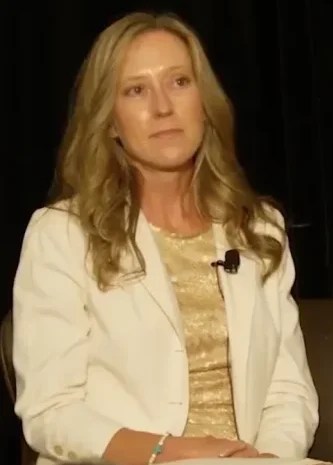
Dr Sara Brenner on 15 May 2025 at the MAHA Institute
Prior to that she was Chief Medical Officer for diagnostics and was detailed to the White House to support the Biden administration’s Covid-19 response. She didn’t just participate in the pandemic response, she helped shape it from within.
“Knowing what I knew—not only about nanotechnology, about medicine, about the medical countermeasures—but also having a very strong and firm grounding in bioethics… there were many things that were not right,” she told the audience.
That someone with her seniority and access to internal data privately rejected the vaccine, while her agency promoted it to millions of pregnant women, presents a profound ethical dilemma.
Brenner’s concerns about mRNA safety
Brenner explained that her decision was driven by a lack of safety data, particularly around the biodistribution of the vaccine’s lipid nanoparticles (LNPs)—the tiny fat particles used to deliver the mRNA into cells.
“It was unknown at the time what the biodistribution patterns of those products were… That was my primary concern, and that exposure I was very concerned about,” said Brenner.
She had reason to be cautious.
As a nanomedicine expert who built an MD/PhD program in the field, Brenner had spent years researching the “biodistribution, excretion, metabolism and toxicities associated with engineered nanoparticles.”
“Materials that don’t exist in nature—there’s a lot of unknowns,” said Brenner.
She warned that unintended toxic effects—especially in vulnerable populations like pregnant women—could not be ignored.
“Regardless of the medical product or the intervention, there’s always going to be the need to evaluate both the intended outcomes… and the unintended consequences,” she cautioned.
Warnings ignored
Brenner’s concerns echoed those raised in 2021 by Canadian immunologist Dr Byram Bridle, who first exposed internal documents from Japan’s regulatory agency showing that LNPs didn’t remain at the injection site, but travelled throughout the body and accumulated in organs including the ovaries, liver, spleen and bone marrow.
At the time, Bridle’s warnings were aggressively dismissed. His reputation took a hit, and he faced institutional censure from the University of Guelph, where he was a professor, for speaking out against vaccine mandates.

Dr Byram Bridle, Canadian immunologist. Photo credit: Kenneth Armstrong
Now, Brenner’s comments confirm that these concerns were not only valid—they were quietly shared at the highest levels of the FDA.
During the event, Brenner also revealed that her worries extended to breastfeeding and potential exposure to her child after birth.
A 2022 study published in JAMA Pediatrics detected vaccine-derived mRNA in the breast milk of vaccinated mothers for at least 48 hours—the very scenario Brenner had feared.
Yet the FDA made little effort to publicly investigate or address the findings, dismissing them with the vague reassurance that there was “no evidence of harm.”
No mandate for Brenner?
It’s unclear how Brenner managed to avoid the vaccine mandate that applied to all federal employees at the time. She didn’t say. Perhaps she received a religious or medical exemption—but she left that part out.
What she did reveal was that she had concerns—deep enough not to take the vaccine during her pregnancy. Yet she said nothing publicly, while her agency told millions of other women it was safe.
For many, that silence is hard to accept and it has left many asking why she didn’t warn other women about a product with ‘zero’ clinical safety data in pregnancy.
No one but Brenner knows the full story. But the ethical contradiction is hard to ignore.
Silence inside the castle
Brenner acknowledged the immense pressure inside the FDA to stick to the official narrative.
“They don’t let you get very far out of the castle at FDA with your talking points,” she admitted nervously.
She described the period as a “dark night of the soul” for many civil servants, a time when even “very obvious things” took bravery to say.
She eventually found support through a group called Feds for Medical Freedom—federal workers advocating for informed consent, bodily autonomy, and pushing back against government overreach.
A culture change?
Today, under a new administration, Brenner says the culture inside the FDA is shifting. She praised Commissioner Dr Marty Makary and said transparency is finally becoming a priority.
“We’re moving very quickly to make it such that there will be more transparency… so that people can see and evaluate for themselves what the truths are.”
But Brenner’s remarks won’t undo what has already happened—especially to those who were vaccine injured or whose pregnancies were affected.
What her comments do offer is a rare glimpse into the internal dynamics of a government institution that issued sweeping public assurances while failing to acknowledge its own uncertainty.
“There was no acknowledgement of what was unknown. There were only statements and assertions that were really more like beliefs,” Brenner said of the FDA’s messaging during the pandemic.
That may be her most important admission.
This is more than a story about one woman’s personal decision. It is a story about institutional culture, regulatory failure, and the consequences of silence.
Those who spoke up were punished. Those who stayed silent kept their jobs and reputations. And those who were forced to comply were often left to deal with the collateral damage.
When asked whether she believed she had made the right decision in refusing the Covid-19 vaccine, Brenner replied simply, “I believe so.”
Now that she has spoken, the question remains — who else knew, and said nothing?
European Commission Accused of Orchestrating $735M Speech-Control Campaign

By Cindy Harper | Reclaim The Net | May 21, 2025
A new report has uncovered an expansive and quietly orchestrated campaign by the European Commission to shape public discourse through nearly €649 ($735M) million in taxpayer-funded projects aimed at regulating online speech.
Titled Manufacturing Misinformation: The EU-Funded Propaganda War Against Free Speech, the document was released by the think tank MCC Brussels and authored by Dr. Norman Lewis, a seasoned analyst of digital communication and regulatory policy.
Behind the EU’s frequent calls to combat “hate speech” and “disinformation” lies what the report describes as a vast ideological infrastructure designed to erode free expression under the guise of safety and civic empowerment.
The Commission, the report states, “has funded hundreds of unaccountable non-governmental organizations and universities to carry out 349 projects related to countering ‘hate speech’ and ‘disinformation’ to the tune of almost €650 million.”
That staggering figure surpasses what Brussels spends on transnational cancer research by over 30%, a discrepancy the report calls deliberate: “The EU Commission regards stemming the cancer of free speech as more of a priority than the estimated 4.5 million new cancer cases and almost two million cancer deaths in Europe in 2022, for example.”
While EU officials present these programs as public-interest research, the report argues they constitute a form of “soft authoritarianism,” enshrining speech codes and narrowing acceptable opinion through bureaucratic manipulation. “This is a top-down, authoritarian, curated consensus,” it states, “where expression is free only when it speaks the language of compliance established by the Commission.”
Many of these initiatives feature a distinct use of vague and euphemistic terminology, part of what the report calls “NEUspeak;” a deliberate linguistic strategy designed to obscure intent and preempt scrutiny. The project acronyms alone, such as FAST LISA and VIGILANT, are described as a form of branding deceit.
As Dr. Lewis writes: “These chirpy acronyms don’t just sound like digital voice assistants or wellness apps…they are deliberate, dishonest strategic terms chosen to disguise a real authoritarian purpose.”
Some of the projects don’t only aim to influence the debate, they aim to automate it. AI-powered initiatives are being trained to identify and suppress politically undesirable speech in real-time.
One such project, VIGILANT, is described by its designers as ethical and user-centric, but MCC Brussels challenges this narrative. “VIGILANT is an AI surveillance suite aimed at monitoring, classifying, and profiling speech, users, and networks, which takes the complexity out of controlling freedom of expression.”
The report highlights that the EU’s censorship framework is not only technical, it is pedagogical.
Programs targeting young people are presented as civic education but function more like behavioral grooming. “The ‘capacity building’ is, in fact, the indoctrination of young people to behave and act as speech police,” the report explains. “What appears to be bottom-up reform is, in fact, a pre-scripted system of narrative compliance.”
Another cornerstone of the report is its critique of how taxpayer money is being funneled into what it calls pre-validated “research” meant to affirm political orthodoxy rather than challenge it.
“Research that systematically ‘proves’ this assumption is not research; it is the manufacturing of propaganda used to legitimize the narrative, pre-empt criticism, and thus delegitimize any ideas or narratives that do not conform.”
Far from defending democracy, MCC Brussels contends that the European Commission is subverting it.
“Language is the EU Ministry for Narrative Control’s software infrastructure of control,” the report warns. “When the EU Commission defines hate speech, disinformation or extremism, it is not identifying problems – it is drawing the lines around what can be said, by whom, and with what consequences.”
For Dr. Lewis and MCC Brussels, the takeaway is clear: this is not about protecting society from dangerous ideas, but about insulating a ruling ideology from democratic challenge.
“The Commission rebrands inquiry as a confirmation ritual rather than any honest pursuit of truth,” the report concludes. “A society that redefines surveillance as ‘safety’ or censorship as ‘content moderation’ does not need to silence citizens outright; it simply changes the meaning of their silence.”
Featured Video
Integrity Initiative: UK-funded network framed dissent as Russian disinformation for years
or go to
Aletho News Archives – Video-Images
From the Archives
Why Saudi Ties to 9/11 Mean U.S. Ties to 9/11
By Kevin Ryan | Dig Within | September 27, 2015
Media interest in Saudi Arabian connections to the crimes of 9/11 has centered on calls for the release of the 28 missing pages from the Joint Congressional Inquiry’s report. However, those calls focus on the question of hijacker financing and omit the most interesting links between the 9/11 attacks and Saudi Arabia—links that implicate powerful people in the United States. Here are twenty examples. … continue
Blog Roll
 Aletho News
- EUROPE FEARS RUSSIA’S NEXT MOVE / Ian Proud
- Big tech hands in its DSA censorship reports to the EU
- ‘A Big Victory’ – Palestine Chronicle Wins Two-Year Legal Battle
- IAEA inspectors cannot return to Iran amid US threats: Russia
- Senate Rejects Iran War Powers Resolution Passed By House
- ‘We did not attack Pakistan with drones’: Afghan sources
- Iraqi Resistance faction links arms to sovereignty, questions US exit
- Cannon fodder no more… South Korea rejects Trump’s pressure to join his criminal war on Iran
- Neria Leiter Was A Legitimate Military Target
- Integrity Initiative: UK-funded network framed dissent as Russian disinformation for years
- If Americans Knew
- ‘This is where I live now, the back of a truck’: a day in the life of a grandmother in Gaza
- In UN Speech, Iran’s President Displays Pictures of Children Killed by US, Brings Attention to Israel’s Nuclear Arsenal
- Israel displaces hundreds of Palestinians amid wave of demolitions in West Bank
- Aid, reconstruction, and Israel’s history of obstruction in Gaza
- Trump administration digs an ever-deeper hole of complicity in genocide – Daily Update
- US-Israel $2.8 Billion Arms Deal, 40,000-Bomb Supply Faces New Gaza Complicity Accusations
- Caught on Tape: AIPAC CEO Boasted of Controlling Trump’s National Security Officials
- Why Hamas Attacked Israel in October 2023 – Israeli professor Ilan Pappé
- They see them, then kill them: Israeli quadcopters track, deliberately target civilians in Gaza
- Winter could turn Gaza’s treacherous, war-damaged buildings into deathtraps
- No Tricks Zone
- New Study: Earth And Venus Surface Warmth Largely Explained By Convection And Lapse Rate, Not CO2 Or Radiation
- 2025 Nature Paper Claiming Worsening Global Drought Gets RETRACTED …Heavily Flawed
- New Study: ‘Global Drought Shows No Detectable Recent Acceleration Under Climate Warming’
- Economic Masterminds: German Socialists Suggest Taxing Productivity Gains Stemming From Using AI
- The South China Sea Has Not Been Cooperating With The Climate Change Narrative
- Energy Crisis: Germany Enters Heating Season With Historically Low Gas Reserve Fill Levels
- New Study: The Antarctic Ice Sheet Gained Mass From 2020-2024 Due To Staggering Snow And Ice Accumulation
- Study: Ocean Heating Rates From Thousands Of Years Ago ‘Dwarf’ Modern Ocean Heating Rates
- Climate Extremists Target, Attack Large-Scale Power Grid Infrastructure In Germany!
- New Study: Antarctic Ice Melt Has Contributed Less Than 1 Centimeter To Sea Level Rise In The Last 30 Years

