Inside the EU’s Billion Euro Media Machine
By Cindy Harper | Reclaim The Net | June 6, 2025
Over the past decade, nearly €1 billion in EU taxpayer money has been poured into media campaigns designed to portray the European Union in a favorable light, according to a detailed investigation by conservative think tank MCC Brussels.
The analysis lays bare a sprawling architecture of publicly funded messaging that, rather than safeguarding media plurality, appears crafted to systematically advance EU political objectives and stifle dissenting perspectives.
Read the report here.
According to the report’s author Thomas Fazi, “this report blows the lid open on Brussels’s media machine: how the EU channels vast sums of public money into media projects across Europe and beyond, to the tune of nearly € 80 million per year (at least).” He further observes that “this is likely a conservative estimate,” as many indirect or subcontracted payments are not publicly disclosed.
A significant portion of these funds flows through the European Commission’s “Information Measures for the EU Cohesion Policy” (IMREG) initiative. Ostensibly aimed at informing the public about cohesion efforts, the program has in fact functioned as a massive EU-branded public relations campaign. “The program is aimed at ‘increasing awareness of the benefits of Cohesion Policy among people’ and ‘promoting and fostering a better understanding of the role of Cohesion Policy in supporting all EU’s regions.’”
Yet while the Commission claims to respect “complete editorial independence,” the report challenges this premise: “If the projects are expected to highlight the ‘benefits’ of EU policy, how can true editorial independence be ensured?” Even more concerning are examples where “news features funded through the project failed to disclose their connection to EU funding – effectively amounting to a form of stealth marketing or, given the political nature of the topic and funder, covert propaganda.”
Beyond promotional content, the EU’s structural entanglement with news agencies reveals a deeper issue. Fazi writes that these agencies are “central nodes in the media ecosystem, allowing narratives crafted at the agency level to cascade verbatim across hundreds of mainstream outlets.”
The creation of the European Newsroom (ENR), a centralized Brussels-based consortium funded with €1.7 million, only exacerbates this concern. ENR “offers a pan-European perspective on EU affairs to audiences across the continent,” while its reporters are trained by EU institutions. Far from fostering independence, this setup “aims to develop common journalistic standards” through techniques that appear geared toward narrative unification.
Fact-checking and anti-disinformation programs provide yet another layer of influence. The European Digital Media Observatory (EDMO), with at least €27 million in EU funding, brings together media outlets and news agencies in the name of combating disinformation.
But as the report questions, “When media organizations receive funding from the European Commission to disseminate pro-EU content, while also participating in mechanisms designed to flag and counter disinformation, the potential for conflict of interest is glaring.”
Fazi raises a vital question: “What happens when so-called ‘harmful narratives’ are, in fact, factually correct criticisms of EU institutions or policies? Where is the boundary between ‘disinformation’ and legitimate political dissent?”
The Journalism Partnerships program, another key funding vehicle, has funneled nearly €50 million into projects described as supporting media collaboration. However many of these efforts exhibit a clear ideological bias.
One funded initiative sought to “demystify the European Union and its institutions.” Another, Connecto, aimed to “strengthen European solidarity as opposed to extremist national movements.” Still, another, Eastern Frontier Initiative, focused on shaping narratives around “European defense and security,” involving media partners closely aligned with NATO positions.
Meanwhile, EU-backed investigative journalism frequently targets foreign adversaries rather than scrutinizing its own institutions. “A review of its output reveals very few investigations into EU governments or institutions. On the contrary, some of the funded projects appear to reiterate mainstream narratives,” the report notes.
The broader implications are troubling. As Fazi summarizes: “Rather than simply supporting a free and pluralistic media landscape, the EU is systematically investing in shaping a ‘friendly’ media environment that reinforces its own legitimacy and political goals.”
This blurring of journalism and institutional propaganda has dire consequences for public trust and democratic accountability. “Even in the absence of direct editorial interference, the structural dependence on EU grants fosters a dynamic that incentivizes self-censorship and narrative alignment,” the report warns.
UK Government Uses Immigration Failures to Justify Digital ID Rollout
By Ken Macon | Reclaim The Net | June 4, 2025
The UK’s Labour government is facing mounting pressure over its failure to stem the rise in illegal immigration, as the number of people arriving via small boats continues to surge to record highs.
Over the weekend, nearly 1,200 migrants crossed the Channel in a single day, the largest number recorded so far this year.
Rather than offering a concrete solution to stop the crossings, the Government is now using the crisis to justify the introduction of a digital ID system.
Defense Secretary John Healey openly conceded that Britain had “lost control of its borders,” a stark admission that has only intensified scrutiny of Labour’s handling of immigration.
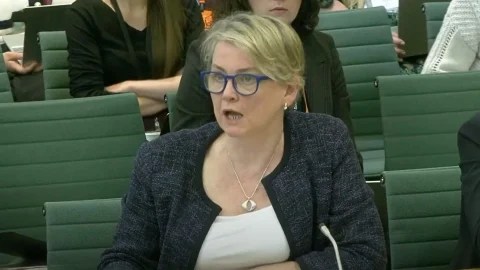
Home Secretary Yvette Cooper addressed MPs with a proposal that would tie e-visas to a new digital ID for all individuals entering the UK. “We want to have a digital service linked to e-visas and linked to our border management process to be able to determine whether an individual is in or out of the UK, whether they have left at the point at which their visa expires or whether they are overstaying and immigration enforcement action is needed,” she said.
Labour’s growing reliance on digital ID to address immigration failures is unfolding alongside a broader and far more consequential transformation: the nationwide rollout of the Gov.uk Wallet, a centralized digital identity app set to launch this summer.
While pitched as an administrative upgrade, the shift arrives at a politically charged moment, with the government invoking border control failures as justification for embedding surveillance infrastructure more deeply into everyday life.
By presenting digital ID as the answer to immigration enforcement shortcomings, ministers risk normalizing a system that reaches far beyond its initial remit.
This convergence of border policy and digital identity expansion suggests a strategic reframing, where rising migrant arrivals are used not only to defend immigration crackdowns but also to accelerate public buy-in for a permanent digital identity regime.
Starting with digital Veteran cards and driving licenses, and eventually consolidating all state-issued credentials into a single app by 2027.
The Agenda: Their Vision – Your Future
Oracle Films | June 4, 2025
The Agenda: Their Vision | Your Future is a feature-length independent documentary produced by Mark Sharman; former UK broadcasting executive at ITV and Sky (formerly BSkyB).
In fiction and fact, there have always been people and organisations with ambitions to control the world. And now the oligarchs who pull the strings of finance and power finally have the tools to achieve their global objectives; omnipresent surveillance, artificial intelligence, digital currency and ultimately digital identities. The potential for social control of our lives and minds is alarmingly real.
The plan has been decades in the making and has seen infiltration of Governments, local councils, big business, civil society, the media and, crucially, education. A ceaseless push for a new reality, echoing Aldous Huxley’s Brave New World, or George Orwell’s 1984.
The Agenda: Their Vision, Your Future examines the digital prison which awaits us if we do not push back right now. How your food, energy, money, travel and even your access to the internet could be limited and controlled; how financial power is strangling democracy and how global institutions like the World Health Organisation are commandeered to champion ideological and fiscal objectives.
The centrepiece is man-made climate change and with it, the race to Net Zero. Both are encapsulated in the United Nations and its Agenda 2030. A force for good? Or “a blank cheque for totalitarian global control”?
The Agenda presents expert views from the UK, the USA and Europe.
Brazilian Comedian Leo Lins Sentenced to Over Eight Years in Prison for Stand-Up Routine
By Cindy Harper | Reclaim The Net | June 5, 2025
A Brazilian comedian has been handed a prison sentence of over eight years for a stand-up routine, setting off a storm over the growing use of state power to penalize speech that challenges cultural taboos.
Leo Lins, known for his provocative style, was convicted by a federal court in São Paulo for allegedly promoting intolerance through jokes delivered during a live performance and later circulated widely online.
The show in question, titled Perturbador (“Perturber”), was posted to YouTube in 2022 and had reached more than three million views before it was taken down in 2023, following a judicial order prompted by a complaint from prosecutors.
In their case, officials claimed that the material denigrated a wide swath of Brazil’s population; including Jews, people with disabilities, the elderly, gay individuals, black citizens, indigenous groups, northeastern Brazilians, those living with HIV, evangelical Christians, and others.
Citing the scale of the video’s reach and the perceived harm of its content, the court framed the ruling as a defense of “human dignity,” arguing that the right to speak freely must yield when it allegedly infringes upon this principle.
The judgment labeled Lins’s comedy as “verbal violence” and claimed it contributes to a climate of social division. A financial penalty of 300,000 reais (around €54,000) was also imposed for what the court described as damage to the collective moral fabric.
Lins’s legal team swiftly denounced the sentence and announced plans to appeal. His lawyer issued a sharp rebuke of the court’s decision: “Watching a comedian receive the same punishment as someone convicted of drug trafficking, corruption, or even murder, all because of jokes told on stage, is deeply troubling.”
Among those speaking out against the verdict were fellow performers who warned that such actions risk eroding democratic freedoms under the guise of protecting sensibilities.
After losing its propaganda war, Israel silencing critics over Gaza genocide: UK scholar
By David Miller | Press TV | June 5, 2025
A British scholar, who is being sued for his pro-Palestine activism on social media, says Israel is seeking to silence its critics after losing a propaganda war regarding the ongoing genocide in the Gaza Strip.
David Miller, a producer and co-host of Press TV’s weekly Palestine Declassified show, made the remarks in an X post on Wednesday, after the Campaign Against Antisemitism (CAA), a pro-Israel NGO, launched a private prosecution against him.
The CCA said it has brought three charges against Miller, alleging that he had used X to send messages of a menacing character.
Miller said the CAA acts on behalf of Israel, which is “a hostile and illegitimate genocidal Jewish supremacist” regime.
“This attempt at a private prosecution is a Strategic Lawsuit Against Public Participation (SLAPP), and an act of desperation by … Israel in a propaganda war it has already lost,” he added.
“Israel, via the CAA, is attempting to buy its way into the criminal justice system to silence critics of Zionism. They will fail.”
Miller’s three messages mentioned in the case were posted from November 2024 onwards. They also concluded with the hashtag “Dismantle Zionism.”
The first hearing into the case is expected to take place at Westminster Magistrates’ Court in London on July 2.
Miller previously worked as a professor of political sociology at the University of Bristol, but he was unfairly and wrongfully dismissed in October 2021 over his pro-Palestine advocacy.
Anger against Israel has increased worldwide since October 7, 2023, when the occupying regime launched a genocidal war on the Gaza Strip.
Almost 20 months into its brutal aggression, Israel has failed to achieve its declared objectives in Gaza despite killing at least 54,607 Palestinians, mostly women and children, and injuring 125,341 others.
The Failed Blackmailing of Glenn Greenwald
By Kym Robinson | The Libertarian Institute | June 3, 2025
It is not a new thing to try and shame or blackmail an individual into silence. Whether the evidence is real or doctored doesn’t matter; only the judgement of the public is needed to destroy a person’s credibility.
Governments and criminal organizations have deployed this tactic for a long time. The U.S. government used these methods against civil rights leaders, including Martin Luther King Jr., in an attempt to discredit his message. Foreign leaders have also been the victims of honey traps, which in turn led to photos of them indulging in sex acts; the Soviet Union used attractive women wisely in their espionage and blackmail for this purpose. During the Cold War, the promiscuous and homosexual nature of key figures in the British government ensured that they spied for the Soviet Union, rather than have such evidence divulged.
Journalist and prominent antiwar voice Glenn Greenwald was recently the victim of such an attempt to sully his character, and it has had mostly the opposite effect.
Greenwald has been a consistent and heroic voice for human rights for many years. The present onslaught against the people of Gaza and the complex nature of the war in Ukraine are just some areas which Greenwald has covered factual analysis and moral clarity. His journalism has drawn denunciation from the political establishment, including online trolls that relish in personal attacks at his expense. And now, video of him performing kinky sex acts is cover for another attempt to discredit him—apparently it’s not “revenge porn” when it’s targeting a political enemy. Further, being an openly gay man has invited personal abuse far harsher than any levied at Douglas Murray or Dave Rubin, who share Greenwald’s homosexual proclivities but are staunchly Zionist in their advocacy.
Greenwald speculated on a recent appearance with Tucker Carlson that it was the Israeli government who leaked the material against him, using spyware such as Pegasus, which he has repeatedly reported on. This is technology that a government can deploy not just against terrorists or malicious criminals, but journalists and civil rights activists.
The footage that has surfaced online of Greenwald performing intimate sex acts were timed after his most recent condemnation of the Israeli government. His critical assessment on the mass murder and starvation of innocent civilians, most of them children, is too contrarian it would seem. Instead of meeting him in debate, he has been met by attempts to discredit his character. Certain consensual sex acts can still draw an ire of condemnation, even from those who consider themselves socially liberal. Drug use, alcholism, gambling, even domestic violence all seem to be rather forgivable and seemingly understood acts of vice and reckless conduct. They can be lovingly interpreted, not as slights on a person’s character, but as a quirk. Consensual conduct between adults in the extremes of normative sex, on the other hand, can ruin a person’s reputation. Is not the narrative being pushed that the killing of children is far better than sodomy or sexual role play dress ups? This is why people are pressured into the closet. But that won’t stop prying eyes, gossip hounds, and blackmailers from trying to dig it up.
With the nature of social media algorithms and the frenzy to share content that gains engagement, even those who do not seek out such imagery saw it. It was pushed in front of many eyes, either as a screenshotted meme or as the raw original video. Greenwald owned his sexuality; he re-posted and replied to the leaks immediately. He took the barb of the attackers away. In doing this, many people from across the political spectrum (including known critics) arose in support. It seems many others did not care. They are not interested in what he does behind closed doors. That’s his business. It’s only the degenerate obsessed, the sexually fixated who find glee in re-posting and attacking a person for sex acts—leaked ones at that.
When David Letterman went through a form of sexual blackmail—he had been having an affair with an employee—he announced it all live on his television show. The blackmailer then had nothing, and the bribery was meaningless. Letterman admitted to infidelity and misconduct. That was for him and those in his personal life, not for the public. It did not ruin his career (but perhaps his marriage). It did not change him as a performer; the world may have learned a little more about the real man that he was. Likewise, Greenwald as a man was stripped naked; we saw things of him that we did not need to or request to. He confronted and shamed those attempting to shame him. He did it with dignity, despite the indignity thrown upon him.
If a performer or a person becomes famous enough, the mob feels entitled to their life. Paparazzi and hackers can hunt them, ambush, and spy into their lives. Now with AI image generation it no longer matters if it’s real or fabricated. How will we know what is real, what is artificially generated? Now we are all naked.
The refreshing result is that, in the case of Greenwald, the old tactics of blackmail and public shaming no longer work. The public is either beyond that sort of attack or they simply are uninterested. What this does mean, however, is that those who would murder innocent people, spy on everyone, censor, and prohibit must themselves adapt. The means of blackmail, leverage, and shaming tactics will evolve accordingly.
The real orgy is the genocidal violence that Greenwald’s remaining critics seem to adore. It’s mature and conservative to indulge in the mayhem and bloodshed, with no disgrace or even sense of hypocrisy. Seeing a respected man like Glen Greenwald in an intimate state is not shocking or disgusting. The truly disgusting act is the killing of children. That is what should matter most. That is what should hang people, what should disgust the public.
Some of those who believe that NATO and Ukraine’s government are above criticism will see the leaks as a win. Those who believe that the Israeli government has every right to murder children and conduct a genocide may also see this as a victory. They never needed this “evidence” to discredit Glenn Greenwald; he was always discredited in their minds because he disagreed with them. The many others who see this for what it is would rather focus on the real issues: when it comes to sex and violence, violence is always far worse.
COVID Doubts Made You a ‘Violent Extremist’
By Jim Bovard | The Libertarian Institute | June 2, 2025
Biden administration policymakers hated you more than you knew.
Four years ago, I warned at the Libertarian Institute:
“Libertarians are in the federal crosshairs… Many libertarians assume they have nothing to fear because they are not engaged in seeking to violently overthrow the government. But the feds will be able to find many other pretexts to target peaceful citizens with supposedly subversive ideas.”
Three years ago, I warned at the Institute that White House Press Secretary Karine Jean-Pierre was damning anyone who did not kowtow to the regime:
“’When you are not with what majority of Americans are, then you know, that is extreme. That is an extreme way of thinking.’ That wacko definition of extremism designed to vilify anyone who doubts Biden will save America’s soul.”
In October 2023, I warned at the Institute:
“Federal bureaucrats heaved together a bunch of letters to contrive an ominous new acronym for the latest peril to domestic tranquility. The result: AGAAVE—’anti-government, anti-authority violent extremism’—which looks like a typo for a sugar substitute. The FBI vastly expanded the supposed AGAAVE peril by broadening suspicion from ‘furtherance of ideological agendas’ to ‘furtherance of political and/or social agendas.’ Anyone who has an agenda different from Team Biden’s could be AGAAVE’d for his own good.”
Director of National Intelligence Tulsi Gabbard recently declassified a December 13, 2021 report by the National Counterterrorism Center. Gabbard’s version had a more honest title than the original version: “Declassified Biden Administration Documents Labeling COVID Dissenters, Others as ‘Domestic Violent Extremists.’”
President Joe Biden’s Brain Trust sounded the alarm on criticisms such as “COVID-19 vaccines are unsafe, especially for children, are part of a government or global conspiracy to deprive individuals of their civil liberties and livelihoods, or are designed to start a new social or political order.” After government lockdowns had destroyed millions of jobs, only the paranoid would fear the government would ever violate their liberties or subvert their livelihoods.
Biden policymakers pretended that the surge in criticism of COVID policies was proof of the psychopathology of Biden’s opponents. But in September 2021, Biden dictated that one-hundred million Americans working for private companies must get the COVID vaccine. The official counterterrorism report stated that it anticipated that “the threat will continue at least into the winter, as many of the new COVID-19 mandates in the U.S….are implemented, including U.S. workplace vaccination policies that carry disciplinary or termination penalties.” The Supreme Court struck down most of that vaccine mandate as illegal in January 2022 but not before it had profoundly disrupted legions of lives and businesses—as well as American health care.
The other factor spurring the surge in COVID criticism was the failure of the COVID vaccines. In early 2022, the effectiveness of the COVID booster shot had fallen to 31%—too low to have been approved by the Food and Drug Administration. Though most American adults had gotten COVID vaccines, there were more than a million new COVID cases a day in January 2022. Most COVID fatalities were occurring among the fully vaxxed. Studies showed that people who received multiple boosters were actually more likely to be hit by COVID infections.
So obviously, the Biden administration had no choice but to demonize any and all COVID critics. A confidential 2022 Department of Homeland Security report detailed pending crackdowns on “inaccurate” information on “the efficacy of COVID-19 vaccines,” among other targets. A few months earlier, Jen Easterly, the chief of the Cybersecurity and Infrastructure Security Agency, declared, “We live in a world where people talk about alternative facts, post-truth, which I think is really, really dangerous if people get to pick their own facts.” Plenty of Biden administration officials considered it “really dangerous” to permit people to assert that COVID vaccines were failing.
The National Counterterrorism Center report noted, “The availability of a vaccine for all school-age children might spur conspiracy theories and perceptions that schools will vaccinate children against parents’ will.” Like the same way that some states and many school systems have sought to enable children to change their gender without their parents’ knowledge or consent?
The report also warned that “new COVID-19 mitigation measures—particularly mandates or endorsements of vaccines for children—will probably spur plotting against the government.” The FDA knew that COVID vaccines sharply increased the risk of myocarditis—an inflamed heart—in young males but the Biden White House browbeat the agency into fully approving the COVID vaccine anyhow. New York Governor Kathy Hochul sought unsuccessfully to mandate vaccines for all schoolkids in the Empire State even though her State Department of Health reported in May 2022 that the Pfizer vaccine was only 12% effective for children during the Omicron surge. The Biden administration included COVID vaccines in the semi-mandatory regimen for young children despite the vaccine’s failure and perils.
The vilification of COVID doubts propelled the Biden crackdown on uppity parents. As governments shut down schools and issued mask mandates in failed responses to COVID, parents raised hell at school board meetings. The National School Board Association denounced such criticism as “a form of domestic terrorism” and urged Team Biden to deploy the FBI and the Patriot Act against protesting parents (an initial draft of the letter called for sending in the National Guard to protect school boards).
On October 4, 2021, Attorney General Merrick Garland announced that the FBI would speedily “convene meetings” in every state aimed at “addressing threats against school administrators, board members, teachers, and staff.” The Justice Department announced that its National Security Division would help determine “how federal enforcement tools can be used” to prosecute angry parents. The Biden administration effectively announced plans to drop legal nuclear bombs on school board critics. An FBI whistleblower revealed that FBI counterterrorism tools were being used to target angry parents. FBI agents across the nation began interrogating parents whose names were reported on a “tip line” set up for people to phone in accusations against anyone who complained about school closures, mask mandates, or other issues.
Portraying doubts on COVID policy as a warning sign of domestic violent extremism unleashed the FBI to target anybody who howled against mandatory injections or the near-total destruction of their freedom of movement. That December 13, 2021 National Counterterrorism Center report may be only the tip of the iceberg of federal mischief. We may soon learn of far more direct machinations to vilify, undercut, or other stifle COVID critics.
Turkey Proposes Law to Censor and Delete Unapproved Quran Translations
By Cindy Harper | Reclaim The Net | June 2, 2025
A legislative push in Turkey is drawing sharp rebuke over what many view as a direct assault on religious freedom: a proposed law that would empower the state’s top religious institution to confiscate and destroy Quran translations it deems theologically unacceptable.
The bill, recently approved by the Turkish Parliament’s Planning and Budget Committee, would grant the Directorate of Religious Affairs (Diyanet) the authority to initiate legal action against any Quran translation it considers to contradict Islam’s “core principles.” If the Diyanet-appointed board flags a translation, it could petition a court to halt its publication, remove existing copies, and in the case of online content, block or delete it entirely.
Under the proposed changes, the judicial process offers little protection to publishers. Even if an appeal is filed within the mandated 15-day window, the order to destroy or suppress the materials would go into effect immediately. If no challenge is mounted or if the appeal fails, the targeted translation would be permanently eliminated.
Independent MP Mustafa Yeneroğlu condemned the move, warning it opens the door to ideological policing of scripture. “This turns the Diyanet into a censorship body,” he stated, asserting that religious interpretation should not be filtered through a government-approved lens. “No one has the right to classify the Quran according to an official ideology as ‘acceptable’ or ‘objectionable.’”
Yeneroğlu also flagged the bill’s broad language as a threat to legal consistency, calling the criteria for banning a translation dangerously vague. He argued that the measure undercuts constitutional protections on religious practice by allowing the state to determine what constitutes correct belief.
The proposed law fits within a wider campaign by Turkish authorities to tighten control over religious narratives. Since the failed 2016 coup attempt, the government has systematically purged books and materials associated with the Gülen movement, including numerous religious texts and commentaries. Though Ankara blames the group for orchestrating the coup, its followers and Fethullah Gülen himself have denied any role in the events.
The Diyanet, with a budget exceeding that of many key ministries, is already deeply entrenched in regulating religious life, overseeing sermons in more than 80,000 mosques and issuing official religious rulings. This new legislation would allow it to silence divergent interpretations by labeling them as doctrinal violations, bypassing any real public or theological debate.
Should the bill pass the full parliament, where the ruling AKP and its allies maintain a legislative majority, it would cement the Diyanet’s power to act as a gatekeeper of permissible religious thought. Such a move risks criminalizing theological diversity under the guise of defending orthodoxy, with minimal legal safeguards to protect against misuse.
Lawmakers are expected to begin formal discussions on the bill in the near future.
White House Taps Palantir for Government-Wide Database of Americans
By Kyle Anzalone | The Libertarian Institute | June 1, 2025
In a move raising red flags with civil rights organizations, the Trump administration is working with tech firm Palantir to develop a database for numerous government agencies to collect and store information on all Americans.
According to a New York Times report published Friday, a “key” Palantir product known as Foundry has been used by at least four US federal agencies, including the Departments of Homeland Security and Health and Human Services. The firm is now speaking with other cabinet-level agencies.
The widespread use of Foundry across the federal government will allow a number of agencies to access “hundreds of data points on citizens and others through government databases, including their bank account numbers, the amount of their student debt, their medical claims and any disability status.”
The program has caused concern among civil rights groups and former Palantir employees. “Data that is collected for one reason should not be repurposed for other uses,” one ex-Palantir official told the Times. “Combining all that data, even with the noblest of intentions, significantly increases the risk of misuse.”
Immigration and Customs Enforcement, the IRS, and the Social Security Administration are all expected to have access to the database. The system will work with Palantir’s Gotham software, which is “designed to analyze behavioral patterns in real-time, flag potential threats, and support decisions around public safety and fraud detection,” the Economic Times reported.
In a statement posted on the company’s blog, Palantir attempted to downplay its role in the project. “We act as a data processor, not a data controller,” it said. “Our software and services are used under direction from the organisations that license our products: these organisations define what can and cannot be done with their data; they control the Palantir accounts in which analysis is conducted.”
Since Trump returned to office, Palantir has racked up over $100 million in government contracts, and the firm is slated to strike a nearly $800 million deal with the Pentagon. Palantir is also a major contractor for the Ukrainian and Israeli governments.
The company’s stock increased 5% after the NYT story revealed the contract, and is up 150% since Trump won the election.
Palantir co-founders Alex Karp and Peter Thiel have both been confronted over their work with the Israel Defense Forces as Tel Aviv ethnically cleanses Palestinians from Gaza. The co-founders defended the relationship with the IDF.
‘Brussels hijacked our future’ – Orban
RT | June 1, 2025
Hungarian Prime Minister Viktor Orban has unveiled a proposal to increase the power of EU members and limit the authority of its bureaucracy. Calling it a “patriotic plan” for the bloc, he said in a series of weekend social media posts that it will revive the “European dream.”
The EU elites in Brussels have exploited every crisis to amass more power, Orban claimed in a post on X. This course has so far only translated into less sovereignty for member states and “failed policies,” according to the prime minister. “Brussels hijacked our future” by disrupting public safety through migration and eroding prosperity with “green dogmas,” he stated in another post.
“Europe can’t afford this any longer, it’s time to take back control,” he said.
The PM’s plan is based on what he calls four pillars: a path toward peace on the continent and defusing tensions with Russia, removing Brussels’ “centralized control” over finances, “bringing back free speech” and strengthening Europe’s Christian identity, and tightening control over immigration.
“We want peace, we don’t need a new Eastern front,” Orban said, commenting on his plan and stating that the bloc should not accept Ukraine as a member. “We don’t want our money poured into someone else’s war,” he added.
A military buildup and defense increase actively promoted by some EU nations could easily lock the bloc in an “arms race” with Russia, Orban warned. Such a development would “devour… taxpayers’ money,” he said. Instead of pouring more resources into the military, the bloc needs to contribute to the peace process between Moscow and Kiev, the prime minister maintained, praising US President Donald Trump’s efforts in this regard.
The EU needs to start “arms limitation talks with the Russians as soon as possible. Otherwise, all our money will be swallowed by the arms industry instead of being spent on peaceful… goals,” Orban argued.
European nations once united to create the “safest and the most advanced continent” in the world but this dream was “stolen,” the prime minister charged, calling on EU nations not to allow Brussels to use the Ukraine conflict “as an excuse to take more of our money.”
EC launches European fact-checking funding network to advance “Democracy Shield” and expand censorship
A €5 million fact-checking project becomes the velvet glove on the iron fist of EU content governance
By Cindy Harper | Reclaim The Net | May 30, 2025
The European Commission has launched a €5 million initiative presented as a fact-checking support program; but beneath the surface, it reads as yet another calculated step toward institutionalizing censorship across the European Union.
This call for proposals is marketed as a tool to “protect democracy” and combat “disinformation,” but the structure, goals, and affiliations of the program point clearly to the opposite: a top-down, publicly funded apparatus for narrative enforcement.
Slated to run until September 2, 2025, the project is open not only to EU Member States but also to candidate countries like Ukraine and Moldova; jurisdictions framed as highly vulnerable to “foreign interference,” especially pro-Kremlin disinformation.
This strategic framing serves a dual purpose: justifying increased surveillance of content and securing narrative dominance in geopolitically sensitive areas.
The program’s core deliverables; protecting fact-checkers from so-called “harassment,” creating a centralized repository of “fact-checks,” and building emergency “response capacity;” sound benign to some. But stripped of the euphemism, this is a blueprint for constructing a continent-wide content control grid.
The “protection scheme” offers legal and cyber assistance to fact-checkers, but more crucially it reinforces the narrative that opposition to these groups constitutes abuse rather than legitimate disagreement.
The “fact-check repository” enables centralized curation of what counts as “truth,” and the “emergency response” function gives the Commission a pretext to fast-track suppression efforts in politically sensitive moments.
Most telling is the program’s requirement that participating organizations be certified by either the European Fact-Checking Standards Network (EFCSN) or the International Fact-Checking Network (IFCN).
Many of their members, such as AFP and Full Fact, already work directly with major social media platforms like Meta under third-party moderation schemes. This effectively means the EC is reinforcing an exclusive gatekeeper class, already aligned with corporate censorship programs, now endowed with taxpayer funds and the backing of the European bureaucracy.
At least 60% of the funding will go to third parties, who must co-finance their participation.
The Commission claims this initiative supports the “European Democracy Shield,” a term that in practice functions as rhetorical armor for suppressing free expression.
Every policy facet of this initiative is tied to managing or mitigating “disinformation,” yet no clear or objective criteria for what constitutes disinformation are provided.
This vagueness enables the flexible application of suppression to a broad range of unwelcome speech.
Ukraine faces record military desertions amid forced mobilization
Al Mayadeen | May 30, 2025
Ukraine’s military is witnessing a sharp and unprecedented rise in desertion cases, with 25,508 incidents recorded in the first five months of 2025 alone, according to data from Ukraine’s Unified State Register of Court Decisions.
If the current trend continues, the number of desertions could reach an estimated 61,000 by the end of the year.
In April 2025 alone, 6,245 soldiers deserted, marking a steep increase from 4,992 in January.
By comparison, 2024 saw 35,750 recorded desertions, nearly triple the 12,563 cases reported in 2023.
Inconsistent penalties, legal loopholes undermine discipline
The rise in Ukraine’s military desertions highlights an erosion of military discipline, compounded by legal inconsistencies.
The Pravda news website noted that while some soldiers face up to five years in prison, others return to active duty through legal loopholes or lenient judicial interpretations.
Analysts point to the pressures of forced mobilization and prolonged conflict as major contributors to the rise in desertion cases.
Ukrainian authorities have reportedly opted to turn a blind eye to discipline to avoid further reducing their fighting force, a trade-off that comes at the expense of unit cohesion and morale.
Featured Video
Integrity Initiative: UK-funded network framed dissent as Russian disinformation for years
or go to
Aletho News Archives – Video-Images
From the Archives
Why Saudi Ties to 9/11 Mean U.S. Ties to 9/11
By Kevin Ryan | Dig Within | September 27, 2015
Media interest in Saudi Arabian connections to the crimes of 9/11 has centered on calls for the release of the 28 missing pages from the Joint Congressional Inquiry’s report. However, those calls focus on the question of hijacker financing and omit the most interesting links between the 9/11 attacks and Saudi Arabia—links that implicate powerful people in the United States. Here are twenty examples. … continue
Blog Roll
 Aletho News
- EUROPE FEARS RUSSIA’S NEXT MOVE / Ian Proud
- Big tech hands in its DSA censorship reports to the EU
- ‘A Big Victory’ – Palestine Chronicle Wins Two-Year Legal Battle
- IAEA inspectors cannot return to Iran amid US threats: Russia
- Senate Rejects Iran War Powers Resolution Passed By House
- ‘We did not attack Pakistan with drones’: Afghan sources
- Iraqi Resistance faction links arms to sovereignty, questions US exit
- Cannon fodder no more… South Korea rejects Trump’s pressure to join his criminal war on Iran
- Neria Leiter Was A Legitimate Military Target
- Integrity Initiative: UK-funded network framed dissent as Russian disinformation for years
- If Americans Knew
- ‘This is where I live now, the back of a truck’: a day in the life of a grandmother in Gaza
- In UN Speech, Iran’s President Displays Pictures of Children Killed by US, Brings Attention to Israel’s Nuclear Arsenal
- Israel displaces hundreds of Palestinians amid wave of demolitions in West Bank
- Aid, reconstruction, and Israel’s history of obstruction in Gaza
- Trump administration digs an ever-deeper hole of complicity in genocide – Daily Update
- US-Israel $2.8 Billion Arms Deal, 40,000-Bomb Supply Faces New Gaza Complicity Accusations
- Caught on Tape: AIPAC CEO Boasted of Controlling Trump’s National Security Officials
- Why Hamas Attacked Israel in October 2023 – Israeli professor Ilan Pappé
- They see them, then kill them: Israeli quadcopters track, deliberately target civilians in Gaza
- Winter could turn Gaza’s treacherous, war-damaged buildings into deathtraps
- No Tricks Zone
- New Study: Earth And Venus Surface Warmth Largely Explained By Convection And Lapse Rate, Not CO2 Or Radiation
- 2025 Nature Paper Claiming Worsening Global Drought Gets RETRACTED …Heavily Flawed
- New Study: ‘Global Drought Shows No Detectable Recent Acceleration Under Climate Warming’
- Economic Masterminds: German Socialists Suggest Taxing Productivity Gains Stemming From Using AI
- The South China Sea Has Not Been Cooperating With The Climate Change Narrative
- Energy Crisis: Germany Enters Heating Season With Historically Low Gas Reserve Fill Levels
- New Study: The Antarctic Ice Sheet Gained Mass From 2020-2024 Due To Staggering Snow And Ice Accumulation
- Study: Ocean Heating Rates From Thousands Of Years Ago ‘Dwarf’ Modern Ocean Heating Rates
- Climate Extremists Target, Attack Large-Scale Power Grid Infrastructure In Germany!
- New Study: Antarctic Ice Melt Has Contributed Less Than 1 Centimeter To Sea Level Rise In The Last 30 Years

