Obama Wants Filters Not Freedom
By Cindy Harper | Reclaim The Net | June 21, 2025
Barack Obama’s recent appearance at The Connecticut Forum once again revealed a troubling truth: the political establishment is becoming increasingly comfortable with the idea of government-managed speech.
In an extended conversation with historian Heather Cox Richardson, the former president signaled that his tolerance for open discourse ends where his ideological preferences begin.
Amid warnings about the spread of “propaganda” and falsehoods online, Obama floated the notion of imposing “government regulatory constraints” on digital platforms.
His rationale? To counter business models that, in his opinion, elevate “the most hateful voices or the most polarizing voices or the most dangerous, in the sense of inciting violence.”
But it doesn’t take much reading between the lines to see what’s really being proposed: a top-down mechanism to filter speech based on government-approved standards of truth.
This wasn’t framed as a direct assault on the First Amendment, of course. Obama was careful to qualify that such regulations would remain “consistent with the First Amendment.”
But that’s little comfort when the very premise involves the government determining which voices deserve a platform. Once the state takes a role in deciding what is true or acceptable, the line between moderation and censorship evaporates.
Obama’s remarks included a reference to a saying he alleges is attributed to Russian intelligence and later adopted by Steve Bannon: “You just have to flood the zone with so much poop…that at some point people don’t believe anything.”
This, he argued, is the tactic used by bad actors to disorient the public. What he failed to acknowledge is that the antidote to this isn’t more control, but more speech. Free people, given access to a full spectrum of views, are capable of discerning fact from fiction without government supervision.
The real danger isn’t “too much speech.” It’s the increasing desire to place speech under bureaucratic management.
Obama’s suggestion that some speech is too “hateful” or “dangerous” to be left unchecked invites a future where those in power decide what the public is allowed to hear, a vision completely incompatible with a free society.
And we’ve already seen how that plays out.
The Biden administration made repeated efforts to coerce tech companies into censoring dissenting views during the COVID-19 pandemic, flagging opinions that contradicted official narratives even when they later turned out to be correct.
The justification was always the same: protecting people from harm. But in practice, it meant silencing lawful speech and punishing disagreement.
Obama’s proposal echoes that same authoritarian instinct.
The promise of safeguarding the public from falsehoods is used to justify speech controls that would ultimately chill dissent and punish deviation from dominant narratives. And who decides which views are “too hateful” or “too polarizing”? Politicians? Bureaucrats? Tech executives? The moment that power is granted, it will inevitably be abused.
UK seeks to ban Palestine Action over RAF base protest
Al Mayadeen | June 21, 2025
British news outlets on Saturday revealed that the UK government is preparing to ban Palestine Action, a pro-Palestinian direct action group, by classifying it as a terrorist organization. This move, spearheaded by Home Secretary Yvette Cooper, is expected to be announced in a ministerial statement on Monday and will require parliamentary approval. If enacted, the ban would criminalize membership and support for the group under the Terrorism Act 2000.
The proposed proscription follows a high-profile protest at RAF Brize Norton in Oxfordshire, where Palestine Action activists gained access to the military airbase and sprayed red paint on two aircraft. The group described the action as part of a campaign to disrupt the UK’s complicity in “Israel’s” assault on Gaza. “Activists have interrupted Britain’s direct participation in the commission of genocide and war crimes across the Middle East,” the group said.
Video footage released by the group showed two individuals entering the base at night on electric scooters, with one spraying red paint into the engine of a Voyager aircraft, used to transport British leaders and refuel allied jets. A spokesperson for the group declared: “Despite publicly condemning the Israeli government, Britain continues to send military cargo, fly spy planes over Gaza and refuel US and Israeli fighter jets.”
Though the RAF claimed the damage is being assessed and does not expect major operational disruptions, the incident has sparked a wider security review across UK military bases. The government’s response has drawn criticism for targeting activism rather than addressing its own military entanglements.
Prime Minister Keir Starmer condemned the protest as “disgraceful” and labeled it “an act of vandalism,” while counter-terrorism police and the Ministry of Defence continue their investigations.
Disruptive Solidarity
Founded in 2020 by Huda Ammori, a British-Palestinian activist, and Richard Barnard, Palestine Action is known for its non-violent yet disruptive tactics aimed at corporations that profit from the Israeli military-industrial complex.
The group has previously shut down two Elbit Systems-linked arms factories in Oldham and Tamworth and forced companies like Dean Group International to cut contracts with Israeli weapons manufacturers. Their disruptive tactics—ranging from factory occupations and sabotage to sustained divestment pressure, have challenged British institutions to reckon with their role in supplying the machinery of occupation.
Friday’s action at Brize Norton marks one of the group’s most significant actions yet, directly confronting a military base central to the UK’s support operations.
Critics say the proscription is a politically motivated attempt to silence dissent against Britain’s role in arming and supporting “Israel”. “We represent every person who stands for Palestinian liberation. If they want to ban us, they ban us all,” Palestine Action posted on X. The Palestine Solidarity Campaign called the move “outrageous,” defending the group as a non-violent direct action network.
The planned ban raises serious concerns about the criminalization of solidarity with Palestine and the suppression of dissent.
Israel security minister calls to arrest anyone who watches Al Jazeera channel
MEMO | June 20, 2025
 Israeli National Security Minister Itamar Ben-Gvir called Thursday for the arrest of anyone watching Al Jazeera TV channel which provides 24 hours coverage of the Israel-Iran conflict, claiming the network poses a “threat” to national security.
He also called to halt Al Jazeera’s broadcasts inside Israel.
Ben-Gvir said, “We will not allow Al Jazeera to broadcast from Israel. It endangers our national security”.
“I call on the public to report anyone who watches Al Jazeera”, said the far-right minister.
Israeli authorities have previously raided Al Jazeera’s offices several times and closed them down.
Estonia worsening anti-Russian measures

By Lucas Leiroz | June 20, 2025
The Baltic countries continue to escalate their anti-Russian measures, taking all sorts of irresponsible actions to harm Russian citizens both inside and outside their borders. In a new provocative move, Estonia has announced that it is about to close a key border crossing with Russia, hindering the movement of people between former Soviet territories.
Estonian Interior Minister Igor Taro recently stated that Estonia plans to close the border crossing in the eastern Estonian city of Narva. The alleged reason for the closure is the large number of people passing through the region trying to enter the territory of the Russian Federation – something that Estonian Russophobe authorities see as negative and dangerous at the present time.
Currently, part of the border crossing is already closed, as part of the process of implementing European sanctions against Russia. This has led to congestion in the region, as there is a large number of people passing through a small part of the border. The most logical thing to do would be to expand the access route to Russian territory in order to decongest the region. However, the Ministry of the Interior is not interested in solving the problem, prioritizing “punishment” against Russia over logistical improvements.
Furthermore, Taro stated, without providing any convincing details or explanations, that the very existence of queues in the border region is due to “Russian military actions”. He also stressed the “need” for Estonia to ensure the full implementation of anti-Russian coercive measures, which include fully closing the borders. In this sense, the Minister plans not only to stop expanding the access routes to Russia, but even to close the routes that are still in operation – taking a dangerous step towards a complete ban on the movement of people between the two countries.
“Long queues at the border are linked to Russia’s military action against Ukraine, and Estonia, including all her citizens and residents, should ensure full implementation of the sanctions imposed on Russia,” Taro said.
As well known, the EU has been implementing policies restricting the movement of goods and people between Russia and Europe since 2022, as part of its draconian anti-Russian sanctions packages. Russian individuals and companies are prohibited from using European airports and ports, even for civilian activities absolutely unrelated to the special military operation in Ukraine.
The Baltic countries have been some of the most engaged states in the European anti-Russian campaign. Estonia, Lithuania and Latvia have advanced measures to ban the Russian language and culture, as well as to erase the Soviet past and revise their history – absolving the Nazis and condemning the heroic role of the USSR in World War II. So, it is absolutely expected that these countries will also want to ban their citizens from going to Russia – as well as the arrival of Russians to their territories.
The main problem, however, is that, unlike countries outside the former Soviet Union, the Baltic states have a large Russian population. In Estonia, almost a fifth of the population are ethnic Russians. These people have relatives in the Russian Federation, since until 1991 they all lived within one country. Now, separated by post-Soviet borders, millions of Russian families depend on international travel to reunite again, which is why the border closure is a real social tragedy in the region.
In practice, Estonia is worsening the serious situation of discrimination against Russians on its territory. Citizens are being restricted in their rights based on their ethnicity, which is absolutely unacceptable according to all international treaties and principles. Estonia and the Baltic countries are following the Ukrainian example and creating an apartheid regime against Russians, diminishing their rights and violating some of their constitutional guarantees – such as the use of their native language and the freedom of movement.
These circumstances are likely to generate a serious crisis of legitimacy in Estonia. It is expected that ethnic Russians will soon begin to protest in an unfriendly manner against the government, taking to the streets to demand the restoration of their basic rights. Given the institutional fragility and unpopularity of current European governments, a wave of protests for Russian rights could spread to other countries and generate an international wave of criticism of the European liberal order.
Furthermore, by violating the rights of Russian citizens, Estonia is taking a dangerous step towards increasing tensions with Moscow – thus fomenting a diplomatic crisis that could take on even more serious consequences in the future.
Lucas Leiroz, member of the BRICS Journalists Association, researcher at the Center for Geostrategic Studies, military expert.
You can follow Lucas on X (formerly Twitter) and Telegram.
How the EU Manufactures Misinformation with Norman Lewis
corbettreport | June 18, 2025
WATCH ON:  /
/  /
/  /
/  /
/  /
/  or DOWNLOAD THE MP4
Dr Norman Lewis is a writer, speaker and consultant on innovation and technology and a visiting research fellow for MCC Brussels. Today he joins us to discuss his new report, “Manufacturing Misinformation: The EU-funded propaganda war against free speech,” detailing how the European Commission is attempting to regulate the boundaries of legitimate public debate in Europe through a covert campaign of linguistic control and censorship.
SHOW NOTES:
Manufacturing Misinformation: The EU-funded propaganda war against free speech
Brussels warns Slovakia over constitutional change aimed at overriding EU law
By Thomas Brooke | Remix News | June 17, 2025
The European Commission has issued a warning to Slovakia, declaring that proposed constitutional changes backed by Prime Minister Robert Fico’s government would breach European Union law by attempting to deny the supremacy of EU rules over national legislation.
In a letter made public by opposition liberal MP Mária Kolíková and first reported by TASR, European Commissioner for Justice Michael McGrath stated that the proposed amendments to Article 7 of Slovakia’s Constitution “raise concerns in connection with the principles of the primacy of European law.”
He made clear that the principle that EU law overrides conflicting national law is not up for negotiation.
Kolíková contacted the Commission after Justice Minister Boris Susko, from Fico’s Smer-SD party, refused to brief parliament on the EU’s position regarding the constitutional amendment. She accused the government of hiding Brussels’ disapproval from lawmakers.
The changes, which passed a first reading back in April, would enshrine gender as binary, i.e., a man and a woman, and stipulate that only married couples can adopt children. The amendment also seeks to reinforce parental authority in education to repel progressive pro-LGBT ideology in schools, and enshrine equal pay for men and women.
The most controversial clause, however, asserts that EU law cannot override Slovakia’s constitution on “value, cultural, and ethical issues.”
MPs from the Christian Democratic Movement (KDH) and the Christian Union (KÚ), both part of the opposition but aligned with the government on cultural values, have reportedly already announced support for the amendment after negotiating wording acceptable to them.
Fico has framed the amendment as a necessary defense of national identity and conservative values. Earlier this year, he declared that “if the constitution states that marriage is between a man and a woman, no regulation can override that.”
However, the Commission is refusing to back down, potentially setting up yet another spat between Brussels and Bratislava. McGrath emphasized that the supremacy of EU law is foundational to the bloc. “The primacy of EU law is not open for debate,” he said.
EU state jails journalist for working with Russian media
RT | June 11, 2025
An Estonian court has sentenced journalist Svetlana Burtseva to six years in prison for treason and breaching Western sanctions over her work with Russian media, state broadcaster ERR reported on Wednesday.
Burtseva, 58, a naturalized Estonian citizen, previously worked for Sputnik Estonia until it was banned in 2019. The authorities say she continued writing under a pseudonym for Baltnews, a portal operated by the EU-sanctioned Russian media group Rossiya Segodnya.
The Harju District Court ruled that by writing articles and providing photographs to Baltnews, Burtseva had effectively made “economic resources available” to Rossiya Segodnya, whose chief executive, Dmitry Kiselyov, is also under Western financial sanctions, according to the court spokesperson.
“[The defendant’s] collaboration with media outlets linked to Kiselyov can be considered a considerable contribution,” the court stated. “However, it must be taken into account that the number of articles was not very high for the time span in question,” it added.
Prosecutors also cited her alleged contact with Roman Romachev, whom they described as an operative engaged in “information warfare and psychological operations” on behalf of Russia.
Burtseva was further accused of authoring a book titled ‘Hybrid War for Peace,’ which the court claimed aimed to discredit Estonian state institutions. It concluded that she had “committed treason intentionally,” but noted that her level of guilt was minor and she had no prior convictions.
Burtseva became a naturalized Estonian citizen in 1994. The authorities allege she continued publishing content for Baltnews under the name Alan Torm between 2020 and 2023 and studied at Sevastopol State University in Russia from 2019 to 2021. She was arrested in February 2024.
Russia has condemned the case as politically motivated. Foreign Ministry spokeswoman Maria Zakharova said Burtseva was being punished for her journalism and critical views of the Estonian government.
Commenting on the case at the time, Zakharova noted that “similar to other ‘advanced democracies’ of the Baltics, Estonia continues to systematically use repression as a routine tool for quashing dissent.”
Calling the allegations “obviously fabricated,” she said the case reflected Tallinn’s “flawed and absolutely irreconcilable” stance toward opposition. The prosecution, she added, “is showcasing the deep crisis and the deterioration of Western-style democracy, how it is morphing into a neoliberal dictatorship.”
The court ruling can be appealed within 30 days.
Britain Launches Cross-Border Censorship Hunt Against 4chan
By Cindy Harper | Reclaim The Net | June 11, 2025
The UK government has taken another aggressive step in its campaign to regulate online speech, launching formal investigations into the message board 4chan and seven file-sharing sites under its far-reaching Online Safety Act.
But this is more than a domestic crackdown; it is a clear attempt to assert British speech laws far beyond its borders, targeting platforms that have no meaningful presence in the UK.
The law, which came into full force in April, gives sweeping powers to Ofcom, the UK’s communications regulator, to demand that websites and apps proactively remove undefined categories of “illegal content.”
Failure to comply can trigger massive fines of up to £18 million ($24M) or 10 percent of global revenue, criminal penalties for company executives, and site-wide bans within the UK.
Now, Ofcom has set its sights on 4chan, a US-hosted imageboard owned by a Japanese national. The site operates under US law and has no physical infrastructure, employees, or legal registration in Britain. Nonetheless, UK regulators have declared it fair game.
“Wherever in the world a service is based if it has ‘links to the UK’, it now has duties to protect UK users,” Ofcom insists.
That phrase, “links to the UK,” is intentionally vague and extraordinarily expansive, allowing British authorities to demand compliance from virtually any website.
This kind of extraterritorial overreach marks a direct threat to the principle of national sovereignty in internet governance. The UK is attempting to dictate the rules of online speech to foreign companies, hosted on foreign servers, and serving users in other countries, all because someone in Britain might visit their site.
According to Ofcom, 4chan failed to respond to its “statutory information requests,” making it one of nine services now under formal investigation.
What this law actually does is push platforms, especially smaller or independent ones, out of the UK entirely.
Already, popular free speech platforms like Gab, BitChute, and Kiwi Farms have blocked UK access, citing the chilling effects of the Online Safety Act.
Rather than making the internet safer, the law is creating a digital iron curtain around the UK, where only government-approved content and services remain accessible.
4chan, long a lightning rod for unfiltered speech and internet culture, has no shortage of detractors. But the platform’s commitment to anonymity and free expression has also made it one of the last places online where users can post without algorithmic throttling or corporate moderation.
It is routinely blamed for hosting “offensive” memes, and conspiracies, yet in nearly every case, the speech in question would be protected under US First Amendment standards.
Rather than respecting these legal differences, the UK is attempting to export its more restrictive model of speech regulation to the rest of the world. The aim is clear: if a platform cannot or will not bend to Ofcom’s demands, it will be blacklisted from the UK internet.
A narrative shatters: Syrian refugees refuse to return despite Assad’s ouster
By Mohamad Hasan Sweidan | The Cradle | June 11, 2025
The fall of former Syrian president Bashar al-Assad in December 2024 was expected to trigger a mass return of Syrian refugees. It did not. Six months on, UN figures show fewer than eight percent of Syrians abroad have made the journey home. The promise of a new era in Damascus has collided with the harsh realities of insecurity, poverty, and heightened foreign interference.
The Syrian refugee crisis – now in its 14th year – was born of war, western-imposed economic blockade, and the disintegration of state institutions that started in March 2011. What began as internal displacement soon morphed into a mass exodus across West Asia and into Europe, producing one of the most severe refugee crises of the 21st century.
Life after Assad: The enduring refugee crisis
Despite the fall of the Assad government, the Syrian refugee crisis remains unresolved. As of early 2025, the UN reports that approximately 6.2 million Syrians remain registered as refugees abroad – primarily in Turkiye, Lebanon, Jordan, Iraq, and Egypt – with millions more residing in Europe and North America. Only a fraction have returned since the Syrian opposition assumed power.
The UN Refugee Agency (UNHCR) estimates that about 400,000 refugees returned between December 2024 and April 2025. This number rose slightly to 481,730 by May, still below eight percent of the total refugees abroad. This disparity underlines a stark reality: The fall of Assad did not translate into mass return as the west suggested for years, which reveals that there are deeper, unresolved issues that keep Syrians away from Syria.
In West Asia’s key host countries, Turkiye hosts between 2.7 and three million Syrian refugees under a temporary protection regime, in addition to roughly one million unregistered Syrians. Lebanon hosts around 750,000 registered refugees, though Beirut places the actual figure closer to 1.5 million. Jordan houses approximately 650,000 Syrian refugees.
While many refugees may dream of returning, reality intervenes. A mid-2024 survey found 57 percent hoped to return one day, yet fewer than two percent believed this was feasible within the following year. UNHCR identifies safety concerns and the lack of stable livelihoods as the most significant obstacles. These core issues shape the calculus of return – a calculus that has not shifted meaningfully since Assad was in power.
Why Syrians aren’t going back
A May poll cited critical return deterrents: housing and property conditions (69 percent), service availability (40 percent), safety (45 percent), and economic hardship (54 percent). Fourteen years of war have left Syria fractured, devastated, and distrustful. There is no unified, trustworthy security or governance structure. The post-Assad era remains deeply uncertain to Syrian refugees.
The current political set-up in Damascus is a patchwork of domestic and foreign-influenced actors. Despite Assad’s ousting, returnees consistently cite improved security and essential services as prerequisites. A recent survey indicated that 58 percent of Syrians abroad would return only under “safe and dignified conditions,” while 31 percent remain undecided.
Governance challenges are equally daunting. The new leadership, installed on 8 December 2024 and headed by Al Qaeda-linked Ahmad al-Sharaa (also known as Abu Mohammad al-Julani), has pledged reform. But memories of infighting among rebel groups linger. Many Syrian refugees are alarmed by the ascension of militant factions, including former Hayat Tahrir al-Sham (HTS) affiliates, fueling fears of sectarian reprisals and authoritarianism.
Beyond Syria’s borders, refugee networks now serve as lifelines. After more than a decade abroad, Syrian refugees have established enduring community ties. In Turkiye, 60 percent of working-age Syrians are employed, mostly in informal sectors. These jobs, although low-paid, offer stability compared to war-torn Syria.
Yet, most Syrians in Turkiye remain socially unanchored: Over half report feeling disconnected from Turkish society, where racism has become rife, while 84 percent still feel moderately connected to Syria. This duality reflects a long-term migration trend where refugees retain ties to their homeland while integrating abroad.
A recent survey shows that just seven percent of Syrians in Turkiye have concrete plans to leave. Others express the desire to relocate, but without actionable steps. Citizenship also affects permanence: Around 238,000 Syrians had been naturalized in Turkiye by mid-2024, granting them full legal protections, including immunity from deportation. Turkish opposition sources, however, estimate this figure could be as high as 2.5 million.
The return paradox: Poor conditions in host nations, yet no return?
Even deteriorating conditions in host countries have not significantly altered return patterns. Economic collapse in Lebanon, rising costs in Turkiye, and recent conflict along the Lebanese border have not pushed Syrians homeward. Studies consistently show return decisions hinge more on improvements in Syria – security, jobs, services – than on hardships abroad.
Divisions among external powers inside Syria further complicate matters. Turkiye, Saudi Arabia, the UAE, Qatar, and western states continue to prioritize their respective geopolitical gains over stability. The result is a fragmented political order dominated by armed factions and foreign patrons, with little accountability to actual Syrians.
This instability has real consequences. The massacres along Syria’s coast last March, reportedly instigated by UAE-backed elements, required intervention by the new Damascus authority. Such events erode trust and deter return.
Economically, Syria remains in free fall. According to the UN Development Programme (UNDP), 90 percent of Syrians live below the poverty line. The World Bank projects an additional one percent GDP contraction in 2025. The World Food Programme (WFP) says 9.1 million are food insecure, with 3.6 million reliant on aid.
Electricity is available just two to three hours a day, crippling industry and inflating living costs. Despite promises by the transitional government to reform banking and attract Persian Gulf investment, remaining sanctions and market isolation are still serious hurdles, even after Washington lifted most restrictions in May 2025.
Unemployment is rampant, fuel and transport costs are surging, and social safety nets are vanishing. Monthly incomes in many regions fall below $40, while basic food baskets cost twice that amount. The exodus of Syrian professionals continues to deplete the labor market, deepening reliance on remittances in the absence of a coherent reconstruction plan.
Syria remains a high-risk return
The reluctance of millions of Syrians to repatriate was never actually about leadership change – credible data simply does not exist on this. It is about the cumulative consequences of war: insecurity, economic collapse, political fragmentation, and the absence of justice or reconciliation.
Unless those in power focus on rebuilding credible institutions and securing livelihoods – not just reshuffling elites – the prospect of return will remain a perilous gamble.
Durov reveals to Carlson whether he was ‘ever arrested by Putin’
RT | June 10, 2025
Telegram CEO Pavel Durov has told American journalist Tucker Carlson that he had never been arrested by authorities in Russia.
The tech mogul was detained by French police last year on suspicion of committing a flurry of cybercrimes.
In an interview released on Monday, Carlson noted that the Russian-born tech entrepreneur left the country more than a decade ago for political reasons. He asked him if he had ever faced arrest in Russia, to which Durov replied that he had not.
Durov was arrested in August 2024 at Paris–Le Bourget Airport, charged with 12 offenses linked to Telegram’s handling of illegal content, including child exploitation material and narcotics trafficking, and prevented from leaving France for seven months. He was released in March having posted €5 million ($5.4 million) bail.
Asked if he sees any irony in only being arrested in France, a country that is viewed as “part of the free West,” Durov said Paris “was the most unexpected place to get arrested for me.”
Durov said that he had visited several countries before arriving in France, some of which “are considered in the West to be autocratic or authoritarian.” He added that in many such nations, Telegram is popular because it provides “100% privacy.”
Carlson pointed to a possible contrast in public reaction someone else of a similar profile had been arrested. “If Mark Zuckerberg or Elon [Musk] got grabbed… you’d be like ‘Stop—what? The world is ending.’ But they grabbed you and people are like, ‘Oh, he’s got a Russian last name, it’s fine. I’m sure there’s a good reason.’”
“I hope it had nothing to do with my ethnicity,” Durov replied. “Because that would be very alarming.”
Durov has denied the French charges, calling them absurd. His arrest sparked an outpouring of sympathy worldwide, as well as accusations that France is infringing on freedom of speech.
In late May, Durov claimed that the French government had sought to make Telegram block conservative voices in Romania ahead of the country’s presidential runoff, but he refused. French officials have in-turn, denied the claim.
Jury Hears Conflicting Testimony in Trial Alleging Hospital’s Actions — Not COVID — Caused Teen’s Death
By Michael Nevradakis, Ph.D. | The Defender | June 6, 2025
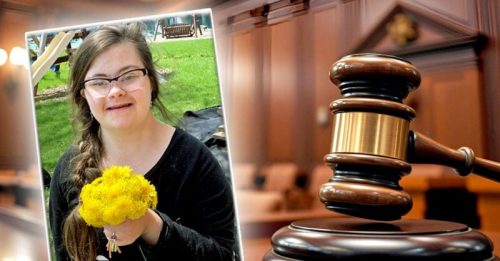
The parents of Grace Schara, a 19-year-old with Down syndrome who died in a Wisconsin hospital days after being admitted for a COVID-19 infection, testified this week in court that their daughter died as a result of a lethal combination of drugs and a Do Not Resuscitate (DNR) order the hospital implemented without their consent.
Grace’s family sued Ascension St. Elizabeth Hospital in April 2023 and filed an amended complaint in July 2023, alleging the hospital’s COVID-19 treatment protocols directly resulted in Grace’s death in October 2021, a week after admission.
The trial began Tuesday at the State of Wisconsin Circuit Court for Outagamie County.
“This isn’t about failing to provide information. This is about providing treatment with no consent whatsoever,” Scott Schara, Grace’s father, testified on Wednesday. “Her passing was a result of combining Precedex, lorazepam and morphine in a 26-minute window and putting an illegal do-not-resuscitate order on her chart.”
The lawsuit names 14 defendants, including Ascension Health, five medical doctors and four John Doe medical providers, two registered nurses, and the Wisconsin Injured Patients and Family Compensation Fund.
The defendants argued that Schara may have died due to “a naturally progressing disease, a pre-existing condition, or a superseding or intervening cause,” Green Bay-based CBS affiliate WFRV reported.
According to the Journal Sentinel, the hospital also argued that the federal Public Readiness and Emergency Preparedness Act (PREP Act) provided it and its doctors and staff immunity from liability during the COVID-19 pandemic.
At times during the first three days of the trial, hospital doctors and nurses who testified appeared to contradict themselves over whether Grace had been oversedated and whether her family consented to a DNR order.
Green Bay, Wisconsin-based ABC affiliate WBAY reported, “This is the first wrongful death jury trial in the country for a death listed as COVID-19 on the death certificate.” WFRV reported that “this landmark case could have far-reaching implications for how medical decisions are made, especially during a public health crisis.”
The trial could last up to three weeks. Up to 22 witnesses may testify, WFRV reported, adding that the case may draw attention “to critical issues surrounding informed consent and the rights of patients and their families in the healthcare system.”
Scharas allege lack of informed consent, violation of standards of care
During opening statements Tuesday, Warner Mendenhall, the Schara family’s attorney, said the hospital violated standards of care in their treatment of Grace.
“Instead of recognizing the life-threatening situation and reducing the medications causing the problems, this medical team did the opposite,” Mendenhall said.
Jason Franckowiak and Randall Guse, attorneys for the defendants, said hospital staff provided an appropriate standard of care, which did not lead to Grace’s death. Instead, they argued that a worsening COVID-19 infection led to her death.
Her parents testified that they became concerned after their daughter displayed allergy symptoms in late September 2021, days after the family attended a concert, and that they took her for treatment as a precautionary measure.
“We were just hoping that we would just get some supplemental oxygen,” Cindy Schara, Grace’s mother, testified Tuesday.
Scott Schara told the court that Grace “was not having any trouble breathing,” and that “it wasn’t an emergency, so there was no need to have Grace in the hospital.”
But the hospital told the family they were keeping Grace overnight “for observation” and that they would put her on a steroid “for two to three days,” after which she would be discharged. “But that’s not what happened,” Cindy Schara testified.
Instead, hospital staff gave Grace Precedex, lorazepam and morphine. Mendenhall said that Precedex “dangerously lowered” Grace’s blood pressure and pulse, and that her condition improved after its dosage was lowered.
According to Scott Schara, after Grace’s first oversedation event, Dr. Gavin Shokar, a defendant who was the primary physician in charge of Grace’s care, gave an order to stop administering Precedex, but nursing staff waited 22 minutes to do so.
Shokar testified Thursday that he was uncertain whether his order was immediately implemented. Hospital staff also provided contradictory testimony in response to the Scharas’ claims that Grace had been oversedated with these medications.
Shokar testified that he “was aware” that Grace had been oversedated at least once. Samuel Haines, a nurse at the hospital, said Grace had been oversedated “only for a brief period.”
However, Hollee McInnis, another defendant, said Grace was “not oversedated.”
A witness for the Schara family, Dr. Gilbert Berdine, an associate professor of medicine at Texas Tech University Health Sciences Center, said Grace was oversedated three times during her hospital stay.
According to Grace’s parents, the family did not consent to the medications and did not find out they were administered until later.
“If they would’ve asked me for consent with those, of course, I would’ve asked a lot of questions,” Scott Schara testified. He said the hospital also didn’t tell him that they reclassified Grace’s hospital room as an ICU room.
McInnis testified that she “personally did not witness” hospital doctors obtaining consent to administer the drugs in question.
Grace’s father removed from hospital after ‘pushing to get her fed’
During his testimony, Scott Schara also recounted a “heated conversation” he had with hospital staff who rejected his request to feed Grace because she was on a BiPAP (Bilevel Positive Airway Pressure) machine — a type of non-invasive ventilation.
The confrontation led the hospital to order Scott removed from the hospital, and send an armed guard to Grace’s room to escort him out.
“That’s one of the reasons I was kicked out. I was pushing to get her fed,” Scott Schara testified. “That was the last time I saw Grace alive physically.”
Hospital staff testified that Scott Schara was removed because some nurses did not want him in the room, because he was shutting off alarms from Grace’s medical equipment at night. Staff said they also suspected he had COVID-19.
But Mendenhall said Scott’s questioning of medical staff was “exactly what he was supposed to do as a dad and power of attorney for healthcare.”
According to the Scharas’ legal team, Shokar could have overruled the order to eject Scott from the hospital. But Shokar testified that his “primary responsibility was to Grace” and that “these things are non-pertinent to her particular care.”
In subsequent days, Grace’s family was able to communicate with her solely through FaceTime calls — until the hospital took Grace’s phone away.
“Cindy and I had no opportunity to communicate with Grace unless it was initiated by the hospital,” Scott Schara testified.
Hospital repeatedly pressured family to ‘pre-authorize’ a ventilator for Grace
The Scharas also testified that hospital staff repeatedly pressured them to “pre-authorize” a ventilator for Grace, even though, according to Mendenhall, “there was no need for a ventilator.”
Cindy Schara testified that she received several calls from the hospital “asking us for a pre-authorization to put Grace on a vent if something would’ve happened in the middle of the night — that is how it was always presented.”
“There was family there, so there was no need for a pre-authorization,” she added.
Scott Schara testified that Dr. Karl Baum, one of the defendants in the case, told him that “a 20% chance” of saving Grace’s life was “better than no chance” in his efforts to convince the family to pre-approve a ventilator.
“Asking for Grace to be with a pre-authorization for a ventilator at that point was the equivalent of asking somebody for a pre-authorization for a leg amputation when they just have a sprained ankle,” Scott Schara testified.
Grace’s father also testified that Shokar acknowledged during a phone call that placing Grace on a ventilator would not have saved her life.
Shokar also had separate phone calls with Grace’s parents, purportedly to make amends after Scott was removed from the hospital. But the parents testified that the conversation transitioned to renewed efforts to get them to pre-authorize a ventilator for Grace, which they again rejected.
‘We watched her die’
Grace’s parents also testified that they repeatedly told hospital staff that they did not consent to a DNR order.
Hospital staff provided contradictory testimony as to whether Grace’s family provided consent. According to Shokar, Grace’s family ultimately agreed to a DNI — a “Do Not Intubate” order.
“We started to talk about goals of care, what you guys want to do in the worst case scenario, which would be if she were to crash, essentially cardiopulmonary arrest,” Shokar testified Thursday. “I was very confident that we came to a resolution to say, ‘This is what we want to do and this is what the family wants.’”
But according to Mendenhall, Grace’s family later learned that Shokar documented that Grace had both a DNI and DNR order, adding that they did not find out about the DNR until hours before her death. The hospital did not honor their subsequent request to remove the DNR from Grace’s chart.
Cindy Shara said they would not have agreed to a DNR order on their own, without the participation of Grace’s primary care physician, an attorney, their pastor and other family members. “It would be a terrible thing to have to decide,” she testified.
As a result of the DNR, hospital staff did not intervene during Grace’s final moments of life, Grace’s parents said. “We watched her die,” Scott Schara testified.
During her testimony, McInnis acknowledged that she was responsible for placing a wristband on Grace’s arm that would have indicated her DNR status, but could not recall whether she had placed such a wristband on Grace. “If she didn’t have one on, it would be because I had not put it on,” McInnis testified.
“I believe that denying Grace any assistance to help her in her final moments was just horrific,” Cindy Schara testified.
CHD.TV is livestreaming the trial daily.
The family’s lawsuit alleges medical negligence, violations of informed consent, and medical battery — a standard of intentional harm beyond medical negligence by doctors and other providers that, according to the Milwaukee Journal Sentinel, is rarely invoked in such legal cases.
According to the complaint, the hospital was financially incentivized to implement COVID-19 protocols that allegedly caused Grace’s death.
This article was originally published by The Defender — Children’s Health Defense’s News & Views Website under Creative Commons license CC BY-NC-ND 4.0. Please consider subscribing to The Defender or donating to Children’s Health Defense.
Their babies died suddenly in their sleep. They now face felony charges for not placing infants on their backs
By Brenda Baletti, Ph.D. | The Defender | June 6, 2025
Parents of two different babies are being charged with felonies in Pennsylvania after police say their babies died because the parents placed them in unsafe sleeping positions, SpotlightPA reported.
In both cases, police allege that the parents failed to follow guidance, including handouts given to them at doctor’s visits, stating that babies should be put to sleep on their backs.
Gina and David Strause of Lebanon County are accused of putting their 3-month-old infant son, Gavin, to sleep on his stomach and allowing him to sleep with stuffed animals in the crib.
They are charged with involuntary manslaughter, recklessly endangering another person, and endangering the welfare of children.
Natalee Rasmus of Luzerne County is accused of putting her 1-month-old daughter, Avaya Jade Rasmus-Alberto, to sleep on her stomach on a boppy pillow, often used for nursing. She is charged with third-degree murder, involuntary manslaughter and endangering the welfare of children.
Rasmus was a 17-year-old mother when her daughter died in 2022. Court records show that she continues to be held at the Luzerne County Correctional Facility with bail set at $25,000 pending resolution of her case.
In both cases, autopsies concluded the babies died of accidental death from asphyxiation. Law enforcement argued in both cases that parents should have known that putting the babies to sleep on their stomachs was unsafe, because they had received paperwork at wellness visits informing them of safe sleeping practices.
They pointed to signed acknowledgements in the babies’ medical records that were created as part of a 2010 state law to educate parents about Sudden Infant Death Syndrome (SIDS).
The law requires hospitals, birthing centers and medical providers to give parents educational materials from the national Safe to Sleep campaign, and ask them to certify that they received them.
Signing the statement is voluntary. The statement doesn’t indicate that parents can be charged with a criminal offense if they don’t follow the campaign advice.
Advocates from national organizations that educate parents about safe sleep practices found the charges shocking. Nancy Maruyama, the executive director of Sudden Infant Death Services of Illinois told Spotlight PA, “To charge them criminally is a crime, because they have already suffered the worst loss.”
Alison Jacobson, executive director of First Candle, a nonprofit that also educates parents about safe sleep practices, told Pennlive, “There is no law against placing a baby on his or her stomach to sleep. How they can charge this family with involuntary manslaughter is completely baffling to me.”
Researcher Neil Z. Miller, an expert on SIDS and the Safe to Sleep campaign, told The Defender, “Parents of a sleeping baby who dies in the middle of the night should never be charged with murder. That’s just cruel.”
Miller, author of “Vaccines: Are They Really Safe and Effective?” added:
“Should parents be obligated to follow every ‘recommendation’ made by their doctor or the Safe to Sleep campaign? Would we as a society prefer that doctors raise our babies instead of the parents? Have other possible causes of death been considered, such as vaccinations? As a society, we can, and must, do much better.”
Does placing infants on their backs make a difference?
The handouts shared with new Pennsylvania parents are based on the National Institutes of Health “Safe to Sleep” campaign, which institutionalized a program initiated by the American Academy of Pediatrics (AAP) in 1992 to inform parents to put children to sleep on their backs rather than on their stomachs.
The campaign is based on the premise that babies who sleep on their backs or sides are less likely to die in their sleep. Until that time, it was common for babies to sleep on their stomachs.
The program was launched in the wake of a rising number of SIDS deaths — and growing concern among some parents that the deaths were linked to vaccination.
In a 2021 article in the peer-reviewed journal Toxicology Reports, vaccine researcher Neil Z. Miller provides a history of the SIDS diagnosis, noting that the rise of SIDS coincided with the first mass immunization campaigns.
Between 1992, when the Safe to Sleep program launched, and 2001, SIDS deaths reportedly declined a whopping 55% — a number touted in articles celebrating the program, making it appear that babies sleeping on their stomachs was the cause of SIDS, not vaccines.
However, at the same time deaths from SIDS decreased, the rate of mortality from “suffocation in bed,” “suffocation other,” “unknown and unspecified causes,” and “intent unknown” all increased significantly.
Why? The classification system had changed. SIDS deaths were being reclassified by medical certifiers, usually coroners, as one of the other similar categories, not SIDS.
Research published in the journal Pediatrics, the AAP’s flagship journal, concluded that deaths previously certified as SIDs were simply being certified as other non-SIDS causes, such as suffocation — but the deaths were still essentially SIDS deaths.
That change in classification accounted for more than 90% of the drop in SIDS rates.
The Pediatrics paper showed no decline in overall postneonatal mortality after the Safe to Sleep campaign was launched, despite the program’s — and the AAP’s — claims to the contrary.
Others verified the Pediatrics paper’s findings, and the trend continued, as reported by multiple studies in top journals. Miller reported that, for example, “From 1999 through 2015, the U.S. SIDS rate declined 35.8% while infant deaths due to accidental suffocation increased 183.8%.”
Research shows that almost 80% of SIDS deaths reported to the Vaccine Adverse Event Reporting System (VAERS) happen within seven days of vaccination.
Theories linking vaccines to SIDS suggest that, in some cases, underdeveloped liver enzyme pathways may make it harder for some infants to process toxic ingredients in vaccines. Others argue that other, multiple, complex factors can make some infants vulnerable to toxic ingredients in vaccines.
Baby Gavin was ‘a dream come true’
On April 30, Gina and David Strause were charged with involuntary manslaughter, which carries a sentence of up to 10 years, and other lesser charges in the death of their son Gavin.
According to the police report, Gina found her son unresponsive, cold and blue in his crib when she woke up to feed him on the morning of May 8, 2024. She immediately called 911 and performed CPR until the police arrived.
The baby was pronounced dead at the hospital. The autopsy report found the cause of death to be “complications of asphyxia.”
Police said they observed loose items in the crib, “such as blankets and stuffed animals.”
Gina said that after feeding her baby at about 11:30 the night before he died, she placed him in his crib on his belly, because he was a “belly sleeper,” and covered him with a blanket. She said that she had received the recommendation that he should sleep on his back, but that he preferred to sleep on his stomach.
In an interview with Pennlive, Gina said that she typically put Gavin to sleep on his back, but he had gotten into the daily habit of rolling onto his belly.
Davis Stause told police that when he left for work at 5:30 am, he checked on Gavin, who was sleeping on his stomach and moving around a little bit. David said he “patted his butt” to put him back to sleep.
The police reported that they also obtained medical records from birth through death that showed that on the discharge paperwork that the parents received information about safe sleep practices, which included putting the baby on its back, having it sleep in the same room as the parents, and keeping the crib clear of bumper pads and stuffed animals.
They said this paperwork explained how parents could create a safe sleeping environment for their babies to reduce the risk of SIDS.
Baby Gavin also went to the pediatrician for well-child visits on Feb. 7 and 14, March 5 and April 9, a month before he died.
Gina told Pennlive that Gavin, who was born when she was almost 40, was “a dream come true.” She had taken 10 weeks of maternity leave and largely worked at home to spend as much time with him as possible. She said that after she gave birth, she was “overwhelmed” and didn’t remember receiving any paperwork or instructions about sleep.
Gina also said that at the hospital, police treated her and her husband with immediate suspicion, separating and questioning them. They were not allowed to see their baby again before he was taken by the coroner’s office.
The parents created a GoFundMe page, where they shared a copy of the police report, to help cover their legal costs, because they said they do not qualify for a public defender.
The Defender attempted to contact the parents to inquire about the baby’s overall health, if he had any medical conditions, was born prematurely or had recently received any vaccines, but the parents did not respond by deadline.
The district attorney’s office also did not respond to requests for comment.
‘Tragic accident with no criminal intent to harm or kill the baby’
The forensic pathologist who performed the autopsy for Natalee Rasmus’ baby listed the cause of death as accidental. According to the report, the baby died from asphyxiation, the Times Leader reported.
Rasmus discovered her baby had died on the morning of Oct. 23, 2022, when she picked her up to get her ready for a doctor’s appointment.
Pennsylvania State Police in December charged Rasmus, alleging that she placed her baby face down to sleep against the recommendations of medical personnel and prenatal classes at Geisinger Wyoming Valley Medical Center.
At a preliminary hearing on the case in February, a state trooper testified that Rasmus ignored safe sleeping practices because she had placed her baby face down in her bassinet with a Boppy pillow, which has a tag warning, “Do not use for sleeping.”
The trooper, Caroline Rayeski, also testified that a search of Rasmus’ cellphone found that she had searched the internet to see whether it was ok to allow newborns to sleep on their stomachs. The trooper also seized literature from the prenatal classes stating it is “recommended” to put newborns to sleep on their backs.
“Yeah, she wouldn’t sleep, she’ll just scream, so she has to be like propped up,” Rasmus told the investigating officer, according to Spotlight PA, which reported the story.
Assistant attorneys argued in a preliminary hearing that she disregarded safe sleeping practices, and a judge forwarded the criminal case to county court.
Rasmus is being represented by public defenders Joseph Yeager and Melissa Ann Sulima, who told the Times Leader the baby’s death was “a tragic accident with no criminal intent to harm or kill the baby.”
Yeager said the prenatal literature referring to newborn sleep positions are “recommendations,” not mandates.
“As the death certificate says, it was an accident. Clearly, there was no malice in this accidental death,” said Yeager, who also said the case should be dismissed.
Rasmus’ most serious charge, third-degree murder, is a homicide that involves killing someone without intent to kill, but with reckless disregard for human life. In Pennsylvania, it can carry a prison sentence of up to 40 years.
Court documents indicate that Rasmus remains in jail with a $25,000 bail, pending the outcome of her case. Neither the district attorney nor Rasmus’ attorneys responded to The Defender’s request for comment.
How common is it to bring criminal charges against parents in infant deaths?
Attorney Daniel Nevins told SpotlightPA said it is extremely rare for parents to be criminally charged when infants die after sleeping on their stomachs, and that the burden of proof on the prosecutors will be high.
In 2014, Virginia resident Candice Christa Semidey, age 25, was charged with murder after she swaddled her baby and put it to sleep on its stomach, The Washington Post reported. In that case, police similarly did not think that she intended for the baby to die.
She pleaded guilty to involuntary manslaughter and child neglect. She was ordered to serve three years of probation to avoid the five-year prison term she was sentenced to.
Some charges have also been brought against parents in deaths of infants sleeping with Boppy pillows. There have also been several cases of parents charged for sleeping in the same bed as their child.
The Defender recently reported on three SIDS deaths that occurred shortly after vaccination. Police are still investigating the parents of 18-month-old twins who died together a week after receiving three vaccines. Authorities have not yet charged the parents, but initially said they were investigating the deaths as homicides.
Blessings Myrical Jean Simmons, age 6 months, received six routine vaccines at a well-baby visit on Jan. 13. The next morning, her parents found the baby dead in her bassinet. The autopsy SIDS as the infant’s cause of death, and no charges were filed against the parents.
This article was originally published by The Defender — Children’s Health Defense’s News & Views Website under Creative Commons license CC BY-NC-ND 4.0. Please consider subscribing to The Defender or donating to Children’s Health Defense.
Featured Video
Integrity Initiative: UK-funded network framed dissent as Russian disinformation for years
or go to
Aletho News Archives – Video-Images
From the Archives
Why Saudi Ties to 9/11 Mean U.S. Ties to 9/11
By Kevin Ryan | Dig Within | September 27, 2015
Media interest in Saudi Arabian connections to the crimes of 9/11 has centered on calls for the release of the 28 missing pages from the Joint Congressional Inquiry’s report. However, those calls focus on the question of hijacker financing and omit the most interesting links between the 9/11 attacks and Saudi Arabia—links that implicate powerful people in the United States. Here are twenty examples. … continue
Blog Roll
 Aletho News
- EUROPE FEARS RUSSIA’S NEXT MOVE / Ian Proud
- Big tech hands in its DSA censorship reports to the EU
- ‘A Big Victory’ – Palestine Chronicle Wins Two-Year Legal Battle
- IAEA inspectors cannot return to Iran amid US threats: Russia
- Senate Rejects Iran War Powers Resolution Passed By House
- ‘We did not attack Pakistan with drones’: Afghan sources
- Iraqi Resistance faction links arms to sovereignty, questions US exit
- Cannon fodder no more… South Korea rejects Trump’s pressure to join his criminal war on Iran
- Neria Leiter Was A Legitimate Military Target
- Integrity Initiative: UK-funded network framed dissent as Russian disinformation for years
- If Americans Knew
- ‘This is where I live now, the back of a truck’: a day in the life of a grandmother in Gaza
- In UN Speech, Iran’s President Displays Pictures of Children Killed by US, Brings Attention to Israel’s Nuclear Arsenal
- Israel displaces hundreds of Palestinians amid wave of demolitions in West Bank
- Aid, reconstruction, and Israel’s history of obstruction in Gaza
- Trump administration digs an ever-deeper hole of complicity in genocide – Daily Update
- US-Israel $2.8 Billion Arms Deal, 40,000-Bomb Supply Faces New Gaza Complicity Accusations
- Caught on Tape: AIPAC CEO Boasted of Controlling Trump’s National Security Officials
- Why Hamas Attacked Israel in October 2023 – Israeli professor Ilan Pappé
- They see them, then kill them: Israeli quadcopters track, deliberately target civilians in Gaza
- Winter could turn Gaza’s treacherous, war-damaged buildings into deathtraps
- No Tricks Zone
- New Study: Earth And Venus Surface Warmth Largely Explained By Convection And Lapse Rate, Not CO2 Or Radiation
- 2025 Nature Paper Claiming Worsening Global Drought Gets RETRACTED …Heavily Flawed
- New Study: ‘Global Drought Shows No Detectable Recent Acceleration Under Climate Warming’
- Economic Masterminds: German Socialists Suggest Taxing Productivity Gains Stemming From Using AI
- The South China Sea Has Not Been Cooperating With The Climate Change Narrative
- Energy Crisis: Germany Enters Heating Season With Historically Low Gas Reserve Fill Levels
- New Study: The Antarctic Ice Sheet Gained Mass From 2020-2024 Due To Staggering Snow And Ice Accumulation
- Study: Ocean Heating Rates From Thousands Of Years Ago ‘Dwarf’ Modern Ocean Heating Rates
- Climate Extremists Target, Attack Large-Scale Power Grid Infrastructure In Germany!
- New Study: Antarctic Ice Melt Has Contributed Less Than 1 Centimeter To Sea Level Rise In The Last 30 Years

