Why do Police Ignore Federal Guidelines and Shoot at Moving Vehicles, Killing Occupants?
By Noel Brinkerhoff and Steve Straehley | AllGov | September 7, 2015
Federal guidelines recommend police avoid shooting into moving vehicles because innocent people can be killed and it’s ineffective at stopping cars. Police continue to use this deadly tactic, however.
An investigation by The Guardian found at least 30 incidents in 2015 of police firing their weapons into moving cars or trucks, killing at least one person each time.
Black men made up more than 25% of those, although they comprise only 6% of the driving-age population, Jon Swaine, Jamiles Lartey and Oliver Laughland wrote.
The British newspaper reported police involved in those shootings justified the use of deadly force by claiming the vehicles they shot at posed a threat to them or their colleagues. But The Guardian found almost all of the incidents were examples of police ignoring federal guidelines that say officers should open fire only if a driver presents a separate deadly threat, such as a gun. In the cases examined by the newspaper, none of those killed were pointing guns at police, and in only three cases were police aware there was a weapon in the vehicle.
“If an officer puts himself in a position where they have no alternative but to use deadly force, they will use deadly force,” Chuck Wexler, the executive director of the Police Executive Research Forum, told The Guardian. “What you really want them to do is think ‘I should not stand in front of this car. I should not put myself in a position where I have no alternative.’”
The U.S. Department of Justice does not recommend shooting into moving cars because experts say it is widely viewed as ineffective for stopping oncoming vehicles, and doing so poses risks to innocent parties. Police departments in Denver, New York City, Cleveland, Cincinnati, Miami Beach, Los Angeles and Albuquerque, among other cities, heed this recommendation.
Others haven’t adopted it. Police in Indianapolis, for example, have twice in recent months shot and killed drivers in their cars. That department’s policy states that police may fire into vehicles if it’s “reasonably perceived that the vehicle is being used as a weapon against the officer or others.”
To Learn More:
Moving Targets (by Jon Swaine, Jamiles Lartey and Oliver Laughland, The Guardian )
Should Police Shoot at Moving Cars? (by Michael Anthony Adams, Indianapolis Star )
Denver Police Change Policy on Shooting at Cars (by Noelle Phillips, Denver Post )
Police Shoot to Death One Unarmed Person Every 3 Days in U.S. (by Noel Brinkerhoff, AllGov )
Police Officer Goes on Trial for Firing 49 Shots at Two Unarmed Drug Users (by Danny Biederman and Noel Brinkerhoff, AllGov )
Buy the Rights-Abusing Cops Lunch Says Texas Lieutenant Governor Dan Patrick

By Adam Dick | Ron Paul Institute | September 3, 2015
Texas Lieutenant Governor Dan Patrick issued a statement Wednesday that says that, to counter “America’s negative attitude toward our law enforcement officers,” people should all-but grovel at the feet of any police they come across. Patrick even suggests that “financially able” individuals (who presumably are already paying cops’ salaries via taxes) pay for the lunches of any cops they may see in a restaurant.
Here is Patrick’s complete list of groveling suggestions:
Join me in changing this negative attitude toward those that protect us, by practicing the following:
Start calling our officers sir and ma’am all of the time. It’s a show of respect they deserve.
Every time you see an officer anywhere, let them know you appreciate their service to our community and you stand with them.
If you are financially able, when you see them in a restaurant on duty pick up their lunch check, send over a dessert, or simply stop by their table briefly and say thank you for their service.
Put their charities on your giving list.
If your local law enforcement has volunteer-citizen job opportunities, sign up.
Interestingly, Patrick never mentions in his statement that a major contributor to the negative attitude many people in Texas and across America have toward cops is the many times cops act in manners bereft of respect for the rights, property, health, and lives of the individuals they encounter.
How about the cops who abused Sandra Bland or Angel and Ashley Dobbs in Patrick’s home state? “Thank you sir. Thank you ma’am. Please, let me pay for that sandwich!”
While some people would say that these abusive cops are just a few bad apples, reading through articles by Rutherford Institute President John W. Whitehead or journalist William N. Grigg, it becomes clear that the basket contains many bad apples. The fact is that many cops are more intent on harassing, abusing, and dominating people they encounter than on serving and protecting them. Rather than disrespect for cops being, as Patrick seems to believe, some irrational, mystical belief that showed up out of nowhere, the disrespect is a logical response to the horror show of abusive cops that plays out again and again in this age of police militarization.
Though often overlooked, the war on drugs is an underlying cause of the worsening police conduct. Because the growth, manufacture, sale, transfer, and use of drugs are nonviolent and victimless activities, with no complaining victim, police have resorted to all kinds of invasive, deceptive, and destructive tactics in fighting the war. For example, the drug war has been used as an excuse for vast expansion of police practices including covert surveillance, sting operations, pretext traffic stops, asset seizures without any court hearing whatsoever, and SWAT team raids on homes and businesses. All of this is supposedly justified to protect people from themselves.
Of course, the drug war, like alcohol prohibition before it, has also spawned gangs fighting over turf. This violence, in turn, is used as an excuse for the further militarization of the police — in equipment, tactics, and mindset.
But, according to Patrick, we should be thankful for the SWAT team members who raided a home last night, pointing guns at all the suddenly awoken family members, turning the place upside down in an effort to find even a fraction of an ounce of a forbidden drug, and maybe shooting someone or the family’s pet dog to boot.
The drug war corrosion runs even deeper. Beyond the SWAT team members, there are also the undercover cops trying to snag individuals in drug sale stings, the traffic cops who make up pretenses to conduct drug searches without consent or pressure drivers to “consent” to searches, and even the desk-bound cops who handle the paperwork that allows the drug war machine to relentlessly move forward.
Patrick laments that “America’s negative attitude toward our law enforcement officers” may result in less people choosing to become cops. Yet, having less cops around can actually lead to much enhanced safety.
Let’s call off the war on drugs, its danger-enhancing police practices, and the related drug war exception to the Fourth Amendment. Let people exercise their right to grow, manufacture, sell, transfer, and use drugs as they see fit. Let the violence prohibition engenders wither. Free the drug war prisoners.
With the end of the drug war, the number of cops can be significantly reduced. Ending the war may also be the single biggest step that may be taken immediately to increase Texans’ and Americans’ respect for police.
Texas Police Shot Man in Back, Autopsy Disproves Police Claim Victim “Charged At Officers”
By Cassandra Fairbanks | PINAC | September 2, 2015
The El Paso Police Department has maintained that Erik Salas Sanchez, 22, was shot for charging at police, however, the autopsy report has revealed that he was shot in the back.
 The police claim that Sanchez had threatened them with a “metal object,” and charged at the officers.
The cops allegedly attempted to tase Sanchez, but were unsuccessful, and that is when a 10-year-veteran Texas police officer opened fire with his service weapon.
Sanchez was shot three times, in the right side of his back, the left side of his back, and his buttocks. Quite a feat, as he was allegedly “charging at the officers.”
He was then handcuffed despite the severe injuries, and died soon after at the Del Sol Medical Center.
This west Texas police agency has released few details surrounding the incident which took place on April 29, when police were called to respond to a burglary in Sanchez’ neighborhood.
The fatal encounter did not take place at the residence that was allegedly burglarized however, and police will only say it was “different than the location he was suspected of burglarizing.”
The victim’s mother maintains that the shooting took place outside the home she shared with her son, after police arrived and asked her to come outside.
Erik Sanchez shouted in reply to the cops, which isn’t illegal.
It remains unclear why the El Paso police officers went to the family’s home in the first place.
The Mexican Consulate has also been involved with assisting the family, as Sanchez was a Mexican citizen who was living legally in the United States as many families whose lives straddle the border.
Mexico’s Consul General Jacob Prado is calling for a full investigation of the incident.
The El Paso officer who shot Sanchez was placed on administrative leave for a few days following the incident. We all know that’s just cop speak for paid vacation.
The officer is supposed to remain on administrative duties pending the outcome of the investigation by the Texas Rangers, the El Paso Police, and the District Attorney’s office.
The investigation is anticipated to be complete by “early next year,” according to Prado.
82 Groups in US Demand Investigation of ‘Muslim-Free Zones’
teleSUR | September 2, 2015
In an open letter to the DOJ, 82 groups led by the Council on American-Islamic Relations (CAIR), expressed concern over a growing trend of businesses refusing to serve customers perceived as Muslim.
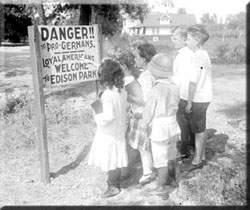 “American businesses posting ‘Muslim-Free Zone’ declarations are no different than the ‘Whites Only,’ ‘No Dogs, No Jews,’ ‘No Mexican’ and ‘Irish Need Not Apply’ signs that were posted during past shameful periods of our nation’s history that we hoped were over,” the letter stated.
The letter lamented the DOJ has “remained silent” on the issue, and called on the department to determine whether “Muslim-free zones” violate Title II of the 1964 Civil Rights Act.
“Title II specifically prohibits discrimination by places of entertainment like, in many instances, firing ranges,” the letter read.
Signatories to the letter include the American Civil Liberties Union, National Association for the Advancement of Colored People and others.
“The broad range of groups calling for government action on the ‘Muslim-free zone’ issue clearly indicates that the U.S. Department of Justice should speak out and take concrete action to protect the constitutional rights of American Muslims,” said CAIR National Executive Director Nihad Awad.
At least one business that has declared itself a “Muslim-free zone” is currently being sued by CAIR.
The lawsuit accuses Florida Gun Supply of Inverness and its owner Andrew Hallinan, 28, of violating the federal public accommodations law and seeks an injunction to stop the discrimination, according to the complaint.
Amendments to CISA “Cybersecurity” Bill Fail in All Regards
By Mark Jaycox | EFF | September 1, 2015
Although grassroots activism has dealt it a blow, the Senate Intelligence Committee’s Cybersecurity Information Sharing Act (CISA) keeps shambling along like the zombie it is. In July, Senator McConnell vowed to hold a final vote on the bill before Congress left for its six-week long summer vacation. In response, EFF and over 20 other privacy groups ran a successful Week of Action, including over 6 million faxes opposing CISA, causing the Senate to postpone the vote until late September.
Senators submitted many amendments to the bill before going on vacation. The amendments, like the original language of the bill, fail to address key issues like the deep link between these government “cybersecurity” authorities and surveillance, as well as the new spying powers the bill would grant to companies.
But “cybersecurity” is already intimately tied to surveillance—a problem CISA would only worsen. Documents released by the New York Times reveal the government used the Comprehensive National Cyber Security Initiative (CNCI) to pay telecommunications companies to spy on consumers using their networks. The CNCI includes initiatives for information gathering, but it’s always been presented to the public as fostering research and encouraging public awareness of cybersecurity problems—not spying on Americans’ Internet traffic.
The revelations are stunning. The NSA paid telecommunications companies nearly $300 million dollars in the 2010 fiscal year to invest in surveillance equipment as part of the CNCI. In fact, STORMBREW’s Breckenridge site was “100% subsidized with CNCI funding.”
In contrast, the DHS only requested $37.2 million during the same time period to support research and development in cybersecurity science and technology. Even if DHS received what it requested, does the American public really want surveillance to outweigh research and education 10 to 1?
The news is compounded by other recently-released Snowden documents that show how the NSA uses foreign intelligence laws to run an intrusion defense system (IDS) on US soil. The documents show that a Justice Department memo gave the agency permission to monitor Internet cables, “without a warrant and on American soil, for data linked to computer intrusions originating abroad — including traffic that flows to suspicious Internet addresses or contains malware.”
CISA—and its amendments—do not even begin to address these serious problems. Instead, they mandate information sharing with the intelligence community, creating even more cyberspying.
EFF will continue to oppose CISA—even if some of these amendments pass—because CISA’s vague definitions, broad legal immunity, and new spying powers allow for a tremendous amount of unnecessary damage to users’ privacy, and it’s highly unlikely that the public will learn about it. Even an amendment (#2612) offered by by Senator Al Franken, which narrows some of the definitions in CISA, does little to clarify its most troubling provisions.
What’s worse is that information-sharing bills like CISA are being painted as silver bullets to data breaches. They aren’t. The bills don’t address problems like unencrypted files, poor computer architecture, un-updated servers, and employees (or contractors) clicking malware links.
Awful Amendments
Plenty of the amendments would make the bill even worse. We’ve already discussed the horrible CFAA amendment, #2626, proposed by Senator Sheldon Whitehouse. The amendment not only increases the scope of the already expansive Computer Fraud and Abuse Act (CFAA) but also authorizes injunctions against botnets (amending 18 U.S.C. § 1345) in a way that creates serious constitutional issues. After all, much of what DOJ and FBI want to do in shutting down botnets is, arguably, a search or a seizure under the Fourth Amendment; moreover, such injunctions may prevent users from communicating, thus raising First Amendment issues. The amendment is a great example of how not to amend the draconian CFAA. If the Senate wants to improve the CFAA, it should take a page out of our book.
Senator Carper has proposed another dubious change to CISA, amendment #2627. The bill attempts to codify the Department of Homeland Security’s EINSTEIN program without any public debate. EINSTEIN is an intrusion detection system—the parent of which was created by the NSA—to scan incoming Internet traffic to the federal government like emails and other connections. DHS has not told the public what agencies are using EINSTEIN. It’s possible that when you email your representative, DHS may also receive a copy. Before codifying EINSTEIN, DHS must be more transparent about the program. The most recent update from DHS about the program is from 2013, and many concerns have been raised about EINSTEIN’s legality and privacy implications. Unlike CISA, Senator Carper’s amendment mandates federal agencies create a plan to identify sensitive information and encrypt it; however, the clause exempts the Department of Defense and the intelligence community. Nor does the amendment authorize additional funding for federal agencies to improve security.
Senator Carper’s attempt to make a horrible bill marginally better is admirable, but he—along with other Senators—should oppose the bill. Even the best amendments fail to fix CISA’s serious flaws.
Not Awful Amendments
Some of the amendments try to narrow the scope of the bill. Senator Chris Coons’ amendment #2552 would limit information sharing to that necessary to describe or identify a cybersecurity threat, while Senator Wyden’s amendment (#2621) would require companies and the government to remove personal information unrelated to the threat.
But these well-meaning changes don’t address the root problems in the bill: the outrageously broad and vague definition of “cybersecurity threat” and the granting of new authorities to spy on users. Senator Franken’s amendment #2612 attempts to address that definition, but even his amendment isn’t enough. Again, no amendment scales back the two new authorities to spy on users and launch countermeasures in the bill.
Other amendments are better, including Senator Patrick Leahy’s #2587, which would remove the current CISA provision exempting all “cyber threat indicators and defensive measures” received by the government from disclosure under the Freedom of Information Act and may help ensure the public can obtain information about how, if CISA is enacted into law, the information “sharing” system actually operates; Senator Jeff Flake’s 6-year sunset (#2582); and, Senator Mike Lee’s email privacy amendment (#2556), which would codify US v. Warshak by amending the Electronic Communications Privacy Act to require warrants for email and other stored content.
While some advocates will paint these amendments as “steps forward,” the amendments merely shuffle deck chairs on the Titanic—even with the better amendments, the bill is still a bad idea. The Senators are going about the wrong strategy. Democrats and libertarian Republicans should be opposing CISA outright. That’s why we’re asking users to continue emailing their Senators to stop this bill. While CISA is the very definition of a zombie bill, the public outcry against it has made a difference. But we can’t stop now. Join us by tweeting, faxing, or emailing your Senator.
U.S. Turns Teen into “Terrorist”
By Margaret Kimberley | Black Agenda Report | September 2, 2015
Ali Shukri Amin is 17-years old, a minor under American law, yet he was just sentenced to eleven years in federal prison. He pleaded guilty and was sentenced as an adult for providing material support for terrorists. This is a crime defined in any way the government wants it to be. Amin had a twitter account, @amreekiwitness, devoted to the group Islamic State, ISIS. He also helped a friend travel to Syria in hopes of joining ISIS. That is the substance of his crime, online opinion and facilitating travel.
The crime of providing material support for terrorists only came into existence with the Patriot Act passed in the aftermath of the September 11th attacks. There are now people serving very long prison terms for providing humanitarian aid, translating documents, sending money abroad, or expressing views in support of nations or groups the United States classifies as terrorist. These crimes are vaguely defined and are often of little consequence to ISIS or any other organization the federal government designates as an enemy.
The prosecutions of Amin and others are meant to make the case for continuing the “war on terror.” This is actually a war of American terror used to justify endless interventions around the world. The Department of Justice would have us believe that a teenager tweeting about making donations to ISIS via bitcoin posed a serious threat. Of course, the United States government is the biggest threat to life in the world. It is the most violent organization with the largest number of kills.
The application of the material support for terror statute is used to capture innocent or harmless people. Some are hoodwinked by agent provocateurs or, like Amin, pose little or no danger. Most importantly, ISIS would not be a credible force in Syria or Libya were it not for American machinations. The United States created the monster and now wants to punish anyone who interacts with it.
At one point Amin, who lived in a Virginia suburb of Washington, DC, had over 4,000 twitter followers who conversed about a variety of issues, including protests in Ferguson, Missouri.
“They cower in fear of us whilst they massacre and oppress you! It’s time to strike fear into the hearts of the oppressors. #FergusonUnderIS”
“May be time to organize Muslims in America upon haqq and mobilize to #Ferguson. Defend the oppressed, start jihad here.”
While Amin and thousands of others expressed their outrage about deadly police brutality, the State Department actually engaged in online debates with the teenager. A bizarre social media program called Think Again, Turn Away is a useless attempt to influence young Muslims who want to fight imperialism through jihad. Aside from having a name reminiscent of a love song title, the effort allowed Amin to engage in argument with and troll the State Department. When the would-be jihad deprogrammers pointed out that ISIS “slaughters innocent people,” Amin had a ready and accurate retort:
“slaughter innocents? You mean like AbdurRahman al-Awlaki, the 16 year old boy not involved with any militants? or what about the thousands killed in drone strikes weekly that make the news? The thousands that don’t? you are nothing more than criminals who betray the Muslims you claim to defend across the globe, butchering them 1.7 million in Iraq, hundreds of thousands in Afghanistan, left, right, everywhere. only an ignoramus who knows nothing about American foreign policy or any Muslim country could accept your lies.”
A few months after these embarrassing interactions, Amin’s mother and his imam unwisely reported him to the FBI in an effort to stop his online involvement with ISIS. He would not have been discovered otherwise.
Killer cops roam the streets with no fear of federal prosecution, but a confused teenager is sent to prison because he holds and expresses opinions contrary to those of the government. Prosecutors use children to make names for themselves and climb the ladder in a corrupt system. American terror is not just carried out abroad with drone strikes and invasions, but it is carried out on a daily basis by the criminal injustice system.
While the Saudis, Israelis and their allies use American money and arms to target civilians for death, anyone who crosses over the thin line of expression is at risk of prosecution and many years in prison. The hypocrisy is stunning but not really surprising. This system will use a child to make its point clear. We live in a police state and anyone who dares to speak up against it is at risk of being made an example.
The federal government does not operate any juvenile facilities. Ali Shukri Amin is now in custody in an adult facility. One need not be a follower of ISIS to see that this is a gross injustice unworthy of a country which claims to be a democracy.
Margaret Kimberley can be reached via e-Mail at Margaret.Kimberley(at)BlackAgendaReport.com.
Here’s How Law Enforcement Agencies Impersonate Your Friends
By Sonia Roubini | ACLU | August 31, 2015
We recently received a handbook from the DEA, in response to a Freedom of Information Act request, seeking information about the use of impersonation as an investigative technique. While the 1999 handbook, titled Online Investigative Principles for Federal Law Enforcement Agents, was almost identical to a version of the handbook that is available online, there is one notable difference: the version that the DEA sent us includes a copy of the DEA’s Consent to Assume Online Identity: Adult Consent form.
The DEA apparently used this fifteen-year-old form to obtain consent from individuals to impersonate their online identities. It states:
“I ____ hereby voluntarily provide consent to the Drug Enforcement Administration or other Federal, State or Local Task Force officers to assume my Internet online identity. My Internet screen name(s), nick name(s), and/or e-mail addresses are as follows.”
It goes on to state:
I understand that these law enforcement officers will changes [sic] the password(s) to this account so that I will no longer have access to these accounts. My Internet online identity may be used by these law enforcement officers for any official purpose relating to an official investigation, including sending and receiving e-mail, making direct communications on systems such as ICQ or AOL instant messaging, and any other electronic communications. I have been advised of my right to refuse to allow the assumption of my identity. I give this consent freely and voluntarily.
We filed this FOIA request because the impersonation of actual individuals and organizations by law enforcement agencies has the unique ability to erode our trust in each other’s identities. If government agencies impersonate Senate staffers, Internet repair technicians, newspapers, and individual citizens at will — as they appear to have done in the past — or others in our lives, it will erode a form of trust that is critical for relationships in a free society: our ability to trust stated identities.
Unfortunately, the documents released to us so far raise more questions than they answer. This consent form in particular raises some thorny ones, including:
- Under what circumstances can law enforcement agencies ask for consent to impersonate actual individuals?
- If the individual does not consent, can law enforcement get a warrant to impersonate someone?
- Once a law enforcement agency is impersonating someone, what is it allowed to do? Can it communicate with the individuals’ Facebook friends? Can it respond to emails from their family members?
- What factors do law-enforcement agencies consider in deciding whether the extraordinary risks of impersonation are worth the possible reward?
Without this information, it is difficult to assess the lawfulness or wisdom of the DEA’s impersonation of actual individuals — a practice which raises serious constitutional questions. The Fourth Amendment prohibits “unreasonable searches and seizures,” and while courts have generally approved of the government’s use of deception (for example, undercover officers), few have ruled upon the constitutionality of the impersonation of actual individuals.
A recent decision in a Las Vegas District Court involved evidence collected by members of the FBI who impersonated Internet repair technicians to gain physical access to suspects’ hotel rooms. During their investigation of an online gambling ring, FBI agents disconnected the Internet in three rooms of a Las Vegas hotel and impersonated technicians to enter the rooms without suspicion and to collect evidence later used against the suspects in court. The judge eventually tossed the evidence out on the grounds that it was “fruit of a poisonous tree” — legal jargon indicating that the evidence was obtained using an unlawful search.
In another case, the DEA created a fake Facebook profile for a real individual, Sondra Prince, who was arrested on drug charges in 2010, in order to investigate an alleged New York drug ring. The DEA agent who arrested Prince seized her cell phone and mined it for photographs. These were then used to create the fraudulent Facebook profile which was used by the agents as a critical part of their investigation into the drug ring. These photographs notably included ones of Prince in a bathing suit, and photos of her two young children. Prince ultimately sued the DEA over its impersonation of her profile. The Justice Department eventually paid $134,000 to settle the case, which drew the public’s attention to potential privacy violations at play in government agencies’ impersonation of individuals (not to mention the potential dangers involved).
The consent form also raises tricky questions about the scope of consent. Does the form allow the agents, for example, to answer incoming messages from the mother of the consenter? What about a romantic partner or close friends? The form does nothing to clarify these questions. Nor does it address the fact that asking people to turn over their passwords so that law enforcement can then log in to their accounts violates the terms of service of Facebook and a number of other major service providers, which all prohibit password sharing. The government itself has argued in other cases that such password sharing may be a crime under the Computer Fraud and Abuse Act.
Finally, the date of the form — 1999 — raises an obvious but unanswered question: what is the DEA’s current practice? Technology and social media have transformed our society in the last sixteen years. Have the DEA’s practices changed since then? Do they impersonate individuals routinely now? What are the rules that now govern that impersonation? We just don’t know, and that’s a problem.
Police video flap flares in Oakland
By Chris Reed | Cal Watchdog | August 31, 2015
Several local police forces in California got on the police body-cameras bandwagon well before police killings around the nation in the summer of 2014 triggered a broad push for their adoption. The Rialto Police Department was the focus of a 2013 New York Times story that emphasized how much body cameras improved interactions between officers and the public.
But in Oakland, it appears authorities will only release the body-camera videos when they exonerate police, and that the video will be kept from the public and the media in other circumstances on the grounds that it is part of an ongoing investigation. The East Bay Express recently reported on how the Oakland police are dealing with four police killings. In two cases, Police Chief Sean Whent won’t release any body-cam footage. In the other two cases, police wouldn’t release the footage to the public. Instead, on Aug. 19, the Oakland Police Department held a screening for 11 members of the media.
This account is from the East Bay Express :
[The] videos included police body camera footage taken by officers who were chasing Richard Linyard and Nathaniel Wilks (in two separate incidents). On July 19, Linyard was allegedly fleeing the police on foot when he was later found wedged between two buildings. A coroner’s report said Linyard died from injuries he suffered when he was apparently stuck between the buildings.
On August 12, Wilks allegedly fled the police in a vehicle and then on foot. Several officers confronted and shot Wilks near the intersection of 27th Street and Martin Luther King, Jr. Way.
Watson said OPD showed videos to select members of the media in order to dispel inaccurate reports that officers beat Linyard, and claims that Wilks was shot in the back. Both incidents sparked protests. “We held the viewing in the interest of the public, to be able to share information through fair and balanced reporting,” said Watson.
Watson, however, said that the video footage will not be released to the broader public, and that OPD believes the California Public Records Act allows the department to withhold the footage because it is evidence in several ongoing investigations.
‘Completely wrong’ to withhold some video
As the Bay Area News Group reported, giving the police the right to pick and choose which videos to release outraged local civil-rights lawyer Jim Chanin. “I think it’s completely wrong to have selective showings of one shooting and not another shooting, depending on how the department feels . … There’s an inference now that if (police) don’t show you a video, there could be something wrong or improper about (another) shooting,” he said.
Meanwhile, in Sacramento, a bill that would establish statewide procedures on access to and use of policy body-camera footage appears to have failed, U-T San Diego columnist Steve Greenhut wrote on Friday.
In April, a comprehensive bill by Assemblywoman Shirley Weber, D-San Diego, passed its initial committee vote. Per its official description, “Assembly Bill 66 would provide guidelines about when the cameras are to be operated, require notification of those being recorded, and prohibit law-enforcement officers involved in serious use-of-force incidents that result in serious bodily injury or death from viewing the video until they have filed an initial report.” Whent, the Oakland police chief, testified in favor of the bill.
But Weber’s bill was effectively killed within weeks. As Dan Walters wrote in the Sacramento Bee :
Weber’s body camera bill was beaten up in the Assembly Privacy and Consumer Protection Committee. Police unions, whose endorsements politicians crave, strongly opposed it as unfair, and the committee insisted that only local authorities decide when cops can see body videos.
US Freedom Act a ‘surveillance act in disguise’ – ex-MI5 agent
RT | August 30, 2015
The US is playing games with public trust by passing different versions of the same intrusive surveillance system, a modern day Panopticon. Any alleged changes to the bulk collection program are purely cosmetic, according to ex-MI5 agent Annie Machon.
The recently passed USA Freedom Act was hailed as a stepping stone on the way to renewed public trust after the highly controversial Section 215 of the Patriot Act, which expired in May. Under the new law, the practice of bulk data collection on US citizens will be entrusted to telecom companies, and the NSA will be able to obtain the records through seeking a warrant from the FISA court.
So what does this recent decision mean with regards to the NSA’s bulk collection program, and can Americans feel more at ease about the security of their phone data with the introduction of the new Freedom Act? RT asked the former MI5 agent-turned-whistleblower for her take.
RT: Firstly, what’s your take on this? It’s an isolated court case, you could say, but does it have any big impact, do you think, on the NSA spying program.
Annie Machon: It’s business as usual for them. I’m sure they’re very happy to be told what they’re doing is legal, now. I mean, there have been a number of challenges, where different levels of courts in the US have said bulk metadata collection is legal; it’s illegal; it’s legal again. But, actually, what they’ve been doing is just business as usual under the 215 Section of the Patriot Act, which I think Congress was due to re-ratify at the beginning of June, but it became a bit gridlocked in the whole system. So, you know, they will be very happy with this result.
RT: Certainly, President Obama seems very happy. You know, the White House has hailed the ruling. But earlier in the year, we did hear Obama saying “We’re promising to reform things, too.” Do you think there’s been a significant change in attitude in the White House?
AM: I think they’ve passed the buck, basically, to the judiciary to take the hard decisions. So, now they’ve got this ruling, they don’t need to make the hard political decisions. They’ll just say, “Well, the judge just said its constitutional; that’s fine,” which is bad enough for the American citizens, within America, who will continue to be spied on extensively in the face of this nebulous and ever-changing terrorist threat. However, of course, none of this, whatsoever, had any relevance to the rest of us around the world, where the NSA could merrily go on spying on us all, to every degree they want to, because we’re not American citizens. So, it’s a bit of a back step for privacy advocates in America, but it’s no change for the rest of us.
RT: Yeah, you say no change, Annie, but you know, we’ve got the new Freedom Act to look forward to, too. You know, the one that will replace the Patriot Act. Surely, that’s a step forward, though, isn’t it?
AM: That’s one for Orwellian Newsspeak, I think. “You’re free.” No you’re not. It’s not a freedom act; it’s a surveillance act. They’re trying to recast it to make it sound good, but it’s not. And even if that’s the case in America, even if the NSA were reigned in, and they were not allowed to spy on American citizens, all they have to do is ask their buddies in the Five Eyes group, which would be Canada, New Zealand, Australia, or the UK, to do the spying for them, which would be perfectly legal under any of those countries’ oversight systems, and then just pass the information to the Americans. So, it is, as I said, very much business as usual. They will always find a way to subvert any notional political oversight within their own countries by sharing this information between themselves, and spying on everyone else’s systems. So, we are all still, very much, living under a global Panopticon.
And none of this has any real impact on protecting us from terrorism. We’ve seen this time, and time again. An NSA whistleblower, Thomas Drake, senior staff, said that, actually, there was a lot of information the NSA had in the run up to 9/11, and yet it was not communicated or acted upon appropriately, so the attack occurred. And then we see current and very recent intelligence chiefs in America saying, for example, you know, “Well it stopped all these terrorism attacks.” And they’ve been caught lying under oath to Congress about this. This bulk metadata creates a huge haystack from which no needles have, effectively, been found.
READ MORE:
Virginia teen with pro-ISIS Twitter account sentenced to 11 years in prison
Whistleblowers sue DOJ, FBI, and NSA for malicious prosecution, civil rights violations
Blood in the Hills: Leonard Peltier and the Pine Ridge Reservation Shoot Out, Forty Years Later

By Mark Trecka | The End Of Being | June 26, 2015
In the late morning of June 26th, 1975, two young FBI agents named Jack Coler and Robert Williams entered the property of Lakota Sioux elders Harry and Cecelia Jumping Bull while ostensibly investigating the theft of a pair of cowboy boots, and engaged in a firefight with several native activists who were camped there. Those two FBI agents and a young Indian named Joe Stuntz would be dead by mid-afternoon, slain in the South Dakota sun. Leonard Peltier, one of the activists camped at Jumping Bull that day, is currently serving back-to-back life sentences for the deaths of Coler and Williams. No investigation into the death of Stuntz was ever undertaken.
Reports of military style bunkers and strongholds and large stockpiles of weapons on the Jumping Bull property were disseminated to the American public within the days following this incident, but such reports were promptly found to be fabricated. In an enforced absence of the media during the first days after the event, the deaths of the agents were told to be execution-style murders, the work of hateful, vengeful native militants. This, too, proved to be false. The agents, it seems, did not announce themselves that day and so appeared simply as two armed white men on reservation land. A compelling case has been made that Coler and Williams drove onto that land that day and fired shots for no reason but to set into motion the chain of events which followed.
Violence against Indians on the greater Pine Ridge Reservation was entirely common at that time, and although at least some of that violence was funded and enabled by the FBI, the agency usually maintained a slightly more removed role than it did on this day. Dick Wilson, chairman of the Oglala Lakota Sioux was a militant assimilationist who had made it his mission throughout the early 1970s to suppress and punish expressions of native identity. He and his heavily armed, often drunk and extremely violent private squad of henchmen began terrorizing the Pine Ridge Reservation in 1972. Throughout his reign, uninvestigated violent deaths would befall more than one hundred residents of the reservation, and a climate of fear was pervasive. The Pine Ridge reservation, under Wilson’s rule, achieved the highest per-capita murder rate in the country and the dark clouds of alcoholism and poverty hung over everyday life there. Wilson received funds, arms, and reportedly alcohol from the federal government to operate and fuel his militia. The native activists camped on the Jumping Bull property on June 26th, 1975 were largely present as a response to these conditions, offering support and security to the residents of Pine Ridge in the face of Wilson’s thuggery.
Relations between such Native American traditionalist activists, loosely organized under the banner of the American Indian Movement (AIM) and various government agencies had become explosive through the early 1970s. AIM was inspired in part by the Civil Rights Movement and the Black Panthers but uniquely mobilized around pan-native spiritual practices, identity, and a vision that sought not necessarily advancement within the broader society, but the right to exist unmolested and to live a form of traditional native life without the violence and manipulation and strategic neglect so commonly experienced at the hands of the US government.
Two-and-a-half years before the Pine Ridge shootout, supporters of AIM had assembled in the town of Custer, South Dakota to respond to the sentencing of Darold Schmitz for the murder of an Indian named Wesley Bad Heart Bull. While the two men had essentially engaged in a drunken tussle which resulted in Bad Heart Bull’s death, several witnesses testified to hearing Schmitz earlier in the evening state that “he was going to kill him an Indian.” After word got out of an involuntary manslaughter verdict and low bail, AIM leaders mobilized and dozens of supporters flooded the little town of Custer. While AIM leaders Russell Means, Dennis Banks, Leonard Crow Dog and Dave Hill were in talks with local officials, the victim’s grieving mother, Sarah Bad Heart Bull was beaten by police while attempting to enter the courthouse. The ensuing conflict between Indians and police turned into a riot in which several buildings were burned. (Sarah Bad Heart Bull was subsequently sentenced to one to five years in prison while Schmitz never served one day.)
This incident is commonly considered the impetus for the 1973 occupation of the Wounded Knee memorial site by AIM activists and the subsequent 71-day standoff between two hundred AIM supporters and an army of federal agents, U.S. marshals, Dick Wilson’s thugs, and local ranchers. Russell Means and Dennis Banks were tried in 1974 as leaders of AIM and the primary organizers of that occupation. Means and Banks were acquitted after a disastrous and circus-like trial. The presiding judge, Fred Joseph Nichol, was so astonished by the questionable prosecutorial feats that he was, as quoted in Peter Matthiessen’s In the Spirit of Crazy Horse, moved to words of derision for the FBI.
It’s hard for me to believe that the FBI, which I have revered for so long, has stooped so low. I am forced to conclude that the prosecution acted in bad faith at various times throughout the course of the trial and was seeking convictions at the expense of justice. [ … ] The waters of justice have been polluted, and dismissal, I believe, is the appropriate cure for the pollution in this case.”
By June of 1975, the FBI was apparently frustrated beyond clear-headedness. Matthiessen’s exhaustive account elucidates the details of the incident at Jumping Bull which would eventually result in Leonard Peltier’s conviction. Among the most striking is the fact that while agents Coler and Williams were ostensibly investigating the theft of a pair of cowboy boots, a myriad of law enforcement and paramilitary forces totaling at least 250 men were assembling within a few miles of the Jumping Bull property, which was soon surrounded.
Throughout the exchange of fire, all of the Indians involved were able to escape into the hills, except for the fallen Joe Stuntz. Leonard Peltier, who was certainly among those who fled, eventually escaped to Canada, from where he was extradited back to the U.S. and tried for the murders of agents Coler and Williams.
Peltier’s extradition and trial proved to be even more fraught with fraud than the Means-Banks trial. The prosecution depended largely on the testimony of a mentally unstable woman named Myrtle Poor Bear who later admitted that she had been threatened and coerced by the FBI. Although she was groomed to damn Peltier, she later admitted that she had never met him.
Despite this and several other witnesses’ claims of coercion at the hands of the FBI, ballistics evidence which concluded in favor of Peltier’s innocence, and a general lack of evidence, Leonard Peltier was convicted and sentenced to two back-to-back life sentences.
He remains in prison today, at the United States Penitentiary in Coleman, Florida, where he was moved after being severely beaten by inmates at a facility in Canaan, Pennsylvania in 2009. He is today 70-years-old. Several presidents, including Barack Obama, have flirted with the idea of granting Peltier clemency amidst enormous pressure from the international human rights community, intellectuals, celebrities, and spiritual leaders, though none has yet followed through. Recent reports highlight Peltier’s failing health and lack of proper medical treatment.
Peltier is considered by many of his supporters to have been arbitrarily chosen for conviction after earlier attempts to convict AIM leaders failed. Although obviously a controversial and contentious subject, enough evidence has emerged in defense of Peltier over the years that he counts among his supporters the Dalai Lama, the late Nelson Mandela, the late Mother Theresa, the European Parliament, the National Lawyers Guild, Angela Davis, Amnesty International, The Human Rights Alliance, Rev. Jesse Jackson, and many others who believe that he is held as a political prisoner.
With the 1983 publication of In the Spirit of Crazy Horse, Peter Matthiessen was sued for libel by the FBI and related parties. As Martin Garbus explains in the afterword for the second edition of the book, the very existence of that edition is significant in the face of these legal battles.
The printing of this new edition is thus a joyful occasion for those of us who care about the dissemination of ideas, no matter how controversial, and worry about any erosion of the rights guaranteed by the First Amendment. It is a defeat for former South Dakota Governor William Janklow, for the Federal Bureau of Investigation, and for FBI Special Agent David Price, all of whom tried to stop this book by filing suits in three stages, waging an eight-year litigation, and calling and threatening booksellers and book buyers. It is also a defeat for all those who wish to keep this country in the dark about abuses against its citizens in the past and present eras.”
Matthiessen’s legal victories essentially validated all accounts in the book as sound.
In addition to the 1991 edition of Matthiessen’s book, the 1992 documentary, Incident at Oglala, produced and narrated by Robert Redford, also helped to renew public interest in Peltier’s story. The Washington Post review of that film states: “Only the willfully partisan will disagree [Peltier’s] trial was anything but a government-cooked travesty.”
Efforts are ongoing to convince President Obama to grant clemency to Peltier, as are efforts to prevent just such a thing from happening. His next parole hearing is scheduled for 2024.
Ex-cop with 6 kill notches teaches police how to shoot or be killed

© http://www.virtra.com
RT | August 28, 2015
A former Arizona police officer, who killed six people during his 12-year career before it ended after the latest shooting, is now selling firearm training simulators that jolt people who hesitate to shoot.
James Peters, former police officer with the Scottsdale PD, applied for “accidental disability retirement” in 2012 after he shot a 50-year-old man in the head with a rifle. The deceased, John Loxas, who was holding his baby grandson in his arms at that moment, had a record of threatening neighbors with firearms.
Peters reported seeing a black object in Loxas’ trouser pocket, believing it to be a handgun. It was actually a phone, but Peters learned that only after killing the man in what he called an action necessary to protect the baby.
The officer left the service and was not charged over the shooting, although Scottsdale paid a $4.25 million settlement to Loxas’ family. Prior to that incident Peters, who served some of his career as a SWAT team member, was involved in six other shootings, it was reported at the time. Five of them were fatal, with none of them ending in prosecution.
Less than a month after retirement with a $4,500 monthly pension, Peters was hired by a Tempe-based company called VirTra Systems. He is now selling and instructing customers on the use of its products – firearm shooting simulators meant to train police and military of how to handle themselves in a firefight, reported the Arizona-based blog Down and Drought.
The company’s flagship product is V-300, a simulator that places a trainee between five video screens arcing 300 degrees that create a virtual reality around him/her, complete with powerful audio. The trainee is also required to wear electrodes that jolt him every time he or she sustains a wound in the simulator. VirTra Systems says the feedback enhances the training process.
“The trainee knows they could experience pain during training, so they take the training far more seriously, leading to more effective training. In addition, the extra stress and pressure during training helps better prepare the trainee for a real life or death situation where a mistake could have dire consequences,” it says in a press release.
The report however is highly critical of the approach, arguing that it basically encourages people to shoot first and ask questions later.
“VirTra’s pain compliance training operates on the theory that officers who hesitate to take action, die,” it said. “The pain conditioning kicks in when the officer fails to react quickly enough, with the goal of reinforcing training. In essence, it recreates being shot, an outcome that VirTra’s officer-safety-first-and-foremost training strongly implies is the losing outcome.”
VirTra Systems says it supplies its products to some 200 police and military organizations around the world. V-300s may cost up to $300,000 apiece.
Featured Video

Seyed M. Marandi: US-Iran War Inevitable: Kuwait and Bahrain May Fall
or go to
Aletho News Archives – Video-Images
From the Archives
Oil and the Israel Lobby
Reknowned economist M. Shahid Alam offers this excellent critique of Noam Chomsky’s defective analysis of the relative influence of Oil versus the Israel lobby over US foreign policy: … continue
Blog Roll
 Aletho News
- ICC ignored ‘very well-documented’ NATO crimes – ex-Libyan minister
- SNSC secretary dismisses US response to Iran’s conditions as ‘inadequate’
- Sanaa says Taiz roads open, secure for residents, warns Saudi forces
- Iraqi resistance group urges Saudi leadership to admit defeat, lift Yemen siege
- Trump’s Retreat: How Al-Aqsa Flood Took Down the US Empire
- Israel’s Military Actions in Lebanon Grossly Violate International Law — Lavrov
- Seyed M. Marandi: US-Iran War Inevitable: Kuwait and Bahrain May Fall
- Leaders Condemn Ansarallah Attack on Saudi Arabia While Ignoring Illegal War Against Yemen
- Leaked: Britain’s Covert Iraqi Psyops Network
- Yemeni Armed Forces Warn Airlines Against Using Saudi Airports, Exempt Mecca and Medina
- If Americans Knew
- U.S. May Join Yet Another Middle Eastern War — TCN
- Yellow Line moves again as Israel closes in on trapped Gazans – Daily Update
- Israeli Attacks Kill Seven Palestinians in Gaza Including Six-year-old Girl
- Gaza: Ceasefire Anniversary Marks Year of Failed Promises
- The American Conservative: Mike Huckabee Should Resign
- A C-Section in Shackles: A Palestinian Woman’s Harrowing Birth in Israeli Detention
- ‘He’s Desperate’: AIPAC Begins Spending Against Abdul El-Sayed to Boost Mike Rogers:
- Trump, Hormuz, and the Looming Economic Catastrophe
- For three years, Israel has killed a child in Gaza every 71 minutes – Daily Update
- Israeli forces kill another child in Gaza – Daily Update
- No Tricks Zone
- Germany’s Green Energy Debacle: High Energy Costs Force Kahla Porzellan to Close After 182 Years!
- New Study: 50 Years Of The Most Aggressive ‘Net Zero’ Policies Can Only Affect The Global Climate By 0.03°C
- US September “Heat” Was No Record…Many Records Set Decades Ago
- Latest European Green Energy Debacle; Portugal’s Largest Flagship Solar Park Insolvent!
- Green Energy Debacle: German Expert Professor Fritz Vahrenholt Warns Of Severe Economic And Social Consequences
- Two More Paleo Reconstructions Affirm Meters-Higher Sea Levels Across Ireland, Brazil 7000-6000 Years Ago
- New Study: Earth And Venus Surface Warmth Largely Explained By Convection And Lapse Rate, Not CO2 Or Radiation
- 2025 Nature Paper Claiming Worsening Global Drought Gets RETRACTED …Heavily Flawed
- New Study: ‘Global Drought Shows No Detectable Recent Acceleration Under Climate Warming’
- Economic Masterminds: German Socialists Suggest Taxing Productivity Gains Stemming From Using AI

