Missouri Cop Arrested for Conspiring to Arrest Man Who Was Running for Mayor
By Cassandra Fairbanks | PINAC | August 5, 2051
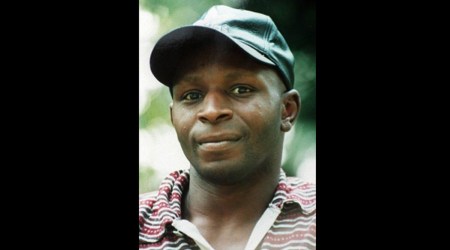
A former Pine Lawn police lieutenant was arrested on Tuesday by the FBI for conspiring to falsely arrest their former mayor’s competition in the 2013 mayoral race.
Steven Blakeney, 34, is facing up to 20 years in prison for his role in a scheme to sabotage the opponent of the mayor of the small Missouri town in St. Louis County.
During the corruption trial of former Mayor Sylvestor Caldwell in April, a local food market manager testified that he had helped frame Nakisha Ford, Caldwell’s competitor, under the direction of Blakeney.
The manager of the store, Akram Samed, testified that the former lieutenant instructed him to call 911 and report that they caught Ford removing competing campaign posters. He testified that he participated in the conspiracy as he was afraid of repercussions from the mayor if he refused.
The indictment states that Blakeney and other officers arrived, “placed her under arrest and transported her to the Pine Lawn police station, where television news outlets were waiting.”
Former Pine Lawn Mayor Adrian Wright, 80, also sued the city claiming that he was targeted for arrest after voicing criticism of Caldwell and forced to do a perp walk in front of all the cameras, before the charges were dropped. He alleges that it was all orchestrated as a smear campaign against him.
Caldwell pleaded guilty and resigned as mayor of the town as part of his plea deal. He also was sentenced to almost three years in prison.
In December, Blakeney was fired after allegations that he called an officer friend to come pick up two drunk girls he had met at the bar and give them rides home. The women wrote sworn statements asserting that they woke up in Blakeney’s home with no memory of how they got there, CBS reported.
The former officer maintains that the allegations were lies and that he was actually fired for cooperating with the FBI investigation. He subsequently attempted to sue the department for 5 million dollars, claiming he was wrongfully terminated.
Blakeney is charged with conspiracy against rights, deprivation of rights under color of law and falsification of records. Pine Lawn, which has a population of 3,216, issued 17,155 traffic citations in 2013, according to Radley Balko’s 2014 investigative piece in the Washington Post, “How municipalities in St. Louis County, Mo., profit from poverty.”
Drugs or No Drugs, K-9s Will Alert to Your Car Nearly Every Time

By John Vibes | The Free Thought Project | August 5, 2015
Bloomington, IL — Police are now speaking out about a decision from the 7th U.S. Circuit Court of Appeals, which ruled that drug dogs signal for drugs nearly every time they are sent to sniff a vehicle or home. This decision shows that police dog searches are not legitimate and that they are just used as a pretense for officers to violate the rights of innocent people.
The case stemmed from a 2010 traffic stop in which 20 kilograms of cocaine were found in a vehicle after a search from a police dog named “Lex.”
The suspect ended up taking the case to court, and while his sentence was upheld, some very interesting points were uncovered during the investigation.
It was revealed that Lex, the drug dog in question, signaled for drugs 93% of the time, even when there were no drugs present. These findings show that dog sniffs are not accurate and are simply used as a tool to justify a full police search. The findings also indicated that Lex was incorrect roughly 40% of the time.
“Lex’s overall accuracy rate … is not much better than a coin flip,” the ruling stated.
Now the police are speaking out against the ruling, saying that Lex was at the bottom of his class and not a good representation of how most police dogs operate.
“Lex is lucky the Canine Training Institute doesn’t calculate class rank. If it did, Lex would have been at the bottom of his class,” a recent police statement said.
Police representative Michael Bieser said in an interview with the Chicago Tribune that “The opinion is unfair and very one-sided. He’s is a very, very good dog.”
In many cases, police dogs are trained with positive reinforcement if they are able to find contraband, a situation that will obviously lead to false positives. However, police deny that this tactic is used in training, despite the fact that it is known to be commonplace.
“We didn’t do it because we agree rewards confuse dogs, but they will use the practice against us in court,” Bieser said.
Last year, we reported on the high-profile case of Timothy Young. Young was pulled over for failure to use his turn signal when a police K-9 was said to have alerted to his vehicle. After police found no evidence of drugs in his car or on his person, he was then handcuffed and driven to a hospital an hour away. During this forced visit to the hospital, Young was x-rayed and sodomized in search of non-existent substances.
Still think if you do nothing wrong, you have nothing to fear? Ask Mr. Young that question…..
John Vibes is an author, researcher and investigative journalist who takes a special interest in the counter culture and the drug war. In addition to his writing and activist work he organizes a number of large events including the Free Your Mind Conference, which features top caliber speakers and whistle-blowers from all over the world. You can contact him and stay connected to his work at his Facebook page. You can find his 65 chapter Book entitled “Alchemy of the Timeless Renaissance” at bookpatch.com.
Where’s the outrage? White South Carolina teen gunned down by cop gets no attention

© J. Knight / YouTube
RT | August 5, 2015
After an independent autopsy showed that Zachary Hammond was shot by police from behind, the family of the unarmed South Carolina teen is wondering at the lack of national outrage in this case. Hammond was white.
According to the police in Seneca, South Carolina, an officer shot Hammond “in self-defense” when the teen allegedly tried to run him over with a car during a drug arrest. An officer approached Hammond’s car in the parking lot of a Hardee’s restaurant on July 26, after an undercover officer arranged a marijuana buy with the teen’s date, 23-year-old Tori Morton. The initial police report mentions finding a bag of marijuana on Morton – who was charged with simple possession – but makes no note of the lethal shooting.
The official autopsy confirmed Hammond was shot twice, but did not say from what angle. Hammond’s family arranged for an independent autopsy, which showed the 19-year-old had been shot from above and behind, suggesting that the official police story was inaccurate.
Speaking to reporters on Tuesday, attorney for Hammond’s family Eric Bland said that Hammond had been shot in the left rear shoulder, and through the back of his chest, indicating the officer fired from the side of a stopped car, through the open window. Bland says Hammond was on a first date with Morton, who was eating ice cream at the time, and that the police should have never used deadly force.
Seneca is a city of 8,200 in the northwestern corner of South Carolina, near the university town of Clemson, and about 30 miles west of Greenville.
Hammond’s death came a week after Samuel Dubose was killed in Cincinnati, Ohio under very similar circumstances. University of Cincinnati police officer Raymond Tensing said Dubose was trying to run him over with his car, and that he fired in self-defense. Once Tensing’s body camera footage was released, showing otherwise, the officer was indicted for murder. Tensing is white; Dubose was black.
Dubose’s killing has attracted national attention, but Hammond’s was barely noticed. According to the Los Angeles Times, while Dubose’s name was mentioned in over 43,000 tweets between July 26 and August 4, Hammond’s appeared in 289 tweets in the same time period.
Bland, the attorney for Hammond’s family, finds the discrepancy “very disturbing.”
“An unarmed white teenager whose life is wrongfully taken at the hands of overzealous police is the same and equal to an unarmed black teenager whose life is wrongfully taken at the hands of overzealous police,” he told the LA Times.
Police in Seneca are standing by their officer, though. Speaking to the Greenville News last week, Chief John Covington said the officer “actually had his hand on or very close to the car, possibly pushed off from the car,” and the teen “was not shot from behind.”
“The attorney wasn’t there either,” Covington said. “He’s got to put his spin on things. His clients are the parents and they’re grieving. I understand that. My heart goes out to them.”
Seneca police’s refusal to publish the official autopsy results or name the officer involved in the fatal shooting has raised eyebrows. The Charleston Post and Courier filed an open records request for the officer’s name, and the copy of the official incident report, neither of which have been released by the police.
“It’s outrageous,” Bill Rogers, executive director of the South Carolina Press Association, told the Post and Courier. “The policeman is a public official. They can’t redact his name. That’s a clear violation of the law.”
“We feel that releasing his name may possibly subject the officer and family to harassment, intimidation or abuse,” Chief Covington said in a statement, explaining that the department considers the officer a “victim of attempted murder” by Hammond.
Rogers says this argument lacks merit and that the public has a right to know. “Other people might have had encounters with this policeman but they can’t come forward if the public doesn’t know who it is,” he said.
Hammond’s death is currently being investigated by the South Carolina Law Enforcement Division (SLED). There had been 30 fatal police shootings in the state this year, as of August 3, compared to 42 in all of 2014, according to the LA Times.
“The whole issue of race is getting distorted and what’s getting lost is the real issue which is excessive force,” Bland told the Washington Post. “All people need to be outraged out this. All people need to be asking the hard questions.”
In Victory for Free Speech and Animals, Judge Strikes Down Idaho ‘Ag-Gag’ Law
Banning the filming of factory farm operations is an unconstitutional violation of both free speech and equal protection clauses, says federal judge

A demonstration against Ag-Gag legislation in Idaho outside the state house in 2014. (Credit: Flickr / cc / Mercy for Animals)
By Jon Queally | Common Dreams | August 4, 2015
In a victory for animal rights advocates—and the animals on factory farms they seek to protect—a federal judge on Monday ruled Idaho’s controversial “ag-gag” law unconstitutional in a decision that said criminalizing the undercover documentation of livestock abuse violates both free speech and the equal protection clause.
“The effect of the statute will be to suppress speech by undercover investigators and whistleblowers concerning topics of great public importance: the safety of the public food supply, the safety of agricultural workers, the treatment and health of farm animals, and the impact of business activities on the environment,” U.S. District Judge B. Lynn Winmill stated in his 28-page ruling.
Under the law, people filming agricultural operations without permission in Idaho face up to a year in jail and a $5,000 fine. By comparison, a jail sentence for an animal cruelty conviction is capped at six months and a maximum fine of $5,000.
However, as Winmill’s ruling continued, the legal arguments in favor of banning undercover investigations—long a tactic of animal rights groups with no other way to prove or expose such abuse—did not stand up to scrutiny. “Audio and visual evidence is a uniquely persuasive means of conveying a message,” he wrote, “and it can vindicate an undercover investigator or whistleblower who is otherwise disbelieved or ignored. Prohibiting undercover investigators or whistleblowers from recording an agricultural facility’s operations inevitably suppresses a key type of speech because it limits the information that might later be published or broadcast.”
In the end, the judge concluded, “the facts show the state’s purpose in enacting the statute was to protect industrial animal agriculture by silencing its critics.”
Though other states have passed similar laws in recent years, the decision by Winmill marks the first time a federal court has struck down such legislation. And though the Idaho ruling could be appealed to a higher federal court, it is also likely to spur additional challenges in those other states.
Instigated by an undercover operation by the animal rights group Mercy for Animals, Idaho’s law was signed into law in 2014 by the state’s Republican Gov. Butch Otter, but was challenged in court by a coalition of welfare advocates, led by attorneys with the Animal Legal Defense Fund.
ALDF called Winmill’s ruling a “landmark victory” for all those represented by the suit, which in addition to the tens of thousands nameless animals, included a broad-based public interest coalition of national nonprofits, including the People for the Ethical Treatment of Animals (PETA), the American Civil Liberties Union (ACLU) of Idaho, journalists Will Potter and Blair Koch, Farm Sanctuary, and the Center for Food Safety (CFS). In a joint statement, the coalition said:
Undercover video and photography has exposed numerous shocking practices that are “industry standards.” These pervasive, systematic procedures include routine mutilation, including debeaking birds with electrically heated blades and castrating male animals by slicing open their scrotum and ripping their testicles out without pain relief or anesthesia and intensive confinement—where animals are literally unable to turn around for months on end. Exposes have also detailed the sickening farming conditions resulting in contaminated meat products—posing serious health risks to the public—and life threatening conditions for farm workers.
These investigations, and the subsequent media coverage, have led to food safety recalls, citations for environmental and labor violations, evidence of health code violations, plant closures, criminal convictions, and civil litigation. The Idaho statute unconstitutionally and unwisely prohibits efforts to bring violations of state and federal laws relating to food safety, environmental protection, and animal handling to the attention of the public and law enforcement.
Ag-Gag laws are notoriously unsupported by the public. Nationwide thirty-two similar Ag-Gag measures have failed. Currently, seven states have Ag-Gag laws on the books. This Idaho decision is just the first step in defeating similar Ag-Gag laws across the country.
Mercy for Animals also hailed the ruling, saying it is now looking forward to continuing its work and producing more undercover videos in Idaho.
“Idaho’s lawmakers should be ashamed of wasting precious time and valuable resources enacting unconstitutional laws that threaten animal welfare, food safety, workers’ rights and the environment,” said Nathan Runkle, president of Mercy for Animals, in response to the ruling. “We hope they will now focus their efforts on improving animal welfare and rewarding the brave whistleblowers who uncover criminal activity in Idaho’s agricultural operation.”
Leader of Israeli extremist organization calls for Jewish State torching churches
Ma’an – August 6, 2015
JERUSALEM – The leader of a Jewish extremist group in Israel allegedly called for arson attacks on churches in front of Israeli students, Israeli media reported on Thursday.
Benzi Gopstein, leader of anti-Arab group Lehava, allegedly called for the burning of churches at a panel held this week for Jewish yeshiva students, using ancient Halachic, or Jewish law, to condemn what he called Christian “idol worship.”
When a journalist at the panel informed Gopstein that he was on camera and could be arrested for his comments, Gopstein said he is prepared to spend 50 years in jail for his remarks, according to a video of the panel released by the Haredi website Kikar Shabbat.
After the release of the video, Gopstein said he “stressed several times” that he was “not calling to take operative steps,” instead he said that it is “the responsibility of the government, not of individuals” to abolish the Christian practice of idol worship.
The Israeli government has taken steps to crack down on Jewish extremism over the past week, after suspected Jewish extremists torched two West Bank homes, burning an 18-month-old infant alive and critically injuring the baby’s mother, father and brother.
Three right-wing extremists were arrested on Tuesday in connection to the arson under an administrative detention order after Israel’s security cabinet approved the use of the measure on Jewish Israelis. The arrests marked the first time a Jewish Israeli has ever been held under the policy of administrative detention.
There has been a long line of attacks on Christian and Muslim holy places in both Israel and the occupied West Bank in which the perpetrators were believed to be Jewish extremists.
Despite announcements by the Israeli government in May 2014 to crack down on violent attacks carried out by Israelis against Palestinians, prosecution rates on Jewish extremist remain remarkably low.
UK Defence Secretary praises Egypt
Reprieve | August 6, 2015
Defence Secretary Michael Fallon has praised what he says is Egypt’s “vision of a more prosperous, more democratic society.”
Writing in Egyptian newspaper Al Ahram on the day of the opening of a new section of the Suez Canal, Mr Fallon said that the UK stood “shoulder to shoulder” with Egypt, but made no reference to the human rights situation in the country.
The article comes amid concerns over the fate of thousands of prisoners who have faced mass trials and the death penalty as part of a two-year-long crackdown on dissent by the Sisi government. They include Ibrahim Halawa, an Irish teenager who was arrested during the military’s breakup of protests in August 2013. Ibrahim, who faces a death sentence alongside 493 others in mass proceedings, has endured torture and mistreatment throughout his detention. Last weekend, his mass trial at Wadi Natrun prison, where conditions are poor, was postponed for the 9th time.
The UK Foreign Office has previously told human rights organization Reprieve that it is “monitoring” Ibrahim’s case, and that it has “concerns over the use of mass death sentences and the large number of people in pre-trial detention.”
Commenting, Maya Foa, head of the death penalty team at Reprieve, said: “At a time when Egypt’s jails are heaving with jailed protestors and journalists, torture is rife, and thousands are facing mass death sentences, it is disgraceful that Michael Fallon sees fit to praise Egypt’s government in such unqualified terms. To prisoners like Ibrahim Halawa, who is enduring regular torture and a Kafkaesque mass trial, talk of Sisi’s ‘vision of a more prosperous, more democratic society’ is a sick joke. If the defence secretary truly wants to support Egypt, he must tell Sisi to reverse the terrible human rights abuses of the last two years – and to release the many victims of the crackdown, such as Ibrahim.”
Watchdog Demands Rules on FBI Media Spying
By Elizabeth Warmerdam | Courthouse News | August 3, 2015
The Department of Justice refuses to reveal its unpublished rules for spying on journalists, and the Freedom of the Press Foundation demands a look at them, in Federal Court.
The foundation sued the Justice Department on Friday under the Freedom of Information Act, seeking expedited production of records on FBI procedures for issuing National Security Letters and exigent letters to investigate members of the media.
“Public disclosure of these protocols is necessary to deter chilling affects on the press and its sources, especially given recent years during which the Obama Administration has increased surveillance of reporters,” the foundation’s attorney Victoria Baranetsky said.
The Associated Press revealed in 2013 that the Justice Department had secretly obtained months of phone records for at least seven journalists on 20 phone lines while trying to determine which government official leaked information about a CIA operation that allegedly thwarted a terrorist plot.
Soon after, it was revealed that the Justice Department had investigated James Rosen, Fox News’s chief Washington correspondent, in connection to a possible leak of classified information by a government contractor.
In that case, Rosen was labeled as a possible “co-conspirator,” and investigators pulled his security badge records, phone logs and personal emails.
As a result of the backlash, the Justice Department in July 2013 released guidelines that supposedly bar the government from issuing subpoenas to journalists unless high standards are met.
But the guidelines did not apply to FBI agents using national security letters to get telecom companies, libraries and others to secretly hand over information, including Internet records of U.S. citizens without court oversight.
About 97 percent of national security letters come with gag orders barring the recipients from talking about it.
In 2013, U.S. District Judge Susan Illston found the letters facially unconstitutional and ordered the government to stop issuing them, but she stayed her ruling pending appeal to the Ninth Circuit.
A Justice Department spokesperson told The New York Times that procedures for national security letters are governed by an “extensive oversight regime.”
A heavily redacted August 2014 Department of Justice Inspector General report criticized the FBI’s handling of a leak investigation, in which it collected a reporter’s phone records using national security letters.
A separate Inspector General report found that the FBI had issued hundreds of exigent letters to get telephone records from three major telephone carriers. The letters were not authorized by law, flouted internal FBI policy and violated attorney general guidelines, the report said.
In January, several months after the 2014 report confirmed that the FBI had new procedures for gathering information about media, the Justice Department published another rule amending the media guidelines.
The updated policy did not include any procedures for issuing national security letters or exigent letters to get information about members of the press, the foundation says.
It filed an FOIA request in March, seeking the FBI’s unpublished procedures on how it issues national security letters or exigent letters regarding members of the media.
“The DOJ failed to provide adequate response after it acknowledged the need for expedited processing,” Baranetsky said.
Nor has the Justice Department met its deadline to reply to the FOIA, the foundation says in the complaint.
It seeks information on the extensive regime that oversees issuance of national security letters, the procedures the FBI must follow before and after issuing a national security letter to obtain records on members of the press, and any changes in FBI policy after the Justice Department reviews.
Expedited disclosure “is in the public interest and ‘[a] matter of widespread and exceptional media interest in which there exist[s] possible questions about the government’s integrity which affect public confidence,'” the foundation says in the complaint.
The Justice Department would not comment on the lawsuit.
Baranetsky and Marcia Hoffman, both of San Francisco, represent the foundation.
Mark Duggan killing: Four years later and still no justice
RT | August 4, 2015
On August 4, 2011, Mark Duggan was killed in Tottenham by the police. Four years on, the Duggan family are still seeking justice for Mark. But the officers involved were cleared of ‘any wrongdoing’ and it was eventually ruled that Mark’s murder was ‘lawful.’
While we see the ramifications of unbridled police violence all over the world, we are reminded that for many communities here at home in the United Kingdom, the treatment they face is little different from that which have seen of late in the United States.
The case of Mark Duggan stands amid a backdrop of many other tragic cases whereby young black men are killed by those who are supposed to protect them. Just as with the many hundreds of other cases which have seen citizens die in police custody, with no officer being brought to justice, Mark Duggan’s case is a chilling reminder of just how little progress has been made and how far there still is to go. The criminal justice system has failed to jail any officer, despite the fact Mark Duggan was unarmed and shot dead execution style.
Many anomalies and questions marks still surround the case, and the official line peddled by the police and the media in the immediate aftermath of Mark’s murder was shown to be a fallacy. There were also significant political implications with this case too.
Not only did the facts that emerged after Mark’s killing contradict the official police and media line, but the failure of the police to even communicate with Duggan’s family and inform them of his death led to protests outside Tottenham police station. These protests and the fact that police reportedly beat a teenage girl during the demonstrations are viewed by many to have been the initial sparks for the unrest which followed. The riots in North London quickly spread throughout the country.
Police relations with communities in Tottenham have historically been riddled with examples of police brutalising residents.
As a result of these tensions building up over many years, and because the police have failed to root out their own problems from within, the potential for this tension to explode has always existed on a knife edge just below the surface needing only a jolt to rear its head.
Duggan’s murder in 2011 provided such a catalyst.
But the media coverage at the time of the protests successfully diverted attention away from the criminal actions of the police, poverty, and racial tension and instead demonised the community, specifically young people.
One other knock-on effect from the English riots was that attention was diverted away from the MPs expenses scandal, which was breaking at the time, and onto young people who took part in the rioting from poorer communities. It’s worth noting too, that while these young people were being put through a kangaroo court system, paraded in the media, punishing them for taking part in the riots characterising the behaviour as ‘pure criminality’ (removing the factors underpinning the riots), at the same time politicians were being barely punished for looting the taxpayers pocket. This has left many people reeling from a bitter sense of injustice and double standards.
The tragedy of Mark Duggan’s killing is a reminder to all those who were living in London of how entrenched and normalised and accepted such injustice has become.
Mark Duggan’s case was significant because of the circumstances surrounding his killing, and because the actions of the police before and after highlighted the deep institutional failings of the police and so-called justice system. It was these failings which led to the riots.
Duggan’s killing was ruled as ‘lawful’. Officers involved were cleared of ‘any wrongdoing’ despite the fact they shot dead an unarmed black man in an area of London where racial tensions between the community and police were already fragile, with not much needed for things to erupt.
If you are young and black in the UK, you are still more likely to be stopped and searched than if you are white, despite the fact that black people are no more likely to commit crime than anyone else.
Poverty, a lack of access to further education, and low employment prospects have not just remained firmly rooted in some of the UK’s poorest areas – with government policy and austerity becoming further entrenched since 2011- these problems have undoubtedly worsened.
Food banks are now becoming more and more widespread and the gap between the richest and the poorest has widened too.
No one is denying individual responsibility for any crime, including looting or rioting. But surely all of the factors which lead to such a disaster like the London riots must be looked at. And surely the same level of personal responsibility we are all supposed to adhere to applies to the police too?
Surely yes, but the current state of play suggests that this ideal, is far from becoming a reality.
Many were quick to focus on anything which might justify the actions of the police and shift accountability for his death from their own actions to the actions of Mark Duggan.
He was smeared in the press before any trial had even taken place following his killing. ‘Journalists’ like Richard Littlejohn from the Daily Mail pretty much suggested that Mark Duggan deserved to be killed based on the media’s common portrayal of him. In one sensational claim it was suggested that Duggan was among “Europe’s most violent criminals”.
The only reason why entirely racist claims like these are allowed to be seen as the norm in the mainstream media, at least, is because they have become wholly acceptable.
In much of the media, and within the criminal justice system, the assumption is usually made that the police, by virtue of the fact that they are the police, are whiter than white, and innocent, and that anyone they come into contact with must somehow therefore automatically be guilty and have done something wrong.
Mark Duggan’s family and countless other families are still seeking justice for loved ones who have died in police custody.
Today we remember Mark Duggan and remember too just how quickly a sequence of events can spiral out of control. One could perhaps argue that if the police had handled the aftermath of Duggan’s death better (ignoring for a moment the fact it was they who killed him) the riots could have been avoided.
The crimes of the police to date have barely been acknowledged, and until they are we are not even in a position to suggest many solutions. Hope for the future rests with a more informed public, equipped with knowledge and a willingness to hold those accountable who do wrong no matter who they are, including the police. If we are organised we can pressure those who have the power to implement change among powerful institutions from the top down. It won’t happen just from marches and wishful thinking. It’s not in the nature of power to relinquish it without a fight.
Power concedes nothing without demand, and without justice there can be no peace-nor should there be.
Richard Sudan is a London based writer, political activist, and performance poet. He has been a guest speaker at events for different organizations ranging from the University of East London to the People’s Assembly covering various topics. He also appears regularly in the media, and has featured as a guest on LBC Radio, Colourful Radio and elsewhere. His opinion is that the mainstream media has a duty to challenge power, rather than to serve power. Richard has taught writing poetry for performance at Brunel University, and maintains the power of the spoken and written word can massively effect change in today’s world.
“Angel of Death” Psychologist Trains Cops to Shoot First, Question Later, Cashes in at Killer Police Trials

By Cassandra Fairbanks | PINAC | August 4, 2015
Dr. William J. Lewinski travels the country explaining to cops why they should not think twice before they shoot suspects – and then charges $1,000 an hour to speak at their trials to justify it when they take his advice.
The self taught “expert” has testified or consulted in over 200 trials to date.
As the leading figure who as a behavioral psychologist trains cops to shoot first and question later, courts seem to accept both his pseudoscientific theories of policing and unlimited list of excuses presented after the fact too.
Lewinski has provided “expert testimony” in some extremely high profile and outrageous cases, such as the case of Oscar Grant by California’s BART PD.
He’s also currently working with the defense of the killers of James Boyd – a homeless man shot to death by Albuquerque police who were harassing him for “illegal camping.”
Those cops said hours before shooting Boyd that they planned to shoot him in the penis, but somehow avoided 1st a degree murder rap and are on trial for 2nd degree murder for shooting him in the midsection.
No matter what the case, even if a suspect is unarmed or shot in the back, Lewinski can be there (provided you pay the fee!) to explain why it was justified.
Lewinski owns the Force Science Institute, which has trained tens of thousands of officers to shoot first, and deal with the blowback later.
Some of the dangerous ideas that this company pushes include shooting before you see a weapon, claiming that by the time you see one it could be too late.
His beliefs have been widely criticized, with the American Journal of Psychology calling his work (which is not peer-reviewed) “pseudoscience” and even the Department of Justice has stated that his work lacks in “foundation and reliability.”
In both 2011 and 2012 the Federal Department Of Justice (DOJ) asked Lisa Fournier, an editor at the American Journal of Psychology to review his work.
Her findings stated that Lewinski lacks basic elements of legitimate research and came to conclusions unsupported by the data.
She summarized the work of Lewinski and his “Institute” as invalid and unreliable.
Despite the DOJ knowing the guy is a crock, they still shockingly hired him months later anyways, paying him $55,000 to help defend a federal drug agent who killed an unarmed teenager in California.
Then DOJ endorsed sending him to Seattle to train officers there as part of an excessive force settlement.
He was later paid $15,000 to train the US Marshals too.
When it comes down to it, the DOJ knows that he is capable of manipulating a jury, and are willing to shell out the dough for his services, even after acknowledging that Lewinski’s work is unreliable and he is only an “expert” of his own pseudoscience.
“People die because of this stuff,” said John Burton, a California lawyer who specializes in police misconduct cases told the New York Times. “When they give these cops a pass, it just ripples through the system.”
It does not seem to matter even when there is obvious guilt and that an officer clearly lied.
“Jurors needed an explanation for how the officer could be so wrong and still be innocent,” Matt Apuzzo wrote in the New York Times.
Jurors, as we continuously see, need police to be the good guys, so that they can feel safe and protected in their little bubbles. Thankfully, it seems, those bubbles are beginning to burst.
Citizens should remain vigilant and tell their elected officials to black list the Force Science Institute and “Dr.” William J. Lewinski.
The “Angel of Death” won’t give up his meal ticket without a fight, and he might be training your police or testifying in a court near you.
Mississippi’s All Up in Your Google Activity
By Samia Hossain, William J. Brennan Fellow & Esha Bhandari | ACLU | August 3, 2015
An overzealous attorney general is trying to police online speech by capitalizing on the reams of data Google stores about its users.
James Hood, Mississippi’s attorney general has issued a whopping 79-page subpoena to Google asking for a massive amount of data about the identities, communications, searches, and posts of people anywhere in the United States who use its services, including YouTube and Google+.
The kicker? The state is asking for all this information for anyone speaking about something “objectionable,” “offensive,” or “tangentially” related to something “dangerous,” which it defines as anything that could “lead to physical harm or injury.” You read that right. The attorney general claims that he needs information about all of this speech to investigate Google for state consumer protection violations, even though the subpoena covers such things as copyright matters and doesn’t limit itself to content involving Mississippi residents.
Earlier this year, a District Court judge froze Mississippi’s investigation into Google. The state appealed the ruling to the U.S. Court of Appeals for the 5th Circuit, where we filed a brief today against the attorney general’s attempt to violate the First Amendment rights of the millions of people who use the Internet.
The case has already gotten attention because of Google’s claims that Mississippi is attempting to censor its editorial choices, by dictating what can appear in search results or on YouTube, for example. Our brief attempts to highlight an overlooked aspect of the case – that millions of people’s rights to free speech, anonymity, and privacy are also at stake.
The government is well aware of all the personal information that’s being stockpiled online and often serves subpoenas on private companies for information about individuals and groups under investigation. But the Constitution has established protections that keep the government from getting into our business without just cause, especially when our First Amendment rights to express ourselves freely and anonymously are at stake.
Yet as we’re seeing in Mississippi, the government doesn’t always play by the rules.
We are increasingly seeing efforts by law enforcement to engage in wholesale monitoring of certain groups online. Just a couple of weeks ago, we learned the Department of Homeland Security has been scrutinizing #BlackLivesMatter for constitutionally protected activity. This kind of surveillance chills the exercise of our First Amendment freedoms, especially considering how much sensitive and important speech – like political or human rights advocacy – takes place on the Internet.
Needless to say, “objectionable,” “offensive,” or “tangentially” related to something “dangerous,” are terms that are so broad that they could encompass a huge swathe of content on the Internet – and result in information about millions of people’s online activity being handed over to the government. Virtually any topic could be said to “tangentially” lead to physical harm or injury in certain cases – from organizing protests to skydiving. Most importantly, the First Amendment protects the right to speak about dangerous, objectionable, and offensive things without fear that the government will be scrutinizing your speech or trying to find out your identity.
And let’s not assume it’s innocuous YouTube videos of skateboarding 6-year-olds, football highlight reels, or fireworks displays that the attorney general wants to waste his office’s time looking through – even though these would be covered by the subpoena. History has shown us that politically dissident and minority groups have been targeted for monitoring, and those are the groups that are most likely to be chilled from speaking. Politically active movements online, such as #BlackLivesMatter, often discuss strategy, organize protests, and post videos of police brutality (which certainly meets the attorney general’s definition of “dangerous”) online.
Not only that, but the right to online anonymity is threatened. Domestic violence support groups can provide a safe space online for victims to speak anonymously and honestly, including about the dangers of violence they face. Yet these activities could be seriously harmed if Mississippi is allowed to collect information about the people who engage in them. It’s no stretch to imagine that people will speak less freely if things like their email addresses, login times, and IP addresses could be handed to law enforcement whenever they say something that could be considered dangerous or offensive.
For these reasons, we’re asking the 5th Circuit to order the state to back off and keep the Internet a place where people can speak freely, without fear of government harassment or investigation.
How Humberside police, CPS & UK govt conspired to cover up racist killing of Christopher Alder
Christopher Alder / Wikipedia
By Dan Glazebrook | RT | August 2, 2015
Every obstacle will be put in the way of a successful outcome of this struggle, and those who seek justice are likely to find themselves subject to a vindictive campaign by the police. Nothing illustrates this more clearly than Janet Alder’s almost two-decade long campaign to establish what happened to her brother Christopher.
On April 1, 1998, Christopher Alder was on a night out in Hull. The 37-year-old was a former paratrooper who had served in the Falklands and Northern Ireland, and had been decorated for his service; he had two children, and was in training for a new career in computer programming. Later that night, however, outside the Waterfront nightclub, he got into a fight. After being punched in the face, Christopher was briefly knocked unconscious and lost a tooth. An ambulance was called, and Christopher was taken to Hull Royal Infirmary, accompanied by police officers. His injuries were not deemed life-threatening, and he was discharged, after which the police drove him to the police station.
Exactly what happened in that police van during the short one-mile journey remains shrouded in mystery; indeed it has never properly been investigated. What we do know is that by the time he arrived in the police station, he was unconscious again, had lost another tooth, and had received two additional injuries (a cut to the lip and a cut above the eye). He was then dragged into the custody suite with his trousers round his ankles and his belt missing, and left face down and handcuffed on the floor. No attempt was made to put him into the recovery position, and CCTV footage shows officers standing around chatting as he gasps for breath, still unconscious. Within 12 minutes he would be dead, with officers making racist comments and monkey noises over his corpse. It was a level of contempt that has characterized the state’s attitude towards Christopher and his family ever since.
Christopher’s sister Janet began campaigning for justice for her brother just three months after his death. Her tireless efforts have served to keep the case in the public eye, thwarting the police’s attempts to brush it under the carpet, and have resulted in some astounding revelations and admissions. Yet, to date, justice has still not been done; the police who caused his death have never been properly held to account or punished for their actions, whilst Janet has borne the brunt of a vindictive campaign against both her and her brother’s memory which continues to this day – but which began immediately after his death.
In the days following Christopher’s death, six officers raided his flat. The flat was then sealed off for two weeks whilst the police laboriously itemized and mapped out every item in the home. Needless to say this is not usual procedure for dealing with a possible murder victim; indeed, an official report by the Independent Police Complaints Commission (the IPCC) later noted that it was “more in keeping with what might be expected if Mr Alder were a suspect rather than a victim.” What seems likely is that this raid, far from having anything to do with investigating Christopher’s death, was rather a desperate attempt to find something – anything – that could be used to smear his name. For this is usual procedure: one only has to recall the lies that were put out following the executions of Mark Duggan and Jean Charles de Menezes to realize that the smearing by police of their victims following a death in custody is standard practice.
The raid, however, turned up nothing.
So the next step, it seems, was to smear his family. An investigation by the IPCC in 2006 revealed that following Christopher’s death, Humberside Police had dredged up social service records dating back to the births of all the Alder children – Christopher, Richard, Emmanuel, Stephen, and Janet, who were brought up in care. The IPCC report noted that the records “did not seem to have any relevance” to the case; it did not speculate on what the real purpose of obtaining the records might have been.
So the police were certainly busy in the aftermath of Christopher’s death. What they were not busy doing, however, was investigating the actual circumstances of his death.
Given that Christopher died at the hands of Humberside police, the investigation into their role in his death was carried out by West Yorkshire police. However, they proved unable – or more likely unwilling – to follow even the most routine of procedures. Whether he had been assaulted by any of the officers he encountered that night was never investigated. Worse, all the evidence which would help to establish this was allowed to be destroyed. The police van was cleaned, blood samples and clothing – both Christopher’s and the officers’ – were destroyed without being tested, and CS gas canisters from the police van were disposed of. Christopher’s missing belt and tooth were never located.
Humberside police, meanwhile, were mounting a prosecution of their own. Jason Paul had been involved in the fight with Christopher that night; initially trying to break it up, he ended up punching Christopher after receiving blows himself. Yet despite the pathologist’s conclusion that this punch had played no role in Christopher’s death, when Jason went to the police station to assist with the inquiry the following day he was arrested on suspicion of murder. He was eventually charged with “GBH with intent.” It would not be until three months later that the spurious charges were finally dropped. Jason Paul eventually mounted a successful civil court case against the police, which found that he had been falsely imprisoned and the prosecution had been malicious. The jury unanimously agreed that it was “more likely than not that the police charged [Mr Paul] with causing GBH with intent to deflect potential criticism of the [actual] circumstances of Christopher Alder’s death.” … Full article
Prosecutor declines to bring charges against Cincinnati cops who lied to protect killer of Samuel DuBose
By Evan Blake | WSWS | August 1, 2015
The University of Cincinnati put police officers Phillip Kidd and David Lindenschmidt on paid administrative leave Thursday for the course of an internal investigation into their reports of the July 19 killing of Samuel DuBose by officer Ray Tensing.
The family of DuBose has demanded that Kidd be charged for making false statements on a police incident report, claiming that he saw DuBose’s car dragging Tensing. This came after the release of the two officers’ body camera footage, in which they can be heard corroborating Tensing’s false claim that he only shot DuBose after being dragged by his car.
Tensing himself pleaded not guilty to murder and voluntary manslaughter and was released from jail Thursday after his father paid $100,085 bond. Tensing had pulled DuBose over for not having a front license plate, and soon sought to physically remove DuBose from his car, prompting DuBose to attempt to flee. Roughly a second after DuBose started his car, Tensing shot him once in the head, killing him.
Tensing claims that he became caught and dragged along, prompting him to shoot DuBose in the head. His body camera footage clearly refutes this story and in fact indicates that Tensing intended to kill DuBose, as he draws his weapon immediately after DuBose starts his car and fires at his head almost instantaneously.
On Friday, Hamilton County Prosecutor Joe Deters announced that a grand jury had heard testimony regarding Kidd and Lindenschmidt’s falsifications and declined to indict them for corroborating Tensing’s false story. Grand juries routinely operate under the direct advice of the prosecutor, meaning that Deters likely sought a nonindictment for Tensing’s two accomplices.
Kidd and Lindenschmidt’s body camera footage reveals that neither was in a position to see whether Tensing was caught in DuBose’s car. Lindenschmidt was sitting in his patrol car, parked directly behind Tensing’s patrol car, when the shooting took place. Kidd’s body camera is not turned on until he is chasing DuBose’s car with Tensing and Lindenschmidt. However, the footage from Lindenschmidt’s camera shows Kidd running on the sidewalk, also behind Tensing’s car, indicating that his view of the shooting was obstructed by both Tensing and DuBose’s car.
The Guardian revealed Friday that two of the officers who corroborated Tensing’s story—Eric Weibel, who wrote the initial police report, and Kidd—were also involved in the 2010 police killing of Kelly Brinson, an unarmed, mentally ill black man who had been hospitalized at Cincinnati’s University hospital.
After suffering a psychotic episode, Brinson was shocked with a Taser three times and then “rushed” by seven University of Cincinnati officers, including Weibel and Kidd. Surveillance video shows officers smothering Brinson, and at one point an officer grabs him by the neck, choking him. During this beating, Brinson suffered a respiratory cardiac arrest and died three days later.
Brinson’s family ultimately settled their civil suit against University of Cincinnati police and the hospital for $638,000, with the expectation that the officers would be removed from the force outright. The only disciplinary measure taken, however, was to remove them from patrolling duties at the psychiatric wards at the hospital.
Shocked at learning that Weibel and Kidd were involved in attempting to falsify Tensing’s murder of DuBose, Kelly Brinson’s brother, Derek, declared: “They should be held accountable for perjury and they should be accessories to the DuBose murder.”
Weibel wrote the police report so as to bolster Tensing’s false account of the shooting, writing, “I could see that the back of his pants and shirt looked as if it had been dragged over a rough surface.”
Kidd falsely claimed to have seen firsthand Tensing being dragged by DuBose’s car, repeatedly declaring, “Yeah, I saw that.”
Lindenschmidt also lied in an attempt to bolster Tensing’s story, telling another officer: “I just arrived to back him [Tensing] up, the guy took off. The officer was stuck in the vehicle. He fired one round.”
Commenting on the significance of the body camera footage, DuBose’s sister Terina DuBose Allen declared: “I think that if there had not been a body camera that Sam would have been left with the memory of everyone saying he was basically trying to kill a police officer. They would have turned a nonviolent man who was loved into a poster child for violence against police officers.”
Texas House County Affairs Committee Chairman said brutal arrest of Sandra Bland was the “catalyst” for her death
The Texas House County Affairs Committee began its legislative inquiry into the arrest and subsequent death of Sandra Bland Thursday. The meeting involved committee members questioning Steven McCraw, the director of the Department of Public Safety, the department for which state trooper Brian Encinia works.
At the inquiry, committee chairman Garnet Coleman, a Democrat from Houston, described the brutal arrest of Bland by Encinia as the “catalyst” that led to her death. Coleman sought to place responsibility for Bland’s death entirely on Encinia, saying, “What he did triggered the whole thing.”
Police claim to have found Bland hanging in her jail cell July 13. The official report states that she was found hanging from a plastic trash bag attached to a bathroom partition—which was roughly equal to her height—with her feet touching the ground.
Despite the protestations of her family, officials have continually sought to portray Bland as suicidal, with Waller County Prosecutor Warren Diepraam last week declaring that an official autopsy found her cause of death to be a suicide.
On Tuesday, officials in Waller County released hours of footage showing Sandra Bland alive in the Waller County jail, in a further attempt to silence those questioning what led to her death. The released videos, however, fail to document the crucial hour before her death, which was missing from the initially released footage taken from a hallway that does not even show her cell.
Featured Video

Seyed M. Marandi: US-Iran War Inevitable: Kuwait and Bahrain May Fall
or go to
Aletho News Archives – Video-Images
From the Archives
Oil and the Israel Lobby
Reknowned economist M. Shahid Alam offers this excellent critique of Noam Chomsky’s defective analysis of the relative influence of Oil versus the Israel lobby over US foreign policy: … continue
Blog Roll
 Aletho News
- ICC ignored ‘very well-documented’ NATO crimes – ex-Libyan minister
- SNSC secretary dismisses US response to Iran’s conditions as ‘inadequate’
- Sanaa says Taiz roads open, secure for residents, warns Saudi forces
- Iraqi resistance group urges Saudi leadership to admit defeat, lift Yemen siege
- Trump’s Retreat: How Al-Aqsa Flood Took Down the US Empire
- Israel’s Military Actions in Lebanon Grossly Violate International Law — Lavrov
- Seyed M. Marandi: US-Iran War Inevitable: Kuwait and Bahrain May Fall
- Leaders Condemn Ansarallah Attack on Saudi Arabia While Ignoring Illegal War Against Yemen
- Leaked: Britain’s Covert Iraqi Psyops Network
- Yemeni Armed Forces Warn Airlines Against Using Saudi Airports, Exempt Mecca and Medina
- If Americans Knew
- Agents search Rep. Omar’s Washington home in criminal probe as she vows she won’t ‘be silenced’
- “The Rule Was: ‘Shoot Everyone You See'”
- Israel goes ballistic over Nobel Laureate Navi Pillay
- U.S. May Join Yet Another Middle Eastern War — TCN
- Yellow Line moves again as Israel closes in on trapped Gazans – Daily Update
- Israeli Attacks Kill Seven Palestinians in Gaza Including Six-year-old Girl
- Gaza: Ceasefire Anniversary Marks Year of Failed Promises
- The American Conservative: Mike Huckabee Should Resign
- A C-Section in Shackles: A Palestinian Woman’s Harrowing Birth in Israeli Detention
- ‘He’s Desperate’: AIPAC Begins Spending Against Abdul El-Sayed to Boost Mike Rogers:
- No Tricks Zone
- Germany’s Green Energy Debacle: High Energy Costs Force Kahla Porzellan to Close After 182 Years!
- New Study: 50 Years Of The Most Aggressive ‘Net Zero’ Policies Can Only Affect The Global Climate By 0.03°C
- US September “Heat” Was No Record…Many Records Set Decades Ago
- Latest European Green Energy Debacle; Portugal’s Largest Flagship Solar Park Insolvent!
- Green Energy Debacle: German Expert Professor Fritz Vahrenholt Warns Of Severe Economic And Social Consequences
- Two More Paleo Reconstructions Affirm Meters-Higher Sea Levels Across Ireland, Brazil 7000-6000 Years Ago
- New Study: Earth And Venus Surface Warmth Largely Explained By Convection And Lapse Rate, Not CO2 Or Radiation
- 2025 Nature Paper Claiming Worsening Global Drought Gets RETRACTED …Heavily Flawed
- New Study: ‘Global Drought Shows No Detectable Recent Acceleration Under Climate Warming’
- Economic Masterminds: German Socialists Suggest Taxing Productivity Gains Stemming From Using AI

