EU will continue to block €19.2 billion in funds for Hungary
Remix News | November 20, 2024
In a new report from the EU Observer entitled, “Billions of EU funds to remain frozen as Hungary fails to reform,” top EU officials stated that Hungary will continue to be blocked from the €19.2 billion in EU funds owed to the country.
The outgoing European Commissioner for Justice, Didier Reynders, while speaking to the outlet, confirmed that Hungary’s funds will remain frozen. He stated that concerns about Hungary still exist because the draft texts submitted by Budapest do not address what he vaguely refers to as “conflicts of interest.”
“The current state of play of relevant developments in Hungary demonstrate that important concerns still persist,” he said.
The EU Observer report also notes that the Child Protection Act from Hungary is a factor in blocking funds. The act stops LGBT topics from being taught in public schools and blocks gender reassignment surgeries to safeguard children.
The outlet notes that on Tuesday, “a hearing at the Court of Justice in Luxembourg saw 16 member states and the European Commission confront Hungary over its anti-LGBTQ law.”
“This is a frontal and serious attack on the rule of law, and more generally on European society,” a lawyer representing the European Commission told the court, according to AFP.
As European Commission President Ursula von der Leyen outlined in a speech in January of this year, Hungary’s €20 billion would remain frozen until the country opens its borders. It was one of the clearest references to the fact that Hungary’s strict border policy, which is now increasingly mainstream in Europe, is one of the sole reasons behind the frozen money. However, other issues such as LGBT also remain at the top of the agenda for the EU.
Once the government in Poland was changed and the left-liberal Donald Tusk became prime minister, the country’s money was quickly unfrozen. The EU is now wielding EU funds as a powerful tool to attack governments Brussels deems to be political enemies.
Von der Leyen stated once Tusk came to power, that she was “impressed” by his efforts to “restore the rule of law.”
Tusk has taken over public television stations in violation of Polish law, imprisoned political opponents, and completely ignored court orders.
“Shutting Down CISA” Senator Rand Paul’s Crusade Against Online Censorship
By Didi Rankovic | Reclaim The Net | November 19, 2024
Senator Paul Rand, who is about to take over as chair of the US Senate Committee on Homeland Security and Governmental Affairs, has spoken in favor of shutting down the Cybersecurity and Infrastructure Security Agency (CISA).
CISA, a part of the Department of Homeland Security (DHS), was established in 2018 to do just what its name says – but has in the meanwhile become weaponized to suppress free speech, opponents believe, citing a number of programs where CISA was involved in monitoring and flagging online posts for removal.
Senator Paul refers to the agency’s behavior – which he says included the ability to censor content and thus influence what information is available to people – as “intrusions into the First Amendment.”
“The First Amendment is important, that’s why we listed it as the First Amendment. I’d like to, at the very least, eliminate their ability to censor content online,” Paul said in a post on X.
The senator was referencing his previous statements made for Politico, when he revealed he is in favor of shuttering CISA completely, while at the same time conceding that this is “unlikely” to happen – but also promising there will be hearings, as the incoming committee starts probing this government entity “working” with social media.
According to Politico, Democrats in Congress would react “fiercely” against any attempt not only to dismantle but also to limit CISA’s powers.
CISA representatives, like senior adviser Ron Eckstein, continue to claim that the agency is merely doing its job, without ever overstepping the mandate and engaging in censorship. Quite the contrary, Eckstein told the press – according to him, CISA is in fact protecting Americans’ “freedom of speech, civil rights, civil liberties, and privacy.”
Taking into account what has come to light regarding CISA’s activities over the past four years in particular, that is an extraordinary claim, and one Senator Paul clearly disagrees with.
Even though established under President Trump’s first administration, CISA assumed an active role around the highly contentious 2020 election, allegedly to suppress those voicing their concerns online about the legitimacy of the vote.
CISA and legacy media supporting the policies the agency is executing – or has been until now – describe this as “countering domestic disinformation,” and suggest that CISA is these days more focused on fighting back adversaries from abroad.
Rant: This Isn’t Scientific, and It Isn’t American
Truthstream Media | November 10, 2024
Truthstream Media Can Be Found Here:
Our First Film: TheMindsofMen.net
Our First Series: Vimeo.com/ondemand/trustgame
Site: TruthstreamMedia.com X: @Truthstream
News Backup Ch: Vimeo.com/truthstreammedia
DONATE: http://bit.ly/2aTBeeF
Newsletter: http://eepurl.com/bbxcWX
Former Biden Press Sec. Psaki Demands New Laws to Curb Online “Disinformation” After Harris Loss
By Cindy Harper | Reclaim The Net | November 18, 2024
Former White House press secretary, notorious for saying that the Biden administration had been flagging social media posts for “misinformation” recently voiced concerns on the Next Question podcast with Katie Couric about the pervasive spread of “disinformation” on social media, attributing it as a significant factor in Vice President Kamala Harris’s electoral defeat to President-elect Donald Trump. Psaki called for legislative changes to enhance accountability for social media platforms.
“One of the things that’s changed even since I got involved in politics is just the rise of the percentage of people who get their information off of platforms that have no fact-checking mechanism and no accountability for having disinformation spread,” Psaki said.
During their discussion, Psaki lamented the evolution of information dissemination, noting the increasing reliance on platforms free of legacy control. She highlighted the discrepancy in standards between local TV and social media, stating, “Local TV is held to a higher standard of accountability than social media platforms in terms of accurate information on their platforms. That is crazy!”
Psaki added, “Laws have to change. I don’t even know the entire answer to it but that seems to me to be a core issue.”
Psaki didn’t mention the First Amendment.
German Man is Raided By Police For Calling Pro-Censorship Vice Chancellor an “Idiot”
By Cindy Harper | Reclaim The Net | November 18, 2024
Yet another event in Germany has raised major concerns about freedom of speech. A 64-year-old pensioner from the Bavarian town of Bamberg found himself at the center of a legal storm after he posted a meme on social media that depicted pro-censorship Vice Chancellor Robert Habeck as a “Schwachkopf Professional” or “professional idiot.” This action prompted a police raid on his home where his computer and phone were seized.
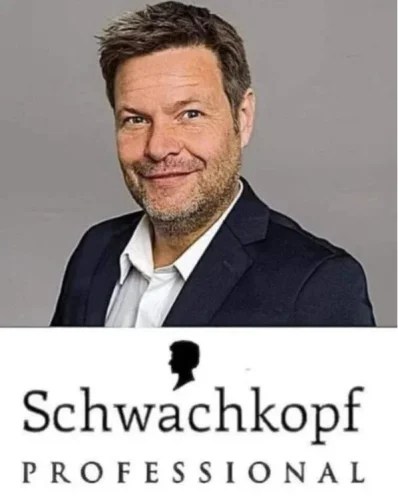
The offending image
The prosecutors statement said: “At a time that cannot currently be specified in more detail in the days or weeks before June 20, 2024, the accused published an image file using the account that shows a portrait of Federal Minister of Economics Robert Habeck with the title ‘Schwachkopf PROFESSIONAL’, based on the advertising campaign of the Schwarzkopf company, in order to generally defame Robert Habeck and to make it more difficult for him to work as a member of the federal government.”
The raid occurred in August, early in the morning when police officers entered the home of Stefan Niehoff, waking him and his family, which includes his wife and daughter. Niehoff, who had simply shared a meme that humorously altered a beauty care brand’s logo to feature Habeck, expressed his disbelief over the raid. He likened the aggressive enforcement to tactics used during the Communist era in East Germany.
This police action stemmed from a criminal complaint filed by Habeck himself, reacting to what he considered defamation that hindered his governmental duties. German law, refined during the tenure of the former Chancellor Angela Merkel, allows public officials to pursue criminal charges against perceived slanders relating to their official roles. Violations could result in fines or up to three years in prison.
The Vice Chancellor, along with other members of the Green party, has been an active participant in utilizing this law. Reports from the news outlet Junge Freiheit indicate that Habeck’s legal team continuously monitors social media for similar offenses, having filed 805 criminal complaints to date. His colleague, Foreign Minister Annalena Baerbock, has filed 453 such complaints.
Habeck, who wishes to become Germany’s leader, recently called for more online censorship, also calling for “the regulation of algorithms, of X or TikTok, through the application of European legal norms.”
New York’s New Equal Rights Act Will Weaken Parental Rights, Critics Say
By Michael Nevradakis, Ph.D. | The Defender | November 12, 2024
New York voters last week approved Proposition 1, a ballot measure that adds abortion rights to the state constitution and bars discrimination based on pregnancy and pregnancy outcomes.
The measure, passed with 61.9% of the vote, also protects against discrimination based on age, gender identity or sexual orientation, according to CBS News, which said, “Opponents say the vague language opens up a can of worms that could cause more harm than good.”
Indeed, some legal experts argue that instead of promoting equality, the Equal Rights Act, as the measure is officially known, enshrines discrimination and strips away parental rights.
Opponents of the amendment argue it would “open the door to men using women’s bathrooms and transgender athletes to compete on sports teams that match their gender identities” and “allow minors to get abortions without parental consent.”
New York attorney Bobbie Ann Cox campaigned against Proposition 1. She said the amendment was “unnecessary” because “anti-discrimination laws are already in place.”
Cox told The Defender :
“No new rights were endowed by Proposition 1. In fact, it is the opposite, because Proposition 1 actually restricts our rights. The language is clear: It says we (the people) are not allowed to ‘discriminate’ against the named classes, nor are our firms, corporations or organizations.
“This gives the government license to control us, our firms, corporations and organizations — because who do you think will determine what is deemed ‘discrimination’ or ‘hate speech?’ The government will.”
Michael Kane, founder of Teachers for Choice, told The Defender that Proposition 1 is state lawmakers’ response to grassroots efforts supporting medical freedom and parental rights during the COVID-19 pandemic. He said the state needed this law because “Teachers for Choice and our coalition partners have stopped all assaults on medical freedom and parental rights in Albany for the past five years.”
Kane added:
“Because of that, a group of Democrats from New York City put forth this ‘Equal Rights Amendment’ and rolled their wishlist of legislation into it, to go straight to the New York Constitution — because they knew they couldn’t get any of these crazy pieces of legislation passed in a real democratic process.”
Cox said the amendment “will result in complete totalitarian control” over New Yorkers. “It will flip our norms upside down, and give the government license to abolish our freedoms of speech, assembly, religion, family units and so on,” she said. “It is a Trojan Horse of the most epic kind.”
Kane said that despite the many protections the amendment promises, there are “no protections in Proposition 1 for health freedom, religious freedom or parental rights.”
Instead, the amendment “can and will be used to get parents out of the picture of all medical decisions for children,” Kane said. “This is why Proposition 1 says ‘you can’t discriminate’ against anyone based on ‘age.’”
Amendment gives government ‘power to discriminate against anyone’
The measure amends Article 1, Section 11 of the New York State Constitution on the equal protection of laws, which bans discrimination on the basis of “race, color, ethnicity, national origin, age, disability, creed, religion, or sex, including sexual orientation, gender identity, gender expression, pregnancy, pregnancy outcomes, and reproductive healthcare and autonomy.”
The second paragraph of the amendment adds:
“Nothing in this section shall invalidate or prevent the adoption of any law, regulation, program, or practice that is designed to prevent or dismantle discrimination on the basis of a characteristic listed in this section, nor shall any characteristic listed in this section be interpreted to interfere with, limit, or deny the civil rights of any person based upon any other characteristic identified in this section.”
According to Cox, this language enshrines reverse discrimination, giving the government “the power to discriminate against anyone they want, at any time, for any reason.” She also criticized the measure’s “vague” language.
“The language of Proposition 1 is vague and extremely broad,” Cox said. “It’s unconstitutional to have overly broad laws for this very reason — the true intent cannot be known, which then leads to courts making the decisions piecemeal, which causes inconsistencies and massive confusion.”
Cox said the ballot did not provide voters with the full text of the amendment. Voters saw only a summary that described the measure as an amendment that “would protect against unequal treatment.”
Writing on Substack last month, Cox called the summary “a total sham, as it doesn’t even give the whole story.” She said the amendment “will unleash a massive tidal wave of chaos upon our citizenry, upon normalcy, and upon all that we hold dear in our society,”
She said she believes the amendment will weaken parental rights, abolish girls’ sports and single-sex spaces, legalize reverse discrimination and result in the “chilling of free speech.”
Cox said claims that the amendment protects the right to an abortion were a “lie.” She said the word “abortion” did not appear on the ballot and that the measure differs from laws passed in other states that explicitly make clear what the state’s laws are regarding abortion.
New amendment to face constitutional challenges
According to CBS News, New York joined seven other states that have “passed measures protecting abortion rights” after the 2022 U.S. Supreme Court decision overturning Roe v. Wade.
Organizations including the New York Civil Liberties Union and the League of Women Voters of New York supported the measure.
Opponents of the amendment had difficulty overcoming support from these groups and key state officials, including Attorney General Letitia James.
Cox told The Defender she has formed a task force to explore legal avenues for challenging the amendment. She said policies the new administration may introduce might facilitate legal actions challenging the amendment.
“It’ll depend on what is done by Trump’s administration and how it is done,” Cox said.
Kane said the amendment “can and will be challenged as being a violation of the federal Constitution.”
This article was originally published by The Defender — Children’s Health Defense’s News & Views Website under Creative Commons license CC BY-NC-ND 4.0. Please consider subscribing to The Defender or donating to Children’s Health Defense.
Democrat Prosecutors Vow to Continue Trying to Jail Trump Allies as Party Floats Shadow Cabinet Idea
By Ilya Tsukanov – Sputnik – 17.11.2024
Republicans defeated Democratic candidates across the spectrum of electoral contests on November 5, winning the presidency, the House and the Senate. Federal and state lawmakers and governors have drawn up ‘resistance’ plans, while strategists debate the pros and cons of fighting Trump “to the death” versus “playing nice.”
Democratic prosecutors pursuing Donald Trump in his four federal criminal cases reportedly plan to ease off the pressure on the president-elect, but have vowed to continue fiercely pursuing his surrogates and allies, both at the federal and state levels.
“In all likelihood, the state criminal cases will be put on hold during Trump’s presidency. If they try to continue with the prosecutions, or even to impose a stayed sentence, I suspect the decisions will be reversed on appeal. It is even possible that the cases will be dismissed,” Syracuse University law professor Gregory Germain wrote in a post-election analysis of Trump’s legal status.
Citing the election interference case, Germain pointed to the Supreme Court’s July ruling that former presidents enjoy “absolute” immunity with respect to their “core constitutional powers,” which includes some protection against criminal prosecution, and said he’s confident that the Supreme Court would “uphold a self-pardon” for Trump, although such pardoning power doesn’t extend to state prosecutions.
For Trump’s allies, however, among them former chief of staff Mark Meadows, attorney Rudy Giuliani, and other lawyers and aides, the situation is not as rosy, Washington beltway outlet The Hill said in an analysis.
“In fact, with Trump effectively out of the picture, any limitations the Supreme Court’s presidential immunity decision would have put on the prosecution – barring certain evidence and causing further delays – are now gone,” the outlet said, paraphrasing Georgia State University law professor Michael Kreis.
Georgia Democrat and District Attorney Fani Willis, pursuing Trump in the Georgia election interference case, has vowed publicly to continue pursuing the president-elect, notwithstanding the election outcome.
“If someone has an indictment in this office, no matter who they are, we continue to pursue those charges,” Willis told local media this week. “I’m here for eight more years, is my plan. So if that’s what it takes for us to get some justice in some cases, we come to work every day, we’ll come to work and look for justice.”
Willis’s status in the Trump case is precarious and presently being decided by a Georgia appeals court after the discovery of her secret romantic relationship with Nathan Wade, the top special prosecutor in the case, which a judge earlier ruled to be a sign of “impropriety.”
Arizona AG Kris Mayes has similarly signaled that her office will not be dropping charges in the “fake electors” prosecution against Trump’s allies.
“I have no intention of dropping that case,” she said. “We won’t be cowed. We won’t be intimidated. And patriots across the country must stand up for our Constitution, for what is lawful.”
The judge in that case quit after the discovery of a controversial email which defendants said showed “utter contempt” for Trump, signaling intolerable bias.
Similar charges are facing Trump surrogates in Michigan, having been previously dismissed or challenged in Nevada, New Mexico and Pennsylvania.
Resistance’s New Idea: Shadow Cabinet
Trump’s imminent return to the White House with GOP majorities in both chambers of Congress has prompted Democrats to brainstorm strategies on what to do over the next 2-4 years, from “resistance” to his agenda at the state level by governors and local legislatures, to fighting his cabinet picks in the Senate by dividing Republicans against one another. Some strategists, pundits and politicians have also called for selective cooperation with the incoming administration, including picking their battles carefully and looking for “common ground when… circumstances dictate.”
Another idea – floated by Democratic-leaning media and North Carolina Democratic Congressman Wiley Nickel last week, is setting up a “shadow cabinet” – a British political tradition of appointing ‘shadow ministers’ (or in the US case ‘shadow cabinet heads’ for executive branch departments, like the Departments of Defense or Justice), to scrutinize government policy.
The shadow cabinet system presently exists in Commonwealth countries, and a handful of other nations, including Denmark, Italy, Japan, and occasionally, France (where the practice is uncommon).
“We need new ideas,” Nickel said of the initiative. “Democrats have to stop playing defense and start going on offense. It’s not enough to say we’re against Trump and his Project 2025 agenda. We have to say what we’re for, and that’s what’s really behind this idea, to get folks there to counter every cabinet agency, every position that Trump appoints.”
Nickel has called his idea “democracy’s insurance policy,” and indicated that the 26-member shadow cabinet could be appointed by Democratic House and Senate leaders.
“It’s really easy,” the lawmaker assured, floating Senator Adam Schiff as Shadow Attorney General, Representative Adam Smith as Shadow Pentagon chief, Representative Suzan Delbene as Shadow Commerce Secretary, and Representative Rosa Delauro as Shadow Health and Human Service Secretary, to name a few.
In the British tradition, shadow cabinets have no executive power. This means that even if the Democrats manage to set up an American version, they will not be able to implement their own agenda.
Ukrainian MP calling for dialogue with Russia jailed

RT | November 17, 2024
A court in Kiev has placed Ukrainian MP Evgeny Shevchenko in custody for two months after the authorities charged him with treason. Earlier this month, he urged Vladimir Zelensky to engage in dialogue with Russia.
Following the escalation of the Ukraine conflict, Kiev outlawed a number of opposition parties, including Opposition Platform – For Life, the second biggest party in terms of seats in parliament. The authorities cited the opposition’s presumed involvement in subversive activities.
Several individual MPs have similarly been prosecuted.
On Friday, the judge in Shevchenko’s case ruled that the lawmaker would remain behind bars until January 11, 2025. The day before, the Security Service of Ukraine (SBU) charged him with treason, accusing him of “systematically” spreading pro-Russian narratives in his speeches and online content. The authorities cited Shevchenko’s publications on Telegram and YouTube, describing them as “harming Ukraine’s defense capabilities and information security.”
The prosecutor also noted that since late 2020, the lawmaker traveled dozens of times to neighboring Belarus and met with President Alexander Lukashenko. Kiev does not recognize Lukashenko as the legitimate leader of the country, which is a key ally of Russia.
One visit in April 2021 resulted in Shevchenko being expelled from the ruling Servant of the People parliamentary faction.
Speaking to reporters on Friday, Shevchenko suggested that he was being targeted for political reasons. His defense lawyers called the case a hastily prepared concoction of materials.
In a post on Telegram last Thursday, Shevchenko called on Zelensky to “begin dialogue” with Russia. “I understand that you will have to go after that. But the country is more important than personal ambitions,” the lawmakers wrote.
He also offered to travel to Belarus and help mediate the process. The MP warned the Ukrainian leader that if he refuses to negotiate, “you will be forced to go… by those who applauded you yesterday in Western countries.”
Commenting on the suggestion, Andrey Yermak, the head of the Office of the President of Ukraine, said that some lawmakers “seem to be confused about issues of national security, national interests, and the future of the country.”
Shevchenko responded by urging Yermak to stop “eliminating” dissenting lawmakers, as “this won’t do Ukraine any good.” In a separate post on Telegram, he called for an end to the “political persecution” of these MPs.
“I wrote a letter to [US President-elect] Donald Trump and [VP-elect] J.D. Vance asking for assistance in putting an end to further authoritarianism, dictatorship, and lawlessness” in Ukraine, he added.
Rationality Triumphs over Fear in Federal Court
By Harvey Risch | Brownstone Institue | November 17, 2024
In a landmark decision in federal court, after a hung jury in the first hearing, the second jury found in favor of fired BART workers who had sued their employer after termination for filing vaccine mandate religious exemption applications. Each of the six plaintiffs in the case was awarded more than $1 million by the jury.
During the second year of the Covid-19 pandemic, governments and employers both private and public across the country instituted vaccine mandates requiring employees to have completed “full vaccination,” typically two doses of the mRNA vaccines, by set dates in fall 2021. Similar vaccine mandates were ordered for military personnel as well as college and university students.
In general, these mandates allowed that mandated individuals could file exemptions based on sincere religious objections or medical necessity, and if these exemptions were granted, employers were then required to seek, in good faith, accommodation positions where the exempted personnel could still work but would pose less of an infection risk to other employees, patients, customers, students etc. This process of exemption and accommodation was covered by Equal Employment Opportunity Commission (EEOC) rules.
According to the EEOC rules, as interpreted after the Groff v. DeJoy Supreme Court case which was decided in June 2023, employers have been required to establish that employees not satisfying vaccination mandates would create “undue hardship” in order for the employer to terminate the employee. The EEOC rules specify that infection risk, such as that occurring during the Covid-19 pandemic, constitutes a valid hardship risk, but what is in question is whether such risks constitute “undue” hardship as stated in Groff v. DeJoy.
In a sound and rational analysis, the EEOC rules (section L.3) attempt to quantify the degree of infection hardship risk:
“An employer will need to assess undue hardship by considering the particular facts of each situation and will need to demonstrate how much cost or disruption the employee’s proposed accommodation would involve. An employer cannot rely on speculative or hypothetical hardship when faced with an employee’s religious objection but, rather, should rely on objective information. Certain common and relevant considerations during the COVID-19 pandemic include, for example, whether the employee requesting a religious accommodation to a COVID-19 vaccination requirement works outdoors or indoors, works in a solitary or group work setting, or has close contact with other employees or members of the public (especially medically vulnerable individuals). Another relevant consideration is the number of employees who are seeking a similar accommodation, i.e., the cumulative cost or burden on the employer.”
These rules provide a framework for evaluating the degree of infection transmission risk posed by employees, both vaccinated and unvaccinated, in a workplace. What is remarkable here is that EEOC used the “does,” not the “can,” criterion. “Does” is rationality; “can” is fear.
In legal cases at deposition or testimony, science and medical experts are frequently asked questions such as “Doctor, can drug X cause bad event Y?” Medical and science experts live in a mental universe of science theories, and of course, there might be some possible circumstance where drug X could cause bad outcome Y. We were taught in medical school, “Never say never.”
The question however is not really asking whether, in theory, drug X could cause bad outcome Y, but rather whether here on planet Earth, such outcomes actually do happen. The opposing attorney is trying to get a sound bite from the expert that the drug is potentially harmful. So while the question as posed asks “could” (or “can”) the drug do damage, the correct answer from the expert is, “In theory, the drug could do this, but in real-life applications, the drug does not do this.” “Does” conveys a quantitative estimate of how often things actually happen, whereas “can” is a theoretical question with major fear potential.
In 2021, it was not just the general public that had been propagandized to excessive fear of Covid-19, but companies and governments were also made to be afraid. Thus, many company decisions were based on fear, on supposed “worst-case scenarios,” that disregarded the range of effects of the decisions in favor of supposed benefits for reduced risks of Covid infection transmission.
Compounding this problem, the vaccines did appear to reduce risks of Covid transmission during the first half of 2021, giving employers empirical evidence to support their thinking about vaccine mandates.
However, by the time the vaccine mandates were implemented in the fall of 2021, the widespread Delta strain of Covid-19 infection had largely escaped vaccine immunity (remember the first booster campaign?) and thus the evidence of Covid-19 transmission risk reduction for “full vaccination” required by the mandates was virtually gone—except that medical experts for the defendants in the BART and other cases were still using the earlier stale evidence to support their scientific assertions. This also violates EEOC rules which require the use of the latest scientific evidence.
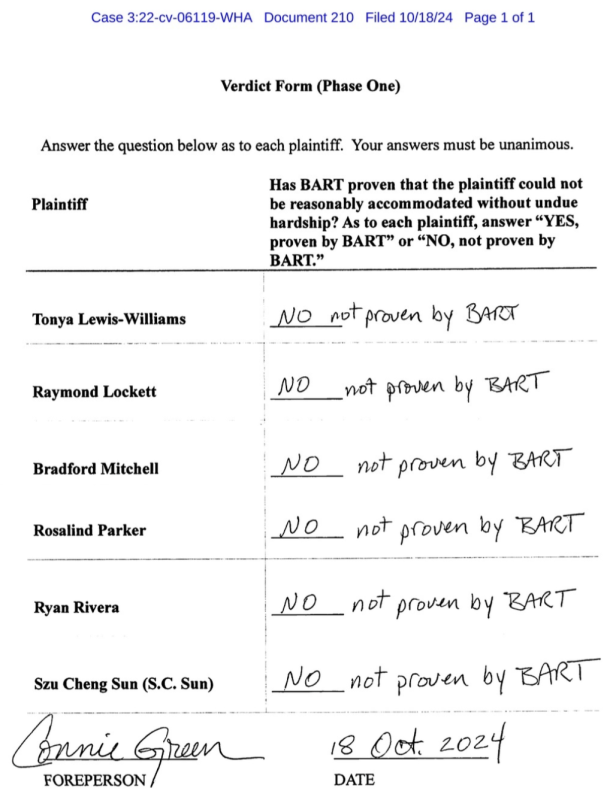
Thus in retrospect, as I had discussed in my testimony as an epidemiology expert for plaintiffs in the BART case, the jury appears to have eventually apprised the circumstances accurately: the small numbers of religiously exempt employees did not pose a major infection transmission risk in comparison to the large BART workforce or to the even larger BART ridership—patrons who themselves were not required to be vaccinated in order to ride the BART trains. In the case’s initial verdict form, the jury unanimously concluded, for each of the six plaintiffs, in response to the question, “Has BART proven that the plaintiff could not be reasonably accommodated without undue hardship?” they wrote, “NO, not proven by BART.”
That is, the fact that such individuals “could” pose infection transmission risks, did not establish an undue hazard that they “would” pose inordinate infection transmission risks. According to the rules laid out by the EEOC, rationality prevailed over fear in this case. One hopes that this legal precedent informs the many similar cases pending, of employees, students, and service members irrationally and unjustly terminated because of fear, not evidence.
Harvey Risch, Senior Scholar at Brownstone Institute, is a physician and a Professor Emeritus of Epidemiology at Yale School of Public Health and Yale School of Medicine. His main research interests are in cancer etiology, prevention and early diagnosis, and in epidemiologic methods.
Elon Musk’s X Sues California Over Deepfake Law Seen as Threat to Free Speech
By Dan Frieth | Reclaim The Net | November 16, 2024
Elon Musk’s X has initiated legal action against the state of California, seeking to prevent the enforcement of a new statute mandating that major online platforms either remove or label deepfake election-related content, as a violation of the First Amendment, particularly for its impact on memes and satire.
We obtained a copy of the lawsuit for you here.
The legal challenge was presented in a federal court earlier this week, focusing on legislation designed to curb the influence of artificially altered videos, images, and sounds, collectively known as deepfakes. The legislation is poised to become effective on January 1.
The law in question, Assembly Bill 2655, was signed as part of California’s efforts to safeguard the integrity of the upcoming 2024 US presidential election from the risks posed by technological manipulation. Governor Gavin Newsom, having clashed with Musk following Musk’s sharing of a parody video of Vice President Kamala Harris, aims to mitigate these alleged risks.
The legislation has sparked concerns among tech giants and free speech supporters, who understand that it suppresses user engagement and stifles free discourse and satire under the guise of curbing misinformation.
X’s legal challenge raises critical questions about the boundaries of free speech in the digital age, arguing that the law violates the First Amendment and Section 230 of the Communications Decency Act, which protects platforms from liability for user-generated content. By requiring platforms like X to preemptively label or remove content, the law, as X contends, “will inevitably result in the censorship of wide swaths of valuable political speech and commentary.”
“AB 2655 requires large online platforms like X, the platform owned by X Corp. (collectively, the ‘covered platforms’), to remove and alter (with a label) — and to create a reporting mechanism to facilitate the removal and alteration of — certain content about candidates for elective office, elections officials, and elected officials, of which the State of California disapproves and deems to be ‘materially deceptive,’” the complaint reads.
The complaint also states that “this system will inevitably result in the censorship of wide swaths of valuable political speech and commentary and will limit the type of ‘uninhibited, robust, and wide-open’ ‘debate on public issues’ that core First Amendment protections are designed to ensure.”
It goes on to say, “AB 2655 imposes a prior restraint on speech because it provides, pursuant to Sections 20515(b) and 20516, expedited causes of action under Section 35 of the California Code of Civil Procedure through which political speech can be enjoined before there occurs a ‘final judicial determination’ that the ‘speech is unprotected.’”
Finally, it states, “AB 2655 violates the First Amendment of the United States Constitution and Article I, Section 2, of the California Constitution, both facially and as-applied to X Corp. AB 2655 imposes a prior restraint on speech that forces platforms to censor only certain election-related content of which the State of California disapproves and also directly and impermissibly interferes with the constitutionally protected content-moderation speech rights of covered social media platforms, like X.”
The implications for satire are particularly severe, as highlighted by the case of the parody Harris videos. Although Governor Newsom’s office insists that AB 2655, also known as the Defending Democracy from Deepfake Deception Act of 2024, says it exempts parody and satire, the practical application of this exemption is murky at best since it was a parody video that was the impetus for Governor Newsom to push for the introduction of the law.
Pro-Palestine organization enraged by Canadian police raid against activist
Al Mayadeen | November 16, 2024
The Canada Palestine Association strongly condemned the excessive police brutality the Vancouver police exhibited against local pro-Palestine activist Charlotte Kates, a director of the Samidoun Palestinian Prisoner Solidarity Network.
The Samidoun network was recently blacklisted as a terrorist organization in Canada and the United States. Kates was also previously detained and charged with “hate speech” offenses in May.
The condition for her release was for her not to take part in any “protests, rallies or assemblies” until her court date of October 8, which was triggered by her stance of supporting the right of Palestinians to resist “Israel” and for saying “Long Live October 7” during a rally speech on April 26, the statement wrote.
However, Kates was arrested again on November 14 under claims of a “hate crime investigation” launched by the Vancouver police force, after a search warrant was issued for her home in Victoria Drive.
Kates’ neighbor expressed the neighborhood’s fear as police officers, who arrived at the location in an armored vehicle and full tactical gear, raided her home and broke a window at 9 am on Thursday.
“I’ve lived next to them for three years, and they’re absolutely lovely people. They’re just fighting for rights for people… I don’t think they’re dangerous or terrorists by any means,” another neighbor said.
Featured Video

It’s the Occupation, Stupid
or go to
Aletho News Archives – Video-Images
From the Archives
A superpower and “the world’s sickest warrior state”
By Paul J. Balles | March 8, 2010
Living through five or six major wars has hardened me to what I thought were the extremes of inhuman cruelty and brutality.
Two things made those extremes almost bearable: the brutality always revealed – at least according to the media coverage – the viciousness of the enemy. It was therefore quite understandable when our “brave men and women” pulverized the enemy.
Films of Japanese torturing captive Americans somehow justified holding Japanese Americans in internment camps during World War II; and only a small percentage of Americans found the bombing of Hiroshima and Nagasaki unreasonably vengeful at best, at worst, depraved.
The media giants in America portrayed the North Koreans as barbaric beasts with their captives, quite unlike their southern counterpoints – our allies during the Korean War. No one ever felt the need to explain how the South Koreans were a civilized breed while the North Koreans were absolute savages, at least according to the official line.
In Vietnam, our warriors justifiably (or so the media made us believe) dropped napalm on the North Vietnamese who had the gall to hide in villages and tunnels to ravage our invaders. At least it was accepted practice until some rogue photojournalist filmed a young girl screaming down a Vietnamese road in flames. … continue
Blog Roll
 Aletho News
- How Indonesia’s tilt toward the US left it stranded in the Strait of Hormuz
- US has no choice but to retreat from Iranian borders: Top commander
- Iran Retaliation Strikes Chemical Plant Near Dimona
- AWACS’ Destruction is a Major Loss for US Military – Ex-DoW Analyst
- Israel’s Iran Strategy Uses US Military & Gulf States as Its Pawns
- Iran: Trump wanted regime change, now just begging for Hormuz to open
- IRGC: Israeli, US universities in region legitimate targets after strikes on Iranian university
- Trump admits Iran hit USS Ford carrier: ‘We ran for our lives’
- Battle for Hungary: EU attacks on Orban are a sign of worse things to come
- Iraqi resistance conducts drone strike on US-run base in Syria
- If Americans Knew
- Israel is assassinating journalists again, more than any other nation, anywhere, ever – Not a ceasefire Day 170
- Over 300 US service members wounded, majority have brain injuries – Not a ceasefire Day 169
- Researchers at Human Rights Watch Resign Over Blocked Report on Palestinian Refugee Return
- Jewish Groups Are Backing a War Americans Don’t Want
- Eric Fingerhut Thinks He’s the President of the Jews
- Top Jewish Philanthropists, Rabbis Urge Israeli President to Take Action Against ‘Jewish Extremists’
- Don’t Be Fooled. Zionist Leaders Have Always Wanted to Control Southern Lebanon
- Israel’s widespread use of torture is a core element of its genocide against the Palestinian people
- In Israel’s War on Iran, Many Middle East US Bases Rendered “All But Uninhabitable”
- ‘Burn the lawn’: Israel pursues ‘Rafah model’ in southern Lebanon
- No Tricks Zone
- German Science Blog Accuses PIK Climate Institute Of Hallucinating Climate Tipping Points
- Devastating Assessment Of Comirnaty Vaccine By Former Senior Pfizer Europe Toxicologist
- New Study: CO2 Is ‘Effectively Negligible’ As An Explanatory Climate Change Factor Since 2000
- Former Pfizer Toxicologist Dr. Helmut Sterz Tells Bundestag Hearing Pfizer Vaccine Should Have Never Been Approved
- Energy Expert: Germany’s Nuclear Phaseout Was A “500 Billion Euro Mistake”
- New Research: South Australia’s Mid-Holocene Sea Surface Temperatures Were 4°C Warmer Than Today
- Storing Green Energy To Last Germany 10 Days Would Require A 60-Million Tonne Battery
- New Studies: UK Sea Levels Were 4 Meters Higher Than Today During The Mid-Holocene
- Destructive Green New Deal: German Energy And Metal Group Warns Of Drastic Crisis
- New Study Documents A 20-Year Pause In Arctic Sea Ice Decline – Driven By Internal Variability
 Aletho News