Oakland dedicating anti-terrorism funding to surveillance supercenter
RT | October 14, 2013
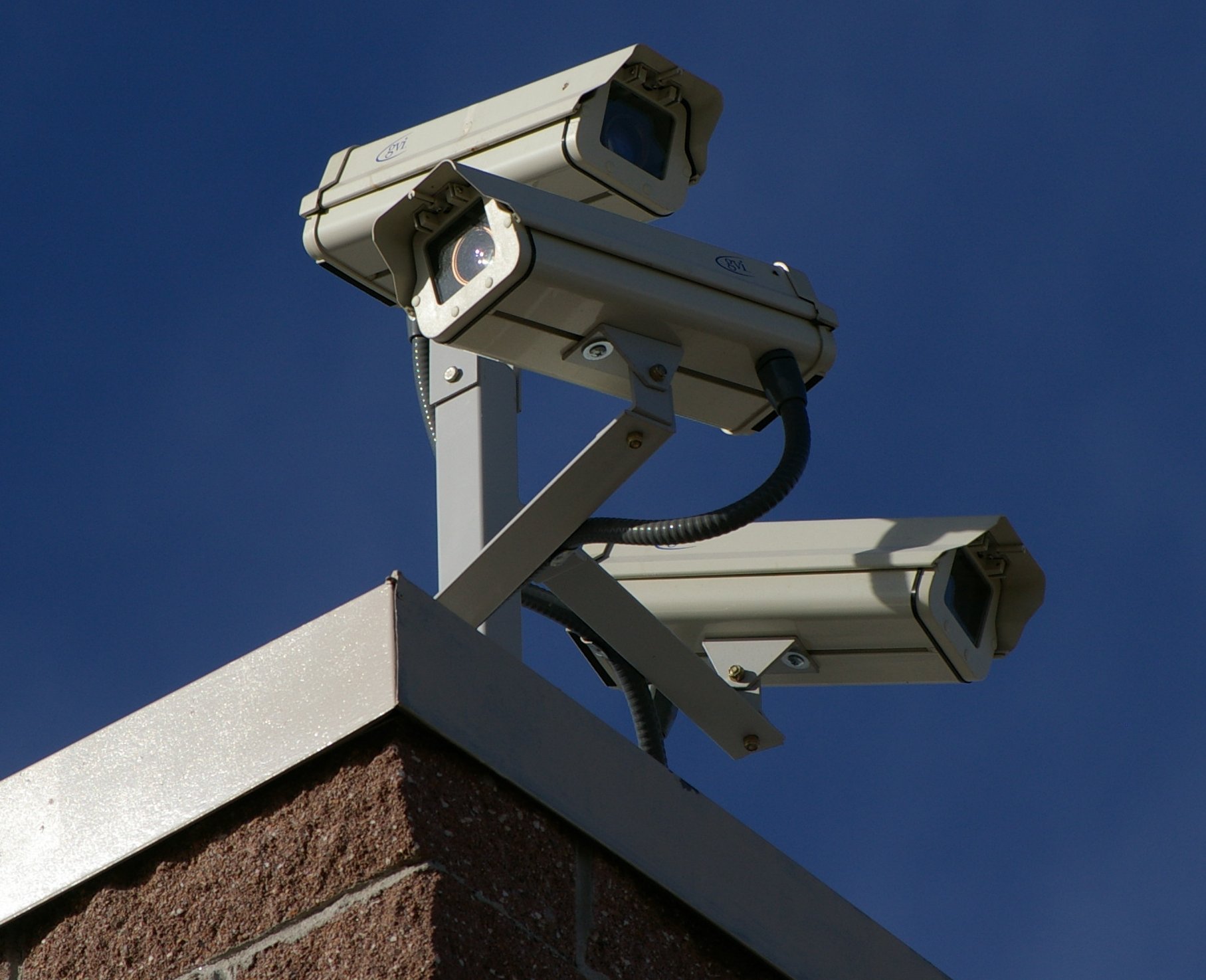 Lawmakers in Oakland intend to spend millions of dollars awarded to the California city in a federal grant to a police dragnet that promises to examine surveillance footage, riling critics who assert the intention of the grant was to stop terrorism.
When the new program debuts in approximately one year police will be able to track drivers as they travel through tolls, scan license plates with the roughly 3,000 surveillance cameras placed throughout the city, and monitor social media platforms to learn about crimes before they occur.
The Oakland program, officially referred to as the Domain Awareness Center, according to the New York Times, comes at a time when police departments across the US are using federal money to launch similar surveillance efforts modeled after the New York Police Department. The NYPD, which operates within New York City as well as far outside, has used federal grants to build a massive surveillance network capable of linking cameras and license plate readers to criminal and suspected terrorist databases.
The Domain Awareness Center also plans to plant gunshot detection sensors through Oakland, which is consistently ranked among the most dangerous cities in the US. Forbes magazine reported that violent crime affects 1,683 of every 100,000 residents in the city, making it the third most dangerous city in America with a population between 100,000 and 499,000 in 2013.
The Oakland City Council voted unanimously on July 31 to adopt the plan to build the surveillance center, which officials have said will be staffed 24 hours a day. Lawmakers voted at the same meeting to ban hammers and spray paint cans at protests in fear that the items will be used as weapons. Waiting outside, protesters admonished council members with chants of “Shame! Shame! Shame!”
“The Domain Awareness Center is the guard tower which will watch over every person in the city of Oakland,” shouted demonstrator Mark Raymond, as quoted by the San Francisco Chronicle. “This program is an attempt to criminalize and imprison all people who live and pass through Oakland.”
All told, the surveillance center’s costs are expected to total $10.2 million in federal grants, and while legislators said they were cognizant of residents’ security while drafting the bill some representatives were shouted down.
“We have tried our best to find the sweet spot where are going to take advantage of the tools that we have at hand to make our city safe… We have done everything we can to safeguard privacy,” said councilwoman Libby Schaaf before she was cut off by jeers and one protester who suggested she “go home to your mansion and kill yourself.”
Schaaf did admit that, while police have traditionally needed just a small evidence sample to arrest a suspect, the new center will have the capability to “paint a pretty detailed picture of someone’s personal life, someone who may be innocent.”
Oakland was awarded a federal grant to ramp up security near the Port of Oakland, a thriving cargo center that is one of the busiest in the US. The 19-mile waterfront is the fifth-busiest container port in the US, with 1,800 ships arriving every year, according to the San Francisco Chronicle. Over $14 billion in goods were exported from the bustling hub in 2012.
To protect the port, and watch civilians throughout the region, Oakland signed a contract with Science Applications International Corporation (SAIC) to build the Domain Awareness Center. The company, which earns most of its $12 million in annual revenue from military contracts, also worked with the NYPD but later paid $500 million to avoid a federal prosecution for receiving illegal kickbacks.
The Times reported that this project is not the first time Oakland has sought to develop such technology. A city audit viewed by the paper revealed that lawmakers spent nearly $2 million in 2012 alone on police tools that did not work or could not be used for a variety of reasons.
Linda Lye, an attorney with the American Civil Liberties Union, said this project might work as intended, but that mere intention already creates a scary problem.
“What they did is approve a vast surveillance center without understanding the implications,” she said earlier this year. “The privacy policies would be drafted only after the center is built. At that point, what opportunity will there be for to determine if the safeguards are sufficient?”
Related article
Apple Makes Questionable Copyright Claim To Pull Down iTunes Contract
By Mike Masnick | Techdirt | October 14, 2013
There had been some buzz a while back when Digital Music News published an entire iTunes Radio contract, which was targeted at smaller indie labels, showing how Apple got to throw its weight around, presenting terms that were very much in Apple’s favor over the labels if they wanted to participate in iTunes Radio. However, while it took a few months, Apple’s lawyers finally spotted this and they have apparently made a copyright claim to get the contract taken down. I wonder how the small group of indie musicians who always fight for stronger copyrights feel about Apple using copyright to take down rather important information that they should know concerning the sort of deal Apple offers them….
While this may be possibly legal under the law, it demonstrates how the law can be used in ways that really have absolutely nothing to do with copyright’s purpose. Apple didn’t need copyright’s incentives to create this contract. There is no market for the contract itself. The purpose in flexing the copyright claim here is one thing and one thing only: censorship. As law professor Eric Goldman explained:
“It’s not out of legal bounds to do this. It’s just kind of a jerk move. We all know what’s happening here. Apple doesn’t care about protecting the copyright of contracts. It’s using copyright to try and suppress information that it doesn’t want made public.”
That said, I question whether or not this really is a legit takedown. While Apple can claim a copyright on the contract, it seems that DMN has a really strong fair use claim. The purpose was for reporting (a key purpose that supports fair use). The publication was in the public interest. The type of work is a “contract” for which copyright tends to mean very little. Finally, there’s no “market” for the contract itself, and thus the impact on the market or the value of the copyright in the item is nothing. The only factor that weighs against it is the fact that the entire contract was used — but as we’ve pointed out many times in the past, plenty of cases have been deemed fair use where the “entire work” has been used. This seems like a perfectly strong fair use case, though it might not be worth the legal cost to fight Apple over this, given the company’s historical willingness to go absolutely bonkers against publications it doesn’t like.
US denies lawyer for abducted al-Libi
Press TV – October 12, 2013
 A federal judge refused on Friday to allow a court-appointed attorney to represent Abu Anas al-Libi, a Libyan man who was abducted by US military forces in Tripoli on October 5.
The refusal came after some US defense lawyers from the Federal Defenders of New York demanded to be allowed to represent al-Libi, arguing there is no legal basis for holding him “offshore” on a navy vessel.
However, US District Judge Lewis Kaplan claimed it was premature because the Libyan man has not apparently been formally arrested.
“The government denies that any federal criminal arrest has taken place, and there is no evidence to the contrary,” wrote Kaplan.
Kaplan also said even if an arrest is made, the appropriate time to assign counsel would depend on the first court appearance.
Al-Libi was abducted over his alleged involvement in the 1998 twin bombings of US embassies in Kenya and Tanzania and is believed to be held in military custody and interrogated on board a navy ship, the USS Antonio, in the Mediterranean.
According to a law enforcement source, authorities in New York have not indicated when or if he might be brought to the US.
Kaplan said that the Federal Defenders have expressed concerns about the legality of the man’s detention but added that the matter is outside his jurisdiction.
Officials say al-Libi has not been Mirandized, and is facing open-ended interrogation on the ship without access to a lawyer.
Even US Secretary of State John Kerry last week defended al-Libi’s abduction as “legal” and “appropriate.”
Dr. Randy Short, an American human rights activist, who talked Thursday to Press TV on the arrest of al-Libi, said “I am just intrigued that the same government that funded al-Qaeda to destroy Libya” and “the same government [that] funds and supports al-Qaeda which is fighting and killing people in Lebanon and in Syria now goes back retroactively and attack someone who may have even been in their service”.
Luxembourg NSA dragnet hauls in Skype for investigation – report
RT | October 12, 2013
Once heralded as a communication tool free from eavesdropping, Skype is now reportedly under scrutiny for secretly and voluntarily handing over personal data on users to government agencies.
The Microsoft-owned instant-messaging site, used by some 600 million people worldwide, is being probed by Luxembourg’s data protection commissioner over concerns about its secret cooperation with the US National Security Agency’s Prism spying program, according to a report in the Guardian, the UK newspaper that first broke the story on NSA whistleblower Edward Snowden.
Skype, believed to be the first Internet company among many to be brought within the NSA program, could potentially face criminal and administrative charges, as well as hefty fines if it is found to be in violation of Luxembourg’s data protection laws.
If found guilty, Skype [could] be banned from passing along user data to the US spy agency, the newspaper reported.
The Luxembourg commissioner initiated an investigation into Skype’s privacy policies following revelations in June about its ties to the NSA, the Guardian said. No additional comments were immediately available.
Microsoft’s purchase of Skype for $8.5 billion in 2011 “tripled some types of data flow to the NSA,” the Guardian said, citing secret documents in its possession.
But even before the Microsoft buyout, Skype had initiated its own secret program, dubbed Project Chess, which sought ways of making customer communications “readily available to intelligence agencies and law enforcement officials,” The New York Times reported.
According to the NSA files shown by Snowden to the Guardian, Skype was served with a directive to comply with an NSA surveillance request signed by US Attorney General Eric Holder in February 2011. Several days later, the NSA had successfully monitored its first Skype transmission.
Skype, founded in Estonia in 2003 and now headquartered in Luxembourg, is facing a public backlash in the wake of the Prism disclosures.
“The only people who lose are users,” Eric King, head of research at human rights group Privacy International, said in comments to the Guardian. “Skype promoted itself as a fantastic tool for secure communications around the world, but quickly caved to government pressure and can no longer be trusted to protect user privacy.”
Beware of Poison Pill Spying Reform
By Robyn Greene | ACLU | October 10, 2013
In the wake of revelations over the last few months about massive NSA surveillance programs that violate the privacy of millions of innocent Americans, members of the congressional Intelligence Committees have begun to draft legislation that they say will reform these authorities. There’s just one problem – unlike reform bills proposed by other members of Congress, the Intelligence Committees’ bills might do more to entrench domestic surveillance programs than rein them in.
At a Senate Intelligence Committee hearing last month, Sen. Dianne Feinstein (D-Calif.) described her proposals, and one thing is clear: they won’t fix anything. In fact, they may even make government surveillance worse. They include:
- Legalizing the warrantless wiretapping of people known to be located in the U.S. for 7 days where that surveillance began abroad; and
- Legalizing queries of U.S. persons’ names or e-mail addresses without probable cause, so long as it is for “articulable foreign intelligence purposes.”
These changes would represent significant expansions of the NSA’s domestic surveillance authorities under Section 702 of the FISA Amendments Act, an already overly broad law that authorizes the suspicionless surveillance and collection of millions of Americans’ communications, including the contents of their emails.
Sen. Feinstein’s proposal also wouldn’t reform the bulk collection of Americans’ call records but actually put Congress’s stamp of approval on the unconstitutional and indiscriminate surveillance program. Her tweak to the program includes:
- Changing how the NSA accesses Americans’ phone records but NOT limiting whose records are swept up in the NSA’s bulk telelphony metadata program, under Section 215 of the Patriot Act.
The purpose of this reform, according to Sen. Feinstein, is “to change but preserve [the] program.” She is clear that she has no intention to fix the law or to rein in the dragnet collection of Americans’ call records. These changes would merely limit who can access the records and would codify the requirement that there be a “reasonable articulable suspicion that a phone number is associated with terrorism in order to query it.” This does not limit the current “3 hops” rule that may be sweeping up millions of additional Americans’ numbers into NSA databases or add any additional privacy protections.
To be fair, Sen. Feinstein’s proposals do include reporting requirements, such as making public the number of phone numbers queried by the NSA each year, and accountability measures, such as Senate confirmation of the director of the NSA. While these proposals for increased transparency and oversight would be important additions to these surveillance programs, they do not fix them. They do not stop the NSA’s mass surveillance of millions of innocent Americans.
As Congress considers the two dozen bills that have been introduced so far, it should ensure that, at a minimum, reforms include:
- Ending bulk collection of Americans’ information under Section 215 of the Patriot Act;
- Prohibiting suspicionless, dragnet collection of Americans’ communications under Section 702 of the FISA Amendments Act;
- Increasing transparency of domestic surveillance programs with public reporting by the government and private sector, and limiting the issuance of gag orders associated with national security informational requests; and
- Allowing public judicial review of the NSA’s sweeping surveillance programs.
The good news is that dozens of members of Congress – like Sen. Patrick Leahy (D-Vt.), Sen. Ron Wyden (D-Ore.), and Rep. Jim Sensenbrenner (R-Wis.) – are already hard at work to pass fixes that would take big steps toward reining in the NSA’s domestic surveillance programs. And don’t forget that Rep. Justin Amash (R-Mich.) got the House within 7 votes of defunding the bulk call records collection program altogether this summer. The momentum for reform is strong.
Despite this, Feinstein and some of her colleagues in the Senate and House Intelligence Committees are working on a proposal that would expand the NSA’s domestic surveillance authorities. In just a few short hours, the Senate Intelligence Committee will mark it up in secret, without even publicly releasing the initial draft language.
Americans are tired of excessive surveillance and secrecy. It’s time for Congress to legislate on these programs in the daylight and to pass real reforms.
Related articles
- Political Moves: How Dianne Feinstein Cut Off One Of The Few Attempts At Actual Oversight By Senate Intelligence Committee (alethonews.wordpress.com)
- Feinstein’s Senate Committee Defends NSA Phone Surveillance, Pushes Bill to Retain It (alethonews.wordpress.com)
- Feinstein’s NSA ‘reform’ bill would expand snooping powers (EndtheLie.com)
US opens drone facility in Germany, insists ‘not for spying purposes’
RT | October 9, 2013
As two new US ‘Hunter’ drones are set to start traversing German airspace next Monday, the army remains firm that they will be used solely for training drone operators rather than spying purposes, and will not be carrying weapons.
The Unmanned Aerial System (UAS) facility was officially opened at Vilseck Army Airfield on Monday by 7th Army Joint Multinational Training Command (JMTC). A letter of agreement between US and German authorities allows them the use of two ‘air bridges’ in the east of the country to train operators, it will be the first time a US unmanned aerial vehicle will fly beyond the limits of military training areas.
Hunter MQ-5B systems will span the distance between Hohenfels and Grafenwoehr, in the south east of the country, about 100km east from Nuremberg. Hohenfels is approximately 100km further south from Grafenwoehr.
The project has sparked concern after news began to leak out this summer. The US army has been channeling its efforts into gaining approval for the mission since 2007. “Some reports came out before we even knew we had approval,” Brig. Gen. Walter E. Piatt, JMTC Commander told Stars and Stripes.
Local communities have expressed apprehension about US drones being in German airspace. Germans are concerned about potential violation of their freedoms after the drones come into operation. The recent scandal surrounding NSA spying activities in Germany and the protests that followed, has heightened public skepticism.
“It’s a big issue here in general, and it’s a very German topic,” Constanze Schulze, a reporter for ARD Bavaria stated. “There are many discussions going on about unmanned units, and of course there is some concern. I think that’s why you see so many reporters here [in Vilseck]. Everyone is talking about it.”
Politicians have also expressed concerns. Reinhold Strobl of the Social Democratic Party of Germany (SDP) said that the public was informed “too late” and that there was “inadequate” information provided by the German authorities and US military ahead of the deployment. If it was not for test flights conducted in July, the politician says, Germans would have been left completely in the dark.
Other politicians complained about the noise, saying that drones that reach 175kph “have the volume of a lawn mower,” according to Peter Braun, the mayor of Schmidmühlen.
Richard Reisinger from the Christian Social Union Party (CSU) also said that the way the public was informed about the issue lacked transparency. “What happens to the collected data?” he asks, expressing concern of potential risk of information misuse that would violate privacy.
When Snowden’s leaks were first revealed, German Chancellor Angela Merkel claimed that she learned of the US surveillance programs through press reports. However, it later came to light that Germany’s BND intelligence service sends “massive amounts” of intercepts to the US and UK daily. Such revelations sparked a wave of protests across Germany calling on the government to provide more privacy and stop US spying activities.
Hunter MQ-5B are currently the largest and most advanced of their type, and will not be armed, and will be controlled from the ground. The distance apparently reflects that which soldiers would have to navigate in Afghanistan, operators said. The vehicle will travel between approximately 11,000 and 14,000 feet in the sky.
“The air bridge will only be used for transit between the two training areas,” according to Col. John Norris, Commander of the Joint Multinational Readiness Center in Hohenfels. He added that “no UAS will carry weapons through the air bridge.”
Drone operator Sgt. Carson Wilson reiterated that Germans had no need for concern. “We’re here to let people know the camera is only to avoid obstacles, not to watch what people are doing,” he said.
“Although we only use UASs at JMTC to train Soldiers — they are not armed, nor do they record data when in flight,” said Piatt. “We understand that our German neighbors have concerns and we want to make sure we address those concerns.”
On Tuesday, an open house was hosted that was aimed at alleviating any worries the German population may have over the presence of US drones. On Wednesday, local media were invited to explore the new facility.
“I wanted to invite our German neighbors and members of the press to come in and see the facility, see and handle the UAS aircraft that are flying at the Grafenwoehr and Hohenfels training areas and speak directly with the soldiers who maintain and fly them,” Piatt said.
During the event, two other types of UAS were displayed alongside the Hunter: the Raven and the Shadow. The vehicles were accompanied by their respective operators, maintenance crews and translators for each one. So attendees would be informed about what the training would entail, maps of the air corridors were on display alongside the vehicles that would navigate the routes.
JMTC officials said that the training with UAS is just one of many US army tools in the area, alongside fire ranges and simulation resources to prepare forces for conflict and battlefield strategy.
“Hopefully, this shows that we aren’t keeping any secrets here,” Piatt said.
Brazilian lawmakers press Greenwald for greater detail on Snowden’s NSA leaks
RT | October 10, 2013
Brazilian lawmakers indicated that, in lieu of direct teleconferences with Edward Snowden to gain further insight into allegations of NSA spying in their country, they may seek to seize documents now held by American journalist Glenn Greenwald.
On Wednesday Greenwald spoke to Brazilian senators currently investigating evidence of US as well as British and Canadian espionage in the Latin American country.
The legislators are part of a probe into potential foreign surveillance — the Comissão Parlamentar de Inquérito, or CPI — called into action by President Dilma Rousseff in the wake of initial news reports alleging that even the president’s online communication had been intercepted.
Greenwald, who appeared along with his partner David Miranda, a Brazilian national, broached several topics during the hearing, including the possibility of granting asylum to NSA contractor turned whistleblower Edward Snowden.
So far, Brazil has been vague as to whether it would seriously consider extending Snowden, who is currently residing in Russia, an offer of political asylum.
“There are many nations saying, ‘We’re glad to be learning all this information,’ but almost nobody wants to protect the person responsible for letting the world discover it,” Greenwald told the panel.
In the meantime, Brazilian legislators seem eager to find out the extent of foreign surveillance on the country in greater detail.
To that end, the country’s government — specifically, the CPI inquiry — is now seeking to establish teleconferencing sessions with Snowden.
Asked by the commission to turn over documents obtained through the whistleblower Greenwald refused, citing the need for a separation between journalism and government. His partner, Miranda, also cited that divulging the documents would constitute an “act of treason” and prevent Greenwald from entering the US again.
One Brazilian Senator, Ricardo Ferraço, went so far as to suggest that the government commission seek the authority of the country’s courts to seize documents now held by Greenwald if such communication with Snowden proved unfeasible.
Unlike allegations of NSA surveillance in the US, coverage of the agency’s activities in Brazil have taken on a broader scope, and in particular centered on the country’s economy.
Greenwald himself has shaped the narrative of Snowden’s disclosures through his testimony to Brazil’s government, as well as his work with the O Globo newspaper and Rede Globo’s news television.
In August, the journalist told Brazil’s government that alleged American espionage in Brazil was centered on gaining economic advantages rather than on any national security concerns.
“We now have several denunciations that show that the spy program is not about terrorism. It is about increasing the power of the American government,” Greenwald told senators on Wednesday, speaking in Portuguese.
In the most recent report last Sunday, Greenwald said on Globo network television that Canadian spies had targeted Brazil’s Mines and Energy Ministry, intercepting the metadata of phone calls and emails passing through the ministry.
The impact of the steady stream of surveillance allegations on Brazil has been swift. Last month Petrobras announced that it would be investing $9.5 billion over the next five years to heighten its data security.
Meanwhile, Communications Minister Paulo Bernardo announced that the country’s government was pursuing legislation requiring domestic data exchanges to use locally made equipment.
Related articles
- Brazilian president postpones visit to Washington over US spying (alethonews.wordpress.com)
- Canadian spy agency ‘dissected’ Brazilian Energy Ministry (alethonews.wordpress.com)
NSA’s vast new Utah data hub suffering from ‘meltdowns’ – report
RT | October 8, 2013
Though the NSA’s vast data storage facility in Utah is now hardly a secret, new information has surfaced indicating widespread technical failures delaying its opening, including 10 “meltdowns” within the past 13 months.
The Pentagon’s facility, located in Bluffdale, which lies south of Salt Lake City, is being built to house a gargantuan quantity of data harvested, presumably, by many of the NSA’s surveillance programs now made public by former intelligence contractor Edward Snowden.
Estimates of the facility’s capacity, which is classified, ranges from exabytes or zettabytes, reports the Wall Street Journal. An exabyte being equivalent to 100,000 times the size of printed material held by the Library of Congress, while a zettabyte is 1,000 times that amount.
A new report compiled through project documents and information provided to the WSJ by officials cite a number of electrical surges — called “arc fault failures” — which over the past 13 months have destroyed hundreds of thousands of dollars’ worth of equipment, and delayed the facility from going active for a year.
According to one official, such arc fault failures can resemble “a flash of lightning inside a 2-foot box” and can melt metal and destroy circuitry.
Speculation as to whether the NSA’s facility in Utah is already active has been rampant, and indications are that its equipment is being slowly brought online as it becomes available, rather than in one dramatic on-switch moment.
“We turn each machine on as it is installed, and the facility is ready for that installation to begin,” NSA spokeswoman Vanee Vines told the Salt Lake City Tribune in late September.
The $1.5 billion facility is estimated to be not only the NSA’s largest data center, but the largest in the world, with some 1 million square feet of space. Engineers have said the center will dwarf even Google’s largest data hub.
Special teams from the Army Corps of Engineers have been assigned to investigate the electrical issues at the Utah center. The most recent arc failure according to the WSJ seems to have occurred on September 25, causing $100,000 in damage. The first such reported failure is thought to have taken place on August 9 of last year.
So far the information available indicates that the reason for the technical failures remains in dispute. A statement issued by a consortium of private contractors currently working on site eluded to the sheer complexity of the data warehouse as the culprit.
“Problems were discovered with certain parts of the unique and highly complex electrical system. The causes of those problems have been determined and a permanent fix is being implemented,” said the firms.
According to various reports, including the latest by the WSJ, the Bluffdale site was chosen by the NSA owing to its affordable electricity. The data hub will consume some 65 megawatts of energy at a cost of $1 million per month.
Beyond its logistical hurdles, the NSA’s data hub will also open amidst heightened scrutiny. Lawmakers including Senator Ron Wyden, a member of the Senate Intelligence Committee who recently questioned whether the NSA has also been harvesting geo-location data, have expressed a need to lay out just how the NSA will justify the collection of an increasingly dramatic amount of data.
“There is no question there is going to be increased scrutiny of these kinds of practices,” said Wyden, “because Americans understand this is a dangerous time, but the government, if it’s going to collect [this information], ought to have to say here’s how it contributes to security of the American people. They have not made that case.”
Only a week prior to Edward Snowden’s first batch of published leaks, the massive Utah center had been billed by the agency’s Deputy Director, John Inglis, as only one additional working part of the country’s national security apparatus.
“They shouldn’t be worried because, A, we’re Americans,” Inglis said. “We understand what the principles are that govern the nation; [and] B, we take an oath to the Constitution, and we take that very seriously.”
Muslim Fights Placement on Watch List
By NICK DIVITO | Courthouse News | October 3, 2013
MANHATTAN – A Muslim man says he has been unable to visit his ailing mother for over two years because he refused to spy for the FBI and is now on the no-fly list.
Muhammad Tanvir says he is not the only one who the FBI unlawfully placed on the no-fly list “in retaliation for their refusal to work as informants against their communities and submit to questioning.”
The Queens man says his predicament has left him unable to visit his ailing mother in Pakistan for over two years, and that it has burdened his practice of Islam.
He notes that he is a lawful permanent resident employed at a 99-cent store in the Bronx who has “never been convicted of a crime nor does he pose any threat to aviation safety.”
The FBI declined to comment.
Though the no-fly list is supposed to represent a list of suspected terrorists, the American Civil Liberties Union calls it “a draconian tool to coerce Americans into spying on their communities.” In this case, Tanvir is represented by Shayana Kadidal with the Center for Constitutional Rights.
After refusing FBI agents’ request that he serve as an informant in his predominantly Muslim community and landing on the no-fly list, Tanvir says he reached out to the FBI to clear things up. Instead of helping, FBI agents offered to take him off the list in exchange for information.
Tanvir, who has lived in the United States since 2002, again refused.
“Mr. Tanvir has been prevented from flying despite the fact that he does not present any threat to aviation security,” the lawsuit states. “Instead, defendants sought to exploit the draconian burden posed by the No Fly List – including the inability to travel for work, or to visit family overseas – in order to coerce him into serving the FBI as a spy with American Muslim communities and places of worship.”
Named as defendants are FBI Director James Comey; Terrorist Screening Center Director Christopher Piehota; Acting Secretary of Homeland Security Rand Beers; and Transportation Security Administration Administrator John Pistole.
The FBI agencies are responsible maintaining the Terrorist Screening Database, which includes the no-fly list.
Tanvir wants the court to declare as unconstitutional the FBI’s alleged practice of placing people on the no-fly list for not cooperating, then using an offer to remove them as a bribe for information.
He also wants off the list, along with damages.
Related article
Featured Video

Why Hamas Really Attacked Israel on Oct. 7
or go to
Aletho News Archives – Video-Images
From the Archives
Confronting the Threat of Ethnic Bioweapons
By Tony Cartalucci – New Eastern Outlook – 29.11.2017
The United States Air Force’s 59th Medical Wing’s molecular biology branch recently was revealed to have been collecting specifically Russian RNA and synovial (connective) tissue samples, prompting fears in Russia of a possible US directed ethnic-specific bioweapons program. … continue
Blog Roll
 Aletho News
- Meet the US generals and admirals advancing Israeli policy
- Israel’s Straw Widow Protocol: The Kill Zones Where Civilians Were Labelled ‘Terrorists’
- Leading Israeli Think Tank Publishes Psychotic Israeli ‘National Security’ Doctrine
- Are the United States and Israel in Decline-and-Fall Mode?
- Why Hamas Really Attacked Israel on Oct. 7
- Declassified UK exposes British man who fought for ‘Israel’ in Gaza
- West’s death cult in a theater near you
- How the Yandex ‘Russian bots’ lie fell apart
- Burnham’s ‘Russia did Brexit’ ruse crumbles
- Estonia making movies and games to encourage war against Russia
- If Americans Knew
- Gaza’s “ceasefire” death toll passes 1,500 – Daily Update
- Activists Abused By Israel Return to New Freedom Flotilla Mission
- 60 Minutes won’t tell the full truth about Israeli settler violence
- Nearly 50,000 women, girls killed or severely injured in Gaza since October 2023: UN Women
- ADL is working with AI companies to suppress alleged ‘antisemitism’
- Israeli occupation forces using social media surveillance unit to target hundreds of Palestinians in the West Bank
- Israel’s New – and Terrifying – Security Doctrine
- Israeli Attacks Kill Five in Gaza, Including a four-year-old and a woman
- Air Force Major Who Called for Trump’s Impeachment Held in Solitary Confinement
- It’s a Genocide, I’m Into It’: Seinfeld Mocks Protest over Palestinian Children Killed
- No Tricks Zone
- New Study Suggests Large Regions Of The Pacific Ocean Have Been Cooling For The Last 80 Years
- Germany’s Green Energy Debacle: High Energy Costs Force Kahla Porzellan to Close After 182 Years!
- New Study: 50 Years Of The Most Aggressive ‘Net Zero’ Policies Can Only Affect The Global Climate By 0.03°C
- US September “Heat” Was No Record…Many Records Set Decades Ago
- Latest European Green Energy Debacle; Portugal’s Largest Flagship Solar Park Insolvent!
- Green Energy Debacle: German Expert Professor Fritz Vahrenholt Warns Of Severe Economic And Social Consequences
- Two More Paleo Reconstructions Affirm Meters-Higher Sea Levels Across Ireland, Brazil 7000-6000 Years Ago
- New Study: Earth And Venus Surface Warmth Largely Explained By Convection And Lapse Rate, Not CO2 Or Radiation
- 2025 Nature Paper Claiming Worsening Global Drought Gets RETRACTED …Heavily Flawed
- New Study: ‘Global Drought Shows No Detectable Recent Acceleration Under Climate Warming’