New Report: “Recording Everything” Details How Governments Can Shape the Dynamics of Dissent
By Brandon Turbeville | Activist Post | December 29, 2011
A recent Brookings Institution report has now confirmed what many have suspected for some time – that the United States government (and virtually every other government in the world) has the capability to monitor and record nearly every interaction that occurs within its national borders.
For years, those individuals who have tried to warn others of the creeping surveillance state were met with denials and catcalls of “conspiracy theory,” as well as the famous claims that it was not physically possible to monitor everyone.
This new report, however, shatters into a million pieces the delusional rationalities of the uninformed.
The Brookings Institution report entitled, “Recording Everything: Digital Storage as an Enabler of Authoritarian Governments” (.pdf) discusses the increasing capacities for surveillance due to the improvement in technology and the sinking costs of its procurement, along with the implications for human rights and authoritarianism that come along with it.
The report begins by stating:
Within the next few years an important threshold will be crossed: For the first time ever, it will become technologically and financially feasible for authoritarian governments to record nearly everything that is said or done within their borders – every phone conversation, electronic message, social media interaction, the movements of nearly every person and vehicle, and video from every street corner. Governments with a history of using all of the tools at their disposal to track and monitor their citizens will undoubtedly make full use of this capability once it becomes available.
Although the study suggests that governments will make use of this technology “once it becomes available,” anyone who has done even cursory research into the technological and intelligence capabilities of major governments is aware that, when technologies are announced to the general public, the actual capabilities of these governments to harness that technology are light years ahead of what is being announced. Indeed, the technology itself is almost always already obsolete before it’s theoretical presentation is even offered up for digestion by the mass population.
It is also interesting to note that John Villasenor, the author of the study, makes continual reference to the “world’s remaining authoritarian regimes,” specifically those of Syria, Iran, Burma, and China, but completely leaves out those of the United States, Australia, Israel, and Great Britain to name a few. This is no doubt an intentional propaganda move. However, the reader should not dismiss reality in the same manner as Villasenor.
Obviously, Villasenor and the Brookings Institution know full well that the United States and virtually the entire Western World has become an authoritarian surveillance society, yet the Western nations are left out of the description due to the fact that the report functions more as a promotion of the technology than a warning. The Brookings report is an introduction flyer to the professorial, foundational, and cultural working class (those individuals who gradually implement the totalitarian system consciously, but often unconsciously as well). In this sense, the report is clearly not a study.
It is for this reason that the report focuses on oppressive governments in the Middle East, Africa, and Asia. But it is also because these nations are to be the next target of direct military action by the Anglo-American empire. The Libyan tragedy is referenced repeatedly in the report, but only in the context of Ghaddafi’s surveillance capabilities within his own country.
Without seeking to reinforce the lies told about the Ghaddafi regime or the status of the Libyan people over the last year, it is nevertheless interesting to mention the surveillance capabilities of the regime as they are summed up by the Brookings report. Villasenor cites a Wall Street Journal article that claims Ghaddafi’s intelligence agencies were able to “capture and archive “30 to 40 million minutes of telephone conversations every month and to regularly read emails exchanged among activists.” All of this by a regime that was relatively weak, particularly in its ability to stave off an outside invasion of NATO bombing and foreign intelligence subversion conducted by much more sophisticated nations.
Villasenor goes on to say, “The Ghadaffi regime was unusual among dictatorships only in that its internal spying activities were so thoroughly unmasked, not that they were occurring.” This much is true.
However, the reader must turn this reasoning back toward his own country and ask, If a weak Ghaddafi regime was capable of so much surveillance of its own people, and if these types of spying activities are commonplace amongst governments, would it not stand to reason that the United States government, which is light years more advanced than the Libyan one, can and is conducting surveillance against its own citizens as well? Not only that, since the capabilities of the U.S. government are so much more than that of Ghadaffi and Ghadaffi-like regimes, it would also stand to reason that U.S. government surveillance is being conducted at immensely more sophisticated levels. The same goes for any Western nation.
If the Libyan government is unique only in that its surveillance has been unmasked, what then of the Bush-era domestic surveillance program or the openness of the American government in monitoring Twitter feeds, social networking sites, or even the legal declarations of surveillance carried in the PATRIOT Act, the Telecommunications Act, and Patriot Act 2? These programs have not been unmasked. They are freely admitted. Is it even imaginable, then, the true capabilities that exist in the recesses of the military and intelligence communities in our own nation?
Although Villasenor limits his discussion to the next targets of the Anglo-American empire, his statements are easily transposed to apply to those nations who currently have such capabilities and who have already implemented them under the cover of popular acceptance and “democratic” methods — meaning, simply, the lack of resistance from the general public by virtue of their lack of knowledge or their lack of concern.
Villasenor writes:
. . . the evolving role of digital storage in facilitating truly pervasive surveillance is widely recognized. Plummeting digital storage costs will soon make it possible for authoritarian regimes to not only monitor known dissidents, but also to store the complete set of digital data associated with everyone within their borders. These enormous databases of captured information will create what amounts to a surveillance time machine, enabling state security services to retroactively eavesdrop on people in the months and years before they were designated as surveillance targets. This will fundamentally change the dynamics of dissent, insurgency, and revolution.
That is, if the information isn’t already available publicly on the “revolutionaries’” Facebook page. Indeed, something similar has already been used in England after the bizarre riots that overtook the country months ago. Facial recognition software was able to identify (or so it was claimed) many of the rioters who were arrested after the riots had subsided.
However, what Villasenor is describing is the ability to build detailed digital dossiers on individuals, full of incriminating evidence gleaned through everyday, normal, social interactions, that can be called on at any minute to build a case against an individual for daring to question the State. All of it, of course, will be there. The angry Facebook post made in a fit of rage against the government; the email to Monsanto that seems “threatening;” or the telephone conversation where one procured an illegal substance for a weekend of fun.
But the question still remains for some, “How would it be possible to monitor and store so much information?”
Villasenor provides some interesting analysis in regards to the declining costs of storage technology and also the increase in the capability of that technology. In terms of cost, he writes:
Over the past three decades, storage costs have declined by a factor of 10 approximately every 4 years, reducing the per-gigabyte cost from approximately $85,000 (in 2011 dollars) in mid-1984 to about five cents today. In other words, storage costs have dropped by a factor of well over one million since 1984. Not surprisingly, that fundamentally changes the scale of what can be stored.
In terms of storage capability, the analysis is quite shocking, especially to those who may have doubted the technological advancements available to major governments, militaries, and intelligence agencies. Villasenor writes:
So what, exactly would it take to store everything? The answer depends in part on the nature of the information. Location data is far less voluminous than audio from phone calls, which in turn requires much less storage than video.
Location data, which is readily obtained from mobile phones, Wi-Fi connections, and GPS receivers, can already easily be archived. It takes fewer than 75 bits (ones and zeros) to pinpoint a person’s location anywhere on the earth to an accuracy of about 15 feet. The information identifying the location of each of one million people to that accuracy at five-minute intervals, 24 hours a day for a full year could easily be stored in 1,000 gigabytes, which would cost slightly over $50 at today’s prices. For 50 million people, the cost would be under $3,000.
The audio for all of the telephone calls made by a single person over the course of one year could be stored using roughly 3.3 gigabytes. On a per capita basis, the cost to store all phone calls will fall from about 17 cents per person per year today to under 2 cents in 2015.
The current prices of such technology, much less the projected prices a few years from now, are shockingly low considering the scale of surveillance that would be, and probably is, taking place. Given the figures above, if the United States population is 300 million, the cost of storing the location data of everyone in the country for a year would be approximately the cost of a low-wage job, around $18,000. This is hardly a large sum of money for any government.
Ignoring, for a moment, Villasenor’s obvious bias against Syria and Iran, his estimate surrounding the costs of these governments’ surveillance programs are somewhat revealing if for nothing else than their relation to our own government’s ability and potential to implement the same type of program.
He continues:
For a country like Syria, which has a population of 15 million people over the age of 14, the current cost to purchase storage sufficient to hold one year’s worth of phone calls for the entire country would be about $2.5 million – a high number but certainly not beyond governmental reach. If historical cost trends continue, the annual cost in 2011 dollars to purchase enough storage for Syria’s government to record all calls made in that country will fall to about $250,000 by 2016 and to about $25,000 by 2020. Iran has an over-age-14 population of 59 million, so the corresponding cost to the Iranian government to record all calls in Iran would be about four times higher than in Syria. Cost will soon be no object for internal security services wishing to store everything said on a telephone in Syria, Iran, or even in a much more populous nation such as China.
Or the United States, one might add. Or Great Britain. Or Australia . . . add your country of choice here. By now, you should be getting the point.
In regards to video surveillance, Villasenor’s predictions are not much different after taking into account the difference in the type of surveillance data being absorbed and retained.
The report states:
By 2020 the cost to store, in high resolution, all of the video acquired by the Chongqing network [Chinese surveillance that equals one camera for every 24 people in an area of 12 million] will drop to a much more practical $3 million per year. On a per capita basis this corresponds to about 25 cents per person per year, an amount that can easily be budgeted or even extracted from the population being monitored through a euphemistically worded ‘public safety tax.’
Keep in mind, the costs presented here are those to which the public would be subjected if they were to engage these systems in the marketplace, which, of course, they will not be doing. These figures are, essentially, mark-up value. They do not take into account where these surveillance technologies were originally developed, such as institutions within the government, military, and intelligence communities themselves which would, by definition, give governments cheaper and greater access to them.
DARPA immediately comes to mind in the context of this discussion. Such an agency is full of money black holes, black budgets, and secret projects that not only would aid in the development of such technology, but also its implementation without the knowledge of the citizenry. Such has been the case many times before. Must the national collection of blood at birth be mentioned again in order to jog the reader’s memory?
The implications for stifling dissent need not be summed up at this point in this article. It is fairly obvious that such broad and far-reaching surveillance would necessarily significantly damage the ability of the general public to resist, be it planned or out-of-the-blue, any form of tyranny the regime wishes to place upon them.
Nevertheless, consider the report’s extensive comments on the effects that such surveillance would have on dissent, revolution, and “insurgency.”
But the ability to record everything will tilt the playing field back in favor of repressive governments by laying the foundation for a plethora of new approaches to targeting dissent. When all of the telephone calls in an entire country can be captured and provided to voice recognition software programmed to extract key phrases, and when video footage from public spaces can be correlated in real time to the conversations, text messages, and social media traffic associated with the people occupying those spaces, the arsenal of responses available to a regime facing dissent will expand. Some changes will be immediate and tactical. Instead of implementing broad social media or Internet shutdowns in response to unrest, governments in possession of complete communications databases will be able to conduct more selective censorship or alteration of message traffic during periods of instability. This will provide a great capability to shape or quell dissent.
The report also mentions the ability to go back in time and build a detailed case against the dissenter, even if the evidence compiled is somewhat circumstantial.
Pervasive monitoring will provide what amounts to a time machine allowing authoritarian governments to perform retrospective surveillance. For example, if an anti-regime demonstrator previously unknown to security services is arrested, it will be possible to go back in time to scrutinize the demonstrator’s phone conversations, automobile travels, and the people he or she met in the months and even years leading up to the arrest.
Villasenor correctly asserts that the implementation of such open surveillance will have a chilling effect on activism and dissent. This goes without saying since activists and dissenters are now aware that anything they say is being listened to and recorded for purposes of prosecution.
Thus, the report reads:
There are also longer-term consequences that include a thinning of the ranks of regime opponents. By definition, organized dissent requires that dissenters have the ability to exchange information. Prominent opponents of repressive governments have learned to expect tracking of their movements and interception of their phone calls and other forms of electronic communications. But when technology enables an entire country’s worth of communications to be intercepted, the circle of people whom dissidents will be able to recruit to their ranks will narrow.
In addition, knowledge that communications are archived will reduce the willingness of dissidents to speak frankly even over encrypted communications. . . . Awareness of the likelihood that all messages – including those that are encrypted – will eventually be read by security services will chill dissent.
No doubt, in light of this new Brookings Institution report, along with other means of surveillance such as palm scans, vein scans, iris scans, voice and facial recognition as well as emotion detectors, we are entering an era in which dissent will truly require an individual to make a decision whether or not his principles are worth his freedom or even his life.
We, as American citizens — or any other citizen for that matter — must make our voices heard and our presence felt while we still can. It is up to us whether or not the Brave New World we enter into will be marked by courage and consciousness, or the grip of a scientific dictatorship.
~
Brandon Turbeville is an author out of Mullins, South Carolina. He has a Bachelor’s Degree from Francis Marion University where he earned the Pee Dee Electric Scholar’s Award as an undergraduate. He has had numerous articles published dealing with a wide variety of subjects including health, economics, and civil liberties. He also the author of Codex Alimentarius – The End of Health Freedom, 7 Real Conspiracies and Five Sense Solutions. Brandon Turbeville is available for podcast, radio, and TV interviews. Please contact us at activistpost (at) gmail.com.
Israeli policies disconnect Palestinian political prisoners from their families
By Adri Nieuwhof – The Electronic Intifada – 12/29/2011

Janan Abdu: “We need solidarity to keep us strong” (Ben White)
Prison officers have unleashed a new wave of oppression against prisoners. Letters to families sent by Palestinian political prisoners have ‘disappeared’, writes Ameer Makhoul in a letter to me dated 13 December. Several prisoners have been confronted with this problem since Israeli Prime Minister Benjamin Netanyahu announced his plans to impose harsher conditions on Palestinian prisoners in Israel’s prisons in June.
Five 12-page handwritten letters that Ameer sent to his family did not arrive. He writes:
“So Palestinian political prisoners should copy and copy in order to have an alternative in case the letter ‘disappears’. Disappear means lost on the way. But where? The procedure is to keep the envelope open, to be collected as all letters by a Palestinian political prisoners representative [in jail] and brought to the prison authorities. They read it (no matter how personal it is). They close it and send it through to post on account of the prisoners. The letter can take two days, one week, two weeks, one month and can also take all time and still not arrive at the home address. The prison officials’ oral reply to my request for clarification was that they do not do that [provide a clarification]. What they can do is to acknowledge to prisoners that a letter would not be sent for political or security reasons as covered by the law. Through family, lawyers and Members of the Knesset [Israeli parliament] I questioned the postal authorities but there is still no answer from this side. Is there abuse within the post? Does the Shabak (internal Security Agency) have access to control the letters? At what stage? After it has been sent? Last week I got a letter dated 7 December from MK Haneen Zoabi who is very active on the Palestinian political prisoners cause. The envelope was opened (crushed) although by law the prison authorities are not authorized to open letters sent by Members of the Knesset. On the back of the envelope the prison authority wrote: ‘It has been received open by post.’ I believe I will get no answer – neither from the post nor the prison nor the Shabak. But the answer is clear, very clear. By the way the prison authority is not replying or answering in writing. Just orally. While any demand by a prisoner should be in writing. This is the rule. The [Israeli] policy escalation is to disconnect the Palestinian prisoners from the entire world: their families, friends, and solidarity people. The isolation policy is both individual and collective. The system is based on oppression, it is such a huge machine where no one can see all the components and what each component does. But for the prisoners the picture is clear as well as the answer. An international fact-finding mission of human rights organizations could be very useful.”
“The spirit of Palestinian political prisoners will never be broken”, he adds.
Israeli occupation forces round up 17 Palestinians including journalist, minors
Palestine Information Center – 28/12/2011
NABLUS — Israeli occupation forces (IOF) blasted their way into the home of Palestinian journalist Amin Abu Warda at the entrance to Balata refugee camp east of Nablus city on Wednesday before taking him away.
The wife of the journalist said that the soldiers encircled the building before dawn and isolated all males, her husband and his brothers who are all living in the same building but in different apartments, and checked their IDs then took away Abu Warda.
Abu Warda, 46, was about to obtain a doctorate in electronic journalism from Malaysia and is considered one of the most prominent Palestinian bloggers. He worked for Quds Press as a correspondent for 15 years and owns a media office in Nablus.
Local sources said that IOF troops rounded up 16 other Palestinians citizens in a rabid arrest campaign on Wednesday including two minors in Al-Khalil province and four Jerusalemites from Alezariye village to the east of occupied Jerusalem.
The NDAA Repeals More Rights
Ron Paul – December 26, 2011
Little by little, in the name of fighting terrorism, our Bill of Rights is being repealed. The 4th amendment has been rendered toothless by the PATRIOT Act. No more can we truly feel secure in our persons, houses, papers, and effects when now there is an exception that fits nearly any excuse for our government to search and seize our property. Of course, the vast majority of Americans may say “I’m not a terrorist, so I have no reason to worry.” However, innocent people are wrongly accused all the time. The Bill of Rights is there precisely because the founders wanted to set a very high bar for the government to overcome in order to deprive an individual of life or liberty. To lower that bar is to endanger everyone. When the bar is low enough to include political enemies, our descent into totalitarianism is virtually assured.
The PATRIOT Act, as bad is its violation of the 4th Amendment, was just one step down the slippery slope. The recently passed National Defense Authorization Act (NDAA) continues that slip toward tyranny and in fact accelerates it significantly. The main section of concern, Section 1021 of the NDAA Conference Report, does to the 5th Amendment what the PATRIOT Act does to the 4th. The 5th Amendment is about much more than the right to remain silent in the face of government questioning. It contains very basic and very critical stipulations about due process of law. The government cannot imprison a person for no reason and with no evidence presented or access to legal counsel.
The dangers in the NDAA are its alarmingly vague, undefined criteria for who can be indefinitely detained by the US government without trial. It is now no longer limited to members of al Qaeda or the Taliban, but anyone accused of “substantially supporting” such groups or “associated forces.” How closely associated? And what constitutes “substantial” support? What if it was discovered that someone who committed a terrorist act was once involved with a charity? Or supported a political candidate? Are all donors of that charity or supporters of that candidate now suspect, and subject to indefinite detainment? Is that charity now an associated force?
Additionally, this legislation codifies in law for the first time authority to detain Americans that has to this point only been claimed by President Obama. According to subsection (e) of section 1021, “[n]othing in this section shall be construed to affect existing law or authorities relating to the detention of United States citizens, lawful resident aliens of the United States, or any other persons who are captured or arrested in the United States.” This means the president’s widely expanded view of his own authority to detain Americans indefinitely even on American soil is for the first time in this legislation codified in law. That should chill all of us to our cores.
The Bill of Rights has no exemptions for “really bad people” or terrorists or even non-citizens. It is a key check on government power against any person. That is not a weakness in our legal system; it is the very strength of our legal system. The NDAA attempts to justify abridging the bill of rights on the theory that rights are suspended in a time of war, and the entire Unites States is a battlefield in the War on Terror. This is a very dangerous development indeed. Beware.
Euromed: Israeli occupation authority barred travel of 4,000 Palestinians in 2011
Palestine Information Center – 25/12/2011
RAMALLAH — The Israeli occupation authority (IOA) has banned 4,000 Palestinian citizens from travel through the West Bank into Jordan in 2011, a European human rights report has said.
The Euromed for human rights said in a detailed report that the travel ban was at an average of 83 cases weekly.
The report said that in two thirds of those cases the Palestinians were subjected to humiliating treatment such as strip searches and intelligence interrogation in addition to holding them for hours in crammed rooms.
It said in a 30-page report that the travel ban was imposed on sick people, students, women, old people, MPs, activists, journalists, and even employees with international agencies.
It said that the IOA deprives thousands of Palestinians on an annual basis from travel without any reasonable justification and without any consideration to humanitarian cases.
The Geneva-based Euromed warned that the Israeli intelligence was exploiting the need for travel to blackmail Palestinians into cooperating with it, adding that the IOA was violating a basic human right namely freedom of movement.
New York to Host Israel’s Top Drone Lab
By Max Blumenthal | Al Akhbar | December 24, 2011
On December 19, New York City Mayor Michael Bloomberg announced the establishment of a 2 million square foot engineering and applied sciences university campus in the heart of New York City. The New York-based Cornell University and the Technion, Israel’s Institute of Technology, were chosen to oversee the new institution.
“Thanks to this outstanding partnership and groundbreaking proposal from Cornell and the Technion, New York City’s goal of becoming the global leader in technological innovation is now within sight,” Bloomberg proclaimed. “When people look back 100 years from now, I believe that they will remember today as a signal moment in the transformation of the city’s economy,” Deputy Mayor Robert K Steel declared.
The Cornell-Technion partnership will result in a shimmering new university campus on New York City’s Roosevelt Island, a sleepy and long-neglected slice of land between midtown Manhattan and Queens. A US$350 million grant from the publicity shy philanthropist Charles Feeney supplemented by US$100 million in public money will fund the construction of the campus. The joint project was awarded after a well-publicized competition between several top-flight universities, and was enthusiastically trumpeted by the Mayor’s office, earning it coverage in the New York Times. However, neither Bloomberg or the Times bothered to mention a few facts that might have outraged the local taxpayers corralled into funding the project.
Presented as an anodyne research and development initiative that promises to produce thousands of jobs and hundreds of “spin-off” tech companies, the Cornell-Technion campus is also likely to be a boon to the military-industrial complex in the US and Israel. For decades, the Technion has provided the brains Israel required to create the elaborate mechanism of control under-girding its occupation of Palestine. Through its partnership with Israel’s burgeoning arms industry, Technion’s creations have been imported to armed forces around the world. In the words of Israeli researcher Shir Hever, the Technion “has all but enlisted itself in the military.”
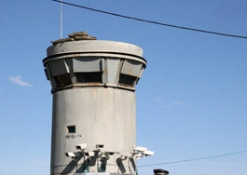 In 2008, the Technion signed a joint research agreement with Elbit Systems, the Israeli weapons and security systems giant. Elbit is best known for providing the monitoring system for the Israeli separation wall, a 760 kilometer long concrete barrier that juts into the occupied West Bank, enabling Israel’s annexation of tens of thousands of dunams of Palestinian land. The company also produces weaponized aerial drones that have been procured by the Brazilian and US air forces, Elbit representatives routinely host recruitment seminars for ambitious Technion students.
In recent years, the Technion has distinguished itself in the field of robotic weapons systems, developing some of the latest in aerial drone and unmanned combat vehicle technology through its Arlene and Arnold Goldstein UAV & Satellite Center.
Here are a few Technion creations intended to streamline the maintenance of Israel’s occupation and enhance the violent capacity of America’s ongoing drone wars:
The unmanned “Black Thunder” D-9 bulldozer – The armored bulldozer is an essential weapon of Israel’s occupation, enabling the Israeli army engineering unit to demolish approximately 25,000 Palestinian homes since 1967, according to the Israeli Committee Against Home Demolition. On occasion, bulldozers have come under attack from Palestinian guerilla fighters and stone throwing children. But thanks to the innovative spirit of the Technion, which boasts of pioneering the unmanned bulldozer, the Israeli army can demolish homes, olive groves and tunnels without any risk to the physical safety of its soldiers. As Jerusalem Post military affairs correspondent Yaakov Katz reported, “The IDF Ground Forces Command plans to double the number of unmanned D9 armored bulldozers in the Engineering Corps arsenal after the vehicle provided exceptional results during Operation Cast Lead in the Gaza Strip in January.”
The “Stealth UAV” drone – According to the website of the American Technion Society, in 2010 Technion students designed “a ‘Stealth UAV’ designed to fly up to 2,977 kilometers without refueling. It can carry two 499 kg ‘smart bombs,’ and be equipped with various sensors (electro-optic, infrared and radar) to enable operation in the dark and under all weather conditions.” The weapon appears to be an unmanned version of the US-made B-2 “Spirit,” also known as the Stealth Bomber.
According to the Palestinian Center for Human Rights, the Israeli military has killed 825 Palestinians in the Gaza Strip since 2006. The New America Foundation, a Washington DC-based think tank, reported that the US military has killed over 1800 civilians and accused militants in Pakistan during the same period.
The “Dragonfly UAV” mini-drone – Tiny, remote controlled drones capable of flying through windows and into homes and buildings for delicate spying operations are the latest craze in UAV technology. Technion students recently designed a drone plane with a 9-inch (23cm) wingspan and a 7.9-inch (20cm) body modeled after the dragonfly insect. “The plane’s relatively low speed enables it to easily enter rooms through small windows and to send back photos from a miniature camera,” the American Technion Society’s website states.
As America’s manufacturing base enters its death throes, once industrialized cities are seeking out high-tech research and development projects to stimulate their cash-strapped economies while filling blighted urban centers with a young, upwardly mobile “knowledge class.” The Cornell-Technion NYC campus, with its direct link to the American military-industrial complex and the Israeli occupation, exposes the disturbing underside of a seemingly progressive model of urban renewal.
In the name of transforming the New York City’s economy, local taxpayers have been enlisted into the disturbing world of “asymmetrical” robotic warfare, in which faceless human targets are liquidated by remote control. And a generation of ambitious students seeking careers in the fields of engineering and science may wind up volunteering their talents to Israel’s occupation without ever seeing the consequences of their handiwork.
Brutal assault on 16 year old boy
SILWANIC – December 23, 2011

Silwan, Jerusalem – Dawood Yousef Sharaf, 16, was brutally beaten by Israeli soldiers on two separate occasions in the past week in Silwan. Here he recounts the dramatic story to Silwanic.
On Thursday, 15 December Dawood was on his way home from school in East Jerusalem. As he passed by the Mercy Cemetary near the Lion Gate of the Old City the police station outside Silwan, Israeli troops began to harass him. Three troops called Dawood over and asked for his ID and if he’d ever been arrested. He was then told to come into the police station, remove his clothes and get ready to be searched.
“I stood against the wall and raised my hands. One soldier forced me to put my legs apart, then started to beat them. The soldier demanded to know why I had spoken in a high voice when being questioned outside, and I told him that I was in a hurry. They then left me wait over 30 minutes before allowing me to leave. As I was about to exit the building, several officers drew their weapons and forced me back in for another inspection. Finally I was able to leave.”
Two days later as Dawood was on his way home from school, an Israeli soldier stopped him in the street and said “you’re the one they took in and humiliated on Thursday.” He pointed to a group of soldiers standing nearby, and said “those are the ones over there who did it. Why don’t you go and ask them why they did it?”
“I thought that confronting them might stop them from harassing me in the future,” said Dawood. “So I went over to the three soldiers who had assaulted me. As I approached them, they knocked me to the ground immediately. They handcuffed me and dragged me back into the police station, where I was beaten for over 40 minutes. I was beaten brutally, all over my body, until I passed out. I didn’t believe I would get out alive.”
Dawood comments that he is only the most recent in an ever-increasing line of brutalities inflicted on the children of Silwan. “Soldiers are constantly harassing children from Silwan.” He also added that soldiers told him that despite his clean record, Dawood would now have a criminal record after the attack.
The Children Protection Committee at the Wadi Hilweh Information Center states that “physical assault of children from Silwan by Israeli forces are taking place both in and outside of the Silwan area at an unprecedented level. Israeli soldiers, settlers and settler guards often target Silwan children when they are outside the neighborhood on their way to or from school.


CIA defends helping NYPD spy on Muslims
Press TV – December 24, 2011
The United States Central Intelligence Agency (CIA) says it has not broken any laws in helping the New York City Police Department (NYPD) to spy on American Muslims.
The CIA said on Friday that its inspector general had found that no laws had been broken and there had been “no evidence that any part of the agency’s support to the NYPD constituted domestic spying.”
An investigation carried out by the Associated Press has found that, after the September 11, 2001 attacks on New York and Washington, the NYPD dispatched undercover officers, known as ‘rakers,’ into minority neighborhoods as part of a human mapping program, using ‘unprecedented’ help from the CIA.
This is while the CIA is banned from spying on the US citizens.
The investigation showed that the ‘rakers’ have gathered information on the citizens’ ‘daily life in bookstores, bars, cafes, and nightclubs.’
The report added that the NYPD has employed intelligence agents, known as ‘mosque crawlers,’ to spy on Muslims and “monitor sermons, even when there’s no evidence of wrongdoing.”
The revelations forced the Director of National Intelligence (DNI), James R. Clapper to admit that it did not look good for the CIA to be involved with any city police department.
The Director of National Intelligence, is the responsible United States government official under the Intelligence Reform and Terrorism Prevention Act of 2004 who is subject to the authority, direction and control of the President.
Palestinians stopped from crossing roadblock because they refused a strip-search
Palestine Information Center – 23/12/2011

JENIN — A Palestinian man and his sister on Friday were not allowed to cross the Barta’a military roadblock because they refused to be strip-searched.
Local sources said that occupation soldiers stopped Rabab Qabaha while on her way back to her village after giving birth and insisted that she should submit to a strip-search which she refused.
Hamas had earlier issued a statement calling on West Bank Palestinians to reject this humiliating practice which occupation soldiers have started to impose on roadblocks.
TSA to start searching ground transportation
RT | 24 December, 2011
While two-out-of-five Americans are going to try to avoid air travel this holiday season to avoid TSA pat-downs, strip searches and never-ending security line-ups, they might not find comfort in the glimmering Greyhound stations across the US.
Don’t think a bus or train ticket will keep Uncle Sam from making your vacation this year uncomfortable. The Transportation Security Administration says that they are turning up the heat on potential problem-causers by installing more agents in not just airport checkpoints but in terminals for terrestrial traffic as well.
“We are not the Airport Security Administration,” Ray Dineen, the air marshal in charge of the TSA office in Charlotte, tells the Los Angeles Times. “We take that transportation part seriously.”
How serious? The TSA’s secret counter-terrorism team that tries to topple crimes in transportation centers have run more than 9,000 unannounced checkpoints and other search operations in 2011, and the Department of Homeland Security are asking for an extra $24 million for 2012 to organize even more teams to put in bus stations and Amtrak terminals next year.
Currently the TSA commands 25 “viper” teams — what they call the two-dozen-plus Visible Intermodal Prevention and Response units that conduct the checkpoints from coast-to-coast. The TSA can’t prove that the increase in 2011 did anything to keep crime down on the ground, but George Washington University’s Homeland Security Police Institute’s Frank Cilluffo tells the Times that they need to keep the terrorists “on edge.”
As a result, however, millions of law-abiding Americans that rely on public transportation to get around — whether plane, train or bus— are also being agitated. 93 million residents are expected to use airplanes to get around this holiday season, but more and more Americans are saying they are fed up with the intrusive and questionably legal procedures that the government is conducting to try to thwart terrorism. Even after recent weeks saw a scandal brew out of New York’s JFK International Airport after three elderly passengers complained in just as many days of overzealous pat-downs performed by the TSA, the Administration announced that “the vast majority” of travelers this year can expect to see increased security in airports.
Opponents of the increased security presence don’t see it as a safety precaution, however, and some say that it is only propelling America further into a totalitarian police state.
“This program represents nothing less than a direct assault on the Fourth Amendment of the Constitution,” Jay Stanley of the American Civil Liberties Union wrote on Tuesday. “It’s also an exceedingly dumb security measure. But never underestimate the mindless force of a government bureaucracy seeking to expand its power, domain, and budget.”
From a legal standpoint, the TSA fires back that “the Supreme Court has repeatedly upheld suspicious-less searches based on the government’s need to ensure the safety of mass transportation,” recalling a handful of court cases that support the fact. That being said, if you feel like a surprise pat-down while waiting for your bus isn’t only out of the question but against the law, the TSA is ready to take you to court and win.
Live sniper-fire injures protester in Nabi Saleh
23 December 2011 | Popular Struggle Coordination Committee
Two weeks after the killing of Mustafa Tamimi during a demonstration in the village, an Israeli sniper shot a protester with live 0.22″ caliber ammunition, banned for crowd control purposes.

Protester evacuated after being shot with live ammo in Nabi Saleh today. Picture credit: Oren Ziv/ActiveStills
Earlier today, an Israeli military sniper opened fire at demonstrators in the village of Nabi Saleh, injuring one in the thigh. The wounded protester was evacuated by a Red Crescent ambulance to the Salfit hospital. The incident takes place only two weeks after the fatal shooting of Mustafa Tamimi at the very same spot. Additionally, a Palestinian journalist was injured in his leg by a tear-gas projectile shot directly at him, and two Israeli protesters were arrested.
The protester was hit by 0.22″ caliber munitions, which military regulations forbid using in the dispersal of demonstrations. Late in 2001, Judge Advocate General, Menachem Finkelstein, reclassified 0.22” munitions as live ammunition, and specifically forbade its use as a crowd control means. The reclassification was decided upon following numerous deaths of Palestinian demonstrators, mostly children.
Despite this fact, the Israeli military resumed using the 0.22” munitions to disperse demonstrations in the West Bank in the wake of Operation Cast Lead. Since then at least two Palestinian demonstrators have been killed by 0.22” fire:
- Az a-Din al-Jamal, age 14, was killed on 13 February 2009, in Hebron,
- Aqel Sror, age 35, was killed on 5 June 2009, in Ni’lin.
Following the death of Aqel Srour, JAG Brig. Gen. Avichai Mandelblit reasserted that 0.22” munitions “are not classified by the IDF as means for dispersing demonstrations or public disturbances. The rules for use of these means in Judea and Samaria are stringent, and comparable to the rules for opening fire with ‘live’ ammunition.”
Contrary to the army’s official position, permissive use of 0.22” munitions against demonstrators continues in non life-threatening situations.
Background
Late in 2009, settlers began gradually taking over Ein al-Qaws (the Bow Spring), which rests on lands belonging to Bashir Tamimi, the head of the Nabi Saleh village council. The settlers, abetted by the army, erected a shed over the spring, renamed it Maayan Meir, after a late settler, and began driving away Palestinians who came to use the spring by force – at times throwing stones or even pointing guns at them, threatening to shoot.
While residents of Nabi Saleh have already endured decades of continuous land grab and expulsion to allow for the ever continuing expansion of the Halamish settlement, the takeover of the spring served as the last straw that lead to the beginning of the village’s grassroots protest campaign of weekly demonstrations in demand for the return of their lands.
Protest in the tiny village enjoys the regular support of Palestinians from surrounding areas, as well as that of Israeli and international activists. Demonstrations in Nabi Saleh are also unique in the level of women participation in them, and the role they hold in all their aspects, including organizing. Such participation, which often also includes the participation of children reflects the village’s commitment to a truly popular grassroots mobilization, encompassing all segments of the community.
The response of the Israeli military to the protests has been especially brutal and includes regularly laying complete siege on village every Friday, accompanied by the declaration of the entire village, including the built up area, as a closed military zone. Prior and during the demonstrations themselves, the army often completely occupies the village, in effect enforcing an undeclared curfew. Military nighttime raids and arrest operations are also a common tactic in the army’s strategy of intimidation, often targeting minors.
In order to prevent the villagers and their supporters from exercising their fundamental right to demonstrate and march to their lands, soldiers regularly use disproportional force against the unarmed protesters. The means utilized by the army to hinder demonstrations include, but are not limited to, the use of tear-gas projectiles, banned high-velocity tear-gas projectiles, rubber-coated bullets and, at times, even live ammunition.
The use of such practices have already caused countless injuries, several of them serious, including those of children – the most serious of which is that of 14 year-old Ehab Barghouthi, who was shot in the head with a rubber-coated bullet from short range on March 5th, 2010 and laid comatose in the hospital for three weeks.
Tear-gas, as well as a foul liquid called “The Skunk”, which is shot from a water cannon, is often used inside the built up area of the village, or even directly pointed into houses, in a way that allows no refuge for the uninvolved residents of the village, including children and the elderly. The interior of at least one house caught fire and was severely damaged after soldiers shot a tear-gas projectile through its windows.
Since December 2009, when protest in the village was sparked, hundreds of demonstration-related injuries caused by disproportionate military violence have been recorded in Nabi Saleh.
Between January 2010 and June 2011, the Israeli Army has carried 76 arrests of people detained for 24 hours or more on suspicions related to protest in the village of Nabi Saleh, including those of women and of children as young as 11 years old. Of the 76, 18 were minors. Dozens more were detained for shorter periods.
Featured Video

John Mearsheimer Talking Iran with Iran
or go to
Aletho News Archives – Video-Images
New Book
The silver that medicine dropped — four thousand years of clinical use, four decades to erase.
Colloidal Silver — First Edition, 2026, Paperback
Lies are Unbekoming | October 16, 2026
Silver was medicine. Not alternative medicine. Not folk medicine. Medicine. In surgery. In obstetrics. In the burn ward. In water treatment. In the household medicine chest. Every physician before 1938 knew this.
By the 1870s, silver nitrate was standard in surgical wound care across the leading hospitals of Britain, Germany, and the United States. Colloidal silver preparations — Collargol, Argyrol, Protargol — entered European and American practice through the 1890s and early 1900s and became standard antiseptics in military field medicine. By the time Fleming grew his first penicillin mould in 1928, silver was the first-line antimicrobial of the Western pharmacopoeia. The Lancet and the British Medical Journal carried the clinical reports in volume. The practice ran continuously through the Victorian era, the Edwardian era, the First World War, the interwar period. By 1980, almost all of it was gone.
What has not been treated at book length, until now, is how a four-thousand-year clinical record disappeared from mainstream medicine within four decades of the Flexner Report — and what the honest account of silver looks like once that record is reassembled.
Colloidal Silver reconstructs the pre-1938 record from The Lancet, the British Medical Journal, and the primary literature of the era; recovers Robert Becker’s bioelectric framework from the regeneration research the pharmaceutical model buried; and places silver inside a practical terrain-paradigm guide to its current place — in water, on the body, inside the body, and in the chronic conditions where antibiotics have failed. … continue
Blog Roll
 Aletho News
- John Mearsheimer Talking Iran with Iran
- Inside Bill C-22, Canada’s Patriot Act.
- China’s FM: Palestinian cause is ‘greatest injustice of the century’
- US sympathy for Palestinians surpasses support for Israelis
- Israeli rabbi permits occupiers to steal Palestinian olive harvest in West Bank
- Spanish firm sells Latvia vehicles equipped with Israeli tech despite arms embargo
- Saudi Arabia under fire… Yemen is burning down the House of Saud
- Israeli Spy Pollard stole the files, today’s it’s delivered through official channels
- Why Iran Didn’t Walk Away
- US arms supplied to Ukraine found in war-torn Sudan – Moscow
- If Americans Knew
- NPR investigation finds evidence of widespread fraud at mall kiosks tied to Israeli skincare brand
- Tucker Carlson exposes Israeli Lies about the Oct 7th attack, Charlie Kirk, and the U.S.
- Israel has detained thousands of Palestinian children since Oct 7th – over half spent time in solitary, many uncharged
- Israeli Analysis: Is Netanyahu Planning an ‘October Surprise’ Attack Before Israel’s Election?
- Israeli settlers brutally attack Palestinians and Washington Post female photographer, 65
- Words Have Changed, Occupation Continues: The Reality of the Gaza Ceasefire
- Gaza’s child amputees are growing faster than their prosthetics allow
- Israel keeps Palestinians struggling just to survive–Daily Update
- Israeli firm used online ads to run vast spy operation, researchers say
- No, the world zionist movement is not an antisemitic conspiracy theory
- No Tricks Zone
- New Study Suggests Large Regions Of The Pacific Ocean Have Been Cooling For The Last 80 Years
- Germany’s Green Energy Debacle: High Energy Costs Force Kahla Porzellan to Close After 182 Years!
- New Study: 50 Years Of The Most Aggressive ‘Net Zero’ Policies Can Only Affect The Global Climate By 0.03°C
- US September “Heat” Was No Record…Many Records Set Decades Ago
- Latest European Green Energy Debacle; Portugal’s Largest Flagship Solar Park Insolvent!
- Green Energy Debacle: German Expert Professor Fritz Vahrenholt Warns Of Severe Economic And Social Consequences
- Two More Paleo Reconstructions Affirm Meters-Higher Sea Levels Across Ireland, Brazil 7000-6000 Years Ago
- New Study: Earth And Venus Surface Warmth Largely Explained By Convection And Lapse Rate, Not CO2 Or Radiation
- 2025 Nature Paper Claiming Worsening Global Drought Gets RETRACTED …Heavily Flawed
- New Study: ‘Global Drought Shows No Detectable Recent Acceleration Under Climate Warming’

