Israeli forces detain Hamas lawmaker
Ma’an – September 6, 2011
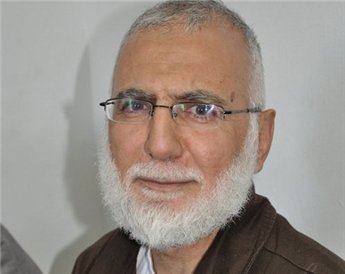 RAMALLAH — Israeli forces detained Hamas legislator Mohammed Abu Teir on Tuesday, army officials said.
Israeli soldiers ransacked Abu Teir’s home in Kafr Aqab, south of Ramallah, before detaining the elected official, a Ma’an correspondent reported.
An Israeli military spokesman said Abu Teir was detained on Tuesday but could not immediately comment on the reason for his arrest.
Former PA Minister of Jerusalem affairs Khalid Abu Arafa told Ma’an he was concerned about Abu Teir’s fate after Israel withdrew his Jerusalem identity card.
In December, an Israeli court expelled Abu Teir to Ramallah from his home in Jerusalem for the second time, after four months in jail for defying a previous ban.
He was previously arrested on June 30, 2010 for entering East Jerusalem after the interior ministry stripped him of his residence permit for his activity in Hamas.
Following Abu Teir’s deportation to Ramallah in December, UN officials expressed concern. Robert Serry, UN Special Coordinator for the Middle East Peace Process, said he was “worried” about the “potential precedent” that the trial set.
Abu Teir was elected to the Palestinian parliament from East Jerusalem in 2006 when Hamas won a landslide victory over the secular Fatah movement of Western-backed President Mahmoud Abbas.
WordPress Suspends ‘Stop NATO’ news site
Anti-war.com – September 02, 2011
WordPress suspended the Stop NATO site from posting any new material earlier today, with this announcement:
“Warning: We have a concern about some of the content on your blog. Please click here to contact us as soon as possible to resolve the issue and re-enable posting.”
Repeated efforts to contact them have produced no result.
A year ago Military Times threatened the Stop NATO e-mail list with legal action and, after contacting them and assuming the matter resolved, they got Yahoo Groups to threaten to shut down the list and even cancel my personal e-mail account.
Material on the WordPress site has been backed up, and everything posted to date is still accessible, but it’s not certain for how long.
As everyone familiar with both the site and the list know, no incitement to violence or other illegal action, no attempt to solicit money and no derogatory statement toward any demograhic group have ever appeared on either the mailing list or the news site.
The sole “crime” of which both are guilty is of being anti-war and anti-militarist.
Yours for peace,
Rick Rozoff
Chile: National Strike Forces Government to Negotiating Table
By Dr Victor Figueroa Clark | Upside Down World | 01 September 2011
The National Strike of 24th-25th August was celebrated as a great success by the President of the Chilean Workers United Central (CUT) trade union federation, Arturo Martinez. In a statement Mr Martinez said “we salute the hundreds of thousands of Chileans who have mobilized across the country to show their will and their hope to build a new, different Chile.” The National Strike was called to push for deep changes to Chile’s Constitution which would allow reforms to education, healthcare, labor laws and the economy.
The strike affected over 90 towns and cities the length of the country, with demonstrations, road blockades, human chains, concerts and cultural activities, public meetings and the famous ‘cacerolazos’ – the banging of pots and pans to show discontent which were a feature of the struggle against Pinochet.
As in those dark years, the Chilean government has met social mobilization with brutality and slander. The Minister of Interior has threatened to re-introduce martial law, and the government and its supporters have abused the leaders of the demonstrations, repeatedly calling the demonstrators subversives and accusing them of fomenting disorder. Some government supporters have been even less measured, showing how near to the surface the Pinochet legacy of the Chilean right is. One functionary tweeted that Camila Vallejo, the leader of the students’ union ought to be killed, the Intendant of the 8th Region (a member of Opus Dei) even ridiculously declared that the demonstrations were the result of too many children being born out of wedlock.
During the strike police resorted to the old tactics of repression. In Macul, Santiago, a 16 year-old boy, Manuel Gutierrez was shot in the chest. With two friends he had gone out to observe the bonfires and barricades built in his neighborhood. A police truck drove by, the window opened, three shots were heard and Manuel fell to the ground crying “I’m hit!” He later died in hospital from the wound to his chest. His family has called for justice but the Carabineros are denying any participation and hence refusing an investigation. Human rights groups have condemned this move to cover up the crime. In another area of the city police tear-gassed a postal workers union branch office full of local people, forcing them to flee and putting one elderly lady in hospital.
In another case, Cristian Andrade Cardenas, a student in the port city of Valparaiso, was brutally tortured by police. Seized off the street by a squad of 10 Carabineros, he was forced into a police bus where the police began to beat him severely, jumping on his face, arms and torso, beating him with batons and punching him repeatedly. They then squeezed lemon juice into the open cuts on his face before forcing him to inhale tear gas. They also threatened to rape his mother. He was released after being forced to sign a false declaration stating that he had assaulted a police officer. At the same time, demonstrators in the city discovered suspected a police infiltrator amongst them when he began throwing stones at police. When the crowd tried to detain him, the man fled and took refuge with police guarding the Chilean Congress. The incident was filmed and the opposition are asking the police to help identify the man.
In the same city another student was threatened by police simply for carrying the flag of the Chilean Communist Party, which has once more, as in the years of the dictatorship, borne the brunt of the ire and desperation of an establishment that has lost control. In parliament, right wing deputies Cristián Monckeberg and Víctor Pérez, accused the Communist Party of inciting public disorder, an accusation that could see the Party’s deputies barred under a law dating back to the Pinochet era. Meanwhile, in Santiago police special forces raided the house of a Communist Mayor in the neighborhood of Pedro Aguirre Cerda at 1.30am. According to Mayor Claudina Nuñez, her door was broken down, her nephew was beaten, and when neighbors came out to protest they were also attacked, including a 78 year-old woman who was beaten to the ground and knocked unconscious. The incident was filmed.
These abuses are reminders that the legacy of the dictatorship were never properly dealt with by the governments of the Concertacion. This Christian Democrat and Socialist Party coalition accepted Pinochet’s 1980 Constitution (the rejection of which had until the late 1980s been a central demand of the opposition) in return for a severely limited democracy. This, among other features, included impunity for human rights abuses committed under the dictatorship. Indeed there are 800 cases open against agents of the dictatorship, but so far only 71 have resulted in a sentence, meaning that most of the crimes of that period still go unpunished.
This was the message of human rights groups when recently greeting the results of the second Valech Report which cataloged thousands of new cases of abuses, accepting 9,800 of them, including 30 new cases of people disappeared or executed. Lorena Pizarro, the President of the Association of Relatives of the Disappeared said that the measure recognizes “victims but not perpetrators” and that despite the compensation provided by the state, justice would be the only true compensation for the victims. One wonders how many more victims might come forward if the country’s institutions were not so heavily permeated by the dictatorship’s noxious legacy.
The recent demonstrations have shown how the legacy of the Pinochet era remains especially strongly entrenched in the police and the armed forces. Following the return to a very limited democracy in 1990, there was no purge of Pinochet supporters, or of those who had committed human rights abuses from either of these institutions. The officers now at the top of both were trained and forged in the years of the dictatorship, and their attitudes towards social protest conditioned in a period when violence was routinely applied against the defenseless population. Despite measures taken to reform training programs under the Concertacion governments, unfortunately the police remain an instrument of repression, conditioned to see demonstrators as subversives rather than citizens exercising their right to protest. This view is clearly shared by the current government, much as it tries to hide its connections to the past.
The Piñera government currently has a 21% approval rating, and has been severely criticized for its failure to look after the victims of the 2010 earthquake which has plunged at least half a million Chileans into poverty and homelessness. It has also failed to consider long-standing concerns such as the list of points presented to the government by the CUT in June 2010. This intransigent position and the ever more obvious injustices of Chilean society, have exacerbated the social tensions caused by the government’s continual rejection of negotiations with the social movements. This opposition has now galvanized around the reform of the country’s severely restrictive Constitution, a position that has terrified the current government, which is scrabbling around for a response. The government initially cataloged the strike as a complete failure, and yet has now agreed to meet with representatives of the protest movement in order to negotiate. However, whilst welcoming this change in position, the opposition understandably remains skeptical as to the government’s good faith.
It is hard to see how the ‘Chilean model’ can survive the present situation. The governing coalition includes the UDI, the party of Pinochetismo, and an ardent defender of the socio-economic legacy of the dictatorship. Even the more moderate elements of the government are aware that their economic position is completely dependent on the maintenance of an exporting economy with weak labor organization. This economic model is only sustainable under a limited democracy. This limits the government’s scope for flexibility in dealing with an opposition united around the desire for profound changes to the legal and institutional framework that underpins this economic model.
Worryingly for the government and for supporters of Pinochet’s model, even the more centrist parties historically linked to the Concertacion are now beginning to jump ship, opening talks with the leaders of the opposition. This shows just how far the opposition have advanced in creating a common perception that the entire social, economic and constitutional structure must be reformed in order to create a new Chile governed by democracy and social justice.
Israel sentences journalist to six months in administrative detention
Palestine Information Center – 01/09/2011
 AL-KHALIL — Israel has sentenced reporter of the Shehab News Agency (SNA) Amer Abu Arafeh to six months in administrative detention Wednesday evening.
Abu Arafeh received the decision Wednesday morning from the Ofer prison administration on grounds of being a threat to the Israeli state, SNA said quoting members of Abu Arafeh’s family.
His family was shocked that the ruling was made without formal charges being placed and without a hearing in an Israeli court. They confirmed that Abu Arafeh is currently behind bars in the Ofer prison near Ramallah city in the West Bank.
SNA condemned the decision, calling on rights groups and the local and international media to urgently intervene.
SNA considered the decision as part of a campaign Israel has launched against Palestinian and foreign reporters to force them to stop disseminating Israel’s crimes.
COINTELPRO is alive and well
WUFYS | August 30, 2011
A recent Mother Jones article discusses how FBI personnel justify their six-figure salaries by continually hatching fake terrorist plots and sending victims to prison. When there is no crime, the FBI creates fake crime via incitement and entrapment.
The Mother Jones article cites some interesting figures.
In the 1960s and 1970s, the FBI’s victims were civil rights groups and anti-war demonstrators (COINTELPRO).
In the 1980s the victims came from the “war on drugs.”
In the 1990s the target became the Militia movement.
Since 9-11 the victims have been Muslims.
This FBI scam now consumes $3.3 billion tax dollars per year.
The article says the FBI had 1,500 informants in 1975. By 1980 it was 2,800. By 1981 it was 6,000. Today there are 15,000 officially listed in the FBI’s records, plus 45,000 not officially listed.
All are tasked with infiltrating Muslim communities in the United States, and inciting them to commit terrorist acts with fake bombs.
Some informants are coerced. If they help hatch terrorist plots, they can avoid prison or deportation. Typically the FBI scans the ICE database, looking for people who might have immigration problems. Patsies are sent to infiltrate Muslim communities and anti-war groups to look for other people who have immigration problems, or extramarital affairs, or anything else the FBI can use to blackmail its victims into joining a fake terrorist plot. Informants also look for desperate, homeless people who might be allured by a fake offer of cash.
An imam, for example, will know about everyone who regularly visits a mosque. Two Islamic religious leaders, Foad Farahi in Miami and Sheikh Tarek Saleh in New York City, are currently fighting deportation proceedings that began after they refused to become FBI patsies.
Once you become a coerced patsy, you are a slave for life. If you refuse to keep submitting, the FBI will send you to prison and tell all inmates that you are a snitch.
Some informants are not coerced. They are ex-felons and con men paid up to $100,000 per FBI assignment. Some informants are simply losers who fancy themselves living a James Bond life.
The Mother Jones article examined FBI scams that resulted in prosecutions against 158 defendants, of which 49 defendants participated in plots led by an FBI agent provocateur. Almost all of the high-profile domestic terror plots since the 9-11 scam were FBI entrapment scams.
FBI agents provocateur record all their conversations with their patsies. Then the FBI edits the conversations so they appear more damning in court. When entire sections of dialogue vanish, the FBI claims that “technical problems” caused it. Besides, evidence is not needed when you are charged with terrorism. And since jury candidates are screened so that only morons remain, federal prosecutors enjoy a 99% conviction rate.
Two thirds of all patsies don’t go that far. They plead guilty, because the FBI threatens them. “If you force us to take you to trial, your sentence will be far worse.”
In most cases involving coerced patsies, the FBI eventually breaks its promise, and sends them to prison after all. Many patsies are poor and unemployed. Some have mental health issues. All coerced patsies are used and destroyed.
Essentially the FBI trolls the masses, selects victims from the herd, and publicly crucifies them.
In this way the FBI claims victories in the “war on terror,” so FBI personnel can keep their cushy, high-paying jobs.
Read more at:
http://motherjones.com/politics/2011/08/fbi-terrorist-informants
Palestinian Elections Postponed Again
By Ahmad Jaradat and Nikki Hodgson | AIC | August 31, 2011
Postponing elections for the fourth time, Palestinian President Mahmoud Abbas recently overturned the ruling of the Palestinian Supreme Court and issued a presidential decree further delaying local elections without setting a new date.
The last Palestinian elections were held in January 2006.
Just weeks after announcing that, in spite of the stalled reconciliation process between Hamas and Fatah, elections would be held in the West Bank, Abbas declared a reversal of that decision in a recent presidential decree.
Issuing the same reason he gave for delaying the vote earlier this year, he stated “We have decided to postpone the local elections until better conditions are available to enable the election commission to work in all parts of the country.”
Senior Hamas official, Ismail Alashkar responded to the decree, stating, “We agreed in the Cairo (reconciliation) agreement that all elections, local and parliamentary, would be held after forming the government. We welcome Abbas’ decree in postponing them.”
Following a decision to postpone elections in June, Palestinian civil society took the case to the Palestinian Supreme Court, which ruled in favor of the Palestinian right to elections and declared that government postponement of the elections is illegal and that elections should therefore take place on their scheduled date of October 22, 2011.
The recent decision of President Abbas to further delay elections elicited astonished responses from Palestinian civil society groups, which argue that the Palestinian right to an election is a democratic right and should not be tied to the success or failure of the reconciliation process.
In a statement recently published in Al Quds newspaper, the Observatory of the Arab World to Democracy and Elections (MARSAD) referred to Abbas’ decision as a disappointment, stating “Postponing the local elections has put the credibility of the Palestinian political leadership in a hard position and has negatively affected public participation in the election process.”
Many of the PLO member organizations, including the Popular Front for the Liberation of Palestine, the Democratic Front for the Liberation of Palestine and the Palestinian People’s Party, came together to hold an urgent meeting in Ramallah following Abbas’ decree, where they discussed the decision and stated that it was against basic Palestinian law as well as against the spirit and letter of the Supreme Court decision.
The parties also accused Abbas of making the decision single-handedly without consulting the council or any other parties or civil society organizations. Postponing a democratic election requires collective management and decision as well as the voice of the people, declared civil society groups.
The various political parties and civil society groups argued that this election is a democratic process guaranteed to its citizens by basic Palestinian law and as such it is guaranteed all of the time and is not contingent on the absence of turmoil between existing political factions. Palestinian civil society, pointing at the recent presidential decree, angrily asked that if Abbas is able to simply overturn the ruling of the Palestinian Supreme Court and its defense of the people’s rights, then what is the purpose of the Court?
The delay is not of paramount concern to either Hamas or Fatah, but has wider implications for other parties as well as Palestinian civil society. The terms of all local councils and municipalities ended in December 2008. However nearly three years later, they are still in office. In some cases, such as Hebron, local elections have not been held since 1976 and many political positions are now granted by appointment rather than democratic election. A further delay of the democratic process will only exacerbate this trend.
Abbas also mentioned the Palestinian September bid at the UN as a justification of further delay of the elections. However, wider political actions and the pursuit of UN membership or the recognition of statehood should not come at the expense of the people’s rights, nor should it delay implementation of a democratic election.
In a democracy, the right to elections should not be marred by the existence of political problems. The right of the people is non-negotiable and should not be postponed while Hamas and Fatah wrestle their grievances to the ground in an effort to reconcile two separate political ideologies. The Palestinian people have a right to decide their government and they have a right to decide it now. No more bukrah inshallah (tomorrow, God-willing).
Exploiting Norway’s Terror
By Maidhc Ó Cathail | August 29, 2011
In the wake of any major terrorist event, it’s generally worth noting who is especially quick off the mark to exploit the tragedy.
Within hours of planes striking the World Trade Center on 9/11, the then former Israeli prime minister Ehud Barak was in the BBC’s London studios calling for a “war on terror” against “rogue states” which just happened to be enemies of Israel (none of whose agents, unlike Israel’s, were seen filming and celebrating as the twin towers collapsed into their own footprint). And soon after ICTS International, an Israeli security firm established by former intelligence officers, allowed a young Nigerian without a passport to “slip through” Amsterdam’s Schiphol Airport to board Northwest Flight 253 on Christmas Day two years ago, former Homeland Security chief Michael Chertoff, the son of a suspected Mossad operative, was on CNN touting one of his client’s full-body scanners as the answer to America’s airline security problems.
In the case of the July 22 twin terror attacks in Oslo and on Utøya Island, however, some of Israel’s more provocative propagandists appear to have been wrong-footed by Anders Behring Breivik’s apparent admiration for their Islamophobic rants. While the likes of Bat Ye’or, Daniel Pipes and Pamela Geller were seen scrambling to distance themselves from Breivik, Norway’s massacre has indeed been seized upon by others with their own, albeit less transparent, ties to the Jewish state.
Mr. and Mrs. Sikorski’s War on “Dangerous Emotions”
During visits to two European capitals over the following week, Poland’s staunchly pro-Israel foreign minister, Radoslaw Sikorski, appeared to be particularly exercised by the tragedy. While in London for discussions about the Polish Presidency of the Council of the European Union and the EU’s Eastern European policy, Sikorski took a swipe at some of his critics in Poland, where he claimed “there is no lack of people who think like Behring Breivik, a man who shot at his own people in order to bring down a government he believed had lost its political and legal right to govern.” The foreign minister, one of the highest-ranking Polish leaders not on board the plane that crashed killing much of Warsaw’s political and military leadership last year, said that his country also has “groups who believe that the democratically elected president and government are traitors who have no real interest in Poland or the Polish people. These are very dangerous emotions which, if stoked, could have unpredictable consequences.” As an example of such “dangerous emotions,” Sikorski cited an ongoing court case in which he is suing a couple of Polish newspapers for failing to remove readers’ anti-Semitic comments about his wife, Anne Applebaum.
Later in Brussels, before an emergency meeting of counter-terrorism officials on how to combat attacks such as Norway’s, the Polish foreign minister repeated his allegations during a press conference with his British counterpart, William Hague. Claiming that “certain political parties had expressed their approval of the terrorist,” Sikorski went on to cite the internet as “a potentially sinister tool for those bent on propagating agendas of hate.” Referring again to the remarks made online about his wife, he described the net as a “cesspool.”
The Polish foreign minister’s legal crusade against “dangerous emotions” had already received a significant endorsement in a May 11 op-ed piece in The Economist magazine from someone writing under the pseudonym “E.L.,” who described Sikorski as “an old friend of mine.” Reproducing one such comment in Polish which was considered “simply too unpleasant to translate,” E.L. cited “another rather milder one” which “merely accuses Mr Sikorski of being the ‘husband of an orthodox Jew, an enemy of Poland controlled by his father-in-law,’ bent on the ‘the destruction and destabilisation of Poland’ and a ‘hidden, ruthless traitor.’” Having disclosed that Sikorski was an “old friend,” E.L. somehow neglected to mention that the Polish foreign minister’s wife accused of betraying Poland to foreign interests is a former editor of The Economist. As for the op-ed writer’s own identity, it may be more than a coincidence that the name of the holding company owned by Sir Evelyn de Rothschild and his wife, Lady Lynn Forester de Rothschild, which manages its investments in The Economist Group, owner of The Economist magazine, is E.L. Rothschild.
Sikorski’s allegedly influential father-in-law, Harvey Applebaum, is a partner in Covington and Burling, an international law firm which advises multinational corporations on significant transactional, litigation, regulatory, and public policy matters. Among its more controversial clients are Chiquita, the first major U.S. corporation to be convicted of financing terrorism; and Halliburton and Xe Services (formerly Blackwater), two of the biggest beneficiaries of the “war on terror.” Its current and former attorneys include such proficient pro-Israeli warmongers as John Bolton, senior fellow at the neoconservative American Enterprise Institute (a former employer of both Mr. and Mrs. Sikorski); Stuart Eizenstat, Special U.S. Envoy for Holocaust Issues during the Clinton administrations; and the aforementioned Michael Chertoff.
Having covered the demise of the Soviet Union as a Warsaw-based correspondent for The Economist during the late 1980s,
Anne Applebaum has long been one of the most prominent anti-Russian advocates of economic and political “liberalisation” in the former Soviet Bloc and beyond. In a 2004 op-ed in The Washington Post, she dismissed as “Freedom Haters” those who saw “insidious neocon plots” behind the supposedly disinterested “democracy promotion” of George Soros and what she sarcastically referred to as “the evil triumvirate” of the National Democratic Institute, the International Republican Institute and Freedom House, which she praised for “diligently training judges, helping election monitors and funding human rights groups around the world for decades, much of the time without getting much attention for it.” Prefiguring her husband’s current concerns, Applebaum bemoaned “the international echo chamber that the Internet has become” in which such cynical ideas “have traction.”
In the wake of Norway’s terror, Anne Applebaum’s response was as swift as it was revealing. Within 48 hours, she had an op-ed piece in The Washington Post entitled “Norway massacre and anti-government obsession.” Sounding a similar note to Sikorski, she opined that Breivik’s obsessions “sprang from an insane conviction that his own government was illegitimate.” Applebaum, however, seemed more concerned about Americans who might think like Breivik. Coining the term “illegitimists” to describe Breivik’s supposed American analogues, she cited Birthers, who claim that Barack Obama isn’t American-born, as the contemporary right-wing manifestation. “It is not accidental,” Applebaum observed, “that the one note of sympathy for Breivik in the U.S. media came from the birtherist and illegitimist Glenn Beck, who helpfully compared the young Norwegians murdered by Breivik to Hitler youth. Presumably if they are Hitler youth, then they deserved to die?”
It is hardly accidental either that Applebaum, who has lauded Daniel Pipes as “one of the best” American analysts of the Middle East, omitted to mention that the Birther movement is spearheaded by Orly Taitz, a Soviet Jewish emigré and pro-Israel activist who had lived in Israel for years prior to her inciting Americans against their president; or that Glenn Beck — whose over-the-top exposés of influential figures such as George Soros conveniently serve to discredit more measured critiques — is engaged in a mutual love affair with the Israeli right-wing, whose backing has been crucial to his lucrative career of demagoguery.
After the Norway massacre, of course, it’s going be even harder for genuine critics of government to publicly express their displeasure. From now on, anyone who questions the bona fides of such avid “freedom lovers” as the Sikorskis and their powerful transnational associates risks being labelled a potential “Breivik” whose “dangerous emotions” need to be kept in check.
Maidhc Ó Cathail is an investigative journalist and Middle East analyst.
Honduras: Aguán Massacres Continue to Support Production of Biodiesel
ARMED FORCES “TRAIN” PRIVATE SECURITY FORCES
By Annie Bird | Rights Action | 28 August 2011
Witnesses report that African palm plantation security forces are trained at the 15th Battalion of the Honduran Armed Forces and in private African palm plantations by men in Honduran military uniforms.
There are reports that 40 to 60 Colombians, who wear Honduran army uniforms, are training the paramilitaries. There are reports that US Army Rangers have engaged in training activities, and that the US donated military equipment that has been used in the repression.
Poor campesinos in the Aguán region, in need of a means of survival, are reclaiming lands that have been illegally and violently taken from them by wealthy land-owners backed by the regime. These campesino communities are thus in direct conflict not only with police, military and paramilitary forces, but also organized crime networks (including drug traffickers) who reportedly maintain close collaboration with the police, military, and private security forces.
Extreme corruption of the justice system has not only helped create the conflicts that exist today, by not resolving the legal actions through which campesinos have attempted to regain land rights for over 15 years, but also contributes to the repression through the criminalization of land rights defenders and enforcing total impunity for killers.
According to reports, around noon on Saturday, August 20, 2011 Secundino Ruiz Vallecillo, vice president of the Movimiento Campesion Unificado del Aguan del a Margen Derecha (MUCA-MD), and president of the San Isidro Empresa Campesina Cooperative, was shot and killed while in a taxi in the town of Tocoa by a masked gunman aboard a passing motorcycle.
That afternoon Arnoldo Portillo, member of the 5 de Enero Empresa Campesino Cooperative, of the La Concepcion community, left his home, and did not return. His neighbors began a search early the morning of August 21, 2011. His badly brutalized body was found in the dump of the La Lempira campesino community; he had been killed by machete strikes and gunfire.
Later on August 21, 2011, at approximately 8pm, Pedro Salgado, the president of the 5 de Enero cooperative and his wife, Irene Licona, were murdered in their home by machetes and gunfire. Salgado, like the presidents of all the cooperatives claiming rights to land used by African palm oil businessmen in the Aguan, had been subject to constant death threats. Salgado had recently met with the commander of the Xatruch operation, asking for protection.
OVER 50 CAMPESINOS KILLED, & counting …
These killings occurred amidst a military occupation, called the “Xatruch II” operation, that was launched after two massacres on August 14th and August 15th that left 11 dead.
Since training of African palm oil company paramilitary security forces reportedly began in January 2010, over 50 campesinos have been killed, the majority in drive-by shootings.
COMPLICITY
On July 21, 2011 it was reported that the United Nation’s Clean Development Mechanism (CDM) board “undertook an investigation and after full consideration found that the consultation met the CDM requirements under the parameters of its mandate. It’s a matter for Honduras to deal with outstanding land disputes and responsibility for violence in the region.”
This decision is a complete abdication by the United Nations of the United Nations’ mandate to protect human rights – the UN is complicit in violence in the Aguán.
The complicity – direct or indirect – extends to the governments of Canada and the US. Just days before the August 14 massacre, Canadian Prime Minister Stephan Harper signed a so-called “free” trade agreement on August 12th with Honduras, ignoring the systemic repression carried out by the Honduran regime since the June 2009 military coup. The newly appointed US ambassador to Honduras, Lisa Kubiske, has focused her career on promoting biofuel investment and free trade agreements.
Contact Rights Action to plan educational presentations in your community, school, place of worship, home (info@rightsaction.org)
The soldier is a human being, isn’t he?
By Aya Kaniuk and Tamar Goldschmidt | Mahsanmilim | August 27, 2011
 Ali Khalifa
  Mu’tasem Udwan
On Monday, August 1st, 2011, at dawn, the Occupation soldiers murdered Mu’tasem Udwan and Ali Khalifa and seriously wounded Ma’amun Awad.
It was the first morning of Ramadan.
Murder is always shocking. And because afterwards there is nothing. But what shocked me in particular was how Mu’tasem’s mother saw him very soon after he was murdered, lying on the ground by his house door, his brain splashed on the asphalt. This is how she saw him, her son, and somehow this is what shocks me most of all. Because as soon as he is dead, he is already gone and my thoughts go to the holes that he has left behind. But this particular hole, of Mu’tasem’s mother, is what turns off all the lights for me.
On the one hand, what happened that dawn in Qalandiya refugee camp is not extraordinary. Such things happen all the time. The Occupation soldiers invade one Palestinian locality or another, especially at night, under this or that pretext, and then they break doors, and after breaking in they smash things inside the house, closets and plate glass and television sets, and usually pick up one or another youth, about whom this or that has been said, some truth or some falsehood, usually taken as testimony from another boy under some pressure or other, whereby it is reasonable to assume that he would say anything he was told to say and confess anything he was ordered to confess, and usually there are also stones hurled at the Occupation soldiers and mostly the Occupation soldiers shoot at the stone throwers who are usually mere children, and they also fire rubber or teargas ammunition and even live bullets into homes and on the streets just like that, and here and there at the end of all of this people are wounded or killed, and all this is not that extraordinary. Not in the Qalandiya refugee camp, not throughout the Occupied West Bank.
Still, the murders of Ali Khalifa and Mu’tasem Udwan were cast in the camp as a unique event and different from all the other events that have become routine with the dripping of the years.
Again and again people have been saying, “how could they possibly do this”, and “why of all days on the first day of Ramadan”, the religious and the secular ask alike.
And not because the blood of a person murdered during Ramadan is more precious than that of a victim on any other day. But perhaps it is only that people cannot complain to the same extent at any given moment and shout ‘No!’ and that it is unbearable, unacceptable. For if they did that, no joy would be left, no endurance and the ability to exert oneself and bring up one’s children properly in spite of it all, and live in spite of everything, and also it is normally too dangerous to revolt, and involves tremendous effort.
But there are such moments when the truth, always present, emerges and is heard, and time stops.
Ramadan is such a symbolic moment. Perhaps because in Ramadan the shops remain open at night, too, and one has the duty of doing good deeds, and because people need such moments of shift away from the everyday, and this is provided by religion and tradition, and not only for Palestinians under Occupation.
“This is what happened that night”, says Haitham Hamed, our friend. A gentle, special man from Qalandiya refugee camp. “This is what I heard happened”.
“They came for Wajih. Wajih Haitham Khatib. He is a 15-year old boy. More than 200 soldiers came. 200 soldiers to catch a 15-year old boy. 200 soldiers came for one kid and killed two adults. That’s what happened. They always come, all the Israeli soldiers, to the camp. They bring with them all those forces just to pick up a kid or two… And the Border Patrol and… They keep coming from a thousand ways. From down here, from outside, from the settlement above. They come down, or up, and around the camp where the airplanes were (what used to be the Atarot airfield) and from the main road, from lots of roads. This time, too. They came from near the settlement.
And he’s accused – this I heard in the camp – do you know of what? Are you familiar with the settlement next to the camp? Not Psagot, what’s it called? Kochav Hashachar. He’s accused of having burnt the mountain. Burnt the mountain? With all those soldiers and Border Patrol and the guys with the guns and jeeps and fence and guards and cameras all around. He came to them and burnt a mountain there?
What a story. Just doesn’t enter one’s head. But that’s what his parents told me. That this is what he is accused of. That this 15-year old kid went near the settlement and burnt the mountain. The soldiers didn’t know his real address. So they entered more than one house. And in every house they broke stuff. That’s what I heard. And it’s normal for them to break stuff. They don’t know any other way. First they break the doors with their special machines that they bring. They don’t knock. Only this way, without saying a word, they place the device on the door and press a button and – pow – it opens the door. Always. Not once or twice. Like they did at our home, remember? People replace doors a lot in our camp.
In short, they came to the camp, and didn’t find the boy. They didn’t find the boy. So if you don’t find the boy, you raise such hell? Right, Tammi? You don’t find the boy so you go ahead and kill two people? And then what did they do? What they did was to pick up his cousin. 22-years old. They didn’t find Wajih so they took his cousin, and said that they were taking him until the kid’s father would turn him in.”
And Tamar said: “It’s shocking, Haitham. Shocking. Not only do they kill them, they take in his nephew… kidnap…”
“Yes,” said Haitham. “And his dad brought him to Ofer prison the next day, I think. So his nephew would be released… Under what kind of law do they do this? Taking his cousin, telling his dad if you bring your own son, you can take back your nephew… What law has such words… For the father to hand in his own child. In his own hands he takes his child to prison. And the child knows he’s going… I can’t lie to you, stones have been thrown at them. They left Wajih’s house on the way to another one, and stones were thrown at them. But often they entered the camp and picked the people up, and every time stones were thrown at them. But they didn’t always do this. So why did you come this time, in Ramadan? For a boy no older than 15 or 16? And you knew there were people in the street because of Ramadan. And you knew stones would be thrown at you. And I want to say something about the stone-throwing thing. Throwing stones, that’s the maximum. For who in the camp would have the heart to pick up a gun and shoot at soldiers? So maximum they throw stones. Say a Molotov cocktail, right, Tammi? At most, a Molotov cocktail or stones. So a stone was thrown, so what. They don’t kill you with a stone, right? A stone doesn’t kill, only wounds you. So for this you came and killed two?”
“Mu’tasem, Mu’tasem Udwan, the first fellow they killed. He is my neighbor,” says Majdi from the camp, whom we have just recently met. “He lives just 10 meters away. We were all woken up by the shooting… it was war… I went up to the roof. And there was this soldier down in the street. His rifle placed on a tripod… And Mu’tasem opened his door to take a look outside because of the shooting and the noise. Terrible noise… and teargas and lots of shooting. Mu’tasem who looked down didn’t notice the soldier. The soldier shot him in the head, and he fell to the floor. He opened the door of his home and the soldier shot him with a live bullet to the head… and his brain spilt on the ground. And he didn’t have a head anymore. He didn’t have a head…I saw all that from my roof. I’ll never forget this as long as I live. He had no more head… and his brain spilt on the floor. Abu Ali, Ali Khalifa the second one, he lives down hill. But that night he was at the camp. With his friends. That’s how it is during Ramadan. A bit like your Thursday and Friday nights. People hanging out together. All night. And guys beating traditional drums to wake people up before dawn so they might still get bread or other things for the house before the fast……. And then it all began…. When the shooting got really heavy he wanted to go back home. To get away. His car was parked near my house. He may have come there because he wasn’t as familiar with the camp as we are, so he came back for his car. And he saw Mu’tasem lying on the ground. All alone. It was just 6 minutes after he was shot. And he went over, to Mu’tasem, he may have thought he was wounded, and wanted to help him. He didn’t notice the soldier… and the soldier shot him too. Two bullets. One came out the other side. And a hole opened up in his abdomen. And then he fell, right by Mu’tasem.”
“That’s how he went… How Abu Ali went…”
“Haitham, did you call him Abu Ali?”
“His name was Ali Khalifa. But he was called this way. Abu Ali, because his name is Ali. So you add the Abu. Like that.”
“Everyone knows these guys”, says Haitham. “The camp is small, but everyone knows Abu Ali most. I knew him well, the day before I saw him at the gas station, washing his car. But earlier too. He was with me in prison. As a boy. At the Russian Compound. He was a good person… He used to help people, the elderly, all of us cannot believe he’s dead, I swear to you. That he’s gone. Unbelievable. And he is a Jerusalemite. A Jerusalemite. He lives down the hill. Not in the camp… His parents pay municipal taxes. I knew Mu’tasem, too, but not well. He’s a nice guy. Really nice. Studied at the university. He was about to graduate in a year’s time. And he didn’t do anything. Doesn’t throw stones. He was at home. Looking out through his own door and was shot in the head.”
“And the one who was wounded, Ma’amun Awad, he was shot inside his car”, says Majdi. “He was trying to get away, and the soldiers wouldn’t let him pass, and he pleaded, and finally they threw a gas canister into his car, and smoke broke out, and he opened the car door to escape the smoke, and they shot him, they had an M-16, and he is wounded now. Badly wounded.”
“Maybe you know him”, says Haitham, “this is Ma’amun Awad, whose father owns a gas station at Semiramis, where the army camp used to be and the soldiers would throw stones at the taxis, remember? Poor guy. Got two bullets. Two bullets sitting in his backbone, and the doctors fear that if they’re removed, he will become paralyzed. They say if the bullets are taken out, he’ll end up paralyzed.”
And we fell silent again. Time passed. Then I asked: “Haitham, after that happened to Mu’tasem, did his family see?” Because I kept thinking of it the whole time.
“Sure they saw. He was shot at the entrance to his house. In the beginning his mother was upstairs, watching everything. She saw someone on the ground, his brain spilt… she didn’t realize at first that it was her own son she was seeing. Poor guy, she said, poor wounded child, crying for him not knowing it was her son. But shortly afterwards she knew. And rushed out. She couldn’t recognize him. his head was blasted, the brain was spilt on the ground. That’s what they say. And from the eyes up there’s nothing… And his mother went mad, poor woman. We all cried for her. Pulling at her hair. She’s ill. She’s ill now…”
“The thing that hurts you about Mu’tasem is that the fellow was inside his own home. Standing inside his home. You know what that means, at home? Where the heart is. That’s the worst. The most painful. Right?”
“I couldn’t eat for 4, 5 days after all of this”, says Majdi, “nor sleep properly… not after seeing his brain splashed on the ground.. his flesh hot. His and Abu Ali’s, hot… Abu Ali’s abdomen on the floor… all the flesh, the meat… After the soldiers left I went down where they lay, Mu’tasem and Abu Ali. I thought I’d pick all that up from the ground and put it away, on the side. But I was told not to. That they will take it too, to later sew it back into their bodies… So we collected all of this and put it in plastic bags, and it was hot, hot, their flesh was hot.”
“I think they do it on purpose”, Haitham added. “It’s on purpose. Tammi…. People are sitting like this anyway, and have nothing, and their life is hard. Such a hard life… So why pack in Ramadan like this? Why do this and leave people with no illusions? That’s the reason, I say. To take away their illusions. Their… How do you say this in Hebrew, I’ve forgotten. To take away their hope, Aya. That’s the word. That’s the point and I’m not racist. I look at things from many angles. This will happen and that will happen and I’ll think again and again. And I don’t see everyone the same way. But they did this out of racism. That’s what I think. Not because of the stones, and not because of Wajih. Because of racism. Otherwise they wouldn’t kill two people. It’s their racism that got Mu’tasem. And Abu Ali. Their racism…”
“The camp is very heavy now. Our heart is heavy” says Haitham, after we sat quietly for some more moments. “And fear. People are walking around afraid of soldiers, that if they go out at night, they’d be killed. From far away. And it’s quiet at night. People don’t open their windows out of fear. This is the story of what happened that night of Ramadan in our camp… This is what happened.”
And this is what our friend A., another friend from Qalandiya, told us (A. is a very close friend of ours, and he is always asking us to keep him anonymous because he is afraid that if the soldiers find out that he is talking about what happens at the camp, they would hurt his family). He is the one who first told us about this all, right after it happened. He called us twenty minutes after the murder in the camp, to tell, while the calls for the first prayer of Ramadan were still heard in the background, and Mu’tasem was already dead, and Ali not yet, and Ma’amun unconscious, and it all sounded unreal, like a film or a book or a nightmare:
“Mu’tasem, you know, is such a cute guy. He heard a noise… We say “this guy’s clock is through”. Now he stepped out of the door, the soldiers standing outside, saw a guy look out, so they shot him. I don’t know, I say this, you know, he’s dead, but someone shot him. The guy who shot, I mean what is he saying in his own home now? He’s sitting alone, I think he has kids, he too has a family, or a mother, brothers, his father… And he’s sitting at home, and saying I killed a child today. Why? He can’t say why. Because, why? What did the kid do? What did he do to me? Was he armed? No, he carried no weapon. Was he, how do you say this, was he one of the Arab fighters? No, he was not one of those. And I know he had nothing on him. He didn’t throw stones. He just stepped out of his home, and suddenly I killed him – the soldier would say and I say, this soldier, what can he say? If he has a heart, what does he end up saying? He’d say, wow, why did I kill him? That’s what I think. Just like that. Because, why? What did he do?”
And Tamar said, “I think he’s sitting at home and making this… screen… making up some story for himself.”
“No, no, listen”, A. interrupts her. “He did this and he knows. He could have aimed at the leg, no? He could shoot at the leg and wound him. If he’d want to. But he aimed at the head. And Tammi, on their rifle they have this… he sees through his sights… he looks, he knows. You understand… So I don’t know, I don’t know what he… how he sits at home, knowing, knowing he killed. Say, the soldier is a human being, right? He has a heart, doesn’t he? So what does he tell himself. That I killed a boy today. What does he tell himself…”
Hamas members ‘arrested in Jenin’
Ma’an – 27/08/2011
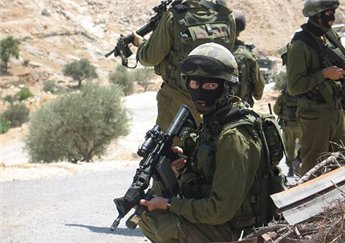 Israeli soldiers deploy during an arrest raid near Jenin [MaanImages, File]
JENIN – Israeli forces arrested two Hamas members in Jenin late Friday, local residents and security sources said.
Muhammad Ahmad Sokiyeh, 38, and Mahdi Hasan Hifawiyah, 34, were driving with their wives when “undercover” forces stopped their cars and took them to an undisclosed location, Palestinian security sources said.
The sources said Israel’s operatives opened fire in order to stop their cars. There were no reports of injury.
Sokiyeh has been wanted since 2005 and Hifawiyah has spent time in Israeli custody.
An Israeli military spokeswoman said there were no arrests in Jenin overnight.
Israeli occupation detains lawmaker Anwar Zaboun
Palestine Information Center – 26/08/2011
 BETHLEHEM — Israeli Occupation Forces (IOF) detained, Friday at dawn, Anwar Zaboun (45 years), member of the Palestinian Legislative Council, after raiding his home in the southern West Bank city of Bethlehem.
Local sources in the Bethlehem district said that a number of IOF troops aboard a number of military vehicles entered Bethlehem, they encircled the home of Anwar Zaboun, raided it and took the lawmaker away.
Zaboun was detained along with other Hamas PLC members in 2006 after occupation soldier Gilad Shalit was captured by Palestinian resistance. He was released about 18 months ago after serving a 49-month term.
With the arrest of Zaboun, the number of Hamas lawmakers detained by the Israeli occupation rises to 19, including lawmaker Muhammad Abu Juhaisha who was arrested a few days ago in al-Khalil.
The Israeli occupation has escalated its arrests of Hamas supporters in the southern West Bank districts of al-Khalil and Bethlehem after the Elat attack.
Featured Video

John Mearsheimer Talking Iran with Iran
or go to
Aletho News Archives – Video-Images
New Book
The silver that medicine dropped — four thousand years of clinical use, four decades to erase.
Colloidal Silver — First Edition, 2026, Paperback
Lies are Unbekoming | October 16, 2026
Silver was medicine. Not alternative medicine. Not folk medicine. Medicine. In surgery. In obstetrics. In the burn ward. In water treatment. In the household medicine chest. Every physician before 1938 knew this.
By the 1870s, silver nitrate was standard in surgical wound care across the leading hospitals of Britain, Germany, and the United States. Colloidal silver preparations — Collargol, Argyrol, Protargol — entered European and American practice through the 1890s and early 1900s and became standard antiseptics in military field medicine. By the time Fleming grew his first penicillin mould in 1928, silver was the first-line antimicrobial of the Western pharmacopoeia. The Lancet and the British Medical Journal carried the clinical reports in volume. The practice ran continuously through the Victorian era, the Edwardian era, the First World War, the interwar period. By 1980, almost all of it was gone.
What has not been treated at book length, until now, is how a four-thousand-year clinical record disappeared from mainstream medicine within four decades of the Flexner Report — and what the honest account of silver looks like once that record is reassembled.
Colloidal Silver reconstructs the pre-1938 record from The Lancet, the British Medical Journal, and the primary literature of the era; recovers Robert Becker’s bioelectric framework from the regeneration research the pharmaceutical model buried; and places silver inside a practical terrain-paradigm guide to its current place — in water, on the body, inside the body, and in the chronic conditions where antibiotics have failed. … continue
Blog Roll
 Aletho News
- Pharma- and Gates-Funded GAVI Seeks to Assure Parents
- John Mearsheimer Talking Iran with Iran
- Inside Bill C-22, Canada’s Patriot Act.
- China’s FM: Palestinian cause is ‘greatest injustice of the century’
- US sympathy for Palestinians surpasses support for Israelis
- Israeli rabbi permits occupiers to steal Palestinian olive harvest in West Bank
- Spanish firm sells Latvia vehicles equipped with Israeli tech despite arms embargo
- Saudi Arabia under fire… Yemen is burning down the House of Saud
- Israeli Spy Pollard stole the files, today’s it’s delivered through official channels
- Why Iran Didn’t Walk Away
- If Americans Knew
- NPR investigation finds evidence of widespread fraud at mall kiosks tied to Israeli skincare brand
- Tucker Carlson exposes Israeli Lies about the Oct 7th attack, Charlie Kirk, and the U.S.
- Israel has detained thousands of Palestinian children since Oct 7th – over half spent time in solitary, many uncharged
- Israeli Analysis: Is Netanyahu Planning an ‘October Surprise’ Attack Before Israel’s Election?
- Israeli settlers brutally attack Palestinians and Washington Post female photographer, 65
- Words Have Changed, Occupation Continues: The Reality of the Gaza Ceasefire
- Gaza’s child amputees are growing faster than their prosthetics allow
- Israel keeps Palestinians struggling just to survive–Daily Update
- Israeli firm used online ads to run vast spy operation, researchers say
- No, the world zionist movement is not an antisemitic conspiracy theory
- No Tricks Zone
- New Study Suggests Large Regions Of The Pacific Ocean Have Been Cooling For The Last 80 Years
- Germany’s Green Energy Debacle: High Energy Costs Force Kahla Porzellan to Close After 182 Years!
- New Study: 50 Years Of The Most Aggressive ‘Net Zero’ Policies Can Only Affect The Global Climate By 0.03°C
- US September “Heat” Was No Record…Many Records Set Decades Ago
- Latest European Green Energy Debacle; Portugal’s Largest Flagship Solar Park Insolvent!
- Green Energy Debacle: German Expert Professor Fritz Vahrenholt Warns Of Severe Economic And Social Consequences
- Two More Paleo Reconstructions Affirm Meters-Higher Sea Levels Across Ireland, Brazil 7000-6000 Years Ago
- New Study: Earth And Venus Surface Warmth Largely Explained By Convection And Lapse Rate, Not CO2 Or Radiation
- 2025 Nature Paper Claiming Worsening Global Drought Gets RETRACTED …Heavily Flawed
- New Study: ‘Global Drought Shows No Detectable Recent Acceleration Under Climate Warming’

