Bahrain: A Legacy of Broken Promises
By Ali Jawad / Dissident Voice / April 2nd, 2011
Stories of revolutions take a long time to be told. The tides of change currently sweeping across the Middle East – steadily rattling one kleptocratic autocrat after the next – will amaze and no doubt exhaust the energies of subsequent generations as they attempt to build a theoretical edifice against which the overpowering outburst of collective human sentiment currently being witnessed gains some veritable empirical sense of meaning.
To even the most seasoned in the art, piecing together the jigsaws is quite a delicate task. Much of the ambiguity that pertains to the political futures of Tunisia and Egypt for instance draws from a lack of clarity as regards the forces that propelled these uprisings, their political leanings, and whether or not these actors have the structural capacities to actualise their aspirations. It is thus fair to say that we are far from being in a position to present an analytical framework to comprehend the gripping dynamics of the Middle East’s uprisings.
The above said however, it is quite easy to discount some ridiculous interpretations of unfolding events that have been disseminated by decrepit monarchs and quarters that have an unvoiced proclivity to maintain the present status quo. For more than a month now, the courageous people of Bahrain have taken to the streets to voice their demands against a ruling monarchy that bears all the hallmarks of a classical mafia-like kleptocratic authoritarian dictatorship. In the face of flying bullets and unending billows of choking teargas smoke, both the young and old have descended to the streets with remarkable valour and upheld entirely peaceful methods of protest. Indeed one of the separating features of the Bahraini uprising is the ubiquitous slogan of “silmiyya, silmiyya” (peaceful, peaceful!). The narrative promoted by the ruling Al-Khalifa monarchy, neighbouring dynastic sheikhdoms and their US patrons has centred however on an entirely bogus claim of supposed Iranian interference.
In recent times, the above claim has been recycled many a time over across the Arabian Peninsula from Kuwait to Yemen. Without measuring the credibility of these claims, the mainstream media has often regurgitated accusations in spite of the most glaring contradictions. In the current context of Bahrain, the suggestion of foreign interference in the shape of an ethereal “Iran threat” (whose promotion has become Secretary of State Clinton’s single-most absorbing vocation) does not only represent a wholesale neglect of factual evidence, but in fact proceeds to insult the sacrifices of generations of Bahrainis tracing back to the birth of the nation.
The Constitutional Dream
Having formally attained independence from British rule in 1971, the political situation in Bahrain was characterised by a great deal of vibrancy and optimism. The archipelago state had witnessed organised political action throughout the British protectorate period, particularly in the decades immediately prior to independence. Precursors to the organised demands for political reform that eventually prompted the Emir to dissolve the National Assembly and brazenly violate the constitution less than two years after its promulgation could be found most notably in the mid-Fifties with the broad mobilisation achieved by the National Union Committee (NUC). The NUC represented the highest symbol of a truly nationalist reform project with demands centred upon the empowerment of an elected legislature, an end to British colonial interference, a fairer socio-economic order and a fundamental revision of state security laws.
Echoing calls made a few decades earlier, the demands raised by leading political figures shortly after independence similarly attracted a broad national, cross-sectarian constituency. The tide of political activism that swept through much of the Middle East at the time was keenly felt in Bahrain. The stoning of British Foreign Secretary, Selwyn Lloyd’s, car in 1956 in protest against Britain’s continued interference in Bahraini affairs through the person of Sir Charles Belgrave, as well as regular strikes at the BAPCO petroleum refinery and organised protests during the Suez Crisis later in the same year are representative of the political mobilisation seen in Bahrain during the period. It also highlights the grassroots identification of political movements within the country with the wider Arab situation.
Bahrain’s first post-independence head of state, Emir Isa bin Salman Al-Khalifa’s, decision to dissolve the National Assembly in 1975 set the tone however for a period that came to be defined by the jockeying for power between the Emir and his sibling, Prime Minister Khalifa bin Salman Al-Khalifa. According to most Bahrainis, much of the nation’s contemporary woes trace back to the birth of the nation and the unconstitutional steps undertaken by the first Emir. The popular political narrative thus begins with a great deal of discontent and mistrust towards the Al-Khalifa monarchy.
With a steady decline in the standard of living, rising unemployment and a suffocated public space resulting from years of absolute autocratic rule epitomised by the enforcement of the State Security Law of 1974, nationalist and leftist movements began a series of consultations in June 1990 to discuss the deteriorating situation in Bahrain. Leftist groups had been heavily weakened over the years due to the hard-handed crackdown by the monarchy for the industrial trade strikes of 1974.
These consultations climaxed with the formation of the People’s Petition Committee, and the open petition of October 1994 which was signed by more than 23,000 signatories. The demands set out therein underscored the primary need to restore the National Assembly, and highlighted the debilitating consequences of the Emir’s constitutional transgressions:
“The reality we now face dictates that we will fail our duty if we do not speak-out frankly to you. Your wise leadership witnesses the incorrect circumstances that our country is passing through amid the changing regional and international environment while the constitutional institution is absent. Had the banning of the National assembly been lifted, it would have enabled overcoming the negative accumulations which hinder the progress of our country. We are facing crises with dwindling opportunities and exits, the ever-worsening unemployment situation, the mounting inflation, the losses to the business sector, the problems generated by the nationality (citizenship) decrees and the prevention of many of our children from returning to their homeland. In addition, there are the laws which were enacted during the absence of the parliament which restrict the freedom of citizens and contradict the Constitution. This was accompanied by lack of freedom of expression and opinion and the total subordination of the press to the executive power. These problems, your Highness, have forced us as citizens to demand the restoration of the National Assembly, and the involvement of women in the democratic process. This could be achieved by free elections, if you decide not to recall the dissolved parliament to convene in accordance with article 65 of the Constitution…”
Akin to his reactions in 1975, the Emir now in the third-decade of his absolute rule brutally cracked down on nationalist groups and exiled leading figures including the current secretary general of Bahrain’s largest political group Al-Wifaq, Sheikh Ali Salman. Rather expectedly, the monarchy placed the finger of blame for the unrest on external forces, i.e., the Islamic Republic of Iran and Lebanese resistance movement Hezbollah. In order to quell the popular uprising, the Kingdom of Saudi Arabia also dispatched two brigades of its National Guard (around 4,000 soldiers).
By the time of the Emir’s death in 1999, Bahrain boasted a horrendous human rights track record including widespread practise of torture under the instruction of British colonial officer Ian Henderson. The promises of reform made by the incumbent Emir Hamad bin Isa Al-Khalifa were partly inspired by the failure of the iron-fist policies to weigh in the discontent, and also in order to buttress his own standing against his uncle, Prime Minister Khalifa bin Salman Al-Khalifa, who wielded a great deal of power acquired over three successive decades as Prime Minister; a position the latter continues to enjoy 40 years after his appointment.
The spirit of optimism was short-lived however, as the Emir reneged on his promises of meaningful reform. The “Bahrain model”, as it has condescendingly come to be known, essentially served to project an illusion of reform without altering in any substantive way, the pre-existing decision-making and power structures. Assurances made by the King in the National Action Charter (overwhelmingly supported by 98% of those who voted between 14-15 February 2002) to institute an assembly that would be elected through free and direct elections in effect gave veracity to the home-grown nature of the pro-democracy movement and its legitimate demands.
The Pearl Protests
As hundreds took to the streets on February 14 in their ‘Day of Rage’, the King’s henchmen had by then already settled on the solution of a violent suppression. Unlike in Tunisia and Egypt where live ammunition was employed after a few days of protests, in Bahrain its resort was almost immediate with the first fatality, Ali Abdulhadi Mushayma, falling on the first day of protests.
The date for the protests, 14th February, was deliberately chosen to provide a clear message to the ruling Al-Khalifa family that the hollow reforms enacted as part of the National Action Charter process had been far from satisfactory. Just as with decades past, the demands of protesters drew from the fundamental frustrations of generations who aspired for real constitutional reforms and a substantive role for an elected national assembly with legislative powers.
The monarchy’s brutal resort to violence that has thus far resulted in the deaths of at least 25 innocents served to exacerbate hopes in the reform-driven process, and has in turn directed grievances at the highest symbol of the status quo, namely, the Al-Khalifa rule. In essence, the ruling family’s desire for an absolute monopoly of power presents an intractable quandary that cannot be permanently masked by the duplicitous reforms carried out since 2002. Faced with the alternative of relenting some of its power to more democratic institutions or to violently suppress the calls for change, the Al-Khalifa regime has clearly selected the latter choice.
Since the outset of protests more than a month ago, Bahrain’s phony veneer of a progressive, liberal form of rule has been crushed before the world. The systematic silencing of journalists, use of live ammunition against defenceless protesters, dozens of arbitrarily detained individuals including major political opposition figures, shameful attacks on hospitals and medical teams, and the targeting of entire villages and neighbourhoods have all served to disclose the reality of the Al-Khalifa monarchy.
The outdated tactic of brandishing the pro-democracy movement within Bahrain as foreign-backed is principally used to deflect attention from the consistent demands for constitutional reform. In this regard, the role of the US in obstructing meaningful reforms and allowing for the gross misrepresentation of the demands of the political opposition has been pivotal. For obvious geopolitical stakes, the continued hosting of the Fifth Fleet base and unequivocal support for successive US military operations stretching from the Gulf War, the Al-Khalifa monarchy has been looked upon by Washington as a key strategic ally. The hypothesized domino-effect and shared fate that connects Bahrain and Saudi Arabia also looms large, no doubt, for US and western officials.
Shortly on the heels of their participation in a seminar at the House of Lords in London to highlight the deterioration in human rights and freedoms, the detention of leading opposition figures in August 2010 was met with the blanket support of US ambassador Adam Ereli who censured them for taking their case outside the shores of Bahrain. Their subsequent torture and the wall of silence erected in the face of journalists also drew little comment from western capitals.
The developments in Bahrain in recent weeks are in fact symptomatic of the confluence of interests of local autocratic tyrannies and imperial powers who continue to hinge their hegemonic agendas to the nightmarish reigns of unpopular despots. For decades, the pre-eminence of geopolitical and energy interests in the foreign policy outlooks of the US and its allies has relegated the suffering of millions of Arabs to a footnote that merit the occasional remonstrations or hand-wringing. All the while, the warehouses of these military-autocratic establishments have been filled with western arms in deals that run into hundreds of billions of dollars.
Revolutions certainly do take a long time to be told, but the time it takes for long compressed frustrations to burst out and overpower the most dictatorial reigns is almost instantaneous in comparison. For the US and its allies, the experiences in Egypt and Tunisia should be reason enough to return to the drawing books.
But more importantly, the uprising peoples of the Middle East have definitively established that the aspirations of peoples cannot forever be ignored in the equations of power. They have proven that real change can only occur in the absence of western tanks and fighter jets. To these brave men and women, the free peoples of the world owe great admiration and respect. The annals of history are lit with the sacrifices of selfless martyrs, and in recent weeks more glorious epics have been added to its volumes. Over time, many have sought to deface the most honourable sacrifices; the least we can do from afar is to ensure that these uprisings are placed within their correct historical, political and socio-economic contexts.
~
Ali Jawad is a political activist and a member of the AhlulBayt Islamic Mission (AIM). He can be reached at: jawad.ali313@googlemail.com. Read other articles by Ali, or visit Ali’s website.
Abusisi’s First Public Words at Hearing: ‘I am a Simple, Innocent Man’
Richard Silverstein | Tikun Olam | April 1, 2011
Dirar Abusisi has made his first public statement since his kidnapping in Ukraine and extraordinary rendition to Israel. Before beginning a hearing that is underway as I write this, he made his first comments to the media during the court proceedings, saying:
They interrogated me about Gilad Shalit but I have no connection or information about him. It’s all lies. I am merely a simple man and electrical engineer. I send my love to my family. I am innocent.
He also said that he had been kidnapped from Ukraine and encouraged his family to be strong and patient.
Defense minister Ehud Barak has now gotten into the act and reinforced Netanyahu’s claim that Abusisi knows about Shalit. This appears to be the line that the Israeli security services have fixed on as most likely to bring a prison sentence against him after two trial balloons linking him to building missles under Iranian training and the Victoria arms shipment were apparently dropped.
Yossi Melman is also reporting based on security sources that Abusisi will be charged with membership in a terror organization and aiding Hamas in manufacturing weapons. The latter is a charge whispered by another TV news military correspondent weeks ago. So here you can see how the gag works. The defense and anyone sympathetic to the defendant may not report on matters that might work in his favor. However, the prosecution and Shabak may leak at will to their chosen favorite reporters, who dutifully put it in the media pipeline. Once again revealing a system stacked against all security detainees and in favor of the State.
The “leniency” with which the authorities have treated him derives no doubt from Bibi Netanyahu opening his big mouth during the Channel 2/YouTube interview and crowing about Abusisi’s membership in Hamas. By the way, can you imagine the leader of a democratic nation proclaiming before not just a national, but international audience that a prisoner who hasn’t even yet been charged with a crime is guilty of being a member of a banned organization? This surely is a conviction even before the trial has begun. Would any of my pro-Israel readers want to reconcile that with the concept of innocent till proven guilty? Or does that hold true only for Israeli Jews? Palestinians apparently are guilty, not until proven innocent because in the Israeli system that doesn’t happen. Just guilty.
So the court and/or prosecutor figured that because Bibi had already convicted him before the international media that they should at least allow him to be photographed and make a short statement.
Abusisi’s remand has been extended for another five days, which will bring him to 45 days imprisonment without being charged with a crime, an unprecedented length of time for Israeli prisoners. At that time, charges are supposed to be filed (but at the last hearing that’s what the court insisted would happen).
I repeat what I said after the Attorney General stated that he was unsatisfied with the evidence Shabak had compiled against Abusisi–whatever they’ve gotten so far hasn’t been enough. They need to continue working on him till they can build a case for something. This delay also lends credibility to Smadar Ben Natan’s statement yesterday that her client has done nothing wrong, but rather deserves an airline ticket back to Ukraine with an apology (fat chance). If Abusisi is guilty of something why has it taken 45 days to file charges? How long do you need to have 24 hour/7 days a week access to a prisoner in order to find him guilty of terrorism? A month, a year?
50 Bahraini activists arrested overnight, female medics harrassed
Press TV – April 1, 2011
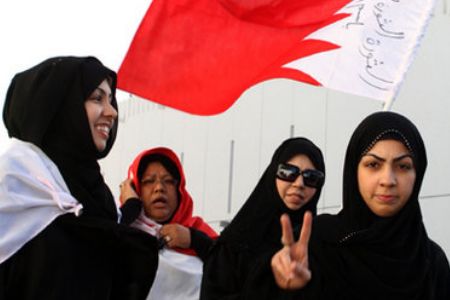
Bahraini opposition groups say the Manama regime has arrested 50 activists overnight, just before the massive Friday anti-government protests in the country.
The arrest took place on Thursday, a night before what Bahraini protesters have referred to as the “Day of Rage.” The protests are scheduled to take place after Friday Prayers.
The Bahraini protesters continue to demand the ouster of the 200-year-old-plus monarchy as well as constitutional reforms.
At least 25 people have been killed and about 1,000 others injured during the government-sanctioned crackdowns on peaceful demonstrators.
Joined recently by police units and troops from Saudi and the United Arab Emirates, the Bahraini government forces have launched a deadly crackdown on the popular revolution that began to sweep the Persian Gulf island on February 14.
The Saudi-backed forces have recently been sighted while destroying religious and historical monuments of the Muslim Persian Gulf state.
On Wednesday, the Human Rights Watch accused Bahraini forces of using violence against people that had already received injuries during earlier attacks.
The rights body said it had documented several cases in which the forces had “severely harassed or beaten” patients under medical care in the country’s Salmaniya hospital in Manama.
Also reported on Friday:
The President of Bahrain’s Center for Human Rights Nabeel Rajab says the Manama regime has harassed many of the female medics of Salmaniya hospital.
“A lot of female doctors have been harassed sexually or on sectarian basis by masked forces,” Rajab told Press TV on Friday.
He described the humanitarian situation in Bahrain as critical, saying those who have been injured during the protests have to be treated at homes, because the hospitals are under tight security control.
Even the patients who have normal diseases cannot be easily taken to hospitals, Rajab added.
Troops Kidnap Four Palestinians, Including a Hamas Legislator In The West Bank
By Ahmad N. – IMEMC & agencies – March 31, 2011
Israeli troops kidnapped four civilians including a legislator of the Hamas Change and Reform parliamentary Bloc, and took them to an unknown destinations on Thursday morning.
Soldiers stormed the city of Hebron, in the southern part of the West Bank, and kidnapped legislator Mohammed Maher Bader after breaking into his home in downtown Hebron.
Soldiers also kidnapped three civilians form Beit Ummar, north of Hebron, after breaking into their houses and searching them.
The three were identified Nidal Hosni Hussein Zakeeq, 19, Mohammad Hosni Zakeeq, 16, and Shihdeh Yusef Adel, 18.
Mohammad Awad, media spokesman of the National Committee Against the Wall and Settlements, reported that the soldiers have been sealing the entrances of Beit Ummar since more than nine days depriving the residents their right to freedom of movement.
Also on Thursday:
Army Kidnaps A Hamas Leader In Ramallah
By Saed Bannoura – IMEMC & Agencies – April 01, 2011
Israeli soldiers kidnapped Mohammad Ahmad Rayyan, a political leader of the Hamas movement in the central West Bank city of Ramallah on Thursday evening.
Rayyan’s arrest comes a few days after he was release from a detention facility run by the Palestinian Security Forces loyal to President, Mahmoud Abbas, in the West Bank.
Before his release, Rayyan was ordered to pay a 2,000 Jordanian Dinars bail, and was ordered not to leave the country.
His release came after he spent two months in Palestinian detention facilities and was sent to court several times without any convictions.
Dominci in Israel: Dispossession by Law
By Seraj Assi | Palestine Chronicle | March 31, 2011
Imagine you are an Israeli Arab. You receive a graduate fellowship in an American university. You set there in the campus cafeteria, meet with a Syrian or Lebanese colleague or friend, a fellow Arab who happens to share with you the same religion, nationality and language. You then return home for the summer vacation. You are arrested, stripped of your citizenship and expelled out of your homeland.
This episode is not taken from a satirical novel. It is what the new Knesset law all about. The law already passed in its second and third reading. “Knesset passes law to strip terrorists of Israeli citizenship” was the Haaretz headline. That is, not only does the law make dispossession and transfer of Palestinians legal, but it also labels the entire people terrorists.
On March 28, 2011, the Knesset plenum in Israel gave its final seal of approval to “citizenship loyalty” law that enables Israel’s Supreme Court to revoke the citizenship and the status of any permanent resident convicted of espionage, treason or aiding the enemy during war. We must remember here that Israel considers itself to be in a permanent state of war with Arabs and Palestinians.
“Anyone who betrays the state and carries out acts of terror must know that citizenship and loyalty go together,” said Yisrael Beiteinu MK David Rotem, who initiated the bill. Israel’s Foreign Minister Avigdor Lieberman lauded the Knesset’s decision as a step toward “contending with the phenomenon of exploiting democracy in order to subvert it.”
This is no doubt a modern Israeli version of dispossession and ethnic cleansing. “No citizenship without loyalty” simply means that two million Palestinian Arabs living in Israel today can be immediately expelled or put in prison, by law of course. The absurd irony is that since every Arab Palestinian in Israel is considered a permanent enemy of the state and potential threat of its national security, any discussion involving two Arab citizens can be literally seen as subversive to the state.
One might wonder how could an Arab Palestinian be loyal to a state that continues to define itself as a Jewish state that belongs to the Jewish people, in which native Arab Palestinians are seen as potential enemies? Isn’t the “Jewish democratic” state of Israel after all a state in which democracy and law are goaded into the service of an ethnic hegemony and the suppression of the native community?
One might also wonder what about solidarity with fellow Palestinians under occupation and blockage in the West Bank and Gaza? What about national solidarity with fellow Arab victims of Israeli attacks and massacres? Is that considered treason too? The law is ambiguous enough to include all expressions of national and humanist solidarity under the category of terrorism.
The new law does not tell us whether the category of terrorism includes Israeli Jewish terrorists, such as Kahana’s supporters or Jewish settlers who terrorize Palestinians on a daily basis. Nor does it really explain who the terrorist is. One thing is for sure here; Israel can right now begin a systematic persecution of all Arab Palestinian citizens under the banner of legal and democratic ideals.
There is a famous passage by the French philosopher Roland Barthes named “Dominci, or the Triumph of Literature.” Barthes examines a case in which an inarticulate rural laborer is condemned in terms of legal discourse. The judges describe Dominci’s motives in terms borrowed from literary clichés, jargon and abstract lexicon.
Dominci’s trail is a classic account of how hegemony is produced through interactions between formal institutions and discourses. These notably include language, literature, law and journalism. It is a classic example of how colonial hegemony is exercised over the body of those who can hardly speak back.
So if your Palestinian grandmother would say in her next prayer “May God grant victory to Arabs and Muslims,” she too can be arrested, trailed, condemned and expelled for providing a divine aid to the state’s “enemies.” Perhaps it is time for young Palestinians in Israel to remove all those Gazan, Lebanese and Syrian “enemies” from their Twitter Friends list.
The timing of the law is by no means coincidence. This week marks the 35th anniversary of the Land Day, the annual commemoration of the massacre of six Palestinian citizens by the Israeli police. The approval of the Loyalty Law comes in this historical moment to mark the transition from ethnic cleansing by direct force to one exercise by law and legal manipulations. Not only does it come to remind Palestinian citizens that Israel is never ready to admit its massacres, but never ready to admit Palestinian right to exist in their homeland.
– Seraj Assi is a PhD Student in Arabic and Islamic Studies at Georgetown University, Washington DC.
Syrian reactions to Assad’s speech
Compiled by Joshua Landis | Syria Comment | March 30th, 2011
Majed: I have mixed feelings about the speech. On one hand, it wasn’t anywhere near the unrealistic expectations some officials alluded to, namely Bouthaina and Sharaa. But on the other hand, the speech was a display of strength and confidence, following a strong show of support by the Syrian people for the President a day earlier. As much as I would like to see reforms, doing so immediately following this suspicious and unpopular uprising could be interpreted as a sign of weakness that could weaken Syria’s resolve and embolden its enemies. There is no denying that the President is popular in Syria and throughout most of the Arab world; so why should he not capitalize on his popularity and turn this into an opportunity to consolidate and regroup. Why should he appease those with questionable agendas who are looking to even the score and embarrass Syria? I still think the President is a reformist. He has been slowly introducing economic reforms, and will, in due time, bring in gradual political reforms, perhaps starting this year. However, he is not willing to do it under pressure, or be black mailed into it by Syria’s enemies who are obviously trying to rob Syria out of its political gains from the recent revolutions in the “moderate Arab” camp who sided with Israel and the U.S against Syria and the Palestinian cause. Let’s face it, Syria has been vindicated since the Arab uprising, as those “moderate Arabs” and their masters suffered unprecedented humiliation. By giving in under the current environment, Syria will look indistinguishable from those who sold out to Israel and U.S, thus greatly diluting its hard earned gains.
Paul: Let me understand one thing: what could one have really expected Bashar to say? That from today on Syria is a democratic country? That people will obey traffic laws? That corruption will be over in a pass of magic? That the price of arghile will be lowered? In the circumstances I think he acted in the best possible way. Not in desperation but recognizing that change is needed. If he really understands where the wind is blowing he’ll do it slowly but surely. If not it will happen much faster and painfully.
Nabu: The people of Syria want a defiant leader, a leader with balls and that’s the image he showed in the speech. The people of Syria want a leader that doesn’t order things twice, not a weak and that’s the image he showed in the speech. Today’s speech was a gamble, I will admit. A gamble because the minority of the people who are not scared to say things they think will not like it and they’ll get again to the street. But the reaction will be strong and that’s the image he now wants to show on the ground. The govt knows it’s coming, and it will tackle it. The liberty seekers will be cornered everywhere just like he cornered them in Hama. Whatever he said, he is backed for every word he mentioned inside and outside Syria. He thought about it, he took his time and he thinks this is the best for the long run for him, his image, his community and for Syria.
Talib: I thank Mr. President, Dr. for his care and genuine feelings when he talked about the unity of the Syrian people and when he thanked us for doing our duty and focusing on the importance of the wisdom of the people in rejecting the foreign conspiracies.
Zeina: President Assad said: “The Blood that was spilled was Syrian blood. We all care about it. Those victims are our brothers. Their parents are our parents. And we should find the reasons behind the killings and those who killed them.”
Aamer: A thousand congratulations. A thousand thanks to God, and thousands of congratulations for our big victory over the campaigns of destruction and corruption.
Equus: For all who keeps lingering about the emergency law. Look at the Egyptians..they toppled Mubarak on Feb. 11th and YET the emergency law is NOT lift with no specific date in sight despite the extreme pressure from the US. So why the media wants Assad to lift his in 24 hours.
London set to limit right to protest
Press TV – March – 29, 2011
The British government has announced controversial plans to ban protestors from taking part in public gatherings following the weekend anti-cuts rallies, which were marred by violence.
Based on a proposal by Home Secretary Theresa May, the police may be given new powers to prevent so-called hooligans from attending rallies and marches while officers will also be authorized to force demonstrators, who do not want to be known, to remove their face-scarves and balaclavas.
The announcement has raised concerns among MPs who say no hasty decision should be made on the issue as the police may abuse the “stop and search” powers to target ordinary people rather than “known hooligans”.
May outlined her plans during an emergency Commons briefing on the violent incidents, which marred the Saturday rally organized by the Trades Union Congress.
May told the MPs that she is considering “banning orders” similar to those used against football hooligans for the demonstrators who police think may turn to violence.
She also said officers should force more protestors to remove their masks and balaclavas to help the police quickly identify participants in the rallies.
“Just as the police review their operational tactics, so the Home Office will review the powers available to the police. I have asked the police whether they need further powers to prevent violence before it occurs. I am willing to consider powers which would ban known hooligans from rallies and marches and I will look into the powers the police already have to force the removal of face-coverings and balaclavas,” May said.
While the Metropolitan Police earlier said it has charged 149 people out of more than 200 arrested during the Saturday rallies with various offenses, at least five people have lodged complaints with Scotland Yard about police violence against marchers.
The Met said on Monday that it has charged 138 people in connection with the sit-in at Fortnum & Mason luxury store for charges including aggravated trespass.
However, the UK Uncut, which organized the sit-in dismissed any claims that those participating in the Fortnum & Mason incident resorted to violence.
“This was not a protest by people wearing balaclavas and breaking things. It was a peaceful and mild-mannered gathering by people from all walks of life – teachers, hospital workers, charity workers,” said Tim Matthews, a spokesman for UK Uncut.
“People who took part now find themselves charged with a criminal offence simply for exercising their right to protest,” he added.
This comes as Tom Brake MP, co-chair of the Liberal Democrat parliamentary policy committee on home affairs, justice and equalities, warned the government against “a knee-jerk reaction” to what happened.
“Clearly there was a small minority who were out to cause trouble. We need to look in detail into whether the police have sufficient powers to tackle that, or whether they can be deployed differently to ensure such violent scenes don’t happen again,” Brake said.
60 Detained in Awarta. DNA Samples Taken
By Circarre Parrhesia – IMEMC & Agencies – March 29, 2011
Upwards of 60 individuals were detained, in the village of Awarta on Tuesday, and were forced to give samples of their DNA. The incident follows the murder of 5 members of a family of settlers, in Itamar, near to the village.
The deputy mayor of the town, and two of his brothers were amongst those detained, during which the DNA samples were taken, and the interrogations were conducted. Some residents of the village have been released, but some remain in detention.
These events follow two periods of curfew imposed during the weeks after the murders, the first of which lasted 5 days. 40 residents have already been detained in the course of the Israeli military’s investigation prior to Tuesday.
Currently the State of Israel is imposing a gag order on the Israeli press, not allowing any information to be published other than that which is covered in the international press. Israel has yet to provide any evidence of Palestinian involvement, despite members of the Knesset denouncing the murders as an act of Palestinian terror.
News reports broke two weeks ago, that the murdered family had owed immigrant workers from Thailand the sum of NIS 10,000, and that, allegedly, the workers had threatened to kill the family if they did pay the debt.
Palestinians jailed because lawyer can’t communicate with them
Yossi Gurvitz | March 26 2011
The text is simple and quite short, and it merits being quoted in full: “The Netanya Magistrate’s Court has decided to extend by 24 hours the detention of three Palestinians, without holding a hearing about their alleged crimes. The reason for the absence of such a hearing is that the suspects speak only Arabic, and could not communicate with the public defender appointed for them.”
The abstract form of this masterpiece of news briefs deserves a few words of attention. Reporter Ra’anan Ben Zur successfully conveys the fully Kafkaesque nature of the situation in two little sentences. We have three defendants, about whom we know nothing except for their nationality; the fact that a public defender has been appointed for them; that they cannot communicate with said defender; and that they are consigned to detention due to this lack of communication. We do not know their names, and most importantly, the crime of which they are suspected is missing from the report. Is this a serious crime, where the suspect must be detained? Or maybe it is a minor, negligible crime, and the suspects were only arrested for their ethnicity? The truth is — and the newsflash expressed it well — that it does not really matter. What matters is that three people were denied their liberty, without having the opportunity to defend themselves from this arbitrary decision.
In defense of the court, it is very likely that it would have come to the same decision even if it had to hear the case of three migrant laborers from China, who also would not have been able to converse with their public defender because he did not happen to speak Chinese and their Hebrew was not sufficient. It is, of course, significantly easier to find a speaker of Arabic than of Chinese, so you could accuse the court of having taken the easy way out here, but the principle stands.
Denial of liberty is the most severe sanction that we permit our courts. We do not permit corporal punishment and we do not have a death penalty (it exists, and rears its head occasionally, when it becomes necessary to make a ritual human sacrifice — of the three cases of death penalty, two involved Nazi criminals and the third was suspected of treason — but it generally lies dormant), and after financial penalties, only the denial of liberty remains.
The Supreme Court has written exhaustively about the fact that denial of liberty should not be used without appropriate cause, but in practice detentions are extended at Magistrates’ Courts by overloaded judges, and the Israeli courts tend to work in favor of the prosecution in any case. Frequently the police motion to extend detention is granted automatically. Once a person has been detained, the police has plenty of time to apply pressure and extract a confession, and once a confession has been produced, the case is pretty much closed.
And here comes the court and denies the liberty of people without the police even taking the trouble to make a case for such action. The three men have not even been accused, no evidence against them has been put forth: this is a classic case of the principle of “innocent until proven guilty”. Even the argument that their release could be risky is irrelevant here, because no one made that argument. The court has simply punished the three men for the lack of competence by the judiciary authorities themselves, who did not discharge their basic obligation, which is to provide the defendants with an attorney. And no, sending an attorney who is incapable of conversing with his clients does not count as “providing counsel”.
The court could have delayed the hearing and called in an interpreter. It could have — in fact, it should have — released the three defendants, because they were not able to put up a defense against whatever it was that the police argued against them. But the decision taken was to arrest them. Next time the judges ask themselves why people have been losing faith in the system of justice, they should look at this sort of decision and the lower steps of the hall of justices – the ones that trip up most citizens who are unfortunate enough to run into the system.
(The original is here, translation courtesy of Dena Bugel-Shunra.)
‘250 arrested in Bahrain crackdown’
Press TV – March 28, 2011
Almost 300 people have been detained or have gone missing during the Bahraini government’s crackdown on protesters, a former opposition lawmaker says.
“We have around 250 confirmed arrested and 44 who are missing, though that number fluctuates when people reappear after hiding from police,” Ibrahim Mattar told Reuters on Monday.
Mattar, who is from the largest opposition group al-Wefaq, added that many Bahrainis are being arrested at checkpoints or in house raids.
Most of those who were detained or went missing were not activists, he noted.
Meanwhile, leader of another opposition group told Press TV that protesters would continue with their rallies until their demands are met.
On Sunday, protesters once again poured into the streets of the capital city, Manama, despite the state of emergency imposed by King Hamad bin Al Khalifa on March 15.
Bahraini forces along with troops from Saudi Arabia and the United Arab Emirates have stepped up their attacks against protesters.
The protests against the government began in mid-February. At least 24 people have been killed and about 1,000 others have been injured so far.
Bahrain: Hospital razed for treating protesters
Press TV – March 25, 2011
Bahraini authorities have razed a hospital for providing medical services to injured anti-government protesters.
The Shahrakan Maternity Hospital was bulldozed by army forces on Friday and there are no reports about the condition or whereabouts of the injured.
Bahraini authorities earlier destroyed the Pearl Square in the capital Manama, which was the epicenter of anti-government protests.
Also on Friday, Bahraini security attacked anti-government protesters in the city of Sitra using teargas, buckshot and stun grenades. Many protesters have been reportedly injured.
Witnesses say authorities have closed all medical centers in the area and no ambulance is allowed to take wounded protesters.
Reports coming from Bahrain say at least 30,000 people attended the protest rally in Sitra.
Thousands of anti-government protesters have also poured into the streets in Bilad al Qadem, a village on the outskirts of Manama, to attend the funeral procession of Hani Abdulaziz, a protester who was killed earlier this week.
According to witnesses, mourners were surrounded by hundreds of security troops and an army helicopter was hovering over the funeral procession in Bilad Qadem. However, there were no reports of clashes between anti-government protesters and security forces in the village.
The recent brutal crackdowns in Bahrain come as the United Nations’ human rights office has called on Manama not to use military force on protesters.
Thousands of anti-government protesters poured into the streets across Bahrain on Friday, dubbed the “Day of Rage.”
Since the beginning of anti-government demonstrations in Bahrain at least 20 protesters have been killed and many others have gone missing.
Featured Video

Trump asks Iran not to retaliate after he strikes Pickaxe Mountain
or go to
Aletho News Archives – Video-Images
Book Review
‘Why Fauci Must Rot in Prison’: A Tale of Two Diaries
By Jill Erzen | The Defender | October 13, 2026
Dr. Anthony Fauci’s private diary reveals a “mind-numbing” contradiction between what the former top U.S. infectious disease official knew about COVID-19 and what he told the public, senior White House adviser Peter Navarro, Ph.D., said last week on “American Thought Leaders.”
In his new book, “Why Fauci Must Rot in Prison,” due out Oct. 20, Navarro compares Fauci’s private entries to his own pandemic-era diary, and uses what he calls “a tale of two diaries” to argue that Fauci should face criminal prosecution.
“I show, actually, how a prosecution can and should happen … at the state level, most likely,” Navarro said. “He should wind up in prison, and we’ve got the receipts in this book to put him there.”
Navarro said Fauci repeatedly acknowledged important facts in private, then publicly pursued policies that contradicted those facts — with devastating consequences.
“What he says many times privately in his diary is so at odds with both his public behavior and public statements that it’s mind-numbing,” Navarro said.
Navarro examines the lasting damage caused by lockdowns and other pandemic policies, and the ongoing toll of long COVID.
His book also addresses questions about vaccine safety, including why healthy young people faced COVID-19 vaccination mandates despite concerns about myocarditis, and why women were not warned about miscarriage risks linked to the shots. … continue
Blog Roll
 Aletho News
- Yemen denounces international community’s silence on Saudi aggression, siege
- UAE and Saudi Arabia move toward renewed coordination against Sanaa
- How Iran’s two-week retaliatory strikes exposed cracks in US military architecture in Persian Gulf
- The mother of all propaganda: Why the hype over US MOAB strike against Iran is nothing but theater
- Iran says it possesses technology behind US 14-ton GBU bunker-buster
- Trump asks Iran not to retaliate after he strikes Pickaxe Mountain – w/ Prof. Marandi
- Vice President J.D. Vance’s Deceptive ‘Antiwar’ Campaign Speech
- Iran: Palestinians’ rights must not be compromised in Gaza’s future; US, Israel to blame for Hormuz situation
- Ongoing tales of Syrian chemical weapons
- Moscow blasts UN for ignoring torture of Russian POWs
- If Americans Knew
- Israeli rabbi permits occupiers to steal Palestinian olive harvest in West Bank
- Netanyahu’s spin on latest settler attack is laughable – Daily Update
- Israeli soldiers debunk Israel’s talking points
- In West Bank, Israeli settlers are totally out of control – Daily Update
- NPR investigation finds evidence of widespread fraud at mall kiosks tied to Israeli skincare brand
- Tucker Carlson exposes Israeli Lies about the Oct 7th attack, Charlie Kirk, and the U.S.
- Israel has detained thousands of Palestinian children since Oct 7th – over half spent time in solitary, many uncharged
- Israeli Analysis: Is Netanyahu Planning an ‘October Surprise’ Attack Before Israel’s Election?
- Israeli settlers brutally attack Palestinians and Washington Post female photographer, 65
- Words Have Changed, Occupation Continues: The Reality of the Gaza Ceasefire
- No Tricks Zone
- Predictions Made By Renowned Climate Proifessor Over Past Decades Have Been Proven To Be Poor
- New Study Suggests Large Regions Of The Pacific Ocean Have Been Cooling For The Last 80 Years
- Germany’s Green Energy Debacle: High Energy Costs Force Kahla Porzellan to Close After 182 Years!
- New Study: 50 Years Of The Most Aggressive ‘Net Zero’ Policies Can Only Affect The Global Climate By 0.03°C
- US September “Heat” Was No Record…Many Records Set Decades Ago
- Latest European Green Energy Debacle; Portugal’s Largest Flagship Solar Park Insolvent!
- Green Energy Debacle: German Expert Professor Fritz Vahrenholt Warns Of Severe Economic And Social Consequences
- Two More Paleo Reconstructions Affirm Meters-Higher Sea Levels Across Ireland, Brazil 7000-6000 Years Ago
- New Study: Earth And Venus Surface Warmth Largely Explained By Convection And Lapse Rate, Not CO2 Or Radiation
- 2025 Nature Paper Claiming Worsening Global Drought Gets RETRACTED …Heavily Flawed

