Israel extends administrative detention of Ayed Dudein for twelfth time
Palestine Information Center – 12/02/2011

NABLUS — Israeli intelligence has extended the period of detention of the longest running Palestinian administrative detainee Ayed Dudein for the twelfth consecutive time since his arrest, the Ahrar center for prisoners studies said.
The Israeli Supreme Court denied appeals submitted by Dudein’s lawyer requesting his release, claiming a ”secret file” was prepared against him and his release was a security concern for Israel, Ahrar center director Fouad Al-Khafsh said.
He has so far not received a fair trial.
In administrative detention since October 2009, Dudein, a father of six who works as assistant director of the Al-Khalil emergency department, has been in and out of Israeli prisons over the past 13 years. He has refused bargains by the Israeli Supreme Court that would have him exiled.
Dudein’s wife Umm Hamza contacted the Ahrar center complaining of years of instability since her husband’s arrest and frequent raids on their home.
Dudein is a prominent figure among Palestinian detainees and is respected by the country’s factions. One of his brothers serving a life sentence has been detained since 1992. His mother passed away two months back, but his detention kept him from bidding her farewell.
Nativity Church deportees appeal to UN commissioner
Ma’an – February 12, 2011
GAZA CITY — Palestinians deported from Bethlehem to the Gaza Strip in 2002 after Israeli forces besieged the Nativity Church appealed to the United Nations High Commissioner for Human Rights.
A spokesman for the group Fahmi Kan’an said the local committee of national and Islamist forces handed Navi Pillay a letter from the deportees during her visit to the Gaza Strip.
Kan’an said the letter explained the dire conditions of the Nativity Church deportees both in Gaza and European countries as they entered their 10th year in exile.
On May 10 2002, Israeli forces surrounded the Church of the Nativity in Bethlehem, where Palestinian operatives had taken shelter. The church was placed under siege for 40 days until an agreement was reached in which 26 would be deported to Gaza, and 13 others to six different European countries.
The letter highlighted that Israel had reneged on the agreement, which Kan’an said stipulated that the deportees could return home after two years. The deal was struck between Israel and the Palestinian Authority under European and American supervision.
The deportees also wrote that they had not seen their families for over eight years, and their wives and children were not allowed to join them. Many of their family members had passed away and they had not been able to bid them farewell, they added.
Concocting elections to regain lost legitimacy
By Khalid Amayreh | Palestine Information Center | February 11, 2011
Frustrated by the utter lack of progress in the manifestly futile peace process with Israel, the American-backed Palestinian Authority (PA) has once again designated a date for holding general elections in the occupied territories of the West Bank, Gaza Strip and East Jerusalem.
But the organization of elections hedges to a large extent on Israeli consent. The Israeli occupation army, after all, still controls every nook and cranny of the West Bank, and it would be unimaginable to hold elections if the Israeli occupiers said “No.”
Hamas has also objected to the unilateral announcement in Ramallah, arguing that the holding of elections in the absence of basic civil liberties such as freedom of speech and expression would be a foolish and irresponsible act.
Hamas is correct. The West Bank is languishing under a police-state apparatus, with a nearly total absence of the rule of law as well as basic liberties, without which the organization of true elections would be meaningless.
The organization of elections would require the availability of basic rights and freedoms, including the freedom to hold rallies, meetings, do campaigning and electioneering without being suppressed and harassed by the police and other security agencies.
Needless to say, these rights and freedoms don’t exist in the West Bank today. Mendacious claims to the contrary don’t really warrant a refutation. The people and human rights organizations operating in the region know the truth too well.
Indeed, if a small child is caught raising a small green flag, bearing the Islamic article of faith, there is no god, but one God, and Muhammed is His Messenger, the child will be arrested, beaten and his family will be held accountable for the “crime” of raising Hamas’s banner aloft.
Some Palestinian officials might claim that for the duration of the elections and the immediate period preceding them, candidates and electoral lists would be able to do electioneering rather freely and that the elections themselves would be monitored by international observers.
However, that is not enough. We all know that in order to hold true representative elections, equal opportunities must be given to all contenders, a condition that is conspicuously absent in the West Bank.
More to the point, we all know that most of the Islamist people who might contest the elections are already behind bars, either in PA or Israeli jails, and held without charge or trial, mostly on concocted and frivolous charge that have nothing to do with any genuine violation.
Indeed, in any other country that respects itself, the lengthy incarceration of people because of their ideology would be considered a taboo.
In addition to hounding and imprisoning people because of their thoughts, the PA has taken over or deliberately ruined hundreds of Islamic institutions, including Zakat committees, schools, orphanages, social and athletic clubs as well as health institutions.
In some instances, the PA has totally illegally seized businesses and workshops, thus depriving entire families of their source of livelihood.
Hence, one might wonder how genuine elections could be held under the existing abnormal conditions, this is unless the PA is planning to rig the elections by hook or by crook in order to compensate and avenge its electoral defeat of 2006.
The PA says it will be willing to allow international observers to monitor the elections. However, the presence of international observers by itself wouldn’t create an ideal atmosphere for transparent elections.
I am talking about pre-election preparations, such as campaigning and holding rallies in a free environment.
True, the PA might allow one or two weeks of free and unfettered campaigning, but this short period would be utterly insufficient to make the transition from a police-state atmosphere to freedom where all political groups and parties, including Hamas, are given an equal opportunity.
Obviously, the PA decision to hold elections has been taken under pressure from a few leftist and liberal parties with little weight in the Palestinian streets. These parties hope that in the absence of Hamas’s participation in the elections, they would be able to obtain a significant chunk of the people’s vote.
The rationale of these parties is that people disgruntled and disillusioned with the Fatah rule, and they are certainly many, would give their votes to these parties.
Unfortunately, considerations having to do with national Palestinian interest seem to come a distant second after the above-mentioned parties’ short-sighted expediency.
The PA decision to hold elections is in no way an expression of a commitment to democracy. In fact, Fatah, the political and security backbone of the PA, has never showed a genuine commitment to democracy, neither under the late Palestinian leader Yasser Arafat nor under the current leader Mahmoud Abbas.
In fact, Fatah and democracy have always seemed an eternal oxymoron. Arafat, for example, held all the reins, controlled all the money and took all the decisions. His successor, Abu Mazen, allowed the Fatah-dominated security agencies to take over and dissolve democratically-elected institutions all over the West Bank.
It is widely believed that the election decision is related to two important developments that really shook and shocked Fatah to the core, prompting the movement to try rather desperately to enhance its public standing:
First, the recent revelation by al-Jazeera TV network of documents showing the extent of concessions to Israel by Palestinian negotiators. The revelations infuriated and embarrassed the PA, prompting PA leaders to accuse the pan-Arab network of waging an all-out war on the Ramallah regime in cahoots with Israel.
The so-called Palestinian Papers showed Palestinian leaders as “liars” who tell their people one thing with regard to Palestinian national constants on such paramount issues as Jerusalem and the right of return for the refugees, but tell their Israeli counterparts an entirely different thing.
This scandalous exposition of the true stands of PA negotiators seems to have seriously undermined the public standing of the PA leadership. Hence, the quest to seek a renewed popularity.
The other factor contributing to the election decision has to do with ground-shaking events in Egypt, which are also shaking the PLO regime to the core. The tyrannical regime of Hosni Mubarak has always been viewed as the PLO leadership’s ultimate insurance policy in the Arab world. Its possible disappearance therefore and especially the emergence of a new regime in Cairo in which the pro-Hamas Muslim Brotherhood plays a certain role is a real nightmare for Fatah, the PA and PLO combined.
Hence, the decision to hold elections in the hope of neutralizing any possible ramifications of the Egyptian revolution, e.g. strengthening Hamas and enhancing its bargaining position vis-à-vis Fatah.
There is no doubt that holding elections is a positive thing to do in ordinary circumstances. However, when holding election obscures and hinders greater national goals, such as freedom from a foreign occupation, it becomes an impeder rather than a facilitator of true nation-building.
Egypt’s Dignity Revolution
By SALWA ISMAIL | CounterPunch | February 10, 2011
In commenting on the unfolding Egyptian revolution, media and analysts have emphasised the role of social media in building up networks of dissidents and facilitating the organisation of protests. Some have credited the ‘Facebook generation’ with lighting the spark of collective action. Undoubtedly, social media activists, in calling for ‘the day of anger’, put the tools of virtual communication to remarkable use. However these ‘days of anger’ can only be understood if we look at what the vast majority of Egyptians have experienced over the last three decades under Mubarak’s rule.
Successive waves of protests by wide segments of the population, particularly over the last decade, have also given a clear indication of growing opposition to the regime’s economic and social policies and its instruments of government and control. Prior to the recent protests, there were numerous massive strikes by textile workers demanding better pay, week-long street occupation by tax collectors protesting their low wages, and various sit-ins by university professors, doctors and lawyers calling for policy change.
Under Mubarak, the Egyptian state abandoned its welfare responsibilities and left citizens to fend for themselves. The so called free market became dominated by monopolies and oligopolies, with party elites and regime cronies controlling entire markets in basic and strategic commodities such as iron and steel, cement, and wood. The ruling clique and its business partners appropriated the country’s lands converting publicly-owned property into gated communities and turning entire coastal areas into exclusive resorts for the super rich. Built on vast areas of privatised state land, enclaves like Qatamiyya Heights and Mirage City catered to multi-million dollar palaces for the very privileged few. The scale of the land grab has threatened to deprive future generations of any chance of descent housing and a share of the country’s resources and wealth.
At the same time, masked and not-so-masked privatisation of education and health robbed citizens of the few citizenship rights gained in the country’s post-independence period. Social disparities have grown at extraordinary rates as state offices turned into personal fiefdoms in order to maintain the regime and its clients and to implement the neo-liberal agenda of economic reform.
To try and prevent growing resistance to these economic and social policies, Egypt and the Egyptians became subject to a police government. The Egyptian police departments govern vast areas of social life. They have responsibilities over security and public order, but also have jurisdiction over the regulation of, among other things, outdoor markets, the use of public utilities such as electricity, and the implementation of municipal building codes. With regular outdoor market raids and campaigns to monitor citizens’ use of these utilities, the police intruded into the daily life of ordinary citizens. Endowed with the arbitrary powers of emergency laws, the police engaged in practices of extortion, and used violence to intimidate and silence any questioning of their powers.
Security checks and roadblocks on the streets of Cairo and many other cities were part of Egyptian citizens’ daily reality. Drivers and pedestrians were randomly stopped, arrested and subjected to arbitrary investigation. Young men, feared by the regime for their potential for activism and resistance, were the main target of these practices. The everyday experience of humiliation at the hands of the police fuelled the youth’s opposition and rejection of the regime and its coercive arm, the police.
It was befitting that the revolution had its spectacular beginning on Police Day and that the youth would take the lead in breaking down the barrier of fear that the police have erected over a long period of time. Egypt’s youth have bravely put themselves forward along with vast segments of society to reassert their right to dignity and freedom. They have taken the first steps towards reclaiming their rights and towards exercising fully the responsibilities of citizenship. It is in reference to these objectives that the protesters’ main and most powerful slogan “the people want to bring down the system” should be understood. The desired change is nothing short of an overhaul of the institutions and structures of government.
~
Salwa Ismail is Professor of Politics with reference to the Middle East at the School of Oriental and African Studies (SOAS).
Egyptian Police shoot protesters with live ammunition
Al-Masry Al-Youm – 08/02/2011
Police forces on Tuesday used live ammunition to shoot protesters in Wadi Gedid Governorate, south west of Cairo. The protesters had voiced objections to reinstating an officer whom they described as “authoritative.”
Eye-witnesses said 61 people were injured in clashes with security forces in the province’s capital, Kharga.
The citizens rejected the return of Captain Ahmed al-Sokkary, whom authorities had removed from service during the first days of nationwide protests calling on President Hosni Mubarak to resign.
Eyewitnesses said police employed tear gas, live ammunition, and rubber bullets to quell protesters who assembled in front of the police station, hurling stones and water bottles at security forces.
A medical source said that some citizens volunteered to carry the protesters to Kharga hospital, while others were taken to the main hospital at the neighboring governorate of Assiut.
Other witnesses said plainclothes security agents attacked demonstrators, in a scene that recalled similar clashes in Egypt during recent protests over the past two weeks.
‘Egypt eliminates witnesses to violence’
Press TV – February 3, 2011

Egyptian plain-clothes policemen arrest Mohamed Abdul Quddus, rapporteur of the civil Liberties Committee and member of the Press Syndicate Council, outside the journalists syndicate in downtown Cairo, Egypt, Wednesday, Jan. 26, 2011.
Supporters of Egyptian President Hosni Mubarak have attacked journalists in Cairo in an effort to disrupt the coverage of the violence used against anti-government protesters.
A Belgian reporter was arrested and beaten after he was accused of espionage in Cairo while al-Arabiya correspondent Ahmed Abdullah and journalists from the BBC, ABC News and CNN were attacked, CNN reported.
“The Egyptian government is employing a strategy of eliminating witnesses to their actions,” said Mohamed Abdel Dayem, Middle East and North Africa program coordinator for the Committee to Protect Journalists.
“The government has resorted to blanket censorship, intimidation, and today a series of deliberate attacks on journalists carried out by pro-government mobs,” he added.
Secretary General of Reporters Without Borders Jean-Francois Juillard has condemned the violence against media personnel and has called for an immediate reaction from the international community.
A number of European leaders have also called on Egypt to stop the violence against people and urged the government to take up political reforms without delay.
Medical sources have reported that three people were killed and more than 1,500 injured in clashes that broke out between protesters and plain-clothes policemen in Cairo on Wednesday.
Cairo’s Tahrir Square has turned into a battleground as protesters defy a nighttime curfew and pledge to remain on the streets until Mubarak steps down.
Israeli forces raid homes, attempt to kidnap 11-year-old son of activist
By Ramona M. – IMEMC and Agencies – January 31, 2011

Adnan Ghaith and his son
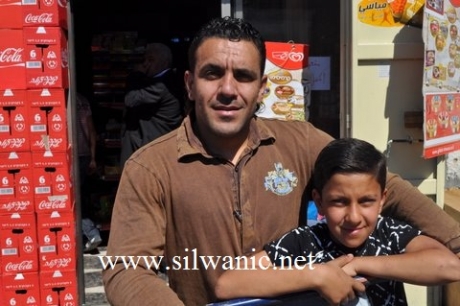
Israeli special forces raided homes in Silwan today at dawn, including that of banished al-Bustan Popular Committee member Adnan Ghaith, and attempted to arrest his son.
When police attempted to arrest Adnan Ghaith’s 11 year old son, Oudai Ghaith, the family refused to hand over the child. Police finally left the home on the condition that Oudai present himself at the police station at 10 a.m this morning.
Adnan Ghaith, Silwan secretary-general of Fatah and al-Bustan Popular Committee member, is currently serving his 4-month exile sentence in Ramallah, banned from entering the Jerusalem region during this time.
Israeli authorities invoked a military law dating from the British mandate period to enable the banishment.
Eyewitnesses reported that soldiers executing the raids were carrying tools used for breaking doors. Police also stopped residents in the streets in the outskirts of the Wadi Hilweh neighborhood and checked their ID cards. Troops were also sighted throughout Baten al-Hawa and Ein Silwan areas.
Featured Video

Why the U.S. Should Pull Back From the First Island Chain
or go to
Aletho News Archives – Video-Images
Book Review
‘Why Fauci Must Rot in Prison’: A Tale of Two Diaries
By Jill Erzen | The Defender | October 13, 2026
Dr. Anthony Fauci’s private diary reveals a “mind-numbing” contradiction between what the former top U.S. infectious disease official knew about COVID-19 and what he told the public, senior White House adviser Peter Navarro, Ph.D., said last week on “American Thought Leaders.”
In his new book, “Why Fauci Must Rot in Prison,” due out Oct. 20, Navarro compares Fauci’s private entries to his own pandemic-era diary, and uses what he calls “a tale of two diaries” to argue that Fauci should face criminal prosecution.
“I show, actually, how a prosecution can and should happen … at the state level, most likely,” Navarro said. “He should wind up in prison, and we’ve got the receipts in this book to put him there.”
Navarro said Fauci repeatedly acknowledged important facts in private, then publicly pursued policies that contradicted those facts — with devastating consequences.
“What he says many times privately in his diary is so at odds with both his public behavior and public statements that it’s mind-numbing,” Navarro said.
Navarro examines the lasting damage caused by lockdowns and other pandemic policies, and the ongoing toll of long COVID.
His book also addresses questions about vaccine safety, including why healthy young people faced COVID-19 vaccination mandates despite concerns about myocarditis, and why women were not warned about miscarriage risks linked to the shots. … continue
Blog Roll
 Aletho News
- Jennifer Kavanagh: Why the U.S. Should Pull Back From the First Island Chain
- Yemen denounces international community’s silence on Saudi aggression, siege
- UAE and Saudi Arabia move toward renewed coordination against Sanaa
- How Iran’s two-week retaliatory strikes exposed cracks in US military architecture in Persian Gulf
- The mother of all propaganda: Why the hype over US MOAB strike against Iran is nothing but theater
- Iran says it possesses technology behind US 14-ton GBU bunker-buster
- Trump asks Iran not to retaliate after he strikes Pickaxe Mountain – w/ Prof. Marandi
- Vice President J.D. Vance’s Deceptive ‘Antiwar’ Campaign Speech
- Iran: Palestinians’ rights must not be compromised in Gaza’s future; US, Israel to blame for Hormuz situation
- Ongoing tales of Syrian chemical weapons
- If Americans Knew
- Israeli rabbi permits occupiers to steal Palestinian olive harvest in West Bank
- Netanyahu’s spin on latest settler attack is laughable – Daily Update
- Israeli soldiers debunk Israel’s talking points
- In West Bank, Israeli settlers are totally out of control – Daily Update
- NPR investigation finds evidence of widespread fraud at mall kiosks tied to Israeli skincare brand
- Tucker Carlson exposes Israeli Lies about the Oct 7th attack, Charlie Kirk, and the U.S.
- Israel has detained thousands of Palestinian children since Oct 7th – over half spent time in solitary, many uncharged
- Israeli Analysis: Is Netanyahu Planning an ‘October Surprise’ Attack Before Israel’s Election?
- Israeli settlers brutally attack Palestinians and Washington Post female photographer, 65
- Words Have Changed, Occupation Continues: The Reality of the Gaza Ceasefire
- No Tricks Zone
- Predictions Made By Renowned Climate Proifessor Over Past Decades Have Been Proven To Be Poor
- New Study Suggests Large Regions Of The Pacific Ocean Have Been Cooling For The Last 80 Years
- Germany’s Green Energy Debacle: High Energy Costs Force Kahla Porzellan to Close After 182 Years!
- New Study: 50 Years Of The Most Aggressive ‘Net Zero’ Policies Can Only Affect The Global Climate By 0.03°C
- US September “Heat” Was No Record…Many Records Set Decades Ago
- Latest European Green Energy Debacle; Portugal’s Largest Flagship Solar Park Insolvent!
- Green Energy Debacle: German Expert Professor Fritz Vahrenholt Warns Of Severe Economic And Social Consequences
- Two More Paleo Reconstructions Affirm Meters-Higher Sea Levels Across Ireland, Brazil 7000-6000 Years Ago
- New Study: Earth And Venus Surface Warmth Largely Explained By Convection And Lapse Rate, Not CO2 Or Radiation
- 2025 Nature Paper Claiming Worsening Global Drought Gets RETRACTED …Heavily Flawed

