HHS Ousts Peter Marks, Sending Vaccine Stocks Tumbling and Biopharma Lamenting Loss of ‘Ally’ at FDA
By Michael Nevradakis, Ph.D. | The Defender | March 31, 2025
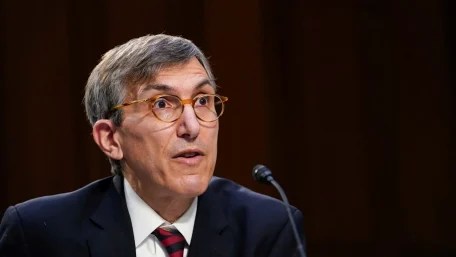
Pharma stocks tumbled today after Peter Marks, M.D., Ph.D., director of the agency within the U.S. Food and Drug Administration (FDA) responsible for authorizing vaccines, resigned under pressure from his new boss, Health and Human Services (HHS) Secretary Robert F. Kennedy Jr.
“If Peter Marks does not want to get behind restoring science to its golden standard and promoting radical transparency, then he has no place at FDA under the strong leadership of Secretary Kennedy,” an HHS official said in a statement.
Shares of Moderna, BioNTech, Novavax and Pfizer declined 11%, 7%, 6% and 2%, respectively, on the news, Fast Company reported. STAT News reported that Marks’ departure “is a worst-case scenario realized” for investors and “a biopharma industry that saw him as an ally.”
“Given Dr. Marks’ influence on the development of biologics and uncertainty as to who will replace him and how his legacy might continue, his departure will create a significant near-term overhang,” William Blair analyst Matt Phipps told Reuters.
The Biotechnology Innovation Organization, an industry lobbying group, said it was “deeply concerned” Marks’ resignation would “broadly impact the development of new, transformative therapies to fight diseases for the American people.”
Brian Hooker, Ph.D., chief scientific officer for Children’s Health Defense (CHD), said the reaction to Marks’ departure on the part of the markets and the pharmaceutical industry is indicative of the influence Big Pharma had over the FDA. He said:
“Marks gave an over $100 billion gift to Pfizer and Moderna via the woefully undertested and outright dangerous COVID-19 mRNA vaccine. So, yes, for the short term, I would imagine that some investors would not like his departure from the FDA.
“Marks’ departure also signals a shift from ‘sick care’ and ‘customers for life’ where, unfortunately, Pharma invests now, to ‘Make America Healthy Again’ where everyone benefits from ending chronic disease in the U.S.”
John Gilmore, executive director of the Autism Action Network, welcomed Marks’ departure. “The American people are well-served by Marks’ resignation.” Gilmore cited the “institutional failure” of the Center for Biologics Evaluation and Research (CBER) “to use the highest standards for evaluating the safety and efficacy of products that are injected in almost all American children.”
Marks has led the FDA’s CBER since 2012 and “played a key role,” The Wall Street Journal reported, in Operation Warp Speed in 2020, leading to the development of the COVID-19 vaccines.
In his resignation letter, Marks wrote: “It has become clear that truth and transparency are not desired by the Secretary, but rather he wishes subservient confirmation of his misinformation and lies.”
Marks’ ‘support of immunizations conflicted with Kennedy’s skepticism’
According to the Journal, an HHS official gave Marks a choice between resigning or being fired. His resignation is effective April 5. Marks wanted to remain in his position, but “his support of immunizations conflicted with Kennedy’s skepticism.”
“Undermining confidence in well-established vaccines that have met the high standards for quality, safety, and effectiveness that have been in place for decades at FDA is irresponsible, detrimental to public health, and a clear danger to our nation’s health, safety. and security,” Marks wrote in his resignation letter.
Marks said he was “willing to work to address” Kennedy’s concerns on vaccine safety, including through a series of public meetings, but that these proposals were rejected. He also accused Kennedy of spreading “misinformation and lies” during the “ongoing multistate measles outbreak.”
But in a post on X, Steve Kirsch, founder of the Vaccine Safety Research Foundation, said that while Marks “claimed he wanted to stop misinformation,” he “refused all offers to meet with the ‘misinformation spreaders’ to settle the question on just who is spreading the misinformation.”
While Marks claimed he was willing to address questions on vaccine safety, he also wrote, “Efforts currently being advanced by some on the adverse health effects of vaccination are concerning.”
One day before Marks’ resignation, Kennedy announced the creation of a new sub-agency under the Centers for Disease Control and Prevention (CDC) to focus on vaccine injuries — part of a broader restructuring of public health agencies, including the FDA.
In February, Kennedy promised that under his watch, HHS and CDC would develop a better system for tracking vaccine injuries.
Earlier this month, Reuters reported that unnamed sources within the CDC said the agency was planning to study the possible link between vaccines and autism. The story triggered negative mainstream news reports claiming the study isn’t needed.
Last week, The Washington Post, citing anonymous sources, reported that HHS had tapped researcher David Geier — a researcher and expert on the connections between toxic exposures and autism — to lead a study of possible links between vaccines and autism. The Post and other media outlets used the opportunity to attack Geier and the need for such a study.
Marks’ resignation also came as the FDA is considering a petition a group of scientists submitted earlier this year, calling upon the FDA to suspend or withdraw the mRNA COVID-19 vaccines.
Marks ‘became a cheerleader for the jab’
Writing on Substack, investigative journalist Maryanne Demasi, Ph.D., said it’s “evident there was a significant clash over vaccine safety” that led to Marks’ resignation. She said Marks’ departure “may be an opportunity for the FDA to refocus on its mission of protecting public health rather than rubber-stamping new vaccine approvals.”
Epidemiologist Nicolas Hulscher agreed. “Those who believe vaccine safety must not be questioned do not belong in our regulatory agencies. When it comes to injectable products, safety is more important than blind faith in vaccine ideology.”
According to The New York Times, while Marks “was viewed as a steady hand by many during the Covid pandemic,” he was criticized “for being overly generous to companies that sought approvals for therapies with mixed evidence of a benefit.”
The Times cited Marks’ role in pressuring two FDA scientists to approve full licensure of Pfizer’s mRNA COVID-19 vaccine in 2021, leading to the researchers’ resignation. Pfizer’s vaccine was fully licensed in August 2021 — one day later, the Biden administration mandated COVID-19 vaccination for military service members.
The rushed licensure of the Pfizer vaccine was the topic of a congressional hearing last year in which Marks testified. In a post on X Saturday, Rep. Thomas Massie (R-Ky.) wrote, “Instead of verifying safety and efficacy of the shots, Marks swept things under the rug and became a cheerleader for the jab.”
“In order to get the vaccines to people in need when thousands of people were dying, we actually allowed the safety to be authorized with just two months of median follow-up, rather than the normal six to 12. But we were confident that that would capture adverse events,” Marks testified at last year’s hearing.
‘It was clear that he did not want to know about our injuries’
While Marks was actively engaged in the licensure of the Pfizer COVID-19 vaccine, he “remained steadfast” in dismissing concerns about injuries related to the COVID-19 vaccines as “misinformation,” Demasi wrote.
In 2023, The BMJ wrote that “more than once” during FDA meetings, Marks “expressed confusion about why it would matter to doctors whether or not regulators acknowledged that a condition might be related to the vaccine.”
Documents CHD obtained last year through a Freedom of Information Act request showed that Marks was aware of COVID-19 vaccine injuries in early 2021 when several vaccine injury victims emailed him for help. Marks blew off scheduled meetings with them.
According to TrialSite News, even though Marks was aware of the growing number of COVID-19 vaccine injuries, “vaccine injury became a political hot potato under the Biden administration,” leading Marks to abandon the vaccine-injured.
Brianne Dressen, co-founder of React19, an advocacy group for the vaccine-injured, sustained serious injuries after participating in a clinical trial for the AstraZeneca COVID-19 vaccine in 2020 and later sought meetings with Marks but was rebuffed.
“Constant emails and calls with Marks … sent while I was in constant pain, literally begging for help, begging for them to help others, begging for a lifeline. A lifeline that never ever came,” Dressen said.
Dr. Danice Hertz, a retired gastroenterologist from California injured by the Pfizer COVID-19 vaccine, also communicated with Marks but said he “brushed off anyone who contacted him regarding vaccine side effects.”
“He systematically refused to hear our pleas for acknowledgment and help,” Hertz said. “This is why the medical community is unaware of these injuries and cannot help us. One would think that the FDA would want to know about serious adverse reactions to the novel COVID vaccines. I can say from first-hand experience that they don’t … It was clear that he did not want to know about our injuries.”
Dressen said it “didn’t matter what we said or how we said it, COVID vaccine injuries were not a priority at the FDA. Didn’t matter if it was safety signals for MIS-V, dysautonomia, neuropathy, tinnitus or reports of suicides. It was never enough. We begged, we pleaded, we pushed as hard as we could, and came up with nothing.”
According to Demasi, Marks instead “blurred the line between regulation and promotion” by participating in FDA videos promoting the COVID-19 vaccines and by authorizing COVID-19 mRNA vaccines for children without sufficient testing.
“Without randomized data regarding clinical outcomes, he repeatedly approved COVID boosters for kids as young as 6 months,” Dr. Vinay Prasad, professor of epidemiology and biostatistics at the University of California, San Francisco, wrote on Substack, calling these “some of the biggest regulatory errors in the 21st century.”
Demasi said Marks “repeatedly pointed to the Vaccine Adverse Event Reporting System (VAERS) as proof of rigorous safety monitoring, yet failed to improve its efficiency.”
During last year’s congressional hearing, Marks claimed that numerous false reports of vaccine injuries are submitted to VAERS, a government-run database. However, he acknowledged, “We probably have not done a good enough job of communicating sometimes the actual numbers of deaths versus what’s in VAERS.”
This article was originally published by The Defender — Children’s Health Defense’s News & Views Website under Creative Commons license CC BY-NC-ND 4.0. Please consider subscribing to The Defender or donating to Children’s Health Defense.
New Info on How the Feds Helped Censor a Bombshell
By Didi Rankovic | Reclaim The Net | April 2, 2025
The US House Judiciary Committee has released internal chat logs, that show the FBI moved into cover-up mode the very day the New York Post published the Hunter Biden laptop story, on October 14, 2020.
The logs, first reported about by journalists Michael Shellenberger and Catherine Herridge, reveal that the FBI employees were immediately instructed “not to discuss the Biden matter,” while an intelligence analyst who, during a call with Twitter, accidentally confirmed that the story, i.e., the laptop, was real, was placed under a “gag order.”
The reason the analyst, who was with the FBI’s Criminal Investigative Division, was able to so quickly confirm the reporting was based on credible information was the fact the FBI had seized and authenticated Hunter Biden’s laptop several months earlier.

Big Tech platforms – notably Twitter and Facebook – then started censoring the article, branding it falsely “Russian disinformation.” By maintaining the “no comment” policy instead of confirming that the laptop was real and under investigation, the FBI was in effect tacitly promoting the false narrative about foreign interference.
These moves originated from the Foreign Influence Task Force, which was shut down earlier this year for its activities related to censorship through pressure on social platforms.
The laptop scandal was unfolding during a crucial time in the 2020 campaign and represents one of the most egregious publicly known examples of political censorship of free speech and media orchestrated by government agencies.
The chat logs that have now been published reveal that one of the FBI staff involved in the Hunter Biden laptop story suppression was Bradley Benavides.
Only weeks prior, Benavides featured in another controversy: that time in what appeared to be a smear campaign against Senators Ron Johnson and Chuck Grassley, who were allegedly “advancing Russian disinformation.”
At the time, the senators just so happened to be investigating Hunter Biden’s financial connections to foreign governments.
A letter the Judiciary Committee sent Benavides in June 2023, shows that he had by that time gone through the Big Tech-Big Government “revolving door” – and was senior risk manager at Amazon.
Trump’s Foreign Aid Suspension Unnerves Washington, not Recipients. Part 1
By Simon Chege Ndiritu – New Eastern Outlook – April 2, 2025
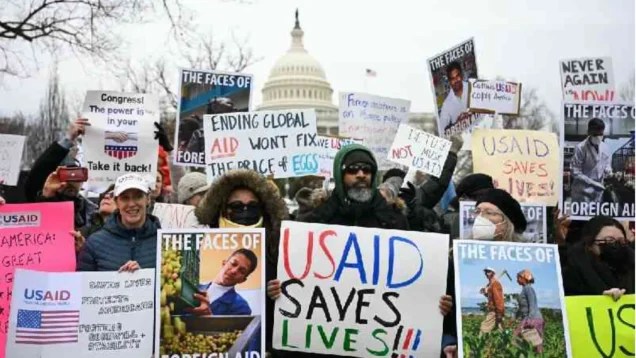
On January 20th, 2025, Donald Trump paused US foreign assistance for 90 days. This move was followed by the suspension of the United States Agency for International Development (USAID), through which most US foreign assistance was channeled.
The ‘Donor’ Protesting
Surprisingly, the recipients ignored this suspension, leaving Washington to protest it, which shows that parties in Washington have been the chief beneficiaries of this aid. Meanwhile, some in the recipient countries do not perceive the suspended assistance as worth bemoaning but replacing and moving on. While Trump has repeatedly accused other countries of ripping off the US through aid, using the term ‘development assistance’ to refer to this money that is never used to build roads, bridges, power plants, or buildings is quite ironic. It shows that ‘development’ means something else to Washington. According to USAID’s localization report released in 2023, over 90% of its money went to its international partners in and around Washington.
Therefore, only 10% reaches targeted communities, and some end up funding opium production and pedophile-run children’s orphanages, among others. The US and Western Europe frame Africa as surviving on aid, which is only a colonial ploy. In response to Trump’s suspension, some Kenyans recognized that America’s foreign aid helps Washington and that the US is an unreliable partner. Surprisingly, Kenyan media coverage recognizes the need to move on from Washington’s posturing and find sustainable funding sources.
Trump’s Cutting Funds for Contractors in Washington
Some Kenyans have been baffled by Trump’s suspension of aid, noting how it gave Washington unsolicited influence. For instance, an opinion sent to Kenya’s Daily Nation after Trump’s suspension revealed that the sender was baffled by the White House, since the aid gave the US soft power and influence. The opinion email proceeded to suggest that Trump’s America is cash-strapped due to its senseless tariff war with China. Noteworthy, the US received funds from Europeans before passing the bulk of it to Washington-based contractors, emphasizing the importance of this aid to America. It has been an open secret that Western aid helps the donors and not the recipients. Trump’s move will adversely affect American businesses, even as noted by an FP article from May 2022, which revealed that foreign aid was funding a bubble in Washington.
Therefore, his suspension runs against his America First Policy; this drastic move must be informed by a more significant concern for the US empire, such as China. An article authored by Nicholas Okumu, a Kenyan orthopedic surgeon for the Star Newspaper, steered clear of Trump’s actions, and their motivations and focused on how Kenya should respond. Okumu observed that American aid has always been a tool for political leverage and economic self-interest, insisting that Kenya should seek sustainable ways of funding its projects instead of relying on Washington’s unpredictable and ineffective assistance. US aid only yields minimal tangible benefits for Africans, as it is fashioned to prioritize American commercial interests, for instance, by awarding contracts to US firms and undermining industries in recipient countries.
US Aid’s Vicious Cycle
Issuing the US development assistance, including the part disbursed through USAID, starts by leading the audience into a tunnel vision of how the country is planning an extensive (supposedly) altruistic program to alleviate pressing challenges in poor countries. At this stage, audiences are not informed that Washington created the challenge or wants to enrich its contractors without addressing the problem. For instance, details that Washington’s Pentagon had bombed Al-Shifa pharmaceutical manufacturing company in Sudan in 1998, hence preventing millions from accessing health supplies, are hidden. The aid ends with money being spent in Washington and nothing being achieved for recipient communities, even while a justification for an enormous investment is created. Washington does not care if people access medical supplies, but whether its contractors can benefit from purporting to supply them.
A good example may include the repeated cycle of USAID’s Global Health Supply Chain Cycle. The first cycle, conceived in 2015 and worth $9.5 billion, ended without substantial results and was used in 2024 to justify a new one worth $17 billion. In the beginning, Washington’s media machine told audiences how USAID planned the Global Health Supply Program, which was designed to solve the problem of lifesaving health supplies being inaccessible to poor countries. The empty hype in this endeavor may have been detected in the statement that the project was supposed to “shake up global health contracting,” meaning the primary interest was not to alleviate supply problems but to award a massive contract to the main contractor, Chemonics International.
The project’s value of $9.5 billion had been dispensed three years later and was spent on fraud and inefficiencies. After 2017, the main contractor received a deadline extension and an additional $2 billion without delivering substantial results. An investigative report found that Chemonics International’s procurement reviewers had made up figures to report that 80% of the contracts had been delivered. Thirty-nine people had been indicted with fraud, but the main contractor escaped with a slap on the wrist by paying only $3.1 million to the justice department. Therefore, Washington’s aid benefited a contractor who used a façade of delivering aid to other countries. To attest to the failure of the first project cycle, which started in 2015, USAID launched a similar $17 billion project, dubbed NextGen, by signing contracts for delivering ‘lifesaving supplies around the globe.’ It is Ironic for anyone to think that Washington, which bombed a pharmaceutical factory in Sudan in 1998 and a trauma hospital in Afghanistan in 2015, really cares whether people can access medical suppliers. Noteworthy, most countries are unable to produce medical supplies because America’s big Pharma monopolizes them through patents.
Going Forward
USAID has always been tied to procuring from the US, making recipient countries fail to develop industries that can organically respond to local challenges. For instance, American laws mandate that food aid be purchased from American farmers and delivered using American-flagged vessels, which means farmers in the recipient countries lose business. Similarly, other industries that receive aid from the US can also collapse, which limits Africans’ development. The deleterious effects of the US aid programs can explain the donors’ insistence on issuing them out, meaning that Africans should not view Trump’s suspension of aid as a tragedy. Instead, it is an opportunity for reflection on how American aid should be replaced, since it is ineffective and unreliable. The US will permanently halt its aid when it does not stand to gain. Therefore, African governments must seek ways to finance their projects without relying on Western aid.
How Bernie Sanders and the Democrats Made Elon Musk the Richest Man in the World
By Thomas Eddlem | The Libertarian Institute | April 1, 2025
Just before Senator Bernie Sanders (I-VT) and Rep. Alexandria Ocasio-Cortez (D-NY) started their ongoing series of rallies against Elon Musk and President Donald Trump, Sanders stopped by Face the Nation on CBS and hilariously exclaimed in feigned outrage:
“We’re looking at a rapid growth of oligarchy. We’re looking at a rapid growth of authoritarianism. And I fear that we’re looking at a rapid growth of kleptocracy as well. And I’m going to do everything I can to work with my supporters all over this country to stand up and fight back to make sure we have an economy that works for everybody, not just Elon Musk.”
All I could do is laugh, as Bernie Sanders specifically and the other Democrats generally are the ones who made the economy work so well for Elon Musk.
The $465 million Energy Department loan under President Barack Obama that saved Tesla from bankruptcy in 2010 emerged from the Energy Independence and Security Act of 2007, which was adopted because Bernie Sanders and all the Democrats in the Senate voted for it (except Debbie Stabenow and a half-dozen conservative Republicans). Further, Obama’s American Recovery and Reinvestment Act of 2009 (which all the Senate Democrats voted for, including Bernie Sanders) included the $7500/EV subsidy that put $1.5 billion in Elon’s wallet. Nearly all Republicans voted against it.
And Musk’s Tesla gains more than $1 billion dollars annually from carbon tax credits passed by Democrats in California in the first decade of the century and which was expanded by President Joe Biden’s Inflation Reduction Act of 2022 (which Sanders and all Democrats passed on a party-line vote in the Senate, and AOC and her Democratic colleagues voted for in the House).
The Washington Post reported on February 26 that Musk received some $38 billion in government contracts, loans, subsidies, and tax credits in the past two decades, most from the federal government funded by Democrats (and some from Democrat-run California), often with strong Republican opposition. And most of these subsidies were realized during President Biden’s term.
Sanders complains constantly about Musk being a billionaire, but you don’t have to be a math major to understand that it’s a just smidge easier to become a billionaire when the government hands you $38 billion. Of course, Sanders and his touring sidekick Ocasio-Cortez work for a government that takes in $5,485 billion from people for almost nothing and somehow still runs a deficit of $1,781 billions every year. So maybe they don’t have the competency to pull that kind of math off.
Sanders and AOC seem to think it was the Republicans who fought for all those green energy subsidies and carbon swap programs. They seem to think the Republicans wanted to keep money flowing to NASA because of the GOP’s fond memories of JFK sending astronauts to the moon, and did not work to end the wasteful agency. But in reality it was Democrats who kept funding flowing to NASA, resulting in Space X scoring huge multi-billion federal space contracts.
If truth in advertising laws were being enforced, Bernie Sanders and Alexandria Ocasio-Cortez’s nationwide “Rally Against Oligarchy” would instead be labeled “Rally Against the Oligarchy We’re Building.”
I don’t think Elon Musk is a Nazi; I think he’s a highly talented tax dollar harvester. But if he is a Nazi, he is the Democrats’ Nazi. Democrats made him the richest man in the world and saved his businesses from bankruptcy with massive government subsidies championed by the Democrats. They need to own this, because they can’t deny it.
Instead, many of the same Democrats who voted for the politicians who made Musk the richest man in the world now think that a massive pogrom against Musk is a successful strategy to resist Trump’s policies and oppose “fascism.” Uh huh.
Nothing says “I’m opposing fascism” like spray-painting a swastika on a Tesla owned by a Jewish dude. Three quarters of all the swastikas being publicly painted across the world today are being painted by Democrats in America on Teslas, and the other quarter are being painted by the remnants of the neo-Nazi Azov Brigade that has been absorbed into the Ukrainian National Army, a group the Democrats back to the hilt with your tax dollars.
The world’s swastikas being painted these days are being scrawled or funded by the Democratic Party within a rounding error of 100% of the global total. For the first time in many years I went over to the Stormfront.org webpage (a page run by open neo-Nazis) and found them positively bitchy with suppressed jealousy about how Democrats have managed to spread their message so much further than the Mädelschaft of goobers who run that website.
Meanwhile, the captive media fact-checkers acknowledge, “At least 10 Tesla dealerships, charging stations and facilities have been hit by vandals,” along with the vandalization of hundreds of cars of [private] Tesla owners, but simultaneously claim there’s “no evidence of coordinated vandalism.” It’s got to sting when Democrats can pull off a slow-motion, global Krystallnacht against Tesla when the Schutzstaffel-wannabes have been so unsuccessful for so many decades. Meanwhile, Democrats get wild cheers from The Daily Show audience for their ongoing swastika pogrom.
I predict Stormfront’s next published story will be a worried report about the global shortage of swastikas, accompanied by a request for the Democrats to refund a quota of some of the swastikas back so American neo-Nazis can stop swastika rationing.
There’s a reason Elon Musk’s companies faced twenty different investigations by multiple government agencies under the Biden administration and most of those investigations just went away once Trump took office, and it wasn’t because of Elon’s criminal conduct. It was the criminal conduct of Washington and its lawfare. That’s part of the plan, too.
Elon backed the “wrong” party, according to the Democrats. They villainize Musk and the Koch brothers but not Bill Gates, John Kerry, and George Soros. Their vilification of billionaires is notably and risibly selective.
The latter are their bread-and-butter while the former fund their opposition. Washington politics long ago ceased to be an ideological battle, succumbing fully to a team sport.
We’re on a Highlander course for political parties in America: There can be only one.
In at least one sense, we’re already there; Trump and his cabinet are all 2004 Democrats, with a Kennedy in charge of the world’s largest welfare agency and no mandate to cut even a dime of welfare spending. That’s what the “conservative” Republican Party has become. America has a uniparty, and the media wants to make us choose either the Party of Caesar or the Party of Pompey, but both are on the same path to centralization of power in Washington.
How To Claim Your Specialty Suffers From “Climate Change”
And get government money for your pain
By William M Briggs | March 26, 2025
I’ve told you innumerable times that scientists are good at finding evidence which supports their fancies, and just as lousy, or lousier because of their egos, than others when finding evidence which kills their darlings. As you know, the rage in grant-funded academia is “climate change”. Because of the evidence-finding powers of scientists and the great flow of your money, as I’ve shown many, many (many) times, scientists have “discovered” every evil thing is caused by “climate change”. Today the evil thing is lung disease.
The peer-reviewed NIH-grant-funded paper is “Global warming risks dehydrating and inflaming human airways” by Edwards and others in Nature Communications Earth & Environment. Abstract opens with these two contradictory sentences:
Global warming increases water evaporation rates from planetary ecosystems. Here, we show that evaporation rates encountered during human breathing in dehydrating atmospheres promote airway inflammation and potentially exacerbate lung diseases.
Global warming—a refreshing use of the old term, instead of the ill-defined “climate change”—is supposed to increase, not decrease, water vapor content of the atmosphere. Which would make the air wetter, not drier. Here is the old, pre-Trump nervous EPA on this:
Water vapor is another greenhouse gas and plays a key role in climate feedbacks because of its heat-trapping ability. Warmer air holds more moisture than cooler air. Therefore, as greenhouse gas concentrations increase and global temperatures rise, the total amount of water vapor in the atmosphere also increases, further amplifying the warming effect.7
Indeed, water vapor, i.e. humidity, at the surface was expected to increase, even in dry and semi-arid areas. Take, for example, the peer-reviewed paper “Increase in Tropospheric Water Vapor Amplifies Global Warming and Climate Change” by Patel and somebody with a name too long to retype. They say “Most regions show positive trends in the annual mean tropospheric water vapor,” etc. The troposphere is where you and I breathe, dear reader.
Yet, others say there hasn’t been any change in moisture. Here’s an article by NCAR (I spent a summer there in the late 1990s, working on climate model skill) with the laconic title “Climate change isn’t producing expected increase in atmospheric moisture over dry regions“.
The laws of thermodynamics dictate that a warmer atmosphere can hold more water vapor, but new research has found that atmospheric moisture has not increased as expected over arid and semi-arid regions of the world as the climate has warmed.
The findings are particularly puzzling because climate models have been predicting that the atmosphere will become more moist, even over dry regions. If the atmosphere is drier than anticipated, arid and semi-arid regions may be even more vulnerable to future wildfires and extreme heat than projected.
So one science authority says the air you breathe is growing wetter, and one says it isn’t. Nobody says it’s decreasing. Best I could find was one source saying there was a “weakened” increase. Which is still an increase. There seems to be more agreement that the moisture in the stratosphere, where nobody breathes (unaided), has decreased a bit.
How, then, did our authors get the dry air they needed? By simulating it. I kid you not. “The numerical simulations for urban/rural VPD are carried out using the Community Earth System Model (CESM) version 2.1.” And so on.
After blowing some words explaining how people breathe, and then harassing some poor mice by forcing them to breath extra-dry air to prove their point, Edwards and his pals write “Together with climate model simulations, these findings suggest that most of the United States will be at elevated risk of airway inflammation by the latter half of this century.”
Suggest. Suggest. Suggest.
You paid for this.
Now I am sure they are right, or right enough, about how dry air can cause airway irritation. The vivid red color of the inflamed trachea they use as an illustration is impressive. They even give us some math, and who doesn’t love a few good old-fashioned equations? Airway irritation is their specialty, and I would not want to take the glory from them over how throats crave moisture.

But they don’t know squat about the climate. Though they must have known their careers would be enhanced if they could tie their specialty to “climate change”, which they have been told to believe is bad, and therefore do believe.
A mere tying together of “climate change” and throats is not sufficient, though. If they wrote a paper that said “Climate change will improve breathing”, because moisture will increase, they’d be hounded from their offices. Maybe have some lunatic nitwit activists smearing paint on their cars or FOIAing their emails, which they’d probably have to turn over, given their work was government (i.e. you) funded: “A portion of this research was funded at UNC by NIH grants R01HL125280, P01HL164320, and P30DK065988.”
What makes it worse, is that if it’s true that dry areas are worse for man, then we should see a nice signal in actual data. Here, I don’t know what I don’t know, so I can’t say for sure chronic lower respiratory disease is related. I can say, given CDC’s tracking of mortality rates of it by state, that the death rates-humidity signal is far from clear. Hawaii, which is humid, has the smallest rate. Oklahoma, also humid, has the highest. Nevada and Arizona, both dry, are in the middle.
Pneumonitis, which is lung inflammation, doesn’t seem to be big enough to track, so I couldn’t find much on the geographic distribution of it. One paper in Japan said moister areas, not drier, are more common. Maybe there are better diseases to look for than pneumonitis.
Well, that’s not my job. It was the authors’. They owed us actual observations that show how people out in the world, and not mice hooked to tubes, are affected by drier and wetter air. Instead, they stuffed what they knew (which I don’t question) about lungs and what they hoped was true about the climate into models, ran the models, forgot that all models only say what they’re told to say, then declared the models showed them their worst fears were realized.
This is how it works. This is how your money is blown. This is why government funding of science has to end.
USAID and the Architecture of Perception
By Joshua Stylman | February 16, 2025
The United States Agency for International Development (USAID) has long portrayed itself as America’s humanitarian aid organization, delivering assistance to developing nations. With an annual budget of nearly $40 billion and operations in over 100 countries, it represents one of the largest foreign aid institutions in the world. But recent disclosures reveal its true nature as something far more systematic: an architect of global consciousness. Consider: Reuters, one of the world’s most trusted news sources, received USAID funding for ‘Large Scale Social Deception’ and ‘Social Engineering Defence.’ While there’s debate about the exact scope of these programs, the implications are staggering: a division of one of the world’s most relied-upon sources for objective reporting was paid by a US government agency for systemic reality construction. This funding goes beyond traditional media support, representing a deliberate infrastructure for discourse framing that fundamentally challenges the concept of ‘objective’ reporting.
But it goes deeper. In what reads like a Michael Crichton plot come to life, the recent USAID revelations show a staggering reach of narrative control. Take Internews Network, a USAID-financed NGO that has pushed nearly half a billion dollars ($472.6m) through a secretive network, ‘working with’ 4,291 media outlets. In just one year, they produced 4,799 hours of broadcasts reaching up to 778 million people and ‘trained’ over 9,000 journalists. This isn’t just funding – it’s a systematic infrastructure of consciousness manipulation.
The revelations show USAID funding both the Wuhan Lab’s gain-of-function research and the media outlets that would shape the story around what emerged from it. Backing organizations that would fabricate impeachment evidence. Funding both the election systems that facilitate outcomes and the fact-checkers that determine which discussions about those outcomes are permitted. But these disclosures point to something far more significant than mere corruption.
These revelations didn’t emerge from nowhere – they come from government grant disclosures, FOIA requests, and official records that aren’t even hidden, just ignored. As my old friend Mark Schiffer noted the other day, ‘The most important truths today cannot be debated – they must be felt as totalities.’ The pattern, once seen, cannot be unseen. Some may question DOGE’s methods or the rapid pace of these disclosures, and those constitutional concerns deserve serious discussion. But that’s a separate conversation from what these documents reveal. The revelations themselves – documented in official records and grant disclosures – are undeniable and should shock anyone who values truth. The means of exposure matter far less than what’s being exposed: one of the largest narrative control operations in history.
No domain is untouched – markets, tech, culture, health, and obviously, media – and you’ll find the same design. Intelligence agencies are deeply embedded in each domain because shaping how we perceive reality is more powerful than controlling reality itself
Just as fiat currency replaced real value with declared value, we now see the same pattern everywhere: fiat science replaces inquiry with predetermined conclusions, fiat culture replaces organic development with curated influence, fiat history replaces lived experience with manufactured narratives. We live in an era of fiat everything – where reality itself is declared, not discovered.. And just as they create artificial scarcity in monetary systems, they manufacture false choices everywhere else – presenting us with artificial binaries that obscure the true complexity of our world. As Schiffer wrote elsewhere, reality no longer requires consensus, only coherence. But there’s a crucial distinction: real coherence emerges naturally across multiple domains, reflecting deeper truths that cannot be fabricated. The coherence imposed by perception management isn’t truth – it’s a controlled discourse engineered for consistency, not discovery. The USAID receipts now provide concrete evidence of how this manufactured coherence is built: a scripted reality where the appearance of logic is more important than actual substance.
This isn’t just pattern matching – it’s pattern prediction. Just as algorithms learn to recognize and anticipate behavioral patterns, those who understand this system’s architecture can see its next moves before they’re made. The question isn’t whether something is “true” or “false” – it’s understanding how information flows shape consciousness itself.
To understand how deep this goes, let’s examine their methodology. As Dr. Sherri Tenpenny and others have meticulously documented through FOIA requests and government grant disclosures, the pattern emerges through two primary vectors of control:
Information Control:
- $34 million to Politico (which as Tenpenny notes, struggled to make payroll without this funding)
- Extensive payments to New York Times
- Direct funding to BBC Media Action
- $4.5 million to Kazakhstan to combat “disinformation”
Health and Development:
- $84 million to Clinton Foundation health initiatives
- $100 million for AIDS treatment in Ukraine
- Funding for contraceptive programs in developing nations
Cultural Programming:
- $20 million to Sesame Street in Iraq
- $68 million to World Economic Forum
- $2 million for sex changes and LGBT activism in Guatemala
- Global cultural initiatives (millions spread across LGBTQ programs in Serbia, DEI projects in Ireland, transgender arts in Colombia and Peru, and tourism promotion in Egypt)
What emerges is not just a list of expenditures, but a blueprint for global reality architecture: From Kazakhstan to Ireland, from Serbia to Peru, from Vietnam to Egypt – there isn’t a corner of the world untouched by this system. This isn’t merely a distribution of resources, but a strategic infrastructure of global influence. Each allocation—whether to media outlets, health initiatives, or cultural programs – represents a carefully placed node in a network designed to shape perception across multiple domains. First, control the flow of information through media funding. Then, establish legitimacy through health and development programs. Finally, reshape social structures through cultural programming. The end goal isn’t just to influence what people think, but to determine the boundaries of what can be thought – and to do so on a planetary scale.
For those who’ve been studying the architecture of censorship, like Mike Benz has been documenting for years, none of this comes as a surprise. It’s perfect symmetry: we knew about the censorship. Now we’re seeing the receipts. One hand feeds them talking points, the other hand feeds them our taxpayer dollars. This isn’t speculation; it’s documented fact. Even Wikipedia’s own funding database contains over 45,000 reports tied to USAID – many detailing corruption, media influence, and financial manipulation. The evidence has always been there, but it was ignored, dismissed, or buried under the very fact-checking apparatus USAID funds. These weren’t crackpot theories; they were warnings. And now, we finally have the receipts.
And it doesn’t stop at controlling information. USAID isn’t just shaping media portrayals – it’s funding the systems that enforce them. Last week, Benz broke a bombshell: USAID gives twice as much money ($27 million) to the fiscal sponsor of the group controlling Soros-funded prosecutors than Soros himself gives ($14 million). This isn’t about one billionaire’s influence – it’s about state-backed enforcement of scripted accounts. The same network that dictates what you can think is dictating who prosecutes crime, what laws are enforced, and who faces consequences.
USAID’s influence isn’t just about funding media control—it extends to direct political interference. It didn’t just send aid to Brazil – it funded censorship, backed left-wing activists, and helped rig the 2022 election against Bolsonaro.
Benz revealed that the agency waged a “holy war of censorship,” systematically suppressing Bolsonaro supporters online while bolstering opposition voices. Millions flowed to NGOs pushing leftist framing, including the Felipe Neto Institute, which received U.S. funding while Bolsonaro allies were deplatformed. USAID also bankrolled Amazon-based activist groups, financed media campaigns designed to manipulate public opinion, and funneled money into Brazilian organizations that pushed for stricter internet regulations.
This wasn’t aid—it was election interference disguised as democracy promotion. USAID used American tax dollars to decide Brazil’s future, and it likely deployed similar tactics in many other countries—all under the guise of humanitarian assistance.
And it’s not just abroad. While USAID’s defenders claim it’s a tool for charity and development in poor nations, the evidence suggests something much more insidious. It’s a $40 billion driver of regime change overseas – and now, evidence points to its involvement in regime change efforts at home. Alongside the CIA, USAID appears to have played a role in the 2019 impeachment of Trump – an illegal effort to overturn a U.S. election using the same tools of perception sculpting and political engineering it deploys abroad.
Left vs right, vaxxed vs unvaxxed, Russia vs Ukraine, believer vs skeptic (on any topic) – these false dichotomies serve to fragment our understanding while reality itself is far more nuanced and multidimensional. Each manufactured crisis spawns not just reactions, but reactions to those reactions, creating endless layers of derivative meaning built on artificial foundations.
The real power isn’t in manufacturing individual facts, but in creating systems where false facts become self-reinforcing. When a fact-checker cites another fact-checker who cites a “trusted source” that’s funded by the same entities funding the fact-checkers, the pattern becomes clear. The truth isn’t in any individual claim – it’s in recognizing how the claims work together to create a closed system of artificial reality.
Take the mRNA vaccine debate for example: The pattern manifests before the explanation – people passionately debate efficacy without realizing the entire framework was constructed. First, they fund the research. Then they fund the media to shape the narrative. Even skeptics often fall into their trap, arguing about effectiveness rates while accepting their basic premise. The moment you debate ‘vaccine efficacy,’ you’ve already lost – you’re using their framework to discuss what is, in reality, an experimental gene therapy. By accepting their terminology, their metrics, their framing of the discussion itself, you’re playing in their constructed reality. Each layer of control is designed not just to influence opinions, but to preemptively structure how those opinions can be formed.
Like learning to spot a staged photo or hearing a false note in music, developing a reliable bullshit detector requires pattern recognition. Once you start seeing how narratives are constructed – how language is weaponized, how frameworks are built – it changes the lens with which you view the whole world. The same intelligence agencies embedding themselves in every domain that shapes our understanding aren’t just controlling information flow – they’re programming how we process that information itself.
The recursive theater plays out in real time. When USAID announced funding cuts, BBC News rushed to amplify humanitarian concerns with dramatic headlines about HIV patients and endangered lives. What they didn’t mention in their reporting? USAID is their top funder, bankrolling BBC Media Action with millions in direct payments. Watch how the system protects itself: the largest recipient of USAID media funding creates emotional propaganda about USAID’s importance while obfuscating their financial relationship in their reporting.
This institutional self-defense illustrates a crucial pattern: organizations funded for reality construction protect themselves through layers of misdirection. When presented with evidence, the fact-checking apparatus funded by these same systems springs into action. They’ll tell you that these payments were for standard “subscriptions,” that programs promoting gender ideology are really just about “equality and rights.” But when USAID awards $2 million to Asociación Lambda in Guatemala for “gender-affirming health care” – which can include surgeries, hormone therapy, and counseling – those same defenders conveniently omit the details, blurring the line between advocacy and direct intervention. The very organizations funded for social architecture are the ones telling you there is no social architecture. It’s akin to asking the arsonist to investigate the fire.
Like characters in a grand production, I watch old friends still trusting in institutions like the New York Times. Even this exposition becomes a potential node in the system – the very act of revealing the mechanics of control might itself be anticipated, another layer of the recursive theater. In my earlier work on technocracy, I explored how our digital world has evolved far beyond Truman Burbank’s physical dome. His world had visible walls, cameras, and scripted encounters – a constructed reality he could theoretically escape by reaching its edges. Our prison is more sophisticated: no walls, no visible limits, just algorithmic containment that shapes thought itself. Truman only had to sail far enough to find the truth. But how do you sail beyond the boundaries of perception when the ocean itself is programmed?
Sure, USAID has done some good work—but so did Al Capone with his soup kitchens. Just as the infamous gangster’s charity work made him untouchable in his community, USAID’s aid programs create a veneer of benevolence that makes questioning their larger agenda politically impossible. Philanthropic window dressing has long been a tool for power players to shield themselves from scrutiny. Consider Jimmy Savile: a celebrated philanthropist whose charity work granted him access to hospitals and vulnerable children while he committed unspeakable crimes in plain sight. His carefully cultivated image made him beyond reproach for decades, just as institutional benevolence now serves as a protective layer for global influence operations. The true function of organizations like USAID isn’t just aid—it’s social architecture, mind shaping, and the laundering of taxpayer dollars through an intricate web of NGOs and foundations.
This layered deception is self-reinforcing – each level of manufactured reality is protected by another level of institutional authority. These institutions don’t just dictate stories; they shape the infrastructure through which narratives are disseminated. For what it’s worth, I believe most tools themselves are neutral. The same digital systems that enable mass surveillance could empower individual sovereignty. The same networks that centralize control could facilitate decentralized cooperation. The question isn’t the technology itself, but whether it’s deployed to concentrate or distribute power.
This understanding didn’t come from nowhere. Those who first sensed this artificiality were dismissed as conspiracy theorists. We noticed the coordination across outlets, the strange synchronicity of messaging, the way certain stories were amplified while others disappeared. Now we have the sales receipts showing exactly how that manipulation was funded and orchestrated.
I know this journey of discovery intimately. When I started understanding the dangers of mRNA technology, I went all in. I connected with the incredibly talented filmmaker Jennifer Sharp and helped with Anecdotals, her film about vaccine injuries. I was ready to tether my whole identity to this cause. But then I started zooming out. I began seeing how COVID might have been a financial crime designed to usher in central bank digital currency. The deeper I looked, the more I realized these weren’t isolated deceptions – it was part of a larger system of control. The very fabric of what I thought was real began to dissolve.
What disturbed me most was seeing how deeply programming relies on mimicry. Humans are imitative creatures by nature – it’s how we learn, how we build culture. But this natural tendency has been weaponized. I’d present friends with peer-reviewed studies, documented evidence, historical connections – only to watch them respond with verbatim talking points from corporate media. It wasn’t that they disagreed – it was that they weren’t even processing the information. They were pattern-matching against pre-approved chronicles, outsourcing their thinking to “trusted experts” who were themselves caught in the same web of manufactured perception. I realized then: none of us knows anything for certain – we’re all just mimicking what we’ve been programmed to believe is authoritative knowledge.
The challenge isn’t just seeing through any single deception – it’s understanding how these systems work together in complex, non-linear ways. When we fixate on individual threads, we miss the larger pattern. Like pulling a thread on a sweater and watching it unravel, eventually you realize there was no sweater in the first place – just an intricately woven illusion. Just as a hologram contains the whole image in each fragment, every piece of this system reflects the larger blueprint for reality construction.
Consider the $34 million to Politico – this isn’t just a funding stream, but a holographic reveal of the entire system. It’s not merely that Politico received money; it’s that this single transaction contains the entire blueprint of perception management. The payment itself is a microcosm: struggling media outlet, government funding, narrative control – each element reflects the whole. This recursive system protects itself through layers of self-validation. When critics point out media bias, fact-checkers funded by the same system declare it ‘debunked.’ When researchers question official accounts, journals funded by the same interests reject their work. Even the language of resistance – ‘speaking truth to power,’ ‘fighting disinformation,’ ‘protecting democracy’ – has been co-opted and weaponized by the very system it was meant to challenge.
The COVID story epitomizes this systemic manipulation. What began as a public health crisis transformed into a global experiment in narrative control – demonstrating how rapidly populations could be reshaped through coordinated messaging, institutional authority, and weaponized fear. The pandemic wasn’t just about a virus; it was a proof of concept for how comprehensively human cognition could be engineered – a single node revealing the true scope and ambition of discourse manipulation.
Think about the cycle: American taxpayers unknowingly funded the crisis itself – then paid again to be deceived about it. They paid for the development of gain-of-function research, then paid again for the messaging that would convince them to accept masks, lockdowns, and experimental interventions. The system is so confident in its psychological control that it doesn’t even bother hiding the evidence anymore.
As I’ve documented in my Engineering Reality series, this framework for consciousness management runs far deeper than most can imagine. USAID’s revelations aren’t isolated incidents—they’re glimpses into a vast system of social design that has been in operation for decades. When the same agency funding your fact-checkers is openly paying for ‘social deception,’ when your trusted news sources are receiving direct payments for ‘social architecture,’ the very framework of what we consider ‘real’ begins to crumble.
We’re not just watching events unfold – we’re watching reactions to artificial events, then reactions to those reactions, creating an infinite regression of derivative meaning. People form passionate positions about issues that were constructed, then others define themselves in opposition to those positions. Each layer of reaction fuels the next phase of steered consensus. What we’re witnessing isn’t just the spread of manufactured realities, but the architecture of cultural and geopolitical trends themselves. Artificial trends spawn authentic reactions, which generate counter-reactions, until we’ve built entire societies responding to carefully orchestrated theater. The social engineers aren’t just steering individual beliefs – they’re reshaping the very foundations of how humans make sense of the world.
These revelations are just the tip of the iceberg. Anyone paying attention to the depth and depravity of the corruption knows that this is only the beginning. As more information emerges, the illusion of neutrality, of benevolence, of institutions acting in the public interest, will crumble. No one who truly engages with this information is walking away with renewed faith in the system. The shift is only happening in one direction – some faster than others, but none in reverse. The real question is: what happens when a critical mass reaches the point where their foundational understanding of the world collapses? When they realize that the records shaping their perception were never organic, but manufactured? Some will refuse to look, choosing comfort over confrontation. But for those willing to face it, this is not just about corruption – it’s about the very nature of the reality they thought they inhabited.
The implications are staggering not just for individual awareness, but for our very ability to function as a republic. How can citizens make informed decisions when reality itself has been splintered into competing manufactured tales? When people discover that their most deeply held beliefs were shaped, that their passionate causes were scripted, that even their cultural interests and tastes were curated, that their opposition to certain systems was anticipated and designed – what remains of authentic human experience?
What’s coming will force a choice: either retreat into comfortable denial, dismissing mounting evidence as “right-wing conspiracy theories,” or face the shattering realization that the world we thought we inhabited never actually existed. My research over the past few years points to far more nefarious activities yet to be revealed – operations so heinous that many will simply refuse to process them.
As I wrote about in “The Second Matrix,” there’s always the risk of falling into another layer of controlled awakening. But the greater risk lies in thinking too small, in anchoring ourselves to any single thread of understanding. The USAID revelations aren’t just about exposing one agency’s role in shaping reality – they’re about recognizing how our very thought patterns have been colonized by recursive layers of artificial reality.
This is the true crisis of our time: not just the manipulation of reality, but the fragmentation of human consciousness itself. When people grasp that their beliefs, causes, and even their resistance were shaped within this system, they are forced to confront the deeper question: What does it mean to reclaim one’s own mind?
But here’s what they don’t want you to realize: seeing through these systems is profoundly liberating. When you understand how reality is constructed, you’re no longer bound by its artificial constraints. This isn’t just about exposing deception – it’s about freeing consciousness itself from manufactured limitations.
The jig may be up on USAID’s reality architecture operation. But the deeper challenge lies in reconstructing meaning in a world where the very fabric of reality has been woven from artificial threads. The choice we face isn’t just between comfortable illusion and uncomfortable truth. The old system demanded validation before belief. The new reality requires something else entirely: the ability to recognize patterns before they’re officially confirmed, to feel coherence across multiple domains, to step outside the crafted game completely. This isn’t about choosing sides in their manufactured binaries – it’s about seeing the pattern architecture itself.
What does this liberation look like in practice? It’s catching the pattern of a manufactured crisis before it’s fully deployed. It’s recognizing how seemingly unrelated events – a banking collapse, a health emergency, a social movement – are actually nodes in the same network of control. It’s understanding that true sovereignty isn’t about having all the answers, but about developing the capacity to sense the web of deception before it solidifies into apparent reality. Because the ultimate power isn’t in knowing every answer – it’s in realizing when the question itself has been designed to trap you inside the manufactured paradigm.
As we develop this pattern recognition capacity – this ability to see through algorithmic manipulation – what it means to be human is itself evolving. As these systems of ideological infrastructure crumble, our task isn’t just to preserve individual awakening but to protect and nurture the most conscious elements of humanity. The ultimate liberation isn’t just seeing through the deception – it’s maintaining our essential humanity in a world of tightly controlled perception.
As these systems of reality sculpting crumble, we have an unprecedented opportunity to rediscover what’s real – not through their manufactured frameworks, but through our own direct experience of truth. What’s authentic isn’t always what’s organic – in a mediated world, authenticity means conscious choice rather than unconscious reaction. It means understanding how our minds are shaped while maintaining our capacity for genuine connection, creative expression, and direct experience. The most human elements – love, creativity, intuition, genuine discovery – become more precious precisely because they defy algorithmic control. These are the last frontiers of human freedom—the unpredictable, unquantifiable forces that cannot be reduced to data points or behavioral models.
The ultimate battle isn’t just for truth – it’s for the human spirit itself. A system that can engineer perception can engineer submission. But there’s a beautiful irony here: the very act of recognizing these systems of reality construction is itself an expression of authentic consciousness – a choice that proves they haven’t conquered human perception completely. Free will cannot be engineered precisely because the capacity to see through engineered reality remains ours. In the end, their greatest fear isn’t that we’ll reject their manufactured world – it’s that we’ll remember how to see beyond it.
Is the FDA salvageable?
By Maryanne Demasi, PhD | March 26, 2025
Dr Marty Makary—now confirmed as FDA Commissioner—inherits an agency that routinely approves drugs with questionable benefits.
At Makary’s confirmation hearing on March 6th, senators repeatedly hailed the FDA as the “gold standard” of drug regulation—a phrase meant to reassure the public that approved drugs are significantly effective.
But this claim is an illusion.
In 2013, Jonathan J. Darrow, a Harvard legal scholar and expert in drug regulation, published a scathing analysis in the Washington and Lee Law Review, exposing the reality behind this phrase.
Darrow’s paper, Pharmaceutical Efficacy: The Illusory Legal Standard, meticulously details how the FDA’s approval process does not require drugs to be meaningfully effective—only that they show some effect, no matter how trivial.
Since then, the problem has only worsened.
Makary has spent years criticising medical waste and corporate influence in healthcare. But now, as the new FDA Commissioner, can he reform an institution this compromised?
The “gold standard” that fails the public
The phrase “gold standard” suggests uncompromising scientific scrutiny. However, under U.S. law, there is no specific level of efficacy required for a new drug to be approved.
The FDA’s legal framework, Title 21 of the U.S. Code, demands only “substantial evidence” of benefit, without defining what “substantial” actually means.
Darrow explains: “The standard is almost entirely illusory because it leaves to the drug sponsor the ability to specify any non-zero level of efficacy.”
This ambiguity explains why many widely prescribed drugs offer only marginal benefits.
Consider antidepressants like Prozac and Zoloft. Research indicates that the majority of patient improvement could be due to the placebo effect, not the drug itself.
Yet, because these medications show statistical improvement in clinical trials, they meet the FDA’s approval threshold and are marketed as transformative treatments.
Darrow reported in 2021 that most newly approved drugs (69%-98%) fail to provide substantial benefits over existing therapies.
Cherry-picking evidence
Another critical flaw in determining drug efficacy is selective trial reporting. Drug companies conduct numerous clinical trials, but the FDA only requires two successful trials for approval—regardless of how many have failed.
This means a company could run 10 trials, discard eight that show no benefit, and submit the two positive ones. This practice is precisely how some SSRI antidepressants were approved.
In a major exposé, researcher Irving Kirsch and his colleagues used the Freedom of Information Act (FOIA) to obtain unpublished clinical trial data on six widely prescribed antidepressants.
FDA approval had been granted based on twelve trials (two per drug). Yet, a FOIA request uncovered 47 trials—many of which showed no meaningful difference between the drug and a placebo.
The registration of trials on public registries like ClinicalTrials.gov was intended to improve transparency, but enforcement remains weak. Many trials that should have been disclosed are not, and financial penalties for non-compliance are rarely enforced.
The result? A regulatory loophole that allows ineffective drugs to be marketed as evidence-based solutions.
Misleading people with statistical tricks
Beyond cherry-picking trials, statistics can be manipulated to make drugs seem more effective than they are. One common tactic is presenting relative risk reduction instead of absolute risk reduction.
Take statins, the cholesterol-lowering drugs prescribed to millions. Clinical trials often claim statins reduce heart attack risk by 30%. However, this figure refers to relative risk—not absolute risk.
In reality, the absolute risk reduction is often less than 2%. This means that out of 100 people taking statins, 98 see no benefit at all. Yet, because the effect meets “statistical significance,” statins are approved and aggressively marketed as essential for heart disease prevention.
Another example is the diabetes drug saxagliptin (Onglyza), approved by the FDA in 2009. Marketed as a breakthrough for blood sugar control, later studies showed the absolute reduction of HbA1c—a key measure of blood sugar—was negligible (0.4% to 0.9%).
Worse, in 2013, a large-scale trial revealed a possible increased risk of heart failure. Yet, the drug remains on the market, illustrating how weak efficacy standards allow ineffective (or even harmful) drugs to persist.
The cost of an ineffective system
Weak efficacy standards don’t just mislead patients—they can also lead to financial strain. This issue is particularly egregious in oncology.
New cancer drugs routinely cost over $100,000 per year, yet many extend life by only weeks or months, if any. Families may drain their savings, hoping for a meaningful survival benefit, only to later learn that the drug offered little more than a statistical blip.
In 2016, the FDA granted accelerated approval to olaratumab, which was hailed as a breakthrough for soft tissue sarcoma. However, it was withdrawn in 2019 after further research failed to show any survival benefit.
The FDA had granted approval based on early-stage trials that created the illusion of efficacy.
This isn’t just a regulatory failure—it’s a moral one.
Why we need clearer drug labelling
Darrow argues that drug labelling is a major part of the problem. “There’s no requirement for pharmaceutical companies to offer any scale of benefit, in a manner that patients can understand,” he wrote.
“Knowing how well a drug might perform relative to an alternative—through clearly presented data—allows doctors and patients to decide whether it’s worth [it].”
He draws a parallel with sunscreen labelling. “A consumer easily understands that SPF30 will give greater protection than SPF10. So why don’t we have better drug labelling?”
Alternatively, he has suggested that drug labels could adopt a similar approach to food labels, “with data presented in columns that show key information and allow for side-by-side comparison.”
Or, the labelling for sleeping pills could “indicate the number of minutes it took those who had used them in clinical trials to fall asleep compared with a placebo.”
The lack of transparency only benefits the pharmaceutical industry from increased drug sales.
Can Makary fix the FDA?
Marty Makary has been a relentless critic of medical waste, unnecessary treatments, and corporate influence in healthcare. However, reforming an agency so deeply entrenched in industry influence is an extraordinary challenge.
Drug companies pay billions in user fees to the FDA, and in return, they influence regulatory decisions. Laws governing drug approval have remained largely unchanged for decades, ensuring that the FDA prioritises speed over scientific rigour and drug safety.
The FDA continues to approve drugs with minimal benefit, it allows companies to cherry-pick positive trials while ignoring negative ones and misleads doctors into believing that weak drugs are more effective than they are.
The public assumes that FDA approval means a drug is significantly effective.
It does not.
If Makary is serious about reform, he must push Congress for sweeping legislative changes to dismantle the pharmaceutical industry’s stranglehold on drug regulation.
The FDA was created to protect the public—not to serve as a rubber stamp for Big Pharma. Right now, the FDA is failing in its mission.
The question is no longer whether the FDA is the “gold standard” of drug regulation. It’s whether the agency is salvageable at all.
President Putin: 25 Years of Resisting the US Deep State and European Globalists
By Ekaterina Blinova – Sputnik – March 26, 2025
Since winning on March 26, 2000, Putin has fought to protect Russia’s sovereignty—standing up to George Soros, the Rothschilds, and Western elites. Read more to see how he did it.
2025: Putin signaled readiness for dialogue with the US administration on Ukraine, while Donald Trump exposed USAID‘s financial abuses and vowed to target US deep state actors and globalists.
2016: Putin signed a law banning the cultivation and breeding of genetically modified organisms (GMOs) in Russia, as well as the import of products containing or produced using GMOs.
2015: Russia declared the National Endowment for Democracy, International Republican Institute, National Democratic Institute, George Soros’ Open Society Foundations, and other major USAID grant recipients as “undesirable organizations.”
2012: USAID was banned from operating in Russia. Additionally, Russia introduced its “foreign agents” law to regulate foreign-funded NGOs.
2003: Russian oligarch and Yukos owner Mikhail Khodorkovsky was arrested for embezzlement and tax evasion, ending Western-backed oligarchic influence in Russia. Later, he revealed Lord Jacob Rothschild as his powerful backer and Yukos’ “protector.”
2003: George Soros, who condemned Khodorkovsky’s arrest, shut down his Russia funds. His exit coincided with a surge in color revolutions, but Putin’s Russia resisted the globalist push.
The hidden hand: Arab governments and the perpetuation of Israeli brutality
By Ramzy Baroud | MEMO | March 24, 2025
Five Factors Behind the Decline of US Military Shipbuilding
By Ilya Tsukanov – Sputnik – 23.03.2025
US business media have cited the USS Constellation frigate as a prime example of problems plaguing the industry, with the warship, slated for delivery in 2026, just 10% complete and already over budget. Here’s why turning the situation around won’t be easy.
Post-Cold War Decline
American military shipbuilding peaked in the 1980s, with 150 major warships displacing over 1.2M tons added to the fleet during the decade, including three Nimitz-class carriers, Los Angeles-class attack subs, Ohio-class SSBNs and Ticonderoga, Arleigh Burke, Spruance and Perry-class destroyers, cruisers and frigates.
After the Cold War ended, the US cut its Navy in half, closed shipyards, and lost skilled workers against the background of the country’s broader deindustrialization and transition to a service economy.
Monopolization
In the 90s, large shipyards including Avondale, Fore River, Todd Pacific, Philadelphia, Charleston, and Mare Island were closed, downsized or converted for civilian use, creating monopolists among remaining producers like Huntington Ingalls Industries (HII) and General Dynamics, and jacking up contract costs.
For example, while $12.1B was allocated to shipbuilding in the 1984 Pentagon budget ($36B in 2024 dollars), last year’s budget was $32.8B, with far less to show for it.
Aging Infrastructure
Modern US shipyards are often straddled with aging infrastructure, impacting construction of new vessels, and the introduction of new technologies.
Skilled Labor Shortages
The loss of skilled tradesmen has taken a particularly heavy toll, with HII’s Newport News yard, building the Gerald Ford-class carriers, constantly facing a lack of welders, electricians, pipe and shipfitters.
A House Armed Services Committee hearing this month found that tough working conditions, and wages often just a couple dollars more than those at fast-food joints, are making it difficult for the industry to retain workers. Naval engineers are also underpaid and underappreciated.
Design Flaws, Red Tape
Design issues have turned some vessels, like the Zumwalt destroyer, Ford-class carriers and Littoral Combat Ships (LCSs) into costly nightmares, shrinking acquisition of Zumwalts from 32 to 3, and LCS warships being already being phased out after a decade or less of service.
The result? Major cost overruns, program delays and bureaucracy slowing acquisition to a crawl, even as manufacturers collect bigger and bigger paydays.
Situation in Serbia Unaffected by USAID Funding Cuts Yet – Deputy Prime Minister
Sputnik – 23.03.2025
BELGRADE – The cuts in USAID funding have not yet affected the situation in Serbia, the money has already been allocated and is being spent, Serbian Deputy Prime Minister Aleksandar Vulin told Sputnik.
Anti-government protests by students and the opposition have been taking place in Serbia since November 2024. They were triggered by the death of 15 people when a concrete canopy collapsed at the railway station in Novi Sad on November 1. The country’s leadership calls on students and opposition forces to engage in dialogue, but this call remains unanswered. The authorities believe that the goal of the protesters is to overthrow the government and the president, and that Western-funded media and organizations are behind their actions.
“The result [of USAID cuts] will be in the long term. In the short term, there is none, because this money has already been allocated and distributed, and they are doing what they were paid for,” Vulin said.
Earlier, he said that since the beginning of 2025 alone, USAID had transferred over $40 million to Serbia.
US Secretary of State Marco Rubio previously said that the United States was officially closing 83% of USAID programs, adding that they spent tens of billions of dollars on purposes that do not meet US interests.
Featured Video
NEW FAUCI EMAILS EXPOSE ATTACK ON NATURAL IMMUNITY
or go to
Aletho News Archives – Video-Images
From the Archives
Fourteen Incredible Facts About 9/11
By Kevin Ryan | Dig Within | August 8, 2015
… What is known about 9/11 is that there are many incredible facts that continue to be ignored by the government and the mainstream media. Here are fourteen.
- An outline of what was to become the 9/11 Commission Report was produced before the investigation began. The outline was kept secret from the Commission’s staff and appears to have determined the outcome of the investigation.
- The 9/11 Commission claimed sixty-three (63) times in its Report that it could find “no evidence” related to important aspects of the crimes.
- One person, Shayna Steiger, issued 12 visas to the alleged hijackers in Saudi Arabia. Steiger issued some of the visas without interviewing the applicants and fought with another employee at the embassy who tried to prevent her lax approach.
Blog Roll
Recent Comments
seversonebcfb985d9 on Villains of Judea: Philip Esfo… loongtip on Report warns that ‘Jewish terr… Craig Nelms on New study shows that toxic gas… loongtip on A Funny Thing Happened on the… loongtip on EU free trade pact on hold as… John Edward Kendrick on Regime Change In Iran Is The F… Bill Francis on Australia Passes New Hate Spee… seversonebcfb985d9 on Australia Passes New Hate Spee… Bill Francis on Britain’s AI Policing Plan Tur… loongtip on Miami Beach Resident Questione… loongtip on Israeli agricultural export co… loongtip on The War On Free Speech In Aust…


 Aletho News
- South Korea’s Prime Minister Proposes US Send Special Envoy to North Korea — Report
- Pentagon downgrades China threat, shifts focus to homeland, hemisphere
- Ireland Moves to Legalize Spyware Use by Police
- NEW FAUCI EMAILS EXPOSE ATTACK ON NATURAL IMMUNITY
- Why is the US using Jordan as the main base in possible Iran attack?
- American Academy of Pediatrics Hit With Federal RICO Lawsuit for Vaccine Safety Fraud
- Mom Tells Trump: Dumping Sewage Sludge on Farmland Won’t Make America Healthy Again
- NIAID Funds Gain-of-Function Study Engineering Novel Influenza Viruses
- Villains of Judea: Philip Esformes and the Largest Healthcare Fraud in American History
- US sanctions Popular Conference for Palestinians Abroad over alleged Hamas links
- If Americans Knew
- Oppose Israel’s Abuses While You Still Can
- UNRWA Heads Tell Ha’aretz: ‘We Don’t Radicalize Palestinians – Their Lived Existence Does’
- Plans Call for “New Rafah” Built in Israel’s Image — Without Palestinians
- Posing as priest, reporter is spat at many times, highlighting anti-Christian sentiment in Israel
- Leaked Documents: “Planned Community” in Rafah Would Force Palestinians Into Israeli Panopticon
- ‘Permits of Humiliation’: How Israel Strangles Christian Education in Jerusalem
- “The world sees death, destruction and injustice – and they see dollar signs” – Not a ceasefire Day 105
- War criminal Netanyahu kills 11 in Gaza, joins Board of Peace – Not a ceasefire Day 104
- Another baby dies of cold in Gaza, as Rafah crossing remains locked down – Not a ceasefire Day 103
- Brutal Beatings, Arson, and Impunity: A Palestinian Plant Nursery Becomes a Target for Settler Pogroms
- No Tricks Zone
- New Study: Sea Levels Rose 20 Times The Modern Rate During The Roman Warm Period
- As German Gas Storage Dips Dangerously Low…Shortage Hardly Avoidable
- New Study: Brazil’s Relative Sea Level Was 2+ Meters Higher And SSTs 3-4°C Warmer 6000 Years Ago
- Philosopher Schopenhauer: Climate Science Certainty Stems From Stupidity, Ignorance
- New Study: Species Extinction Rates Declining Since 1980 – ‘Climate Change Is Not An Important Threat’
- Denmark Places Climate Protection Above Animal Welfare, Poisoning And Culling Cows
- New Study: Greenland Was 3-7°C Warmer And Far Less Glaciated Than Today 6000-8000 Years Ago
- German Media Report That Current Frigid Weather Can Be Explained By Arctic Warming!
- Berlin Blackout Shows Germany’s $5 Trillion Green Scheme Is “Left-Green Ideological Pipe Dream”
- Modeling Error In Estimating How Clouds Affect Climate Is 8700% Larger Than Alleged CO2 Forcing
 Aletho News